Many thanks to Adrian Korol, Director of RAE Argentina, who shares the following broadcast schedule update via WRMI as of January 8, 2018:
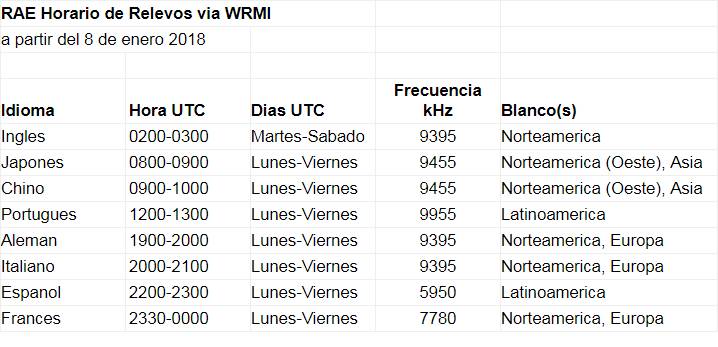

Many thanks to Adrian Korol, Director of RAE Argentina, who shares the following broadcast schedule update via WRMI as of January 8, 2018:
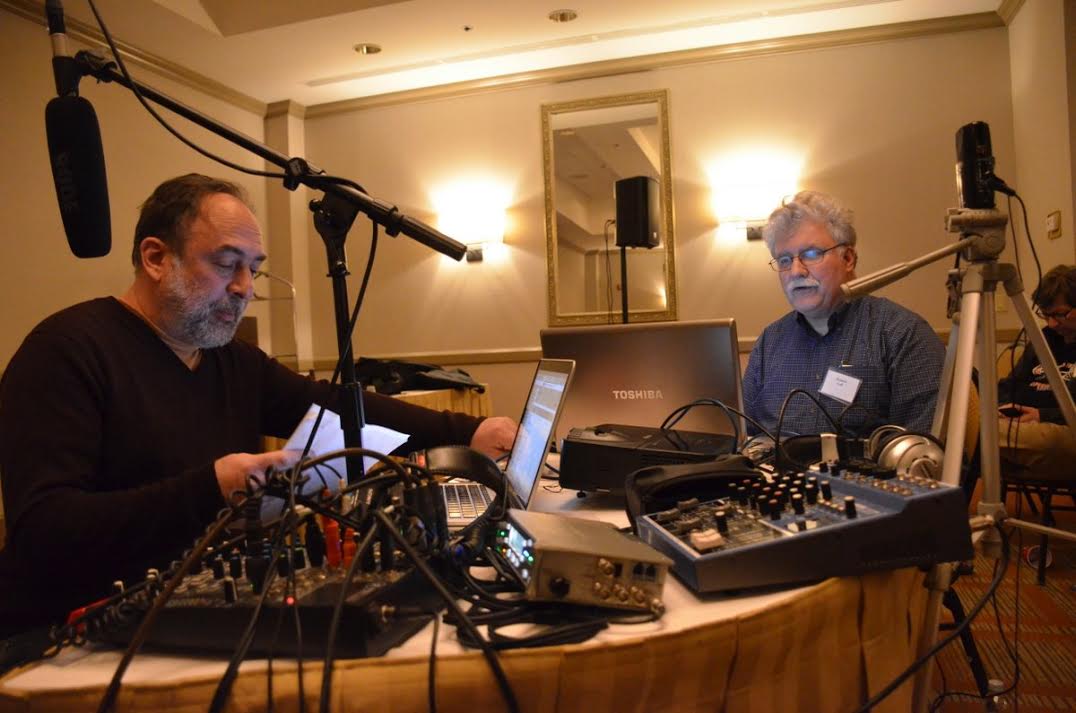
David Goren (left) and Richard Cuff (right) during the Shindig live broadcast at the Winter SWL Fest.
Every year, I look forward to the only event I know that brings together both my avid interest in radio and my loyal radio-listening friends: the Winter SWL Fest. This is the one place where, among the 125-plus attendees, you can talk freely about all aspects of the shortwave hobby without any need of explanation as to why you find radio so fascinating. As a result, over the course of the eight years I’ve attended the ‘Fest, it has begun to feel less like a technical hobbyists convention and more like a (most enjoyable) family reunion.
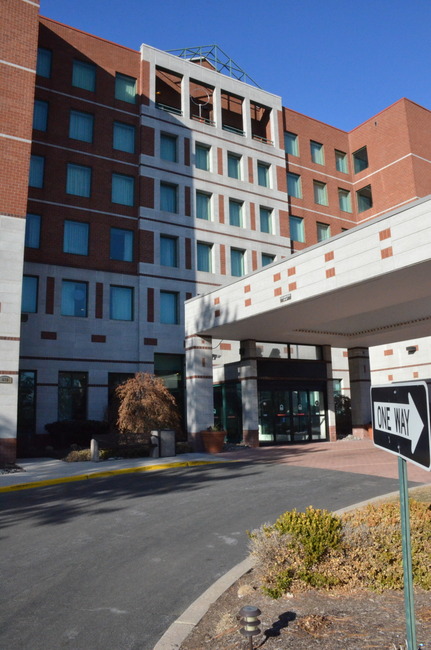
The DoubleTree hotel where the Winter SWL Fest is held. Notice anything unique about the top floor of this hotel?
This year, the Winter SWL Fest is celebrating its 31st (!!!) Anniversary. For the second year in a row, the ‘Fest organizers have added an extra day to the convention making it a special three day event.
Here’s the description from the Winter SWL Fest website:
The Winter SWL Fest is a conference of radio hobbyists of all stripes, from DC to daylight. Every year scores of hobbyists descend on the Philadelphia, Pennsylvania suburbs for a weekend of camaraderie. The Fest is sponsored by NASWA, the North American Shortwave Association, but it covers much more than just shortwave; mediumwave (AM), scanning, satellite TV, and pirate broadcasting are among the other topics that the Fest covers. Whether you’ve been to every Fest (all 30, starting with the first year at the fabled Pink & Purple Room of the Fiesta Motor Inn) or this year’s will be your first, you’re sure to find a welcome from your fellow hobbyists.
Again in 2018, the 31st Annual (!!) Winter SWL Fest will have three days of sessions where you can learn about the latest developments in the radio listening hobbies, but there’s so much more going on. There’s a silent auction that takes place, where you’re bound to find something of interest. There’s the Hospitality Suite, where attendees partake of tuning oil and other treats and engage in spirited conversations. There is the closing Banquet, with after-dinner remarks by a luminary from the field, often one of the many broadcasters who attend the Fest, followed by the raffle, where you could win one or more of the dozens of prizes, ranging from pens from stations up to top-notch communications receivers. And of course, the infamous midnight ride of Pancho Villa that closes things out every year.
Early registration fees are available through the month of January, as an incentive to register early. We strongly urge you to do so as fees will increase for those registering January 27th and later.
Hotel Registration: The Doubletree Guest Suites offers a special $109 rate (single or double) that includes a full breakfast buffet. Reservations may be made by phone at +1-610-834-8300 or 800-222-8733 or online here; click on Special Rates and enter the group code NAS. If at all possible, please reserve hotel rooms using our group code, so we can maintain proper credit and keep costs down.
Fest Registration: A paper reservation form may be downloaded here; you may also register online via PayPal here.
Your hosts, Richard Cuff and John Figliozzi, work throughout the year to ensure that attendees have a great time over the weekend, and by all accounts, they succeed stunningly. How else could this event have lasted for 31 years (egad) and draw people from around the world to southeastern Pennsylvania? Won’t you join us?
If you can make a pilgrimage to Plymouth Meeting, PA, please do so. I think you’ll enjoy the diversity of programs and people who attend. I’ll be there along with a number of regular SWLing Post contributors. It’s a great time to exchange stories and ideas in person.
I always leave the Winter SWL Fest energized about a new aspect of our radio hobby. I think you will too.
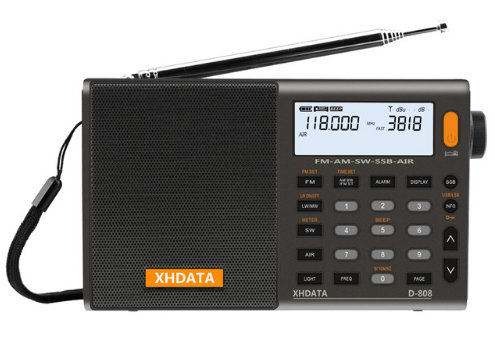
Many thanks to SWLing Post contributor, Rolf Snijder, who writes:
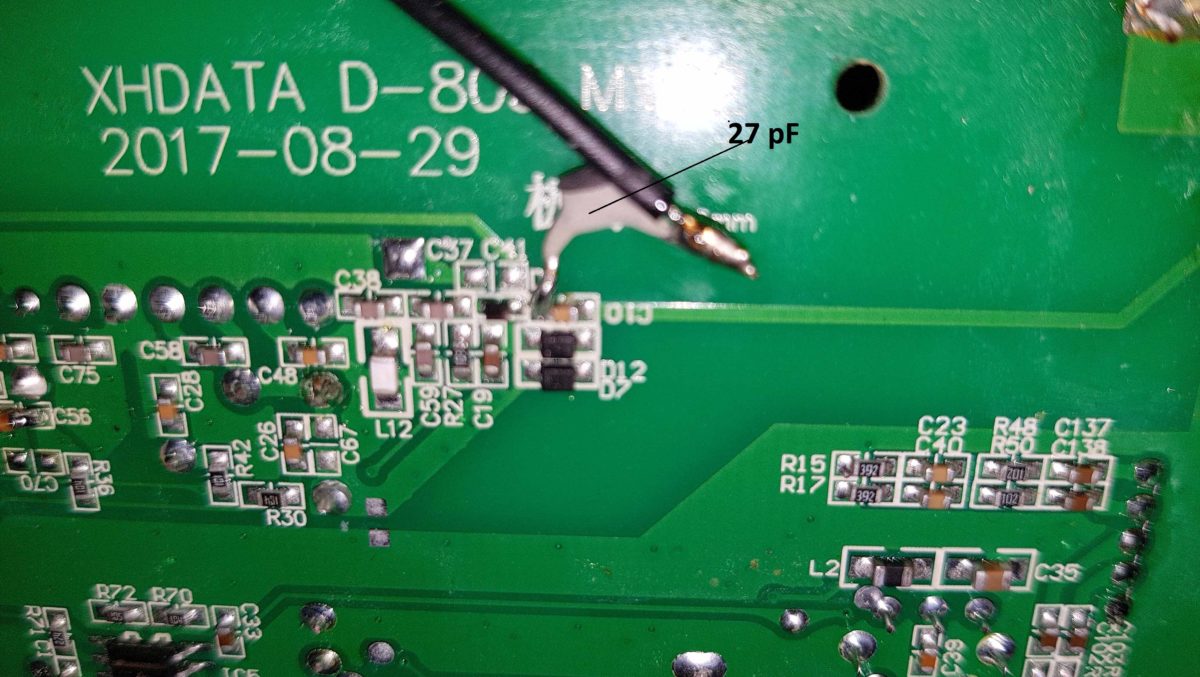
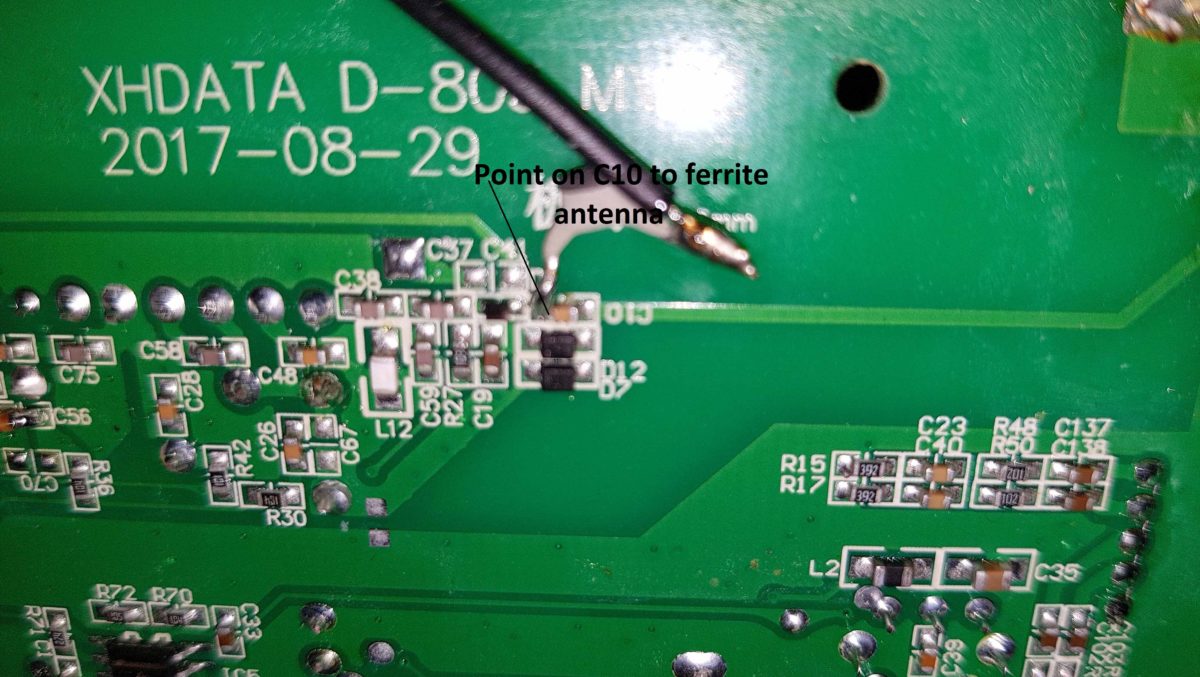
I have added an external antenna capability for mediumwave on the XHData D-808.
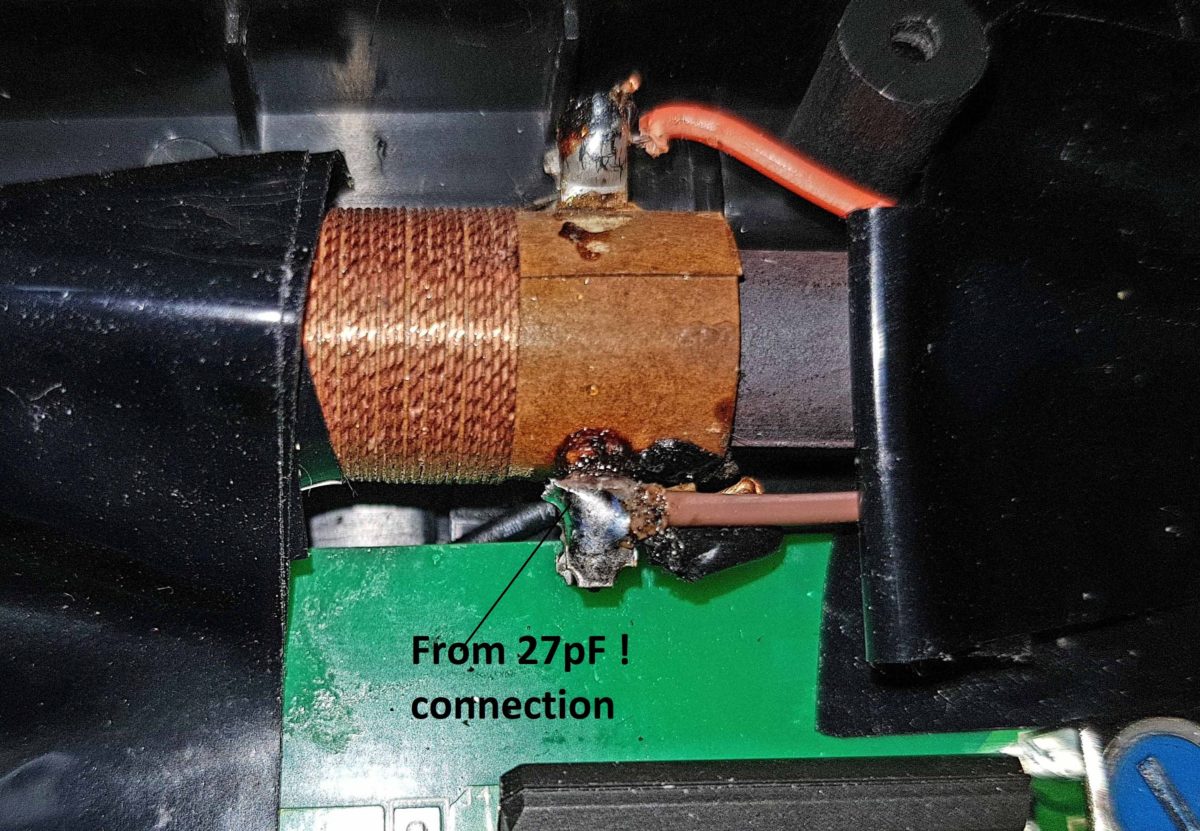
Simply add a 27 pF capacitor on the backside of the PCB on C10 to the the ferrite antenna.
The mod causes no loss on FM or shortwave!
I also replaced the Ferrite antenna with a bigger one so I now have more performance on MW!
Longwave is not good in my radio, even with an external antenna, it is not performing well.
Thanks once again, Rolf! I must assume that the Digitech AR-1780 could be modified in the same way as the radios appear to be near identical. Perhaps someone can verify this at some point!
In my earlier article on this receiver, I shared reception videos of three weak medium wave stations and a single shortwave outlet, all demonstrated in AM mode.
These two videos are of reception in SSB. The first example is true SSB reception–in lower side band on the 40m amateur band, while tuning a local on-the-air ham radio classifieds broadcast:
The next video demonstrates “ECSS” reception (tuning an AM mode signal in SSB). In this example I use a strong station so the audio quality and fine tuning accuracy of the XHDATA receiver can be clearly heard. Typically, ECSS is used by SWLs and DXers for AM mode stations that suffer from adjacent channel interference on one side or the other.
Guy Atkins is a Sr. Graphic Designer for T-Mobile and lives near Seattle, Washington. He’s a regular contributor to the SWLing Post.
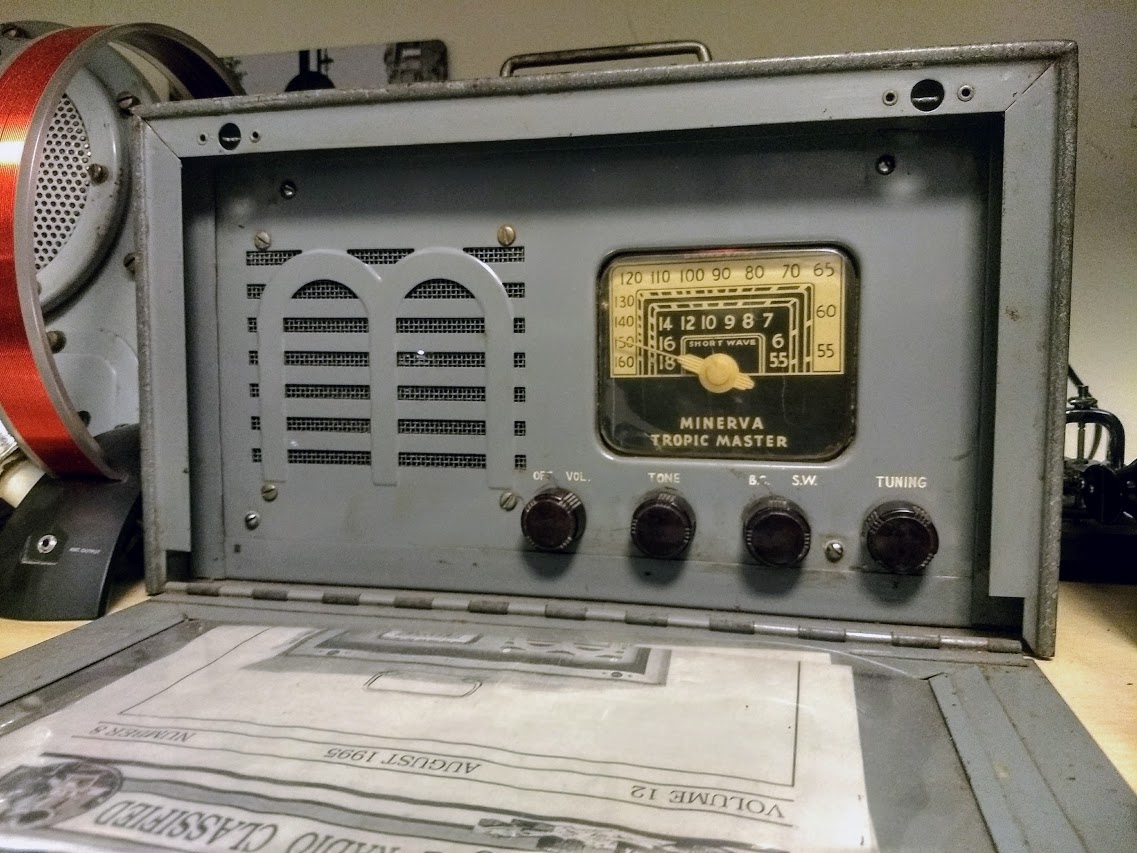 If you’re a regular here on the SWLing Post, you’ve no doubt discovered that I’m a fan of vintage radios.
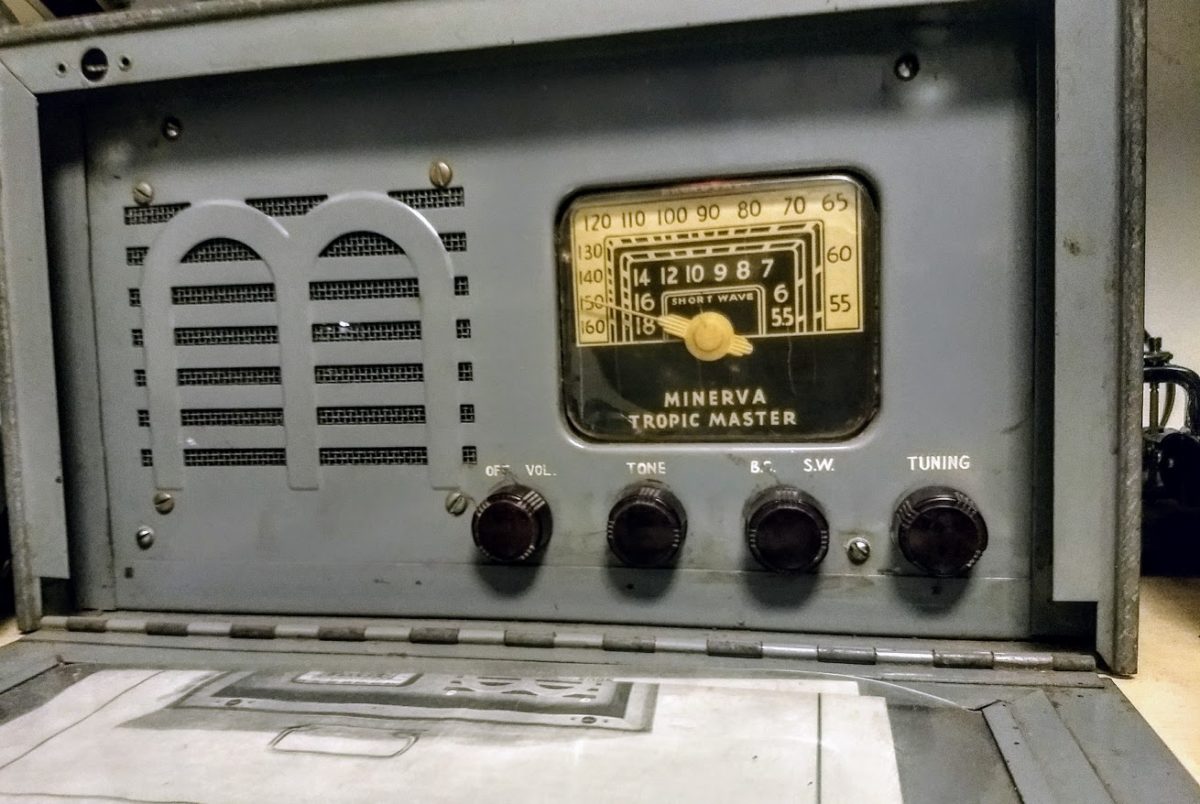
Lately, I’ve been attempting to let go of some of my vintage gear to give my favorite rigs proper shelf space and dedicated antenna time. To keep temptation at bay when I visit flea markets or hamfests (like Hamvention and the one in Shelby, NC) I now focus on WWII era radios; specifically “morale” radios that were used for troop entertainment. I’ve two morale sets: the Scott Marine Radio Model SLRM (technically, a commercial version of a Navy set) and the Minerva Tropic Master.
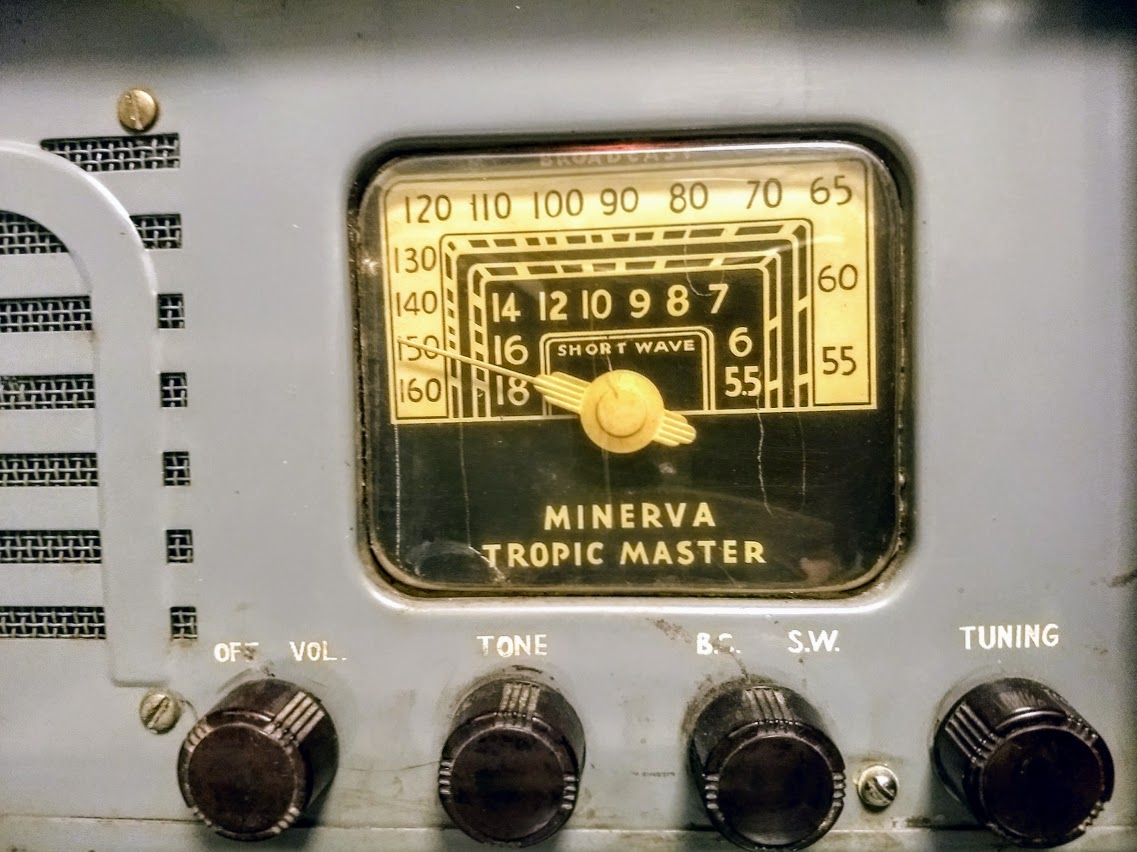
I purchased this Minerva set off of eBay a couple years ago. I got it for $50 or $60, if memory serves (the seller originally wanted $180 + shipping!). He claimed it worked, but after I asked him a few questions prior to making an offer and learned that “working” meant the speaker prodeced a noise and the backlight worked. I made a low offer and he accepted.
Last year, I took Minerva over to my buddy, mentor and boat anchor doctor, Charlie (W4MEC). Charlie discovered the radio had many issues and several poorly implemented repairs. Still, in a few short weeks, when parts arrived he brought the girl back to life.
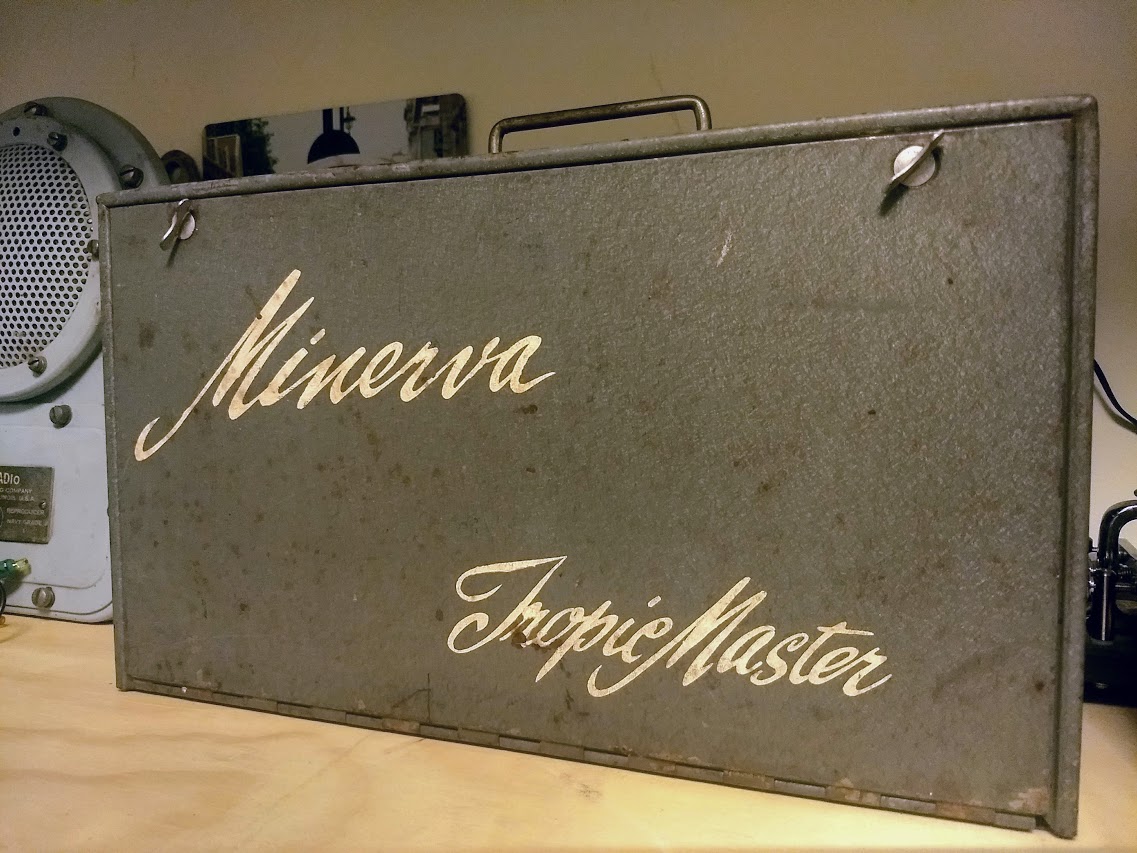
With front cover closed.
The Tropic Master is a portable eight tube receiver that covers both the AM broadcast band and shortwave bands from 5.5-18 MHz. It can be powered by AC or DC. It was “tropicalized” to withstand extreme heat and humidity. The internal speaker produces mellow, full-fidelity audio and the volume can be increased to room-filling.
To give you a taste, this morning I tuned the Tropic Master to my in-house AM transmitter on 1570 kHz which was being fed audio from The UK 1940s Radio Station (my favorite Internet radio station). This particular clip features Jay Lawrence’s excellent show, From Stateside:
Click here to view on YouTube.
The Tropic Master is portable and even has a fold down handle on top of the chassis. Though substantial, it must be the lightest of all of my vintage metal chassis radios.
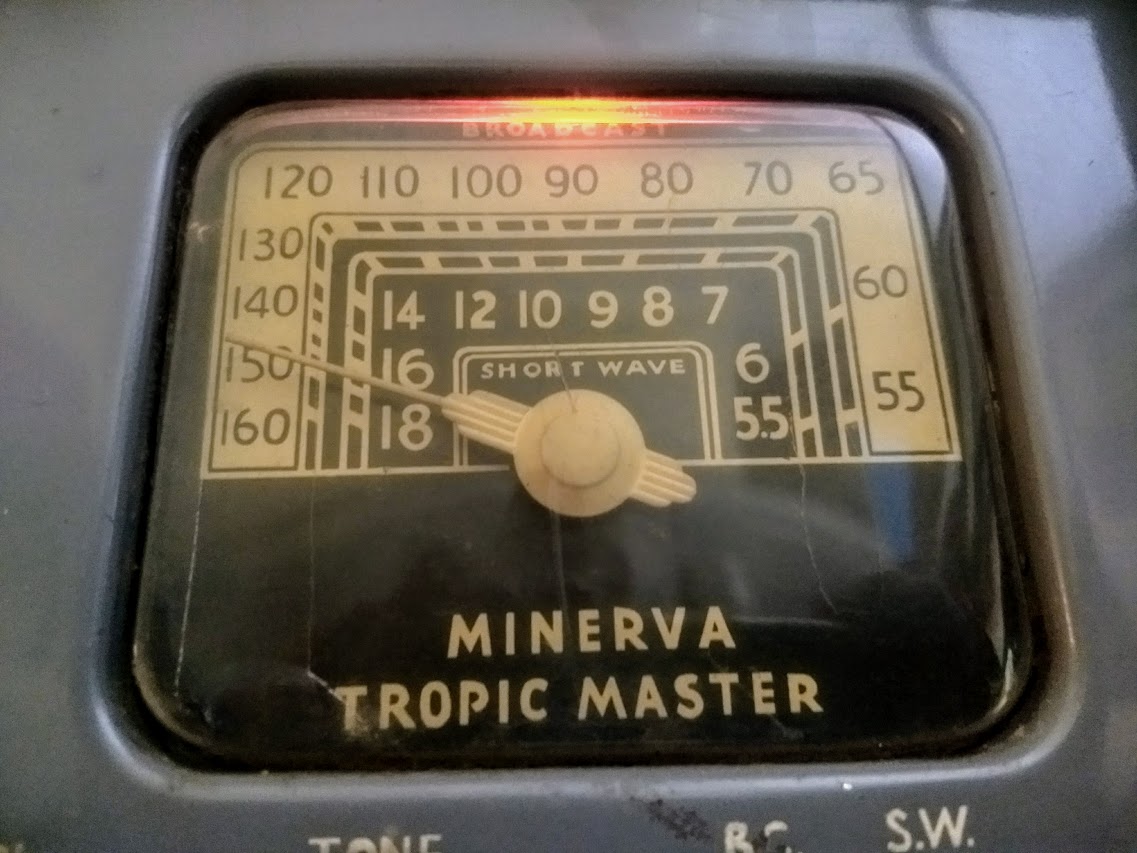
Tuning isn’t exactly precise, but it does the job and is a pleasure to use. It’s quite sensitive on both shortwave and mediumwave. Last night, she was tuned to the Voice of Greece on 9420 kHz–I probably listened to two hours of Greek music while her eight tubes warmed the shack.
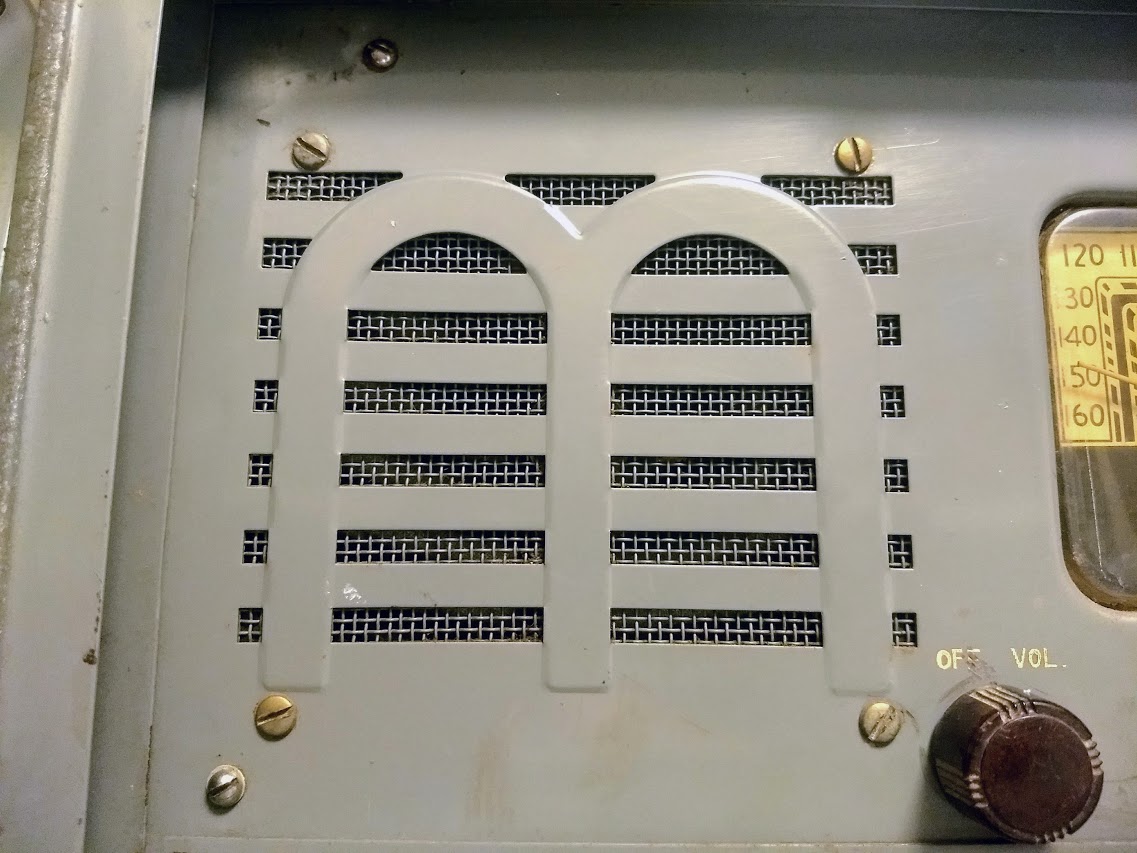
Who could turn down a radio with this speaker grill?
If you ever find a Minerva Tropic Master at a flea market or hamfest, I say adopt one! It’s a beautiful receiver and like all good vintage radios has a story and history of its own.
Post readers: Any other Tropic Master owners out there or do you have a morale radio? Have you ever spotted a Tropic Master in the wild? Please comment!
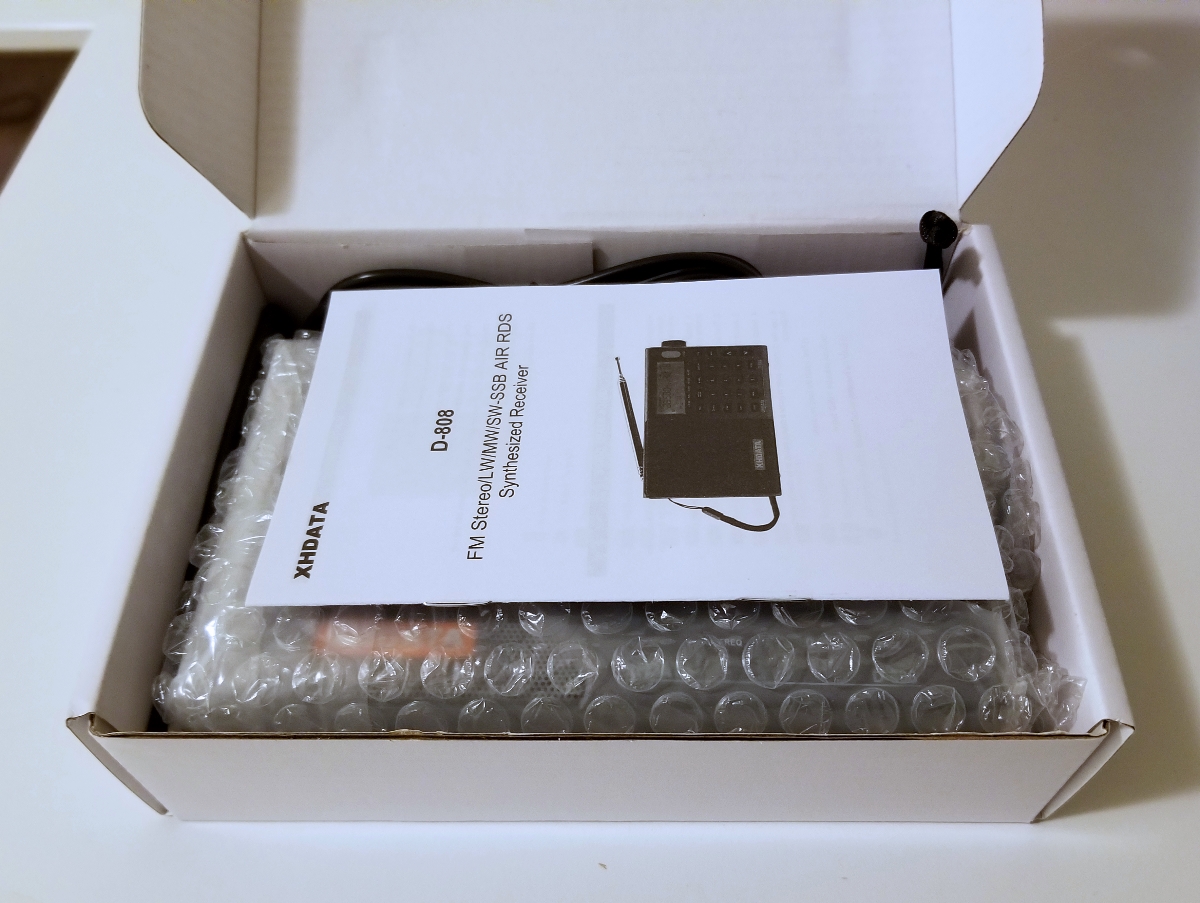
I recently received a new XHDATA D-808 SSB portable receiver, after AliExpress had a $69 USD introductory sale. I’m intrigued by this new model, as it uses the SiLabs Si4735 DSP chip, the same “brains” that powers the Eton Satellit (and Executive version), and C. Crane Skywave SSB. I believe the same Si4735 is found in Tecsun’s PL-880 and the CountyComm GP-5/SSB. A key feature found in all of these radios is USB/LSB modes and 10-Hz tuning step in SSB.
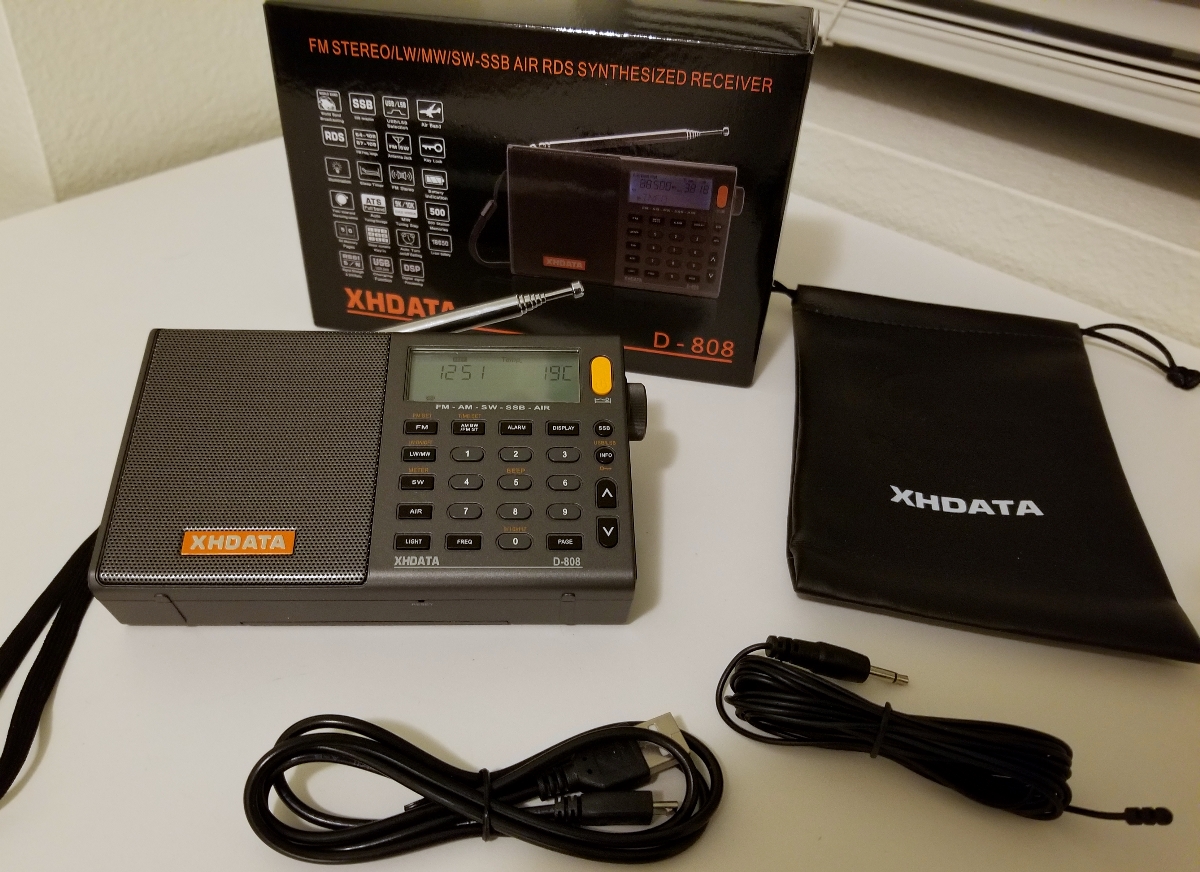
It would be a mistake to assume that all portable DSP receivers with the same SiLabs chip will perform equally; quite the opposite! They all have reception differences that owners will notice. I certainly noticed differences in sensitivity, AGC action, audio quality, and (to some extent) variations in adjacent channel (splatter) rejection between receivers using the same bandwidth. I made these observations when I owned the PL-880 and GP-5/SSB radios. Differences in the circuitry surrounding the SiLabs chip, as well the sizes of MW ferrite loopstick antennas and SW/FM whip antennas contribute to each receiver’s personality.
Below are four videos showing the D-808’s reception of three weaker daytime medium wave stations from indoors at my suburban Seattle-Tacoma (WA) home, plus one video of a shortwave reception in the 41 meter band. The XHDATA D-808 is compared to C. Crane’s newest Skywave radio, the SSB model, and the Eton Executive Satellit. Although brief, these tests show how the new XHDATA portable is a welcome competitor to the field of modern, compact SSB-capable radios:
What about single sideband? These four videos show reception in AM mode only, but rest assured the D-808 is very capable on the SSB modes of LSB and USB! A separate fine tuning rotary wheel on the right side of the radio’s case offers adjustment in 10 Hertz increments. The effect feels very similar to tuning CountyComm’s GP-5/SSB “walkie-talkie” style receiver. The plus or minus (+/-) offset is displayed in multiples of 10 Hz steps as “-1”, “-2”, “-3”, and so on.
I hope to post some future videos showing SSB usage of the D-808.
Soft mute. The dreaded soft mute is present in AM and SSB mode to some degree, but I do not feel it is excessive. Like most radio hobbyists I’m not a fan of soft muting and prefer uninterrupted tuning with no sign of “chuffing” or lowering of noise or audio. The amount of soft mute on this radio seems the same as the Eton Executive Satellit in my opinion.
What else to like? My take–
Audio. I find the D-808’s audio quality to be slightly more mellow or warmer…I like that, especially on FM! Audio on the MW and SW bands still has a crispness that aids in DXing on those bands, however.
18650 Li-Ion battery. Not all may agree, but I like this style of battery. The D-808’s internal circuit shuts off when the battery is fully charged, or after 10 hours of charging. The radio comes with a 18650 battery and a USB cable; the owner supplies a common 5V USB charger.
RDS on FM. This is a feature lacking on the Skywave SSB, but it is present and performs as expected with the D-808. The XHDATA radio lacks the Skywave SSB’s NOAA weather presets, however.
AM filter bandwidths. Interestingly, this receiver supplies two additional narrow AM mode bandwidths lacking in the Executive Satellit: 1.8 kHz and 1.0 kHz. It’s good to have options, although such narrow filters in AM mode sound a little muffled (offset tuning helps). The Skywave SSB does offer 1.0 kHz in AM mode, but has a 2.0 bandwidth in place of 1.8 kHz.
Backlighting. If desired, the D-808’s easy-on-the-eyes white backlight for the display can remain illuminated continually. Bravo, XHDATA! Now, if we could persuade more manufacturers to add backlighting to the keys themselves (a la the Degen DE1103/Kaito KA1103/Eton E5), we’d have more choices use in low light conditions like camping or bedside use.
Handy size. Probably a third larger than the diminutive Skywave SSB, the D-808 is still a very handy size that will fit most coat pockets, and is a smaller receiver than the Eton Executive Satellit. As you can tell from my videos, reception doesn’t suffer due to the smaller size.
Design. OK, this one’s very personal! As a graphic designer I have a real soft spot for any receiver that looks as good as it sounds, no matter what the technology or vintage. The D-808’s look really appeals to me and adds to my enjoyment while operating it. There are no unnecessary protrusions, ridges, or visual do-dads on this XHDATA model. In fact, I seem some design clues from the stylish Tecsun PL-880 in the D-808. The radio also has a quality feel to the plastic case and buttons, giving it a more “upper class” impression during use.
Antenna jack. The D-808 has the standard 3.5mm antenna port on the left side of the receiver. This is an addition I appreciate, and wish that C. Crane had included one on their Skywave SSB model. I tried this external antenna jack with an amplified PK Loops’ shortwave antenna and the combination performs excellently.
Minor annoyances
So far, the list is short! As a sacrifice to style, the manufacturer has kept all front panel buttons almost flush with the case. The effect looks great, but they are almost too low and close to the front panel. Those with larger fingers may find operation awkward or frustrating. Also, entering a shortwave frequency with less than five digits (i.e., below 10,000 kHz) requires a trailing push of the Frequency (FREQ) button.
I encourage other new owners of XHDATA’s D-808 to leave their comments below. Where does this portable rate among other radios you may own?
Guy Atkins is a Sr. Graphic Designer for T-Mobile and lives near Seattle, Washington. He’s a regular contributor to the SWLing Post.

Many thanks to SWLing Post contributor, Rolf Snijder, who writes:
This is a simple LED backlight modification for the Sony ICF-SW35.
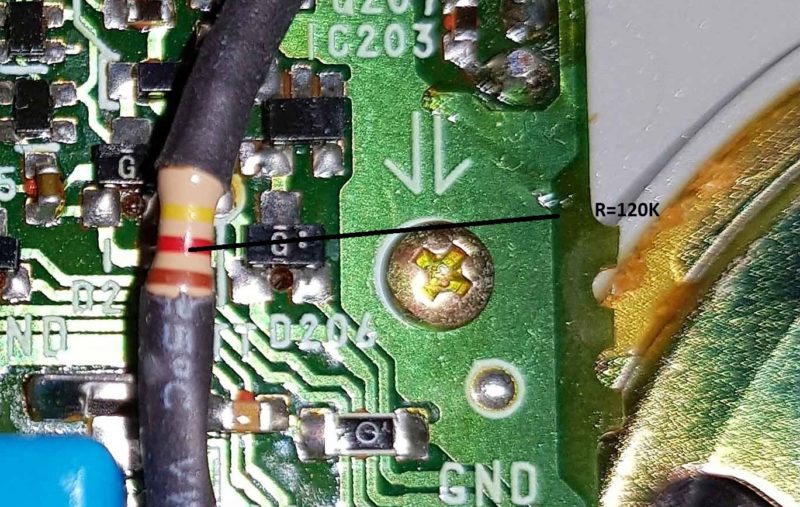
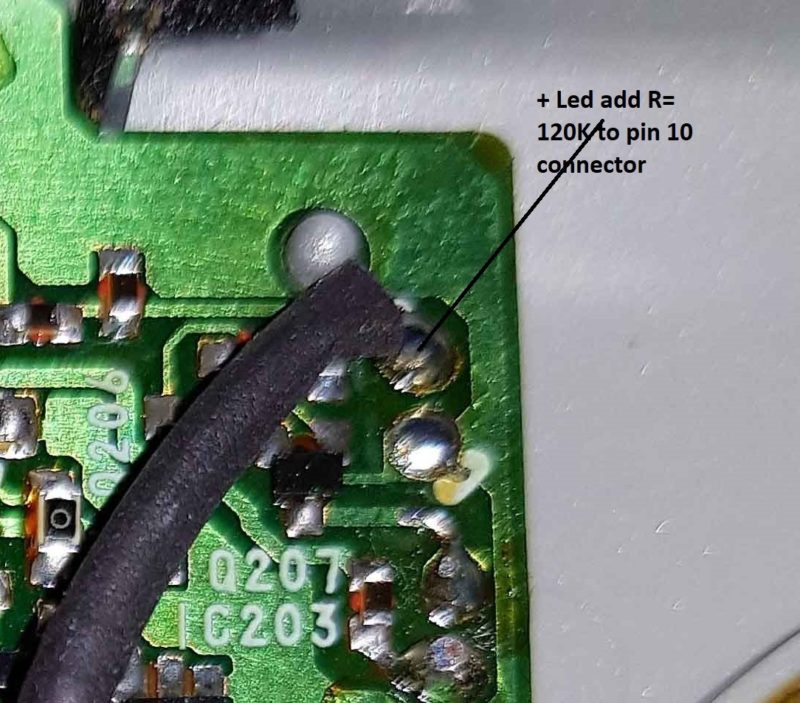
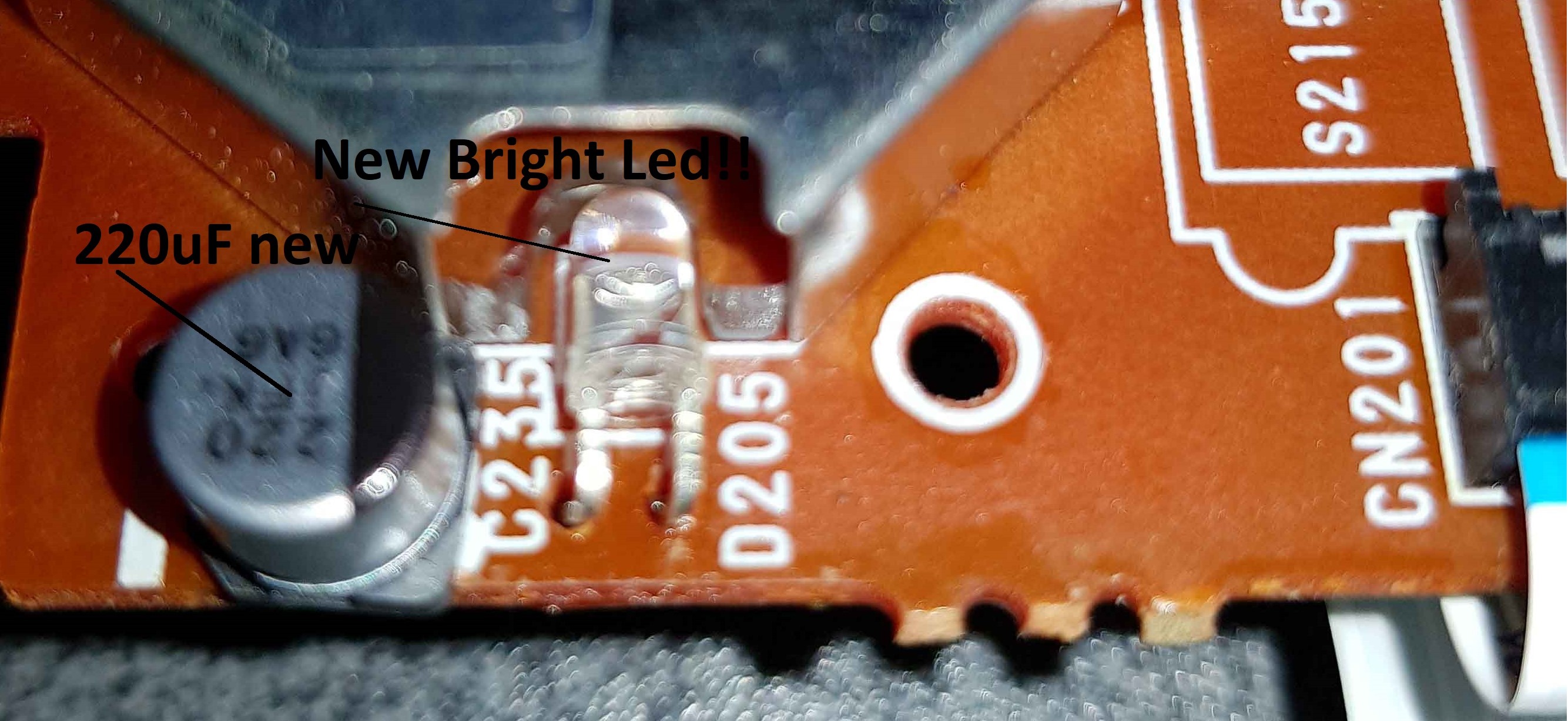
Simply add a 120K resistor and a bright LED:
Overview of resistor placement. (Click to enlarge)
Detail of Pin 10 (Click to enlarge)
Detail of resistor. (Click to enlarge)
Detail of Pin 10 (Click to enlarge)
Detail of LED placement–replacement of capacitor is not necessary. (Click to enlarge)
When you push the backlight switch, the light stays on.
When radio is turned off, the light goes off–then push light switch and backlight will stay on for 15 seconds or so.
Thanks for sharing this simple mod, Rolf!