Category Archives: Videos

Interval Signals + Radio Astronomy = Bliss

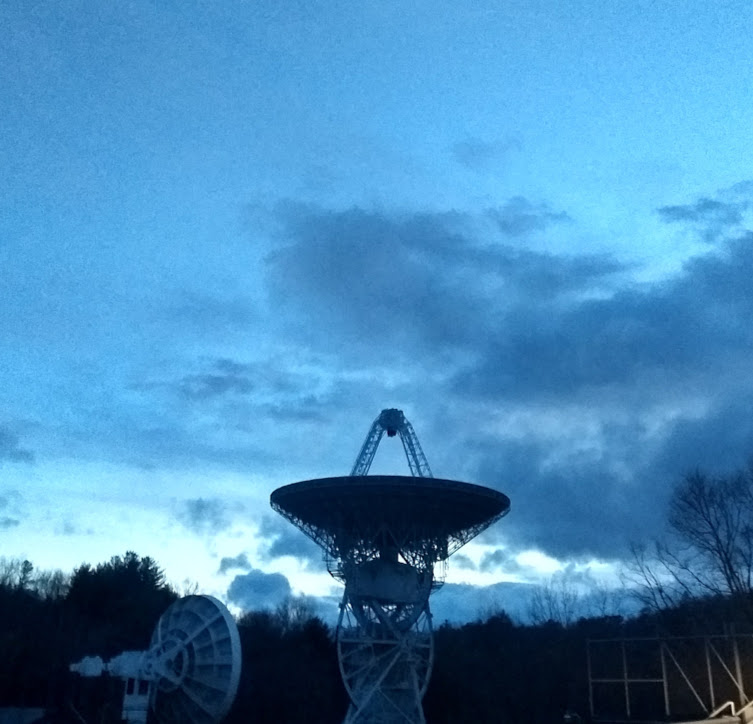
Yesterday, I spent part of the better part of the day at the Pisgah Astronomical Research Institute (PARI): a place that has begun to feel like a home away from home.

As you might imagine, radio astronomy observatories are places with very low levels of radio frequency interference. Since I had a few hours on the PARI campus to play radio, I used it as an opportunity to evaluate the CCRadio-EP Pro‘s AM/mediumwave performance.
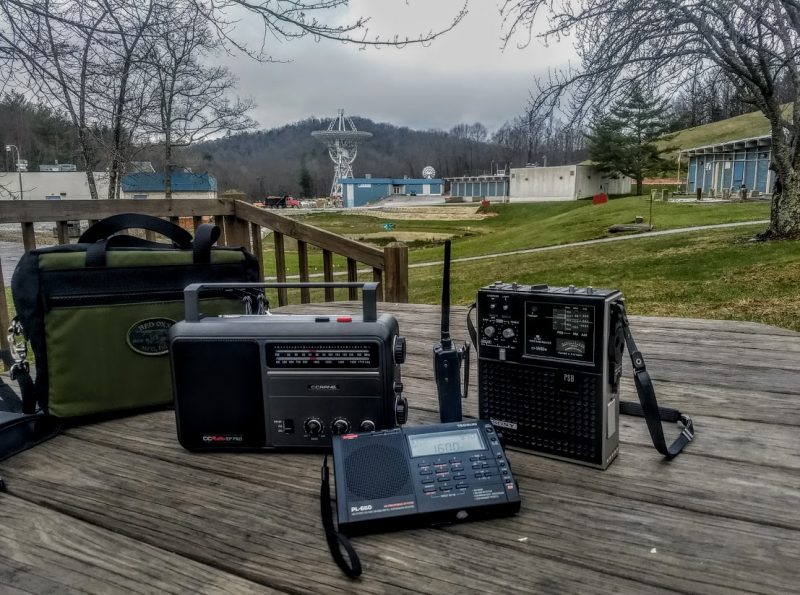
For comparison purposes, I packed the CCRadio-EP Pro, Tecsun PL-660 and (for kicks) my Sony ICF-5500W.
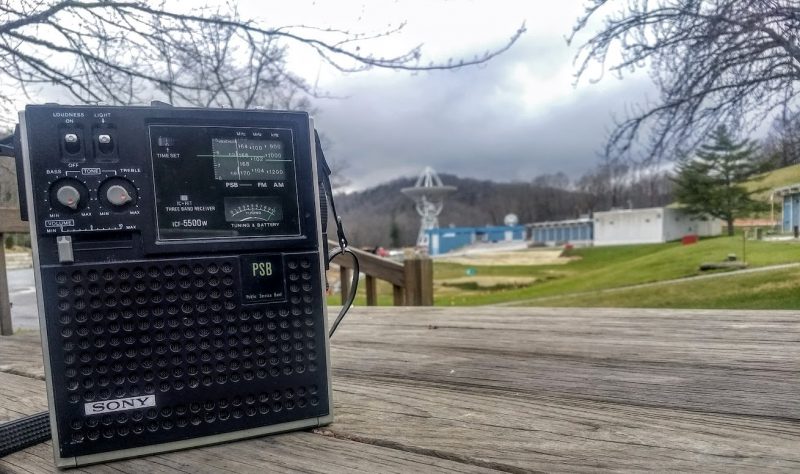
Now isn’t the ICF-5500W a handsome boy?

I’ll post some of the CCRadio-EP Pro videos in my final review.

Though it was immense fun tuning through the AM broadcast band right through the gray line,  being an SWL, I eventually turned to the shortwaves. The only shortwave radio I had on hand was the amazing little Tecsun PL-660. Conditions weren’t as bad as I had expected–propagation was decent and did I mention no noise?

After tuning around a bit, I happened upon one of my favorite interval signals: that of the Voice of Turkey.

Everything around me–all that was on my mind–simply took a backseat to the simple pleasure of listening to an interval signal on a cool, foggy spring evening surrounded by the beauty of PARI’s campus and those giant radio telescopes.

Though the feeling was nearly impossible to capture, I did make a recording to share with SWLing Post friends and readers from around the world. I hope you enjoy:
Click here to watch on YouTube.

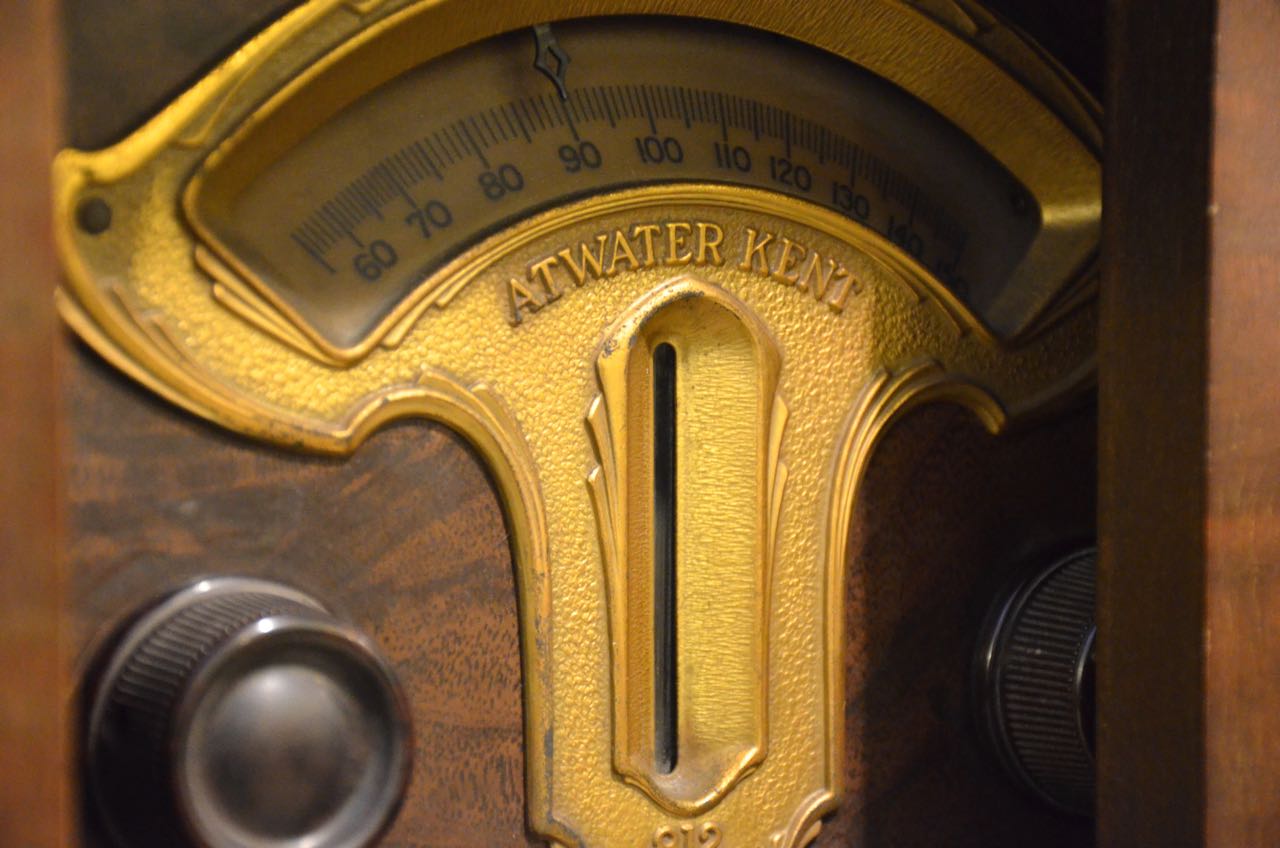
“Air Waves”: A WWII era film about the art of broadcasting at NBC

Many thanks to SWLing Post contributor, Mike Hansgen (K8RAT), who shares the following film by RKO Radio Pictures via YouTube.

Click here to watch on YouTube.

Here’s the film description:

Made during WWII by RKO Radio Pictures, AIR WAVES gives a brief history of the radio, and shows the development of the technology as it progressed from a crystal set novelty to an indispensable part of American life. Radio City Music Hall and the Rockefeller Center are seen at the 2:00 mark, with the largest radio studios in the world. At 2:30, the NBC studios are seen and at 3:10 a demonstration is made of how sound effects are made using cellophane, wooden blocks, and rubber spheres. At 4:10, a studio is seen with actors rehearsing their lines, and an engineer working with the actors to make sure everything is technically okay. At 5:41, announcers Milton Cross is seen with Jack Costello and Calvin Keach. “Twin gods of radio broadcasting are the clock and the conference…” says the narrator, and at 6:00 you’ll see the discussions that lead up to the broadcast of any network show on radio (and today, on TV). At 7:15, records are played on the air, scripts are produced on steno and mimeograph machines, and all sorted… The music library is seen at 7:48 with sheet music laid out. At 8:06, all stations are notified of the latest information with the new program and a dress rehearsal undertaken. The stopwatch commands the attention of everyone, and the program is finally on the air at the 9:10 mark.

At 10:00, the film dramatically shifts to show December 7th in Hawaii, and speaks about the work of NBC to sell war bonds and promote national defense and “do its share unflinchingly”. The war effort is shown with men and women working on the air to help people working “at war” and boosting their morale. Lowell Thomas is shown at the 11:30 mark, keeping the public informed of the latest developments.

Thanks for the tip, Mike! It’s truly amazing to see the amount of effort that went into live radio broadcasts.

“Generation Radio”: A short documentary about the evolution of broadcasting

Many thanks to SWLing Post contributor, Mike Hansgen, who shares the following documentary film about the evolution of broadcast radio. This film was actually created for a senior thesis presentation at St. Michael’s College. The film “includes interviews from BBC World Tonight & Joe Reilly (Former President NYS Broadcasters Assn), Empire Broadcasting The Jockey, Clear Channel, WEQX, ESPN, SirusXM, VPR, Skidmore College, & more.”

Click here to view on YouTube.

Impressive film especially considering this was created as a senior thesis!

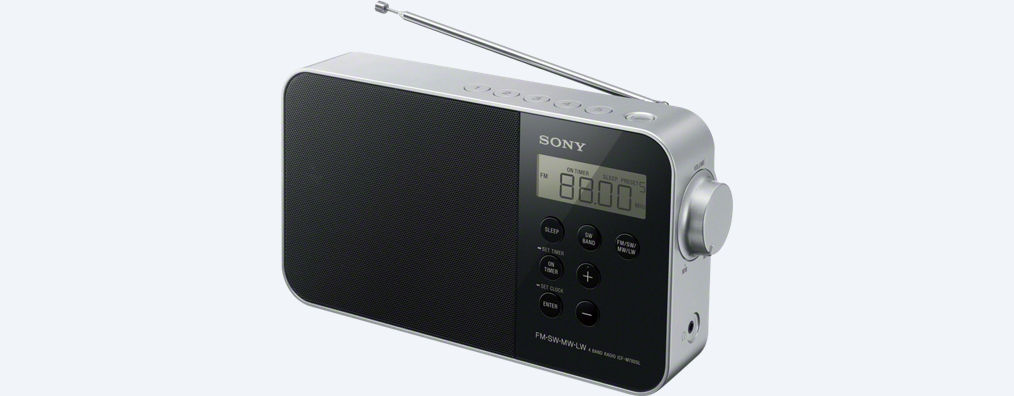
The Sony ICF-M780SL: Peter catches some serious MW DX on Gran Canaria

Many thanks to SWLing Post contributor, Peter Wilson, for sharing the following guest post and DXpedition report:


Sony ICF-M780SL MWDX on Gran Canaria

by Peter Wilson

Las Palmas, Gran Canaria, Spain

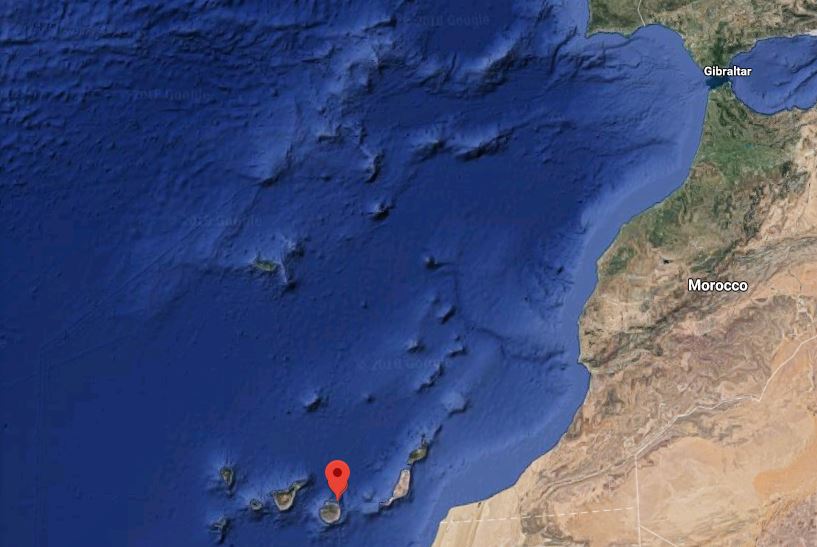
I have spent the last two months in Las Palmas, Gran Canaria adjacent to the Atlantic Ocean.
I travelled light and didn’t bring my radio/SDR collection with me.

A portable I saw in a local department store caught ny eye, and I ended up buying one from a local electronics retailer which had it on special at €55. It is a Sony ICF-M780SL which as turned out, is something rather special. It is a four band (LW, MW, SW,FM) DSP receiver, with an AM IF (LW, MW,SW) of 45 kHz and an FM IF of 128 kHz.

There’s too much hash in my apartment block to use it at home, but as I am a couple of streets away from the Ocean I intended to use it there.

Problem is there almost as much RF hash at the oceanside as at home. Also the Atlantic breakers crash loudly on the shore, and the wind can howl quite loudly. I did have some limited success and have included a couple of clips.

I discovered a better DX location at a small Plaza a short distance inland from the Ocean. There is an early morning peak for MW TA leading up to about 07:30 UTC (= local time)

The radio is used barefoot in each clip. There is some camera hash.

Here are the highlights:

USA Transatlantic

1500 WFED booming with ID 5736 km

Click here to view on YouTube.

790 WAXY with ESPN Radio ID 6369 km

Click here to view on YouTube.

1540 KXEL 6935 km

Click here to view on YouTube.

1530 WCKY 6373 km

Click here to view on YouTube.

770 WABC 5459 km

Click here to view on YouTube.

1520 WWKB

ESPN Radio with sports talk. 5841 km

Click here to view on YouTube.

Ocean front around dusk

1350 TWR Armenia 5377 km

Click here to view on YouTube.

1521 Duba Saudi Arabia 5004 km

Click here to view on YouTube.

1458 Lyca Radio, Brookmans Park UK 2914 km

Click here to view on YouTube.

The Sony ICF-M780SL is a great MW/LW/FM performer. SW propagation has been mediocre and suffers from the RF hash QRN, so difficult to test.


Amazing, Peter! It’s hard for me to believe the reception you had of WFED (Federal News Radio). I listen to that station every time I go through the DC/Baltimore area and I think your reception is just as good. A TA crossing of almost 5,000 km with armchair copy! Quite an accomplishment!

Thank you for sharing your Gran Canaria DX with us. I’m pretty impressed with the Sony ICF-M780SL as well.

Post Readers: make sure you check out Peter’s YouTube channel by clicking here.

Click here to search Amazon.co.uk and click here to search eBay for the Sony ICF-M780SL.

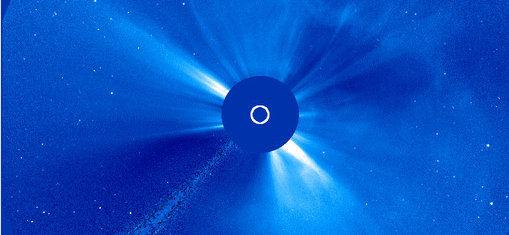
Video: CME’s and Solar Energetic Particles

Many thanks to SWLing Post contributor, TomL, who writes:

Regarding the last couple of posts recently about what affects Space Weather (and HF radio communications), this talk last week from Solar scientist Joan Burkepile of the High Altitude Observatory discusses what causes Radiation storms from Coronal Mass Ejections. She makes it interesting from a physics point of view. And as we understand the sun better, we also learn more about how the rest of the universe behaves.

Click here to watch via YouTube.

Thanks for sharing this, Tom!

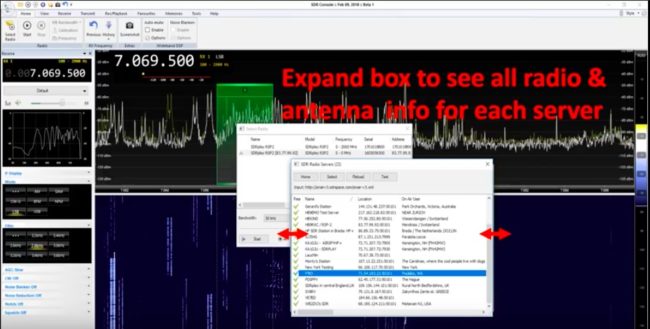
Video: Guide to using SDR-Console V3 remotely

Many thanks to Jon Hudson at SDRplay who produced the following excellent instructional video about setting up SDR-Console V3 for remote use. Jon writes:

For SDR Console users, this video guide shows you how to access other people’s SDRs and how to add your own.

If you are wanting to add your own SDR for remote use, there are a couple of things to be careful with:

Be careful when plugging multiple SDRs into a single USB2 socket to make sure there’s enough power – for multiple SDRs, you may need a powered hub ( like this: http://amzn.to/2oa84kM) [or this in North America].

Once you are up and running – please go to http://www.sdrspace.com/Version-3 and view your listing – if there is a yellow triangle, then you are not accessible outside your own firewall – attention is needed! Just because you can access it on your own LAN doesn’t mean it’s accessible via the internet!!! This is the most common area to have problems – double check your router’s port forwarding settings are correct (default port 50101 TCP).