Category Archives: Videos

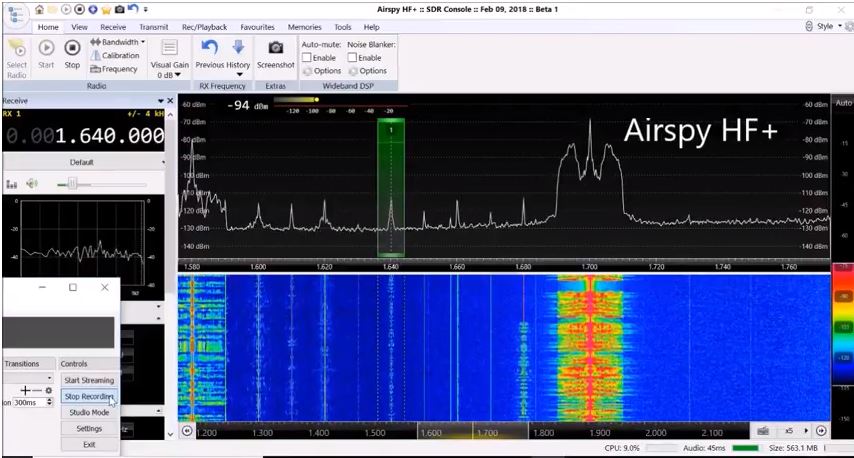
Ivan performs two tests with the AirSpy HF+

Many thanks to SWLing Post contributor, Ivan Cholakov (NO2CW), who shares the following:

Thomas, there has been a lot of discussions regarding Airspy HF+ ever since it came out – heated exchanges regarding comparisons with peers, modifications and firmware updates.

I took my Airspy HF+ and conducted two tests with it:

Airspy HF+ vs. SDRPlay RSP-1A on HF and Medium Wave

Click here to view on YouTube.

Since I could not completely equalize the audio levels, I think it’s good to look at the peak to valley ratios on the display rather than the audio volume.

Airspy HF+ with the R3 mod on and off:

Click here to view on YouTube.

This comparison used SDR #. It may be helpful to run the same comparison on SDR Console V3. I may do that at a later time.

Both tests used W6LVP’s portable amplified receiving loop antenna in a noisy suburban backyard in Florida.

Many thanks, Ivan, for sharing these comparison tests! I agree with you that it’s most helpful to look closely at the peak to valley ratios on the spectrum display rather than using the audio levels as a measure.

VOK shifts broadcast schedule due to North Korea time zone change

Many thanks to SWLing Post contributor, DanH, who writes:

I put up a couple of videos on my “Willow Slough DX” YouTube channel nine hours ago that may rate at least an Arte Johnson (Laugh-in) “verrry interestink”. These are two videos of the North Korean shortwave station Voice of Korea operating with their new time zone and on their new schedule.

These are the two most recent videos of SW station receptions that I have posted during the last couple of days.

[The first video] is the VOK shortwave sign-on recorded at the newly scheduled time of 04:00, May 5, 2018 UTC on 15180 kHz. Distance: 5600 miles. Receiver: Sangean ATS-909X. Antenna: suburban 83m horizontal loop. Receiver location: Davis, California, USA. North Korea has changed its time zone to match UTC +9 which is used by South Korea. I was accustomed to tuning in Voice of Korea at 38 minutes past the scheduled hour for the English language news. Now I tune in at 8 minutes past the same hour. VOK broadcasts that were scheduled for 04:30 UTC now begin at 04:00 UTC. At the time I write this VOK shortwave programs listed on Short-Wave.info still show the old times:

Click here to view on YouTube.

[The second video] is the VOK shortwave newscast at the new time of 04:08, May 5, 2018 UTC on 15180 kHz. Some interference is heard half way through the clip:

Click here to view on YouTube.

Thanks for sharing this, Dan!  It never crossed my mind that VOK would change their international broadcast time based on the fact they shifted their country’s time zone. From a North Korean perspective, though, I suppose this makes sense. Thanks for the tip!

Click here to check out other recordings on Dan’s YouTube Channel.

Hand Made Vacuum Tubes by Claude Paillard

This is an amazing video – hand-made vacuum tubes! About 17 minutes long – well worth the watching if you have any interest at all in old equipment!

https://vimeo.com/47812871

You can find the video here

Enjoy!

Robert Gulley, AK3Q, is the author of this post and a regular contributor to the SWLing Post. Robert also blogs at All Things Radio.

Video: Homebrew AM Loop Antenna Project by Thomas Cholakov (N1SPY)

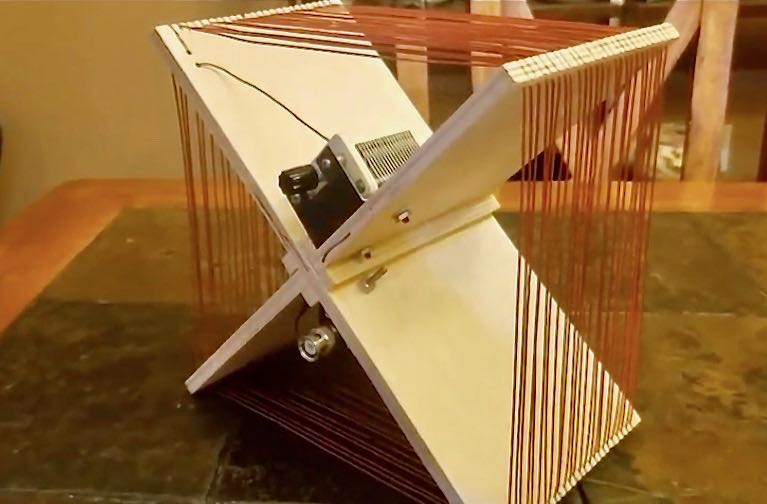
Many thanks to SWLing Post contributor, Thomas Cholakov (N1SPY), who shares his latest video explaining the operation of a simple homebrew AM loop antenna:

Click here to view on YouTube.

Brilliant video, Thomas! I love the fact you included a demonstration with your SDRplay RSP1A as well. Via the spectrum display, it’s easy to see the the loop’s bandwidth and also the gain it provides when tuned to a station.

I love your AM loop antenna as well–such a simple design and ideal for demonstrating the mechanics of a passive loop antenna since all of the components are visible. I’m willing to bet you built this antenna for less than $10. Smart design as it’s both portable and effective! Keep up the excellent work, Thomas! We look forward to all of your future videos.

Video: Band scanning with the C. Crane CCRadio-EP Pro

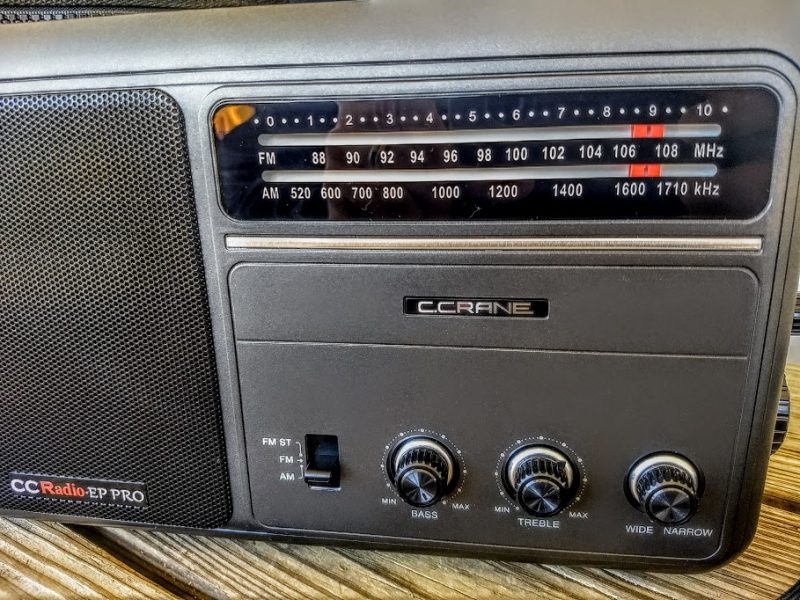
I’m in the process of writing up a review of the C. Crane CCRadio-EP Pro, but a number of readers have been asking about how pronounced muting is between frequencies while band scanning.

To be clear, the CCRadio-EP Pro is not a true analog set like the original CCRadio-EP (even though it looks like an analog set). The EP Pro is based on the Silicon Labs SI4734 DSP chip, hence the frequency steps in 10 kHz increments and are not fluid/seamless as they would on analog sets.

Muting is more pronounced on the AM broadcast band than it is on the FM band. Here are two video demonstrations:

AM Band Scanning

Click here to view on YouTube.

FM Band Scanning

Click here to view on YouTube.

The audio “pop” that I note (when the CCRadio-EP Pro is first turned on) is bit annoying and can even be heard in nearby radios if they’re on. While doing my comparisons with the Sony ICF-5500W and the Tecsun PL-660, for example, the audio pop could be heard in both units as I turned on the EP Pro. I’m willing to bet this is only prevalent in the DSP chip version of the EP series.

Follow CCRadio-EP Pro posts by bookmarking this tag: CCRadio-EP Pro

Click here to check out the CCRadio-EP Pro on C. Crane’s website.