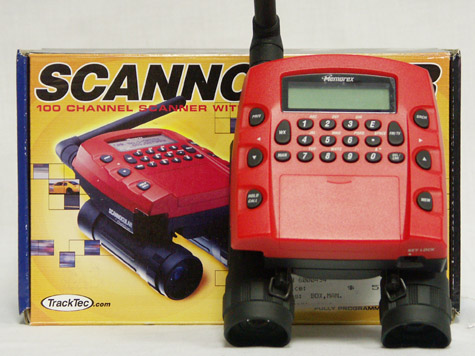
Photo source: Universal Radio
Many thanks to SWLing Post contributor, Mario Filippi (N2HUN), who recently wrote an article for the excellent Radio World magazine. His topic? The Memorex TrackTec Scannocular! Mario writes:
Ever heard of a Scannocular? Universal Radio used to sell ’em, they were for race fans, basically a scanner with surgically attached binoculars:
http://www.radioworld.com/article/whats-black-and-red-and-hears-all-over/279408
“I’ve always had a penchant for the weird, the off-beat, the non-mainstream. In high school I felt most at home with fellows who were ostracized by the general student populus, who acted and thought differently, had the intestinal fortitude to walk the road less traveled and were genuinely interesting individuals.
The same affinity goes for electronic devices; the weird stuff interests me. That’s why I recently acquired a Memorex Scannocular from an eBay auction.”[…]
Continue reading at Radio World…
Mario, I must say that I had never heard of the Scannocular–what an intriguing piece of kit! It sounds like a decent performer (especially for $26!). I’m surprised it actually has a proper BNC connector for an external antenna.
I just searched eBay, but had no luck finding a set of Scannoculars. Perhaps there’s been an increase in popularity–other members of the “bohemian brigade” who decided the Scannocular is the only item they’ll need to stand out among other race fans!
I always enjoy your articles and reviews, Mario! Thanks for sharing!
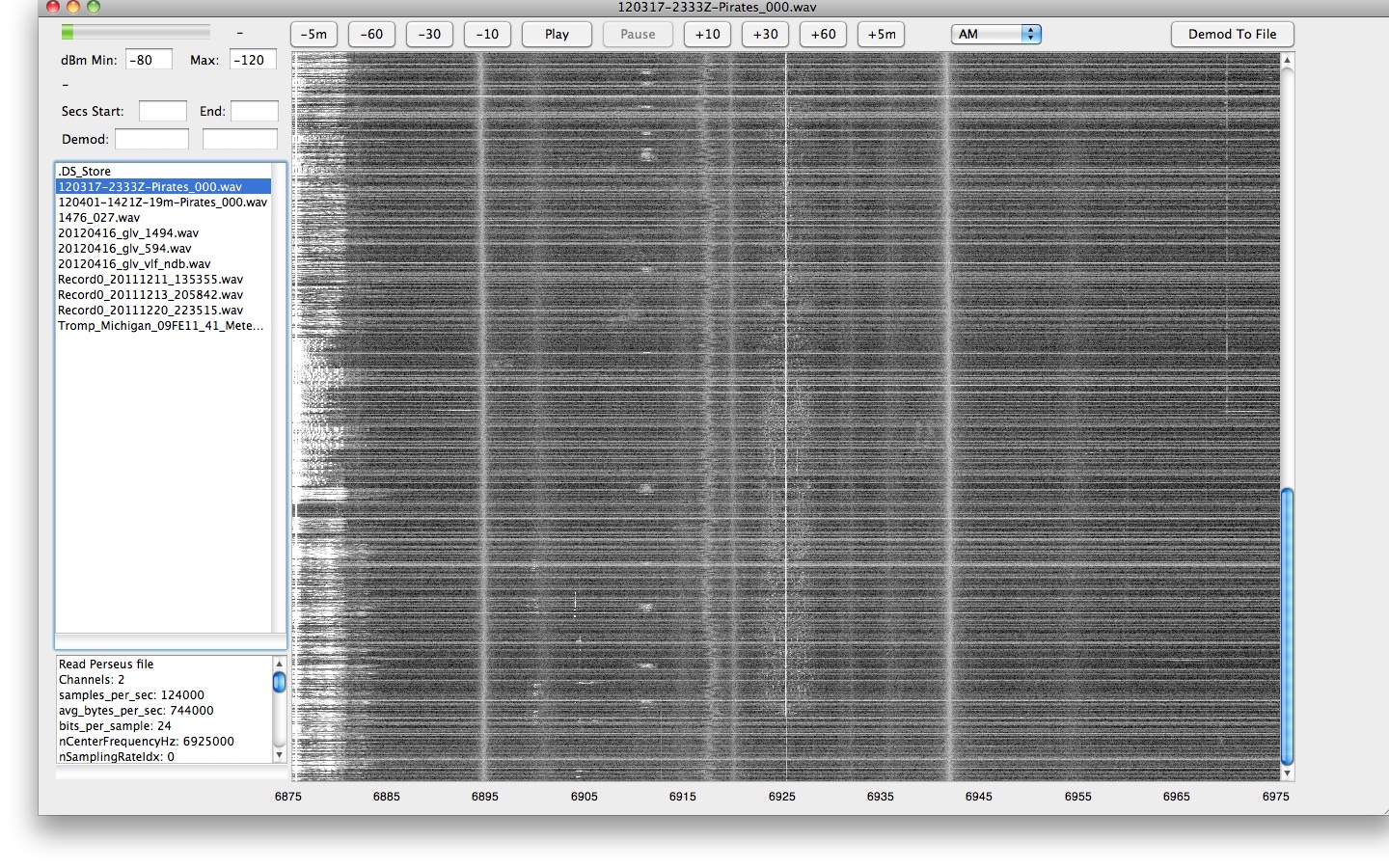
 Hi there, I thought I would share some Brazilian shortwave catches with you, obtained using my Sony ICF-2001D receiver and 200 metre experimental longwire. The first is Radio Bandeirantes, Sao Paolo on 9645.4 kHz. This is a station that I’ve only heard once or twice previously, but was received with excellent signal clarity and strength recently, using my deployable longwire antenna. I would rate this station as moderately difficult to receive with reasonable discernibility. The second is Radio Novo Tempo from Campo Grande, on 4894.9 kHz. This station I would rate as difficult to hear with discernible audio. The key is always signal-to-noise, thus moving yourself out of the ubiquitous blanket of QRM most modern environments endure will usually achieve this and of course coupled with sufficient space outdoors to erect a larger antenna will hopefully also improve signal strength. My final video on this post is Radio Nacional Brazilia on 6180 kHz. I would regard this station as quite easy to hear well; their effective TX power towards Europe is around 2 MW, however, outdoors, this station can literally boom in, with what might be perceived as local-AM signal strength. I hope you enjoy watching the videos and seeing/ hearing what’s possible with a modest set-up. As for the Sony ICF-2001D? Well the design is more than 30 years old, but in my opinion at least, still one of the very best portable shortwave receivers ever manufactured. Thanks and 73.
 (Source: Christian Milling via
 (Source:
 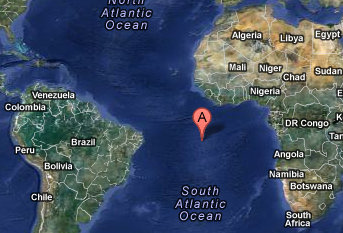 The two hour-transmission on 21715 kHz will start with the old, special sound of Bow Church Bell in east London, the sound of which, even if in DRM this time, will remind older listeners of the BBC broadcasts of many decades ago. The 21-hour transmission will be the regular BBC programmes for West and South Africa and will end at 1400.