Tag Archives: Software Defined Radio

Dave reviews the SDRplay RSP

SDPlay-RSP

Many thanks to my buddy, Dave Zantow (N9EWO), who writes:

My long awaited “SDRplay RSP” review is now available. My apologies for the delay. It took more time then I had planned and other issues got in the way. We also tested it with the popular DSD+ software and worked well after some troubleshooting.

http://webpages.charter.net/n9ewo2/perseus.html

I always enjoy your reviews, Dave! As you say, reviewing SDRs certainly takes more time than reviewing stand-alone receivers–especially when there are so many options for SDR applications! Like you, I feel like the SDRplay RSP offers a good value for the listener–especially at the $129 price point.

Mark’s multi-user SDR is now online

mark-fahey-beagle-kiwi-sdr

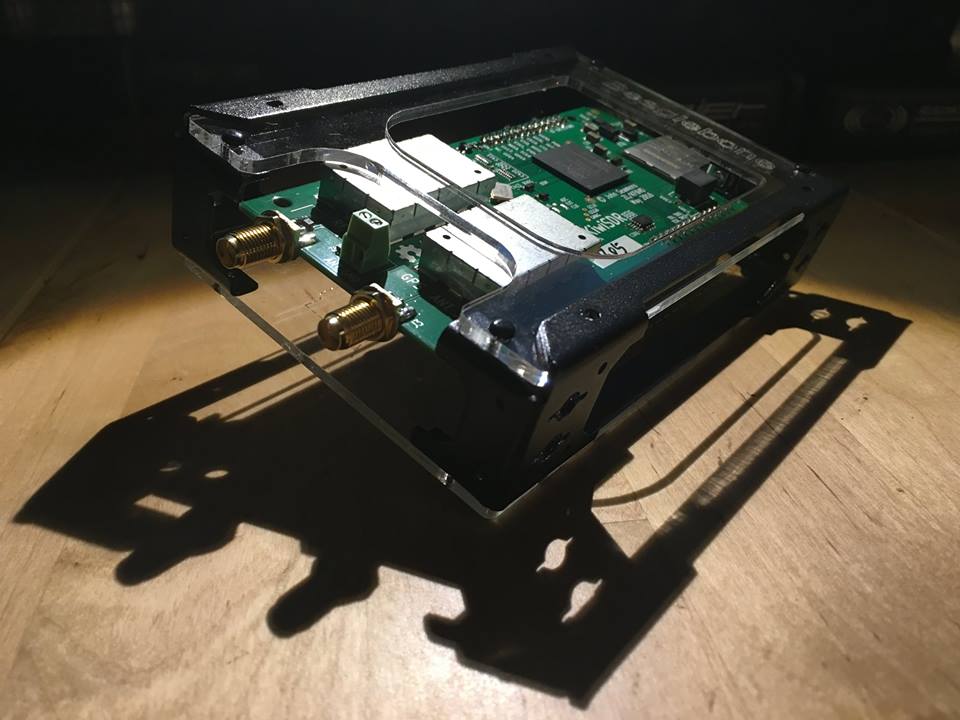
SWLing Post contributor, Mark Fahey, has just announced that his new Beaglebone-powered KiwiSDR receiver is online.  Mark notes:

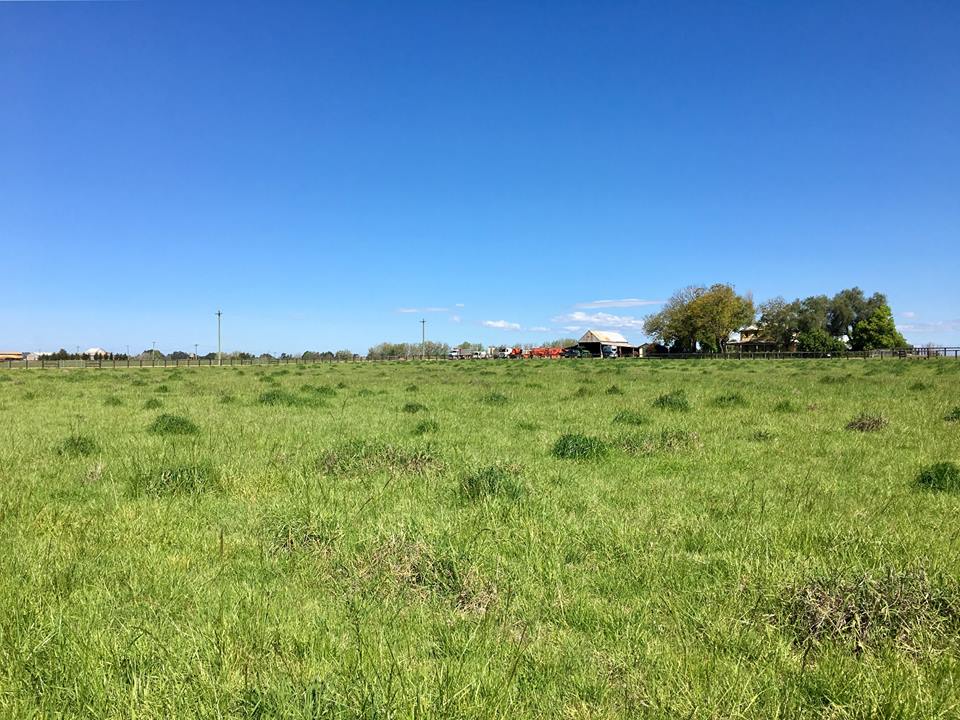
Please try out my multi-user 0-30MHz SDR[.] The test system is operating from my monitoring station at Freemans Reach in south east Australia (near Sydney).

fahey-qth

Freemans Reach, Australia

[…]The test system is fully self contained and self operating. The antenna (ALA1530S+) we are using is a magnetic loop with an impedance tracking amplifier designed and manufactured by Wellbrook Communications, Llanwrth Wells in Wales. The receiver and CPU is the result of the Kickstarter funded project “KiwiSDR” which was conceived and designed by John Seamons ex Pixar and Lucas Films.

[…]You can use Chrome, Microsoft Edge, Safari, Firefox – but Internet Explorer is not supported at this stage. Tune in on this URL…

http://mediaexplorer.ddns.net:8073/

mark-fahey-shack

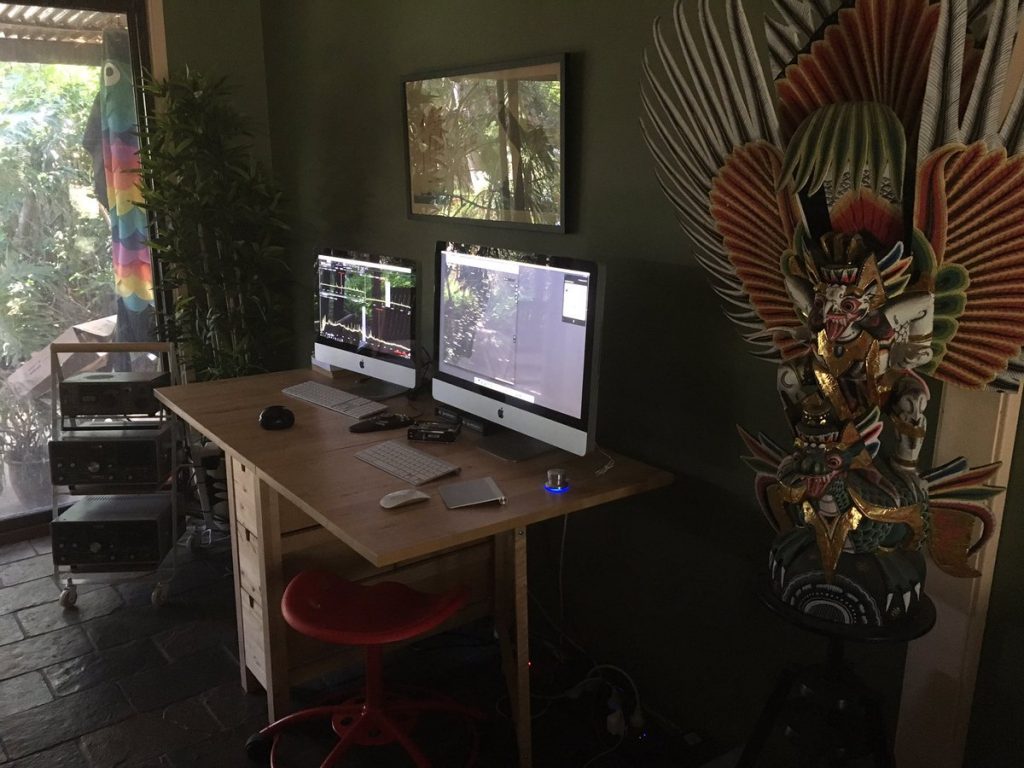
Mark’s radio shack.

[Four] simultaneous users are supported with totally independent tuning and control

Mark's Wellbrook antenna

Mark’s Wellbrook ALA1530S+ antenna

Many thanks for sharing your KiwiSDR, Mark! Though demand has been quite high, I have managed to claim one of the four user seats on Mark’s SDR and “listen like a local.”

Mark: you’ve done a great job making a proper listening post for your remote listeners. The KiwiSDR/Wellbrook ALA1530S+ combo is performing admirably!

Click here to use Mark’s KiwiSDR.

SDRuno: Version 1.03 now available

sdruno-screenshot

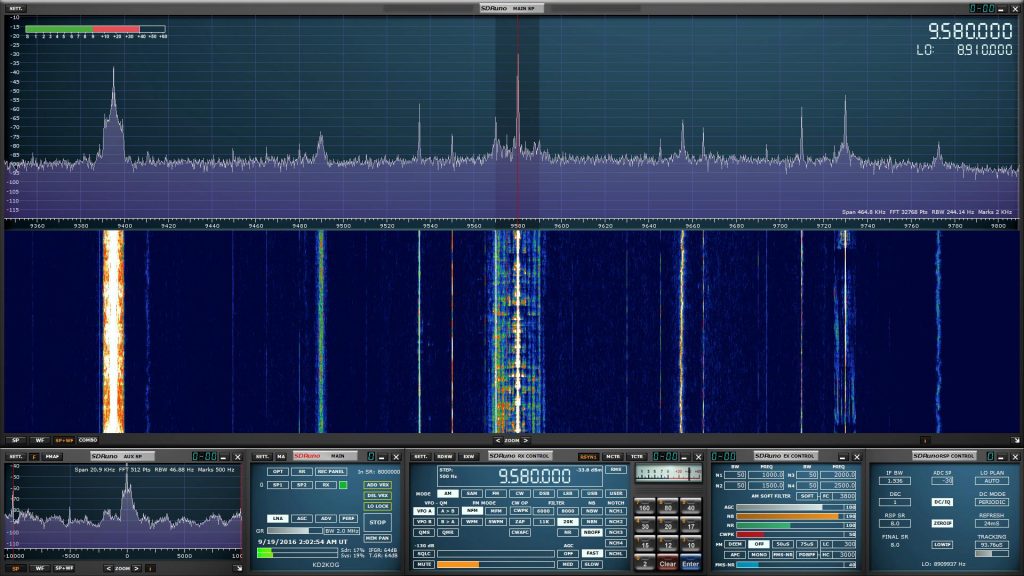
Many thanks to SWLing Post contributor, Mike Ladd (KD2KOG), who notes the release of SDRuno version 1.03:

Beta testing is complete. Changelog is below.
Version 1.03 (18th September 2016)

Bug Fixes

  • High DPI resolution issue.
  • Various minor bug fixes and typos

Updates

  • Reworked filter cutoffs
  • Separate out EXTIO functionality
  • RSP Ready indicator in Main Window/SETT/Input
  • Rename FM Stereo Noise Reduction button and slider to FMS-NR to avoid confusion with SNR (Signal Noise Ratio)
  • Improvements to tuner AGC scheme
  • Improvements to DC offset scheme
  • Removed unused buttons in SP1/SP2 windows
  • LO display in RSP advanced window and the SP1 window
  • Change defaults (LNA OFF / AGC ON)
  • Added RDS PTY support

www,sdrplay.com

Click here to download the release notes (PDF).

Medium wave DX logs: WMEX, CFRB, CJBC, WNYC, WARV, WRCA, WWRU received in Oxford, UK

elad
north-america-map
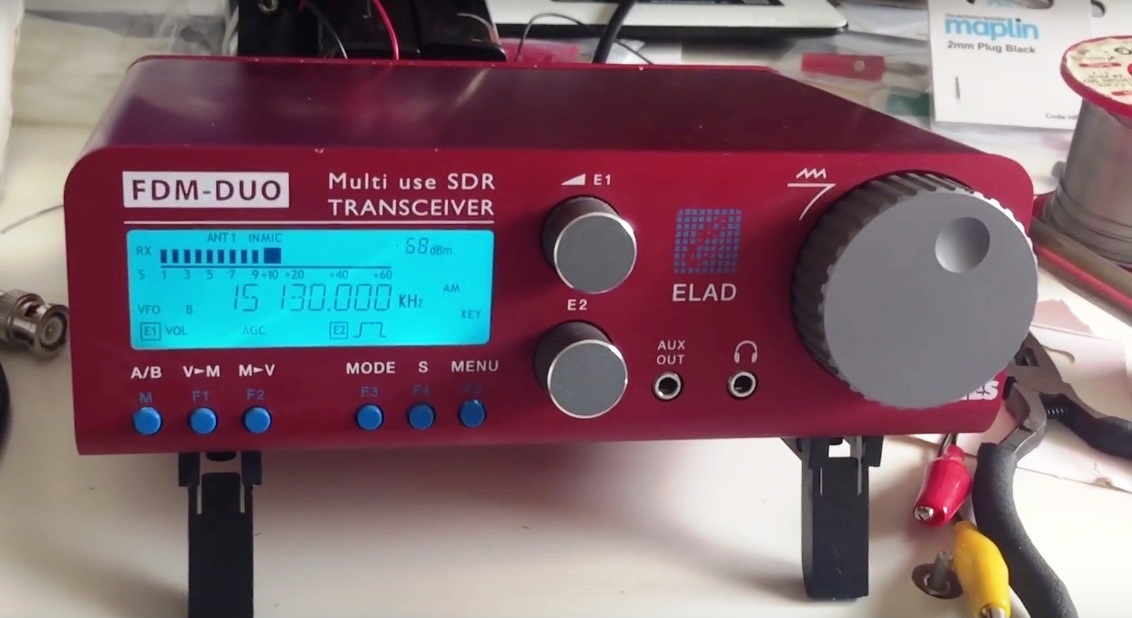
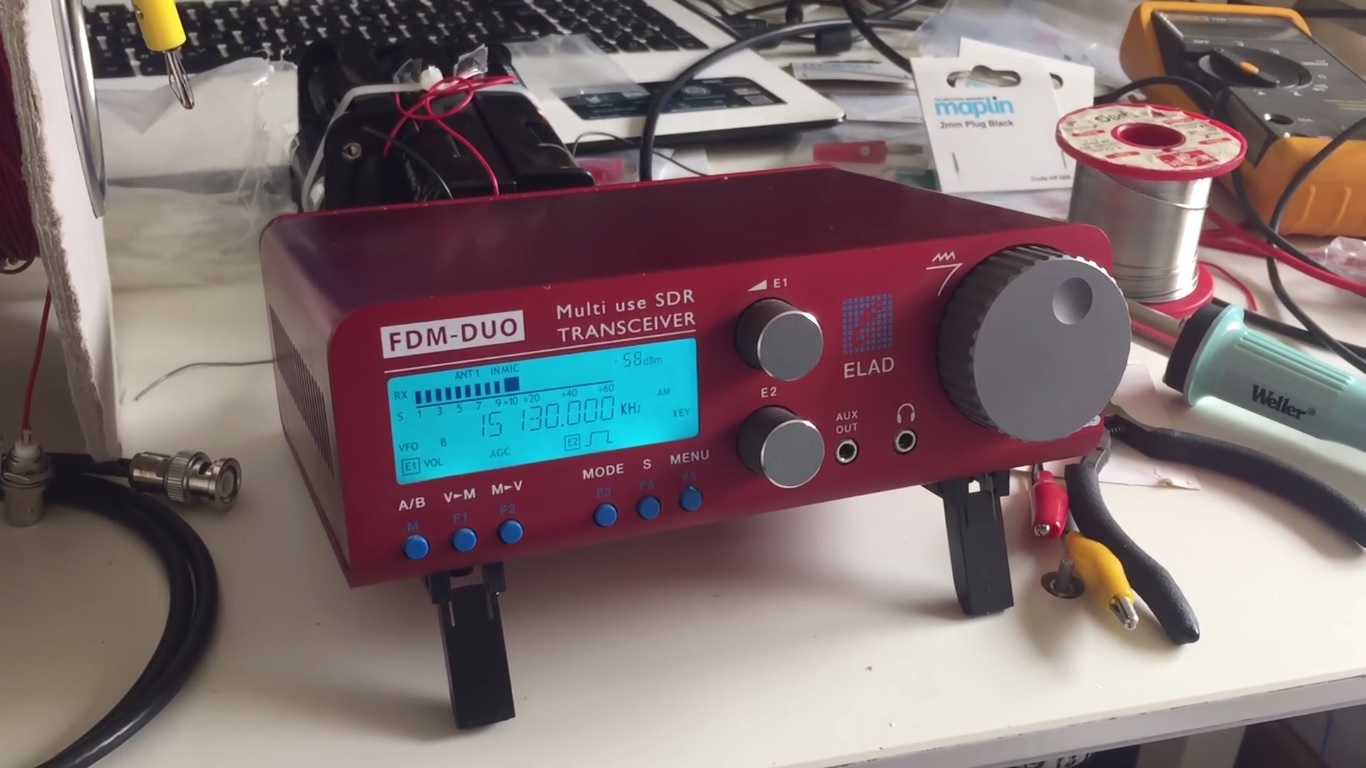
Hi there, here is a selection of North American medium wave stations logged in Oxford UK, over the past couple of weeks using the Elad FDM DUO and Wellbrook ALA1530 active loop antenna (indoors).  A quick list of stations logged follows below – with URL links which will take you directly to the respective reception video on the Oxford Shortwave Log YouTube channel. Embedded reception videos follow further below.  A subsequent posting will follow detailing some South American stations logged recently on medium wave, using the same Elad/Wellbrook set-up. Thanks for watching/ listening and I wish you all great DX.


Medium wave DX: WMEX Boston Talk Radio 1510 KHz, wonderful signal


Medium wave DX: CFRB Newstalk 1010 Toronto 1010 kHz, with clear ID


Medium wave DX: CJBC Toronto 860 kHz, French language network of CBC


1000th video! Medium wave DX: WNYC 820 kHz, New York Public Radio (presumed)


Medium wave DX: WARV 1590 kHz, Warwick, Rhode Island, USA


Medium wave DX: WRCA 1330 kHz, Waltham Massachusetts, clear ID


Medium wave DX: WWRU Jersey City 1660 kHz, New Jersey, clear ID

Clint Gouveia is the author of this post and a regular contributor to the SWLing Post. Clint actively publishes videos of his shortwave radio excursions on his YouTube channel: Oxford Shortwave Log. Clint is based in Oxfordshire, England.
South American shortwave catches, rarely heard in Europe

RCRI

r9djHi there, I thought I would share some DX catches, all of which are rarely reported in Europe and yet I was fortunate enough to catch in Oxford UK, using a couple of different set-ups. The first is Radio Chaski Red Integridad from Urubamba Cusco, Peru, heard using an Elad FDM DUO and Wellbrook ALA1530 active loop antenna (indoors). The two subsequent receptions originate from Brazil; Radio 9 de Julho, Sao Paulo and Radio Transmundial,Santa-maria rtmCamobi, both of which were caught using the venerable Sony ICF-2001D portable receiver and my 200 metre longwire antenna. In all three cases, persistence was necessary whilst optimum conditions of propagation aligned with my listening schedule at home and my less frequent, but regular DX’peditions.

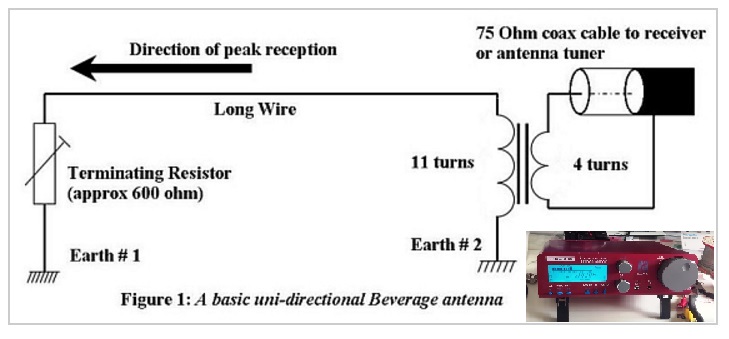
I am soon to deploy a 200 metre Beverage with adjustable termination resistance for nulling ‘rearward’ signals and matching transformers suitable for 75 and 50 Ohm receiver antenna inputs. I hope this will further improve my reception capability on both the MW and SW bands.  Another post specific to that project is in the pipeline, but in the meantime, thanks for reading/ watching and I wish you all very good DX.


Direct link to Oxford Shortwave Log for Radio Chaski Red Integridad reception video


Direct link to Oxford Shortwave Log for Radio 9 de Julho reception video


Direct link to Oxford Shortwave Log for Radio Transmundial reception video


Clint Gouveia is the author of this post and a regular contributor to the SWLing Post. Clint actively publishes videos of his shortwave radio excursions on his YouTube channel: Oxford Shortwave Log. Clint is based in Oxfordshire, England.
Tropical Band DXing at home with Elad FDM DUO and Wellbrook ALA1530 active loop

2-jungleRecently I have spent a little more time listening out for Tropical Band stations from my shack in Oxford UK, attempting to emulate some of the very nice signals I have previously recorded out on DX’peditions. The obvious problems with this (and they are numerous) include the relatively weak signal strength of many tropical band stations, the ubiquitous blanket of QRM, resulting in generally poor SNR, lack of space for a large antenna……need I go on?! Fortunately, the Elad FDM DUO has proven to be a very senstive and selective receiver, capable of, at times, incredible SNR, coupled with almost limitless signal conditioning options and SSB, SYNC, ECSS etc. Throw the Wellbrook ALA1530 active loop into the mix (not literally!) and you have a very powerful Tropical Band receive set-up. The Wellbrook is able to null most (although not all) QRM in my shack and that really can make the difference between simply observing a carrier and actually hearing audio. Clearly one cannot expect to hear DX at home under heavy QRM as well as you might outdoors, however, the following stations were logged in the past month or so, with respectable signals, with the ALA1530 indoors:

Video links also follow below, thanks for reading/ watching.

Direct link to Oxford Shortwave Log video; Radio Logos 4810 kHz, Peru

Direct link to Oxford Shortwave Log video; Radio Cultura Ondas Manaus 4845 kHz, Brazil

Direct link to Oxford Shortwave Log video; AIR Bhopal 4810 kHz, India

Direct link to Oxford Shortwave Log video; Rádio Educação Rural 4925.2 kHz, Tefé, Brazil

Direct link to Oxford Shortwave Log video; Radio Mosoj Chaski 3310 kHz, Bolivia


Clint Gouveia is the author of this post and a regular contributor to the SWLing Post. Clint actively publishes videos of his shortwave radio excursions on his YouTube channel: Oxford Shortwave Log. Clint is based in Oxfordshire, England.
The RTL-SDR V.3 dongle on shortwave: Gary details setup and reviews

Many thanks to SWLing Post contributor, Gary Wise (W4EEY), for the following review of the RTL-SDR dongle:


RTL-SDR-RTL2832U-e1471375714199

Based on your blog post on the Version 3 release of the RTL-SDR dongle I had to buy one. I ordered mine from Amazon for $25, and it came in two days. I have an earlier version of this unit that was VHF and above only. What intrigued me about the V3 was the possibility of HF reception in the Direct Sampling mode (without an up converter). So I had to try it.

I used the RTL-SDR Quick start guide at RTL-SDR.com/qsg. While I did not see any mention of Version 3, I hoped that the software that was linked would be adequate. As I am using a Windows 7 laptop, I downloaded the Zadig driver installer, along with copies of SDR# and HDSDR.

Getting the dongle going was pretty straightforward. And right away I was receiving VHF and above signals. The I/O driver defaults to Quadrature demodulation and this was what is used to receive VHF. But what about HF?

It took me awhile to figure out that you select Direct Sampling in the setup screen for the driver. In SDR# software this is found by clicking on the gear wheel icon.

eiagfcab

Under sampling mode select Direct Sampling (Q branch).

In HDSDR you select the EXTIO icon.

dbieggab

Here you select the Q Input under Direct Sampling.

Note that with both you must use the Q input.

With the telescoping antennas included with the dongle, I received very few signals (of very poor quality). But I had read that the unit can only receive HF with a substantial antenna, so I moved the laptop to my hamshack.

I use an ELAD antenna distribution amplifier for my HF receive antennas.

iejehdgi

It was easy to use a spare output from the ELAD ASA15 to drive the antenna input of the RTL-SDR V3.

Wow, what a difference!

First up was international shortwave. Here’s a shot from my Alinco General Coverage receiver on 9955 kHz this morning using my 260′ beverage antenna (pointed toward Europe). S9 on the Alinco S Meter.

habghgaa
And here’s the same signal on SDR#.

cgifieha

There was a delay in the audio coming from the PC versus from the receiver, but other than that, reception was identical. Audio quality was very good.

I then moved to the 20M Amateur Radio band. USB audio demodulation.

jibifhbj

The little dongle worked! It is not what I would call my first choice in receivers, but it will demodulate AM and SSB just fine.

I did not try it on CW as I ran out of time.

I also tried the HDSDR software, which worked equally as well (but I think I prefer SDR# for ease of use).

cafibbdh
All in all, if you have or can put up a good antenna for HF, the little $25 dongle is in, my opinion, worth trying out.

73,

Gary
W4EEY

Click here to purchase the new RTL-SDR–$24.95 shipped on Amazon.com.


Thank you, Gary, for not only giving a quick evaluation of the RTL-SDR’s HF performance, but for describing how to setup HF reception via SDR# and HDSDR.

Over the years, I’ve gotten probably hundreds of emails from readers who would like to try their hand at SDRs, but were cautious about investing. For many years, a 3rd generation SDR would set you back at least $300-400. At $25 shipped, the RTL-SDR V.3 is an SDR receiver that is accessible to anyone who can afford a fast food meal or a few cups of Starbucks coffee. My how times have changed!

Once I get a few transceiver reviews off of my table, I might do some side-by-side HF comparisons between the RTL-SDR and a few of my other SDRs. 

Thanks again, Gary!