Author Archives: Thomas

Radio Waves: Extreme 2001 Geo Storm, Media Ownership Rules Loosened, Germany Bans RFI-Spewing Device, Blue Jays Radio, and L-Band Patch Antenna Review

Radio Waves:  Stories Making Waves in the World of Radio

Because I keep my ear to the waves, as well as receive many tips from others who do the same, I find myself privy to radio-related stories that might interest SWLing Post readers.  To that end: Welcome to the SWLing Post’s Radio Waves, a collection of links to interesting stories making waves in the world of radio. Enjoy!

Many thanks to SWLing Post contributors Troy Riedel, Dave Zantow, NT, Wilbur Forcier, and Rob for the following tips:


20 Years Ago, An Extreme Geomagnetic Storm (Spaceweather.com)

Unlike today’s blank sun, the solar disk 20 years ago was peppered with sunspots, including a monster named “AR9393.” The biggest sunspot of Solar Cycle 23, AR9393 was a truly impressive sight, visible to the naked eye at sunset and crackling with X-class solar flares.

On March 29, 2001, AR9393 hurled a pair of CMEs directly toward Earth. The first one struck during the early hours of March 31, 2001. The leading edge of the shock front was dense (~150 protons/cc) and strongly magnetized — traits that give rise to powerful geomagnetic disturbances. Within hours, an extreme geomagnetic storm was underway, registering the maximum value of G5 on NOAA storm scales.

“I was fortunate to witness and photograph the event when I was just a teenager,” recalls Lukasz Gornisiewicz, who watched the show from Medicine Hat, Alberta:

In the hours that followed, Northern Lights spread as far south as Mexico. In 20 year old notes, Dr. Tony Phillips of Spaceweather.com describes “red and green auroras dancing for hours” over the Sierra Nevada mountains of California at latitude +37 degrees. Similar displays were seen in Houston, Texas; Denver Colorado; and San Diego, California.

“Here in Payson, Arizona, red curtains and green streamers were pulsating all across the sky,” wrote Dawn Schur when she submitted this picture to Spaceweather.com 20 years ago:

“We have seen some auroras here before, but this display was really special,” she wrote.

A second CME struck at ~2200 UT on March 31th. Instead of firing up the storm, however, the impact quenched it. When the CME passed Earth the interplanetary magnetic field surrounding our planet suddenly turned north — an unfavorable direction for geomagnetic activity.

Indeed, the quenching action of the second CME may have saved power grids and other technological systems from damage. The storm’s intensity (-Dst=367 nT) stopped just short of the famous March 14, 1989, event that caused the Quebec Blackout (-Dst=565 nT) and it was only a fraction of the powerful Carrington Event of 1859 (-Dst=~900 nT).

The whole episode lasted barely 24 hours, brief but intense. Visit Spaceweather.com archives for March 30, 31st and April 1, 2001, to re-live the event. Our photo gallery from 20 years ago is a must-see; almost all the pictures were taken on film! [Read more at Spaceweather.com…]

U.S. Supreme Court permits FCC to loosen media ownership rules (Reuters.com)

WASHINGTON (Reuters) -The U.S. Supreme Court on Thursday allowed the Federal Communication Commission to loosen local media ownership restrictions, handing a victory to broadcasters in a ruling that could facilitate industry consolidation as consumers increasingly move online.

In a 9-0 ruling authored by Justice Brett Kavanaugh, the justices overturned a lower court decision that had blocked the FCC’s repeal of some media ownership regulations in 2017 for failing to consider the effects on ownership by racial minorities and women. Critics of the industry have said further consolidation could limit media choices for consumers.

The justices acted in appeals by the FCC, companies including News Corp, Fox Corp and Sinclair Broadcast Group Inc and the National Association of Broadcasters.

The associations for other broadcast networks’ local affiliates, including ABC, NBC and CBS, backed the appeals, arguing that consolidation would help ensure the economic survival of local television amid heavy competition from internet companies that provide video content. Broadcast television stations have said they are increasingly losing advertising dollars to digital platforms.[]

Germany bans ‘water vitalizer’ over radio interference (AP News)

BERLIN (AP) — German authorities on Friday banned the sale and use of a New Age ‘water vitalizer’ device amid concerns that it is interfering with amateur radio signals.

The Federal Network Agency said it had received numerous reports that the device, sold by Swiss company Wassermatrix AG as a way to “activate” the body’s self-healing powers, was transmitting on the frequencies allocated for ham radio users.

The agency said owners of the 8,000-euro ($9,540) device, which has been sold more than 2,400 times in Germany, are allowed to keep but not use it.

Wassermatrix AG didn’t immediately respond to a request for comment.[]

Rush’s Geddy Lee is unhappy about lack of Blue Jays radio for 2021 (Yahoo Sports Canada)

Canadian rock star Geddy Lee is less than thrilled with Sportsnet’s decision to cut their dedicated radio broadcast of the Toronto Blue Jays for the 2021 season.

Sportsnet won’t directly broadcast a separate radio feed and will instead simulcast their television broadcast over the airwaves for the 2021 season, becoming the first MLB team to do so. The decision was made to minimize travel and closely adhere to team, league, and government protocols related to the pandemic, Sportsnet said in a press release.

Lee, the lead singer for Rush, spoke about the importance of preserving a radio feed during an interview earlier in March.

Lee has been avid Blue Jays fan for years, throwing out the first pitch during the 2013 Blue Jays opener, and was a regular attendee at home games for decades.

It would be easy enough to spin this into “old man yells at cloud” in defence of a slightly outdated medium, but the sports media business is tough enough as it is, and the radio broadcast does indeed have charms that television simply can’t replicate, which is especially important for the visually impaired.[]

L-Band Patch Antenna review (Frugal Radio via YouTube)


Do you enjoy the SWLing Post?

Please consider supporting us via Patreon or our Coffee Fund!

Your support makes articles like this one possible. Thank you!

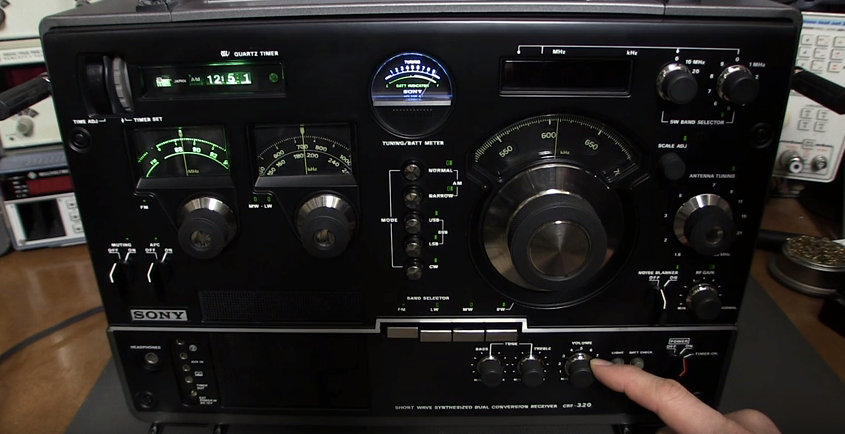
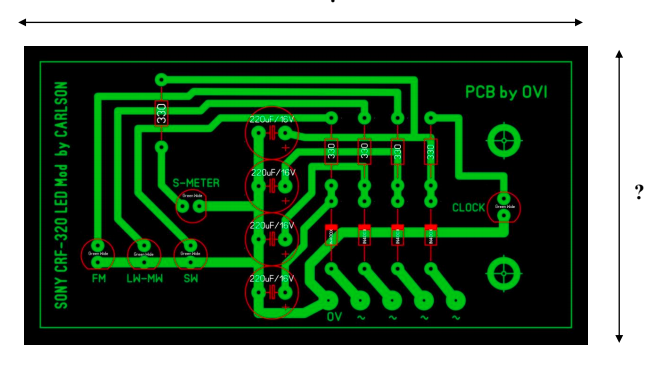
Printed circuit board information for Sony CRF-320 panel light mod?

Many thanks to SWLing Post contributor, Brian, who writes with the following inquiry:

I found a pic of a printed circuit board, based on Mr. Carlson’s Sony CRF-320 panel light mod, on the Yahoo 320/330 fan page but no board dimensions or component values.

I plan to order a bunch of these so if anyone can sort out some measurements on this board or are interested in obtaining a board, please comment. I am a novice in this and am unsure of the component values. I have wired up an electric guitar, so this I anticipate will be less complicated.

Post readers: If you can help Brian with this info, please feel free to comment!

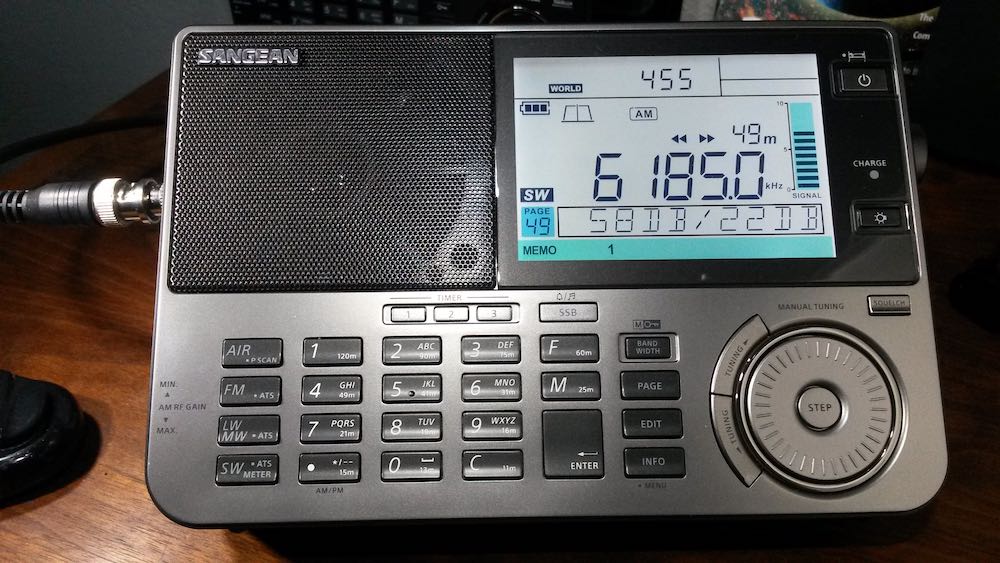
Sangean ATS-909X2: Dan’s quick update with notes about firmware updates

Many thanks to SWLing Post contributor, DanH, who provides the following update and news as he evaluates the new Sangean ATS-909X2:

I have a few items to report after hitting the six weeks mark with the new Sangean ATS-909X2.

My radio was equipped with firmware VER 070. I have been on the lookout for gremlins that could be attributed to this firmware version. I found only one. There are delta symbols on the display that indicate whether FAST or SLOW tuning speeds have been selected. These symbols disappeared after I switched shortwave bands by using the SW button + SW meter band button command. The symbols returned if the STEP button was used.

The Sangean auto bandwidth feature seems to be a first in multiband portable radios. This feature is very promising. It is most effective for shortwave and MW reception when listening to spoken word programming and when an optimal tone control setting has been chosen. The audio filter for NEWS highlights the conversational voice range. If you are having difficulty copying words from a demanding signal the auto bandwidth and audio filter combination may provide just the extra punch that you are looking for.

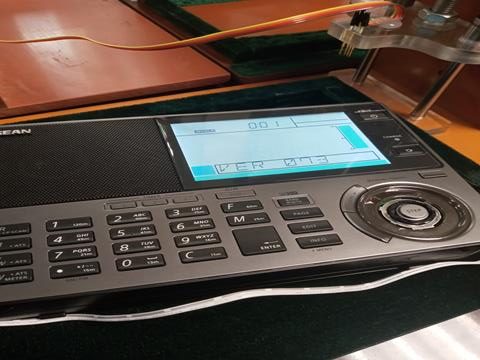
I am currently without a 909X2 and have gone back to using my 909Xs. I returned the 909X2 to Sangean America at Santa Fe Springs in California this week for an upgrade to firmware VER 073. I received an email from Sangean’s service technician this afternoon saying that my 909X2 accepted the firmware update! He included a photo of my radio on the bench next to the purpose-built jig provided for this upgrade by Sangean headquarters in Taiwan.

Owners of a Sangean ATS-909X2 that was distributed by Sangean America may contact them regrading an update to firmware VER 073.

This offer applies only to the 909X2 model that has software VER 070 installed (not VER 073). Sangean America will provide you with a product recall form including return instructions and a prepaid mailing label.

https://www.sangean.com/company/contact_info.asp

I’m looking forward to the return of my 909X2. I held off from making station memory entries so I’ll be manually entering them from my 909Xs soon. The new A21 frequencies are here!

Thank you so much for the update and tips regarding VER 073 firmware updates, Dan!

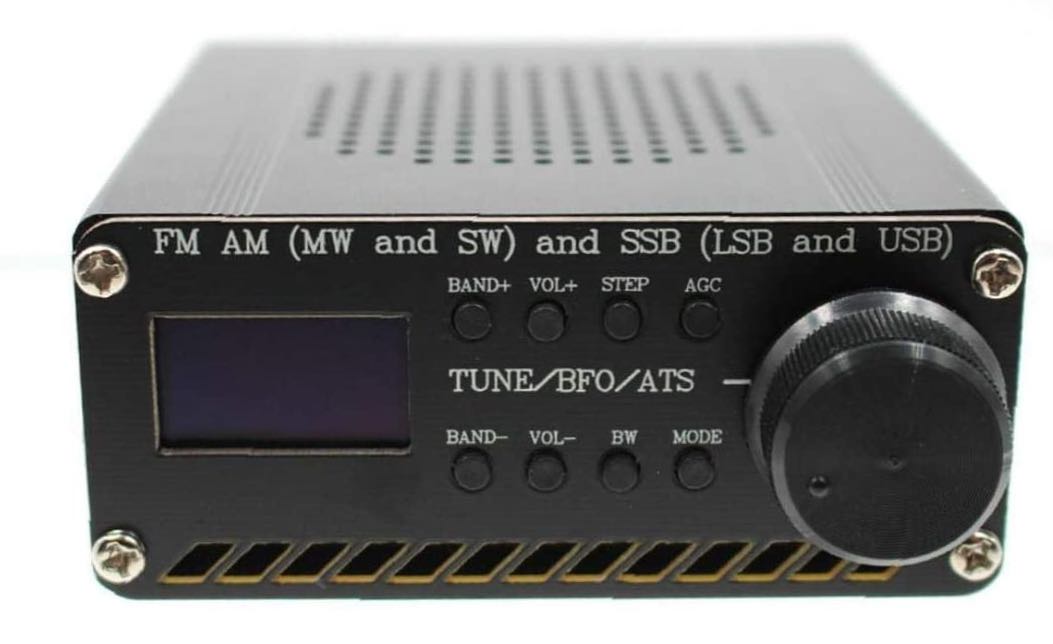
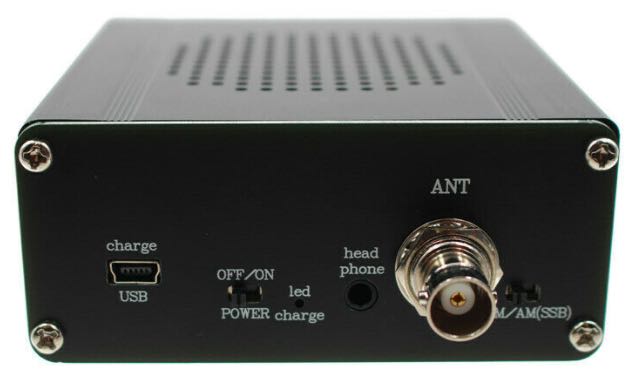
Any thoughts on this inexpensive Si4732-based receiver?

I’ve received a number of inquiries from SWLing Post readers lately regarding an inexpensive Si4732-based mini stand-alone receiver being sold on Amazon and eBay for around $56-66 US shipped.

The radio is based on the Silicon Labs Si4732 DSP chip which provides the following frequency coverage:

  • FM (64–108 MHz) with RDS
  • AM/Mediumwave (520–1710 kHz)
  • Shortwave (2.3–26.1 MHz)
  • Longwave (153–279 kHz)

It appears the bandwidth selections are 0.5, 1.0, 1.2, 2.2, 3, and 4 kHz.

If 4 kHz is the widest AM bandwidth, that is a bit unfortunate. The radio does have a BFO for tuning SSB and CW signals.

If I’m being honest, even though the price is a no-brainer, I’ve been hesitant to buy it simply because, due to my limited free time, I really do seek enthusiast-grade receivers for review these days. I’m less interested in radios that are cheaply made and lack the sensitivity, selectivity, noise floor, and features an SWL would desire. In other words, I’m a bit skeptical this receiver will be a proper performer.

The frequency range is certainly adequate and Silicon Labs chips are a quality product, but as we know the Si4732 is only as good as its implementation (click here to read the PDF data sheet).

I’m curious if any SWLing Post readers can comment with their experience using one of these Si4732-based receivers. Did it live up to your expectations? How does it compare with, say, an XHDATA D-808 or Tecsun PL-330? Is it sensitive with the supplied whip antenna? Does it have many birdies or other internally-generated noises? Please comment and let me know if this radio is worth checking out!

Click here to search eBay for this radio.

Click here to check it out on Amazon.com. (SWLing Post affiliate link)

Can you help Tom ID this CW transmission on 7039.60 kHz?

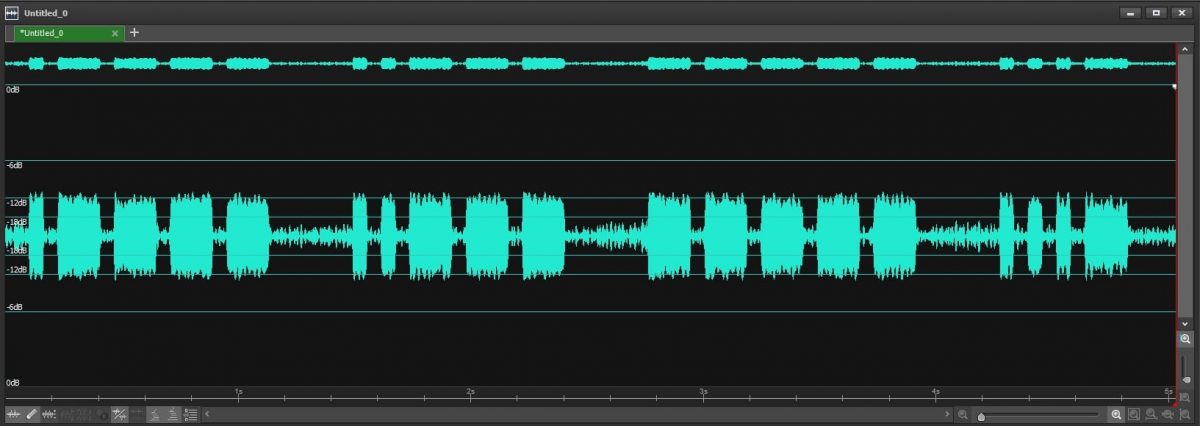
CW Spectrum

Many thanks to SWLing Post contributor, Tom (DF5JL), who writes:

At the end of last year it appeared for the first time: a telemetry transmitter in CW on 7039.60 kHz. It always transmits at the 2nd, 22nd and 42nd minute of every hour. Every day.
Reception reports are available from Germany, the Netherlands, France and Greece. Three numbers and a V are transmitted ten times in succession, as follows:

0522 UTC: 121V
0542 UTC: 121V
0622 UTC: 122V
0722 UTC: 123V
0822 UTC: 125V
0842 UTC: 127V
0902 UTC: 128V
0922 UTC: 129V

During the day the values increase, in the afternoon they decrease. It is assumed that voltage values are transmitted here, i.e. “121V” would correspond to 12.1 volts. You can listen to a recording here:

Any idea?

73 Tom

Thank you, Tom.

Post readers: If you can shed some light on these transmissions, please comment!

Dan reviews the Tecsun PL-330 portable shortwave radio

Many thanks to SWLing Post contributor, Dan Robinson, who shares the following guest post:


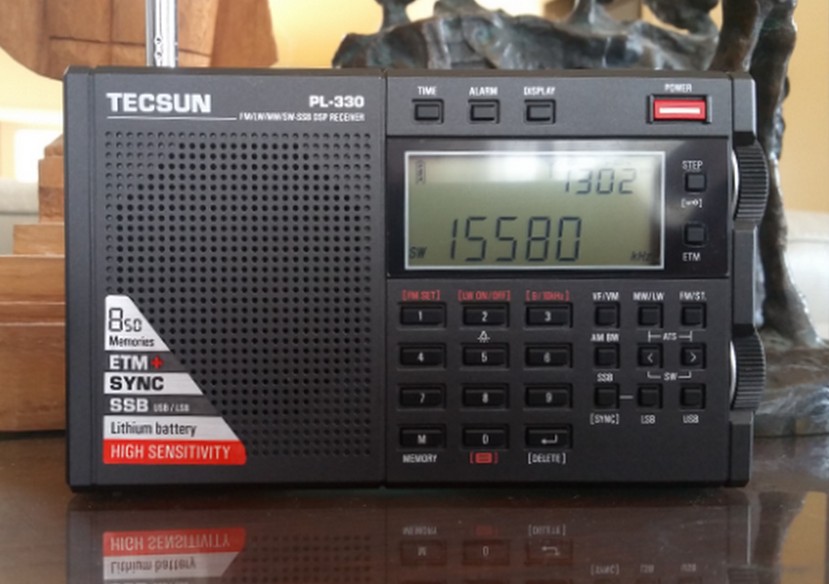
Tecsun PL-330:  The Powerful Mini With One Serious Design Issue

by Dan Robinson

As SWLing Post readers know, I have a huge radio collection – including premium receivers and portables, now nearly 100 in all.

So, these days I am hesitant to add too many, but I continue to take interest in what companies such as Tecsun and Sangean are doing in the way of stuffing the latest chip technology and capabilities into portables radios.

The last receivers I reviewed included the Tecsun PL-990x, which has developed quite an enthusiastic following since its consumer version was released in 2020, and the Tecsun S-8800.

Out for some time now is the Tecsun PL-330.  By now there are many reviews of it on You Tube and elsewhere.

It’s become a familiar observation for many of us – if this were still the 1960’s and 1970’s – even into the 1980’s, which could be considered the golden days of shortwave and we had receiver technology like this, well what a joy that would have been.

When I traveled around the world both before and after college, and professionally for Voice of America in the 1980s and 1990s, wow what a good time I could have had with today’s portables!

Some world band portables radios back then were superb performers.  The Grundig Satellit series 500/700/600/650 come to mind – but these were not exactly what I would call small portables.

Paging through Passport to Worldband Radio from 1990 (wow, that’s 30 years ago!) you see others such as the SONY SW-1, Panasonic RF-B65, and of course, the SONY ICF-2001D/2010 which introduced killer synchronous tuning technology in the 1980s and remains popular today decades after it first appeared.

Also available were the SONY ICF-SW55 and later in competition with the 2010, the SONY ICF-SW77.  Today, I have four SW-55s and two SW-77s and still use them regularly.

Tabletop receivers back in the good ol’ days offered multiple selectivity positions.  One of those was the Lowe HF-225 (and later Europa version) along with the HF-250, Kenwood R-5000 and R-2000, ICOM IC-R71A, and Yaesu FRG-8800 among many others.

But as far as smaller portables go, features such as synchronous detection and multiple selectivity were still pretty limited, and a number of receivers didn’t offer selectable synchronous as was eventually offered on the Drake R8B and later production of the SW-8.

The RF-B65 by Panasonic – which today remains sought after for its amazing sensitivity – was hobbled by having a single selectivity position.  Same with SONY’s SW-1 and SW-100, and 7600GR, though SONY’s PRO-80 had two bandwidths.

Indeed, it wasn’t until Eton brought out the E-1, with its three bandwidths combined with Passband Tuning (though no notch filter) that a portable finally reflected capabilities of some of the better tabletop radios (though lacking a notch filter).

The Grundig Satellit 800 was close in competition with the E-1 (though the earlier Sat 600/650 series also had multiple bandwidths) but was bulky.

Fast forward to 2021 – credit due to Tecsun and more recently to Sangean with its 909X2, for some years now we have enjoyed Asia-originated portables with multiple selectivity and synchronous mode, though sync implementation on some has left much to be desired.

Which is where the PL-330 comes in.  When I look at the 330, I am reminded of one of the now ancient SONY portables, the ICF-4920 which was a super small slide-rule receiver that nevertheless was quite sensitive.

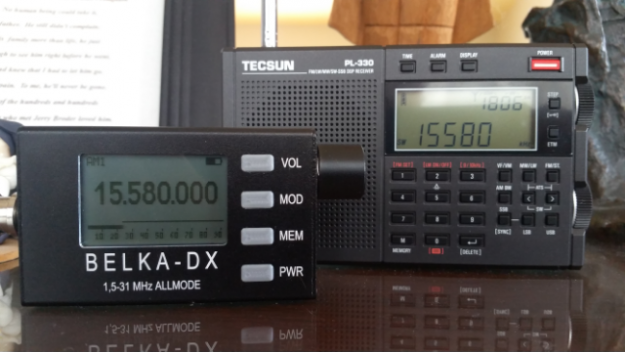
Like the 4920, which you could easily slip in a pocket, the PL-330 is a perfect travel portable.  Only the Belka-DX SDR and still wonderful SONY SW-100 compete in terms of performance and size.

The 330 is basically a PL-990x in miniature:  smaller speaker obviously, shorter antenna, no bluetooth capability or card slot.  But as many people who frequent the Facebook groups have observed, pretty much anything the 990x can do, so can the 330.

This radio has ETM/ATS tuning, synchronous detection, multiple bandwidths in AM, SSB and MW, FM mono-stereo speaker control, alarm/timer functions, external antenna jack, display light, and other features.

Tecsun decided to go with a BL-5C battery here – the same with the new PL-368.  I think this is unfortunate, since it requires one to obtain a number of those flat batteries if you want to travel and not have to re-charge.  On the other hand, this is not a crippling design decision.

What is an unfortunate design problem, in my view, involves the simple question of tuning the receiver.

The main and fine tuning knobs on the right side of the PL-330 are embedded into the cabinet just far enough as to make easy rapid finger tuning of the radio nearly impossible.

In fact, in my testing it’s impossible to thumb tune the radio more than 10 kHz at a time.  The same applies to using the lower knob which controls volume.  When in FM mode, this issue make tuning just as frustrating almost forcing one to use rapid scan mode.

Another puzzler:  Tecsun limited bandwidths in AM SW to three, while in SSB you have 5 bandwidth options.  In AM mode, you have a 9 kHz bandwidth, another puzzling choice.  Longwave too is limited to 3 bandwidths.

But overall, none of these problems really knock the PL-330 down very far.  This is one mini powerhouse of a radio, one that makes you think “wow, if I had just had this back in 1967 or 1973 or 1982.

Some additional thoughts.  My particular PL-330 was supplied by Anon-co but is a pre-production version and so does not have the latest firmware.  Thankfully, I have not experienced the issue of SSB tuning running in reverse as others have.

NOTE:  As most users know by now, but some newer users may not, you cannot charge one of these radios – whether Tecsun or Sangean – using the mini-USB port and use them at the same time. . . there is just too much noise introduced from the charging process.

This little mentioned feature:  just as the Tecsun 909x has a re-calibration function, so does the PL-330.  Tecsun itself initially declined to acknowledge this, but finally confirmed through Anon-co.

The procedure: Switch to LSB/USB.  If the station is not zero beat, hit STEP button once and then quickly again to move the flashing display down arrow so it’s above the far right digit.  Then fine tune the station for zero beat.  Hold LSB or USB in for a couple of seconds.  The LCD blinks.  You then have zero beat – but be sure to repeat the process for LSB and USB.

I should mention that just like on the 990x, the re-calibration process doesn’t mean the receiver is then zeroed up and down the shortwave bands.  You will likely have to repeat the process from, say 25 meters, to 19 meters, to 49 meters, etc.

I have come to enjoy using the PL-330 here in my house, though like other portables in my collection I need to position it in one particular corner of my home away from incoming cable TV lines.

Belka-DX and Tecsun PL-330

The PL-330 and the Belka DX are currently king of the pile when it comes to my smaller travel portables.

I fully expect there will be no further receiver development by Tecsun after the PL-330/990x/H-510 radios – but that company will certainly have left us with some great receivers as the days of shortwave approach an end.

Video