Shortwave listening and everything radio including reviews, broadcasting, ham radio, field operation, DXing, maker kits, travel, emergency gear, events, and more
Portrayals of radio in popular culture provide an interesting glimpse at radio’s role in society. At Radio Survivor, we’ve long been fascinated by radio depictions on both the small and large screen; so it is a treat to dive into this topic with Hemrani Vyas, Programming Coordinator at Turner Classic Movies (TCM). Vyas curated an entire day of radio-themed films for the cable network, focusing on the era of 1930 to 1950. This week we talk about some of the featured films and also dig into a broader discussion about the changing images of radio in the movies.
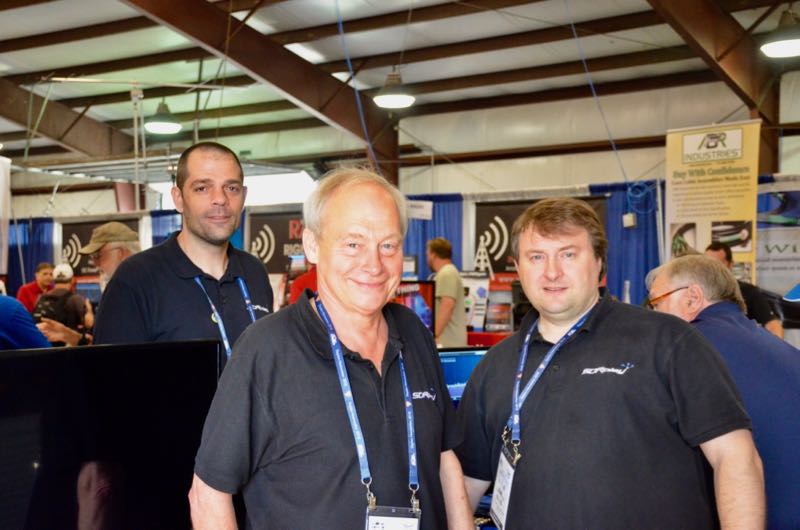
Steve Andrew has released version 1.1 of his Windows Spectrum Analyser software which has been upgraded to support the RSPdx.
This popular software turns the RSP into a wonderful low cost lab tool with fast scan, sample and hold, and most of the key features you’d expect in a piece of lab gear costing 10 times the price.
A lot of radios come through SWLing Post HQ each year.
Over the years, I’d like to think that I’ve become immune to the effects of giving away, trading, or selling radios that have been in the shack for a while. But let’s face it: I’m just fooling myself!
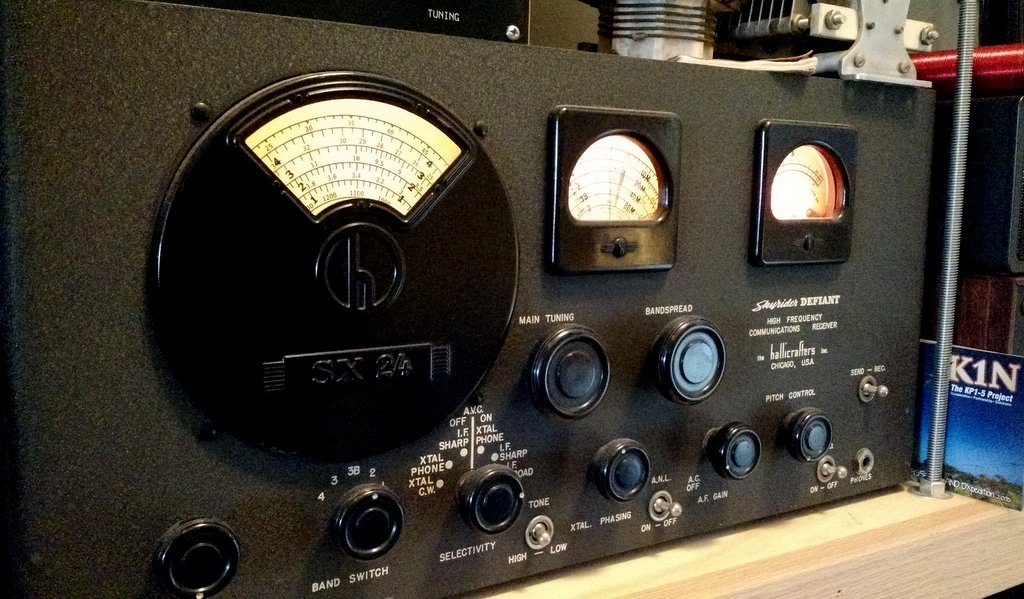
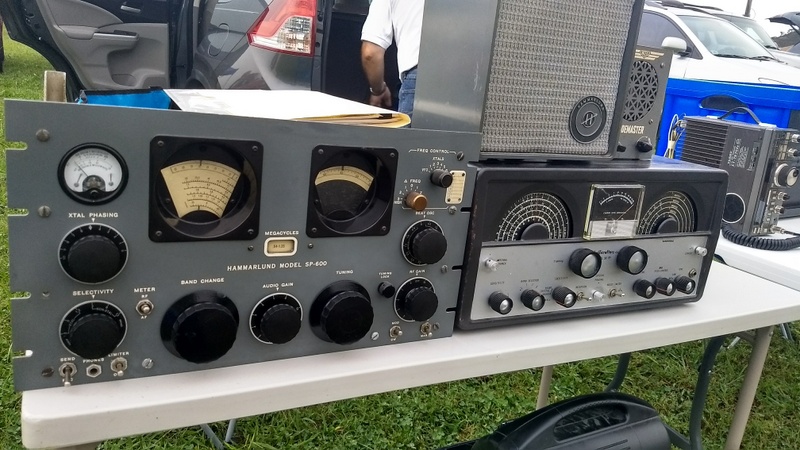
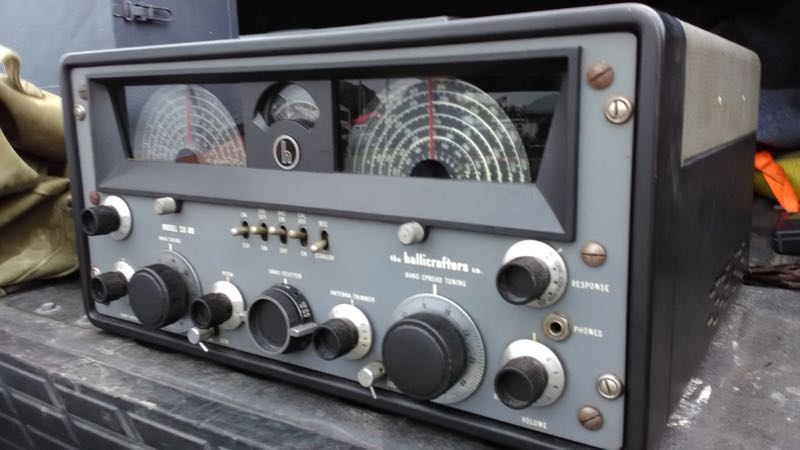
I sold both my Hammarlund SP-600 and Hallicrafters SX-99 at the Shelby Hamfest.
As I’ve said before, I find it much easier to part with modern portables, transceivers, and SDRs than I do with vintage gear. With modern gear, I feel like there’s always something new around the corner, thus it’s easy to justify. Plus, I take in so many units on loan for evaluation and review, I see them come in the door and go back out. Occasionally, I like one so much I buy it, but there’s not a lot of attachment. I’m not a “fan boy” of any modern company either, so I don’t intentionally collect rigs.
Ah, but the vints…
I’m a nostalgic guy, so vintage gear comes with more emotional attachment.
Over the years, I’ve had to part with a number of boat anchors because, frankly, I always need a clear space in the shack for evaluating gear and my shack is rather compact. (For example, at one point last year, I had three transceivers here for evaluation all at the same time.)
My Hammarlund SP-600was a very tough one to let go of. I justified it by selling the big girl to my good friend Charlie (W4MEC) who had actually helped me replace some of her capacitors at one point. The SP-600 was simply too deep and too large to fit even on my over-sized radio shelves–especially if mounted in a chassis. Charlie has a much better setup for rack-mounted “heavy metal.” She’s got a good home now.
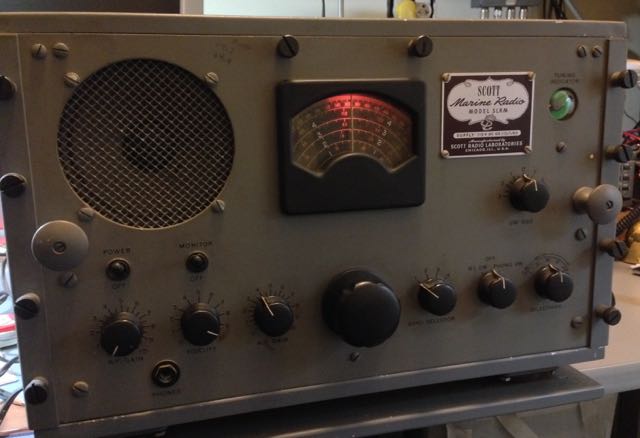
The Scott Marine Radio Model SLRM
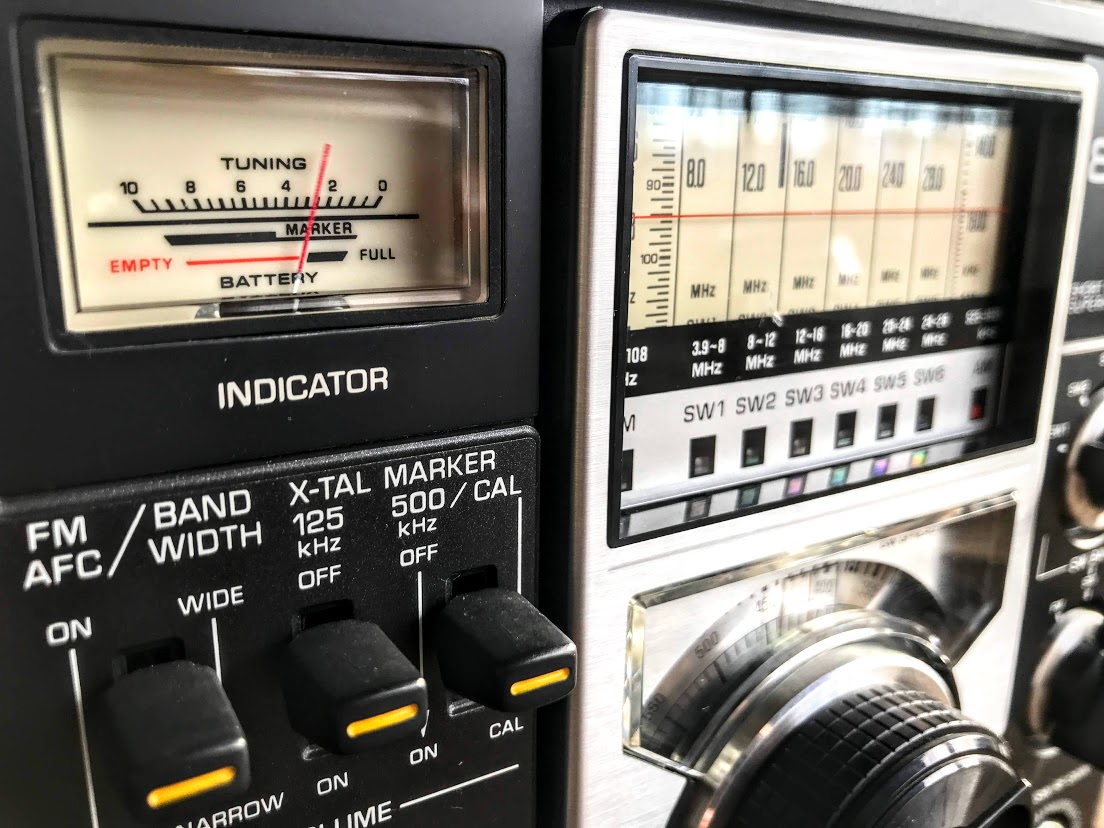
There are two vintage sets I’ll never sell: my Signal Corps BC-348-Q and my Scott Marine SLRM (photo above). How much do I love these radios? My wife has strict instructions to “put’em in the casket with me!”
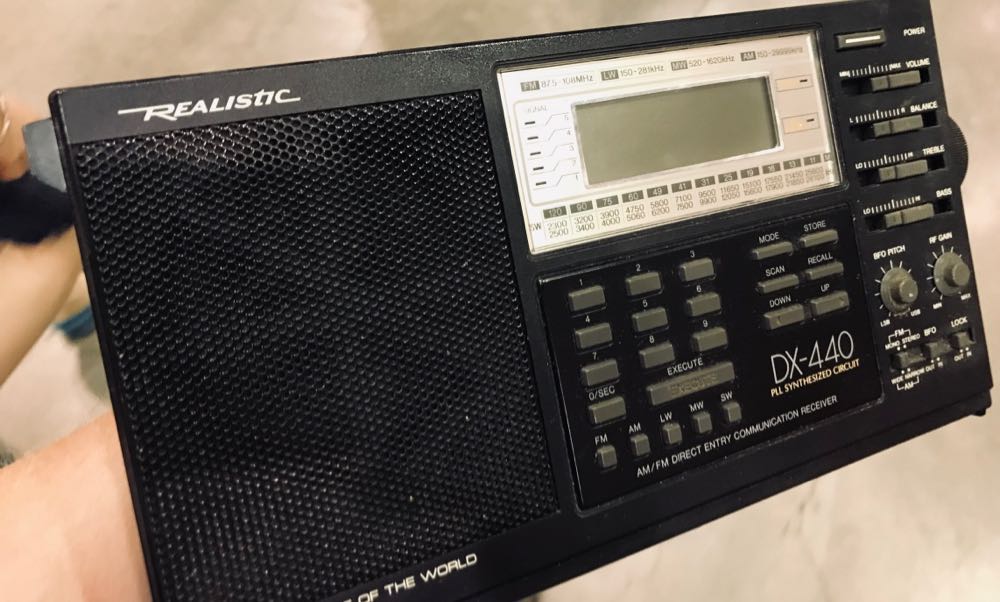
I did snag this DX-440 last year at the Huntsville Hamfest
No doubt, I miss these radios because they both served me for so many years. We traveled many countries together both on the ground and through the airwaves.
Parting is such sweet sorrow…
A number of readers have confessed that they regretted selling their RF-2200.
Have you ever regretted parting with a radio?Please comment with the model and why it was special to you. I’d also love to hear about the models you currently own and would never consider selling or giving away.
Radio Waves: Stories Making Waves in the World of Radio
Because I keep my ear to the waves, as well as receive many tips from others who do the same, I find myself privy to radio-related stories that might interest SWLing Post readers. To that end: Welcome to the SWLing Post’sRadio Waves, a collection of links to interesting stories making waves in the world of radio. Enjoy!
Many thanks to SWLing Post contributors Bill Patalon, Dirk Rijmenants, Rodrigo Tarikian, and David (G4EDR) for the following tips:
Forbes magazine reports a deep ‘Solar Minimum’ is feared as 2020 sees record-setting 100-day slump
Jamie Carter writes:
While we on Earth suffer from coronavirus, our star—the Sun—is having a lockdown all of its own. Spaceweather.com reports that already there have been 100 days in 2020 when our Sun has displayed zero sunspots.
That makes 2020 the second consecutive year of a record-setting low number of sunspots
So are we in an eternal sunshine of the spotless kind?
Geopolitics and international conflicts during the Cold War made it important for the United states and the Soviet Union to inform people or influence their political views, and this in many countries around the world. But how did they reach their audience?
Today, we can hardly imagine a world without Internet, cable and satellites that brings all the news and information from across the globe in your lap. Yet, during most of the Cold War, people only had newspapers, local TV, FM and AM radio. The only solution to spread ideas was shortwave radio, as these waves travel around the globe and can listened to by everyone with a shortwave radio.
Both East and West had, and still have, shortwave radio stations with a world service. The best known were Voice of America, Radio Free Europe and Radio Liberty on one side, and Radio Moscow, Radio Beijing and Radio Havana Cuba on the other side. Everyone had their own truth and accused the other side of expansion drift, disinformation and inciting across the world.
One truly iconic station was Radio Moscow World Service. Their foreign service broadcasting started in 1929 with transmitters in Moscow and Leningrad, and later also relay stations in Vladivostok and Magadan. Radio Moscow reached whole Eurasia, Africa and North and South America. During the Cold War, their broadcasts reached across the world with transmitters in the Soviet Union, Eastern Europe and Cuba, and they broadcast in more than 70 languages.[…]
COVID-19 Radio Communication Event (SRAL)
COVID-19 RADIO COMMUNICATION EVENT
DATE: June 06-07, 2020.
STARTS 10.00 UTC SATURDAY – ENDS 09.59 UTC SUNDAY
For amateur radio operators worldwide, social distancing is not an issue. Our ham radio network of radio-wave signals flies high and wide, across all borders near and far. Amateur radio operators are well-known for their communication on skills during the happy days, but also during times of crisis.Even if ham radio operators are now confined to their homes, they are encouraged to communicate, to enhance their friendships, and to keep their minds and skills sharp for global messaging whenever needed.
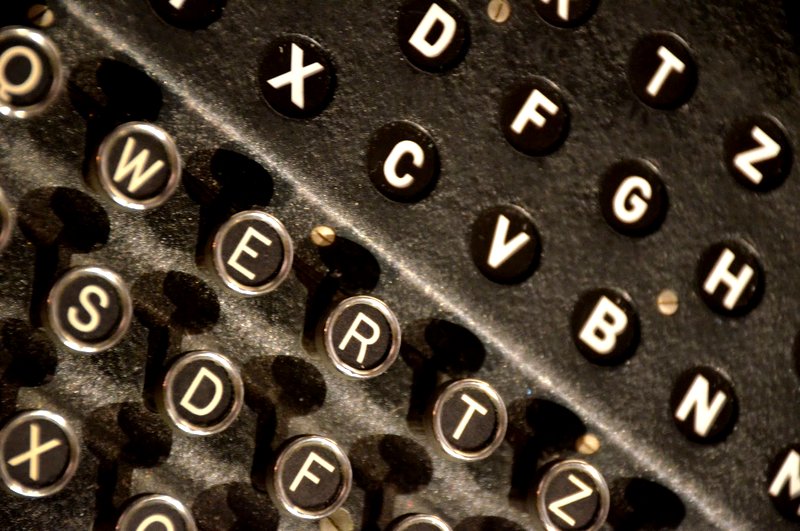
Tributes have been paid to Ann Mitchell – one of the last of a World War Two code-breaking team at Bletchley Park – who has died aged 97.
Mrs Mitchell, who deciphered German codes at the British code-breaking centre from 1943, died at an Edinburgh care home on Monday.
Her family and friends said she had been declining in health for some years and had “a life well lived”.
The Scotsman reported she had tested positive for Covid-19 recently.
Her son Andy Mitchell, 61, told BBC Scotland: “She was a loving mother and it’s very sad but she was declining in old age with memory loss and physical frailties.
“I’m pleased she has been given the recognition for a life well lived.”[…]
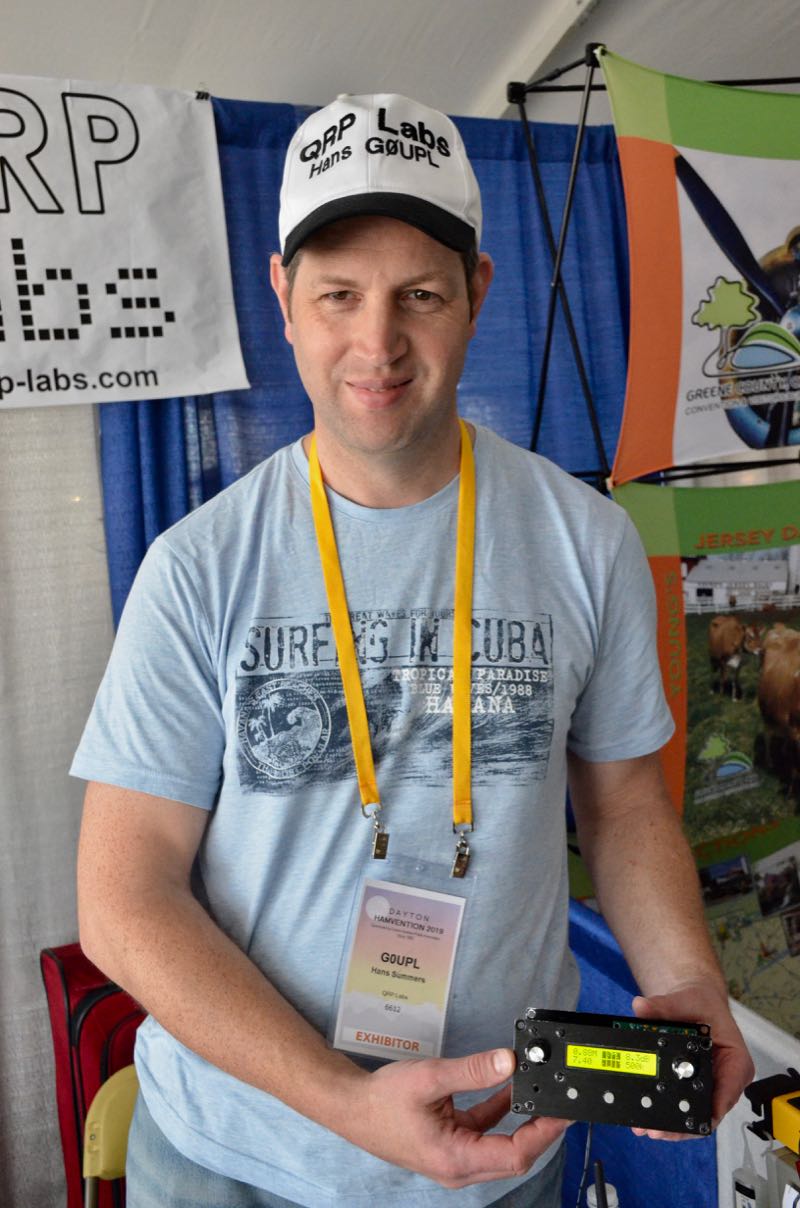
I’ve yet to build a QRP Labs kit, but I’ve only heard positive reviews from readers and friends. QRP Labs’ president, Hans Summers (G0UPL), is an amazing kit designer and, indeed, won the 2019 Homebrew Heroes Award.
Hans kindly took a break so that I could snap his photo at Hamvention 2019.
Last year, at the 2019 Hamvention, QRP Labs had a table across from ours and, based on the amount of people huddled around his table all day long, I’m certain he was one of the busiest vendors at Hamvention.
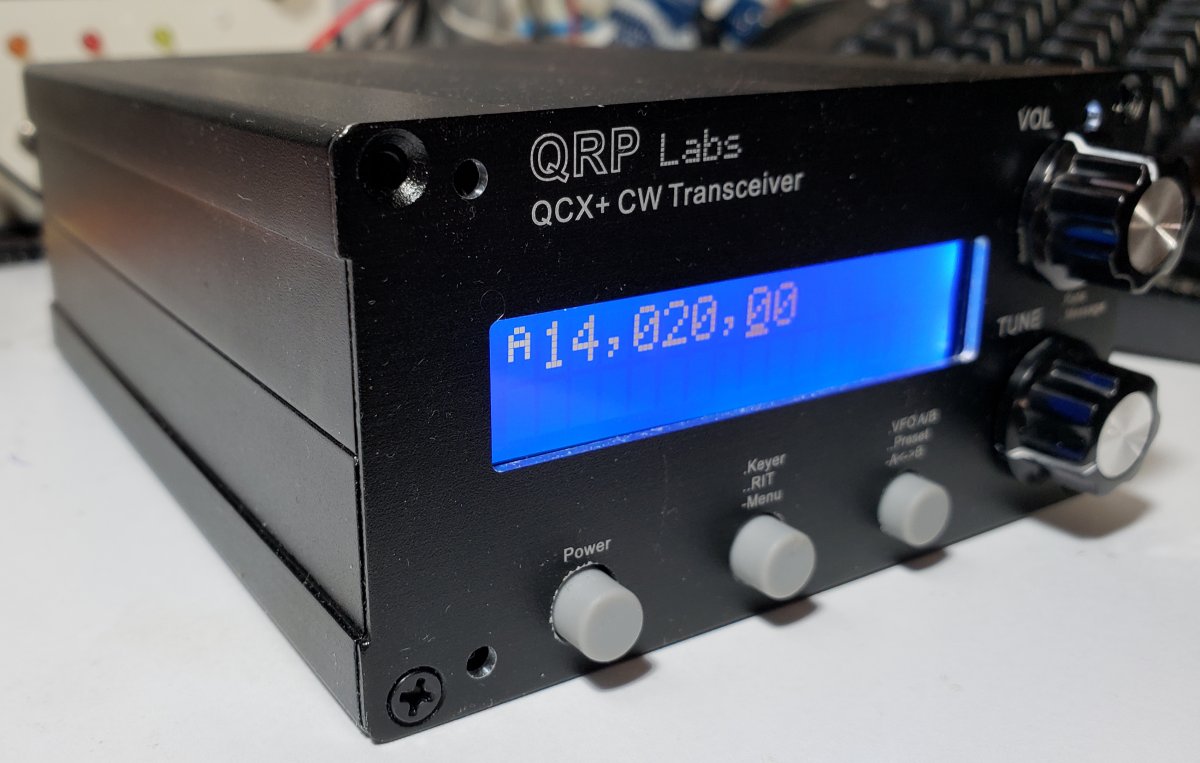
His new QCX+ transceiver is an upgraded/updated version of the original QCX transceiver which has sold nearly 10,000 units. In the following video, Hans describes in detail how the QCX+ is designed and the differences between it and its predecessor:
Since I’ve quite a few things on my Social DX bucket list–including the recent addition of QRP EME (I mean, what am I thinking?)–and since I don’t really need yet another CW QRP transceiver, I required a good excuse to buy and build this kit. So I turned to my editor at RadCom who very much wanted review. Fantastic excuse! Thank you!
The amazing thing about the QCX+ is you getting a full-featured single band QRP transceiver for $55 US plus a modest shipping fee. This means pretty much anyone can afford to buy and build one.
I just placed an order for the transceiver ($55) with a 40M band module, the optional custom aluminum enclosure ($25), and the optional GPS receiver ($23). If I had a 3D printer, I might have skipped the enclosure because I’m willing to bet that shortly after the transceiver’s release, someone will share an enclosure design one can print at home. Then again, since I know I’ll take this little rig to the field, an aluminum enclose will provide excellent protection.
I purchased the optional GPS receiver because I plan to eventually put this rig into use as a dedicated WSPR beacon. The GPS module will calibrate the frequency, time, and Maidenhead Locator grid square in WSPR mode. It can also be used to precisely calibrate the transceiver’s synthesizer reference oscillator.
Kit anticipation time!
According to the QRP Labs website, they plan to start shipping the QCX+ in mid-June. I opted for FedEx delivery, so hopefully it’ll arrive sometime around my birthday (Happy Birthday to me!).
More than anything, I simply enjoy building kits and really look forward to building the QCX+, then putting it on the air! I’ll post updates and a few photos here, but look for my full review likely this fall in the pages of RadCom.
Post readers: Please comment if you’ve built a QRP Labs kit or have any other kits in the pipeline this summer!
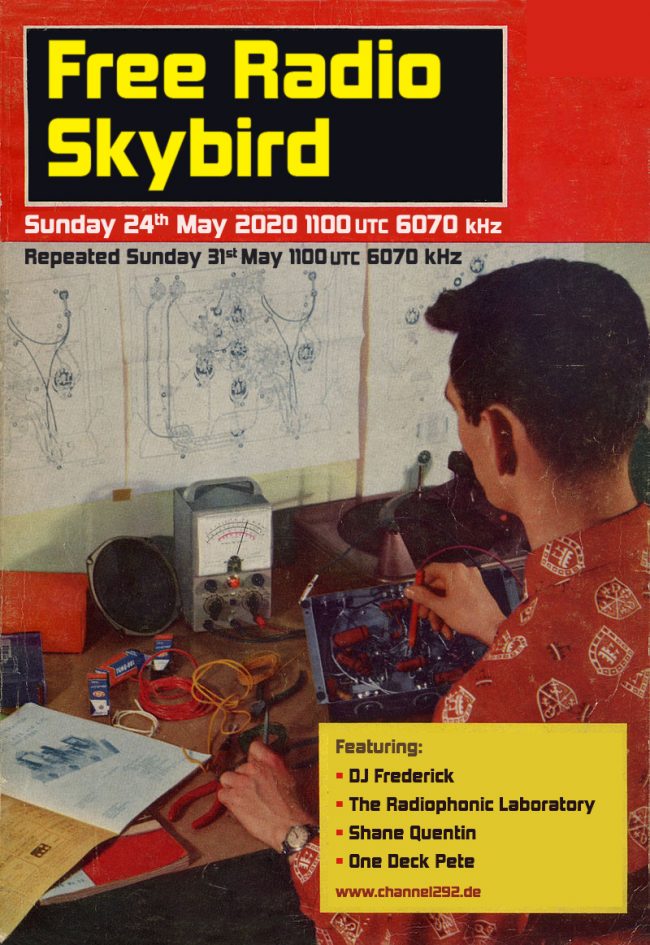
SWLing Post contributor, Pete Madtone just shared the Free Radio Skybird graphic above announcing their broadcasts on Sunday, May 24th, and repeated on Sunday, May 31st, 2020 at 1100 UTC on 6070 kHz (Channel292). Thanks again for another excellent show graphic Pete! We look forward to tuning in!
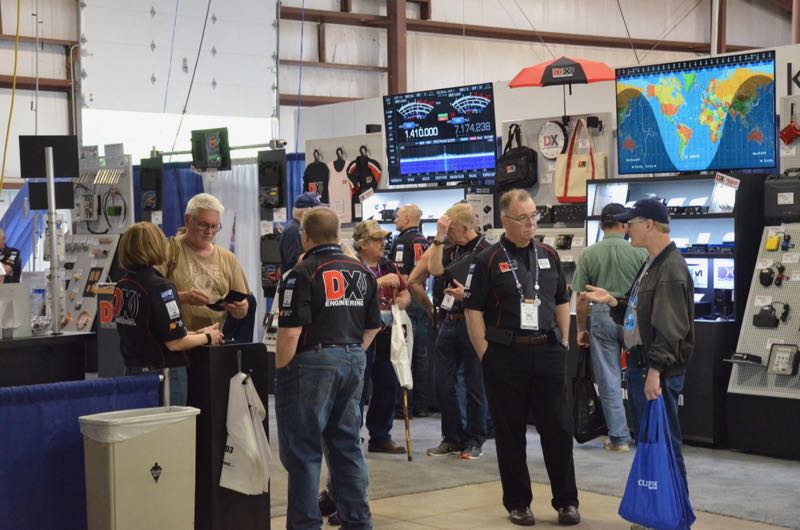
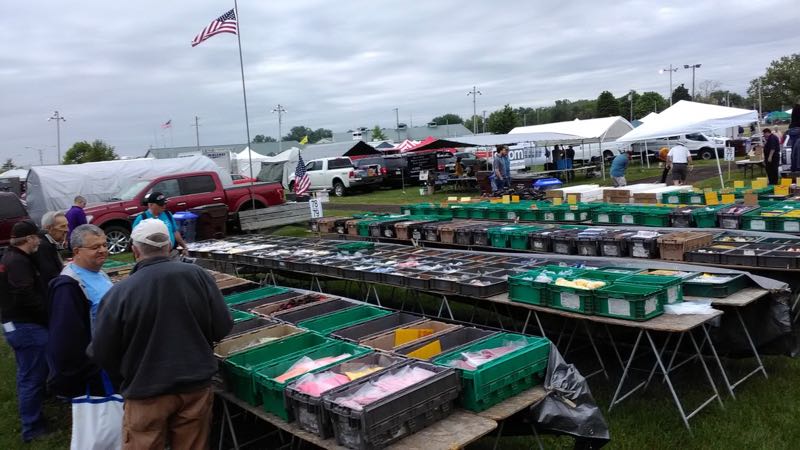
This is the first year I’ve missed the Dayton Hamvention since 2009. As I mentioned in a previous post–besides hanging with my friends–I really enjoy browsing the flea market and inside exhibits looking for deals and cool innovations.
In 2016, I took loads of photos of both the Hamvention Flea Market and Inside Exhibits. I did this partly thinking it would be our last year holding the Hamvention at Hara Arena (turns out, I was absolutely correct). Post readers asked that in 2017, I take photos of the new venue at the Greene County Fairgrounds in Xenia, OH, so I did.
I enjoy taking and sharing these photos so much, I’ve continued to collect hundreds of photos every year since to help document how the largest ham radio gathering event changes over time.
In the flea market, I try to include price tags when possible to give our international readers an idea of how much vintage gear costs.
If you’d like to take a trip down memory lane with me, check out the linked photo galleries below: