Category Archives: AM

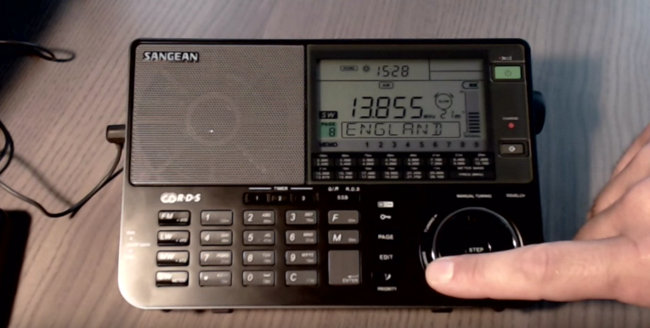
The Sangean ATS-909X: Marty’s bedside radio review

Sangean-ATS-909X-Marty

SWLing Post reader, Marty (W5MRM), comments:

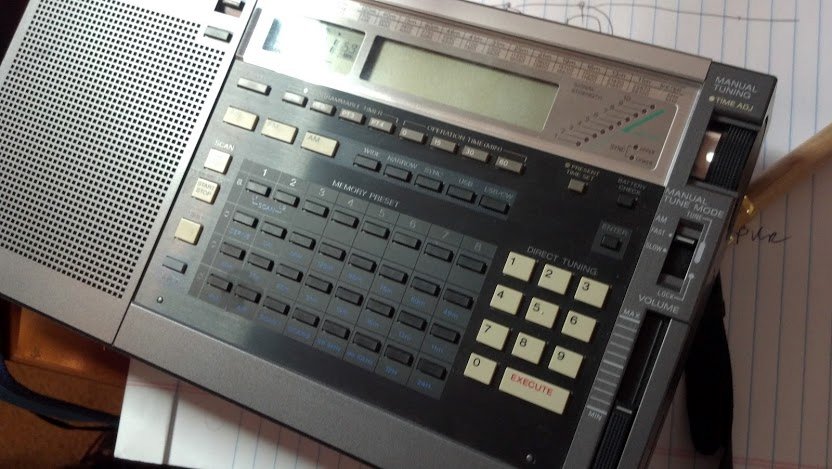
I recently picked up a Sangean ATS-909X to use as a bedside radio.

This blog post inspired me to put together a video review of the ATS-909X as a bedside radio. The video review can be found on my youtube page [or via the embedded player below]:

Great video, Marty, and thanks for the thorough review!

You can follow all of Marty’s videos on YouTube by visiting this page.

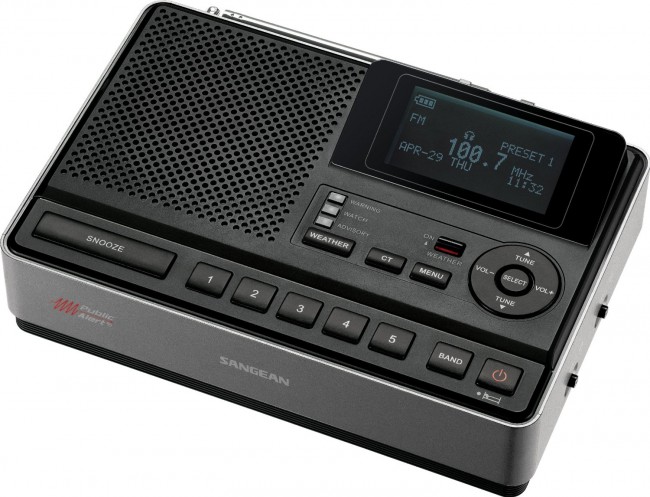
Jeff’s bedside radio search ends with the Sangean CL-100

Sangean-CL-100

My pal, Jeff McMahon, over at the Herculodge writes:

A week ago, my Sangean WR-2 was fried when the electric company surged my house. I replaced it with the Grundig S350DL but it drifted too much.

I then used my superior Crane-SW radio (same size as the big Grundig) and guess what? It died! Those cheap radios today seem to die after 5 years or so.

So I looked through the myriad of unused radios in my cabinet and unearthed a Sangean CL-100 purchased in 2011. For whatever reason, it no longer works with batteries (old double As were left in there and leaked a tiny bit but compartment looked clean enough), so I plugged it in and it works.

FM is better than my Sangean WR-2. I think it has a DSP chip.
AM is better with low background noise, amazing for a radio this small.

Speaker is not as good as the WR-2, but it’s clear and okay since I listen mostly through earbuds.

Tiny footprint on my bedside table, which I like.

The menu system is easy enough to use though I wonder if down the road I’ll encounter bugs.

I bought this for about $45 and now it’s about $12 more.

It really suits my needs.

[A] man needs a strong performing bedside radio. That’s the backbone of a collection.

Indeed it is, Jeff!

I see why you like the CL-100. For a bedside radio, the flat/horizontal form factor also makes it less susceptible to being knocked over when you reach for it in the dark.

As for battery operation, you may try removing some of the corrosion on the battery contacts with a file or something mildly abrasive. I’d also hit it with a little Deoxit. (Though knowing Jeff, he’s probably already on this.)

Lead_Free_Solder_05mmHaving your Sangean WR-2 fried by the power company is bad enough, but then finding out your C.Crane CCradio-SW isn’t working just adds insult to injury.

I should note that, in general, I think C.Crane products are built as well as most others on the market.

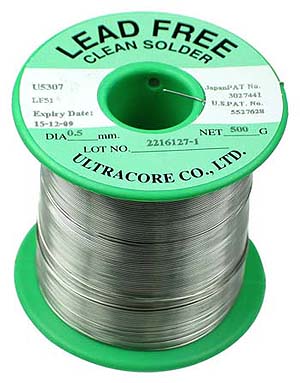
I often wonder if premature product failures have less to do with poor quality control and more to do with the lead-free solder electronics manufacturers are forced to use these days.

Many moons ago, a friend sent me this article which outlines concerns about the use of lead-free solder in the military and aerospace industries. It’s worth a read and certainly points out inherent flaws. I often wonder if nearly all of our modern consumer electronics are prone to fail within a decade; you know, planned obsolescence at its worst. Perhaps I’m overreacting.

When I build kits or repair electronics, I only use traditional lead-based solder. Not only is it easier to use, but I feel it will last longer.

The Oxo Good Grips Turntable for the Mediumwave DXer

turntable2

SWLing Post contributor, Robert Gulley, writes:

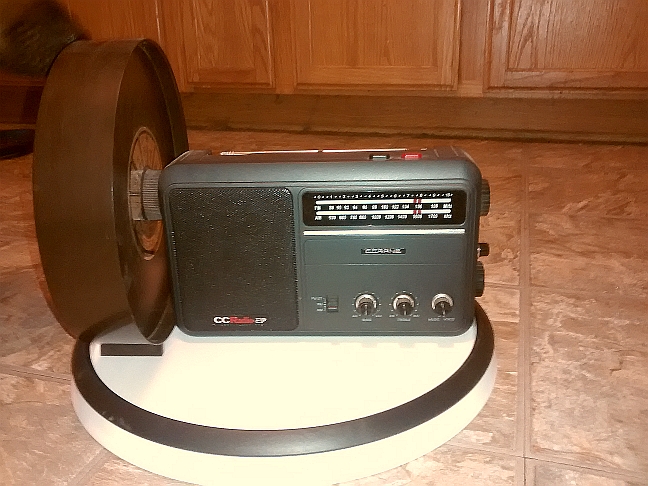
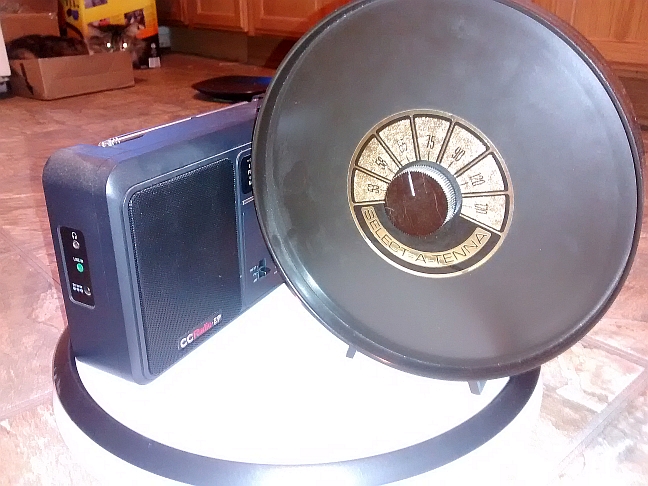
I recently purchased an Oxo Good Grips Turntable, 16” from Amazon. As the photos show, the size of the turntable can hold a fairly large radio (CC Radio EP and Select-a-tenna) on the turntable in almost any configuration. (Of course the CC Radio EP doesn’t need the Select-a-tenna, just used for illustration purposes for size.)

At $16.99 I think it is a good bargain, and seems quite capable of turning smoothly even with this amount of weight.

Click here to view on Amazon.com.

turntable1

Many thanks, Robert! I think that turntable is large enough to hold pretty much any portable radio; thanks so much for the photos (especially the one your kitty cat photo bombed, above!). I have several OXO products in my kitchen and have never been disappointed with quality, so I expect this turntable will last you a very long time.

Readers: If you haven’t checked out Robert’s radio blog, All Things Radio, I encourage you to do so!

Guest Post: Joris’ home brew Si4835-based receiver

Many thanks to Joris van Scheindelen (PE1KTH)–an SWLing Post contributor from the Netherlands–for the following guest post:


High Tech AM-FM DSP Receiver From
AM FM ontvanger P3060601

The old mode AM is still an interesting mode for amateur radio communication, also in amplitude CW.

Building your receiver is not difficult and quite fun. The semiconductor industry makes interesting integrated receiver chips today that will be useful for an AM receiver. Not only for broadcast reception but also for amateur AM reception or as part of an AM transceiver.

Silicon Labs also makes Si4734/35 receivers; these need a CPU to control the receiver, but are of interest for amateur use because the frequency can be tuned in 1 KHz steps and the audio channel bandwidth in 7 steps. There is no need for the transmitter to be on the receiving channel…

Si4835 AM-FM receiver

Looking for a small SW broadcast receiver design, and pocket size, I came to the excellent range of modern DSP receivers in a single chip from Slicon Labs.

I made a test bed set up has been made for the Si4835 AM-FM receiver.

The target specification was:

  • minimal components,
  • no micro-controller,
  • low power,
  • backlash free mechanical tuning,
  • good sensitivity,
  • earphone,
  • robust housing,
  • a short and small antenna system for outdoor use,
  • and minimal controls.

The Si4835 makes miniature design possible on a PCB (see photo Figure 1).

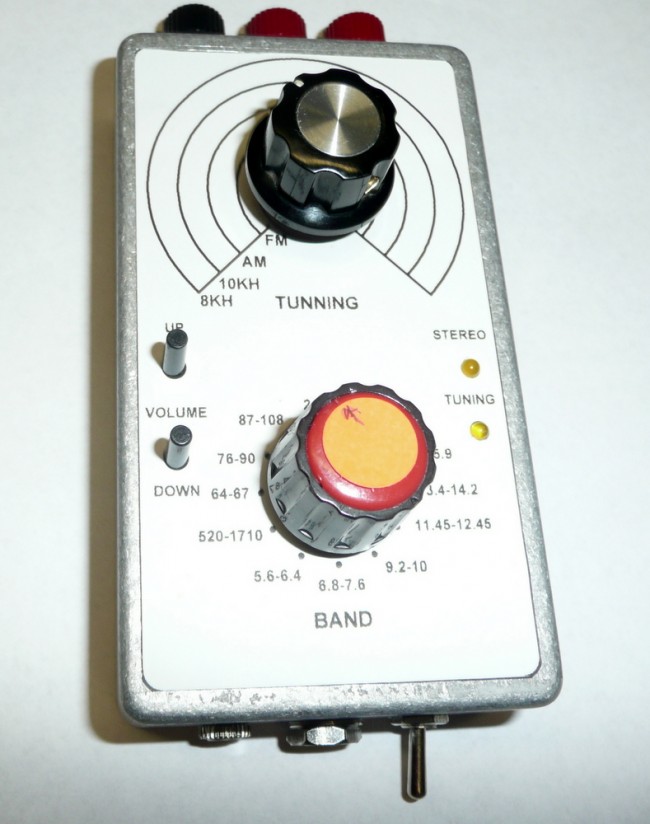
The red Dip (band) switch was replaced by a rotary switch in the final receiver design (Figure 4).

The receiver power is minimal 2 x 1.2 = 2.4 volts or a one cell LI-ION accu.
5 volts is the maximum for the Si4835 chip; current consumption is 30 mA.
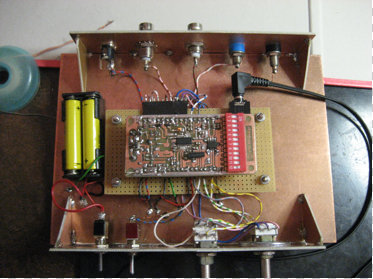
Fig 1. Testbed setup for the Si4835.

Fig 1. Testbed setup for the Si4835.

The receiver has an RF pre-amplifier transistor and the LF amplifier is the TDA7050T.
All receiver functions are in the chip; the schematic is very simple and can be built with minimal components (see schematic appnote AN555 Fig 2. below).

Only an LF amplifier has to be added to complete the receiver.
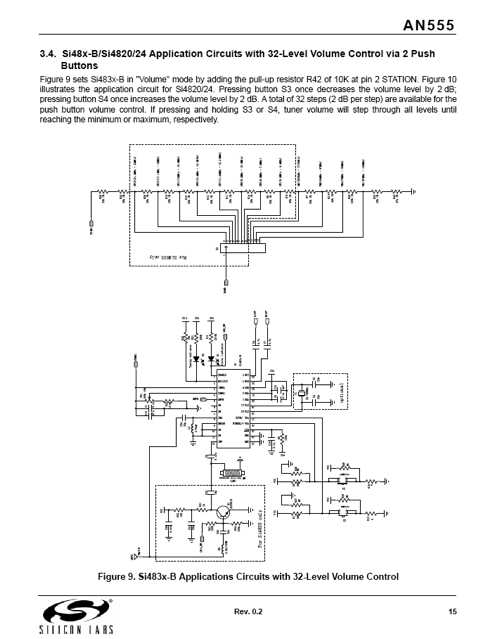
schematic

Fig 2. Receiver schematic Si4835 in the AN555 application note.

The Si4835 receiver has the following frequency bands–they are divided in sub bands 800 or 900 KHz wide (See Figure 3). The frequency step tuning is 10 kHz on AM, following the international broadcast raster standard.
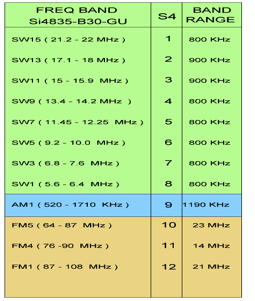
Fig 3. Si4835 receiver sub bands.

Fig 3. Si4835 receiver sub bands.

This means there are 80 or 90 receive channels in the sub bands and make finding the BC stations on the scale more easy. The 10 KHz scale steps are linear. The frequency stability is locked to the 32 kHz X-tal via the synthesizer so there is no frequency drift. The AM LF audio channel is 5 kHz wide set by the DSP filter. Volume control can be done width 2 up-down push switches or by a LF potentiometer..
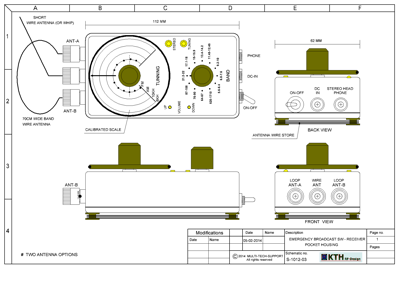
Fig 4. The experimental pocket aluminium receiver housing on PCB2.

Fig 4. The experimental pocket aluminium receiver housing on PCB2.

Receiving results

I have been testing many hours and I am surprised about this little receiver.

The receiving results are excellent on FM and AM and signals of 2 -3 uV are well received.

Also the audio quality is good–especially on FM. As can be seen in the frequency table the 40 and 20 meter band are in the range. Clear AM phone amateur transmission has been received when the transmitter was tuned on the 10 kHz raster in 40 meter band on AM.

Also AM modulated CW signals can be received bud not un-modulated carrier CW–they sound “plop…plop”.

The 5 kHz wide LF channel is a bid too wide so many CW signals pass through the audio at the time, but if AM modulated that should not be a serious problem.

The broadcast stations in the SW bands (when the daytime conditions are good) up to 20 MHz are good and strong.

Conclusions

The Si4835 receiver can be a fine broadcast receiver for outdoor work and if an AM transmitter is tuned in the 10 kHz raster this receiver can also used for amateur phone reception.

Addendum: The Si4734/35 is a better amateur AM Receiver

The Si4734 and Si4735 are a better receiver choice for amateur AM purpose because the frequency tuning can be done in 1 kHz steps. Also the BW of the LF channel can be adjusted to 1 kHz wide.

In Fig 5. from the programming APP note you see the code 0X3102 AM CHANNEL_FILTER it is possible to adjust the audio width by sending this code to the Si4734/35.
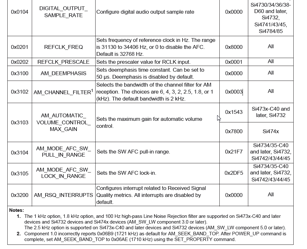
Fig 5. From the programming APP note

Fig 5. From the programming APP note

The LF bandwidth can be set on 1, 1.8, 2.5, 2, 3, 4 and 6 kHz wide.

This is excellent for modulated CW and AM phone discrimination in the audio channel.

The disadvantage is the need of an CPU and LCD display, “away from a minimalistic design”.

See also the note 1 and 2 improved 100 Hz rejection. See data sheet of the Si4734/35.

It look like that this receiver is a good receiver for building a modern AM-(AM)CW receiver or in a transceiver application. Tuning can be done digitally.

Think about this receiver [and the Si4835 chipset] when you intent to build a high tech AM – T/RX.

73 ‘ Joris van Scheindelen PE1KTH


What a fantastic home-brew receiver, Joris! I love the simple design of your receiver and the fact that it’s quite portable.  Thanks so much for sharing your notes and documentation.

Video: Stephen’s Poldhu Radio Kit

Radio-Kit

Many thanks to SWLing Post contributor, Stephen Cooper, who recently shared a video on the SWLing chatroom:

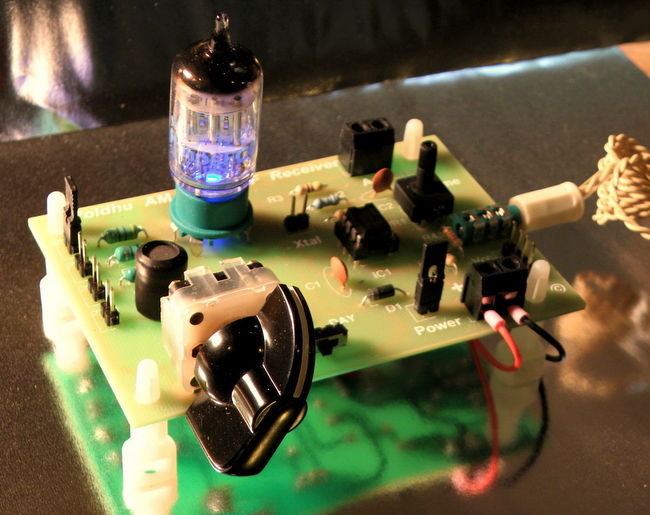
I’m a sucker for cute radio kits, so I purchased one of these from the UK-based seller on eBay as well. There are two kit packages: one with the receiver only, another with the receiver, amplifier and speaker. Shipping is free–even to the US–and pricing is fair (19 – 25 GBP or roughly $30-38 US)

Click here to search eBay.

Readers: if you haven’t checked out the SWLing chat room, I would encourage you to do so! There’s almost always someone there and, many evenings, readers share reception reports in real time. Click here to check out the chat room.

From Fessenden to HD Radio navigation

IBOC Spectrum (Source: GPS World)

IBOC Spectrum (Source: GPS World)

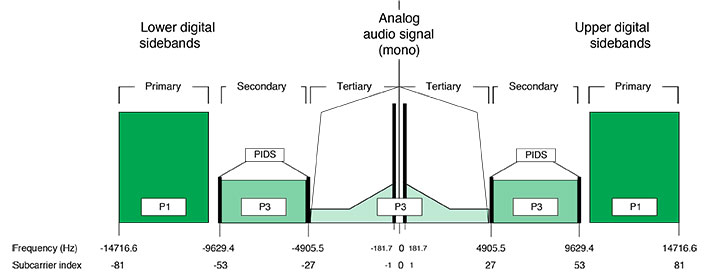
SWLing Post contributor, Richard Langley, is not only a dedicated shortwave DXer, but he’s also on the faculty of the Department of Geodesy and Geomatics Engineering at the University of New Brunswick. Additionally, Richard coordinates Innovation: a regular GPS World feature that discusses advances in GPS technology and its applications.

The latest Innovation feature is absolutely fascinating in that it highlights the potential for AM broadcast band HD radio signals (IBOC) to be an effective navigation aid. Richard’s introduction to this article takes us back to the time of Reginald Fessenden:

THE YEAR WAS 1906. On Christmas Eve of that year, Canadian inventor Reginald Fessenden carried out the first amplitude modulation (AM) radio broadcast of voice and music. He used a high-speed alternator capable of rotating at up to 20,000 revolutions per minute (rpm). Connected to an antenna circuit, it generated a continuous wave with a radio frequency equal to the product of the rotation speed and the number of magnetic rotor poles it had. With 360 poles, radio waves of up to about 100 kHz could be generated. However, Fessenden typically used a speed of 10,000 rpm to produce 60 kHz signals. By inserting a water-cooled microphone in the high-power antenna circuit, he amplitude-modulated the transmitted signal. On that Christmas Eve, he played phonograph records, spoke and played the violin with radio operators being amazed at what they heard.

Fessenden had earlier worked with spark-gap transmitters, as these were standard at the time for the transmission of Morse code, or telegraphy, the wireless communication method already in use. But they couldn’t generate a continuous wave and couldn’t produce satisfactory AM signals. But as telegraphy was the chief means of communication, they remained in use for many years along with high-powered alternators and the Poulsen arc transmitter, which could also generate continuous waves.

Continue reading at GPSworld.com…

Frank shares 1991 recordings and original notes of station IDs and interval signals

Sony-ICF2010

SWLing Post reader, Frank, writes from Germany:

First let me say that I enjoy your blog a lot.

After a 2005-13 hiatus, I have rediscovered a childhood hobby and your reviews have helped me find my way to the post-Sony portable shortwave radio markets.

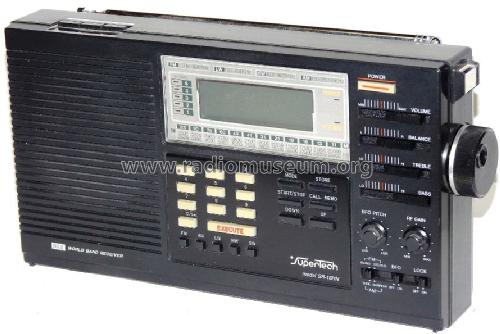
First, I obtained my “childhood dream” radio (Sony ICF 2001D), because at the time I made these recordings I was still in school and 1300 DM would have equaled over 1 year of pocket money, so a Supertech SR16HN had to do. I thought I got some fine results with this Sangean-Siemens re-branded receiver then, using a CB half-length antenna, a random wire, and much endurance.

The Supertech SR16HN (photo: Radiomuseum.com)

The Supertech SR16HN (photo: Radiomuseum.com)

I kept regular logs throughout the years, wrote to 50 international and pirate stations for QSL and compiled this cassette.

A few years before I got that trusty SR16HN, however, I recorded a few number stations (such as G3, Four Note Rising Scale etc) with an ordinary radio cassette recorder, and in 1991 I put them onto this tape as well. The other recordings are done with the same radio placed right in front of the SR 16HN.

Feel free to make use of these recordings. Most of it are the well-known international state-owned shortwave stations of the past; plus European pirates; plus number stations; and at the end, a few (off-topic) local Am and FM stations interval signals.

As I said, this collection I made shortly after the Wende/reunification period, when all former-GDR state broadcasters changed their names, sometimes more than once.

Please continue your good work on the blogs! Weather permitting I am often outside cycling and always have the tiny Sony ICF 100 with me (which I call my then-student’s dream radio of the later 90ies).

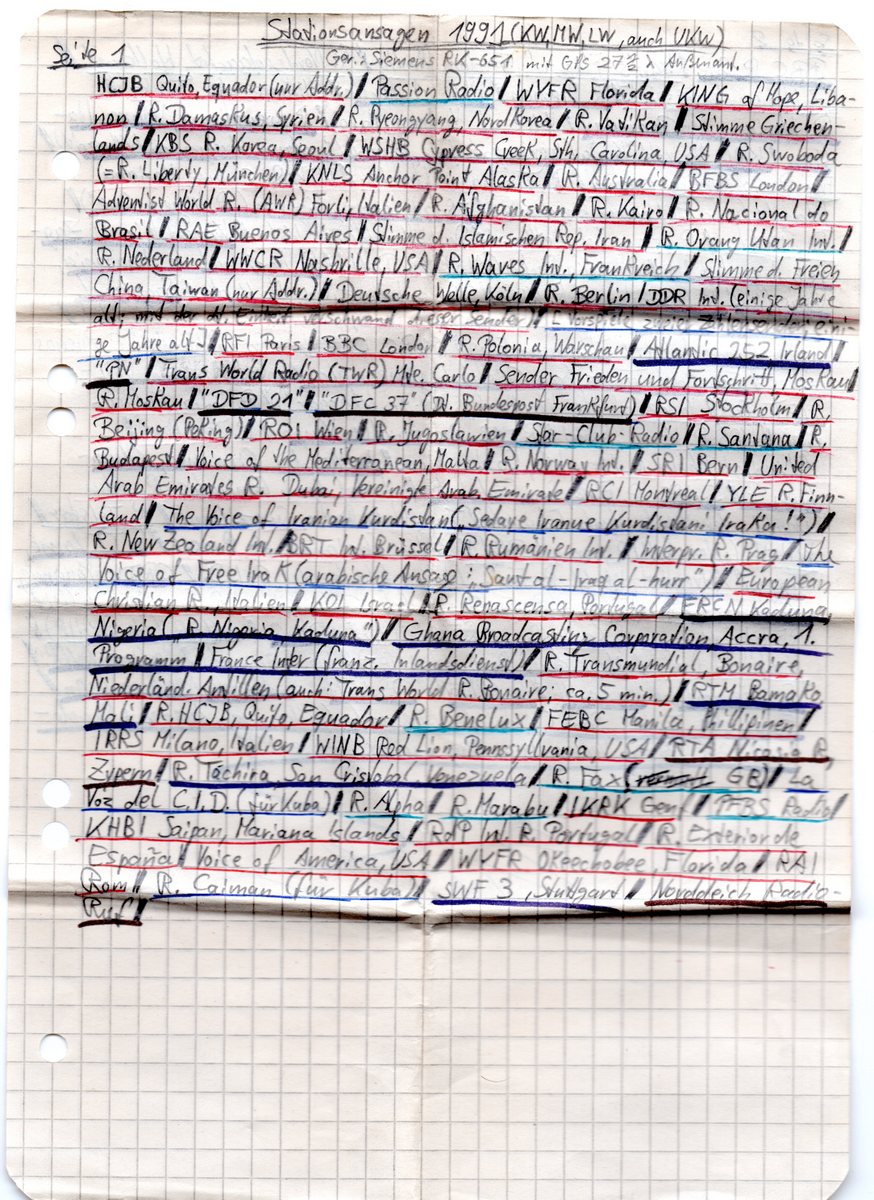
Cassette Side 1

Click to enlarge.

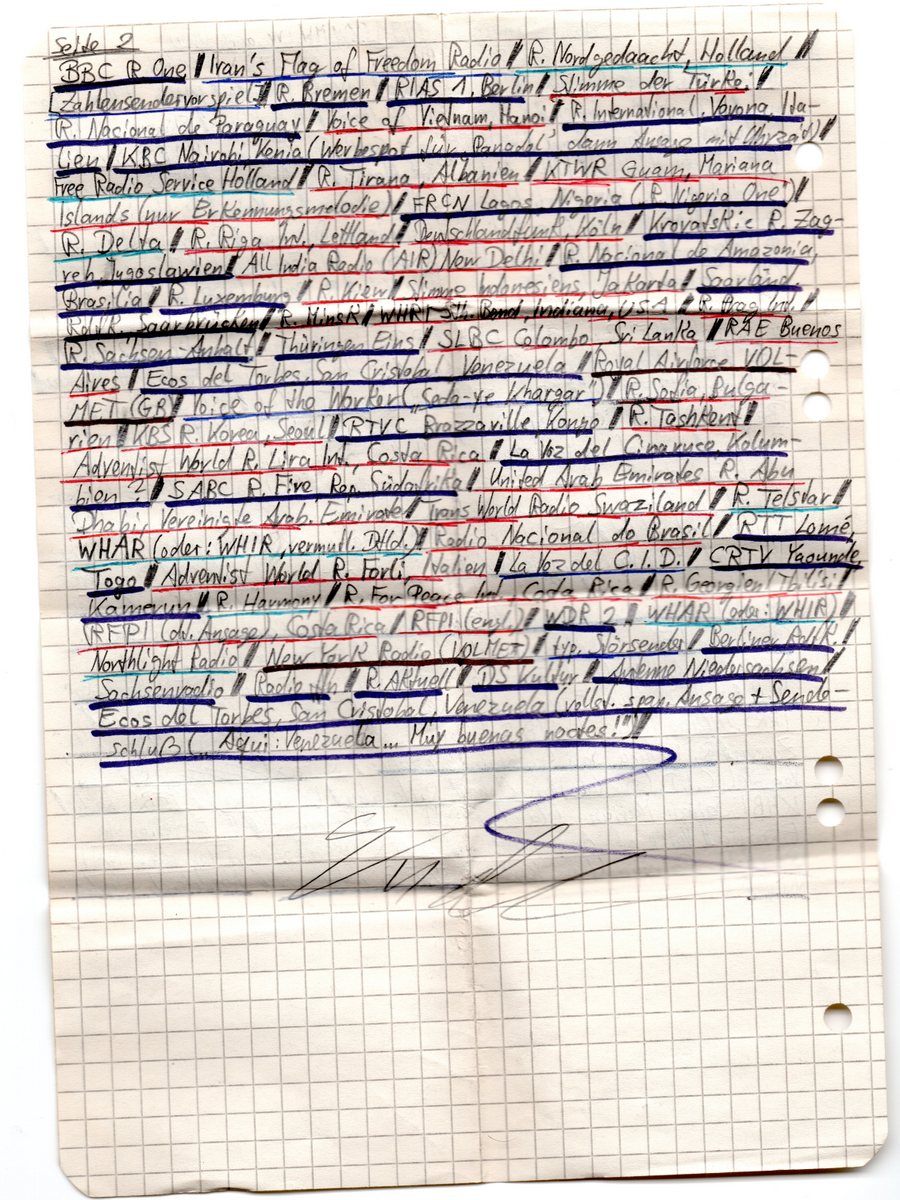
Frank’s original hand-written notes. Click to enlarge.

Click here to download Side 1, or listen via the embedded player below:

Cassette Side 2

Click to enlage.

Click to enlage.

Click here to download Side 2, or listen via the embedded player below:


Wow! Frank, what a treat to listen to all these station IDs!

I had forgotten how many interval signals have changed over time and how many, of course, have disappeared. This tape represents a flood of nostalgia for me.

I should add, too, that I’ve enjoyed hearing so many IDs in German. It’s funny, but we all get hooked on listening to language programming from our native or second languages. It makes me realize just how many broadcasters used to have German language services.

Again, many thanks, Frank, for taking the time to digitize these recordings and scan your original hand-written notes. This stuff is invaluable, in my book!