Category Archives: Antennas

The Chameleon CHA RXL amplified wideband loop antenna

A few weeks ago, Chameleon Antenna sent me a pre-production model of their new wideband magnetic loop antenna called the Chameleon CHA RXL.

I’ve evaluated and reviewed a number of Chameleon’s ham radio antennas (primarily on QRPer.com). I find that the quality of their products are second to none. Price-wise, they tend to be at the top of the market, but keep in mind they machine and manufacture all of their antennas here in the US and they’re incredibly rugged; indeed, military-grade. And in the spirit of full disclosure, I’m proud Chameleon has been a sponsor the SWLing Post and QRPer.com since last year. My sponsors are by invite only and focus on companies I trust with our radio community’s business.

When Chameleon shipped the CHA RXL to me, it wasn’t from their factory, it was directly from the field: Fort Irwin, to be exact.
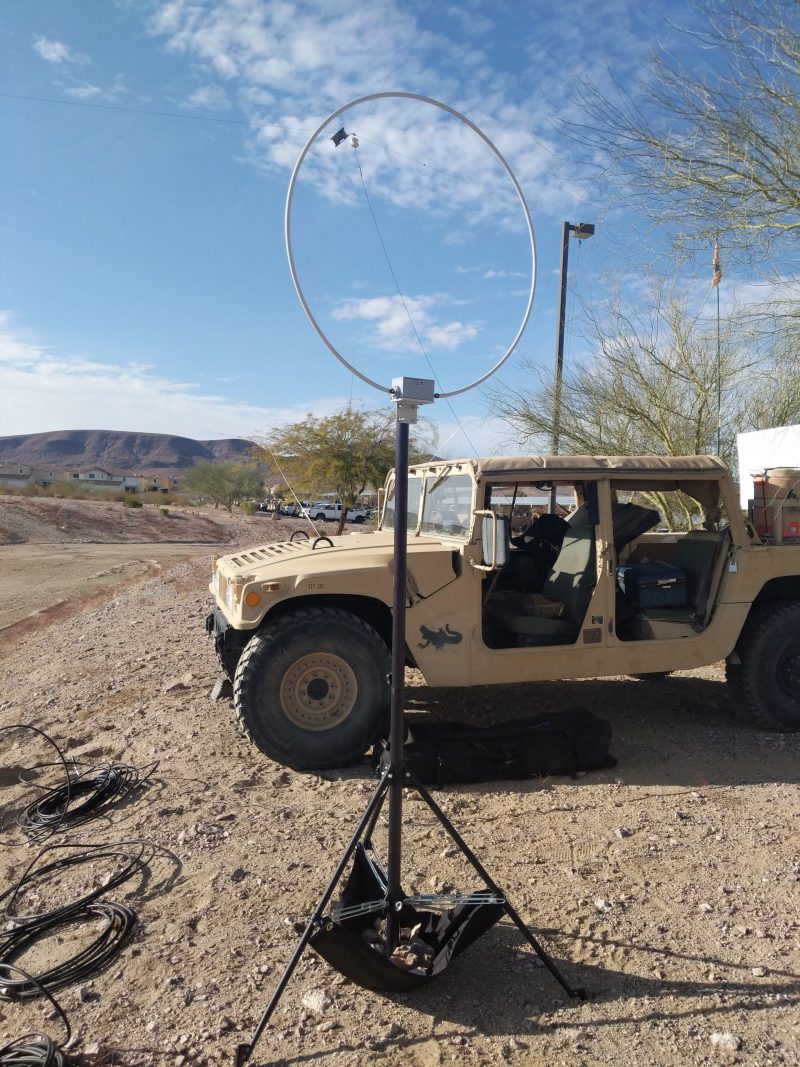
(Source: NTC Operations Group, Ft. Irwin)

This CHA RXL sample had been used by NTC Operations Group Fort Irwin (who, incidentally, won QRPX this year–click here to read the PDF report).

I was told that the condition of the antenna could be very rough after the QRPX because it had essentially been sandblasted in the desert winds. I was also told that someone accidently transmitted 5 watts into it at some point but it didn’t seem to harm it (for the record, like all amplified receive-only loops, it’s not designed to take RF).

Tony (W0NTC), who was one of the Ft. Irwin radio ops, sent me this note as he dropped off the shipment at Fort Irwin’s FedEx:

“Had a blast with [the CHA RXL], and it was absolutely critical while I was operating in the Army HF Low Power Competition (think tons of high powered MARS stations piling up and drowning out the 20W or less competitors). It absolutely crushed some localized RFI from a huge building I operated behind, and the receive on it I can only describe as “layered” in that I could hear stations somewhat clearer than usual if they transmitted simultaneously. Receiver I used was the IC-705 with default Auto Notch and Noise Reduction.”

Tony volunteered all of this info–I never asked him how it performed.

A few days later, I wasn’t sure what to expect when I opened the box although I knew that my operating locations were nowhere near as cool as its position next to a Humvee at Fort Irwin in the photo above!
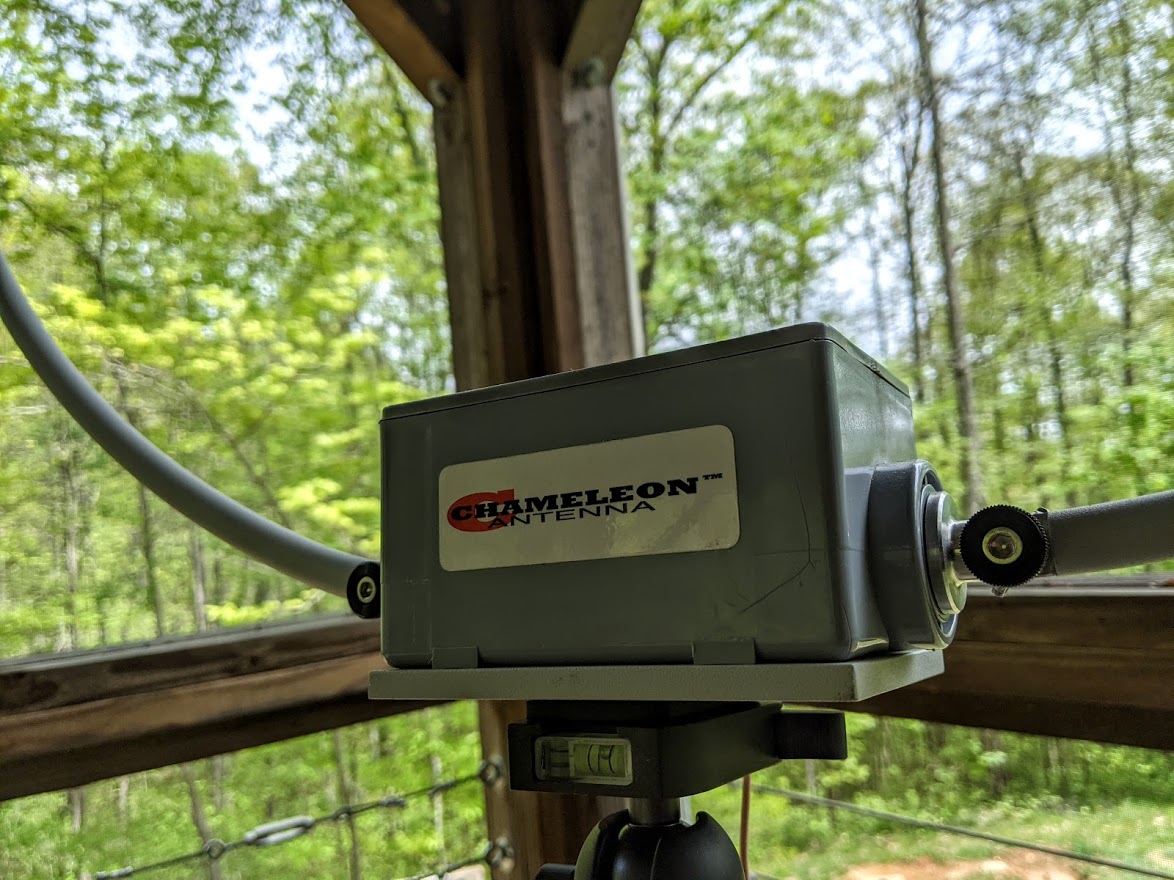
I pulled the CHA RXL out of the box and it looked cosmetically flawless to me.

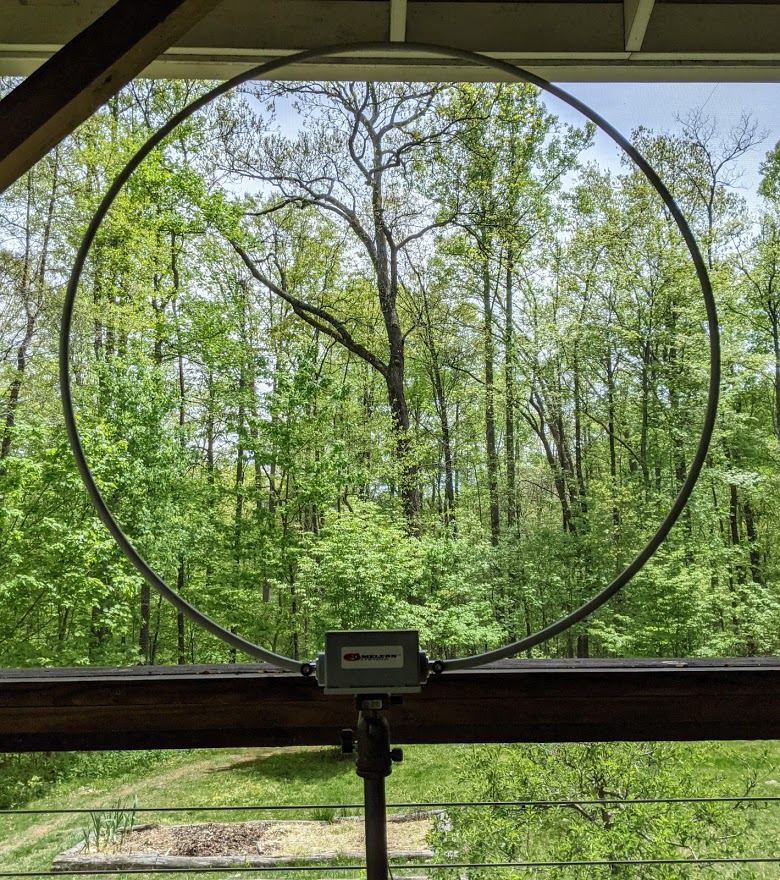
Frankly, there’s not a lot to get damaged. The 36 inch diameter loop is made of rigid aluminum and has a Navy gray powder coating.  The preamplifier unit is completely sealed and made of a high-impact plastic/PVC type material. The steel loop is attached to the preamplifier loop flanges with wing nut connectors.
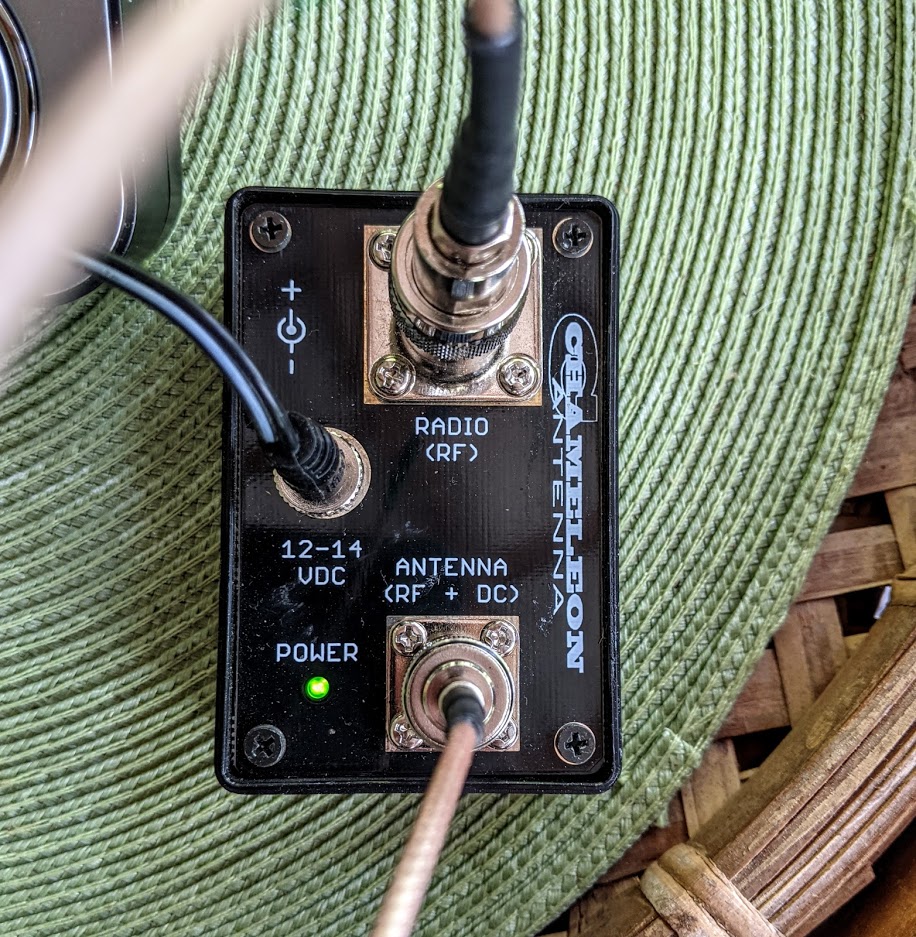
The only potentially vulnerable part of the antenna system is the  Bias-T box which would normally be located in your shack close to your receiver.

If I mounted the CHA RXL permanently outdoors, I would use Coax Seal around the BNC connection point, of course.

Although the CHA RXL has a supplied mounting bracket for permanent installations, I love the fact that the preamp box has a 1/4” x 20 threaded camera socket on the bottom. This makes for a brilliant portable loop because it can so easily be mounted on a standard heavier-weight tripod! All antenna manufacturers should give us tripod mount options when possible.

On the air
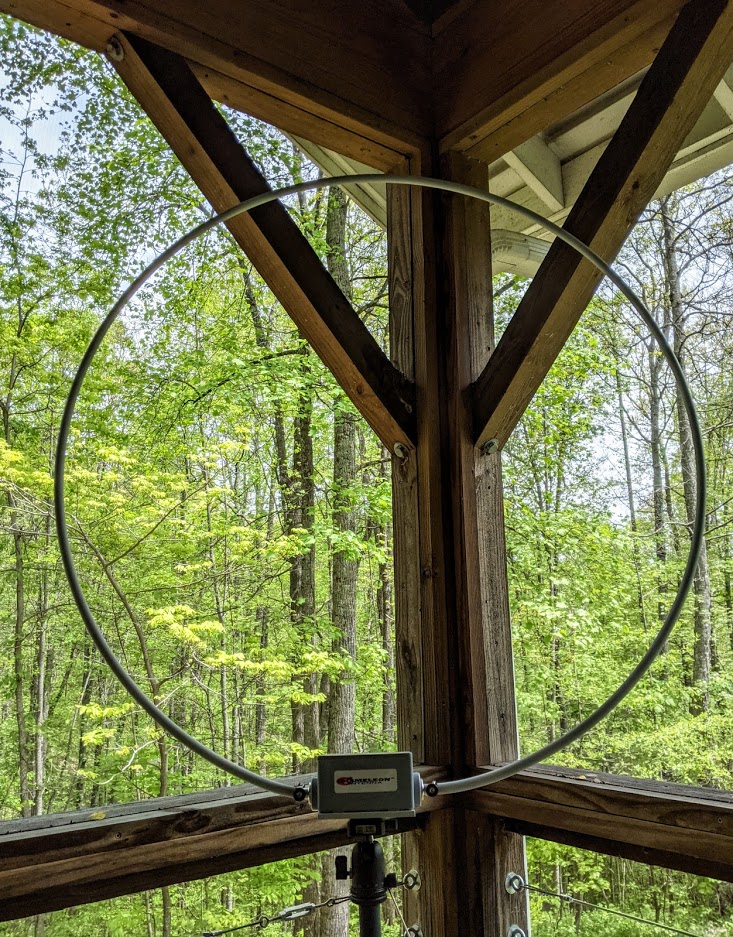
One of the reasons amplified receive loop antennas have become so incredibly popular over the past couple of decades is because they do an amazing job mitigating radio frequency interference (RFI) a.k.a. “QRM.” If you live in a neighborhood with significant radio interference, you really should consider some form of loop in your antenna arsenal.

Ironically, at home, I live in pretty much an RFI-free zone. I’m surrounded by tens of thousands of acres of national forest, so I’ve only used amplified loop antennas in the past for mediumwave DXing–mainly, when I wanted to take advantage of their amazing ability to null out unwanted signals.

Many years ago, I purchased a Pixel Loop Pro antenna (now under a different name via DX Engineering), mounted it outside where it lasted almost a year before a bear decided to pull it down and chew through the coaxial feedline. He/she did so with enough energy that it ripped down the loop and damaged the connector end of the Pixel’s pre-amp. This all happened when our family was travelling for two months in Canada. Why bear, why?!? But I digress…

The CHA RXL version I was shipped has one single rigid loop–the “EU” version’s loop comes in two pieces (for easier shipping/transport)–but I had no problem fitting the entire assembled loop in the back seat of my Subaru or my truck (as long as no one was sitting back there at the time). If you plan to travel with your loop a lot, consider the “EU” version!

I’ve taken the CHA RXL to my parent’s home a couple of times and enjoyed doing a little mediumwave and shortwave listening. Inside the house, the loop would attenuate RFI nicely, but when outside it would all but eliminate many sources of RFI.
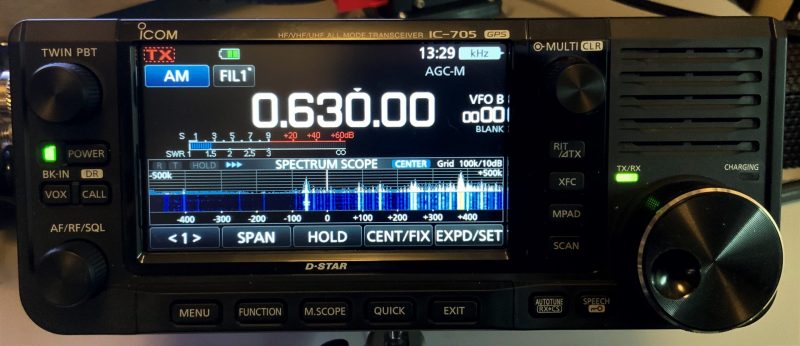
At their house, I primarily used my Icom IC-705 for cruising the bands (being careful, of course, to disengage the transmit function).

Listening time in my hometown, though, was very limited. Since the CHA RXL is so portable, I decided to set it up at home on our porch for a few days, giving me an opportunity to test both the Sangean ATS-909X2 and Tecsun H-501x with an external antenna.
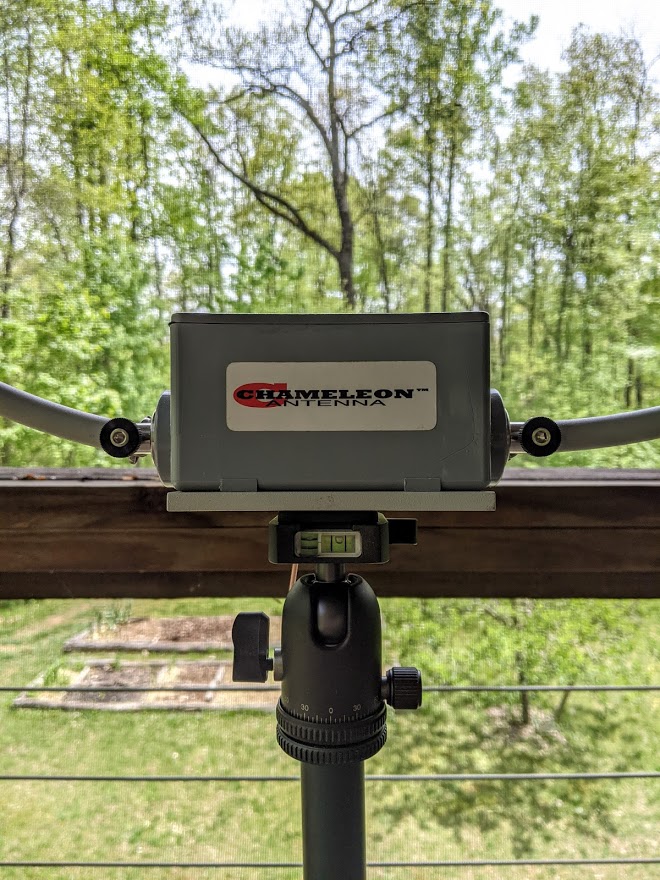
I’ve especially appreciated using the CHA RXL on mediumwave. Even from our screened-in porch, I can rotate the loop and use its excellent nulling properties to pick out multiple station IDs on crowded frequencies.
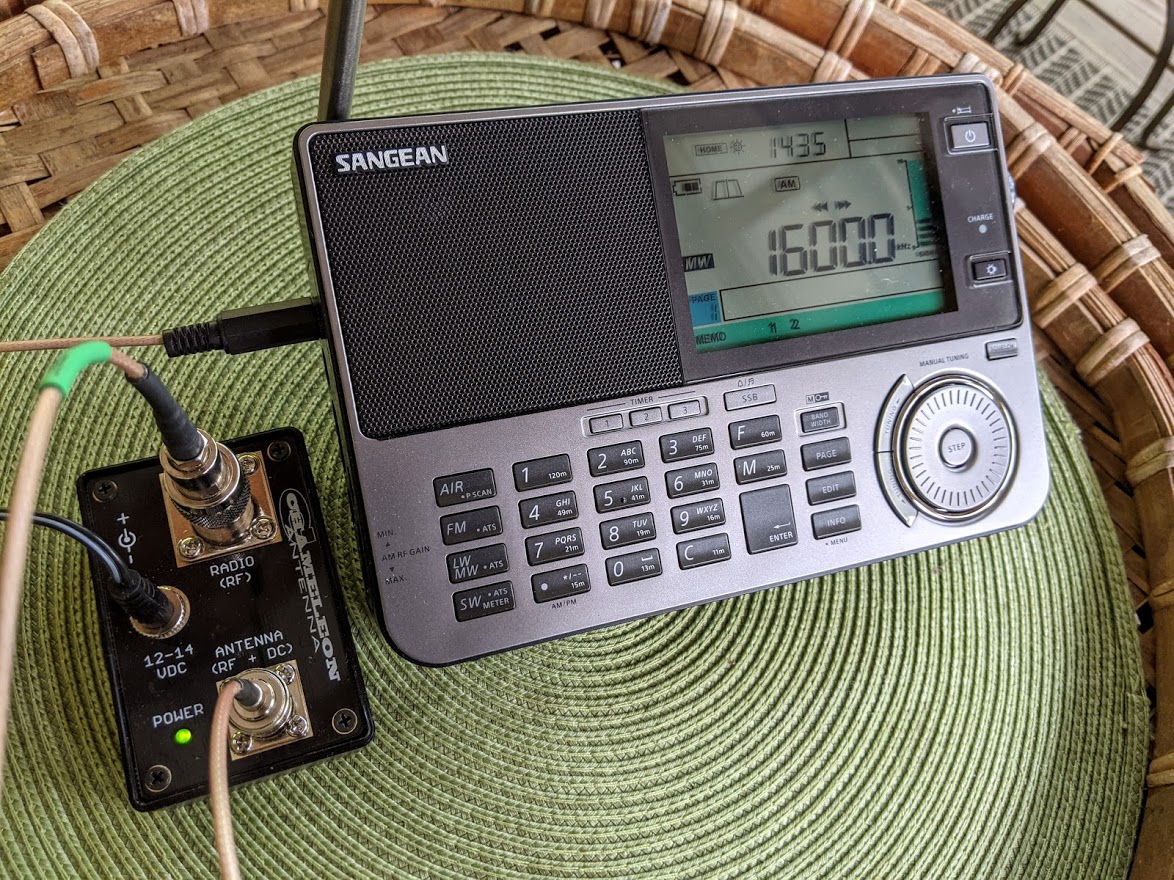
I’ve spent time on shortwave, too, and found that it certainly gave these two portables a signal boost.

In fact, it was by using the CHA RXL that I discovered the audio level difference between AM and SSB on my ATS-909X2 is very minimal when an external antenna is connected.

I’m sure you’ll hear the CHA RXL in action when I post audio clips and recordings in upcoming reviews.

Summary
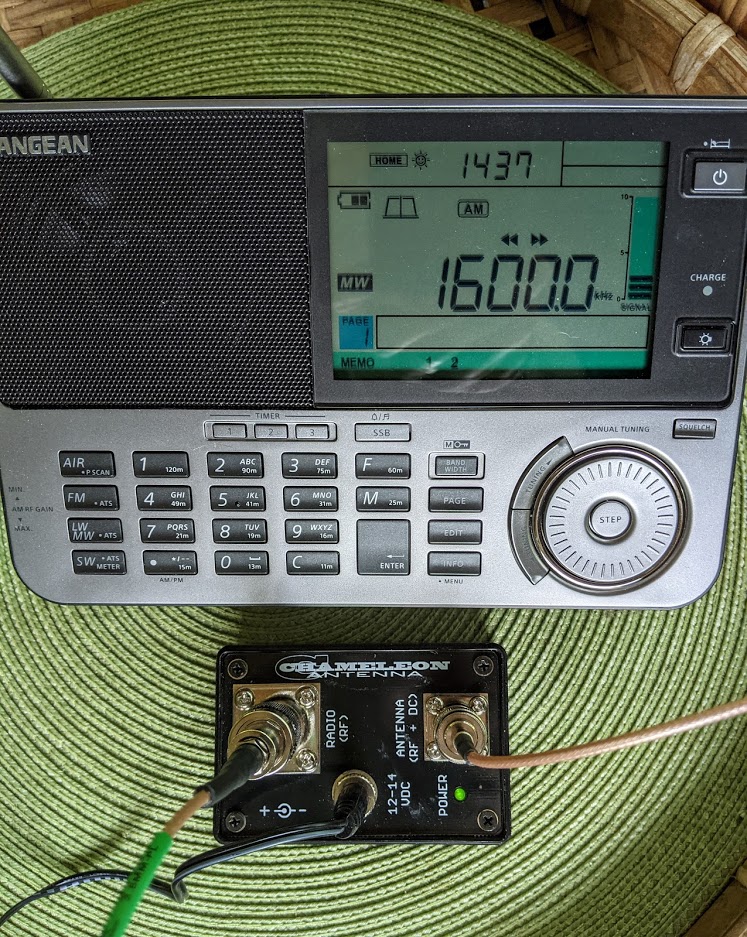
If I owned a CHA RXL loop, one of the first things I’d do is build a power cord for it with an in-line fuse and terminated with an Anderson Powerpole connector. Since the operating voltage of the Bias-T is 12-14 VDC, it would pair perfectly with one of my Bioenno LiFePo4 batteries, offering a power source with longevity in the field–ideal for a group LW/MW/SWL DXpedition.

It’s difficult for me to truly comment on the loop’s performance because I don’t have another loop at present for comparison. I can say that it’s amazing on mediumwave, where I’ve spent much of my listening time this past week. I believe shortwave reception has been at least on par with my former Pixel Loop, if not better. It’s hard to say, in truth, because propagation conditions have been so poor lately. The CHA RXL loop does effectively mitigate noise!

I’m not sure if the CHA RXL is currently on backorder or not, but I would suggest you check out the product page on Chameleon’s website and possibly contact them if you’re interested. They’ve a number of options and accessories to consider.

Click here to check out the CHA RXL at Chameleon Antennas ($490 US).

One thing for sure: this must be one of the most rugged and durable RX loop antennas on the market. In addition, that Navy gray powder coating helps this rigid aluminum loop disappear against the sky. I believe you could strategically mount this loop and the friendly neighborhood association may never notice–it’s pretty stealthy. Speaking of which…

Josh’s CHA RXL install and demo video

Josh over at Ham Radio Crash Course recently installed a CHA RXL on his house and tested it on several bands, comparing it with a number of his external antennas:
Click here to watch on YouTube.

Radio Deal: AN200 loop antenna on sale at Ham Radio Outlet

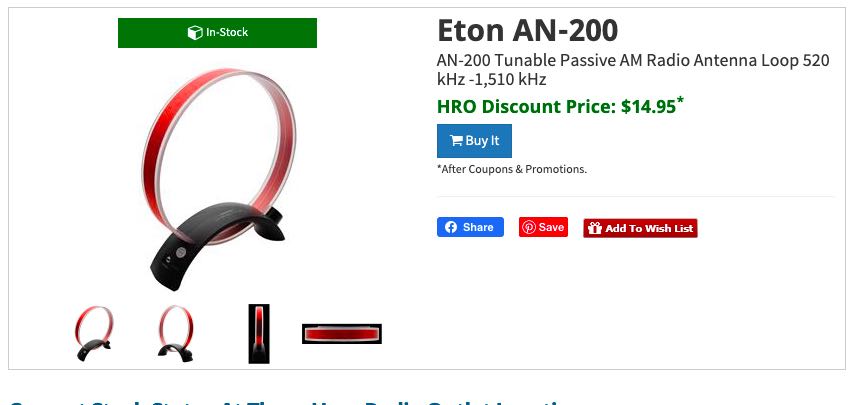
Many thanks to SWLing Post contributor, Grant Porter, who notes that Ham Radio Outlet has the Eton/Grundig AN200 loop antenna on a closeout sale for $15.00.

As Grant notes, this is an especially great deal if you live near an HRO retails store.

The AN200 is an incredibly effective tool for a mediumwave DXer. Click here to read some of our past articles.

Click here to check out the AN200 at HRO.

Gary DeBock’s 2021 Ultralight Radio Shootout!

Many thanks to SWLing Post contributor, Gary DeBock, who shares his extensive 2021 Ultralight Radio Shootout.

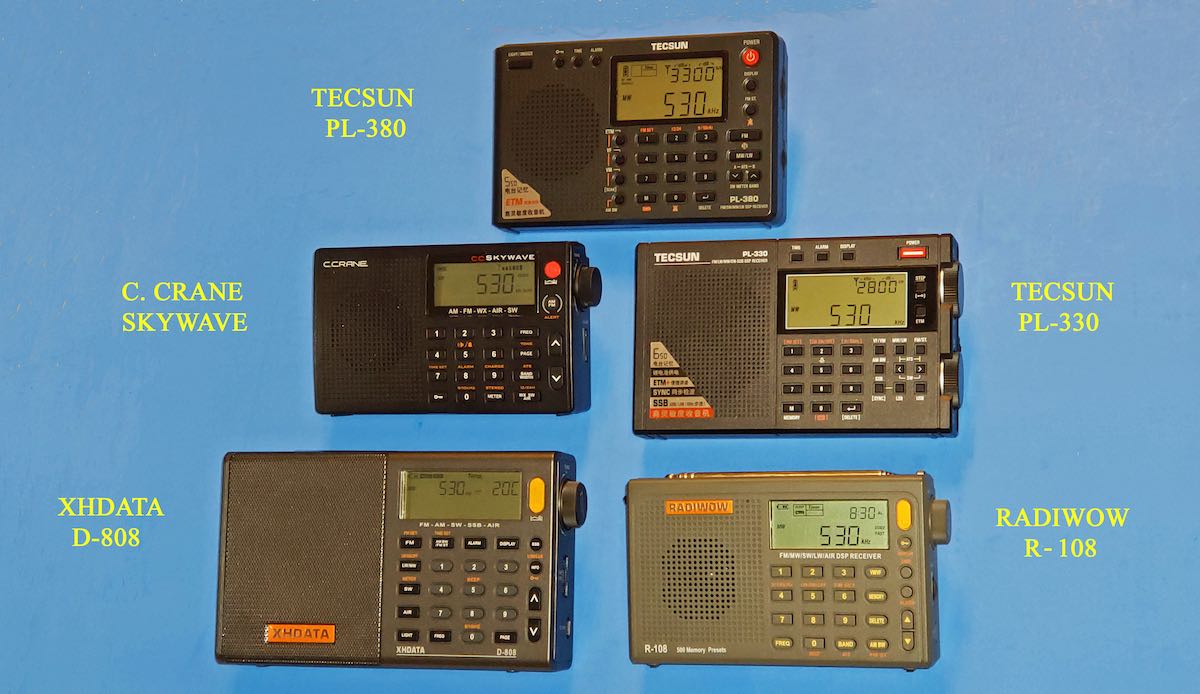
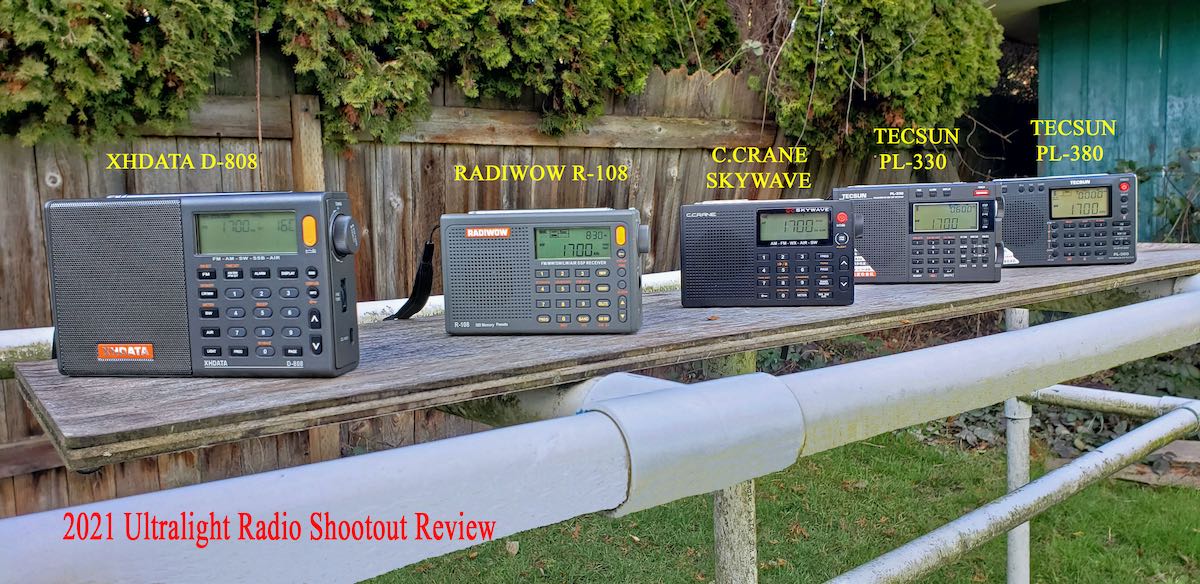
This is truly a deep dive featuring five popular ultralight portable radios and examining mediumwave, shortwave, FM, and AIR Band performance.

The review is an amazing 40 pages long! In order to display the entire review, click on the “Continue reading” link below.


2021 Ultralight Radio Shootout

Five Hot Little Portables Brighten Up the Pandemic

By Gary DeBock, Puyallup, WA, USA             April 2021

Introduction   The challenges and thrills of DXing with pocket radios have not only survived but thrived since the Ultralight Radio Boom in early 2008, resulting in a worldwide spread of the hobby niche group. Based upon the essential concepts of DXing skill, propagation knowledge and perseverance, the human factor is critical for success in pocket radio DXing, unlike with computer-controlled listening. The hobbyist either sinks or swims according to his own personal choices of DXing times, frequencies and recording decisions during limited propagation openings—all with the added challenge of depending on very basic equipment. DXing success or failure has never been more personal… but on the rare occasions when legendary DX is tracked down despite all of the multiple challenges, the thrill of success is truly exceptional—and based entirely upon one’s own DXing skill.

Ultralight Radio DXing has inspired spinoff fascination not only with portable antennas like the new Ferrite Sleeve Loops (FSL’s) but also with overseas travel DXing, enhanced transoceanic propagation at challenging sites like ocean side cliffs and Alaskan snowfields, as well as at isolated islands far out into the ocean. The extreme portability of advanced pocket radios and FSL antennas has truly allowed hobbyists to “go where no DXer has gone before,” experiencing breakthrough radio propagation, astonishing antenna performance and unforgettable hobby thrills. Among the radio hobby groups of 2021 it is continuing to be one of the most innovative and vibrant segments of the entire community.

The portable radio manufacturing industry has changed pretty dramatically over the past few years as much of the advanced technology used by foreign companies in their radio factories in China has been “appropriated” (to use a generous term) by new Chinese competitors. Without getting into the political ramifications of such behavior the obvious fact in the 2021 portable radio market is that all of the top competitors in this Shootout come from factories in China, and four of the five have Chinese name brands. For those who feel uneasy about this rampant copying of foreign technology the American-designed C. Crane Skywave is still available, although even it is still manufactured in Shenzhen, China—the nerve center of such copying.

Prior to purchasing any of these portables a DXer should assess his own hobby goals, especially whether transoceanic DXing will be part of the mission– in which case a full range of DSP filtering options is essential. Two of the China-brand models use only rechargeable 3.7v lithium type batteries with limited run time, which may not be a good choice for DXers who need long endurance out in the field. A hobbyist should also decide whether a strong manufacturer’s warranty is important. Quality control in some Chinese factories has been lacking, and some of the China-brand radio sellers offer only exchanges—after you pay to ship the defective model back to China. Purchasers should not assume that Western concepts of reliability and refunds apply in China, because in many cases they do not. When purchasing these radios a DXer should try to purchase through a reputable seller offering a meaningful warranty—preferably in their own home country.

One of the unique advantages of Ultralight Radio DXing is the opportunity to sample the latest in innovative technology at a very reasonable cost—and the five pocket radio models chosen for this review include some second-generation DSP chip models with astonishing capabilities. Whether your interest is in domestic or split-frequency AM-DXing, FM, Longwave or Shortwave, the pocket radio manufacturers have designed a breakthrough model for you—and you can try out any (or all) of them at a cost far less than that of a single table receiver. So get ready for some exciting introductions… and an even more exciting four band DXing competition!

Continue reading

Giuseppe is impressed with the performance of his homebrew passive loop antenna

Many thanks to SWLing Post contributor, Giuseppe Morlè (IZ0GZW), who shares the following:

Dear Thomas, I’m Giuseppe Morlè from central Italy, the Tyrrhenian Sea, Formia.

Today I tested my noise canceling loop inside the radio station by comparing it to the crossed loops. Again, like my medium wave T Ferrite, this loop proved to be very quiet, practically immune to house noise.

You can see my two videos about listening to the Voice of Turkey and a QSO on 40m. between radio amateurs–a test with two different powers, one high in AM and another much lower among radio amateurs.

Here are the videos from my YouTube channel:

Click here to view on YouTube.

Click here to view on YouTube.

A nice result knowing that we are receiving inside my radio station. The homebrew NCPL antenna you encouraged me to build is truly amazing.

Best wishes to you and the SWLing Post community.

73 by Giuseppe Morlè IZ0GZW.

Thank you so much for taking the time to share your thoughts and these videos with us, Giuseppe. It is very encouraging that we have some antenna options that help us cope with all of the RFI generated within our homes! Thank you again!

HF-START Web Tool: A new web-based, real-time shortwave radio propagation application

Many thanks to SWLing Post contributor, Tracy Wood, who shares the following journal abstract from EurekaAlert.com:

Commencement of shortwave propagation simulator (HF-START) service

Demonstrating radio wave propagation paths between any two points based on real-time space weather information

NATIONAL INSTITUTE OF INFORMATION AND COMMUNICATIONS TECHNOLOGY (NICT)

[Abstract]

The National Institute of Information and Communications Technology (NICT, President: TOKUDA Hideyuki, Ph.D.), in collaboration with Electronic Navigation Research Institute, National Institute of Maritime, Port and Aviation Technology (ENRI, Director General: FUKUDA Yutaka) and Chiba University (President: TOKUHISA Takeshi), has started the service of shortwave propagation simulator (HF-START). It provides real-time shortwave propagation that reflects real space weather information from ground-based observations and model calculations. The HF-START web system has been successfully developed and is now available at https://hfstart.nict.go.jp/.

The web calculation function of this system allows shortwave propagation between any two points in Japan based on real-time GNSS observations and between any two points on the Earth based on model-based space weather information. Real-time estimation is possible. The calculation in the past and up to about 1 day ahead in the future is also possible. In addition to amateur radio, HF-START is expected to benefit efficient frequency operation of aviation communications that relies on shortwave in the polar route.

[Background]

Communication and positioning technologies play an important role in social infrastructure in various fields today. The ionosphere has regular temporal cycles and fluctuates greatly every day associated with solar activity and space environment. Of benefit to us is the fact that ionosphere is good at refracting shortwave, which is why we can hop shortwave signals off the ionosphere to communicate with people over large distances.

Shortwave band has been used for communication and broadcasting for a long time, and are still widely used in radio broadcasting, aviation communication, amateur radio, etc. Ionospheric variation, however, has a great influence on the propagation of radio waves. Communication environment such as the communication range and usable frequency changes significantly due to the influence of the ionospheric fluctuation. Thus, fluctuations in the ionosphere affect the operation of shortwave broadcasting, aviation communications, and amateur radio.

There have been websites that provide estimated information on how radio wave propagation changes due to such ionospheric fluctuations. The problem is that it is based on a simple model and does not reflect realistic ionospheric fluctuations.

[Achievements]

We have developed a shortwave propagation simulator HF-START that estimates and provides shortwave propagation information in real-time under realistic ionospheric fluctuations based on ground-based observations and model calculations. We open real-time information estimated by HF-START, and the web application at https://hfstart.nict.go.jp/.

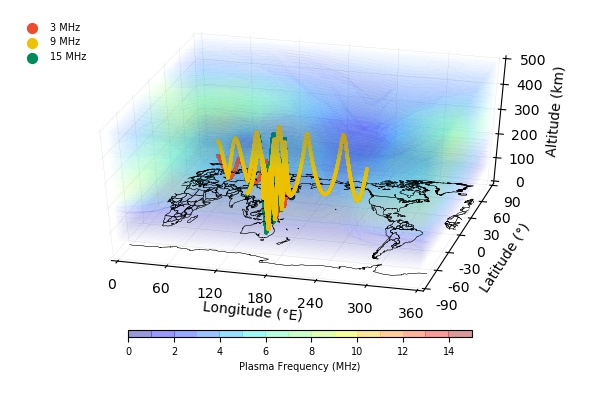
Figure 1 shows an example of visualization of shortwave propagation by HF-START. In this system, the user can check the radio wave propagation information that is updated in real-time. As shown in Figure 2, the user can also use the web application to estimate and visualize radio wave propagation by specifying any frequency in the range of 3-30 MHz, any two points on the Earth, and any transmission angle. The date and time can be set retroactively to the past (after 2016), to the real-time, and in the future (up to about 1 day ahead).

The system can be used to visualize the radio propagation path and clarify whether it is affected by space weather when the shortwave you are using does not reach the destination, or when you can listen shortwave broadcasted from the far source that normally you cannot hear. Furthermore, in addition to amateur radio, it is expected to benefit efficient frequency operation of the aircrafts that use shortwave in polar route.

[Future Prospects]

We are conducting research and development to extend the HF-START to estimate radio wave propagation not only in the shortwave band but also in other frequency bands. In addition, we will evaluate the simulator accuracy and improve it by comparing it with radio wave propagation observations.

NICT has been providing information related to communications, satellite positioning, and radiation exposure since November 2019 as a member of the Global Space Weather Center of the International Civil Aviation Organization (ICAO). With the HF-START service, we expect to improve the information provided to directly relate to communications, such as communication range information.

###

As the abstract mentions, you can use the tool online now via the HF-Start Web Tool.

Thanks so much for the tip, Tracy. This is fascinating!

Shortwave portables, external antennas, overloading, and electrostatic discharge

Many thanks to SWLing Post contributor, Jack Dully, who writes:

I am just wondering what portable receivers are more susceptible to overloading with long dipoles, say 60-70 ft.

I regularly use such and I have never noticed anything unusual happening with a Sony ICF-7600GR, Grundig G3, or PL-880 to name a few. I just ordered a Tecsun 680. Perhaps many of the newer radios have better AGC thresholds or more robust front ends but I really don’t know for sure.

[Also] how exactly do you know if your receiver (portable OR not) is being overloaded by too big of an antenna (ie. dipole, inverted V and the like) and will it damage your receiver? Is there still a way of using a large antenna to capture more distant stations safely, especially with good quality portables?

Thank you for sharing this question, Jack, and my hope is that SWLing Post readers can chime in with details and advice in the comments section of this post.

These are deep topics, but I’ll try to answer a few of your questions…

First of all, you definitely can harm a portable radio by hooking it up to a large antenna. Many portables have no means of protecting themselves from ESD (Electrostatic Discharge). By hooking a portable up to a long wire antenna, you can expose it to ESD which will essentially deafen your radio until you’re able to repair it. Indeed, this reminds me of an article from our archives regarding a Tecsun PL-600 ESD repair. Some radios do have built-in ESD protection (like the PL-680), but I’m not entirely sure it would offer protection from a particularly strong ESD pulse.

Symptoms of overloading can vary. Sometimes overloading can sound like background splatter and even popping. Sometimes you’ll hear “images” of broadcasters across the bands; muffled audio of a blowtorch station. Another sign of overload is when your signal meter jumps at the same time your receiver goes deaf. It’s as if your radio is simply overwhelmed by strong signals and it can manifest itself in odd ways especially since the AGC usually falls apart.

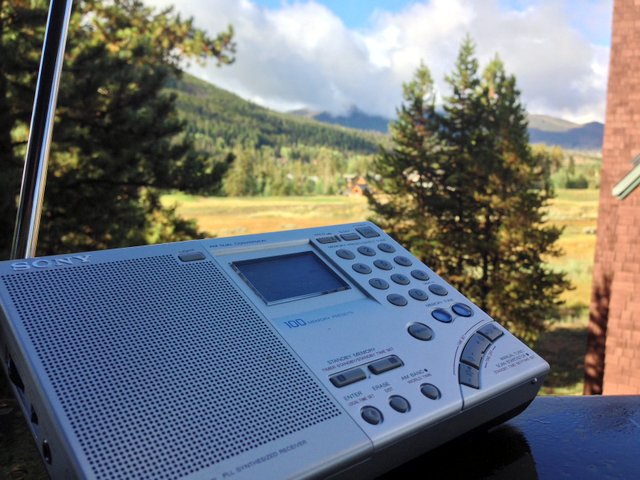
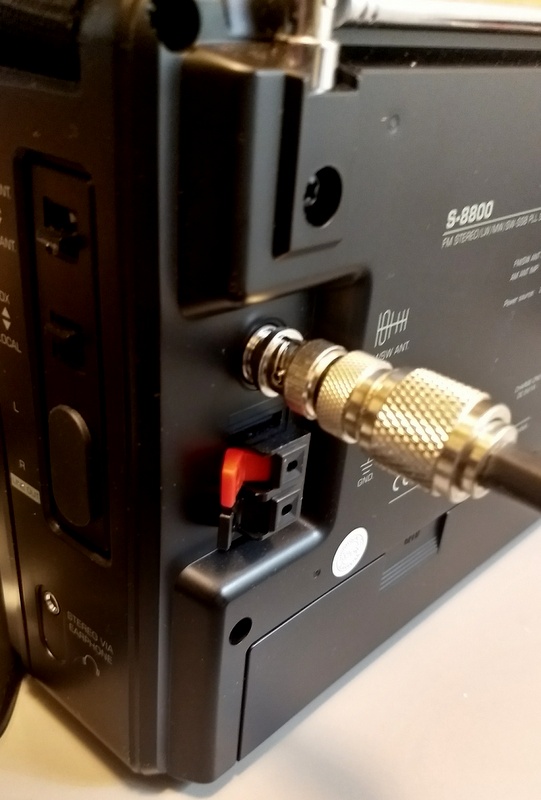
Like you, I’ve found that my Sony ICF-7600GR seems to be able to handle large wire antennas with no discernible overload.  Also, the Tecsun S-8800 (above) is well-equipped to handle larger external antennas and even sports a proper antenna port on the back. I know Sangean ATS-909X owners who only use their radio with an external wire antenna and have excellent results.

Some portable radios are very sensitive with the built-in whip antenna, but fall apart if attached to a long wire antenna.

In general, the cheaper the radio, the less likely it has a front end and filtering that can cope with overloading.

Overloading advice?

Please comment with your experience regarding overloading. Have you found some radio models better than others at coping with blowtorch stations, for example? What do you do to protect your receivers from electrostatic discharge when hooked up to large antennas? Please comment!

Michael pairs the Tecsun PL-990 and the AOR LA400

Many thanks to SWLing Post contributor, Michael Ye (BD4AAQ), for the following guest post:


In the Loop: PL-990 and LA400, a Perfect Match

by Michael Ye (BD4AAQ)

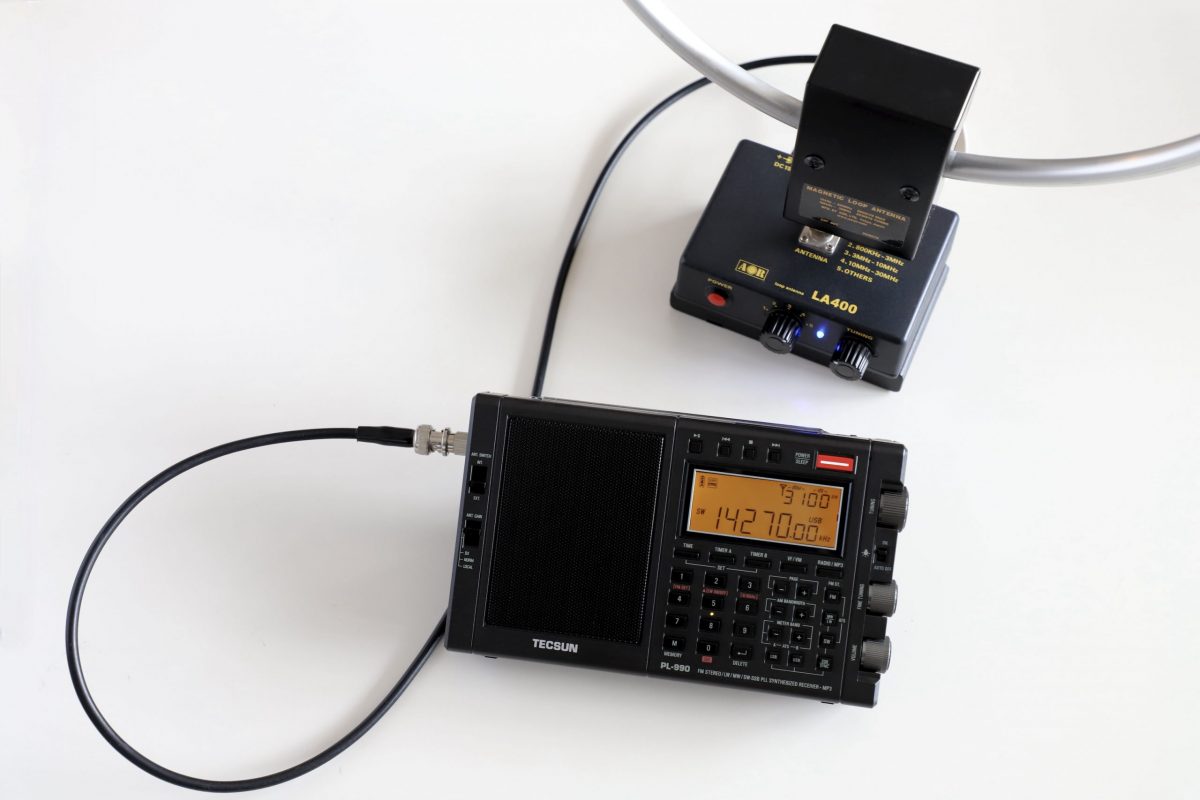
PL-990 and LA400

I have been a happy owner of Tecsun’s PL-880 world band receivers for years. In fact I have two PL-880 radios, one sitting at home and the other staying in my car. So, after Tecsun introduced the new model PL-990 in late 2020, it didn’t take me long to decide to purchase one. In this article I will discuss the Tecsun PL-990 receiver working with loop antennas, while referencing some relevant features of the PL-880.

Overall performance of the PL-990

Merely by its model number, it is easy to regard the PL-990 as an upgraded version of the already highly reputable PL-880. As expected, the PL-990 can very much be regarded as a combination of all the existing fine radio features of the PL-880 AND the music and bluetooth additions, with a number of improvements for instance in shortwave and medium wave performance. The ergonomic design of the PL-990 looks and feels different from that of the PL-880 in a number of ways. Although I may prefer the the more slim and elegant appearance of the PL-880, the PL-990 gives a more rugged and durable feeling, among other improvements over the older PL-880.

Working with loop antennas

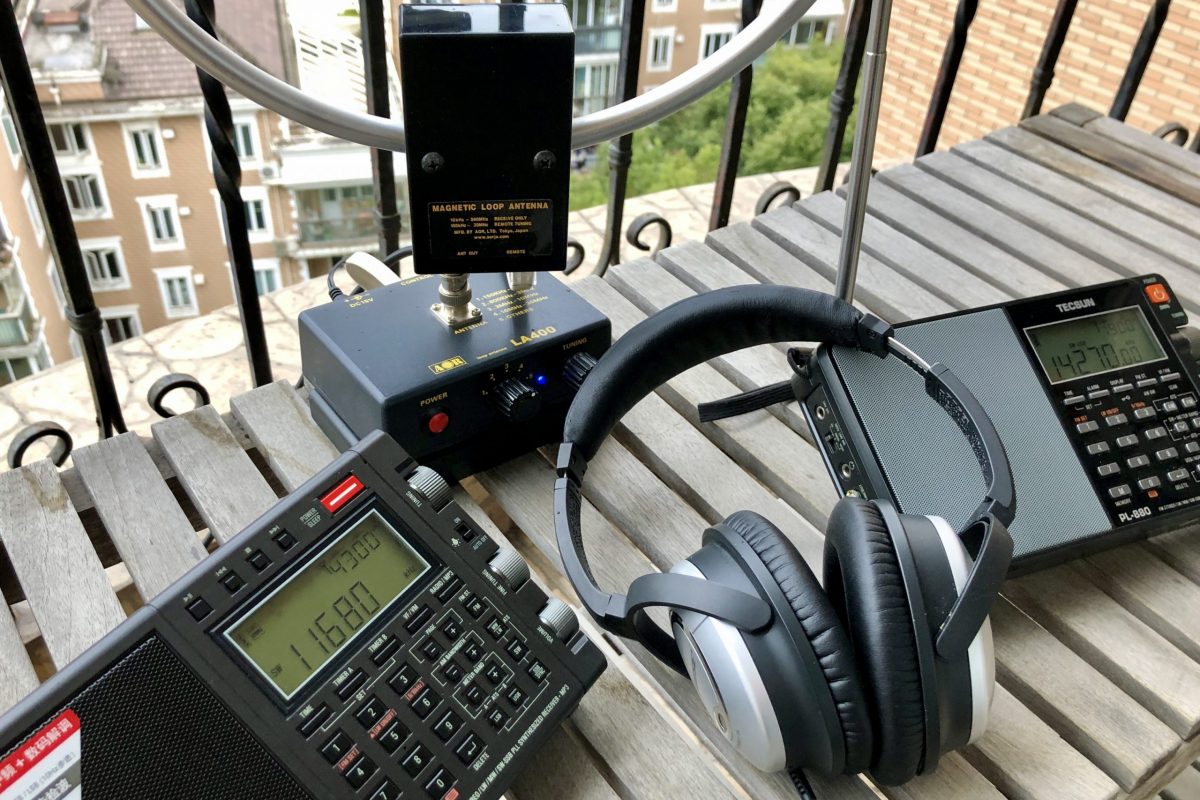
The PL-990 and the PL-880 side by side

Living on the twelfth floor of a condominium in the crowded Shanghai, I have often been fascinated with loop antennas. As a licensed amateur operator, I have used the MFJ-1786X and have been impressed with its performance. On reception, I also find loop antennas appealing, as they are able to pull in weak signals while noticeably reducing electro-magnetic interference rampant in the urban environment. I have an unbranded shortwave loop antenna which I believe is based on and performs similarly with the AOR LA320. Despite its excellent performance, it is only good for the 5MHz – 15MHz shortwave range. So a few years ago when AOR launched the new LA400 wideband loop antenna, I bought one, which I often pair up with the PL-880 and other radios for shortwave listening, and get satisfactory results!

Antenna Switch on the PL-990

Now, back to the PL-990. When I first tried the PL-990 with the LA400, the results were generally good but not as good as as compared with using the same LA400 on my PL-880. This puzzled me for a day or so until I realised that the PL-990 actually has an antenna switch which the PL-880 does not have. The switch is used to toggle between an internal antenna (i.e. the built-in ferrite bar/telescopic antenna) and an external one (e.g. the AOR LA400). So a new PL-990 user who has often operated the PL-880 when first using the PL-990 could easily ignore the switch which should be pushed to “Ext” when plugging in an external antenna. This explains why the PL-990 may suddenly appear less sensitive than expected.

“Ext” antenna input for all bands

Contrary to the PL-880 whose external antenna socket is only good for shortwave signal input, the PL-990’s external antenna socket works with all bands, from long wave to FM. I found this to be an important and very useful change, and a pleasant surprise for my LA400, which covers a wide range of frequencies from long wave to medium wave to FM and up to 500MHz.

Once the LA400 is connected, the correct band selected, and last but not least the antenna switch turned to “Ext”, the PL-990 and the LA400 work like a charm in the indoor setting, remarkably better than the built-in telescopic antenna. With the loop connected, while there is not much to expect on the long wave band because of very few long wave stations remaining in the world, reception improves considerably on all other bands including on the medium wave and FM bands, as is also reflected on the upper right hand display of the signal strength and S/N ratio readings. Needless to say, performance on shortwave is as good as on the PL-880, if not better (again, remember to push the antenna switch to “Ext” when using it on the PL-990). Using the AOR loop on the PL-990 for FM reception is somewhat different as there does not seem to be a noticeable tuning point. Simply select the “Others” band, which appears to be broad enough for fair FM reception.

Tecsun AN-200 loop antenna

It is worth mentioning that I have a Tecsun AN-200 tunable medium wave antenna, which I have not used often. As its name suggests, it is for medium wave reception only. I tried it on the PL-990. Works great.

The AN-200 and the PL-990

It is hard to tell which one, the PL-LA400 or the AN-200, fares better, as the signal strength and S/M readings are quite close. They both perform better than the radio’s internal ferrite bar antenna to varying degrees, by improving the signal strength or the S/N ratio or both. The Tecsun loop is a passive antenna, meaning no power is required, making it easy to be used “wirelessly”, by simply placing the loop close to the radio, without having to be connected to the radio via a cable.

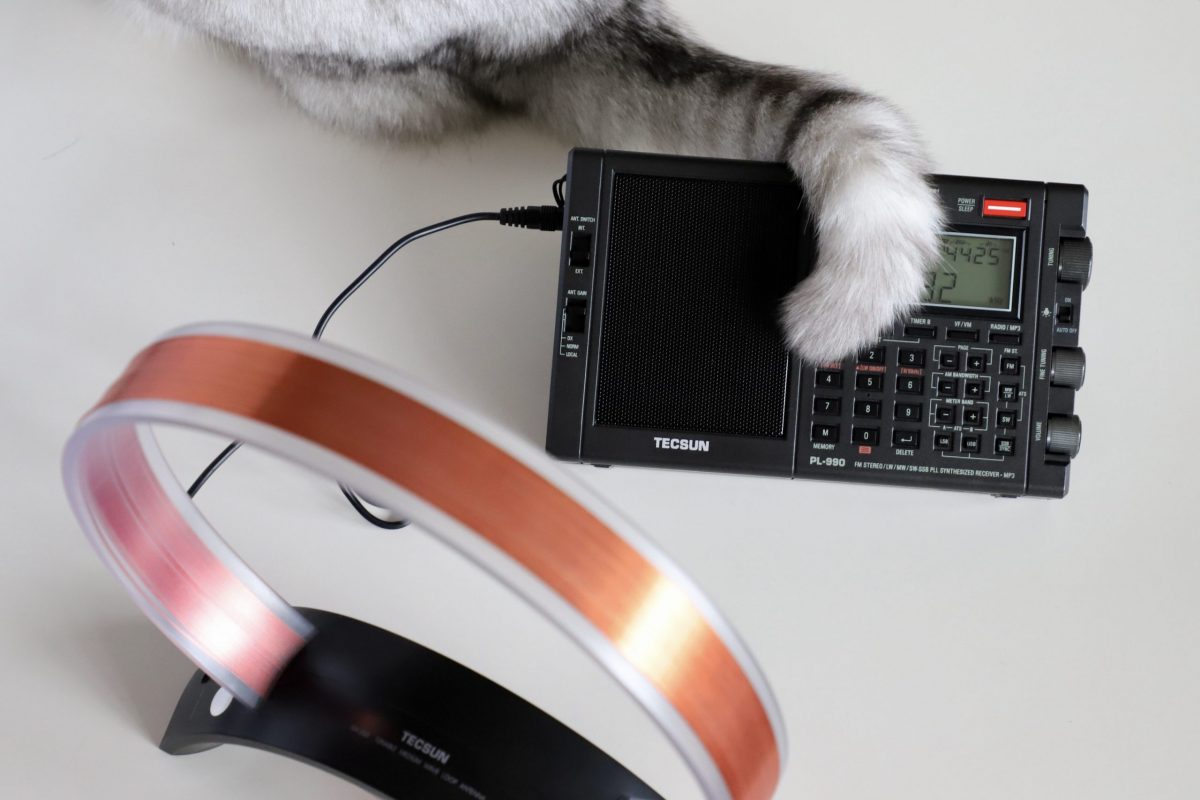
Chocolate, our house cat, tries to enhance reception with her tail

It should be noted that in the “wireless” mode of the AN-200 the antenna switch on the PL-990 should remain at “Int” so as for its built-in ferrite bar and the loop to couple with each other.