Category Archives: Guest Posts

Guest Post: Radio Australia, and a sea story

Many thanks to SWLing Post contributor, John Harper (AE5X), who is kindly allowing me to re-post the following article originally published on his excellent blog:


Radio Australia, and a sea story

by John (AE5X)

From London Shortwave: “It’s official: Radio Australia are no longer on shortwave…”

Four submariners on a surface ship (1989-1990)

Nine of my 10 years in the Navy were spent in the Submarine Service – the other year was spent aboard a research ship operating between Perth, Australia and Singapore. Our mission was to make detailed contour charts of the sea floor in that area using precision fathometers and new-at-the-time GPS.

The detailed charts allow US submarines to get navigational fixes by correlating their soundings with the data we had collected without having to come to periscope depth for a satellite fix, thus the need for a small contingent of submariners on a surface ship. Gathering this data required the ship to stay at sea 28 days at a time, going back and forth in straight lines across the eastern Indian Ocean. At the end of those 28 days we would pull in to either Fremantle or Singapore for a week, then out again.

We enjoyed the sunlight, fresh air and the presence of civilian women onboard (oh, the stories I could tell if this weren’t a family-friendly blog!) but what we missed – and missed greatly – was news from the world. Big things were happening at a fast pace in those days as the Iron Curtain began to crumble and we knew nothing of it for long, event-filled month-long chunks.

There is a huge psychological disconnect that comes with being isolated from the world for a month at a time. We starved for news and any kind of connection to the outside world so, during a port call to Singapore, I bought a Philips D2999 shortwave receiver. It was small enough for shipboard life, ran on AC or batteries and even had a BFO for occasionally listening to hams.

After having it for a few days and mentioning to the other crewmembers various things that were happening around the world, their interest grew and I eventually moved the radio from my stateroom to a common breakroom so that anyone could listen whenever they wanted. For a while we even had a printout of news events – a one-page daily newspaper – that we posted in various locations throughout the ship. Many of us were glued to the radio during the week of events in December 1989 that culminated in the Christmas Day execution of Romanian President Nicolae Ceau?escu.

Some of that news came from the VOA, some from the BBC and even from Radio Moscow. All had good signals into the Indian Ocean area at times. But regardless of time of day or ionospheric conditions, Radio Australia was always there, like a beacon – reliable, dependable and with great fidelity due to no selective fading. It was our primarily source of news.

Frequencies of many stations and the best times to hear them were posted near the radio but everyone knew our two main frequencies for Radio Australia without having to look it up. We listened to Radio Australia so much that the announcers eventually lost their accents.

The beauty and utility of shortwave was introduced to people who otherwise would have had no interest in it. Thanks mainly to Radio Australia, we not only knew what was going on in the world, more importantly, we felt more a part of it and less isolated than we had been before.

The end of Radio Australia and so many other shortwave stations marks the end of an exciting era. What an amazing thing it was, in a pre-internet world, to be able to get information on the high seas, thousands of miles from land.

Farewell, Radio Australia and thanks for the trip down Memory Lane.


And thank you, John, for sharing your memories with us!
Post Readers: I encourage you to bookmark John’s brilliant ham radio blog!

Do you have any memorable Radio Australia moments?  Please comment!

A quick view of my shack in Oxford, UK & recent transatlantic medium wave DX

Someone recently described my shack in Oxford as ‘an impressive mess’…. and that really is just about the most positive comment I’ve ever received regarding my listening post! So, my apologies for displaying the mess in public, but in response to having been asked many times by subscribers to Oxford Shortwave Log to ‘share my shack’, here it is, well most of it at least, in all it’s unadulterated glory.


The primary reason however for this post is to share my most recent transatlantic medium wave catches using the brilliant Elad FDM DUO and Wellbrook ALA1530 magnetic loop antenna. This excellent combination continues to pull in really nice DX, although not so much very recently as propagation has been fairly rubbish. However, since early to mid December, the dynamic duo have managed to pull in a number of transatlantic medium wave signals, including Radio Rebelde, Cuba on (670 and 710 kHz), KVNS Texas, CHIN Radio, Toronto, WFED Washington DC, WWNN Health and Wealth Radio, Pompano Beach, Florida, and huge signals from WMEX Boston and WWKB Buffalo, New York. Embedded reception videos and text links follow below and in the mean time, I wish you all great DX!


Click to watch on YouTube

Click to watch on YouTube

Click to watch on YouTube

Click to watch on YouTube

Click to watch on YouTube

Click to watch on YouTube

Click to watch on YouTube

Click to watch on YouTube


Clint Gouveia is the author of this post and a regular contributor to the SWLing Post. Clint actively publishes videos of his shortwave radio excursions on his YouTube channel: Oxford Shortwave Log. Clint is based in Oxfordshire, England.


Dan compares the Tecsun PL-365 and CountyComm GP5-SSB

Many thanks to SWLing Post contributor, Dan Robinson, who shares the following review:


Comparing the CountyComm GP5-SSB and Tecsun PL-365

County Comm GP-5/SSB and Tecsun PL-365: a couple of years ago, I obtained a GP-5/SSB from Universal and have enjoyed using the radio. It’s extremely sensitive, often bringing in signals in the middle of my house here in Maryland, and is fun to use, provided the auto-tune is done to insert frequencies so you don’t have to use the thumb wheel too much.

I have often thought that the next logical upgrade for this radio would be to add a small keypad to allow direct frequency selection, but perhaps that is not in the cards. The County Comm is basically the Tecsun PL-365, but the actual Tecsun version has not been available for the most part from major sellers, even from Anon-Co in Hong Kong, or Universal. You can still find some PL-365’s from certain Ebay sellers. Last year I obtained two from a Hong Kong seller. Both were NIB, and arrived within about a week or so of purchase.

What I noticed immediately is that the PL-365 has a different kind of exterior surface, more rubberized than the County Comm. I was curious about any differences in performance that might be obvious. Recently, I took both outside for a very basic comparison — not scientific by any means, but I think it shows something that I have noticed.

Both share the characteristics of extreme directionality, and sensitivity to touch — sensitivity increases markedly when they are hand-held, decreases noticeably when they are left standing on their own, or angled. I have noticed this when using them at the beach. If I am recording a station, and leave the radio alone for a few minutes, I return to find reception degraded quite a bit, because they were not being held.

In my very basic comparison, I had both receivers next to each other on a backyard table, both antennas fully extended, full batteries on both. While on some frequencies, at least initially, it seems little difference can be heard, on others there is what seems to be greater clarity and signal separation on the PL-365.

I noticed this from the start on 13.710 where the County Comm appears to be noisier than the PL-365, and on the portions later in the video when both are tuned to 11.820 (de-tuned to 11,818) Saudi Arabia, and to 11.945 khz.

Apologies for the length of the video. It’s hard to draw any conclusions based on this comparison, and I intend to do some additional tests with both my PL-365s and will report back on any findings, but I thought this would be of interest to those of you out there with these fine little radios.

Click here to view on YouTube.


Thank you for this review and comparison, Dan. I’m often asked if there is any difference in performance to justify the extra costs typically associated with the PL-365. I can now share this video and your review–potential owners to draw their own conclusions. 

The Tecsun PL-365 can occasionally be purchased through sellers on eBay. The CountyComm GP5-SSB can be purchased from Universal Radio or CountyComm.

The diminutive but brilliant Sony ICF-SW100: a few autumn/winter DX catches

Hi there, I posted an article on this brilliant little radio a few months ago because it had demonstrated a level of performance way beyond my expectations. Notwithstanding it’s incredibly small size the DX results I obtained with it were beyond my ICF-SW55 and up there with the iconic ICF-2001D. Armed with synchronous detection, selectable side bands, SSB, CW and sensitivity seemingly boyond it’s tiny form factor I can’t recommend this radio highly enough.


Originally introduced into the market in 1993 and discontinued in 2005, the ICF-SW100 won’t ever be repeated – a point I made in my original post, but of course they are available on eBay and prices remain robust for what is now essentially a vintage receiver. Unfortunately, I don’t get to use my ICF-SW100 very much as I have various other receivers and have been involved in antenna building/testing and MW DX for the past few months. However, on the couple of occasions when I have taken the Sony on a mini DXpedition, it’s resulted in some fine DX. As demonstrated in the examples below, Mali, Guinea, Alaska and Japan are amongst the more difficult signals to copy in Europe and yet the ICF-SW100 delivered them! Text links to reception videos on the Oxford Shortwave Log YouTube channel follow below and futher down you will find embedded videos. Thanks for reading/watching/listening and I wish you all great DX!


Clint Gouveia is the author of this post and a regular contributor to the SWLing Post. Clint actively publishes videos of his shortwave radio excursions on his YouTube channel: Oxford Shortwave Log. Clint is based in Oxfordshire, England.

DXpedition antenna testing: the Bonito Boni whip and a 240 metre barbed wire fence


Hi there, a few days ago I posted some reception videos comparing the performance of the Boni whip with a 30 metre longwire antenna at home, with a further check against the performance of the H field Wellbrook ALA1530 active loop. The conclusion of those tests was essentially confirmation that E field antennas don’t usually perform very well under a blanket of ‘electrosmog’ and that only on Longwave, did the Boni whip prevailed over the longwire; otherwise there was no usable difference in performance between the two.

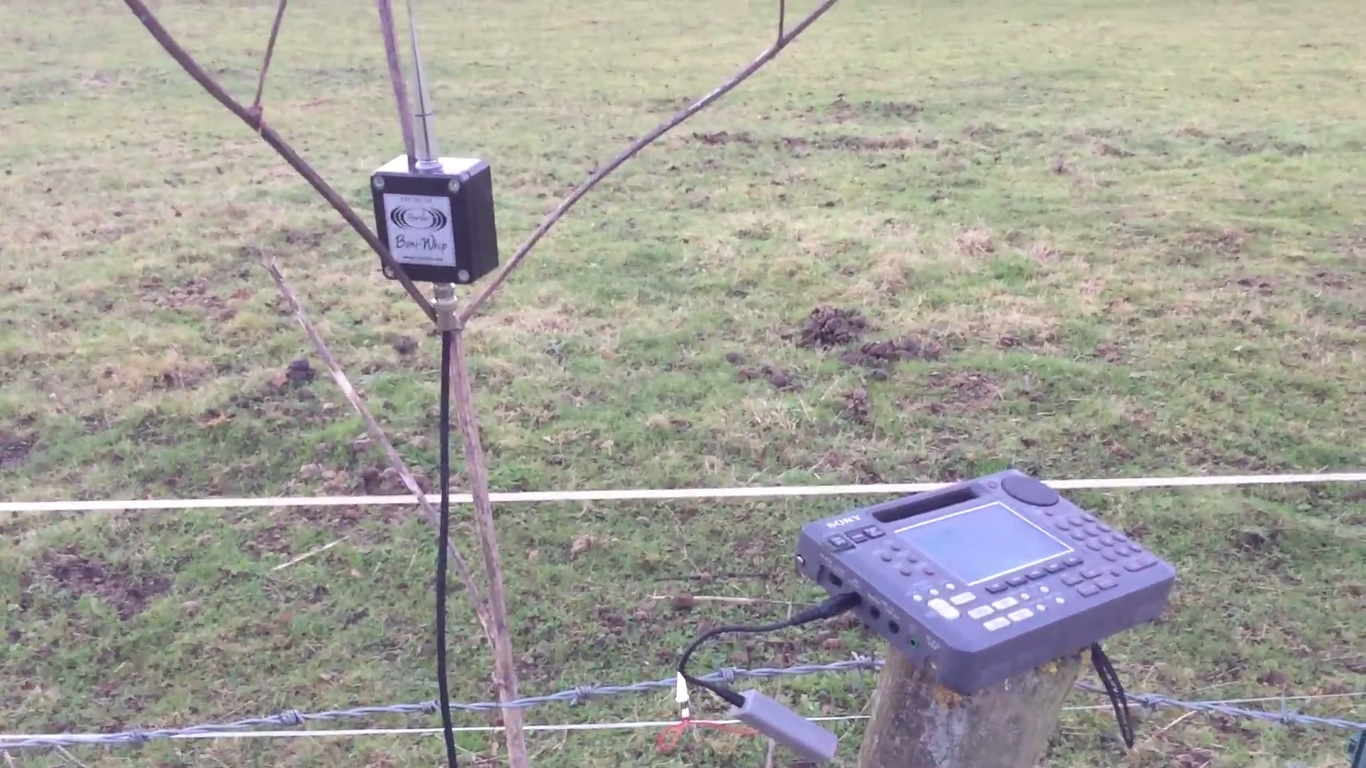
                         Sony ICF-SW55 receiver                                     ‘Quiet’ location for Boni whip test

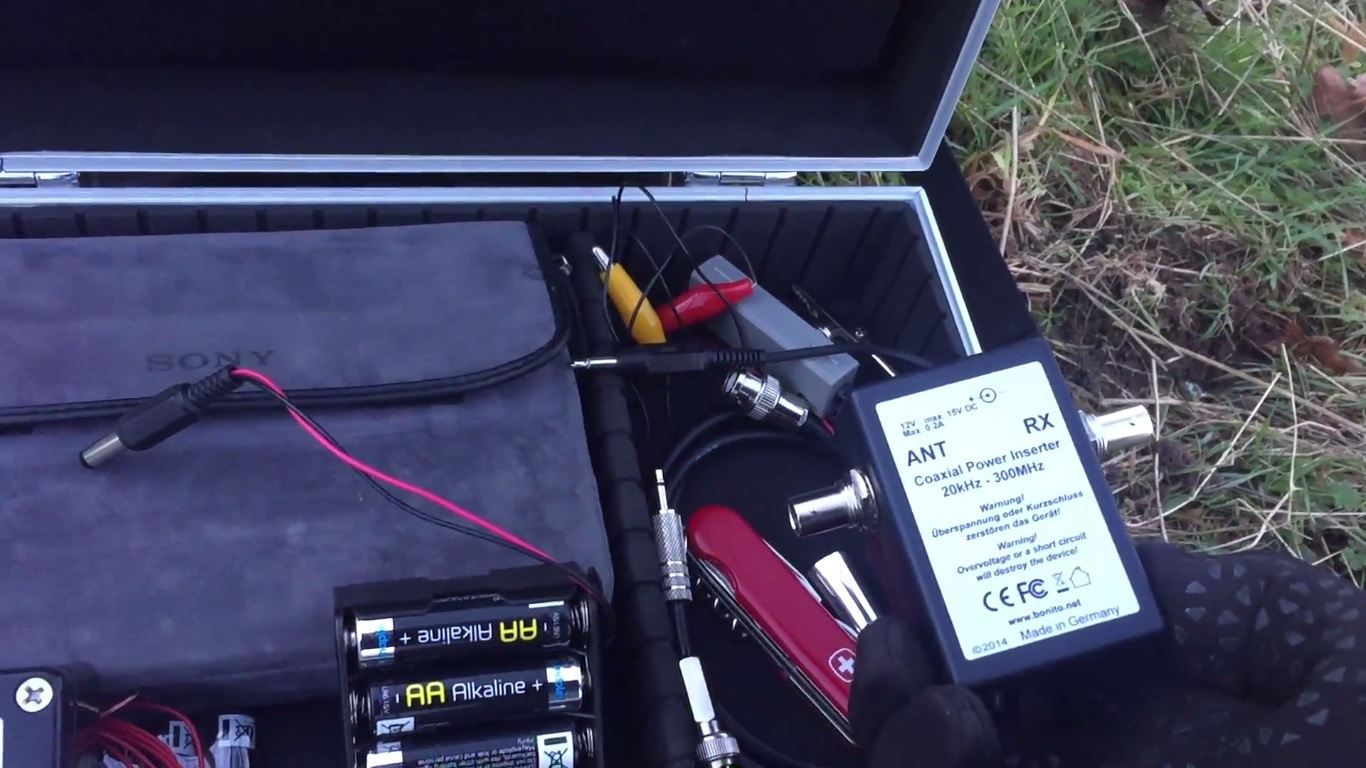
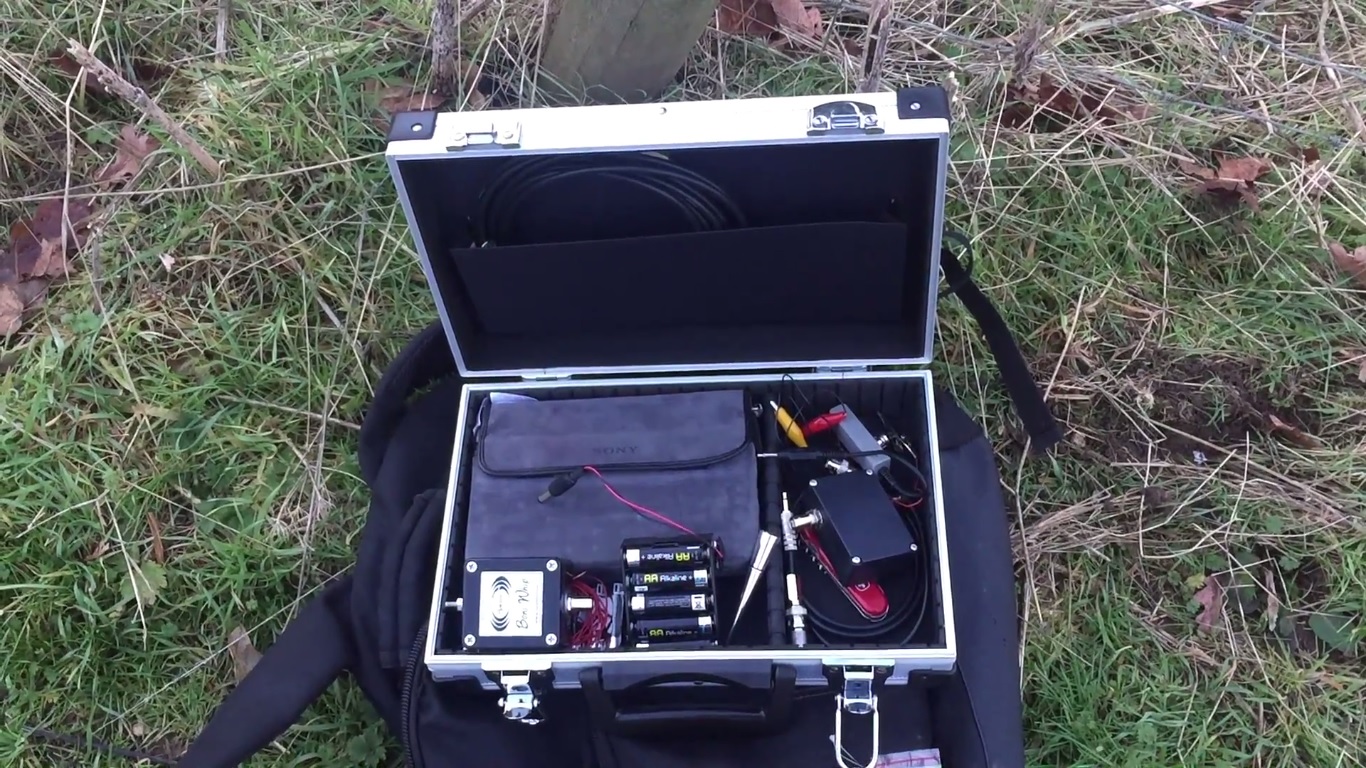
This prompted a number of my subscribers to ask when I would be taking the Boni whip on a DXpedition for an outdoor test against the Wellbrook and either a substantial longwire, or the 200 metre Beverage. Time is limited right now for a full test, however, I managed to throw together a kit of parts necessary to run a quick set of comparison tests with the whip, against the barbed wire fence I use for ad hoc DXing when out walking the dog! Over a period of an hour or so, I managed to copy a few stations on 31 and 49 metres and thus recorded signals using the Sony ICF-SW55 receiver with the Boni whip and barbed wire fence. Now previously, I have used that fence as an antenna for the excellent little Tecsun PL-310ET, with some nice results. However, after this series of tests, my views on the fence have changed a little. Obviously it might be somewhat directional and earthed along it’s length, neither of which I’ve checked, however, notwithstanding these performance-related factors, the performance of the whip which at home had been terrible, surprised me greatly. Text links to a set-up video and the reception videos on my Oxford Shortwave Log YouTube channel follow directly below, with embedded videos at the end of the post. 

Finally, if you’re looking for a well performing, compact and portable active antenna for outdoor use in quiet environments and of course, DXpeditions, I would definitely recommend the Boni whip. Just bear in mind that the SNR it delivers at home might not be usable for anything more than casual listening.

Thanks for watching/listening/reading and I wish you all great DX!


Clint Gouveia is the author of this post and a regular contributor to the SWLing Post. Clint actively publishes videos of his shortwave radio excursions on his YouTube channel: Oxford Shortwave Log. Clint is based in Oxfordshire, England.

Urban DXing: testing the Bonito Boni whip against a 30 metre longwire & the Wellbrook ALA15030

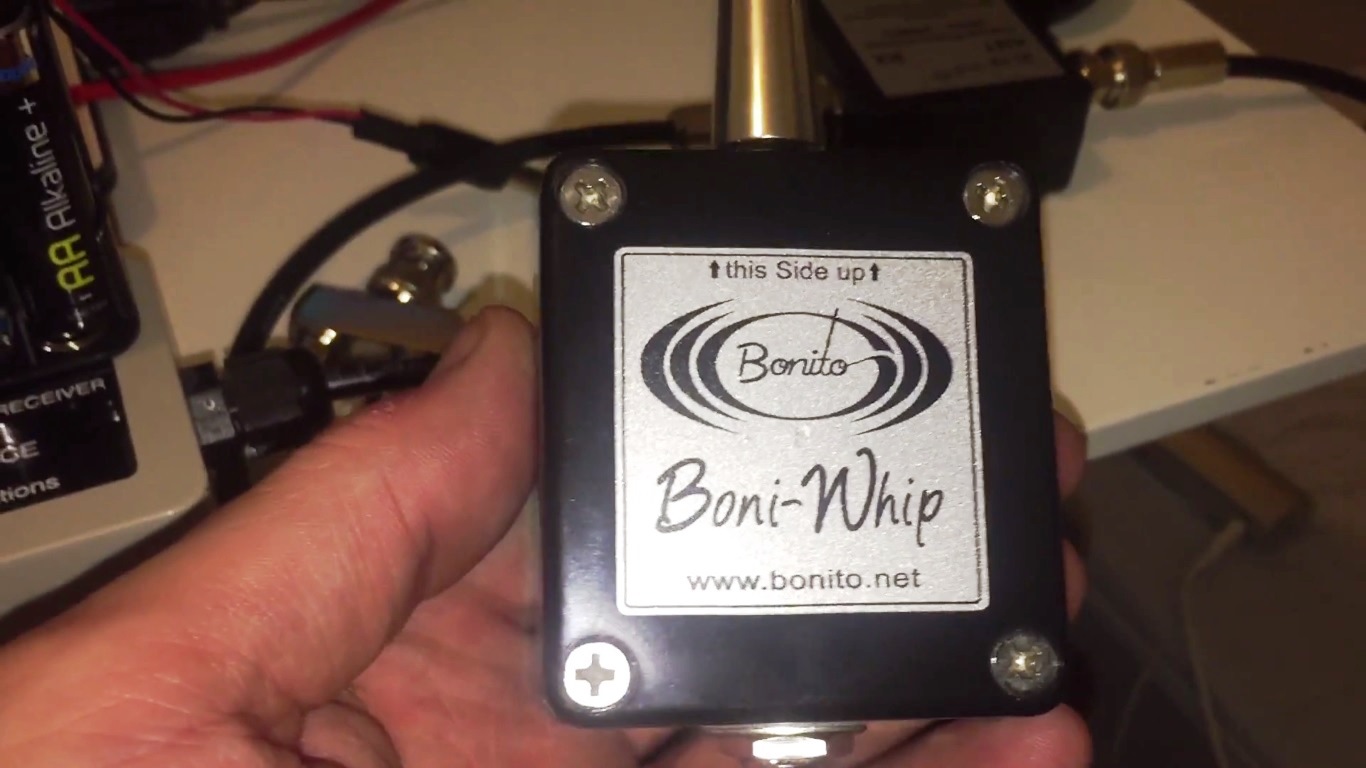
Hi there, if like me, you live in an urban environment, chances are QRM is having a negative impact on the quality of the signals you’re receiving at home. The presence of electrical noise makes antenna choice very important, particuarly if you’re planning to spend more than a few £££s on something more sophisticated than a length of wire. Recently I was considering the the purchase of a second compact antenna, for use at home in my shack and out and about on DXpeditions. I already had the excellent Wellbrook ALA1530 H field antenna, but at more than £250, it’s very costly and thus it seemed rather extravagent to buy a second one, if I could find something with similar performance for less expense. Space is at a premium at home and of course I take much of my equipment out on DXpeditions, so the Bonito Boni whip active antenna appeared to be an ideal choice. A wideband active antenna (from 20 kHz to 300 MHz) operating from 12 to 15V DC, with a very compact form-factor definitely ticked all the boxes. Furthermore, with reasonable second and third order intercept points of +55 and +32.5 dBm respectively, the Boni whip, on paper at least, looked like a pretty good buy at around £100.


Now, clearly, an E field antenna such as the Boni whip is not going to match the SNR provided by the H field Wellbrook ALA1530 in a noisy, urban environment. I have uploaded a few reception videos to my YouTube channel to demonstrate this, making a direct comparison of the two. However, what about the performance of the whip versus a simple longwire in an urban environment? Is there a delta in performance? The value proposition of the whip is primarliy in it’s performance, coupled with portability I suppose, but that must be considered a secondary requirement. The whip might be 10 or 15 times more expensive than a reel of cheap equipment wire, but will the reception justify the cost delta?!

Text links follow directly below, with embedded videos thereafter; you will find 3 reception videos comparing the whip and a 30 metre longwire, on shortwave and one each for LW and MW. At the end of each video there’s a section with the Wellbrook loop, just to calibrate where the longwire and whip are in terms of a much more effective H field antenna. The result? Well, there’s not much to separate the longwire and Boni whip, except on LW, where the whip prevails. A friend told me recently, if reception is rubbish at home under a blanket of QRM, don’t blame the antenna, the noise is the real problem. He was right. So, the next tests are to be undertaken out in the field, where the whip has a real chance to shine. I’m rooting for it because to have an antenna that performs as well as, or close to my loop out in the woods, yet can be packed away into a small case would be brilliant. Thanks for reading/watching/listening.


Clint Gouveia is the author of this post and a regular contributor to the SWLing Post. Clint actively publishes videos of his shortwave radio excursions on his YouTube channel: Oxford Shortwave Log. Clint is based in Oxfordshire, England.

Guest Post: Richard builds a WiFi radio with the Raspberry Pi

Many thanks to SWLing Post contributor, Richard Schreiber (KE7KRF), who shares the following guest post:


Yet Another Internet Radio!

by Richard Schreiber (KE7KRF)

After deciding that an internet radio could be an important source of entertainment in our household, we formulated a few general guidelines:

  • We opted not to use an aggregator but would pick and choose stations we enjoyed and discover the URL’s ourselves. Also would be satisfied with a couple of dozen stations. Based on a recent decision to pare down the number of TV channels we were paying for, having access to hundreds of stations seemed impractical and unnecessary.
  • The price had to be affordable, thus eliminating many stand-alone, commercially available internet radios.
  • We already owned a quality portable speaker (Bose SoundLink Mini) so the internet radio didn’t need to duplicate that component.
  • Didn’t want to tie up nor be tethered to a laptop, tablet, or netbook. We predicted that would eventually lead to less and less use of the radio.

After some research, coupled with the fact I already had some experience with Raspberry Pi computers, that small device appeared to be our best choice. I had recently purchased the newer 2 B model, which has plenty of computing power, and had installed Ubuntu Linaro as the OS. (As an aside, this OS has not to my knowledge been upgraded for the latest Raspberry Pi 3). There are several other operating systems that will work just as well including the official Raspbian OS available through the Raspberry Pi Foundation.

I installed the MPD music player daemon and its client MPC, which is used to add to and delete station URL’s from the playlist, control volume, etc. An important find was the iPhone app called MPod which provides remote wireless access to the features of MPC. At the moment it is a free app for the iPhone (in my case the iPod Touch).

For portability, my Raspberry Pi is being used “headless”, meaning it is not connected to a monitor, keyboard or mouse. If maintenance is required you can use PuTTY, a SSH and telnet client, wirelessly from a Windows (or MAC?) PC, using a command-line interface. Mainly this is needed to shut down the Raspberry Pi properly before turning off the power, but it boots completely on its own when powered up. The MPod app will then load the playlist of stations and let you start playing the radio without direct access to the Raspberry Pi.

The sound output of my Raspberry Pi is connected to the auxiliary port of our Bose SoundLink Mini Bluetooth speaker. But instead of trying to implement Bluetooth on the Raspberry Pi, I took the easy way out and use a direct connection. The sound reproduction from this setup is very good, though audiophiles might be somewhat more critical.

The above represents a minimal investment if you already have a good speaker on hand. It does require some on-line research and learning at least enough to install the OS and software. The good news is that there are many websites and forums providing step-by-step instructions and helpful hobbyists willing to explain some of the more cryptic aspects. A few of the websites that I found to be helpful:

http://www.instructables.com/id/Arduino-Raspberry-Pi-Internet

http://cagewebdev.com/raspberry-pi-playing-internet-radio

https://learn.adafruit.com/raspberry-pi-radio-player-with-touchscreen

A couple of these also explain how to add a display to your Raspberry Pi internet radio.

Our Raspberry Pi radio is on each evening and has been trouble free. It is worth mentioning that this is a very portable setup, and can even be powered by a battery pack (the kind used for recharging tablets and cell phones) for a few hours. Of course you need to be near a wifi hotspot.


Thank you, Richard! What a great way to use the inexpensive Raspberry Pi. I have a spare Pi2 and an amplified speaker here at the house. Though I don’t need another WiFi radio, it would be fun putting this little system together.