Category Archives: News

Monitoring Times Magazine ceases publication: December 2013 last issue

MTlogoI just noticed the following statement on the Monitoring Times magazine’s website:

After 33 years of service to the radio community, Monitoring Times will cease publication with the December, 2013 issue.  Subscriptions and renewals for the remaining months can be made by calling (800) 438-8155.

[Update] I also received this message from MT:

After 33 years of publishing the most informative and lauded magazine on monitoring the radio spectrum, Judy and I are finally going to retire. We are grateful for the dedicated efforts of our fine staff of writers for the excellent work which has kept MT alive for all these years. While we know the discontinuation of MT, with our December issue, will be a disappointment to our readers and writers alike, we realize that a combination of a poorly performing economy, as well as the ready availability of free listening and technical information on the Internet, has reduced sales and subscriptions throughout the market place. I would like to thank you personally for your knowledge, your dependability, and your professionalism in making MT the publication that is most often referred to in the radio monitoring hobby. It is a legacy that we have all inherited.

Warmest regards to all our writers, Bob and Judy Grove

This is sad news, indeed. I’ve been a regular reader for many years, and more recently, a regular contributor for Monitoring Times. I only have very positive things to say about the MT staff: they’re friendly, professional and honor their word in every respect.

I’ve had articles in the past three issues–this month, there will be two that I wrote following the 2013 Dayton Hamvention. With any luck, maybe I’ll get a couple more articles in before MT closes shop.

Monitoring Times will be sorely missed.

ERT still broadcasting while Greek Public Television (EDT) emerges

Station name and logo of the new TV service, EDT

Station name and logo of the new TV service, EDT

I have recorded hours of the Voice of Greece on shortwave since they were supposed to shutdown weeks ago. This update, via EnetEnglish, describes a re-branded TV service; Greek Public Television (EDT):

(Source: EnetEnglish.gr)

Greek Public Television (EDT), the replacement station for ERT which was shut down last month, has commenced broadcasting a basic signal.

A screen depicting the new station’s name and somewhat uninspiring logo appeared at about 8.30am on Wednesday morning, against a backdrop depicting a globe and waves of colour.

The decision to commence the signal follows the vote on Tuesday night, at committee, of a bill establishing New Greek Radio, Internet and Television, or Nerit, the new national broadcaster.

The bill received only the support of the coalition parties, New Democracy and Pasok, with all other parties against. Debate on the new legislation will be completed on Thursday.

Despite the move, ERT staff at the station have entered their second month of continuous broadcasting via a livestream hosted by the European Broadcasting Union, which has demanded that the station reopen.

[…]ERT staff are asking whether EDT has been approved by the state’s broadcasting regulator, the Greek National Council for Radio and Television (ESR). They also ask who is paying the staff working in EDT and on what kind of contracts.

KVOH test today on 17,775 kHz

Retro Microphone(Source: KVOH)

KVOH – Voice of Hope, Los Angeles, would like to thank all those who responded to last Saturday’s test broadcast.  It was unfortunate that the time chosen for the test happened to coincide with a geomagnetic storm, but in spite of that, reports have so far been received from 13 U.S. states, as well as from Canada, Mexico, Colombia, Venezuela, Brazil, Argentina and Indonesia.

The station will be testing again tomorrow, Sunday 7th, from 1700-1900 UTC (1-3pm Eastern).  As before, the frequency is 17775 kHz, with 50 kW on a beam of 100 degrees (towards Cuba).  The same test program will be used as last week, with announcements in English and Spanish, which hopefully will be easier to copy since atmospheric conditions are better this weekend.  Reports will be very much appreciated to either [email protected] or P.O. Box 102, Los Angeles, CA 90078.  If reporting by email, please attach a short mp3 recording of your reception if possible.  If reporting by mail and requesting a QSL, please enclose return postage.  In all reports, please be sure to describe your receiver and antenna used.  Reception comparisons using handheld portable radios with telescopic antennas (outdoors) will be especially helpful.

KVOH currently expects to be able to launch a preliminary 2-hour daily schedule around the end of this month (July), and will build from there.

Ray Robinson
Los Angeles

Russian spies used shortwave numbers stations and satellites inside Germany

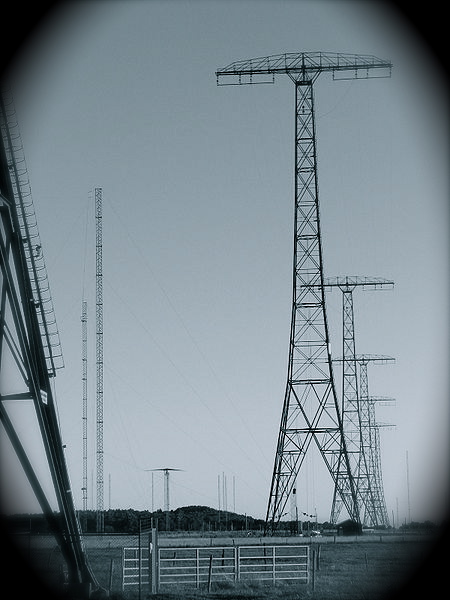
towersThanks to Andrea Borgnino for sharing this article:

(Source: Der Spiegel)

A pair of Russian agents was convicted on Tuesday of spying in Germany for more than 20 years. Russian President Vladimir Putin is personally conducting the negotiations for a potential exchange, but now a new case is straining German-Russian relations.

A treasure in the exhibit room at the German Federal Criminal Police Office in the western city of Wiesbaden has aroused a great deal of curiosity among the world’s intelligence agencies. It looks like an ordinary, black laptop bag. It contains a Siemens hard drive, or at least it looks that way. But a notch reveals that it is not an off-the-shelf product. It’s a high-frequency satellite transmitter, with an antenna hidden in the flap of the bag.

The device is state-of-the-art military technology, a “top quality intelligence product,” raves an expert. In the spy wars, German authorities haven’t gotten their hands on anything this important in years. The significance of this high-tech device, however, approaches that of the legendary Enigma code machine from World War II. Domestic intelligence officials at the Federal Office for the Protection of the Constitution (BfV) in Cologne are eager to examine the device. The American intelligence agencies, the CIA and the NSA, as well as Israel’s Mossad have also asked for permission to inspect the miraculous piece of equipment.

The satellite device served Andreas and Heidrun Anschlag as a connection back home. They were Russian spies who lived as agents in Germany for more than 20 years, until they were arrested in October 2011.

[…]In their dispatches, which the couple received with a shortwave radio, the agent controllers in Directorate S of the SWR referred to the Anschlags as “Pit” and “Tina.” They were given the state-of-the-art satellite equipment during a trip to St. Petersburg and Moscow. They also attended a course on the use of a decoding program called “Sepal” and an encoding program called “Parabola.”

This enabled “Pit” and “Tina” to establish a secure connection to Moscow. All they had to do was pay attention to the times when one of the six to eight satellites sent into space by Russian intelligence for spying activities came into range. A red light on their radio device signaled to the Anschlags that the satellite was approaching, while a blue light indicated the transmission of encoded messages.

Sometimes, when the equipment failed, the Anschlags placed the transmitter below one of their attic windows, among the fruit trees in the garden or on a nearby hill. The hills directly behind the house proved to be unsuitable, because nearby wind turbines apparently interrupted communication with the satellite.[…]

Read the full article “In the ‘Land of the Enemy’: Spies Strain German-Russian Ties” at Der Spiegel Online International.

A review of the ShouYu SY-X5 DSP shortwave radio

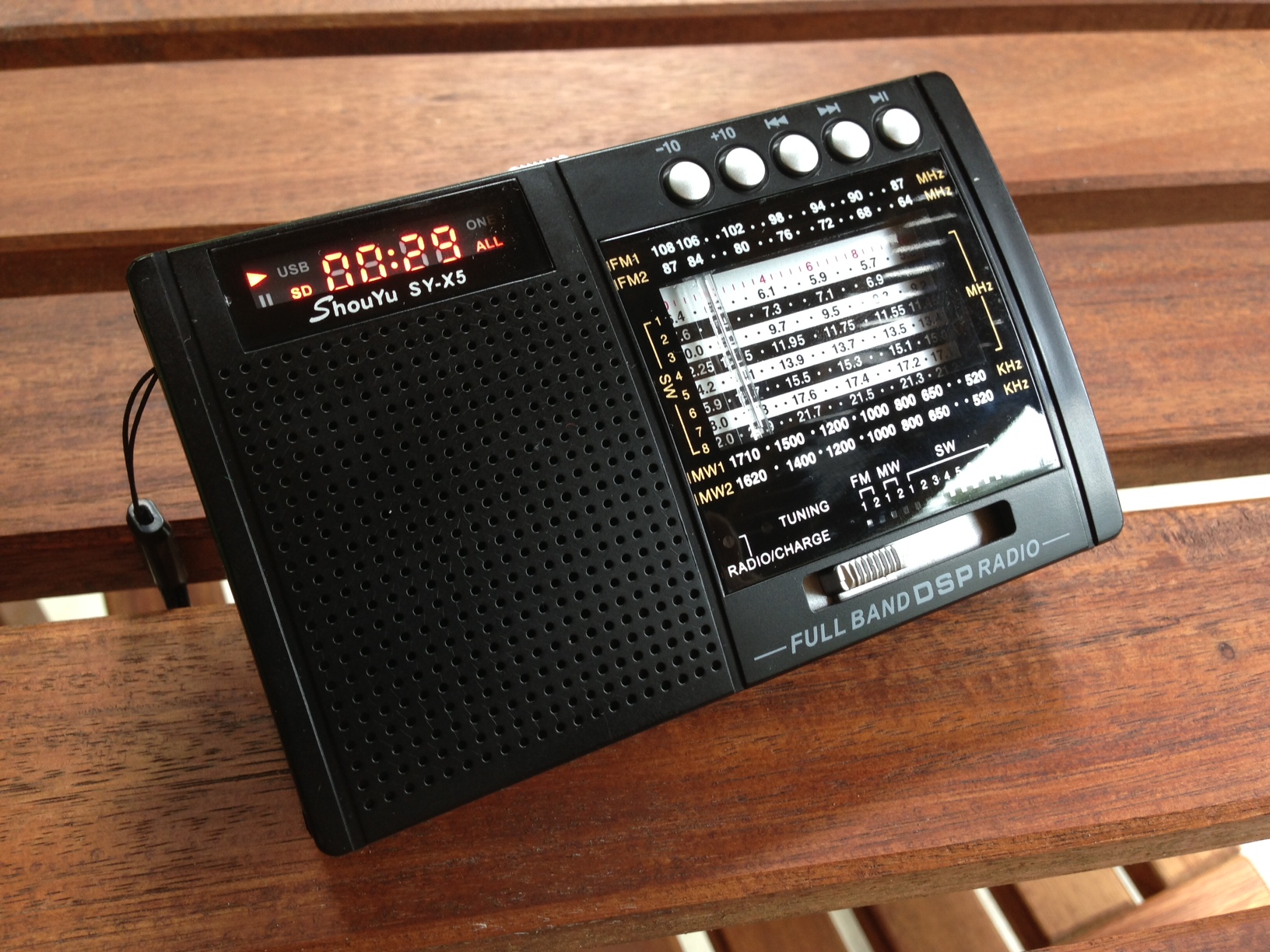
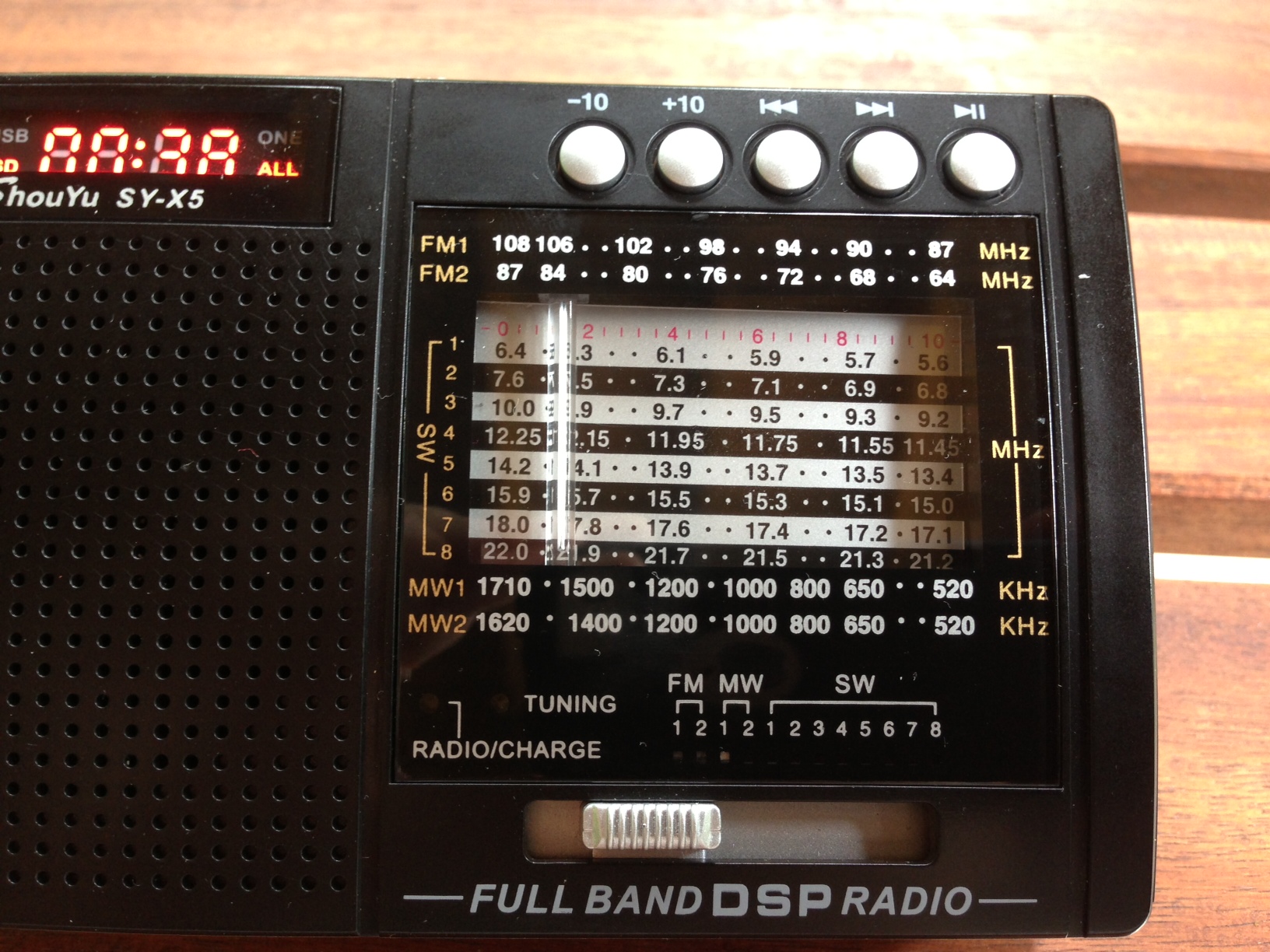
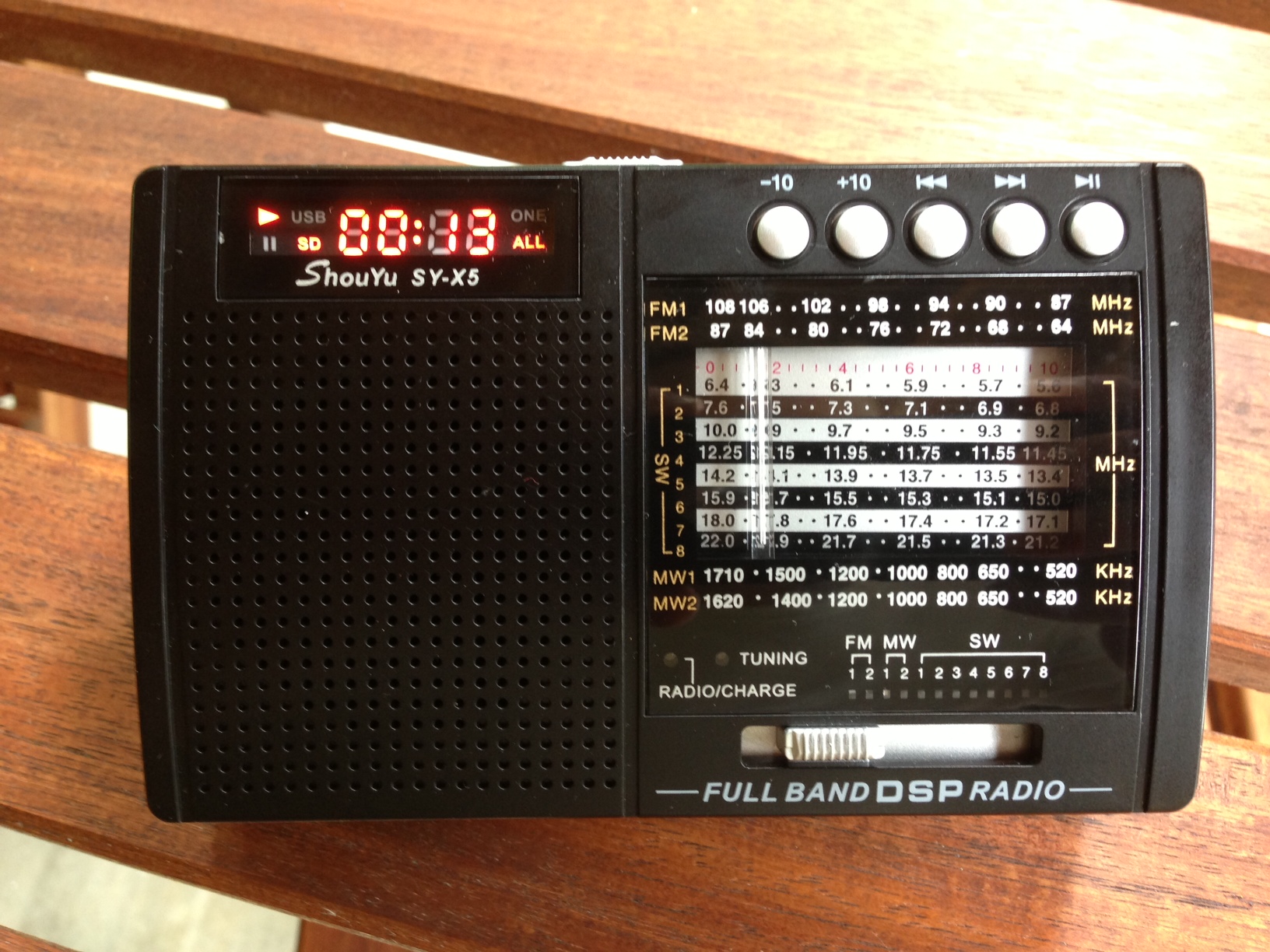
The Shouyu SY-X5 mechanically-tuned, DSP portable radio. (Click to enlarge)

The Shouyu SY-X5 mechanically-tuned, DSP portable radio. (Click to enlarge)

The ShouYu SY-X5 shortwave radio came to my attention only a few weeks ago. It is yet one more mechanically-tuned, DSP based, portable shortwave/AM/FM radio. I have reviewed several other models based on the same DSP chipset: the Silicon Labs SI4844–see my reviews of the Degen DE321, Degen DE32, and the Kichbo KK-9803. I also recently reviewed the Tecsun R-2010D, though it is based on a slightly newer, though similar, SiLabs DSP chipset.

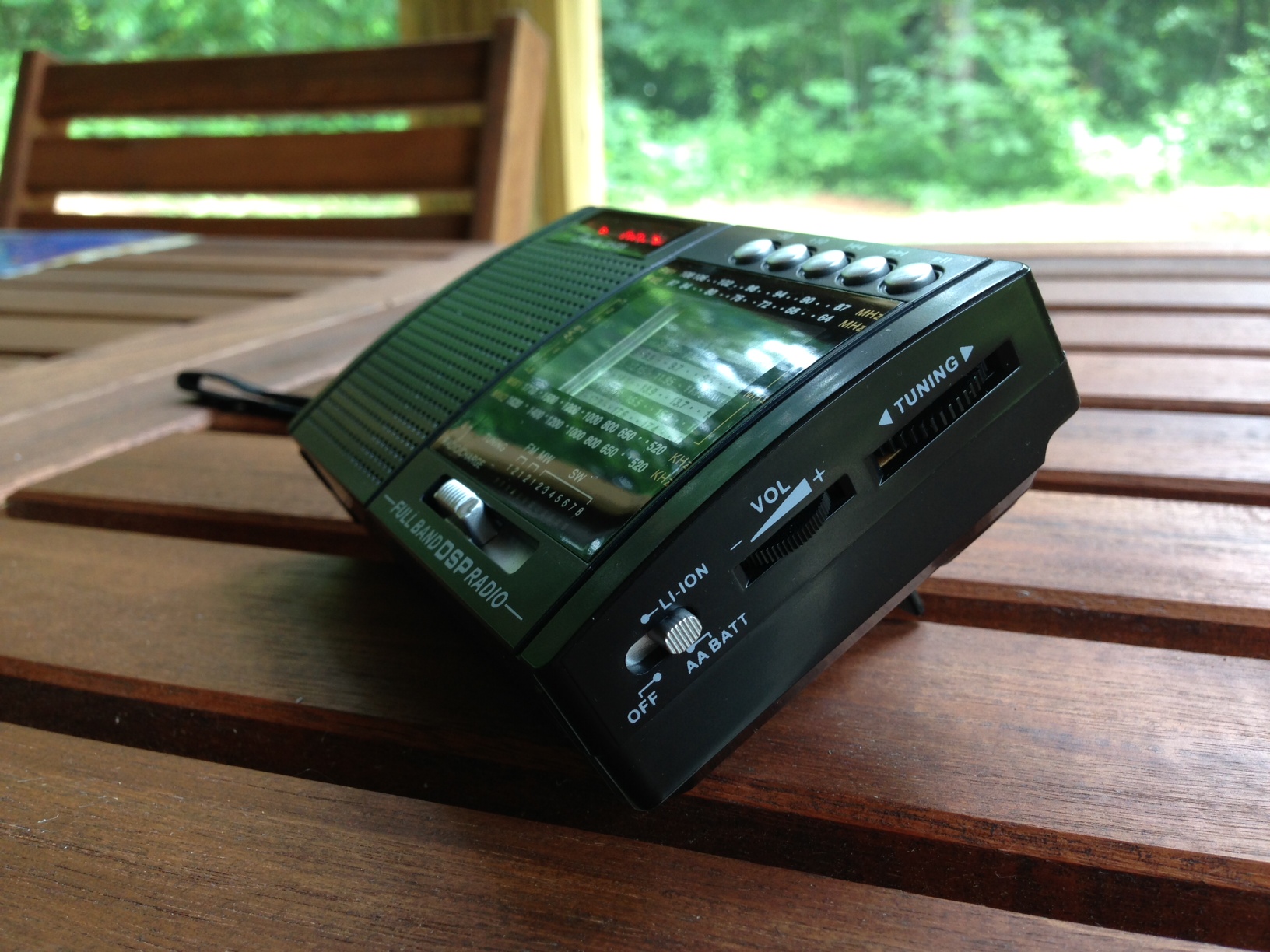
What makes the ShouYu SY-X5 stand out is the fact that it can be powered by either a rechargeable slim battery pack (found in the DE32) or three standard AA batteries.  It also has a built-in MP3 player that uses a standard microSD card for media storage. Why are these features of particular note for me?  I have been searching for a shortwave radio/mp3 player for use by my charitable non-profit, Ears To Our World. ETOW works in parts of the world where people lack mains power as well as access to the Internet (or else simply can’t afford Internet service). In such settings, radio allows teachers and school children to hear up-to-date international news via shortwave, and through pre-recorded educational material, they can play (and replay) MP3 content as needed.

Therefore, I immediately ordered an SY-X5 for review here, hoping to donate it for use in the field care of Ears To Our World.

First impressions

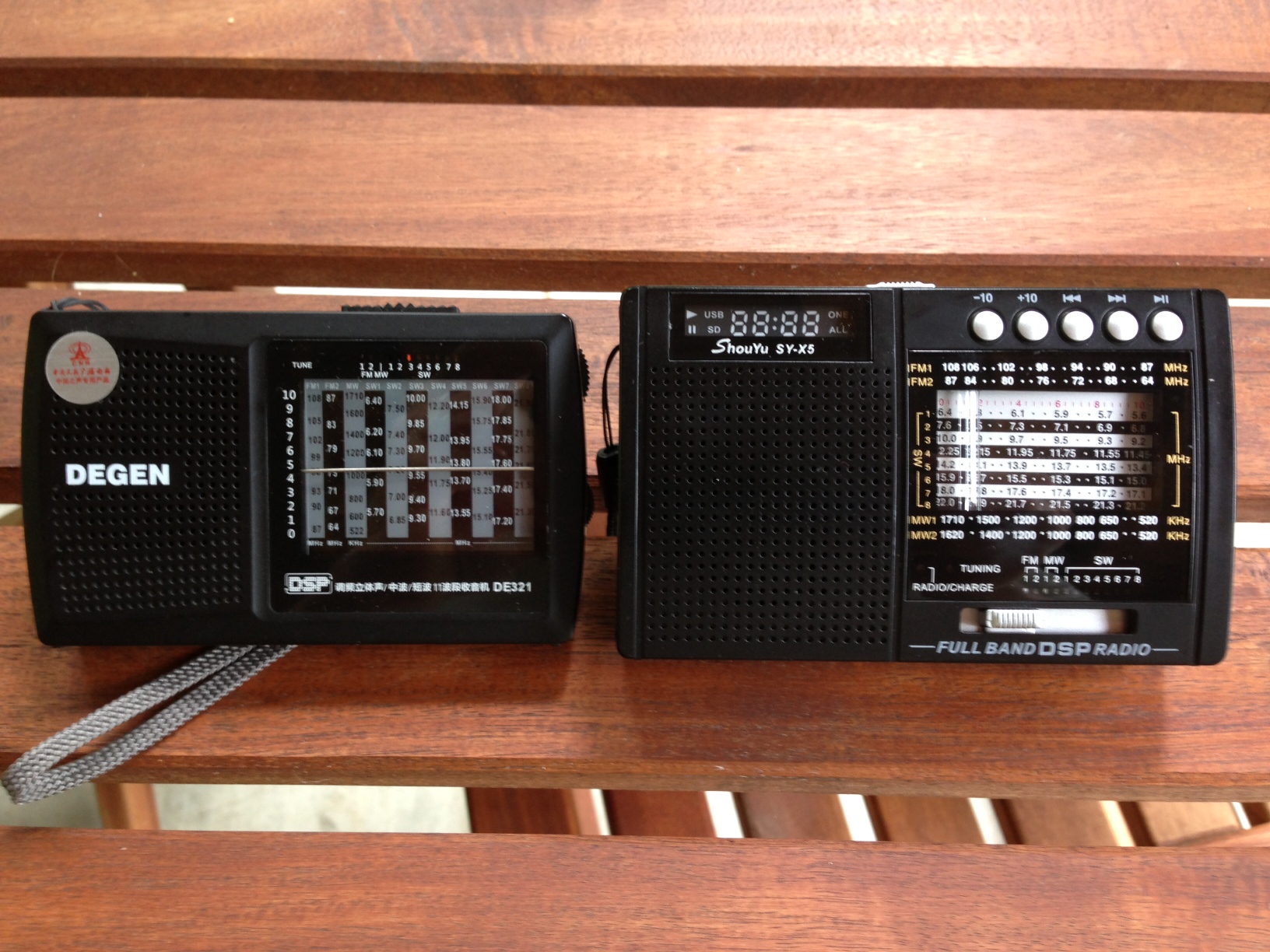
Degen DE321 (left) Shouyu SY-X5 (right)

Degen DE321 (left) Shouyu SY-X5 (right)

The ShouYu SY-X5 is a small radio, almost exactly the same size as the very portable Grundig G6 and only slightly larger than the Degen DE321 (see left). It feels sturdy and even slightly heavy in your hand (no doubt, due to the number of batteries it holds). The antenna is rotatable and feels more robust than other radios in its price class.

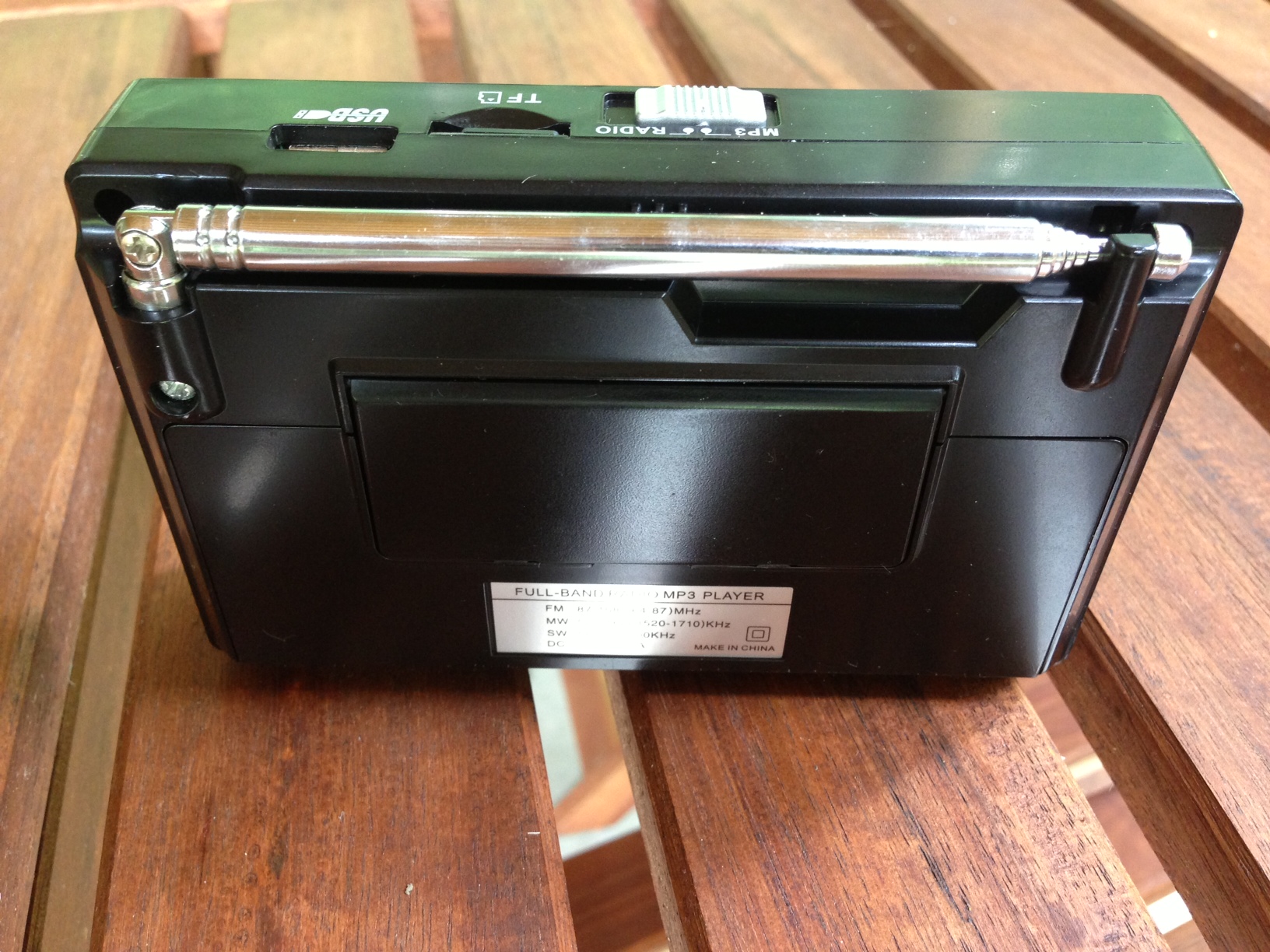
The SY-X5 has a back stand that likewise feels sturdy enough. Note: to open the battery compartment, you must lift up the back stand.

The overall quality is better than one might expect for $27 (US), with one notable exception: the printed frequency display behind the analog dial on my unit is positioned slightly off-center and not level, making needle position on the dial, well, frankly ambiguous.

Audio

Without a doubt, the greatest aspect of the SY-X5 is the audio delivered from the built-in speaker. It is exceptional for this size radio, full and with impressive bass characteristics. It very much reminds me of the Melson M7 (not yet reviewed here) and the Degen DE1129.

(Click to enlarge)

(Click to enlarge)

Performance

I’ve reviewed enough of these mechanically-tuned DSP-based radios now that I’m beginning to note performance commonalities that can only be attributed to the design of the DSP chipset itself (regardless of how they are implemented in each model of radio).

At risk of sounding like a broken record, this radio’s sensitivity, selectivity and AGC performance is nearly identical to the Degen DE321 on every band; here’s a summary:

  • Shortwave
    • sensitivity is mediocre–expect to hear all strong stations
    • AGC circuit has difficulty coping with weak station and fading
    • selectivity is mediocre
  • Medium Wave (AM)
    • strong daytime stations sound great
    • the SY-X5’s AGC circuit struggles with night time conditions, even with some strong stations
    • selectivity is mediocre
  • FM
    • FM performance is quite good
    • Both selectivity and sensitivity are great for the price–in this case, $27 US
(Click to enlarge)

(Click to enlarge)

Between the two FM bands, the SY-X5 should easily accommodate world-wide FM broadcasts (even Russia). The two AM (medium wave) bands are almost identical in frequency allocation, but have been set up so that one is on 9 kHz spacing and the other on the 10 kHz spacing typically used here in North America (nice touch).

Tuning

While the “feel” of the tuning wheel on the right side of the radio seems smooth, in reality it is not. The tension or actual mechanics behind the analog tuner are problematic; I find that upon tuning in even a strong station, when I let go of the tuning wheel, it immediately moves off-frequency. It’s most annoying. Over the course of several days of use, it doesn’t seem that the mechanism has broken in at all as I had hoped. This is perhaps the biggest negative of the ShouYu SY-X5; it is just not easy to accurately tune it.

(Click to enlarge)

(Click to enlarge)

MP3 Player

While I haven’t spent hours using the MP3 player, I find that it’s simple, yet quite effective. Most notably, it lacks fast-forward and reverse controls, though it does have buttons for ten-second skips both in the forward and reverse directions. Of course, you can pause, stop and skip to next/previous MP3 files.

The SY-X5 has a dedicated MP3 player red LED display; it is very bright–almost too bright, in fact, for low light conditions–and quite simple, offering only basic functions (no alpha-numeric tags, for example). Unfortunately, I find that the LED display does inject a little noise into the audio, but it’s nothing that would deter me from using it with the built-in speaker.

(Click to enlarge)

(Click to enlarge)

Summary

Every radio has positive and negative attributes; below are the pros and cons I noted from the moment I unpacked the SY-X5:

Pros:

  • Audio from internal speaker excellent for size
  • Integrated digital audio player
    • Uses standard Micro SD card for storage
    • Very bright red LED display (see con)
    • Dedicated, tactile buttons for basic MP3 functions
  • Multiple power sources
    • Internal rechargeable slim battery pack
    • Standard AA batteries
    • Charged/powered via standard mini USB cable
  • Relatively sturdy construction
  • Good FM sensitivity
  • Tuning indicator light
  • Inexpensive
(Click to enlarge)

(Click to enlarge)

Cons:

  • “Sticky” tuning wheel/dial results in immediate and annoying digital “drift” off-frequency
  • Sloppy selectivity (typical of this class of mechanically-tuned DSP radios)
  • MP3 player’s LED display almost too bright for low light settings; the LED does inject some slight noise into the headphone amp chain
  • Shortwave and medium wave sensitivity is mediocre, typical of other SiLabs SI484X radios
  • MP3 capabilities are only as a player, the SY-X5 cannot record in any capacity
  • Analog dial is small enough to make tuning accurately quite difficult
  • The dial’s printed frequency display in my unit is positioned off-center and tilted, resulting in ambiguous needle alignment

Conclusion

The ShouYu SU-X5 is very similar, performance-wise, to the Degen DE321. Out of all of the mechanically-tuned DSP portables reviewed thus far, the SY-X5 may have the best audio fidelity via its built-in speaker (save the Tecsun R-2010D). Also, like other similarly sized and priced models in this family, the SY-X5 has tuning issues; in its case, a tuning wheel that will not stay on frequency without practice.

(Click to enlarge)

(Click to enlarge)

I’ve decided to take my SY-X5, on behalf of Ears To Our World, to inner Belize City in the near future. I’m going to offer this radio–together with a microSD card packed with VOA Special English programming (and a host of other English language educational materials, music and stories)–to a visually-impaired, economically-disadvantaged school child who will hopefully give this basic little radio lots of use, and perhaps even maximize its potential. While the SY-X5 has shortcomings, for this particular use–serving an individual who will not rely primarily on sight, but on tactile response, to operate it–I think it may serve its purpose. Perhaps this will be the best litmus test for the SY-X5’s utility and longevity:  I may post an update when I receive feedback in approximately one year, as to whether this radio has required repair, replacement, or has offered (as I sincerely hope!) some measure of benefit to the child-owner.

For the radio hobbyist, I would encourage you to skip the ShouYu S-X5 and, instead, invest in a Tecsun PL-380, PL-390, PL-398BT, Degen DE1102, DE1103, or the Tecsun PL-600. Though all are pricier, each is under $100 US, and will actually provide a lot of performance for the price. The SY-X5 and other mechanically-tuned DSP radios seem only to offer mediocre performance and a low price.
Click here to search for the Shouyu SY-X5 on eBay.

Geomagnetic storms in weekend forecast

(Source: SpaceWeather.com)

(Source: SpaceWeather.com)

Heads up! Geomagnetic storms may make it a challenge to hear the test broadcast of Hamburger Lokalradio this weekend or any shortwave broadcaster for that matter.

Full details at Spaceweather.com and the ARRL (below):

(Source: ARRL)

Spaceweather.com reports a strong geomagnetic storm is in progress as Earth passes through a region of south-pointing magnetism in the solar wind. The storm has generated auroral displays as far south as Kansas in the US. The NOAA Space Weather Prediction Center indicates the storm is a G3 level event. WWV announced at 0900 UTC, “Geomagnetic storms reaching the G3 level are likely” over the next 24 hours. NOAA says that in a G3 level storm, HF radio may be intermittent. Calculated band conditions reported on the DX Summit site indicate “poor” conditions on 80 through 10 meters. WWV reported the estimated planetary K index at 0900 UTC was 5 (the 0600 UTC figure was 7). […] A coronal mass ejection (CME) is expected to deliver a glancing blow to Earth’s magnetic field late on June 30 or early on July 1.

Cambodia bans foreign radio in advance of elections

(Photo: Wikimedia Commons)

(Photo: Wikimedia Commons)

(Source: Radio Free Asia)

The Cambodian government has ordered local radio stations to stop broadcasting foreign programs ahead of general elections in a move widely seen as a major setback to media freedom in the country and aimed at stifling the voice of the opposition.

Prime Minister Hun Sen’s administration on Tuesday asked all FM stations to cease rebroadcasting Khmer-language radio programs by foreign broadcasters in the run-up to the July 28 elections, saying the move was aimed at “forbidding” foreigners in Cambodia from campaigning for any group in the polls.

Local stations who flout the order face legal action.

“Upon receiving this directive, I would like to ask that all the directors of FM station to implement it accordingly,” acting Information Minister Ouk Pratna said in issuing the order.”If any station doesn’t follow this directive, the Ministry of Information will take legal action against it according to the existing law.”

Khmer programs of at least three foreign broadcasters—U.S.-based Radio Free Asia (RFA) and Voice of America (VOA), as well as Radio Australia—will be barred from being aired under the directive.

Three other foreign broadcasters—the state-run Voice of Vietnam and China Radio International and French public radio station RFI—will not be affected as they operate their own stations in Cambodia.

Move ‘questions legitimacy’ of elections

The U.S. government immediately lodged a protest with the Cambodian authorities over the directive, saying it will throw in doubt the legitimacy of the elections, in which Hun Sen’s Cambodian People’s Party (CPP) is widely expected to win, enabling him to extend his 28 years in power.

The CPP has won the last two polls by a landslide despite allegations of fraud and election irregularities.

“The directive is a flagrant infringement on freedom of the press and freedom of expression, and is yet another incident that starkly contradicts the spirit of a healthy democratic process,” John Simmons, spokesman for the U.S. Embassy, said in a statement.

“While Royal Government officials at the highest levels have publicly expressed an intention to conduct free and fair elections, these media restrictions, and other efforts to limit freedom of expression, will seriously call into question the legitimacy of the electoral process,” he said.

About 10 local FM stations carry Khmer programs by RFA, which also broadcasts on shortwave in Cambodia.

RFA said in a statement that it “remains committed to bringing objective, accurate, and balanced election coverage to the people of Cambodia at this critical time” and vowed that it “will do so on every delivery platform available.”

“The Ministry of Information’s directive doesn’t stem from complaints of programming irregularities, but rather is a blatant strategy to silence the types of disparate and varied voices that characterize an open and free society,” it said.

Beehive Radio

Mam Sonando, a Cambodian activist who runs the independent Beehive Radio and an ardent critic of Hun Sen’s administration, called the ban “illegal” and “childish” but added that he would comply with the order.

He said the order would hurt political parties scrambling to convey their messages to the people ahead of the elections.

Mam Sonando, who owns Beehive Radio, told RFA earlier this week that the Information Ministry is restricting overseas groups from buying airtime at Beehive Radio and had turned down requests to set up relay stations to beam to the provinces.

U.S.-based Human Rights Watch (HRW) said it was puzzled by the Cambodian government’s suggestion of foreign meddling in the elections.

“There has been no history in Cambodia of foreigners participating on a partisan basis in elections,” said Brad Adams, executive director of Asia Division. “What this is really about is they don’t want foreigners coming in and observing the elections and then doing their job independently and professionally and then reporting their results.”

He said the Hun Sen government was trying to prevent reporting of events leading up to the elections.

“It’s about the fact that they know the elections are going to be very poor—they are structurally poor, they are poor in implementation and poor in practice and they don’t want this reported,” Adams said.

“The problem is that the world doesn’t work like that anymore. They can’t keep the eyes and ears of the world out. So, the reality is going to be reported.”

The Cambodian government has ordered local radio stations to stop broadcasting foreign programs ahead of general elections in a move widely seen as a major setback to media freedom in the country and aimed at stifling the voice of the opposition.

Prime Minister Hun Sen’s administration on Tuesday asked all FM stations to cease rebroadcasting Khmer-language radio programs by foreign broadcasters in the run-up to the July 28 elections, saying the move was aimed at “forbidding” foreigners in Cambodia from campaigning for any group in the polls.

Local stations who flout the order face legal action.

“Upon receiving this directive, I would like to ask that all the directors of FM station to implement it accordingly,” acting Information Minister Ouk Pratna said in issuing the order.”If any station doesn’t follow this directive, the Ministry of Information will take legal action against it according to the existing law.”

Khmer programs of at least three foreign broadcasters—U.S.-based Radio Free Asia (RFA) and Voice of America (VOA), as well as Radio Australia—will be barred from being aired under the directive.

Three other foreign broadcasters—the state-run Voice of Vietnam and China Radio International and French public radio station RFI—will not be affected as they operate their own stations in Cambodia.

Move ‘questions legitimacy’ of elections

The U.S. government immediately lodged a protest with the Cambodian authorities over the directive, saying it will throw in doubt the legitimacy of the elections, in which Hun Sen’s Cambodian People’s Party (CPP) is widely expected to win, enabling him to extend his 28 years in power.

The CPP has won the last two polls by a landslide despite allegations of fraud and election irregularities.

“The directive is a flagrant infringement on freedom of the press and freedom of expression, and is yet another incident that starkly contradicts the spirit of a healthy democratic process,” John Simmons, spokesman for the U.S. Embassy, said in a statement.

“While Royal Government officials at the highest levels have publicly expressed an intention to conduct free and fair elections, these media restrictions, and other efforts to limit freedom of expression, will seriously call into question the legitimacy of the electoral process,” he said.

About 10 local FM stations carry Khmer programs by RFA, which also broadcasts on shortwave in Cambodia.

RFA said in a statement that it “remains committed to bringing objective, accurate, and balanced election coverage to the people of Cambodia at this critical time” and vowed that it “will do so on every delivery platform available.”

“The Ministry of Information’s directive doesn’t stem from complaints of programming irregularities, but rather is a blatant strategy to silence the types of disparate and varied voices that characterize an open and free society,” it said.

Mam Sonando

Mam Sonando, a Cambodian activist who runs the independent Beehive Radio and an ardent critic of Hun Sen’s administration, called the ban “illegal” and “childish” but added that he would comply with the order.

He said the order would hurt political parties scrambling to convey their messages to the people ahead of the elections.

Mam Sonando, who owns Beehive Radio, told RFA earlier this week that the Information Ministry is restricting overseas groups from buying airtime at Beehive Radio and had turned down requests to set up relay stations to beam to the provinces.

Election reporting

U.S.-based Human Rights Watch (HRW) said it was puzzled by the Cambodian government’s suggestion of foreign meddling in the elections.

“There has been no history in Cambodia of foreigners participating on a partisan basis in elections,” said Brad Adams, executive director of HRW’s Asia division. “What this is really about is they don’t want foreigners coming in and observing the elections and then doing their job independently and professionally and reporting their results.”

He said the Hun Sen government was trying to prevent reporting of events leading up to the elections.

“It’s about the fact that they know the elections are going to be very poor—they are structurally poor, they are poor in implementation and poor in practice and they don’t want this reported,” Adams said.

Cambodian Center for Independent Media Director Pa Nguon Teang said the ban was aimed at curbing the views of the opposition in the country.

Freedom of the press has increasingly declined in the country, with reporters exposing government corruption and other illegal activity coming under deadly attack and facing death threats, including from the authorities, according to a rights group and local journalists.

Stifling ‘opposition radio’

Pa Nguon Teang felt the directive was specifically aimed at RFA and VOA.

“The ban intends to stifle the voice of RFA and VOA because the government has regarded the two stations as opposition radio stations,” he said, adding that by preventing local stations from carrying programs by the two entities, the government believes it can “silence” the opposition parties.

Local rights group Adhoc’s chief investigator Ny Chakriya said the ministry’s ban is “not based on any applicable laws,” pointing out that “it is illegal and can’t be enforced.”

“The ban is against the constitution because the constitution guarantees freedom of expression,” he said.

Moeun Chhean Nariddh, director of the Cambodia Institute for Media Studies, also called the move a violation of the constitution.

“Any order preventing media dissemination is against the constitution,” he said.

Reported by RFA’s Khmer Service. Translated by Vuthy Huot and Samean Yun. Written in English by Parameswaran Ponnudurai.


Andy Sennitt (with Focus Asia Pacific) points out that VOA has many affiliate stations in Cambodia that will be affected. VOA still plans to broadcast election coverage on medium wave and shortwave, however.

If this sounds all too familiar, you might remember Zimbabwe’s radio ban earlier this year.