Category Archives: Nostalgia

The Yaesu FT-70G: Where the FT line met Milcom

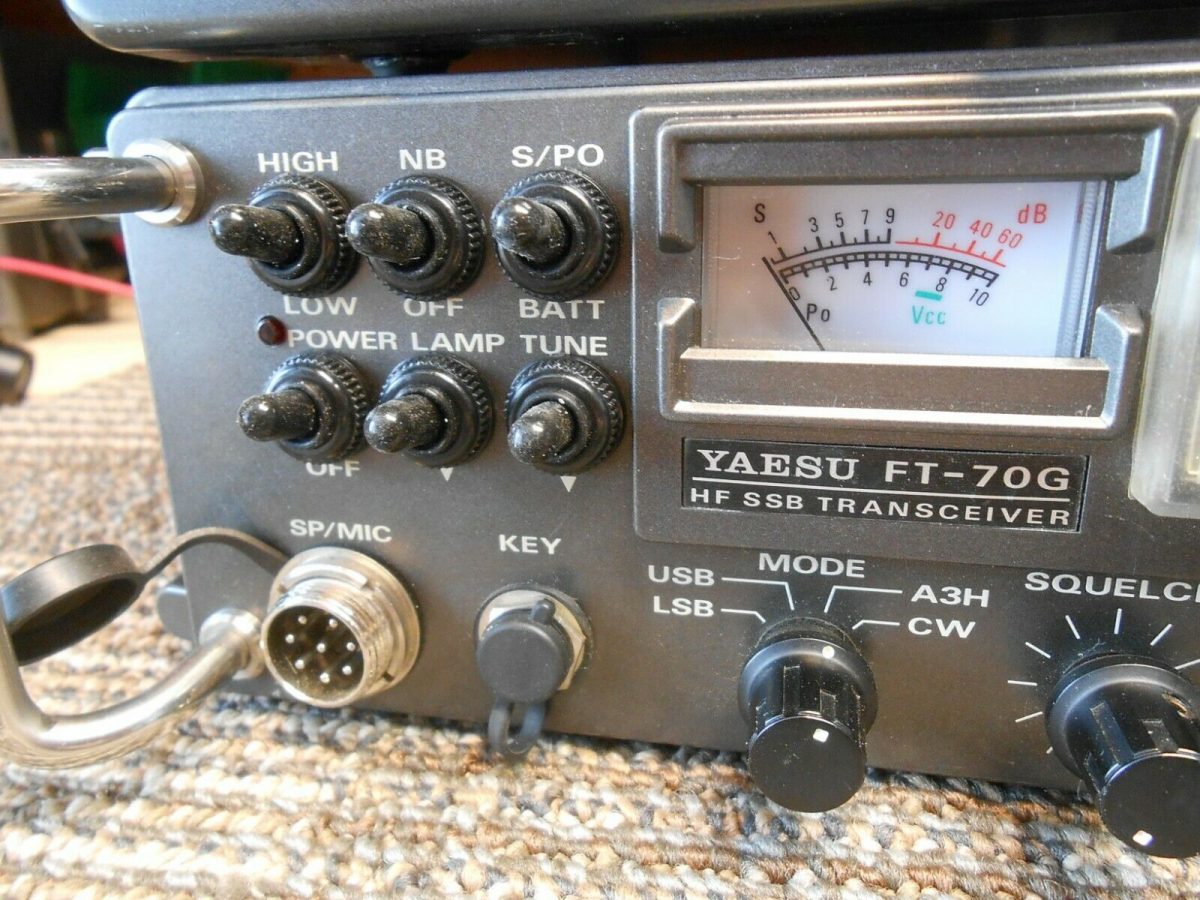
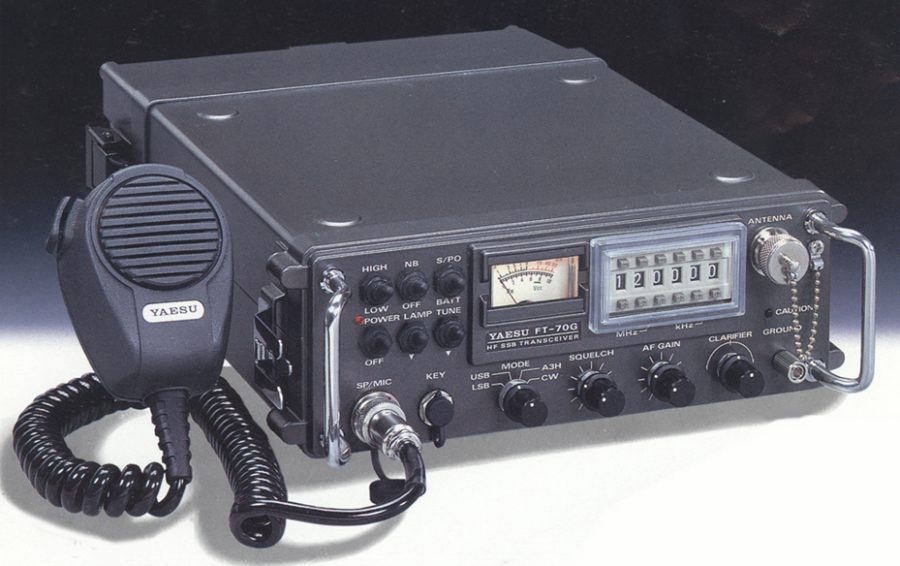
Earlier today, I stumbled upon a very unique transceiver in Universal Radio archives: the Yaesu FT-70G.

Here’s the description from Universal:

The Yaesu FT-70G is a portable HF transceiver covering 2 to 30 MHz transmit. Receive is from 500 kHz to 30 MHz. Frequency selection is via BCD switches to 100 Hz. There is a clarifier for fine tuning. Optional FNB-70 NiCad Battery. Please note that the optional 10F-2.4DL filter is required for LSB opeation.

The Yaesu FT-70F is similar, but is a channelized fixed version offering up to 11 frequencies.

Two hours ago, I was not aware that the FT-70G existed.  Now? I want one!

I’m a real sucker for vintage rugged field radio gear, so I never discovered the FT-70G until today. Turns out, they’re relatively rare. A little light research reveals that it’s a highly-desired transceiver in the world of HF Packers–those radio enthusiast who like “manpack” commercial and military gear.

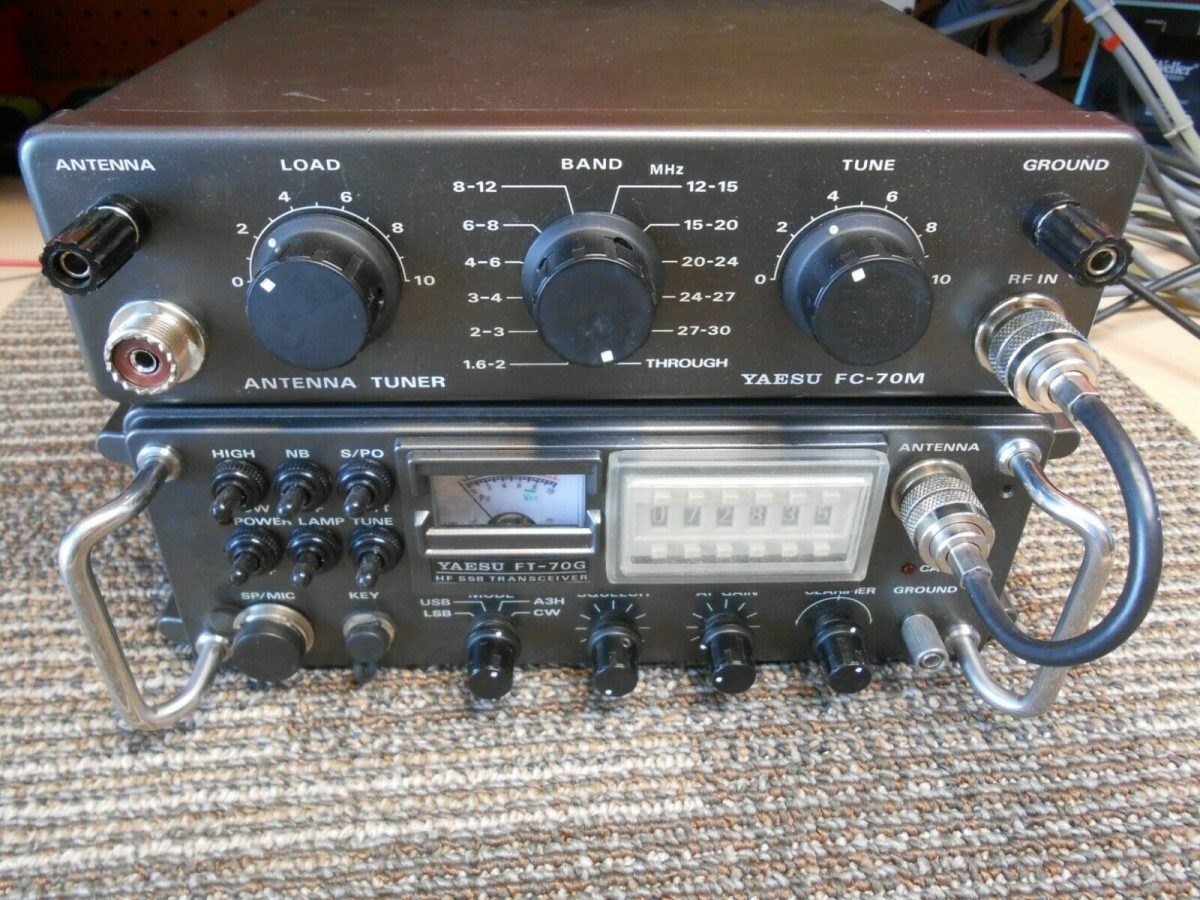
The FT-70G has a distinct military look and feel with the BCD switches to change frequency, rugged toggle switches, chassis extensions to protect the front panel, and attached screw-on connector caps.

What’s really surprising is that the FT-70G has a general coverage receiver (500 kHz to 30 MHz). Admittedly, it would not be fun band-scanning with those BCD switches…but still!

This website has a number of photos. They also have a product description likely from the original Yaesu/Vertex Standard FT-70G description:

“The FT-70 series HF field portable manpack transceivers are designed to provide reliable communications under rugged conditions in the military and commercial environment. The frequency synthesized, all solid-state circuitry and die-cast anodized aluminum enclosure and battery pack make a highly portable, weatherproof station. Flexible operation for optimum communications under a wide range of propagation conditions are assured by SSB (USB, LSB), semi break-in CW, AM, or audio interfaced Data modes. All controls, antenna, and interface ports are available and selectable via the front panel for maximum effectiveness and ergonomics in field, base, and manpack applications. The companion antenna tuner FC-70 is compatible with walking manpack, field portable, or base configurations. The highly effective vertical tripod mount antenna system YA-70 is deployed and stowed easily and quickly, pulling double duty by converting to manpack whip while on manuevers. High quality handset YH-70 provides communications privacy and clarity.”

Again, check out the excellent photos of the full manpack kit.

As I researched pricing, I discovered this FT-70R with accompanying FC-70M antenna tuner on eBay right now with only 6 hours left of bidding:
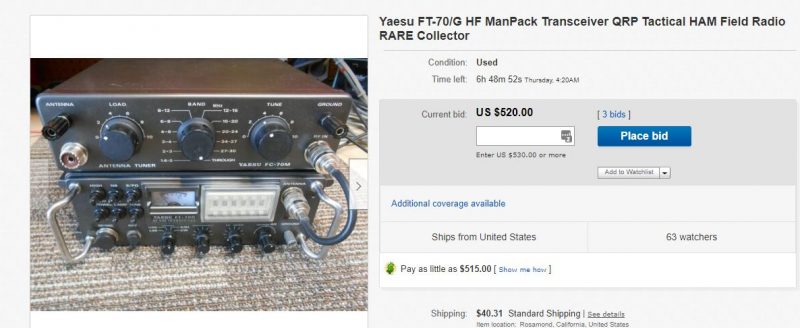
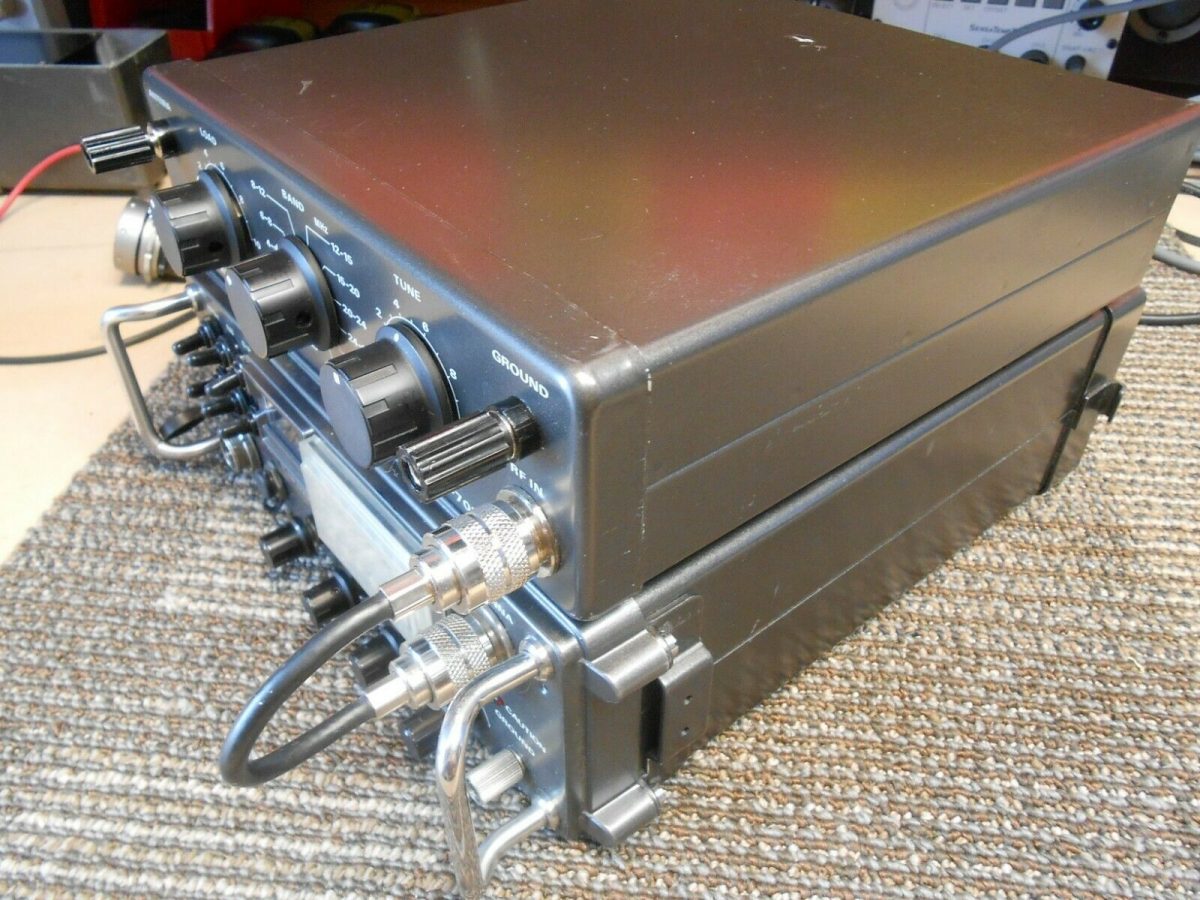
At time of posting, the bids are at $520. I fear this will soar well above my comfort level before bidding ends. (Like I need another field radio anyway, right?)

Post readers: Please comment if you’re familiar with the FT-70G and especially if you’ve ever owned one.  I’d love to hear about your experience with this unique rig.
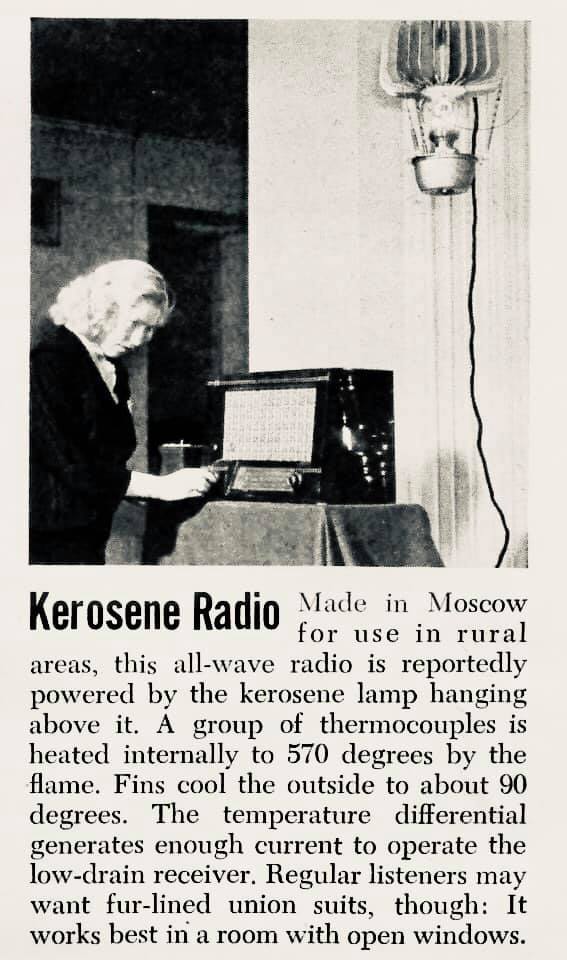
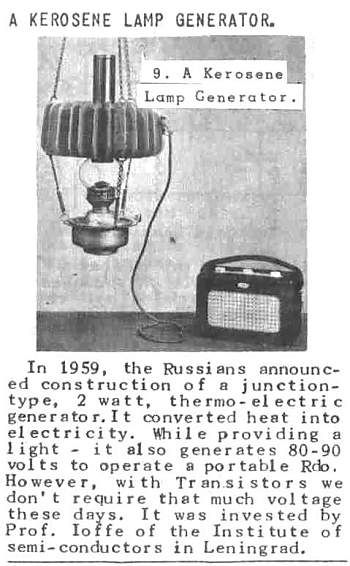
Soviet era Kerosene Lamp Generator gives new meaning to “Let’s fire up the radio!”

Many thanks to SWLing Post contributor, David Day, who recently shares the newspaper clipping above.

I was not aware of this Cold War era kerosene lamp generator, but it’s an ingenious use of the thermoelectric effect for power generation. I found yet another another clipping online:

Devices that work off of thermoelectric effect have been around many decades.

The original BioLite stove burns twigs/sticks to recharge USB devices with 3 watts of power.

I’ve often thought about purchasing a BioLite camp stove–the same one Anil Raj mentioned in our Radio Challenge II–as a companion to charge devices while camping off-grid.

BioLite now makes a more efficient (albeit pricier) stove that produces more power with less fuel.

At the end of the day, I find it so easy to use solar power to recharge larger LiFePo batteries, I’ve never invested in the BioLite.

With one large LiFePo battery, I’m able to power multiple devices including an inverter if necessary.

I’m very curious how many models of kerosene lamp generators were made back in the day and how useful they were for powering other low-drain devices.

Please comment if you’ve ever used a kerosene generator. We have readers from across the globe, so I imagine someone may have at least seen one of these in person and potentially used it to power a radio!

Oh, and obviously I need to think up another SWLing Post Radio Challenge–it’s been ages since our last! 

Let’s take a deep dive into a list of our favorite radios!

Over the past week, I asked the SWLing Post community if they’ve ever regretting parting with a radio, and then what radios they’ve owned that had the most “fun” factor.

The response from these two posts was pretty overwhelming.

I don’t actually check the SWLing Post viewer stats that often, but I was too curious: together, those two posts amounted to well over 20,000 unique pageviews in two days!

Obviously, I’m not the only radio nostalgic person around here!

These posts resonated so well, I didn’t want readers’ favorite models to be lost in the comments section. I decided to comb through the comments, make a list of all of the models, and link to sites and pages with more information and photos.

This is an interesting collection of radios since some are benchmark performers, while others much less so. Many were listeners’ first radios–the ones we cut our teeth on.

I would encourage you to read through the comments on our first and our second posts. Many great memories in there!

Below, you’ll find the full list of radios in alphabetical order, starting with receivers then moving to transceivers:


Receivers

AOR 7030

AOR AR8000

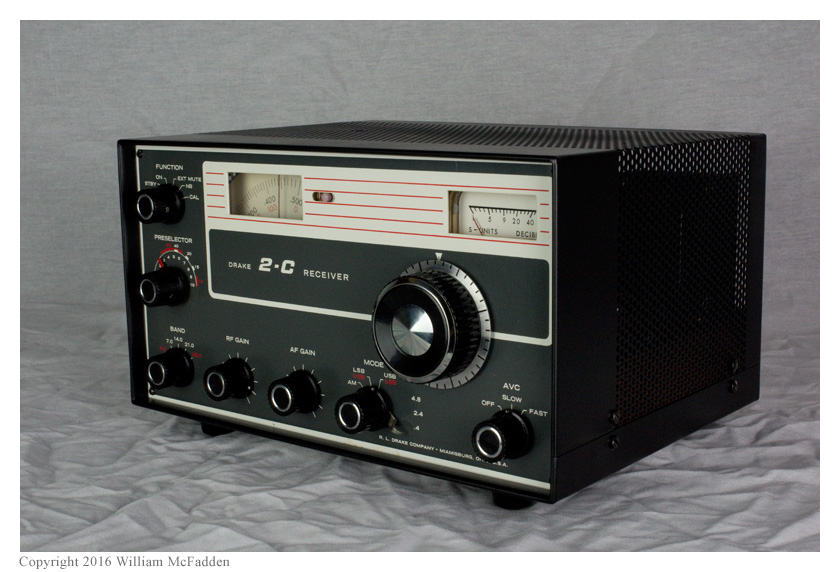
Drake 2-C (Photo: Eric McFadden)

Drake 2-C

Drake R8B

Eddystone 750

EH Scott SLR12B

Eton S350DL

Globetrotter V01

Grundig YB400

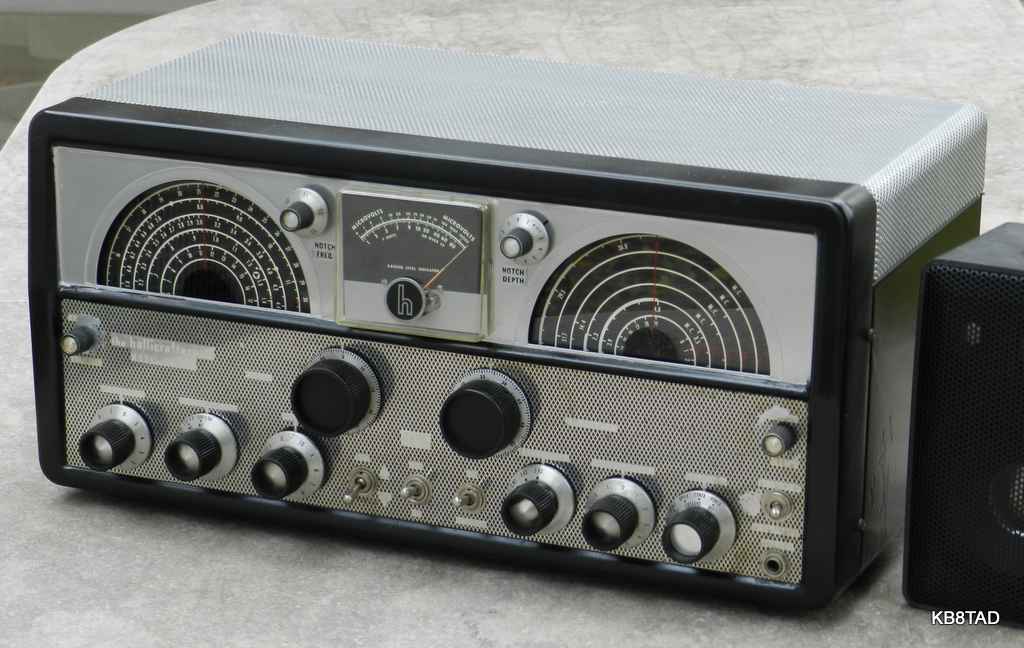
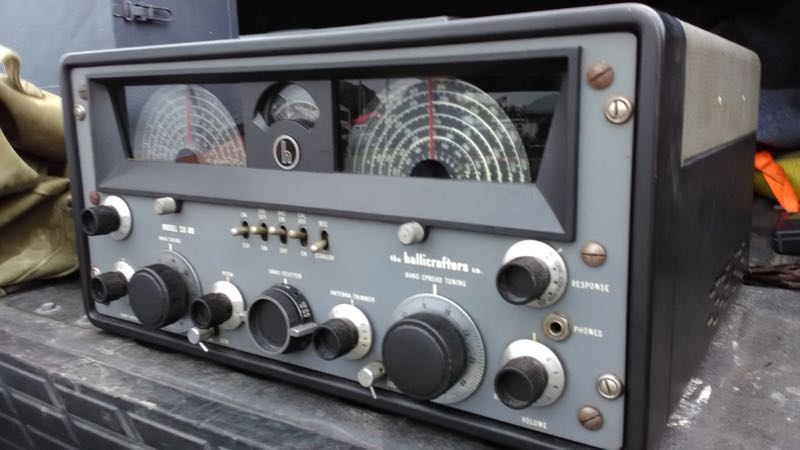
Hallicrafters SX-100 (Photo: Rick Post)

Hallicrafters SX-100

Hammarlund HQ-140

Heathkit GR-64

Heathkit GR-78

Heathkit SB-310

Icom IC-R2

Icom IC-R75

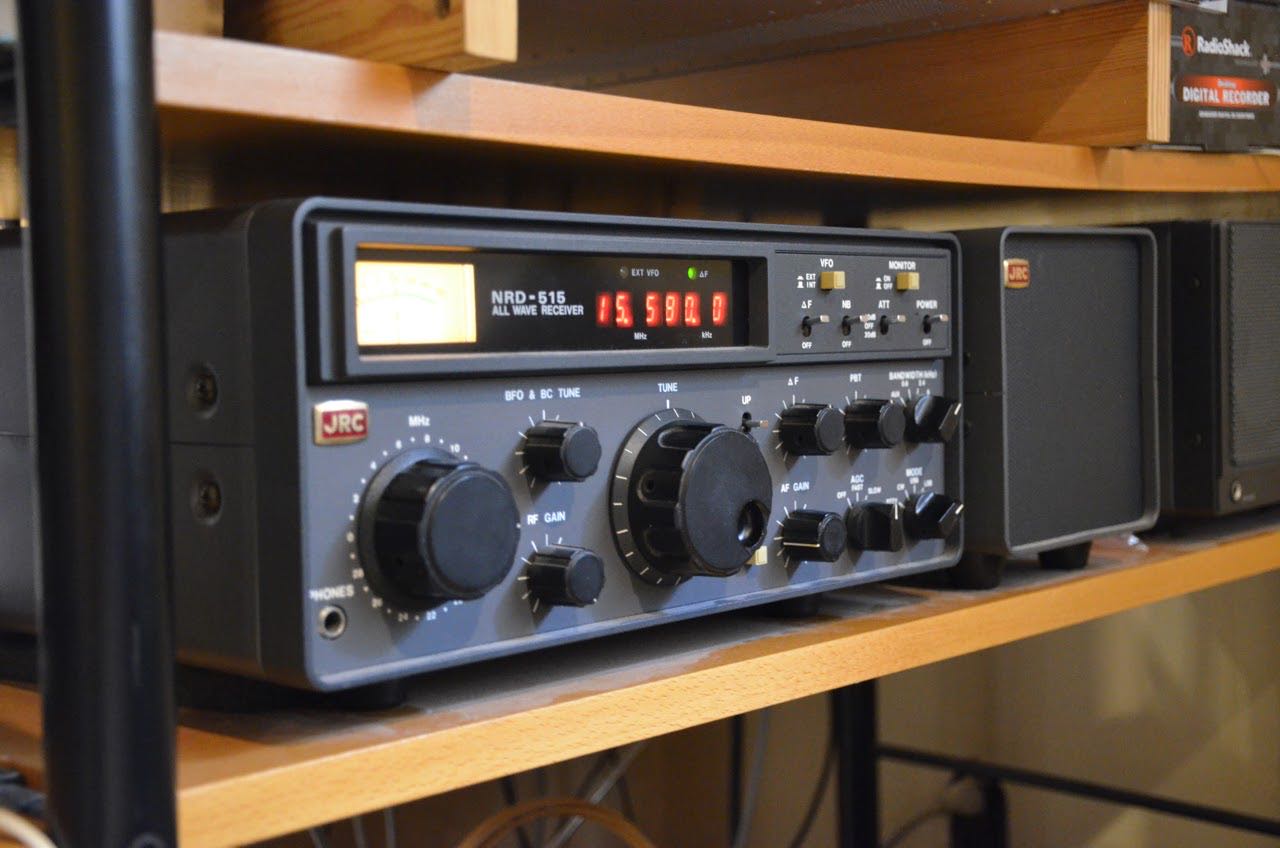
JRC NRD-515

JRC NRD-515

JRC NRD-345

Kaito KA1103/Degen DE1103

Kenwood R-1000

Knight Star Roamer

Palladium 949/469

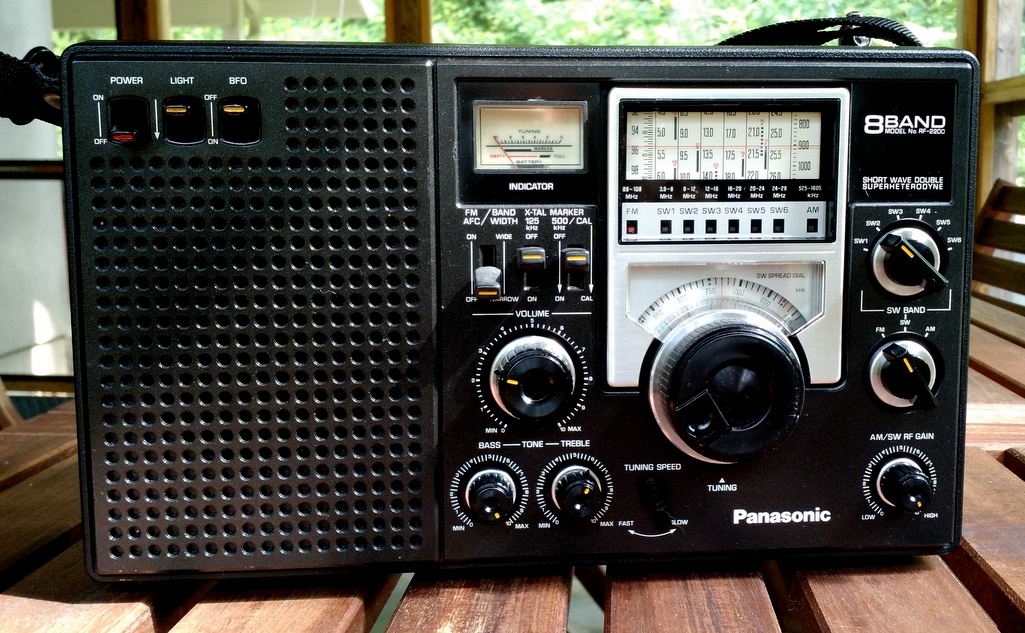
Panasonic RF-2200

Panasonic RF-2200

Panasonic RF-2800

RCA AR-88

Realistic Astonaut 8

Rheinland 4953W

Realistic DX-160

Realistic DX-200

Realistic DX-300

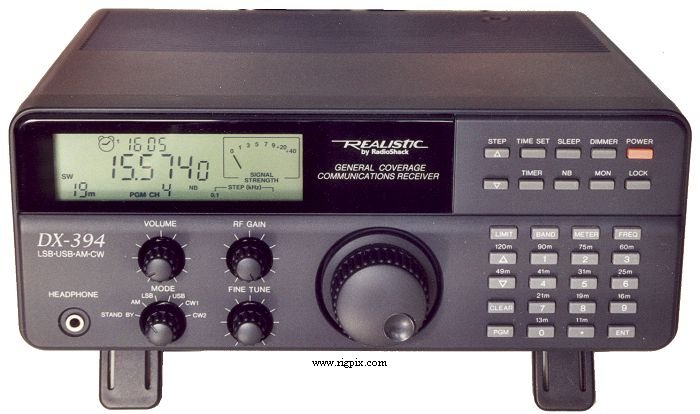
Realistic DX-394 (Photo: RigPix)

Realistic DX-394

Realistic Patrolman 6

Realistic Patrolman 9

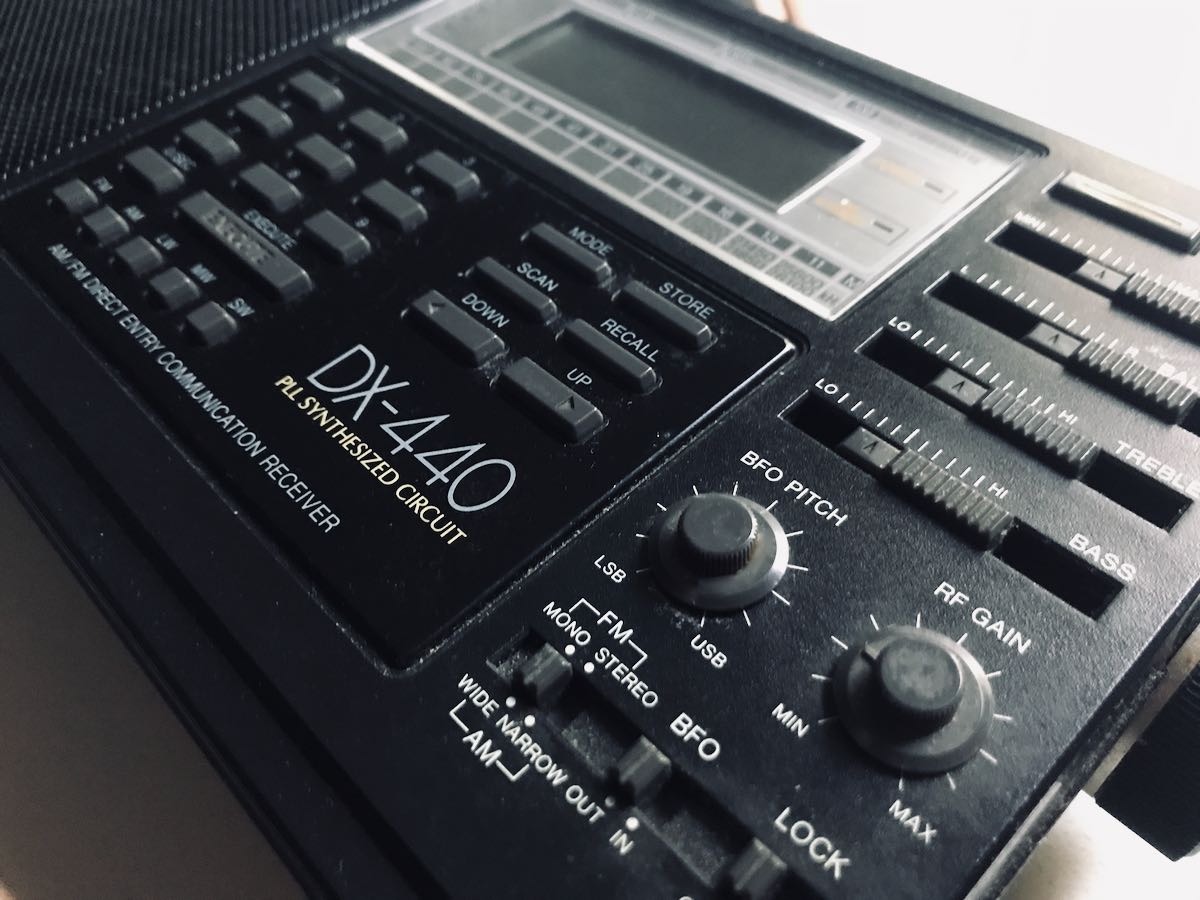
Sangean 803A/Realistic DX-440

Siemens Radio E309

Sony Earth Orbiter (CRF-5090)

Sony ICF-2001D

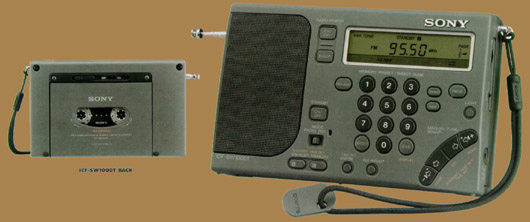
Sony ICF-SW1000T (Photo: Universal Radio)

Sony ICF-2010

Sony ICF-SW1

Sony ICF-SW1000T

Sony ICF-7600D

Sony ICF-SW7600

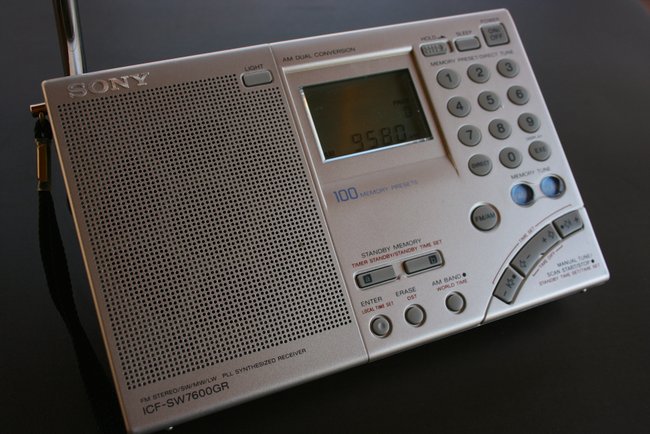
Sony ICF-SW7600GR

Sony ICF-SW7600GR

Sony ICR-4800

Unelco 1914

Wireless Set No.19 Mk III

Yaesu FR-50B

Yaesu FR-101D

Yaesu FRG-7

Yaesu FRG-7700

Transceivers/Transmitters

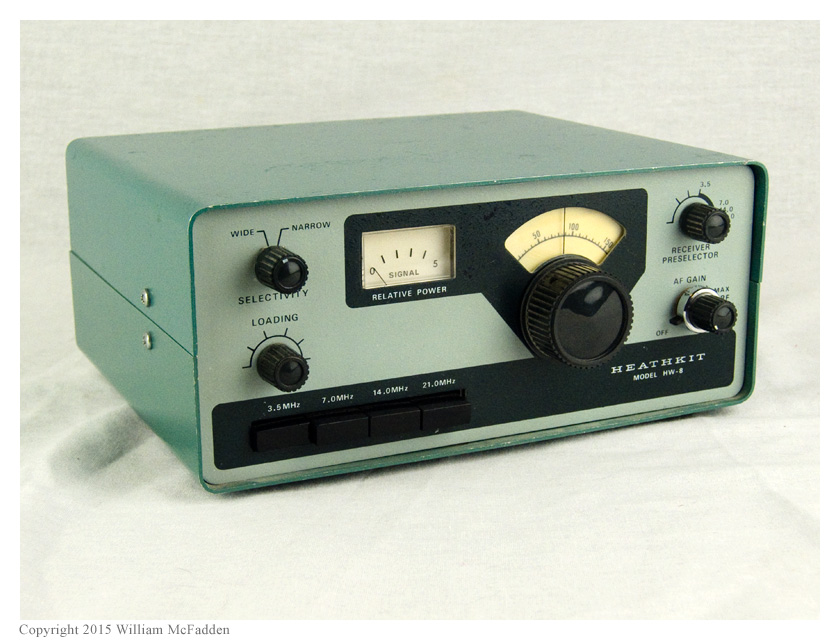
Heathkit HW-8 (Photo: Eric McFadden)

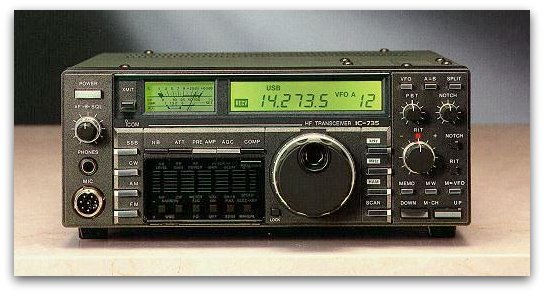
The Icom IC-735

Drake 2-NT

Heathkit HW-8

Index Labs QRP+

Icom IC-735

Marconi C100

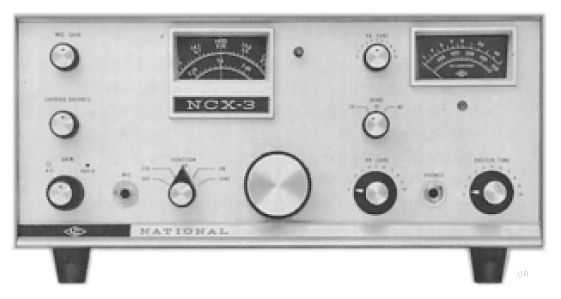
National NCX-3 (Photo: Universal Radio)

National NCX 3

Yaesu FT-77

Yaesu FT-101B

Yaesu FT-817ND

Yaesu FT-857D


Many thanks to everyone who shared their favorite radios! I truly enjoyed checking out each of these models as I listed and linked to them. There were a number of unique models I had never seen before and many I had completely forgotten (like the Sony ICF-SW1000T)!

If you have more favorite models to share, feel free to comment here or on the original posts!


Do you enjoy the SWLing Post?

Please consider supporting us via Patreon or our Coffee Fund!

Your support makes articles like this one possible. Thank you!

Radios that may not be benchmark, but are pure fun–!

Many thanks to SWLing Post contributor, John R Palmer, who replied to our previous post about radio regrets with a question.

John asks:

Name a piece of radio gear that for some reason, technical, emotional, design etc. that you’ve gotten more fun using than you would ever have expected based on its price, maybe more so than other much more expensive radios you’ve owned. Just a piece of gear that really hit the spot and you’ve had a blast using.

That’s a tough question indeed, John. I hope readers will chime in with their replies–I’m very curious!

So I gave this quite a bit of thought and came up with two radios–one shortwave portable and one general coverage ham radio transceiver:

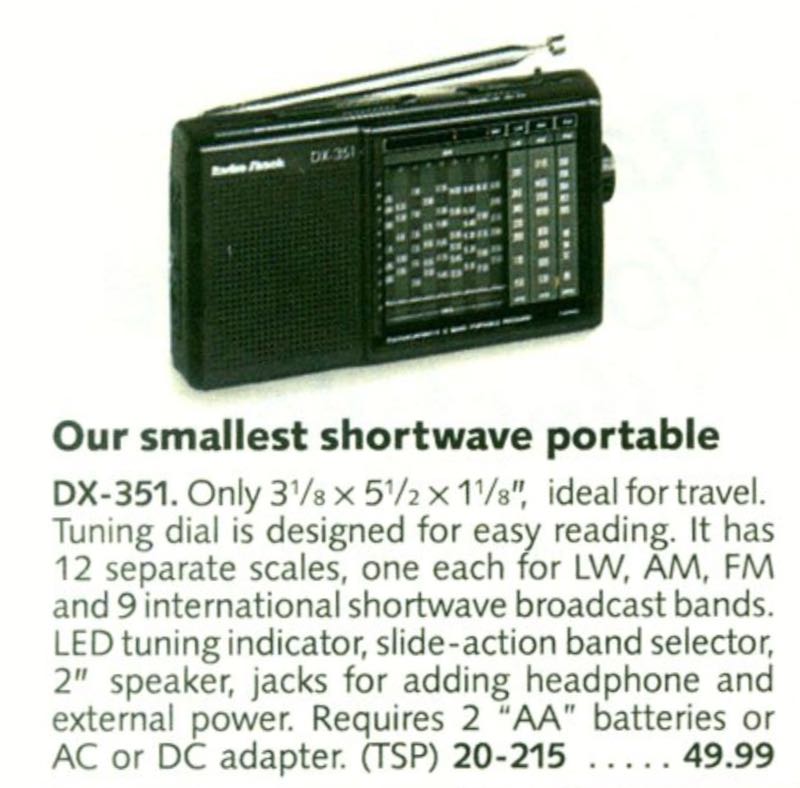
The Radio Shack DX-351

In 1996, I worked for a Radio Shack corporate store in Athens, Ohio. I believe we were getting ready for the Black Friday/Christmas season and the store manager decided to go through a pile of broken items customers has returned using their extended warranty. He had accumulated quite a number of returns in a box next to his desk in the back of the store. I stayed after hours to help him organize the shelves and prepare for incoming shipments.

Most of the items in his box were physically broken, but still covered by the extended warranty (to their credit, many RS store managers were quite flexible with extended warranty returns). He pulled out a Radio Shack DX-351 from the box.

The customer returned this portable because the AM/FM/SW slider switch was broken. My manager knew I was an SWL, so asked if I wanted it. He said, “If you don’t, it goes into the trash can because we can’t re-sell it.

How could I resist?

This DX-351 was “well-loved.” I can’t remember all of the details, but the AM/FM/SW band switch could not be fixed, but I didn’t mind because the receiver was stuck on the shortwave band and the other shortwave band switch worked perfectly.

The DX-351 was a joy to use and amazingly sensitive! It wasn’t particularly selective, but it served me well for many years living, primarily, in the glove compartment of my car. If I took a road trip, a lunch break at the park, or if I was simply waiting in a parking lot to pick up my wife, I’d pull out the DX-351 and tune in the world.

The thing was pure fun to tune.

The Icom IC-735

In the world of general coverage ham radio transceivers, the Icom IC-735 would be my choice.

The IC-735 was my first ham radio transceiver. I used my hard-earned savings (from working at Radio Shack!) to buy a used unit via the now closed Burghardt Amateur Radio Center in South Dakota. My friends, Eric (WD8RIF) and Mike (K8RAT), believed a used IC-735 would serve me well. They were right!

What I really loved about the IC-735 was that it had all of the features and modes I needed. It was easy to operate and, while I couldn’t call its receiver “benchmark” by any means, it was amazingly sensitive and selective.

I logged hundreds of hours on this radio in both SSB and CW, working DX across the globe.

But I spent even more time SWLing. Turns out, the IC-735’s general coverage receiver did justice to shortwave broadcasts. The AM filter was wide enough to produce wonderful audio (especially via an external speaker or headphones). For years, the IC-735 was my go-to shortwave radio because it performed so much better than any other radios–mostly portables–I had at the time.

The IC-735 was so much fun to use.

I did eventually sell it, if memory serves, to purchase my first Elecraft K2 transceiver.

What are your choices?

So what are the radios you’ve owned that may not sport the best performance, and may not have been terribly expensive, but were pure fun to put on the air–? Perhaps you still own one? Please comment!

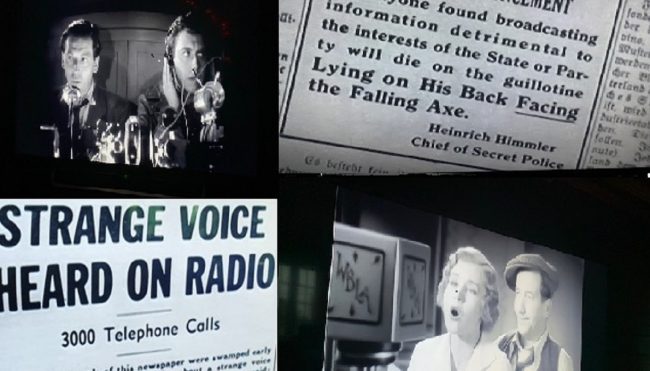
Radio Survivor Podcast features “Radio in the Movies”

This week’s episode of the Radio Survivor Podcast is devoted to “Radio in the Movies.” I you like classic films, and our post thread where readers ID actual radios in movies, you’re sure to appreciate this Radio Survivor episode.  Here’s the description:

Portrayals of radio in popular culture provide an interesting glimpse at radio’s role in society. At Radio Survivor, we’ve long been fascinated by radio depictions on both the small and large screen; so it is a treat to dive into this topic with Hemrani Vyas, Programming Coordinator at Turner Classic Movies (TCM). Vyas curated an entire day of radio-themed films for the cable network, focusing on the era of 1930 to 1950. This week we talk about some of the featured films and also dig into a broader discussion about the changing images of radio in the movies.

Click here to view full show notes and listen via Radio Survoivor.

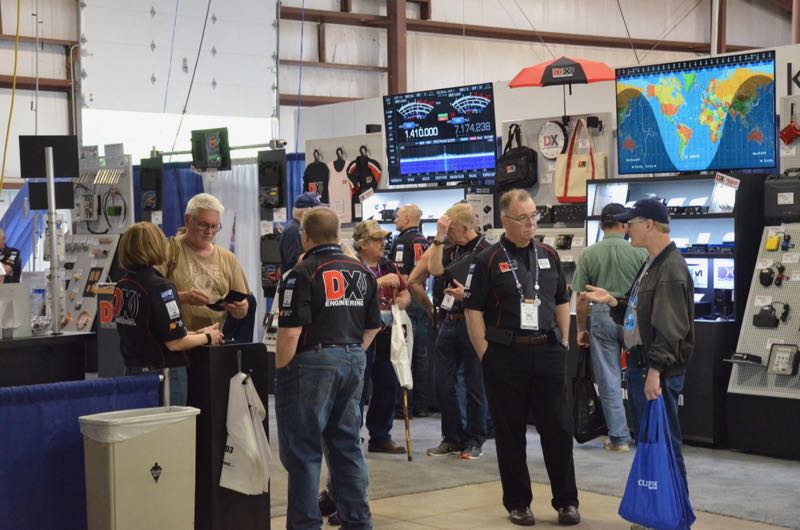
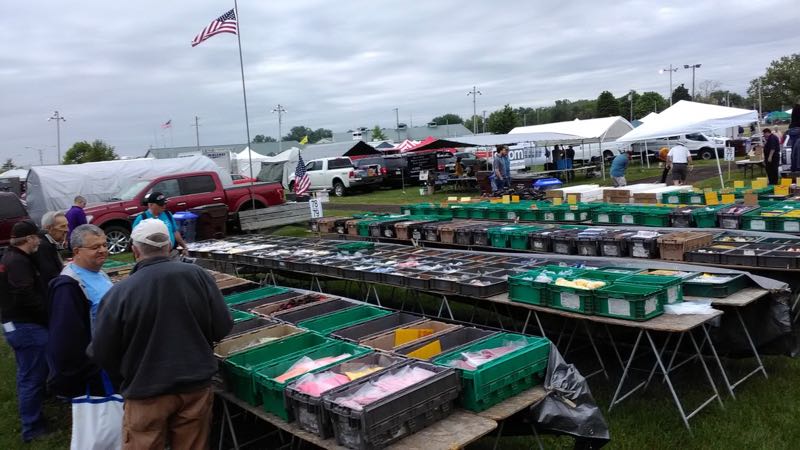
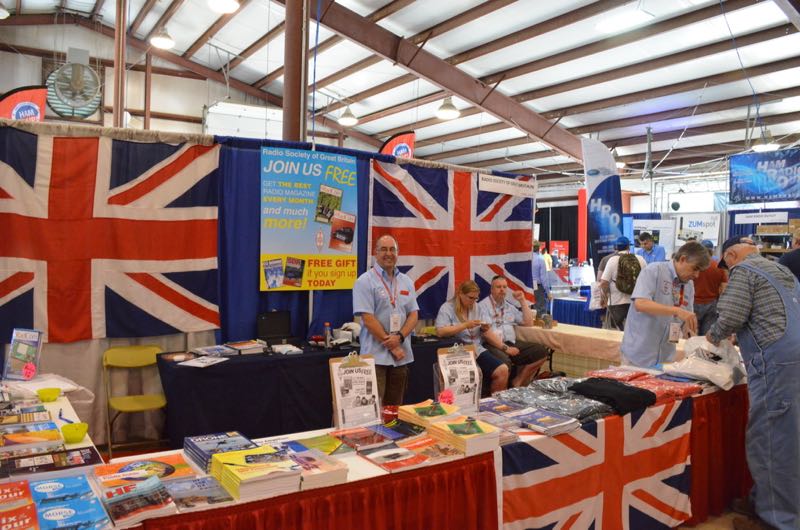
Massive photo galleries of the Dayton Hamvention

This is the first year I’ve missed the Dayton Hamvention since 2009. As I mentioned in a previous post–besides hanging with my friends–I really enjoy browsing the flea market and inside exhibits looking for deals and cool innovations.

In 2016, I took loads of photos of both the Hamvention Flea Market and Inside Exhibits. I did this partly thinking it would be our last year holding the Hamvention at Hara Arena (turns out, I was absolutely correct).  Post readers asked that in 2017, I take photos of the new venue at the Greene County Fairgrounds in Xenia, OH, so I did.

I enjoy taking and sharing these photos so much, I’ve continued to collect hundreds of photos every year since to help document how the largest ham radio gathering event changes over time.

In the flea market, I try to include price tags when possible to give our international readers an idea of how much vintage gear costs.

If you’d like to take a trip down memory lane with me, check out the linked photo galleries below:

Hamvention Photos

2019

2018

2017

2016

2015 (smaller gallery)

2014 (smaller galleries)


Do you enjoy the SWLing Post?

Please consider supporting us via Patreon or our Coffee Fund!

Your support makes articles like this one possible. Thank you!

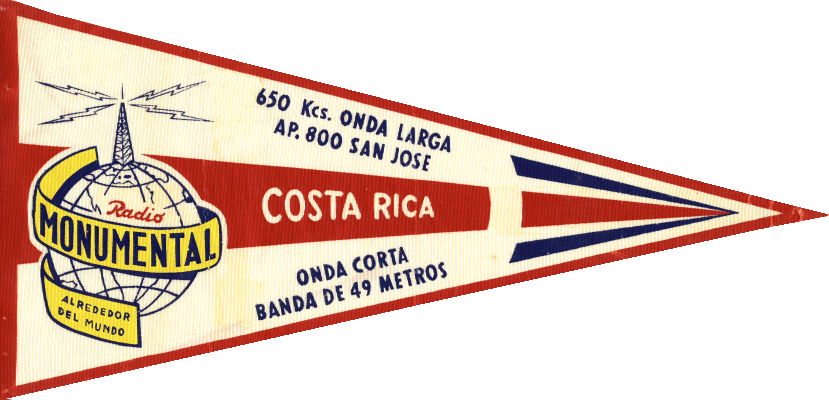
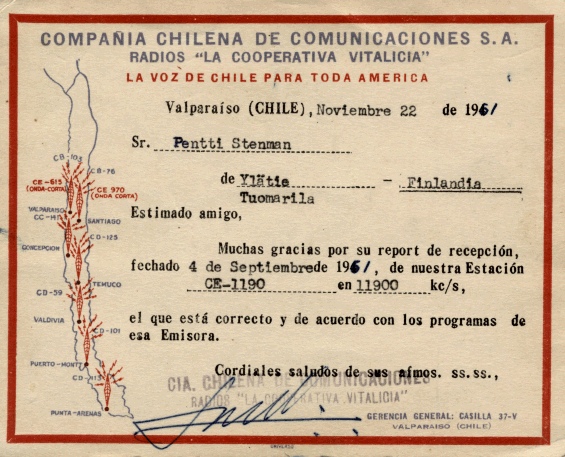
Pentti Stenman’s impressive collection of SWL recordings, QSLs, and pennants

Many thanks to SWLing Post contributor, Dan Robinson, who writes:

Just ran across this guy’s site Pentti Stenman, who is in Finland.
Check out his audio and QLS, pennants as well…

http://www.penan.net/dx-kuuntelu

Pentti’s collection is impressive indeed! Since he’s in Finland, some of his site is in Finnish, but it’s still quite easy to navigate and you can have Google translate it into any language.

I have pasted direct links below to Pentti’s various galleries.

QSL Gallery

Pennants

Recordings:

Thanks again, Dan, for the tip!