Category Archives: Radios

Guest post: Trip Down Shortwave Memory Lane via Vintage RadioShack Catalogs

RadioShack-CatalogMany thanks to SWLing Post contributor, Mario Filippi (N2HUN), for the following guest post:


Trip Down Shortwave Memory Lane via Vintage RS Catalogs

-Mario Filippi (N2HUN)

Attached is a wonderful website containing archived Radio Shack catalogs and sales flyers going back to 1939, surely of interest to SWLs, hams, and other electronics hobbyists. Most of us have fond memories growing up and visiting our local Radio Shack when it was the place to go for ham, shortwave, and scanner radios. My hometown Radio Shack was located on North Avenue in New Rochelle, NY and I purchased an electric guitar (could not afford a Fender) from them in the late 60’s which had three pickups and included a case for $29.95!

Radio Shack Catalogs

You see, back then Radio Shack had a much more diversified line of products, including musical instruments, power tools and even scientific stuff like microscopes and slide rules. These archived catalogs are a treasure trove of information not only from a historical perspective, but for anyone who is interested or who is contemplating purchasing vintage equipment such as shortwave radios, because you can look up the original sales info in the RS catalog which contains the original price, photo, description, and accessories available at that time.

For example, last year I purchased a “tech special” Realistic TRC-450 AM/SSB CB radio on Ebay that needed LED repair, so I looked up the original sales ad and got the price, photo (this helps to see original condition), and product description. Below is a picture of my restored Realistic which originally sold in 1980 for $269.95!
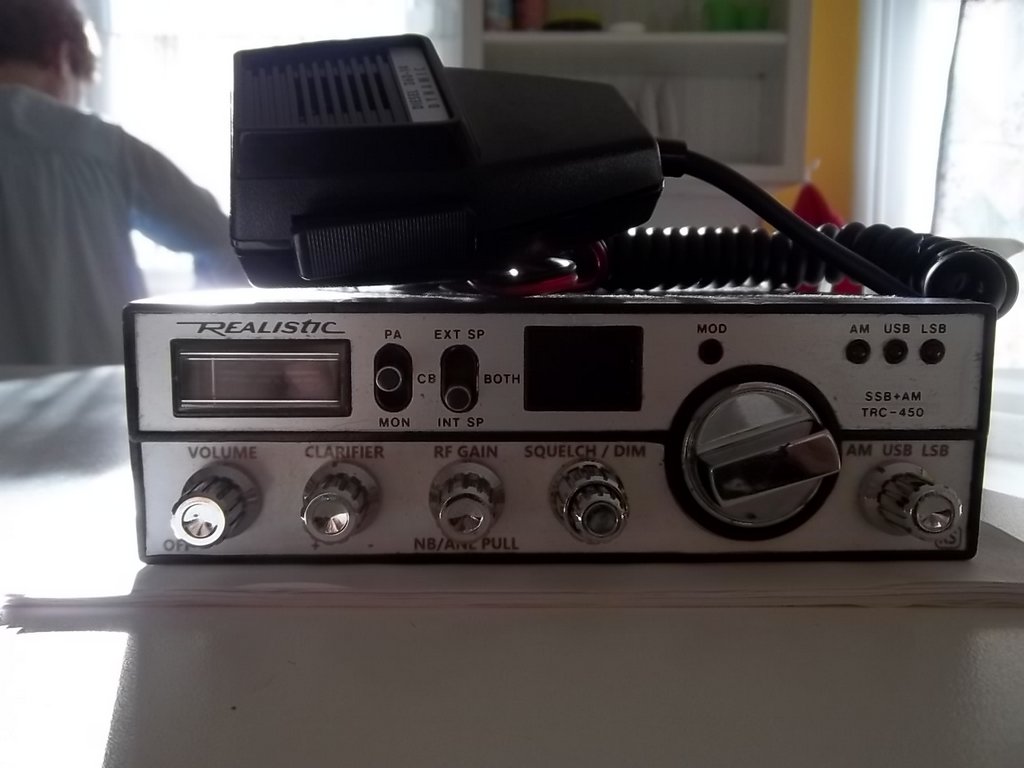
RadioShack-TRC-450

The classic Realistic TRC-450 AM/SSB CB radio. (Photo: Mario Filippi)

Nowadays most people don’t realize how expensive electronics were a few decades ago. A comparable new AM/SSB CB radio sells for about half that price nowadays!

Lastly, as one progresses chronologically through the catalogs, you can see technology (and even fashion) trends – the large 8 track tape decks of the 60’s and 70’s progressed to smaller cassette players of the 80’s and 90’s, then DVD/CD players made their entrance, ultimately giving way to higher tech forms of entertainment such as satellite radio and Internet-based entertainment. Well I hope you enjoy this totally entertaining and informative website and I thank the individual who took the time and effort to preserve for perpetuity these priceless annual time capsules for everyone to enjoy.


Mario, many thanks for this trip down memory lane!

As you state, these catalogs are actually an excellent reference source when trying to determine pricing and features of RS radios found on the used market.

I think they’re also so much fun to flip through as they’re chock-full of nostalgic value. When I was a kid, I could care less about toy store catalogs–the RadioShack catalog was my toy store!

Indeed, when I open the online catalog copies at Radio Shack Catalogs, I can almost smell the ink on the pages! Am I the only one?
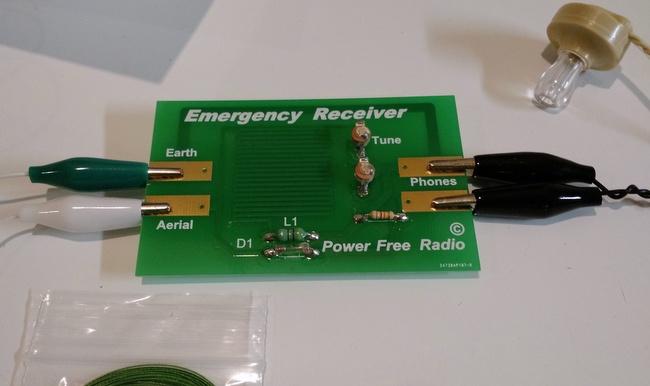
Vance explores credit card and earpiece radios

Credit-Card-Crystal-Radio-4

Many thanks to SWLing Post reader, Vance, who writes:

You got me hooked on those little credit card sized radio kits from an eBay seller so much that I have bought a few more of his kits. I’ve found them to be so much fun, that I have started looking elsewhere for other tiny radios.

I came across this the other day and while it is not a kit, I was wondering if you or your readers had ever tried them and if so, what your opinions are: http://jdradio.weebly.com/index.html

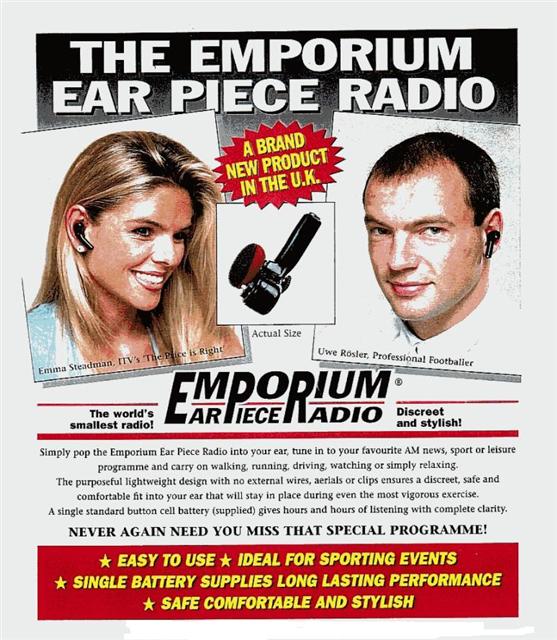
earpiece-radio

I know it is likely more novelty than performance, but the prices seem ridiculously low for individual buyers.

Also seen here: http://www.centretradegroup.com/Radio.php

I’m not familiar with the earpiece radios in your links. I have read through those sites, though–unfortunately, as I’m sure Vance noted, they lack any in-depth information.

I did a quick Google search and can see that these radios (both the FM and AM versions) have been around for many years–some references go back to 1999.

I imagine the earpiece radio uses the same auto-tuner that became quite popular in the late 90s. Simply press a button and the receiver auto-tunes to the next strong station: no memories and not manual tuning. Indeed, I used to attend trade shows in Europe in the late 90s and several vendors actually gave away branded novelty radios (in a variety of shapes) with a similar tuner.

Readers: Ever use one of these earpiece radios? Please comment!

Video: Shortwave listening and radio astronomy

Sony-ICF-SW100

On Thursday I attended an event at the Pisgah Astronomical Research Institute (PARI)–location of the 2015 SWLing Post DXPedition.

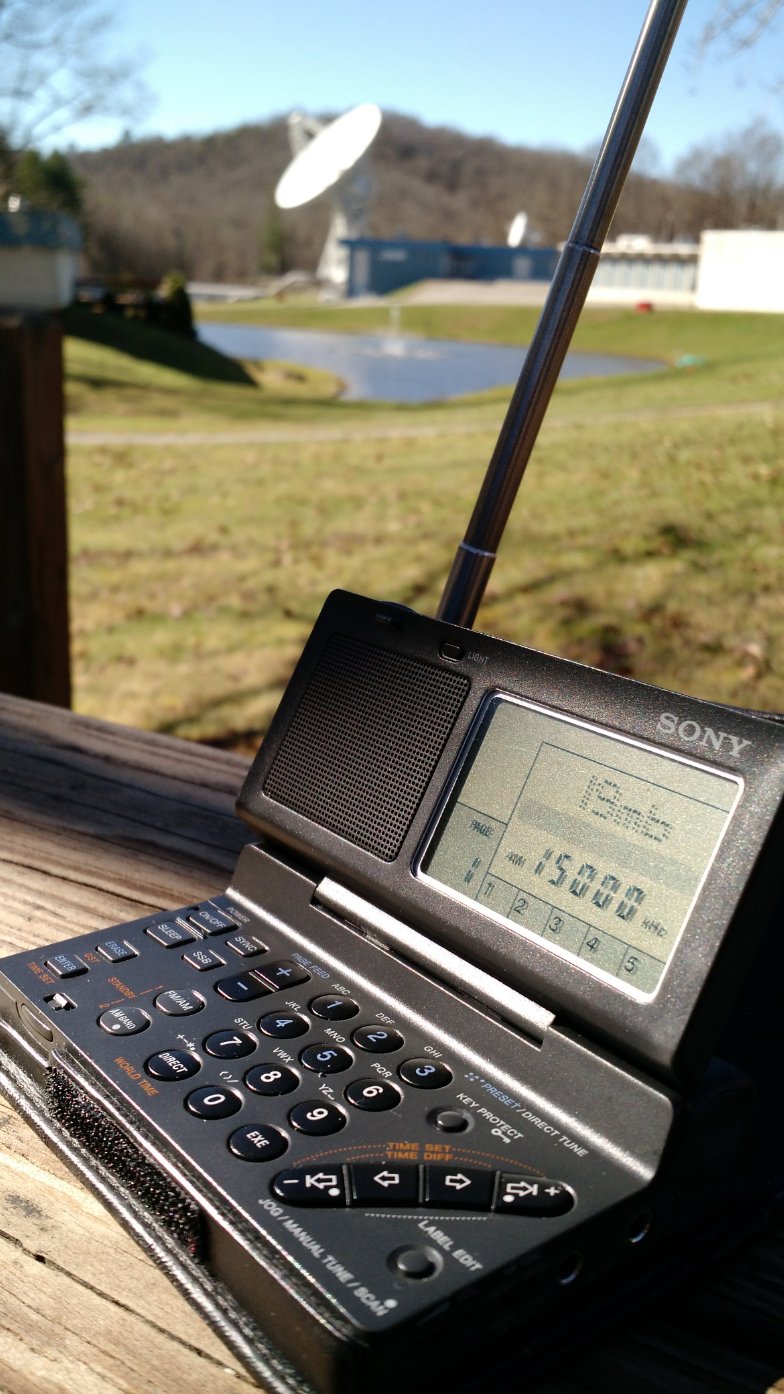
During a break, I had a couple of free hours, so I reached in my messenger bag and pulled out the Sony ICF-SW100: a radio that has quickly surpassed all others as my favorite EDC (everyday carry) radio. It has so many useful features in such a small package!

Radio astronomy observatories are ideal locations for impromptu shortwave radio listening as there is little to no radio interference/noise present.

PARI-26E-and-26W

PARI’s “Building 1” and the 26 West (left) and 26 East (right) radio telescopes.

While the weather on Thursday was gorgeous, HF band conditions were…well…miserable. There was very little to hear other than China Radio International, Radio Havana Cuba and a few other blow torch broadcasters.

Still, time signal station WWV was on my mind since I had just purchased Myke’s new edition of At The Tone and have been reading your excellent comments with early memories of listening to WWV and WWVH.

I tuned to 15 MHz and, of course, there was reliable WWV in Fort Collins, Colorado on frequency. Though WWV’s signal was relatively strong (despite the conditions) I turned on the SW100’s sync detector because fading (QSB) was pronounced at times.

Here’s a short video of the ICF-SW100 on a picnic table in the middle of the PARI campus. That’s PARI’s 26 (meter) West telescope in the background:

Scott’s Elecraft KX3 Go-Box

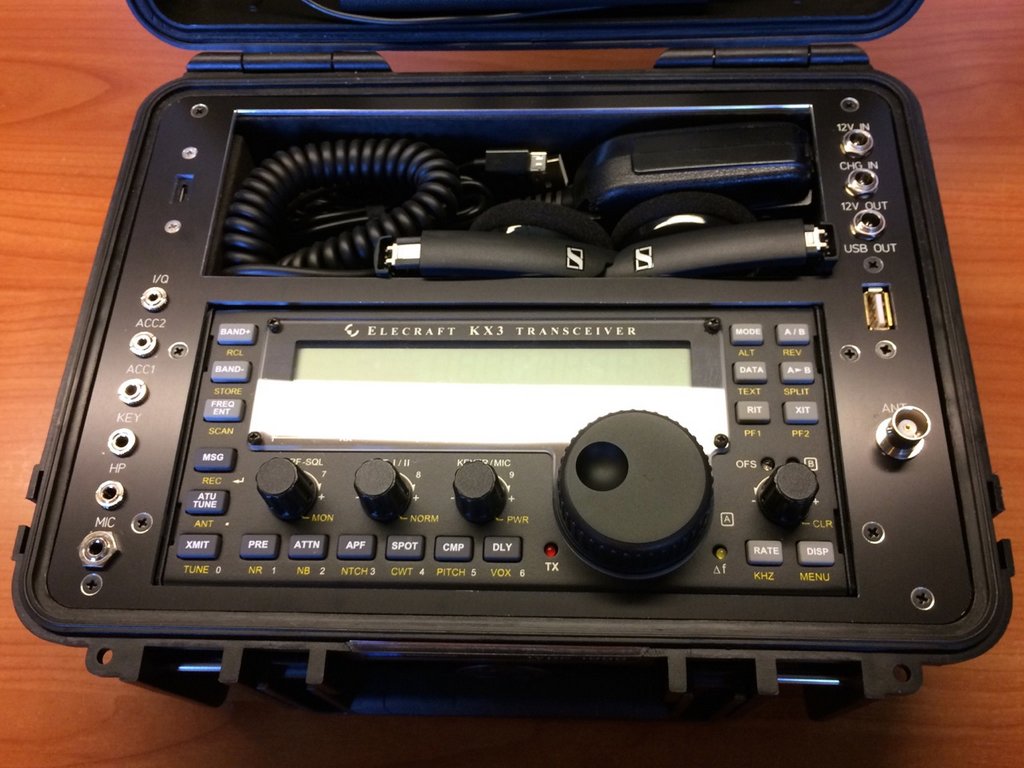
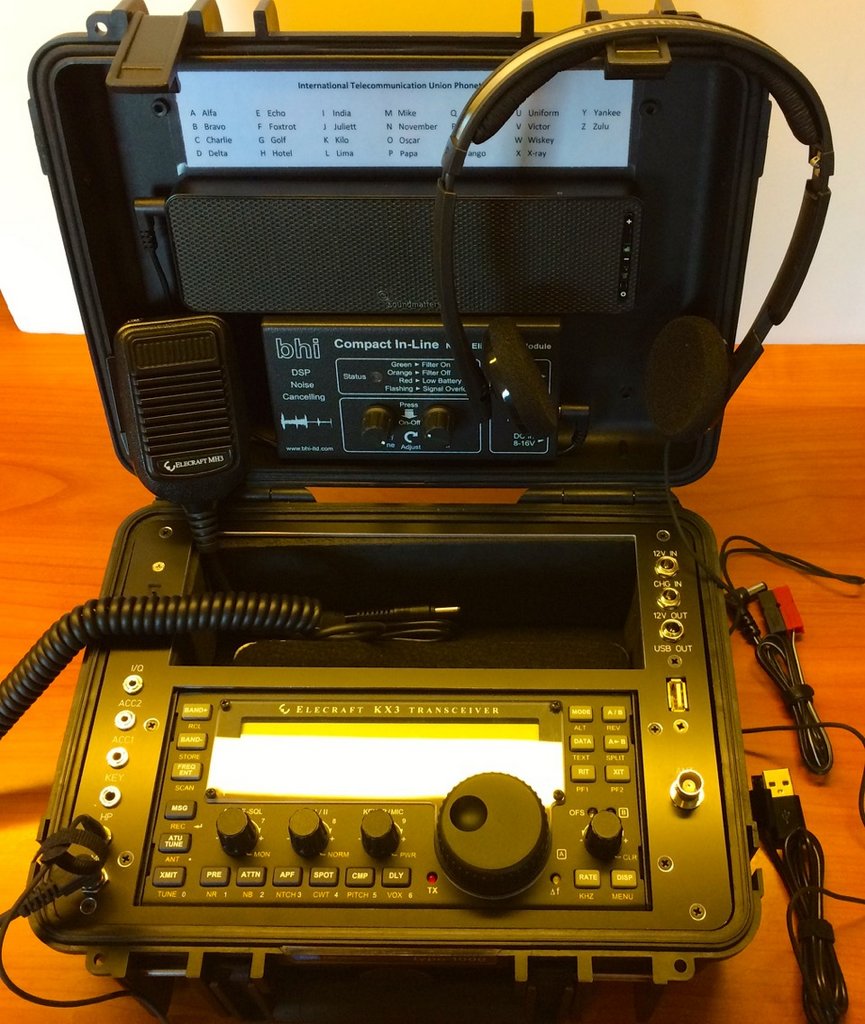
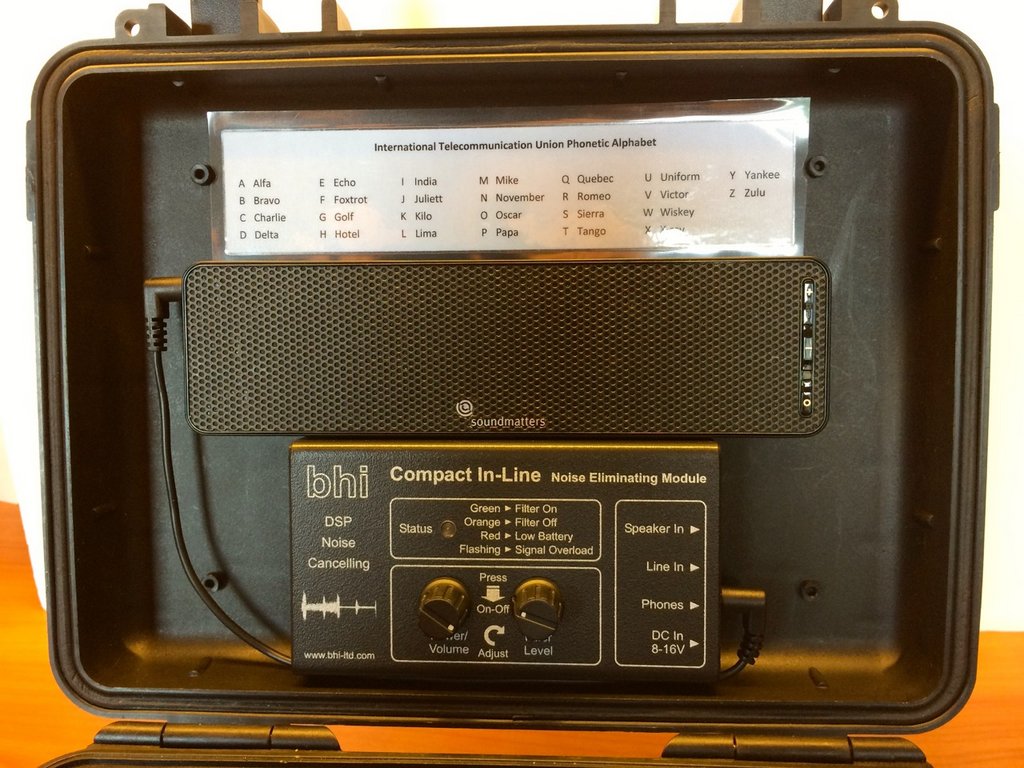
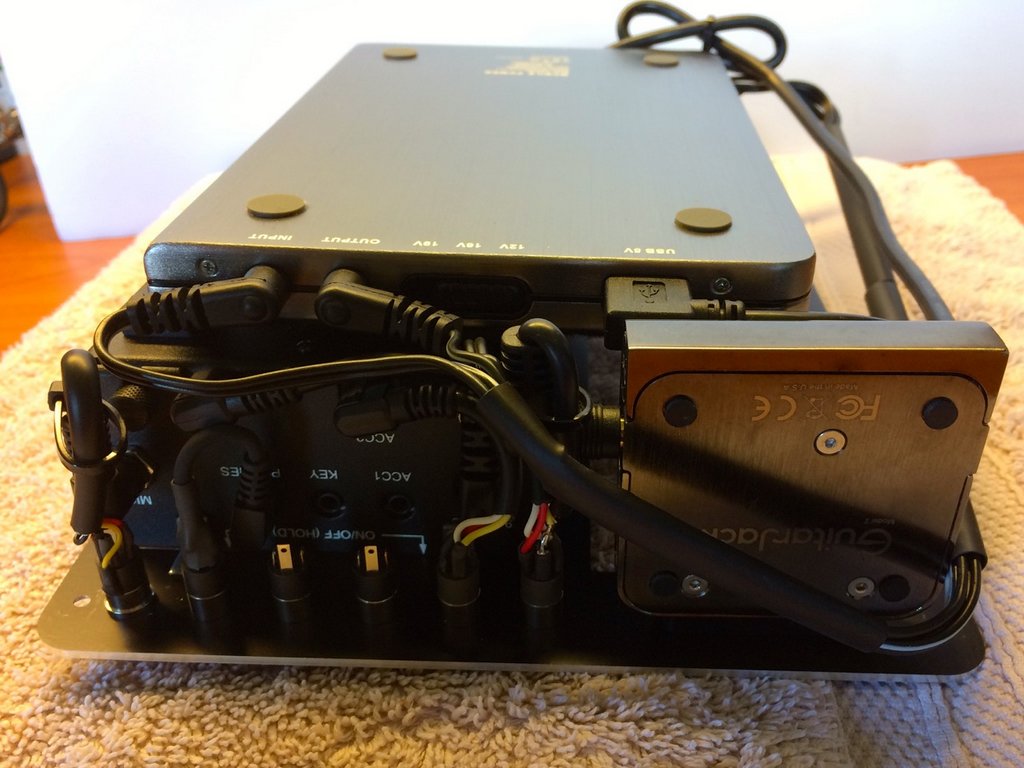
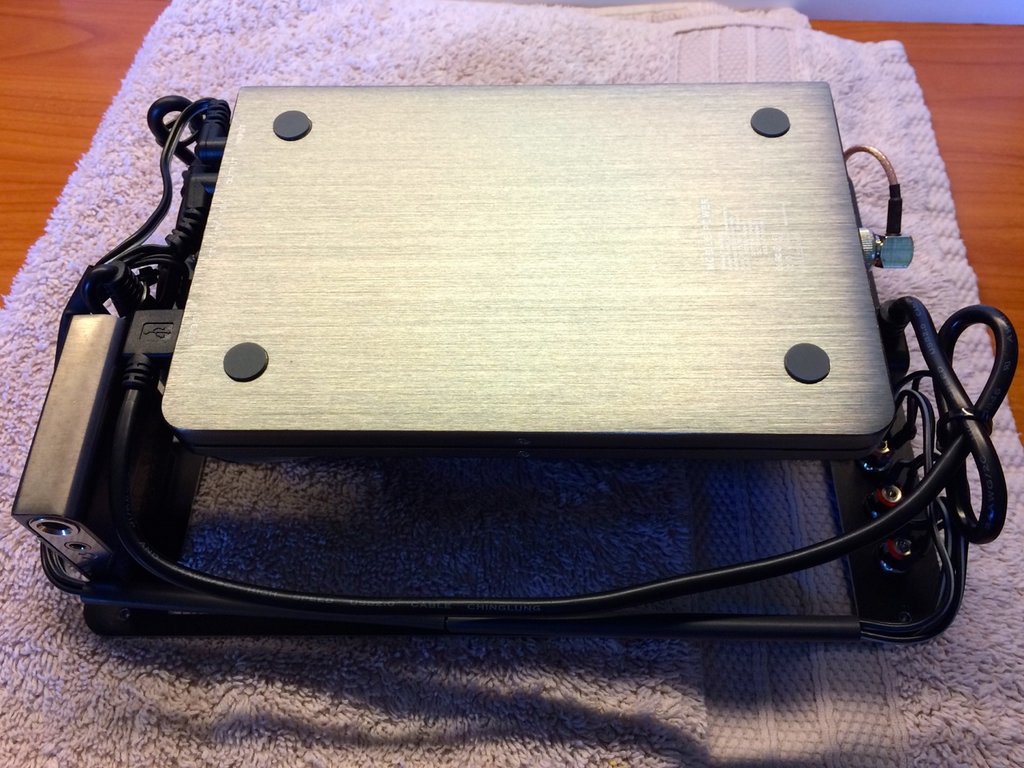
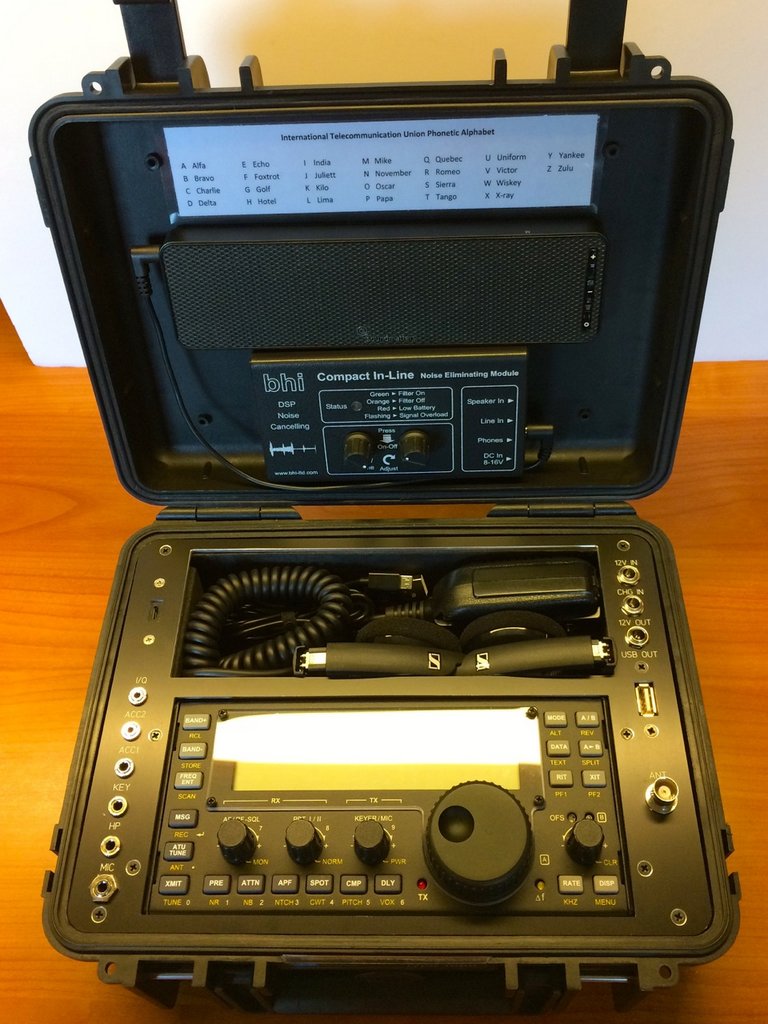
Many thanks to Scott (AK5SD) who shares the following photos and bill of materials for his custom Elecraft KX3 go-box:


IMG_0531 IMG_0534

IMG_0532 IMG_0535 IMG_0537 IMG_0536

Bill of materials

The panel was custom laser cut by Front Panel Express. I have the CAD
file and I’m willing to share it with anyone who wants to reproduce my effort.

Amazon.com
Case B&W Type 1000 Outdoor Case with SI Foam
You won’t use the foam, so you can buy the version without it if you can find it cheaper.

Battery Anker Astro Pro2 20000mAh Multi-Voltage (5V 12V 16V 19V)
Portable Charger External Battery Power Bank
Avoid look alike batteries and the next generation model from Anker. The newer Anker
battery is only capable of delivering 1.5A from the 12V supply. Two look alike batteries
I tried did not have the auto-off feature that the Anker does.

Vetco.net
ACC2 and I/Q Jacks 2 x 2.5mm Stereo Jack Panel Mount (PH-666J-B)
Phone, Key, and ACC1 3 x 3.5mm Stereo Jack Panel Mount (High Quality) (PH-504KB)
Mic Jack 1 x 3.5mm 4 Conductor Jack Panel Mount (PH-70-088B)
12V IN and CHG IN 2 x 2.1mm DC Power Panel Mount Jack (PH-2112)
12V OUT 1 x 2.5mm DC Power Panel Mount Jack (PH-2512)

You also need plugs and wire for interconnects. I bought some 2.5mm (CES-11-5502)
and 3.5mm (PH-44-468 for stereo, PH-44-470 for 4-conductor) audio cables with right
angle plugs and just cut them to use for the signal lines going to the KX3. I did the same
thing for the 2.5mm (PH-TC250) and 2.1mm (PH-TC210) power cables. A couple of
caveats are in order. The Phone, Key, and ACC1 interconnects require low profile
right angle connectors. The cables I listed above won’t work. Vetco part number
VUPN10338 will work. The power cables I’ve listed above use 24 gauge wire. This
is a little light, but the runs are small so I think it is OK. You can use higher gauge
cables if you can find a source.

USBfirewire.com
USB OUT USB 2.0 Right Angle Extension Cable (RR-AAR04P-20G)

Digikey.com
L Brackets 8 x Bracket Rt Ang Mount 4-40 Steel (612K-ND)
These L brackets are used to mount the KX3 to the panel and the panel to the case.
For mounting the KX3, I use a little piece of stick on felt on the bracket to protect the
KX3’s cabinet from damage. Replace the KX3’s screws with #4-40 Thread Size, 1/4”
Length Steel Pan Head Machine Screw, Black Oxide Finish (see below). For the panel
mounting, use #6-32 Thread Size, 3/16” Length self tapping sheet metal screw. You
may need to cut the tip off in order to not puncture the outside of the case.

RG316 BNC Male Angle to BNC Female SM Bulkhead Coaxial RF Pigtail Cable (6”)
This is not the original interconnect I used for connecting the KX3’s antenna output to
the panel. However, I think it is a better option for new designs. The caveat is that you
will need to verify the hole in the panel matches the bulkhead connector on this cable.
There will be a little loop in the cable when you are done, but that is fine.

Micrfasteners.com
Screws for Sound Card 2 x FMSP2510 – M 2.5 x .45 x 10mm
Screws for KX3 Bracket Mount 4 x MSPPK0404 – 4-40 x 1/4
Screws for Countersunk Panel Holes 8 x FMPPK0403 – 4-40 x 3/16
Screws for USB Connector *** 2 x FMPPK0406 – 4-40 x 3/8

I’m pretty sure these are the right length for the USB connector. I am doing it from memory.

Amazon.com or eBay.com
Soundmatters foxL DASH A Wireless Bluetooth Soundbar (OPTIONAL)

Sonoma Wire Works GJ2USB GuitarJack 2 USB Portable Audio Interface (OPTIONAL)
(Make sure you get the USB model, not the 30-pin model.)

This is optional if you want a built-in sound card interface for a waterfall display using iSDR. Make sure to eliminate the holes in the upper left corner of the panel if you are not installing. You will also need 2.5mm x 10mm screws to mount this to the bottom of the panel (see below).

bhi Compact In-Line Noise Eliminating Module (OPTIONAL)

In my opinion, the KX3’s noise reduction is totally ineffective for SSB communications. This external noise reducing DSP is one solution, albeit an expensive one, to that problem. It is only for SSB, not CW or digital modes. It is also available from GAP Antenna Products.

IMG_0530


Scott: you have done a beautiful job here and have spared no expense to make a wonderfully-engineered and rugged go-box. No doubt, you’re ready to take your KX3 to the field and enjoy world-class performance on a moment’s notice. 

Though I’ve never used them personally, I’ve noticed others who have taken advantage of the Front Panel Express engraving service–certainly makes for a polished and professional front panel.

Again, many thanks for not only sharing your photos, but also your bill of materials which will make it much easier for others to draw inspiration from your design!

AK5SD_QSL_Card

Speaking of designs, when I looked up Scott on QRZ.com, I noticed that he also sports a QSL card (above) designed by my good friend, Jeff Murray (K1NSS). Obviously, Scott is a man with good taste!

eBay find: American Electrola DXC-100

DXC-100

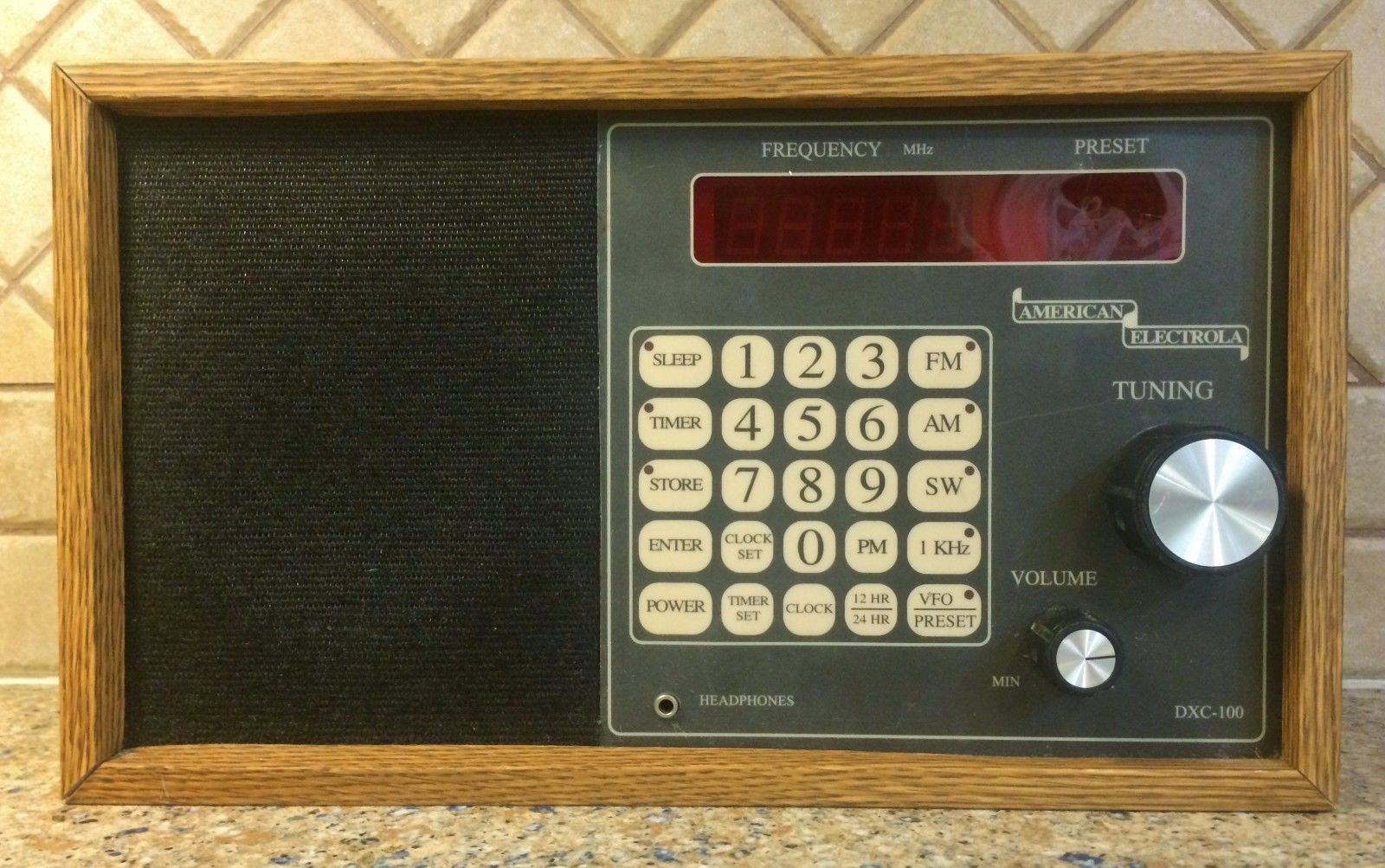
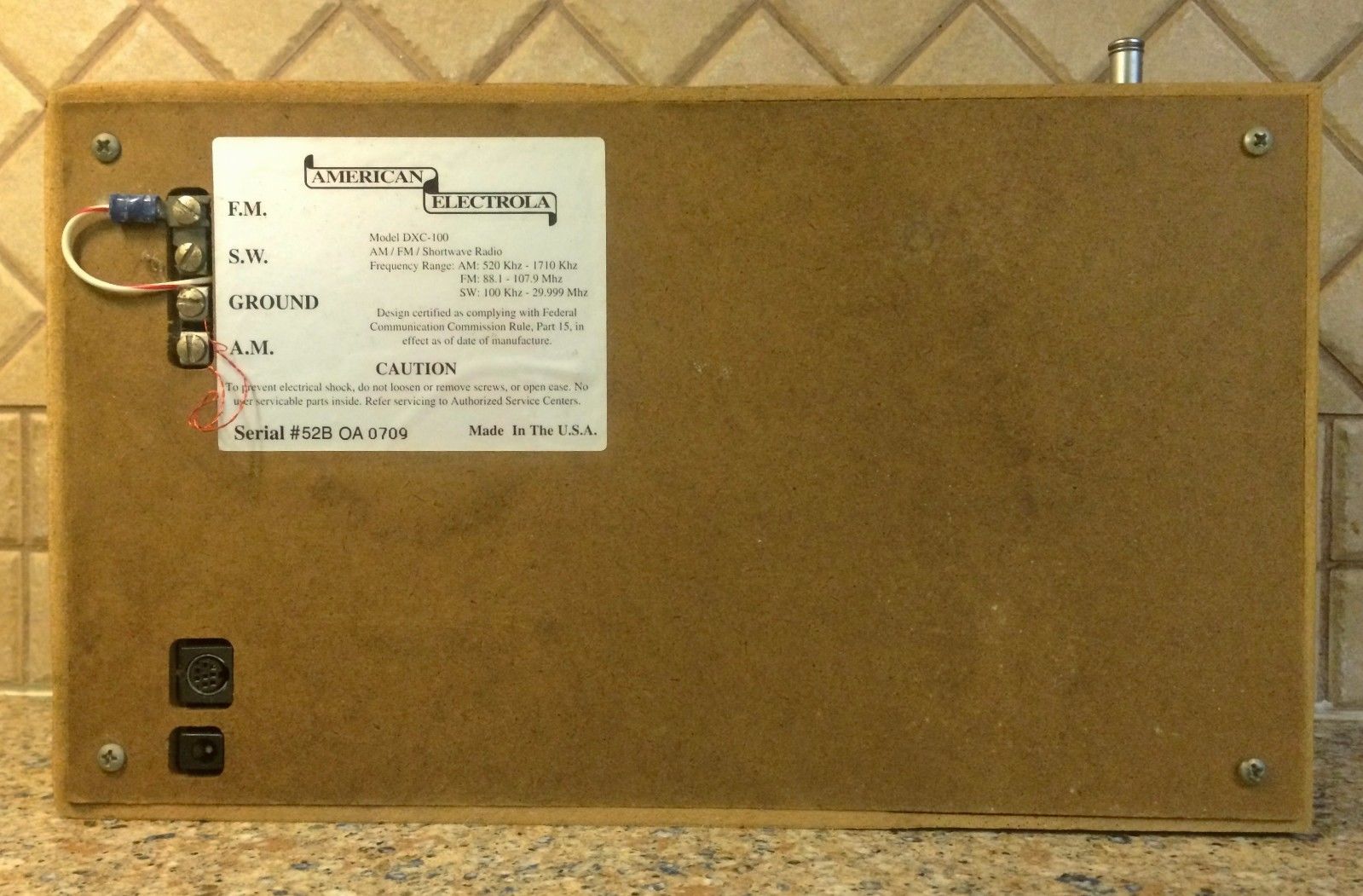
Last night, I noticed an untested American Electrola DXC-100 shortwave/AM/FM radio listed on eBay: it had a BuyItNow price of $49 shipped.

The seller (who has an excellent feedback history) disclosed that the power supply was missing, thus the receiver couldn’t be tested.

s-l1600

As you can see from the photos, it’s in great cosmetic shape.

I’ll admit it: I purchased the DXC-100 in a moment of weakness this morning. I don’t expect it to be much of a performer, but it is a relatively rare 1990s receiver that was built in Pittsburgh, PA. I believe only 2,000 units were produced. I have a weakness for odd-ball receivers.

I’m willing to bet the DXC-100 is functional, though the backup battery may need to be replaced.

s-l1600 (1)

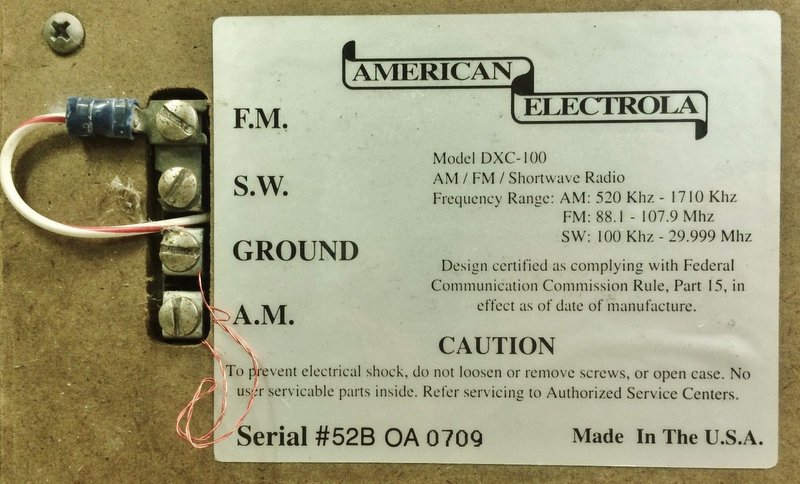
Does anyone have a schematic or owner’s manual for the DXC-100? I will have to find or build a suitable 9V power supply but need to determine the proper polarity first.

I’ll do a short review of the DXC-100 if I’m able to get it on the air.

Dan compares the Sangean ATS-909X with two classic portables

Sangean-ATS-909X-Sony-SW07-Panasonic-RF-B65

Many thanks to SWLing Post contributor, Dan Robinson, who shares a radio comparison he initially posted in the excellent Extreme Shortwave Listening Facebook group. Dan writes:

When the Sangean ATS-909X was first released a few years ago, I decided that I would hold off obtaining one to let whatever bugs there might be in production get worked out.

I have always been impressed by the design of the 909X, but was cautious when it came to the question of overall sensitivity. I once owned the 909, had it modified by Radio Labs, but that seemed not to do much — the 909, in my view, suffered too much from the well-known deafness issue when using the whip antenna.

Over the years, I used and still own many of the classic portables. This includes the SONY 7600GR, Grundig SAT 500/700, 2010, E-1, SONY SW100/SW07, SONY SW-55, and the radio I consider to be at or near the top of the small portable heap, the Pan RF-B65. But a couple of weeks ago, I broke down and bid for a new in box Sangean 909X. It’s the black version, and arrived a couple of days ago.

I remain impressed by the 909X’s design — beautiful radio, wonderful large LCD and backlight, excellent filtering, along with a feature we used to see in the SONY’s — adjustable/variable attenuation. But I wondered how the 909X would stack up against two of my favorites, the SW-07 and RF-B65. I was crossing my fingers — but alas, initial results are not encouraging.

While the radio initially on its own seems to be quite sensitive, I lined it up next to the SW-07 and RF-B65 and did a comparison. Now, first I must note that propagation continues to be in the dumpster and I conducted this test in late afternoon.

All three receivers were tuned to Cuba on 11,760 khz — they were located next to one another on a table in the top level of my home here in Maryland. The results are seen in the video below.

You can hear how much more clearly the SW-07 and especially the RF-B65 handle a signal. With the Panasonic, stations just pop. Same with the SW-07.

Disappointingly, as you can hear, stations on the 909X appear to be buried in noise. It’s quite extraordinary — I was very surprised by this comparison and intend to perform additional side-by-side tests in different areas of my home, which does suffer from high noise levels likely produced by electric lines and a transformer outside (which is why a run a Wellbrook on my main radio stack downstairs). But it is notable that the 909X appears to struggle so, while the old classic portables SW-07 and B65 excel. Interested in the views of others . . .

Dan, this is very similar to my experience with the Sangean ATS-909X.

Like you, I absolutely love the design of the 909X–the large display, tuning wheel, front-facing speaker, ergonomics–but was pretty disappointed when I pitted it against three other (less expensive) portables on the shortwave bands.

I know the 909X performs much better when connected to an external antenna. I’ve also learned that fresh batteries are a must as the 909X’s sensitivity is directly related to supplying optimal voltage. I know, though, that you had fresh batteries in your 909X, Dan.

Again, many thanks for sharing your comparison.

William’s review of the C.Crane CC Skywave

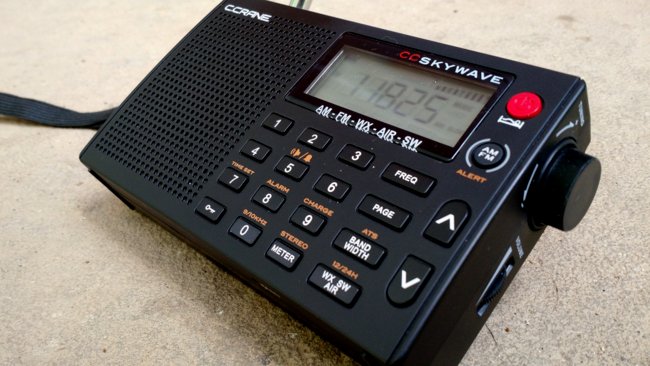
CCrane-CC-Skywave

Regarding the C.Crane CC Skywave, SWLing Post reader, William Pietschman (W8LV) comments:

I find that the Skywave is so stable on the air band, I can use it to decode ACARS with the Android App!

Listened to WBCQ, and Arnie Coro’s show last night from Havana along with some Jazz music.

It pulled FM stations out of the air like nothing else, meaning the weaker ones here in my rural Ohio location. And I could pick up three NOAA broadcasts, two very strong, one scratchy…. Since the NOAA system is of course designed to let you pick up one station in whatever particular area of the county you live in, I consider this excellent!

With the AM I pulled in Canadians, Boston , stations in IOWA and KFI. I also note it’s very directional on AM… I could null out WTVN and pick up Texas with no problem. I have owned and do own lots of shortwave radios, and I MUST say, this is one hell of a good set!

It’s going into my Winter zip-up jacket pocket so it will always be handy for the DX Season, and I also notice that the headphones are VERY good, and have a long enough cord so it’s not pulling at my ears like some sort of damned harness… I HATE short earphone cords!

(And while I am on the subject of ear phones, and while I haven’t been zapped in the ear with static this year yet by dry air causing that annoying problem, I wonder how these earphones are going to do in that regard… the Sony’s are unbearable in Winter! Ouch! I wonder if anyone else out there has this problem besides me, and has found a solution?)

First of all, thank you for making me aware of the ACARS app and that you can successfully use it with the CC Skywave. I will add the ACARS app to my growing list of HamRadio/SWL applications and also try it myself!

Your experience with the CC Skywave is very similar to mine. It is a fabulous portable receiver. If it only had SSB and sync detection, it would be the ultimate compact portable. The CC Skywave is an everyday carry (EDC) radio for me–either it, or the Sony ICF-SW100, accompany me everywhere in my Timbuk2 messenger bag.

Regarding static discharge from headphones, I don’t think I’ve ever had this happen to me; sounds annoying, though! I suppose walking in dry winter conditions with a thick winter jacket could increase chances of discharge. Perhaps the in-ear design of the included CC earbuds–with silicon earpieces–will minimize and insulate you from this problem? Let us know!

Thank you for your assessment of the CC Skywave, William!