Category Archives: Radios

Matt’s 2022 Rooftop Receiver Shootout!

Many thanks to SWLing Post contributor, Matt Blaze, for the following guest post:


2022 rooftop receiver shootout

by Matt Blaze

I realized it’s been long past time for me to do another head-to-head receiver comparison “shootout”, where you can compare the audio from multiple radios receiving the same signal at the same time. Long time readers of Thomas’ blog may remember I’ve posted a few of these before.

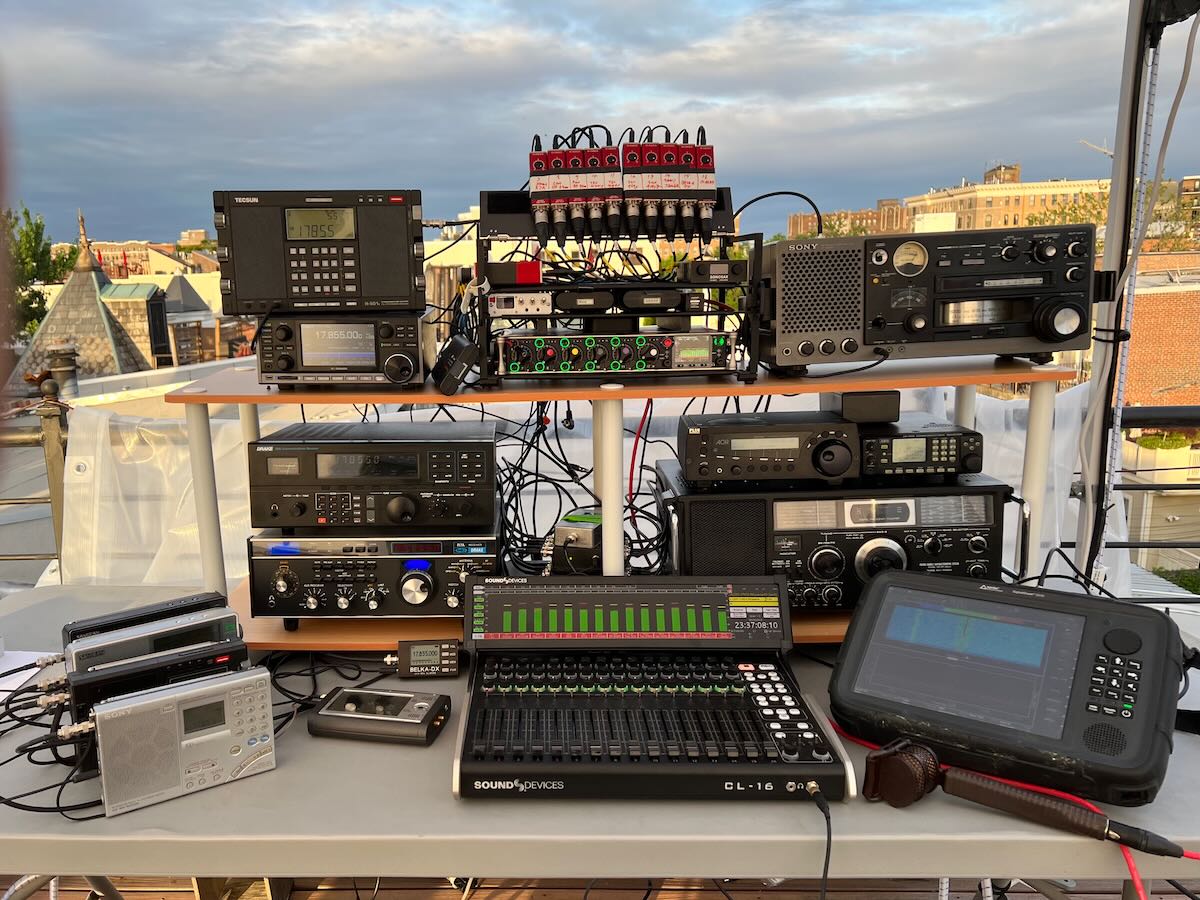
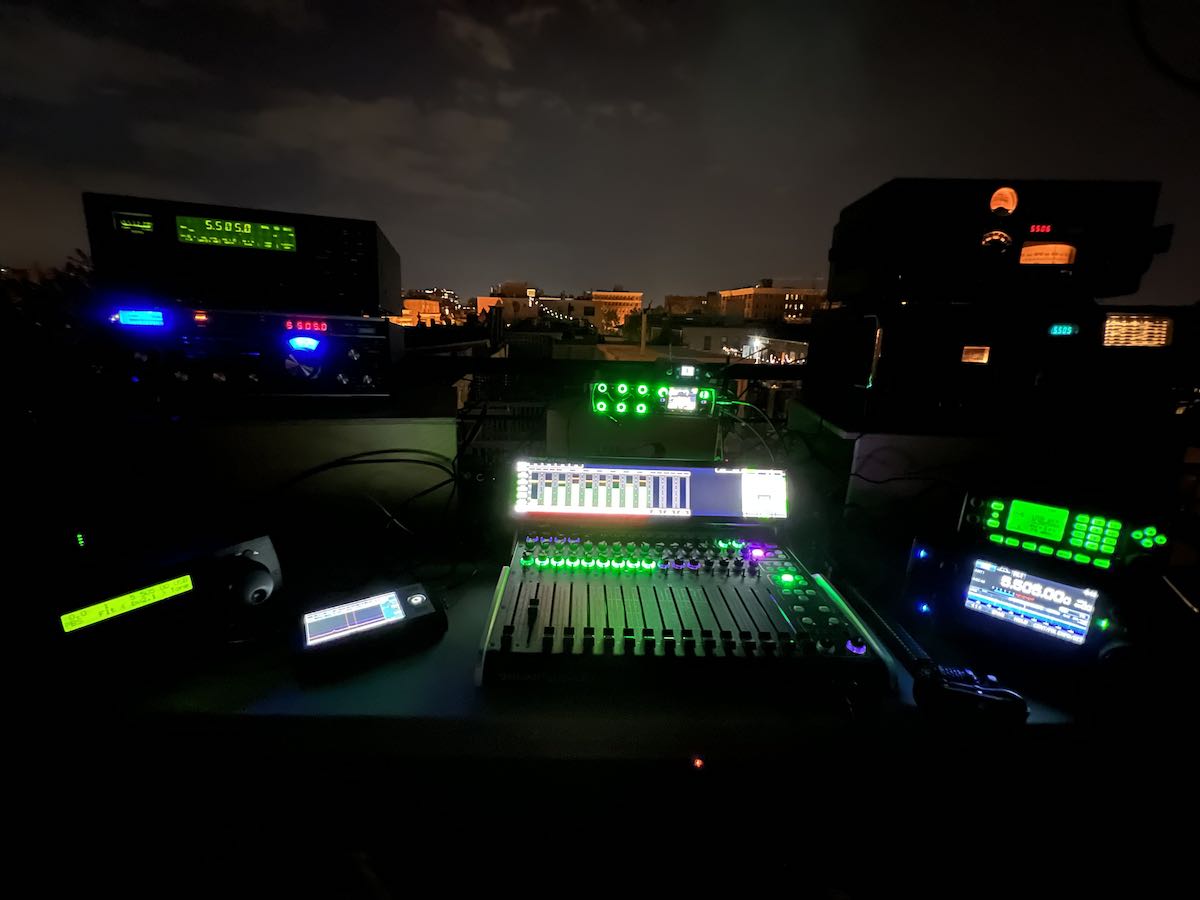
So I took advantage of the nice weather and brought a bunch of radios, recording gear, and an antenna up to the roof to listen and record signals under an open sky. My neighbors, no doubt, wondered what I must have been up to. (Don’t tell them I’m just a harmless radio nerd.)

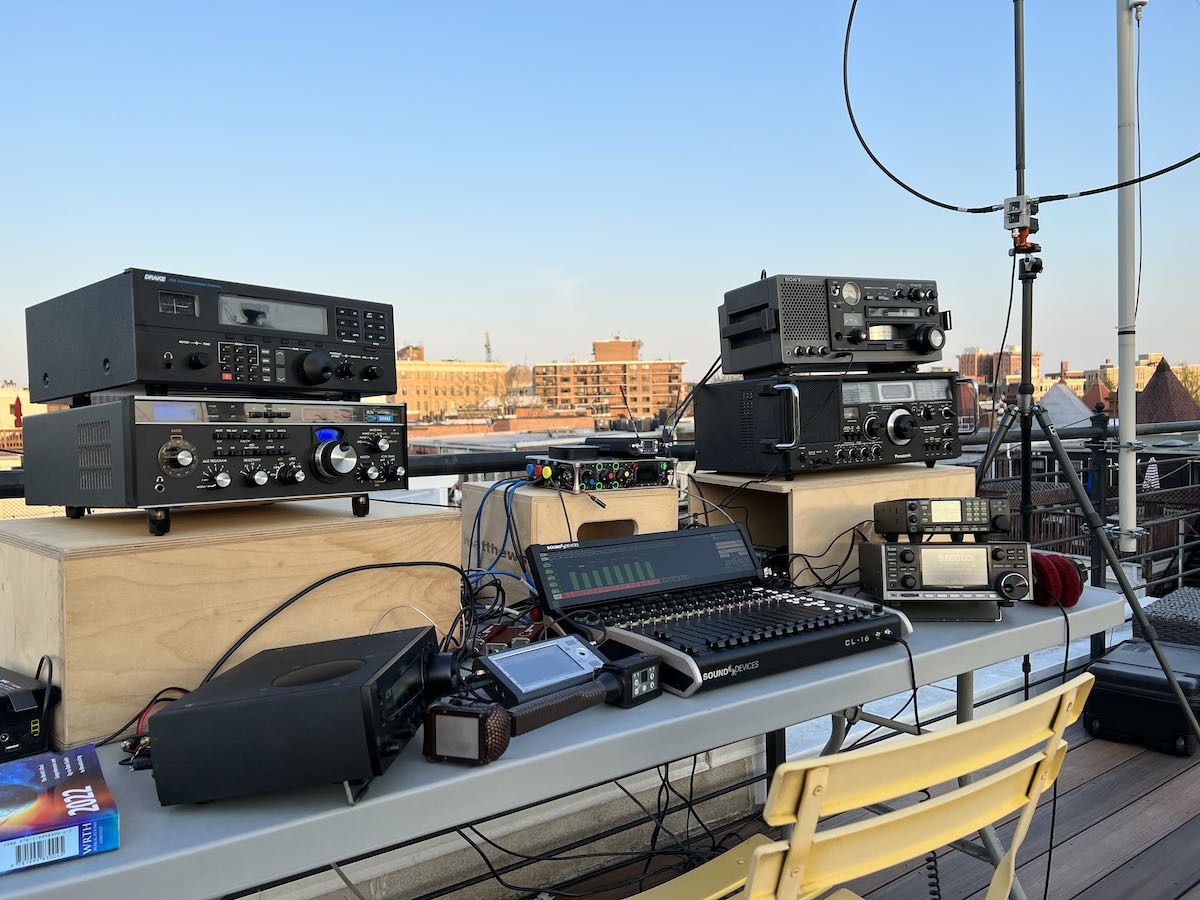
This year, our focus is on eight “dream receivers” from the 1980’s to the present. Each radio is at or near the top of the line in its class at the time of its release. Our radios include, in roughly reverse chronological order:

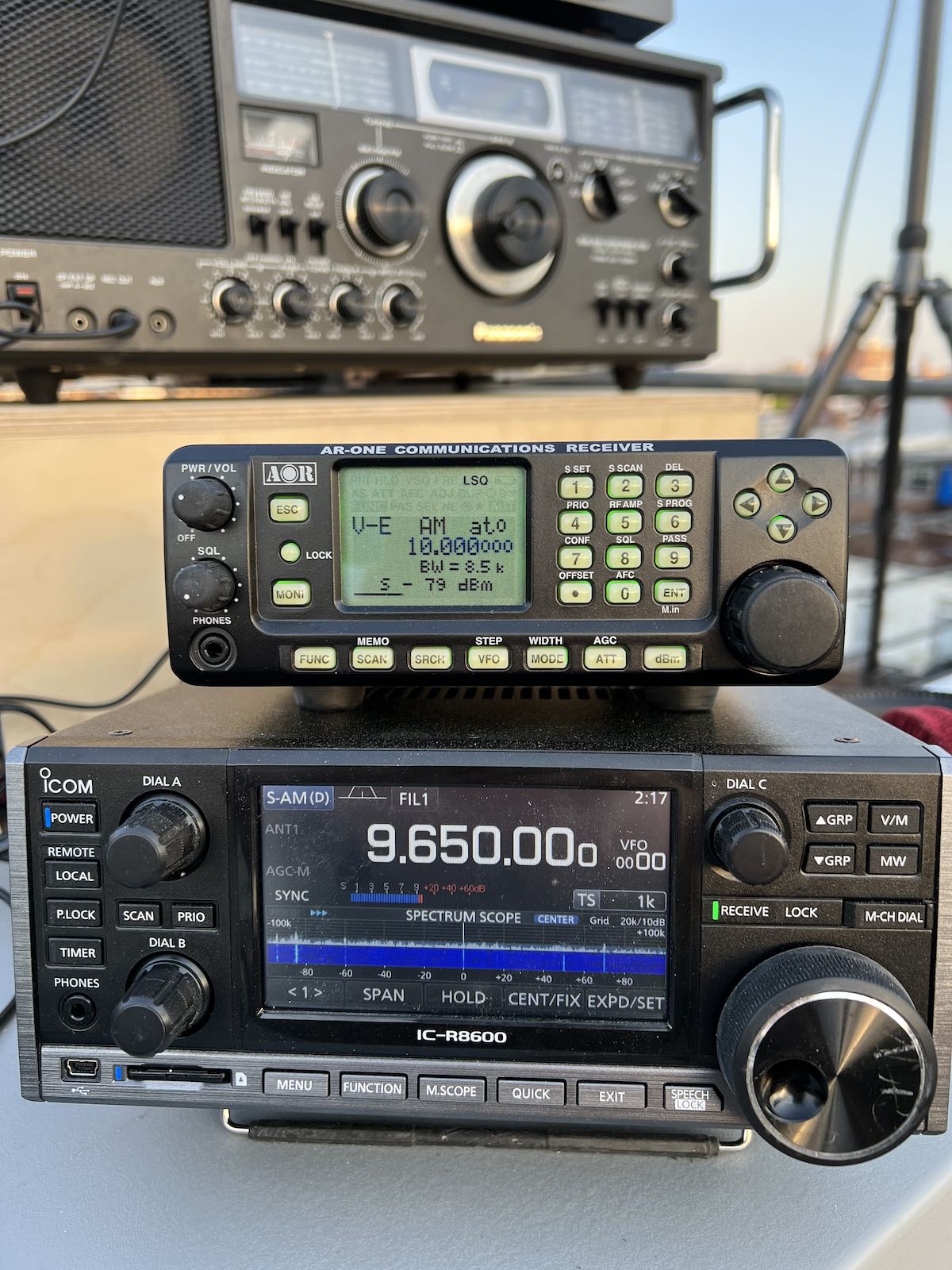
  • Icom R-8600, a current production “DC to Daylight” (or up to 3 GHz, at least) general coverage communications receiver, with highly regarded shortwave performance.
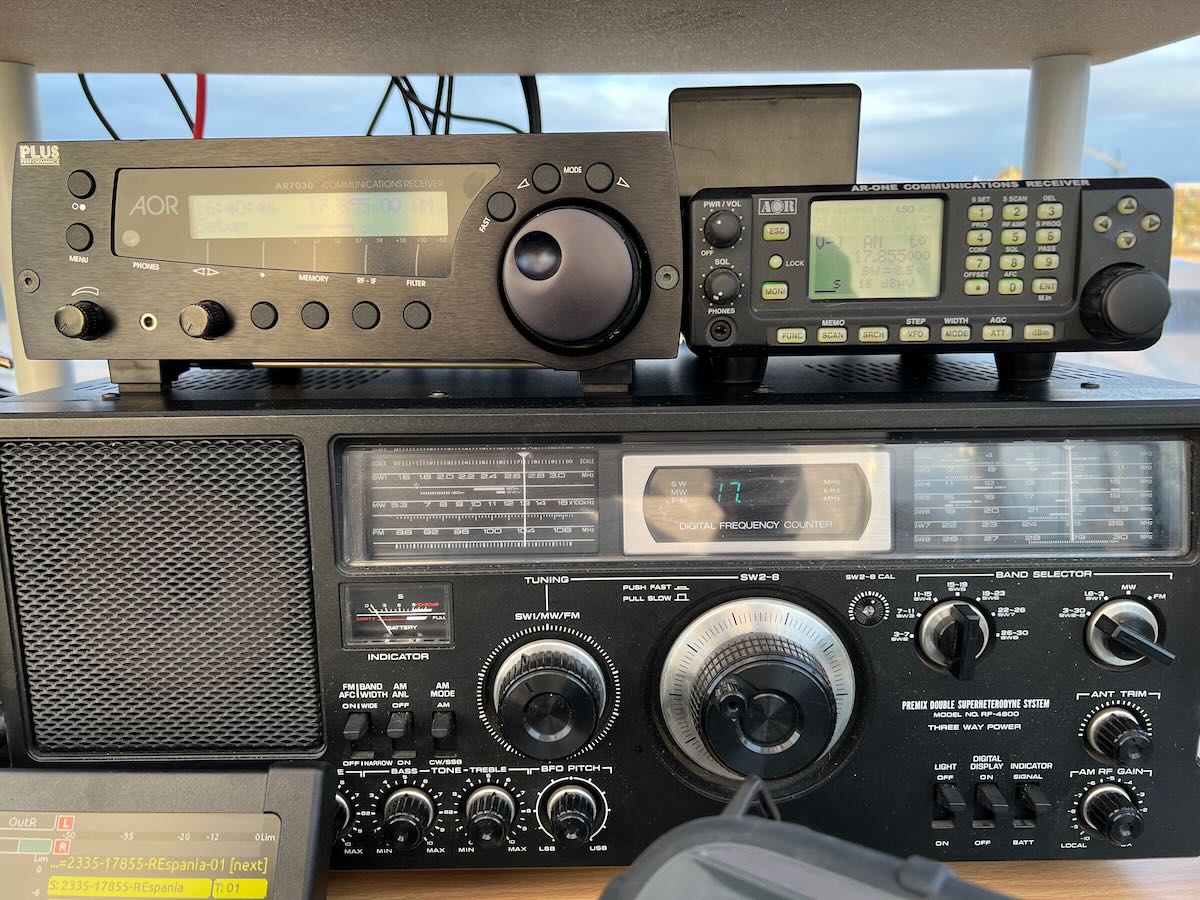
  • AOR AR-ONE, another DC to Daylight general coverage radio, less well known due to the high price and limited US availability. Excellent performer, but a terrible (menu-driven) user interface for shortwave, in my opinion.
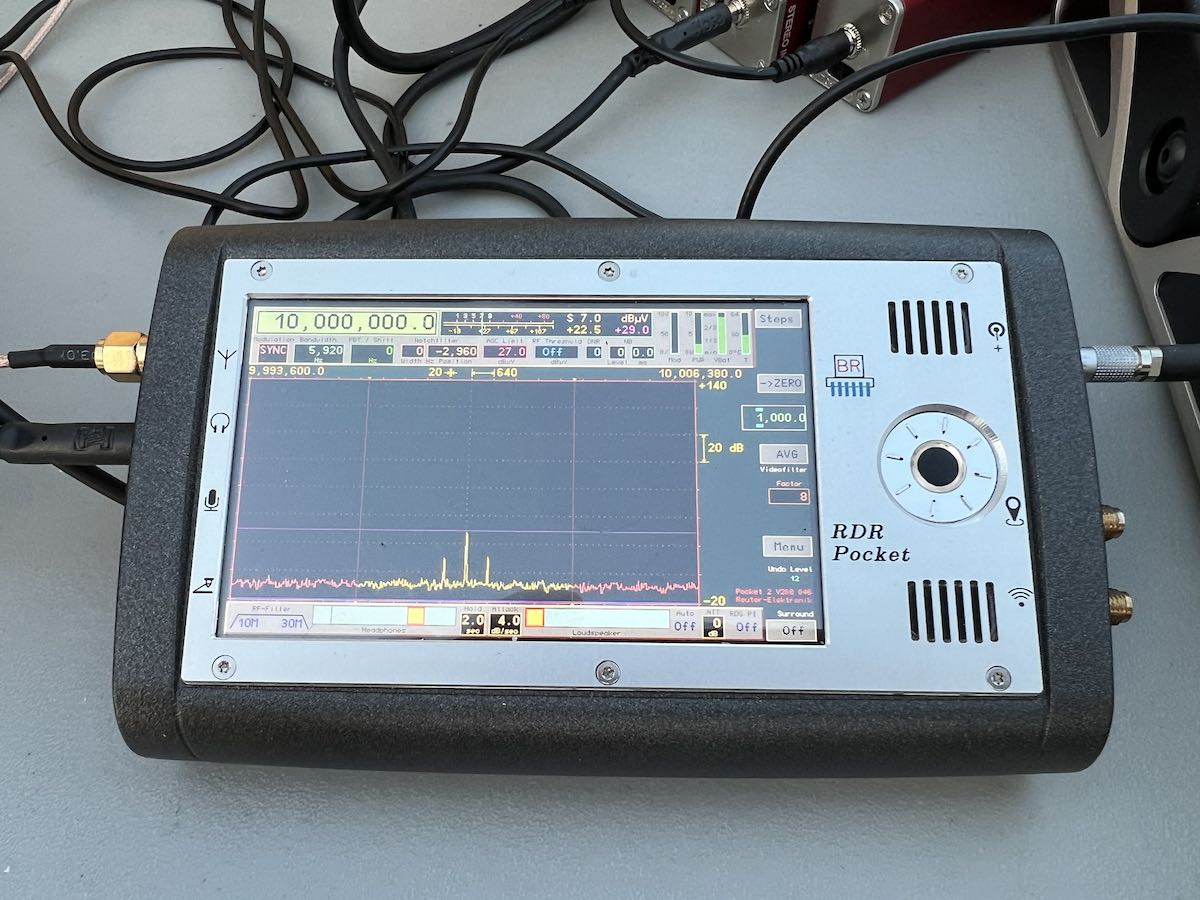
  • Reuter RDR Pocket, a very cute, if virtually impossible to get in the US, small production, high performance SDR-based shortwave portable receiver. It’s got an excellent spectrum display and packs a lot of performance into a surprisingly small package.
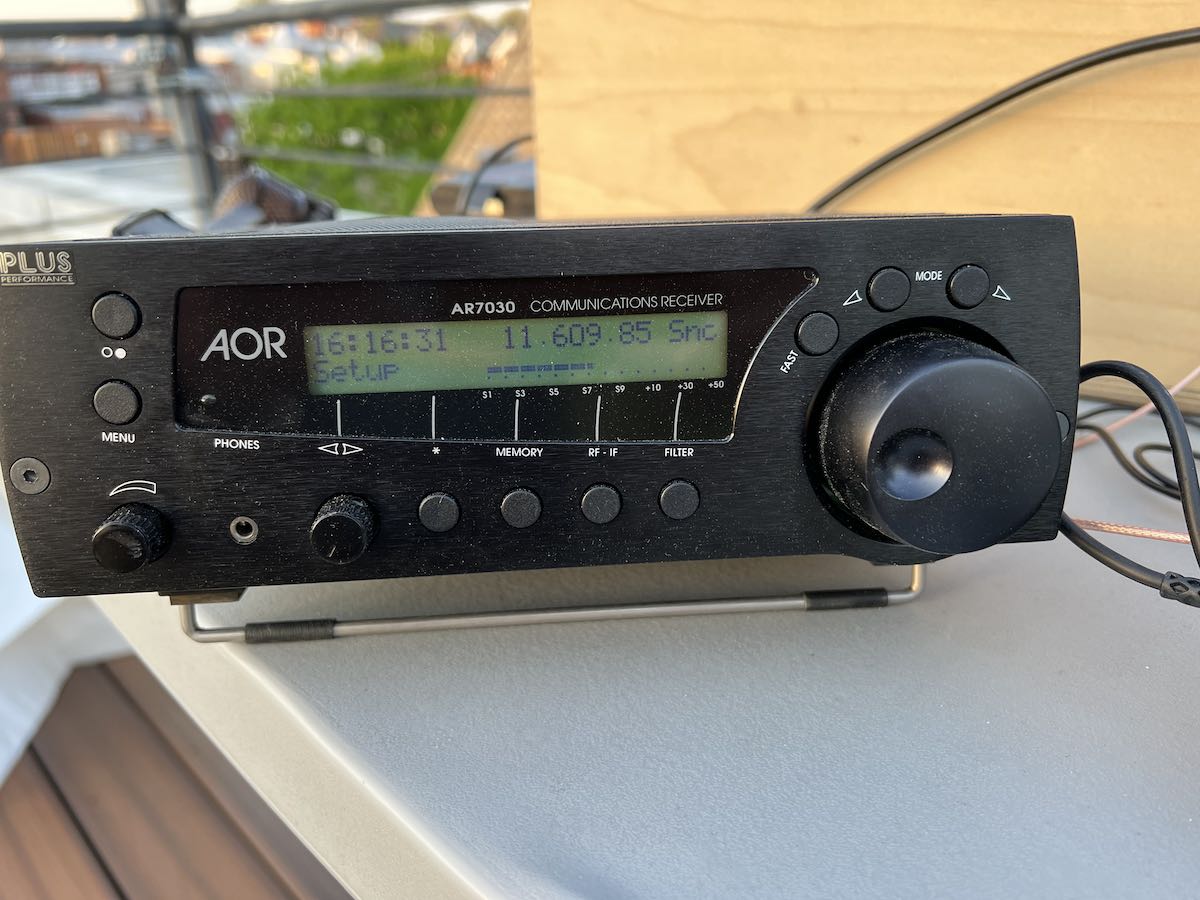
  • AOR 7030Plus, an extremely well regarded shortwave receiver from the late 90’s; designed in the UK. It’s got a quirky menu-driven user interface but is a lot of fun to use.
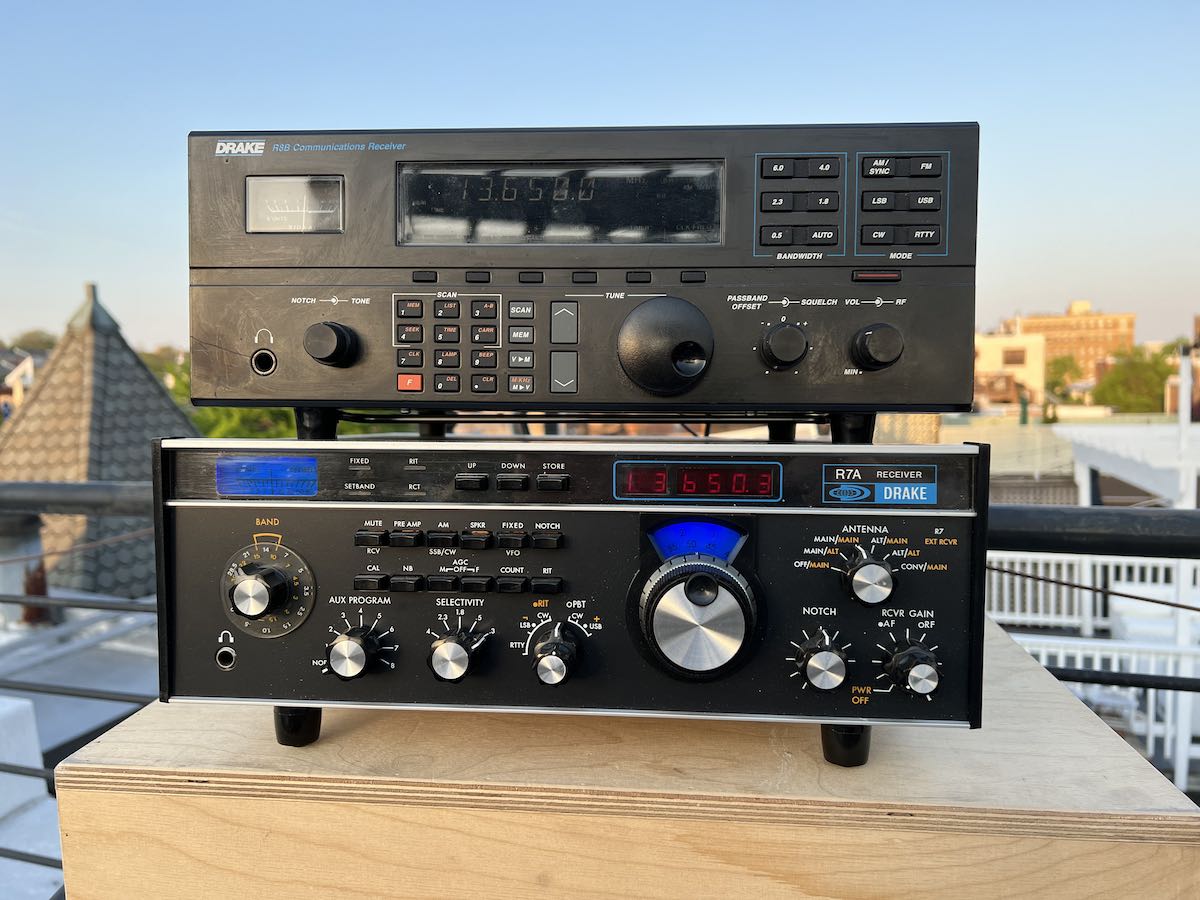
  • Drake R8B, the last of the much-beloved Drake receivers. Probably the chief competitor to the 7030.
  • Drake R7A, an excellent analog communications receiver (but with a digital VFO) from the early 80’s. It still outperforms even many current radios.
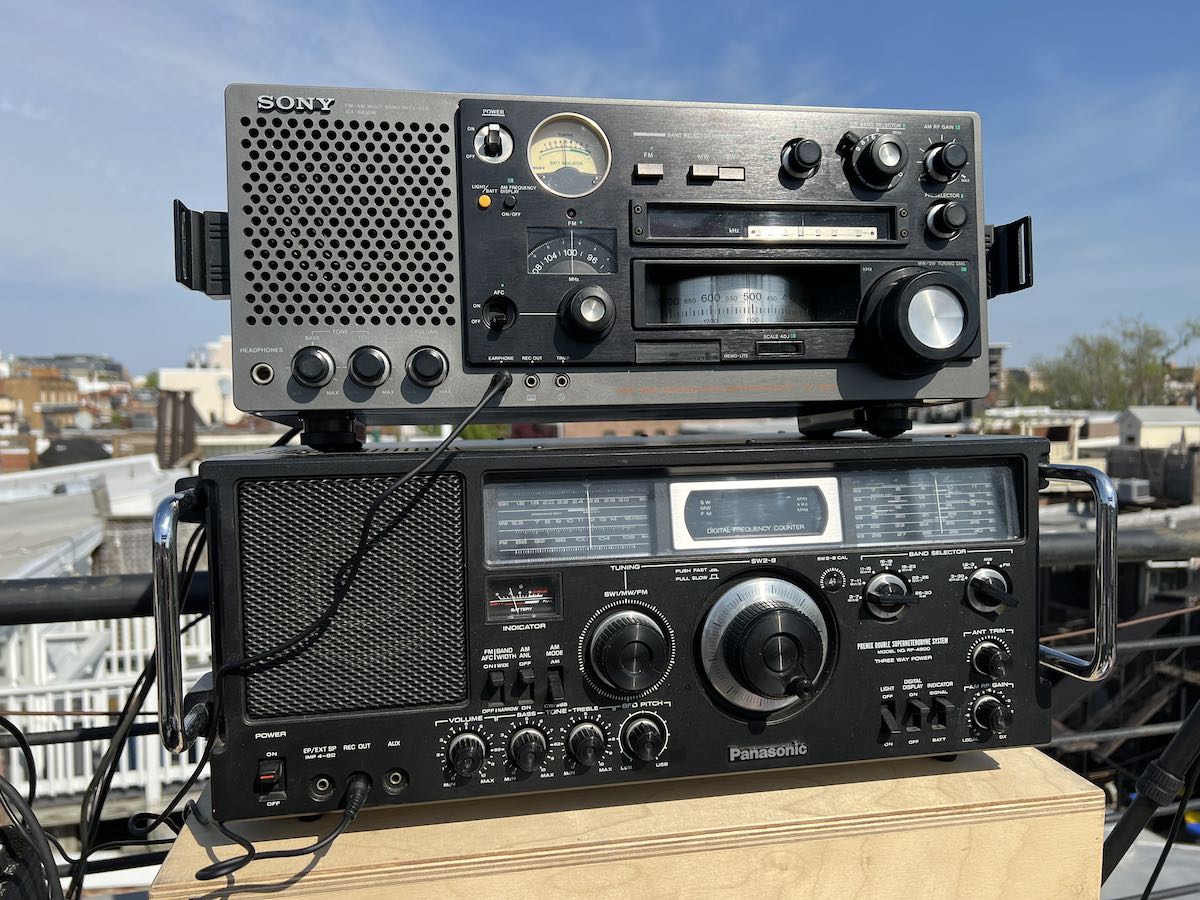
  • Sony ICF-6800W, a top of the line “boom box” style consumer receiver from the early 80’s. Great radio, but hard to use on SSB.
  • Panasonic RF-4900, the main competition for the Sony. Boat-anchor form factor, but runs on batteries. Excellent performer, but also hard to use on SSB.

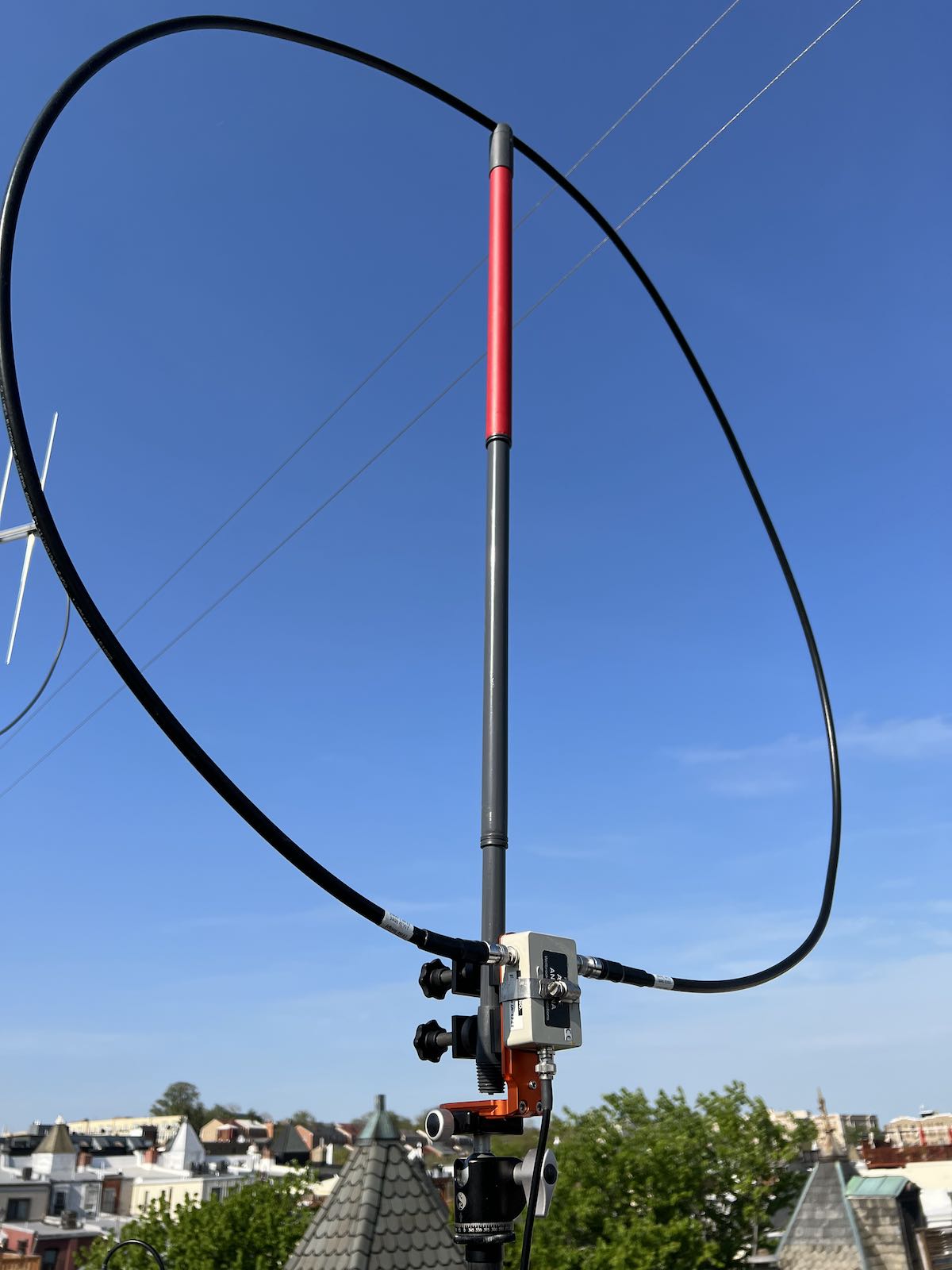
The radios were fed from my portable Wellbrook FLX-1530 antenna, using a Stridsberg Engineering HF distribution amplifier. So every radio was getting pretty close to exactly the same signal at its RF input.

Recordings were taken from the line output, if one was available, or the external speaker/headphone output otherwise. In either case, the audio was then isolated and converted to a balanced signal for recording.

For each signal, I recorded monaural “solo” tracks for each radio, as well as a narrated stereo track in which I compared the audio from each radio (one after the other) against the Icom R8600, with the audio from the R8600 on the left channel and the audio from the other radios on the right channel. This gives you a quick overview of what all the radios sound like.

The stereo recording requires some explanation. For it to make any sense, you MUST listen in stereo, using decent headphones if at all possible. You can switch earpieces back and forth (with your finger on pause and rewind) to get a quick idea of what each radio sounds like compared with a modern receiver, and how they handle things like fades and static.

The solo tracks, on the other hand, consist entirely of the continuous audio from a single radio, with no narration or interruption.

I recorded three different signals, for a three part comparison. (Parts four and up will come, hopefully, soon). I think both the differences and similarities will surprise you.

Part One

Our first signal was the BBC on 9915 KHz, broadcasting from Madagascar to western Africa. This signal was extremely marginal here, intended to show how each receiver can or can’t handle signals down in the noise. It’s definitely not “armchair copy”.

The stereo overview is at:

The individual receiver solo tracks can be found here:

Icom R-8600:

AOR AR-ONE:

Reuter RDR Pocket:

AOR 7030Plus:

Drake R8B:

Drake R7A:

Sony ICF-6800W:

Panasonic RF-4900:

Part Two

Our next signal was the Shannon (Ireland) aviation VOLMET broadcast on 5505 KHz USB. This synthesized voice gives the latest meteorological conditions at airports around Europe. The signal was not strong, but entirely readable. It shows how the radios handle a weak SSB signal. Note that the Sony and Panasonic consumer radios, though equipped with a BFO, were VERY hard to tune properly.

The stereo overview is at:

Receiver solo tracks can be found here:

Icom R-8600:

AOR AR-ONE:

Reuter RDR Pocket:

AOR 7030Plus:

Drake R8B:

Drake R7A:

Sony ICF-6800W:

Panasonic RF-4900:


Part Three

Our final signal was a stronger, though occasionally fading, shortwave broadcaster, Radio Romania International on 13650 KHz AM. This gives you a sense of how the receivers performed on a typical “average” signal that you might actually want to enjoy listening to. Because the radios have different filters and other capabilities, I tuned each radio to whatever sounded best; I did not attempt to use comparable settings (since no common settings existed).

The stereo overview can be found at:

And the individual solo tracks are here:

Icom R-8600:

AOR AR-ONE:

Reuter RDR Pocket:

AOR 7030Plus:

Drake R8B:

Drake R7A:

Sony ICF-6800W:

Panasonic RF-4900:

Subsequent comparisons, hopefully soon, will focus on receiver performance on signals in crowded bands and under various kinds of interference and noise.

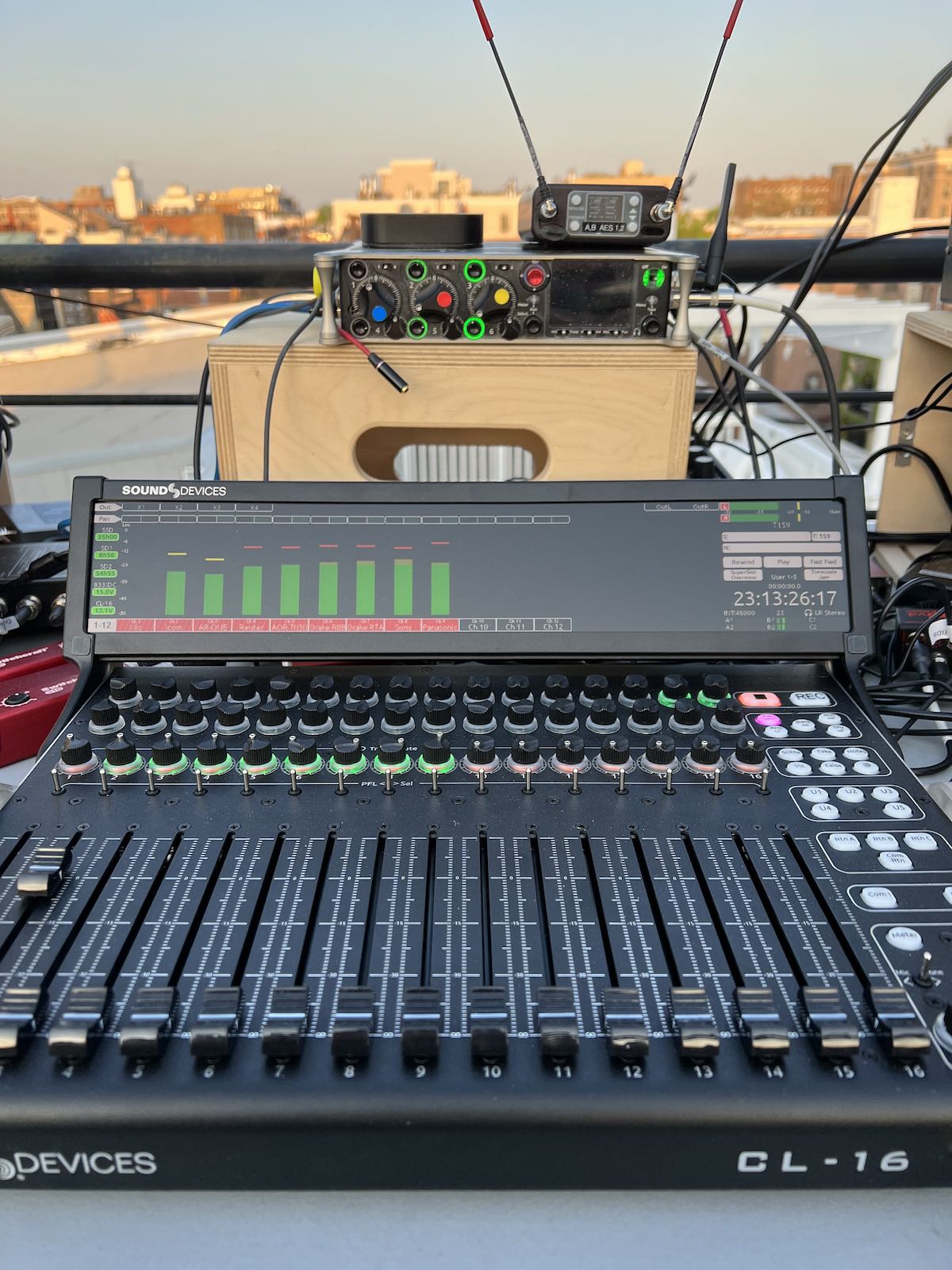
A quick note on production: The recordings were made with a 12 channel Sound Devices 833 recorder with a Sound Devices SL-16 mixing console. The audio was isolated and converted to balanced output with Switchcraft 318 direct interface boxes (highly recommended for recording radios with pro audio gear).

The stereo track narration was done by me in real time, as the signals were being recorded. I made some comments about which receivers I thought sounded best that were not always the same as what I would later conclude after carefully listening to the solo tracks once back inside. But judge for yourself. I used a Coles “lip” microphone, an amazing ribbon mic designed decades ago for the BBC for use in highly noisy environments. It was very effective in reducing the sometimes considerable street noise and other ambient outdoor sounds.

Thanks for listening and 73!

Mark seeks a vintage radio repair technician in the DC metro area

Many thanks to SWLing Post contributor, Mark Irish, who writes:

Good afternoon Mr. Witherspoon,

Just wanted to follow up on a contact for fixing several shortwave radios from the primarily the 70s and 80s, preferably someone located in the DC Metropolitan area, Virginia or North Carolina. These would include the Zenith R-7000-2 and General Electric World Monitor P4990A. Is this something that you could post on your blog? If possible, please let me know either way.

Thank you,

Mark Irish

Great question, Mark! It’s difficult to find radio repair technicians these days. 

I have a couple of suggestions, but perhaps the SWLing Post community can comment with even more options!

You might check with Vlado at HamRadio.repair. He has worked on some vintage solid state radios in the past–he’s located near Asheville, North Carolina.

Also, you might reach out to the National Capital Radio & TV Museum in Bowie, MD. They offer classes in radio repair and I imagine they would be the best source to find a technician in the DC Metro area.

Post readers: Please comment if you know of other resources for Mark!

Pavel fixes a stereo lock in the Eton E1

Many thanks to SWLing Post contributor, Pavel Kraus, who shares the following guest post:


Eton E1 – fault in stereo reception

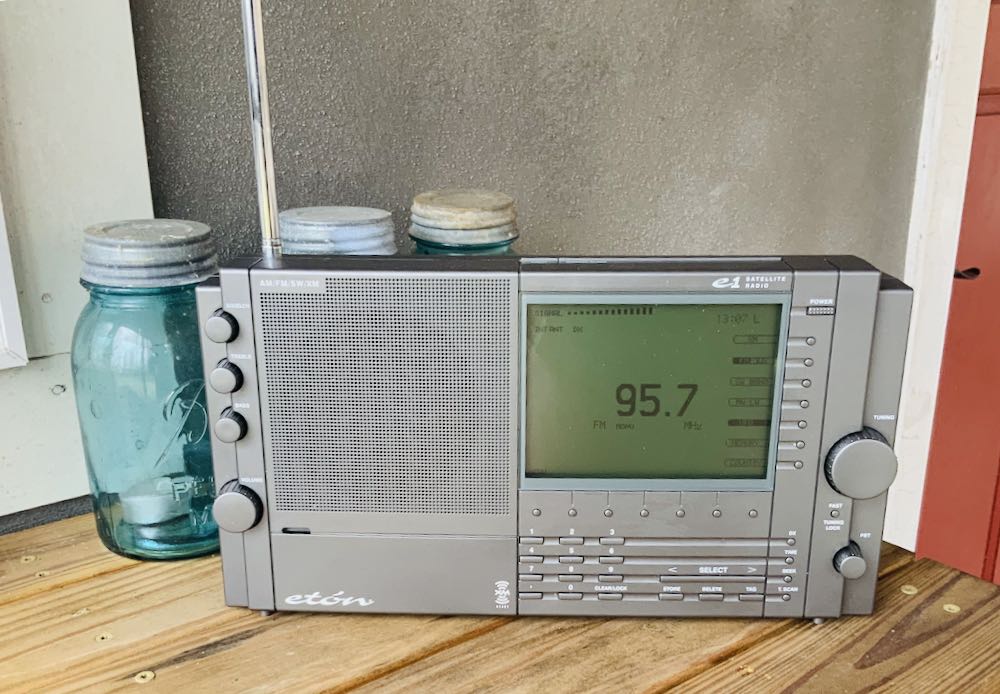
I recently became the owner of an Eton E1 receiver, which I obtained on eBay from the USA.

The receiver is great, everything worked, error-free display. The only problem was that even FM and strong local stations did not play stereo even though stereo reception was set in the menu. The stereo text on the display flashed several times when the stations were not tuned in precisely, but after the stereo tuned, the text went out. I know that stereo reception is not the most important thing for this receiver, but it bothered me that there was a defect at all.

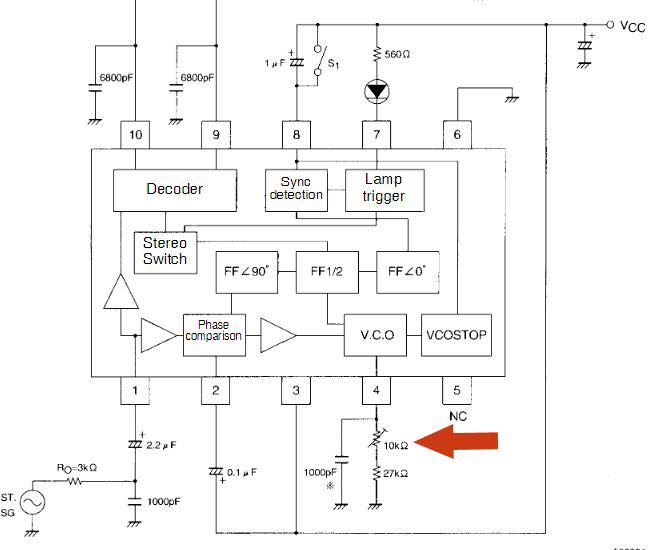
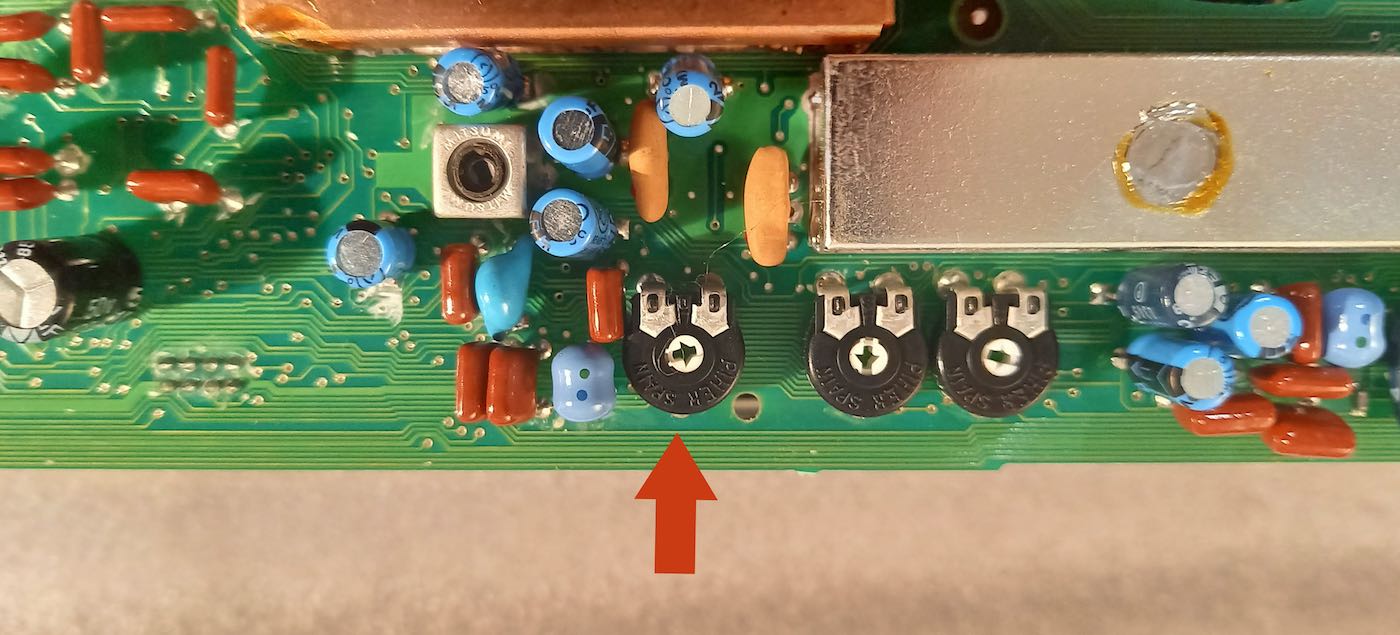
The Sanyo 3335 stereo decoder is used in this radio. The stereo reception switching threshold can be set with a 10kohm potentiometer which is connected to terminal 4 of the integrated circuit:

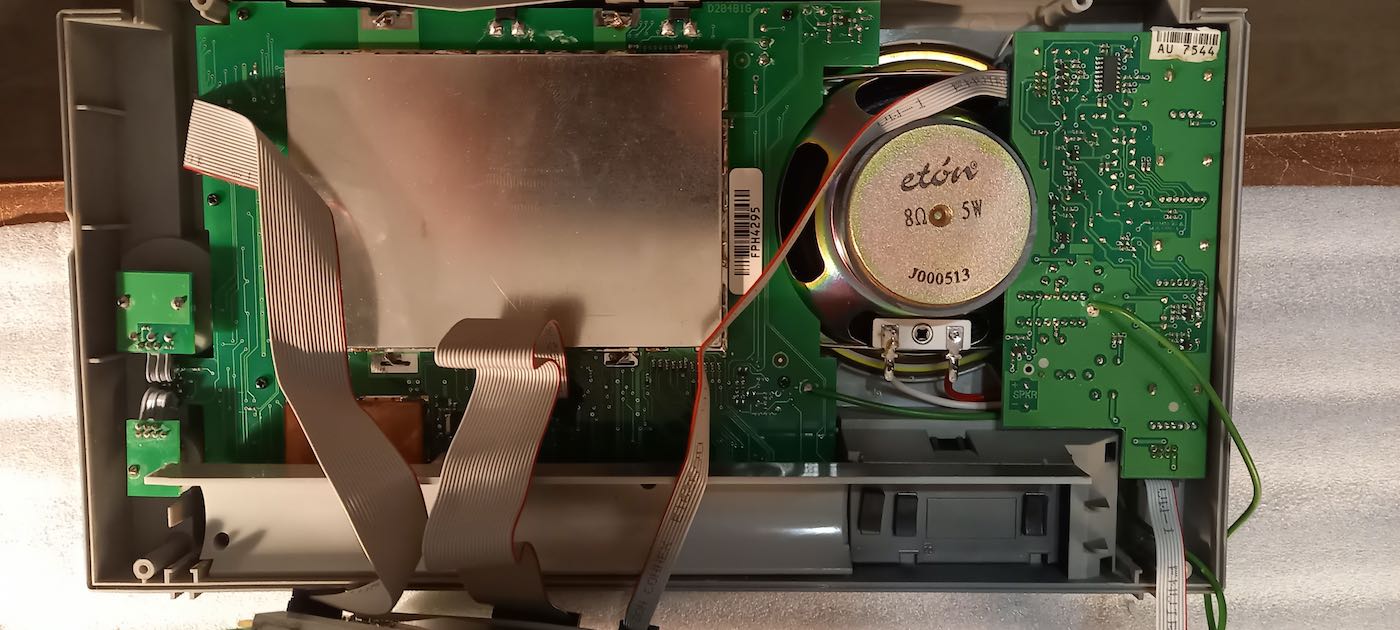
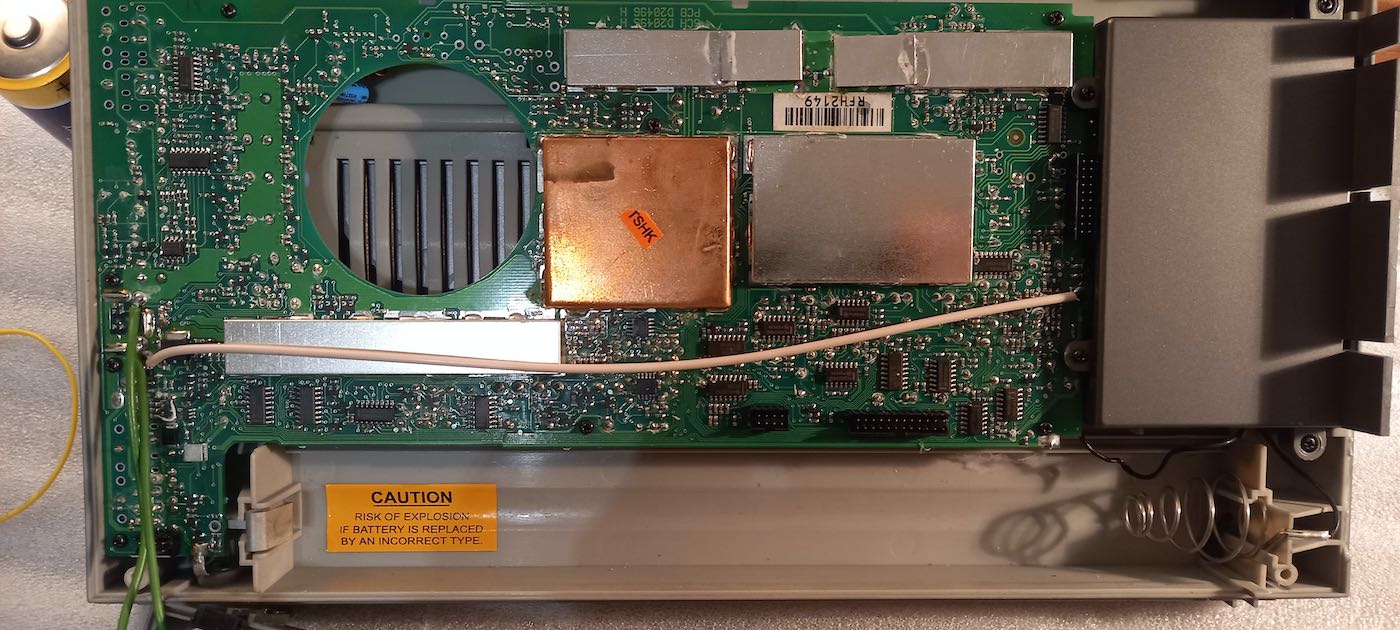
I disassembled the radio by loosening the screws on the back of the radio. The receiver is divided into two parts. I removed the XM module and disconnected the part of the radio with the display from the flat wires on the second printed circuit board of the radio

I then removed the screws on the circuit board located at the back of the radio.

I removed the printed circuit board and found a matching resistor trimmer on the other side of the circuit.

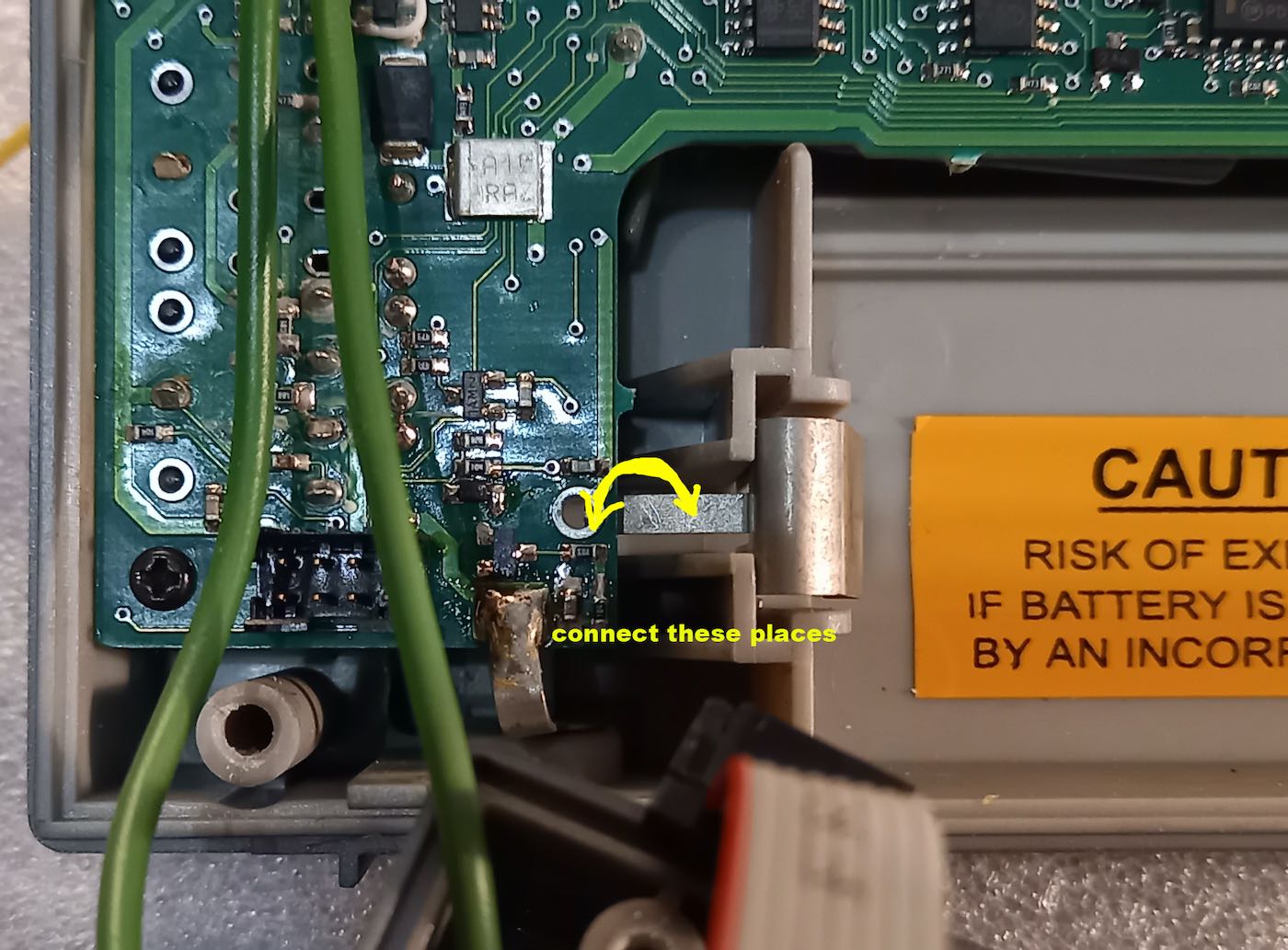
Then I connected these two points with a wire (when running on batteries) so that I could turn on the receiver:

After tuning in to a strong local transmitter, I carefully turned the trimmer until the stereo sign lit up and listening to the headphones made sure the sound matched the stereo. I repeated this at several local stations.

The receiver now plays stereo perfectly and the settings do not affect other parameters of the receiver. After assembling the radio, I was able to enjoy quality stereo reception.

Carlos buys a vintage Wahda transistor radio

Many thanks to SWLing Post contributor, Carlos Latuff, who writes:

Hey Thomas, check this radio set I just bought.

Portable, MW only, working with 4 AA batteries. It’s working perfectly.

This piece was made in Japan, I don’t know the year, but the curious thing is the Arabic name on it.

Maybe a model directed to Middle East markets?

Who knows, your readers may come with some information about this model.

All the best,

Carlos Latuff

What a cool little transistor radio! Thanks for sharing the photos, Carlos.

Post Readers: Please comment if you’re familiar with this particular radio model–or the Wahda brand–and have any insight to share with Carlos.

Guest Post: “Tinkering with History”

Many thanks to SWLing Post contributor, Bob Colegrove, who shares the following guest post:


Tinkering with History

By Bob Colegrove

One of the attractive aspects of radio as a hobby is that it has so many specialties to channel our time.  Just for the sake of classification, I would group these into two categories, listening and tinkering.  I think the meaning of each category is fairly intuitive.  Probably few of us approach our interest in radio in the same way.  Most of us have dabbled in more than one listening or tinkering specialty.  Perhaps we have been drawn to one particular area of interest, or we may have bounced around from one to another over a period of time.  I know the latter has been my case.

Tinkering might start with a simple curiosity about what makes the radio play, or hum, or buzz, and progress to an obsessive, compulsive disorder in making it play, hum or buzz better.  Unfortunately, over the past 30 years or so, the use of proprietary integrated circuits, as well as robotically-installed, surface-mounted components have greatly short-circuited what the average radio tinker can do.  For example, I have noticed a lot more interest in antennas over that period, and I think the reason is simple.  The antenna is one remaining area where a committed tinker can still cobble up a length of wire and supporting structure and draw some satisfaction.  But the complexity and lack of adequate documentation have largely kept newer radio cabinets intact and soldering irons cold.  Bill Halligan knew you were going to tinker with his radios, so he told you how they were put together.  The fun began when you took your radio out of warranty.  If you did get in over your head, there was usually somebody’s cousin not far away who could help you out.  The following is a sample of how one resolute tinker managed to overcome the problem of locked-down radios in the modern age. Continue reading

Guest Post: Comparing the Reuter Pocket and the Icom IC-705 from an SWL’s perspective

Many thanks to SWLing Post contributor, Uli (DK5ZU), who shares the following guest post:


SWL with a Reuter Pocket and the Icom IC-705

by Uli (DK5ZU)

Some time ago I asked how the IC-705 performs on longwave and I got some great feedback. Thanks a lot again. Since the HAM bug bit me again, I wanted to do SWL and HAM Radio portable with one rig. I started with SWL some weeks ago (just before the bug bit). I acquired a second hand Reuter Pocket RDR 51 Version B2. It is a standalone SDR Receiver 0 … 30 MHz / 50 ..71 MHz, and in my B2 version it has also FM (Stereo/RDS) and Digital Audio Broadcasting (DAB). You may find the detailed specs here:
https://www.reuter-elektronik.com/html/pocket.html

The Reuter Pocket could, at one point, be configured as an QRP Transceiver, but it is no longer supported. There is a new RDR 52 small tabletop models, which can be ordered as a transceiver, too. But due to Covid related supply chain problems and price changes for the components, the new model is currently postponed.

The IC-705 is available, though. And for portable HAM operations it is a no brainer; obviously with a high price tag, but comparable with a new Reuter RDR 52 tabletop. And since my budget for the hobby is limited, I thought about funding part of the IC-705 price by selling the Reuter Pocket. But I wanted to do a side-by-side comparison so I ordered the 705 and was able to check them both on one antenna. The goal was to compare their sensitivity and selectivity on the lower bands: BC on AM and HAM bands for SSB. I did not compare CW since I am not a CW operator.

The antenna is a MiniWhip from PA0RDT which works quite well on the lower bands.

This comparison is not at all scientific and reflects just my opinion and what I heard. But anyway, there may be some people out there interested in this. So much for the intro.

Let’s start with my overall findings. Continue reading

Guest Post: Crystal Radios – Construction, Listening, and Contesting

Many thanks to SWLing Post contributor, David Day (N1DAY), for sharing the following guest post:


Crystal Radios – Construction, Listening, and Contesting

By David Day – N1DAY

The date was November 2, 1920 and the world was about to change forever when radio station KDKA out of Pittsburgh PA made its first broadcast of election results from the 1920 presidential election.  For the first time in history people knew who won the election before reading about it the next day in the newspaper.  Radio had arrived!

However, hearing the election results was not as easy as powering up an AM radio receiver because radio electron tubes had only been invented a few years earlier and they were still too expensive for most people to afford in a radio set.  After KDKA’s historic broadcast, large 50,000 watt stations began popping up in all major cities around the world.  Even though a tube-driven radio was not yet commonplace, many people listened to these stations on their crystal radios.  The frenzy around radio in the 1920’s was not unlike the excitement around cell phones and the internet today.  If you didn’t have one, you were simply living in the past.

A family listening to a crystal radio in the 1920’s

Fortunately, in the early 1920’s the crystal radio had been around for a while and it was easy to make or purchase a completed set on a limited budget.  The beauty of the radio was that it was a passive device needing no power source other than the radio station’s broadcast that was received by a good antenna about 50 feet long and 15 or so feet above the ground.  Crystal radios derived their name from use of galena crystals as detectors. Continue reading