Category Archives: Shortwave Radio

A free book (PDF) on sun-earth interaction

Many thanks to SWLing Post contributor, Eric (WD8RIF), who writes:

This came in the most recent ARRL Contest newsletter:

The Sun, The Earth, and Near-Earth Space: A Guide to the Sun-Earth System by J. A. Eddy is a readable and accessible textbook that explains the dynamics of the Sun and its interaction with the Earth’s ionosphere. It’s available as a free download, courtesy of NASA and the International Living with a Star Program. Anyone using the ionosphere as a medium for radio wave transmission and wants to better understand propagation should find this book of interest. (Ward, N0AX)

Thank you for the stellar tip, Eric!

FCC Audio Programming Inquiry: Implications for HF Broadcasting

Many thanks to Bennett Z. Kobb, Kim Andrew Elliott, and Christopher Rumbaugh for authoring “Comments of the High Frequency Parties” that is now filed with the FCC.

Update: please also check out this FAQ.

Here’s the introduction:

The Public Notice in MB Docket 18-227 requests comment on “whether laws, regulations,
regulatory practices or demonstrated marketplace practices pose a barrier to competitive
entry into the marketplace for the delivery of audio programming … [and] concerning the
extent to which any such laws, regulations or marketplace practices affect entry barriers for
entrepreneurs and other small businesses in the marketplace for the delivery of audio
programming.”

The Commission’s Rules do pose barriers to entry and unnecessarily restrict the licensing
and delivery of programming by International Broadcast Stations.

These rules originated in a period when the government utilized or countenanced privately owned, high-frequency (HF, 3-30 MHz) broadcasters as voices against foreign adversaries.
The rules prohibit stations directed primarily to U.S. audiences. They impose detailed
language, announcement, advertising and record keeping practices, require monitoring of
foreign market particulars, and mandate a minimum DSB transmission power level that is
excessive for domestic service and textual and image content.

These and certain other obsolete restrictions are overdue for review and revision or deletion.[…]

Click here to download and read the full document as a PDF.

Click here to check out the FAQ regarding the HF Broadcasting Filing.

Radio in the field: SWLing on the coast of the St. Lawrence river

Yesterday, the weather was gorgeous here in Québec, thus a prime opportunity to find a beach, start a new book and, of course, play radio!

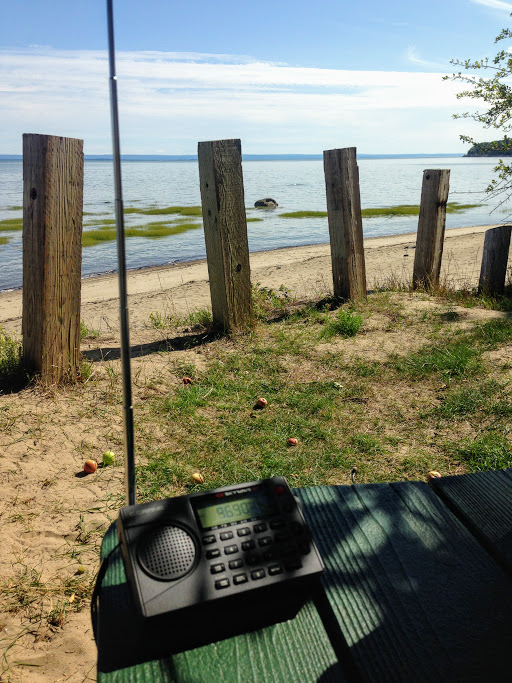
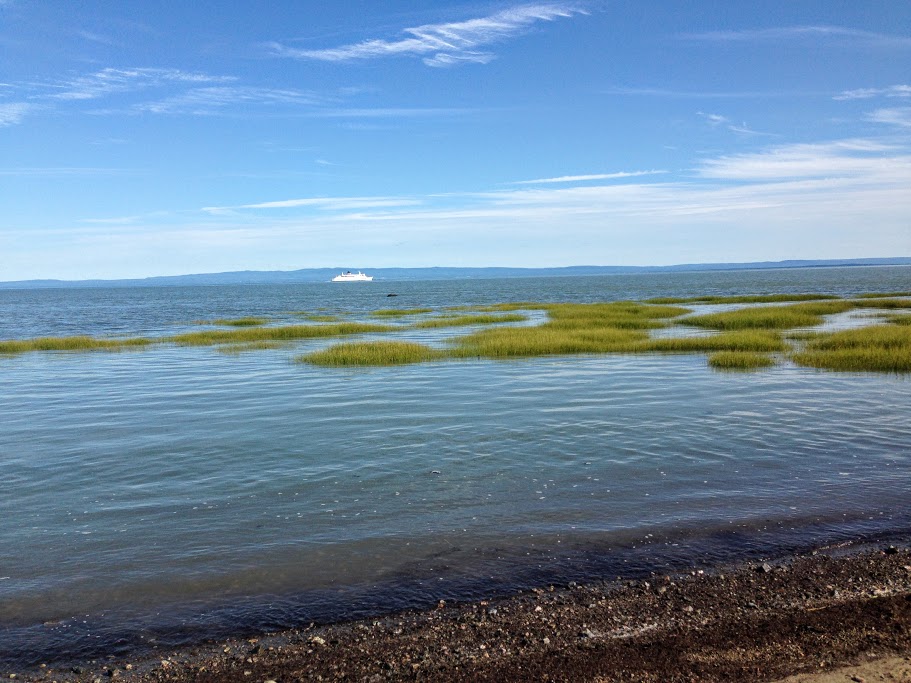
I found a fantastic spot on the north bank of the St. Lawrence river near Baie-St-Paul, Québec. There were only a few folks at the beach, so it was all very peaceful.

I found a picnic table perched on the edge of the beach shaded by an apple tree–a perfect spot to relax, play radio and start a new book: Dark Voyage by Alan Furst.

I brought two portables: the C. Crane CC Skywave SSB and the recently acquired Panasonic RF-B65.

I had not checked to see if propagation was good, but tuning to WWV on 10 MHz and 15 MHz confirmed that signals were travelling. In fact, as I started tuning around–first with the CC Skywave SSB, then with the Panasonic RF-B65–I discovered some of the best propagation I’ve experienced in ages!

I did a relatively quick scan covering the 31 through 19 meter bands. Some signals were absolutely booming in.

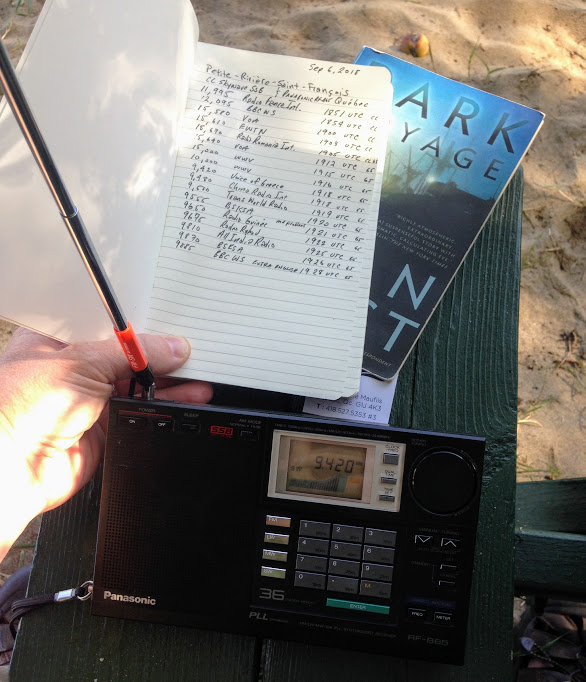
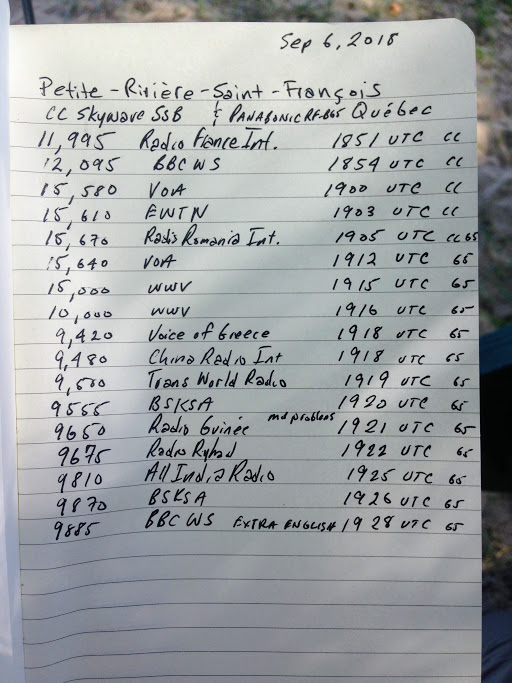
I jotted down some of the broadcast details on a make-shift log and recorded a few videos.

Note that after making the first video, I discovered I had limited space on my phone, so most of the clips are quite short:

The Voice of America

Click here to view on YouTube.

Radio France International

Click here to view on YouTube.

Radio Guinée

Click here to view on YouTube.

BBC World Service Extra English

Click here to view on YouTube.

Here are the stations I logged in the clear:

All in all it was a brilliant afternoon and the short band scan reminded me that there is still so much content to be found on the shortwaves.

You just need a little propagation, and some time to listen and explore!

Post readers: Have you snagged any elusive DX recently?  Please comment!

Do you enjoy the SWLing Post?

Please consider supporting us via Patreon or our Coffee Fund!

Your support makes articles like this one possible. Thank you!

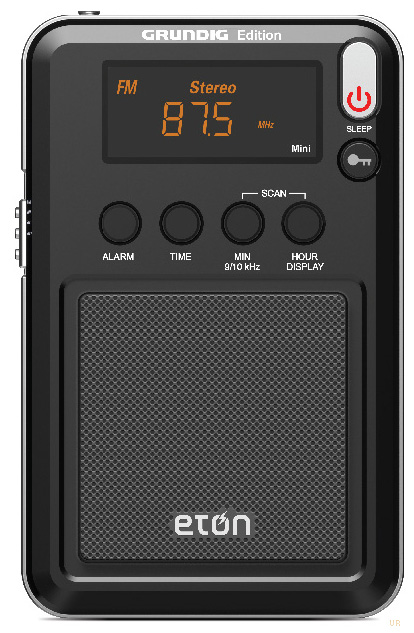
Radio Deal: The Grundig/Eton Mini shortwave portable

Many thanks to SWLing Post contributor, Larry, who notes that the price of the Grundig Mini has just dropped to $24.99 shipped on Amazon.com. Larry notes, “I believe this is the lowest price I’ve ever seen for the Mini which is a decent little pocket radio.”

I should add the standard Amazon disclaimer noting that they change price without notice.

Click here to purchase through Amazon.com (affiliate link).

Jackie Gleason loved radio

Jackie Gleason with Audrey Meadows (The Honeymooners)

Many thanks to SWLing Post contributor, Ron, who notes that, “Jackie Gleason was a radio nut during his last years.” He shares the following quote from Gleason’s stepson [source]:

“The majority of his time at home was spent quietly,” he said. “He was a prolific reader. Constantly reading. There was a store called Bookland… Every week or two the owners would come by and drop off a box of books. Jackie just consumed books. He read everything but he was most intrigued with non-fiction. He felt that his life as an actor, as a performer, was all fiction.

“He also listened to the radio. He had a room upstairs that we called the radio room. There were dozens of radios. He listened to airplanes flying over at the airport, long distance radio operators from around the world. He had the passion and curiosity of a child with the experiences of an adult.”

Thanks for sharing that, Ron! I’ve always liked Jackie Gleason and especially those episodes of The Honeymooners.

Shortwave antenna options for apartments, flats and condos

A balcony is your friend, if you have one. Otherwise, we need to use other antenna tactics!

Many thanks to SWLing Post contributor, Tim, who writes:

I am a regular subscriber here, but until now have not formally commented. I’ve been an avid SWL since 1977.

I am intrigued by your in-depth article on understanding and setting up SDR’s. But, what about an antenna? How well will these radios work for someone who is an apartment dweller?

I live here in South Florida and am unable to erect anything outdoors. I do get pretty good reception on my Grundig Satellit 800 and Tecsun PL-880. For these, I use either an indoor slinky antenna I bought on E-Bay; or an active indoor tunable loop antenna. This is one of the models past reviewed by you. It is Australian made, and covers 6-18 MHz. Please comment if you can on antenna usage.

Thank You very much!

First of all, I’m glad you enjoy the SWLing Post, Tim!

Great question: no doubt you understand that the antenna is the most important part of your radio equation!

It sounds like you’re currently using a slinky antenna and a portable PK Loop HF antenna.
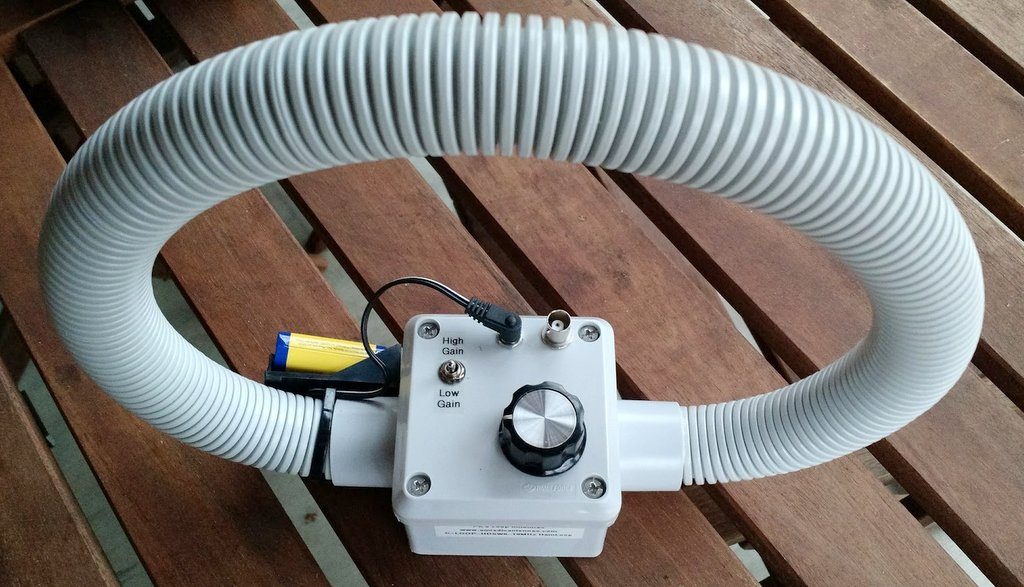
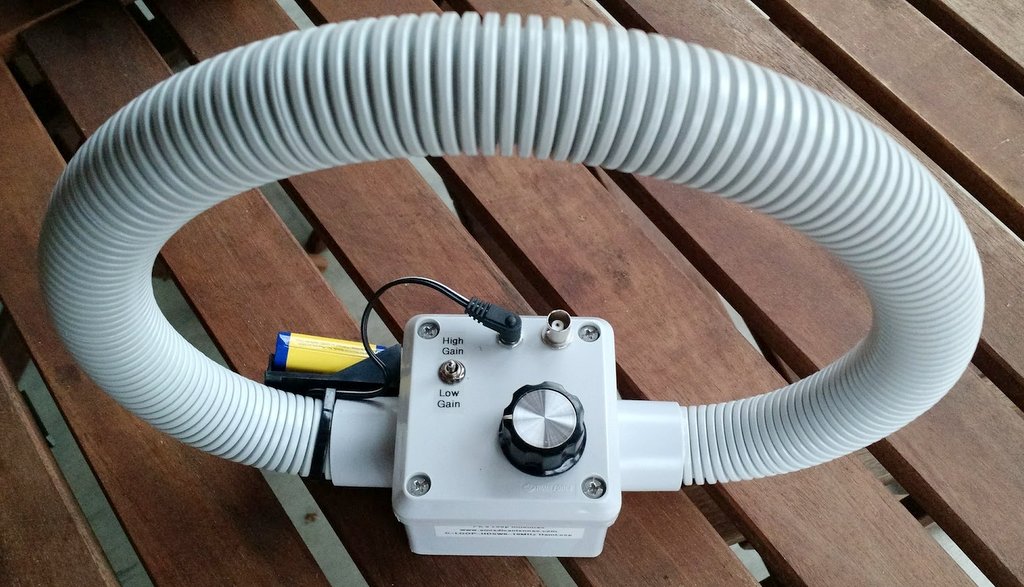
The PK Loop

You’re on the right track with a PK Loop if you live in an apartment and have no way of putting an antenna outdoors. Being a small magnetic loop antenna, the PK Loop should help mitigate a bit of the noise in your apartment building.

What I love about the PK Loop is it’s small enough that you can re-position and rotate it to tweak noise rejection and find the quietest spot in your listening room. When I travel by car and even by air, the PK Loop is a welcome companion.

Before we talk about investing in a better indoor antenna, let’s make sure we cover a more affordable option first…

External wire antennas
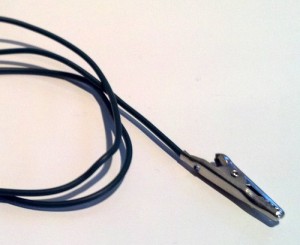
If you have operable windows in your apartment, even fishing a thin-gauged wire out of your window–allowing it to simply hang along the outside of the building–could improve your reception significantly. Of course, if there’s a source of noise outside of your apartment it might only make things worse, but this is at least an inexpensive experiment and the results might impress you.

I actually tested this theory once and published the following results in a previous post about the PK Loop:

I had a fantastic opportunity to evaluate how well the PK Loop would perform in a typical hotel room. My buddies Eric (WD8RIF), Miles (KD8KNC) and I stayed overnight in a hotel on Wright-Patterson Air Force Base during our mini National Parks On The Air DXpedition.

The hotel room was indeed dense with RFI.
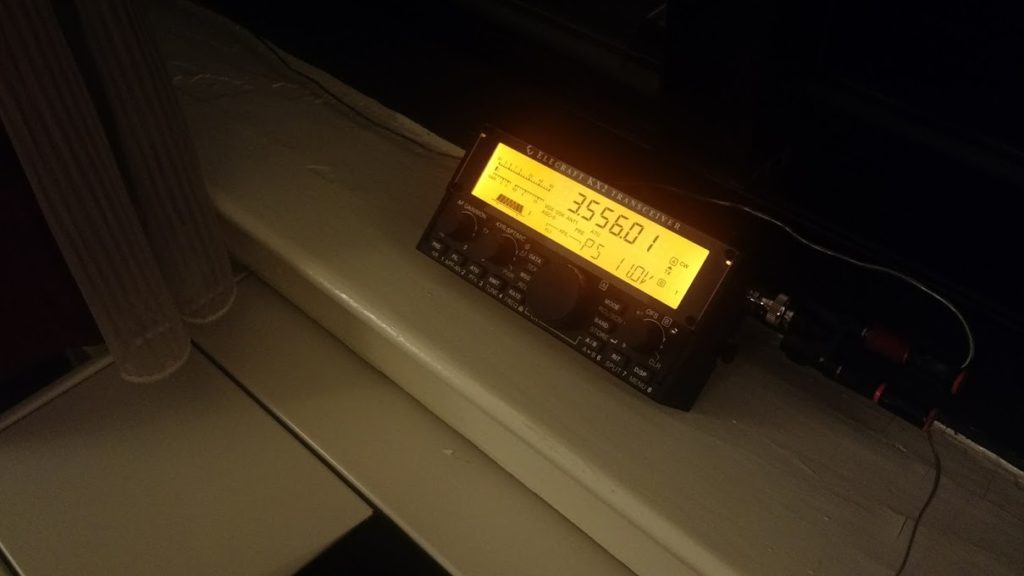
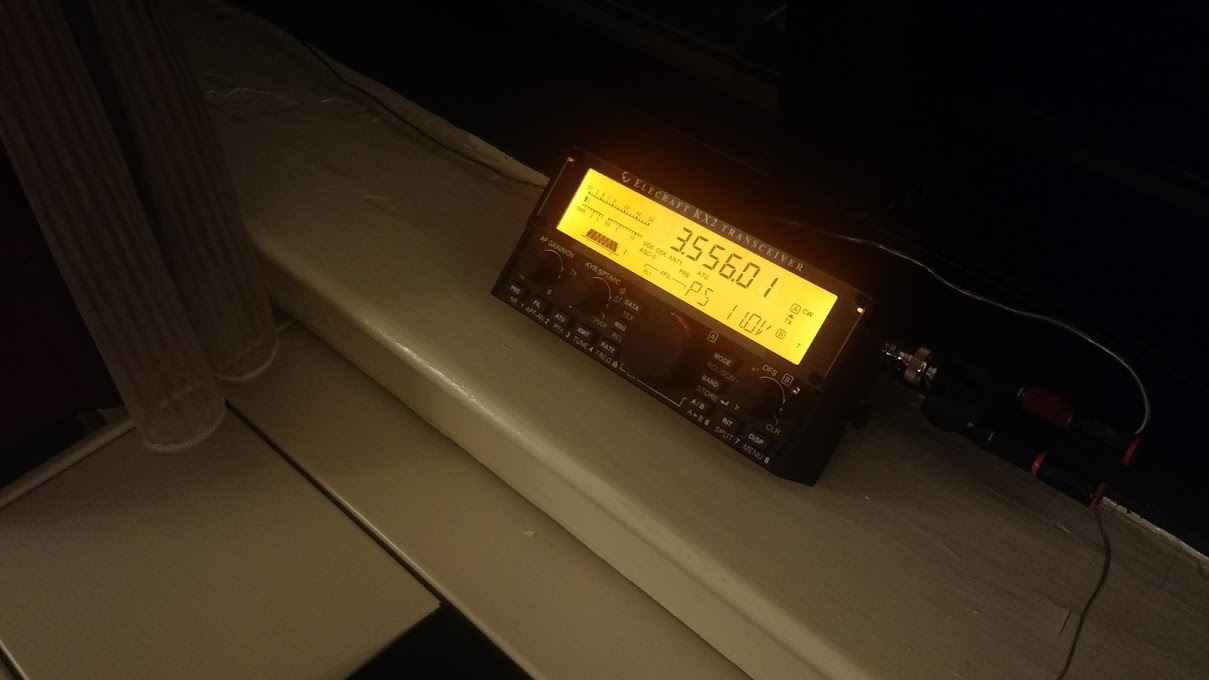
We hooked my Electraft KX2 to both the PK Loop and to a simple random wire antenna.

Without a doubt, the PK Loop was much better at mitigating radio noise than the wire antenna we hung on the inside of the hotel window.

Unlike most modern hotels, however, this one actually had operable windows, so we tossed the random wire out the window and made another comparison. In this case, the external wire antenna consistently outperformed the PK Loop, no doubt because it had the advantage of being outside the radio noise cloud within the hotel’s walls. It goes to show that outdoor antennas–even if simply hanging from a room window–will almost always outperform comparable indoor antennas.

So, if you have a way to dangle a wire out one of your window, give this a try.

How long should the wire be? I suppose it depends on how much vertical space you have below your window. For starters, I’d try to suspend at least eight feet of wire outside. If I had the vertical space, I’d try as much as 31 feet.

Important: First you must check to make sure your wire couldn’t possibly touch electrical lines. Never lower a wire outdoors if the wind could blow it into an electric service entry point, power line or any other type of line or cable. You should do a thorough inspection of the site first.

With that said, keep in mind: Stealth is key!

Photo by jay blacks on Unsplash

Can you spot the wire antenna in this photo? Of course not.

Use a thin wire with a black or dark jacket/insulation. Only lower it when using it–don’t leave it out all day long. Check to make sure your antenna isn’t going to interfere with your neighbors below (like landing in their outdoor grill or flower pots!). One strong complaint from neighbors could shut down your operation permanently.

Now back to loops…

If you don’t have operable windows or a way to deploy a wire antenna outside–or you’ve tried a wire antenna and results were unsatisfactory–then you will be forced to stick with indoor antennas which almost always leads you down the path of larger amplified wideband magnetic loop antennas.

This is a topic I covered extensively earlier this year.

Please read the post: Indoor shortwave antenna options to pair with a new SDR.

Indoor shortwave antenna options to pair with a new SDR

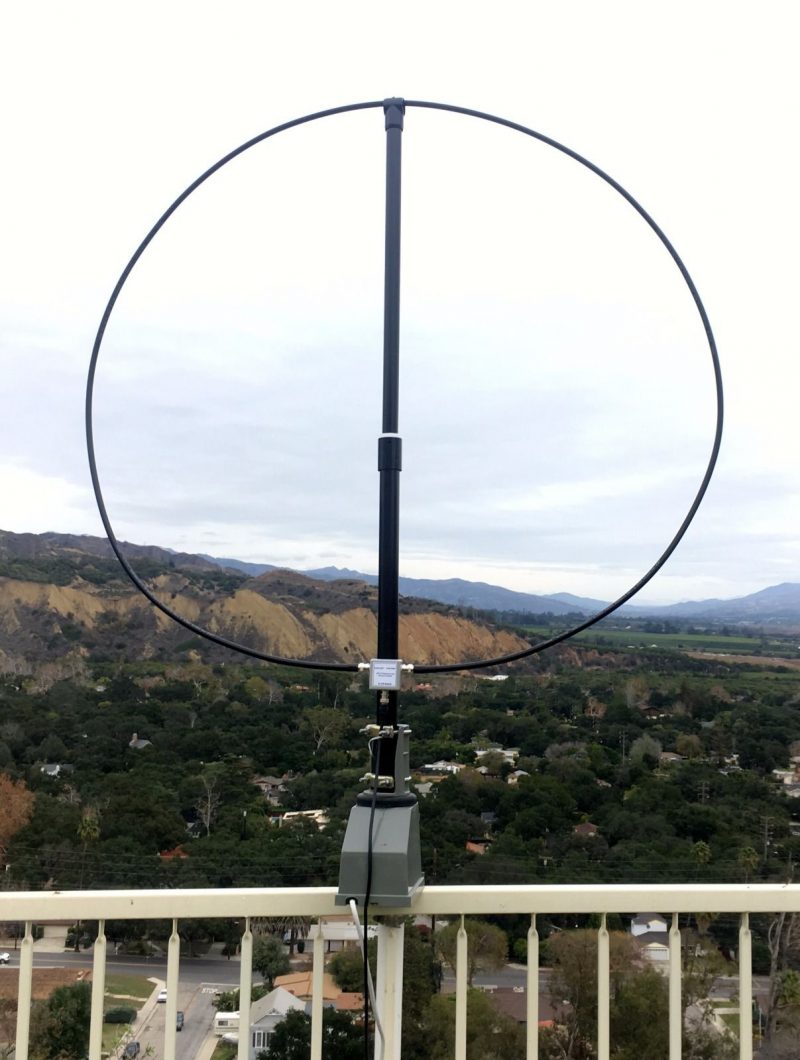
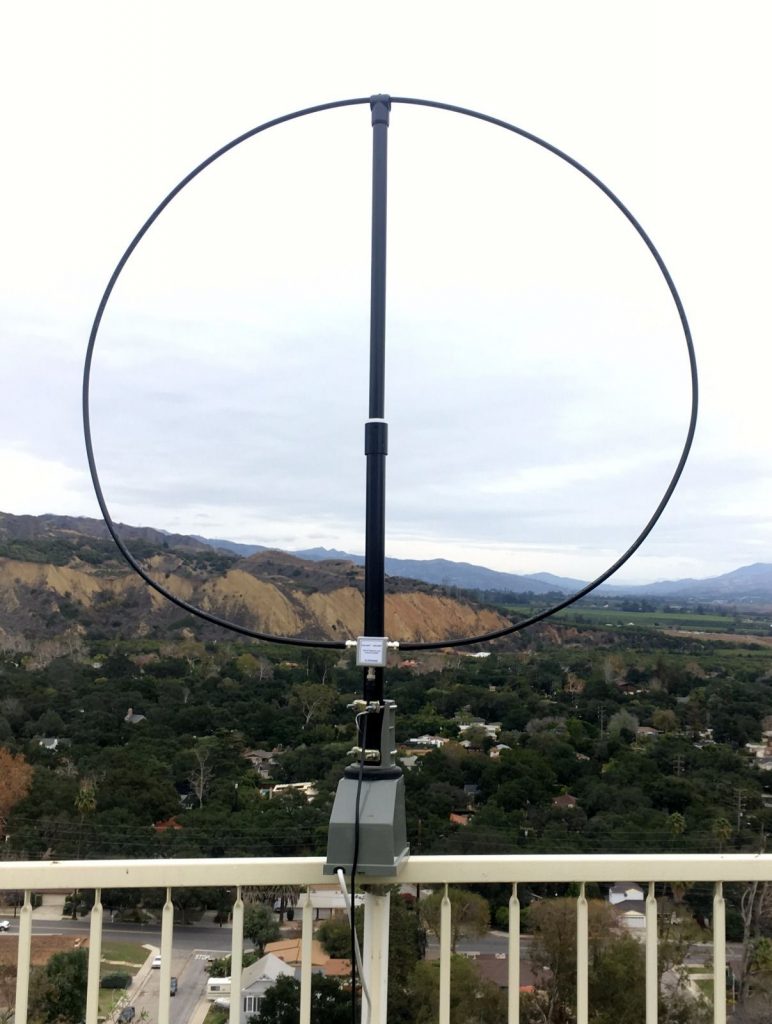
Keep in mind that if you’re fortunate enough to have a balcony, this is where you should mount your loop antenna. Check out this post by SWLing Post contributor, Klaus Boecker.
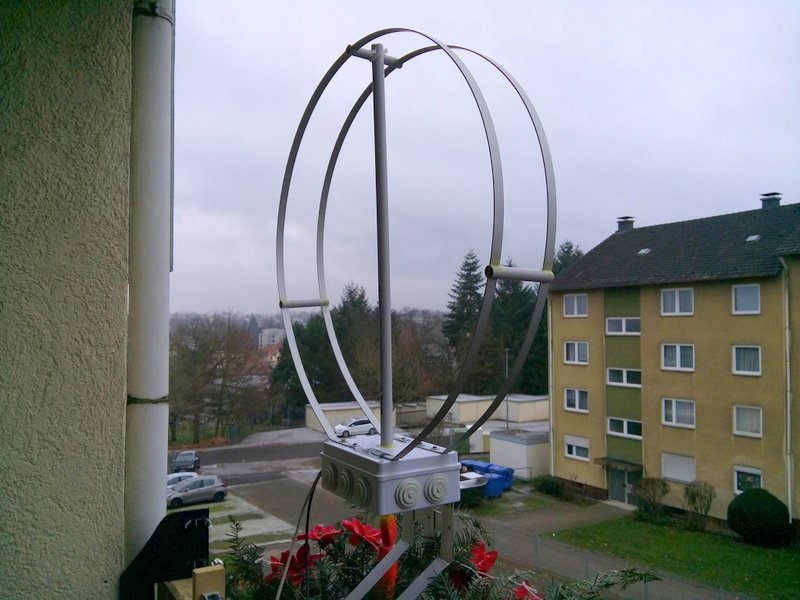
Klaus Boecker’s homebrew magnetic loop antenna.

Note that there are a number of sub $100 indoor amplified antennas on the market, but I would avoid using them–click here to read my thoughts about these.

In addition, read through this post which includes practical low-to-no-cost tips and best practices for shortwave listening at home and on the go.

Frugal SWLing: Investing little, but getting a lot out of your radio

I’m plotting to write a more in-depth article about antennas in the coming months, but it will focus on external antennas and methods of mounting them. When you have no means of mounting an antenna outdoors, in my opinion, your best options are the ones mentioned above.

Post readers: Have I overlooked an indoor antenna option? Please comment if you have experience with indoor antennas!

Do you enjoy the SWLing Post?

Please consider supporting us via Patreon or our Coffee Fund!

Your support makes articles like this one possible. Thank you!

Today: W9IMS last special event station of 2018

Many thanks to SWLing Post contributor, Brian D. Smith (W9IND), who shares the following information about SWL-friendly awards offered by his amateur radio club to commemorate the three major auto races at the Indianapolis Motor Speedway. Brian writes:

W9IMS: Last special event station of 2018

Amateur radio station W9IMS will conclude its special event season during the coming week by commemorating the Brickyard 400 NASCAR race at the Indianapolis Motor Speedway. The W9IMS crew will be working other amateurs around the world, but SWLs are welcome to tune in and qualify for the same QSL cards and certificate that are available to hams.

For those who logged the station during the IndyCar Grand Prix and the Indianapolis 500, this is your chance to complete the clean sweep and earn the colorful 2018 certificate. Even if you missed one or both of the previous races, you’re still eligible for a Brickyard 400 QSL card, which is redesigned every year.

A previous SWLing post highlighted the 2018 W9IMS events.

Operating SSB on 20 and 40 meters (as close as possible to 7.245 and 14.245 MHz), W9IMS will take to the airwaves at various times between 0400 UTC Monday, Sept. 3, and 0400 Monday, Sept. 9. One of the best times to look for the station is during the evening from 2200 to 0200 (6 to 10 p.m. Indianapolis time). W9IMS also has a digital presence, periodically transmitting in FT8 mode.

To find out if we’re on the air at any given time, go to DX Summit – http://dxsummit.fi/#/ – and type “W9IMS” in the search box. For more information about W9IMS and the Brickyard special event, including scheduled operators, go to www.w9ims.org. Just remember that ops can get on the air at any time between now and Sunday night!