Shortwave listening and everything radio including reviews, broadcasting, ham radio, field operation, DXing, maker kits, travel, emergency gear, events, and more
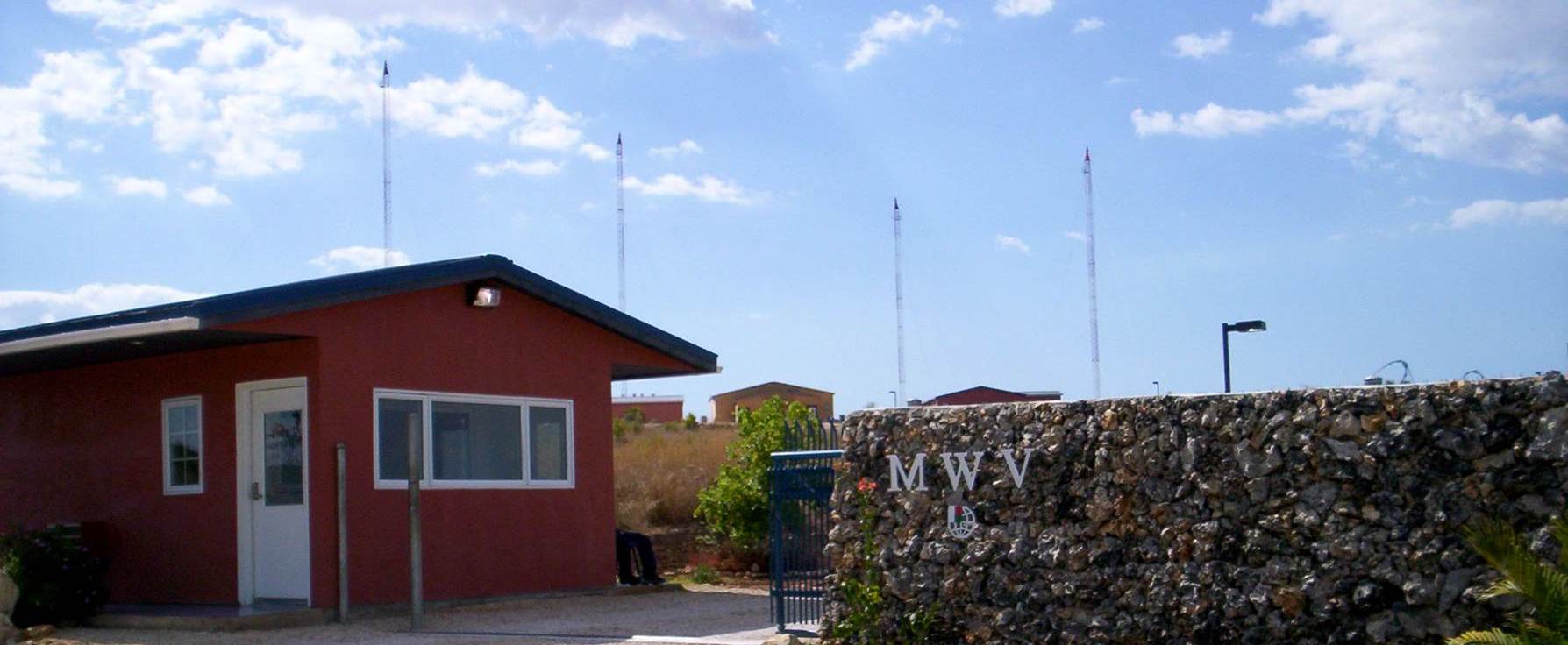
World Christian Broadcasting launched its second shortwave station, Madagascar World Voice, on Easter Sunday in late March.
The nonprofit organization is based near Nashville, Tenn. Station KNLS launched in 1983.
President/CEO Charles H. Caudill announced the launch. “More than 10 years of planning and work have gone into making Madagascar World Voice a reality,” he said in a statement.
[…]WCB said the new Madagascar World Voice airs 13 hours daily in Arabic, African English, International English, Mandarin Chinese, Russian and Spanish. The signals will reach Africa and the Middle East, and most of Europe and South America.[…]
Many thanks to SWLing Post reader, Mike H, who shares the following Summer A-16 schedule for Madagascar World Voice:
MADAGASCAR   Summer A-16 of WWCB Madagascar World Voice
0100-0200 on  9665 MWV 100 kW / 040 deg to SoAs English
0200-0300 on  6190 MWV 100 kW / 250 deg to SoAm Spanish
0300-0400 on  6150 MWV 100 kW / 265 deg to SoAm Spanish
0400-0500 on  9480 MWV 100 kW / 295 deg to CeAf English
1800-1900 on  9570 MWV 100 kW / 355 deg to EaEu Russian
1800-1900 on 17640 MWV 100 kW / 310 deg to CeAf English
1900-2000 on 11945 MWV 100 kW / 355 deg to N/ME Arabic
1900-2000 on 13710 MWV 100 kW / 340 deg to EaAf Arabic
2100-2200 on 11615 MWV 100 kW / 325 deg to WeEu Chinese
2200-2300 on  9455 MWV 100 kW / 055 deg to EaAs Chinese
2200-2300 on 11770 MWV 100 kW / 325 deg to NoAf Arabic
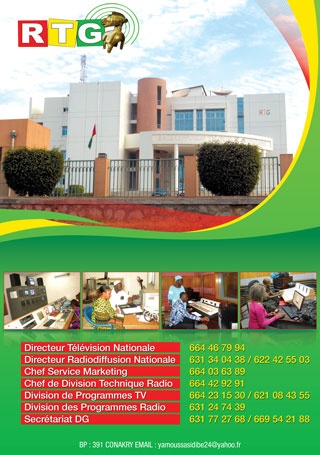
As reported by many DXers worldwide, Radio Guinée, from the Republic of Guinea in west Africa has returned to shortwave on 9650 kHz. Check between 0000 and 0300 UTC as well as around 0600 UTC. Programming is in French with lots of African music. Here is an article from March about the state of radio and TV transmitters in the Republic of Guinea. Perhaps this is what spurred them to reactivate the shortwave transmission. The article is in French.
Looks like a beautiful DX location you’ve got there, Paul. You’ve obviously found ways to mitigate receiver overload from the broadcast station with the number of loggings you’ve been posting as of late.
Indeed, Paul recently forwarded the following sample of logs from this very DXing spot. Paul writes:
Unless otherwise noted, all loggings were from a Tecsun PL-880 with an 80 foot long wire 5 feet up in a tree. My location is Galena, Alaska which is a village of 500 people about 300 miles east of Nome, Alaska and 300 miles west of Fairbanks, Alaska.
Comments questions or thoughts always welcome!
I was able to log Channel Africa broadcasting in French on 15235 kHz, two mornings last week.
This recording was made on Friday April 8, 2015 at 8:45 AM Alaska Daylight Time/1645UTC. I would rate the signal about 6 1/2 out of 10 with good audio, some light fading and no interference.
This recording was made on Wednesday April 6, 2015 at 8:37 AM Alaska Daylight Time/1637UTC. The signal was about a 6 out of 10 with moderate fading, a little more then the recording made on April 8th.
This recording was made on Saturday April 9, 2015 at 10:36 AM Alaska Daylight Time/1836UTC. I would rate the signal about 7 1/2 to 8 out of 10 with good audio, some light fading and no interference.
This recording was made on Saturday April 9, 2015 at 10:36 AM Alaska Daylight Time/1836UTC. I would rate the signal about 4 1/2 out of 10 with ok audio, some light to moderate fading and some interference.
This recording was made on Saturday April 9, 2015 at 9:00AM Alaska Daylight Time/1700UTC. I would rate the signal about 4 out of 10 with fair audio, some light to moderate fading and little interference.
This recording was made on Saturday April 10 , 2015 at 1:29PM Alaska Daylight Time/2129UTC. I would rate the signal about 6 out of 10 with GOOD audio, some light to moderate fading and no interference.
Note: This was by FAR the best reception I’ve ever had of AIR. Their audio is usually pretty piss poor with poor quality and low modulation. Plus, their signal just isn’t that good usually.
I have also logged Voice Of Korea on 2850, 3320, 6100, 6400, 12015, 7220, 11910, 11935, 11735, 15105, 15180, 13760, 13650, 7580, 9650, 9875, 9445, 9665, 9425, 6170 and 3250 kHz.
Radio Algerienne Holy Quran and Radio Saudi are fairly regular visitors here and at times, pretty strong.
6160 kHz via Vancouver is heard several times a week…sometimes just barely, and other times, like a few days ago, nearly like a local.
The upper bands, 15 and 17 MHz seem to do real well here, especially by day, even smack in the middle of the day. I’ve heard RFI and DW via Issoudun right around lunch time in the 15 MHz area of the band.
I get Zanzibar on 11735 kHz from time to time…usually at least at fair levels.
CFRX 6070 is heard just about nightly, sometimes poor and barely audible but many times at least poor to fair and listenable. Now and then it’s pretty strong and listenable.
That is an impressive number of stations you’ve logged. It appears one of your easiest catches is Voice of Korea–I’m not surprised since you’re certainly within their broadcast footprint.
I will be on WRMI, 7570 kHz from 0400-0600UTC Saturday June 2nd, Which is 12 midnight to 2 AM Eastern/9 PM to 11pm Pacific on Friday June 1st.
More oldies and rock n roll music with some country thrown in. I’m working on a CONTEST with some cool radio prizes and even bigger…. I am ironing out the technical details and going to try and do the 2 hot show live from my studio in Galena, Alaska.
My target audience this time with be the West Coast of the US and Canada. I expected the Midwestern US to get a good signal from the 315 degree beam towards Vancouver, Canada as it has to pass over the Midwest to get to the West Coast.
Contest details and QSL information to be released before the show!
I’ll plan to re-post this announcement, with any updates, closer to the broadcast date of June 2, 2016.
Thanks again, Paul, for sharing some of your radio world!
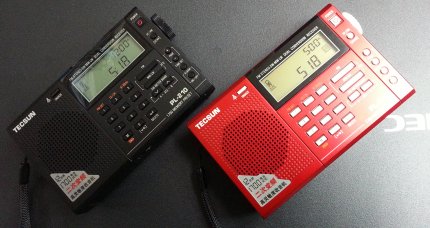
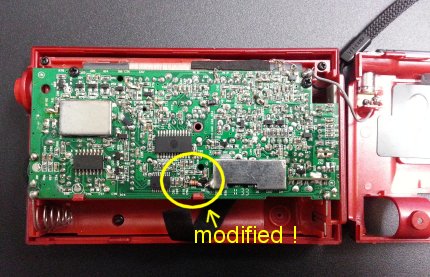
Thank you, Mini! I don’t have the PL-210, but if I did I would certainly disable the soft mute as I find it very distracting during routine band scans.
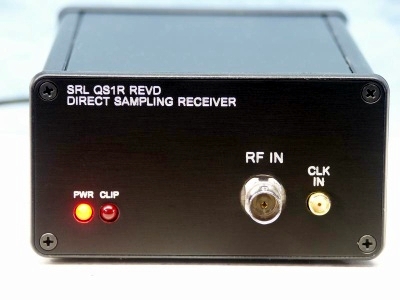
Many thanks to SWLing Post contributor, Ken McKenzie, who noticed the following message from Phil Covington (of Software Radio Laboratory LLC) on the QS1R Yahoo group:
I am working on a replacement for the QS1R that will be less expensive, yet use updated components. I am hoping to have them in production by the end of March.
Ken noticed that the message was originally dated about one month ago, so I’ll follow-up with Phil and see how much progress has been made. The QS1R was a well-respected SDR that had been on the market for several years. It would be great to see an updated version on the market.
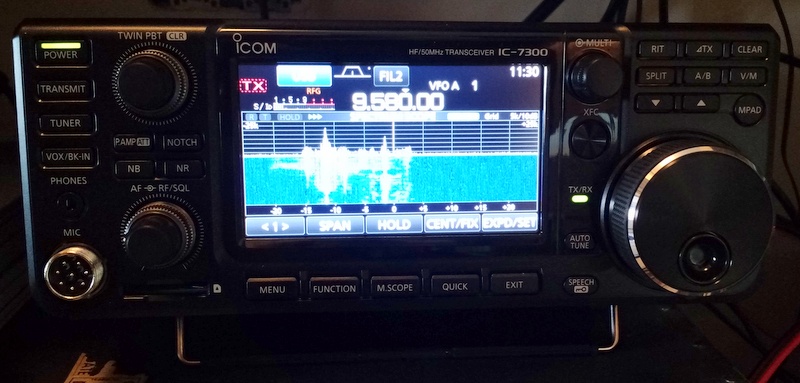
Last night, a good friend handed over his brand-spanking-new IC-7300 and is allowing me to evaluate it over the next week or so.
The IC-7300 is Icom’s first “entry level” RF, Direct Sampling System HF transceiver.
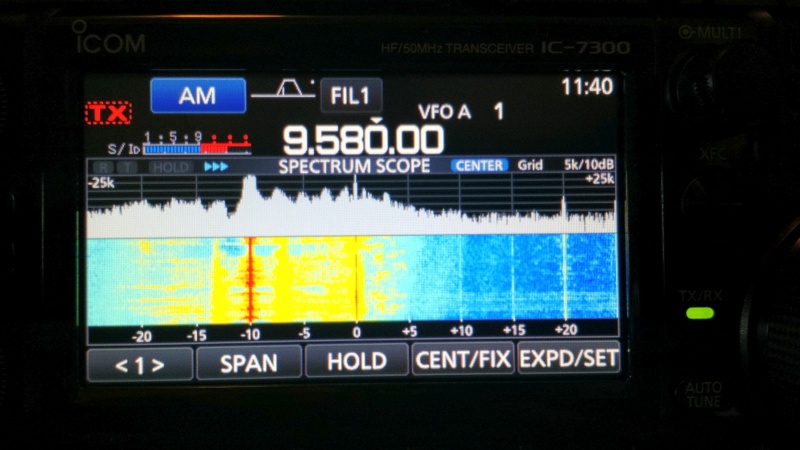
I’ve only had the IC-7300 on the air for a few minutes, so can’t comment about performance. I can say that it has one of the most intuitive interfaces I’ve seen on a transceiver with so many functions. I also love the spectrum display–small, but large enough to see all of the pertinent information:
It’s a slick machine, indeed!
Time permitting, I plan to post a few audio clips and get reader reactions much like I did for in the portable shoot-out.
I’ll compare the IC-7300 to my Elecraft KX3 and a few SDRs as well. Of course, I’m evaluating this during one of the busiest times in my life, so we’ll see how quickly I progress–!
Many thanks to UNT Archivist, Maristella Feustle, who shares the following set of recordings she recently published in the UNT Digital Library Willis Conover collection.
The description reads:
“A broadcast of Music USA transmitted by station WLWO in Cincinnati, Ohio, and recorded off of shortwave radio in Lagos, Nigeria. It was sent to the Voice of America to document the quality of radio reception in that area. As a live broadcast, the recording also includes news breaks and station identification.”
I should add that you might also hear ambient sounds from Lagos if you listen carefully! Click on the links below to listen to the recording sets via the UNT Digital Library: