Short Wave West Coast Pale Ale: the perfect “tuning oil”

Short-Wave-Ale-Colin

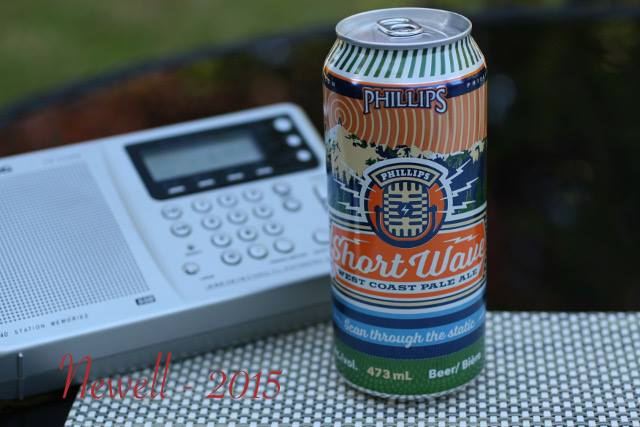
Many thanks to Colin Newell over at DXer.ca for apprising me of a new (retro) craft brew called “Short Wave.” Colin took the above photo last week featuring the venerable Grundig YB400PE and a can of Short Wave pale ale. What a combo!

Phillips-Shortwave-Beer2Phillips Brewing Company describes Short Wave Ale on their website:

“Short Wave is a brand new pale ale where a medium malt body is electrified with a healthy dose of bright American hops until sweetness and bitterness are dialed to balance. Both of these pocket-sized cans are packing a full-flavoured punch, making them the perfect partner for wherever your next adventure may take you!”

Perhaps the perfect “tuning oil” for your next Canadian DXpedition?

Shortly after Colin posted this message, I received a note from SWLing Post reader, Bill (KD5XN) who passed along this news item about the new brew.

Those of you who live in British Columbia, Canada, are in luck: Short Wave pale ale is brewed in Victoria, BC. If you live in northwest Washington state, I think it may be worth making the pilgrimage across the border for this brew! Short Wave ale aside, BC is a remarkably beautiful province.

But wherever you live or travel, cheers, SWLers~!

Shortwave Radio Recordings: Voice of Korea

North-Korea-Propaganda

Many thanks to Frank, a contributor at the Shortwave Radio Audio Archive, for this recording of the Voice of Korea’s English language service.

Frank recorded VOK from his home in Europe on June 10, 2015 on 13760 kHz, starting at 21:00 UTC, using a Kenwood R-5000 receiver and a Wellbrook ALA 1530+ antenna.

Click here to download the recording as an MP3, or simply listen via the embedded player below:

Remember, you can subscribe and download the Shortwave Radio Audio Archive collection (free!) as a podcast via iTunes or the SWAA RSS feed.

Richard’s search to find the best SWLing spot on campus

Richard-UNB

SWLing Post contributor, Richard Langley, has been seeking the perfect spot on the campus of the University of New Brunswick (UNB) to listen to shortwave. He recently shared the following:

Here’s a link to a brief video of my recording of last weekend’s VOA Radiogram “in the field” (a UNB parking lot):

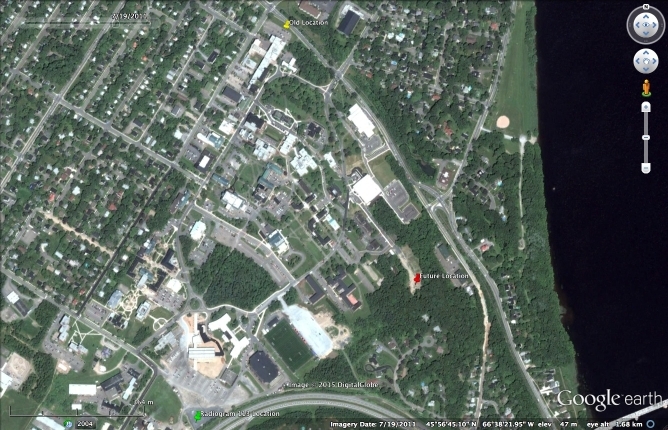
Richard goes on to say that he’s found an even better location:

receiver_locations_smaller (1)

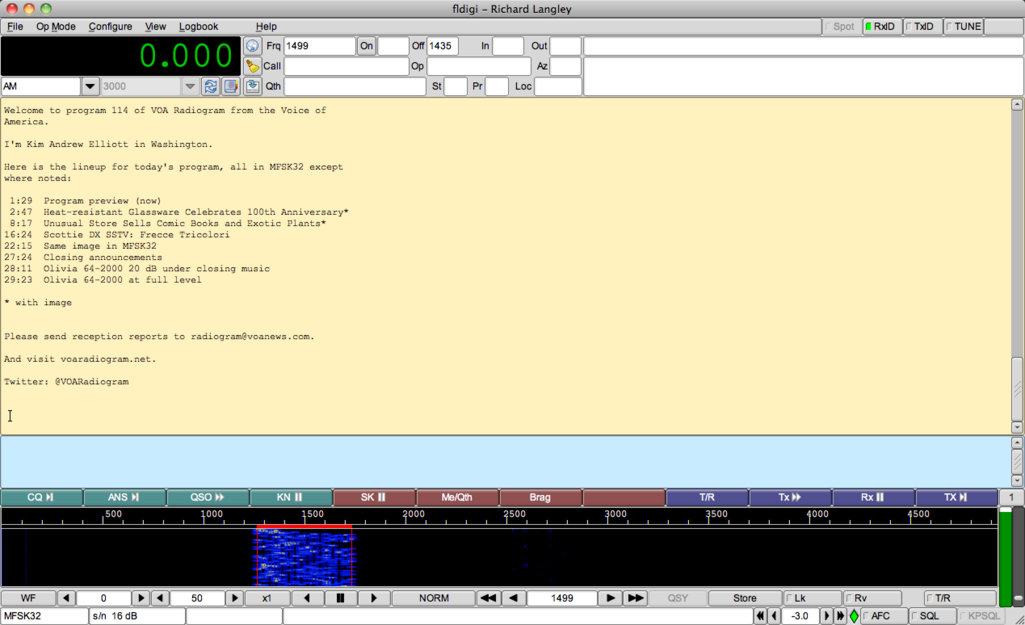
“That location on campus (green pin on attached image) turned out to not be noise-free on all bands. Found an even better location (red pin). Negligible power-line interference although still within Wi-Fi range of UNB’s system but no significant effects from that discovered yet. Got excellent reception of VOA’s Radiogram this past Saturday afternoon. Extremely clean waterfall in Fldigi. And virtually noise-free images [below]”

voa_radiogram (1)

Richard’s decoded message. (Click to enlarge)

pic_2015-06-06_181519z

VOA Radiogram decoded image

Many thanks for sharing this with us, Richard!

Those of you who live or work in areas with significant radio noise should consider scouting out a listening spot like Richard has. Also, you might be inspired by LondonShortwave who takes his radios to public parks. Regardless, moving your receiver as far away from sources of radio interference as possible will always yield better listening results.

Researchers uncovering Swiss Radio International’s past

Zentralbahn Interregio train following the Lake Brienz shoreline, near Niederried. (Image source: Kabelleger / David Gubler via Wikimedia Commons)

Zentralbahn Interregio train following the Lake Brienz shoreline, near Niederried. (Image source: Kabelleger / David Gubler via Wikimedia Commons)

SWLing Post reader, David Freeborough, writes:

I thought you might be interested in this podcast on Swiss Radio International:

http://www.swissinfo.ch/eng/multimedia/podcast_the-radio-station-that-gave-switzerland-a-global-voice/41476934

Fascinating! Many thanks, David. You can listen to the podcast on SwissInfo.ch, or simply use the embedded player below:

Tecsun PL-680: SSB display inaccuracy

PL-680-Sync-Detector

SWLing Post reader, Olli Turunen, writes:

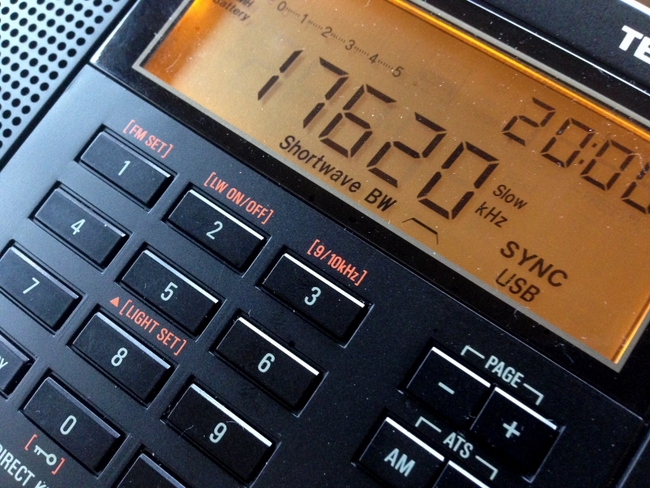
I thought you would like to know this. I bought PL-680 few days ago and I noticed that mine has the display about 1 khz off. I contact Anna on Anon-Co and got a quick reply:

“I have received a response from the supplier regarding the 1 kHz deviation issue of the PL-680 radio. Unfortunately they consider this to be within their tolerance standards for SW reception. Overall, their standard is set to be +/- 0.5 kHz, which translates to 1 kHz on the LCD display. They understand the effect it may especially have for SSB listening, which is why fine tuning has been added as a feature.

For MW/AM the situation is a bit different. According to the supplier this is an issue that both the PL-680 and PL-660 radios have and cannot be avoided. As they indicate, unfortunately only the PL-880 has a special function for MW frequency calibration.”

I just checked my PL-680 and did a zero-beat in SSB against WWV on 10 MHz. If the BFO adjustment is correct when in the middle position, I can confirm that mine is almost 1 kHz too high as well.

For AM listening, a 1 kHz deviation isn’t noticeable.  If you’re using ECSS, though, you’ll certainly have to fine tune the BFO accordingly.  If locating a CW or SSB signal (in the ham bands, for example), you’ll also need to adjust the BFO fine tune control in advance.

Most importantly–and fortunately–when you turn on the PL-680’s synchronous detection, the receiver is exactly on frequency (at least on my early model PL-680).

Many thanks, Olli, for sharing this information! I’ll note this negative in the PL-680 review.

Lewis Bush seeks London radio listening posts

Crosley-Dial-BlackAndWhitePhotographer, Lewis Bush, is seeking ham radio stations and shortwave listening posts in the London, England area. Lewis writes to the SWLing Post:

I’m working on a project which involves trying to locate and map possible broadcast sites for numbers stations (confirmed, suspected, and some highly unlikely) for an eventual book on the subject. These satellite maps (22 in total) are going to be displayed alongside spectrograms of an assortment of shortwave broadcasts and noise, but the final element of the project which I’d really like to include are photographs of ham shacks and shortwave radios themselves.

These photographs would be without people in them and could be as anonymised as the owners like. It’s also not important to me whether the owners are themselves interested in numbers stations. The main thing I’m interested in is really the equipment and the spaces that people listen from.

You can read a little more about the project and see some sample images here: http://www.lewisbush.com/category/numbers-in-the-dark/

If you’re willing to help Lewis, please contact him via email:  [email protected]

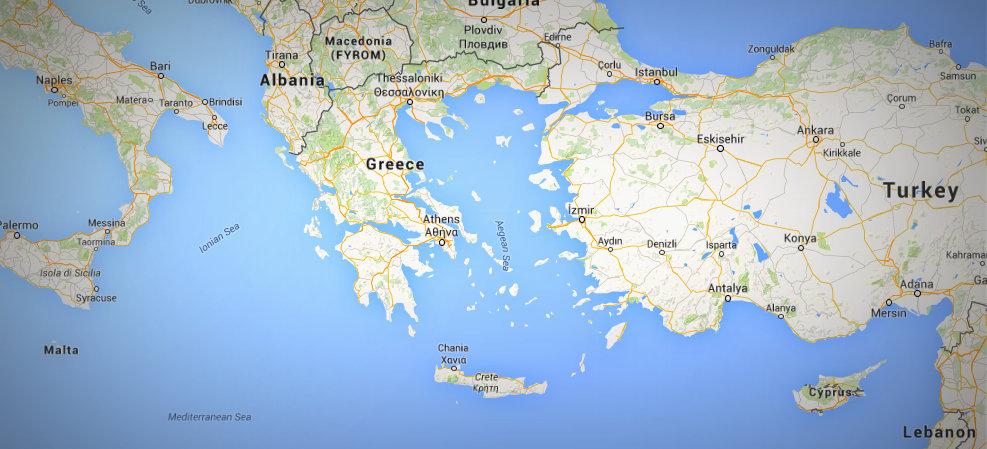
Shortwave listeners hear the Voice of Greece once again

greece

SWLing Post contributor, Moshe, writes with some good news from the Voice of Greece:

I’m listening to VOG at 9420kHz, At 11:27 local time 08:27UTC, 11/06/2015 the station identified itself as “Ezo Athina, I Foni Dis Elladas”: “This Is Athens, The Voice Of Greece”.

Immediately after receiving Moshe’s message, another Post contributor, Merkouris, provided the following details:

It would be of interest to the SWLing Post readers that, as of today June 11, the Greek public broadcaster ERT is back on the air with three TV channels and eight Radio programmes, including the “Voice of Greece”.

TV channels:
ERT1,
ERT2,
ERT3 (Thessaloniki)

Radio programmes:
Proto Programma (1st Programme),
Deftero Programma (2nd Programme),
Trito Programma (3rd Programme),
Kosmos (Musics of the world),
ERA Spor (Sports programme),
RS Makedonia (Thessaloniki),
Foni Tis Elladas (Voice of Greece)

The web site http://www.ert.gr/ is also up with news and streams of all tv and radio channels.

Right now at 10:45 UTC the Voice of Greece is on the air on 9420 kHz.

Many thanks to both Moshe and Merkouris for this information!

A little background…

If you haven’t been following the story, in June 2013, Greek National TV & Radio (ERT) was shut down and so was the Voice of Greece (well…officially, at least).  Only a few hours after VOG went off the air that night, they came back on the air with live protest coverage.

In fact, since that night–exactly two years ago today–Greece has been broadcasting on shortwave intermittently as a relay of ERT Open and/or Elliniki Radiofonia.

I hope that now VOG is officially back on the air, their shortwave broadcasts will be daily once again.  Tonight, I will certainly be tuned to 9,420 kHz!

Update: the BBC News has recently posted this excellent article with photos and videos on their website.