
 Many thanks to SWLing Post contributor, William Lee, who shares the following story from the CBC:
Hello, Finland, this is Vancouver calling: radio fans listen to CBC from 6,700 km away
When people in other parts of the world tune in to CBC Radio in Vancouver, they usually do it through our app, or online or through Sirius XM.
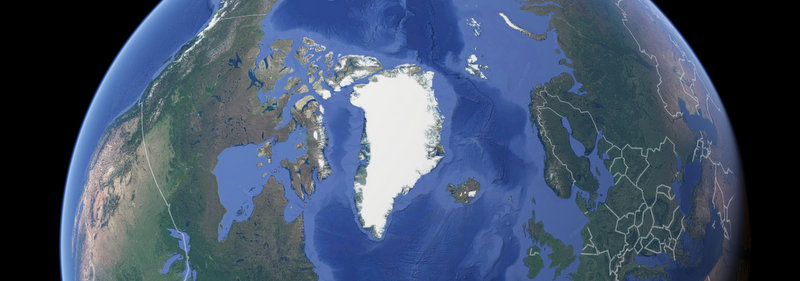
But some people in Finland recently picked up Vancouver’s CBC broadcast — the broadcast heard locally at 690 AM and 88.1 FM — using an elaborate antenna system roughly 300 kilometres north of the Arctic Circle in Lapland, Finland.
“It’s a few [radio hobbyists] from around Finland who have a very nice place up in the north where there’s not much neighbours which means not much interference,” Patrik Willfor, one of the listeners, told On The Coast host Stephen Quinn. “It’s like a silent band there, so even the weakest signals come through.”
The practice is called DXing, and Willfor says he’s been at it for about 25 years since a friend told him that’s what their fathers used to do when they were young.[…]
Click here to read the full article on CBC British Columbia’s website.
Post readers: Is it just me? Or do you, too, get a kick out of it when the press gets a glimpse into the seemingly-anachronistic, but still-relevant-and-rocking world of radio–?
Note that you can also listen to the audio interview with Patrik via the embedded CBC player below:
 Hi there, I thought I would share some Brazilian shortwave catches with you, obtained using my Sony ICF-2001D receiver and 200 metre experimental longwire. The first is Radio Bandeirantes, Sao Paolo on 9645.4 kHz. This is a station that I’ve only heard once or twice previously, but was received with excellent signal clarity and strength recently, using my deployable longwire antenna. I would rate this station as moderately difficult to receive with reasonable discernibility. The second is Radio Novo Tempo from Campo Grande, on 4894.9 kHz. This station I would rate as difficult to hear with discernible audio. The key is always signal-to-noise, thus moving yourself out of the ubiquitous blanket of QRM most modern environments endure will usually achieve this and of course coupled with sufficient space outdoors to erect a larger antenna will hopefully also improve signal strength. My final video on this post is Radio Nacional Brazilia on 6180 kHz. I would regard this station as quite easy to hear well; their effective TX power towards Europe is around 2 MW, however, outdoors, this station can literally boom in, with what might be perceived as local-AM signal strength. I hope you enjoy watching the videos and seeing/ hearing what’s possible with a modest set-up. As for the Sony ICF-2001D? Well the design is more than 30 years old, but in my opinion at least, still one of the very best portable shortwave receivers ever manufactured. Thanks and 73.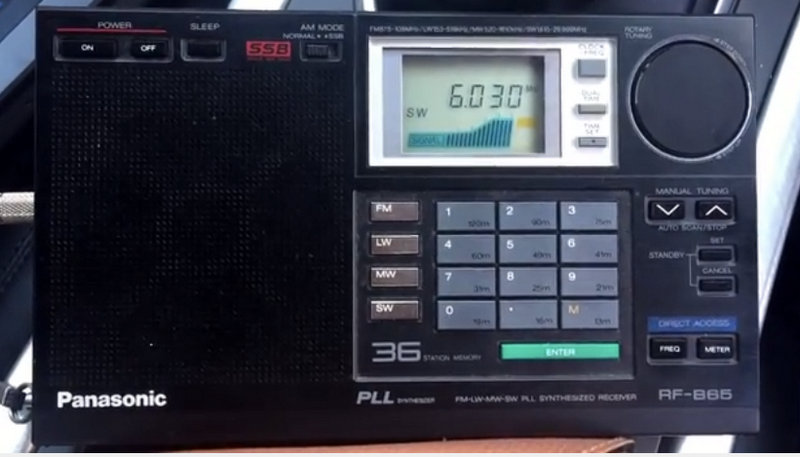

 Two weeks ago, at the