Tag Archives: Radio Waves

Radio Waves: Data RX via Web SDRs, Mystery Signals from Space, Public Media’s role in Democracy, and Pirates SPAM UVB-76

Radio Waves:  Stories Making Waves in the World of Radio

Because I keep my ear to the waves, as well as receive many tips from others who do the same, I find myself privy to radio-related stories that might interest SWLing Post readers.  To that end: Welcome to the SWLing Post’s Radio Waves, a collection of links to interesting stories making waves in the world of radio. Enjoy!

Many thanks to SWLing Post contributors Marty, Troy Riedel, and Rich Cuff for the following tips:


Receiving data with web based shortwave radios (Nuts and Volts)

Your computer and the Internet give you free access to over 100 web based shortwave receivers that you can use as if they were your own. Unfortunately, employing these radios to decode data transmissions can be very difficult or impossible — unless you know the secret.

[…]A while back, I discussed how to receive data signals with a low cost shortwave radio (N&V May 2015). Now, the concept takes on a new dimension since we are using virtual radios not in our possession.

As astonishing as it seems, many of these Web based shortwave receiver data signals can be processed and decoded using just your PC and some free decoding software. Yes, some signals are encrypted, and can’t be decoded. Fortunately, there are plenty of unencrypted data signals around to keep us busy for a long time.

However, as will be discussed later on, it does require a special trick to allow you to pipe the streaming audio signals from the Web to the decoding software. In this article, I will show you how to use these Web based shortwave receivers to access data transmissions and to get started in this exciting hobby. [Click here to read the full article…]

Unknown objects at the heart of the Milky Way are beaming radio signals, then mysteriously disappearing (Business Insider)

Ziteng Wang found a needle in an astronomical haystack.

Wang, a physics PhD student at the University of Sydney, was combing through data from Australia’s ASKAP radio telescope in late 2020. His research team had detected 2 million objects with the telescope and was classifying each one.

The computer identified most of the stars, and the stage of life or death they were in. It picked out telltale signs of a pulsar (a rapidly rotating dead star), for example, or a supernova explosion. But one object in the center of our galaxy stumped the computer and the researchers.

The object emitted powerful radio waves throughout 2020 — six signals over nine months. Its irregular pattern and polarized radio emissions didn’t look like anything the researchers had seen before.

Even stranger, they couldn’t find the object in X-ray, visible, or infrared light. They lost the radio signal, too, despite listening for months with two different radio telescopes. [Continue reading…]

Do countries with better-funded public media also have healthier democracies? Of course they do (Nieman Lab)

But the direction of causality is tricky. Do a democracy’s flaws lead it to starve public media, or does starving public media lead to a democracy’s flaws?

There’s a new book coming out in the U.K. this week called The BBC: A People’s History, by David Hendy. Its publisher calls it a “monumental work of popular history, making the case that the Beeb is as much of a national treasure as the NHS…a now global institution that defines Britain and created modern broadcasting.”

Cross the pond: While Americans generally like PBS and NPR, I wouldn’t expect them to come up quickly if you asked someone on the street to begin listing national treasures. (I’m even more sure America’s health care system would go unmentioned, too.) Who “created modern broadcasting” in the U.S.? It certainly wasn’t the two public broadcasters that didn’t hit airwaves until 1970. And what TV network is a “global institution” that “defines” the United States abroad? Apologies to PBS Newshour, but that’s CNN.

No one says “Auntie Peebs.”

It’s obvious that the U.S. approached the new broadcasting technologies of the 20th century in ways wildly different from their European peers — and in ways that reflect on the countries themselves. American radio began wild and unregulated, experimental, a bubbling font of creativity — and then quickly became commercialized, optimized for mass audiences and massive profits. The BBC, which turns 100 this year, was more structured, more statist, more controlled — but has remained more central to residents’ lives, more civic-minded, and more beloved. [Continue reading…]

Pirates Spammed an Infamous Soviet Short-wave Radio Station with Memes (Vice)

The UVB-76 numbers station took a break from being a suspected communications tool of Russian intelligence to blast ‘Gangnam Style’

Pirates hijacked an infamous short-wave radio station, which dates from the Soviet era but is still online today, and used it to broadcast everything from Gangnam Style to audio that draws memes when inspected under a spectrum analyzer.

For decades the numbers station known as UVB-76 has emitted an enigmatic series of beeps and a voice reading numbers and names, in what people suspect is a long running communications method for Russian intelligence. Since the broadcast is public, pirates are able to use their software-defined radio (SDR) transmitters to effectively flood the frequencies with noise and memes.

The recent barrage of attacks on the station come as Russia prepares to invade neighbouring Ukraine, where radio enthusiasts speculate at least some of the pirate broadcasts originate. [Continue reading…]


Do you enjoy the SWLing Post?

Please consider supporting us via Patreon or our Coffee Fund!

Your support makes articles like this one possible. Thank you!

Radio Waves: La TopoRadio Radio, Campaign Promise for ABC Shortwave Restoration, Malahit-DDC Early Review, and “Cordial Cold War” Now Free on Amazon

Radio Waves:  Stories Making Waves in the World of Radio

Because I keep my ear to the waves, as well as receive many tips from others who do the same, I find myself privy to radio-related stories that might interest SWLing Post readers.  To that end: Welcome to the SWLing Post’s Radio Waves, a collection of links to interesting stories making waves in the world of radio. Enjoy!

Many thanks to SWLing Post contributors NT, Mark Fahey, and @SAKURARadiochan for the following tips:


Launching La TopoRadio (Radio Preservation Task Force)

The RPTF is pleased to announce the launch of La TopoRadio— the best place on the web to explore historical research about Spanish-language radio. La TopoRadio is an interactive map that lets users discover publications about historic and contemporary stations.

The project supports the goal of the RPTF to bring attention to the multifaceted history of radio in the United States. Spanish-language broadcasters have been part of the nation’s heritage since the dawn of the radio era, but this history is often sidelined in official accounts of radio history. Spanish-language programs continue to grow in popularity and geographic reach even while English-language listenership has declined. [Continue reading at the RPTF website…]

Labour promises $2m shortwave radio restoration (Tescun Radios Australia)

Note: the following was copied from the newsletter of Australian radio retailer, Tecsun Radios Australia.

A controversial decision in 2017 lead to the ABC turning off its domestic shortwave radio service, much to the disappointment and anger of remote listeners. It’s reasoning for turning off the shortwave broadcasts was that it would only affect a small number of listeners and in fact save operating costs of $1.9M, which could be re-invested in providing infrastructure of digital services located in populated regional areas.

Many industry groups were outraged, particularly in remote areas of the Northern Territory where residents had come to rely on the service as their only regular source of news and entertainment.

In February 2011, cyclone Yasi crossed the Australian east coast between Cairns and Townsville, causing enormous damage and knocking out all local communications.

Radio Australia carried ABC Queensland coverage of the storm, which was extraordinary.

[…]The federal Labour party has announced that if elected next year, they will provide the ABC with $2M in funding to re-establish the shortwave funding across the territory. [Continue reading…]

A review of the soon to be released Malahit-DDC portable SDR (RTL-SDR.com)

The Malahit DDC is the latest in portable SDR packages coming out of the Russian designer and manufacturer known as ‘Malahiteam’.  In the past they released the hugely successfull Malhit-DSP. We want to thank Manuel Lausmann for sending us a video and review that comprehensively looks at one of the first Malahit DDC devices that have been received. Manuel writes:

[…]The comparison took into account the results from the DDC versions with two ADC versions – AD9649 and MDRA1A16FI.

1) the sensitivity is about the same, there is no difference.

2) The dynamic range blocking is a big difference in favor of DDC. It is caused by the properties of the radio reception path and not by the difference in the classes of radio receivers. This has the practical advantage that a radio receiver with large antennas can be used under difficult conditions, for example when it is necessary to receive a weak signal in the presence of a strong interfering one.

3) The dynamic range of third order intermodulation is a big difference in favor of DDC. It is caused by the properties of the radio reception path and not by the difference in the classes of radio receivers. The practical advantage of this is the lack of parasitic or false reception channels. [Click here to read the full article and watch the video at RTL-SDR.com…]

Cordial Cold War: Cultural Actors in India and the German Democratic Republic (Amazon.com)

Note that “Cordial Cold War: Cultural Actors in India and the German Democratic Republic” is now free in eBook form on Amazon.com. Here’s the description:

Cordial Cold War examines cultural entanglements, in various forms, between two distant yet interconnected sites of the Cold War—India and the German Democratic Republic (GDR). Focusing on theatre performances, film festivals, newsreels, travel literature, radio broadcasting, cartography and art as sites of engagement, the chapters spotlight spaces of interaction that emerged in spite of, and within, the ambits of Cold War constraints. The inter-disciplinary collection sheds light on the variegated nature of translocal cultural entanglements, at work even before the GDR was officially recognized as a sovereign state by India in 1972. By foregrounding the role of actors, their practices and the sites of their entanglement, the contributions show how creative energies were mobilized to forge zones of friendship, mutual interest and envisioned solidarities.

This volume situates actors from the Global South as mutual co-shapers of the cultural Cold War, therein shifting its Euro-American and Soviet epicenters to Non-Aligned India. Going beyond official state channels of international political dialogue, it locates cordiality in the micro-histories and everyday experiences of interpersonal engagements, bringing to focus a hitherto underexplored chapter of India–Germany entanglements.

Click here to view on Amazon.com.


Do you enjoy the SWLing Post?

Please consider supporting us via Patreon or our Coffee Fund!

Your support makes articles like this one possible. Thank you!

Radio Waves: Radio Atlantique, Car Radio History, BBC Norfolk Features CW, and IC-R30 Firmware Update

Radio Waves:  Stories Making Waves in the World of Radio

Because I keep my ear to the waves, as well as receive many tips from others who do the same, I find myself privy to radio-related stories that might interest SWLing Post readers.  To that end: Welcome to the SWLing Post’s Radio Waves, a collection of links to interesting stories making waves in the world of radio. Enjoy!

Many thanks to SWLing Post contributors Trevor, Dennis Dura, and Markku Koskinen for the following tips:


Radio Atlantique Broadcasts Against All Odds (Red Tech)

Its broadcasting territory is restricted and unlikely to grow significantly, and for good reason. Since 1982, Radio Atlantique has been broadcasting in the heart of the French overseas territory of Saint-Pierre-et-Miquelon, a 252 square kilometers, self-governing Atlantic clump of islands just off the south coast of the Canadian province of Newfoundland. The radio station has cultivated its uniqueness, becoming a key partner in the local life and cohesion of the 6,000 or so Miquelonnais. However, this state of mind has not prevented the project from going through difficult times and bringing uncertainties to its future.

Broadcasting in the territory of Saint-Pierre-et-Miquelon is an extraordinary adventure every day. For example, coverage of the entire archipelago was only concluded in 2010 with effective broadcasting in Miquelon, only 18 nautical miles away from the main island. This challenge for the station has only reinforced its unique place within the islands’ society. The population on the islands is highly mixed, and the vast majority of the inhabitants have French and Basque origins. [Continue reading…]

The history of car radios, from AM to Apple (The Globe and Mail)

“Hey, Google. Play Toosie Slide by Drake.”

Within seconds, the Toronto pop singer’s silky voice wafts from the speakers of the ELS Studio audio system of my Acura MDX. Ten speakers in the cabin pump out trilling highs and chest-thumping bass, transforming my vehicle into a soothing audio studio on wheels. Bored, I flip over to SiriusXM for a little Hip-Hop Nation.

Modern car audio systems are so highly evolved, so seamless and so intuitive, it’s easy to forget that it wasn’t always this way. But it’s been 90 years since the first mass-produced car radio appeared, and the road to audio perfection has been a bumpy one indeed.

Michael Lamm remembers. At 84, the California-based auto historian’s car-ownership experience spans back to the early 1950s, when staticky car radios were powered by primitive vacuum tubes.

When he was growing up in Texas, he says he “didn’t really care that much about radio,” in part because programming was so limited. “I didn’t listen to the preachers who were constantly haranguing everybody.” [Continue reading…]

BBC Norfolk features ham radio Morse code (Southgate ARC)

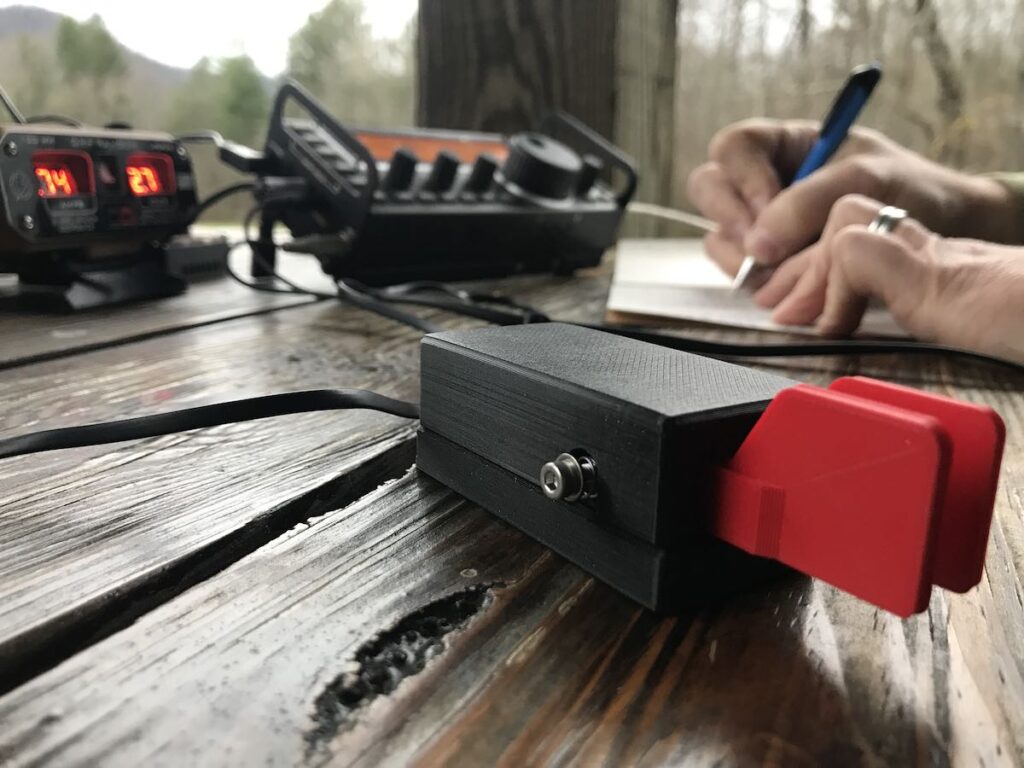
January 11 was Learn your Name in Morse Code Day and Roger Cooke G3LDI was interviewed on BBC Norfolk by Chris Goreham about Morse

Roger has been a keen proponent of the advantages of Morse code since he started teaching it as a teenager when he was first licenced in 1956.

You can listen to the interview by fast-forwarding to 1:54:27 in this recording
https://www.bbc.co.uk/sounds/play/p0bcktml

Free Morse training courses are available Online, see

New Icom IC-R30 Firmware Update (via Markku Koskinen)

Updated Icom IC-R30 firmware has been posted on the Icom Japan web site.

Battery health status (Normal/Caution/Warning) judgment has been improved.

Click here to check it out and download at Icom Japan.


Do you enjoy the SWLing Post?

Please consider supporting us via Patreon or our Coffee Fund!

Your support makes articles like this one possible. Thank you!
Radio Waves: The Barbed Wire Comms Line, FCC Denies AM Appeal, Raspberry Pi Radio Astronomy, and Interview with Dick Smith

Radio Waves:  Stories Making Waves in the World of Radio

Because I keep my ear to the waves, as well as receive many tips from others who do the same, I find myself privy to radio-related stories that might interest SWLing Post readers.  To that end: Welcome to the SWLing Post’s Radio Waves, a collection of links to interesting stories making waves in the world of radio. Enjoy!

Many thanks to SWLing Post contributors Paul, Dennis Dura, Dan Van Hoy, Alokesh Gupta,  and the Southgate ARC for the following tips:


Atrocious but efficient: How ranchers used barbed wire to make phone calls (Texas Standard)

A barbed wire telephone call didn’t sound great but could quickly warn others about something such as a wildfire.

Historian J. Evetts Haley wrote that, in its time, the old XIT Ranch up in the Texas Panhandle was “probably the largest fenced range in the world.” He recalled that its barbed wire enclosed over 3 million acres of land. At the north end alone, the fence ran for 162 miles. The unique enclosure helped keep in enormous cattle herds, keep out rustlers, and also gave rise to the creative use of a new technology: the telephone.

I’ll come back to the XIT in a moment, but first, consider these smattering of reports from that era. In 1897, The Electrical Review, reported that “on a ranch in California, telephone communication had been established between the various camps . . . by means of barbed wire fences.” The article says the novel use of the phone was a great success and was being used in Texas as well. That same year, the New England Journal of Agriculture was impressed that two Kansas farmers, living a mile apart, had attached fine telephone instruments to the barbed wire fence that connects their places and established easy communication. From the Butte Intermountain in 1902 we see this notice: “Fort Benton’s latest development is a barbed wire telephone communication.” The article points out that people of the range were not all that happy with barbed wire, which they thought was an “evil” that had arrived with the railroad, but they had decided to look at the practical side of its existence and use it to create a telephone exchange that would connect all the ranches to Fort Benton. [Continue reading…]

FCC Says No to Appeal for a New AM in L.A. (Radio World)

Schwab Multimedia has lost an appeal to the Federal Communications Commission in a case involving a planned AM station near Los Angeles for which it had a construction permit.

This is a “tolling” case, one that involves the FCC construction clock. The history is complex — the FCC’s summary is 2,500 words long, not counting many extended footnotes — but the upshot is that KWIF in Culver City was never built and, barring further developments, apparently will not be. Its call sign has now been deleted.

Levine/Schwab Partnership, which does business as Schwab Multimedia, had applied in 2004 to build a new AM station in the Los Angeles area. It eventually secured a CP in 2016 for the station at 1500 kHz. [Continue reading at Radio World…]

Radio Astronomy with Raspberry Operating System (Glen Langston)

Check out this fascinating radio astronomy project by Glen Langston that is not only affordable, but quite accessible. Thank you for the tip, Paul!

This article is in PDF form and can be downloaded from with this link.

Dick Smith Live: Adventuring, Electronics & Amateur Radio (Ham Radio DX on YouTube)

Dick Smith, VK2DIK has lived an adventurous and extraordinary life. He is a proud Australian, businessman, adventurer, entrepreneur and he single handedly changed electronics and CB/Amateur Radio in Australia.

Dick has recently released his autobiography titled, Dick Smith: My Adventurous Life and tonight we’re privileged to sit down live with Dick, speaking to him about his adventures, including the first solo helicopter flight around the world, his business ventures and being a pioneer for Amateur and CB radio.


Do you enjoy the SWLing Post?

Please consider supporting us via Patreon or our Coffee Fund!

Your support makes articles like this one possible. Thank you!
Radio Waves: VOA Museum a Historic Marvel, 1BCG Special Event Report, BBC Centenary Celebration, and Czech Radio Turns Off MW and LW

Radio Waves:  Stories Making Waves in the World of Radio

Because I keep my ear to the waves, as well as receive many tips from others who do the same, I find myself privy to radio-related stories that might interest SWLing Post readers.  To that end: Welcome to the SWLing Post’s Radio Waves, a collection of links to interesting stories making waves in the world of radio. Enjoy!

Many thanks to SWLing Post contributors David Iurescia, Mark Erdle, and the Southgate ARC for the following tips:


Voice heard ’round the world: Voice of America museum near Cincinnati a historical marvel (The Columbus Dispatch)

WEST CHESTER, Ohio — Imagine, if you will, a voice so strong that it shakes the very foundations of global tyranny.

In the early days of World War II, a group of Americans, including President Franklin Roosevelt, actor and director John Houseman and Cincinnati entrepreneur Powell Crosley Jr. imagined such a voice, one that could counter Nazi propaganda in Hitler’s own backyard.

They named it The Voice of America.

Today, the National Voice of America Museum of Broadcasting, 8070 Tylersville Road, occupies the site from which the service beamed its message around the world for 50 years beginning in 1944, recounting its history and remembering the people, especially Crosley, who made it possible. [Continue reading…]

100th Anniversary Celebration of the First Trans-Atlantic Radio
Transmission of a Message by Amateur Radio (1BCG.org)

Saturday, December 11, 2021

On a cold winter night on December 11, 1921, members of the Radio Club of America were able to send the first amateur radio message from a small shack in Greenwich, CT to be received by American Paul Godley in Ardrossan, Scotland. This transatlantic test proved the value of shorter wavelengths – long considered worthless to long distance communications and through their success ushered in the age of global shortwave radio communications. The 1921 message was sent one-way. Acknowledgment of Paul Godley’s reception of 1BCG’s massage was sent back to the US via the Marconi high power radio transmitter in Wales.

The Antique Wireless Association, in association with the Vintage Radio and communications Museum of Connecticut (VRCMCT) in Windsor, CT, the Radio Club of America, the American Radio Relay League, and the Radio Society of Great Britain, participated in the 100th Anniversary special events held Saturday, December 11, 2021.

For the 75 th anniversary celebration of the 1BCG accomplishment in 1996, AWA members Bob and Mike Raide constructed a replica of the 1921 transmitter. For this 100th celebration, AWA Museum Staff restored the replica. The VRCMCT in Windsor CT has graciously offered to host AWA operation of the replica transmitter during the evening of December 11th. The 1BCG replica transmitter was placed on public display at the VRCMCT Museum during the day of Saturday December 11, 2021. [Continue reading the full report at the 1BCG website…]

Celebrations to mark the BBC’s Centenary began at midday today (1/1/2022) via shortwave radio (Southgate ARC)

BBC Radio 4 announcer/newsreader, Jim Lee, launched special event amateur radio station GB100BBC, from the BBC’s Broadcasting House, in London, at exactly midday.

Listen to the broadcast:
GB100BBC launches 1st Jan 2022
With thanks to the London BBC Radio Group

Within minutes amateur radio stations around the UK and throughout Europe were clamouring to contact the special BBC station and secure a prized entry in the logbook.

The London BBC Radio Group was granted an extended special event radio licence by the regulator OFCOM, to operate the station throughout 2022.

The amateur radio activity is one of many events organised to celebrate 100 years of the BBC, which began broadcasting from Savoy Hill in 1922 as the British Broadcasting Company, moving to the iconic Broadcasting House in 1932, gaining a Royal Charter as the British Broadcasting Corporation.

The London BBC Radio Group has a growing membership which includes engineers, journalists, producers and on-air talent in both TV and Radio. The group is independent but hosted and supported by the Corporation.

The group was launched in 2017 by a handful of radio enthusiasts to revive a long and rich history of amateur radio at the BBC dating back to the Second World War.

The ‘radio shack’ at the BBC’s headquarters, Broadcasting House in central London, was officially opened by the then Director General, Lord Tony Hall, with an over-the-air message of congratulations. Lord Hall was subsequently bestowed Honorary membership of the club. [Click here to read at the Southgate ARC…]

Czech radio switches off MW and LW as 2022 starts (Mike Terry via the Southgate ARC)

Prague (dpa) – Radio reception on medium wave (MW) and long wave (LW) has been history in many parts of Europe for years.

Now, in the Czech Republic, at least the public broadcaster will stop transmitting on MW and LW as the new year starts on Saturday.

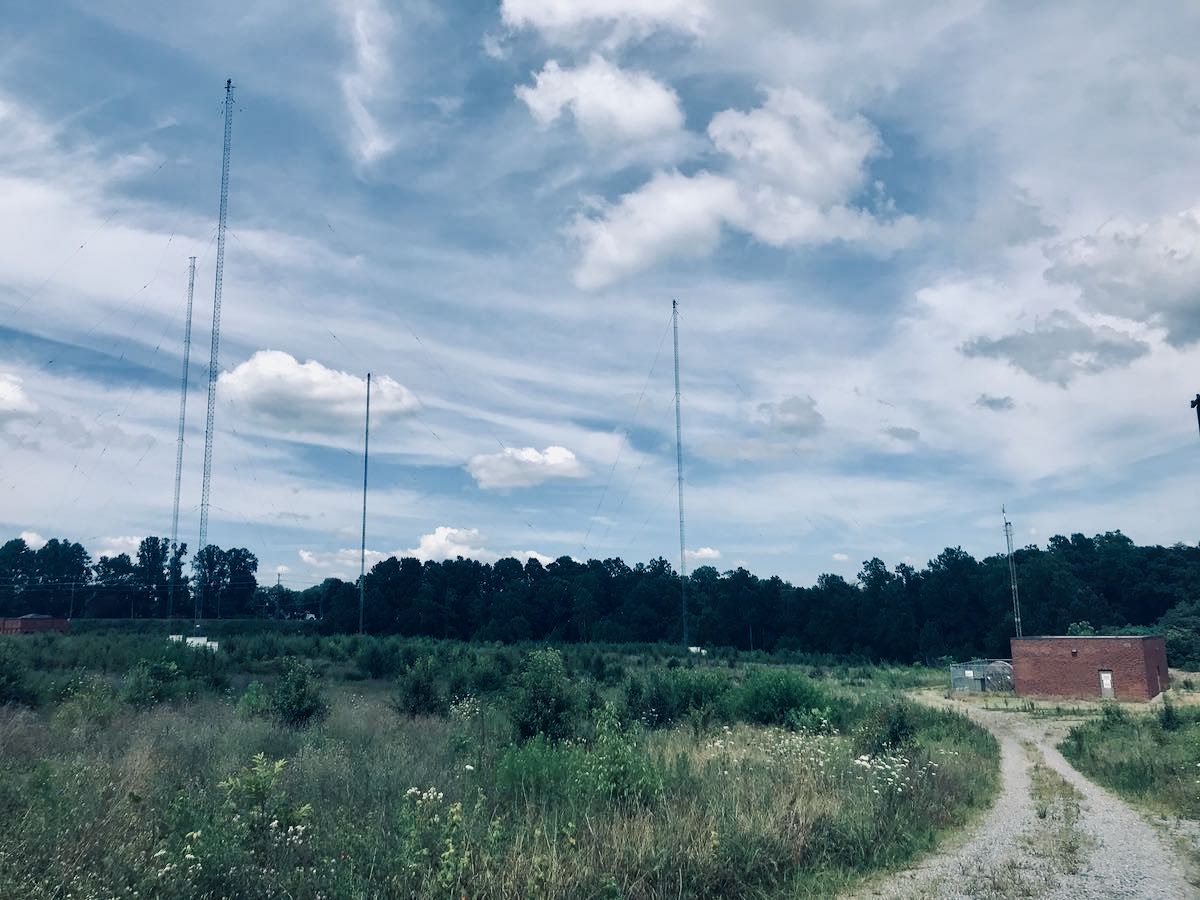
The powerful transmitters on the frequencies 270, 639 and 954 kilohertz could also be received in large parts of Germany.

The reason given for the move was the widespread availability of terrestrial digital radio DAB+ and the high costs of broadcasting.

Those still listening using medium waves were to be persuaded to switch with a campaign. The radio station Cesky Rozhlas set up a telephone hotline to answer questions.

It was not known at first whether the transmitters would be retained or used for other purposes.

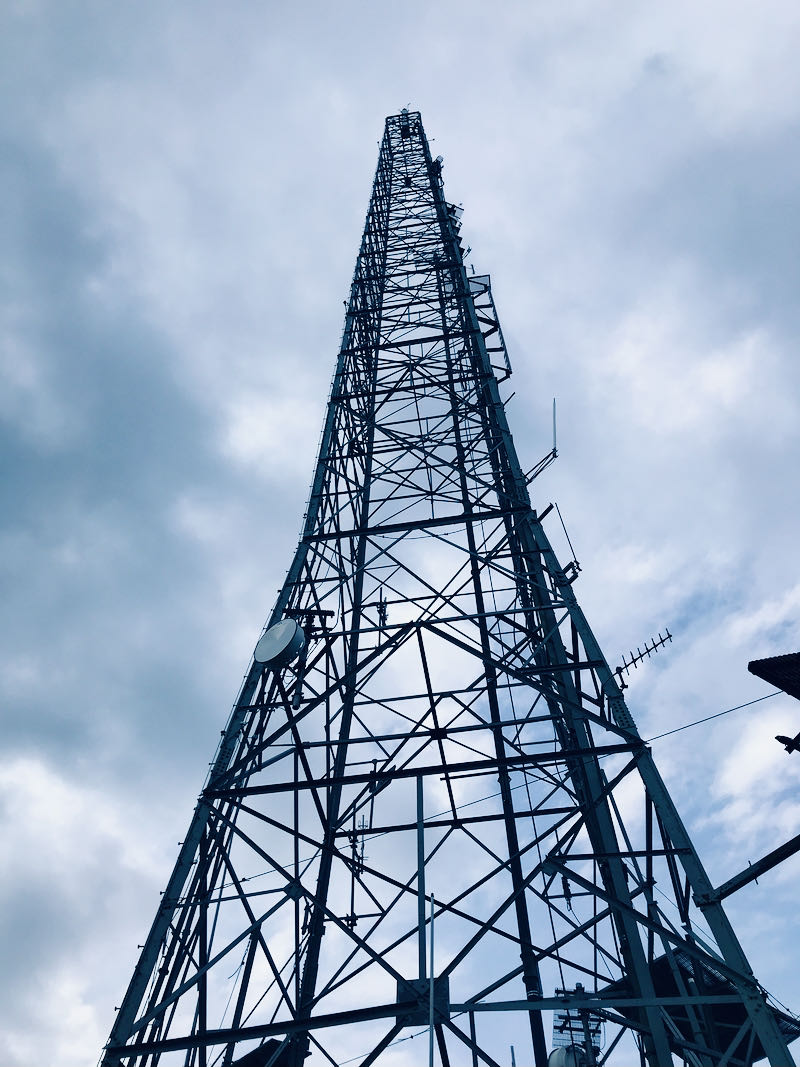
The antenna of the medium-wave transmitter Liblice B east of Prague is considered the highest structure in the Czech Republic, with a height of 355 metres.

Impuls, the most-listened to private radio station, wants to remain faithful to medium wave for the time being. It broadcasts its second programme, with pop and country music, on analogue transmission.

Click here to read at DPA-International.com.


Do you enjoy the SWLing Post?

Please consider supporting us via Patreon or our Coffee Fund!

Your support makes articles like this one possible. Thank you!
Radio Waves: Eiffel Tower Radio 100 Years Ago, Raspberry Pi Radio Time Machine, Barrie ARC Thrives in Pandemic, and The Voice of Ganymede via JUNO

Radio Waves:  Stories Making Waves in the World of Radio

Because I keep my ear to the waves, as well as receive many tips from others who do the same, I find myself privy to radio-related stories that might interest SWLing Post readers.  To that end: Welcome to the SWLing Post’s Radio Waves, a collection of links to interesting stories making waves in the world of radio. Enjoy!

Many thanks to SWLing Post contributors Dan Srebnick, the Southgate ARC and Geneva Witherspoon for the following tips:


Signal of strength: Eiffel Tower celebrates a centenary of radio broadcast (RFI)

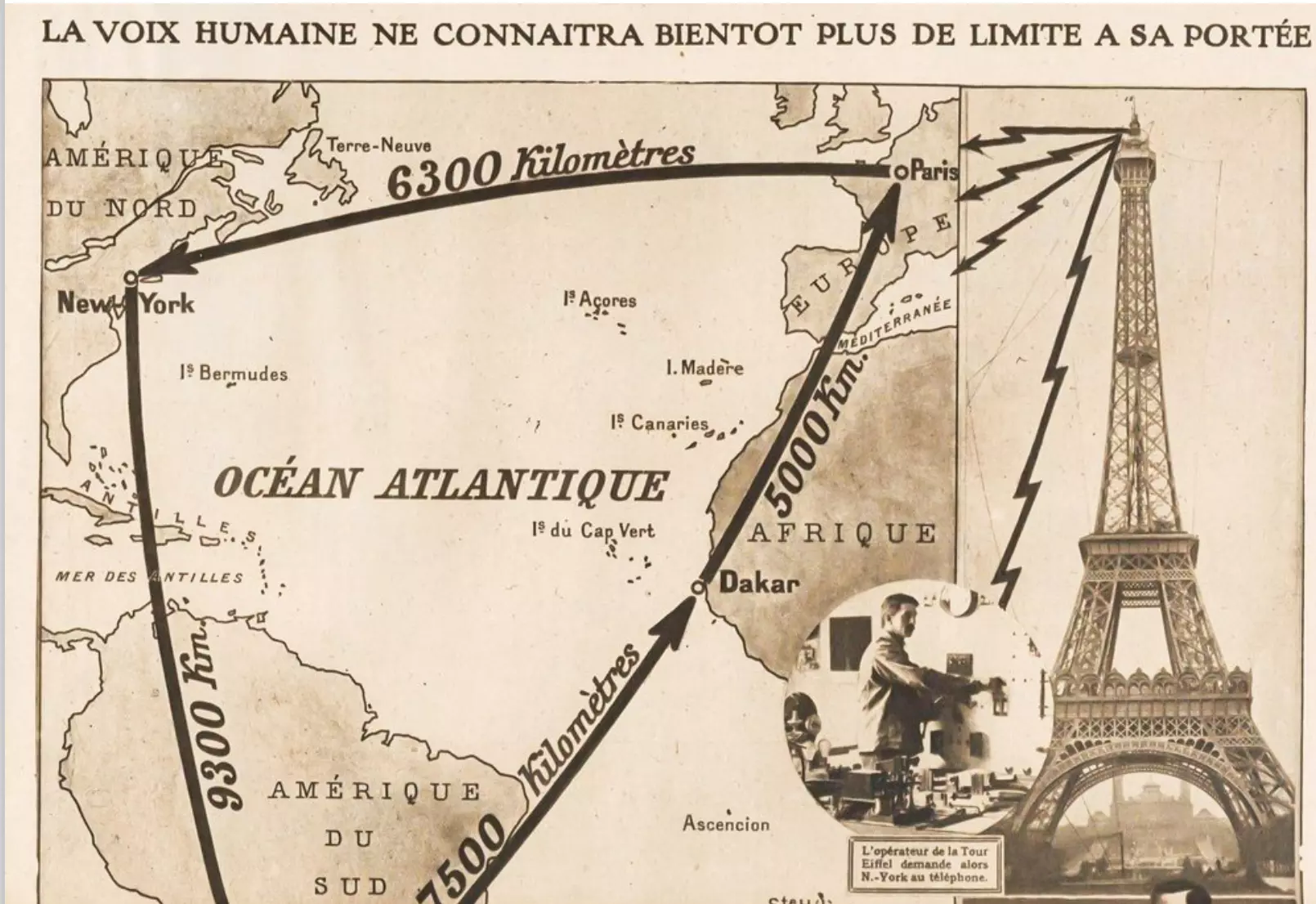
A hundred years ago this week, France’s most famous landmark, the Eiffel Tower, was first used as an antenna for radio programmes. Looming high above the city’s uniform skyline, the tower was an obvious choice to pioneer public radio in France, proving the country’s prowess in broadcast technology.

On 22 December 1921, just three years after the end of WWI, “Radio Tour Eiffel” broadcast its first ever show, a live performance featuring legendary singers.

The trial was the beginning of a long series of broadcasts that continues today, with 45 television stations and 32 FM stations – including RFI – broadcasting from the Eiffel Tower.

According to the Lille-based publication Le Réveil du Nord of 24 December 2021, “a concert by wireless telephony took place at the Lille Theatre”.

Famous artists of that era, the legendary Sacha Guitry, the soprano Jeanne Hatto, the tenor Maurice Dutreix and others sang in a microphone in a room in the Eiffel Tower, from where it was broadcast to a “wireless phone set” in the hall of the Lille theatre.

“A large audience attended this session,” according to the dispatch. [Continue reading…]

Nostalgic Raspberry Pi Radio Tunes to Music From Past Decades (Tom’s Hardware)

The Raspberry Pi makes an excellent gift on its own, but getting one in a custom Time Machine Radio is remarkably fulfilling. This holiday, a maker known as Byte-rider created a custom Raspberry Pi Zero 2 W-powered radio for his father. Continue reading

Radio Waves: First Transatlantic Signal 120 Years Today, 100 Years of German Radio, NASA Laser Communications, and Ham Transmitter on the Moon

Marconi watching associates raising the kite (a “Levitor” by B.F.S. Baden-Powell[47]) used to lift the antenna at St. John’s, Newfoundland, December 1901 (via Wikipedia)

Radio Waves:  Stories Making Waves in the World of Radio

Because I keep my ear to the waves, as well as receive many tips from others who do the same, I find myself privy to radio-related stories that might interest SWLing Post readers.  To that end: Welcome to the SWLing Post’s Radio Waves, a collection of links to interesting stories making waves in the world of radio. Enjoy!

Many thanks to SWLing Post contributors Trevor R, Andrea Bornino, Wilbur Forcier, and the Southgate ARC for the following tips:


First radio transmission sent across the Atlantic Ocean (History.com)

Italian physicist and radio pioneer Guglielmo Marconi succeeds in sending the first radio transmission across the Atlantic Ocean, disproving detractors who told him that the curvature of the earth would limit transmission to 200 miles or less. The message–simply the Morse-code signal for the letter “s”–traveled more than 2,000 miles from Poldhu in Cornwall, England, to Newfoundland, Canada.

Born in Bologna, Italy, in 1874 to an Italian father and an Irish mother, Marconi studied physics and became interested in the transmission of radio waves after learning of the experiments of the German physicist Heinrich Hertz. He began his own experiments in Bologna beginning in 1894 and soon succeeded in sending a radio signal over a distance of 1.5 miles. Receiving little encouragement for his experiments in Italy, he went to England in 1896. He formed a wireless telegraph company and soon was sending transmissions from distances farther than 10 miles. In 1899, he succeeded in sending a transmission across the English Channel. That year, he also equipped two U.S. ships to report to New York newspapers on the progress of the America’s Cup yacht race. That successful endeavor aroused widespread interest in Marconi and his wireless company. Continue reading