Tag Archives: Shortwave Radio

Radio Waves: Subversive Shortwave, Radio’s Hardware Problem, Working at RBI, and Russian Comms

Radio Waves:  Stories Making Waves in the World of Radio

Because I keep my ear to the waves, as well as receive many tips from others who do the same, I find myself privy to radio-related stories that might interest SWLing Post readers.  To that end: Welcome to the SWLing Post’s Radio Waves, a collection of links to interesting stories making waves in the world of radio. Enjoy!


Owning a shortwave radio is once again a subversive activity (Hackaday)

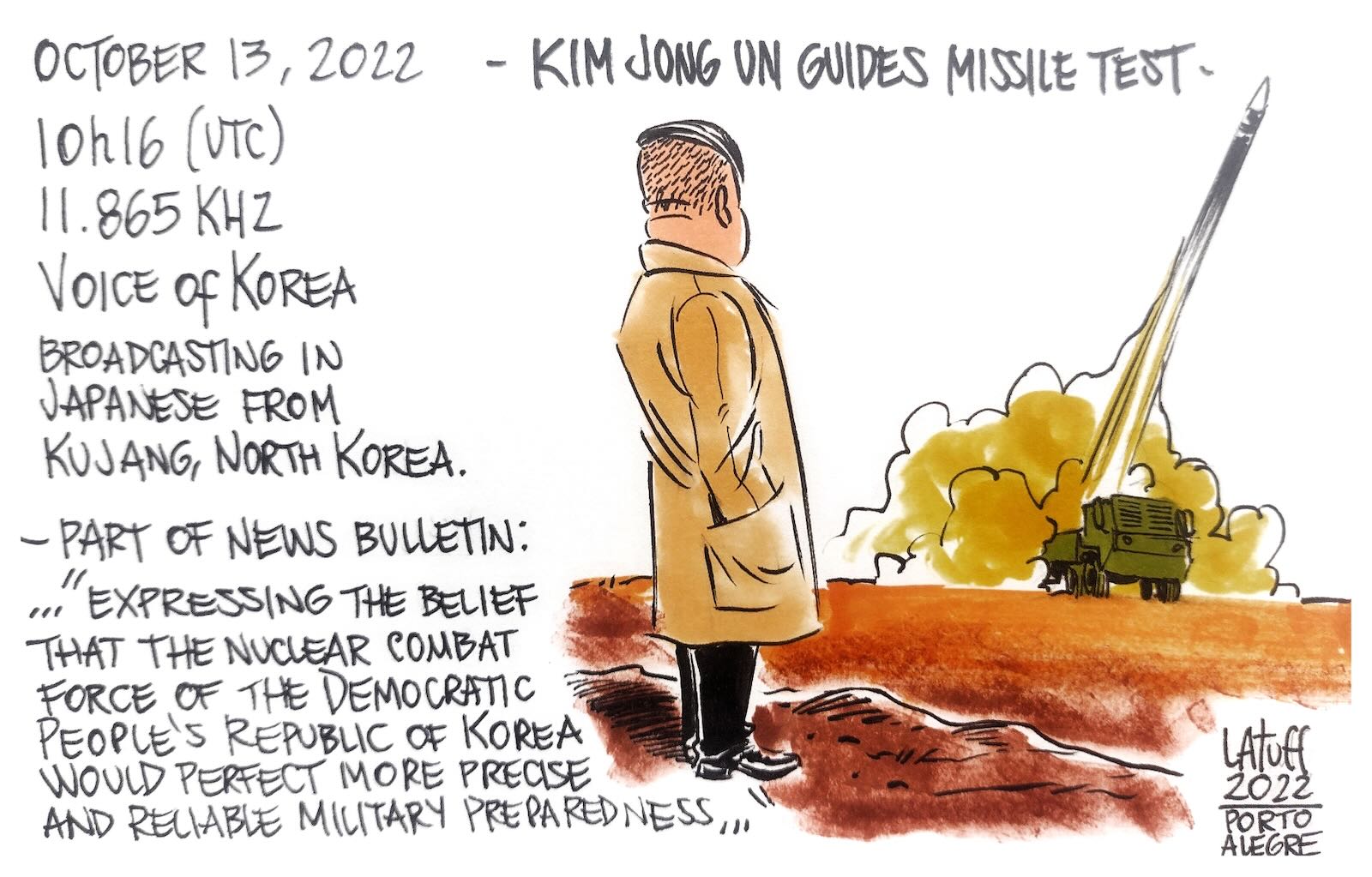
An abiding memory for a teen fascinated by electronics and radio in the 1970s and 1980s is the proliferation of propaganda stations that covered the shortwave spectrum. Some of them were slightly surreal such as Albania’s Radio Tirana which would proudly inform 1980s Western Europe that every village in the country now possessed a telephone, but most stations were the more mainstream ideological gladiating of Voice of America and Radio Moscow.

It’s a long-gone era as the Cold War is a distant memory and citizens East and West get their info from the Internet, but perhaps there’s an echo of those times following the invasion of the Ukraine. With most external news agencies thrown out of Russia and their websites blocked, international broadcasters are launching new shortwave services to get the news through. Owning a shortwave radio in Russia may once again be a subversive activity. Let’s build one! [Continue reading…]

Radio’s Hardware Problem Grows (Radio Ink)

(By Ed Ryan) When was the last time your station gave away a slick looking radio as a promotion (batteries included)? How many more echo dots will radio stations keep giving away before they realize they may be pushing listeners to find something else to listen to?

In a teaser for Edison Research’s upcoming Infinite Dial presentation at Podcast Movement’s Evolutions next week, the research firm reported that the number of Americans who say they do not have a single radio in their home continues to rise.

In the 2020 Infinite Dial, performed before the onset of the COVID-19 pandemic, just under one-in-three Americans age 12 and older reported not having a single radio in their home, according to Edison. In 2022, that number is now 39%.

Fourteen years ago, only 4% of respondents said they had no radios at home. Continue reading

Vatican Radio insreases shortwave news broadcasts to Ukraine & Russia

Many thanks to SWLing Post contributor, David Iurescia LW4DAF, who shares a link to the following announcement from Vatican Radio:


Vatican Radio increases shortwave broadcasts to Ukraine and Russia

From next Monday the Pope’s radio station will expand its Ukrainian and Russian programmes. The increase of shortwave frequencies aims to empower the Radio’s outreach in its mission to communicate the Gospel message and to “read” current events through this perspective.

By Vatican News

From Monday, 21 March, Vatican Radio will increase its shortwave broadcasts to Ukraine and Russia. In addition to the two daily broadcasts (afternoon and evening) in the two languages, the morning programmes to Moscow and Kyiv will last twenty minutes longer.

“The decision,” Massimiliano Menichetti, head of Vatican Radio Vatican News explains, “was taken with the agreement of the entire management team of the Dicastery for Communication, at this time when war is raging, in order to better respond to our mission: to bring hope, the Pope’s words and the reading of facts through the light of the Gospel to the whole world.”

In these past weeks, he added, thanks to a network of direct contacts that support the work of our reporters, we are trying to give comfort to those who are suffering and to ensure timely information.

The frequencies of Vatican Radio, the pages and posts of Vatican News in 51 languages (including English and Italian in sign language) aim to not leave anyone alone, even in the awareness of the power of prayer”.

Vatican Radio’s new shortwave broadcasts

Until 26 March

  • Russian, CET 06:00-06:20, UTC 05:00-05:20, 7260 kHz, 9715 kHz
  • Ukrainian, CET 06:20-06:40, UTC 05:20-05:40, 7260 kHz, 9715 kHz

From Sunday, 27 March

  • Russian, CET 07:00-07:20, UTC 05:00-05:20, 7260 kHz, 9705 kHz
  • Ukrainian, CET 06:40-07:00,UTC 04:40-05:00, 7260 kHz, 9705 kHz

Click here to read this announcement at Vatican Radio.

Today, Explained: Podcast episode focuses on the power of shortwave radio

Many thanks to our friends at Radio Survivor who share this most recent episode of Today, Explained with Noel King:

The BBC is bringing back shortwave radio broadcasts to counter censorship and disinformation in Russia and Ukraine. Professor D.W. Stupples explains.

This episode was produced by Victoria Chamberlin, edited by Matt Collette, engineered by Efim Shapiro, fact-checked by Laura Bullard, and hosted by Noel King.

Transcript at vox.com/todayexplained

Click here to visit Today, Explained at Vox.

Click here to listen to this episode on Megaphone.

Radio Waves: RNZ & TVNZ Merging, Tech Keeping Ukrainians in Touch, Solar Storms Documentary, and Aspidistra

Radio Waves:  Stories Making Waves in the World of Radio

Because I keep my ear to the waves, as well as receive many tips from others who do the same, I find myself privy to radio-related stories that might interest SWLing Post readers.  To that end: Welcome to the SWLing Post’s Radio Waves, a collection of links to interesting stories making waves in the world of radio. Enjoy!


RNZ and TVNZ to merge (RadioInfo)

New Zealand’s Minister for Broadcasting and Media Kris Faafoi has announced the government’s decision to create a new public media entity by merging RNZ and TVNZ.

According to Faafoi, ensuring New Zealanders continue to have access to reliable, trusted, independent information and local content sits at the heart of the decision.

“The public media sector is extremely important to New Zealanders in providing them with high quality, independent, timely and relevant media content,” Faafoi said.

“But we know the media landscape is changing and the sector is having to adapt to increased competition, changing audience demands and ways of accessing media, falling revenue, and new and emerging digital platforms. We need public media which is responsive to these changes and can flourish.

“RNZ and TVNZ are each trying to adjust to the challenges, but our current public media system, and the legislation it’s based on, is focused on radio and television.

“New Zealanders are among some of the most adaptive audiences when it comes to accessing content in different ways; like their phones rather than television and radio, and from internet-based platforms. We must be sure our public media can adapt to those audience changes, as well as other challenges that media will face in the future.”

“The new public media entity will be built on the best of both RNZ and TVNZ, which will initially become subsidiaries of the new organisation. It will continue to provide what existing audiences value, such as RNZ Concert, as well as better reaching those groups who aren’t currently well served; such as our various ethnic communities and cultures,” Faafoi said[…]

Read more at: https://radioinfo.com.au/news/rnz-and-tvnz-to-merge/ © RadioInfo Australia

Technologies old and new keep Ukrainians in touch with the world (The Economist)

Battery radios and satellite internet both have jobs to do

In communist Eastern Europe a shortwave radio was a vital piece of equipment for anyone wanting to stay ahead of the censors. Stations such as the bbc World Service, Radio Free Europe and Voice of America broadcast news, entertainment and rock-and-roll across the Iron Curtain.

After the cold war ended, shortwave radios gave way to television and the internet, and the broadcasts were wound down. But on March 3rd, in the aftermath of Russia’s invasion of Ukraine, the bbc announced their return. The World Service has begun nightly news broadcasts into Ukraine and parts of Russia (see map). Continue reading

“Shortwave radio in Ukraine: why revisiting old-school technology makes sense in a war”

Many thanks to a number of SWLing Post contributors who’ve shared the following article from The Conversation:

Shortwave radio in Ukraine: why revisiting old-school technology makes sense in a war (The Conversation)

Shortly before access to the BBC News website was reportedly blocked in Russia a few days ago, the BBC announced that it was resuming the broadcasting of the BBC World Service via shortwave radio for four hours per day. It said that this was to ensure that people in parts of Russia and Ukraine can access its news service.

In a world with near-ubiquitous adoption of mobile phones, the use of early 20th century radio technology might seem unusual. But it makes sense for a number of practical reasons.

Shortwave radio is an old variant of what many people may remember as “AM” analogue radio, operating on low frequency radio waves to deliver audio services. Shortwave radio is far simpler than modern digital TV or telecommunications services: receivers are widely available (or can be built from spare electrical parts), and it works across long distances.

Traditional broadcast TV and radio fundamentally differ from modern internet-based services. Like Freeview TV received over an aerial, traditional broadcast radio services don’t require you to transmit anything to be able to receive a service. It’s transmitted once, and anyone with a receiver can listen or watch.

When someone uses a shortwave radio receiver, there’s no lasting trace of them using it. This makes it hard for an occupying force to find those listening to (perhaps banned) overseas media.

Conversely, when you browse the internet or use a mobile app, your device is requesting the content you wish to receive, and it’s being sent directly to your phone. This bi-directional communication means that when you browse the internet, various entities like your internet provider are able to see that you visited certain websites.

Internet-based services can also become overloaded, either as a result of high demand, or due to malicious attacks flooding a service with requests, aiming to make it unavailable.

There are a number of other technical reasons why shortwave radio can be very useful in crisis situations. Since it uses lower transmission frequencies, the signals can travel much further than TV or mobile phone signals – thousands of kilometres, rather than kilometres or tens of kilometres.

This means the BBC can broadcast from outside into a conflict zone without needing local physical infrastructure. And since low frequencies are used, the signals propagate better through buildings and the environment. If you’ve ever experienced poor mobile phone signal in the centre of an old building, you’ve experienced the challenges of radio propagation. Low frequency signals reach into buildings and basements better, even when transmitted from far away, which might be useful for people who are taking shelter.[…]

Click here to read the full article.

Radio Exterior de España broadcasts to Ukraine and Russia via shortwave

Many thanks to SWLing Post contributor, Mangosman, for sharing the following press release from Radio Exterior de España. Please note that the original press release was in Spanish and can be viewed at RTVE Comunicación. What follows is a machine translation:


Radio Exterior de España transmits its programming on Short Wave from its broadcasting center in Noblejas (Toledo). Source: RTVE

Radio Exterior de España: The Short Wave service of REE reaches Ukraine and Russia

Radio Exterior de España, the international channel of Radio Nacional de España, offers an open window to truthful information in times of war through Short Wave. The Russian attack on the Kiev communications tower has silenced several television channels. The Internet and social networks are easily controllable, and the telecommunications infrastructure that provides Internet service is highly vulnerable to attack.

True to its commitment to public service, the Short Wave broadcasts of Radio Exterior de España, in Spanish and Russian, are the only Spanish ones that can publicize the reality of the invasion, its repercussions, the testimonies and the demonstrations of solidarity to the Ukrainian population directly. They can be easily received with affordable receivers and you cannot control who is listening to them, unlike online radio broadcasts.

Radio Exterior de España transmits its programming on Short Wave from its broadcasting center in Noblejas (Toledo) to Ukraine and Russia, thus preventing any type of control or censorship by the Russian army. Any citizen from the war zone can access a proven, serious, truthful and honest source of information.

With broadcasts in English, French, Arabic, Portuguese, Sephardic and Russian, Radio Exterior de España offers its listeners the transmission of all the national and international events that arouse the interest of world public opinion regarding the Russian invasion of Ukraine and its global consequences. A work that is enriched by the live testimony of the correspondents and special envoys of Radio Nacional de España to the conflict zone and its area of ??influence.

Radio Exterior de España’s short wave broadcasts for Ukraine and Russia are broadcast in Spanish from 5:00 p.m. to 1:00 a.m. Spanish time (4:00 p.m. to 12:00 a.m. UTC) and in Russian from 7:00 p.m. to 7:30 p.m., Spanish time (6:00 p.m. to 6:30 p.m. UTC time).

Click here to read the original press release in Spanish.

Radio Waves: Termination Event, Russian Propaganda in DC, Renewed Relevance, Circumventing Censorship, and Old-School Radio Sense

Radio Waves:  Stories Making Waves in the World of Radio

Because I keep my ear to the waves, as well as receive many tips from others who do the same, I find myself privy to radio-related stories that might interest SWLing Post readers.  To that end: Welcome to the SWLing Post’s Radio Waves, a collection of links to interesting stories making waves in the world of radio. Enjoy!


The Termination Event has Arrived (Space Weather Archive)

Feb. 26, 2022: Something big just happened on the sun. Solar physicists Scott McIntosh (NCAR) and Bob Leamon (U. Maryland-Baltimore County) call it “The Termination Event.”

“Old Solar Cycle 24 has finally died–it was terminated!” says McIntosh. “Now the new solar cycle, Solar Cycle 25, can really take off.”

The “Termination Event” is a new idea in solar physics, outlined by McIntosh and Leamon in a December 2020 paper in the journal Solar Physics. Not everyone accepts it–yet. If Solar Cycle 25 unfolds as McIntosh and Leamon predict, the Termination Event will have to be taken seriously.

The basic idea is this: Solar Cycle 25 (SC25) started in Dec. 2019. However, old Solar Cycle 24 (SC24) refused to go away. It hung on for two more years, producing occasional old-cycle sunspots and clogging the sun’s upper layers with its decaying magnetic field.  During this time, the two cycles coexisted, SC25 struggling to break free while old SC24 held it back.

“Solar Cycle 24 was cramping Solar Cycle 25’s style,” says Leamon. [Continue reading…]

The tiny radio station broadcasting Russian propaganda in D.C. (Washington Post)

For a few seconds every hour, WZHF-AM interrupts its round-the-clock schedule of talk to air a curious disclaimer: “This radio programming is distributed by RM Broadcasting on behalf of the Federal State Unitary Enterprise Rossiya Segodnya International Information Agency, Moscow, Russia. Additional information is available at the Department of Justice, Washington, D.C.” Continue reading