Shortwave listening and everything radio including reviews, broadcasting, ham radio, field operation, DXing, maker kits, travel, emergency gear, events, and more
Many thanks to SWLing Post contributor, Dan Robinson, who shares the following guest post:
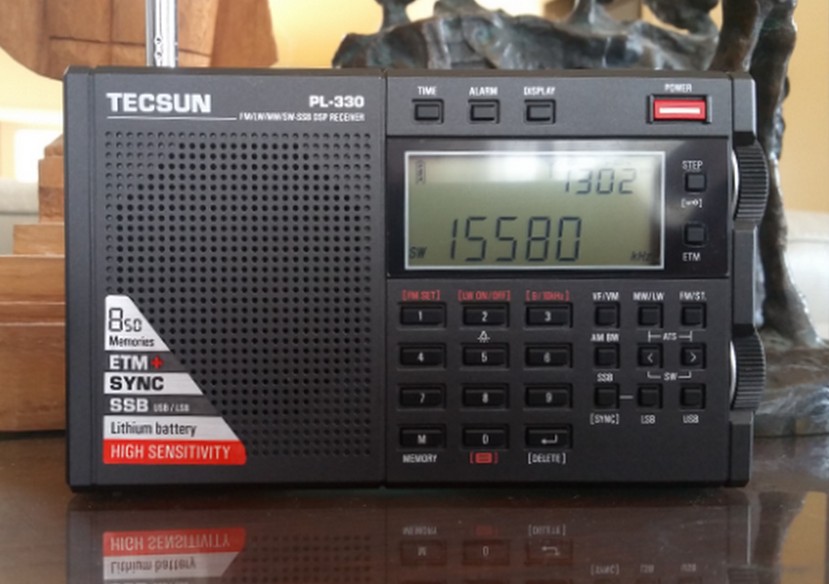
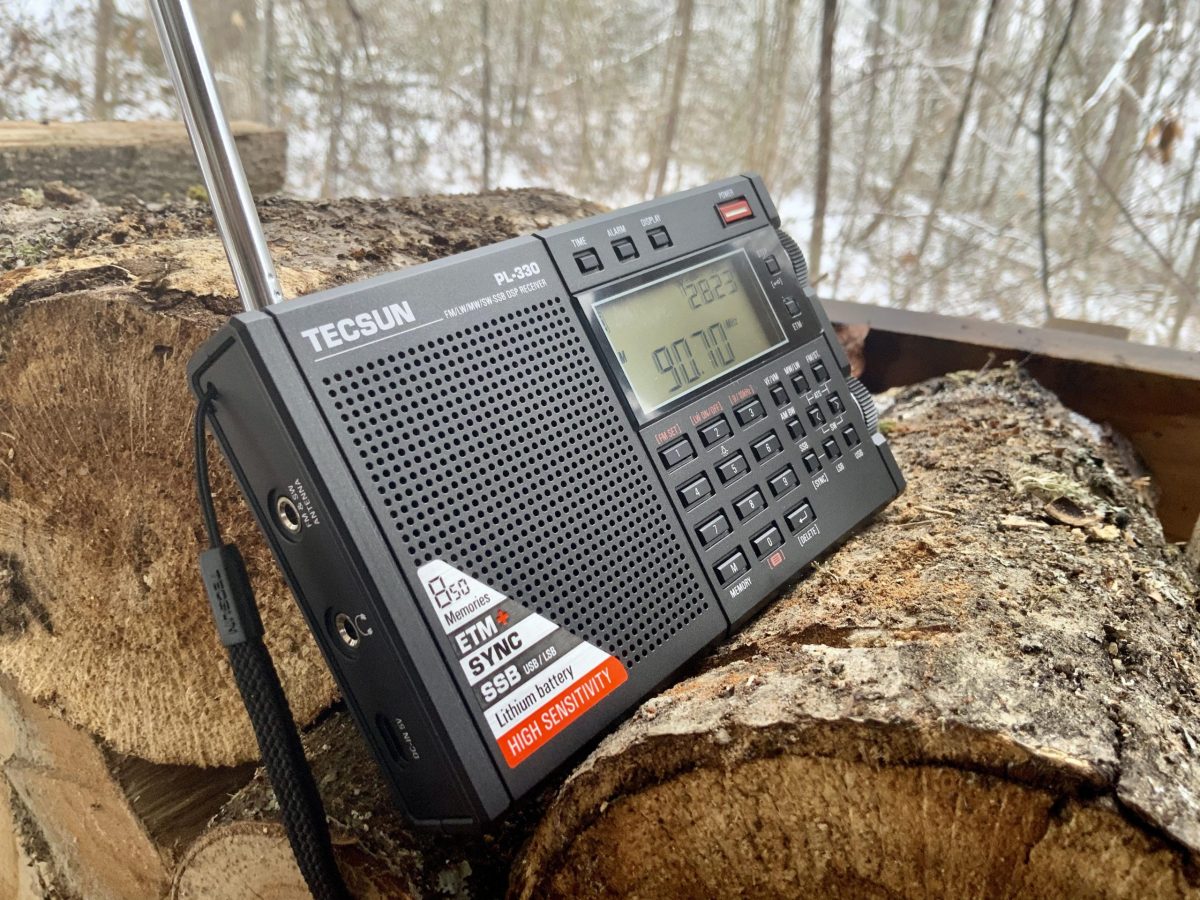
Tecsun PL-330: The Powerful Mini With One Serious Design Issue
by Dan Robinson
As SWLing Post readers know, I have a huge radio collection – including premium receivers and portables, now nearly 100 in all.
So, these days I am hesitant to add too many, but I continue to take interest in what companies such as Tecsun and Sangean are doing in the way of stuffing the latest chip technology and capabilities into portables radios.
The last receivers I reviewed included the Tecsun PL-990x, which has developed quite an enthusiastic following since its consumer version was released in 2020, and the Tecsun S-8800.
Out for some time now is the Tecsun PL-330. By now there are many reviews of it on You Tube and elsewhere.
It’s become a familiar observation for many of us – if this were still the 1960’s and 1970’s – even into the 1980’s, which could be considered the golden days of shortwave and we had receiver technology like this, well what a joy that would have been.
When I traveled around the world both before and after college, and professionally for Voice of America in the 1980s and 1990s, wow what a good time I could have had with today’s portables!
Some world band portables radios back then were superb performers. The Grundig Satellit series 500/700/600/650 come to mind – but these were not exactly what I would call small portables.
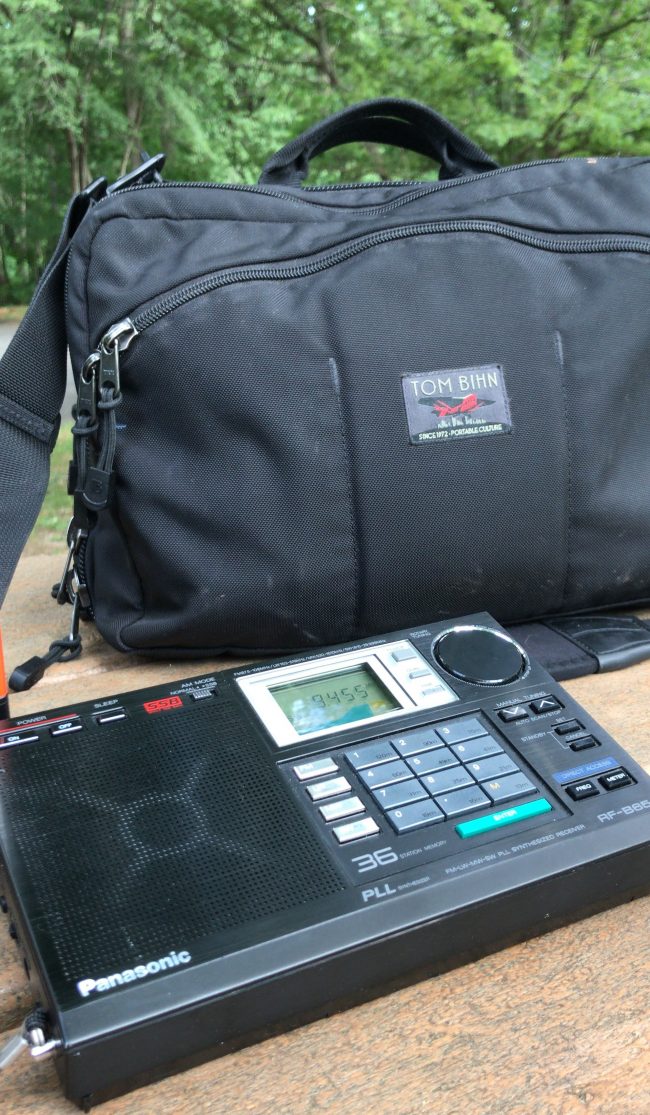
Paging through Passport to Worldband Radio from 1990 (wow, that’s 30 years ago!) you see others such as the SONY SW-1, Panasonic RF-B65, and of course, the SONY ICF-2001D/2010 which introduced killer synchronous tuning technology in the 1980s and remains popular today decades after it first appeared.
Also available were the SONY ICF-SW55 and later in competition with the 2010, the SONY ICF-SW77. Today, I have four SW-55s and two SW-77s and still use them regularly.
Tabletop receivers back in the good ol’ days offered multiple selectivity positions. One of those was the Lowe HF-225 (and later Europa version) along with the HF-250, Kenwood R-5000 and R-2000, ICOM IC-R71A, and Yaesu FRG-8800 among many others.
But as far as smaller portables go, features such as synchronous detection and multiple selectivity were still pretty limited, and a number of receivers didn’t offer selectable synchronous as was eventually offered on the Drake R8B and later production of the SW-8.
The RF-B65 by Panasonic – which today remains sought after for its amazing sensitivity – was hobbled by having a single selectivity position. Same with SONY’s SW-1 and SW-100, and 7600GR, though SONY’s PRO-80 had two bandwidths.
Indeed, it wasn’t until Eton brought out the E-1, with its three bandwidths combined with Passband Tuning (though no notch filter) that a portable finally reflected capabilities of some of the better tabletop radios (though lacking a notch filter).
The Grundig Satellit 800 was close in competition with the E-1 (though the earlier Sat 600/650 series also had multiple bandwidths) but was bulky.
Fast forward to 2021 – credit due to Tecsun and more recently to Sangean with its 909X2, for some years now we have enjoyed Asia-originated portables with multiple selectivity and synchronous mode, though sync implementation on some has left much to be desired.
Which is where the PL-330 comes in. When I look at the 330, I am reminded of one of the now ancient SONY portables, the ICF-4920 which was a super small slide-rule receiver that nevertheless was quite sensitive.
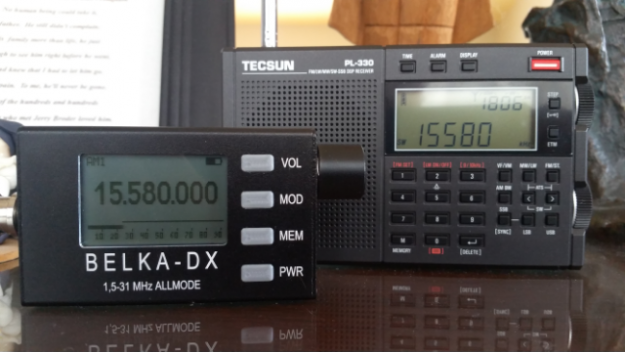
Like the 4920, which you could easily slip in a pocket, the PL-330 is a perfect travel portable. Only the Belka-DX SDR and still wonderful SONY SW-100 compete in terms of performance and size.
The 330 is basically a PL-990x in miniature: smaller speaker obviously, shorter antenna, no bluetooth capability or card slot. But as many people who frequent the Facebook groups have observed, pretty much anything the 990x can do, so can the 330.
This radio has ETM/ATS tuning, synchronous detection, multiple bandwidths in AM, SSB and MW, FM mono-stereo speaker control, alarm/timer functions, external antenna jack, display light, and other features.
Tecsun decided to go with a BL-5C battery here – the same with the new PL-368. I think this is unfortunate, since it requires one to obtain a number of those flat batteries if you want to travel and not have to re-charge. On the other hand, this is not a crippling design decision.
What is an unfortunate design problem, in my view, involves the simple question of tuning the receiver.
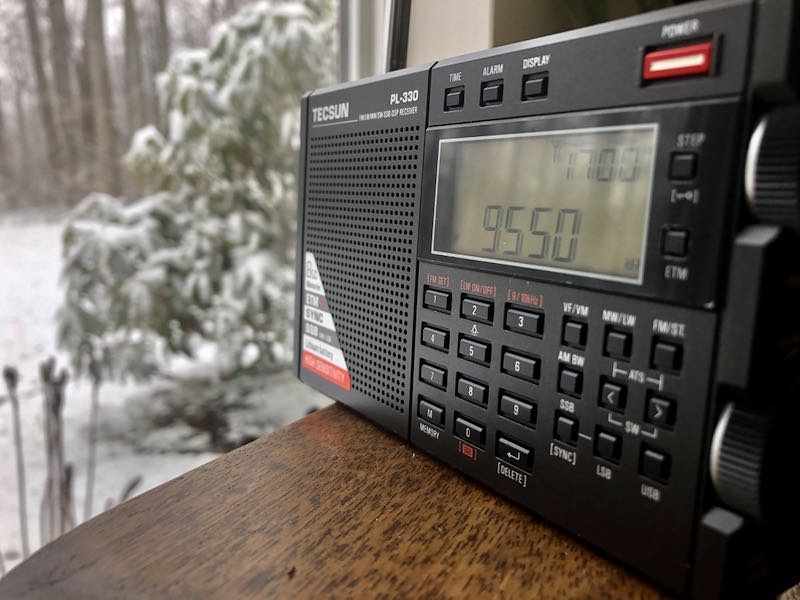
The main and fine tuning knobs on the right side of the PL-330 are embedded into the cabinet just far enough as to make easy rapid finger tuning of the radio nearly impossible.
In fact, in my testing it’s impossible to thumb tune the radio more than 10 kHz at a time. The same applies to using the lower knob which controls volume. When in FM mode, this issue make tuning just as frustrating almost forcing one to use rapid scan mode.
Another puzzler: Tecsun limited bandwidths in AM SW to three, while in SSB you have 5 bandwidth options. In AM mode, you have a 9 kHz bandwidth, another puzzling choice. Longwave too is limited to 3 bandwidths.
But overall, none of these problems really knock the PL-330 down very far. This is one mini powerhouse of a radio, one that makes you think “wow, if I had just had this back in 1967 or 1973 or 1982.
Some additional thoughts. My particular PL-330 was supplied by Anon-co but is a pre-production version and so does not have the latest firmware. Thankfully, I have not experienced the issue of SSB tuning running in reverse as others have.
NOTE: As most users know by now, but some newer users may not, you cannot charge one of these radios – whether Tecsun or Sangean – using the mini-USB port and use them at the same time. . . there is just too much noise introduced from the charging process.
This little mentioned feature: just as the Tecsun 909x has a re-calibration function, so does the PL-330. Tecsun itself initially declined to acknowledge this, but finally confirmed through Anon-co.
The procedure: Switch to LSB/USB. If the station is not zero beat, hit STEP button once and then quickly again to move the flashing display down arrow so it’s above the far right digit. Then fine tune the station for zero beat. Hold LSB or USB in for a couple of seconds. The LCD blinks. You then have zero beat – but be sure to repeat the process for LSB and USB.
I should mention that just like on the 990x, the re-calibration process doesn’t mean the receiver is then zeroed up and down the shortwave bands. You will likely have to repeat the process from, say 25 meters, to 19 meters, to 49 meters, etc.
I have come to enjoy using the PL-330 here in my house, though like other portables in my collection I need to position it in one particular corner of my home away from incoming cable TV lines.
The PL-330 and the Belka DX are currently king of the pile when it comes to my smaller travel portables.
I fully expect there will be no further receiver development by Tecsun after the PL-330/990x/H-510 radios – but that company will certainly have left us with some great receivers as the days of shortwave approach an end.
Many thanks to SWLing Post contributor, Mad Radio DXer, who writes:
Hi,
I want to let you & your readers know of a Tecsun PL-330 trick that I saw mentioned in the comments section of your blog some time ago which does not seem to have a lot of awareness. This is for using the telescopic antenna for the LW & MW bands, & it works for the 3305 version of the PL-330 which I understand is the export version. The original comment I saw said this also works for the Chinese version of the PL-330, before firmware 3305.
It is very easy to do & instructions are the following…
1. Turn on the radio.
2. Select either the MW or LW band.
3. Press the number 3 key down for a few seconds, until the display shows “CH-S”.
This means the MW & LW bands can now be received with the telescopic antenna.
4. To use the ferrite bar again, press the number 3 key until “CH-A” appears on screen.
This reminds me of the trick used for the Degen DE1103 PLL version which allows reception of the telescopic antenna for the MW band. However, in my opinion this is much easier to use on the PL-330 than the DE1103 PLL which could be very fiddly. Also this trick is most effective on the LW band, as I find Chinese portables are usually very weak on this part of the band which is good news for LW DXers. I hope you & everyone reading find this trick very useful & that it works.
Many thanks to SWLing Post contributor, Nick Booras, who writes:
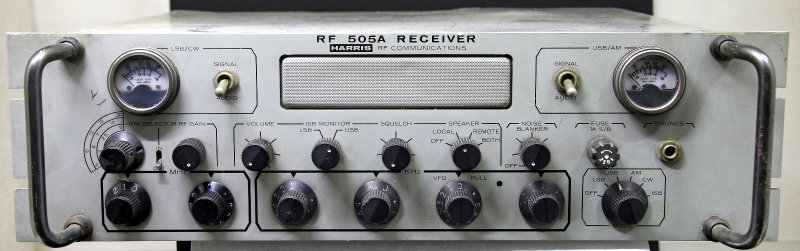
I just picked up a Harris 505A and I made a couple videos your viewers might like.
This radio is extremely sensitive as you can see in the comparison videos. I am very lucky to have picked it up. I will add that in the comparison to the Kenwood TS890 I didn’t try the 15 kHz filter on video. I did try it afterwards and I was surprised to receive the weak 6.085 signal with similar results to the 505. I thought for sure that that huge width would only let in more noise but I was wrong. I learned something new! But the 505A is still a super sweet machine.
Thank you for sharing this, Nick! What a wonderful addition to your radio collection. I’ve always loved the incredibly simple design of the 505A and have assumed it would have a very low noise floor.
One year ago, I posted an article about making the most of social distancing as the world started locking down due to the rapid spread of Covid-19. Here in March 2021, the news is looking much better: vaccines are being distributed at a record pace across the globe and number of cases and deaths are mostly on the decline.
Looking back
As I look back at the Social DX Bucket List I made last year, I’m happy to see that I actually accomplished about 64% of the goals I listed. I knew some of those goals would take well over a year to achieve (the QRP EME one especially).
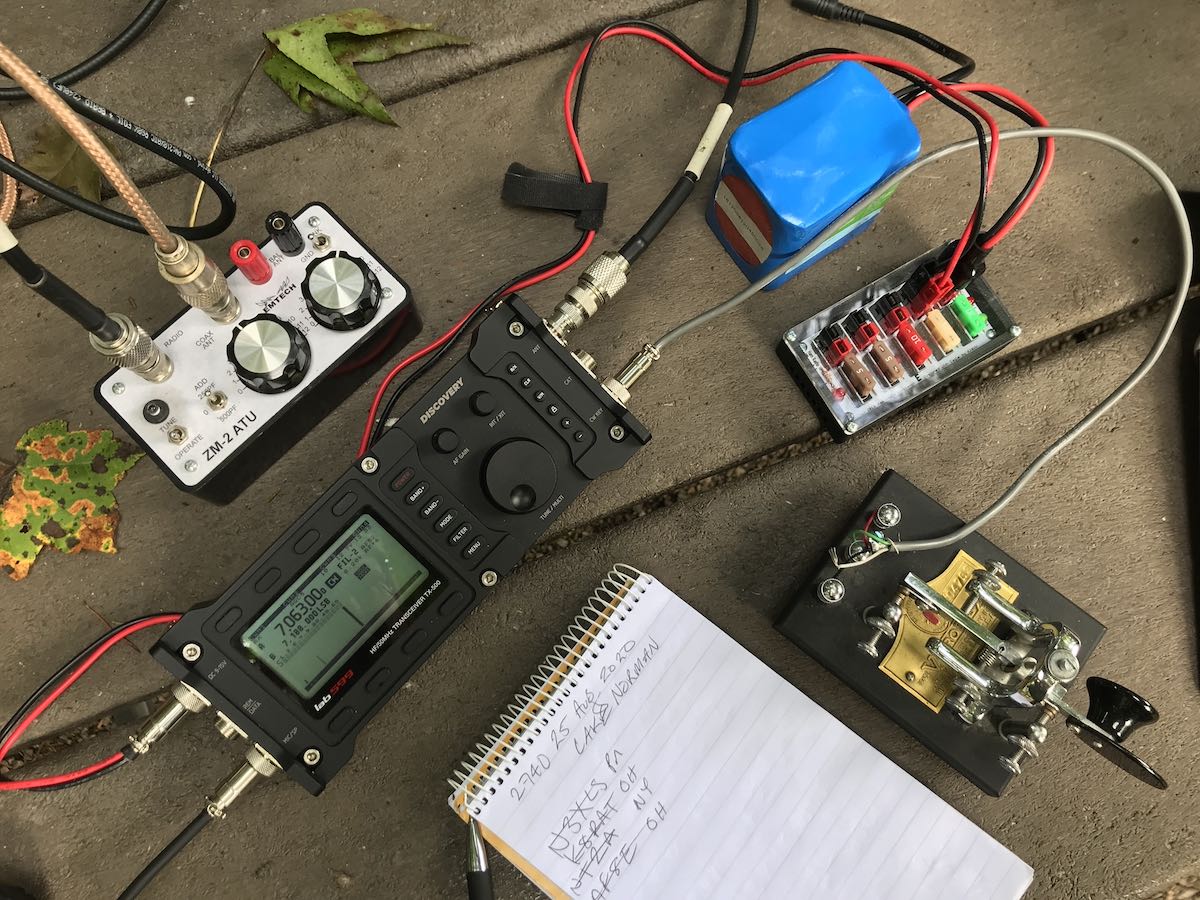
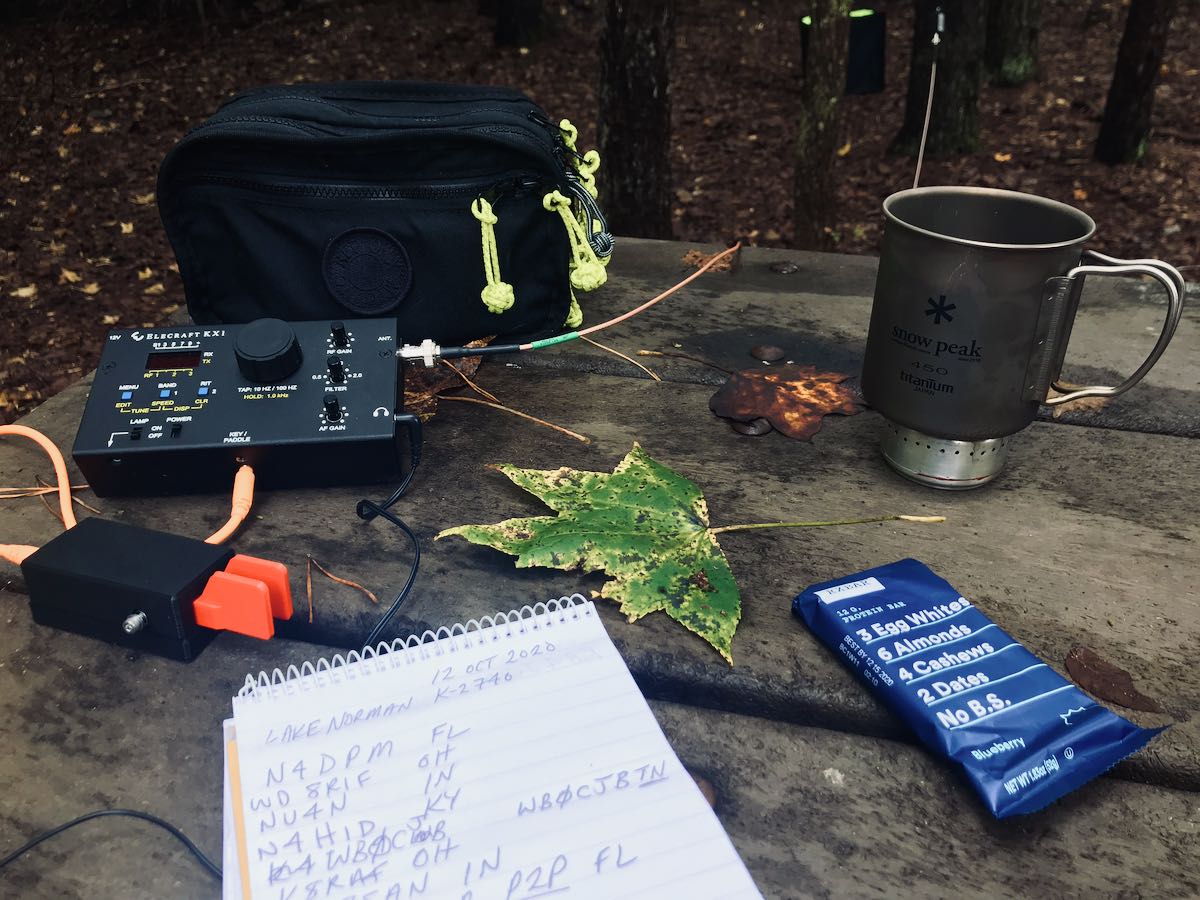
In particular, I’m chuffed that I braved up and started doing Parks On the Air (POTA) and Summits On The Air (SOTA) activations in CW (Morse Code). That was a huge step for me and I’ll freely admit: I was nervous about it. But in July 2020, I managed to do my first CW activation and since then it has become my choice mode of operating in the field. CW is such a simple mode and so efficient–plus it gives me a sense of connection with the roots of radio communications.
I also accomplished a few things I never set out to do:
Both of my 13 year old daughters studied for and passed their Technician class exams. One just passed her General as well.
Not a typical radio year for me
In a “normal” year, I do way more SWLing than I do ham radio activity.
Last year, I started doing caregiving for my parents in my hometown–I’m typically there 2-3 days a week. While I’ve done shortwave listening and even a little MW DXing in my hometown, I typically don’t have a lot of time, especially in the evening hours. I just want to hit the sack early. QRM is also debilitating there and while I’d like to install a permanent Loop On Ground antenna to mitigate the noise (you heard that right, Andrea!) I’m not entirely sure I’d even have the dedicated listening time to justify it. When I’m there, I like to spend quality time with my folks.
In general, I’ve had much less free time. Indeed, if you’ve written to me via email, you’ll know this based on how long it’s taken me to reply. It can take several weeks especially if the reply requires a detailed response (which many do).
En route to, and on the way back from my hometown, I’ve found that doing park and summit activations has been very rewarding. Last year, I believe I completed a total of 82 park activations.
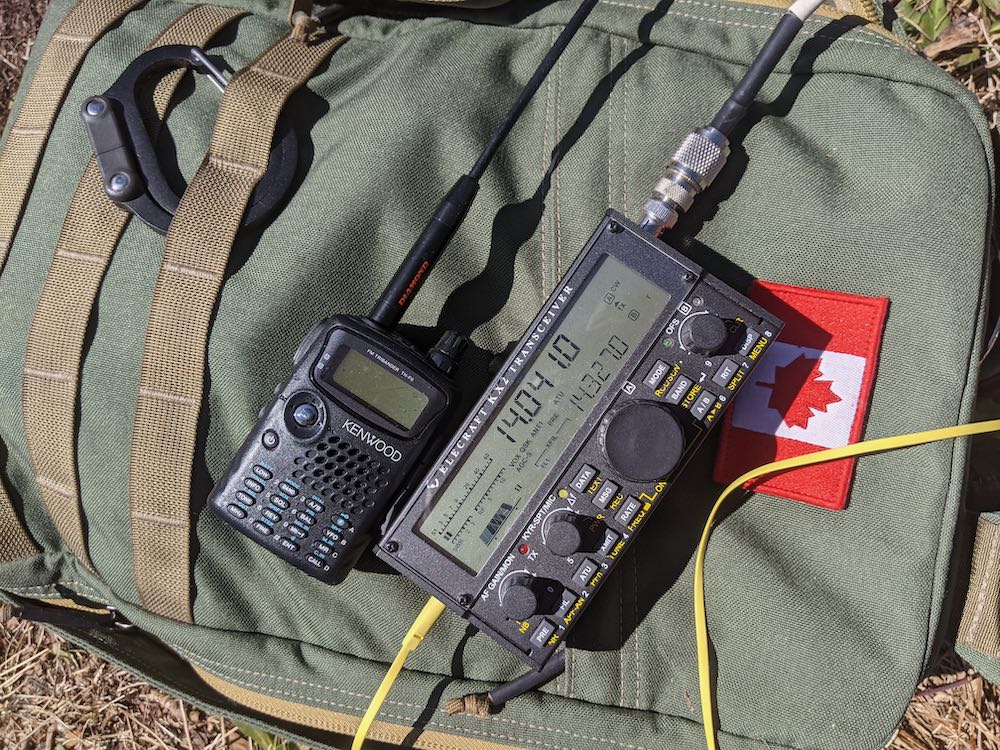
POTA has given me an excuse to explore public lands I’ve never visited before. Plus, I love nothing more than taking radios to the field–both receivers and transceivers.
Hamming and SWLing
At the end of the day, I’m an SWL and a ham radio operator. I find the two activities complimentary.
Side note: As I mentioned in my Winter SWL Fest presentation this year, it saddens me when I receive angry emails from readers after I post items that are ham radio related. We’ve upwards of 7,000-10,000 daily readers on the SWLing Post and the number of complaints are a teeny, tiny fraction of our readership. I only receive messages like this about once a month and they typically say something akin to “I don’t like the ham radio stuff, so if you don’t stop posting it, I’m leaving!” (FYI: That’s a real quote taken from the last one I received in January). I can only assume that at some point in the past, a ham radio operator has been a jerk to this and other radio enthusiasts. It’s a shame, too. I hate seeing the negative impact of one loud troll compared with the encouragement and support of much better people. All of my ham radio friends are not only supportive of SWLing, but almost all got their start in radio via the shortwaves. I’m certainly a case in point.
I love all things radio and I believe the SWLing Post is a reflection of that. If it offends you, then it might make sense to surf somewhere else.
Now where was I? Oh yeah…
POTA and SOTA outings have helped to satisfy some of my travel cravings as well. I miss going to radio conventions, hamfests, and especially traveling internationally with my family. We are a family who love national parks, forests, and other wildlife areas. Having an excuse to explore public lands we haven’t visited before has been amazing fun.
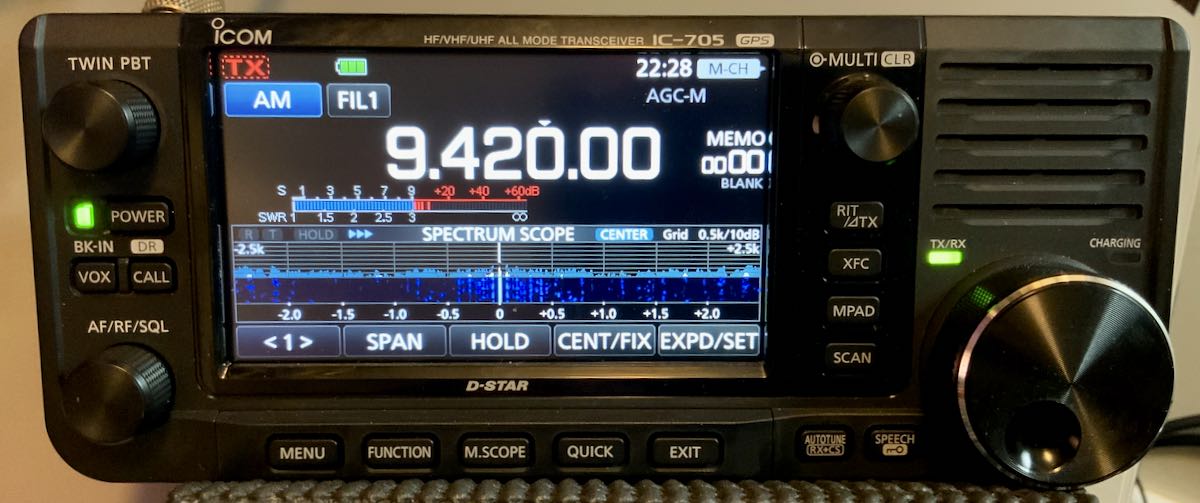
After POTA activations, I’ll often do a little SWLing since I already have an external antenna up and it’s typically connected to a good general coverage transceiver in a spot with zero RFI or QRM. I’ve especially enjoyed my DXing sessions with the superb Icom IC-705.
Listening habits
One indicator that I did less radio listening last year was the low number of recordings I made. I checked my audio folder recently and saw that I only made a couple dozen recordings–most were staple broadcasters, not rare or special DX.
At the end of the day, I realize that when I do SWLing sessions I like to have dedicated time–at least an hour or two–with headphones on, losing myself on the radio dial. I simply haven’t had many opportunities this past year to make that a reality.
That’s okay, though. The great thing about the shortwaves is that they’re always there, patiently waiting for us to dive back in!
Looking forward
I’m really not sure what’s in store for me this year, but I know it’ll involve a lot of radio time and that pleases me to no end. I’ve made a few fun goals, but my hope is that, by the end of the year, I may even be able to do some proper travel–maybe even take a flight!
I do know this: I have an even more profound appreciation for my radio enthusiasm as I realize it’s the perfect space to travel and explore the world no matter how “locked down” things are. Based on feedback from readers and contributors to this site, I know I’m not the only one who feels this way.
How about you?
Did your radio activity change or pivot this past year? Did you have more or less time to hit the airwaves? Please comment!
Many thanks to SWLing Post contributor, Paul Walker, who shares the following announcement:
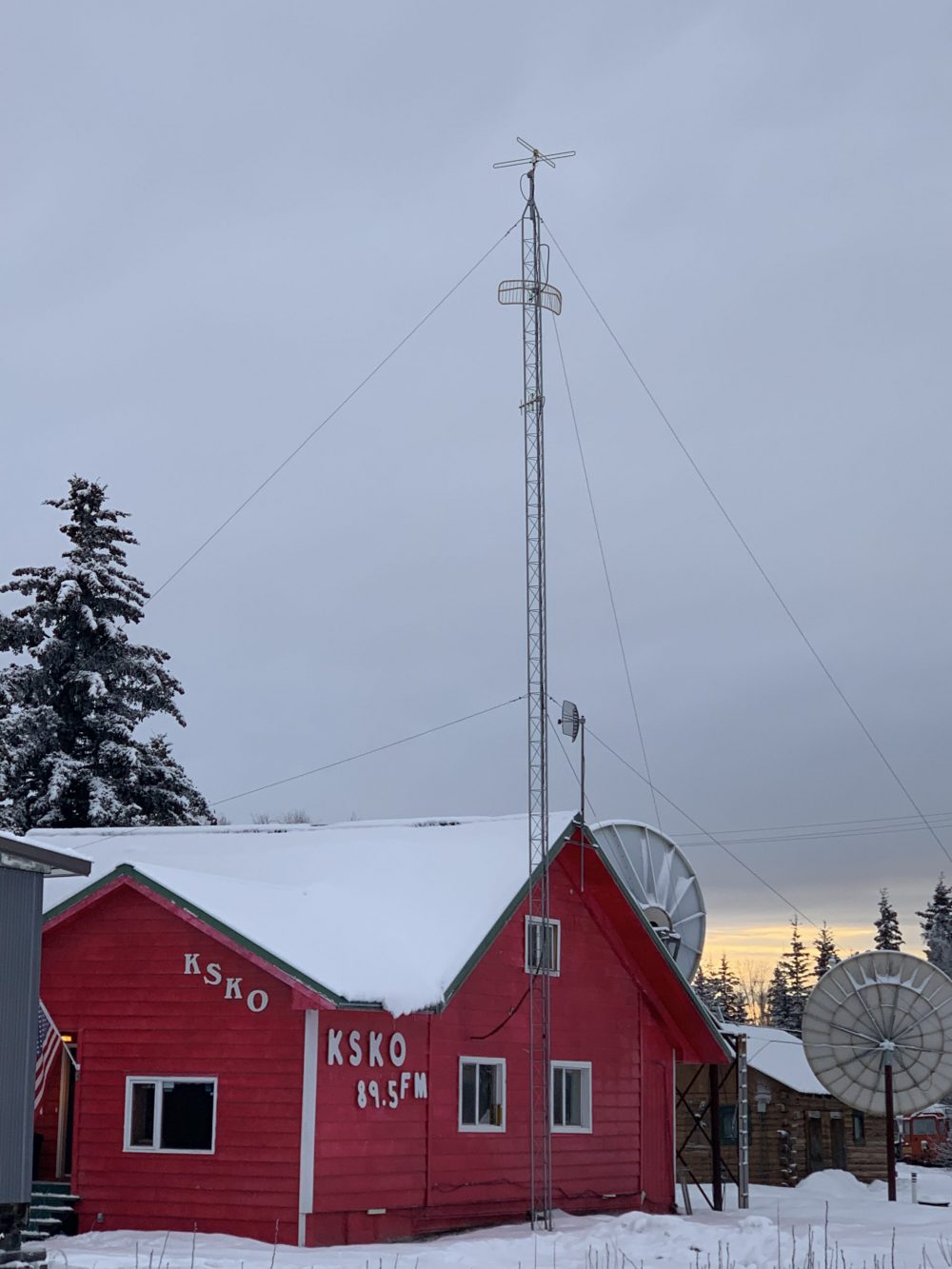
Tune into WRMI for “The LIVE Friday Night Virtual Dance Party Request Party Thingy” from community station 89.5 KSKO McGrath, Alaska.
The broadcast will take place on Saturday, March 20th 2021 from 0300 to 0500 UTC on 7570 kHz for the west coast and 7780 kHz for the east coast. KSKO Program Director Paul Walker is going to be hosting the show and WILL take requests by phone at (907) 524-3001 DURING the show!
It’ll be all kinds of music from the 60s to today from all genres, so there’s probably going to be something for everyone. Paul says, “I’m funding the WRMI airtime costs from my own personal pocket, not the stations bank account. I’m doing it just because, for fun.. because I can.. because why not?”
Thanks, Paul! I’ll certainly tune in and perhaps even call in!
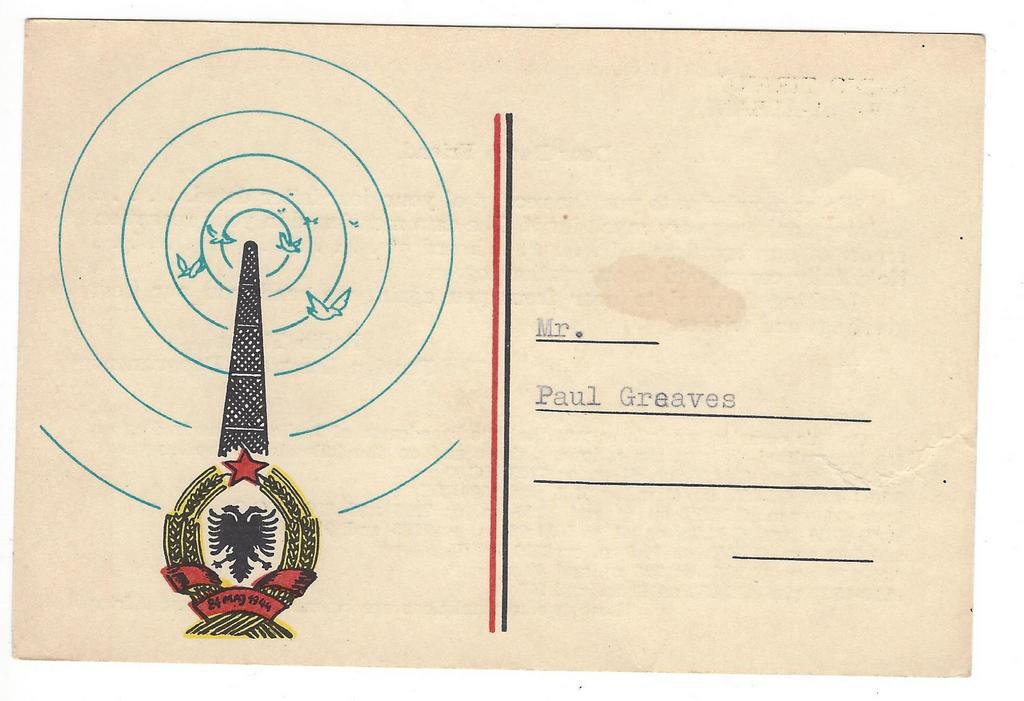
Lots of fond memories listening to Radio Tirana, Albania going back to the late 1950’s. Their broadcasts back then were loaded with anti-West propaganda and more. Their interval signal is a classic to SWL people. Always remember the female announcer on the station. Her sign-off phrase was “and goodnight dear listeners.” This came after much in the way of negative propaganda. When she would say her sign off you got the idea she was tucking you into bed for the night. It had that quality and sincerity to it. Love to know who this person was or if she is still alive. Give you an idea how much SWL I did since around 1953 to present day.
Thank you for your comment, Richard! If you can identify this announcer with Radio Tirana, please comment with details!
Please support this website by adding us to your whitelist in your ad blocker. Ads are what helps us bring you premium content! Thank you!

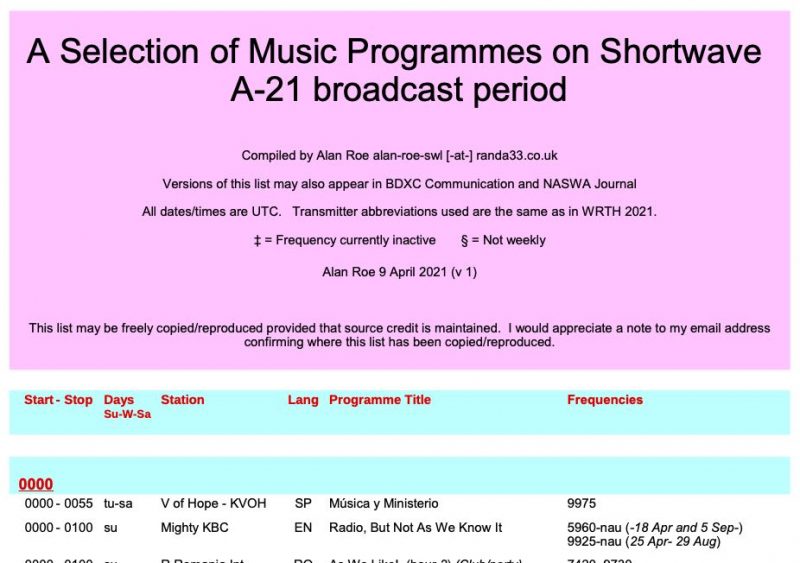 Many thanks to SWLing Post contributor, Alan Roe, who shares his latest A21 season guide to music on shortwave.