Category Archives: Broadcasters

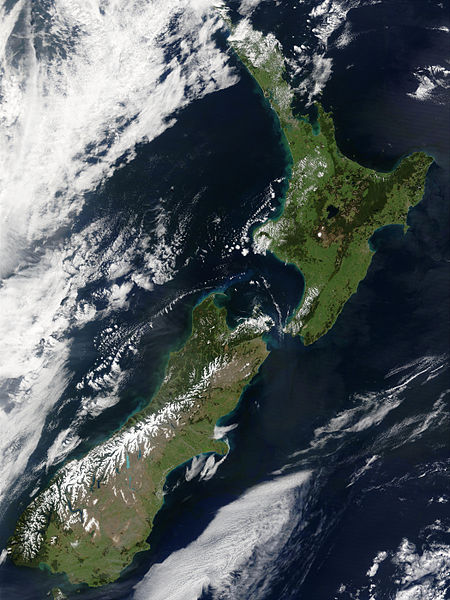
Shortwave Radio Recordings: Radio New Zealand International

450px-New_Zealand_23_October_2002For your listening pleasure: three hours of Radio New Zealand International.

This broadcast was recorded on 9,700 kHz, starting at 07:59 UTC on April 5, 2014. This weekend RNZI broadcast includes Peter Fry’s Saturday Night music request show–always a treat to hear.

Click here to download this recording as an MP3, or simply listen via the embedded player below. Of course, you will automatically receive this recording if you are subscribed to the Shortwave Radio Audio Archive.

Shortwave Radio Recordings: Radio Romania International

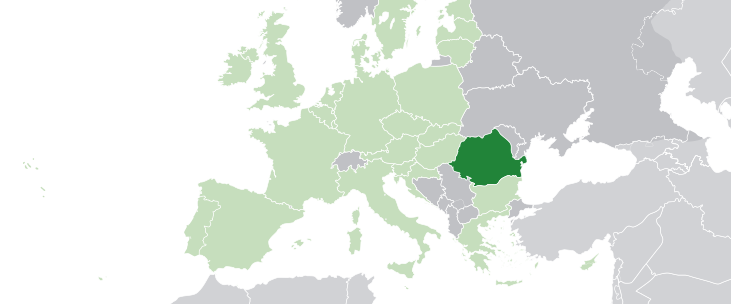
RomaniaOnMapFor your listening pleasure: Radio Romania International‘s English language service.

I recorded this broadcast with my WinRadio Excalibur on April 5, 2014, starting at 05:30 UTC on their new A14 frequency of 7,900 kHz.

This broadcast originates from RRI‘s Galbeni transmitter site.

Click here to download the recording as an MP3, or simply listen via the embedded player below:

Click here to view other posts mentioning Radio Romania International.

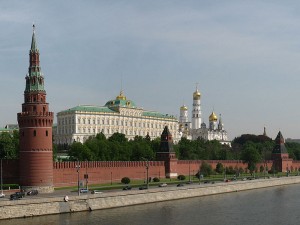
Russian “clamps down” on US media, US to increase funding for RFE/VOA

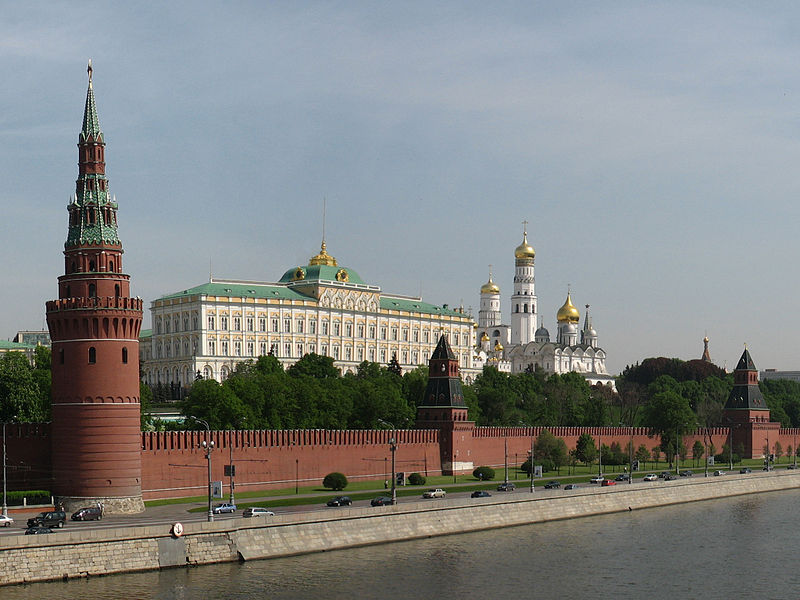
Photo of Kremlin: ??????? ?. (Julmin) (retouched by Surendil) via Wikimedia Commons

Photo of Kremlin: (Julmin) (retouched by Surendil) via Wikimedia Commons

This morning, I noticed the following press release from the US Broadcasting Board of Governors (BBG):

Russia Clamps Down Further On U.S. International Media

The Broadcasting Board of Governors has condemned a recent decision by Russian authorities to cut off all remaining radio transmissions by U.S. international media in Russia.

In a one-sentence letter dated March 21, Dmitry Kiselev, the director of the information agency Rossiya Segodnya (Russia Today), stated that “we are not going to cooperate” with the BBG’s request to continue a long-standing contract for broadcasting on Russian soil. Effective at the end of March, this decision removes the last vestige of Voice of America programming – including news in Russian and English-language lessons – from a local frequency in Moscow (810 AM).

“Moscow has chosen to do the wrong thing and restrict free speech,” said BBG Chairman Jeff Shell. “This is a fundamental value shared by many countries around the world. The BBG will continue to reach audiences in Russia through digital platforms and via satellite transmissions.”

Distribution of VOA and RFE/RL programming in Russia reached a high point in 2005, when VOA Russian programming was distributed on a nationwide television network and both VOA and RFE/RL had extensive partnerships with domestic Russian radio stations. But starting in that year, the Russian government turned greater attention to these stations and asked them all to re-apply for their licenses. And beginning in 2006, by denying the licenses of the stations that re-applied and intimidating the others, Russian authorities systematically eliminated domestic radio distribution of BBG-supported programs and almost all television distribution. In 2012, Russian authorities forced RFE/RL off its last remaining domestic radio outlet, an AM frequency in Moscow.

“We urge Mr. Kiselev and other Russian authorities to open Russian airwaves to more of our programs and those of other international broadcasters,” Shell added. “We’re asking for an even playing field: As Moscow’s media crackdown deepens, Russian media – including Russia Today television, which is under Mr. Kiselev’s authority – enjoy open access to the airwaves in the United States and around the world. The Russian people deserve the same freedom to access information.”

Kiselev, known for his strident anti-Western and homophobic views on Russian state television, was appointed in December 2013 to lead Russia Today. At the same time the Voice of Russia and the RIA Novosti news agency were merged into Russia Today.

The move also comes amid a fast-moving campaign to target opposition and independent media. Lists of “traitors” have been circulating in Moscow, and pro-Kremlin analyst Sergei Markov recently added RFE/RL’s Russian Service, Radio Liberty to his “list of traitors” on Facebook. In the same vein, politonline.ru, a part of the Pravda.ru media holding, has created Russia’s first top-20 list of the most “anti-Russian” news outlets. This list, which places Radio Liberty sixth, is being shared by influential Russian political advisors such as Alexander Dugin, who wrote on his Facebook page that “this is the order in which Russia’s most contemptible media outlets will be closed or blocked.”

Russians are increasingly turning to the Internet and social media for their news. VOA’s digital strategy incorporates content across platforms. In addition to live interactives with domestic television channels, such as Russian Business Channel, VOA’s web-TV show, Podelis, allows users to connect and engage with the content in real time using social media. Podelis, which means “share” in Russian, provides a unique opportunity to engage in discussions about current events, Russian politics and U.S.-Russia relations. VOA’s social media following in Russia has grown significantly and visits to VOA’s website have doubled every year since 2008.

Radio Free Europe/Radio Liberty’s Russian Service provides 24 hours of radio programming via the Internet and satellite, a website that was visited more than 6.5 million times in March, and a strong presence on social media such as Facebook and Twitter. RFE/RL has started a multi-hour, daily video stream for Russia consisting of coverage of the most important events with reactions from Russian citizens as well as opinions from the West. The stream also includes live roundtable ?discussions and expert interviews on Russia.

On Wednesday, BBG Watch posted an article with details about new legislation that would increase funding for Russian, Ukrainian and Tartar language services to “counter the propaganda that is supported by Russia.”

Here’s a quote from a press release in their article:

“S. 2183 is international broadcasting legislation originally authored by Chairman [Ed] Royce (and included as Section 103 of the Ukraine Support Act (H.R. 4278) that the House passed last week). The legislation authorizes increased funding for Radio Free Europe/Radio Liberty and the Voice of America to enable them to expand their broadcasting in Russian, Ukrainian, and Tatar. This legislation requires the Broadcasting Board of Governors (BBG) to counter the propaganda that is supported by Russia and increase the number of reporters in eastern Ukraine. In addition, this legislation recognizes the threat to free media that neighboring states are under and bolsters the Balkan and Moldovan language services.”

Is it me, or is this starting to feel like the Cold War again?

I think the BBG would be wise to take a close look at the VOA Radiogram. In this case, the target audience is highly computer literate and could easily decode VOA transmissions with a simple shortwave radio and free, open-source software.

STF Radio International this weekend via KBC

STFradioLast week, I received an email from STF Radio International, a new venture that broadcasts digital modes over shortwave (similar to VOA Radiograms). I asked for a description of their mission–here’s their reply:

“STF Radio is primarily a narrowcasting project, a means to deliver specialized content to specific audiences in remote locations. And due to the nature of shortwave, we’re inviting the world to listen in.

The (possible) series of special multimedia broadcasts will continue the exploration of new possibilities with aging technology. We are currently preparing a 1-hour program for broadcast later in April. Depending on audience response, there may be additional programs throughout the year.

We will continue running tests leading up to the 1-hour show. The second round of tests will begin soon, with another segment of digital modes confirmed for this weekend on The Mighty KBC, same time/frequency as last weekend.”

If you would like to decode STF Radio International‘s broadcast, tune in The Might KBC on 7,375 kHz, April 6, 2014 from 00:00 – 2:00 UTC (Saturday evening in North America). STF indicates that their broadcast will be between 01:30 – 2:00 UTC.

The latest information about STF Radio broadcasts can be found on their website: http://stfradio.com

BBC World Service longevity vs. commercialization

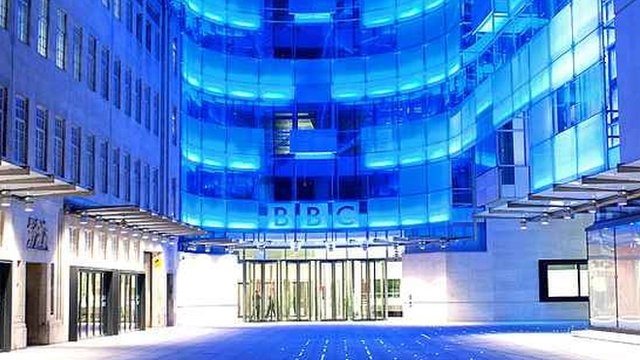
(Image source: BBC)

(Image source: BBC)

Back in October 2010, we learned that the BBC would take over the cost of the World Service from the Foreign Office from April 2014. Shorty thereafter, the BBC World Service was dealt a 20% budget cut which eventually lead to the loss of 550 jobs. Now April 2014 is upon us.

The BBC, which is largely funded by a mandatory TV license fee, must now share its budget with the World Service. But even after the announcement of this consolidation, the TV license fee was not increased accordingly.

And then there’s another over-arching question: Will the BBC be a good steward of the World Service? BBC World Service boss, Peter Horrocks was recently asked this question by The Guardian:

“The switch from government to licence fee funding prompted fears that if the BBC faces further downward pressure on budgets – surely inevitable – it will be the World Service that suffers rather than a domestic channel such as BBC2. “Of course there may be people who make those arguments,” concedes Horrocks. But he argues that licence fee payers directly benefit from the World Service’s role as an ambassador for the UK and from its journalists who increasingly contribute to the BBC’s domestic output. Plus, it has nearly 2 million listeners in the UK every week (including its overnight broadcasts on Radio 4).”

Horrocks is being optimistic. After all, while not on the scale of the BBC, the death of Radio Canada International had much to do with the fact that the domestic news arm, the CBC, found RCI an easy cut. When the CBC was dealt a 20% overall budget cut, it cut RCI’s budget by 80%, effectively firing Canada’s radio “ambassador.”

Moving forward, the BBC World Service is dipping its feet into commercialization to prop up their relatively meager budget and to lighten the load on the TV license payee. As my buddy Richard Cuff says, this is a slippery slope–and as Peter Horrocks states, It’s not that easy to get advertising in Somalia.

If you would like to read more about the changes at the BBC World Service, check out these most recent articles:

You can also follow our tag: BBC World Service Cuts

A second life for the VOA Delano site?

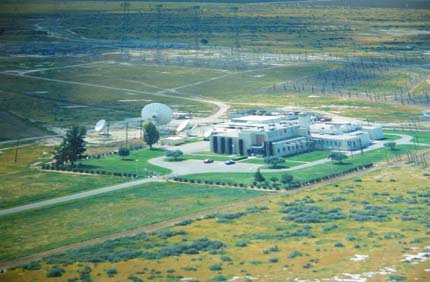
VOA-Delano

VOA Delano campus

Much like VOA Site A, the VOA Delano, California site has been turned over to the Government Services Administration (GSA). After consideration for federal use, the GSA reached out to the U.S. Department of Housing and Urban Development (HUD), who expressed an interest in the site. If approved, HUD could use the site to house the homeless or, possibly, create an affordable housing campus. We won’t know the future of the site until later this year.

Many thanks to several of you who sent a link to this recent article in The Bakersfield Californian which not only talks about the history of the Delano site, but also its future.

Though I know it’s not in the realm of possibility, I would love to see the site donated to a non-profit broadcaster or university who could carry out HF broadcasts and/or research.

On a side note, several months ago, I came across a declassified 2005 Report of Inspection for the Delano Transmitting Station. It makes for a fascinating look into Delano when it was once fully operational.

Click here to download the Report of Inspection as a PDF.

The Voice of Korea and an inspirational story

FlagNorthKoreaMany thanks to Frank, a contributor at the Shortwave Radio Audio Archive, for this recording of the Voice of Korea’s English language service.

Frank recorded VOK from his home in Europe on March 27, 2014, on 7,570 kHz, starting at 21:00 UTC, using a Kenwood R-5000 receiver and a Wellbrook ALA 1530+ antenna.

Click here to download the recording as an MP3, or simply listen via the embedded player below:

Of course, the Voice of Korea is all about broadcasting hard-core propaganda–a type of broadcast I find incredibly fascinating. But let there be no mistake, to live in the DPRK is to live under one of the world’s most oppressive regimes. If you want to hear a moving, inspirational story about one North Korean woman’s escape from the DPRK, check out Hyeonseo Lee’s: My escape from North Korea, a TED Talk:

Remember, you can subscribe and download the Shortwave Radio Audio Archive collection (free!) as a podcast via iTunes or the SWAA RSS feed.