Category Archives: Broadcasters

ABC News: End of shortwave radio service ‘could be life threatening’

(Source: ABC News via Richard Cuff)

An Indigenous ranger group in the Northern Territory says the ABC’s decision to end its shortwave radio service could be life threatening.

The ABC announced this week its three HF shortwave radio transmitters at Katherine, Tennant Creek and Roe Creek (Alice Springs), would be switched off on January 31, 2017.

ABC Radio will continue to broadcast on FM and AM bands, via the viewer access satellite television (VAST) service, streaming online and via the mobile phone application.

Mark Crocombe from the Thamarrurr Rangers, in the remote community of Wadeye, said the rangers spent days and sometimes weeks at a time away in the bush and out on sea patrols.

He said the group relied on the ABC’s shortwave radio for weather reports and emergency information.

“Otherwise you have to call back to the base on the HF radio to ask people [there], but then you can’t listen to the report yourself, you are relying on someone else’s second-hand report,” Mr Crocombe said.

Mr Crocombe said on previous bush trips he had received warnings of cyclones via the ABC’s shortwave service, without which he would not have had any notice.

“Sure, it is expensive to keep the shortwave radio service going, but during cyclones, for the bush camps and people on boats, that is their only way of getting the weather reports,” he said.

“It could be life threatening, if you are out and you don’t know a cyclone is coming.”

Mr Crocombe said the VAST service did not work during cloudy weather, especially during monsoons and cyclones.

[…]

[Northern Territory Cattleman’s Association] President Tom Stockwell, who lives on Sunday Creek Station with no access to AM or FM radio or mobile phone coverage, said the ABC’s decision to focus on digital transmission ignored people in the bush.

“It affects a big area of Australia and it affects those people that are remote from other forms of communication that rely on radio network,” he said.

“The ABC argument that it’s a 100-year-old technology doesn’t stack up. Electricity is 100-years-old — is the ABC going to get rid of electricity as well?” […]
Click here to continue reading an the ABC News website.

Radio Garden: An addictive way to scan online radio stations

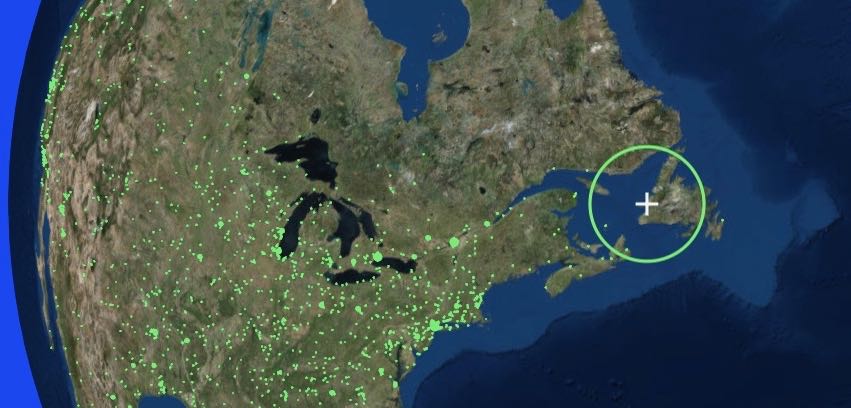
Many thanks to SWLing Post contributors David and Monti who share a link to Radio Garden, a new web-based interface for exploring online radio stations across the globe.

[…]Radio Garden, which launched today, is a similar concept—a way to know humanity through its sounds, through its music. It’s an interactive map that lets you tune into any one of thousands of radio stations all over the world in real time. Exploring the site is both immersive and a bit disorienting—it offers the sense of lurking near Earth as an outsider. In an instant, you can click to any dot on the map and hear what’s playing on the radio there, from Miami to Lahore to Berlin to Sulaymaniyah and beyond.

The project, created for the Netherlands Institute for Sound and Vision by the interactive design firms Studio Puckey and Moniker, was built using an open-source WebGL globe that draws from thousands of radio stations—terrestrial and online-only streams—overlaid with Bing satellite imagery.

The result is the best kind of internet rabbit hole: Engrossing, perspective shifting, provocative, and delightful. […]

Read the full article at The Atlantic.

Click here to use Radio Garden.

Medium wave SDR spectrum with over 20 transatlantic signals: a quick tour


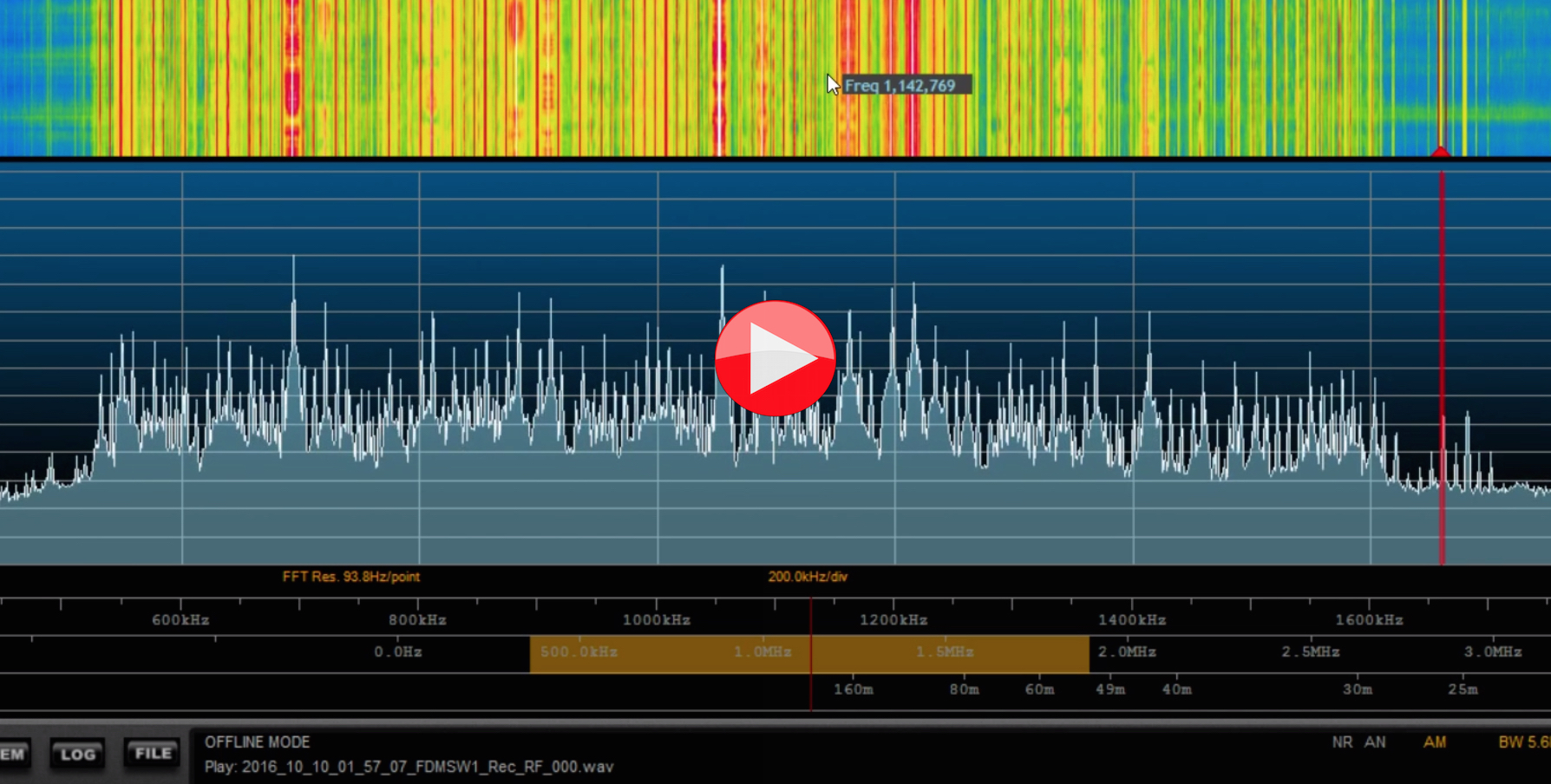
Tour of a medium wave spectrum with over 20 transatlantic signals

Hi there, I thought some of the readers of SWLing Post might be interested in a review of a MW spectrum with multiple transatlantic signals – all with audio. This is one of the recordings I took with the 200 metre Beverage antenna and although I haven’t properly counted, I believe it generated about 50 catches that were either personal firsts or best-ever receptions. You will note that this video is nearly 20 minutes long, whilst the recording is only just over 5 minutes, thus to capture the signals listed below and demonstrate audio to you, it was necessary to effectively ‘rewind’ a few times. I haven’t annotated the video, however, the stations I’ve paused on to demonstrate audio are listed below. There are actually more catches in this spectrum, but hopefully the video will give you a good idea of propagation on the morning of 10/10/16 and the effectiveness of the Beverage/Elad FDM DUO combination. Also note, I didn’t have time to fully optimise the demodulation settings, so for example, I haven’t used AM SYNC in this demonstration. Individual videos of all catches, with optimised settings appear on my YouTube channel Oxford Shortwave Log. I hope you enjoy it! Recorded in Oxford UK on 10/10/16 at 02:00 hrs UTC. Thanks for watching and I wish you all great DX!


590 kHz VOCM Saint John’s
600 kHz CBNA Saint Anthony
620 kHz CKCM Grand Falls-Windsor
660 kHz WFAN New York
710 kHz WOR New York
730 kHz CKAK Montreal
750 kHz CBC Radio 1 Bonavista Bay
790 kHz WAXY (presumed)
800 kHz VOWR
970 kHz WBGG
1010 kHz CFRB Toronto
1030 kHz WBZ Boston
1130 kHz WBBR New York
1190 kHz WLIB New York
1280 WADO New York
1390 WEGP Presque Isle
1400 kHz CBC Radio 1 Gander
1440 kHz WRED Westbrook
1510 kHz WMEX Boston
1520 kHz WWKB Buffalo
1570 kHz XERF La Poderosa, Mexico
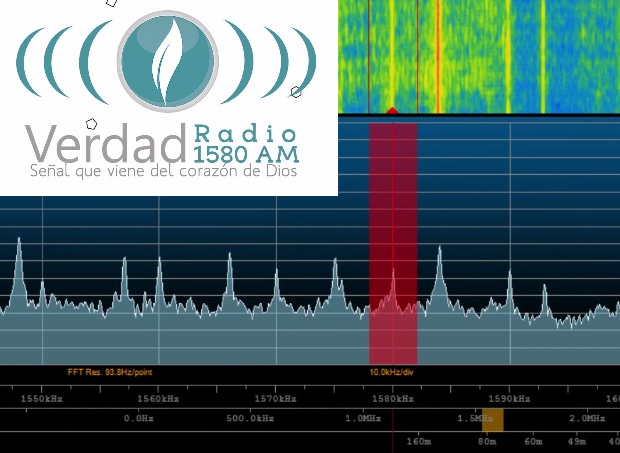
1580 kHz HJQT Verdad Radio 1580 kHz, Bogotá, Colombia
1610 kHz Caribbean Beacon, Anguilla
1660 kHz WGIT Puerto Rico


Clint Gouveia is the author of this post and a regular contributor to the SWLing Post. Clint actively publishes videos of his shortwave radio excursions on his YouTube channel: Oxford Shortwave Log. Clint is based in Oxfordshire, England.

Washington Post: “A big change to U.S. broadcasting is coming”

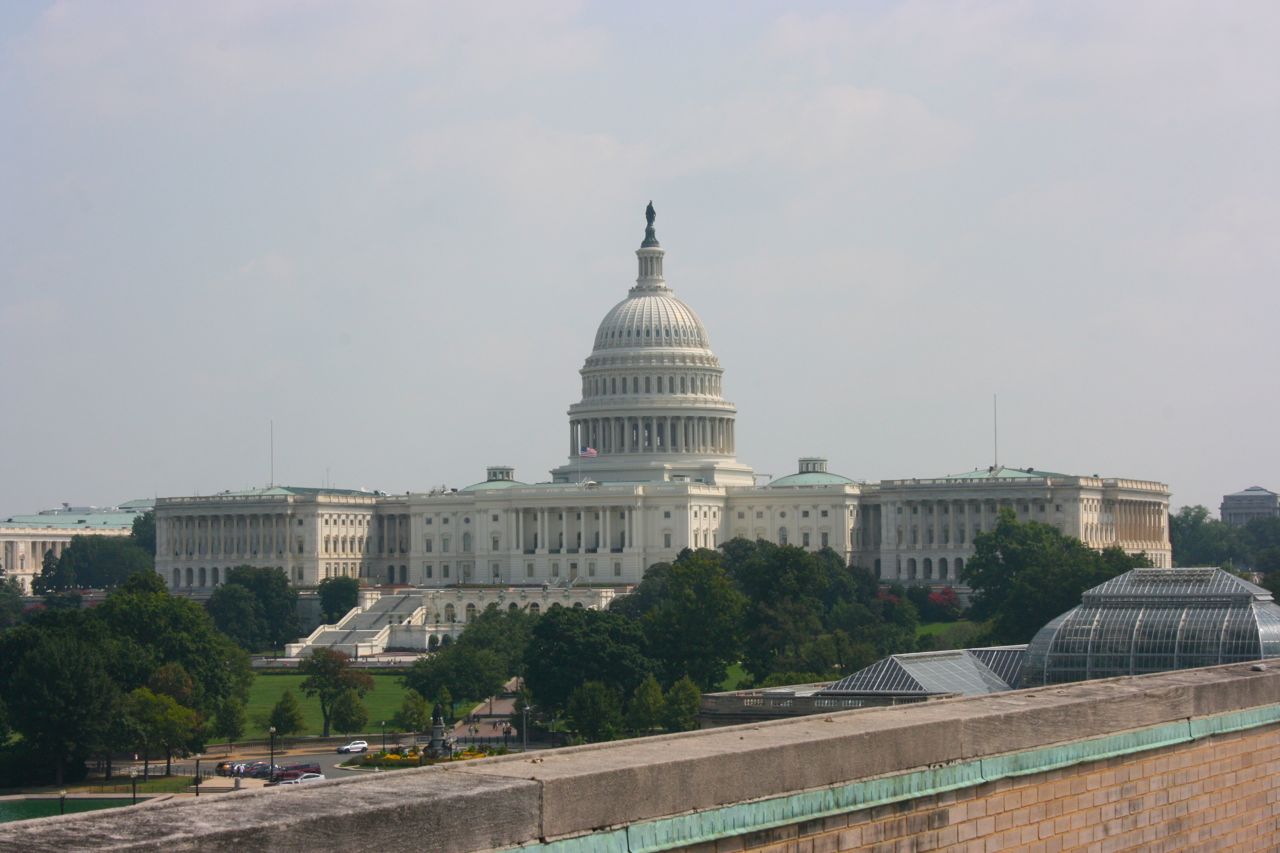
View of the Capitol Building from the roof of the Voice of America on 330 Independence Ave., S.W.

Many thanks to SWLing Post contributor, Richard Langley, who shares this editorial from the The Washington Post:”

“FOR YEARS, members of Congress have fumed about what they regard as ineffective U.S. public diplomacy, including the failure of broadcasting operations such as the Voice of America and Radio Free Europe/Radio Liberty to match the reach and apparent influence of networks such as Russia’s RT and Qatar’s al Jazeera. A frequent and arguably fair focus of criticism has been the Broadcasting Board of Governors, the body created to supervise government-funded media outlets while serving as a firewall between them and the political administration of the day.

A radical change to that system is now coming — and it looks like one that Vladi­mir Putin and Qatar’s emir might well admire. An amendment quietly inserted into the annual National Defense Authorization Act by Republican House leaders would abolish the broadcasting board and place VOA, RFE/RL and other international news and information operations under the direct control of a chief executive appointed by the president. The new executive would hire and fire senior media personnel and manage their budgets.

[…]The point of board governance was to prevent direct political interference in programming by the White House, State Department or other agencies. It was a guarantee that for decades has helped to attract journalistic talent to the broadcasting organizations, as well as listeners seeking reliable information. The board of governors had serious problems: Its members served part time, and not all took their duties seriously. But the system’s biggest flaw was remedied three years ago with the creation of a chief executive position.

The new reform, driven by House Foreign Affairs Committee Chairman Edward R. Royce (R-Calif.), enhances that executive’s power and makes him answerable to the White House rather than the bipartisan board. A new advisory panel will be created, but it will be toothless: Its members will also be nominated by the president from a pool provided by Congress.[…]”

Click here to read the full editorial at The Washington Post online.

Also, Richard points out this article in BBG Watch which highlights comments from Dan Robinson.

Pacific Beat: ABC decision to halt shortwave broadcasts criticised

Radio-Australia-Banner(Source: ABC News)

ABC decision to halt shortwave broadcasts criticised

A decision by the ABC to halt shortwave broadcasts early next year has been criticised by a former manager of Radio Australia.

The shortwave transmissions to Asia and the Pacific will cease from January 31st next year, as alternatives such as FM and internet become more prevalent.

Former head of Radio Australia and subsequently a consultant on international broadcasting in the Pacific, Jean Gabriel Manguy, tells Bruce Hill the decision is short sighted.

Click here to listen and read on Pacific Beat’s website.

Radio Australia to end shortwave broadcast service on January 31, 2017

radio-dial

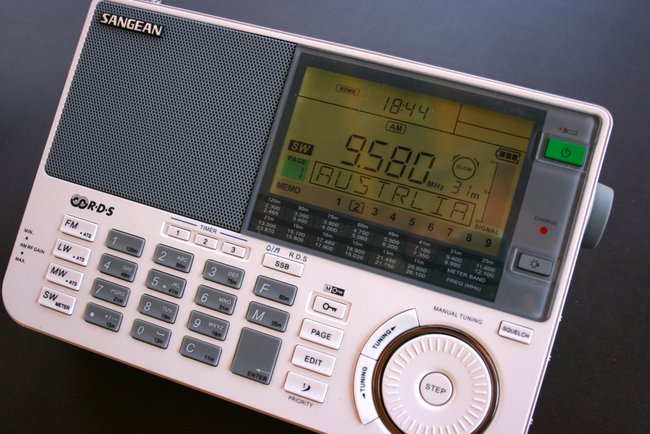
Like many SWLing Post readers, I’m a huge fan of Radio Australia’s service on 9,580 kHz. For ages, listening to their news headlines over shortwave has been a part of my morning routine. I’ve been listening to Radio Australia since I was 8 years old.

I’m going to miss this friend on the shortwaves.

(Source: Australian Broadcast Corporation Press Release)

ABC Exits Shortwave Radio Transmission

The ABC will end its shortwave transmission service in the Northern Territory and to international audiences from 31 January 2017.

The move is in line with the national broadcaster’s commitment to dispense with outdated technology and to expand its digital content offerings including DAB+ digital radio, online and mobile services, together with FM services for international audiences.

The majority of ABC audiences in the Northern Territory currently access ABC services via AM and FM and all ABC radio and digital radio services are available on the VAST satellite service.

ABC International’s shortwave services currently broadcast to PNG and the Pacific. Savings realised through decommissioning this service will be reinvested in a more robust FM transmitter network and an expanded content offering for the region that will include English and in-language audio content.

Michael Mason, ABC’s Director of Radio said, “While shortwave technology has served audiences well for many decades, it is now nearly a century old and serves a very limited audience. The ABC is seeking efficiencies and will instead service this audience through modern technology”.

The ABC, working alongside SBS, is planning to extend its digital radio services in Darwin and Hobart, and to make permanent its current digital radio trial in Canberra. Extending DAB+ into the nation’s eight capital cities will ensure ABC digital radio services can reach an additional 700,000 people, increasing the overall reach of ABC digital radio to 60% of the Australian population.

ABC Radio is also investigating transmission improvements to address reception gaps in the existing five DAB+ markets. It aims to ensure a resilient DAB+ service in every capital city, with enhanced bitrates and infill where necessary.

“Extending our DAB+ offer will allow audiences in every capital city in Australia equal access to our digital radio offering, as well as representing an ongoing broadcast cost saving owing to lower transmission costs,” added Michael Mason.

ABC International’s Chief Executive Officer Lynley Marshall said the reinvestment from closing international shortwave services would maximise the ABC’s broadcast capabilities in the region.

“In considering how best to serve our Pacific regional audiences into the future we will move away from the legacy of shortwave radio distribution,” Ms Marshall said. “An ever-growing number of people in the region now have access to mobile phones with FM receivers and the ABC will redirect funds towards an extended content offering and a robust FM distribution network to better serve audiences into the future.”

Once international shortwave ceases transmission, international listeners can continue to access ABC International services via:

Audiences can access further information via the reception advice line 1300 139 994 or via ABC Local Radio (Darwin & Alice Springs).

For more information
Louise Alley
P: +61 2 8333 2621
[email protected]
(ABC Radio queries)

Nick Leys
p: +61 3 9626 1417
[email protected]
(ABC International queries)

FAQs
Domestic and International

Oxford Shortwave Log: transatlantic MW DX catches with 200 metre Beverage – part 2

verdad-final

Hi there, here is the second set of reception videos for my transatlantic MW DX catches using the 200 metre Beverage antenna. Most of the signals originate from the United States and Canada, however, there is also a catch from Mexico – XERF La Ponderosa – which is a personal first and another from Bogotá, Colombia – Verdad Radio. I hope you enjoy them. Please do not hesitate to contact me if you would like further details regarding the Beverage design and/or construction. in the meantime, thank you for watching/listening and I wish you all great DX!


Clint Gouveia is the author of this post and a regular contributor to the SWLing Post. Clint actively publishes videos of his shortwave radio excursions on his YouTube channel: Oxford Shortwave Log. Clint is based in Oxfordshire, England.