Category Archives: International Broadcasting

BBC Audio Access Abroad: Major Changes Coming Spring 2025

Many thanks to SWLing Post contributor, Richard Cuff, who shares the following news via the BBC:

Upcoming changes for listening to BBC audio outside the UK

If you live outside the UK, how you listen to BBC radio will change, starting from spring 2025.

Instead of using BBC Sounds, you’ll be able to use a new service at BBC.com and on the BBC app. BBC Studios has launched these all-new audio environments, tailored to outside UK audiences. The BBC’s content will remain available on other international podcast platforms.

International listeners will no longer be able to use the BBC Sounds app and website from spring 2025.

You can find out more about these changes on the bbc.com website

Advice for UK Listeners travelling abroad

For listeners who reside in the UK, you will still be able to use the BBC Sounds mobile app when you are abroad. Check our FAQ for further info: Can I use BBC Sounds when I travel outside the UK?

Why are we making these changes?

BBC Sounds is a UK licence fee funded service. To offer better value for our UK listeners, BBC Sounds will be repositioned and made available exclusively to UK audiences.

BBC Studios is a commercial subsidiary of the BBC and is focused on bringing our trusted, world class journalism and storytelling to international audiences. This includes BBC audio content on bbc.com and the BBC app, which will be focused to international listeners.

Support for listeners Outside the UK

If you live outside of the UK and have a query regarding listening to BBC radio and audio content, please visit the support page at bbc.com where you can find help and contact their support team.

Polish Radio’s External Service Celebrated 89 Years

Many thanks to SWLing Post contributor David Iurescia (LW4DAF), who shares the following news:

Polish Radio’s External Service marks 89 years on air (Polskie Radio)

Public broadcaster Polish Radio’s External Service is celebrating its 89th anniversary on the air.

The station, launched on March 1, 1936, is part of Poland’s public radio network.

It broadcasts programmes on developments in Poland and the wider region, Polish foreign policy, the economy, business and foreign investment.

Polish Radio’s External Service, or Polskie Radio dla Zagranicy, aims to provide objective and impartial information about Poland and the country’s stance on international affairs. [Continue reading…]


NHK World to End QSL Card Confirmations in March 2025

Many thanks to SWLing Post contributor Adid, who shares the following news from NHK World:

February 14, 2025

Termination of NHK WORLD-JAPAN Verification Cards (confirmation cards)

NHK WORLD-JAPAN has been issuing verification cards (confirmation cards) to people who have notified us that they are listening to our broadcasts.

Please be advised that we have decided to stop issuing the Verification Cards. The cards will be sent for confirmations on broadcasts up to March 20, 2025.

Thank you for your understanding and continued support.
You can continue to submit your comments and requests to English language services through

Contact Us on our website.

Your feedback will be used to improve our broadcasts and services.

Radio Bulgaria celebrates 89 years of broadcasting

Vintage Radio Bulgaria QSL Card

Many thanks to SWLing Post contributor David Iurescia, who shares the following item from Radio Bulgaria:

Happy 89th, Radio Bulgaria!

16 February marks the anniversary of BNR’s multilingual programme

On February 16, Radio Bulgaria celebrates its 89th anniversary. Throughout these years, our multilingual media has been not only a channel of information, but also an invaluable link with our audience around the world. Today, Radio Bulgaria offers rich journalistic content, including programmes for the Bulgarian diaspora, as well as for foreigners in Bulgaria and abroad. We are active on social media in 11 languages and connect with our listeners through modern digital platforms. The greatest reward for our small team is the trust and affection of our numerous listeners and users from all over the world. [Continue reading…]

Shortwave Shutdowns: ARK Warns of Rising Censorship and Information Gaps

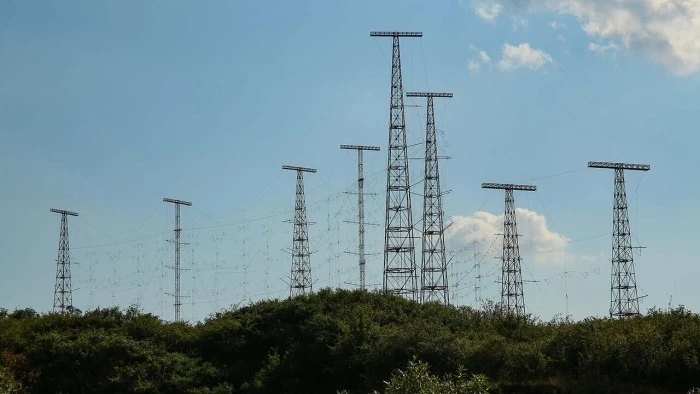
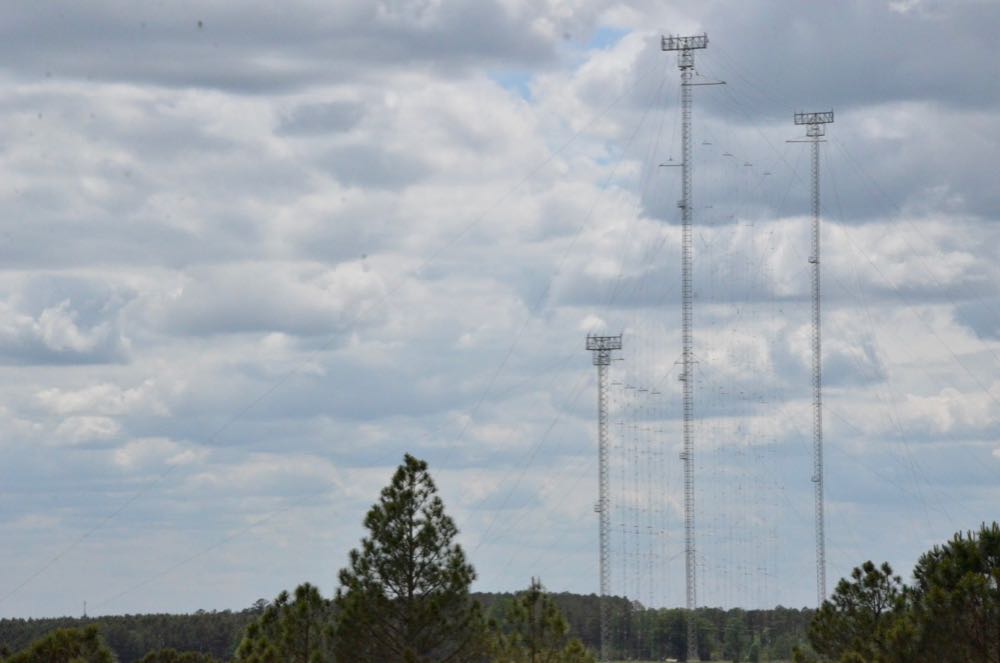
Curtain Antennas at the Edward R. Murrow Transmitting Site.

Many thanks to SWLing Post contributor, Marc Pascoe, who, in response to this article from The Spectator posted last week, shared a thought-provoking piece from ARK on the dangers of phasing out shortwave broadcasts.

The ARK article highlights the critical role shortwave radio has historically played in providing access to information, particularly for rural and underdeveloped regions where internet penetration remains low. Despite digital media’s rise, approximately 37% of the global population still lacks reliable internet access, making shortwave a vital tool for delivering news, emergency alerts, and educational content. The reduction in shortwave services risks isolating these populations, especially during crises when conventional communication networks may be unavailable or compromised.

Additionally, the article underscores the increasing vulnerability to censorship, propaganda, and misinformation as shortwave broadcasts decline. Unlike the internet, which can be easily controlled or restricted by authoritarian regimes, shortwave signals are resilient and difficult to jam. Historical examples from North Korea, Iran, and the war in Ukraine illustrate the crucial role shortwave plays in ensuring the free flow of information.

Click here to read the full article on the Ark website.

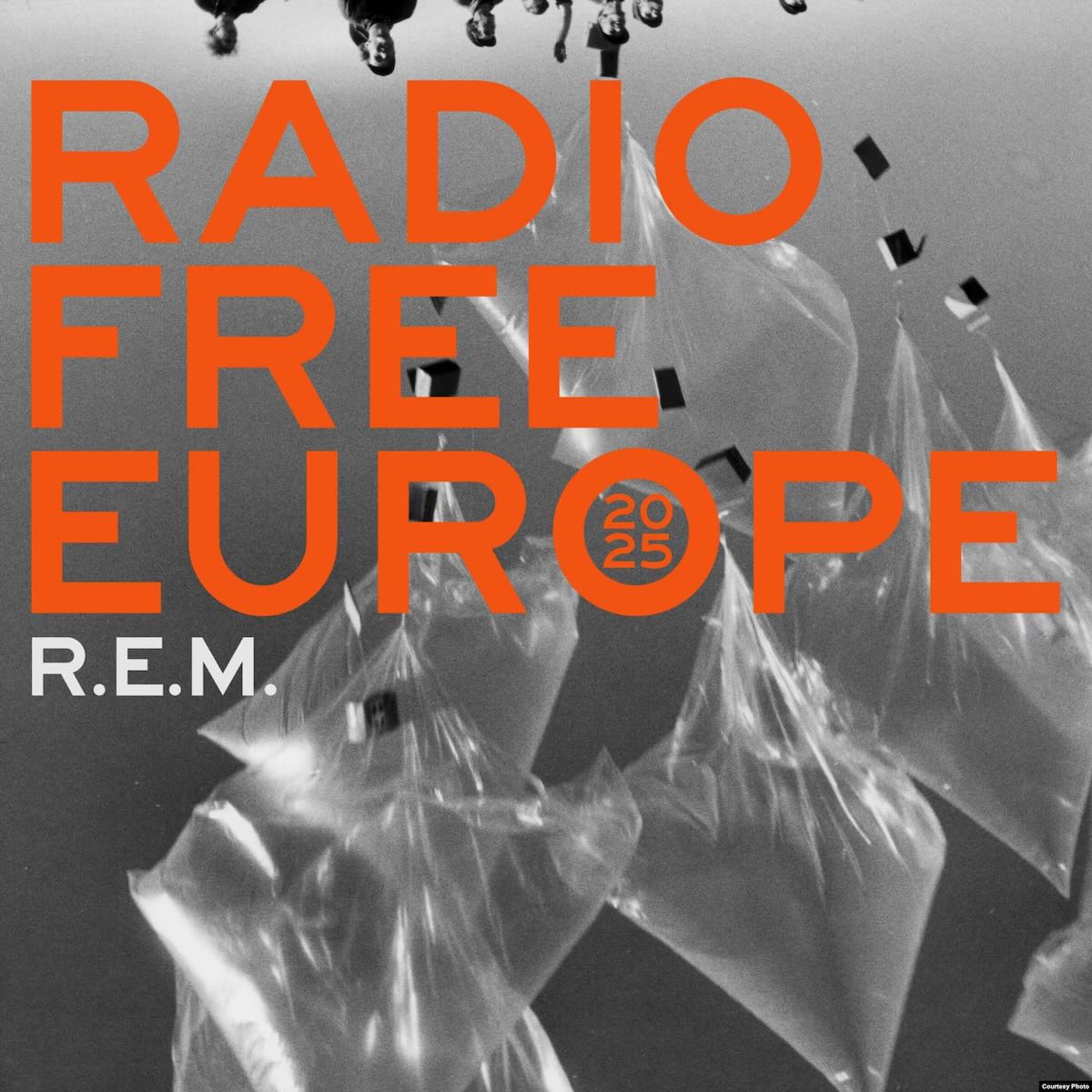
“DOGE Targeting VOA And Radio Free Europe”

DOGE Targeting VOA And Radio Free Europe. (Inside Radio)

Voice of America (VOA) and Radio Free Europe/Radio Liberty (RFE/RL) are in the sights of Elon Musk, the billionaire entrepreneur appointed by President Donald Trump to oversee the House Subcommittee on Delivering on Government Efficiency (DOGE).

Musk commented on a social media post by Richard Grenell, the U.S. Special Envoy for Special Missions, who said the radio networks are “state-owned media” and “are a relic of the past.”

“Yes, shut them down,” Musk wrote in his reply to the post. “Europe is free now (not counting stifling bureaucracy). Nobody listens to them anymore. It’s just radical left crazy people talking to themselves while torching $1B/year of US taxpayer money.” [Continue reading…]

Update: SWLing Post contributor, Jock Elliott notes that he wrote the following message and sent it via the Whitehouse contact page:

Mr. President;

First, I am not, and never have been, employed by Voice of America or Radio Free Europe.

But you might want to think twice before you shut them down.

If the electronic networks such as internet and mobile phones are ever shut down, you might want a means of communicating with the populations overseas; you might want to factor that into your decision-making process.

Radio can be an essential resource when the crunch comes, as was demonstrated recently in Western North Carolina and Eastern Tennessee: https://swling.com/blog/2024/11/a-shining-moment-for-ham-radio/

You might want to keep international broadcasting — with appropriate messaging — as “another club in your bag.”

Sincerely, Jock Elliott

Radio Waves: 35 Years of RNZ and Bulgarian National Radio’s New QSL cards

Welcome to the SWLing Post’s Radio Waves, a collection of links to interesting stories making waves in the world of radio. Enjoy!

Many thanks to SWLing Post contributor David Iurescia for the following tips:


RNZ Pacific – 35 years of broadcasting to the region (RNZ)

January 24, 1990, the same day the Auckland Commonwealth Games opened, RNZ International (RNZI) began broadcasting to the Pacific region.

Its news bulletins and programmes were carried by a brand new 100kW transmitter. The service was rebranded as RNZ Pacific in 2017. However its mission remains unchanged, to provide news of the highest quality and be a trusted service to local broadcasters in the Pacific region.

Although RNZ had been broadcasting to the Pacific since 1948, in the late 1980s the New Zealand Government saw the benefit of upgrading the service. Thus RNZI was born, with a small dedicated team.

The first RNZI manager was Ian Johnstone. He believed that the service should have a strong cultural connection to the people of the Pacific. To that end, it was important that some of the staff reflected parts of the region where RNZ Pacific broadcasted. He hired the first Pacific woman sports reporter at RNZ, the late Elma Ma’ua. [Continue reading…]

The BNR’s QSL cards for 2025 present the beauty of Bulgaria (BNR)

Dear friends, we are happy to announce that the Bulgarian National Radio’s QSL cards for 2025 are now available. The two series – one with 6 postcards and the other with 12 postcards – are entitled “The Beauty of Bulgaria.”

The series of 6 cards confirms that you have listened to Radio Bulgaria’s programming in any of its languages.

To receive this series, you need to send reports, indicating the date and the language of the programme you have listened to, as well as content details. QSL cards are sent upon receipt of the necessary number of reports, irrespective of the language in which the programmes were heard on our website. [Continue reading…]


Do you enjoy the SWLing Post?

Please consider supporting us via Patreon or our Coffee Fund!

Your support makes articles like this one possible. Thank you!