Shortwave listening and everything radio including reviews, broadcasting, ham radio, field operation, DXing, maker kits, travel, emergency gear, events, and more
I tried out the software earlier this week by downloading 4GB of sample files from DK8OK and the Elad software. There are a lot of interesting features.
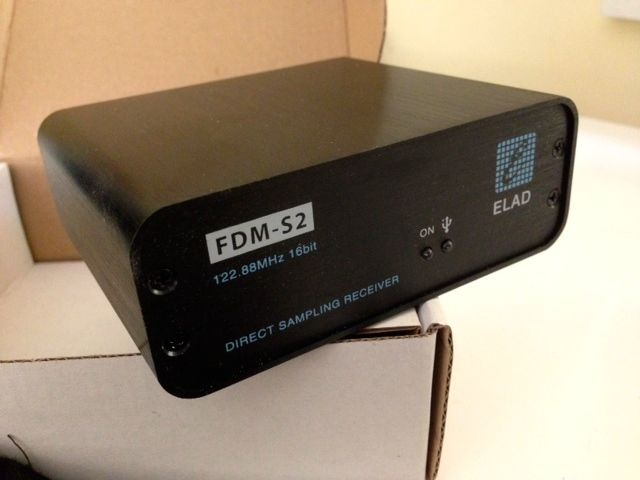
It is small! I like the use of the USB port for power. I can see how it would be a good receiver to throw into your laptop bag for trips.
I have a harsher Urban RF environment with 5KW and 1KW AM Broadcast transmitters within 2.5 miles. They reduce power at night. The Wellbrook AHA1530 Loop outputs a very high signal level from all the area’s AM stations. I have to use the attenuator on any radio at my QTH below about 2.5 MHz.
The unit having one preselection filter for LW/MW/HF is noticeable as I got ADC Clip warnings when directly connected to the Wellbrook loop. Turning on the 11 dB attenuator took care of the problem and did not seem to affect the weak signals much. It also was not as bad when I connected a Mini-Circuits ZFSC-2-6+ two port splitter between the Elad and the Wellbrook.
The Perseus has multiple preselection filters, but I noticed only one low pass filter for the 0 to 1.7 MHz range. So a MW band reject filter would be useful for Long Wave with both units. I plan on building an external preselector.
The option for multiple receivers and two RF ranges is pretty neat. I was listening to multiple FM stations at once. This morning I set one range to 31 meters and the other to 49 meters. I listened to Radio Australia on 9580 KHz using the right laptop speaker for audio, and could check their other frequencies on 31 and 49 meters using the left laptop speaker for audio.
I do HF Utility monitoring on digital signals, so I want to setup the Elad software with external decoder software. I have seen reports that the Elad can receive Airband pretty good, so I will also try receiving and decoding multiple ACARS frequencies at the same time.
So many experiment to try this Winter!”
Thanks for sharing your experience, Eric! Since I live in such a rural area, I never have to worry much about low pass filters (though I’m sure they couldn’t hurt). I’ve had the FDM-S2 since June this year. I can tell you that there are so many features, settings and possibilities with this radio, you could easily spend the winter and spring experimenting. I have yet to use the WinRad app to drive the S2.
Eric, we welcome any other discoveries you make along the way! Many thanks!
Overall, I continue to be quite happy with this receiver, however, I think the loss of memories and time when replacing batteries is annoying.
So, I did a simple mod to the radio to help prevent having to re-program everything after installing new batteries.
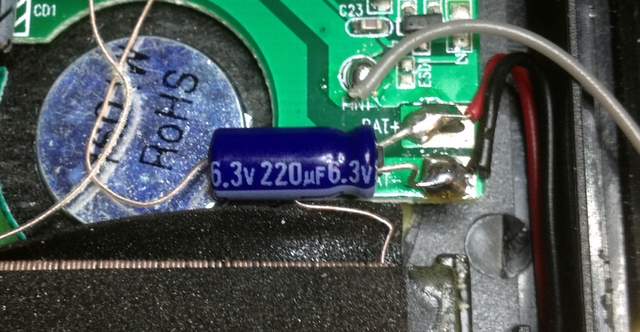
I found that there was enough space within the case to tack a 220 µF 6.3 V electrolytic capacitor across the pads on the PC board where the battery leads are attached [see the photo below]. Adding a series resistor to limit current flow might be better, but this simple change seems to be OK.
Click to enlarge
The mod won’t prevent long-term memory loss, but it will keep enough voltage on the circuit for a quick battery change (especially if you change one battery at a time). The radio is not actually altered, and the mod can be easily removed if desired.
Close-up of added capacitor.
Many thanks for creating and documenting this simple mod, Mike!
On a side note, I remember when RadioShack used to pride themselves on having a full line of products that could maintain memory if batteries were removed or in case of power outage. RadioShack badged VCRs, receivers, radios and clocks all had this feature in the 1990s, at least.
Although I’ve known about Elad and their products for some time, and often found them intriguing, I hadn’t yet investigated Elad’s offerings simply because I was under the impression they sold and warrantied their equipment only within Europe. Indeed, this was the case…until just recently. Elad has now begun shipping–and supporting–their products within the US, via their division Elad-USA. Thus my renewed interest in Elad at the Hamvention.
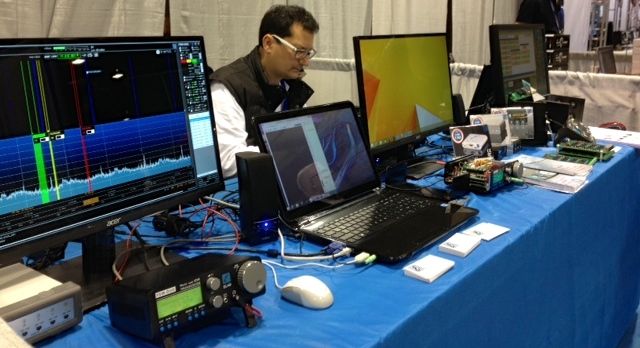
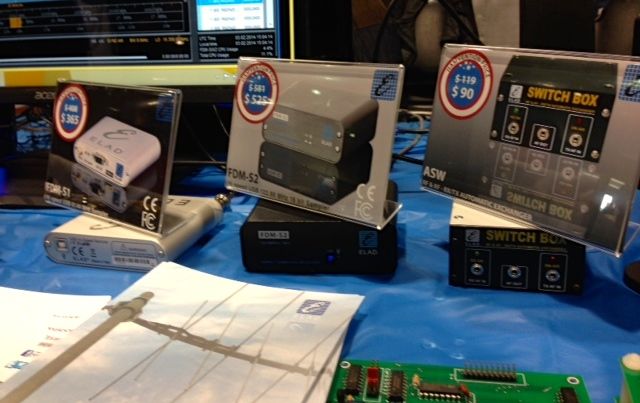
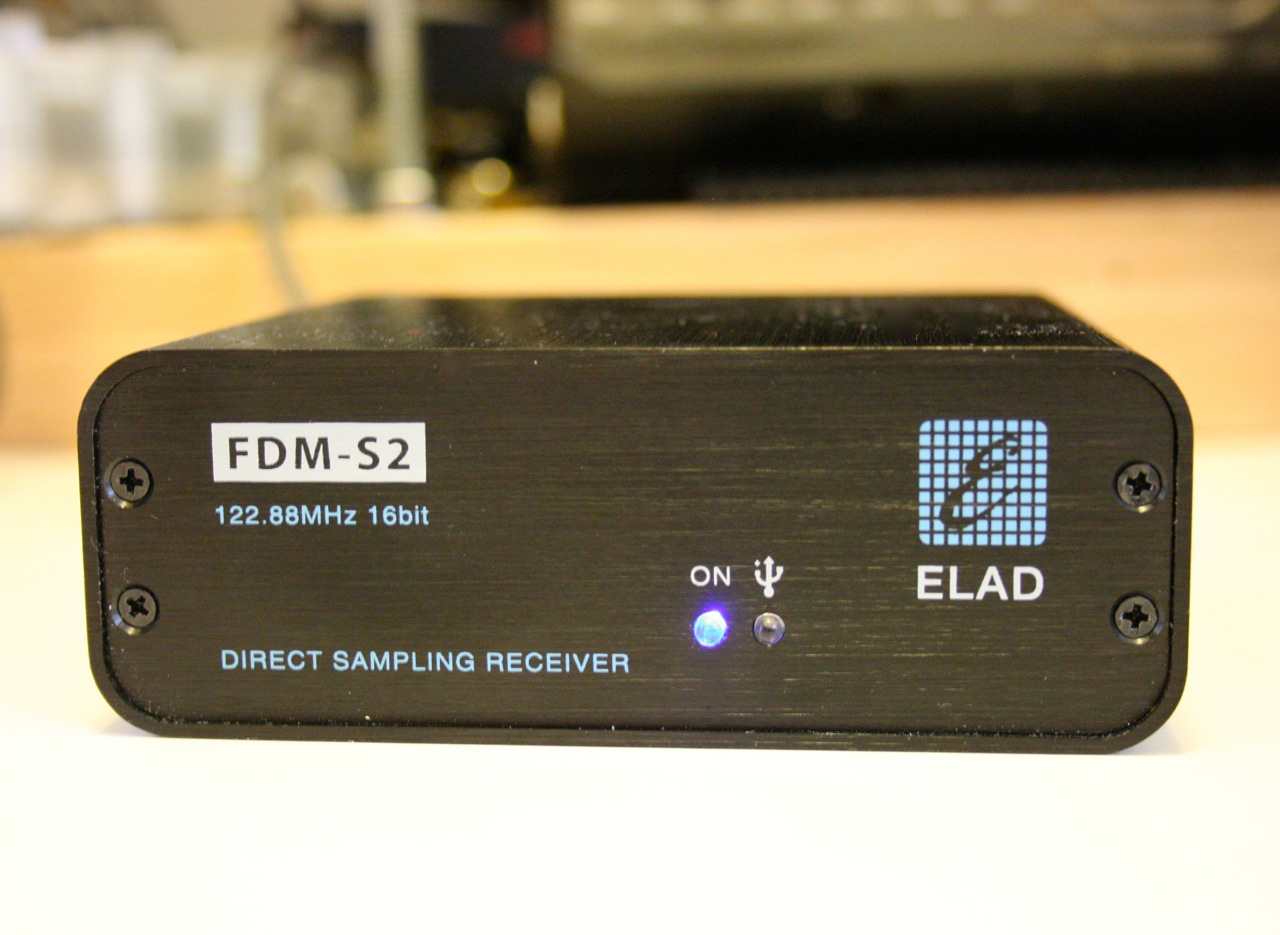
At their Hamvention booth in the East Hall of Hara Arena, the Elad staff gave me a superb table-tour of their array of products. Indeed, I was completely unaware of the broad scope of Elad’s product offerings, which include antenna switches, antenna splitters, test equipment, and, of course, software defined radios (SDRs). Their current SDR offerings are as follows: the Elad FDM-S1, the FDM-S2, and the newly released FDM-DUO. The FDM-DUO is actually a transceiver, while the “S” line is receive-only.
Among Elad’s SDRs, I found myself most interested in the FDM-S2 receiver; a quick demo at their booth caught my interest, as I instantly liked the GUI (graphical user interface), the features, and the specifications of this model. I requested that Elad provide the loan of this SDR for review, and they kindly complied.
Unboxing and installing the Elad FDM-S2
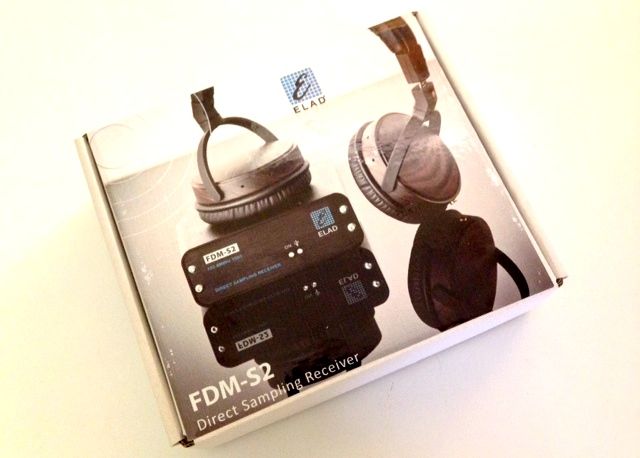
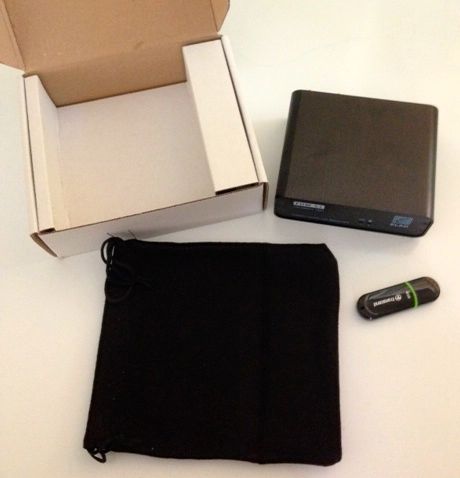
Contents of the FDM-S2 box are few and simple: the FDM-S2 receiver, a black cloth carrying bag, and a 4GB USB drive with installation software and documentation are enclosed. A standard USB cable was also included in the shipping box.
I found installation of the S2 to be fairly straightforward. I would encourage new owners to follow the included guide, since installation is a two-part process:
First, you install a C++ package on your Windows PC. When complete, this triggers the actual Elad software installation, a two-part installation that you initiate only once.
Secondly, you install the USB driver for the FDM-S2, found in the installation folder of the supplied software. Note: at present, the USB driver cannot be automatically discovered and installed by your PC–you must initiate this installation via the device manager. However, this is very easy: the guide takes you through the process step-by-step.
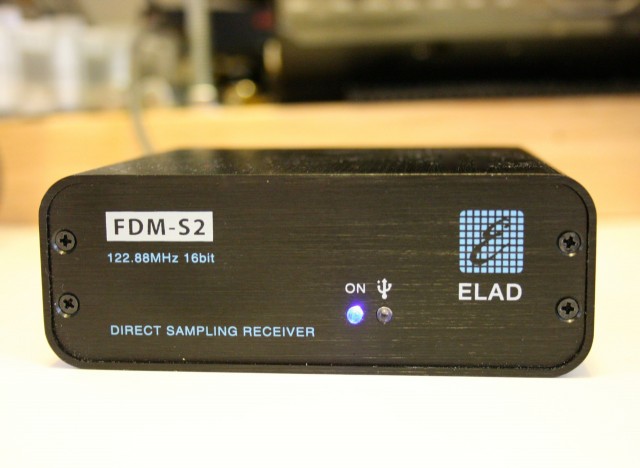
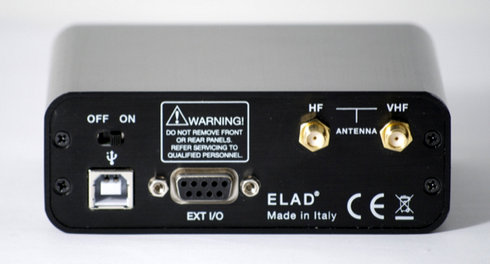
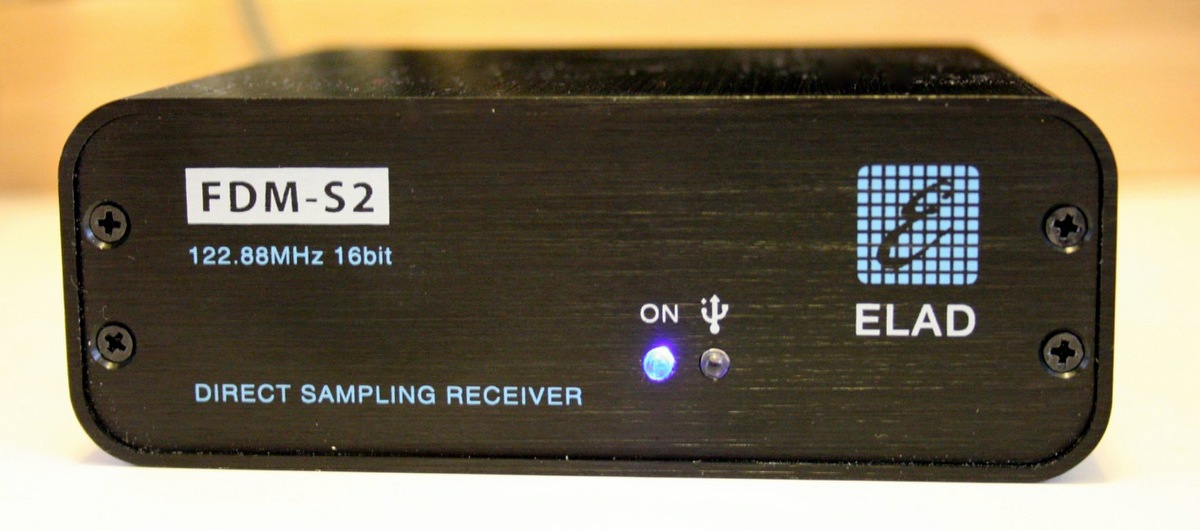
On the back of the FDM-S2 you’ll find an HF and VHF SMA antenna ports, a USB port, serial interface, and on/off switch.
The FDM-S2 derives its power from the same USB cable that is used for data; no separate external power supply is required–a huge plus, for those of us who like to travel.
Once I installed the software and driver, I hooked up my antenna to the HF SMA connector on the back, turned on the FDM-S2, and launched the application. The FDM-S2 clicked to life, and the application ran on the first go–very nice!
Scope of this review: application
Reviewing an SDR is challenging, especially with a third-generation SDR like the FDM-S2. There are nearly an infinite number of setting combinations for gain control, filters, demodulation, audio, even color schemes; covering all of these is beyond the scope of a basic review such as this, or indeed, virtually any review. In addition, the FDM-S2 can be used with several third-party SDR applications. Therefore, for the sake of this review, I decided to limit myself to evaluating the Elad application that ships with the FDM-S2. In addition, in this evaluation I attempted to retain many of the settings that come as defaults in the Elad application, to support new users. Finally, I limited myself to evaluating the shortwave bands.
After installing the Elad application, I spent a good hour or so familiarizing myself with the software. It’s quite a departure from the WinRadio Excalibur, SDR-IQ, and Microtelecom Perseus applications with which I’m most familiar. There is a modest learning curve involved with using the Elad FDM-S2–it took a good hour with the application to feel relatively comfortable with its functionality. But the trade-off is much more customization and functionality than one can achieve with the Perseus or WinRadio software, for example.
First impressions
First, let me begin by saying that new users will greatly benefit from reading the owners manual and join the Elad Yahoo group. If you’re attempting something that the owner’s manual does not cover, most likely someone in the Elad forum has already posted the answer. Elad’s engineer, Franco, also actively monitors and responds to requests on the Yahoo group.
Once on, the FDM-S2 defaults to the frequency of 0 Hz. Indeed, the Elad software uses Hz as the unit of measure for frequency, so any frequency entered must be in Hz: for example, to enter 9,420 kHz, you must key in 9420000, then press “Enter.” As a shortcut, you can enter 9420 and the “+” key on your number pad which will automatically add the trailing “000.” I found that a bit unusual in the beginning as most SDR software defaults to kHz, but after using the FDM-S2 for a few minutes, it became second nature.
There are several ways of tuning the FDM-S2:
Frequencies can be directly keyed in (as described above)
You can click on a frequency in the spectrum and waterfall windows (if the center frequency isn’t locked)
You can use the scroll wheel on your mouse like a tuning wheel, to scan up or down
You can use the arrow keys on your keyboard (left/right are defaults with up/down controlling tuning steps)
With your mouse pointer, you can click and drag one of the three horizontal tuning bars at the bottom of the window
Tuning Bars: Click to enlarge
I find it easiest to tune by using the horizontal tuning bars to move to a particular meter band, then locking the center frequency and use the scroll wheel on the mouse to scan in 1 or 5 kHz increments. This makes tuning feel like the experience I’m most used to with other SDRs. I must say that I really like the horizontal tuning bars; these make it quite easy to quickly center on a meter band.
I would also note that I’m favorably impressed with the S2’s waterfall and spectrum display; not only can you customize the colors via the settings window, but you also have the options to embed timecode in the waterfall and to display broadcaster information from the frequency database in the spectrum.
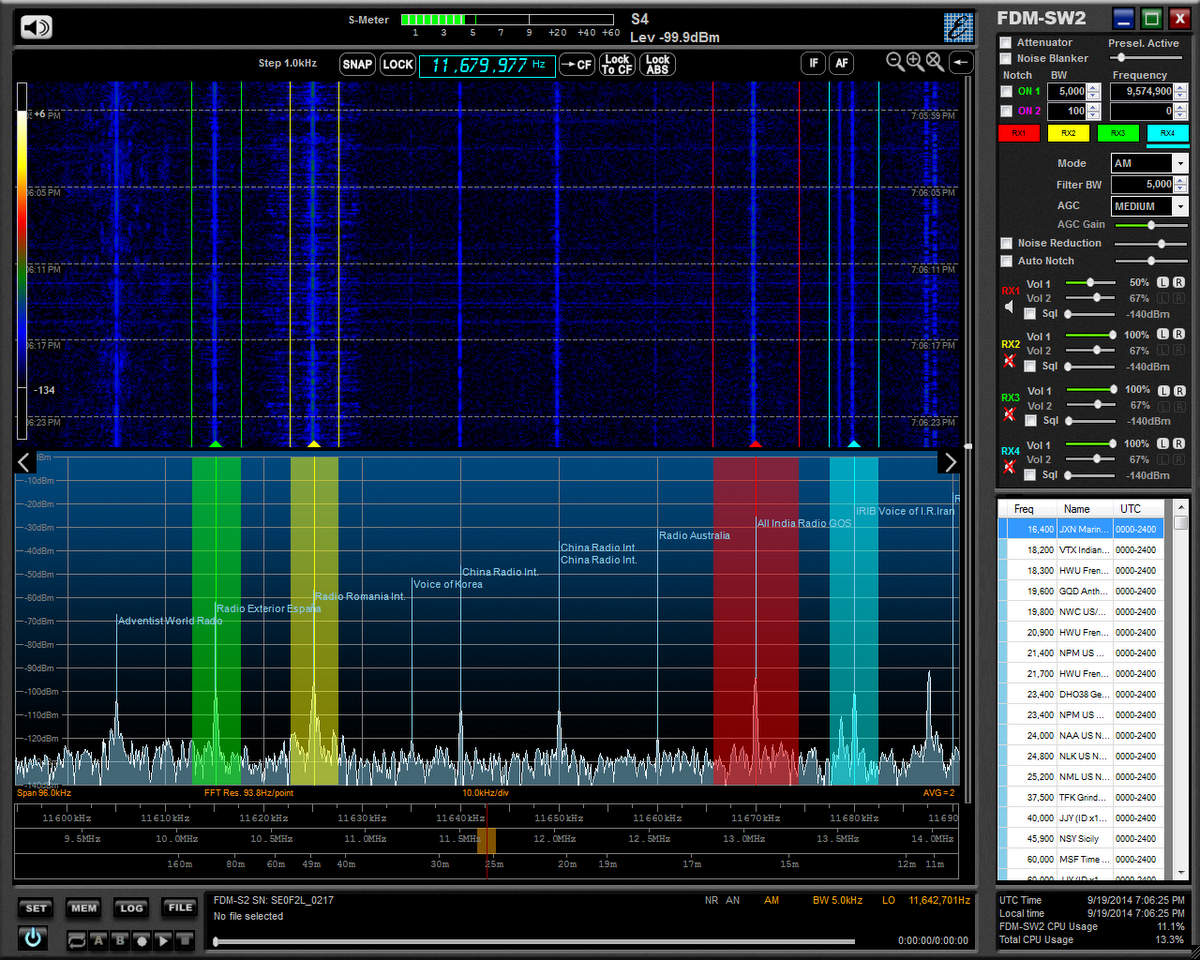
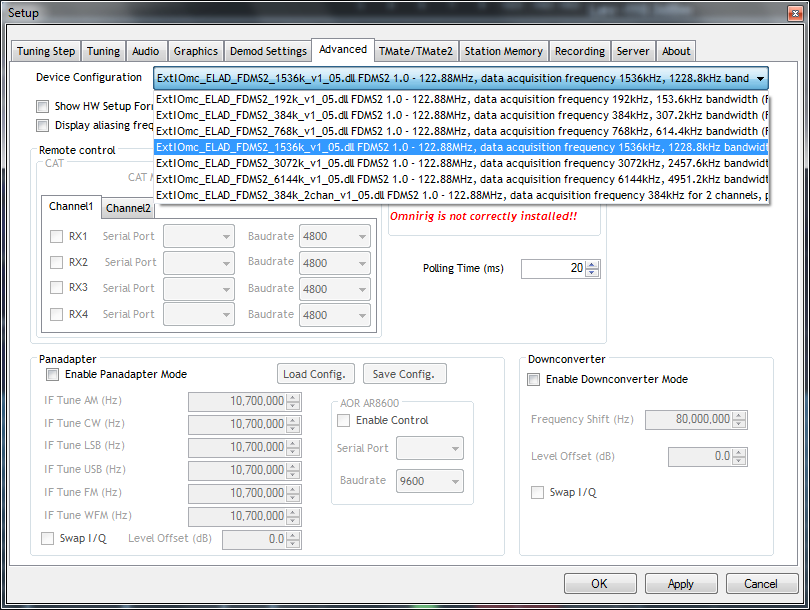
The FDM-S2 has a total of four “virtual receivers,” labeled RX1, RX2, RX3 and RX4. Depending on the receiver configuration and bandwidth you’ve chosen in the S2’s device configuration (see below), you can use each virtual receiver simultaneously. Each receiver can have its own filter settings and modes selected–your only limitation is that each of the four receivers must be tuned within the FDM-S2’s bandwidth.
FDM-S2 receiver bandwidth configurations
The S2 currently has seven receiver configurations:
1 Channel 192 kHz bandwidth
1 Channel 384 kHz bandwidth;
1 Channel 768 kHz bandwidth;
1 Channel 1,536 kHz bandwidth;
1 Channel 3,072 kHz bandwidth;
1 Channel 6,144 kHz bandwidth; and
2 Channels 384 kHz bandwidth.
If you set the S2 to a total bandwidth of 192 kHz in one channel, all four of your virtual receivers are limited to that 192 kHz area. This is a great configuration if you plan to listen to a single broadcaster at a time, and don’t need to see so many signals within the spectrum display. It’s also an excellent configuration to save storage space if you wish to record a relatively small chunk of IF spectrum.
If you choose the 6,144 kHz bandwidth, you can use each of the four virtual receivers simultaneously within the bandwidth. For example, on Saturday evenings I could tune RX1 to the Voice of Greece on 9,420 kHz; RX2 to The Mighty KBC 7,375 kHz; set RX3 to search for pirates around 6,925-6,975 kHz; and listen to the 40 or 30 meter ham radio bands on RX4. All at once! [Note: in the screenshot above, each virtual receiver is marked in the spectrum with a green, yellow, red or blue vertical marker.]
The two-channel 384 kHz option is also a powerful and unique feature of the S2. With this configuration selected, you can have two completely independent receivers with 384 kHz of bandwidth, each. Though this may be more radio than you need, each receiver has four virtual receivers of its own. That’s a whopping 8 virtual receivers!
Most of the time, I keep the configuration set to 1,536 kHz, unless I want to listen in two different meter bands at once. At 1,536 kHz, I can record spectrum and capture a full broadcast band to play back later. I’ve even recorded 6,144 kHz of spectrum, and played it back with no hiccups on my Intel i5 PC, although it did chew through a lot of storage space (roughly 2 GB of data per minute of recording). That equates to 120 GB per hour–but the result is a recording of everything between, say, 4 and 10 MHz. For shortwave radio archiving this is a most impressive capability!
DRM
While Digital Radio Mondiale (DRM) is not the most popular mode on the shortwave broadcast bands, DRM is built into the FDM-S2; there is no need to purchase a separate license or plugin as with most SDRs. If you’ve never listened to DRM, you might be surprised by the impressive listening results.
Here is a two hour audio sample of the FDM-S2 recording RNZI DRM:
[On a side note: It simply boggles my mind when I realize that this RNZI broadcast originates from a transmitter some 8,400 miles (13,518 km) from my receiver. Regardless of what one thinks about the future or utility of DRM, this is nothing short of magical in my book.]
Note that only the first virtual receiver, “RX1,” employs the DRM mode. This is important to note, as I find I’ve sometimes finished listening to a DRM broadcast, turned off the FDM-S2, then when I turned it back on later, initially wondered why I was hearing no audio on strong AM signals. I had inadvertently left the DRM mode engaged–user error only, in this case. Just something to be aware of.
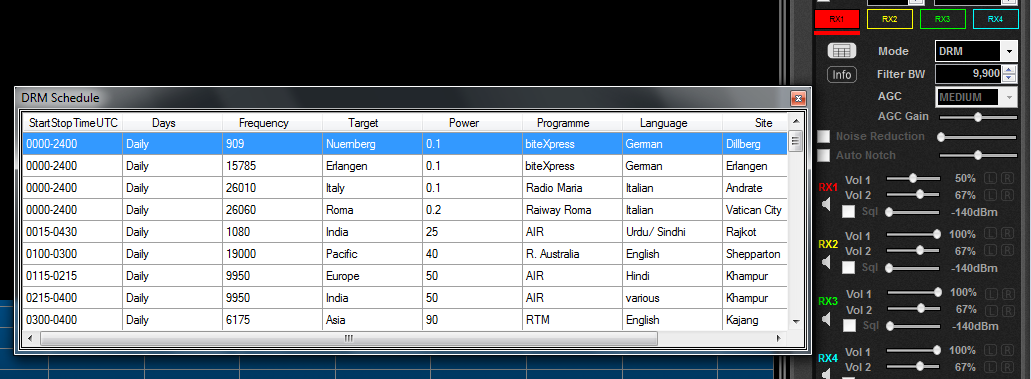
But finding a DRM broadcast is very easy with the Elad software; there is a dedicated button that appears when the DRM mode has been selected. When you press the schedule button, it will load all of the DRM broadcasts from the HFCC schedule. You can simply scroll through this list and click on a frequency to find an audible DRM broadcast. So far, on the FDM-S2, I’ve decoded RNZI, Radio Exterior de Espana, and even All India Radio from my QTH in eastern North America. Not bad!
Recordings
One of the reasons I latched onto the FDM-S2 at the Dayton Hamvention this year was that I immediately saw the potential of the S2 as a recording receiver. Besides posting recordings on the SWLing Post, I also actively make recordings for the Shortwave Radio Audio Archive, so no surprise that one of the first functions I evaluated on the FDM-S2 was its recording capability.
There are two recording modes: AF and Full Span Input Spectrum. You switch between modes in the Recording tab of the Settings window. After the settings have been saved, you simply locate the broadcast or chunk of HF spectrum you wish to record, and press the red record button located on the screen’s bottom left quadrant.
The Elad application also gives you a great degree of control for automatically naming the recorded files; mine is currently set up to embed the frequency, date, time, and device in the filename.
There are few things I’ve reported to Elad as possible improvements for recording:
I do wish that it wasn’t necessary to open the settings window to switch between bandwidth configurations and recording modes (IF or AF); my Excalibur has all of this on the front panel, which is more convenient. While there is a more direct way of opening the recording settings window–simply right click on the red record button–I think it would be preferable to at least have the option of including the information on the main user interface. Also, when you stop a recording, the receiver turns itself off; this obviously needs to be corrected. Fortunately Elad has noted these concerns and plans to address them in future software updates.
Additionally, I’ve noted that while one can record either IF or AF, both can’t be recorded at the same time, a lacking shared, incidentally, by the Microtelecom Perseus. While I probably do more recording than most SWLs, I frequently record both spectrum and an individual broadcast simultaneously on the WinRadio Excalibur. I hope Elad will consider adding this to their software, as well.
Performance
Features are always nice to play with, and the FDM-S2 is chock-full of them–but most important are your receiver’s ability to detect faint signals, block adjacent ones, as well as cope with unpredictable conditions.
The FDM-S2 has a wide frequency coverage: 9 kHz-52 MHz, 74-108 MHz, and 135-160MHz. It’s one of the few SDRs on the market that doesn’t need a module or add-on for FM and VHF coverage. It has separate SMA connectors for HF and VHF antennas. While I have not thoroughly tested beyond the HF bands as of this writing, but many experienced FM DXers tout the S2’s abilities in their own reviews, and I don’t doubt them.
On the shortwave bands, the S2’s performance has impressed me: this SDR has remarkably excellent sensitivity and selectivity. Indeed, its performance is on par with my WinRadio Excalibur, and surpasses that of my RFSpace SDR-IQ, no mean feat. I have made many A/B comparisons with my Excalibur on weak signals; the two receivers are nearly indistinguishable. I’ve conducted blind-listening tests on weak signals (much like those described here) and found that the two recordings were nearly identical. On occasion, I might favor one receiver’s AGC over the other in a recording, but a slight tweak to the AGC settings could readily fix any discrepancies.
Herein lies the difficulty of reviewing an SDR’s performance–the user has so much power to control variables and thus shape the receiver’s function, that it’s hard to make an “apples-to-apples” comparison. But clearly, the Elad holds its own.
Noise reduction
While I’m not a great fan of digital noise reduction, the Elad software has a variable noise reduction feature that I admit to have used on several occasions. I found that by increasing it to approximately 10-20%, audio characteristics of an AM signal were mostly preserved while noise was effectively mitigated. This is where the S2 has a distinct advantage over the Excalibur which has no noise reduction feature.
AM Synchronous detection
With that said, the Excalibur has an edge on the S2 when it comes to blocking adjacent signals. At the time of review, I’m using version 1.12 of the Elad software, which lacks a selectable AM sync detector–a powerful tool to block noise, which may only be present in one sideband of an AM broadcast. Elad engineering tells me that they have this feature planned for a future software update.
Flexibility
Remarkably enough, the FDM-S2 can actually be used with a number of third-party SDR applications. The FDM-S2 comes with Winrad EXTIO Dlls compatible format: all software based on Winrad derivatives (like HDSDR and Studio1) work, and have been tested by S2 users. So if I really need sync detection, for example, I can simply find and use another SDR application to run the S2.
Indeed, flexibility may be among the most powerful features of the S2. If for any reason you don’t like the Elad application, you can simply use another one.
Summary
Invariably, all radios have strengths and weaknesses; here is a list of my notes from the moment I put the S2 on the air:
Pros
Beautiful, rich audio fidelity via headphones or my amplified speakers
Excellent sensitivity
Excellent selectivity (which would be enhanced with USB/LSB selectable sync–see con)
Low noise floor
Four virtual receivers: RX1, RX2, RX3, and RX4
Superb DRM decoding built-in, no additional license key or plug-in purchase required
Noise reduction is quite effective with few digital artifacts, even at low levels
Tasteful waterfall and spectrum displays
Wonderfully rapid tuning via horizontal tuning bars
Power derived from USB port (no external power supply needed)
Separate HF/VHF antenna ports
Ability to embed and record UTC time in waterfall display
Can display schedule information in waterfall and spectrum
ES2 supported by third-party OEM and open-source SDR applications; not confined to Elad application (as tested)
Small form factor/footprint, convenient for travel or limited shack space
Networking features for remote receiver control (not tested)
Iterative agility: application/firmware updates influenced by customer feedback
Great value–$300 less than most of its competitors
Cons
Recording cannot be fully controlled from the front panel; to adjust most settings, you must do so via a separate settings window
Receiver turns off completely after stopping a recording (Elad plans to fix this)
AM sync currently lacks USB/LSB selectivity
Elad application has steeper learning curve than other OEM SDR applications
Though highly customizable (see pro), changing color schemes requires patience and practice
Some reports from users indicate that sensitivity may be compromised if you live near a blowtorch AM station
IF and AF recordings cannot be made simultaneously; AF recordings cannot be made from an IF spectrum recording without a virtual audio cable application (similar to the Microtelecom Perseus)
While the Elad FDM-S2 has some growing to do, I expect many of these concerns may be addressed in updates over time, and I look forward to trying the S2 with other SDR applications. I’m fairly confident that Elad is serious about their products’ iterative agility, which is to say, software development based on customer input. They’ve been responsive to email and active on the Elad Yahoo email discussion group, which indicates promise. I believe they’re serious about supporting the North American market as well as they even attended the 2014 Dayton Hamvention.
Frankly, at $580 US (via Elad USA) I think the FDM-S2 is quite reasonably priced, especially considering this SDR’s performance and features. After all, it’s only $80 more than the RFSpace SDR-IQ, while it is $300-400 less than the Microtelecom Perseus and WinRadio Excalibur. That’s good value, in my book.
But with each review, I always ask myself: “Would I buy it?”
For the Elad FDM-S2, the answer is, unhesitatingly, Yes!I intend to purchase the FDM-S2 from Elad immediately following the publication of this review. I believe it will make a fine addition to the shack–I can see myself using it often for travel, future DXpeditions, and, of course, shortwave radio archiving.
As always, the proof is in the pudding: look for my Elad FDM-S2’s coming contributions to the Shortwave Radio Audio Archive in the near future. And listen for yourself.
The following article originally appeared in the November 2014 issue of The Spectrum Monitor magazine.
Although many large government shortwave broadcasters are departing the shortwave radio scene, there’s no shortage of great products being introduced to it. Indeed, growth in the portable and SDR (software defined radio) markets is reasonably rapid. This suggests, perhaps, a new kind of future for shortwave.
The following is a basic, easy-to-follow buyer’s guide to some of the best receivers on the market. This guide is, by no means, comprehensive; rather it’s a selection of rigs I know or own, thus have tested.
Compact/Travel portables
If your budget is tight, or if you’re looking for a radio that could easily slip into your glove compartment, backpack, carry-on, or even jacket pocket, you need to look at an compact shortwave radio. Typically, there is a performance compromise with compact radios: they don’t typically have the sensitivity, like their more expensive cousins; they have a more limited frequency range; and they don’t detect single-sideband signals. Nonetheless, the ones listed here are fine performers for their size and price. Entries are listed in alphabetical order.
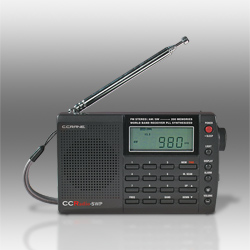
Crane CCRadio-SWP
The CC Radio SWP has been on the market for many years and has become a classic portable. The layout and design are very simple, the display clear, with easily-read icons and intuitive controls. The tuning knob on the right side is for fine tuning–no muting or chugging between frequencies, either. Shortwave and MW sensitivity are better than one might expect for a radio this size; I often find myself comparing it to much pricier portables. But most significantly, this radio offers the longest battery life of any radio I own: almost 70 hours on 2 AA cells!
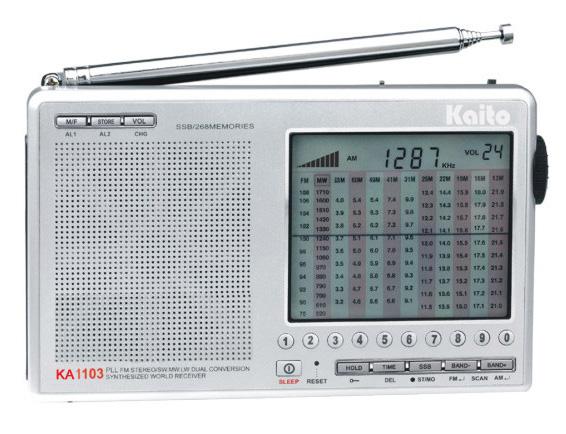
The Kaito KA1103 packs a lot of bang-for-your-buck if you’re looking for an inexpensive, ultra-portable entry into SWLing. Like the CC Radio SWP, the KA1103 (a.k.a. Degen DE1103) has enjoyed a long market life. The KA1103 is full-featured and one of the only sub-$100 radios with SSB mode. One interesting design feature of the KA1103 is its large Digital/Analog frequency display: the LCD screen features the frequency display in digits, but also sports a working digital representation of an analog frequency dial. As you tune up and down the band–with, yes, a tuning knob–the LCD needle moves along the display as it would on an analog radio dial. While I believe radio ergonomics could be improved, the KA1103 is still a great bargain.
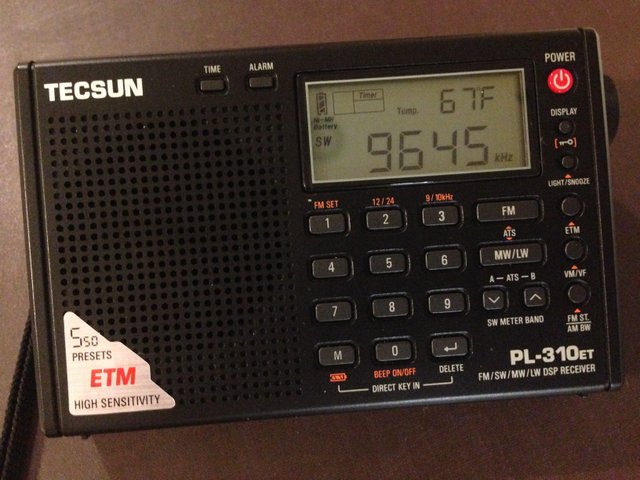
The Tecsun PL-310ET is an updated version of the acclaimed PL-310, a mini-legend in the world of portable radio, offering exceptional value and high-performance in a small package. The PL-310ET is fueled by a SiLabs DSP (Digital Signal Processing) chip that gives this ultra-portable excellent sensitivity and selectivity. The PL-310 has been a favorite amongst ultra-light Dxers, as sensitivity and selectivity are exceptional for the price. The new “ET” version of the PL-310 sports ETM tuning; a feature which allows you to scan the entire band and automatically store all strong stations to temporary memory locations. I believe the updated PL-310ET also has better AGC for weak signal DXing than its predecessor. Another bonus is that the PL-310ET sports an external antenna jack for shortwave and FM reception.
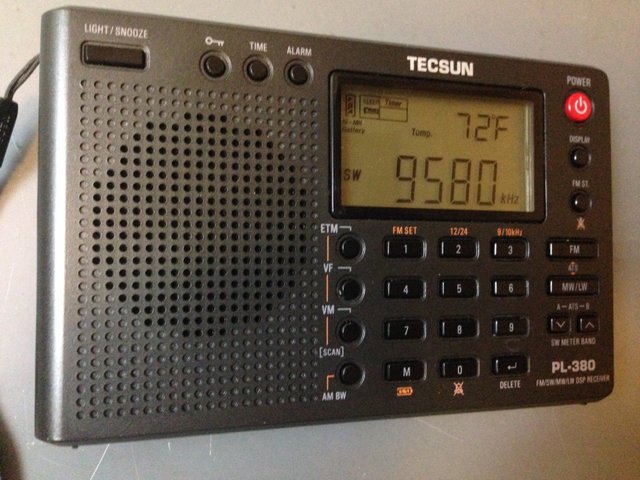
The Tecsun PL-380 is my favorite radio under $60. Much like its cousin, the PL-310ET (above), the PL-380 has a DSP (Digital Signal Processing) chip that gives this ultra-portable excellent sensitivity and selectivity. For three years, I have traveled extensively with the PL-380 in tow, and I’m constantly amazed by this radio’s excellent audio and reception across the bands.
Tecsun offers a number of compact portables, based on a similar DSP chip as the PL-380, but with built-in stereo speakers. Check out the Tecsun PL-390, PL-398BT, and PL-398MP, too.
Full-Featured Portables
In the portables market, I believe you get the most value and quality in the $90-250 price class. Most beginners and seasoned SWLs prefer a radio that includes everything necessary to get on the air immediately; all of these radios provide just that. Straight out of the box, you’ll have everything you need to listen to shortwave bands. All of these recommended radios are designed to pick up major shortwave broadcasters with ease, and offer the following features: good frequency coverage; circuitry that helps in the detection of weaker stations; and the ability to receive single-sideband (with the exception of the CCRadio-SW, see below).
Crane CCRadio-SW
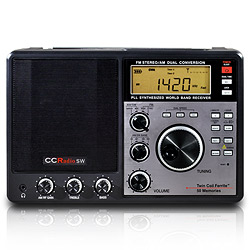
If you’re not as concerned about portability, the C.Crane CCRadio-SW is an excellent broadcast receiver. Think of the CCRadio-SW as a larger portable or tabletop radio (11.25″ x 7.25″ x 3.5″). What makes this radio stand out from its peers? Exceptional audio fidelity. The large built-in speaker has separate treble and bass controls and reminds me how important audio quality is while listening to a faint signal. This radio’s audio will fill a large room. Shortwave sensitivity is very good. Medium wave (AM broadcast) reception is excellent. Negatives? No direct keypad for frequency entry, and the SW also lacks a native SSB mode (a rare missing feature in this price class). With that said, it does have impressive array of external connections, including an IF-Out connection, which (with an IF converter and some free software) will allow you to interpret SSB and an array of digital signals, including DRM (Digital Radio Mondiale). What really strikes me about the CCRadio-SW is its sheer ease of use. Its design is simple, ergonomic, and highly effective. I’ve often recommended the CCRadio-SW to listeners who want simplicity of use and robust audio.
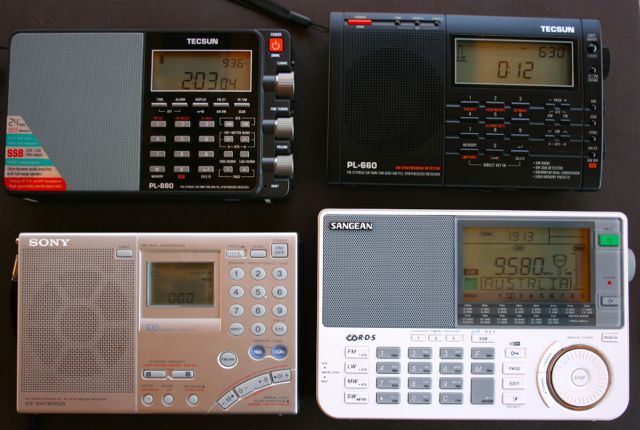
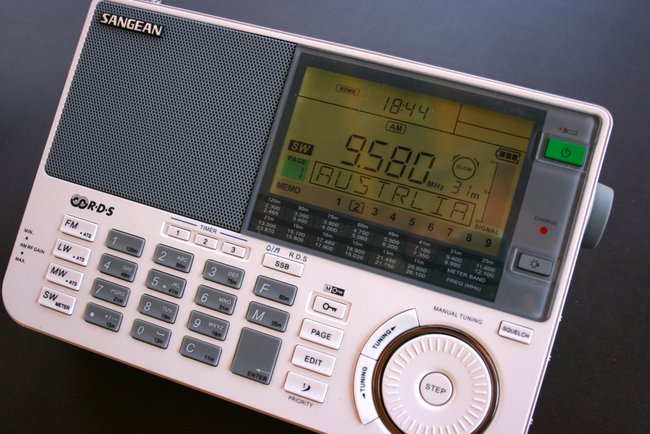
At $249.95, the Sangean ATS-909X is one of the priciest full-featured portables on the market. The 909X sports a large alpha-numeric display, tactile buttons, and a solid build quality. I also believe the 909X has a one of the better internal speakers and audio fidelity amongst portables. Negatives? Surprisingly, the 909X lacks synchronous detection, a tool most other portables have in this price range. Additionally, in my recent shortwave portable shoot-out, I gave the Sangean low marks for sensitivity; this review was based upon use of the built-in telescopic antenna. With an external antenna, on the other hand, the 909X performs admirably. If you’re looking for a quality portable with a front-end robust enough to be attached to a larger external antenna, the 909X may very well be your radio.
Sangean still has several models of portables available. Check out the Sangean ATS-404 and ATS-505P.
Sony ICF-SW7600GR
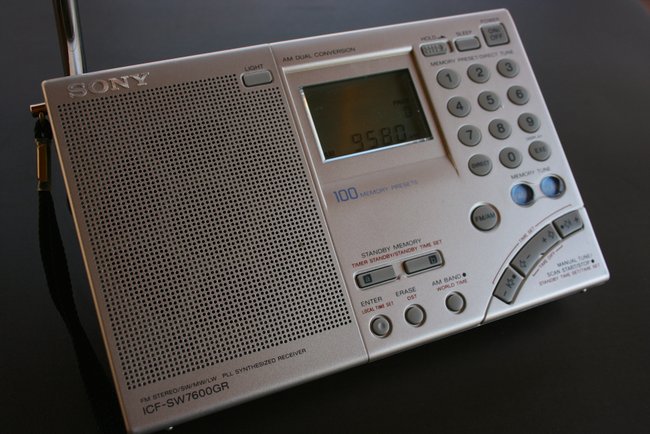
For performance, you’ll find that the Sony ICF-SW7600GR is top of its class among full-featured portables. Two of its outstanding features is a solid synchronous selectable sideband (a feature which helps to reduce fading distortion and adjacent-channel interference) and stable AGC circuit. In fact, the ICF-7600GR was chosen as a favorite in a blind audio test on the SWLing Post. Indeed, my only criticism of the ‘7600GR is that it lacks a tuning wheel; instead, you’re forced to use tuning buttons on the front face of the radio.
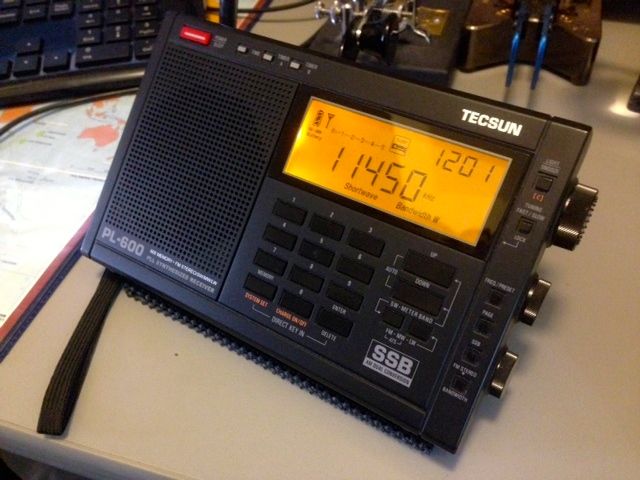
The Tecsun PL-600 is the value leader among the full-featured portables in this list. It can be found at a wide array of retailers, such as Universal Radio, Amazon and eBay. Price ranges from about $65 to $90. I’ve often recommended the PL-600 as a first full-featured radio for the budding SWL, and for good reason: the PL-600 has great sensitivity, selectivity, and even has capable single-sideband reception. The PL-600 does a surprisingly good job of holding its own against the other contenders in this list. Negatives? Like all sub-$100 portables, the PL-600 lacks synchronous detection (and if this is a deal-killer for you, check out the PL-660). Additionally, the PL-600 is not well suited for large external antennas; but it does work quite well with its own antenna. In a nutshell: if you’re not willing to spend over the $100 mark, the PL-600 is a safe bet.
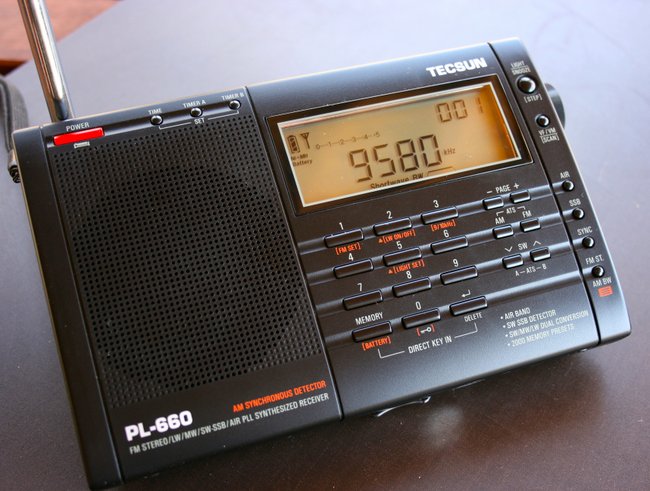
The Tecsun PL-660 is one of the best selling portable shortwave radios currently on the market–and for good reason. This rig has a full compliment of features and is quite easy to operate. The sync detector (selectable USB/LSB) is currently one of the best in the sub $150 US price range. Sensitivity and selectivity are both excellent; indeed, I consider it to have the most sensitive receiver among the portables listed here (and so. With the introduction of the Tecsun PL-880 on the market, the PL-660 has also become more affordable and can be found at or near the $100-120 price point with shipping. What a bargain!
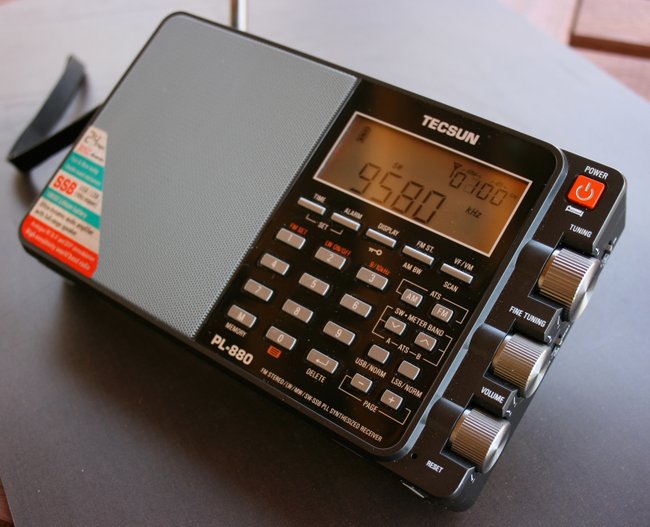
The Tecsun PL-880 was introduced to the market one year ago (November 2013), and while the introduction was a bit bumpy (feature variation based on differing firmware versions), it has recovered and found quite a good following. While the PL-880 does not rank as highly as the PL-660 or ICF-SW7600GR in terms of sensitivity (see review TSM June 2013) it does have compensating factors. For one thing, the PL-880 has the best audio fidelity from its internal speaker among the radios listed here. It’s also the most feature rich, boasting the most filter selections and a growing number of “hidden” features (http://wp.me/pn3uc-2tl). I also love the build quality, ergonomics, and tuning options; indeed, the PL-880 even has a dedicated fine tuning control. Negatives? Though the PL-880 has an undocumented sync detection among its “hidden” features, I find its sync lock quite feeble, compromising audio fidelity a bit too much. If you’re looking for a small portable that will fill a room with rich audio–whether you’re listening to the BBC, a classical concert, or just two ham radio operators chatting on 40 meters– look no further than the PL-880.
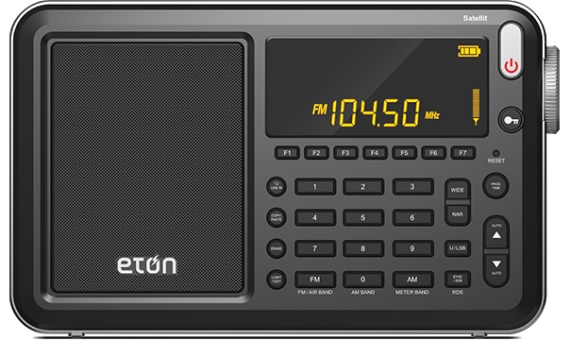
At time of publishing, Eton Corp–the North American distributor of Grundig–has four updated models of shortwave portables new to the market. All are updated versions of recently retired Grundig models:
If history is a guide, I expect all of these radios to prove worthy of the 2016 Shortwave Radio Buyer’s Guide. Indeed, preliminary reviews of the Field have been most favorable. Barring schedule changes, all models should be available in time for the 2014 holiday season…Stay tuned.
Tabletop receivers
While tabletop receivers have started to decline with the advent of SDRs, there are many listeners who still prefer a simple, dedicated, stand-alone high-performance receiver with a good tuning knob and clear display, which is to say, a tabletop receiver. Tabletops are designed to perform best with a resonant external antenna.
Alinco DX-R8T
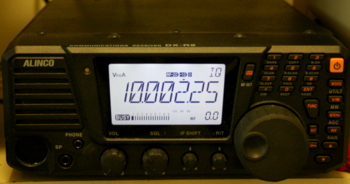
I reviewed the Alinco DX-R8T in 2011 a few months after it was introduced. I was favorably impressed with the DX-R8T. So much so, I purchased one after the review. It has excellent selectivity and sensitivity, a large display and tuning knob, a detachable faceplate (if your desktop space is limited), and a decent built-in speaker. What’s more, the DX-R8T has an SDR mode that allows you to hook up the receiver to your PC to see a spectrum display, and with an optional accessory cable, control its rig functions and tuning. The DX-R8T requires a regulated 12-volt power supply (not included). Cons? The DX-R8T lacks a selectable synchronous detector–a feature I enjoy using to combat adjacent signal interference.
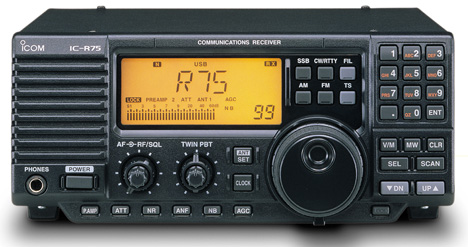
Various versions of the Icom R75 have been on the market for well over a decade. This receiver stands the test of time because it’s a full-featured tabletop with attributes like twin passband controls, a two-level pre amp, separate AF/RF gain, adjustable AGC, an alpha numeric display, a direct frequency entry keypad, not to mention a logical, ergonomic layout for all controls. Amateur Radio operators, pirate radio listeners, as well as utility broadcast listeners will all appreciate the R75’s performance in SSB mode. Cons? The current base version of the R75 lacks synchronous detection, though some models in the past have had this option.
If you’re searching for maximum performance for the price, software-defined radios (SDRs) and IF receivers are hard to beat. These small “black box” radios require a computer to unlock their performance; none of these are stand-alone. But while I’ve never been a fan of combining my PC with radio listening, once I starting using an SDR, I never turned back. Now, 90% of the time that I’m on the air, it’s with an SDR. They’re simply incredible.
The following selection of SDRs–and IF receivers–are all available for $1,000 or less.
Bonito RadioJet IF-Receiver 1102S
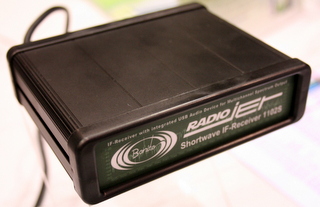
The Bonito RadioJet is included in this group because it is very similar to an SDR, but strictly speaking, it’s an IF receiver. Like an SDR, it requires a PC for operation. But while the RadioJet’s spectrum bandwidth is more limited than the SDRs that follow, it has advantages over the others. For one, the RadioJet is more akin to a PC-controlled radio–most of the hard work is done in the receiver itself, not your computer–-so even older model Windows PCs, tablets and netbooks can run the RadioJet application with ease. The RadioJet is great for travelers since it requires no external power supply: it derives its power from your computer, from the same USB cable used for data. The RadioJet is an excellent receiver and has a very low noise floor. If you like listening to DRM, you’ll be impressed with its native ability to decode the mode. Click here to read my comprehensive review of the RadioJet.
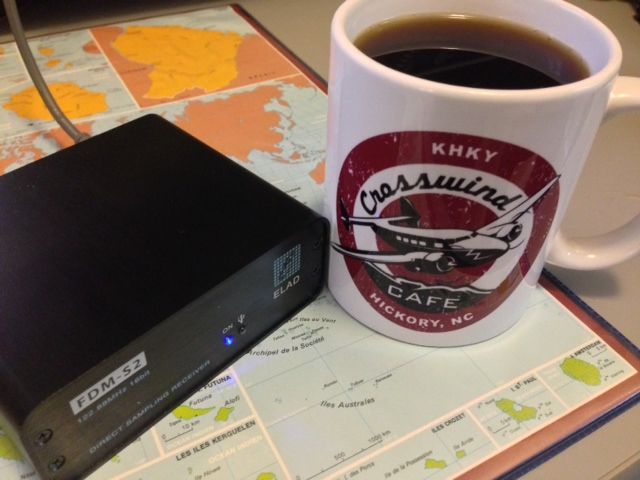
If you’ve read my Elad FDM-S2 review (coming soon!) you’ll know that this little SDR packs a powerful punch for the price. Indeed, I would venture to say that the FDM-S2 offers the best value among the SDRs listed here. Its performance is uncompromising, comparing favorably to receivers $300-400 more in price. The S2 also provides native DRM decoding. In short, the S2 makes for a fine DRM receiver.
Any negatives with this rig? Some users have reported diminished receiver performance in the presence of high-powered AM stations (fortunately, not an issue in the rural area where I live). Additionally, the Elad application has a greater learning curve than, say, the Perseus or the Excalibur (below). Still, I like the S2 so much that even though I already own a benchmark SDR, I’m planning to purchase the S2 after review.
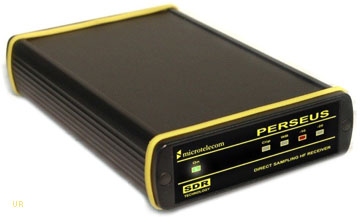
If you’re looking for a benchmark SDR, it’s hard to overlook the venerable Microtelecom Perseus. Though it’s been on the market for many years now, the receiver architecture holds its own and is as robust as they come. Selectivity and sensitivity are absolutely superb: no matter the mode or band. Another benefit of the Perseus is that users can network their receivers with relative ease, sharing them with other Perseus users. Negatives? The Perseus price point still tops the charts at $1000. And while the supplied application works quite well, it lacks features found in other SDR apps, and the window cannot be resized (though numerous customer requests have been made). Still, the Perseus is likely to remain a DXer’s receiver of choice for years to come.
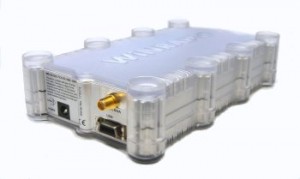
I have owned the WinRadio Excalibur since 2012, and it has become my primary home receiver. I have directly compared the Excalibur to the Microtelecom Perseus and the Elad FDM-S2 (above); any receiver performance differences are minor. As a radio broadcast archivist, I find the Excalibur to be the best receiver suited to capturing broadcasts, as it’s the only one in this group that can record up to 2 MHz of radio spectrum (and allow you to play back this recording later); up to three broadcasts can be captured simultaneously within that 2 MHz window. Negatives? The Excalibur application only works on Windows PCs. Additionally, it requires a dedicated 12V power supply, thus is less convenient than the RadioJet or FDM-S2 for travel and outdoor listening. Read my full review of the Excalibur by clicking here.
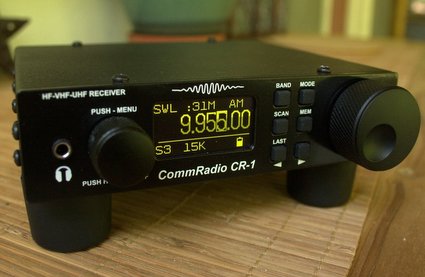
The CommRadio CR-1a could be classed as either an SDR or a stand-alone tabletop receiver, as it fits both profiles. Furthermore, the CR-1a is as portable as nearly any of the portable radios mentioned above. In short, I really dig this radio! It’s beautifully engineered and mil-spec rugged; performance-wise, it’s hard to beat. Receiver sensitivity and selectivity are superb. The best part? The CR-1a has an optional internal battery that will power it for hours on a single charge. With antenna and fully-charged CR-1a, you will enjoy hours of outdoor listening while traveling [check out my recent travel review]. If you’re on the fence about getting an SDR or tabletop radio, grab the CR-1a; at $599.95, it’s a lot of kit for your investment. Click here to read my comprehensive review of the CR-1.
If you would like to view a comprehensive list of all shortwave radios currently on the market, check out the Shortwave Radio Index (http://swling.com/db).
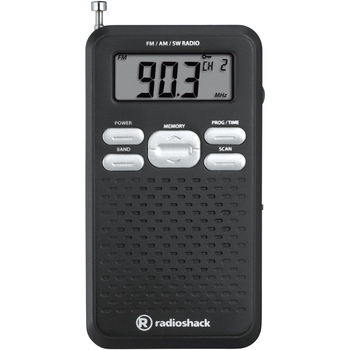
Very good question! Though I haven’t been inside a RadioShack in a couple of months, I’ve never noticed this portable on their shelves. In fact, I don’t even recognize the form factor as a re-badged Tecsun or Degen.
Has anyone purchased the model 2000669 from RadioShack?
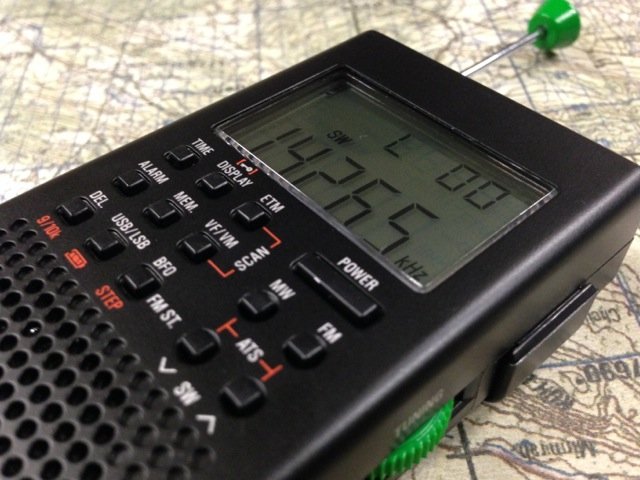
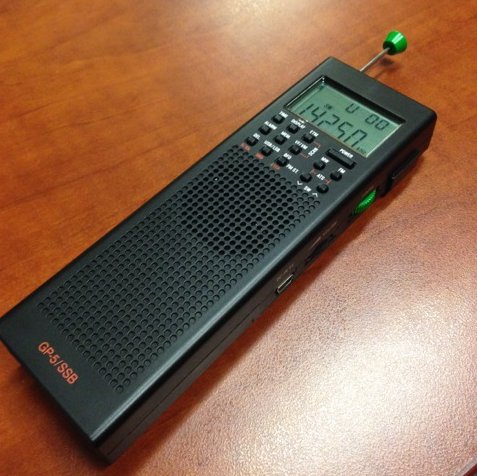
Many thanks to Nick at CountyComm who recently sent me a short video he made of a prototype GP5/SSB in action:
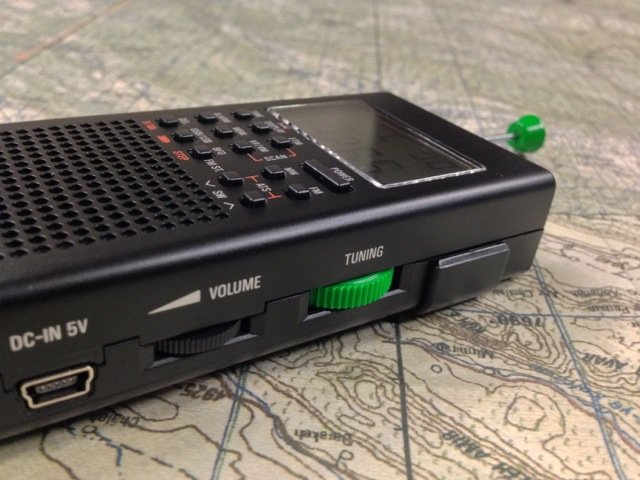
Nick also shared a few close-ups of the GP5/SSB:
Additionally, many thanks to SWLing Post reader, Mike McShan, for sharing this video overview of the CountyComm GP5/SSB that Universal Radio recently posted:
Universal Radio hopes to ship the first batch of the CountyComm GP5/SSB by December 1, 2014.
I plan to do a review the GP5/SSB in early December as well.
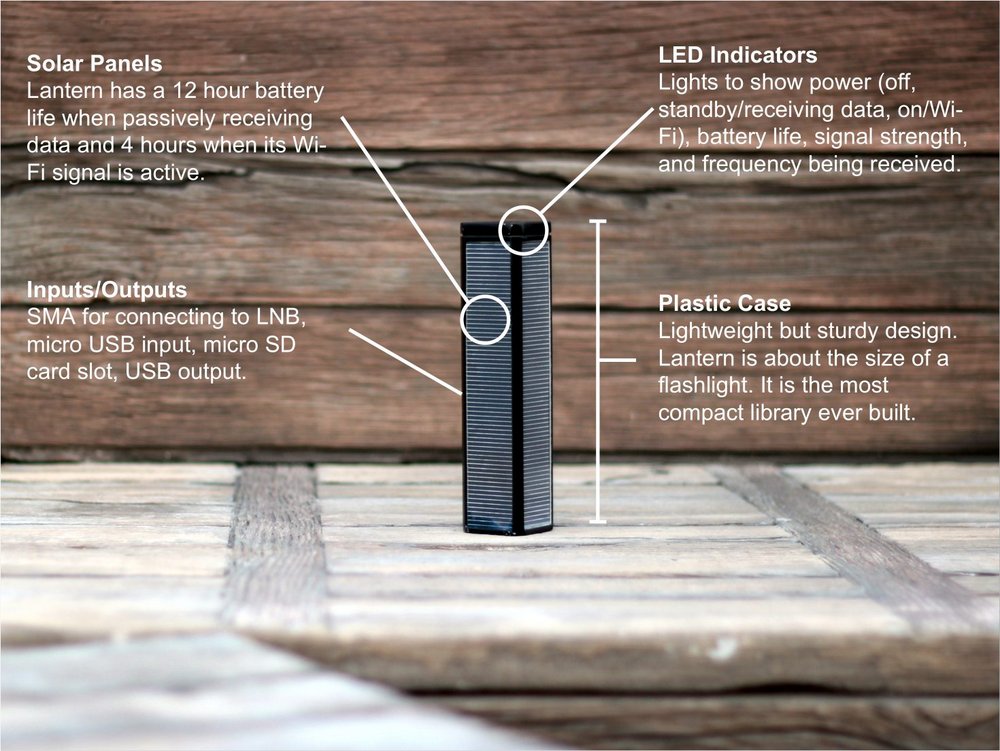
One project I have been following very closely since its debut is Outernet: a satellite-based information retrieval system that promotes free–and anonymous–access to information. In a sense, it’s the closest thing I’ve ever seen to shortwave radio in the digital realm, in terms of information access.
Yesterday, I received an email from the Outernet campaign regarding a product they have in development called “Lantern.” Outernet describes Lantern thus:
“Lantern is an anonymous portable library that constantly receives free data from space.
[…]Lantern continuously receives radio waves broadcast by Outernet from space. Lantern turns the signal into digital files, like webpages, news articles, ebooks, videos, and music. Lantern can receive and store any type of digital file on its internal drive. To view the content stored in Lantern, turn on the Wi-Fi hotspot and connect to Lantern with any Wi-Fi enabled device. All you need is a browser…Here is a quick overview of how the system works:
1. Outernet continuously broadcasts data from space. Most of what we broadcast is decided by you. The rest is either part of our Core Archive (critical content, like educational material or disaster updates) or Sponsored Content. In every case, we tell you how the content got there. If it’s sponsored, we tell you who paid for it.
2. Lantern connects to the satellite signal. A receiver, such as Lantern, can be bought from Outernet, or we’ll show you how to build one yourself. Lantern can receive numerous types of signals from various satellites and frequencies. Lantern can be plugged into a satellite dish to receive data at an even faster rate (200 MB/day and up).
3. Connect your Wi-Fi enabled device to Lantern. Lantern’s Wi-Fi hotspot allows anyone with a computer, tablet, or phone to interact with Lantern’s content. Everything can be viewed in a browser, just like the Internet, except this is an “offline” version.”




 WinRadio Excalibur