Shortwave listening and everything radio including reviews, broadcasting, ham radio, field operation, DXing, maker kits, travel, emergency gear, events, and more
Many thanks to SWLing Post reader, Jim T, who writes with the following inquiry:
Wondering if you can give me some guidance re: NOAA weather radios.
We’re looking to be better prepared for disasters, bad weather etc. and have narrowed our radio candidates to CC Crane, Sangean and Kaito.
AM/FM would be nice, hand cranking and solar as well, but just want to get NOAA alerts should we have an earthquake here in the NW. Willing to spend $50-100 for something quality with relevant features to it. Your thoughts would be appreciated!
Thanks for your message, Jim. There are dozens of inexpensive weather radio models on the market, but I know a few good options based on my personal experience.
Note that all of these radios work in both the US (via NOAA) and Canada (via Environment Canada)–both countries have been using the S.A.M.E. (Specific Area Message Encoding) weather alert system since 2004.
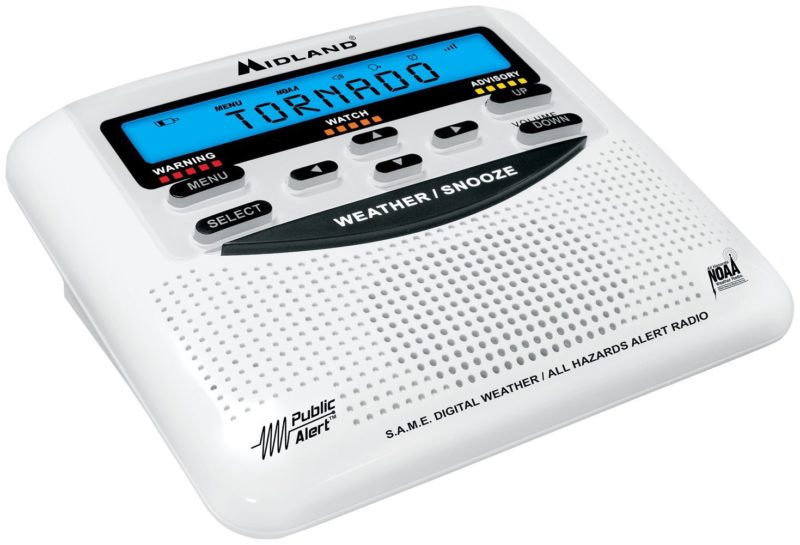
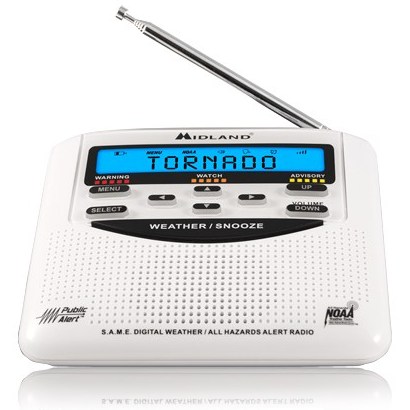
The Midland WR120: A dedicated weather radio
If you’re looking for a weather radio to plug in and continuously monitor weather alerts through the S.A.M.E. system, I recommend a dedicated weather radio like theMidland WR120. These radios don’t typically have AM/FM functions, but are entirely devoted to the seven weather radio frequencies in the US and Canada (162.400, 162.425, 162.450, 162.475, 162.500, 162.525, and 162.550 MHz). They plug into mains power and the better ones have battery backup in case of power outages.
I have family that own the Midland WR120. They’ve used it for years and it’s worked flawlessly. Once you set up the radio with your preferred NOAA frequency and SAME alert regions, it will alarm and automatically play NOAA weather radio alerts when they’re issued for your area. My family use this for tornado and storm alerts.
The Midland WR120 uses three AA alkaline cells for emergency power back-up. It’s very much a “set it and forget it” radio and, in my opinion, a bargain at $29.99.
As with any SAME alert radio, be aware that sometimes the alarm can be annoying. Depending on where you live and how the alert system is set up, you might get notifications for isolated weather events on the other side of your county–the S.A.M.E. system cannot pinpoint your neighborhood.
Still, I believe S.A.M.E. notifications are worth any extra inconvenience, especially if you live in an area prone to sudden storms and earthquakes.
C. Crane CC Skywave: A portable shortwave radio with excellent NOAA weather reception
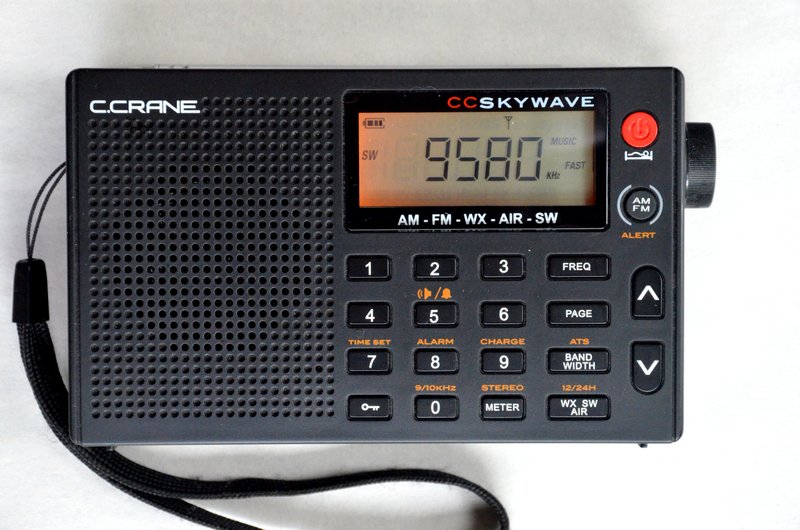
The C.Crane CC Skywave
If you’re looking for a battery powered radio to use during emergencies that has much more than NOAA weather radio, I’d recommend the C.Crane CC Skywave. Not only is it a full-fledged AM/FM/Shortwave and Air band radio, but it has exceptional NOAA weather radio reception with a weather alert function. The CC Skywave is a great radio to take on travels or keep in the home in case of an emergency. It’ll operate for ages on a set of two AA batteries, though I always keep a pack of four on standby just in case.
C. Crane CC Solar Observer: A self-powered AM/FM NOAA weather radio
There are a number of self-powered NOAA weather radios out there, but frankly, many are very cheap and the mechanical action of the hand crank are prone to fail early.
I believe one of the best is the CC Solar Observer by C. Crane. It’s durable, and can also run on three AA cells, and is an overall great radio in terms of sensitivity on AM/FM as well. Unique in the world of self-powered radios, it also has a backlit display (which can be turned off or on)–a fantastic feature if the power is out.
Like other self-powered analog radios, the CC Solar Observer has no S.A.M.E. alert functionality.
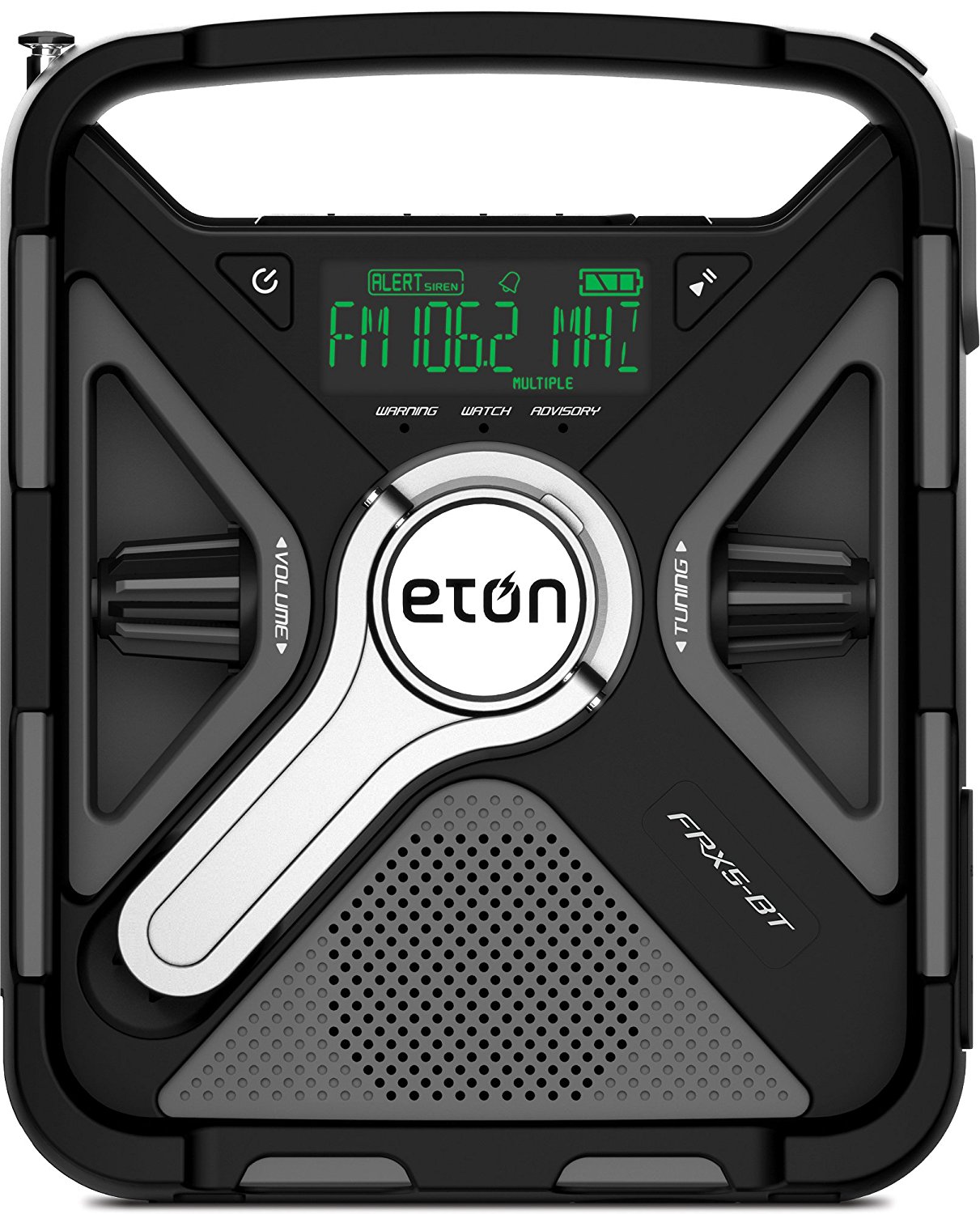
The Eton FRX5 sport weather alert, a digital display and futuristic design.
I would also encourage you to check out the wide selection of self-powered weather radios through Eton Corporation.
Many are digital and even have S.A.M.E. weather alerts. I haven’t commented on performance since I haven’t personally tested the 2016 and later models.
Eton typically packs a lot of features in their self-powered radios–having manufactured them for well over a decade, they’ve implemented iterative improvements along the way.
I have tested previous models extensively.
I particularly like the Eton FRX5 although being a digital radio, you get less play time per hand-powered crank–that’s why I prefer analog self-powered radios. The CC Solar Observer, for example, will yield roughly 40 minutes of listening time (at moderate volume levels) on 2-4 minutes of cranking.
Still, if charged fully in advance, I’m sure the FRX5 will play for hours. Note that using S.A.M.E. functionality in standby mode will deplete batteries more quickly.
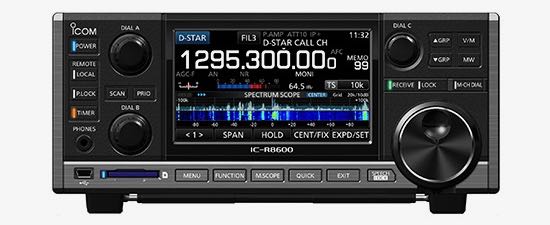
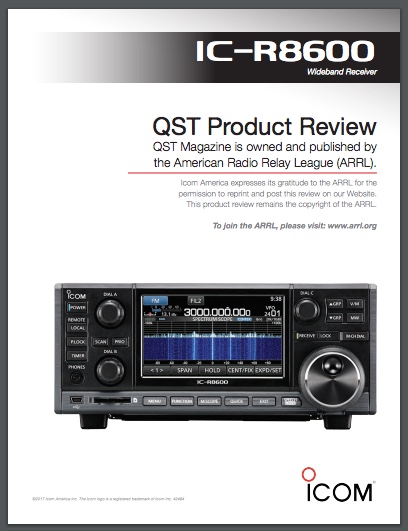
Many thanks to SWLing Post contributor, Dave Zantow (N9EWO), who notes that the recent ARRL review of the Icom IC-R8600 is available as a free download via Icom America.
That’s BJ on the left and me on the right at our favorite burrito joint.
A few weeks ago, I had lunch with my good friend, BJ Leiderman. If you ever listen to public radio programming, especially NPR, you’ve probably heard BJ’s name.
BJ is a musician, singer, and composer, and has written the bulk of the theme music you hear on National Public Radio (NPR). His music is hard to get out of your head. Every time I listen to NPR shows like Marketplace, Morning Edition, Wait, Wait Don’t Tell Me, Car Talk, or Science Friday, I hear BJ’s catchy tunes.
Moreover, BJ is an awesome fellow. But it’s dangerous hanging with him because he’s also…well, an enabler, when it comes to sound gear.
Often, when we hang out, I walk away from the meet-up with a new app, a new song in my head, or the sudden need for a new piece of kit.
Friday was a prime example. You may notice that I’m wearing headphones in the photo at the top of the page. Here’s how this played out…
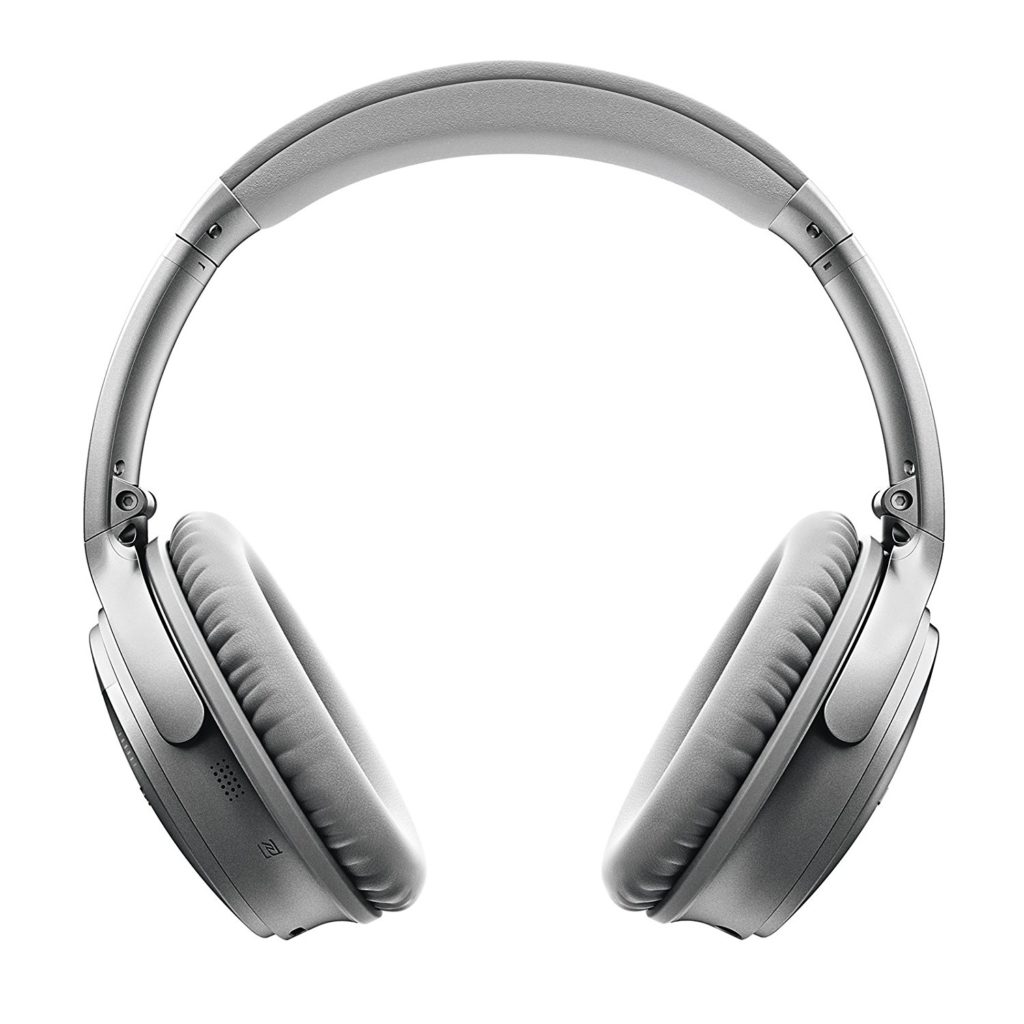
BJ asked if I had seen one of his latest animated music videos–one that is was featured on his new album, “BJ.” Instead of simply showing the video to me on his phone and/or playing the music through his iPhone’s speaker, BJ ran to his car and came back with a set of Bose Quiet Comfort 35 Noise-Cancelling headphones, then handed me his phone with the video queued up.
We were in a crowded, noisy restaurant during the lunch hour, but when I put on the headphones, all ambient sounds were instantly and utterly squelched. As his video played, it sounded like I was sitting in a recording studio listening to monitors. Absolutely phenomenal.
The headphone’s noise-cancelling technology is so good, in fact, I could barely hear my own voice as I spoke.
The audio fidelity was spot-on, too––there’s a nice balance from bass to treble. Though I’m sure your audio player’s EQ could customize this.
I walk around all of the time with a cheap pair of in-ear headphones in my pocket for use with my phone, radios, or simply to decrease ambient noise while I’m trying to work or sleep.
BJ, being the cool and compassionate character he is, had this fun song animated by young adult artists with autism at Exceptional Minds Animation Studios in LA, with the support of Howard Hoffman.
In real life, his dog Maizey is a sweetheart, and certainly BJ’s fuzzy brown soulmate.
Many thanks to SWLing Post contributor, Troy Riedel, for producing this excellent comparison of the Tecsun S-8800 and Grundig Field BT “lunchbox” radios:
The Lunchbox Showdown
by Troy Riedel
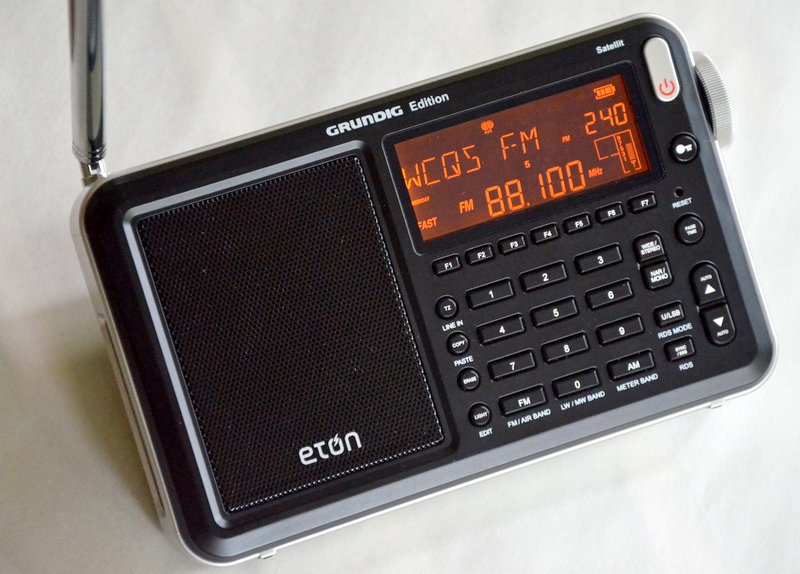
I have been watching with interest all of the information & reviews of the new Tecsun S-8800. Frankly, I was especially interested in how it would compare with the other “lunchbox” SW radio – the Eton Grundig Edition Field BT (the Digitech AR-1748 lunchbox radio is also available in AUS for approximately $207US shipped). As I contemplated which lunchbox to purchase, I put together the following Excel comparison table of the S-8800 vs. the Eton Field BT to assist me in making my decision:
Tescun S-8800
Eton Field BT
Price:
$268.00
$129.99
Tuning Methods:
FM / LW / MW / SW
FM / MW / SW
Q.Tune
Q.Tune
Digital tuner, Jog dial manual tuning
Digital tuner, Jog dial manual tuning (Fast, Slow and Hold)
Auto scan tuning with 5 second stop (w/ storage)
Auto scan tuning (no tuning storage)
Direct frequency entry using the remote control
Fine Tuning Knob: SW Meter Band
No soft muting when tuning
“Subtle“ Soft Muting when tuning
Station Storage Methods:
Manual storage: tune into stations manually and store them
Manual storage: tune into stations manually and store them
Semi-auto storage: storing stations during auto scan
Auto Tuning Storage (ATS): automatically tune into and store stations
FM / MW / LW / SW
FM / MW / LW / SW
AM Bandwidth:
Bandwidth selection (2.3, 3.0, 4.0, 6.0)
Narrow & Wide Settings (3.0*, 6.0*) *Reported
SSB:
SSB (USB/LSB)
N/A
SSB tuning steps at 10 Hz / 1 kHz
SSB Bandwidth selection (0.5, 1.2, 2.3, 3.0, 4.0)
N/A
FM with RDS
N/A
Bluetooth
Adjustable shoulder or hand carrying belt
Hand carrying strap
Remote control operation
N/A
SYNC:
N/A
N/A
Gain:
Local / DX antenna gain switch
Local / DX antenna gain switch
SW RF Gain Control
Memories:
650 station memories
50 station memories
Stored stations memory browsing
Auto Sorting Memory
LCD:
Standard Backlight
Orange Backlight
5-seconds or continuous settings
10-seconds or continuous settings
Clock/Alarm Time:
Clock/Alarm time (24H-format)
Clock/Alarm time (12 & 24H-format)
Alarm:
(1) Alarm
(2) Alarms
By radio only
By radio (60-mins) or buzzer (2-mins)
Digital Display:
Frequency & SW meter band
Frequency & Band (e.g. FM, LW, SW1)
Signal strength indicator
Signal strength indicator
Stored station location
Stored station location
Clock & Alarm time
Clock
Volume Level (while using remote)
Battery indicator & charging time
Battery Indicator
Sleep Timer A & B (Selectable)
RDS Info
* No Lock Feature
Display Lock “On”
Tuning Speed (Slow, Fast, Stop)
Sound Tuning:
Bass & Treble
Bass & Treble
Line In:
N/A
3.5mm Stereo Input for mp3 Player
Line Out:
(2) RCA Left & Right Stereo Channel Line Out
(1) 3.5mm Line Out for tape recorder or audio amplifier
Ant Selector:
Int. or Ext. Switch for FM/SW
Int. or Ext. Switch for FM/SW
FM/SW Antenna:
BNC: Low-impedance (50?) FM/SW
Coax: Low-impedance (50-75?)
MW Antenna:
High-impedance (500?) wire clamp terminals
High-impedance (500?) wire clamp terminals
Battery:
2 x 18650 Li-ion Cell
4 x “D” Cell
AC Adapter:
No AC included – does include a USB mini-B charging cable
7v 1200mA DC Neg Center included
Yes, the S-8800 without a doubt has more features than the Field BT. However, the S-8800 is slightly more than twice the price of the Field BT ($268 vs. $130)! Does the performance of the S-8800 equate proportional to the price difference?
Shortly after I made my Excel comparison table, Thomas published video comparisons of the S-8800. I very much appreciated the review and video comparisons that pitted the S-8800 against several popular portables. It gave me a baseline to set my expectations. However, those videos didn’t answer my question: “should I purchase the S-8800 or the Field BT”?
I contacted Thomas and I told him “we need an S-8800 vs. Eton Field BT” video comparison so SWL’ers have a true lunchbox vs. lunchbox comparison! I volunteered to purchase an Eton Field BT and have it delivered to Thomas for him to compare the two (after which he would forward the Field BT to me). After he hesitated, I replied: “what if I buy the Eton and we meet in North Carolina to compare them together”? Fortunately Thomas readily agreed and I made the 6.5-hour journey from Southeast VA to Mount Mitchell State Park for the Lunchbox Showdown (864-miles roundtrip on my odometer)!
Thomas and I had a limited amount of time. I arrived at noon. Thomas and I had 8-hours … and that included time for Thomas’ Parks On The Air (POTA) Activation, our S-8800 vs. Field BT comparison, we had to eat (it was a long drive for me!), and Thomas brought many other toys so we had to carve out time to “play radio” (and I can’t drive 400+ miles to Mount Mitchell and not walk to the summit of the highest point east of the Mississippi River!).
Luckily conditions were as ideal as I have ever seen them (evidenced by the fact Thomas made contacts from TX to the Azores with his Elecraft KX2). So please keep in mind, what follows is in no way a complete comparison. And to be clear, it was never my intention to review either receiver (there are many people more competent than I am that have already done this – Thomas among them!).
My interest re: these two models is primarily limited to each’s shortwave performance (I use a Sangean PR-D15 and a Grundig YB400 for AM DX, I prefer my Sangean PR-D15 for FM and I own 12 shortwave receivers). Thus our goals were to find and compare multiple representative SW signals. Thomas is obviously familiar with local AM stations in the area that he uses in his comparisons, thus we sought out a few AM signals (I recorded one to illustrate one huge difference that we both perceived in the two radios). Due to time, hunger, and eventually darkness we had to call it a day at 8 P.M.
I used my iPhone 6S to record the following comparisons. This was the first time I recorded shortwave signals. In retrospect, I wish I had made the recordings longer but at the time I was unsure of how much memory each recording would used, how much time it would take to upload, etc., so I kept everything at 1-2 minutes. As you will see, I recorded nearly all of the signals with the backlight off. You’ll see me reaching in, on Shootout 5, to tune off frequency – then back on – simply to show how the backlight would/or would not affect the weak signal on the Field BT (you’ll also see that it’s harder, outdoors, to read the Eton display without the backlight vs. the clearer Tecsun S-8880).
The Eton Field BT has its own SW RF Gain (a huge bonus) and you will see me reach into the field of view once or twice to fine tune the Field BT on weaker signals. And if you’ve studied my comparison table, you’ll see that the S-8800 has multiple bandwidth choices whereas the Field BT only has Wide & Narrow settings.
You will see me occasionally change the BW on both. I preferred not to speak during the videos as not to mask the audio of the signal thus I will set-up the specifics of each video with each individual link to my new YouTube Channel, SW Hobbyist, that I set-up to host these (and hopefully many future SW-related videos to include radio recordings & antenna comparisons).
Thomas and I both felt that the AGC of the Tecsun S-8800 was very slightly better (more stable – absolutely no “chug”) than the Eton Field BT (again, a very subtle difference). We both liked the sound of the Eton Field BT much better – it was crisp, full and just seemed to “pop” through its grill (see Shootout #7). The huge thing we both disliked with the Eton Field BT is its tuning dial. Yes, it has Q-Tune so one can jump from 5000, 6000, 7000, etc., with the push of a button but the tuning dial (even in “Fast” mode) is painfully slow and deliberate (dare I say horrible in comparison to the S-8880?). We both love the fact the S-8800 has a remote. But even without the remote, the S-8800 was much more pleasurable to manually tune.
Not to speak for Thomas, but I believe we generally felt [overall] that the SW signals were essentially close enough to call even … the edge to the Tecsun on a couple and the edge to the Field BT on a couple of others (I specifically remember us both commenting on an Arabic language broadcast from Radio Saudi Arabia where we both felt the Field BT was a very clear winner – that was one of the signals that I did not record). The better “sound” of the Field BT’s speaker may have influenced our opinions – a sound that was markedly better on FM, better on AM, but a sound that was much closer on SW.
My final thoughts and conclusion: Radios are like vehicles. No one vehicle is best for everyone. Each vehicle has a specific purpose and each has a subset of features. I own a large travel trailer. I need and thus own a heavy-duty diesel truck to tow it. But I surely wouldn’t recommend my vehicle to somebody who only needs a commuter vehicle. That’s why we have everything from SmartCars, to sedans, to SUVs, to dually diesel trucks. The same goes for radios. Some people will absolutely need SSB, others may demand SYNC (neither of these units has this feature!) while others may choose a radio based on size (compact for travel or larger models with a large, easy-to-read display for desk or tabletop use). Until now, I felt the video comparisons we had for the S-8880 were comparing a truck to an SUV to a sedan. At least now we have a few videos of two lunchbox radios compared side-by-side. True, one (the S-8800) is fully loaded (in vehicle terms: a 4×4 with a touchscreen GPS and DVD entertainment system). But not everyone who requires a truck needs a 4×4 with GPS and DVD entertainment system. Some truck owners prefer the smoother ride from a 4×2 truck. I think that’s the best way to describe these lunchbox receivers.
Am I glad that I bought the Eton Field BT? For me – despite the cumbersome tuning of the Field BT – I feel the S-8800 is not worth 2x the price of the Eton (I got an even sweeter deal for my new, sealed box Field BT off eBay that was well under the $129.99 street price). But you can make your own decision, you can decide which features are must-have, and you can listen to these videos as well as the other videos that Thomas has already posted and determine if one of these lunchbox models are in your future. And because I learned so much regarding the video recording of shortwave signals (I suffered from tunnel vision while recording – not fully aware of what I caught and what I missed), I hope I can meet-up with Thomas again so I can do a better, more thorough job with a “Lunchbox Comparison, Deuxième Partie” (that French was for Thomas – I hope I got that correct!).
Thanks for putting together this comparison, Troy! It was great hanging with you last week on Mt. Mitchell!
If you’re shopping for either of these radios, you have a few options:
The Tecsun S-8800 is only available worldwide via Anon-Co at time of posting. Eventually, they will begin appearing on eBay. There are retailers in Australia and Europe also selling the model (Important: make sure you’re ordering a model from the latest production run which solves the DSP birdie problem in early units).
I’ve mentioned many times before what a joy it is to curate the Shortwave Radio Audio Archive (SRAA). Sometimes I’m sent recordings that evoke a flood of memories. SRAA contributor, Tom Laskowski, just submitted another such recording.
Tom included the following notes with his Radio RSA – Voice of South Africa recording:
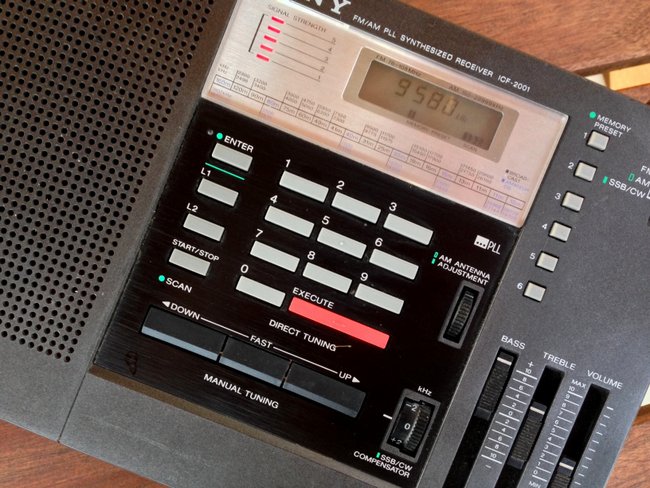
Every Saturday night during the early 1980s [in South Bend, Indiana] I would regularly tune to 9580 kHz at 0200 to listen to Radio RSA (Channel Africa as it is now known) to hear DX Corner, their regular DX program.
This episode from March 14, 1982 was a look at a brand new hot radio, the Sony ICF-2001.
The audio isn’t great but should be listenable. I think this was recorded using my new Realistic DX-302. Enjoy:
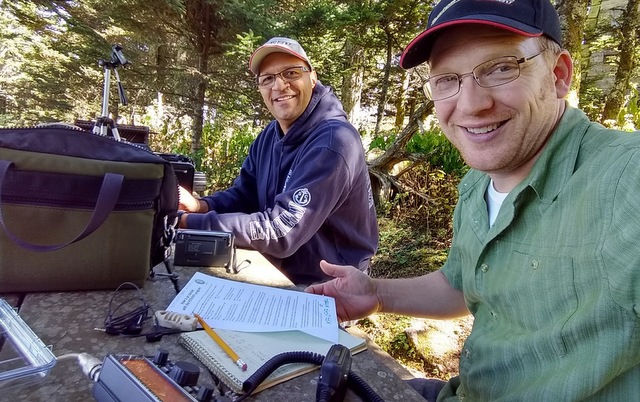
Troy Riedel preparing the Tecsun S-8800 and Grundig Field BT for a comparison review.
Shortly after publishing my review of the Tecsun S-8800, SWLing Post contributor Troy Riedel contacted me and asked if I would consider comparing the S-8800 to the Grundig Field BT. Of course I was very curious how the $130 Grundig Field BT might compare with the $268 Tecsun S-8800, but I’ve got a lot on my plate at the moment and didn’t really want to purchase another large portable.
Long story short: Troy found a honey of a deal on a perfect Grundig Edition Field BT via eBay. He ordered it and we decided to bring the two radios together yesterday at beautiful Mount Mitchell State Park— the highest point east of the Mississippi river.
Yesterday was an ideal day, too. The weather was picture-perfect, the park was (surprisingly) not too busy and propagation was the best I’ve experienced in weeks.
Troy left early in the morning and embarked on the 6+ hour pilgrimage to Mount Mitchell–I only live an hour away, so it was a casual drive for me. We met at noon.
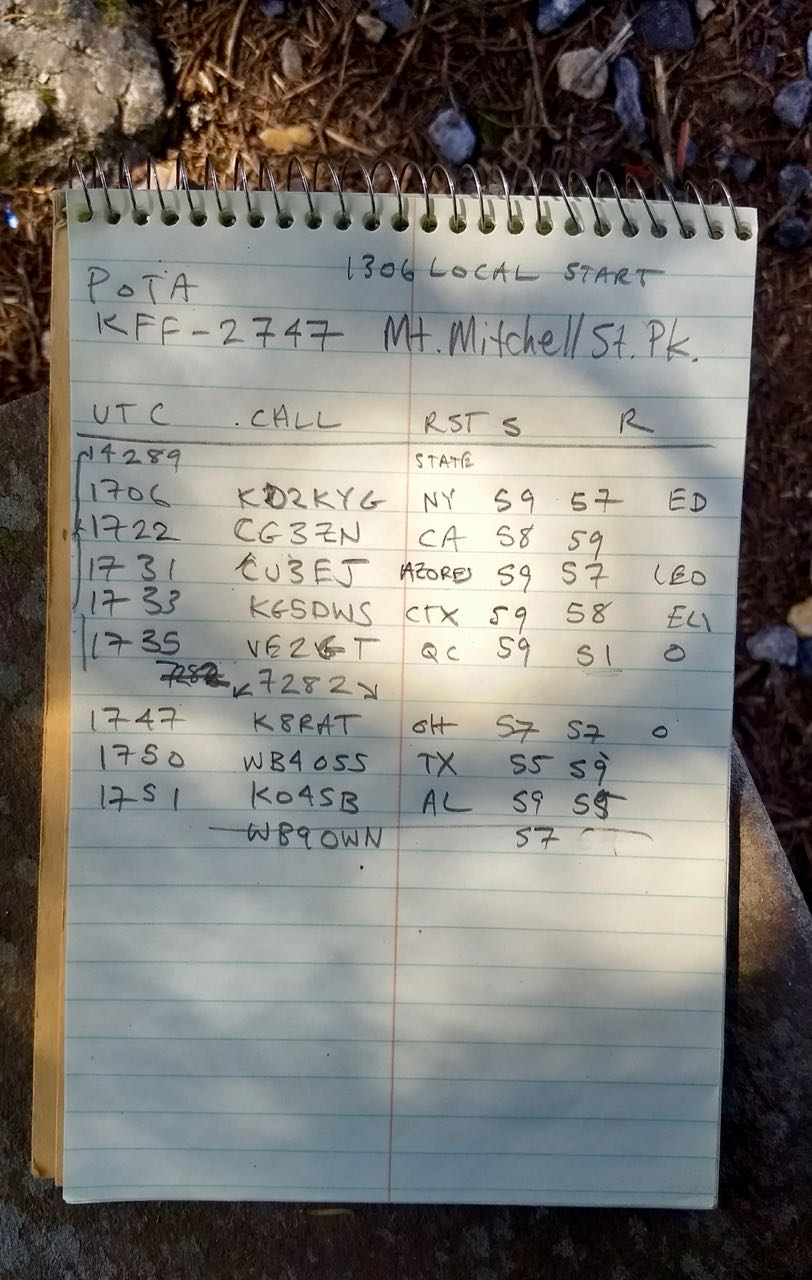
While we didn’t log a lot of stations, I was still impressed we worked stations from Texas to Quebec to the Azores. Not bad for 10 watts SSB!
Sure, I only worked a handful of stations, but this activation was essentially unannounced so chasers had no advance notice. No doubt, many more POTA activations are in my future! The bug has bitten!
Radio Fun
Except for a break to eat dinner at the park restaurant and a short hike to the peak of Mount Mitchell, we played radio until about 8:00 PM. It was amazing, uninterrupted fun.
Troy spent a lot of time comparing the Tecsun S-8800 with the Grundig Field BT and made several videos. No doubt, he’ll post his thoughts and review in the near future!
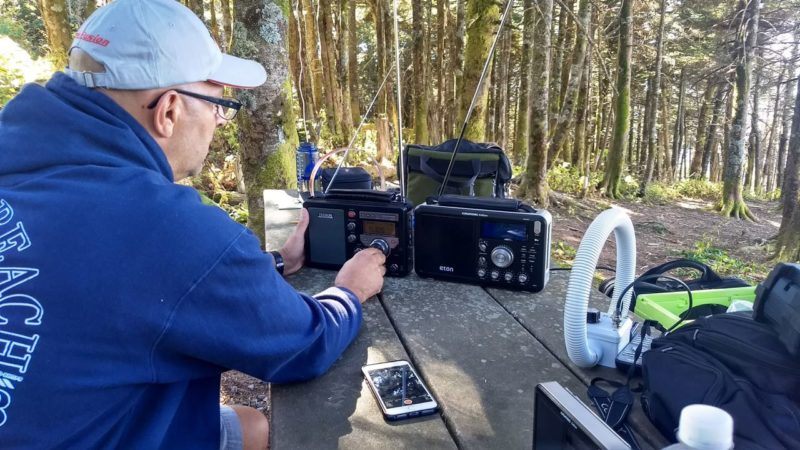
Being a bit of radio geek, I couldn’t help but bring a few “extra” radios and accessories. Here’s what I packed:
We were a little disappointed to discover that both my Tecsun PL-680 and Grundig Satellit exhibited flaky behavior.
During my S-8800 comparison tests, a few weeks ago, I did notice that sometimes when I turned on the PL-680, it was absolutely deaf. Next time I turned it on, it worked fine. Yesterday, the PL-680 simply didn’t want to perform. I’m not sure what happened.
The Grundig Satellit, on the other hand, worked great, but sometimes if you touched either the antenna or even brought your hands near the radio body while tuned to a station, it would go deaf. You could correct this by tuning off frequency, then back on–still…very strange! It’s as if the AGC or RF gain were hanging up.
Have any Post readers experienced this before? I’ll look into the issue this week and reset both radios. Perhaps that will help.
A great “Mini DXpedition”
Thank you, Troy, for suggesting the meet up and for making the pilgrimage. It was great meeting you in person! I also thoroughly enjoyed watching someone else do comparison tests and exploring a new radio–Troy certainly has a knack for doing radio evaluations!
This has encouraged me to do more meet-ups, perhaps during my travels. Great fun!
Post Readers: be on the lookout for Troy’s comparison of the Grundig Field BT and Tecsun S-8800 in the coming days/weeks (no pressure, Troy!).
Many thanks to SWLing Post contributor, Hans Johnson, who shares the following guest post:
Irma-induced Radio Reviews
by Hans Johnson
The primary disaster we face here in Naples, Florida, is hurricanes. Naples had been spared for over a decade until Irma. So while I had prepared, I had not needed my supplies or equipment for quite some time. This included the radios.
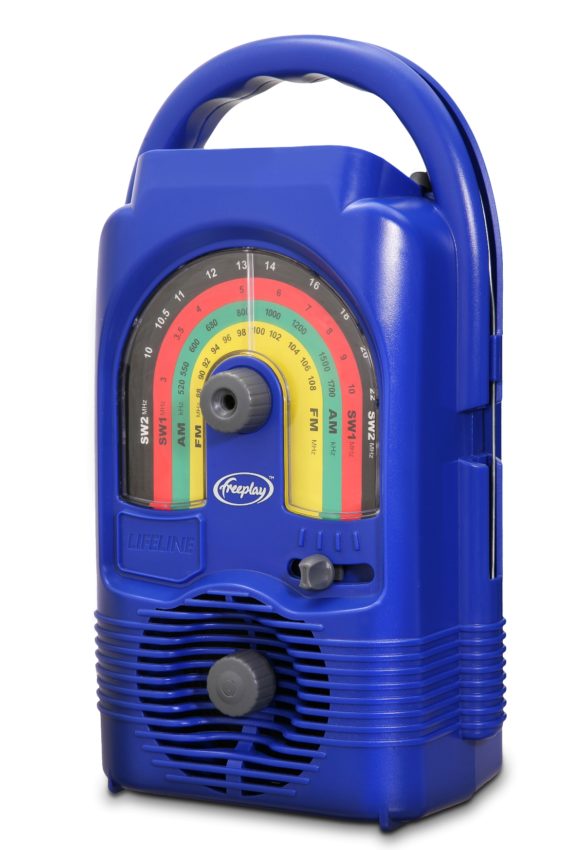
I went into Irma with two Freeplay solar and windup radios, a Unity and a Lifeline. I got these radios probably over a decade ago. As part of some work I was doing with VT Communications (now Babcock), I was involved with a radio project called Sudan Radio Service.
Both of these radios were being given to listeners as part of this project. I wanted to have a better understanding of what they faced. I had some conversations with Freeplay in London, explaining who I was and why I wanted these radios. During a visit, I was able to purchase both sets with the proviso that I not sell them.
I checked them both out at that time with my focus being on shortwave as that is how Sudan Radio Service was then transmitted. They were ok at picking out the strongest stations but that’s about it. I never really needed or wanted to use the radios day to day. And then Irma struck.
We left Naples on Saturday when we received a mandatory evacuation notice. The storm struck on Sunday and we returned on Monday.
We were spared. Many lost everything. Some lost their lives. We had a lot of trees down and some roof damage, but nothing substantial. But we had no power. Water had to be boiled. Sewage was backing up in places because the lift stations had no power. The stop lights were out (this was a real danger, many did not treat them as four-way stops and just blew through them. But you never knew who it would be.) A curfew was in place. The cell phone system was in really bad shape. I could not call or text my brother across town, let alone get access to the Internet via cell.
This link will give you an idea of what we came back to. I am the guy sawing wood at 1:47. (Lesson learned, have two chainsaws in case yours blows a gas line):
I had blown up some air mattresses before the storm so we slept on them on the screened porch. I saw the Milky Way from Naples for the first time.
We wanted information and also a bit of entertainment. Television was out of the question. The HDTV stations are hard to receive with a great antenna and set in the best of times where we live. So a battery-operated TV would have been a waste. Radio was the only game in town, so it was time to put the emergency radios in service.
Both of these analogue dial sets cover AM, FM, and shortwave. The Unity covers 3-22 MHz, the Lifeline just goes up to 18. The former covers the old American AM band and the latter the new one. The Unity uses a whip antenna and has a fine tuning knob. The Lifeline has a bendable wire that fits into the carrying handle and came with an alligator clip and a length of wire.
Ideally, one would be listening a set that has been charged via the solar cell or listening with the set in the sun. The last place I wanted to be was in or near the sun. Trying to charge the set and then listen to it is difficult in practice. It seems that the ratio was about one to one. 15 minutes in the sun would get you about 15 minutes of immediate listening. It doesn’t seem that the batteries will hold a charge for long periods of time. I could not charge them during the day and expect to turn them on the next morning, which was the peak time of day for radio to be transmitting local information. The ratio for using the hand-crank was better, but I grew tired of cranking quite quickly.
I was interested in local stations, so shortwave was not a factor. We only have a few local AM stations in Naples and I could not receive them (Irma knocked off or damaged a number of stations.) I tried FM. Even with the antennas retracted, both sets were overwhelmed by the local stations with certain stations bleeding through over much of the dial. I could receive some strong, local stations. With the outlet at Marco Island off and the other apparently on reduced power, receiving NPR was out of the question.
Given how many sources of information I was cut off from, my flow was greatly reduced. My ignorance increased and learning vital information was hit or miss. A neighbor told me about the boil order. Passing on information was difficult. When we got power I wanted to tell my brother, but the only way to inform him was to drive to his house.
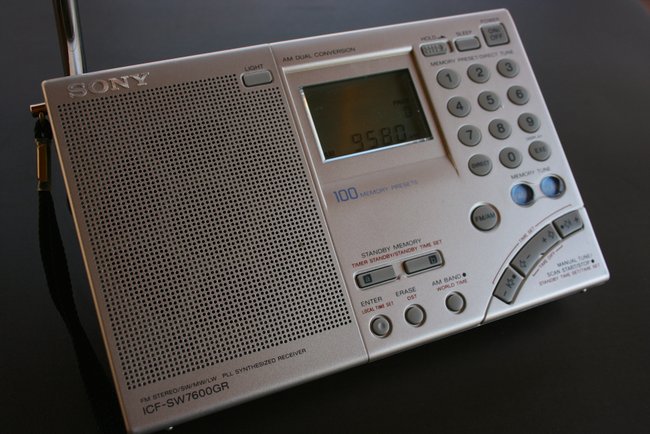
One result was that I put these sets away and broke out my old Sony
ICF-7600GR and used it instead. I guess I could have used it until I ran out of AA batteries. I had plenty on hand and can easily afford them. But that is hardly the case in Southern Sudan and many other places.
The Lifeline came with a few stickers on it that I could not read when I got the set. Now that Goggle translate is so good I can read them. They say in part: “Everyone has the right to receive information,” “Everyone one has the right to search for, receive, and deliver information.”
The real result of the test was a greater appreciation for how good I have it in many ways. With regards to information, I have many sources and can readily receive it and pass it on. It increased my respect for services like Sudan Radio Service and how important they are. But most especially, I have a much greater admiration for listeners using these sets and what is surely their perseverance, patience, and determination to get information.
Many thanks for your field report of the Freeplay Lifeline and Unity, Hans!
I’m happy to hear you had no serious damage post-Irma. So many in the SWLing Post community have been affected by hurricanes this season.
I have never, personally, reviewed either of these Freeplay units–both are now discontinued and have been replaced with other models at Lifeline, I believe. As you state in your post, these radios are only available to humanitarian organizations. Through Ears To Our World, I have considered acquiring Lineline Energy (Freeplay) radios in the past. However, their radios tend to be rather large in size–we tend to go with smaller receivers that can easily fit in suitcases. In the past we’ve been very happy with the Grundig FR200 (Tecsun GR-88).
The Lifeplayer MP3
Last year, we did purchase a Freeplay Lifeplayer to test. The hand crank charging mechanism is very robust, though quite noisy. The radio is digital, but performance is mediocre and tuning couldn’t be more cumbersome (5 kHz steps, no memories, only a couple of band steps. Tuning to your favorite station could literally take a couple of minutes, depending on where it is on the band. When you turn off the radio (or it runs out of power) you’ll have to re-tune to the station again. That’s a lot of extra mechanical wear on the encoder. The real utility of the Lifeplayer is the built-in MP3 player and recorder–a brilliant tool for rural schools. Also, it’s robust and can take abuse from kids much better than other consumer radios.
Your main point, though, is spot-on: these radios serve their purpose, but we radio enthusiasts are incredibly fortunate to have much better grade equipment to take us through information backouts.
Thanks again for your review, Hans!
Please support this website by adding us to your whitelist in your ad blocker. Ads are what helps us bring you premium content! Thank you!