
Last update: 25 March 2022
Since applications are constantly being developed, I update this posting regularly. If you would like to suggest an app that I have not considered, please comment or contact me!
Amateur and SWL Apps for iOS, Android and Windows phone
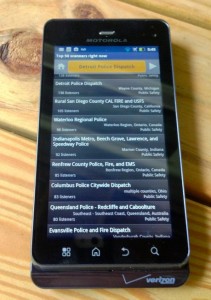
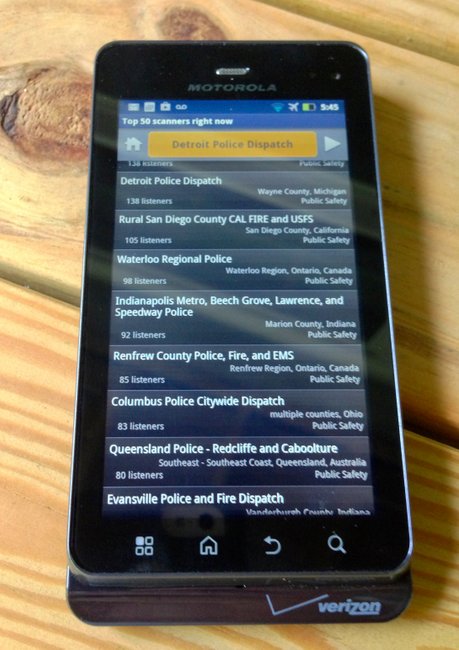
The Android App “Scanner Radio” is my pick for streaming scanner feeds from across the globe.
Advances in technology have always gone hand-in-hand with our radio hobby-–indeed, in many cases, those advances originated with our hobby. Because of this, it should comes as no surprise that in a world where we are rapidly replacing home computing with mobile computing, radio hobbies are “app-ly” supported in the the mobile realm.
Although it’s beyond the scope of this article to include a comprehensive list of all radio-hobbyist-themed apps for the iOS, Android and Windows, nor will it include proprietary apps (those which compliment a particular radio or accessory), I offer here an overview of select apps that I myself have used and reviewed for iOS and Android––with, of course, a focus on those I’ve found especially useful as a radio hobbyist.
I’ve recently added a number of Windows phone apps that readers have recommended. Since I don’t currently own a Windows phone device, I appreciate reader recommendations (simply comment or contact me).
In the list below I have linked to both the iTunes, Google Play and Windows Phone stores, when applicable. I’ve also noted pricing for each app, but please understand that application developers can change pricing without notice.
Ham Radio Apps
If you’re an amateur radio operator, you’re in luck when it comes to apps. There are a multitude out there, and most are either free or very inexpensive. Below, I’ve categorized these by major function, beginning with those apps that help you get your ham radio license in the first place.
Exam preparation
-
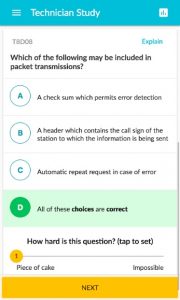
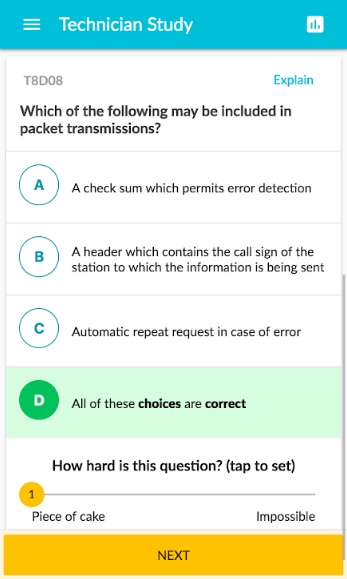
HamStudy.org’s new app has a fluid, responsive interface.
HamStudy.org (iOS; $3.99, Android; $3.99) HamStudy.org, a free online test preparation site, released apps for Android and iOS devices in the spring of 2018. While their online system is free, the app costs a one time $3.99 fee, but allows users to practice and study offline and includes all ham exams, including Canadian exams and other FCC exams. I believe this is quite a good deal and the best of the ham radio study apps. I taught the tech license to a high school homeschool group and almost all of the students used this app and passed their test.
-
Amateur Radio Exam Prep (iOS; $4.99) This app is simple, adaptive, and keeps track of the elements and questions you incorrectly answer. While it costs $4.99 per exam (Tech, General and Extra), you can try the free version first, which allows you to explore and learn two of the exam elements before buying. Still, a much better deal and far more portable than an exam book.
- HamExam (Windows; Free) HamExam is for anyone who would like to pass the FCC Amateur Radio exams. The app covers the Technician, General and Extra question pool. HamExam will randomize the questions for the practice portions of the app and for the exams. The app keeps counts on how many questions you have answered correctly, incorrectly, your scores and then graphs your performance.
- Ham Basic (iOS; $2.99) Are you practicing to take the Canadian Basic ham radio exam? This simple app works well on both iPhones and iPads. It contains the full 1,000 question pool and is adaptive, challenging you in your weakest subjects. Very simple and free.
- Ham Exam Canada Amateur Radio Test Prep (iOS; $19.99) Designed for both iPads and iPhones, this app promises to walk you through the steps to take both your basic and advanced Canadian amateur radio exams. This app seems to be updated by the publisher regularly (important when question pools change!).
- PalmVE (Android; Free) PalmVE allows you to take sample amateur radio written examinations, track your test history, search question pools, and will display question figure images where appropriate. PalmVE can also use your GPS info to find a Volunteer Examiner session nearby.
-
Ham Radio Exam (iOS; Free) A very simple exam study tool, Ham Radio Exam allows you to cruise exam question pools and note the correct answer. You can also take sample tests and focused quizzes. While not quite as versatile as paid apps (like Amateur Radio Exam Prep, above), it may be all you need to get your ticket!
- Amateur Radio Exams 1.6 Pro (Android; $2.99) Out of all of the Android offerings, Amateur Radio Exams 1.0 Pro is my favorite exam practice app. It is free to try, and only costs a modest $2.99 to buy.
Operation
-
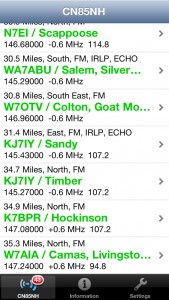
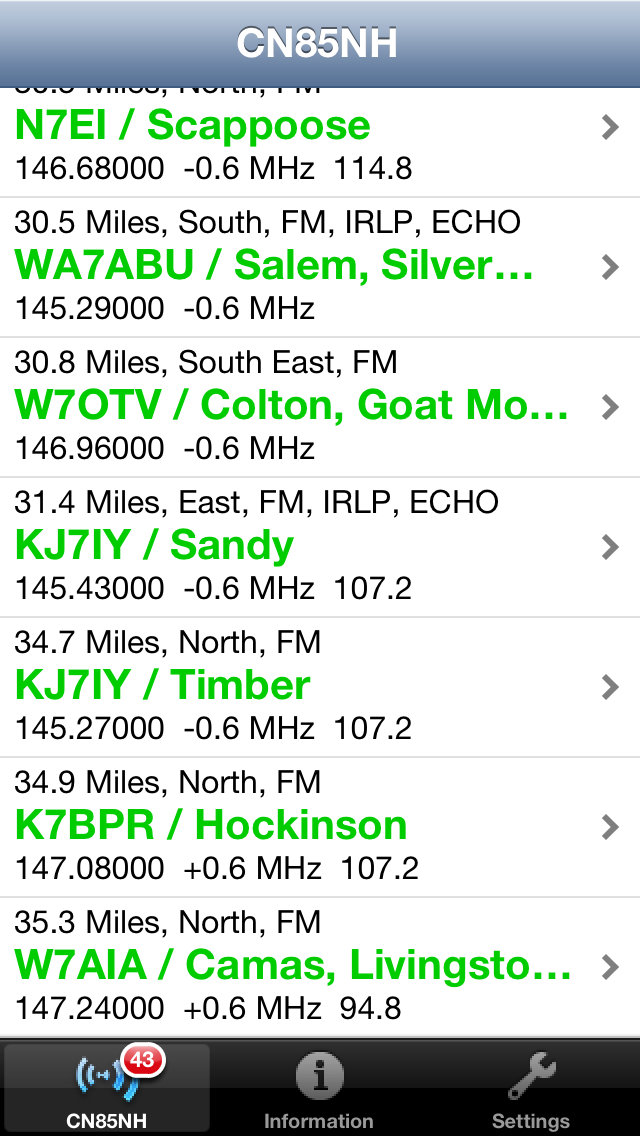
No more fumbling through a thick repeater atlas when you’re traveling! Repeater Book uses your phone’s built-in GPS and a large database of repeater frequencies to discover local repeaters.
EchoLink (iOS/Android; Free) Why not turn your smartphone into an HT? After all (as I often say), phones are actually radios…right? I only recently discovered the EchoLink app, but it has quickly become the most useful ham radio app I use. From this app you can talk to any repeater connected to the EchoLink network; all you need is a WiFi connection or cellular data service. I traveled to Belize City several years ago and used EchoLink to connect with hams in the US and Canada and even check in on a net. It worked flawlessly from the WiFi network at my guest home. I couldn’t recommend it more. Did I mention it’s absolutely free, with no ads?
- Ham Square (iOS; Free) A very simple app to track and display your Maidenhead designation in a matter of seconds. For the Android OS check out
- HamGPS (Android; Free). All three of these apps use your smartphone’s GPS to quickly resolve your Maidenhead location.
-
Repeater Book (iOS/Android; Free) An absolutely revolutionary app, in my opinion. Using your phone’s GPS, you can quickly reference local repeaters––any band, any mode––with full details, as you travel. This free app has replaced my need for the annual repeater atlas (which I’ve always found to be a little unhandy to use). Live in, or traveling to, the UK, Australia, Europe, and/or New Zealand? Repeater Book has a global version as well.
-
QRZ Callsign Search (iOS/Android; Free) The companion app to the popular callsign database site, QRZ.com. Their app is very basic, but makes it easy and convenient to do callsign lookups…although I do wish you could log contacts to QRZ.com via the app (hint, hint, developers!). Also check out HamRadio Call (iOS/Android; Free) as it even shows a map pinpoint for the QTH address on record.
-
PSK31 (iOS; $2.99) Launch this app, place it in front of your radio which you’ve tuned to a PSK31 signal, and it decodes on the fly. Very simple to use, and quite effective as long as your microphone is near the radio speaker. Meanwhile, Droid PSK (Android; $5.49) will decode and even encode PSK31, if you want that feature.
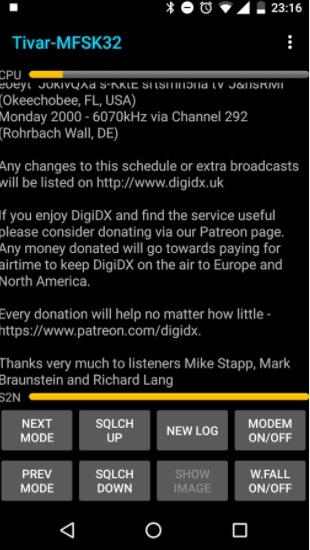
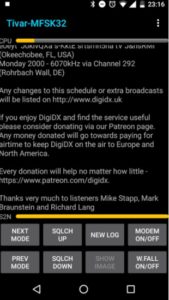 Tivar (Android; free–note, no longer in the Google Play store) Tivar is an Android app that provides read-only access to nearly all of the digital signals associated with fldigi. The main objective of this development is to provide a low power highly-portable, as in mobile or backpack, fldigi read-only solution. There is no facility to transmit any signal.
-
Hellschreiber (iOS; $2.99) Decode and send Hellschreiber text without a PC: place your mobile device near the speaker of your transceiver and this app will decode Hellschreiber on the fly. Connect the audio output from the headphone jack of your mobile device to your transceiver and you can even send Hellschreiber.
- ISS Detector (Android/iOS: Free) Chis Cooper comments: “this is one of my most often used Amateur Radio apps on my Android. It not only tracks and alerts on ISS passes with specified criteria, but with the pro upgrade, it will also track amateur radio satellites.”
- WSPR Watch (iOS; Free) According to SWLing Post reader, Peter Marks, who developed WSPR Watch, “the app shows reported WSPR beacon spots as a list, on a map, and draws some graphs.”
- APRSdroid (Android; $4.95) APRSdroid is an APRS application that allows you to report your position as well as sending and receiving messages. It also conveniently displays nearby stations as a list or on a map. Be sure to check out the developer’s website.
 Pocket HAM bands Transceiver (Android; Free) This application remotely control several ham radio sources via an Android smart phone or tablet. It can link to Ham Radio Deluxe, control any Yaesu FT8x7 transceiver via Bluetooth or USB cable (bi-directional CAT only, no sound) and multiple WebSDR servers around the globe. Not exactly plug-and-play as some connection methods require configuration and audio via an IP source. Read their notes and watch videos of Pocket HAM Bands Transceiver on the developer’s website.
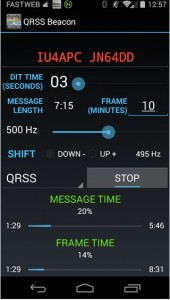
- QRSS Beacon (Android; $1.49) QRSS Beacon is a full-featured slow CW beacon application for Android. QRSS will allow you to select a DIT duration from 1 to 60 seconds and choose one of the 3 supported modes: QRSS, FSK/CW and DFCW. Simply connect the audio out of your Android device to the audio in of your radio and an enable VOX.
- MacLogger DX HD (iOS – iPad; $39.99) MacLoggerDX HD is an application that monitors the spots from your favorite DX Cluster for DXing, Contesting or casual rag-chewing. It Alerts you to rare Ham Radio contacts or band openings by looking up and displaying real time propagation paths on a zoomable map.
- HF-Propagation (Windows; free) HF Propagation is a free ad-supported windows phone 7 application to inform hams and SWLs about the current band conditions. It displays current status of the HF and VHF bands, and additional solar and terrestrial propagation related data.
- Morse Pad (iOS; $2.99) Morse Pad lets you decode morse code (CW) on your iPad, iPhone, or iPod Touch. Just set your device near a radio, tune in a morse code transmission, and watch the decoded text. Recent updates increases Morse Pad’s accuracy when decoding a sender with a sloppy fist.
Reference
-
Ham Radio Reference (iOS; $1.99) This is a simple app that puts a few vital pieces of information in front of you. I wish I had this in my early days on the air, as it has a simple list with all of the Q codes, US & Canadian Amateur Band Limits, Country Codes, Band Plans, Radiogram Numbered Messages, Grid Square and Location, Q Codes, Local and UTC Time, RST, The Phonetic Alphabet, Unit Abbreviations, Metric Prefixes and more. Also check out HamIAm (iOS; Free).
-
Ham Radio Tools (Android; Free) A very simple reference guide that includes logging (even the ability to export and import logs). It also has short Q code reference sheet, common formulas, and an antenna calculator. It has a very intuitive interface and no ads.
- Ham Reference (Windows; Free) Ham Reference is a collection of tools and reference materials for the amateur radio enthusiast. This free app includes: location with map – line A, C, and NRQZ, RF evaluation per FCC OET65 Supplement B, dual channel audio generator, space weather, resistor color codes, dipole antenna configuration with tuning, MUF and MUA, band plans, calling frequencies, a UTC clock and station ID timer, and more.
-
HamLog Mobile Logging (iOS; $0.99) An all-in-one app for the mobile operator. This app will export your logs to most any logging program, including Logbook of the World. The newest version even includes a rig control interface. This app also includes many ham reference guides.
-
HamAntCal (iOS; $0.99) Need to calculate the length of a resonant dipole for the field? HamAntCal is a very simple application to help you do just that. Simply choose a configuration (Half Wavelength, Quarter Wavelength or Inverted Vee) and it will do the math for you.
-
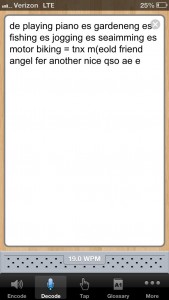
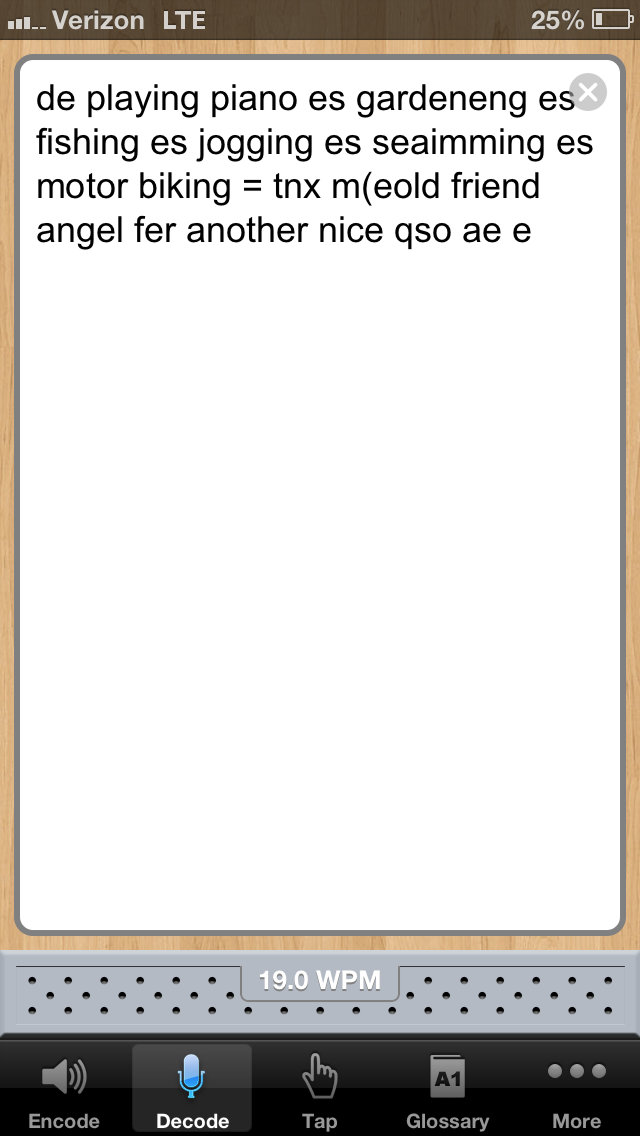
Morse It for iOS is a great tool for learning CW. In this case, I placed it in front of my receiver and decoded a CW exchange between two hams at 19 WPM.
Morse It (iOS; $0.99) This app not only reads but teaches CW. This is a 99¢ app, which, like many, offers several premium add-ons at additional cost. I like the interface and simplicity of this morse trainer. It also serves as a morse code reader. Simply place your iOS device in front of your radio’s speaker and watch it decode Morse code in real time. I’ve noticed that it decodes CW fairly well around 13-20 WPM; any slower or faster sometimes leads to more error. Still, it’s a great app for those who want to learn code, or who want to translate what they hear on the radio.
- Morse Code Training apps from KG9E (Android; $1.99) Amateur radio operator KG9E has developed a number of apps for Android including several focused on improving Morse Code speed. His collection includes apps to bring speed up to 10, 15, 20, 25 and 30 words per minute. All apps are $1.49 each.
-
MUF Predictor (Android; Free) Enter your transmitter and receiver location, and this simple calculator will help you determine maximum usable frequency.
DXing Spots/Databases
-
iCluster DX DB (iOS; $2.99) This app allows you to create alarms for needed DX countries, call signs, modes and more with a nice, simple layout. You can also filter spot results with the same criteria. Use multiple cluster servers, including your own, via telnet or the web. The app is free, but if you pay a $1.99 sponsorship fee, it enables a map mode which shows DX on a map. DX Hunter (iOS; $9.99) is more advanced and even sends push notifications from spot servers.
-
SOTA Goat (iOS; $2.99) If you like to activate summits (via Summits On The Air) or log them, this is a fantastic app. It’s one of the best designed apps for this purpose I’ve seen. SOTA Goat has a clear, intuitive interface, and is true to the iOS look and feel. Hands down, it has the best user interface of any ham radio application. With SOTA Goat in hand, you can plot and activate a summit while notifying the SOTA community automatically. Best yet, most of the app’s functions (including their summit database and map) are available offline! Yes, it’s $2.99, but if you’re into SOTA, it’s worth every penny.
- SOTA Finder (Android: Free) SOTA Finder helps you find SOTA sites and recent SOTA activity. A helpful app for those on Android systems, although my preference is the iOS SOTA Goat.
-
CommCat Mobile (iOS; Free) With CommCat, you can watch DX spots, control your radio, and log contacts from anywhere an Internet connection is available. SWLing Post reader, Michael, comments: “With CommCat Mobile you can not only control your rig remotely, but you can log contacts and even sync that log with your home log! Not many programs allow that. Also, there’s a complete DX spotting list available, so with a single finger click, you can tune your remote rig right to the DX and then key the mic and talk into the iPhone / iPad to work the DX! With another single click the entire thing has been logged and sent to your home station!”
Rig-specific Apps
-
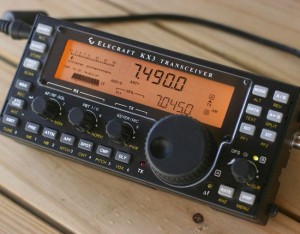
The Elecraft KX3
KX3 Companion (Android; Free and $5.99 version) The KX3 Companion in an app that will allow unleash the power of your Elecraft KX3 without the need for a PC. KX3 Companion will let you send and receive CW, PSK31 and RTTY by using your mobile phone or tablet keyboard. Optionally you can use an external Bluetooth keyboard connected to your Android device. It has a long list of features, and is regularly updated. The free version is limited to 5 minutes of use and will not allow you to save settings and macros.
- KX3 KeyApp (Android; $3.49) The KX3 KeyApp turns your tablet PC into a virtual keypad for your Elecraft KX3. With 54 buttons and 5 switches completely customizable, you’ll be able to create the perfect keypad for you ham radio operations with the Elecraft KX3.
SWL Apps
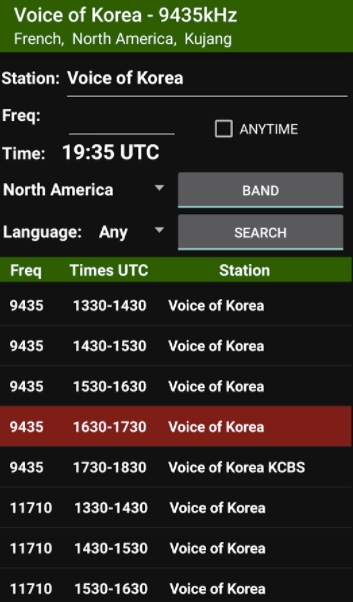
Skywave Schedules App will allow you to search a comprehensive, regularly updated, database of shortwave radio broadcasts.
- Skywave Schedules (Android; Free) If you have an Android device, you’re in luck. Skywave Radio Schedules is the newest schedules app and is my favorite. The app developer is a shortwave radio enthusiast and has incorporated numerous feature requests from others in the community. This app will even allow one to easily view upcoming broadcasts and dynamically search the entire database including international broadcasters, utility stations and other signals of interest. Best yet? It’s free and has no ads.
-
Shortwave Broadcast Schedules (iOS; $2.99/Android; $0.99) I used this app on my iPhone while traveling in Central America this summer, and could immediately pull up shortwave schedules even without an Internet connection. It has a very easy function for updating schedules, and can even be set to check for updates each time you open the app. Best yet, you can sort listings by what’s on the air now, by station, by time, by frequency, and more. Also, you can quickly pull up frequencies for a particular meter band at the touch of a button.
- Shortwave Radio Schedules (Android; Free) This app provides schedules and frequencies for shortwave radio broadcasts throughout the world. Information is also included on some utility stations, Firedrake, jammers etc. Broadcast frequencies and schedules are pulled from the Eibi schedule and AOKI Schedules. This app also features a unique map representation of broadcast footprints.
-
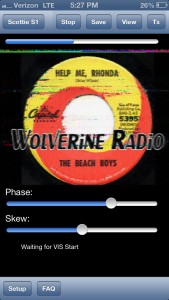
SSTV makes easy work of decoding SSTV messages. You can change modes, Phase and Skew on the fly. In this example, I decoded the eQSL of pirate radio station, Wolverine Radio.
Global Tuners (Android/Free) Note that the Global Tuners app seems to have been deleted from the Google Play Store. This is a unique app that allows you to actively control remotely-linked receivers scattered across the globe. Whether you want to tune a receiver in France during your morning commute on the train, or if you’re a ham and want to check if your signal can be heard in Asia, Global Tuners can help. Click here for a recent post about Global Tuners.
- glSDR (Android; Free) SWLing Post reader, Paul N6EV writes: “glSDR is an excellent Android app which allows you to connect to a handful of SDR receiver servers around the world. For each server, the first connection becomes the “master”, able to control the frequency, mode, filter, AGC, dsp, etc. Subsequent connections are “slave” and have no control but get to listen. When the master drops off, the next slave in line (oldest connection) becomes the new master.” Click here for a map of available servers.
-
HF Weather Fax (iOS; $4.99/Android; $9.99) A super-simple app for decoding HF weather fax transmissions on the fly. Simply start the app and place your device in front of the radio speaker.
-
SSTV (iOS; $2.99) As with HF Weather Fax, simply launch the app, and place it in front of your radio. You can even leave it unattended and it will decode and save the images automatically. Supports all major SSTV protocols. This is also the best app I’ve seen for decoding pirate radio eQSLs on the go! Though I have not personally tested it, Android users might wish to consider DroidSSTV (Android/$6.99) which allows you to receive and send SSTV images.
- Interval Signal Ringtones (Android; $1.99) A simple app that will let you set your ringtone to one of 40+ shortwave interval signals.
Virtual Transceivers
- HamSphere (iOS/Android; Free) HamSphere is a virtual Ham Radio Transceiver. Once installed, you will be able to communicate with thousands of Amateur Radio operators and Radio Enthusiasts in over 200 countries around the world. You can even use HamSphere without a Ham Radio license by using a special HamSphere call sign. HamSphere is a highly realistic shortwave simulation based on SDR (Software Defined Radio) technology.
Scanning Apps
-
Scanner Radio (Android; Free) A brilliant free scanner application which streams scanner feeds from across the planet—intuitive and easy to use. Scanner Radio Pro (Android/$2.99) eliminates ads.
-
Action Scanner Lite (iOS; Free) Easy to use, and loaded with scanner feeds. Although I prefer the search functionality in Scanner Radio (above), Action Scanner is a great app for iOS with many accolades. The developer has also published Action Scanner (iOS/$1.99) which has more Police, Fire, EMS and Amateur Radio feeds and Action Scanner Pro (iOS/$2.99) which has the most comprehensive list of feeds and features.
 Police Scanner 5-0 Radio (Windows; Free) Police Scanner 5-0 includes scanner feeds from across the globe: United States, Canada, Australia, Chile, United Kingdom, Germany, Italy, Ireland, Switzerland, Netherlands, Venezuela, Spain, Slovenia, Bulgaria, Argentina, Sweden, New Zealand, Antigua and Barbuda and Austria. Police Scanner 5-0 Radio Pro is available for $.99 at the WindowsPhone store.
Marine Apps
- DroidNavtex (Android; $9.99) DroidNavtex decodes NAVTEX messages from your receiver through your phone/tablet’s microphone or through a connected interface. Special audio filters decode very weak signals through your Android device’s microphone. W4ASZ comments, “Droid Navtex has worked well for me using a Grundig YB400 PE operating off the internal ferrite antenna.”
Aviation Apps
- LiveATC (iOS; $3.99/Android; $3.99/Windows $3.99) If you enjoy listening to Air Traffic Control, this is the app for you! The LiveATC app will connect you to Air Traffic control centers around the world through a user-supported network of online scanners (all volunteers). I host a LiveATC site for KHKY and KATL Clearance Delivers and Sectors 47/48–I use the app to monitor my feed and also listen to ATC across the globe. While you may listen to all of these feeds online for free, purchasing the app supports the company that makes all of this possible! Highly recommend.
Radio-Related Apps and Tools
Following are a couple of handy apps that, while not necessarily intended for ham radio, SWLing, or scanning, are nonetheless indispensable to me as a radio hobbyist; you may find them just as useful as I do:
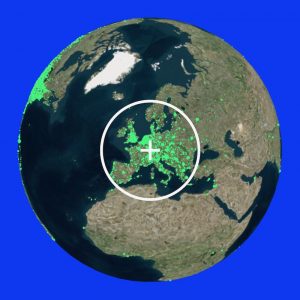
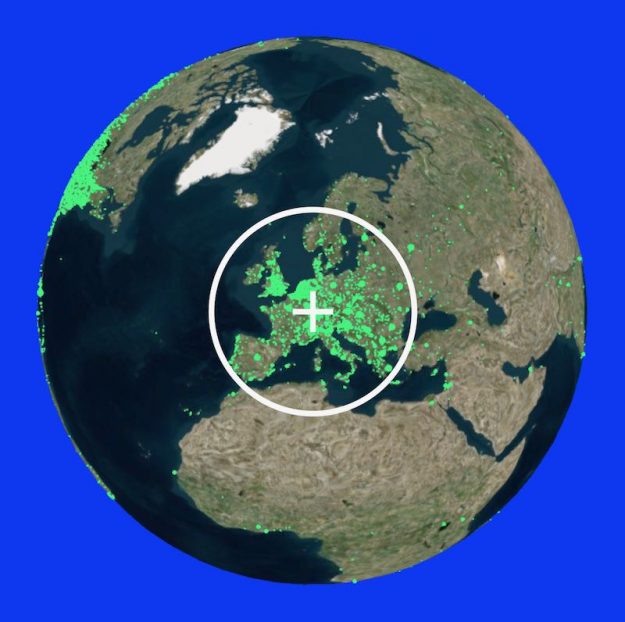
Radio Garden’s global interface
- Radio Garden (Android/iOS; Free) Without a doubt, Radio Garden is simply the best, most intuitive way to explore the world of online radio! While other apps and websites sort stations by genre, language or region in a list, Radio Garden takes a completely different approach. Radio Garden allows you to travel the world of radio much like Google Earth does. spin the globe, zoom in and find a station. For SWLs, this is an incredibly addictive app!
-
TuneIn (iOS/Android; Free) This remarkable app turns your Android or iOS device into a web radio—it makes your local station a global one. I use TuneIn to listen to AM stations in Australia, music from Paris, The International Radio Report on CKUT, and even some international broadcasters that are no longer on shortwave radio. Indeed, only recently, TuneIn radio began streaming our own Shortwave Radio Audio Archive. I now have TuneIn on all of my mobile devices. TuneIn Radio Pro (iOS/Android; $0.99) gives you the ability to record streaming live radio directly on your phone. Note that (sadly) the Pro version does not eliminate ads.
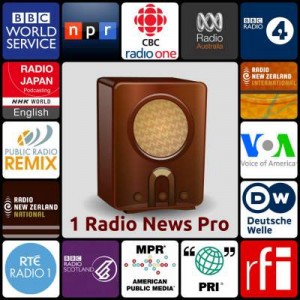 1 Radio News (Android; Free, $2.99 Pro) 1 Radio News is an Android-only app that focuses on news radio with both headlines on-demand and live streams from multiple sources all in an easy to use package. What I like about 1 Radio News is that it is a curated list of international broadcasters–many of whom are on shortwave. 1 Radio News Pro is a version which sports 3 times more streams than the free version and is ad-free for $2.99 on Google Play.
-
TeamViewer (iOS/Android; Free) TeamViewer is a remote access program that allows you to login to and use your home computer. I routinely use it to control my WinRadio Excalibur SDR while traveling.
As I mentioned before, this list is, by no means, comprehensive–these are simply some of the apps I feel are well supported and have had enough time on the market to shake out some of the bugs.
Do I really need a smartphone to experiment with apps?
I know many people who do not care for a smartphone and prefer the standard-featured flip phone. I, too, would be in this camp if I didn’t travel so often. The good thing is, there’s no need to buy a smartphone and then pay for 3G or 4G services to use the apps listed above. There are many devices that run iOS and Android that are not phones at all, and simply use WiFi connections for Internet access.
If you like Apple’s iOS platform, then you will want to consider an iPod touch, iPad or iPad Mini. If you prefer the Android operating system, then look at a no-contract Android phone or one of the many tablets on the market, like the Nexus 7. While the Kindle Fire is also based on the Android operating system, I’ve noticed that many of these apps are simply not available through Amazon. You’ll note that I did not cover the Windows mobile operating system; this is because there simply aren’t a lot of apps out there to choose from for this system.
In short, if you wish to use mobile apps for your radio activities, I would encourage you to consider only iOS or Android-based devices. A smartphone? That’s entirely optional.
What’s on my app wish list?
I would love to see a comprehensive app come along that has the functionality and utility of PC programs like FLdigi. This would make a mobile device perfect for decoding digital text programs like VOA Radiograms; it would also make them available to people who can’t afford or don’t have the infrastructure for a standard computer (as in many developing countries or even DXing locales). This may take more innovation on the processing front and more global adoption, but it is happening at a very rapid pace.
I would also like to see the ARRL develop an app for the popular Logbook of the World; for the serious DXer who needs mobile verification, this would be quite handy.
Going forward…
Ironically, mobile technologies have drawn many who might otherwise have become ham radio or shortwave radio enthusiasts––after all, these technologies make global communications seem effortless. Still, I find that nearly any technology ultimately compliments these hobbies: I turn to my smartphone for shortwave schedules, to conveniently decode Pirate Radio SSTV QSL cards, to listen to scanner feeds, and even connect to local repeaters and check in on nets. Indeed, the rapid pace of innovation on the app front is both encouraging and energizing, but also makes it challenging to keep up!
If you like, ckeep checking back here on The SWLing Post and my ham radio blog, QRPer.com, where I plan to post updates and reviews of new apps as they become available.




 I’m very pleased to have just received the 6th edition of John Figliozzi’s