Tag Archives: Radio Waves

Radio Waves: Why BBC WS Shortwave Matters, WTWW to Russia/Ukraine, Radio 5 to BBCWS, Finns Stock Up on Radios, and Asheville Radio Museum’s Amazing Volunteer

Radio Waves:  Stories Making Waves in the World of Radio

Because I keep my ear to the waves, as well as receive many tips from others who do the same, I find myself privy to radio-related stories that might interest SWLing Post readers.  To that end: Welcome to the SWLing Post’s Radio Waves, a collection of links to interesting stories making waves in the world of radio. Enjoy!


Why the BBC World Service’s New Ukrainian Shortwave Service Matters (The Rand Blog)

n March 2, the BBC World Service announced that it was restarting four-hour daily shortwave transmissions in English to Ukraine. The decision to resume Ukrainian shortwave broadcasts came after Russian forces began to deliberately target Ukrainian communications equipment, including the Kyiv television tower.

Why do these four-hour daily transmissions matter so much when the world supposedly has moved away from radio and adopted social media and the Internet? Isn’t shortwave an obsolete, century-old technology that harkens back to memories of World War II and the Cold War?

Despite its age, shortwave remains an enduring tool in the global fight against disinformation. In part, this is due to its unique broadcasting qualities. FM and broadcast television can only travel to just beyond the horizon. But shortwave can travel vast transcontinental and transoceanic distances. It accomplishes this feat by bouncing between the ionosphere and the earth—over mountains, skyscrapers, and digital firewalls.

It’s this last obstacle that’s most important here. Russia is demonstrating that it can destroy Ukraine’s television and FM broadcasting infrastructure. It can use hackers and such Kremlin-affiliated subversive agencies as the Internet Research Agency to take down or otherwise block Internet sites of Western and Ukrainian media agencies seeking to provide accurate information about the conflict. Cellphones only have limited range; they need towers to transmit longer distances. Russia has demonstrated that it can shut down cellphone communications in areas of Ukraine it has captured or is shelling, including nuclear power plants.

What about satellite reception? In theory, satellite reception can break through these issues. Last week, Starlink CEO Elon Musk sent “a truckload of satellite dishes” to Ukraine to provide “space Internet service.” But Russia can identify the satellite signals, seek to jam them, and locate those who have the dishes in Ukrainian areas now under its control.

This leaves shortwave, the venerable analog signal infamous for how it fades in and out as each wave is received. Shortwave cannot be hacked. It cannot be bombed or otherwise destroyed because it is being transmitted from far outside Ukraine. Shortwave is notoriously difficult to jam, despite Russia and China’s best efforts. The shortwave signal is always drifting slightly, making it difficult to precisely focus jamming equipment. The shortwave signal can also be more powerful than that of the jammer, effectively overriding the interference.

Shortwave only works if people listen. Fortunately, many Ukrainian families likely still have old, often cheap Soviet-era shortwave sets in their basements that can be powered by batteries or wall sockets. They are usually small and can be easily hidden from prying eyes. Some can even fit in a pocket. Shortwave radios can also be brought in as nonlethal aid. [Continue reading…]

Lebanon radio station tunes broadcast to Ukraine and Russia (WVLT)

LEBANON, Tenn. (WSMV) – Right now, the people of Ukraine need positive messages. One Lebanon family found a way to give them that with what they do best – a radio broadcast.

We all know there’s AM and FM radio, but there’s also shortwave radio. It’s listened to on a small device the size of a phone. While it may not be common in the U.S., radio personalities said it’s how people in Europe listen to radio continents away.

From the comfort of his home, Ted Randall brought comfort to those who need it most.

“We are broadcasting to the Ukraine and Russia,” Randall explained. “We are playing American rock and roll because our email responses have been saying, ‘please, no news, we are tired of hearing the news.’” [Continue reading…]

BBC Radio 5 Live suspends overnight programmes temporarily (RadioToday via Southgate ARC)

Overnight shows at BBC Radio 5 Live have been temporarily suspended due to a shortage of staff at the station’s MediaCity HQ.

BBC World Service will be rebroadcast instead until at least April 4th 2022.

Weekday overnight presenter Dotun Adebayo tweeted yesterday saying there will be no shows through the night until further notice, with a reply coming from weekend overnight host Hayley Hassall confirming the news.

An increase in COVID cases at the station means more staff are off work than usual.

A BBC spokesperson told RadioToday: “Due to increased COVID cases, we have temporarily suspended our overnight programming and will broadcast BBC World Service instead.”

The overnight show usually runs from 1am till 5am.

In other 5 Live news, the station’s new logo has now been uploaded to social media channels, and BBC Radio 5 Live Sports Extra has been renamed to BBC Radio 5 Sports Extra.
https://radiotoday.co.uk/2022/03/bbc-radio-5-live-suspends-overnight-programmes/

Finns stock up on portable radios after Russia’s invasion of Ukraine (YLE News)

One retailer said last week’s sales of battery-powered radios were triple that of the same time last year.

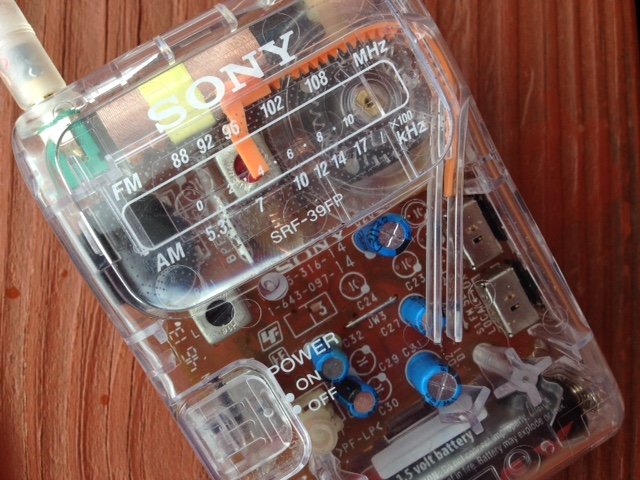
Electronics retailers in Finland have seen increased sales of battery-powered radios in the past few weeks, suggesting that some residents are preparing for the possibility of a coming emergency situation.

Sales of portable radios began to tick up at the electronics chain store Veikon Kone in Sodankylä, shortly after Russia’s deadly invasion of Ukraine, according to shop manager Jukka Haavisto.

“Radio sales rose to an entirely new level than they were,” he explained, adding that battery-powered radios were products that mostly sold in the summer.

“It’s a surprise to everyone and there are already availability issues,” Haavisto said.

Portable radio sales have doubled at the electronics store chain Gigantti, according to the retailer’s sales manager, Sami Kinnunen, who noted that last week’s sales were about triple that of the same time last year.

“We’re selling all kinds of radios, but ones with batteries are the most popular. It can be said that the change is significant, but we’re not talking about sales of thousands, but rather hundreds,” Kinnunen explained, noting that some models have sold out.

A noticeable uptick in sales of radios at electronics retailer Verkkokauppa.com has been seen on a weekly basis, according to the firm’s commercial director, Vesa Järveläinen.

He said the most popular radios were basic FM models that sell for around 20 euros.

“Right now we’re often selling about 100 radios a week, while before the increase the figure was a few dozen or so,” Järveläinen said. [Continue reading…]

Radios restored at Asheville museum, preserving vital part of communications history (WLOS)

ASHEVILLE, N.C. (WLOS) — At the Asheville Radio Museum, Tim McVey tunes in an RCA Radiola 20, built in 1927 but still kicking.

“This one still requires that you manipulate two dials to tune it in, and you have another dial here that fine tunes this dial. And this controls the filaments in the tubes,” says McVey, as he tunes the sound of several radio stations with static, down to one station with clear sound.

McVey retired from the FBI and moved from the Washington D.C. area to the mountains a year and a half ago.

“I get giddy thinking about it, because Tim has been such a remarkable addition to the museum,” says Asheville Radio Museum Curator Stuart Smolkin.

Smolkin says McVey has restored some of the most important radios in the museum, built in the 1920’s and 30’s, preserving a vital part of communications history.

“Without radio, we would not have cell phones,” Smolkin explains. “We would not have GPS. We would not have wireless internet routers, or wireless Bluetooth speakers. The list goes on and on.”

McVey tunes in another radio, this one from 1931, sounding great. [Continue reading…]


Do you enjoy the SWLing Post?

Please consider supporting us via Patreon or our Coffee Fund!

Your support makes articles like this one possible. Thank you!

Radio Waves: Station of National Resistance, CEPT Suspends Russia/Belarus, ABC Pacific Expansion, Live Ukraine News Stream, and Mali Bans French Radio & TV

Radio Waves:  Stories Making Waves in the World of Radio

Because I keep my ear to the waves, as well as receive many tips from others who do the same, I find myself privy to radio-related stories that might interest SWLing Post readers.  To that end: Welcome to the SWLing Post’s Radio Waves, a collection of links to interesting stories making waves in the world of radio. Enjoy!

Many thanks to the SWLing Post contributors who share the following tips:


Ukraine’s radio station of national resistance (The New Yorker)

High up in the Carpathian Mountains, two Kyiv broadcasters keep the signal alive.

Recently, at a closed ski resort in Ukraine’s Carpathian Mountains, Roman Davydov leaned into a microphone and announced the latest news from the war. Kryvyi Rih, in southern Ukraine, was being attacked; a U.S. journalist had been shot; and the British Foreign Secretary had announced new sanctions on Russian oligarchs in London. Davydov, who is forty-three, with dark hair and an oft-furrowed brow, is the voice of Kraina FM, an independent radio station that, after Russian bombing began in Kyiv, relocated to an undisclosed location. (The staff of Kraina FM asked me not to identify the village, for security reasons.) Outside Davydov’s improvised booth, a corner office lent to Kraina FM by a local accountant, an odd sense of normalcy reigned. Beyond the ski-rental shop, where a cluster of sandbags had been piled, a man in a blue jacket and ski goggles operated a small lift for a children’s slope in the bright sunshine.

The area, which is several hours south of Lviv, has become a shelter for displaced people, Bogdan Bolkhovetsky, Davydov’s colleague, told me. Bolkhovetsky, Kraina FM’s station general manager, said that he and Davydov had arrived in the village “by pure chance.” The west of the country is full of refugees, and there are few places for families to stay as they make their way toward the borders of Europe. “We found this place because it was the only place vacant,” Bolkhovetsky said. They arrived in the evening on February 27th; just days later they were setting up the station in a sloped-ceilinged, wood-panelled space that barely fit their two desks. They acquired laptops and a mixer from the supply of aid making its way from the rest of Europe to Ukraine. “We called our friends in Austria and they were so quick,” Bolkhovetsky said. “Guys we’ve never met just sent us the equipment, and a friend of ours brought this equipment in. I mean, they brought us these German laptops and the mixing console and we’ve never seen these people before.” [Continue reading…]

Russia and Belarus suspended from CEPT membership (CEPT via Southgate ARC)

On March 17 the European Conference of Postal and Telecommunications (CEPT) announced the indefinite suspension of Russia and Belarus following the invasion of Ukraine

The CEPT announcement said:

Outcome of the written procedure with the CEPT Assembly regarding suspension of the Russian Federation and Belarus from CEPT Membership.

Based on a request from a number of CEPT members, the CEPT Presidency carried out a written procedure, in accordance with the CEPT Arrangement, on the proposal to suspend indefinitely and with immediate effect the memberships of the Russian Federation and Belarus in the CEPT.

Thirty-four responses were received to the CEPT Assembly letter in support of the proposal and one abstention.

Based on the above, the CEPT Assembly has therefore decided: Continue reading

Radio Waves: Colorado Inmate Radio, Experimental Radio News 4, BBC World Service to Ukraine, DIY Radio, and When the World Tuned to Shortwave

Radio Waves:  Stories Making Waves in the World of Radio

Because I keep my ear to the waves, as well as receive many tips from others who do the same, I find myself privy to radio-related stories that might interest SWLing Post readers.  To that end: Welcome to the SWLing Post’s Radio Waves, a collection of links to interesting stories making waves in the world of radio. Enjoy!


Inmate-produced radio station streams beyond prison walls (NBC News)

Inside Wire, available 24/7 to incarcerated people in Colorado and to online listeners around the world, is said to offer a chance for prisoners and those they harmed to heal.

LIMON, Colo. — Herbert Alexander stares at the sound waves jumping on the computer screen in front of him, his shaved head partially covered by headphones. He’s editing a short audio feature on incarcerated fathers, a subject with which he is intimately familiar.

His two sons will soon hear his voice and his story because Alexander, 46, an inmate at Limon Correctional Facility, is preparing a segment for Inside Wire: Colorado Prison Radio, billed as the first radio station to be produced inside a prison and available to the world outside.

Other radio stations created in prisons generally air only within the walls of their lockups, but Inside Wire, which premiered March 1, reaches all 21 prisons in the state and beyond, online and by app, making the first of its kind in the country, organizers said.

“In spaces where isolation continues, this medium can cut through that,” said Ryan Conarro, general manager and program director of Inside Wire and creative producer for the University of Denver Prison Arts Initiative, which oversees the program in partnership with the Colorado Department of Corrections. [Continue reading at NBC…]

Experimental Radio News 4 (Experimental Radio News)

This issue of ERN includes novel aeronautical experiments, life-detecting radars and non-wearable health monitoring, the latest on those mysterious shortwave trading stations and more.

Click here to read a wide variety of topics in Experimental Radio News 4.

BBC World Service resurrects shortwave broadcasts in war-torn Ukraine (TPR)

The BBC has resurrected an old school way of broadcasting in order to reach people in the crisis area of Ukraine: Shortwave radio. What is shortwave, and why has the BBC decided to begin using it again? Continue reading

Radio Waves: RNZ & TVNZ Merging, Tech Keeping Ukrainians in Touch, Solar Storms Documentary, and Aspidistra

Radio Waves:  Stories Making Waves in the World of Radio

Because I keep my ear to the waves, as well as receive many tips from others who do the same, I find myself privy to radio-related stories that might interest SWLing Post readers.  To that end: Welcome to the SWLing Post’s Radio Waves, a collection of links to interesting stories making waves in the world of radio. Enjoy!


RNZ and TVNZ to merge (RadioInfo)

New Zealand’s Minister for Broadcasting and Media Kris Faafoi has announced the government’s decision to create a new public media entity by merging RNZ and TVNZ.

According to Faafoi, ensuring New Zealanders continue to have access to reliable, trusted, independent information and local content sits at the heart of the decision.

“The public media sector is extremely important to New Zealanders in providing them with high quality, independent, timely and relevant media content,” Faafoi said.

“But we know the media landscape is changing and the sector is having to adapt to increased competition, changing audience demands and ways of accessing media, falling revenue, and new and emerging digital platforms. We need public media which is responsive to these changes and can flourish.

“RNZ and TVNZ are each trying to adjust to the challenges, but our current public media system, and the legislation it’s based on, is focused on radio and television.

“New Zealanders are among some of the most adaptive audiences when it comes to accessing content in different ways; like their phones rather than television and radio, and from internet-based platforms. We must be sure our public media can adapt to those audience changes, as well as other challenges that media will face in the future.”

“The new public media entity will be built on the best of both RNZ and TVNZ, which will initially become subsidiaries of the new organisation. It will continue to provide what existing audiences value, such as RNZ Concert, as well as better reaching those groups who aren’t currently well served; such as our various ethnic communities and cultures,” Faafoi said[…]

Read more at: https://radioinfo.com.au/news/rnz-and-tvnz-to-merge/ © RadioInfo Australia

Technologies old and new keep Ukrainians in touch with the world (The Economist)

Battery radios and satellite internet both have jobs to do

In communist Eastern Europe a shortwave radio was a vital piece of equipment for anyone wanting to stay ahead of the censors. Stations such as the bbc World Service, Radio Free Europe and Voice of America broadcast news, entertainment and rock-and-roll across the Iron Curtain.

After the cold war ended, shortwave radios gave way to television and the internet, and the broadcasts were wound down. But on March 3rd, in the aftermath of Russia’s invasion of Ukraine, the bbc announced their return. The World Service has begun nightly news broadcasts into Ukraine and parts of Russia (see map). Continue reading

Radio Waves: Virtual Winter SWL Fest March 4-5, 2022, SDRplay Updates, Contact with Ukraine Radio Ops, and Hams in Poland Provide WinLink Options

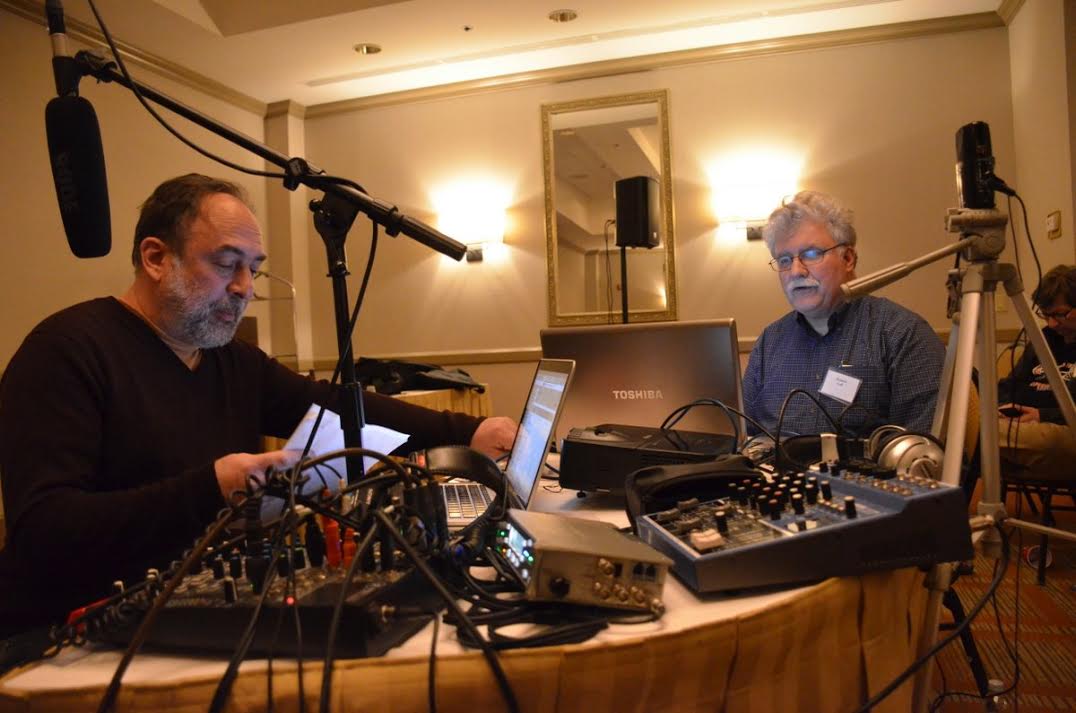
David Goren (left) and Richard Cuff (right) during the Shindig live broadcast at the Winter SWL Fest.

Radio Waves:  Stories Making Waves in the World of Radio

Because I keep my ear to the waves, as well as receive many tips from others who do the same, I find myself privy to radio-related stories that might interest SWLing Post readers.  To that end: Welcome to the SWLing Post’s Radio Waves, a collection of links to interesting stories making waves in the world of radio. Enjoy!


Winter SWL Fest: March 4-5, 2022, Online using the Zoom webinar platform

The Winter SWL Fest is a conference of radio hobbyists of all stripes, from DC to daylight. Historically, every year scores of hobbyists have descended on the Philadelphia, Pennsylvania suburbs for a weekend of camaraderie. The Fest is sponsored by NASWA, the North American Shortwave Association, but it covers much more than just shortwave; mediumwave (AM), scanning, satellite TV, and pirate broadcasting are among the other topics that the Fest covers. Whether you’ve been to every Fest (all 34, starting with the first year at the fabled Pink & Purple Room of the Fiesta Motor Inn) or this year’s will be your first, you’re sure to find a welcome from your fellow hobbyists, even if it’s a “virtual” welcome!.

In 2022, the 35th Annual (!!) Winter SWL Fest will again be going virtual courtesy of the Covid-19 pandemic.  All activities will be conducted online via the Zoom webinar platform.

Registration will be $10 per computer screen to defray the Zoom hosting expenses.  If you already have a PayPal ID you can simply send $10 from your account to swlfest [at] naswa.net.  If you aren’t a PayPal member you may also register online via PayPal here.  Paper registrations will not be processed for 2022.

Your hosts, Richard Cuff and John Figliozzi, work throughout the year to ensure that attendees have a great time over the weekend, and by all accounts, they succeed stunningly. How else could this event have lasted for 35 years (egad) — even with a Pandemic — and draw people from around the world to southeastern Pennsylvania? Won’t you join us?

Click here to join the 2022 Winter SWL Fest!

SDRplay Updates on Hardware Shortages (RTL-SDR Blog)

As we all know many electronic components are currently in shortage, and this global shortage is affecting some SDR manufacturers like SDRplay. Recently on their blog SDRplay have provided some updates on their hardware shortage situation. They write:

As we have mentioned before,  due to the worldwide shortage of electronic components, we are suffering from production delays at both our manufacturing subcontractor operations here in the UK.  This means that many of our resellers have completely run out of RSP1A and RSPdx devices.

However we are pleased to say that this week, we have  been able to build some additional units.  This means that by the end of next week (February 25th), our resellers should have more stocks of RSP1A and RSPdx.   More RSPduos are promised for mid to late March.

It is highly likely that even after the latest production runs are delivered, some of our resellers will run out again in the weeks ahead.  Meanwhile we are working to do all we can to secure more critical components for our manufacturers. This includes tweaks to the designs so that they can accommodate alternative more readily available parts.

Many thanks to customers who have been left waiting to buy, and to our resellers for your patience as we navigate though this situation.

A list of our authorised resellers can be found here: https://www.sdrplay.com/distributors/

[Read this full post on the RTL-SDR Blog…]

Meet the Jersey man using his radio set to make contact with people in Ukraine (Southgate ARC)

A man in Jersey is using amateur radio equipment to make contact with people caught up in the fighting in Ukraine.

Paul Mahrer spoke to more than 1,700 Ukrainian radio operators last year, but says all communication has been lost since the country declared martial law. Continue reading

Radio Waves: RTUK Demands License, Finding MH370 via Signal Disturbances, Massive Collection of Antique Radios, and Free Tech License Class

Radio Waves:  Stories Making Waves in the World of Radio

Because I keep my ear to the waves, as well as receive many tips from others who do the same, I find myself privy to radio-related stories that might interest SWLing Post readers.  To that end: Welcome to the SWLing Post’s Radio Waves, a collection of links to interesting stories making waves in the world of radio. Enjoy!


Turkey demands Deutsche Welle, VOA and Euronews apply for a licence (Broadband TV News)

Turkish media regulator RTÜK has given three international broadcasters 72 hours to apply for a licence or have their online content blocked.

Voice of America (VOA), Deutsche Welle (DW) and Euronews are including video on their websites and are seen as among the few independent news sources still available in Turkey.

RTÜK published a statement on its website Monday, signalling the start of the 72 hour period.

If the procedure for applying for a licence is underway, a broadcaster can continue on-air for another three months, providing the anticipated licence fee is paid to the regulator in advance. [Continue reading…]

Finding MH370: New breakthrough could finally solve missing flight mystery (60 Minutes Australia via YouTube)

Is the biggest aviation mystery of all time, the disappearance of Malaysia Airlines flight MH370, about to be solved? Yes, if you believe the man you’re about to meet. Richard Godfrey is no crackpot; he’s a respected British aerospace engineer and physicist who says he’s found the doomed airliner. If he’s right, he’ll provide desperately needed answers for the families of the 239 passengers and crew who were aboard the Boeing triple-seven when it vanished eight years ago. But knowing where it is isn’t the end of the story – Richard also has to convince authorities to resume the search that’s already cost hundreds of millions of dollars.

Click here to view on YouTube.

Retired electrical engineer, 85, has £15,000 collection of 200 antique radios that he has been building up for 50 years – including one of the oldest sets in the UK (The Daily Mail)

A grandfather-of-five has revealed his impressive antique radio and test instrument collection worth up to £15,000.

Richard Allan, a retired electrical engineer, has spent the last fifty years collecting antique transistor, valve and crystal sets and has now shown off his impressive collection of more than 200 pieces.

The 85-year-old from Norfolk, first fell in love with radios because of his father, Alexander William, who built his own transmitter and spoke to people all over the world through the airwaves.

In fact, Richard’s first – and favourite radio within his collection – is the one his father, a HAM, or amateur radio lover, played non-stop during World War II after purchasing in 1938.

Another notable piece within his collection is an E52b German military radio, captured in a vehicle at Foxhill, Bath, which was where his father worked in the Admiralty. [Continue reading…]

Free online amateur radio Technician license class (Southgate ARC)

The Montgomery Amateur Radio Club in Maryland is offering a free online Zoom amateur radio Technician license class on seven Saturdays from March 19, 2022 through April 30, 2022 from 1:00 PM to 4:00 PM with an outdoor free test session on Sunday, May 1, 2022 8:30 AM to 11:00 AM.

More information about this Zoom class is at
https://www.marcclub.org/mweb/education/classes/technician.html

This is a great opportunity for you to get your amateur radio license. To learn more about amateur radio, also known as ham radio, go to http://www.arrl.org/what-is-ham-radio

To register for this free class, send an email to [email protected] .

Also, please distribute this announcement to anyone who expresses an interest in getting their ham license and to any newly licensed hams.

Thank you,

David Bern, W2LNX
MARC education committee


Do you enjoy the SWLing Post?

Please consider supporting us via Patreon or our Coffee Fund!

Your support makes articles like this one possible. Thank you!
Radio Waves: Russia Shuts Down DW, History of WGY, W2AN/1BCG On The Air, and Summits On The Air

Radio Waves:  Stories Making Waves in the World of Radio

Because I keep my ear to the waves, as well as receive many tips from others who do the same, I find myself privy to radio-related stories that might interest SWLing Post readers.  To that end: Welcome to the SWLing Post’s Radio Waves, a collection of links to interesting stories making waves in the world of radio. Enjoy!


German anger as Russia shuts international broadcaster Deutsche Welle (BBC News)

Germany and the EU have condemned Russia’s decision to shut down the Moscow bureau of international public broadcaster Deutsche Welle (DW).

All DW’s staff have lost their press accreditations and the channel is barred from broadcasting in Russia.

Germany’s culture minister said the move was “not acceptable in any way”.

Russia argued it was retaliating after German regulators decided a new Russian state-run TV channel, RT DE, did not have a suitable licence to operate.

Russian Foreign Ministry spokeswoman Maria Zakharova appeared to offer an olive branch to the German government on Friday, saying that if Germany moved to “normalise the situation”, then Russia would too.

RT has channels in English, French and Spanish and launched its German-language satellite channel in December 2021, using a licence from Serbia, outside the European Union. [Continue reading…]

Exhibit showcases history of radio station WGY (WAMC)

The City of Schenectady, home of General Electric, was once a nursery for broadcasting. One of the nation’s first commercial radio stations began broadcasting 100 years ago. A new exhibit at the Museum of Innovation and Science is celebrating the history of WGY.

WGY was created by GE in 1922 and still operates today under different ownership as a news/talk station. The station’s history is currently on display at miSci in a photo exhibit called WGY: Radio’s Laboratory Celebrates Its Centennial.

Chris Hunter, the museum’s Vice President of Collections and Exhibitions, took me on a tour of the exhibit located in a new gallery inside the museum.

“So, it was about 10th commercial station licensed in 1922. And because it was formed by GE’s publicity department, and not so much the engineers that formed a lot of the other early radio stations, they really placed a premium on entertainment and, kind of, the development of broadcasting.” [Continue reading…]

W2AN/1BCG On-The-Air Again for two-Way QSO’s (AWA)

After a successful AWA on-air sending of the historic 1921 Trans-Atlantic message in December of last year, using the AWA replica of the 1921 transmitter, plans are now in place to do it again only this time to offer two-way QSO’s with all stations wishing to participate.

The QSO party begins on Saturday evening, February 26, at 6:00 p.m. EST, or 23:00 GMT. AWA operators at the museum site in Bloomfield, NY will begin calling CQ on 1.821 MHz, CW, and will listen on or about that frequency for callers. We will work as many folks as we hear in order received and continue to do so until all amateur stations on the planet are in the log or propagation goes away, which ever happens first!

No QSL’s are required for you to receive a nice full sized color certificate confirming your QSO with W2AN/1BCG. Simply send your QSO information via email to [email protected] and the personalized certificate will be sent to the sending email address.

Inside the Summit-Obsessed World of Ham Radio (Outside Magazine)

n a gray Friday afternoon last spring, Steve Galchutt sat high atop Chief Mountain, an 11,700-foot peak along Colorado’s Front Range. An epic panorama of pristine alpine landscape stretched in almost every direction, with Pikes Peak standing off to the south and Mount Evan towering just to the west.

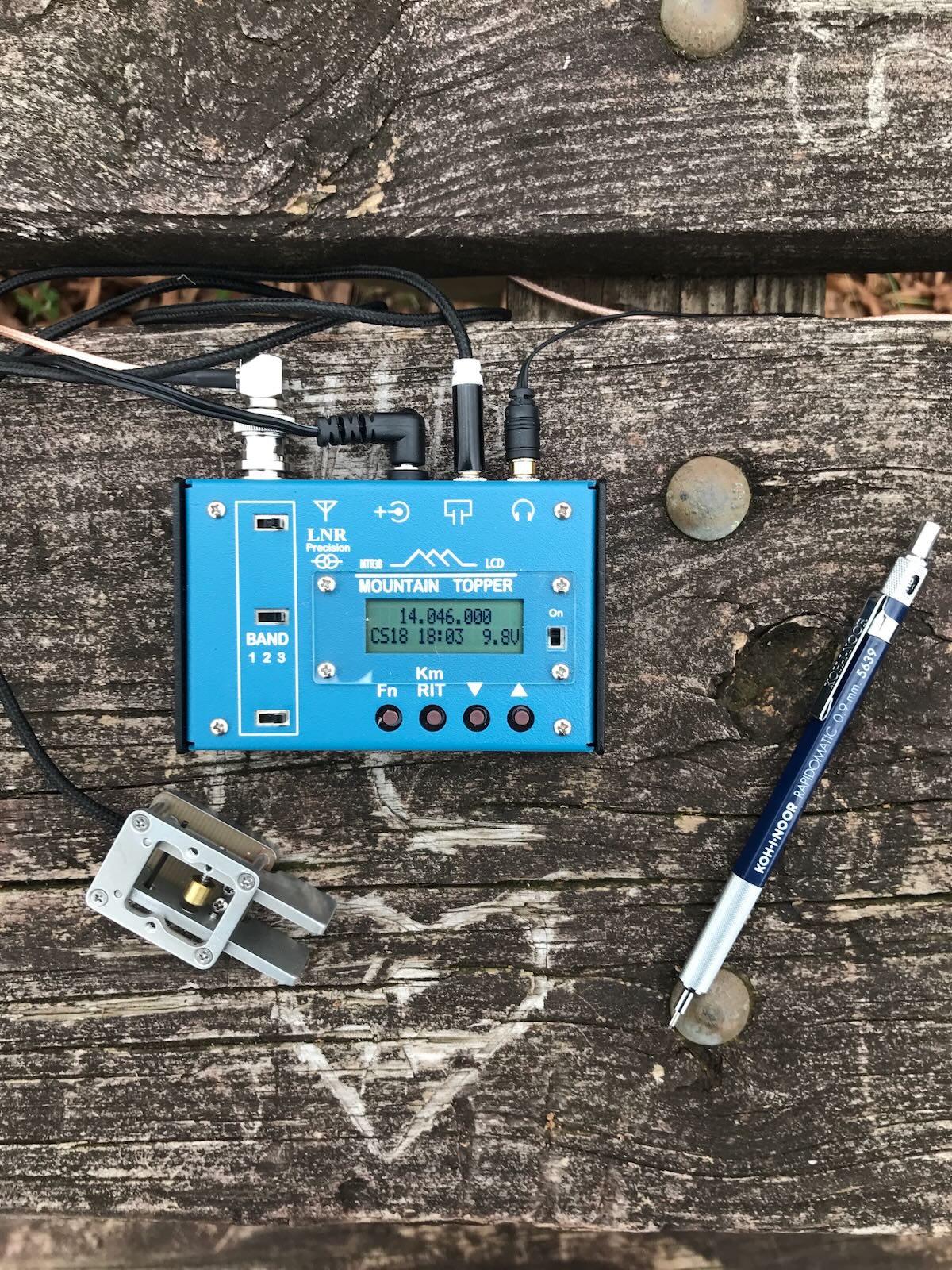
It was an arresting view, and the perfect backdrop for a summit selfie. But instead of reaching for his smartphone, Galchutt was absorbed by another device: a portable transceiver. Sitting on a small patch of rock and snow, his head bent down and cocked to one side, he listened as it sent out a steady stream of staticky beeps: dah-dah-di-dah dah di-di-di-dit. “This is Scotty in Philadelphia,” Galchutt said, translating the Morse code. Then, tapping at two silver paddles attached to the side of the radio, he sent his own message, first with some details about his location, then his call sign, WG0AT.

At this point, a prying hiker could have been forgiven for wondering what, exactly, Galchutt was doing. But his answer—an enthusiastic “amateur radio, of course!”—would likely only have further compounded their confusion. After all, the popular image of an amateur-radio enthusiast is an aging, armchair-bound recluse, not some crampon-clad adventurer. And their natural habitat is usually a basement, or “ham shack,” not a windswept peak in the middle of the Rockies. [Continue reading…]


Do you enjoy the SWLing Post?

Please consider supporting us via Patreon or our Coffee Fund!

Your support makes articles like this one possible. Thank you!