Tag Archives: Shortwave Radio

Shortwave Relays This Weekend

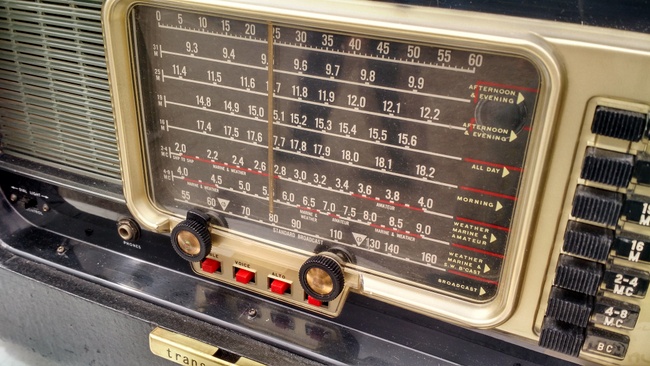
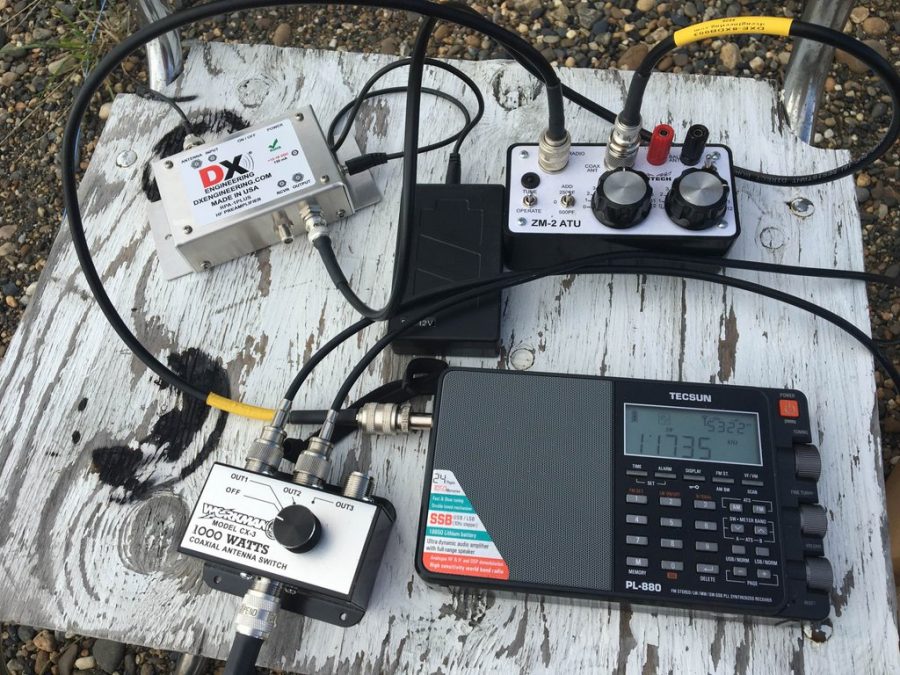
Transoceanic-Dial

(Source: Tom Taylor)

Hamurger Lokal Radio via Shortwave Station Göhren, Germany with 1KW to Western Europe:
6190 KHz Every Saturday 07.00 to 11.00 UTC
7265 KHz Every Saturday 11.00 to 16.00 UTC
9485 KHz Every Sunday 10.00 to 13.00 UTC
Contact email: [email protected]

European Music Radio via:
WBCQ to Central & North America on 7490 KHz on 19th November between 22.00 to 23.00 UTC
Contact email: [email protected]
Internet Repeats on 20th November 2016:
EMR will repeat this months Transmissions via two streams running at the following Times:16.00, 18.00, 20.00 UTC
http://nednl.net:8000/emr.m3u will be on 96 kbps /44 KHz stereo for normal listening
http://nednl.net:8000/emr24.m3u will be 24 kbps / 22 KHz mono will be especially for low bandwidth like mobile phones.

Radio City via:
IRRS to Europe on 9510 KHz (every Saturday) between 09.00 to 10.00 UTC
IRRS to Europe on 7290 KHz (every 3rd Friday) between 19.00 to 20.00 UTC
Challenger Radio to Northern Italy on 1368 KHz every Saturdays from 20.00 UTC onwards
Radio Merkurs on 1485 KHz Every Saturday between 20.00 onwards
Contact email: [email protected]

KBC via:
Media Broadcast to America on 6145 KHz Every Sunday between 00.00 to 01.00
Contact email: [email protected]

Hobart Radio via:
Channel 292 to Western Europe on 6070 KHz Sundays between 21.00 to 21.30 UTC
WRMI to Americas, Asia/Pacific on 9955 KHz Sunday between 03.30 to 04.00 UTC
WRMI to Americas, Asia/Pacific on 9955 KHz Tuesday between 22.30 to 23.00 UTC
WBCQ to North America on 5130 KHz Mondays 03.30 to 04.00 UTC
Unique Radio to North Australia Fridays at 08.00 & 14.00 UTC
Unique Radio to North Australia Saturdays at 07.30 & 14.30 UTC
Contact email: [email protected]

For outside the listening area please try the Twente/Netherlands Web RX at http://websdr.ewi.utwente.nl:8901/

You can also hear many European free and alternative stations via the Internet at: http://laut.fm/jukebox

Radio Channel 292 Transmission schedules on 6070 KHz (on the air every day): http://www.channel292.de/schedule-for-bookings/

Radio Mi Amigo Transmission schedules: www.radiomiamigo.es/shortwave

Good Listening!
73s

Tom

BBC World Service to launch 11 new language services

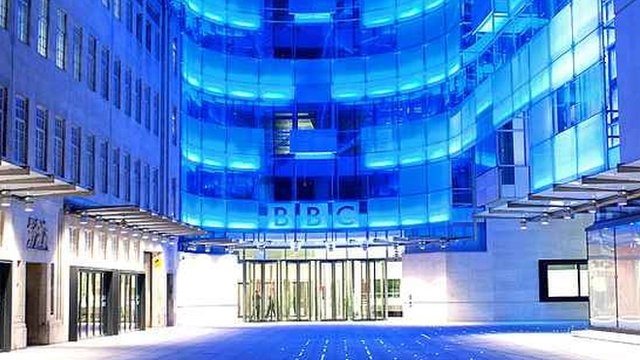
(Image source: BBC)

(Source: BBC News)

The BBC World Service will launch 11 new language services as part of its biggest expansion “since the 1940s”, the corporation has announced.

bbc-newlanguageservices

The expansion is a result of the funding boost announced by the UK government last year.

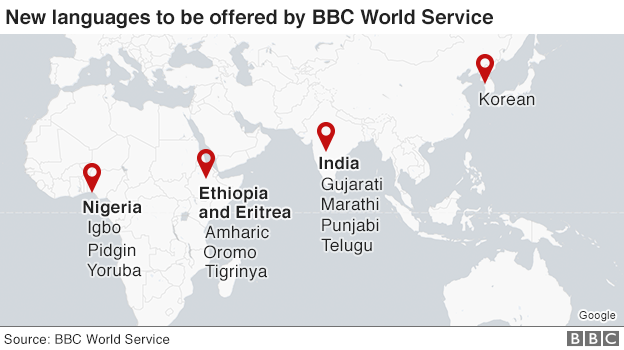
The new languages will be Afaan Oromo, Amharic, Gujarati, Igbo, Korean, Marathi, Pidgin, Punjabi, Telugu, Tigrinya, and Yoruba.

The first new services are expected to launch in 2017.

[…]The plans include the expansion of digital services to offer more mobile and video content and a greater social media presence.

On Wednesday the BBC launches a full digital service in Thai, following the success of a Facebook-only “pop-up” service launched in 2014.

Other expansion plans include:

  • extended news bulletins in Russian, with regionalised versions for surrounding countries
  • enhanced television services across Africa, including more then 30 new TV programmes for partner broadcasters across sub-Saharan Africa
  • new regional programming from BBC Arabic
  • short-wave and medium-wave radio programmes aimed at audiences in the Korean peninsula, plus online and social media content
  • investment in World Service English, with new programmes, more original journalism, and a broader agenda

The new language services mean the BBC World Service will be available in 40 languages, including English.

Lord Hall has set a target for the BBC to reach 500 million people worldwide by its centenary in 2022.

Click here to read the full article…

In addition, Mike Terry, posted a link to this Leading Article  from The Times which focuses on the BBC expansion. This content is behind a paywall (though you can register to read two free items per week) but here is an excerpt from the conclusion that I found particularly interesting:

“The radio may seem an irrelevance in the age of the internet but it is the most intimate of the so-called mainstream media and as such poses a challenge to authoritarian rule. Radios are cheap, ubiquitous and can whisper truths under the bedcovers. There is nothing that dictators hate more than direct access to the ears of their subjects.”

Indeed.

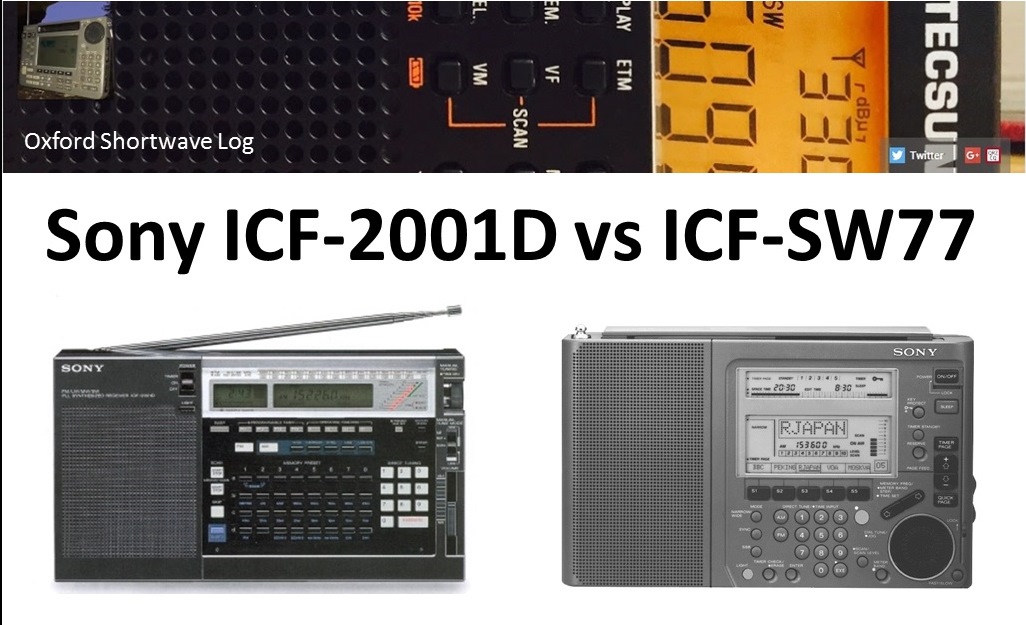
Which is the best? Sony ICF-2001D/2010 or ICF-SW77? Part two

sony-test

Hi there, after the first set of recordings were analysed, the score was 4-3 to the ICF-2001D, demonstrating how similar these two great receivers are in overall performance. There were a copule of notable differences however. The synchronous detection circuit on the ICF-2001D allows the user to effectively tune through a signal in 01. kHz steps, whilst the receiver automatically locks onto either the upper or lower sideband, depending on the frequency offset. The ICF-SW77 synchronous detection system differs in that the user must tune the signal and select the sideband. The results of this test confirmed that whilst the ICF-2001D almost always retained SYNC lock, the ICF-SW77 was very prone to losing lock, which of course affected the audio quality in many cases. The other issue was with the ICF-SW77 in that the narrow audio bandwidth filter often seemed to deliver ‘muddy’ audio. Whilst this feature proved to be excellent in terms of mitigating adjacent channel QRM, it also reduced signal clarity/ audio discernibility a little too much in my opinion. However, overall, sensitivity and selectivity was very similar between both radios – in fact, one recording had to be judged a draw (Radio Bandeirantes, Sao Paolo on 9645.4 kHz) – I simply couldn’t split them. Part two of the reception testing follows, using signals from Canda, DR Congo, Brazil, Cuba and Peru.

I hope you enjoy the recordings – text links and embedded videos follow below:


Clint Gouveia is the author of this post and a regular contributor to the SWLing Post. Clint actively publishes videos of his shortwave radio excursions on his YouTube channel: Oxford Shortwave Log. Clint is based in Oxfordshire, England.

Which is the best? Sony ICF-2001D/2010 or ICF-SW77? The halfway score

Hi there, here is a summary of the first half of tests comparing the Sony ICF-2001D against it’s replacement the ICF-SW77. Both receivers are widely acknowledged as being amongst the best shortwave portables ever made, but how close are they in performance? Is there a clear winner after the first 8 reception tests? I hope you enjoy the summary video. Links to the first half of reception tests follow again, below, whilst the second half will follow in a separate post. Thanks and good DX to all.


Clint Gouveia is the author of this post and a regular contributor to the SWLing Post. Clint actively publishes videos of his shortwave radio excursions on his YouTube channel: Oxford Shortwave Log. Clint is based in Oxfordshire, England.

Shortwave Radio Recordings: Radio Thailand English language service

Paul-Walker-Galena-Alaska

Many thanks to SWLing Post contributor, Paul Walker, who shares this recording from his home in Galena, Alaska. Paul notes:

Radio Thailand (13745 kHz) English service to North America at 0000UTC on November 8th, 2016:

Click here to view on YouTube.

Not the strongest I ever hear them, but a good solid clean nearly noise and nearly fade free signal.

That’s an impressive signal, Paul, especially considering the fact that propagation conditions have been somewhat shaky as of late. Thanks for sharing!

Which is the best? Sony ICF-2001D/2010 or ICF-SW77?

sony-test

Hi there, subscribers to my YouTube channel Oxford Shortwave Log  will be aware that I currently operate both of these wonderful vintage portables. I purchased the ICF-2001D only 18 months ago from eBay, based largely on its reputation as one of the best performing portables ever made. Previously I had been using my excellent ICF-SW55 as the mainstay receiver for my numerous DXpeditions, coupled with irregular appearances from my Sangean ATS-803A and the excellent value-for-money Tecsun PL-360. The ICF-2001D proved to be a revelation in terms of sensitivity, selectivity and contrary to popular belief, with careful planning (to avoid crowded bands), is able to cope pretty well with very large antennas. As regards audio bandwidth filtering, SSB and synchronous detection, in my experience, the ICF-2001D is as good as it gets in a portable – or a vintage portable at least. I have lost count of the number of personal-firsts I’ve achieved using this wonderful receiver and as someone who likes to push the envelope a little, I soon started to wonder whether it’s replacement, the ICF-SW77 might prove to be an even better performer. Subsequent online research  confirmed there was no absolute consensus on this issue, with followers of these two great receivers firmly placed in both camps.

Sometime later, a good friend of mine, fellow radio hobbyist and subscriber to Oxford Shortwave Log very kindly offered to send me his cherished ICF-SW77 on long-term loan. Like me, he was intrigued to know how it compared to it’s venerable predecessor and thus the deal was done! Upon it’s arrival in July, I started planning a back-to-back series of comparison tests at the very quiet wood in Oxfordshire I used for my DX’peditions, using the same antenna for both recievers – the excellent Wellbrook ALA1530 active loop. In total, I made fourteen reception videos comparing the ICF-2001D and ICF-SW77 and posted them to Oxford Shortwave Log. Both receivers performed very well, delivering excellent reception on the Tropical Band and elsewhere on the shortwave spectrum from Bolivia, Brazil, Guatemala, amongst others. At the halfway stage, I generated a video to summarise the results to-date and this will follow in my next post to swling.com.  In the meantime, I hope you enjoy the first half of the reception videos; which follow below:


Clint Gouveia is the author of this post and a regular contributor to the SWLing Post. Clint actively publishes videos of his shortwave radio excursions on his YouTube channel: Oxford Shortwave Log. Clint is based in Oxfordshire, England.

DXtreme Station Log 12

dxtreme-station-log-12

(Source: DXtreme Press Release)

Product Announcement: DXtreme Station Log 12

DXtreme Software™ has released a new version of its popular logging program for

Amateur Radio operators: DXtreme Station Log 12™.

New Features in DXtreme Station Log 12

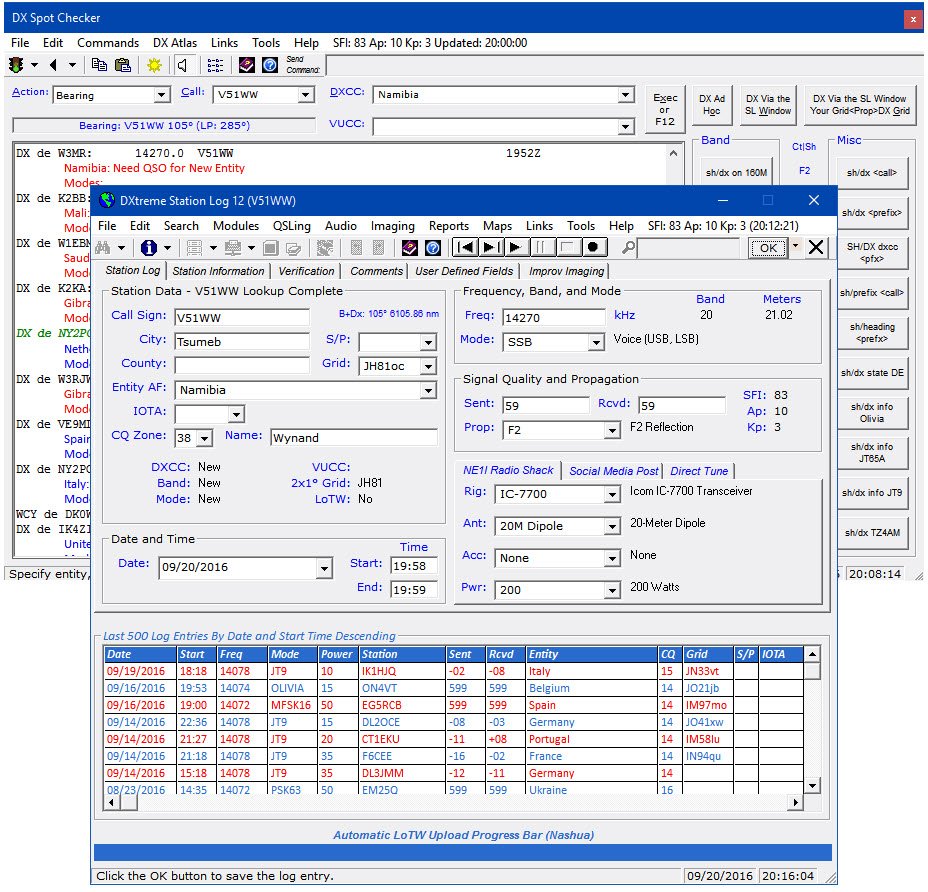
  • Automatic LoTW Upload Users can set Station Log 12 so it uploads each log entry to LoTW automatically when added, capturing and saving QSO Record Status from the LoTW server as part of the process. Modified log entries can be uploaded as well. If desired, users can disable automatic uploading and can upload log entries to LoTW semiautomatically and manually in batches whenever they want to.
  • LoTW Reporting Users can perform searches and run reports filtered by LoTW QSO Record Status, which indicates whether log entries are On, or Not On, the LoTW server following upload or QSL-updating. Users can also perform searches and run reports filtered by LoTW QSL Record Status, which indicates the date of each LoTW QSL record processed by DXtreme’s LoTW QSL Update Utility.
  • JT65A and JT9 Contact Pre-fill Right-clicking the New button presents a shortcut menu that lets users pre-fill the Station Log window with log information from a JT65A or JT9 contact completed on WSJT-X or JT65-HF-HB9HQX Edition.
  • Afreet Ham CAP Integration Expansion Station Log 12 now integrates with optional Afreet Ham CAP throughout the program. Users activate Ham CAP by requesting short- or long-path propagation predictions on spotted and logged stations and entities.
  • Quick Find A box on the Station Log toolbar lets users type a call sign and press Enter to search quickly for a station in their log. If the call is in the log, a list of QSOs with it appears on a popup window. If desired, the list of log entries can be loaded into the Station Log window for viewing or editing, one log entry at a time.
  • Improv Imaging™ — Lets users associate adhoc images with their log entries. This feature is like, but separate from, our popular QSL Imaging™ facility. Users can capture, scan, or paste any image and save it as a single-page .jpg, or single- or multi-page .tif. Improv images popular with users include signals on a spectrum analyzer or waterfall, QSOs conducted on Amateur Television and data applications, and rigs and antennas used during contacts.
  • Other Imaging Enhancements The QSL image previewer on the Station Log window is larger, as is the QSL Image Explorer, which also lets users call-up, in the Station Log window, the log entry associated with each QSL image, making the Explorer act like a Search window. Improv Imaging has its own, dedicated previewer and explorer.
  • UX Improvements Users can apply foreground and background colors and font attributes to grid headings and data rows throughout the program.

Standard Features in DXtreme Station Log 12

DXtreme Station Log 12 lets hams log their contacts and import ADIF files from other programs. It supports major call sign subscription services, and offers the following multimedia and advanced functions:

  • DX Spot Checker™ Receives DX spots from Telnet-based servers, and determines whether QSOs are needed for new or verified DXCC® entities, band-entities, mode-entities, or VUCC grids.
  • DX Atlas Integration Performs DX Atlas azimuth plots from the user’s location to that of a spotted or logged station. Also creates maps for a variety of reports.
  • Band Master Integration Afreet Band Master can be invoked with needed band and IOTA lists based on the user’s Station Log 12 database.
  • Rig Control Tunes/retrieves frequencies and modes from supported rigs through integration with Afreet Omni-Rig.
  • QSL Processing Creates QSL and address labels for physical QSLs, and supports the ARRL’s LoTW facility, including capturing LoTW QSL records as digital images.
  • Audio Facility Records and plays QSOs.
  • Reports Provides a wide range of performance and station reports to let users see how well they’re doing. Reports can be filtered and sorted. Includes DXCC® and WAS Analytics™ tools for analyzing and enhancing DXCC and WAS standing.

Operating System and Requirements

DXtreme Station Log 12 runs in 32- and 64-bit versions of Microsoft® Windows® 10, Windows 8.1, Windows 8, Windows 7, Windows Vista®, and Windows XP.

Pricing and Support

DXtreme Station Log 12 retails for $89.95 USD worldwide for Internet distribution. Reduced pricing is available for upgrading users, and CD shipment is available at a nominal surcharge. All prices include product support by Internet e-mail.

About DXtreme Software

Based in Nashua, NH, DXtreme Software produces powerful and easy-to-use logging applications for all kinds of radio enthusiasts — from short-wave and medium-wave listeners and DXers to Amateur Radio operators. For more information about DXtreme Station Log 12, visit www.dxtreme.com or contact Bob Raymond, NE1I, at [email protected].

DXCC® is a registered trademark of the American Radio Relay League, Inc.

Microsoft®, Windows®, and Vista® are registered trademarks of Microsoft Corporation.

Band Master, DX Atlas, Ham CAP, and Omni-Rig are owned by Afreet Software, Inc. A purchased software license for Band Master and DX Atlas are required to use them.

JT65-HF HB9HQX Edition is owned by Beat Oehrli, HB9HQX. WSJT-X is owned by Joe Taylor, K1JT.