Author Archives: Thomas

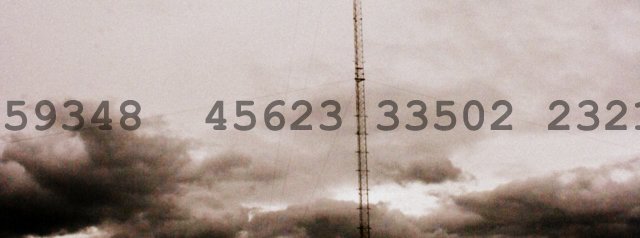
Shortwave Numbers Stations on The Daily Beast

SWLingPost-Numbers1

Interest in shortwave numbers stations seems to wax and wane. We’re currently going through a period of increased interest (again) as I’ve been receiving quite a few messages from new readers asking where to find spy numbers and what type of shortwave radio is needed. Truth is, there are fewer and fewer numbers stations still on the air, though some are still quite reliable (like HM01).

The following article by Shane Harris at The Daily Beast is one of the better, more detailed, articles I’ve read in the popular press.

(Source: The Daily Beast via Southgate ARC)

The Stupidly Simple Spy Messages No Computer Could Decode

by Shane Harris

When I was 10 years old, I found a shortwave radio in a crumbling old leather trunk where we kept family photos and other memorabilia.

As I spun the dial, tinny, modulating noises, like the song of an electronic slide whistle, emanated from the radio’s small speaker. Staticky cracks and pops competed for airtime. The sounds swished and swirled, unintelligible and unremarkable. But then, emerging through the clamor, was a voice.

I might have run right over it with the dial, but the voice’s rhythmic, steady pacing caught me up short. It wasn’t a deejay. Nor a commercial. And he wasn’t singing. He was just speaking. The same line, over and over again.

“7…6…7…4…3.” Pause. “7…6…7…4…3.”

I don’t remember if those were the exact numbers. But they were numbers. A repeated sequence which had no obvious meaning, and was entirely devoid of context. To find him here, amidst the screeches and howls of the shortwave frequencies, was like coming upon a man standing in the middle of a forest, talking out loud to no one.

How long had he been here? Who was he talking to? He had that officious tone of the recorded telephone operators who chastised you for dialing a wrong number. “Please hang up, check the number, and dial again.” And the same distracting static I’d heard in those messages filled the background. I wasn’t sure if he was speaking live, or if he’d been recorded and set loose to play into the air.

But there was an urgency to his tone. And a purpose. As if he were talking to me. Imploring. Listen. Hear me now. 7…6…7…4…3. Did you get that? 7…6…7…4…3.

I was simultaneously terrified and captivated.[…]
Continue reading at The Daily Beast…

Radio Time Travel: Brian’s 1974 shortwave radio recording

Many thanks to SWLing Post and SRAA contributor, Brian D. Smith (W9IND), for the following guest post and recording.

Note that Brian could use your help to ID a few unidentified broadcasters in this recording. If you can help, please comment:


HalliDial

Shortwave Radio 1974: Canada, Argentina, Spain, West Germany, Albania, utility stations

Want to know what shortwave radio sounded like in 1974?

This 55-minute recording, recovered from a cassette, was never intended to be anything but “audio notes”: I was an 18-year-old shortwave listener who collected QSL cards from international stations, and I was tired of using a pen and a notepad to copy down details of the broadcasts. I wanted an easier way to record what I heard, and my cassette tape recorder seemed like the perfect means to accomplish that goal.

But it wasn’t. I soon discovered that it was simpler to just edit my notes as I was jotting them down — not spend time on endless searches for specific information located all over the tape. To make a long story shorter, I abandoned my “audio notes” plan after a single shortwave recording: This one.

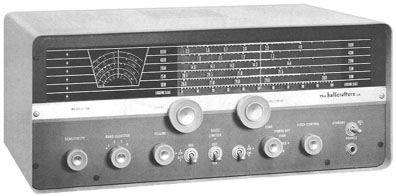
Hallicrafters S-108 (Image: DXing.com)

Hallicrafters S-108 (Image: DXing.com)

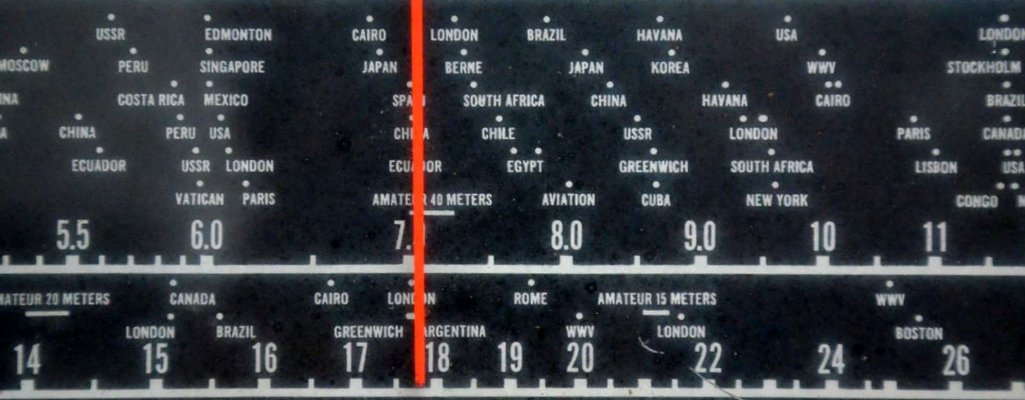
Still, for those who want to experience the feel of sitting at a shortwave radio in the mid-1970s and slowly spinning the dial, this tape delivers. Nothing great in terms of sound quality; I was using a Hallicrafters S-108 that was outdated even at the time. And my recording “technique” involved placing the cassette microphone next to the radio speaker.
Thus, what you’ll hear is a grab bag of randomness: Major shortwave broadcasting stations from Canada, Argentina, Spain, Germany and Albania; maritime CW and other utility stations; and even a one-sided conversation involving a mobile phone, apparently located at sea. There are lengthy (even boring) programs, theme songs and interval signals, and brief IDs, one in Morse code from an Italian Navy station and another from a Department of Energy station used to track shipments of nuclear materials. And I can’t even identify the station behind every recording, including several Spanish broadcasts (I don’t speak the language) and an interview in English with a UFO book author.

The following is a guide, with approximate Windows Media Player starting times, of the signals on this recording. (Incidentally, the CBC recording was from July 11, 1974 — a date I deduced by researching the Major League Baseball scores of the previous day.)

Guide to the Recording

0:00 — CBC (Radio Canada) Northern and Armed Forces Service: News and sports.
7:51 — RAE (Radio Argentina): Sign-off with closing theme
9:14 — Department of Energy station in Belton, Missouri: “This is KRF-265 clear.”
9:17 — Interval signal: Radio Spain.
9:40 — New York Radio, WSY-70 (aviation weather broadcast)
10:22 — Unidentified station (Spanish?): Music.
10:51— Unidentified station (English): Historic drama with mention of Vice President John Adams, plus bell-heavy closing theme.
14:12 — RAI (Italy), male announcer, poor signal strength.
14:20 — Unidentified station (Spanish): Theme music and apparent ID, good signal strength.
15:16 — Unidentified station (foreign-speaking, possibly Spanish): Song, “Chirpy Chirpy Cheep Cheep.”
17:00 — Deutsche Welle (The Voice of West Germany): Announcement of frequencies, theme song.
17:39 — Unidentified station (English): Interview with the Rev. Barry Downing, author of “The Bible and Flying Saucers.”
24:36 — One side of mobile telephone conversation in SSB, possibly from maritime location.
30:37 — Radio Tirana (Albania): Lengthy economic and geopolitical talk (female announcer); bad audio. Theme and ID at 36:23, sign-off at 55:03.
55:11 — Italian Navy, Rome: “VVV IDR3 (and long tone)” in Morse code.

Click here to download an MP3 of the full recording, or simply listen via the embedded player below:


Wow–what an amazing trip back in time, Brian! Thank you for taking the time to digitize and share your recording with us.

Post Readers: If you can help Brian ID the few unidentified stations in his recording, please comment!

Note that Brian is a frequent contributor to the Shortwave Radio Audio Archive. Click here to listen to his contributions. 

Playing music with computer-emitted interference

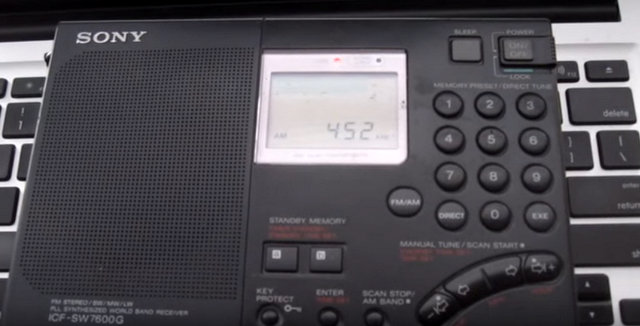
RFI-Sony-7600GSWLing Post reader, Chris Smolinski, writes:

Here’s my Mac Book Pro (2010 model) playing Mary Had A Little Lamb over the radio, by modulating the RFI (Radio Frequency Interference) produced by it and other computers. As picked up on a Sony 7600G receiver. I found the best reception was on the long wave band, although I could continue to hear it well above the AM (medium wave) band, past 1700 kHz. The signal was pretty much everywhere, no matter where I tuned, in 1 kHz steps.

Picking up radio emissions from computers is one method that can be used to spy on them.

I used the source code available here: https://github.com/fulldecent/system-bus-radio

If you want to see some radio related software I’ve written, please visit http://www.blackcatsystems.com

Click here to view on YouTube.

That is fascinating, Chris. While I was well aware that computers and mobile devices (of all stripes) produce RFI, I had no idea that it could be used for spying. I love how you’ve manipulated this interference to play a tune! What a creative hack!

The Icom IC-R75 is being discontinued

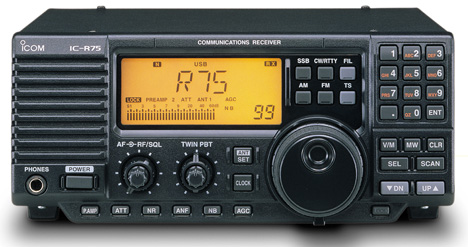
Icom-R-75I’ve learned through a couple of sources that the Icom IC-R75–which has been a staple tabletop shortwave receiver for 16 years–is being discontinued by Icom. Here’s what Dave Zantow (N9EWO) announced on his website:

“Last Call” ICOM IC-R75 Table Top HF Receiver : Yes, it’s true and is not a misprint (news as from a solid reliable source) , Icom has discontinued the IC-R75 HF receiver. It had a great 16 year run on the market. I would NOT look for Icom to replace the model.  As I type this entry most US Icom dealers had limited remaining stock. But you can count on those to get slurped up fast !! So if you ever desired a NEW sample, you MUST do that NOW !!

Only a few weeks ago, in my presentation at the Winter SWL Fest, I noted that the IC-R75’s days–as one of the last “legacy” tabletop receivers–were certainly numbered. Since the R75’s introduction, a lot of the receiver market has shifted to SDRs and SDR-based tabletops (like the CommRadio CR-1a).

The IC-R75 must have one of the longest runs (with various iterations) of any tabletop receiver ever on the market–most impressive!

Universal Radio has a special package price of $619.98 for the IC-R75 which includes the DSP option and Joe Carr’s antenna book and free shipping. Click here to view on Universal Radio’s website.

Mike’s Virtual Audio Cable (VAC) promotion

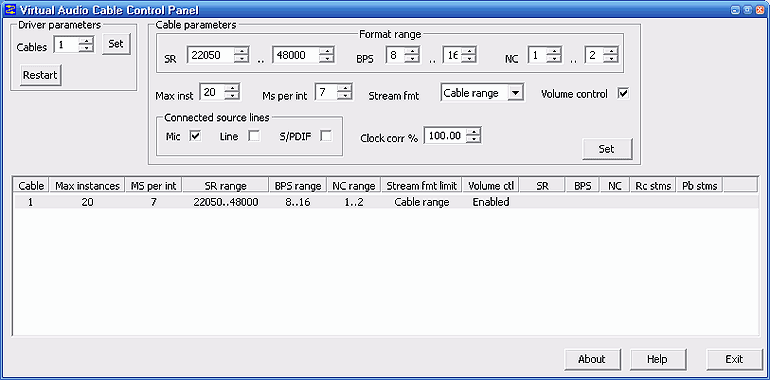
vac_controlpanelSWLing Post contributor, Mike Ladd, has been working with vendors to lock in promotional pricing on products and accessories commonly used by SDR enthusiasts. Last week, for example, he shared an excellent promotion for high/low pass filters.

This time, Mike has reached out to the author of Virtual Audio Cable (VAC) who has also kindly offered a discount.

VAC is a fantastic piece of software that allows you to port audio from one application to another on your PC without loss of audio quality. For example, if you’re running an SDR and you want to port its audio to FLDigi (to decode SSTV, RTTY, PSK31, or another digital mode) VAC does this for you.

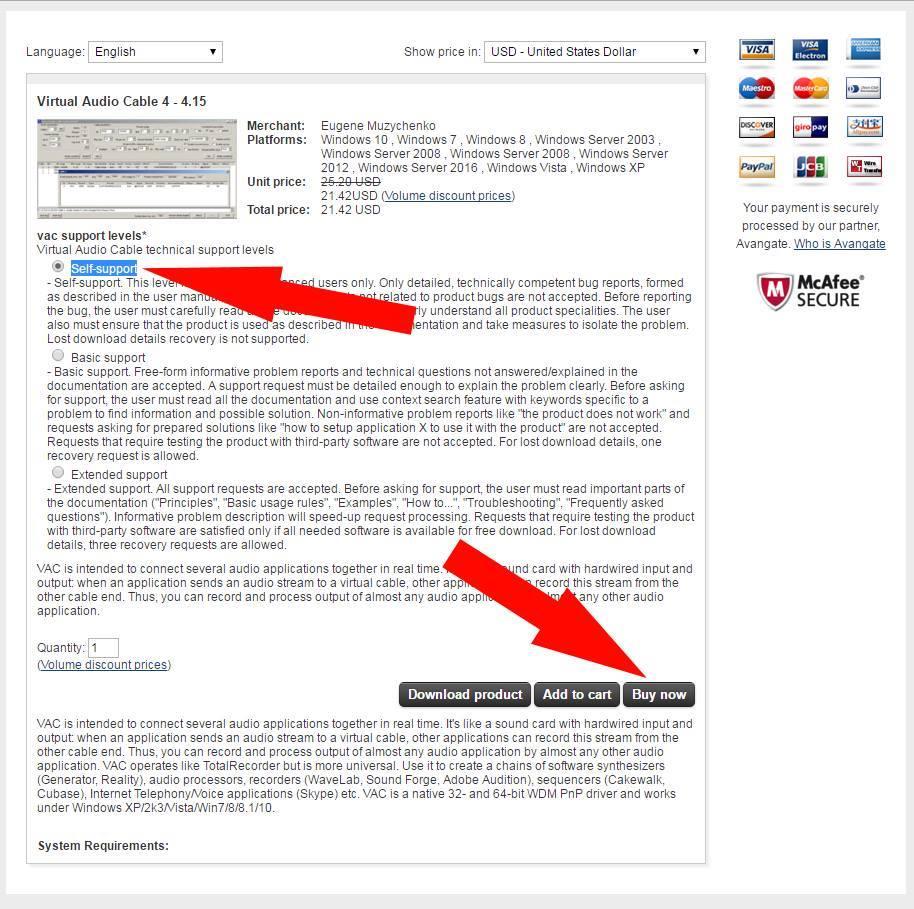
Mike’s discount allows you to purchase a self-support copy of VAC for $21.42 US (a $3.78 discount).

To get the promo price, you’ll need to use this link which has the embedded coupon code, then simply make the selections as shown below:

VAC-Promo

Click here to purchase VAC with promotional pricing.

Thanks again, Mike, for sharing discounts with the SWLing and ham radio communities!

Empire of Noise: a documentary about jamming

Many thanks to SWLing Post contributor, Gary Wise (W4EEY), who writes:

I stumbled over an interesting documentary on radio jamming. You have probably seen it, but just in case you haven’t, here is a link.

I had not seen this before, Gary.  Thank you!