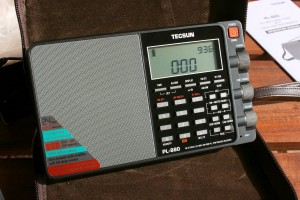
The Tecsun PL-880
Universal Radio is now shipping the Tecsun PL-880–I understand that all of their units are firmware version 8820.
Click here to check out the PL-880 at Universal Radio’s website.
To read our review of the Tecsun PL-880, click here.

The Tecsun PL-880
Universal Radio is now shipping the Tecsun PL-880–I understand that all of their units are firmware version 8820.
Click here to check out the PL-880 at Universal Radio’s website.
To read our review of the Tecsun PL-880, click here.
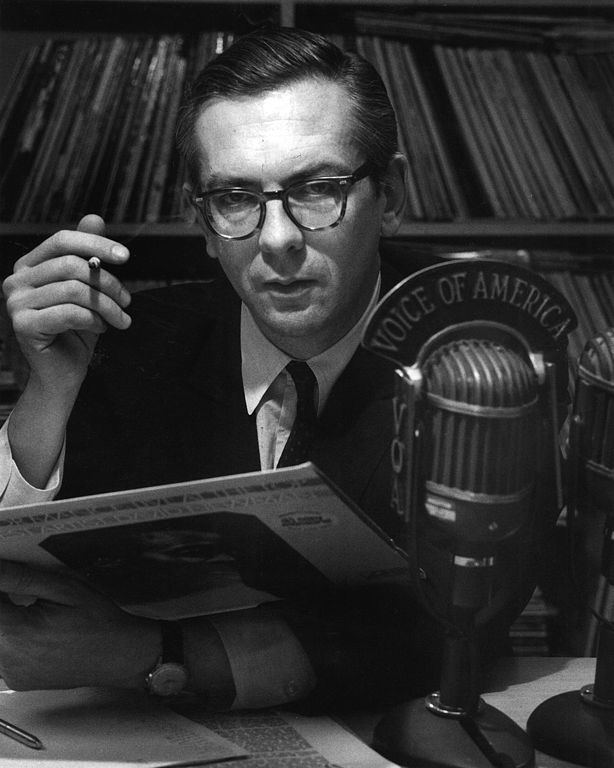
Many thanks to David Firth, who is kindly sharing shortwave radio recordings he made on reel-to-reel recording equipment in the late 1960s.
Firth is uncovering and digitizing these off air recordings as time allows and, thanks to his generosity, we will be posting these recordings on the Shortwave Radio Audio Archive.
The following is a recording of the Voice of America, which Firth recorded in 1968.
This seven minute recording will surely bring back memories with clips from VOA Jazz Hour (Willis Conover), the VOA Breakfast Show, and VOA Special English.
[Confession: the first time I heard this recording, the Willis Conover clip gave me chill bumps.]
Click here to download the recording as an MP3, or simply listen via the embedded player below:
Check out more recordings on the Shortwave Radio Audio Archive, also check out David Firth’s channel on YouTube.
Want to know more about Willis Conover? Check out David Goren’s podcast for Jazz At Lincoln Center.
 Today is UNESCO World Radio Day–a day to celebrate the continued relevance of radio in the twenty-first century.
You can make a difference with radio. Here’s how:
Oh, and here’s one more thing you can do: Simply turn on your radio, and listen. I’m pleased to note that World Radio Day, although still a fairly new international holiday, is receiving increased media attention each year. After all, radio listening can be a wonderful, meaningful experience–as well as a worthy cause. So, enjoy!
Happy listening,
Thomas
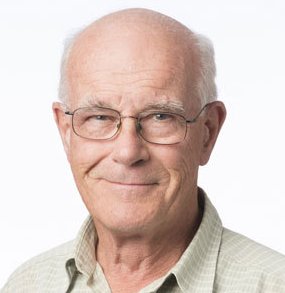
Peter Fry, host of Saturday Night on Radio New Zealand
If you’ve ever had the distinct pleasure of tuning to Radio New Zealand International when their musical request show, Saturday Night, is on the air, chances are that you’ve become, like I have, addicted to this show.
The show’s inimitable host, Peter Fry, has one of the best radio presences in the business. His warm personality and penchant for playing absolutely anything back-to-back will captivate you. You’ll hear songs and genres (including comedy skits) spanning the decades, and Fry offers his excellent commentary between sets.
What amazes me, too, (when I stop to think about it) is the relatively robust audio fidelity from RNZI’s shortwave signal here in eastern North America, especially considering that this broadcast originates in Rangitaiki, on the north island of New Zealand, and is powered by only 50 kilowatts, a modest signal by international broadcasting standards. RNZI’s signal crosses the Pacific at the speed of light–and at 6 watts per mile, by my calculations–delivers my Saturday Night as clearly as if it originated…well, locally.
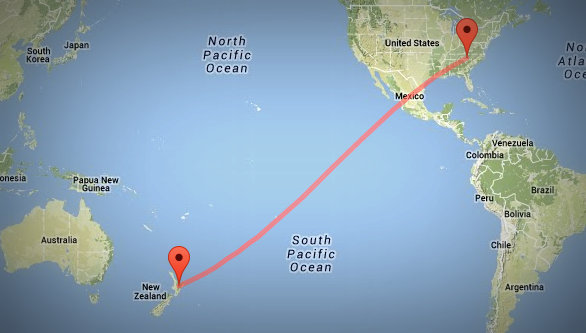
The RNZI signal travels a full 8,249 miles (13,276 kilometers) to reach my radio.
Yes, shortwave radio is magic. And so is Peter Fry’s show: Enjoy.
Click here to download the recording as an MP3, or simply listen via the embedded player below:
This broadcast was recorded on February 8, 2014 on 9,765 kHz, starting at 07:59 UTC.
One of the most popular posts on the SWLing Post is one published nearly two years ago: “Is there anything to listen to on shortwave?“
In that article, I posted recordings made on the 31 meter band of eight different broadcasters, all of which I found within a 250 kHz chunk of bandwidth on a Friday afternoon.
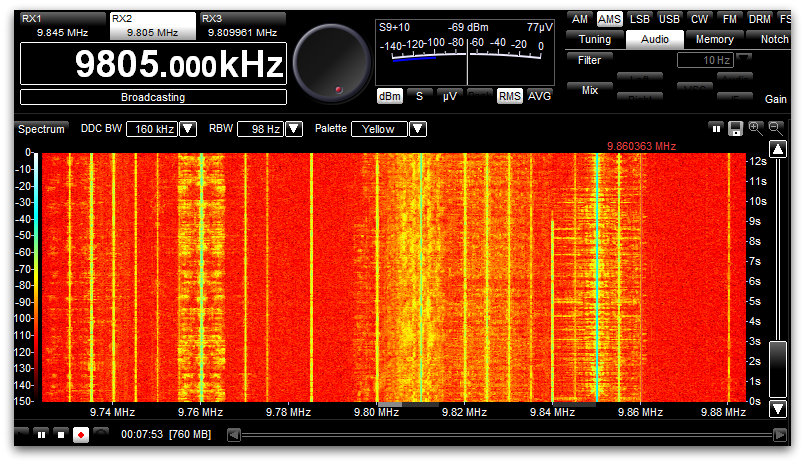
On February 8th (this past Saturday), I recorded a 160 kHz chunk of spectrum on the 31 meter band with my WinRadio Excalibur, starting around 1:00 UTC and lasting for about 9 hours. I made this spectrum recording in attempt to capture the Voice of Korea on one of their three scheduled frequencies.
While VOK wasn’t audible enough to make a good recording, I did log the following stations all within this thin slice of radio spectrum (click on links for recordings):
I’m guessing that I only logged 50% of what I heard as this list was put together from a quick scan through the recording. In fact, I’m systematically making recordings of each of these broadcasts, from the spectrum file, and adding them to the Shortwave Radio Audio Archive. I may actually discover more stations in the process.
My point is, if you think there’s nothing to listen to on shortwave, you’re simply not listening!
Now back to my radio…
 For your listening pleasure: one hour of the Voice of Indonesia’s French language service. This broadcast was recorded in Europe on February 5, 2014 by Shortwave Radio Audio Archive contributor, Frank, around 20:00 UTC on 9,526 kHz.
Frank was using his Kenwood R-5000 and Wellbrook ALA 1530+ antenna.
Click here to download the recording as an MP3, or simply listen via the embedded player below:
Please check out the Shortwave Radio Audio Archive for recordings from around the world. Consider becoming a contributor!
 As World Radio Day approaches, writer Mehmet Burk (founder of ReliefAnalysis.com) considers the importance of shortwave radio, especially in terms of disaster relief.
Burke posted the article, Why The Humanitarian Community Should Shape The Future Of Shortwave on Interaction.org. Here’s a quote:
“In the 1980s and 1990s, shortwave radio was an audio version of today’s internet. Almost every nation on earth broadcast a shortwave signal and vital humanitarian news and local depictions of current events could literally be heard half a world away. The Internet did to shortwave broadcasting market much like what it did to print newspapers.[…]
But radio remains the most wide-reaching media platform in the world today. In areas like Africa and the Pacific, it is the dominant form of communication. Like no other form of media, radio can bridge the digital divide and literacy divide in regions across the globe. Radio receivers can be made to be inexpensive, ruggedized, and indispensable in a disaster or humanitarian situation. In the future, shortwave receivers may even simply be stand-alone microchips we can activate using our smartphones and tablets.”
I’m honored that Burk reached out and even quoted me in this article.
Click here to read: Why The Humanitarian Community Should Shape The Future Of Shortwave.
Many thanks to Mehmet Burk for considering radio’s importance in the wake of disaster and honoring World Radio Day 2014!