Category Archives: Portable Radio

AM Mode: Comparing the Elecraft KX2 with the LNR Precision LD-11

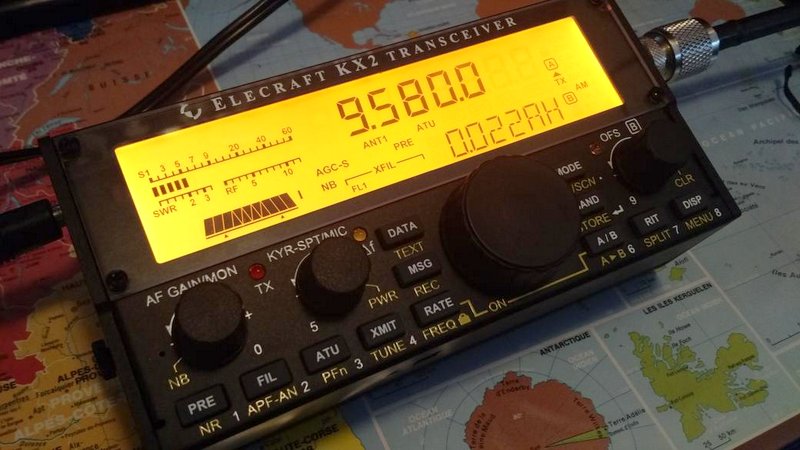
My new Elecraft KX2 tuned to Radio Australia this morning.

My new Elecraft KX2 tuned to Radio Australia this morning.

I’ve only had my Elecraft KX2 since Monday evening and have been so busy, I’ve only had an hour or so to tinker with this pocket transceiver. Monday evening, before putting it on the air, I updated the KX2 firmware to the latest Beta release which includes the new AM mode.

I’ve had so many questions from readers about the KX2’s AM audio already, I thought I’d do a quick comparison with the LNR Precision LD-11.

I set the LD-11 to a bandwidth of 9.6 kHz, and the KX2 to 5 kHz: their widest AM filter settings. Keep in mind, this is not an apples-to-apples comparison, but it does showcase each radio’s potential AM audio fidelity.

I tuned both rigs to the Voice of Greece last night on 9420 kHz around 00:30 UTC. VOG’s signal was strong into North America.

I made the following recordings with my Zoom H2N digital recorder, by feeding in-line audio patched from each radio’s headphone jack. I tried to balance the audio levels between the two rigs.

Here are the results:

The LNR Precision LD-11
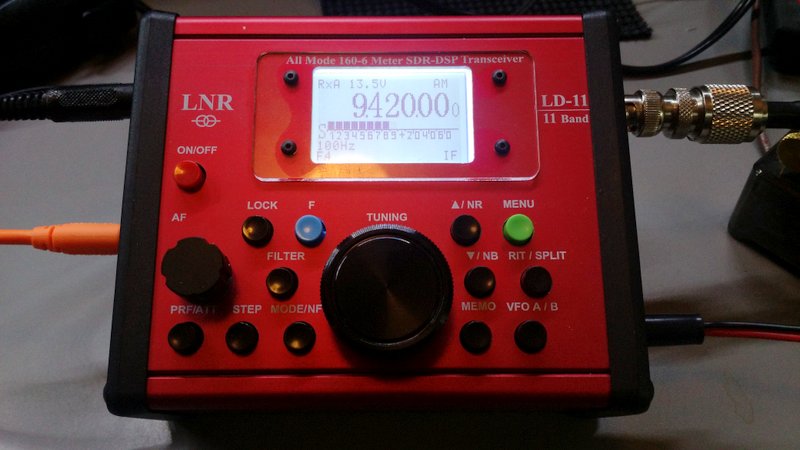
LNR-Precision-LD-11-AM-Mode-Voice-Of-Greece

Click here to download the audio.

The Elecraft KX2
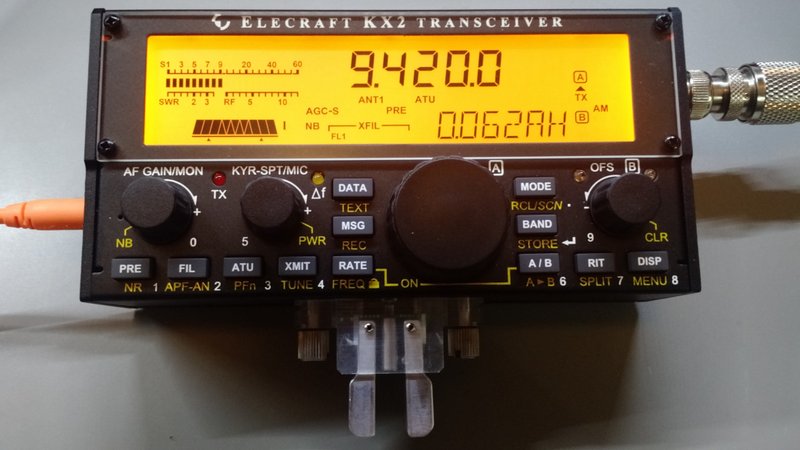
Elecraft-KX2-Voice-Of-Greece-AM-Mode

Click here to download the audio.

The Elecraft KX2 in “Delay” audio mode

Note: Some Elecraft radios have an audio effects mode which includes a “delay” function. Elecraft describes it as “a quasi-stereo effect intended to provide depth and space to the received audio.” On an AM broadcast signal, it makes it sound wider and gives it almost a stereo depth.
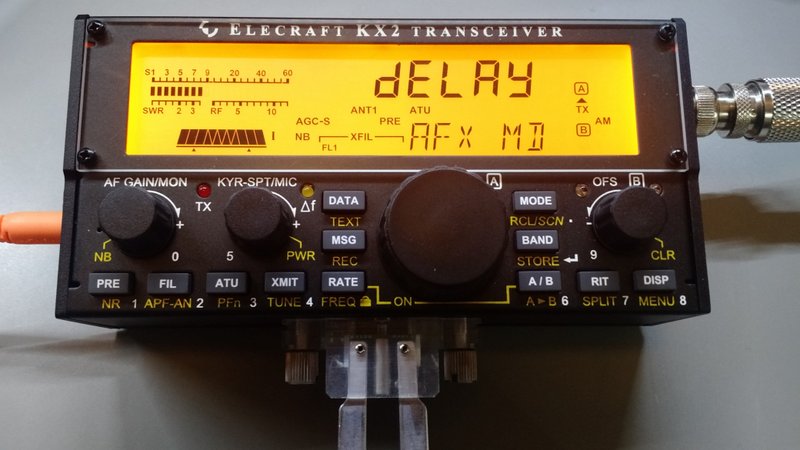
Elecraft-KX2-Delay-Audio-AM-Mode

Click here to download the audio.

I think the results from both radios are impressive. Since the LD-11’s bandwidth can be widened to 9.6 kHz, strong signals like this one sound pretty amazing. In truth, I actually prefer a filter width of about 8.2 kHz on strong signals, but VOG was wide enough to justify 9.6 kHz.  I believe the LD-11 would rival many dedicated tabletop receivers.

The Elecraft KX2, in normal audio mode, sounds flatter and narrower than the LD-11 of course, but still very pleasant!  In the KX2’s “delay” audio mode, the signal sounds much wider than 5 kHz, though the effect adds a little graininess to the audio. That’s okay, though–I love having the “delay” audio option in my tool bag.

Here’s what amazes me as an SWL and ham radio operator: both of these QRP transceivers offer excellent HF broadcast listening opportunities.

Please comment! Which audio sample do you prefer? Do you like the “delay” audio effect on the KX2? Keep in mind this is only one comparison and doesn’t address sensitivity or selectivity.
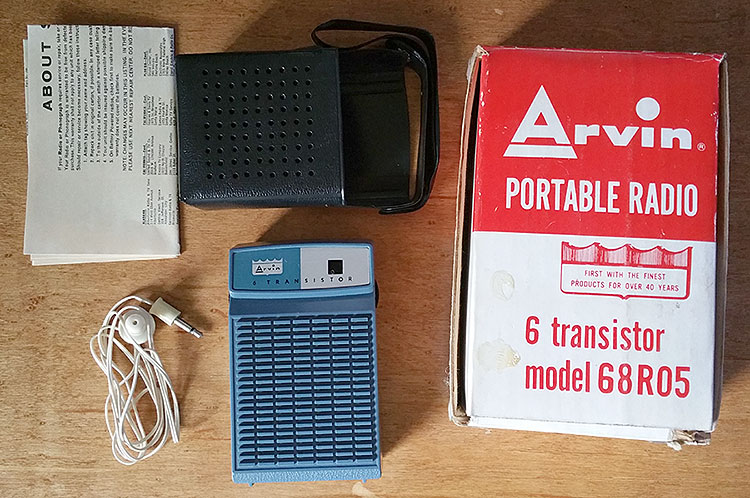
Arvin Model 68R05: John’s 1967 transistor radio

arvin_68R05

Many thanks to John Harper (AE5X) who shares the following in reply to our post about transistor radios:

Attached is a pic of a like-new transistor radio from 1967 [see above].

Remember the days when they bragged about how many transistors a gadget contained?! Sort of like bragging about RAM or clock speed today I guess.

That’s a cute little Arvin radio, John!

You’re right, too–radio manufacturers used to boast transistor compliment like nothing else. Crosley, Zenith and RCA did the same thing–boasting tube/valve numbers–in their 1930s consoles as well. Thanks for sharing the photo of your pocket radio!

eBay find: Mint Panasonic RF-2200

RF-2200-eBay

Many thanks to SWLing Post contributor,  Jeff McMahon, who writes:

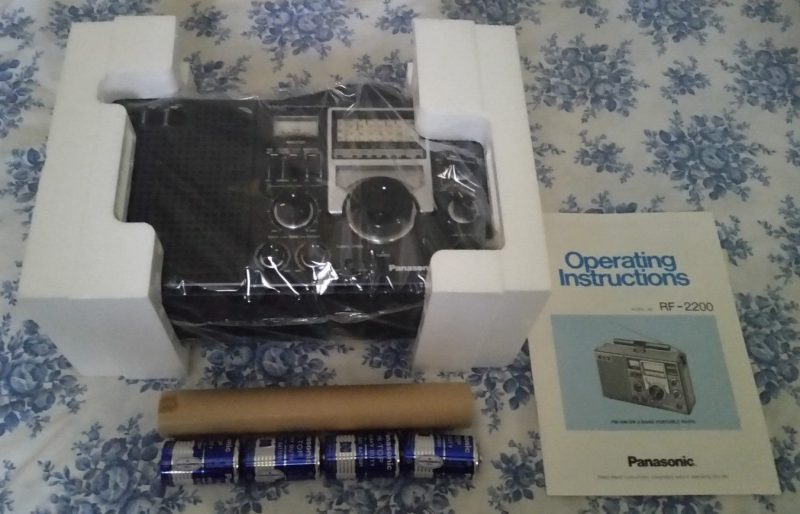
There might be a bidding war on this “possibly never used” with box Panasonic RF-2200.

Click here to view on eBay.

Last night, when Jeff sent this link, the price was still under $300–it’s now over $400.  I suspect this listing might achieve top dollar.

It’s certainly saying something that this RF-2200 even includes the original four Panasonic D cells in the supplied cardboard tube! (I wonder what their voltage would be after all of these years?).

For what it’s worth, the RF-2200 is the best mediumwave/AM receiver I’ve ever used. They’re widely available on eBay and one in decent condition will typically fetch $200-300 US. Money well-spent if you want a benchmark portable with amazing audio fidelity.

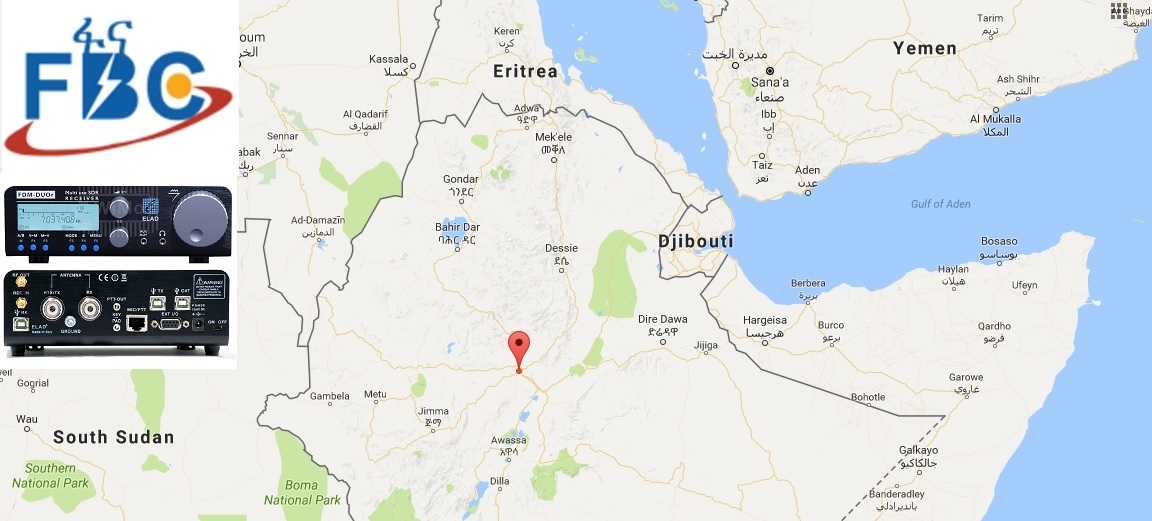
Radio Fana 6110 kHz Ethiopia; excellent SNR with Elad FDM DUO

FanazaThe Elad FDM DUO makes for a fantastic receiver, in both standalone mode and via the FDM-SW2 software. Thus far it has been demonstrating this by outperforming the Sony ICF-2001D in many of my reception tests using an experimental longwire antenna. Bear in mind that whilst this might not be such a surprise, the Elad without the FDM-SW2 software driving it has no SYNC, which is often invaluable for Tropical Band DXing. To make the point further, here is a wonderfully clear signal from Ethiopia, with, in my experience at least, exceptional signal-to-noise.

My 200 metre longwire is still very much a work in progress. I am in the process of building a termination resistance box, receiver-end termination suitable for high and low impedance inputs and earthing straps for metre-long copper pipes that will remain in-situ. When I have completed these tasks, I will record a video because I know some of you are interested in the details. For now though, it just remains an experiment – 200 metres of wire and very late nights/ early mornings!  Recorded at the ‘DX woods’ in Oxford UK at 03:23 hrs UTC on 31/07/16. Thanks for watching.

Direct link to Radio Fana reception on the Oxford Shortwave Log YouTube channel

Clint Gouveia is the author of this post and a regular contributor to the SWLing Post. Clint actively publishes videos of his shortwave radio excursions on his YouTube channel: Oxford Shortwave Log. Clint is based in Oxfordshire, England.


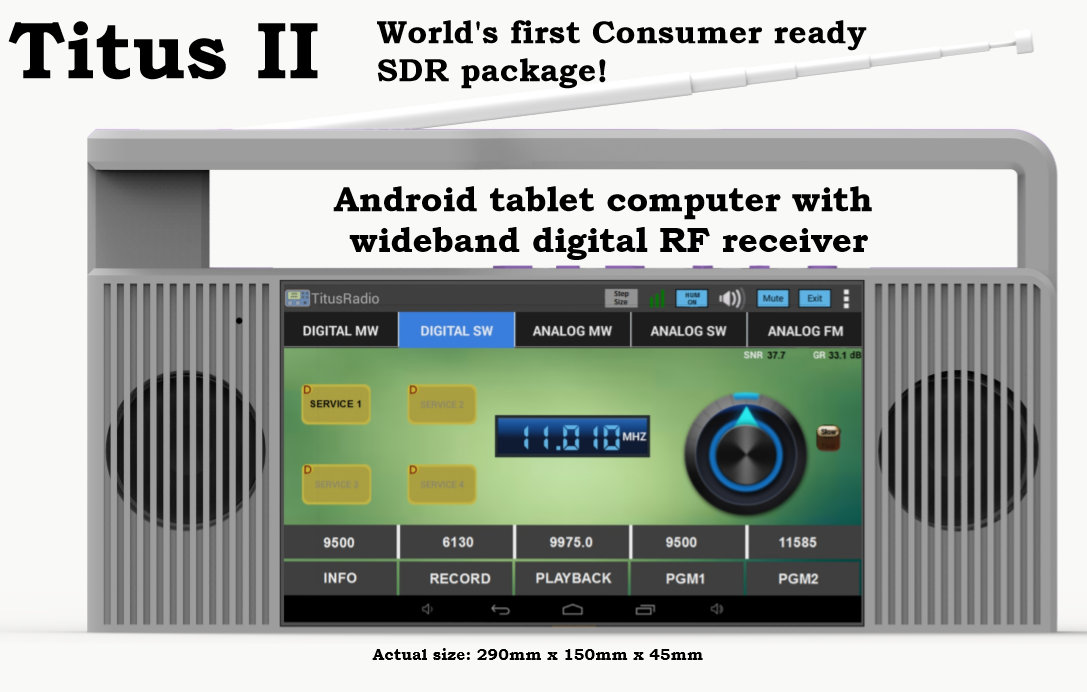
Details Emerge: The PantronX Titus II DRM Portable Receiver

TitusII-DRM-Receiver

Many thanks to SWLing Post contributor, Harald Kuhl (DL1ABJ), who shares more details about the new Titus 2 DRM receiver via the DRM Consortium Chairman, Ruxandra Obreja:

NEW DRM RECEIVER UNVEILED at HFCC MEETING IN MIAMI, FLORIDA THIS WEEK!

The HFCC meeting is being held 22-26 August in Miami and on this occasion there was a live DRM transmission form Radio Vaticana received on  the new Titus2 DRM receiver (pls. see attached document with picture and details) http://www.drmna.info/.

Here is also a little testimony of how this prototype to be sold “at under 100 dollars” performed from Ray Robinson, Operations Manager at KVOH (Voice of Hope / Voz de Esperanza):

I’m currently at the HFCC conference in Miami, and reception of the DRM broadcast here this afternoon was very successful.  Reception was made outside the hotel on two receivers – a  NewStar DR-111 and a brand new pre-production receiver from Pantronix called the Titus 2, with a cluster of attendees gathered round taking photos and videos.  The latter receiver is based on an Android tablet in a stereo radio format with one speaker each side of the central horizontal tablet.  Reception on both radios was solid throughout, on a day when analog reception on 16m was plagued with a lot of atmospheric noise.  We haven’t done detailed calculations, but figure there were probably at least three hops from Italy to Miami, and for a daylight path, the reception quality was nothing short of astounding.

Click here to download the Titus II PDF brochure.

TitusII-DRM-Receiver-Specifications

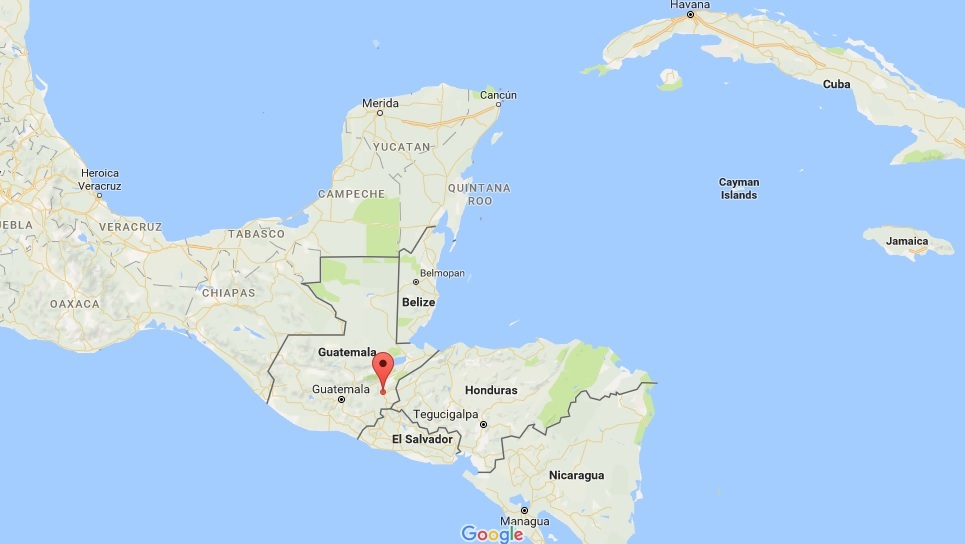
200 metre longwire: Radio Verdad 4054.9 kHz, Guatemala, unprecedented reception in Oxford, UK

verdadRadio Verdad, Chiquimula, Guatemala is quite a regular catch at home, however, their modulation is nearly always weak as the carrier struggles to lift above the ubiquitous blanket of local QRM. Another issue with hearing this station is the digital utility signal just above 4055 kHz, thus requiring LSB reception to reject the adjacent noise.

This particular recording of Radio Verdad was taken during a DX’pedition using the 200 metre longwire and is unprecedented in signal strength and clarity – in my personal experience. With fully discernible audio both the Elad FDM DUO and Sony ICF-2001D receivers perform very well with my experimental 200 metre antenna. I should point out that the audio from the Sony is significantly louder because the speaker on the Elad is puny, to say the least. However, the reception on the Elad sounds to me at least, superior to the Sony in terms of SNR, which is everything in Tropical Band DXing. As usual, I welcome your comments. Recorded in Oxford UK on 31/07/18 at 03:31 hrs UTC. Thanks for watching.

Direct link to the Oxford Shortwave Log reception video of Radio Verdad, Guatemala

Clint Gouveia is the author of this post and a regular contributor to the SWLing Post. Clint actively publishes videos of his shortwave radio excursions on his YouTube channel: Oxford Shortwave Log. Clint is based in Oxfordshire, England.

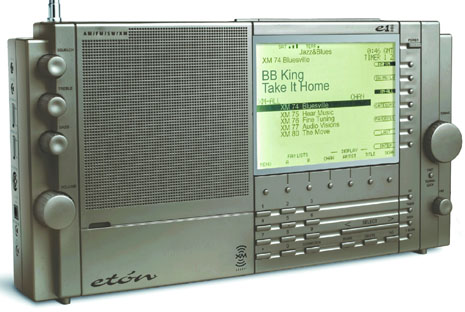
Sticky radios? John shares yet another solution.

Eton-e1

Many thanks to SWLing Post contributor, John Figliozzi, who writes:

Sean at Universal Radio in Reynoldsburg, OH put me on to another terrific product that does the job fabulously and quite easily. It’s called MaxPro Ink/Adhesive Remover and is a citrus-based cleaner/solvent that won’t harm the radio’s plastic casing. You can get it on eBay for around $11 with free shipping:

Click here to view on eBay.

It took me a total of less than 3 hours to clean both my E1s. I used a lot of paper towels, working a section of the radio at a time, spraying the solvent onto the towels and then rubbing the surface free of the degraded and sticky rubberized coating. After removing the coating, I simply wiped down the radio with a wet paper towel to remove any residual solvent. They are now clean and smooth and look like new with all the white print intact. And my hands didn’t suffer any from contact with the solvent.

A reminder if you do this: It’s important to seek out citrus-based solvents and avoid petroleum based solvents. It was so easy with this product that I wished I had done this a long time ago and wasn’t so nervous about taking it on.

John Figliozzi
Halfmoon, NY

Thank you, John! I just noticed that a few of my rubber-coated receivers are starting to get tacky. I like the idea that this adhesive remover is gentle on the chassis. Click here to search eBay for MaxPro Ink/Adhesive Remover.

We’ve posted a number of solutions for sticky radios. Click here to view past posts.