Category Archives: Radios

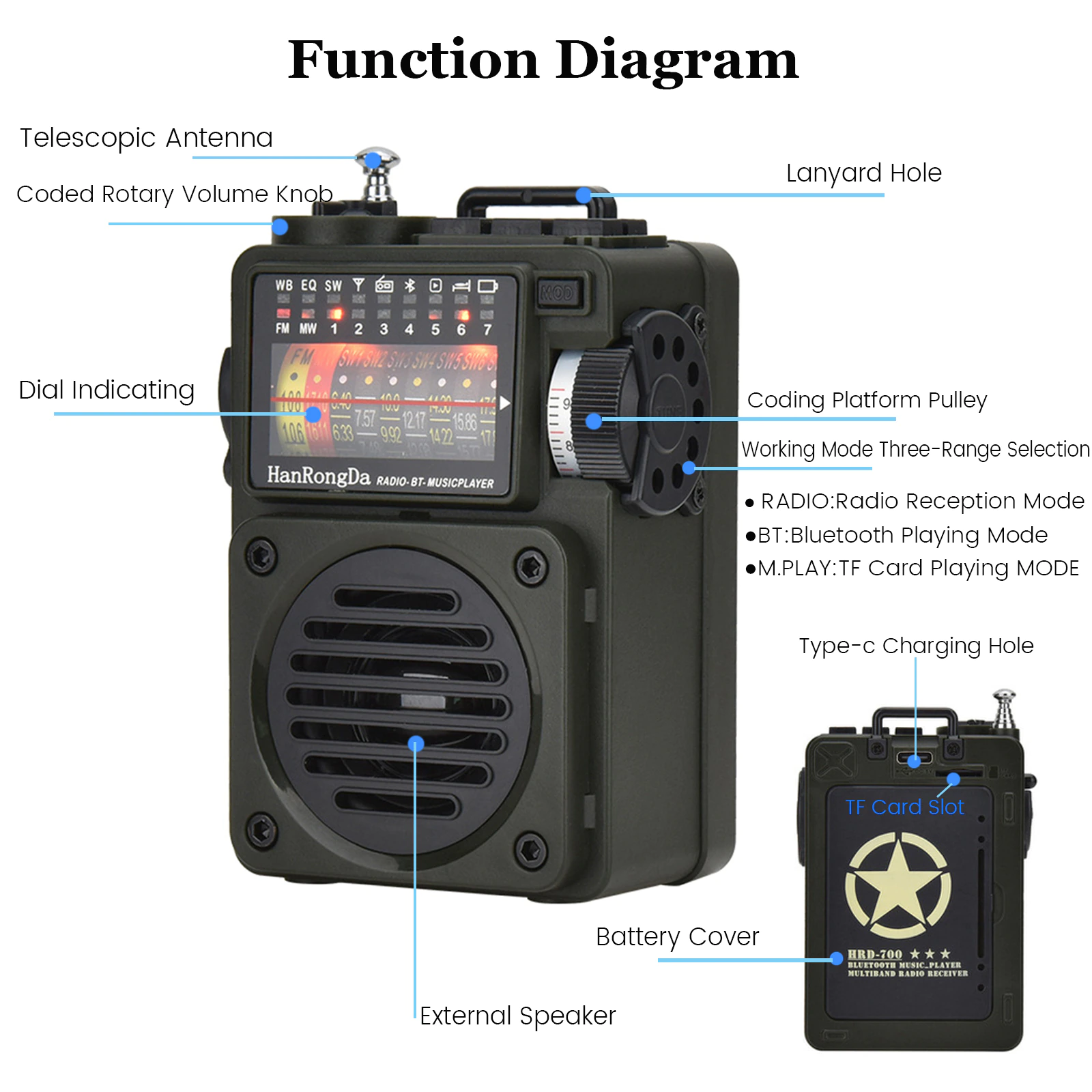
HanRongDa HRD-700 English manual

Many thanks to SWLing Post contributor, Frank, who shares the following:

Hello Thomas,

HanRongDa has built a new mini portbale called HRD-700. Information of it is still rare, and of course it is not a professional radio. But it is interesting as it is a special analogue tuner with digital background.

I have bought one and i am really estonished about its reception quality and features. Very small, so good for camping…

Actually nowhere a manual can be found on the internet, but I have got an English document and I scanned it to share here. Perhaps it is interesting for some readers?

Click here to download PDF.

Friendly regards

Frank from Germany

What an interesting radio design! We hope you report on the performance and share your thoughts soon, Frank!  Thank you for the English manual!

Guest Post: A synchronous detector crash course!

Many thanks to SWLing Post contributor, 13dka, who shares the following guest post:


Revisiting the Belka’s “pseudo-sync detector”: A sync detector crash course!

by 13dka

“It’s usually hard to assess whether or not a sync detector helped with a particular dip in the signal or not, unless you have 2 samples of the same radio to record their output simultaneously and compare.”*

That’s what I wrote about the “pseudo sync detector” in my review of the Belka DSP last year.

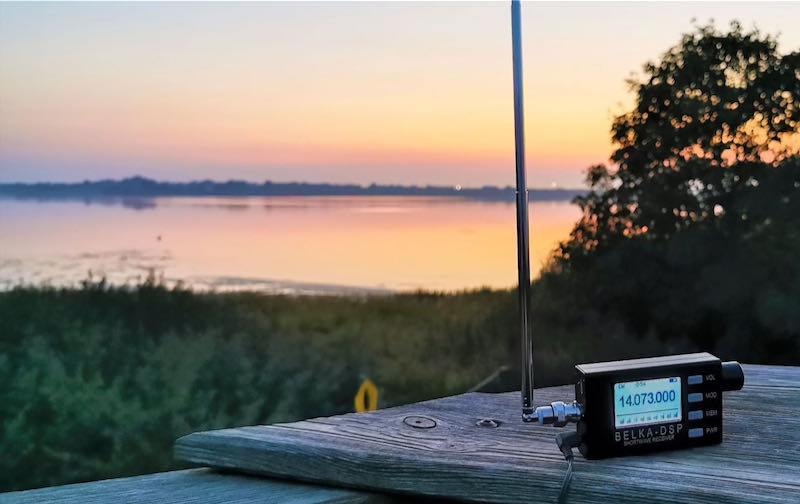
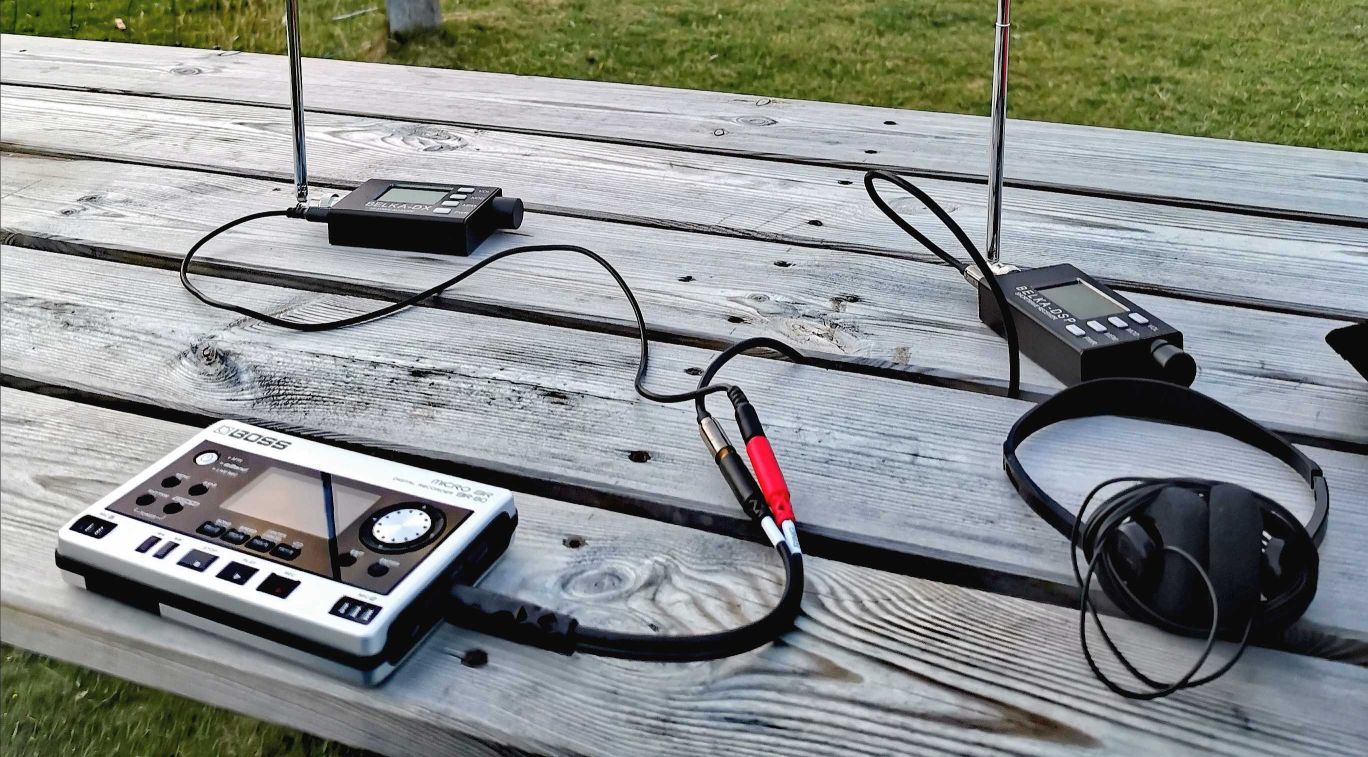
Since I was recently upgrading to the Belka DX in order to pass on the Belka DSP to a friend, I had briefly two examples of almost the same radio on the table at the dike. I tuned them to the same stations and recorded some audio clips with one radio on sync detector, the other in regular AM mode, to answer the question whether or not sync has “helped with a particular dip in the signal”. Then I thought that demonstration would be an opportunity to try an explanation on what exactly (I think) sync detectors are all about anyway, hoping to find a middle ground between “technical” and “dumbed down beyond recognition”.

The trouble with sync detectors

Perhaps no component of a shortwave receiver is surrounded by so much misconception and confusion as sync detectors. Full disclosure: Until quite recently, I had an, at best, vague concept on what they do myself. It seems it’s not so much that people don’t know how they work, what they actually do when they work is where the ideas often diverge. Continue reading

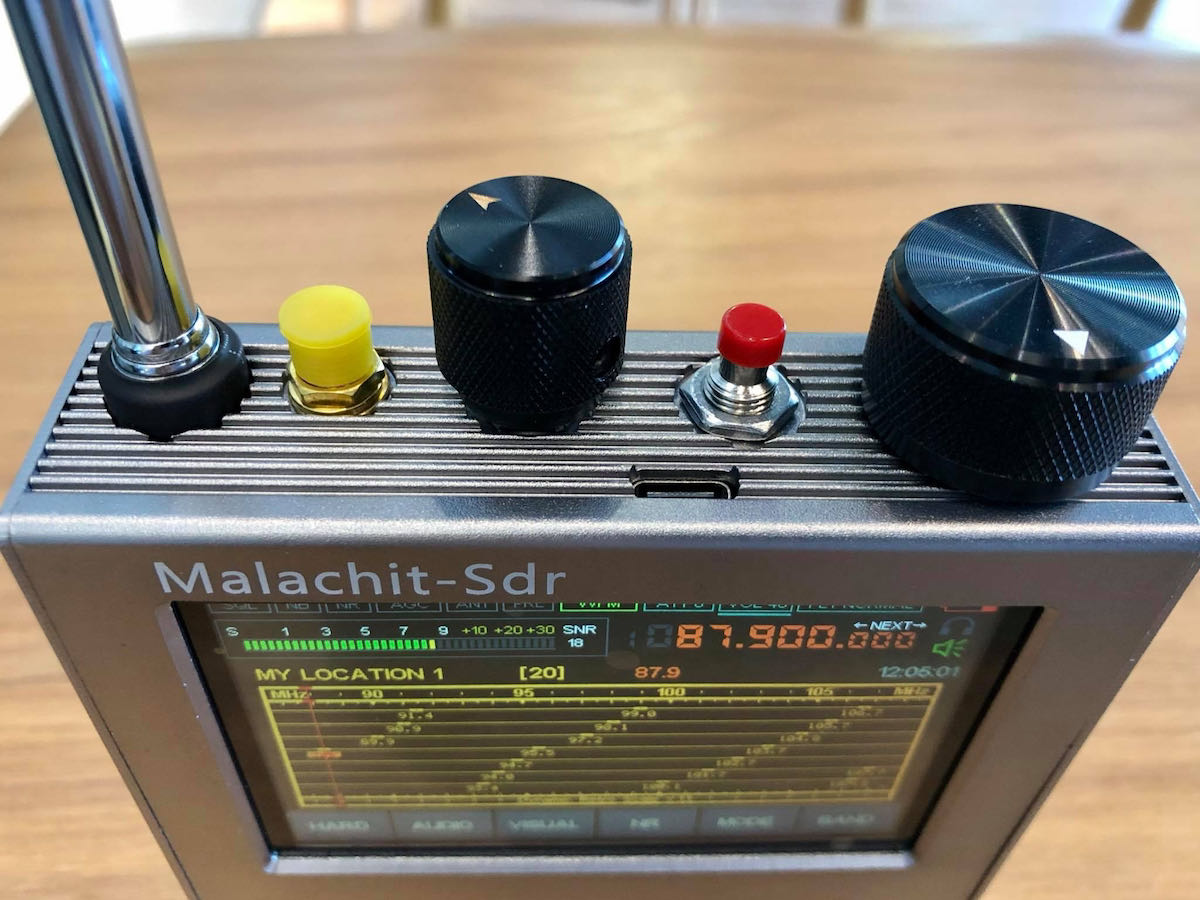
HFDY vs. Fire Brothers: Dan compares two Chinese Malahit SDR clones

Many thanks to SWLing Post contributor, Dan Robinson, for the following guest post and review:


Two Chinese Clones:   A Look at Noise Levels

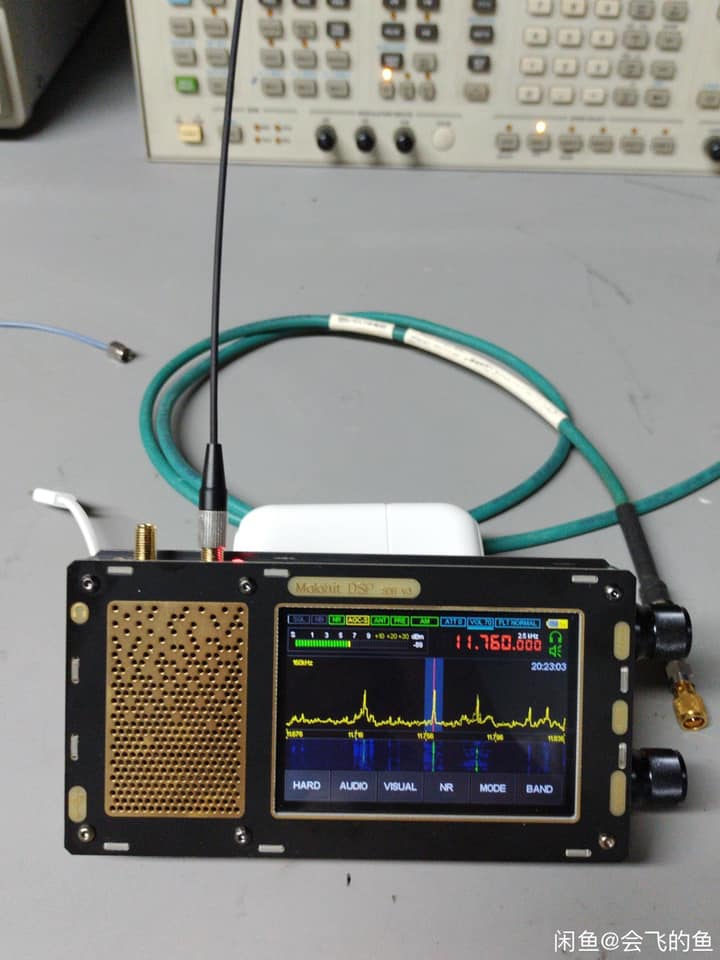
Arriving recently here in the radio shack, were a Chinese clone under the name of “Fire Brothers” and another under the name HFDY.  I thought it would be constructive to note the key differences between these two clones, both of which are running Malahit 1.10c firmware, and post some video of a brief comparison.

A note in advance of any comments – I am primarily a HF listener so these comparisons do not cover frequencies above 30 MHz.  For those whose focus is on higher frequencies I recommend looking through the many comments on the Malahit Facebook group and Telegram by those who use these receivers in those ranges.

HFDY

  • Constructed of metal-like material (a correction from my previous articles that this is fiberglass of the kind used in printed circuit boards – thanks to Georgiy of Malahiteam for pointing this out)
  • Front speaker grille is gold color and appears to be metal but may be fiberglass as well – audio is quite good
  • Two top-mounted antenna jacks, one 50 ohm, the other Hi-Z (makes switching between HF and FM/VHF reception easier) with in-use LED indicators
  • Two high quality right side mounted black metal encoder knobs with large power button (clear printed Frequency/STDBY/Volume printed on panel)
  • Cabinet held together with TORX screws
  • 1.10c firmware
  • Receiver is elongated left to right to accommodate left side front-firing speaker, but is thinner overall and could be easily placed in a pocket though not recommended to prevent damage
  • Like every one of these SDRs, suffers from body sensitivity to touch which reduces signal levels unless some sort of additional ground is attached to cabinet
  • Internal flat-type Lithium battery of 3300 mAh though apparently capable of fitting up to 8000 mAh

Continue reading

Hidden connector on Tecsun PL-660?

Many thanks to SWLing Post contributor, Andy (G0FTD), who writes:

Thomas

Not sure if you’ve come across this, but earlier when I was cleaning my Tecsun PL660 and took the main tuning knob off the spindle, I discovered what looked
like 4 holes of a hidden connector behind it !

I just did a quick search around and I came across a piccy of the PCB on a blog
page here and yes there appears to be what looks like a small USB connector of some sort poking out the PCB where the VFO knob is. [Andy clarifies that he was trying to point out the area to look, but the pic appears to be from the opposite side, so you can’t see it.]

I can’t say that I’ve ever seen reference to it.

Maybe you or your readers might know ?

73 de Andy G0FTD

Thanks for sharing this, Andy. I am curious if that might be the port they use for firmware updates? Perhaps someone here can verify? I gave my PL-660 to a friend and no longer have it here for reference. Please comment if you have some info about this port.

Radio Waves: Old Gen FM Radio, Radio Burst Model Challenged, Iceland WebSDR, and Ida Destroys WZRH/KVDU Tower

Radio Waves:  Stories Making Waves in the World of Radio

Because I keep my ear to the waves, as well as receive many tips from others who do the same, I find myself privy to radio-related stories that might interest SWLing Post readers.  To that end: Welcome to the SWLing Post’s Radio Waves, a collection of links to interesting stories making waves in the world of radio. Enjoy!

Many thanks to SWLing Post contributors Dennis Dura, Troy Riedel, Dan Van Hoy, and the Southgate ARC for the following tips:


FM Radio, the choice of an old generation (Hackaday)

Had the pandemic not upended many of this summer’s fun and games, many of my friends would have made a trip to the MCH hacker camp in the Netherlands earlier this month. I had an idea for a game for the event, a friend and I were going to secrete a set of those low-power FM transmitters as numbers stations around the camp for players to find and solve the numerical puzzles they would transmit. I even bought a few cheap FM transmitter modules from China for evaluation, and had some fun sending a chiptune Rick Astley across a housing estate in Northamptonshire.

To me as someone who grew up with FM radio and whose teen years played out to the sounds of BBC Radio 1 FM it made absolute sense to do a puzzle in this way, but it was my personal reminder of advancing years to find that some of my friends differed on the matter. Sure, they thought it was a great idea, but they gently reminded me that the kids don’t listen to any sort of conventional broadcast radio these days, instead they stream their music, so very few of them would have the means for listening to my numbers stations. Even for me it’s something I only use for BBC Radio 4 in the car, and to traverse the remainder of the FM dial is to hear a selection of easy listening, oldies, and classical music. It’s becoming an older person’s medium, and it’s inevitable that like AM before it, it will eventually wane.

There are two angles to this that might detain the casual hacker; first what it will mean from a broadcasting and radio spectrum perspective, and then how it is already influencing some of our projects. [Continue reading…]

New observations challenge popular radio burst model (Sky and Telescope)

Strange behavior caught by two radio observatories may send theorists back to the drawing board.

Fourteen years ago, the first fast radio burst (FRB) was discovered. By now, many hundreds of these energetic, millisecond-duration bursts from deep space have been detected (most of them by the CHIME radio observatory in British Columbia, Canada), but astronomers still struggle to explain their enigmatic properties. A new publication in this week’s Nature “adds a new piece to the puzzle,” says Victoria Kaspi (McGill University, Canada). “In this field of research, surprising twists are almost as common as new results.”

Most astronomers agree that FRBs are probably explosions on the surfaces of highly magnetized neutron stars (so-called magnetars). But it’s unclear why most FRBs appear to be one-off events, while others flare repeatedly. In some cases, these repeating bursts show signs of periodicity, and scientists had come up with an attractive model to explain this behavior, involving stellar winds in binary systems.

However, new observations by European radio telescopes may rule out this model.

Astronomers knew that FRB 20180916B, located in a galaxy some 475 million light-years away, produces multiple bursts about every 16 days, during a ‘window’ that lasts for a few days. “The idea was that the magnetar is part of a binary system with a 16.29-day period,” says Inés Pastor-Marazuela (University of Amsterdam), the first author of the new paper. If the companion star had a thick stellar wind that absorbs radio waves, the bursts would only be visible when the magnetar was on ‘our’ side of the orbit, she explains. [Continue reading…]

New WebSDR in Iceland (Southgate ARC)

Iceland’s IRA reports on August 24 Karl Georg Karlsson TF3CZ connected a new receiver over the internet covering 24-1800 MHz

A translation of the IRA post reads:

QTH is Perlan in Öskjuhlíð in Reykjavík. These are Airspy R2 SDR receivers for 24-1800 MHz (on VHF and UHF). The antenna is a Diamond D-190.

Karl Georg stated the following on FB:
The extension is not just for 2m, it can only be on one band at a time. So if one user switches, others who are connected also move between bands. (However, you can listen to each frequency within the same band). The receiver automatically tunes to APRS QRG 144.800 MHz, see the APRS website: http://SDR.ekkert.org/map

URL of the receiver
http://perlan.utvarp.com/#freq=24890000,mod=usb,sql=-150

Thanks to Karl Georg for his valuable contribution. This is an important addition for radio amateurs who experiment in these frequency ranges, as well as listeners and anyone interested in the spread of radio waves.

IRA Board

Source Iceland’s national amateur radio society, the IRA
https://tinyurl.com/IcelandIRA

WZRH/KVDU Tower Destroyed By Hurricane Ida (Radio Insight)

The nearly 2000 foot tower utilized by Cumulus Media Alternative “Alt 92.3” WZRH LaPlace and iHeartMedia Variety Hits “104.1 The Spot” KVDU Houma LA was toppled by the winds of Hurricane Ida.

The 1999 foot structure was constructed in 1988 to host both signals. Only the bottom 150 to 200 feet remain standing. Both stations are licensed to operate with 100kW/591m, but have low powered auxiliary sites in downtown New Orleans. WZRH is located on the roof of Place St. Charles with 630w/200m. KVDU is on the Hancock Whitney Center with 1.2kW/220m.

In addition to KVDU, iHeartMedia Gospel 940 WYLD is silent at its cluster. The company reports that the remainder of its signals are now operational after all but 93.3 KQUE and 98.5 WYLD-FM were off the air on Monday.

Cumulus Media states that its entire cluster of WZRH, Adult R&B 102.9 KMEZ Belle Chasse, Country “106.1 Nash-FM” WRKN Picayune MS, and Hot AC “106.7 The Krewe” KKND Port Sulphur LA are off the air. [Continue reading…]


Do you enjoy the SWLing Post?

Please consider supporting us via Patreon or our Coffee Fund!

Your support makes articles like this one possible. Thank you!

Malahit DSP-2 Review Update 3: Dan evaluates the latest hardware version

Many thanks to SWLing Post contributor, Dan Robinson, for the following guest post:


UPDATE NO 3: Malahit DSP-2 (August 18, 2021)

A few weeks ago, I wrote about my experiences with the Russia-made Malahit DSP-2 receiver, and made a recommendation that potential purchasers of the receiver hold off until the design team in Russia made some changes.

Weak points included the SMA antenna connector – specifically the short cable going from the antenna to the PCB board, and sharp noise spikes seen at numerous locations throughout the spectrum from mediumwave up to 30 MHz.

My particular DSP-2 unit went dead after an update to an early version of the 2.10TEST firmware.  At the time, I had spoken via Skype with Georgiy on the Malahit team and kept up a string of communications on the Malahit Telegram channel.

It was not clear to me whether the problem with the first DSP-2 was primarily due to SMA antenna issues or also due to a problem with the firmware update I had applied at the time (it was an early version of 2.10TEST).

My appreciation goes to Georgiy who decided to send a new DSP-2 to me.  This took about 3 weeks from the end of July until just recently when the receiver arrived (though the U.S. Postal Service made the end of that journey quite interesting).

Here are some observations that I hope will help current and prospective owners of the DSP-2: Continue reading

Bob Colegrove on “The Joys and Challenges of Tuning Analog Radios”

Many thanks to SWLing Post contributor, Bob Colegrove, who recently shared this excellent article and has kindly allowed me to share it here in the the Post. Bob prefaced it by saying, “Being a retired technical writer, I started the attached article some time ago for my own amusement, but it quickly got out of hand.

“Got out of hand” in a very good way, Bob!

An excerpt from Bob’s article.

I love how this piece takes us through receiver history and explains, in detail, the mechanics and innovations. It’s also a very accessible piece that both the beginner and seasoned radio enthusiast can appreciate.

But don’t take my word for it, download it and enjoy!

Click here to download The Joys and Challenges of Tuning Analog Radios as a PDF.

Thank you again, Bob. This is a most enjoyable and informative read! This was obviously a labor of love. Thanks for sharing it with our radio community!