Category Archives: Radios

Gary pulls apart and examines the XHDATA D-808


Many thanks to SWLing Post contributor, Gary DeBock, who shares the following report of the XHDATA D-808:


XHDATA D-808 AM-LW-FM-SW-AIR Portable- Tech Report

by Gary DeBock

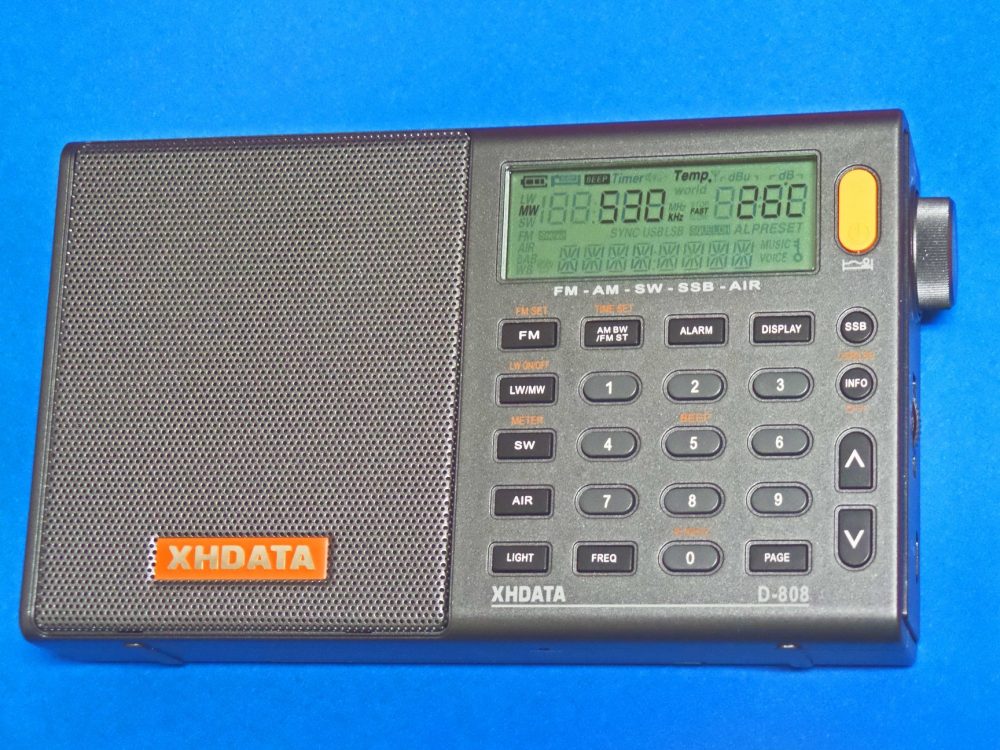
The XHDATA D-808 portable is an AM-LW-FM-SW-SSB-AIR band model which has already been the subject of many excellent reviews. Until recently the model was not marketed to North American purchasers, but recently a couple of Chinese sellers have started soliciting North American buyers via eBay listings.

My own interest in the model was in comparing its AM Band performance to that of the best performing Ultralight radios– specifically the CC Skywave and Skywave SSB models. Although the D-808 is slightly larger than the 20 cubic inch limit for Ultralight radios, its size and weight make it very convenient to take along as a “travel portable,” specifically as an SSB-enhanced model capable of checking transoceanic station carrier strength on exotic ocean beaches. The Skywave SSB model can also do that– but at a $169.99 list price, compared to the $112.86 (plus $10 shipping) cost of the D-808. In addition, none of the published D-808 reviews seemed to have any information about internal components like the loopstick, or Si4735 DSP chip.

My first test was to compare the stock Skywave SSB model with the D-808 in fringe AM station reception. The Skywave SSB model has a reputation of being one of the most sensitive Ultralight radios, but the D-808 clearly outperformed it on both low band fringe station (550-KARI) and high band fringe station (1700-City of Auburn TIS) reception. The D-808 couldn’t quite hang with a 7.5″ loopstick Skywave model, but that only made me curious about how the same modification could enhance the D-808. So… it was time to disassemble the D-808, and find out why its loopstick was such a superior performer.
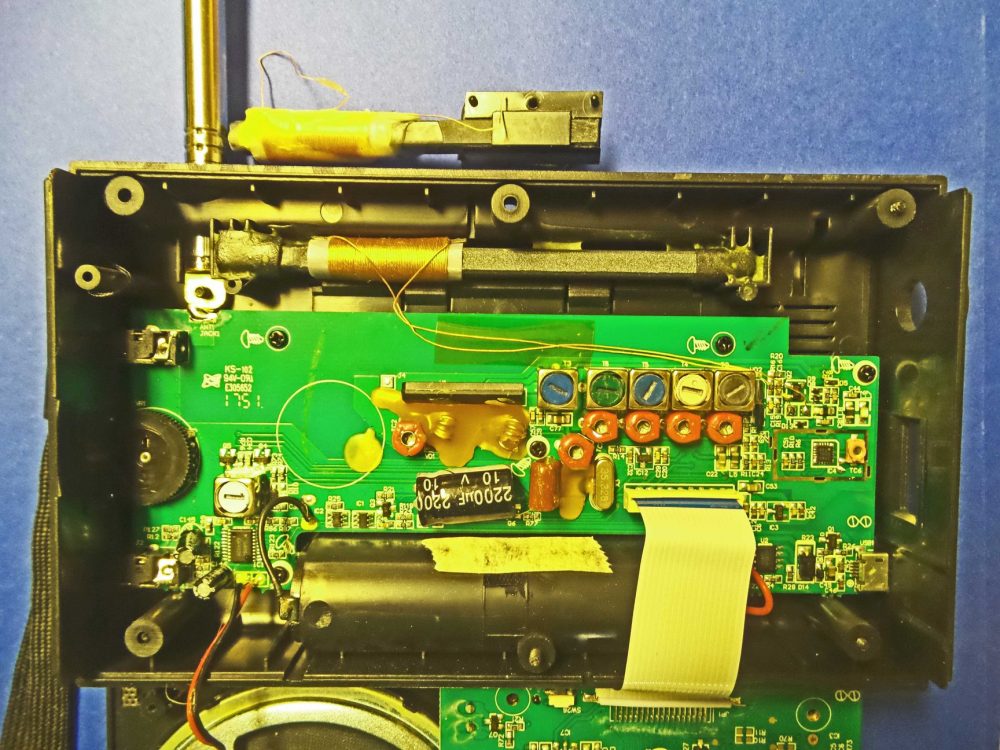
The D-808’s 3 7/8″ (98mm) loopstick is shown adjacent to the 2 3/4″ (70mm) loopstick of the CC Skywave models. The D-808 is much easier to disassemble than the CC Skywave models, though, so enhanced loopstick transplants should prove to be quite popular in the D-808.

The D-808 loopstick is 3.7/8″ (98mm) long, while that of the CC Skywave SSB model is only 2 3/4″ (70mm) long. Other reviewers have noted the excellent performance of the D-808 on the AM band, and this is probably one of the main reasons. The SSB mode operates very similar to that of the Skywave SSB in providing a quick check of carrier strength on weak AM band targets– the LSB mode can be set to +55, and the radio tuned to different frequencies to check fringe station carrier strength. This can provide a real-time check of propagation changes during time-limited propagation openings for live ocean beach DXing with Ultralight radios or other portables (or with the D-808 itself, if desired).
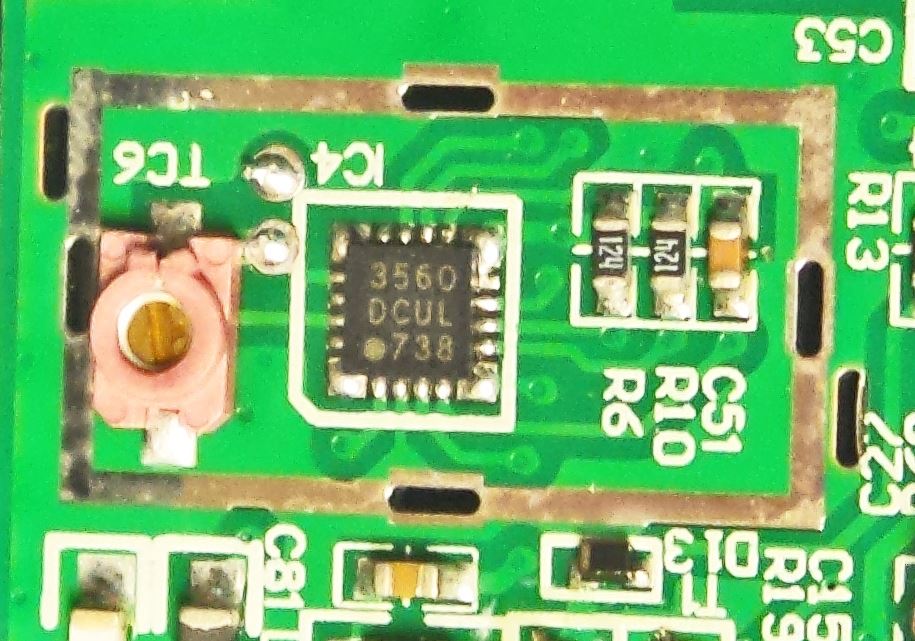
The D-808’s Si4735 DSP chip was initially used in the Eton Traveler III Ultralight radio model, which was fully reviewed in the 2015 Ultralight Radio Shootout (where it won top honors for MW sensitivity). The D-808 augments that capability with a significantly longer loopstick, plus multiple DSP filtering selections. As such, the D-808 in stock form should be a very superb performer.

The Si4735 DSP chip has markings of “3560, DCUL, .738” and provides a wide range of AM bandwidth choices for the Medium Wave DXer (6K, 4K, 3K, 2.5K, 2K, 1.8K and 1K). These perform very well, and as with the other DSP-enhanced portables, the narrowest bandwidth (1K) provides the most sensitive AM band reception.

In construction very similar to that of the CC Skywave, the D-808 separates into two main circuit boards, connected together by a plug-in ribbon cable. One strange quirk is that the Si4735 DSP chip is located on the RF board (close to the center right edge). The Si4735 DSP chip is also used in the Eton Traveler III Ultralight radio, and although that model lacks the multiple DSP filter selections of the D-808, is has been the subject of highly successful 7.5″ loopstick transplant modifications– proving that such enhanced Medium Wave and Longwave loopsticks will perform very well in the new, Si4735 chip- powered D-808.
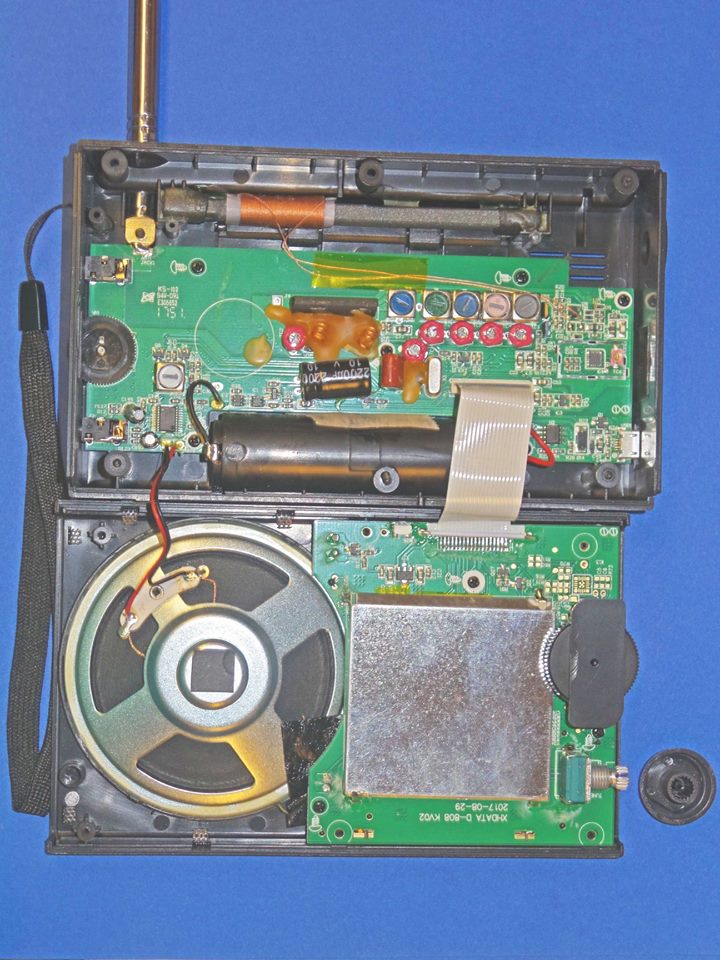
Disassembly of the D-808 model is fairly straightforward in comparison to the CC Skywave models, and the technician doesn’t need to memorize a detailed reassembly protocol in order to perform a routine loopstick transplant operation. Neither C.Crane nor XHDATA are likely to show any sympathy to someone botching up an antenna transplant, so you need to be confident that that your skills are superior to those of the company technicians before taking the plunge. In the CC Skywave and CC Skywave SSB models various parts fit together like a puzzle, but the D-808 isn’t like that. It should prove to be a fairly popular model for enhanced MW and LW loopsticks.

Those considering a purchase of the D-808 should be advised that its type 18650 Li-ion 3.7v battery is not commonly available at most stores, and that Postal regulations supposedly forbid shipping these batteries through the mail. One of the eBay sellers (harelan ecommerce) did manage to ship me two of the standard XHDATA type 18650 batteries through the mail (along with two new D-808 models) but if your seller won’t do this, you can still purchase the batteries on eBay. Some of the 18650 batteries sold on eBay have a flat positive terminal which won’t contact the D-808 cabinet’s positive battery connector terminal, but in such a case you can simply insert a #8 lockwasher in between the two, and the arrangement will be very secure. From that point on you can simply recharge the battery with a USB terminal connector.


Thank you for sharing this technical overview of the XHDATA D-808, Gary! I’m looking forward to the antenna mods you’ll no doubt make to this compact DX machine!

Click here to read other posts about the XHDATA D-808 and here to read posts by Gary DeBock.
Donald’s video review of the Sangean WR-7

Regarding our recent review of the Sangean WR-7, SWLing Post reader, Donald Brown, writes:

Hi, my name is Donald Brown, and I did a video review of the Sangean WR-7 and I thought that you might want to have a look at it and even place it onto your site as well. The YouTube address is here below:

Click here to view on YouTube.

Also, just to let you know, I own a country Internet radio station called Pure Country 100 which can be found here below. I have provided you with the site as well as the direct streaming link.

Site: http://www.purecountry-100.com

Direct Stream: http://wasitviewed.com/[email protected]&id=10823

Be sure to spread the word about the station to as many people as you possibly can. Also, send me a reply to let me know what you think of the video as well as the station.

Thanks for sharing, Donald–I’m quite happy to spread the word!

Balazs spots radios in several movies and Netflix series

Many thanks to SWLing Post contributor, Balazs, who has spotted a number of radios recently on Netflix. Balazs notes:

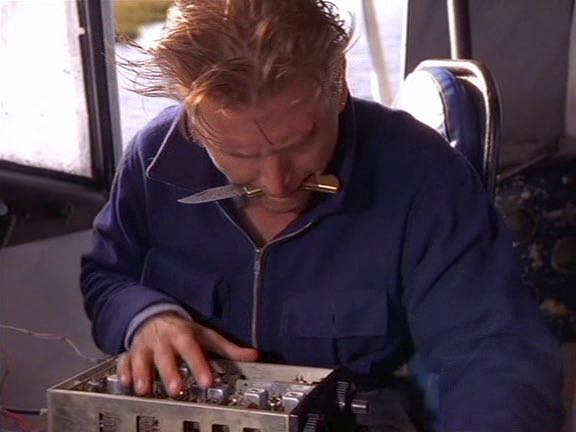
The Snow Walker (2003): Barry Pepper tries to fix a radio:

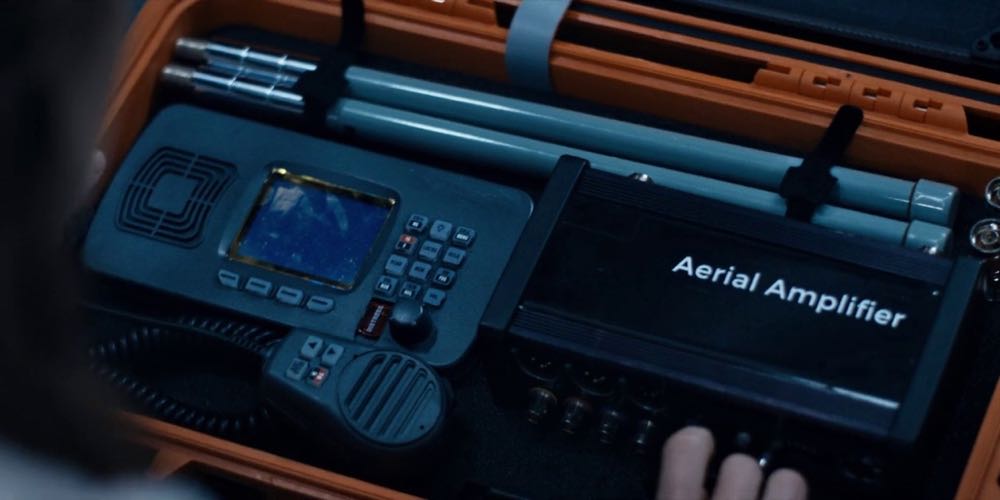
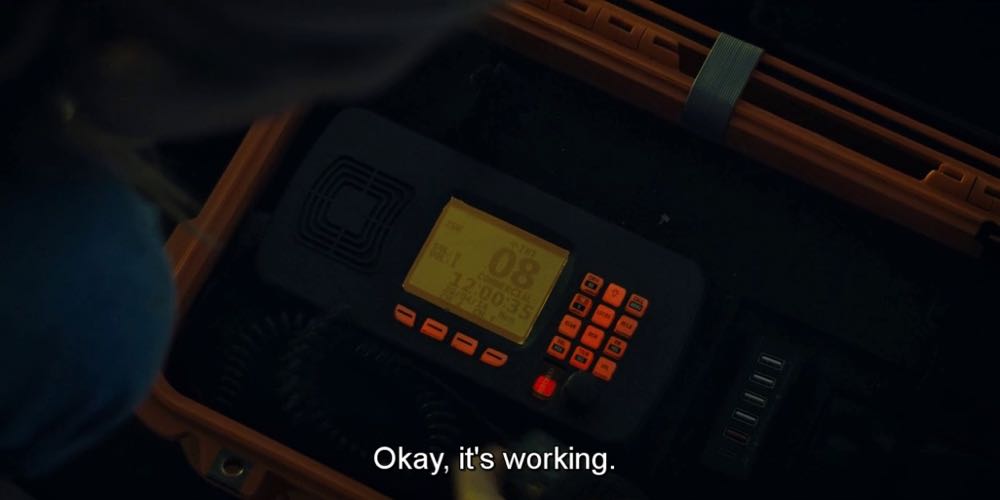
Maze Runner – The Death Cure (2018): as scanners:

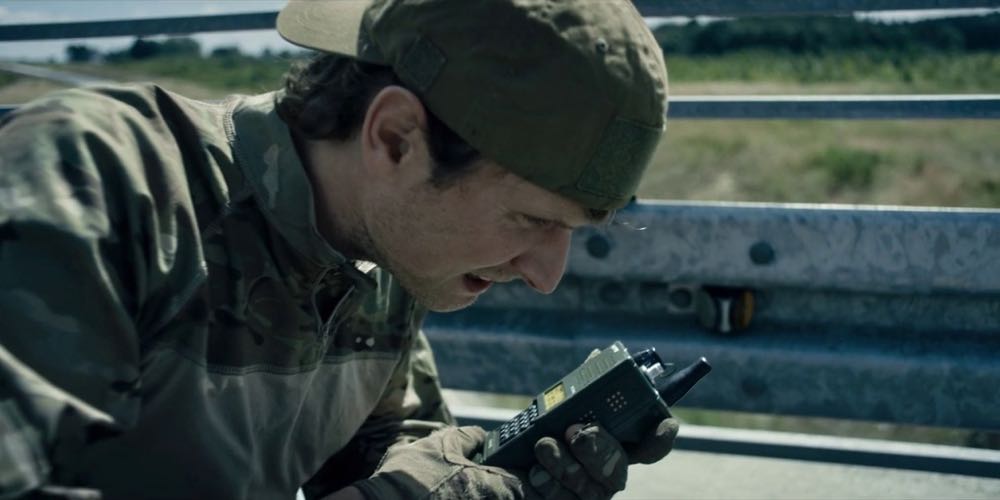
The Rain – new Danish post-apocalyptic series from the Netflix: field comm found:

Many thanks for sharing these, Balazs!

Post readers: Do you recognize these radios? One looks a lot like an Icom marine radio. Please comment!

2018 Hamvention photos: Friday Flea Market

It was a long day at the 2018 Hamvention Friday, but we had a brilliant time. As always, it’s a pleasure to meet so many SWLing Post readers and contributors–thank you for stopping by!

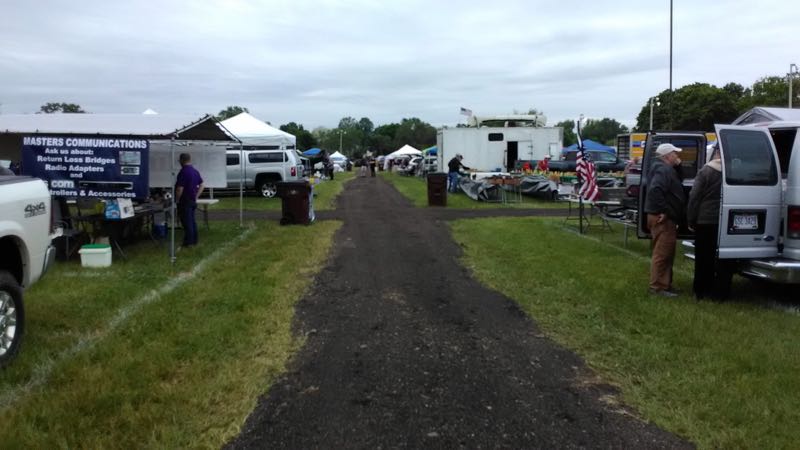
Below, I’ve posted photos I took at the Hamvention Flea Market this morning. Note that most of these photos were taken either prior to the flea market opening or just shortly after. The selection was pretty amazing. The rain did come and go throughout the day, but the recycled asphalt that was spread between the aisles did help keep mitigate the mud situation.

Click on the thumbnail to expand each photo. I’ve tried to include price tags when available although the camera phone I used didn’t have the sharpest focus! I plan to post inside exhibit photos tomorrow.


A review of the supercompact Sangean WR-7 FM Radio and Bluetooth speaker

Folks have been known to say that good things come in small packages.  And, do you know what? They’re sometimes right. [Spoiler alert: This review features a good thing which comes in a small package.]

I’ve been in the process of evaluating some pretty complicated pieces of communications equipment lately. So when Sangean approached me a few weeks ago and asked if I would check out their latest FM radio and Bluetooth speaker––a comparatively simple piece of kit––I thought, Well, why not? Because while I prefer “enthusiast grade” radios, sometimes it’s nice to check out something super-simple and purpose-built from a company I’ve grown to trust. Plus, it didn’t hurt that Sangean actually bothered to include FM radio on what would otherwise simply be just another Bluetooth speaker.  Ah, yes; a worthy addition.

Sangean dispatched the sample radio and I received it within a few days. I was expecting something roughly on the scale of a Tivoli Model One.  Instead, when I opened the box, what I found was a radio only slightly larger than my diminutive  Muzen OTR, a little radio that fits the palm of your hand. To be fair, it could only be called…cute.

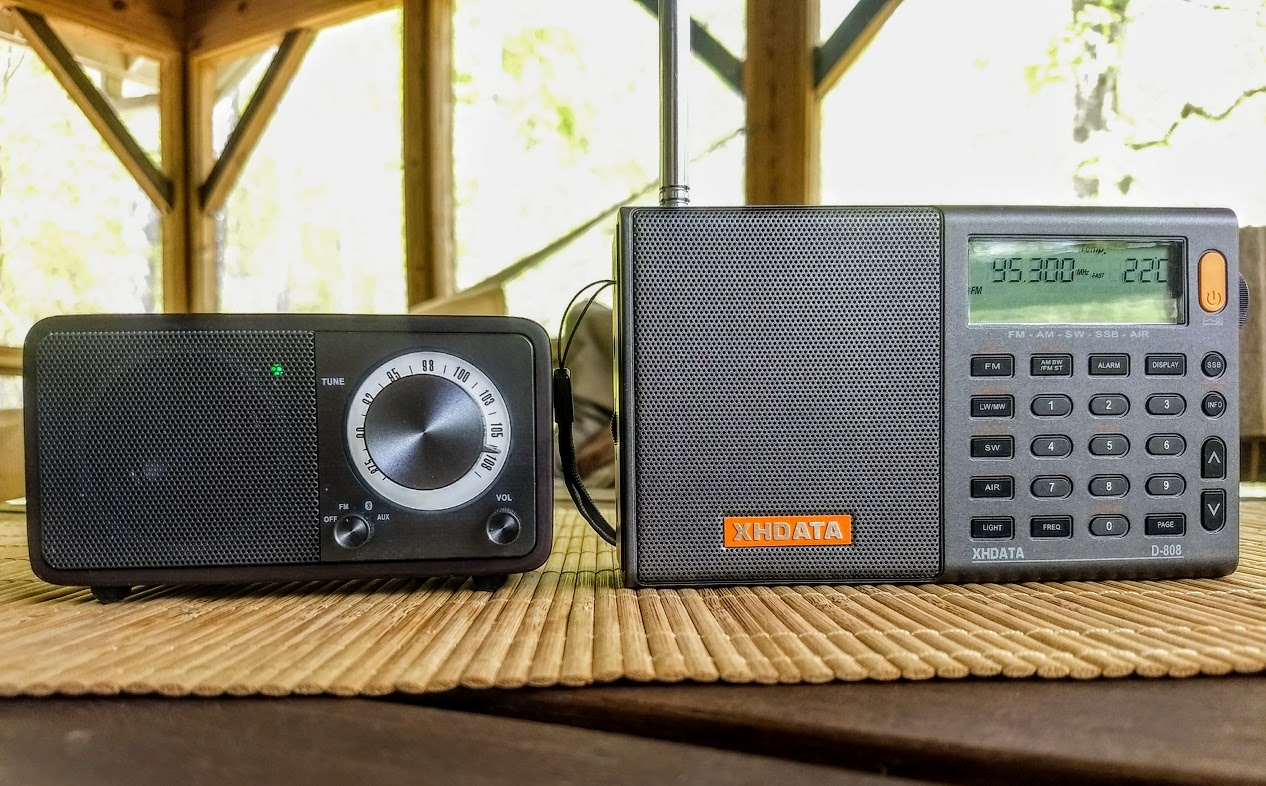
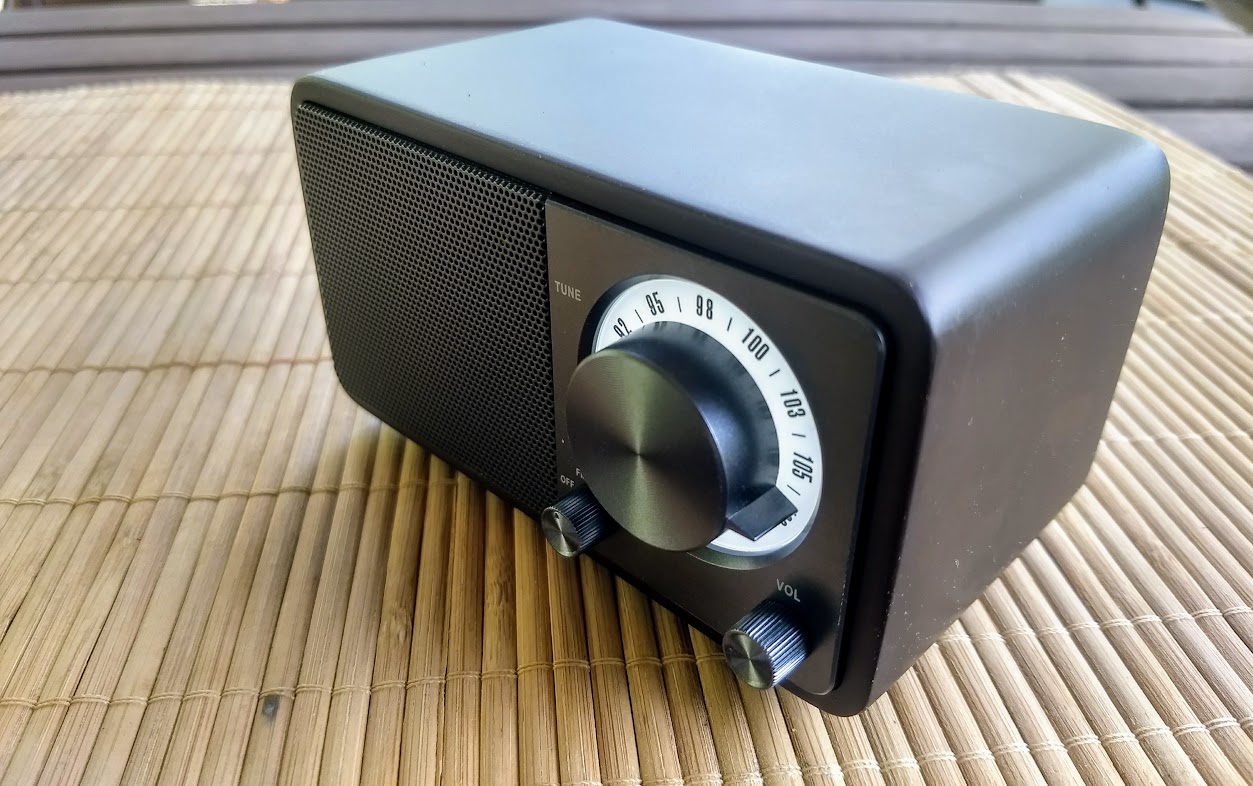
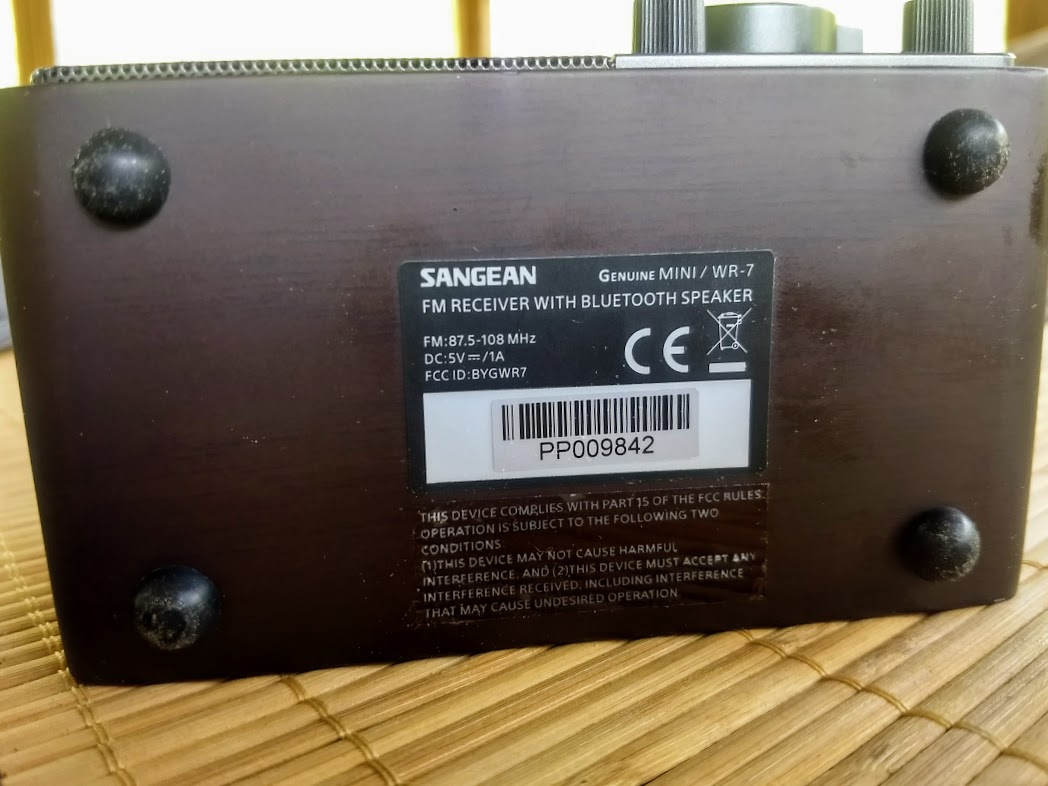
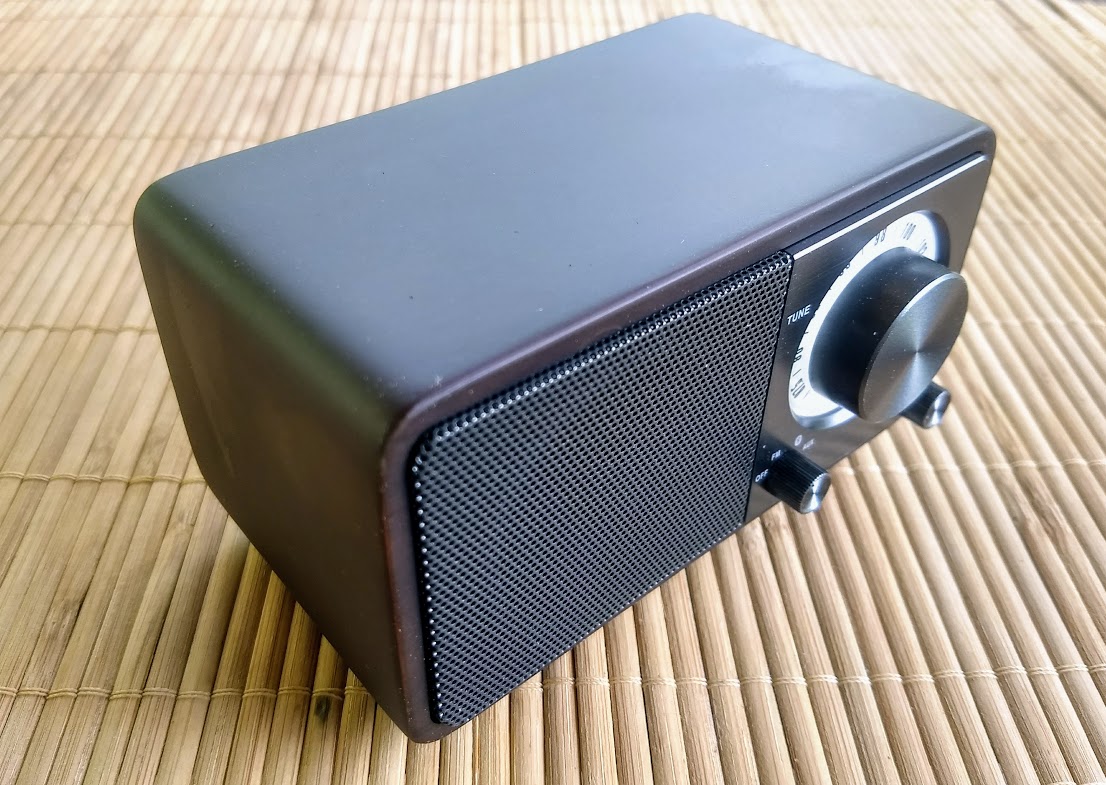
By my measurements, the tiny Sangean WR-7 is about 2 1/2″ tall, 4 5/8″ wide, and 3″ deep (if you include the tuning knob in that last dimension). It’s mini by almost any standard.

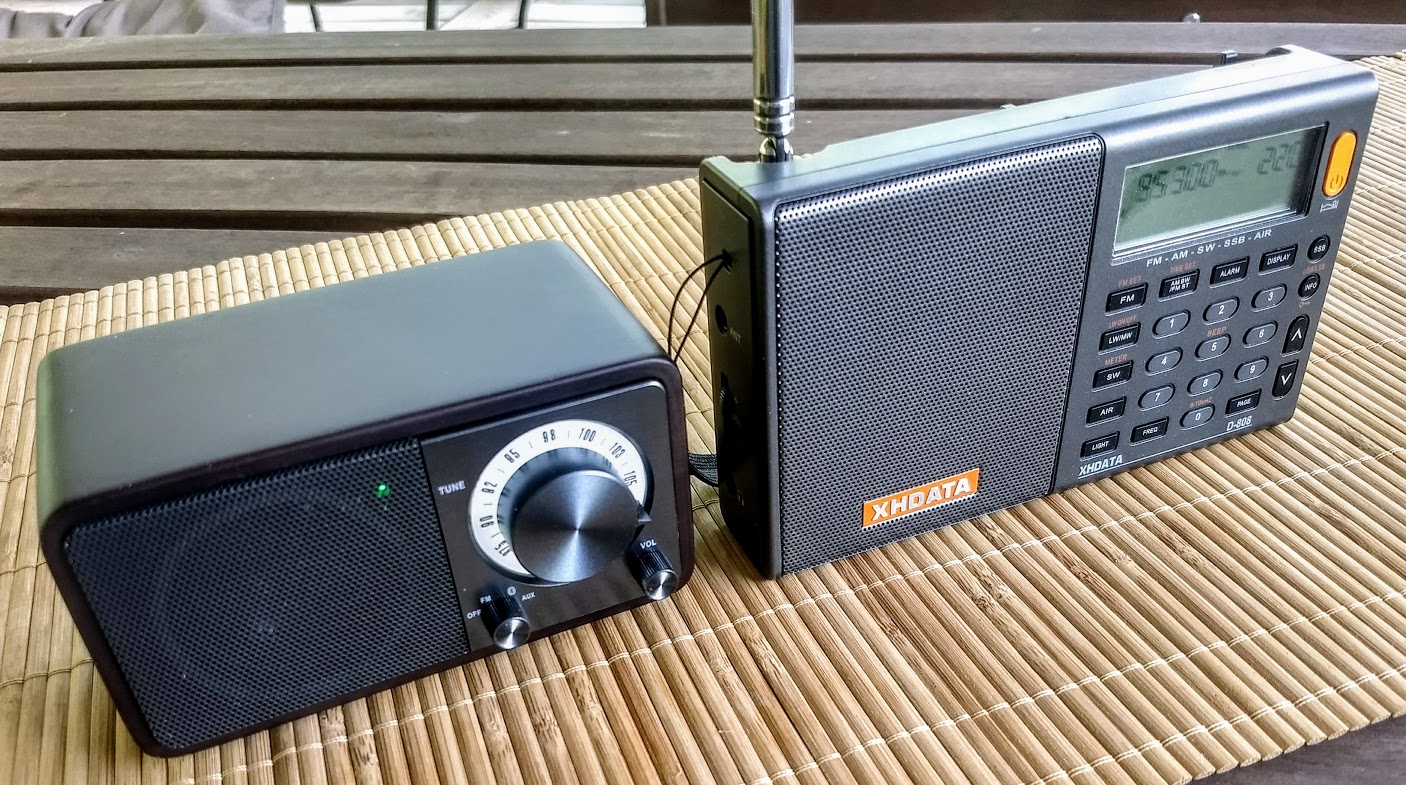
For this photo I placed it next to my handy XHDATA D-808 compact radio.  And here’s how they compare:

Though wee, the WR-7 feels weighty (14.4 oz), solid, and substantial in the hand.

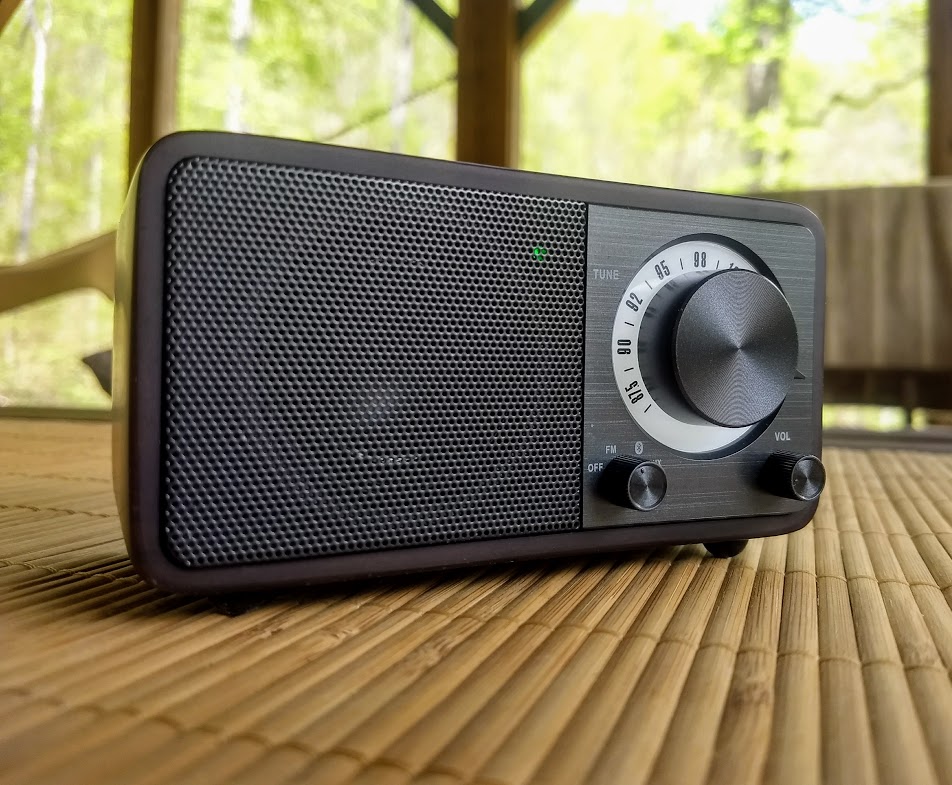
Turns out the chassis is solid––solid wood. Sangean has two options: walnut and dark cherry. Of course, my sample is a black version which may appear later in the year.

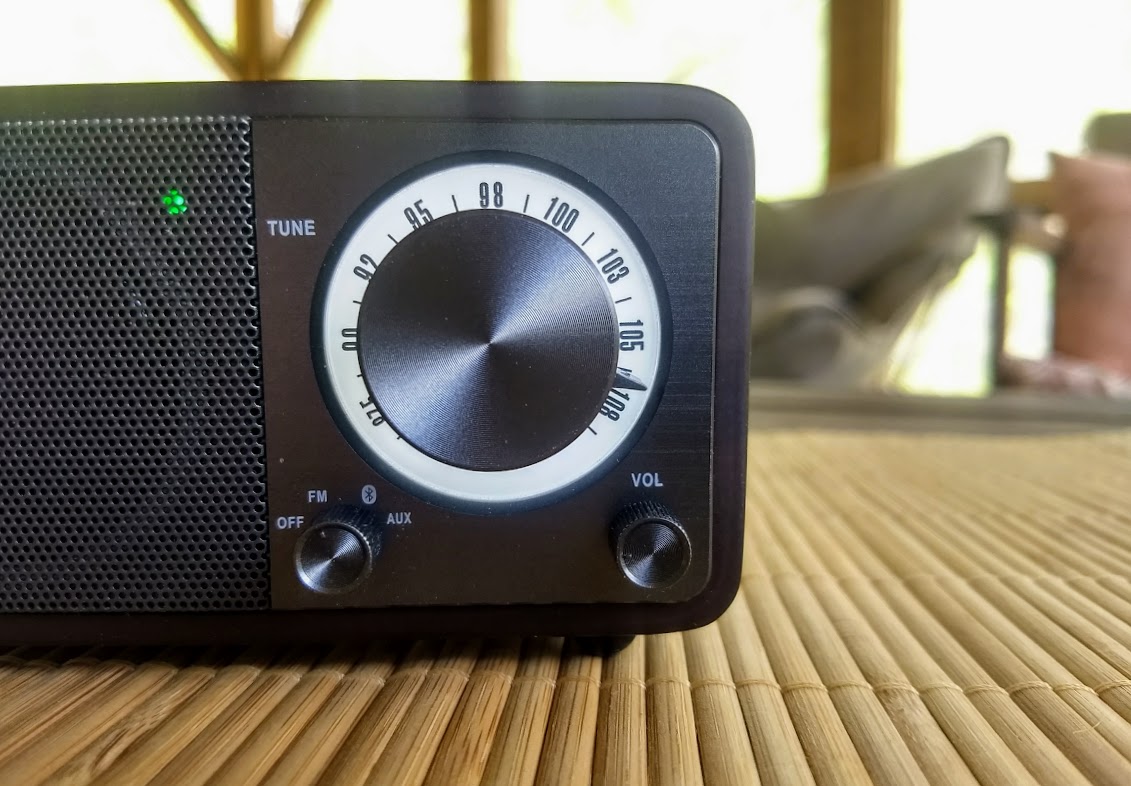
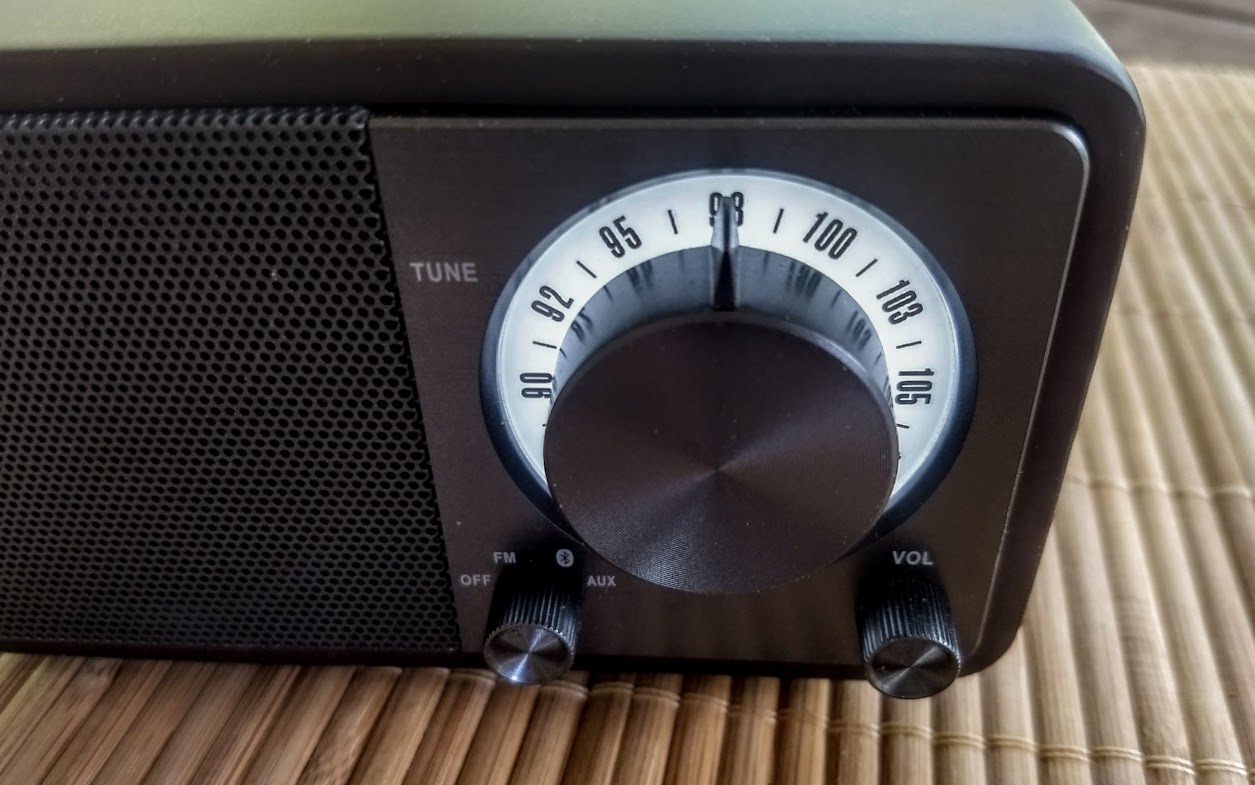
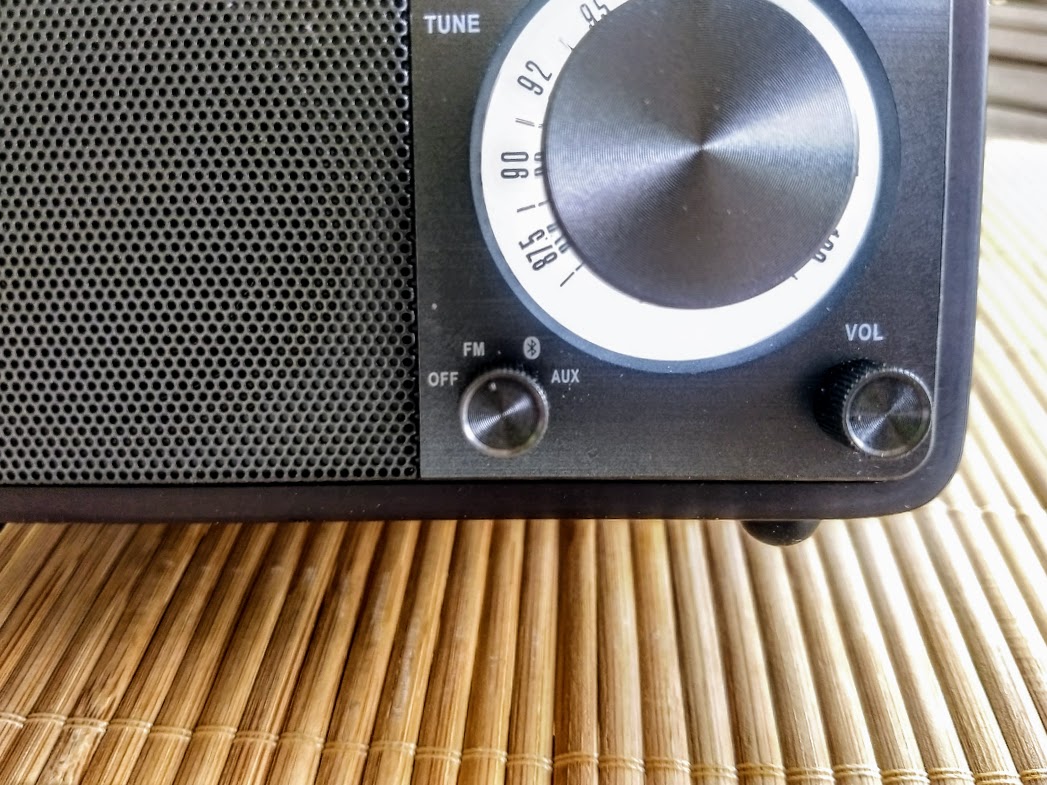
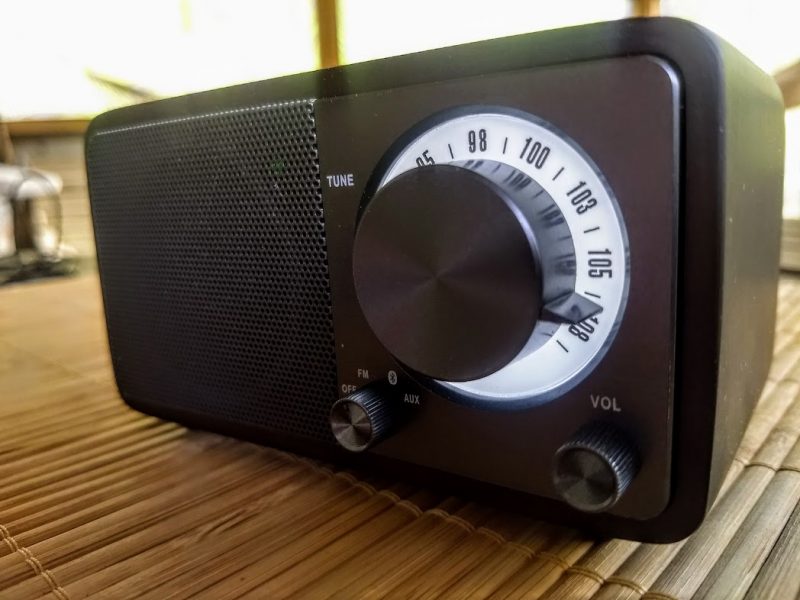
And the WR-7 is as simple to operate as it is to…well, hold in your hand. There’s one knob to turn the radio on and select the source (FM, Bluetooth, or the analog AUX input), and another knob for volume.  Just as these photos show.

The tuning knob is the largest knob and moves fluidly across the dial. The analog dial is white with black frequency markings, and is backlit. From my tests, the FM dial is fairly accurate, although the frequency marking steps are a bit odd: 2 or 3 MHz increments starting at 87.5 and ending at 108 MHz.

There is a green LED lamp hidden behind the speaker grill that acts as the FM signal strength indicator. This LED turns blue when in Bluetooth mode.

Performance

There’s not a lot to report on here and, perhaps, that’s why I halted my other evaluations to fit this one in. This radio needs no owner’s manual (though it does ship with one). All you need is a USB charging cable––yep, the same type that likely charges your mobile phone.  And, of course, it ships with one. It also ships with a lightweight cloth-like carrying bag.

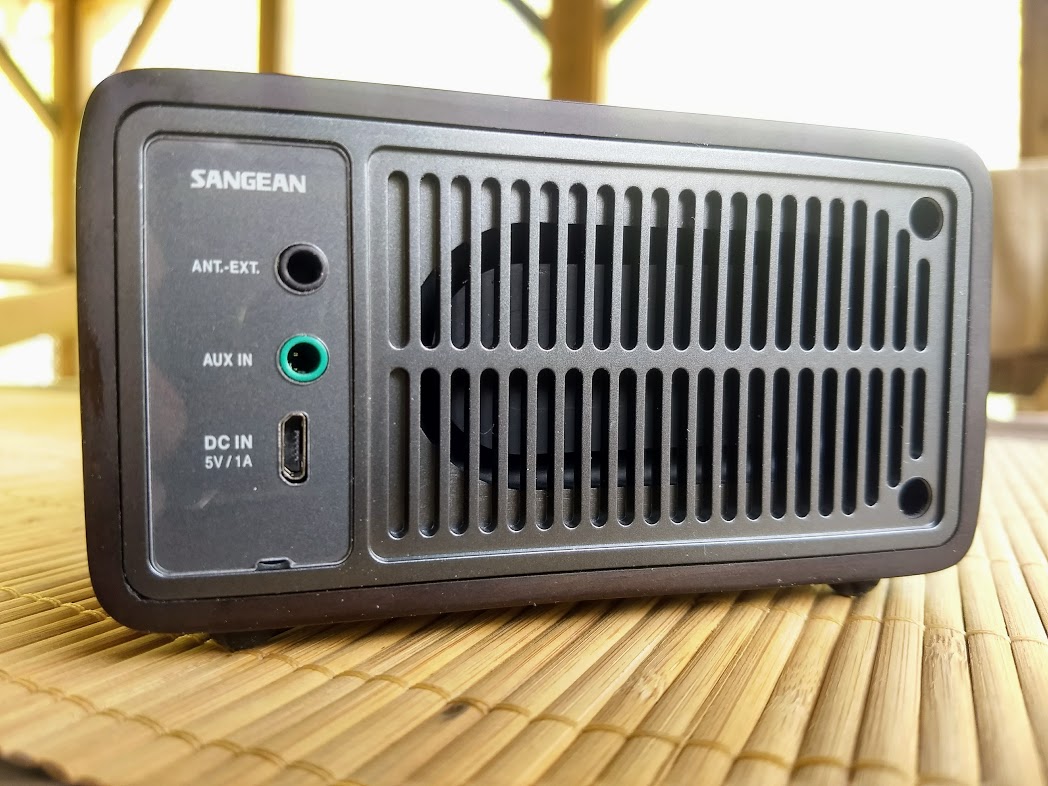
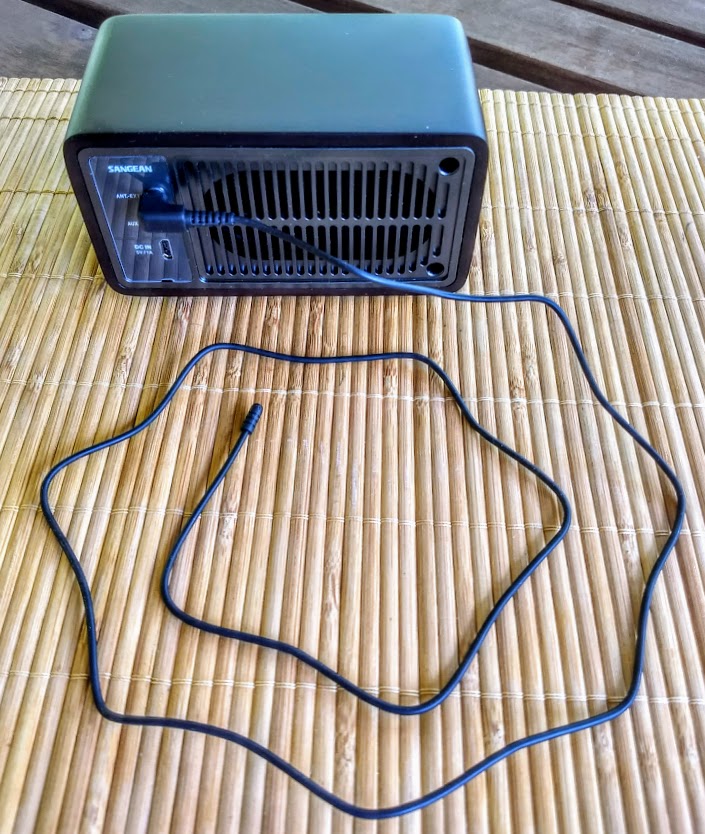
You might have noticed that the WR-7 doesn’t have a telescoping whip antenna.  That’s okay, because it also ships with an external wire antenna (which I actually prefer on this type of mini tabletop radio).

The WR-7 has an internal 2600 mAh Lithium-Ion Battery that provides this tiny rig with up to 36 hours of operation between charges. While I haven’t tested this claim yet, I can tell you that its battery life is incredibly good––especially acknowledging that the audio amplifier must be using quite a bit of the battery.

FM

The WR-7 receives the FM broadcast band from 87.5 to 108 MHz.  While the dial is analog, I know there’s a DSP chip inside because I can hear frequency steps while I tune across the band. There is no muting between frequency steps, so the experience of tuning feels somewhat analog. As I mentioned earlier, the dial layout is a little quirky, but overall the frequency markings are pretty close to accurate. I found my benchmark stations with little difficulty.

In terms of sensitivity, the FM receiver is quite good in the WR-7.  I could receive almost all of my local stations with the external FM antenna connected. Of course, you’ll want to connect the FM wire antenna.

With the external antenna connected, I could receive all of my benchmark distant and weak stations as well on the WR-7. While reception is very good, it isn’t quite as good as on my XHDATA D-808, C. Crane CC Skywave SSB, or Tecsun PL-660––the lock isn’t quite as stable––but I probably could have tweaked this by moving the external wire antenna.

Audio fidelity

Thing is, with even a decent FM signal, you’ll be mighty impressed with the audio fidelity of the WR-7. It easily manages to sound like a radio three to four times its size. Truly, the bass that emanates from this tiny speaker is incomprehensibly deep–only limited by the size of the acoustic chamber.

The sound is rich and room-filling when the volume is turned up.

And speaking of turning up the volume, this is one little radio you’ll probably peg at its highest volume setting from time to time. In fact, I rather wish this radio would allow the volume level to reach even a notch higher…but I expect this was a design choice at Sangean. With the volume turned up all the way, the sound is room-filling, but not distorted. While testing the WR-7, I tuned it to a variety of stations and played a wide range of music through it via Bluetooth: I never noticed bass-heavy songs distorting the audio. I suspect if the volume could be increased even further, the audio would indeed distort a bit.

In short: though you might occasionally turn up the volume on the WR-7 all the way, you’ll be pleased with the results––even across the room!

Bluetooth

I’m not sure what to say about Bluetooth; to me this is a technology that seems to work quite well for wireless connections between mobile devices. The WR-7 has built-in Bluetooth Technology Version 4.1, and it worked flawlessly with all of my mobile devices as well as my shack’s PC.

For a full week, I used the WR-7 as the speaker for my shack computer, and it was most impressive. In fact, it makes for a nice compact external speaker to pair with my SDR applications. AM audio, piped through Bluetooth into the WR-7, is a treat.

For a few nights, I even streamed OTR productions of “Buck Rogers in the 25th Century” with my shack computer, connected to the WR-7 via Bluetooth. The WR-7 was actually in the adjoining room, yet the Bluetooth connection was strong and never dropped the audio. The resulting sound was nothing short of amazing: if you closed your eyes, it almost sounded like a valve set from 1939.

And that’s another thing about the WR-7 worth noting: It’s so small and so simple in design, it fits in anywhere, and isn’t in the least obtrusive, all while filling the room with its warm, rich sound.

Summary

Every radio has its pros and cons. When I begin a review of a radio, I take notes from the very beginning so that I don’t forget some of my initial impressions. Here is the list I formed over the time I’ve spent evaluating the WR-7.

Pros: 

  • Superb, room-filling, rich audio especially considering its very compact package
  • Very good FM sensitivity
  • Internal battery powers it for dozens of hours between charges
  • Easy to recharge via any 5VDC USB source
  • Easy Bluetooth connection and brilliant audio
  • Simple operation

Cons:

  • Volume and selection knobs could be slightly small for some users’ hands
  • Volume range more limited than most, upper volume capped
  • Although it does come with a nice lightweight carrying pouch for traveling, you might wish for a little extra protection in a suitcase or carry-on bag

Radios like the Sangean WR-7 give me hope that consumer electronics might be heading back in what is, in my humble opinion, the right direction: that is, toward quality.

The WR-7 is really a quality piece of kit: it has a solid feel (imparted by solid wood), has an acoustic chamber that produces excellent audio, and you can tell that the FM receiver wasn’t simply an “add-on” feature, as it works quite well.

While you won’t see many radios like this reviewed on the SWLing Post, I’m glad I agreed to take on this one.  It was an fun exercise, and reminded me why I love doing radio reviews: sometimes these digital marvels really surprise me. That, and I’m enough of a radio and consumer electronics geek to bask in the indulgence of pure listening!

Good one, Sangean! Accolades!

Click here to view the Sangean WR-7 on Amazon.com (affiliate link).

Everyday Carry: My EDC packs and radio kit

SWLing Post contributor, Matt, writes:

Thomas: I know you’re a self-proclaimed pack geek and so am I! You published a photo of your EDC pouch in a post last year. Just a teaser really! What is that pouch and I assume you have a larger carry bag as well? Can you provide more details? I’m ever revising and honing my own EDC pack. Any details would be appreciated.

Thanks for your question Matt!  Besides radio, you’re bringing up on one of my favorite topics: packs! You may regret having asked me!

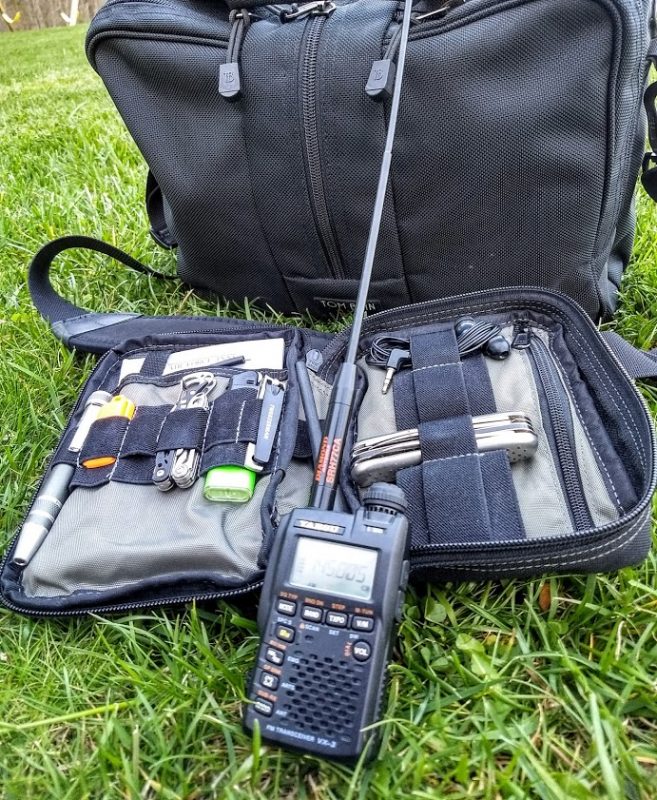
Yesterday evening, I snapped a few photos of my EDC (Everyday Carry) bag and the pouch you’re referring to. Your inquiry is prompting me to consider publishing a more detailed look at my EDC gear–especially since radio is such an important part of it.

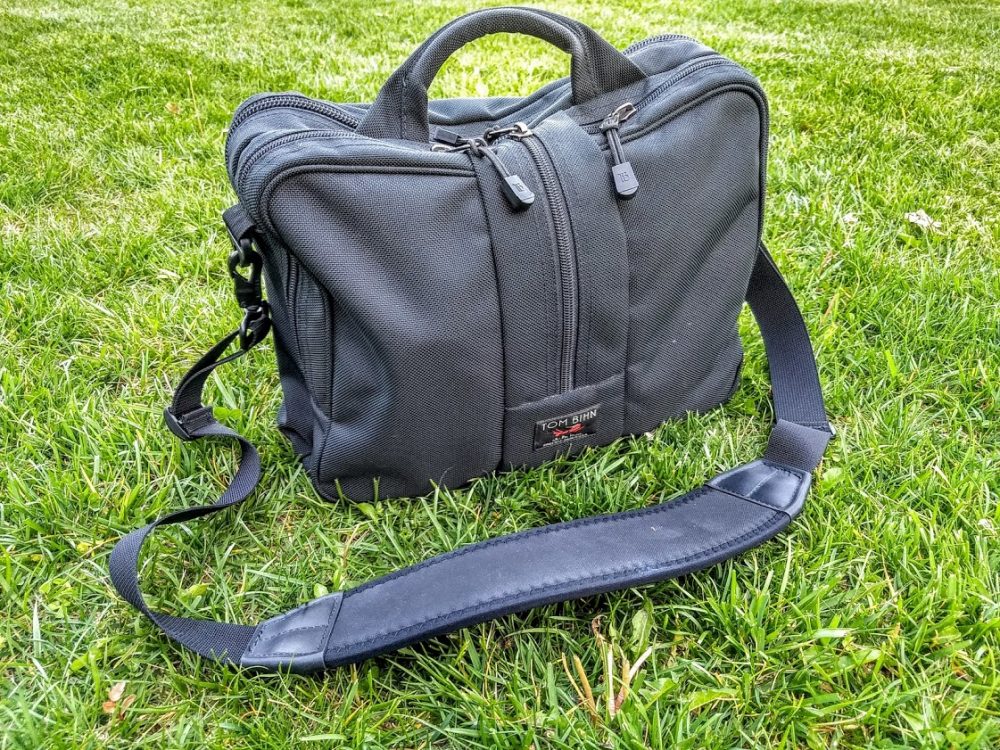
I do carry a larger EDC bag at all times. Typically, this is the Tom Bihn Pilot:

For years, I carried a Timbuk2 messenger bag, but it didn’t have the type of organization I prefer in an EDC bag. My EDC bag must be rugged, water resistant and accommodate my 13″ MacBook Air while still having enough depth to comfortably fit the rest of my gear.

I’ve been using the Tom Bihn Pilot for almost a year and have been very pleased. The Pilot is an investment to be sure, but (like Red Oxx) Tom Bihn construction quality is superb and comes with a lifetime warranty.

It’s amazing how much gear will comfortably fit inside without making the bag bulge. The Pilot also has a dedicated water bottle pocket in the middle of the front panel. While I do carry water, it primarily houses my never-leave-home-without-it Zojirushi Stainless Steel Mug (affiliate link) which is filled with piping hot dark roasted coffee!

I also use the water bottle pocket to hold full-sized handled VHF/UHF radios. It accommodates either my Kenwood TH-F6, Yaesu FT2D, or Anytone AT-D868UV perfectly. Indeed, all of the front pockets will accommodate an HT since the zippers terminate at the top of the bag. Long antennas can easily poke out while the zipper still seals 99% of the opening.

The Pilot has one main compartment that houses my 13″ MacBook Air laptop.

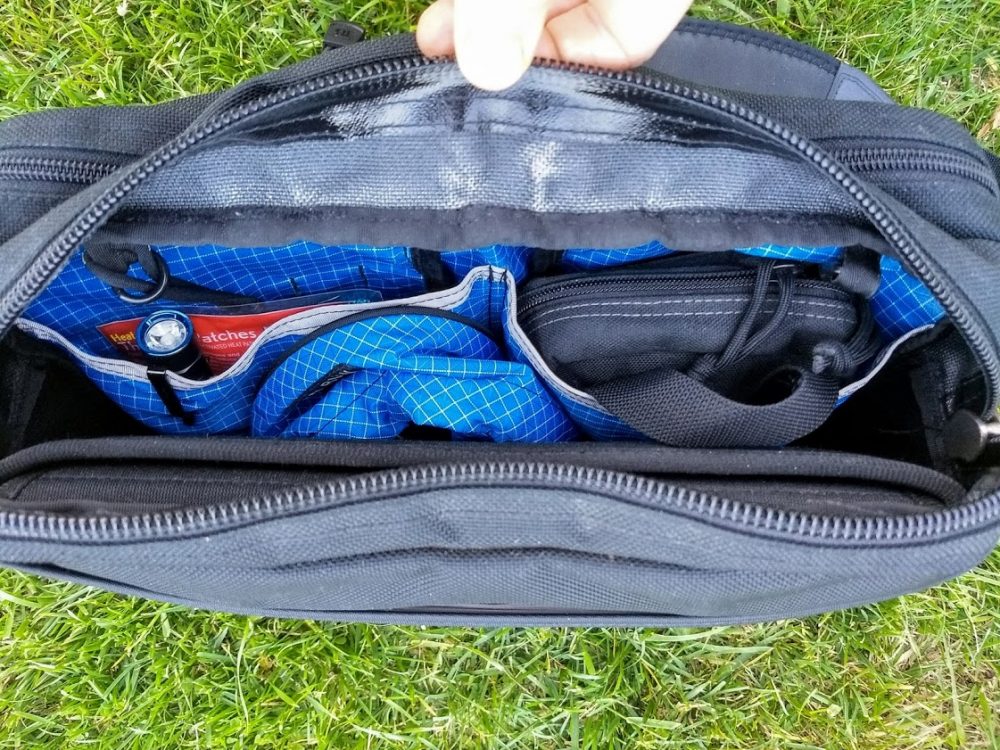
The Pilot laptop compartment is spacious and has two built-in pockets opposite the laptop sleeve: one of these pockets (the one on the right in the photo above) holds my EDC pouch, the other holds first aid supplies, an Olight SR1 flashlight and Nitecore LA10 latern (affiliate link). My laptop is in a TSA-friendly Tom Bihn Cache.

While the Tom Bihn Pilot is the bag I use most days, also use a Red Oxx Micro Manager and–when I need 25 liters of capacity–the Tom Bihn Synapse 25.

I pack most of my EDC gear in pouches, so moving from one bag to another takes me all of one minute.

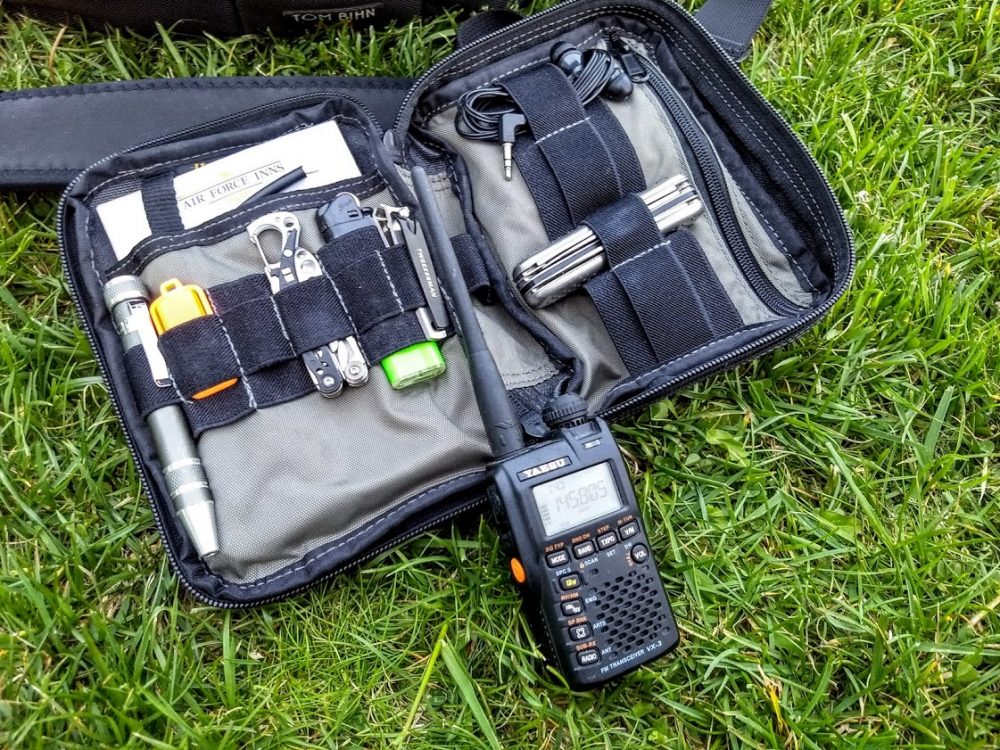
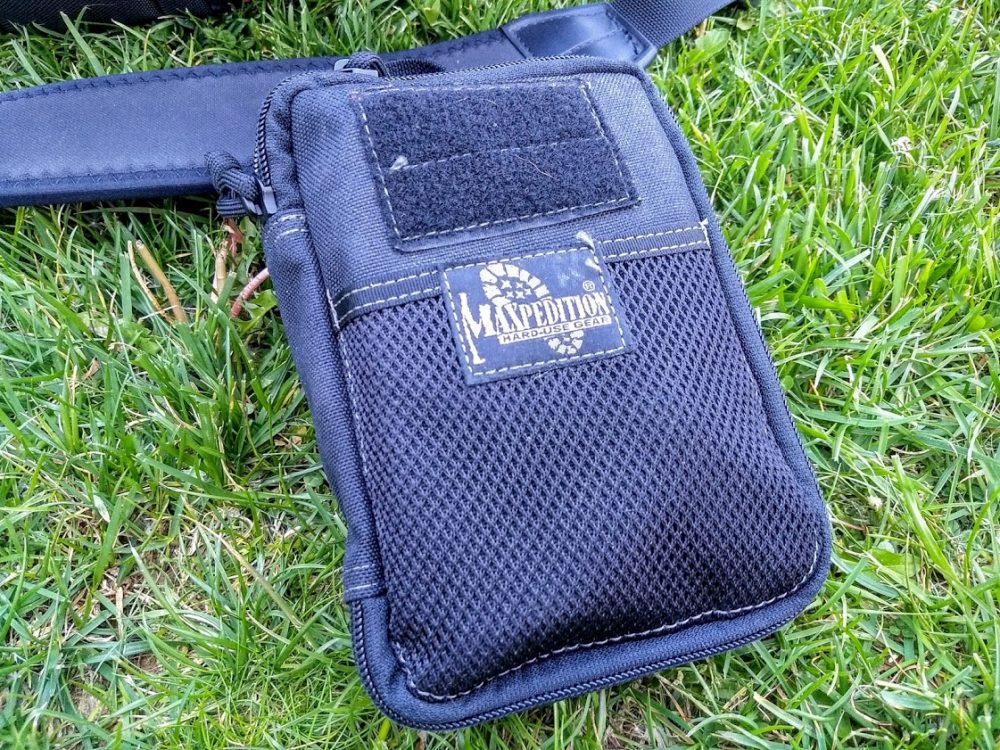
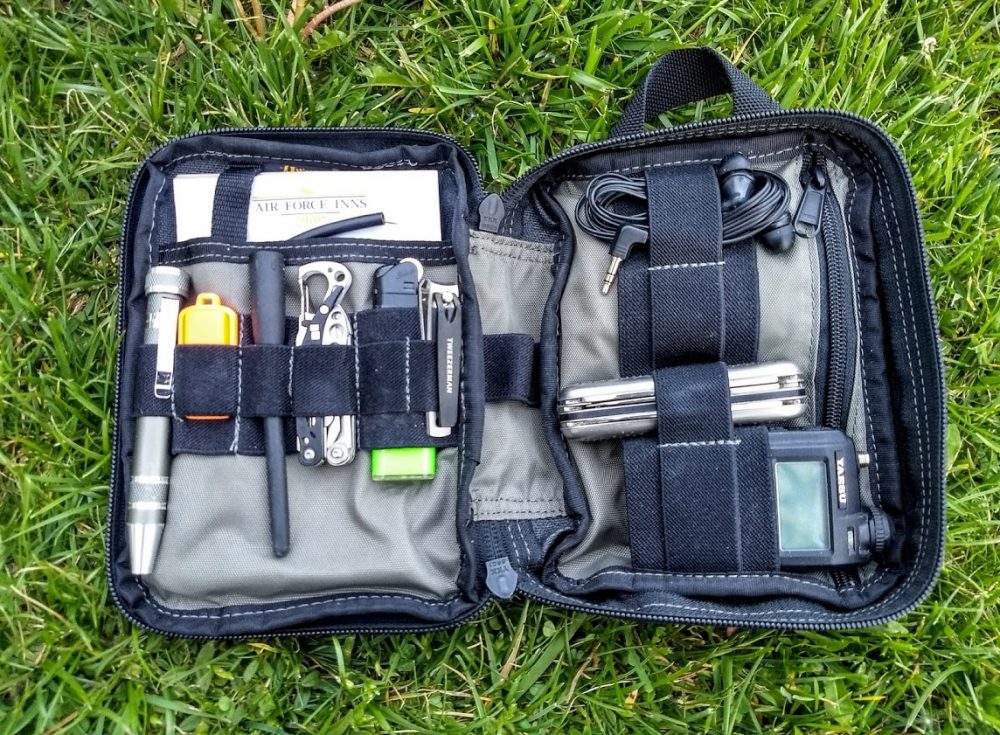
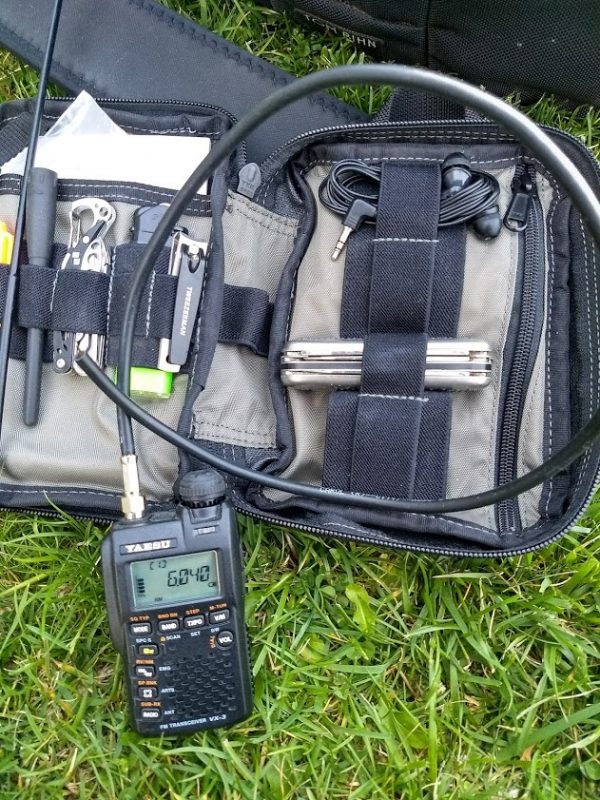
My EDC pouch is the Maxpedition Fatty Pocket Organizer (affiliate link). I love this pouch because it’s incredibly durable, affordable and opens like a clam shell to lay flat.

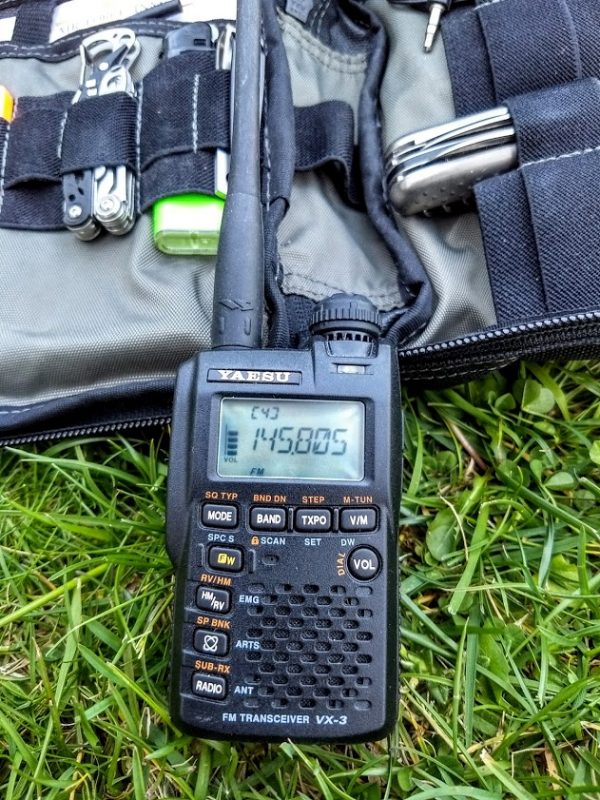
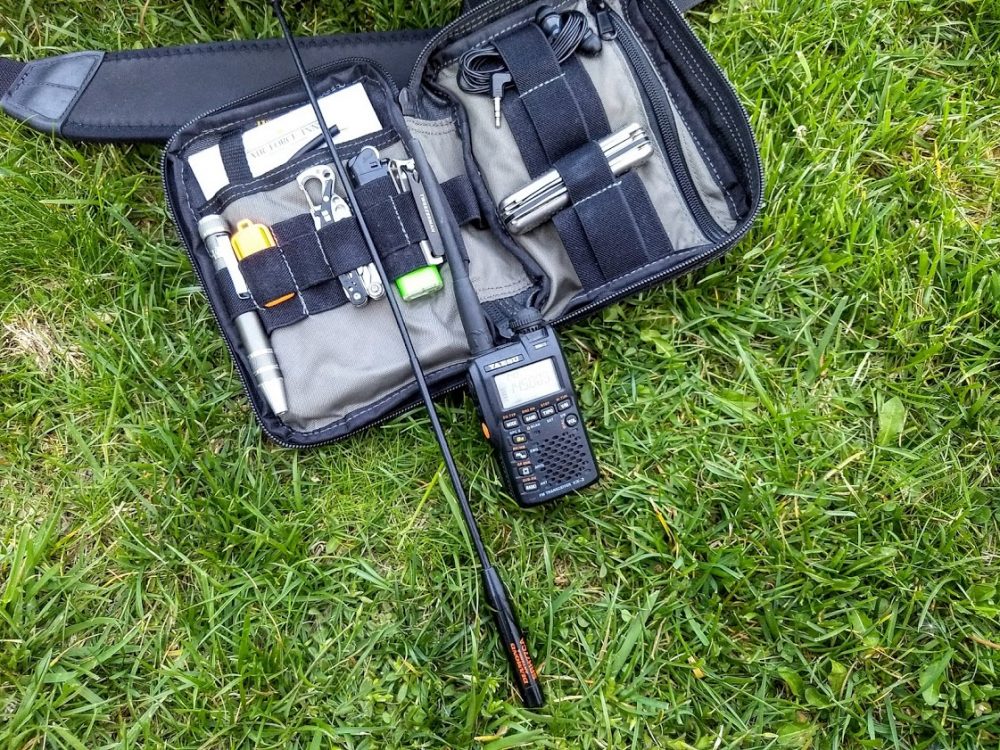
Everything has its place. Not only does it hold my Yaesu VX-3R handheld, but also a multi-function knife, a Leatherman Style PS tool, clippers, earphones, multi-bit screwdriver, USB stick, notepad, spare VX-3R battery, a mini first aid kit, titanium spork, and much more! Someday I’ll pull the whole thing apart and note each item.

Why do I choose the Yaesu VX-3R? First of all, it’s compact. This HT is so small it’ll tuck away anywhere. Not only is it dual band, but it’ll also receive the AM broadcast band (even has a little ferrite bar inside), the shortwave bands, and the FM broadcast band.

The mini rubber duck antenna will work in a pinch, but I also carry a flexible Diamond SRH77CA in the floor of the Tom Bihn Pilot’s main compartment.

When I attach the Diamond antenna, it significantly increases the VX-3R’s capabilities.

While the VX-3R does cover the HF bands, don’t expect amazing performance. Selectivity is poor, but sensitivity is adequate. For a shortwave antenna, I carry a short length of coax: one end is terminated with an SMA connector, the other has the center conductor exposed.

I also carry a short alligator clip cable which I clip to the exposed center conductor and then to a length of wire. The end result is a very cheap, flexible and effective portable HF antenna!

Someday, I’ll take everything out of my EDC pack, inventory the contents and publish a post about it. Somehow, that’ll please my inner pack geek! I’m overdue a review of the Tom Bihn PIlot and Synapse 25.

Post readers: Do you have an EDC pack built around a radio? Please comment and include links to your favorite gear!