Category Archives: Radios

An SWL’s review of the Icom IC-R6 Sport 16 wideband handheld receiver

The following review originally appeared in the SEptember 2016 issue of The Spectrum Monitor magazine.
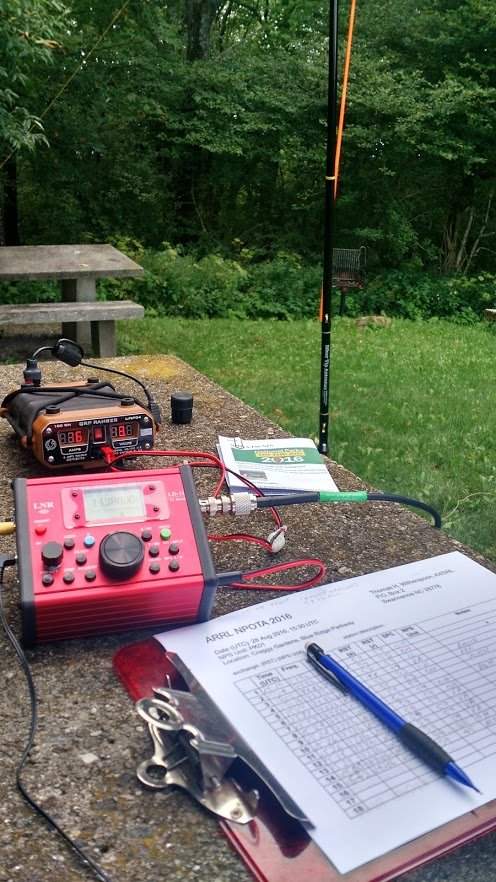

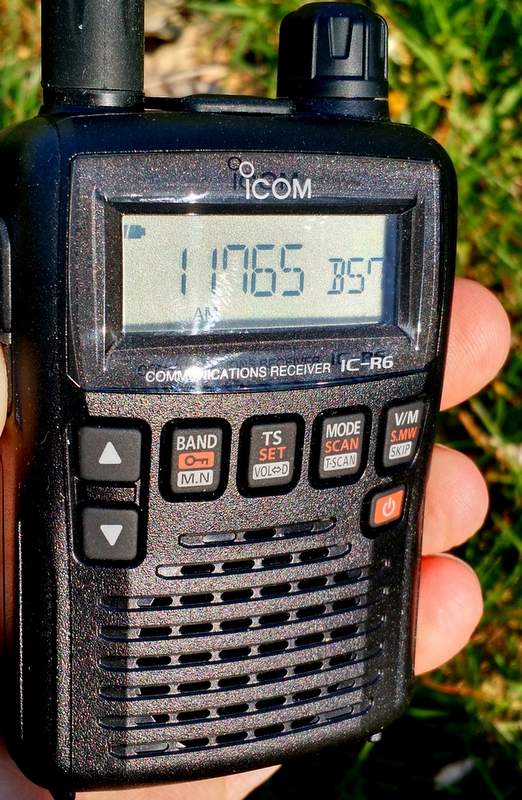
icom-ic-r6-angle

Over the past year, I’ve received a number of inquiries from readers who are considering purchasing a handheld wideband receiver. This is a market I’ve never truly explored because, to be honest, I’m partial to the HF part of the spectrum, and wideband receivers have always seemed more akin scanners than to shortwave receivers.

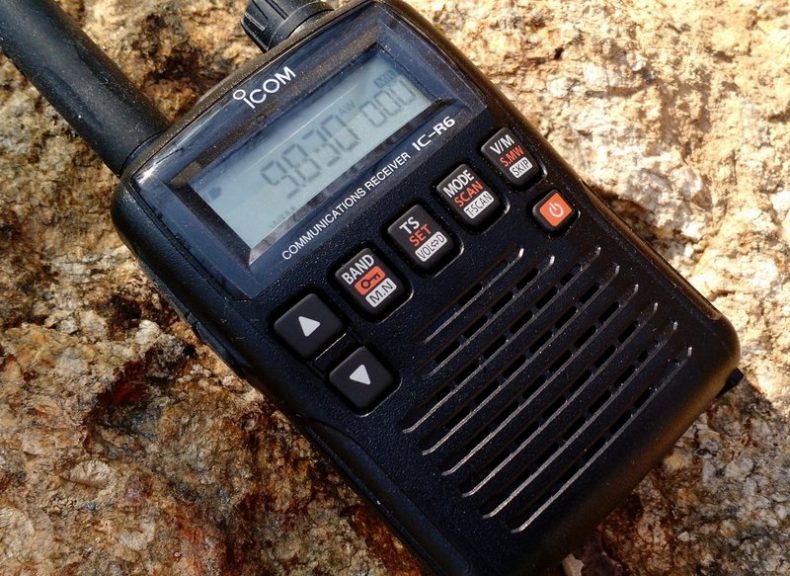
But lately, readers have specifically asked about the Icom IC-R6, a compact handheld receiver that covers from 100 kHz to 1309.995 MHz. What makes the IC-R6 appealing is that––at just $175 US––it is one of the least expensive wideband handhelds/scanners on the market that not only covers the shortwave bands, but also the AM broadcast, Longwave, FM broadcast, & NOAA weather frequencies.

Over the years I’ve read numerous reviews of the IC-R6 and other wideband receivers. Reviewers of this handheld receivers typically gloss over shortwave and mediumwave reception, and for good reason––it’s generally known that you just can’t have the best of both worlds in the sub-$300 price range. This makes sense, as there are invariably performance compromises when you pack wideband reception into such a tiny package: manufacturers usually put a performance emphasis on the VHF/UHF bands rather than on HF or mediumwave.

Still, I was curious enough about the IC-R6 to want to put it through its paces on shortwave and mediumwave, so I contacted Icom, who generously sent me an IC-R6 on extended loan for the purpose of this review

Usability/Ergonomics

Here I need to throw out a disclaimer: I’m not a fan of handheld radio (Handy Talky) ergonomics.

The IC-R6, like most other tiny handhelds, has a spartan array of buttons, all of which have multiple functions. Like its compact competitors, it also lacks a direct entry keypad-––after all, there’s simply no room for a keypad, and if there was one, it would obviously be too small to use.

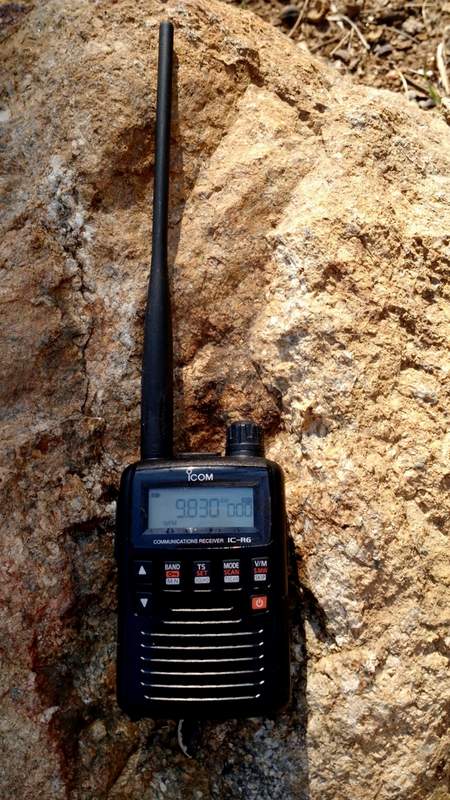
icom-ic-r6-frequency

That being said, however, I must say that Icom has done a surprisingly good job of making the IC-R6 usable in the field.

If, like me, you’re the type of person who typically ignores the owner’s manual when you first receive a new radio, the IC-R6 may prove frustrating. Fortunately, the Icom user manual is superb, and well worth the read. It’s very well written, and takes you through each function step by step. The 80-page manual is entirely in English (the US version, at least) and even has a cut-out pocket guide in the end. Brilliant!

Once I spent a few minutes reading through the IC-R6 manual’s outline of its basic functions, I found most operations are simple and relatively easy to remember.

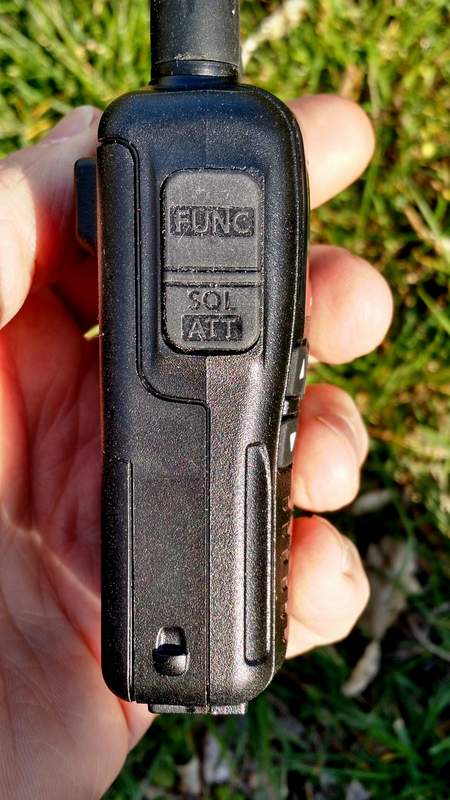
icom-ic-r6-leftside

What makes each operation handy is that the Function key––which helps toggle the four multi-function buttons––is located where the PTT (push to talk) button would be on an amateur handheld transceiver. It’s actually a great location for the button because it allows one hand to hold the radio and push the function button, permitting the other hand to push a front panel button. Though I initially felt I was keying up to “transmit” on an HT, it soon became apparent that this is a very logical key placement.

Tuning

Tuning with the IC-R6 is relatively easy and straightforward.

Simply select a band with the BAND button. Next, adjust the volume with the UP/DOWN arrow buttons, and the squelch (if needed) by holding the squelch button and turning the tuning knob. Then you may use the tuning knob to tune up and down the band.

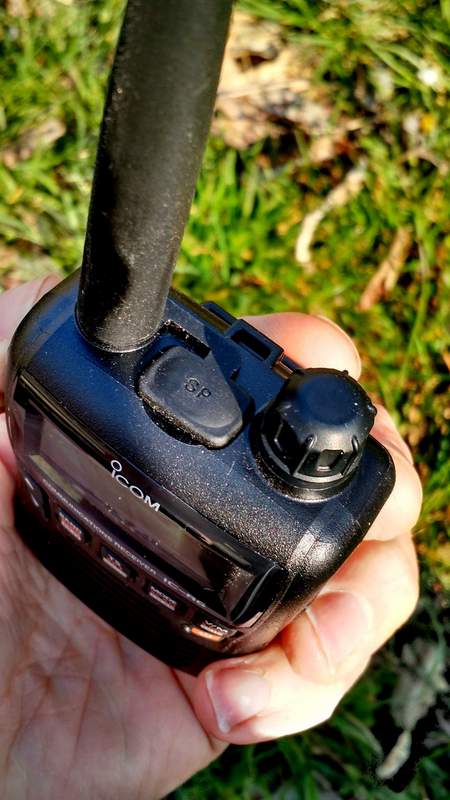
icom-ic-r6-top

If you want to quickly skip to another part of the bands, hold down the function key while turning the tuning knob, and the R6 will tune in 1 MHz steps. I’ve found that this helps to move across the spectrum quite quickly and compensates for the lack of a direct entry keypad.

You can also easily change the tuning steps by pressing the TS button and using the tuning knob to cycle through selections (a total of fourteen possible step selections are available between 5 kHz and 100 kHz).

Over the course of a few months of using the IC-R6, I’ve learned a couple of methods to adapt to its lack of a direct-frequency entry keypad:

  • using the 1 MHz tuning steps, as mentioned above
  • loading the memory channels with band edges and your favorite frequencies (with 1300+ memory slots, there are many ways to manage your tuning)

Mediumwave/AM Broadcast Band Performance

Surprisingly, the IC-R6 has a tiny internal ferrite bar antenna for mediumwave/AM broadcast band reception. This is a welcome feature because there’s no need to remove the supplied rubber-duck antenna to connect an external antenna for broadcast listening.

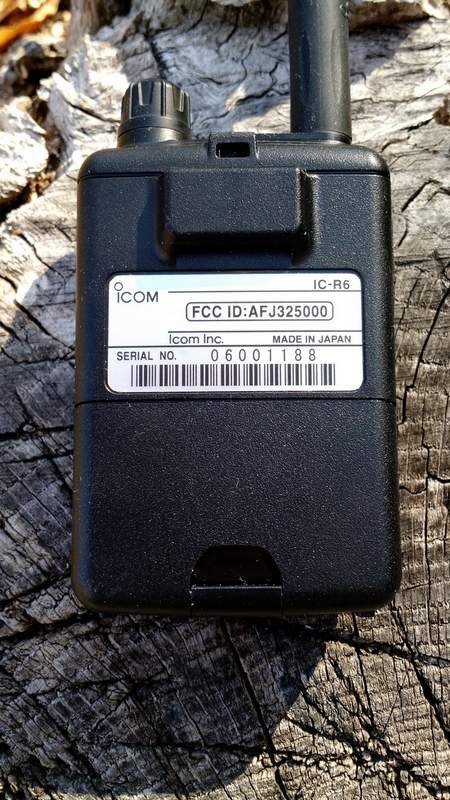
icom-ic-r6-back

In terms of AM performance, I was happy with the IC-R6. I’m able to receive all of my local AM broadcasters with decent signal strength. I’m even able to reliably receive one 25-mile-distant daytime broadcaster; this truly surprised me, especially since the internal antenna must be minuscule.

Is the IC-R6 a good choice for a mediumwave DXer? Unfortunately, no. The AGC struggles with weak nighttime conditions, and frankly, with such a small ferrite bar antenna, nulling capabilities are minimal. If you’re a MW DXer, I would suggest carrying a small ultralight portable along with the IC-R6.

The IC-R6 also covers the longwave bands, but I would never use it even for casual longwave listening as the tuning steps are limited to 5 kHz increments.

Still: to have a respectable little AM receiver in a handheld scanner––? It’s great!

Shortwave Performance: Sensitivity

As I said, most reviewers gloss over shortwave reception on handhelds. I thought I’d put the IC-R6 through a more thorough test.

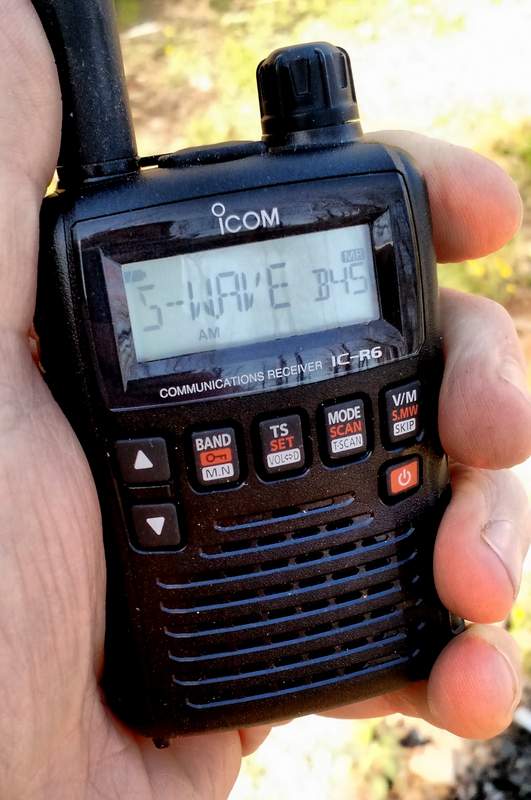
icom-ic-r6-in-hand

Note that, being fully aware of its limitations, I never used the stock rubber-duck antenna to test shortwave reception; instead, I used a long piece of thin co-ax attached to five- and ten-foot sections of wire. I tried longer and shorter pieces of wire, as well, but found that 5-10’ seemed to hit the sweet spot in terms of sensitivity.

To be honest, I had fairly low expectations of the IC-R6. I knew that the shortwave/HF bands are truly just an added feature on this rig, and realized that the R6 is more akin to a scanner rather than a shortwave radio. But in terms of sensitivity, I found I was rather impressed with the IC-R6.

The first morning I tested shortwave reception, propagation was, at best, mediocre. Yet I was able to copy WWV on 10 and 15 MHz without much trouble. I could receive all of the strong North American private broadcasters, like WTWW, WRMI and, of course, most frequencies occupied by Radio Havana Cuba and China Radio International––all of these are broadcasters that my shortwave portables can readily receive here in my region. Moreover, in the mornings, I’ve also been able to receive one of my staple shortwave broadcasters on the R6: Radio Australia. It’s nice to imagine that if I were camping, the little R6 could serve up my morning dose of news from Down Under.

All in all, I’m fairly pleased––and surprised!––by the IC-R6’s sensitivity.

Here’s an example of reception when tuned to WRMI, a strong station in my region. [Fun side note: I had no idea that, as I was recording, I would hear my buddies Mark Fahey and Jeff White on the air!]

Shortwave Performance: Selectivity

On the flip side, the IC-R6’s selectivity is unfortunately quite poor. I anticipated this.

Almost any of the strong signals I receive can be heard with equal fidelity when tuned off-frequency 5 kHz to either side of the carrier. You can pretty much forget discerning between two adjacent signals that are only spaced 5-10 kHz apart.

And yet while this would be a deal-breaker for me on a dedicated shortwave portable, this wouldn’t stop me from purchasing the IC-R6. Since we don’t have the crowded shortwave landscape we used to, selectivity is much less of an issue these days.

So, for some casual SWLing while say, backpacking? The IC-R6 does the trick!

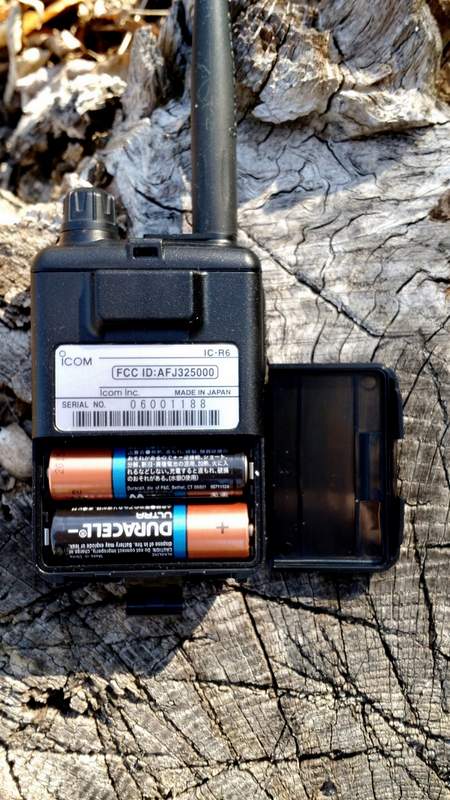
The IC-R6 runs efficiently on a set of two standard AA cells.

The IC-R6 runs efficiently on a set of two standard AA cells.

I should note here that I never connected the IC-R6 to any of my large outdoor antennas. First of all, I didn’t want to risk damaging the front end of the receiver (especially since this is a loaner), and secondly, I knew the IC-R6’s poor selectivity would only be exacerbated if gain were significantly increased. I also want to caution readers from doing this, as I suspect the IC-R6’s front end will seriously overload on a large antenna.

Auto-Memory Write Function

The IC-R6 has a very cool scanning function similar to the ETM auto-scan on Tecsun portables, known as the “auto-memory write function.” Here’s how it works:

  1. Simply select the band you wish to scan.
  2. Set squelch level.
  3. Select the scanning range. There are several options here:
  4. Full scan, which scans the entire frequency range of the IC-R6 (you’ll want to grab a cuppa coffee, as this will take a while)
  5. Selected Band Scan, which only scans all of the frequencies with the band’s edges
  6. Programmed Scan, which scans between two user-programmed frequencies
  7. Finally, press the SCAN/MODE button to start the scan and the V/M button to engage the auto-memory write function..

The radio will then scan according to your selected scan mode, pausing for an interval of about five seconds on each signal it finds, and writing it to one of the auto-memory write channel groups (000-999) for your convenient access.

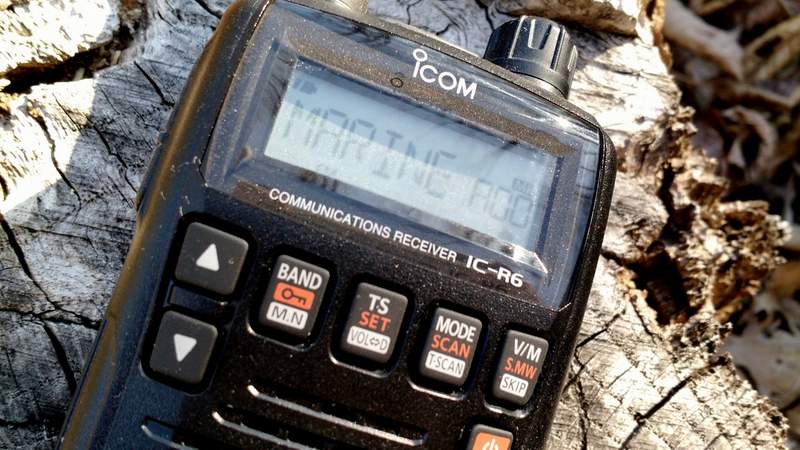
icom-ic-r6-display


To recall the auto-memories once scanning ends, simply press the V/M button to enter the memory mode, select the band with the BAND button, then use the tuning knob to scan through the signal catches.

Once you’ve experimented with this process a couple of times, it becomes second nature, and is very handy.

One negative: since the IC-R6’s HF selectivity is lacking, you could possibly get double or triple auto-memory writes for really strong broadcasters.

Programming software and cable

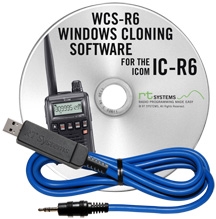
I’ll be frank here: if you plan to purchase an IC-R6 and load it with memory channels, you’ll be well-served to purchase programming software and a cable as well. Entering frequencies by hand is tedious, especially if you want alpha-numeric labels.

wcsr6-usb-2tI’m very partial to the cables and software offered by RT Systems. Besides having the most user-friendly programming software I’ve personally used, RT Systems also offers consistency in terms of set-up and application user-interface across their whole product line. For example, I own a Yaesu VX-3R which I’ve programmed with the RT Systems software; when I want to import all of my VX-3R frequencies into the IC-R6, it’s a simple process with the aid of RT Systems software.
RT Systems supports almost all programmable amateur radio transceivers and receivers on the market, which means that it makes for a great cross-manufacturer link between all of your gear.

Summary

Invariably, all radios have strengths and weaknesses; here’s a list of my notes from the moment I put the Icom IC-R6 on the air:

Pros:

  • Very compact, handy size with respectable ergonomics
  • Scanning
    • Frequency/Memory scanning very fast
    • Quickly scans AM/SW/FM/VHF/UHF bands
  • Acceptable shortwave sensitivity for most regionally-strong broadcasters (see selectivity con)
  • Great Auto Squelch function that seems to be effective even on the HF bands
  • Attenuation setting which helps the front end from overloading
  • Wide array of scanning options
  • Long operating time with AA batteries

Cons:

  • User interface
    • Very difficult programming without external software/programming cable
    • No keypad for frequency direct entry
  • Audio, via built-in speaker, is tinny; headphones help, but audio output is mono
  • Almost non-existent shortwave selectivity (see sensitivity pro)
  • Tuning steps are limited to 5 kHz increments, which may be insufficient on SW/MW and LW
  • No SSB mode (though no other wideband receiver in the under-$300 price range offers SSB)

Conclusion

icom-ic-r6-full

The Icom IC-R6 is one little powerhouse receiver with many, many listening possibilities. With this one radio, you can listen to everything from local VHF/UHF repeaters, to local law enforcement and emergency services, aviation frequencies, NOAA weather radio, the FM broadcast band, AM broadcast band––and, yes, even shortwave.

If you’re looking for an all-in-one receiver to take on hikes, to put in your 72-hour emergency (BOB) bag, to carry in your briefcase, or even to simply carry in your pocket, the IC-R6 is a great choice. Remember, if you do invest in one, you should also invest in programming cable and software to help you along.

This review focuses on broadcast listening with the IC-R6. While I didn’t cover traditional scanner functionality, I should note that the IC-R6 is not a trunking scanner. If you live in one of the many cities, counties or even even entire states/provinces in the U.S. and Canada that employ “trunking” radio systems for public safety communications, you’ll need a different receiver for this purpose.

Additionally, if you’re looking for a top-notch shortwave portable, you’ll want to buy a dedicated shortwave receiver, instead: they’re built with only HF reception in mind and will cost you much less, for better overall performance and more modes (SSB).

Of course, the IC-R6 is so modestly-sized that you could always carry it plus an inexpensive compact shortwave receiver (like the Tecsun PL-310ET, or the PL-380), and then…well, you’ll suddenly have the best of both worlds!

The Icom IC-R6 is available via Universal Radio $174.95 US with rebate through 12/31/16.

Guest Post: More Anti-Noise Ideas

In a previous guest post, SWLing Post contributor TomL, shared his “Evolving, Morphing, SW Listening Station” where he detailed the many ways he’s trying to fight heavy radio interference at his listening post. The following post is TomL’s update:


More Anti-Noise Ideas

(Continuing the hunt for better reception in a foul RFI environment)

by TomL

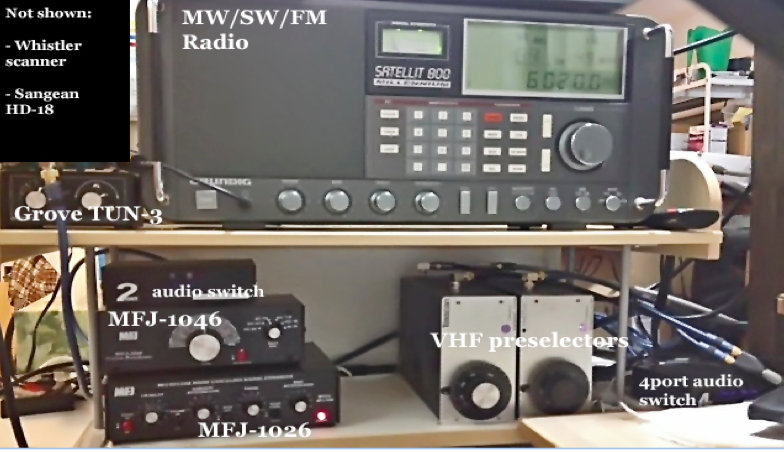
toml-radios

I have made the following changes:

  • Created a prototype mini-loop based on a crossed-parallel idea from VE1ZAC (Jeff).
  • Added a balun from LNR Precision (Parfitt’s EF-SWL) in an experimental configuration.
  • Added to the balun, an outdoor amplifier – Wellbrook ALA-100M.
  • Added a noise canceling unit (MFJ-1026).
  • Added 2 preselectors, an old Grove TUN-3 connected to the main loop feed and an MFJ-1046 connected to the ground connection of the balun. Both feeds go into the MFJ-1026.
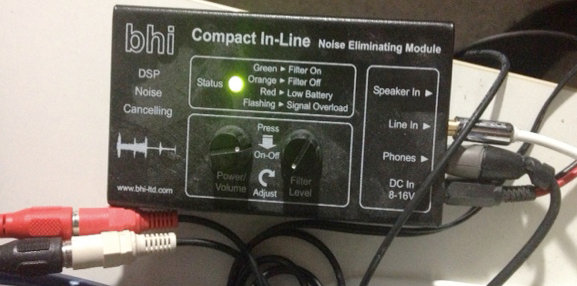
  • Added BHI Compact In-Line DSP filter and two switch boxes to cut it in/out as needed.
  • Added a medium wave noise canceling unit that I have not figured out how to use yet. (Quantum Phaser). The MFJ unit does not work on medium wave without modification.
  • Purchased from eBay a used Grundig Satellit 800, a somewhat more robust fixed-station receiver to replace my aging Sony ICF-2010.
  • Other non-related (not shown): Whistler digital scanner + UHF over-the-air TV + FM broadcasts + an AM/FM HD digital radio + high pass filters from MiniCircuits.com – (audio from all these sources is passed to an existing high fidelity stereo power amp and NHT Super One speakers on the computer desk for near-field monitoring). Associated antennas are also hidden on the outside deck (shhhhh!).
  • Large charge card balance!!

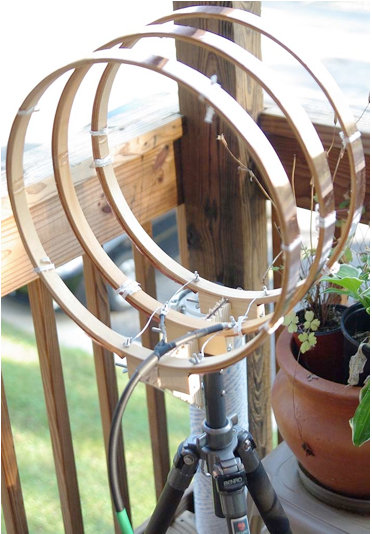
So, here are some pics for the crossed-parallel loop. VE1ZAC web site has all the references if you want to explore further or google him. Mine is purely a prototype and not finished. And should eventually be placed on a rotor (but how to keep my Nazi-like condo association from finding out?!?!?!?).

loops

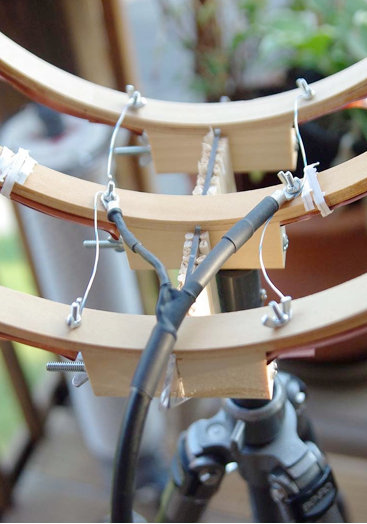
It is three 14 inch quilters hoops from Joann Stores plus some 1-inch copper strips cut from a small 2 meter roll of thin copper from eBay. Then, it is wired in parallel with silver-plated aviation wire on each side with a feed in the middle. Not an optimal placement of the feed, (should go straight down along the pipe). Will fix things up whenever I get some more time.

loops-closeup

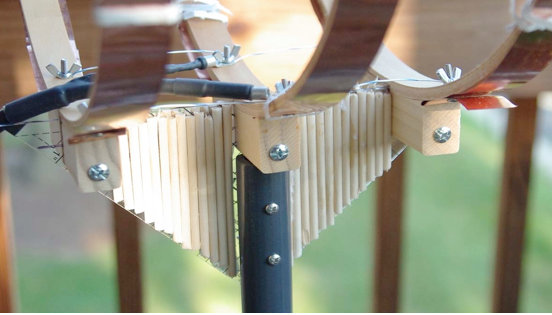
loops-closeup2
Seems to be an efficient way to prototype small loops. It is now mounted on a short ¾” inside diameter PVC pipe into a cheap plastic sand-filled deck-umbrella stand. Loops are light and somewhat flimsy, so I mounted the three loops on a plastic triangle ruler and dowel sticks glued to the sides for some extra strength. Good enough for now.

The EF-SWL balun is also in an experimental configuration. Since I read somewhere that loop antennas have a very low impedance at the feed point (like, 10 ohms or lower), I thought I might try a balun that is meant to lower the impedance and mount it backwards. I don’t have a picture of it but the SO-239 output is facing the loop and the screw terminals are facing the direction of the radio. My feeble brain thinks since it is a passive device of coils on ferrite, it should work bidirectionally for receive only applications like this. It seems to work but I have the excuse that I really don’t know what I am doing! 🙂

bhi

BHI unit in action.

The BHI DSP filter is useful in some circumstances but I find it fatiguing to listen to. The audio from the Sattelit 800 is so nice, I mostly like it without the DSP. The DSP narrows the bandwidth significantly, somewhere around 4 kHz or less from my hearing. I like that the Grundig has two tone controls. And it also has a stable SSB and on very strong signals with clear audio, I like to listen with SSB lower or upper sideband. But the DSP is useful at times for hash-like noisy signals; it is not quite as good on buzzing noise and I wish the Satellit 800 had a noise blanker, but that would have been a more costly purchase, like a Drake R8A.

So, in a nutshell, I have a discovery about noise here: it is all around me and ubiquitous, like the air I breathe!

I find it hard to null and also worry about peaking a station signal at the same time. However, I do have a lower noise floor with the experimental loop sitting outdoors, especially on medium wave (the Wellbrook amp + loop works great on the lower frequencies – am able to get eight different medium wave stations carrying Major League Baseball games at night – it would be nine to get WFAN for the New York Mets but the local Chicago Cubs station covers the adjacent frequency with horrible digital hash! ***Bleeping*** digital junk!).

Also, the signal level is noticeably lower using the loop. Then, add in the effect of the MFJ Noise Canceling unit, the usable signal gets even weaker.

The bottom line is, I can now finally enjoy listening to many SW broadcasts, BUT only the strongest signals. Anything else is still hopelessly lost in the noise. So, gains are limited.

On the other hand, and something else I learned by doing is that, any 1 or 2 dB signal/noise ratio improvement will help with the final audio output in the end product. Using low-noise amps, loops, noise canceler, preselectors, grounded connections, ground isolators at the input of every receiver, high quality stereo amplifier and speakers, tone controls, SSB vs. AM Sync, weird antenna configurations, etc, etc. It all helps in the end to some degree.

Tinkering is an art that involves a lot of thinking/doing iterations! And high quality parts must be used all along the chain or it could degrade the signal.

Below are some audio samples, not very well recorded, but can give some idea of the incremental improvement with each enhancement (turn up the volume). NOTE: other people may get better or worse results depending upon individual situations, type of antennas used, etc, etc.

Recording 1: R. Marti. First 10 seconds an indoor antenna with no noise reduction, second 10 seconds the outdoor loop without the MFJ-1026, the third 10 seconds with the MFJ-1026, then switched off and on to hear the difference.

Recording 2: R. Marti. MFJ -1026 is ON. Last 15 seconds is SSB, very thin sounding. Really only good for strongest signals. I liked the AM Sync better (Satellit 800 is really a Drake SW8 in disguise with a quality AM Sync). But, SSB can sound excellent with very clear voices with a steady and strong signal (The Satellit 800 does NOT have IF-shift or a BFO to fine tune an SSB reception, so the station must be exactly transmitting on the kHz mark, which most are nowadays).

Recording 3: R. Marti. MFJ-1026 is ON. Last 20 seconds you hear me switch in the two audio switches and the BHI DSP is on its lowest setting. Narrower and clearer with some reduction of background noise. I find I only like going up to about 4 on the DSP dial, after that the audio fidelity starts getting more choppy with digital artifacts that sound like dripping water. I tend to like higher fidelity. One nice thing about the BHI DSP is a faux-stereo that helps a little with voice intelligibility by helping the brain naturally filter the noise. Faux-stereo is ON even when the noise reduction circuit is manually turned off (power must be on and bandwidth still sounds narrowed).

Recording 4: R. Nacional Brazilia. First without MFJ-1026, then ON, then OFF, then ON, then with the BHI kicked for the last 20 seconds.

Recording 5: Greece. Switching the MFJ-1026 on and off every 5 seconds. In this particular case, the signal was weak and fading a lot. The MFJ OFF was also weaker than with it turned ON. That is interesting behavior, usually it is opposite. It pays to play with the settings a little. At other times, and less frequently, the MFJ unit turned OFF sometimes sounds better than with it ON and tuned for less noise. Go figure!

After all the tweaking is done, and I cannot get any more performance out of this, I will probably have to move to a nice, quiet neighborhood and setup a nice antenna farm!!

In the meantime, I do enjoy listening to the stronger stations from North America, Cuba, Brazil, Europe, and Australia with less noise than before.

73’s

TomL from NOIZEY Illinoiz


Once again, Tom, thanks for sharing your RFI elimination journey!

I love how you take on this noisy problem by experimenting and seeing it more as a challenge than an obstacle to enjoying your hobby.  Great job! 

Video: Five shortwave stations in two minutes

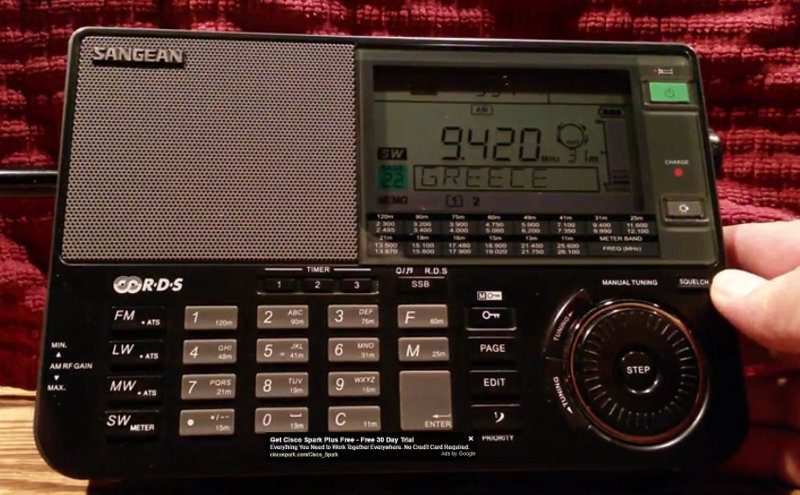
danh-sangean-ats-909xMany thanks to SWLing Post contributor, DanH, who shares the following feedback.

Note that he sent this to me about two weeks ago, but my life has been so busy the past few weeks, I’m still catching up on email. Thanks to everyone for understanding!

DanH writes:

We all know how hard it is to get good SW reception without a decent antenna at this point in the 11-year solar cycle. But, the past couple of days have offered good propagation conditions for reception here in Northern California. Here is a video I made this evening during the 8:00 p.m. hour, 10-11-2016 PDT (0300 hour, 10-12-2016 UTC). It isn’t all that bad. Here are five stations in under two minutes (but really, WWV doesn’t count). There is plenty to listen to. Voice of Greece is in the Greek language with great music. The other stations are broadcast in the English language.

Click here to view on YouTube.

Thank you for sharing, Dan! Wow–RNZI is quite a strong catch at your location! It’s so nice when conditions improve and that elusive DX pops out of the niose. At this point in the solar cycle, we just take what we can get!

Only last night, I was amazed with the Voice of Greece here on the east coast. Even as propagation conditions deteriorated, VOG held on at S9 +20db via my Elecraft KX3.

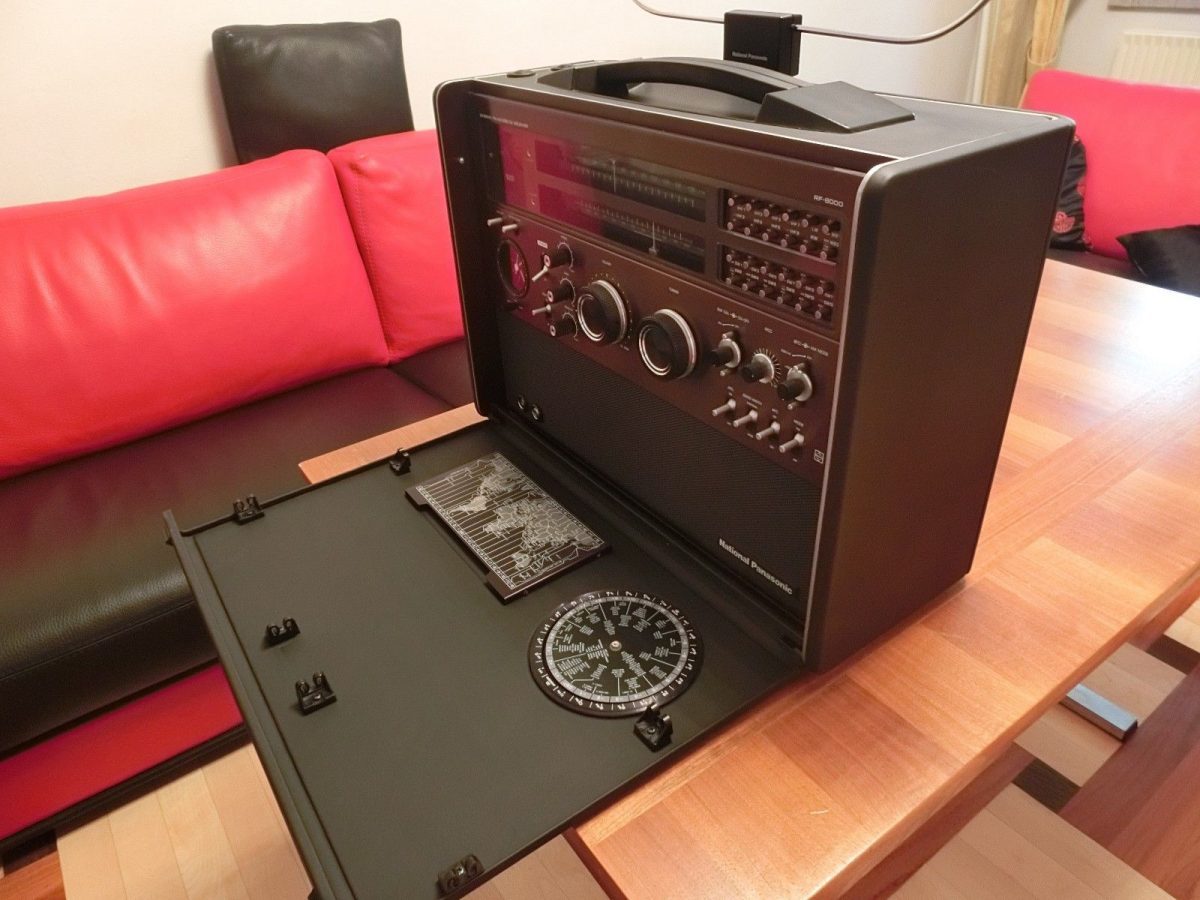
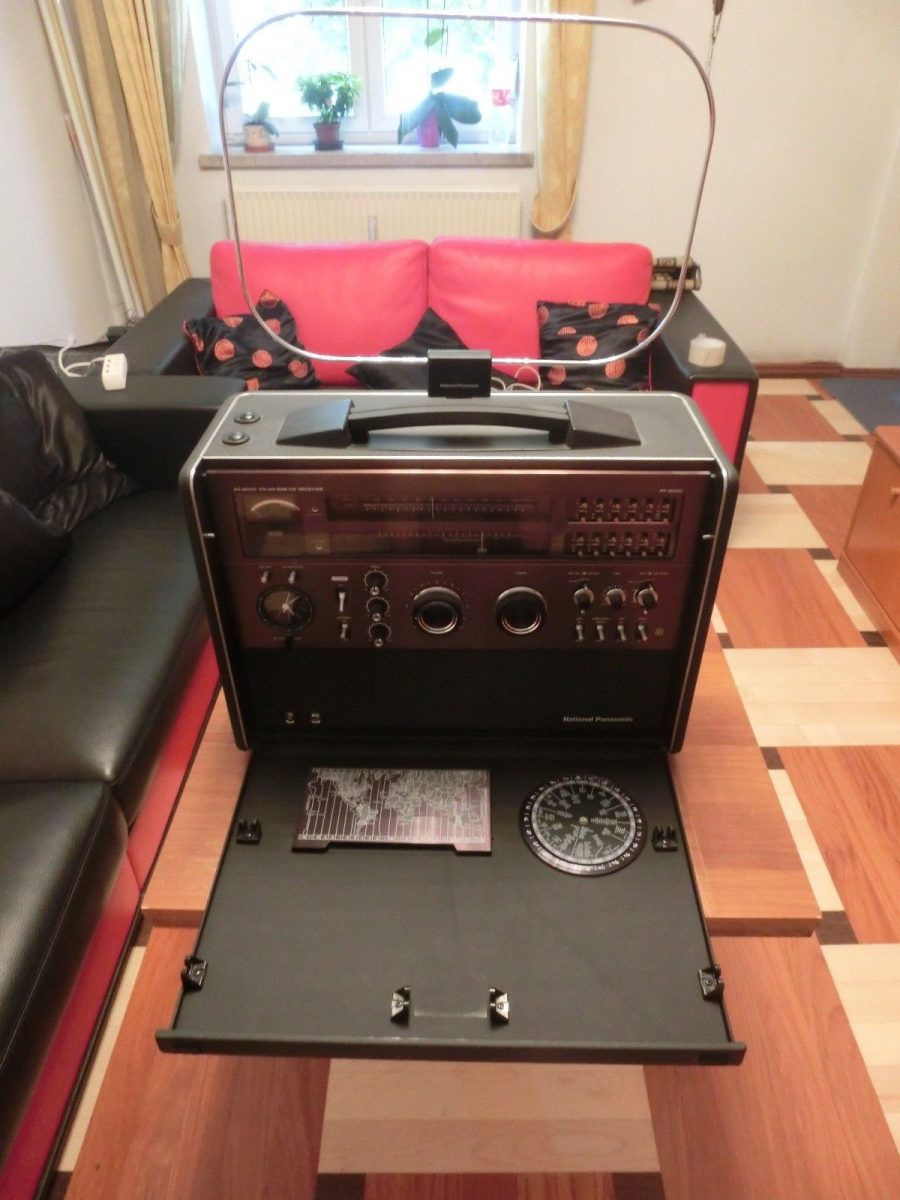
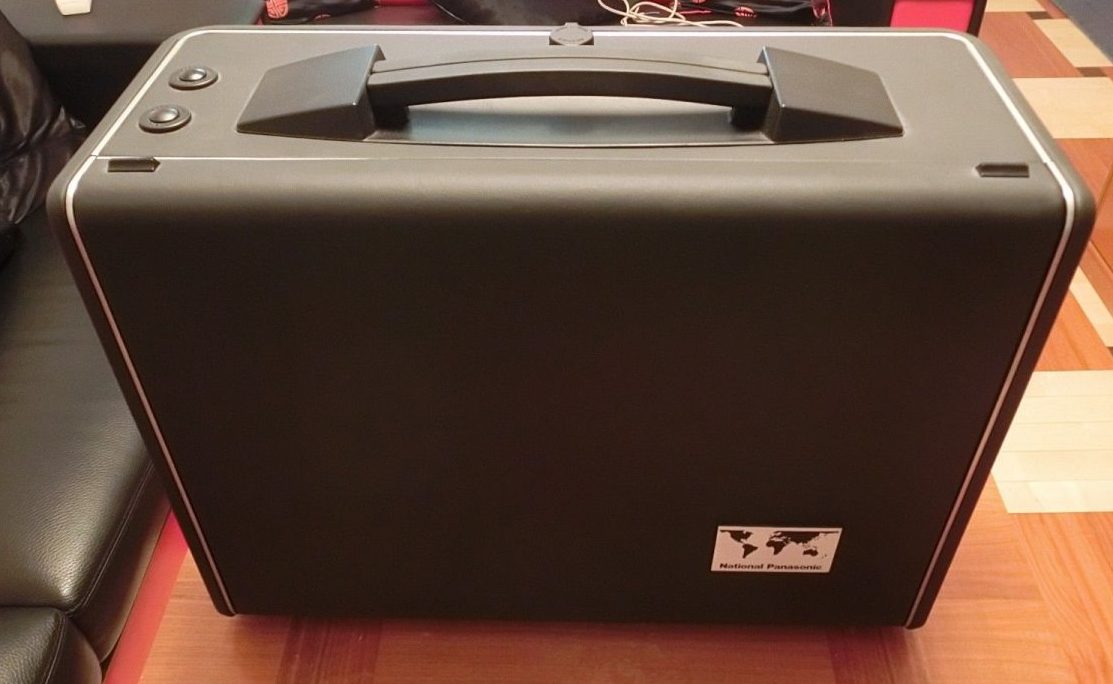
eBay find: Panasonic RF-8000

panasonic-rf8000

Many thanks to SWLing Post reader, Armin Sander, who writes:

Here is a link to a very interesting auction on eBay Germany:

Click here to view on eBay.

Only the price speaks for itself! (And now I need a good whisky!) 😉

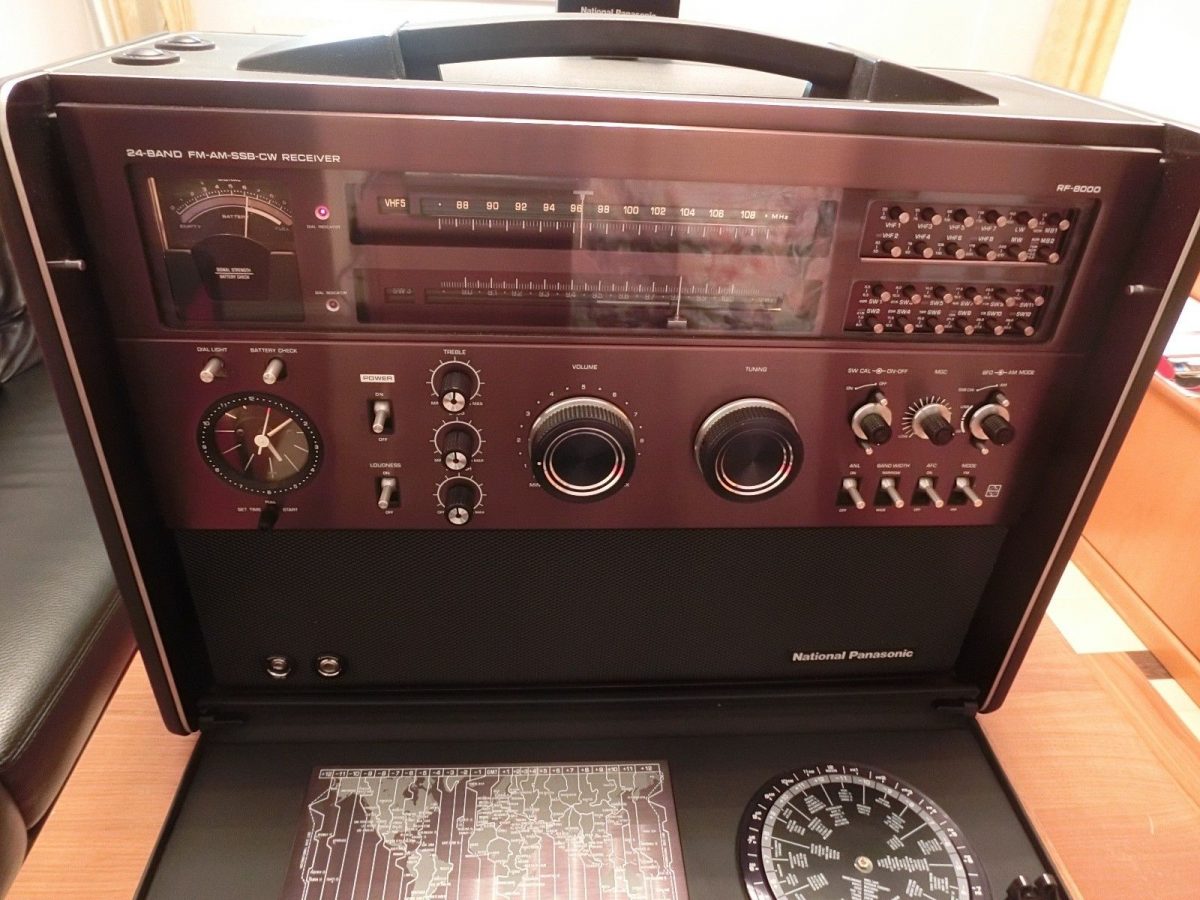
No kidding, Armin!  That is a hefty price–8,9999 EUR–even though this particular unit seems to be in excellent shape.

Still, I love looking looking at the photos of this classy receiver.

panasonic-rf8000-front

panasonic-rf-8000-openpanasonic-rf8000-closed

Thanks for sharing, Armin!

Post readers: Anyone own a Panasonic RF-8000?  Please comment!

A review of the Como Audio Solo

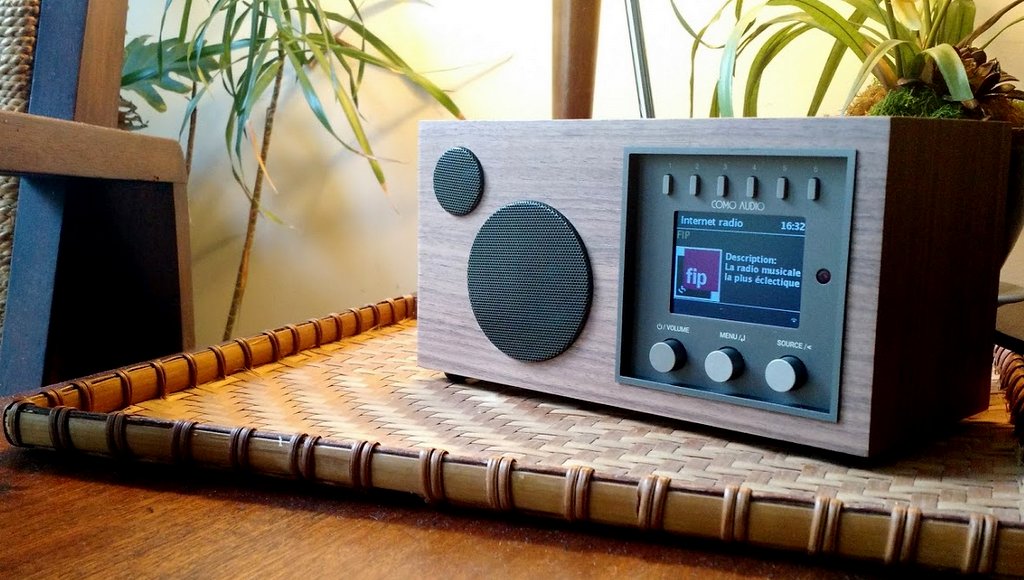
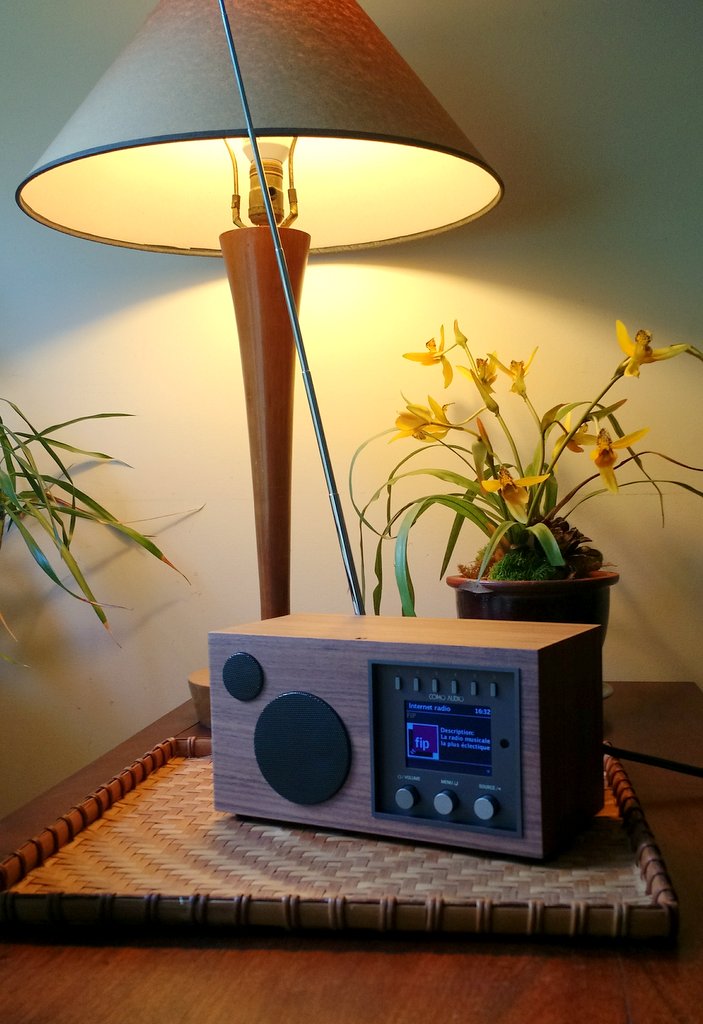
como-audio-solo-table

Regular SWLing Post readers might remember that this past summer, I made an impulse purchase–and in doing so, backed a Kickstarter campaign for the new Como Audio Solo.

But exactly why did I buy this small, self-contained digital music device–? Having just completed an in-depth review of several WiFi radios, I certainly didn’t need another.  But the good-looking Solo, with its clean design and walnut casing really caught my attention…I couldn’t resist checking it out.  Plus, in backing the radio via Kickstarter, I was able to purchase it for $100 less than the predicted future retail of $299 US.

The Kickstarter campaign funding Como Audio was prompt in communicating updates with backers and providing even more product options during the wait for production and delivery. Although several other snazzy finishes for the Solo were brandished before me, I stuck firmly by the walnut veneer I’d originally chosen.

Fast forward to the present. I finally received my Como Audio Solo a few weeks ago, and have had time to play with it. While I haven’t had time to explore every nuance of this radio, of course, I have had an opportunity to form some opinions.

Design

I don’t often comment on the design of radios I review, but in this case it’s worth noting.

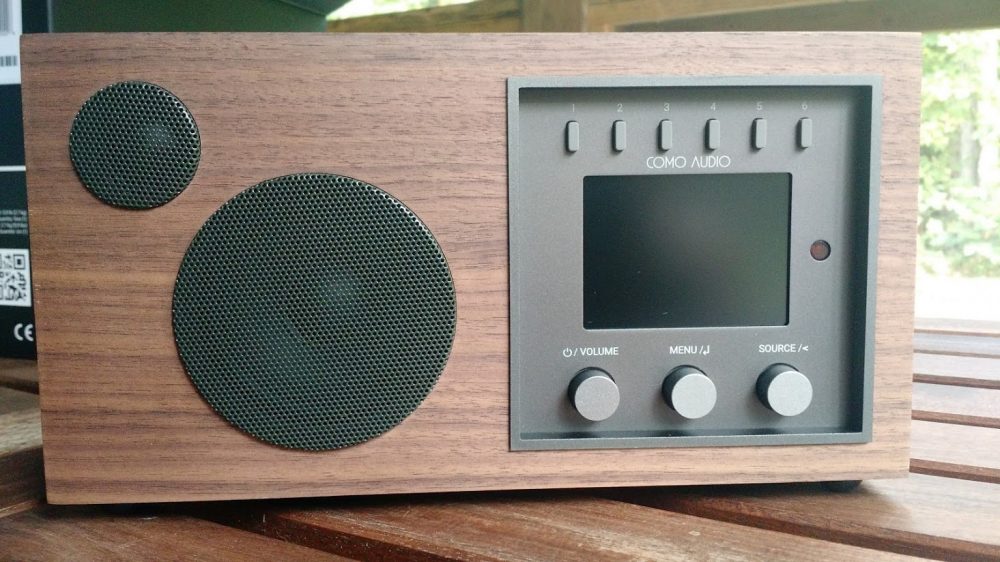
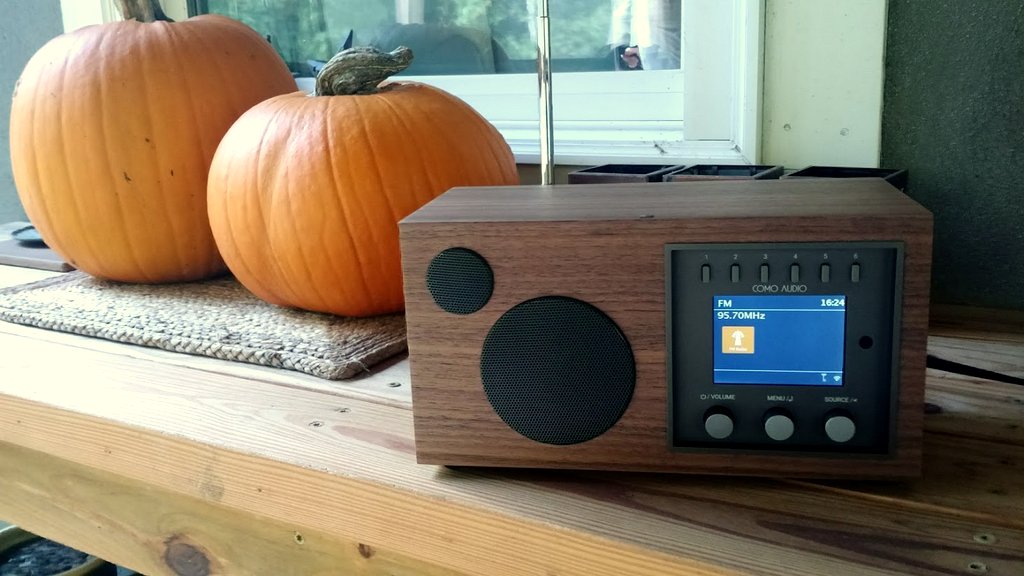
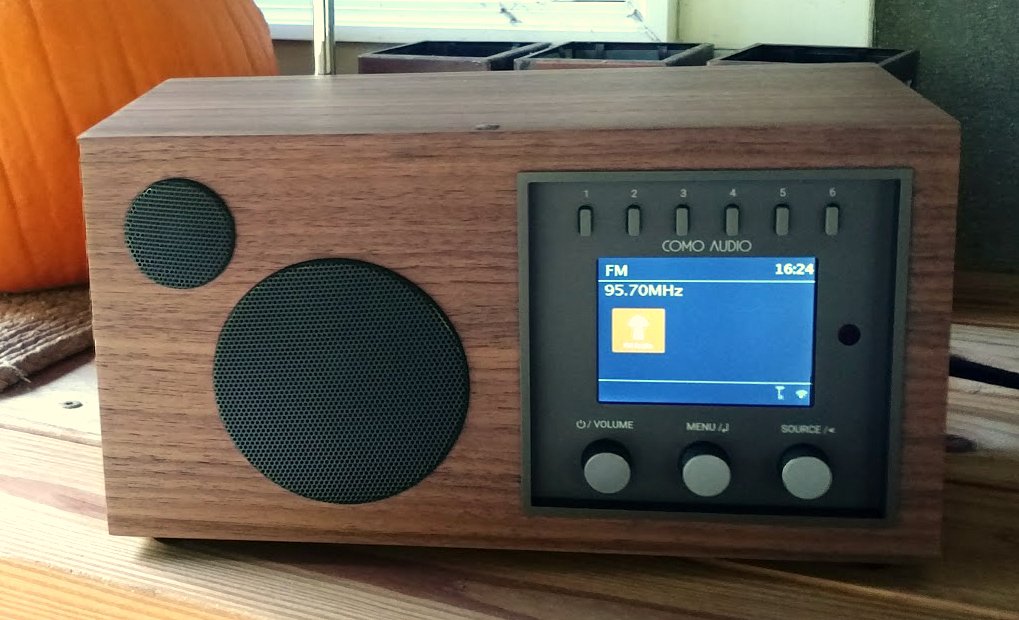
The Como Audio Solo, in wood, is elegant and simple. Love it:

img_20161003_163200127

The only element of the design I’m not typically keen on?  I’m not the biggest fan of devices that sport colored backlit displays; to me they appear a bit flash and faddish, undermining a radio’s overall aesthetic.

But I must say, the Solo pulls it off.  The color display in this case is somehow not too distracting–it’s soft yet crisp, and easy to read even at a distance.

In short, the Solo is a stunning piece of kit, especially with that warm walnut casing, and looks right at home in any setting–office, living area, kitchen, or at the bedside.

I’ve only one gripe with the Solo’s ergonomics: the front control knobs are a little too close to the bottom of the recessed controls area. When I try to turn a knob–for example, attempt to tune the FM band–I find my fingertips won’t fit between the knob and lower edge of the recessed panel, making the knobs a little hard to turn in one fluid motion. (Of course,this is also due to the fact that I have big fingers; my wife doesn’t seem to have this problem).

But this isn’t a dealbreaker as I’m finding I don’t often need to reach for the front controls, anyway.  Why? Because the rig’s IR remote–or better yet, its smartphone app–control the radio effectively at any convenient distance from the radio.  Sweet.

Audio

como-audio-solo-speaker

I’m a sucker for quality audio fidelity, and I must admit that this was one of the biggest deciding factors in purchasing the Solo: it touted extraordinary audio in a modest package, being designed around an acoustic chamber/chassis containing a 3″ woofer and 3/4″ dome tweeter fueled by a 2 X 30 watt RMS amplifier. I was very curious whether it could live up to its initial claim.

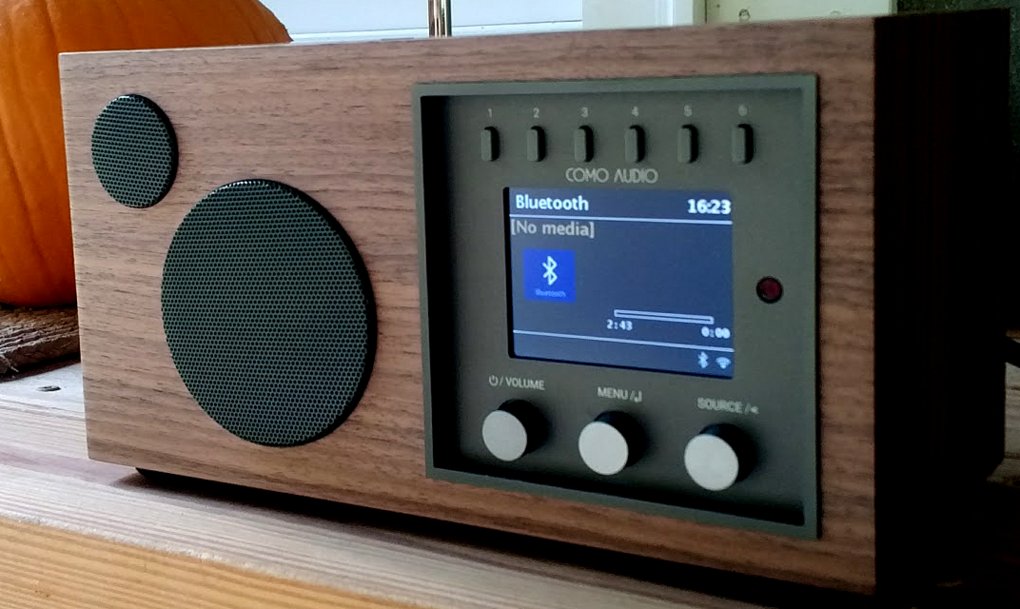
After turning on the Solo for the first time, I immediately wanted to hear audio, so I put it in Bluetooth mode and played a few songs, ranging from Jazz to Electronica.

In a nutshell:  Wow.

The audio is strikingly reminiscent of my Tivoli Audio Model One…which is to say, it’s excellent. It packs more audio punch than any of the radios I reviewed in my WiFi radio comparison.

Out of the box, the audio is fairly well-balanced, too. But you can tweak the equalizer, and I did, drawing in a little more bass and treble.  My wife (also a bit of an audiophile) was impressed. And yes, the sound is all the more remarkable considering the radio’s relatively small form-factor:  little box, big voice.

FM Reception

como-audio-solo

The Como Audio Solo is one of the few Wifi radios on the market that has a built-in analog FM and DAB receiver (save the $120 Sangean WFR-28, which has analog FM reviewed here).

Since I live in the US, I can’t comment on DAB reception.  I have, however, had an opportunity to test the FM analog reception.  Keep in mind, I live in a rural area and require a decent FM receiver with telescopic antenna fully extended just to listen to my favorite regional programming.

When I tune the Solo to my benchmark FM stations, it can receive them–but not as effectively as many of my other radios, including the WFR-28. Even when forced to use the Mono setting only, the stations it receives carry too much static for good listening.  So obviously the Solo isn’t as sensitive as some of my other radios, at least in this setting. Indeed, few stations it receives in this area are able to lock in to the point that there’s no static in the received audio. For out-of-towners, this is a bit of a disappointment.

With this said, I imagine if you live in an urban area, the FM receiver should more than please you. I’ve no doubt it can faithfully reproduce beautiful audio from local FM outlets.

I should add that, while FM reception isn’t stellar for distant stations, the RDS information does convey even when the audio isn’t full fidelity.

WiFi radio

comoaudiosolo-internetradio

Of course, the main reason I purchased the Como Audio Solo was to use and review it as a WiFi radio…nothing at all to do with that sharp walnut chassis, or audio power.

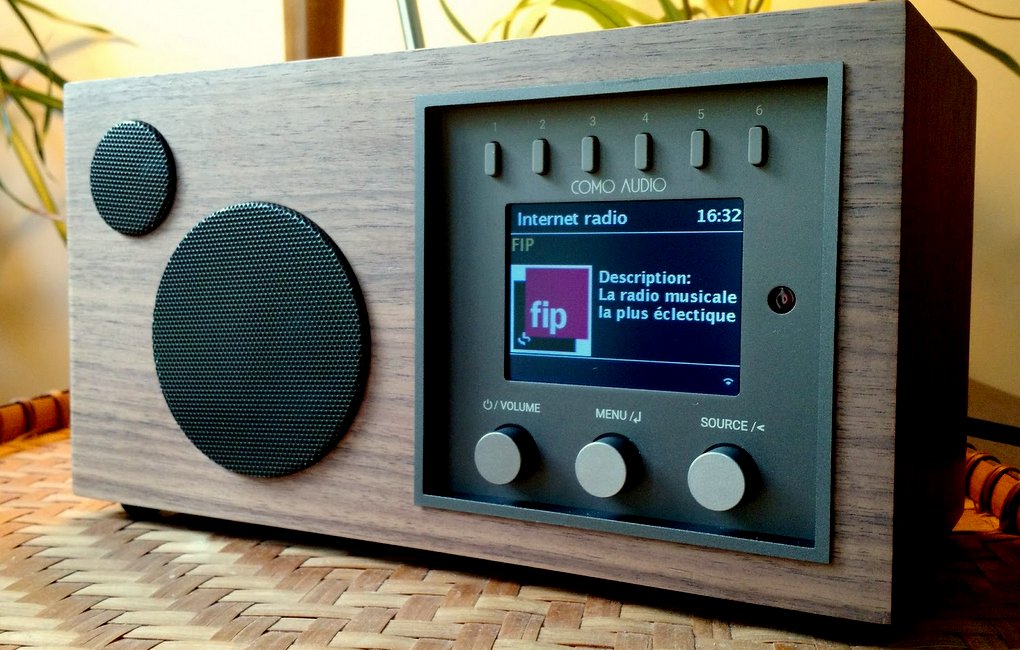
As I outlined in my WiFi Radio primer, WiFi radios rely on station aggregators–extensive curated databases of radio stations–to surf and serve up the tens of thousands of streaming stations around the globe.

Based on feedback from Como Audio shortly after the Kickstarter launch, I was under the impression that the station aggregator of choice was vTuner. This concerned me, as vTuner’s reputation as an aggregator is somewhat maligned due to a series of documented faults and weaknesses.  Fortunately, this turned out not to be the case: after the initial confusion, I soon discovered Como had adopted the more robust Frontier Silicon aggregator, instead–a better choice.

Click here to read our primer on setting up your Como Audio product on the Frontier Silicon radio portal.

Since I’m a pretty big fan of Frontier Silicon and since I’ve already been using their service with my Sangean WFR-28, once I connected my radio to my user account, the WiFi portion of the radio felt identical to that of my WFR-28. Simply brilliant, as the Frontier Silicon radio portal gives the user flexibility to create station lists and folders with ease–all of which readily convey to the radio itself.

The Solo also features six dedicated memory buttons on the front panel for quick access to favorites.

Turns out, there’s also a comprehensive manual available online for download (click here).

Summary


como-audio-solo-bluetooth

And am I please with the Solo so far?

I’ll reply with a resounding “Yes!”

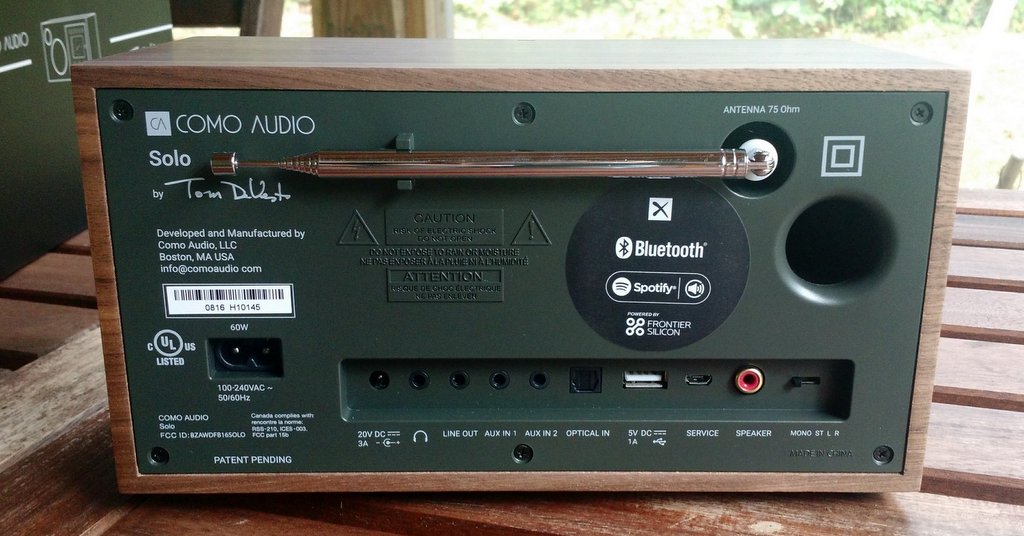
I love the Solo’s design–this certainly is a handsome product. Moreover, I love the audio, and am pleased that it delivers the fidelity promised by its Kickstarter campaign. The Solo and Duet are loaded with features, connections, Aux In and Aux Out audio and digital ports–more, in fact, than any similar device with which I’m familiar. I regret that the rig’s FM isn’t suited for country life, but the audio coupled with its stylish exterior do make up for this somewhat.

como-audio-solo-back

I do wish the Solo had an internal rechargeable battery option. Being able to move the receiver to different locations within a home or building could be a major plus for rural FM reception. As my friend John pointed out, however, the audio amplifier is robust enough, it might have been a challenge to implement an affordable-but-effective internal battery without compromising the audio amplifier’s needs.

In truth, I favor audio fidelity over portability for a tabletop radio.


In conclusion…do I have any backer’s remorse?  Absolutely not–!

In short, the Como Audio Solo is a keeper.  I’m still marvelling at this classy and dynamic radio that fills our home with rich beautiful audio. A few weeks in, the Solo has already become a permanent feature in our abode. It’s one of the few radios I have that meets my artist wife’s approval in terms of both design and audio.comoaudiosolo-fm

Great job, Como Audio!  If the Solo is any indication of radios to come, I’ll certainly be looking for your future innovations.

Click here to order the Como Audio Solo and Como Audio Duetto.

Guest Post: Troy takes us on a tour of his listening post

DoxyTronics 8020CA Antenna

DoxyTronics 8020CA Antenna

Many thanks to SWLing Post contributor, Troy Riedel, who writes:

I don’t have a “shack”, but I wanted to take the time to share with you my “listening post”. But first, let me start from the beginning.  

I’d call myself an amateur astronomer first – and a Shortwave Listener (SWL’er) second (I have never been a Ham Operator).  

I started my astronomy hobby as a young kid who was enthralled by the Apollo Missions.  I was also fascinated by weather & I learned how to make short-term 12-36 hour forecasts by making cloud observations, following the barometric pressure trend & noting changes in wind direction.  I am still an amateur astronomer (a very expensive endeavor).  I was able to pursue my childhood interest in weather and I became an Aviation Weather Forecaster in the military (I also instructed synoptic meteorology in the military at the schoolhouse).  I promoted myself out of meteorological jobs in my Service but I was able to transition to a deployable job that allowed me to visit 50 countries.  I retired with slightly over 30-years served.

When I was a kid, a buddy had a shortwave radio but we could never hear anything (we had no clue).  I had an Electro-Brand EB2100 5-band radio that had AM/FM, Police, Fire, Aviation & NOAA (if I recall).  We heard transmissions on that EB2100!  I didn’t truly discover shortwave until the early 1990s.  My first shortwave radio was a Panda 2006 (I challenge readers to look-up that model in the 1994 Passport to World Band Radio).  I liked shortwave so much, I sold the Panda to help finance my next radio.  I pre-ordered & subsequently received one of the first Gru?ndig Yacht Boy 400s released in the U.S. (I still have the radio & the receipt).

I think, for a SWL’er, I have a decent collection of shortwave radios & antennae:

  • Grundig Yacht Boy 400
  • Grundig  G6 Aviator Buzz Aldrin Ed.
  • Grundig G3 Globe Traveler
  • Tecsun PL-390
  • Sony ICF-7600GR
  • Tecsun PL-365
  • Grundig Satellit 750
  • Grundig G2000A Porsche
  • RadioShack 140-214 Digital Recorder
  • AMECO TPA Active Antenna
  • Crane Twin-Coil Ferrite Antenna
  • DoxyTronics 8020A Passive Antenna
  • Kaito KA35 Active Loop Proximate Antenna
  • NASA PA30 Wideband Passive Antenna
  • A Helical/Slinky Antenna
  • RadioShack 20-280 Active Antenna
  • Sony AN-LP1 Active Magnetic Loop Antenna
  • Tecsun AN-200 AM Passive Antenna
  • Terk Advantage AM-1000 Passive Antenna
  • TG34 Active Magnetic LoopAntenna
  • Yo-Yo Antennas & various Longwires
  • Extended AM Ferrite Rod for PL-365/360
Slinky, ST3 Scanner Antenna (EB2100 on top of the wall unit library)

Slinky, ST3 Scanner Antenna (EB2100 on top of the wall unit library)

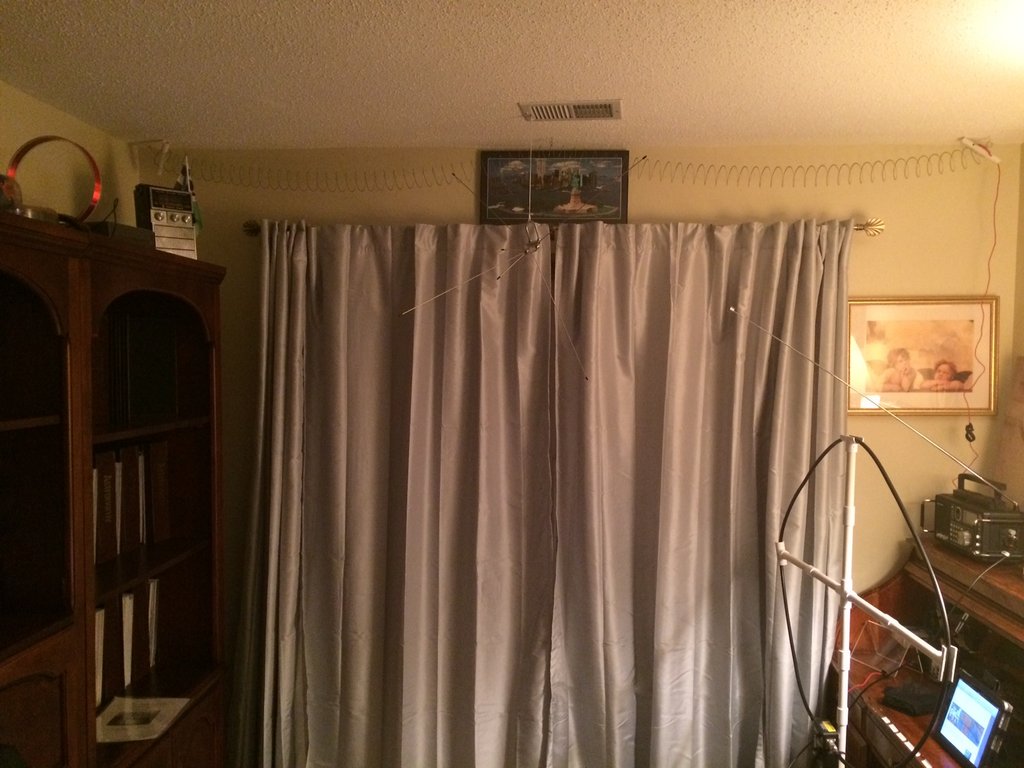
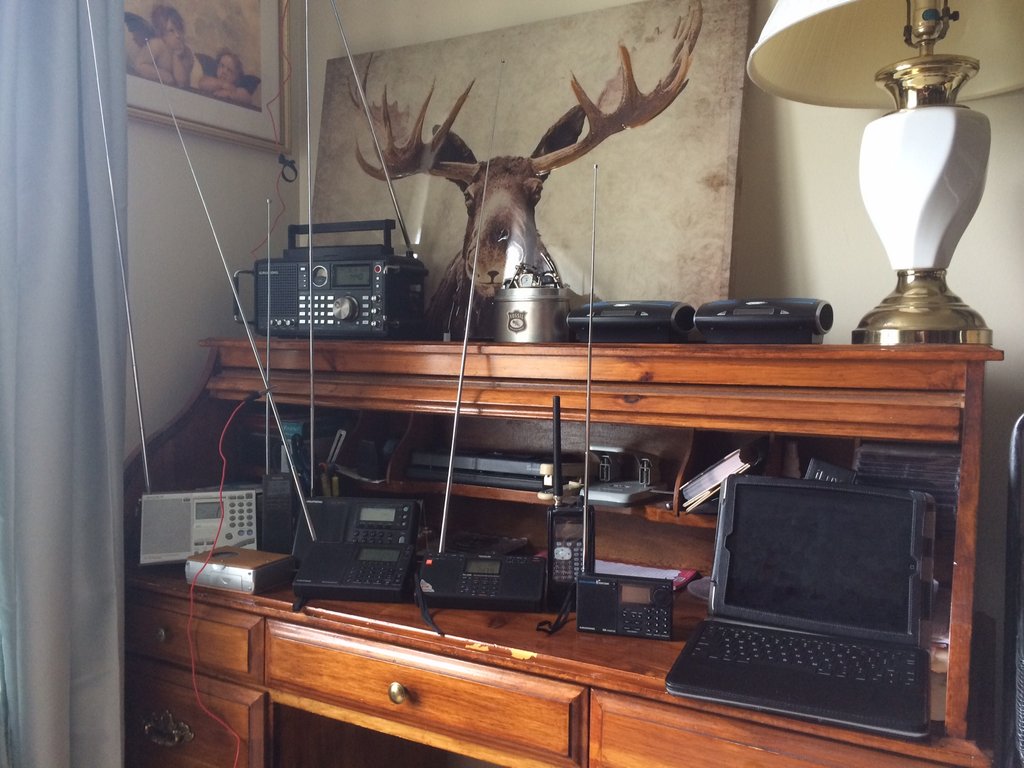
Okay, so what is my “listening post”?  It’s a sitting room attached to my master bedroom.  I have a roll-top desk.  A slinky antenna stretched across one side of the room above the window.  And an ST3 “Sputnik” Scanner Antenna hung in front of the window (for my RadioShack Pro-651).  I use an old-school iPad 1st Gen next to my radios because I found that it emits virtually no RF compared to my iMac, MacBook Air, and MacBook Pros.  Besides using the iPad Gen 1 as an Internet reference, it’s also loaded with every one of my radio & antennae manuals, nearly every copy of Passport to World Band Radio, and many Spectrum Monitor issues.  If I cannot find a pdf version of a manual, I use my document scanner to create my own pdf’s.

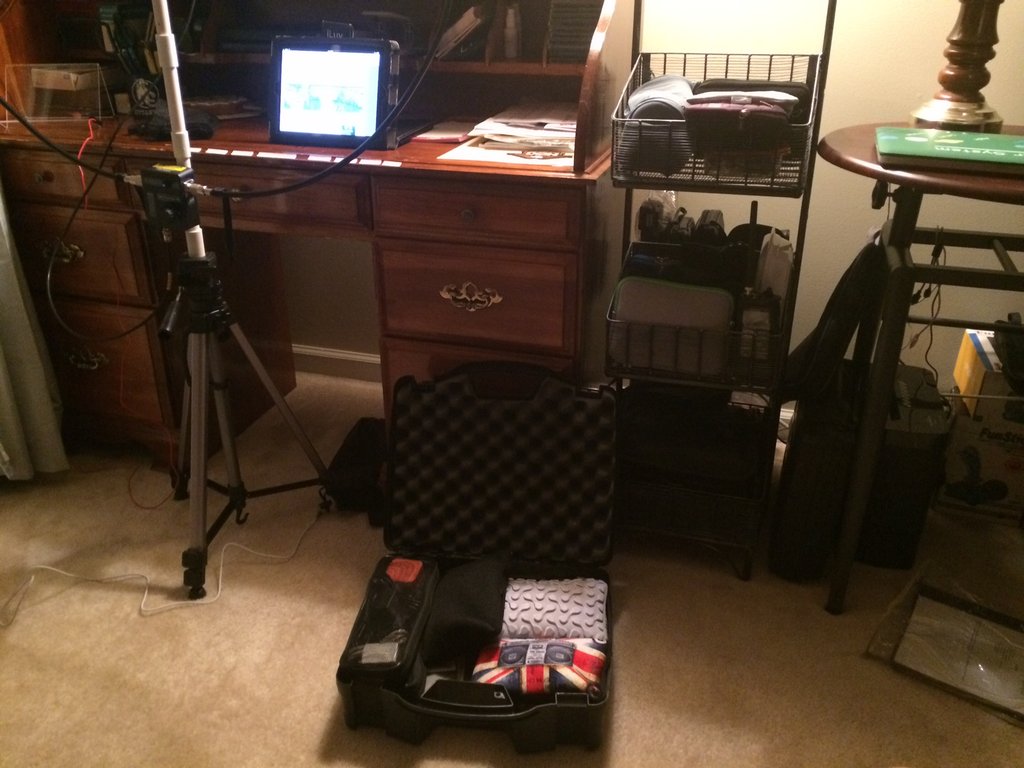
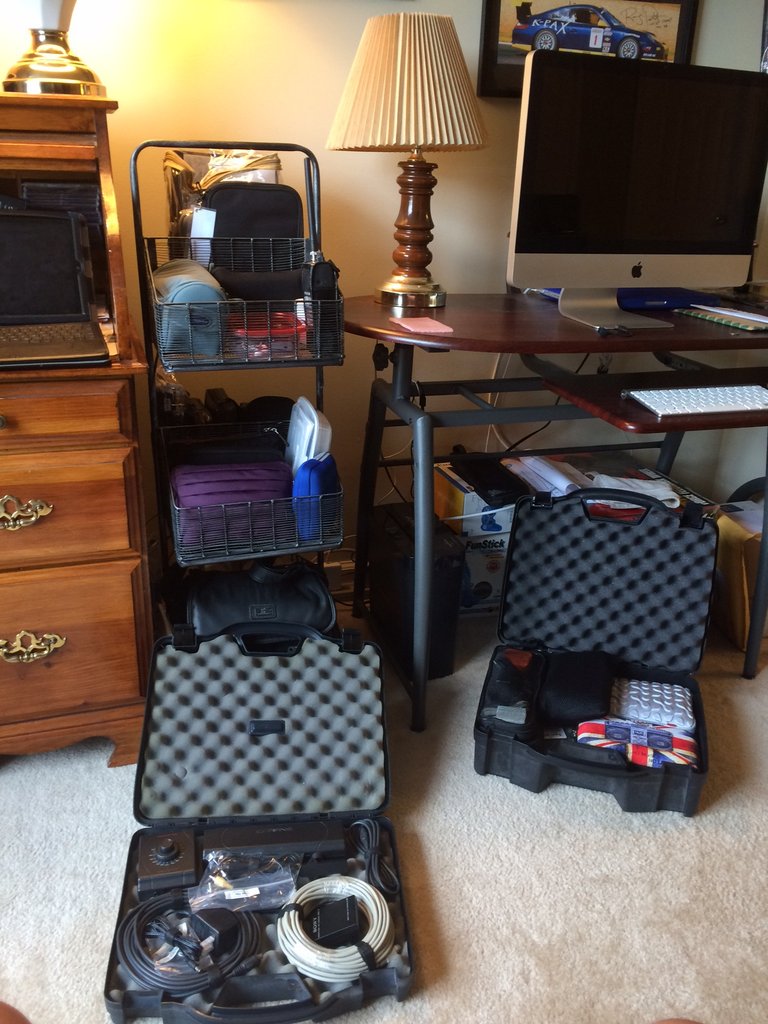
Typical set-up (the metal basket bin is completely filled with radios, antennae, adapters, etc., all in their own cases)

Typical set-up (the metal basket bin is completely filled with radios, antennae, adapters, etc., all in their own cases)

Having my listening post essentially in the master bedroom causes conflict because my wife must get up early & drive 60-miles to work thus I am kicked-out and banished downstairs fairly early each night … while carrying a radio or two with me if I wish to continue listening.  Nearly all of my shortwave listening occurs before 8:30 P.M.

img_1855

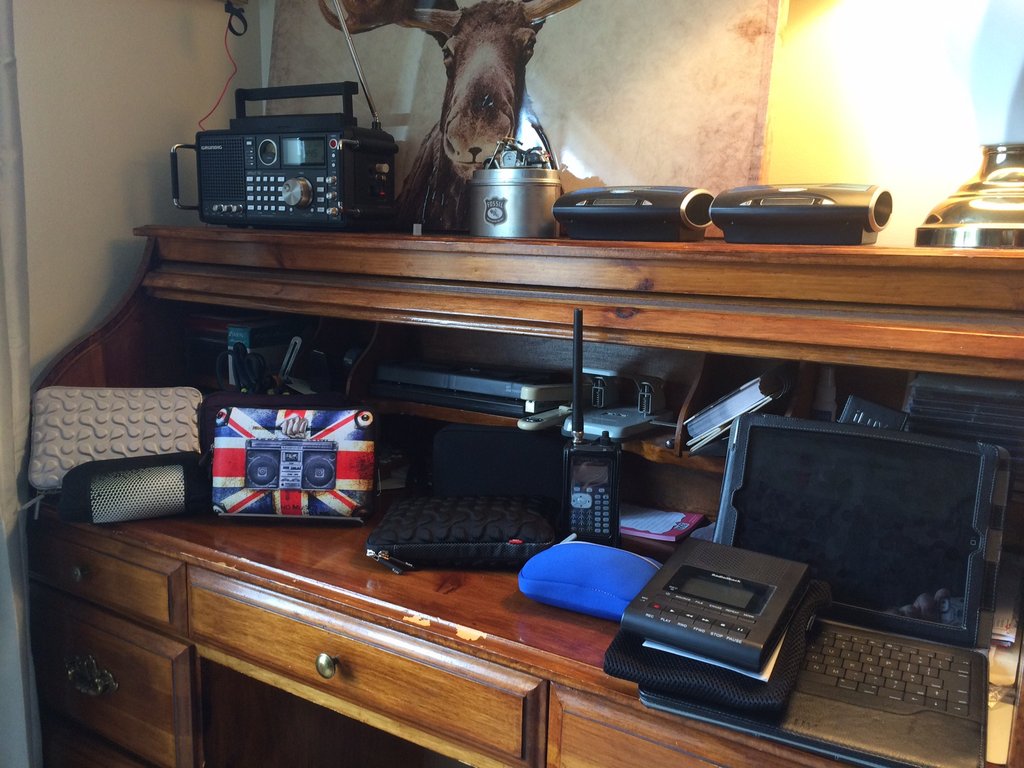
I have all of my radios and antennae neatly organized in padded bags & cases within an arms reach of my roll-top.  Since everything is organized in its own case, I can easily grab whatever combination I want if I were to travel (or go outside, or go downstairs when my wife kicks-me-out of my listening post).

My radios in their padded cases (remember my GPS & Tablet case recommendations many months ago?)

My radios in their padded cases (remember my GPS & Tablet case recommendations many months ago?)

What are my favorites?  I typically use the Grundig Satellit 750 the most – mainly because of its size & large intuitive buttons.  The direct BNC connections make it quick & easy to transition from one antenna to another.  My favorite SW radio feature is Tecsun’s ETM (I wish every radio had it) thus I find myself using the PL-390 & PL-365 especially when out of my listening post.  My favorite antenna is the TG34.  I find that it greatly enhances the signal with a minimal increase in noise.  The Slinky is great in that I can add it to another antenna that I’m using to make a more effective combination (e.g., AMECO TPA with the Slinky & the NASA PA30 with the Slinky on the radio whip work well for me).

The bins and black cases with my gear (those are two Plano Gun Cases … a 2-gun case and a 4-gun case; I have 8 more filled with my astronomy gear but that’s another story).

The bins and black cases with my gear (those are two Plano Gun Cases … a 2-gun case and a 4-gun case; I have 8 more filled with my astronomy gear but that’s another story).

I think shortwave listening is a great hobby that compliments my amateur astronomy.  Why?  No matter the clouds, extreme temperatures, etc., I always have something interesting to do.  But I do miss the days when the wave bands were crowded with international broadcasters.  At least I know that Jupiter, Saturn & the thousands of deep sky objects within grasp of my many telescopes & binoculars will NOT be leaving the sky until long after I leave this planet!

You’ve set up an excellent listening post, Troy! As you well know, I’m a bit of a pack junkie, so I love the fact you have so many padded cases and protective gear for your equipment–no doubt, this is championed by your amateur astronomer half!

SWLing Post readers might recall that, last year, Troy actually put together a shortwave broadcast dedicated to amateur astronomy. We published a full recording of the show on the Shortwave Radio Audio Archive.

Thanks, again, for sharing a tour of your listening post, Troy!

Tecsun PL-680 Beats Expectations


I have been procrastinating over investing in another portable shortwave radio to replace my ageing (but still going strong) Sangean ATS909. Also known in the U.S. as the rebadged Radio Shack DX–398, the Sangean has been a most reliable rig for in-the-field DXpeditions. My unit is one of the early first generation versions that I purchased on the second-hand market, so I’m guessing it has to be at least 16 years old now. It continues to provide a full rich tone quality on AM/FM and is very sensitive on shortwave providing you use an external antenna of 5 metres (16 feet) or more. The radio received some bad press because of its poor SW reception using just the telescopic rod antenna, which frankly was justified. The in-built whip is useless! But all of my work has been with an external antenna, and the results have been most successful over the years.

But the old ATS909 has lived a hard life, having been bounced around in the car on rough dirt tracks, dropped a few times, and thanks to a recent home renovation project it now has paint splattered all over it. On one occasion, I’d even left it outside on the ground after a spot of gardening, subjecting it to half an hour of heavy rain, before realising my forgetfulness. The radio was soaked but still going strong when I picked it up. However, the digital readout was all messed up. After 24 hours of drying, and it fired up beautifully again, and has been fine ever since! That’s some impressive build quality there! Thanks Sangean!

Anyway, a few months ago I decided to “pull the trigger” and purchased a new Tecsun PL-680 AM/FM/SSB/Air Band radio. This rig has been on the market since around February 2015. So far, it has performed very well for me.

Interestingly, on the built-in telescopic antenna reception is only marginally better than the Sangean, but the Tecsun is really quite sensitive with an external long wire antenna. In fact, I’ve had it hooked up to my three double bazooka (coax) dipoles for 80, 40 and 20 meters, and the performance has been excellent. The tone quality is not quite a good as the Sangean, lacking richness and depth on MW, FM and SW. But for DXing, the audio appears just right for digging out clear audio from the noisy shortwave bands.

pl680-at-the-beach

Recently, I hooked up both portables for a side-by-side comparison using four different external antennas outside the shack with switches between the two radios. I was eager to check how they measured up in terms of sensitivity and selectivity. The results for the Tecsun were impressive, picking up all of the weaker signals that the Sangean could hear.

Indeed, on several shortwave broadcast bands, the Tecsun appeared to be just a touch more sensitive at digging out some of the weakest signals. The audio also appeared a little clearer for those weak signals, perhaps because it has a narrower audio response than the Sangean. And selectivity for the PL-680 was about the same as the ATS909, generally very good.

On the ham bands, however, the SSB audio quality of the ATS909 sounds more pleasant to my ears than the PL680. But the Sangean’s tuning process in SSB is somewhat more cumbersome than for the Tecsun.

The PL-680’s synchronous detector effectively reduces adjacent signal interference. It’s easy to use and is a strong feature in its favor. However, occasionally it can fail to lock on to a weaker signal or when the signal is subject to deep fading. One other characteristic of the Tecsun is that it has a rather overly generous S-meter, hitting S4 or 5 for all but the weakest signals. This is a meter not to be taken too seriously!

But the PL-680 is not without its faults!

Click here to continue reading the full story.

Rob Wagner, VK3BVW, is the author of this post and a regular contributor to the SWLing Post. He also blogs at the Mount Evelyn DX Report.