Category Archives: Shortwave Radio

Icom’s announcement includes two new receivers: the IC-R8600 and IC-R30

The IC-R8600 (Photo source: QRZ Now)

The IC-R8600 (Photo source: QRZ Now)

Many thanks to SWLing Post contributor, Dave Zantow (N9EWO), who shares the following info about Icom’s announcements at the Tokyo Ham Fair:

Well the cat is now really out of the bag now !! Icom announced 2 new RECEIVERS at the Tokyo 2016 JARL Ham Fair.

We can almost say for certain that the new IC-R8600 is a SDR based design.

[…]The new IC-R30 handheld probably is SDR too, but not sure yet. Pretty large bugger (no real good picture as of of me typing this). Will it be able to do at least P25 Phase one?

I’ll admit it: I was a little surprised to hear that Icom had announced new receivers. I’m happy to see that it’s an IC-R8500 replacement/update. I love the touch screen color display.

I also very much like the idea of a handheld wideband–possible SDR–receiver.  I did a little extra digging and found the most concrete details about the new models on Icom UK’s website:

After an online teaser campaign featuring silhouettes of mystery radio models, the secret is out and Icom Inc. has shown the very first samples of the IC-7610, IC-R8600, IC-R30 and ID-51 PLUS2 to the public at the Tokyo Ham Fair 2016 (August 20-21, 2016). Details are relatively scarce but here are the basic details we have so far on these models.

The new IC-7610 (Photo: Icom UK)

The new IC-7610 (Photo: Icom UK)

IC-7610 HF/50MHz Transceiver (Base Station)
The IC-7610 is the successor to the IC-7600 and will be a dual-watch capable HF+50MHz 100W base station with built-in antenna tuner. The LCD will be touch screen and you will be able to connect an external display.

IC-R8600 Wideband Receiver (Base Station)
The IC-R8600 replaces the IC-R8500 wideband receiver and will feature the technology incorporated into Icom’s best selling IC-7300. The IC-R8600 will be able to receive a wide frequency range from 0.01-3000MHz frequency in analogue and various digital modes (D-STAR, P25, NXDN and dPMR). The IC-R8600 will feature a larger 4.3 inch touch screen display which will feature fast moving spectrum scope and waterfall display.

IC-R30 Communications Receiver (Handheld)
The IC-R30 is the successor to the popular IC-R20 compact handheld receiver. The IC-R30 can listen to two signals under certain conditions (analogue + analogue or analogue + digital). The IC-R30 will be able to decode D-STAR, P25, NXDN and dPMR digital (conventional) modes.

ID-51 PLUS2 Dual Band D-STAR Digital Transceiver (Handheld)
The ID-51 PLUS2 handportable is a special edition model which will come in several colours/patterns. The new ‘Terminal Mode’ and ‘Access Point Modes’ enable you to make D-STAR calls through the Internet, even from areas where no D-STAR repeater is accessible.

More details will be available nearer to each product’s launch. There are currently no details about pricing and availability.

Stay tuned to this website and our social media pages for further announcements.

I can’t wait to learn what the price point will be for the IC-R8600. I hope it’s at least in-line with the IC-7300 or (its predecessor) the IC-R8500. I also hope that, perhaps, the new IC-R30 will have full-mode HF capabilities.

We’ll post news about these new rigs as it becomes available–so will Dave Zantow. Stay tuned!

Reminder: From The Radio Netherlands Archives Part 2

pcj(Source: PCJ Press Release)

August 21st and 22nd PCJ Radio International will present part 2 of From The Radio Netherlands Archives.

In the first program we played a mix bag of stuff. But in program two the focus will be on news and documentaries. You will hear Ginger Da Silva, Eric Beauchemin, Pete Myers and more.

There will be a special E-QSL issued for this program. PCJ Radio International’s partner stations will receive this program in two parts.

The program will be presented by Paulette MacQuarrie.

Europe: 0600 to 0800UTC – Frequency 7780kHz
August 21, 2016

North America: 0100 to 0300UTC – Frequency 7570kHz
August 22, 2016

For more information contact PCJ at [email protected]

Sticky radios? John shares yet another solution.

Eton-e1

Many thanks to SWLing Post contributor, John Figliozzi, who writes:

Sean at Universal Radio in Reynoldsburg, OH put me on to another terrific product that does the job fabulously and quite easily. It’s called MaxPro Ink/Adhesive Remover and is a citrus-based cleaner/solvent that won’t harm the radio’s plastic casing. You can get it on eBay for around $11 with free shipping:

Click here to view on eBay.

It took me a total of less than 3 hours to clean both my E1s. I used a lot of paper towels, working a section of the radio at a time, spraying the solvent onto the towels and then rubbing the surface free of the degraded and sticky rubberized coating. After removing the coating, I simply wiped down the radio with a wet paper towel to remove any residual solvent. They are now clean and smooth and look like new with all the white print intact. And my hands didn’t suffer any from contact with the solvent.

A reminder if you do this: It’s important to seek out citrus-based solvents and avoid petroleum based solvents. It was so easy with this product that I wished I had done this a long time ago and wasn’t so nervous about taking it on.

John Figliozzi
Halfmoon, NY

Thank you, John! I just noticed that a few of my rubber-coated receivers are starting to get tacky. I like the idea that this adhesive remover is gentle on the chassis. Click here to search eBay for MaxPro Ink/Adhesive Remover.

We’ve posted a number of solutions for sticky radios. Click here to view past posts.

200m longwire update: rarely heard Radio Tawantinsuyo 6173.9 kHz, Peru, recorded in Oxford, UK

cusco

Hi there, I thought I would share my first reception of Radio Tawantinsuyo, from Cusco, Peru, recorded during the inaugural test of my 200 metre longwire antenna. Of course this  particular reception could be coincidence, but a very welcome catch in any case. Once again, the Sony ICF-2001D performs very well with this large antenna, but as on previous occasions, the rule is always to ‘choose your battles well’ targeting weak DX signals in uncrowded areas of the Tropical Band and elsewhere on shortwave. More details on the longwire antenna to follow in another post. Recorded at the ‘DX woods’ in Oxfordshire, UK on 31/07/16 at 00:27 hrs UTC. Thanks for watching.

Direct link to Oxford Shortwave Log reception video of Radio Tawantinsuyo

Clint Gouveia is the author of this post and a regular contributor to the SWLing Post. Clint actively publishes videos of his shortwave radio excursions on his YouTube channel: Oxford Shortwave Log. Clint is based in Oxfordshire, England.


Latest Update regarding Radio Australia outage

Radio-Australia-Banner

Many thanks to SWLing Post contributor, David Goren, who shares this latest update from ABC Reception advice:

Thank you for your email.

We are working towards restoring the services this coming Friday at 9am Sydney time.

Kind Regards,

ABC Reception Advice

A number of Post readers received this same message (thanks to you all for sharing).  I, for one, hope to hear my staple broadcaster back on the air Friday morning.  I’ll certainly be listening!

New RTL-SDR dongles feature HF reception

RTL-SDR-RTL2832U-e1471375714199

Many thanks to SWLing Post contributor, Aaron Kuhn, who writes:

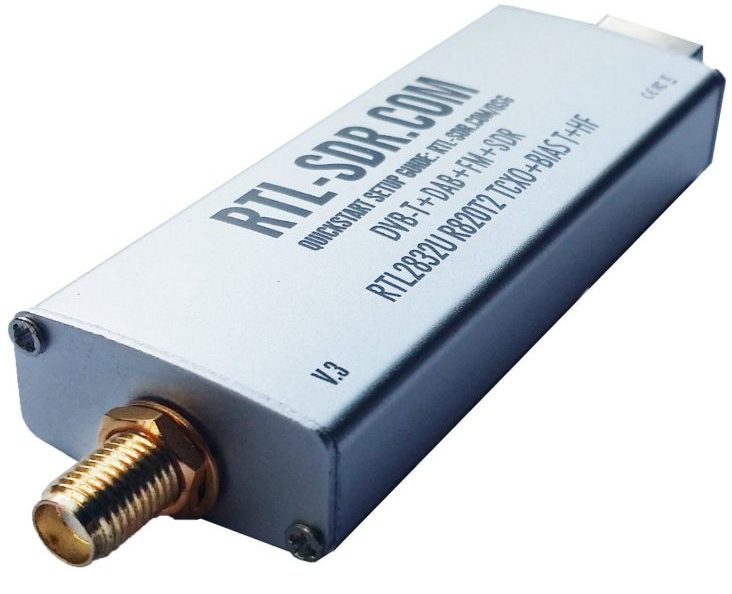
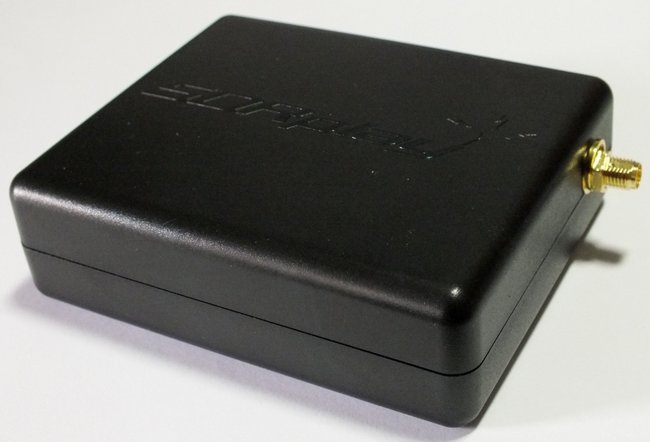
[T]he newest v3 RTL2832U USB receivers now have HF reception via Direct sampling over the SMA antenna connector directly out of the box with no hardware modding required.

I think this might make it the cheapest, out-of-the-box HF SDR possible at this point.

9:1 balun for longwire puts the whole thing under $50 still

Wow! Now you’re making me wish I would’ve waited a few more months before finally purchasing an RTL-SDR. I like the folks over at the RTL-SDR blog, so I purchased their model.

Amazingly,  the V3 RTL2832U only costs $24.95 on Amazon.com. What a value!  Anyone care to write a review of the HF performance? Please contact us.

Update on Radio Australia outage

Australia

Many thanks to SWLing Post contributor, Dan Hawkins, who left the following comment in reply to our previous post about Radio Australia’s outage:

This message found on the ABC/Radio Australia website this morning…

The ABC is running a technical outage of the international shortwave service until Friday the 19th of August to test reception in the region.

Listening to shortwave requires a specialist shortwave radio. We direct our broadcasts at peak listening times in our target areas of the Pacific using multiple frequencies. We recommend that where possible, you use an outside antenna to improve reception. Shortwave signals may be subject to interference from other broadcasters’ signals, electronic devices such as computers, microwave ovens, TVs, car engines and fluorescent lights.

http://www.radioaustralia.net.au/international/radio/waystolisten

Thanks for passing this along, Dan. This is the longest technical outage I’ve ever noted from Radio Australia.