Tag Archives: Recordings

Jim’s shortwave listening post is a Navy ship

USNS Button - 02

USNS Sgt William R Button (Photo: NavySite.de)

SWLing Post contributor, Jim Clary (ND9M/VQ9JC) contacted me in June to obtain details about the BBC’s Midwinter broadcast to the British Antarctic Survey Team. Jim has been working on board the USNS Sgt William R Button since mid-June. While on board Jim has no web access, but he can send and receive emails and some files. I kept Jim informed about the time and frequencies of the BAS broadcast.

Jim had hoped to make a recording of the Midwinter broadcast at sea, but timing and some technical problems got in the way and he missed the bulk of the 30 minute program.

That’s okay, though, because Jim is an avid SWL and ham radio operator. During time off, he has logged a number of stations, so I asked if he would consider making a recording for us.  I mean, SWLing from a Navy ship?!  How cool is that?!

Within a week, Jim sent me a recording of the Voice of Korea. Here are some of his notes:

I’d heard [the Voice of Korea] many times before when Stateside (and they were Radio Pyongyang at the time), but their signals were always weak and had major polar flutter. Out here, the signal was in-my-face loud, so even though the station is not much of a rare DX catch, I wanted to get them on tape.[…]

[M]y location is the east southern Atlantic Ocean, not far from St. Helena.

[…]My ship is named USNS Sgt William R Button. The ship has been active since the mid 80s and was a “motor vessel” (M/V) until we became a Navy asset in 2009.

USNS Button - 04

[…]My receiver that I’m currently using is my QRP rig, a Yaesu FT-817ND. I changed over to a Navy antenna that I’m feeding with about 70 feet of 75-ohm RG-6 cable. There’s obviously some signal loss from both the length and impedance mismatch of the coax, but at these freqs it’s fairly negligible.

The antenna itself is an AS-2815/SSR-1 that’s mounted above the wheelhouse (bridge) of the ship. I can’t really describe the make up of the antenna simply because I don’t see why it works so well but it really does a good job. If I’d figured out where its feed point is a couple weeks ago, I would’ve had no problem logging the BBC’s Antarctic service!

.Click here to download Jim’s recording of the Voice of Korea or simply listen via the embedded player below. This broadcast was recorded on July 1, 2015 at 1900 UTC on 11910 kHz:

Many thanks, Jim! We look forward to any other recordings you wish to share!

Radio Cook Islands: Guy’s 1993 recordings

Many thanks to SWLing Post contributor, Guy Atkins, for the following guest post:


Radio Cook Islands

by Guy Atkins

(Photo: Guy Atkins)

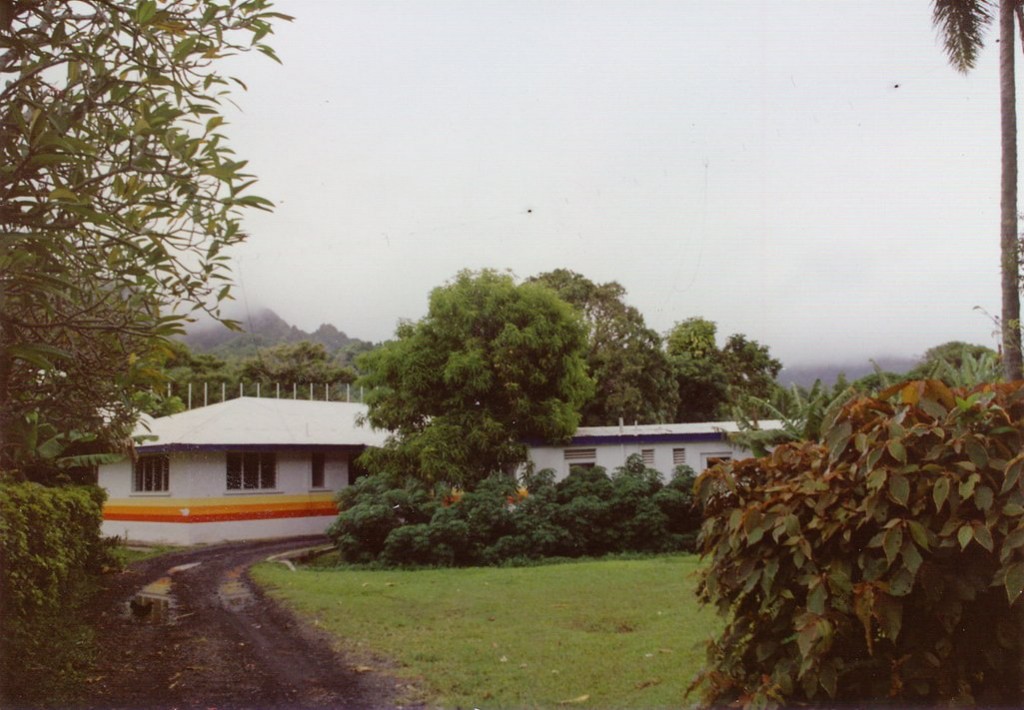
A view from the driveway entrance to the Radio Cook Islands studio in 1993. Insulators on an antenna (T2FD or multiband dipole) can be seen as dark spots against the cloudy sky. A feedline is also seen rising above the left side of the building. (Photo: Guy Atkins)

(Photo: Universal Radio)

(Photo: Universal Radio)

In 1993 I was fortunate to have the opportunity to visit Rarotonga with my wife, courtesy of a nice award through my company which afforded me an all-expenses-paid trip anywhere we’d like to go.

I chose the South Pacific island of Rarotonga, partly because I wanted to visit Radio Cook Islands after listening to their “island music” on 11760 and 15170 kHz through my teenage years.

During our visit to the island I recorded 90+ minutes of RCI on 630 kHz with a local quality signal using a Grundig Satellit 500 and a Marantz PMD-221 recorder.

Recordings

The programming of Radio Cook Islands is bilingual, and announcers are fluent in both English and Cook Islands Maori. Music selections on RCI encompass all styles, to appeal to many age groups. These recordings was scheduled to include as much local music as possible.

RCI programming includes all the hallmarks of a small, non-professional station: stuck records & tape carts, dead air, poor modulation, and other miscues.

However, that’s part of the flavor of local radio, and these errors are heard throughout this recording. Particularly noticeable is the bassy, over-modulation of the studio announcer during sign-on announcements.

Recording 1

Notes: National anthem & hymn; sign-on announcements & music.
Music; weather; sign-off announcements & national anthem.
Local & regional news; weather; ads; music.

Recording 2

Notes: “Party Time” music request show; weather; local ads; more music.

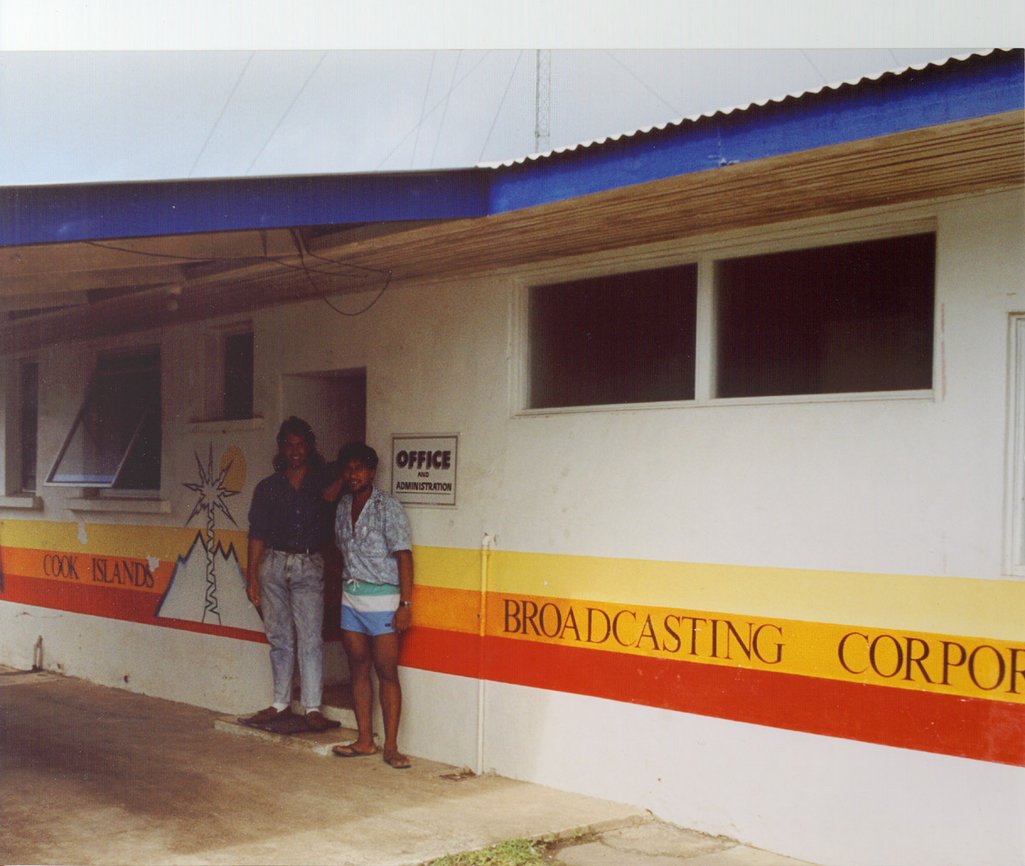
Two engineers from Radio Cook Islands, photographed during my visit in April, 1993. (Photo: Guy Atkins)

Two engineers from Radio Cook Islands, photographed during my visit in April, 1993. (Photo: Guy Atkins)

Sadly, RCI will likely never be on shortwave again; a fire in the local tele-comm building a few months before my 1993 visit destroyed RCI’s transmitter. I had an amusing exchange with the secretary when I visited; she insisted that their station was still on shortwave. Of COURSE we’re on the air she said, because “the frequencies are published right here in the newspaper!” The engineer and announcer confirmed, though, that the silence on their former frequencies was for real. They indicated they were covering the outer islands just fine with FM translators and had no intention of restarting shortwave.

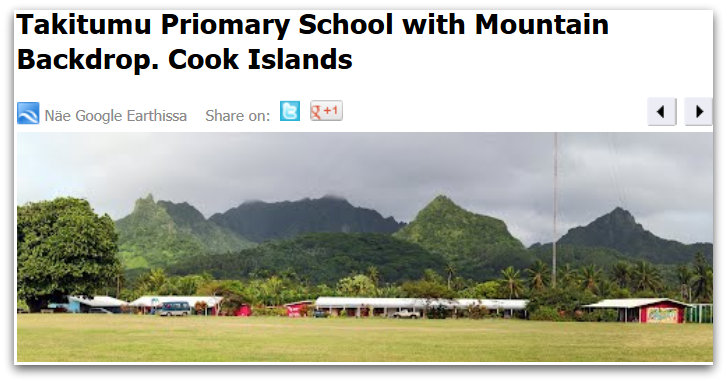
Radio Cook Islands 630 kHz antenna on the school ground of Takitumu Primary School.

Radio Cook Islands 630 kHz antenna on the school ground of Takitumu Primary School.

RCI’s headquarters is in downtown Avarua, and their 5 kw transmitter (reported at half power, 2.5 kw in Dec. 2012) and modern quarter-wavelength vertical antenna is located in the town of Matavera (northeast side of Rarotonga).

Bing.com maps view of Radio Cook Islands antenna, 630 kHz at Takitumu Primary School, Matavera.

Bing.com maps view of Radio Cook Islands antenna, 630 kHz at Takitumu Primary School, Matavera.

The antenna is in the yard of Takitumu primary school; see photos from Bing Maps and Panaromio [above].

It sure brings back a flood of good memories when I listen to these MP3s! I’d love to visit the Cooks again sometime.


Many thanks for this wonderful stroll down memory lane, Guy–radio nostalgia at its best!

I, too, would love to visit the Cook Islands someday–it is on my bucket list. In the meantime, I’ll enjoy your recordings. Again, many thanks for your guest post!

Shortwave Radio Recordings: WWV changes announcement format,1971

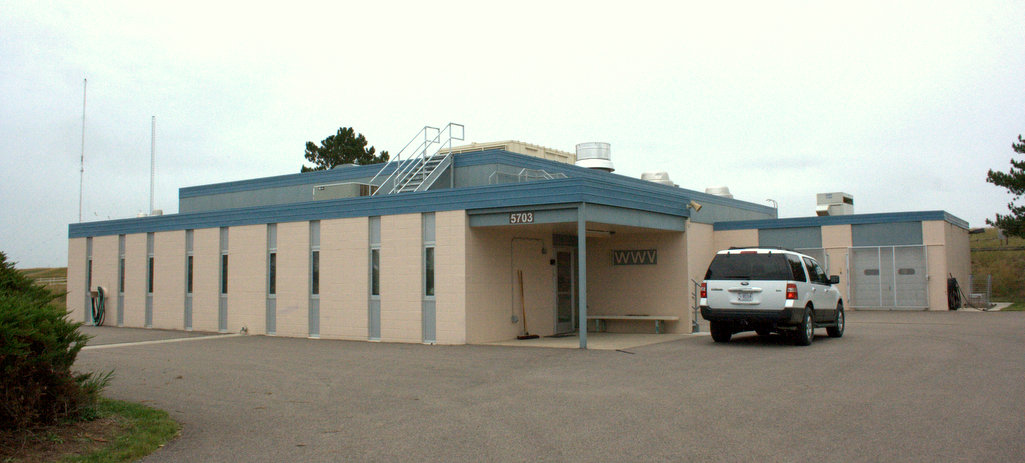
WWV's transmitter building in Fort Collins, Colorado (2014)

WWV’s transmitter building in Fort Collins, Colorado (2014)

Shortwave Radio Audio Archive contributor, Brian D. Smith, recently contacted me; I was enthused when he described the recording he was sharing:

This recording captures the last 5 minutes of WWV’s old format (giving the time every 5 minutes) and the first 5 minutes of the new format (giving the time every 1 minute), which took place on July 1, 1971 UTC.

Apologies for the less-than-stellar audio quality, but I recorded this as a 15-year-old fledgling SWL with limited knowledge of audio recording techniques. So I simply placed the microphone from my cassette tape recorder next to the speaker on the receiver and hit the record button. The signal quality wasn’t the greatest, either — lots of QSB and QRM — but I still managed to get what I was going for.

The resulting recording has accompanied me everywhere since then, preserved only on its original cassette, until 2008, when I finally decided it was time to learn how to transfer it onto my hard drive, burn it onto a CD and stop having to rely on the integrity of 37-year-old audio tape.

Even as a teenager, I regarded the WWV changeover as historic, and felt I should attempt to record it for posterity. Consider yourself posterity!

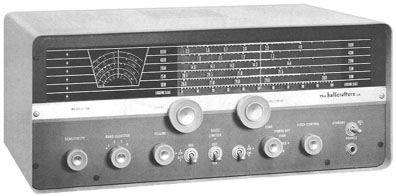
Brian received this broadcast on 10 MHz care of a Hallicrafters S-108, with random length of wire attached to the back of the receiver serving as an antenna. Location was Franklin, Indiana.

As Brian mentions, the audio quality is a little rough, but this is still quite a treasure of a recording!

Click here to download as an MP3, or simply listen via the embedded player below:

Again, thanks so much for bringing us this recording, Brian! We look forward to any other archived recordings you–or any other readers–may have to share with us here at the Post.

Shortwave Radio Recordings: Voice of Greece

greeceFor your listening pleasure: the Voice of Greece.

This was recorded on 29 June 2015 starting around 01:50 UTC on  9,420 kHz using my WinRadio Excalibur and my horizontal delta loop external (wire) antenna.

I’m very pleased with this off-air recording because it contains several minutes of multi-language station IDs in the last 10 minutes or so of the broadcast.

Click here to download this recording as an MP3, or simply listen via the embedded player below:

Shortwave Radio Recordings: Voice of Korea

North-Korea-Propaganda

Many thanks to Frank, a contributor at the Shortwave Radio Audio Archive, for this recording of the Voice of Korea’s English language service.

Frank recorded VOK from his home in Europe on June 10, 2015 on 13760 kHz, starting at 21:00 UTC, using a Kenwood R-5000 receiver and a Wellbrook ALA 1530+ antenna.

Click here to download the recording as an MP3, or simply listen via the embedded player below:

Remember, you can subscribe and download the Shortwave Radio Audio Archive collection (free!) as a podcast via iTunes or the SWAA RSS feed.

Shortwave Radio Recordings: Voice of Turkey, English language service

Turkey

For your listening pleasure: the Voice of Turkey English language service.

This program was recorded on June 7, 2015, starting around 2205 UTC on 9830 kHz.  I started recording the program a few minutes after the top of the hour when a digital transmission on the same frequency finally went off air. I made this recording with the TitanSDR Pro hooked up to my horizontal delta loop antenna.

You will actually hear a few seconds of the digital broadcast at the very beginning of the recording. Click here to download the recording as an MP3, or simply listen via the embedded player below:

Shortwave Radio Recordings: The Mighty KBC

KBC-On-TitanSDR

The TitanSDR’s narrowband scope tuned to the KBC

For your listening pleasure: three hours of The Mighty KBC.

This broadcast was recorded on May 24, 2015 starting around 00:00 UTC on 9,925 kHz.

I used the TitanSDR Pro hooked up to my skyloop antenna to capture this recording–in truth, though, the signal was so strong it could’ve been easily received on a portable here in eastern North America.

Click here to download the recording as an MP3 or simply use the embedded player below: