Shortwave listening and everything radio including reviews, broadcasting, ham radio, field operation, DXing, maker kits, travel, emergency gear, events, and more
NYSBA: 76 Pirate Stations in New York, Northern N.J.
A number of pirate stations are operating throughout New York City and Northern New Jersey, according to a recent engineering survey that was recently unveiled by the New York State Broadcasters Association.
According to the survey, 76 stations are currently operating without an FCC license in four primary locations. There are 19 unauthorized stations in the Bronx, N.Y.; 29 in Brooklyn, N.Y.; 13 in Newark, N.J.; and 15 in Paterson, N.J. Brooklyn saw a 58% increase in the number of pirate stations compared to a similar survey conducted in 2015.
The survey does observe that it has likely underestimated the number of pirate stations in the area, and that the total number could be more than 100.
“Like our previous studies, the new survey provides compelling evidence that the FCC needs to address this problem,” said David Donovan, president of the NYSBA. “Last summer, the entire New York Congressional delegation asked the FCC to fix the problem. While the FCC has published an Enforcement Advisory, it needs to devote the manpower and resources to increase its enforcement efforts. Moreover, Congressional action will be important to assist the FCC in these efforts.”
The potential harms associated with pirate stations include: interference to Broadcast Emergency Alert Services; interference to FAA frequencies; and failure to comply with RF radiation rules of licensed broadcast stations.
When I visit my buddy David Goren in Brooklyn, I’m simply amazed at the diversity of the pirate radio scene on the FM band. When David isn’t surfing the shortwaves, he’s logging local pirate radio stations. Check out his Facebook page: Flatbush Pirate Decoder. David most recently presented a program on the NYC pirate scene at the 11th HOPE conference–you can download a recording of the presentation here.
Many thanks to SWLing Post contributor, Gary DeBock, who shares this summary of the July 2016 Rockwork 4 Ocean Cliff DXpedition:
July 2016 Rockwork 4 Ocean Cliff DXpedition
An International Team Gets Full “Exposure” to a Wild New DXing Venue
By Gary DeBock, Puyallup, WA, USA
Introduction
In the previous century the outstanding receivers developed by the Japanese Sony and Panasonic companies introduced many of us to the thrill of shortwave listening as teenagers, and created an unusually dedicated DXer hobby group in Japan, as well. The Japanese MW-DXing group has all along been extremely active in the hobby, although the challenge of English communication has somewhat limited their interaction with other DXing groups.
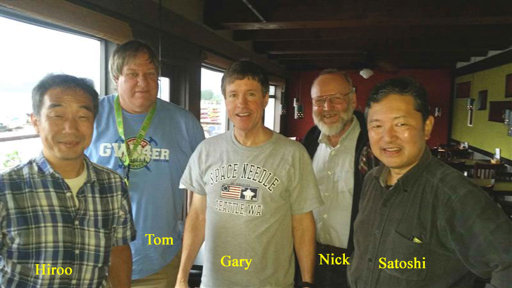
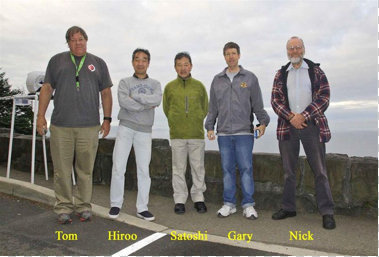
Recently I was highly honored to introduce several modified Ultralight radios to the Japanese DXers, who not only tried these out with great interest, but who also designed and set up modification procedures for Japanese-made equivalents. One of the leaders in this effort was Satoshi Miyauchi, who has already built not only his own 7.5” loopstick Tecsun PL-380 model, but has also built his own 3 inch and 4.25 inch FSL Tecsun PL-380 models as well. When Satoshi-san inquired about the possibility of participating in one of our Rockwork 4 ocean cliff DXpeditions this summer (along with his friend, the famous Japanese MW-DXer Hiroo Nakagawa), I was thrilled to issue the invitation.
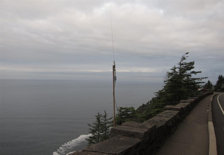
The Rockwork 4 turnoff site on Highway 101 is a sweeping ocean view site about 419 feet (158 meters) directly above the Pacific near Manzanita, Oregon. This would be the first time that any international visitors would participate in an ocean cliff DXpedition. Our North American TP-DXing group has always had a great interest in Japanese DX and Japanese DXers, and this would be the first major North American DXpedition to feature MW-DXers from both countries. Canadian Nick Hall-Patch (of Victoria, B.C.) also was highly interested in participating with the Japanese, and as such, our 5-man DXpedition group was composed primarily of DXers from other countries (with only Tom Rothlisberger joining me as repeat American participants).
Although my own DXpedition efforts started on the morning of July 5th, Nick and Tom both joined up for the session on Saturday, July 9th. We all welcomed our Japanese guests (with a joint dinner at the aptly named “Tsunami” restaurant in Wheeler, Oregon) that evening, and prepared for what we hoped would be a very memorable DXing session early the next morning.
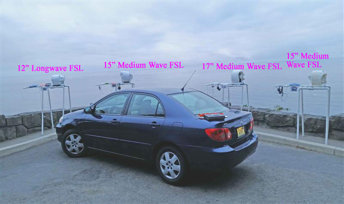
Well, it certainly was very memorable—in the worst possible way. A toxic mix of gale force winds and pounding rain was hammering the ocean cliff site as soon as we arrived for antenna setup at 1015 UTC (0315 local time), which was far and away the worst weather that any of us had ever experienced in an outdoor DXpedition. The sensible Japanese had at least brought suitable rain gear for the session, which was more than the careless North Americans had brought. Tom and I ended up thoroughly drenched and shivering as soon as the antennas were set up, while Nick was partially drenched. A single 15 inch FSL antenna was set up on its PVC base and strapped tightly down to the ocean cliff wall with heavy-duty plastic tie wraps, enabling Satoshi, Hiroo and I to track down some New Zealand, Australian and Tahiti DX with our Ultralight radios despite the vicious weather. Tom’s broadband loop supports absolutely refused to stay upright in the gale force winds, and he eventually had no option other than going outside in the nasty weather to hold one of them in the vertical position manually as he recorded DX on his Perseus-SDR. Nick’s active vertical whip was relatively impervious to the vicious weather, but he was drenched from the knees down because of the pounding rain during its early morning setup.
That entire July 10th session was thoroughly miserable for all of us, but both Satoshi and Hiroo showed great optimism and determination throughout the three hour struggle, which made all of us highly motivated to do the same!
Fortunately, DX (and weather) on the next (and final) morning would allow our Japanese and Canadian guests to experience the South Pacific DX propagation that this cliff is famous for providing. Satoshi and Hiroo became quick experts in New Zealand “big gun” stations, and Satoshi had a great thrill when 738-Tahiti pounded in at an S9 level on his homemade 3 inch FSL Tecsun PL-380 portable.
Propagation definitely favored New Zealand throughout the week (in one of the most Kiwi-slanted trips that has ever been observed here). Although we had a near-daily blowtorch signal from 738-Tahiti and occasional reception from 1017-Tonga, Australian signals generally had a rough time in the NZ-slanted conditions. Tom and I both agree that overall propagation was down somewhat from the exceptional conditions we enjoyed last summer (when we enjoyed good reception of stations like 558-6WA and 558-Fiji) but the chance to welcome the Japanese DXers made the experience especially memorable, and their skill and determination was an inspiration to us all. Listed below are the DU loggings made with my Ultralight radio + FSL antenna combos, which performed quite well throughout the vicious weather challenges on July 10th (better than the drenched and shivering DXer that created them, actually). The DU loggings made by the other DXers will no doubt exceed these, but we all had great fun together, and are looking forward to the next joint DXpedition (either here, or in Japan).
531 4KZ (Innisfail, Australia, 10 kW) MIA during Kiwi-slanted propagation on most mornings, it made it through at a modest level with its classic oldies format and interval signal during PI fade at 1209 on 7-5
531 More FM (Alexandra, NZ, 2 kW) Rare low-powered Kiwi station played hard to get, but did show up during a deep PI fade in Kiwi-slanted propagation at 1222 on 7-6. This Kiwi English monolog sounds mostly garbled to me, but the first 5 seconds certainly sounds like “Welcome time to More FM’s blog…” (headphones recommended)
531 PI (Auckland, NZ, 5 kW) Samoan broadcaster dominated on all 7 days with good signals, although 4KZ and More FM did manage to get through at times. This good-level Samoan female speech on 7-5 was typical
567 RNZ (Wellington, NZ, 50 kW) Most of this big gun’s legendary transoceanic signal seems to have been destroyed along with its old tower (during the recent demolition). It showed up weakly on all 7 days, although always inferior in strength to its 675 parallel
576 2RN (Sydney, Australia, 50 kW) Kiwi-slanted propagation hit this RN-network big gun pretty hard, but it did show up with mediocre signals not // 657 at 1237 on 7-8
576 Star (Hamilton, NZ, 2.5 kW) The “Dwarf Star” (ex-The Word) was strong enough with its Christian female vocal music to confirm the parallel with 657 at 1244 on 7-11. The first 12 seconds in the recording are 576-Star, and the last 12 seconds are the 657 parallel
585 Radio Ngati Porou (Ruatoria, NZ, 2 kW) Wispy male speech was received at 1234 on 7-6 sounding like the usual Maori announcer, but the 603 // apparently started a new song right during the parallel check. Signal nosedived thereafter.
594 Rhema (Timaru/ Wanganui, NZ, 5/ 2 kW) Modest level Christian music // 684 at 1250 on 7-6. Usually a little stronger than the 684 parallel, with no sign of Aussie big gun 3WV during the Kiwi-slanted conditions
603 Radio Waatea (Auckland, NZ, 5 kW) Usually the strongest of the Maori network, this vibrant regular plays a mix of Maori and Motown music. Its strongest signal was on the last day (7-11) at 1218
657 Star (Wellington/ Tauranga, NZ, 50/ 10 kW) Christian hymn broadcaster owned the frequency during the Kiwi-slanted conditions, with this good-level music at 1211 on the last day of 7-11
675 RNZ National (Christchurch, NZ, 10 kW) The new kingpin of RNZ network transoceanic strength (after the demise of 567’s old tower), this relay consistently outperformed its 50 kW parallel. This signal at 1257 on 7-8 was typical
684 Rhema (Gisborne, NZ, 5 kW) Christian contemporary music broadcaster with fairly good signals // 594 at 1247 on 7-9; Tony W. says that the tower property has been sold and eviction is forthcoming
702 2BL (Sydney, Australia, 50 kW) Easily pushing 702-Magic aside whenever it showed up, this Oz big gun was the dominant station on both 7-7 and 7-10. The interview format was much different from Magic’s oldie music
702 Magic (Auckland, NZ, 10 kW) Capable of blistering signals when Kiwi propagation was enhanced, this oldie music broadcaster was the only DU on the frequency on 5 of 7 days
738 Radio Polynesie (Mahina, Tahiti, 20 kW) A real blowtorch on most days, this French-language signal at 1233 on 7-9 was the strongest DU recording made during the trip, and seriously tested the crunch resistance of my Ultralight radio
756 RNZ (Auckland, NZ, 10 kW) Pretty good signal with music // 675 at 1212 on 7-8, a good demonstration of the cliff’s ability to cut down splatter from the 750-Portland pest (50 kW and only 70 miles away)
765 Radio Kahungunu (Napier-Hastings, NZ, 2.5 kW) Once again this low-powered Maori network station acted very much like a Kiwi big gun throughout the week. Maori and Motown music is the norm, as in this recording // 603 at 1215 on 7-8
774 Radio Sport (New Plymouth, NZ, 5 kW) Not nearly as strong as its 792 parallel, it was hit hard by Seattle splatter on most mornings, and never came up in strength for a decent recording
783 Access Radio (Wellington, NZ, 10 kW) Multi-cultural station with varied ethnic programming, this apparent Samoan language music and speech was received at 1241 on 7-7
792 Radio Sport (Hamilton, NZ, 5 kW) Fairly strong on most mornings with its network relay of Fox Sports News, the Yankee-accented English owned the frequency on all 7 days (over the MIA Oz big gun 4RN)
828 3GI (Sale, Australia, 10 kW) On a couple of occasions this LR network big gun was just strong enough to confirm the parallel with 774, but most often it was in a ghostly mix with a presumed Radio Trackside (which never came up in strength for a decent recording).
891 5AN (Adelaide, Australia, 50 kW) Another underperforming Oz big gun, it was usually in a threshold-level mix with another DU English station (probably 4TAB).
936 Chinese Voice (Auckland, NZ, 1 kW) A prime target during enhanced Kiwi propagation, this low-powered ethnic station came through with fairly good-level music and Chinese speech during exceptional propagation at 1243 on 7-6
1008 Newstalk ZB (Tauranga, NZ, 10 kW) Getting through the 1010 splatter at a modest level // 1035 at 1220 on 7-7. Generally not as strong as either the 1035 or 1044 parallel
1017 A3Z (Nuku’alofa, Tonga, 10 kW) Rushed antenna setup prior to 1130 on 7-9 paid off with a fairly good-level logging of male speech from this station, the only foreign language DU on the frequency. Since A3Z’s sign off is usually prior to sunrise enhancement at the cliff, the best chance to track it down is during its late Saturday night transmission, when it typically stays on a little later
1035 Newstalk ZB (Wellington, NZ, 20 kW) The flagship relay of this talk radio network had potent signals on most mornings, including this excellent-level discussion concerning NZ real estate at 1222 on 7-8
1044 Newstalk ZB (Dunedin, NZ, 10 kW) Fairly strong on most mornings with the usual call-in talk program and occasional music // 1035. This recording was at 1210 on 7-9
1386 Radio Tarana (Auckland, NZ, 10 kW) Hindu music broadcaster pounded in when Kiwi propagation was enhanced (as in this recording at 1246 on 7-6), otherwise it got lost in splatter
1503 Radio Sport (Wellington/ Christchurch, NZ, 5/ 2,5 kW) Yankee English from the relay of Fox Sports News (// 792) was usually audible on this frequency on all 7 days
73 and Good DX, Gary DeBock (DXing at the Rockwork 4 Ocean Cliff near Manzanita, OR, USA)
7.5″ loopstick C.Crane Skywave Ultralights (3) +
15″ and 17″ FSL antennas
Report from Tom Rothlisberger
Saturday July 09
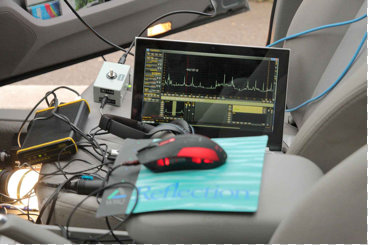
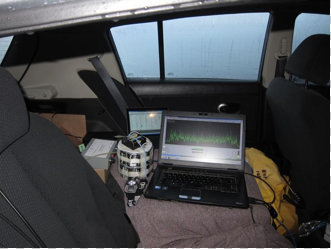
Three of us on the ocean cliffside pullout this morning. It took some time to set up everything as this was a new antenna and configuration for me at the cliffs, and I was planning to experiment with a vactrol for the first time. A major setback occurred when my Win10 notebook refused to recognize the Perseus hardware due to a possibly corrupt driver. To make matters worse I did not bring the backup MSI Wind U100 that I have been using for years with good results. Note to self: always bring backup. I wound up borrowing Nick’s netbook as he did not need it for experiments that morning. So it was 1222 by the time I started recording. Magic 702 was slamming in and 1KW TAB Trackside on 549 was in nicely but briefly. I didn’t think the session was as good as what was experienced last year but everything was working and signals were loud at times, usually briefly, before settling back down into the noise. Little high band action but 1503 Radio Sport was in.
Sunday July 10
Driving rain and gale force winds were making things miserable. My antenna spreaders blew down time after time. For the last 15 minutes of the opening I was holding one up outside by hand, the other secured to the rock wall by heavy straps.
This turned out to be a morning favoring Australia. 1116 4BC was ruling the band with huge signals, I had Aussies on 702 and 936 instead of NZ stations. The ABC News fanfare was heard on 891 on the half hour and there was audio on 1566, 1611 and 1701. This was the only of the three mornings the whole band was in although not very robust like it was last August. IDing signals is still ongoing.
We were all soaked to the bone when it was over, my Gore-Tex jacket was no match for that storm. Distinguished visiting DXers Hiroo-san and Satoshi-san were still smiling at the end. That’s really the important thing, to have fun and overcome adversity. That we heard any stations at all was an added bonus. And we did hear some! We will always remember this morning.
Monday July 11
Another mostly New Zealand morning, decent signals but they would fade back down after a minute or two, and something else would become strong elsewhere on the band, one at a time. This made getting parallels for ID purposes difficult. On several frequencies NZ and Australia signals were fighting it out. It was another low band morning. The TAB Trackside affiliate on 1224 (1 KW) was briefly good but almost nothing heard above it except for occasional audio from Radio Sport 1503. 738 Tahiti was slamming in with meter-bending signals. Satoshi-san and Hiroo-san seemed very pleased as this station is considered rare and exotic DX from Japan.
Overall: 657 Star gets the award for strongest and longest lasting DU signal over the three days, beating last year’s champions 1035 Newstalk ZB and the no longer potent RNZ 567. I had more wire up this year but the signals were really no better. I failed to find a “sweet spot” with the vactrol for reducing splatter from the Portland powerhouses.
Longwave: DX NDBs were practically non-existent. I am wondering if the antenna configuration made it deaf at LW, or if conditions were really that terrible. Only one DX station, 352 KHz “RG” Nikau, Rarotonga, Cook Islands was noted. 531 PI was also exceedingly weak so I suspect the antenna. I will be changing things again at my next visit to the ocean cliffs to ensure I get more LW action.
73, Tom K7WV
Report From Nick Hall-Patch
As promised, a logging or two, and a couple of photos:
549 NEW ZEALAND, Napier-Hastings, TAB Trackside Radio. Man talking, sounded like announcing a horse race, becoming fair //828 1220 July 9. (NHP)
594 NEW ZEALAND, Timaru/Wanganui, Star. Light music, poor strength, //909 July 10. (NHP)
693 NEW ZEALAND, Dunedin, Radio Sport. Poor to fair strength, American sport talk //792 1225 July 9 (NHP)
729 NEW ZEALAND, Tokorua, R. New Zealand National. Light Dixieland style mx, poor strength, seemed //675 but slightly offset so hard to say for certain. Only there for a minute or two, 1212 July 9. (NHP)
747 JAPAN, Sapporo, JOIB. Briefly poor and //774, with man in what sounded like Japanese, certainly not DU English, 1136 July 10. (NHP)
774 NEW ZEALAND, New Plymouth, Radio Sport. Fair to good signal, earlier //792 with American sport talk, bit of electrical noise, unusual for this quiet location, 1227 July 9. (NHP)
792 NEW ZEALAND, Hamilton, Radio Sport. American sport talk, fair strength in splatter //774 1224 July 9. (NHP)
828 NEW ZEALAND, Palmerston North, TAB Trackside Radio. Horse race announcer, fading up to good strength with a little splatter, 1223 July 9, earlier ID’ed by //549. (NHP)
Not what I would call listenable, but somewhat identifiable DX, could be a preacher, which might be Vision Radio Network, but several sites on each channel. Not heard on other days, so a bit out of the ordinary. (NHP)
(July 28) It is just like last week that we had been there! All those memories are good to remember, including the very precious “welcoming” weather on 10th morning! It just showed that even for short period of stay, at least TWO sessions might be required …
DXing results are of course something that we really appreciate out of the DXpedition, but simply the fact that we could meet up and DXing together means a lot! And also both Hiroo and me were very much impressed by all of your efforts even in the middle of darkness and especially in the stormy weather. As for us also, it was the worst weather we ever had on the day of DXpedition! So in many ways we could get “first ever” in this joint DXpedition! We hope that we all can meet sometime in the future either at the cliff, Cliff in Japan, or any other location in the world! Thanking you once again for your hospitality, and actual support on equipments that we could use throughout the DXpedition!
Wow! Gary, thanks so much and thanks to all of the team members–Hiroo, Satoshi, Tom and Nick–for sharing your experiences. Though your weather was less than desirable, it appears your DX was quite successful. You’ve so many mediumwave loggings from New Zealand, I’m convinced you were actually in New Zealand! Most impressive!
Most importantly, it sounds like you all enjoyed a little DX fellowship. At the end of the day, that’s what it’s all about. We look forward to future DXpedition reports!
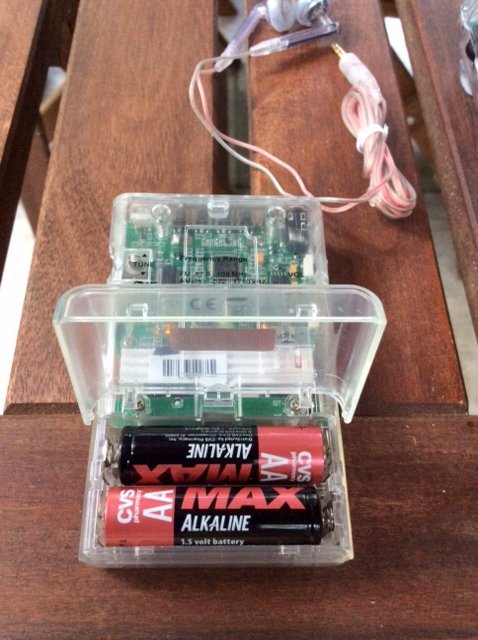
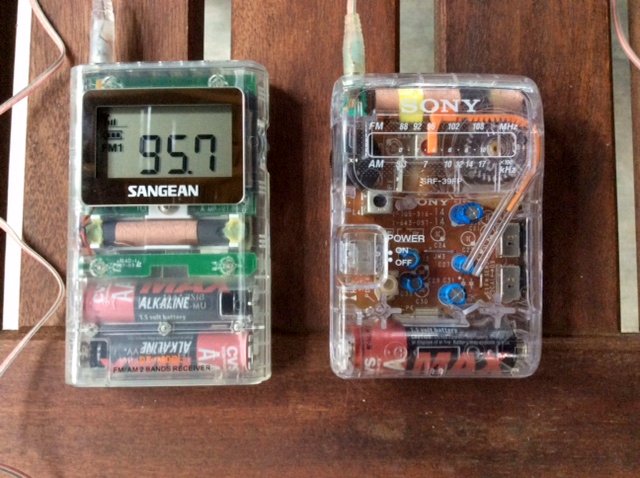
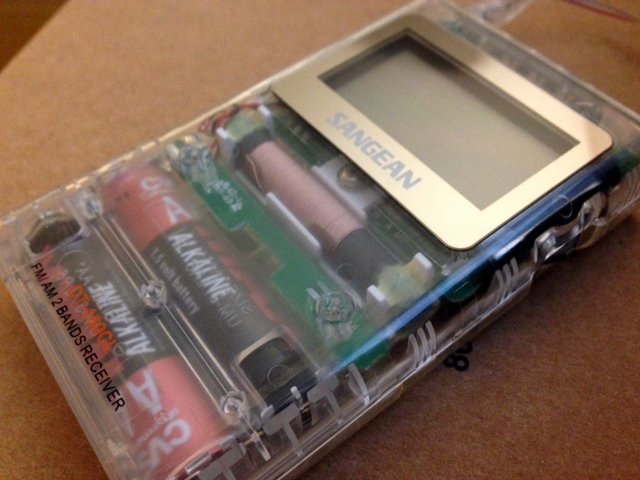
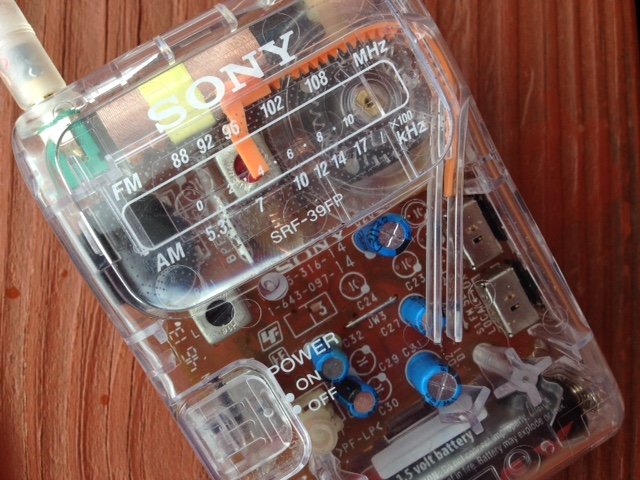
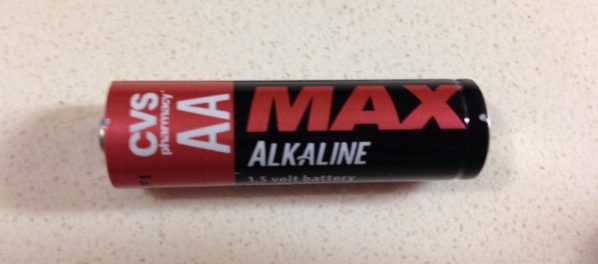
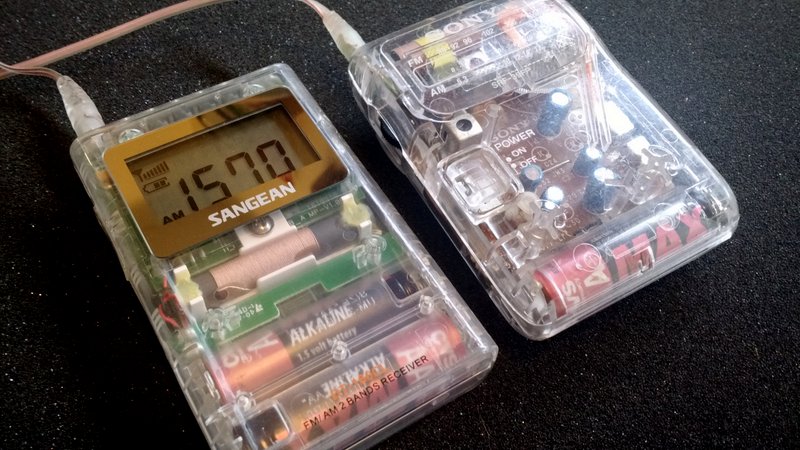
On August 4, 2016, the same day I received my new Sangean DT-160CL, I popped a fresh set of CVS Max Alkaline batteries into the DT-160CL as well as into my trusted Sony SRF-39FP. The mission? To see which radio could perform longest on a set of batteries.
I set my stopwatch as I turned on both radios, tuned to the same frequency, set the volume to the same levels…and waited.
But at last, the waiting is at an end: here are the contest’s final results.
Sangean DT-160CL: Impressive Performance
On August 9, I reported that the Sangean DT-160CL finally threw in the towel, logging an impressive 116 hours 30 minutes of operating time–!
Without a doubt, this is one of the longest run times I’ve ever experienced from an AM/FM radio with digital display.
Interestingly, the day after the DT-160CL shut down, I turned it back on, and it operated for an additional 45 minutes or so, obviously absorbing a little more voltage from rested cells. During that 45 minutes period of time, the audio and overall performance was respectable. No doubt the DT-160 shuts down before audio is terribly compromised.
Sony SRF-39FP: The Endurance King!
Amazingly, the Sony SRF-39FP kept running well beyond 116 hours. Well beyond…
By Wednesday morning–one full week from the time I began the endurance contest–the Sony SRF-39FP finally began showing signs of low-voltage: the audio had a small amount of splatter and sensitivity began to be compromised.
Unlike the Sangean DT-160CL, which clearly has a cut-off voltage, the SRF-39FP kept milking the battery for its last vestiges of power.
I decided that I would call a “time of death” for this AA battery when the Sony struggled to receive local AM stations, as well as transmission from my in-house SStran AM transmitter.
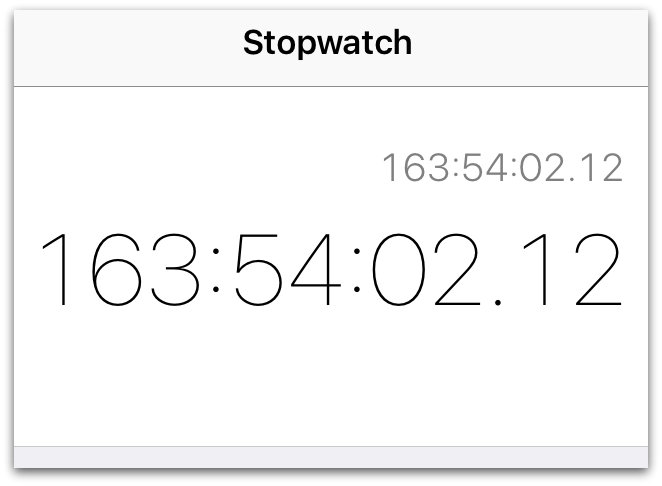
This happened approximately 163 hours and 54 minutes into its marathon run.
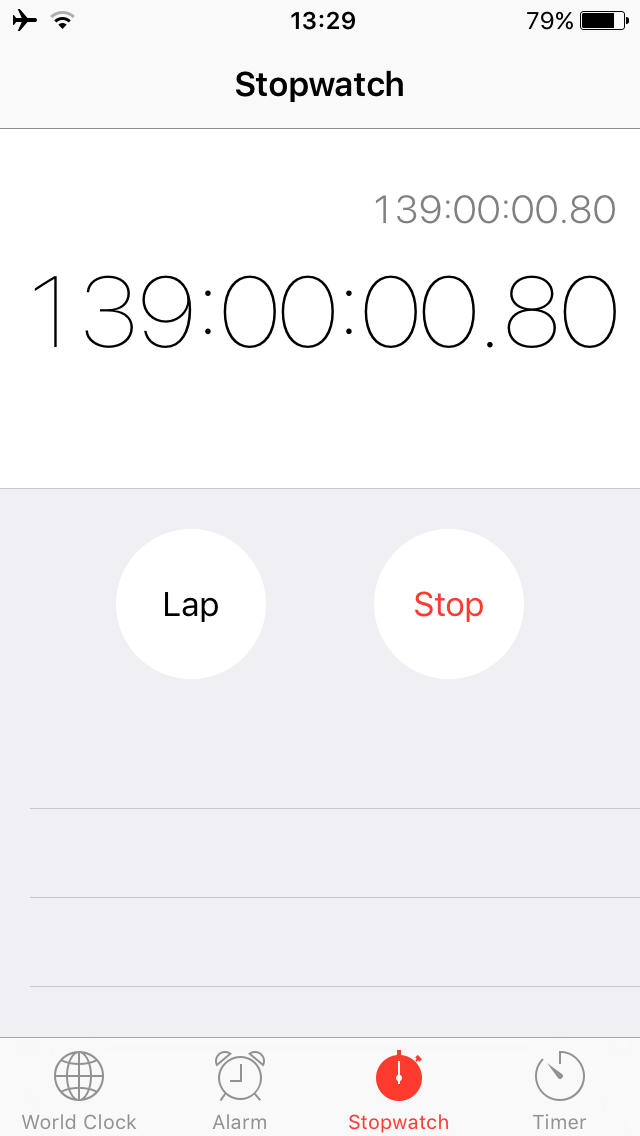
This stopwatch app tracked the full endurance test. I pressed “stop” when the Sony SRF-39FP finally gave up.
Wow, wow, wow. I simply had no idea any portable could operate almost one full week on one AA cell–!
In truth, I’m sort of relieved the ’39FP finally gave up the ghost. I was beginning to think the thing was powered by some supernatural force…
When I started this test, I thought the Sony SRF-39FP was rated for about 40-80 hours of run time on a single battery. I couldn’t remember where I got that number until I recently re-read this article from The New Yorker, which highlighted the 39FP’s role in correctional facilities:
“The SRF-39FP is the gold standard among prison radios in part because it runs on a single AA battery, and offers forty hours of listening time…”
Wait, just forty hours? Perhaps from the cheapest AA battery made…
With an advanced chemistry cell like the Duracell Quantum or Energizer Advanced Lithium series, you’ll clearly get three to four times that performance.
DX mode
And here’s the thing: I’m convinced I could’ve gotten much more time out of the SRF-39FP.
Like similar Sony portables, the SRF-39FP has a “DX/Local” switch. When set to DX, the receiver is made to deliver maximum performance.
If you’re listening to a local station, however, “Local” mode is a better choice. You’ll still be able to receive your target station, yet draw much less from the battery.
I left the Sony SRF-39FP in “DX” mode for the entire battery endurance test. Had it been in “Local” mode, I believe I’d be reporting an even longer run time. How much longer, I don’t know, but you can bet that my curiosity will soon get the best of me…I plan to do a separate endurance test to find out.
Clear choices for battery longevity
No doubt, our little test has proven that radios marketed to the prison system do offer excellent battery performance.
Now I’m very curious whether the standard Sangean DT-160 will offer the same battery performance as its clear-cased counterpart, the DT-160CL. The only difference in the two appears to be that one offers a clock, while the other doesn’t. I wonder if that would have any significant difference on battery life.
Additionally, the Sony SRF-39FP has shown us that analog receivers can be much more efficient than their digital counterparts. We’ve known this a long time at Ears To Our World, and which is why almost all of the radios we supply to schools in remote, rural locations are analog.
Sadly, analog radios are getting much more difficult to find these days as DSP-based receivers have become more affordable to produce.
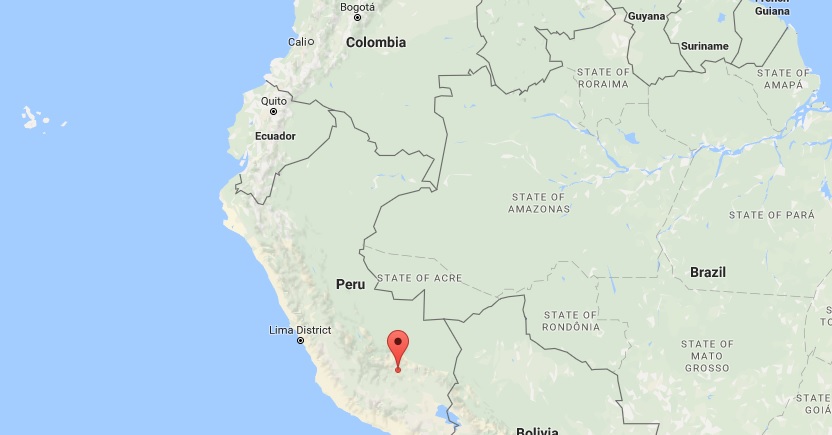
Hi there, I thought I would share my first reception of Radio Tawantinsuyo, from Cusco, Peru, recorded during the inaugural test of my 200 metre longwire antenna. Of course this particular reception could be coincidence, but a very welcome catch in any case. Once again, the Sony ICF-2001D performs very well with this large antenna, but as on previous occasions, the rule is always to ‘choose your battles well’ targeting weak DX signals in uncrowded areas of the Tropical Band and elsewhere on shortwave. More details on the longwire antenna to follow in another post. Recorded at the ‘DX woods’ in Oxfordshire, UK on 31/07/16 at 00:27 hrs UTC. Thanks for watching.
Clint Gouveia is the author of this post and a regular contributor to the SWLing Post. Clint actively publishes videos of his shortwave radio excursions on his YouTube channel: Oxford Shortwave Log. Clint is based in Oxfordshire, England.
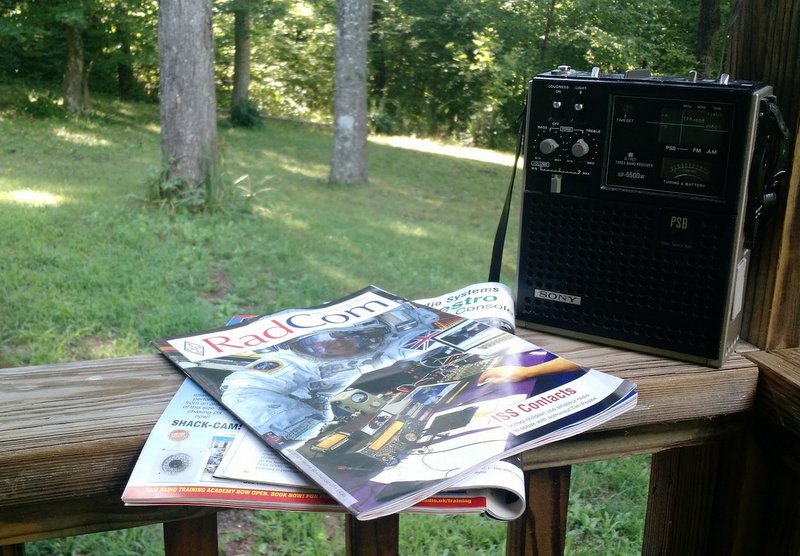
I spent this morning doing a lot of work around our property. When it was time for a break, I turned on my trust Sony ICF-5500W and tuned to WTZQ: one of my favorite regional AM braodcasters. Though WTZQ is over 30 miles from my home, any good AM radio, like the ICF-5500W, can receive their 1,000 watt signal with ease.
As luck would have it, when I turned on my 5500W, WTZQ started playing Love Me Do by The Beatles. It sounded absolutely amazing via the 5500W’s internal speaker: full-on, rich AM audio fidelity! Absolutely brilliant!
I cranked up the volume so our local black bears could enjoy.
I relaxed a good half hour, and caught up on reading the latest two issues of RadCom with my ICF-5500W playing WTZQ in the background.
Sometimes it’s the simple stuff that starts one’s morning off the right way.
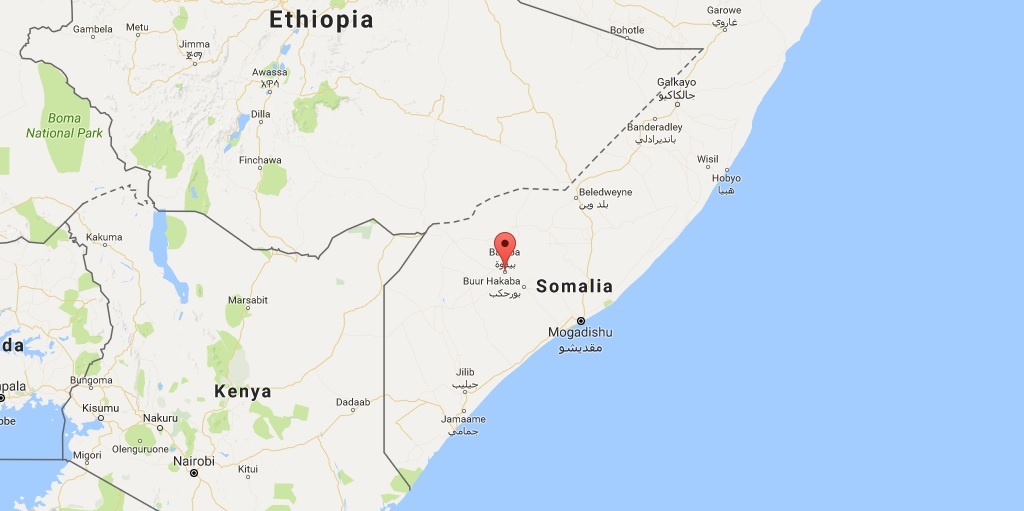
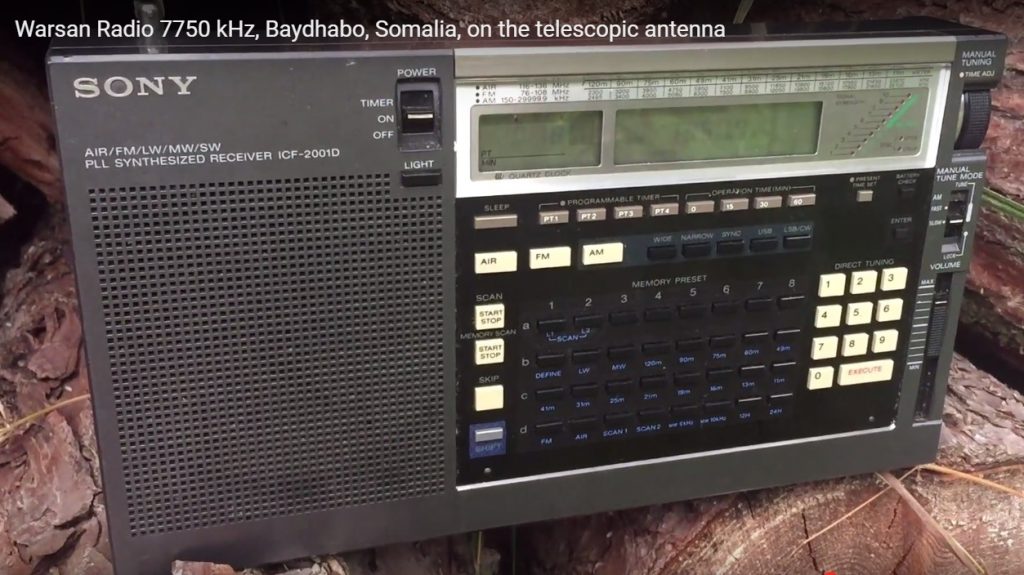
Hi there, great to hear this new station broadcasting from Somalia, during an early evening DX’pedition at my usual spot – a local Oxfordshire wood! Even better to hear it with just the telescopic antenna!
The ICF-2001D is renown for being extremely well ‘tuned’ to it’s own telescopic and this has been demonstrated many times over the past year or so that I’ve been using it. This signal from Somalia was recorded on 08/08/16 at 19:15 hrs UTC using just the ‘whip’. Please click on the image below to access the reception video.
I have another video of the same signal which I will upload soon, demonstrating reception with a 50 metre longwre and the ICF2001D. Until then, I wish you all excellent DX!
Clint Gouveia is the author of this post and a regular contributor to the SWLing Post. Clint actively publishes videos of his shortwave radio excursions on his YouTube channel: Oxford Shortwave Log. Clint is based in Oxfordshire, England.
If you’ve been following the Sangean DT-160CL versus Sony SRF-39FP battery endurance test, I have some news to report: one of our competitors has finally thrown in the towel…!
Yesterday, while I was on the road for about 1.5 hours, the Sangean DT-160CL at last gave up the contest.
Since I was traveling at the time, I can’t say with absolute certainty what o’clock the DT-160 cried uncle––but roughly, we’re looking at 116 hours, 30 minutes of run time, give or take 30 minutes.
Sangean claims the DT-160 series will operate for 100 hours with two AA batteries. That claim is obviously pretty conservative.
Though I used CVS Max Alkaline batteries (a generic version of Duracell’s Quantum batteries)–an improvement on the standard alkaline battery–I set the volume higher than I believe Sangean or Sony would have set it for testing purposes. This should have drained the batteries faster. The radios were also tuned to a variety of stations: weak AM, strong AM, weak FM and strong FM.
In short: I’m very impressed with the DT-160.
A 116 hour play time from two AA cells on a digitally-tuned receiver is, well, pretty incredible.
Now that the endurance test is over for the DT-160CL, I’ll replace the batteries with a fresh set of CVS Max Alkaline cells and start testing the AM/FM receiver performance.
…And how about the Sony SRF-39FP?
My iPhone’s stopwatch has been tracking progress since last Wednesday.
Even more amazingly, the Sony SRF-39FPis still going strong––!
I actually fell asleep last night listening to the SRF-39FP and woke up this morning with music still in my ears. What a champ!
So, how long has the Sony SRF-39FP now been operating on one AA battery?
At time of posting, this little Sony’s clocked one hundred thirty nine hours.
Though I’ve always known that the SRF-39FP was a true battery miser–one of the reasons it’s been a choice radio in the prison system–I had no idea it could operate this long on one battery.
Of course, I’ll continue tracking the Sony SRF-39FP.
How much longer will the SRF-39FP last? Stay tuned to find out!

 Well, it certainly was very memorable—in the worst possible way. A toxic mix of gale force winds and pounding rain was hammering the ocean cliff site as soon as we arrived for antenna setup at 1015 UTC (0315 local time), which was far and away the worst weather that any of us had ever experienced in an outdoor DXpedition. The sensible Japanese had at least brought suitable rain gear for the session, which was more than the careless North Americans had brought. Tom and I ended up thoroughly drenched and shivering as soon as the antennas were set up, while Nick was partially drenched. A single 15 inch FSL antenna was set up on its PVC base and strapped tightly down to the ocean cliff wall with heavy-duty plastic tie wraps, enabling Satoshi, Hiroo and I to track down some New Zealand, Australian and Tahiti DX with our Ultralight radios despite the vicious weather. Tom’s broadband loop supports absolutely refused to stay upright in the gale force winds, and he eventually had no option other than going outside in the nasty weather to hold one of them in the vertical position manually as he recorded DX on his Perseus-SDR. Nick’s active vertical whip was relatively impervious to the vicious weather, but he was drenched from the knees down because of the pounding rain during its early morning setup.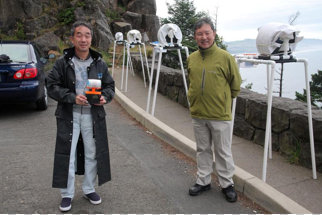
 No doubt, our little test has proven that radios marketed to the prison system do offer excellent battery performance.