Category Archives: Broadcasters

Alan Roe’s Guide to 2020 Holiday Broadcasts on Shortwave

Many thanks to SWLing Post contributor, Alan Roe, who writes:

I have been collating a list of programming on shortwave over the forthcoming holiday period. The programmes listed are predominantly, but not necessarily, seasonal. Here is the first edition of this compilation, which will be updated and redistributed if and when more information becomes available.

Regular weekly music programming, where no special advance programme information has been provided, are not included in this list, but please refer to my Music on Shortwave list also uploaded to the files section.

I hope that you find it useful.

Additions and corrections are most welcome to [email protected]

Best wishes for Christmas and a Happy New Year
Alan Roe, Teddington, UK

Click here to download (PDF). [V4 Update]

This is brilliant, Alan! Thank you so much for curating this guide and sharing it!

Radio Waves: Ajit Pai to Resign, Hams Need to Embrace Hacker Community, Coast Guard Might Abandon HF Voice Watchkeeping, and FCC Action Against Unauthorized Transceivers

Radio Waves:  Stories Making Waves in the World of Radio

Because I keep my ear to the waves, as well as receive many tips from others who do the same, I find myself privy to radio-related stories that might interest SWLing Post readers.  To that end: Welcome to the SWLing Post’s Radio Waves, a collection of links to interesting stories making waves in the world of radio. Enjoy!


FCC Chairman Ajit Pai to leave agency on Inauguration Day (PBS News Hour)

Federal Communications Commission Chairman Ajit Pai, a Republican, says he is leaving the telecommunications regulator on Inauguration Day.

President-elect Joe Biden will choose a new Democratic head for the agency. A new administration typically picks a new chairman.

Pai has presided over a contentious FCC over the last four years. He undid net neutrality rules that barred internet service providers like Comcast and AT&T from favoring some types of online traffic over others in 2017 and championed other deregulatory efforts. He has also worked to free up spectrum for cellphone companies so they can roll out 5G, the next-generation wireless standard that promises faster speeds, and cracked down on Chinese telecom companies as national security threats.

The incoming FCC is likely to try to reinstate net neutrality rules and focus on closing the “digital divide,” getting internet service to Americans who don’t have it because it’s not available or they can’t afford it.[]

Ham Radio Needs To Embrace The Hacker Community Now More Than Ever (Hackaday)

As many a radio amateur will tell you, ham radio is a hobby with as many facets as there are radio amateurs. It should be an exciting and dynamic place to be, but as those who venture forth into it sometimes sadly find out, it can be anything but. Tightly-knit communities whose interests lie in using $1,000 stations to chase DX (long-distance contacts), an advancing age profile, and a curious fascination of many amateurs with disaster communications. It’s something [Robert V. Bolton, KJ7NZL] has sounded off about in an open letter to the amateur radio community entitled “Ham Radio Needs To Embrace The Hacker Community Now More Than Ever“.

In it he laments that the influx in particular of those for whom disaster preparedness is the reason for getting a licence is to blame for amateur radio losing its spark, and he proposes that the hobby should respond by broadening its appeal in the direction of the hacker community. The emphasis should move from emergency communications, he says, and instead topics such as software defined radio and digital modes should be brought to the fore. Finally he talks about setting up hacker specific amateur radio discussion channels, to provide a space in which the talk is tailored to our community.[]

Coast Guard Proposes to Discontinue HF Voice Watchkeeping (ARRL News)

The US Coast Guard has invited comments by January 21, 2021, on a proposal to discontinue HF voice watchkeeping. The proposal [PDF] appeared on November 20 in the Federal Register. The USCG proposes to cease monitoring 4125, 6215, 8291, and 12,290 kHz, in the contiguous US and Hawaii, due to a lack of activity.

“We believe this change would have a low impact on the maritime public, as commercial satellite radios and Digital Selective Calling (DSC) marine-SSB HF radios have become more prevalent onboard vessels,” the Coast Guard said. “However, we would like your comments on how you would be affected if we terminated monitoring HF voice-only distress frequencies within the contiguous US and Hawaii, particularly if you use HF, but do not currently have a commercial satellite radio or an HF DSC-capable radio aboard your vessel.”[]

FCC takes action against marketing of unauthorized transceivers (Southgate ARC)

On November 24 FCC Enforcement Bureau (EB) issued a citation and order concerning the illegal marketing of unauthorized radio frequency devices

The citation says:

This CITATION AND ORDER (Citation), notifies Rugged Race Products, Inc. d/b/a
Rugged Radios (Rugged Radios or Company) that it unlawfully marketed six models of radio frequency devices that (a) operated outside the scope of their respective equipment authorization, or without any equipment authorization; (b) permitted any operator to program and transmit on new frequencies using the device’s external operation controls; and (c) lacked the appropriate labeling. Specifically, Rugged Radios marketed models RH5R-V2, RM25R, RM25R-WP, RM50R, RM60-V, and RM100 in violation of section 302(b) of the Communications Act, as amended (Act), and sections 2.803(b), 2.925(a)(1), 80.203(a), 90.203(a), 90.203(e), 95.361(a), and 95.391 of the Commission’s rules.

Read the Citation and Order at
https://docs.fcc.gov/public/attachments/DA-20-1395A1.pdf

Source FCC Enforcement Bureau
https://www.fcc.gov/enforcement


Do you enjoy the SWLing Post?

Please consider supporting us via Patreon or our Coffee Fund!

Your support makes articles like this one possible. Thank you!

Radio Waves: Potential for Change at USAGM, Judge Rules Pack Unconstitutionally Interfered With VOA, Solar Cycle 25 Could be Strong, and DEF CON Ham Radio Videos

Radio Waves:  Stories Making Waves in the World of Radio

Because I keep my ear to the waves, as well as receive many tips from others who do the same, I find myself privy to radio-related stories that might interest SWLing Post readers.  To that end: Welcome to the SWLing Post’s Radio Waves, a collection of links to interesting stories making waves in the world of radio. Enjoy!

Many thanks to SWLing Post contributors Dan Robinson and Eric McFadden for the following tips:


The Biden Choice on USAGM: Business as usual, or major change (USC Center on Public Diplomancy)

Several years ago, I wrote about ongoing problems at Voice of America and its parent agency, which re-branded in 2018 as the U.S. Agency for Global Media (USAGM), and how Donald Trump would deal with them.

I suggested that the Voice of America could be shut down with little impact on the global media scene. This sparked outrage in some quarters, especially from those invested in perpetuating the yearly $600 million to $800 million taxpayer-funded media structure aimed at foreign audiences.

Space limitations prohibit a thorough review of events since Donald Trump’s nominee to head USAGM, Michael Pack, finally achieved Senate confirmation and took up his post after being blocked for two years by Democrats and some anti-Trump Republicans.

Pack faced a wave of hit pieces by major anti-Trump media as he moved to gain control of the bloated and entrenched USAGM bureaucracy, confront security issues at USAGM, and tackle political bias at VOA. His removal of key officials in charge of USAGM networks is still being fought out in the courts.[]

Trump Appointee Unconstitutionally Interfered With VOA, Judge Rules (NPR)

The chief executive over the Voice of America and its sister networks has acted unconstitutionally in investigating what he claimed was a deep-seated bias against President Trump by his own journalists, a federal judge has ruled.

Citing the journalists’ First Amendment protections, U.S. Judge Beryl Howell on Friday evening ordered U.S. Agency for Global Media CEO Michael Pack to stop interfering in the news service’s news coverage and editorial personnel matters. She struck a deep blow at Pack’s authority to continue to force the news agency to cover the president more sympathetically.

Actions by Pack and his aides have likely “violated and continue to violate [journalists’] First Amendment rights because, among other unconstitutional effects, they result in self-censorship and the chilling of First Amendment expression,” Howell wrote in her opinion. “These current and unanticipated harms are sufficient to demonstrate irreparable harm.”[]

Sunspot Cycle 25 could be among the strongest ever (Southgate ARC)

The ARRL reports a research paper has concluded that Solar Cycle 25 will stronger than the just-ended Solar Cycle 24 and likely stronger than Solar Cycle 23

The League says:

A research paper, “Overlapping Magnetic Activity Cycles and the Sunspot Number: Forecasting Sunspot Cycle 25 Amplitude,” by Scott W. McIntosh, Deputy Director of the National Center for Atmospheric Research in Boulder, et al., has concluded that Solar Cycle 25 could be among the strongest sunspot cycles ever observed, and will almost certainly be stronger than the just-ended Solar Cycle 24 (sunspot number of 116). The scientists say it will also most likely be stronger than Solar Cycle 23 (sunspot number of 180). As the abstract explains:

“The sun exhibits a well-observed modulation in the number of spots on its disk over a period of about 11 years. From the dawn of modern observational astronomy, sunspots have presented a challenge to understanding — their quasi-periodic variation in number, first noted 175 years ago, stimulates community-wide interest to this day. A large number of techniques are able to explain the temporal landmarks, (geometric) shape, and amplitude of sunspot ‘cycles;’ however, forecasting these features accurately in advance remains elusive.

“Recent observationally motivated studies have illustrated a relationship between the sun’s 22-year magnetic cycle and the production of the sunspot cycle landmarks and patterns, but not the amplitude of the sunspot cycle. Using (discrete) Hilbert transforms on more than 270 years of (monthly) sunspot numbers, we robustly identify the so-called ‘termination’ events that mark the end of the previous 11-year sunspot cycle, the enhancement/acceleration of the present cycle, and the end of 22-year magnetic activity cycles. Using these, we extract a relationship between the temporal spacing of terminators and the magnitude of sunspot cycles.

“Given this relationship and our prediction of a terminator event in 2020, we deduce that Sunspot Cycle 25 could have a magnitude that rivals the top few since records began. This outcome would be in stark contrast to the community consensus estimate of Sunspot Cycle 25 magnitude.”

McIntosh’s recorded presentation of the paper is available at this link
Use passcode z7qCn@3G

The research paper is at
https://arxiv.org/pdf/2006.15263.pdf

Source ARRL Letter November 19, 2020
http://www.arrl.org/arrlletter

DEF CON ham radio talks on YouTube (Southgate ARC)

Talks from the DEF CON event are available on YouTube, they include a number of amateur radio talks from the conference’s Ham Radio Village

Among the amateur radio talks are:
• Talking to Satellites by Eric Escobar KJ6OHH
• The K0BAK News Van by Pete Kobak K0BAK
• Single Board Computers (Raspberry Pi) In Amateur Radio by Typer Gardner KI7ODK
• Ham Radio Snail Mail NTS and the Radiogram Format by Aaron Hulett K8AMH
• Hunting tape measure yagis and offset attenuators by Mark Smith KR6ZY
• APRS Demo by Bryan Lamoreaux KG7OOW

Ham Radio Village Playlist
Click here

Other DEF CON videos are at
https://www.youtube.com/user/DEFCONConference/videosoo


Do you enjoy the SWLing Post?

Please consider supporting us via Patreon or our Coffee Fund!

Your support makes articles like this one possible. Thank you!
Radio Waves: 100 Years of Radio, Maritime Radio Communications, AU2JCB Special Event Station, and 20th Anniversary of Ham Radio on the ISS

Radio Waves:  Stories Making Waves in the World of Radio

Because I keep my ear to the waves, as well as receive many tips from others who do the same, I find myself privy to radio-related stories that might interest SWLing Post readers.  To that end: Welcome to the SWLing Post’s Radio Waves, a collection of links to interesting stories making waves in the world of radio. Enjoy!

Many thanks to SWLing Post contributors Dennis Dura, Dan Robinson, Datta Deogaonkar, and the Southgate ARC for the following tips:


Commercial Radio Is 100 Years Old. Can It Survive? (Inside Hook)

Four industry veterans weigh in on how they’d “fix” a medium that remains popular but lacks innovation

The first broadcast from a commercial radio station took place on November 2nd, 1920. Here’s how I imagine listeners responded to the debut of KDKA-AM in Pittsburgh:

Nov. 2: This is amazing! I can hear someone from hundreds of miles away talking through this device! The world will never be the same!

Nov. 3: They’re playing “Wang Wang Blues” again already?

The joke here is twofold: First, there’s a popular song called “Wang Wang Blues” from 1920. And second, by day two, KDKA had already developed the repetitive play-the-hits format that would become one of its hallmarks for the following century.

The first commercial broadcast actually related to the election — it was the idea of a radio manufacturer, Westinghouse, to offer up programming to go along with their newfangled tech (a century later, Apple and Sonos thought exactly the same thing). The first commercial broadcast featured updated results of the Harding-Cox presidential race “before [people] read about it in the newspaper,” as this PBS retrospective notes.

One hundred years later, commercial radio still holds a place in American daily life. The average American still listens to about 106 minutes of radio per day (with the coronavirus and its attendant lockdowns projected to increase that number), and there are more than 15,000 stations in this country alone.

We’re certainly listening to radio differently: according to Statista, 57% of Americans do so online, whether by streaming, downloads, satellite or digital radio. If you asked me how I listen to radio, I’d offer up services like Apple Music 1, Sonos Radio and Dash Radio; podcast downloads from ESPN Radio; online streaming of overseas entities like BBC 1 and Triple J or any occasional college station like WSOU; NPR stations for news and commentary (and music if it’s KCRW); and for new music, a DJ-free experience via Spotify’s New Release Radar playlist. In other words, while audio-only, passive-listening medium has survived and thrived for a century, which is astounding and worthy of celebration, the need for traditional, turn-the-dial “commercial” radio is decidedly on the wane.[]

Radio Officers: our past is our future, our way is to be Radiomen

Many thanks to Dan Robinson who shares this excellent site devoted to maritime communication officers: https://trafficlist.altervista.org/

Special event station commemorating Aacharya Jagadish Chandra Bose

Sir, I want to mention with great pride that I am (VU2DSI) celebrating the birthdate 30 November of Aacharya Jagadish Chandra Bose- every year with a special callsign- AU2JCB for the last 15 years. He is well known as the “Father of Wireless Communication” in the world of science.

AU2JCB will operate from 20 Nov 2020 to 15 DEC 2020.

The Details of operation

Period: 20 NOV 2020 to 15 DEC 2020

Frequencies: 10 M– 28545, 28510,28490. 21 M—21235, 21310, 21350. 20M—14210, 14250, 14310. 40 M—7040, 7150. 80 M — 3710. IN FM MODE—– 6M –50800, 51500. 10 M—29700.

QSL— Direct to VU2DSI, “SURABHI” MEHERABAD. AHMEDNAGAR.414006. INDIA.

This year VU2EVU & VU2XPN will operate with AU3JCB & VU5JCB call-signs respectively.

From Kolkatta, VU3ZHA & VU3MZE will operate with AT2JCB & AU8JCB call-signs respectively. Ten more stations will operate from Kolkatta with JCB in the prefix.

Aacharya J.C.BOSE:

https://www.cv.nrao.edu/~demerson/bose/bose.htm

http://www.qsl.net/vu2msy/JCBOSE.htm

http://au9jcb.angelfire.com for info about Aacharya J.C.BOSE & his work.

https://ethw.org/Jagadish_Chandra_Bose

Regards, HAPPY DEEPAWALI to & all.

DATTA

VU2DSI (AU2JCB).

20th anniversary of first ham radio operation from ISS (Southgate ARC)

On November 13, 2000, the ISS Expedition-1 crew turned on the ARISS Ericsson radio for the first time and completed several contacts with ARISS ground stations around the world to validate the radio communications system

These inaugural contacts launched an incredible two-decade operations journey on ISS, enabling ARISS to inspire, engage and educate our next generation of explorers and provide the ham radio community a platform for lifelong learning and experimentation.

In celebration of the ISS 20th anniversary, ARISS was part of an ISS Research and Development Conference Panel session entitled “20 years of STEM Experiments on the ISS.”  The video below, developed for this panel session, describes our program, celebrates our 20th anniversary, conveys some key lessons learned over the past 20 years and describes the ARISS team’s vision for the future.  Enjoy watching!

20 years of continuous operations is a phenomenal accomplishment.  But what makes it even more extraordinary is that ARISS has achieved this through hundreds of volunteers that are passionate in “paying it forward” to our youth and ham radio community.  On behalf of the ARISS International team, I would like to express our heartfelt thanks to every volunteer that has made ARISS such an amazing success over the past 20 years. Your passion, drive, creativity and spirit made it happen!!

Congratulations ARISS team!!!

Frank H. Bauer, KA3HDO
ARISS International Chair

Watch ARISS 20th Anniversary


Do you enjoy the SWLing Post?

Please consider supporting us via Patreon or our Coffee Fund!

Your support makes articles like this one possible. Thank you!
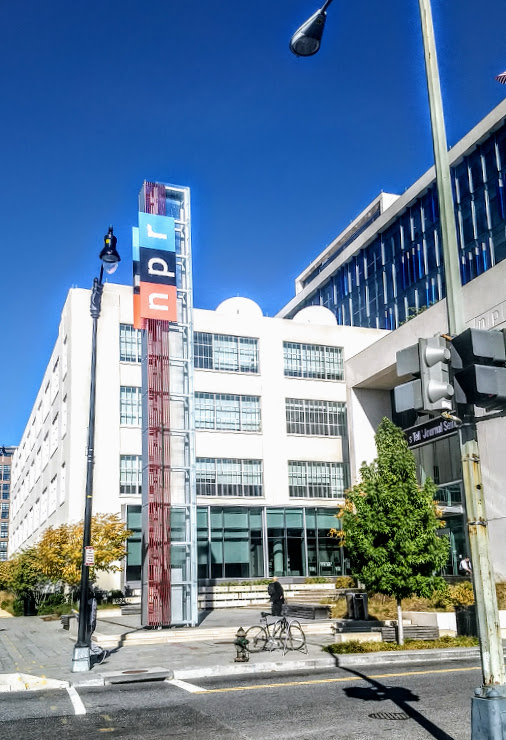
Help listening to NPR in Panama?

May thanks to SWLing Post reader, Aaron, who writes:

Hello Thomas,

We are moving to Panama full-time come January and I am a news junkie. The rural area we are moving to only has satellite internet which is very expensive and in not unlimited. Therefore I desperately need to figure out if I can short-wave Armed Forces or NPR directly in Panama?

Any help?

Thanks, Aaron

Wow–good question, Aaron.

Before I begin looking at options, keep in mind that the SpaceX Starlink system is being rolled out to beta testers now and will likely be public next year.  There’s an initial investment involved with equipment, but the monthly pricing is much more attractive than traditional sat internet providers and latency is also much lower. I, for one, will be looking into Starlink due to the terrible Internet options I have from home.

But back to your question…

So I’m not entirely sure the AFN still broadcasts regularly (or at all) from Guam and Diego Garcia on shortwave these days. I haven’t checked on this in a long time. I hope readers can confirm for us. Over the past couple of decades, AFN shortwave has trimmed and closed many of their sites/broadcasts.

If they covered Central America (they don’t) one option would be satellite radio. Sirius XM has an NPR highlights channel called NPR Now.

One thought I had though was FTA (Free To Air) satellite. This would require investing in a small satellite receiver and dish, but sometimes news audio feeds can be found for free via satellite. I wouldn’t be surprised if NPR has an accessible feed. Plus, you’d then also have access to other live satellite programming and channels from across the globe. My hope is that our FTA-savvy Post readers might comment and help us out here! Click here to read a post by Mario about using FTA to listen to radio stations.

Readers: Please feel free to comment if you have other ideas for listening to NPR from Panama (or other rural/remote parts of the world).

Radio Waves: RFI rebroadcasts halted in Taiwan, City Radio, Plans to Recover Titanic Radio On Hold, and Martin visits Radio Globo and Radio CBN Radio studios

Replica of the Titanic’s radio room at the Antique Wireless Museum (Source: Tripadvisor)

Radio Waves:  Stories Making Waves in the World of Radio

Because I keep my ear to the waves, as well as receive many tips from others who do the same, I find myself privy to radio-related stories that might interest SWLing Post readers.  To that end: Welcome to the SWLing Post’s Radio Waves, a collection of links to interesting stories making waves in the world of radio. Enjoy!

Many thanks to SWLing Post contributors David Iurescia, Dan Robinson, Scott Gamble, and Martin Butera,  for the following tips:


Rebroadcasts of RFI programs halt over alleged “pro-China” stance (RTI)

Taiwan’s National Education Radio has decided to stop domestic rebroadcasts of Radio France Internationale’s programs. That’s after receiving listener complaints that the station’s news programs repeated Chinese talking points that praised Beijing, belittled Taiwan, and criticized the US.

National Education Radio had rebroadcast Radio France Internationale’s French and Chinese programs for Taiwanese audiences during two daily time slots under an agreement arranged by RTI.

During a meeting of the Legislature’s culture and education committee Wednesday, KMT lawmakers said that the education ministry should investigate whether the listener complaints were justified or not. They also expressed concern about what pulling the plug of the rebroadcasts might mean for freedom of speech and the press in Taiwan.

During the meeting, Education Minister Pan Wen-chung said that the rebroadcasting agreement had been intended to foster exchanges with France. Pan said the programs originally rebroadcast were mainly focused on educational and cultural topics. However, Pan said that RTI and National Education Radio have decided to temporarily stop the rebroadcasts, since the content of the re-broadcasted programs had begun to deviate from these non-political topics.

Pan said that he had not personally listened to the rebroadcast programs. He also said that the education ministry had not been informed about the decision to halt rebroadcasts until RTI and National Education Radio had already decided to do so among themselves. However, he said that the education ministry supports the decision.[]

Listen to radio stations from around the world with the push of a bright red button (Huckberry.com)

There’s one type of travel that’s always ready at the drop of a hat: mental vacations, or, travels of the mind. If that sounds pretty namby-pamby, wait until you see what we mean. Inside this handheld radio are 18 windows into the cityscapes of 18 international locations. Streaming live radio from whichever far-off locale you prefer, The CityRadio is a living, immediate connection to the authentic sounds, music, language, and culture of vibrant cities across the globe. Turn it on, tune in, and let your mind wander while your passport stays stowed in a drawer.

U.S. government tries to block Titanic expedition as archeologists say human remains could exist (Yahoo News)

A plan to retrieve the ocean liner’s radio received pushback as archaeologists say human remains could still be there.[]


Martin visits Radio Globo and Radio CBN Radio studios

I’m sending you a PDF about my visit to the Radio Globo and Radio CBN Radio studios, all with photos, video links, lots of texts, all very complete.

It also contains an interesting interview with a quite famous journalist, here in Brazil, creator of podcast content, who worked for 2 years in international Chinese radio and currently works in CBN Radio.

Click here to download (PDF 2.5MB).


Do you enjoy the SWLing Post?

Please consider supporting us via Patreon or our Coffee Fund!

Your support makes articles like this one possible. Thank you!
Radio Waves: NAB and DRM Compete for US Digital, 1937 Radio School, iPhone over AM Radio, and “War of the Waves”

Radio Waves:  Stories Making Waves in the World of Radio

Because I keep my ear to the waves, as well as receive many tips from others who do the same, I find myself privy to radio-related stories that might interest SWLing Post readers.  To that end: Welcome to the SWLing Post’s Radio Waves, a collection of links to interesting stories making waves in the world of radio. Enjoy!

Many thanks to SWLing Post contributors Alan, Paul, Bruce Hardie, Josh Shepherd, and Paul Evans for the following tips:


NAB, DRM Spar Over AM Digital for U.S. (Radio World)

Digital Radio Mondiale says its technology deserves to be tested in the United States

The Federal Communications Commission has been hearing from the National Association of Broadcasters and other interested parties about whether to allow AM band stations to turn on all-digital transmission, and under what parameters.

In addition to publicly filed comments, the NAB, which supports the idea, has made presentations to FCC staff about certain specifics — including whether the FCC should allow Digital Radio Mondiale to be tested in this country. NAB says it should not.[]

Remote learning isn’t new: Radio instruction in the 1937 polio epidemic (The Conversation)

A UNICEF survey found that 94% of countries implemented some form of remote learning when COVID-19 closed schools last spring, including in the United States.

This is not the first time education has been disrupted in the U.S. – nor the first time that educators have harnessed remote learning. In 1937, the Chicago school system used radio to teach children during a polio outbreak, demonstrating how technology can be used in a time of crisis.

[…]In 1937, a severe polio epidemic hit the U.S. At the time, this contagious virus had no cure, and it crippled or paralyzed some of those it infected. Across the country, playgrounds and pools closed, and children were banned from movie theaters and other public spaces. Chicago had a record 109 cases in August, prompting the Board of Health to postpone the start of school for three weeks.

This delay sparked the first large-scale “radio school” experiment through a highly innovative – though largely untested – program. Some 315,000 children in grades 3 through 8 continued their education at home, receiving lessons on the radio.

By the late 1930s, radio had become a popular source of news and entertainment. Over 80% of U.S. households owned at least one radio, though fewer were found in homes in the southern U.S., in rural areas and among people of color.

In Chicago, teachers collaborated with principals to create on-air lessons for each grade, with oversight from experts in each subject. Seven local radio stations donated air time. September 13 marked the first day of school.

Local papers printed class schedules each morning. Social studies and science classes were slated for Mondays, Wednesdays and Fridays; Tuesdays, Thursdays and Saturdays were devoted to English and math. The on-air school day began with announcements and gym. Classes were short – just 15 minutes – providing simple, broad questions and assigning homework.

The objective was to be “entertaining yet informative.” Curriculum planners incorporated an engaging commercial broadcasting style into the lessons. Two principals monitored each broadcast, providing feedback to teachers on content, articulation, vocabulary and general performance. When schools reopened, students would submit their work and take tests to show mastery of the material.

Sixteen teachers answered phone calls from parents at the school district’s central office. After the phone bank logged more than 1,000 calls on the first day, they brought five more teachers on board.[]

Listening to an iPhone with AM Radio (Hackaday)

Electronic devices can be surprisingly leaky, often spraying out information for anyone close by to receive. [Docter Cube] has found another such leak, this time with the speakers in iPhones. While repairing an old AM radio and listening to a podcast on his iPhone, he discovered that the radio was receiving audio the from his iPhone when tuned to 950-970kHz.

[Docter Cube] states that he was able to receive the audio signal up to 20 feet away. A number of people responded to the tweet with video and test results from different phones. It appears that iPhones 7 to 10 are affected, and there is at least one report for a Motorola Android phone. The amplifier circuit of the speaker appears to be the most likely culprit, with some reports saying that the volume setting had a big impact. With the short range the security risk should be minor, although we would be interested to see the results of testing with higher gain antennas. It is also likely that the emission levels still fall within FCC Part 15 limits.[]

“War of the Waves: Radio and Resistance during World War II.” (American Economic Journal: Applied Economics)

Abstract: We analyze the role of the media in coordinating and mobilizing insurgency against an authoritarian regime, in the context of the Nazi-fascist occupation of Italy during WWII. We study the effect of BBC radio on the intensity of internal resistance. By exploiting variations in monthly sunspot activity that affect the sky-wave propagation of BBC broadcasting toward Italy, we show that BBC radio had a strong impact on political violence. We provide further evidence to document that BBC radio played an important role in coordinating resistance activities but had no lasting role in motivating the population against the Nazi-fascist regime.

You can find a pre-print at: https://www.econstor.eu/bitstream/10419/202840/1/1016161859.pdf.


Do you enjoy the SWLing Post?

Please consider supporting us via Patreon or our Coffee Fund!

Your support makes articles like this one possible. Thank you!