Shortwave listening and everything radio including reviews, broadcasting, ham radio, field operation, DXing, maker kits, travel, emergency gear, events, and more
Many thanks to SWLing Post contributor, 13dka, who shares the following:
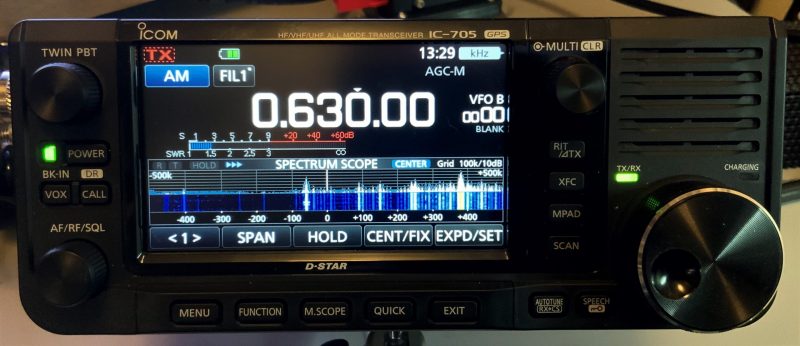
Yesterday evening, I took the Icom IC-705 to the dike for the first time (got it on Thursday and spent a lof of time with familiarization).
Since it was already too dark, wet and cold for all the fuss with antennas, I decided to just put a telescopic whip on a tiny magmount on the car roof, curious what the 705 would make out of that. That magmount is the worst thing ever, too much cheap RG-174 seems to attenuate the signal from the whip (possibly some impedance catastrophe), my portables don’t like that thing at all.
So the antenna was as bad as it gets but…it demonstrated what the 705 can do with extremely faint signals! I had really good and quiet reception even when signals were not at all showing up on the S-Meter or much on the waterfall. I had to turn on preamp 2 and crank up the scope “Ref” gain up to see anything, but SNR was great, I didn’t have the feeling that I’m missing many stations and it even worked pretty well on medium wave to longwave, with the signal really tapering off only below 500 kHz and I learned why omnidirectional whips never caught on on MW! ?
AM band scan:
31m band scan:
So yes, as an SWL/BCL receiver it will likely perform as good as it possibly gets with literally any antenna or anything that could stand in for an antenna, the only thing it doesn’t have is sync but since it can tune in 1 Hz steps it can truly zero beat in ECSS, it has notch/autonotch (indispensable also on congested broadcast bands), passband tuning, if I didn’t get that wrong it has 10,000 memories and the 32 GB SD card I was putting in is good for more than 3 weeks of recording 24/7. With some regular BNC whip it’s still a cool bedside radio in a hotel room (no alarm function tho), also good for some VHF/UHF in-house good night 88s between licensed dads and daughters if you plug in the mic, which you don’t have to.
What a cool toy, I’m sure I will still love it when the honeymoon is over!
Thanks for sharing this, and for those band scans. Wow! And I love the “also good for some VHF/UHF in-house good night 88s between licensed dads and daughters”–! Ha ha! That is a real possibility.
Your IC-705 experience on MW and SW is similar to mine. I’ve used the IC-705 a number of times in the field and find that it has a superb and capable general coverage receiver. I’ve also coupled it with my homemade NCPL antenna and have been very pleased with the results. I couldn’t be more pleased.
You’ll find the twin passband filters are incredibly effective at knocking out adjacent signal spill-over. And, yes, the auto notch feature is excellent for killing hets in your audio. I’ve even used the notch manually and like many of my PC-connected SDRs, the filter can be adjusted in width.
I think you’ll continue to enjoy the IC-705 well beyond the honeymoon phase and I’m hoping you might even post some more comparisons at the dike!
AS I mentioned in previous posts, I had fully intended to sell the IC-705 after my review period, but I’ve grown to love this radio so much, that is no longer going to happen.
Many thanks to SWLing Post contributor, 13dka, who shares the following guest post:
Gone fishing…for DX: Reception enhancement at the seaside
by 13dka
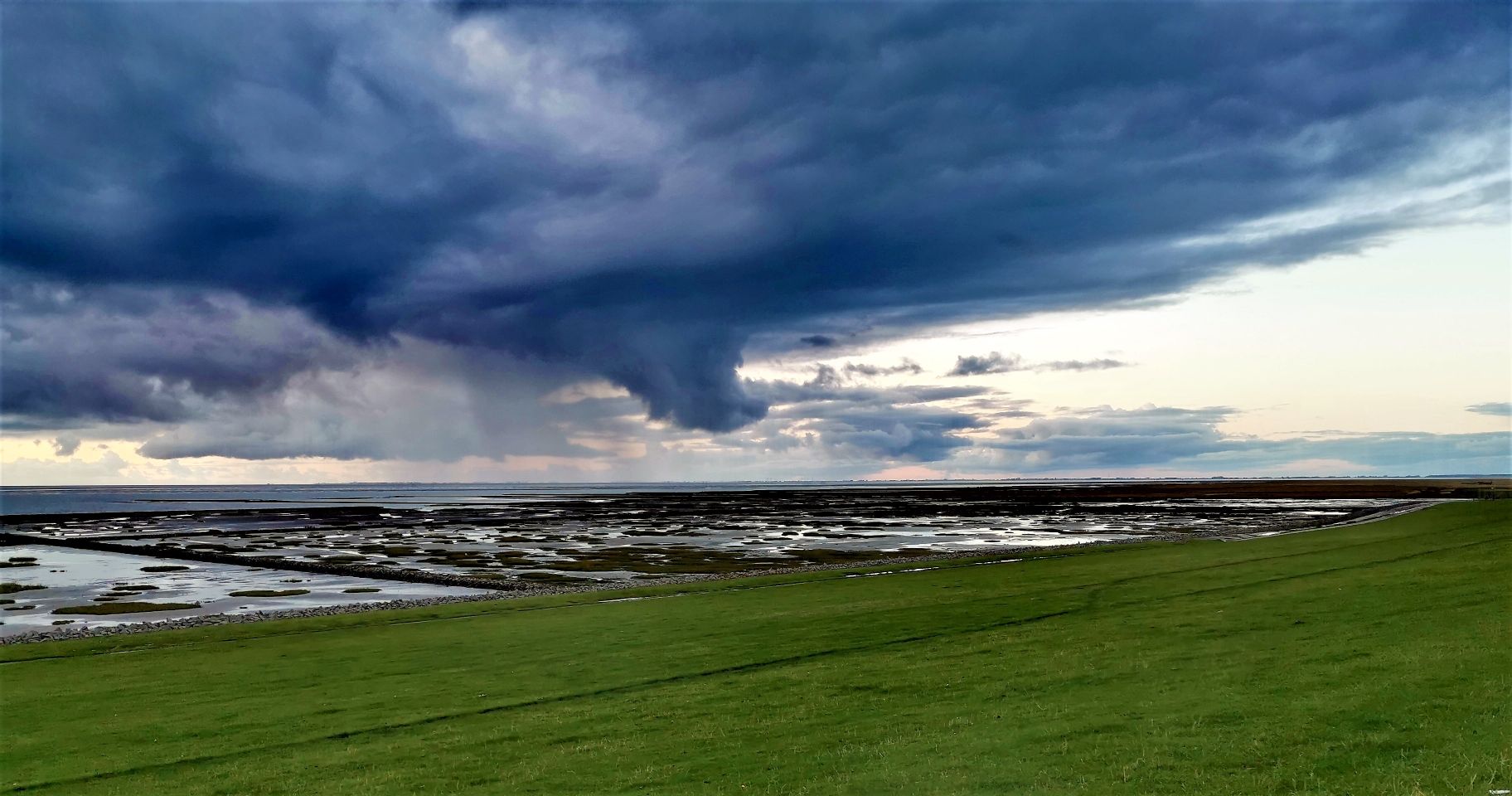
In each of my few reviews I referred to “the dike” or “my happy place”, which is a tiny stretch of the 380 miles of dike protecting Germany’s North Sea coast. This is the place where I like to go for maximum listening pleasure and of course for testing radios. Everyone knows that close proximity to an ocean is good for radio reception…but why is that? Is there a way to quantify “good”?
Of course there is, this has been documented before, there is probably lots of literature about it and old papers like this one (click here to download PDF). A complete answer to the question has at least two parts:
1. Less QRM
It may be obvious, but civilization and therefore QRM sources at such a place extend to one hemisphere only, because the other one is covered with ocean for 100s, if not 1000s of miles. There are few places on the planet that offer such a lack of civilization in such a big area, while still being accessible, habitable and in range for pizza delivery. Unless you’re in the midst of a noisy tourist trap town, QRM will be low. Still, you may have to find a good spot away from all tourist attractions and industry for absolutely minimal QRM.
My dike listening post is far enough from the next small tourist trap town (in which I live) and also sufficiently far away from the few houses of the next tiny village and it’s located in an area that doesn’t have HV power lines (important for MW and LW reception!) or industrial areas, other small villages are miles away and miles apart, the next town is 20 km/12 miles away from there. In other words, man-made noise is just not an issue there.
That alone would be making shortwave reception as good as it gets and it gives me an opportunity to check out radios on my own terms: The only way to assess a radio’s properties and qualities without or beyond test equipment is under ideal conditions, particularly for everything that has to do with sensitivity. It’s already difficult without QRM (because natural noise (QRN) can easily be higher than the receiver’s sensitivity threshold too, depending on a number of factors), and even small amounts of QRM on top make that assessment increasingly impossible. This is particularly true for portables, which often can’t be fully isolated from local noise sources for a couple of reasons.
Yes, most modern radios are all very sensitive and equal to the degree that it doesn’t make a difference in 98% of all regular reception scenarios but my experience at the dike is that there are still differences, and the difference between my least sensitive and my most sensitive portable is not at all negligible, even more because they are not only receivers but the entire receiving system including the antenna. You won’t notice that difference in the middle of a city, but you may notice it in the woods.
When the radio gets boring, I can still have fun with the swing and the slide!
2. More signal
I always had a feeling that signals actually increase at the dike and that made me curious enough to actually test this by having a receiver tuned to some station in the car, then driving away from the dike and back. Until recently it didn’t come to me to document or even quantify this difference though. When I was once again googling for simple answers to the question what the reason might be, I stumbled upon this video: Callum (M0MCX) demonstrating the true reason for this in MMANA (an antenna modeling software) on his “DX Commander” channel:
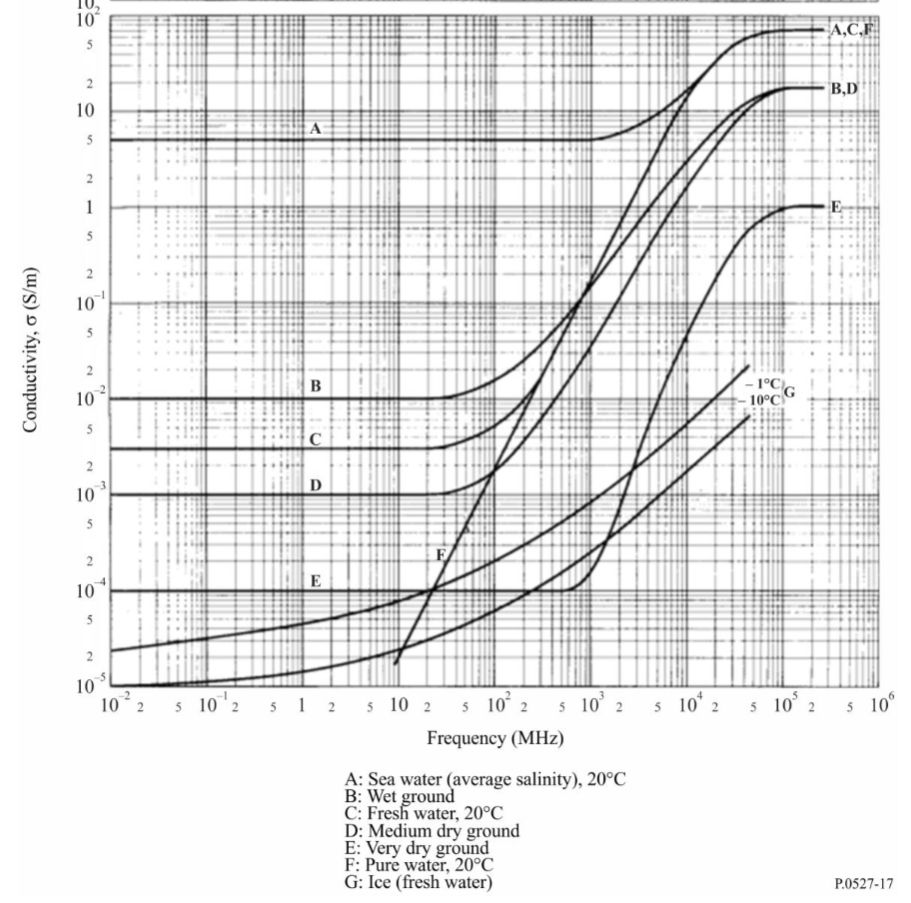
To summarize this, Callum explains how a pretty dramatic difference in ground conductivity near the sea (click here to download PDF) leads to an increase in antenna gain, or more precisely a decrease in ground return losses equaling more antenna gain. Of course I assumed that the salt water has something to do with but I had no idea how much: For example, average ground has a conductivity of 0.005 Siemens per meter, salt water is averaging at 5.0 S/m, that’s a factor of 1,000 (!) and that leads to roughly 10dB of gain. That’s right, whatever antenna you use at home in the backcountry would get a free 10dB gain increase by the sea, antennas with actual dBd or dBi gain have even more gain there.
That this has a nice impact on your transmitting signal should be obvious if you’re a ham, if not just imagine that you’d need a 10x more powerful amplifier or an array of wires or verticals or a full-size Yagi to get that kind of gain by directionality. But this is also great for reception: You may argue that 10dB is “only” little more than 1.5 S-units but 1.5 S-units at the bottom of the meter scale spans the entire range between “can’t hear a thing” and “fully copy”!
A practical test
It’s not that I don’t believe DX Commander’s assessment there but I just had to see it myself and find a way to share that with you. A difficulty was finding a station that has A) a stable signal but is B) not really local, C) on shortwave, D) always on air and E) propagation must be across water or at least along the coastline.
The army (or navy) to the rescue! After several days of observing STANAG stations for their variation in signal on different times of the day, I picked one on 4083 kHz (thanks to whoever pays taxes to keep that thing blasting the band day and night!). I don’t know where exactly (my KiwiSDR-assisted guess is the English channel region) that station is, but it’s always in the same narrow range of levels around S9 here at home, there’s usually the same little QSB on the signal, and the signals are the same day or night.
On top of that, I had a look at geological maps of my part of the country to find out how far I should drive into the backcountry to find conditions that are really different from the coast. Where I live, former sea ground and marsh land is forming a pretty wide strip of moist, fertile soil with above average conductivity, but approximately 20km/12mi to the east the ground changes to a composition typical for the terminal moraine inland formed in the ice age. So I picked a quiet place 25km east of my QTH to measure the level of that STANAG station and also to record the BBC on 198 kHz. Some source stated that the coastal enhancement effect can be observed within 10 lambda distance to the shoreline, that would be 730m for the 4 MHz STANAG station and 15km for the BBC, so 25km should suffice to rule out any residue enhancement from the seaside.
My car stereo has no S-meter (or a proper antenna, so reception is needlessly bad but this is good in this case) so all you get is the difference in audio. The car had the same orientation (nose pointing to the east) at both places. For the 4 MHz signal though (coincidence or not), the meter shows ~10dBm (or dBµV/EMF) more signal at the dike.
3. Effect on SNR
Remember, more signal alone does not equal better reception, what we’re looking for is a better signal-to-noise ratio (SNR). Now that we’ve established that the man-made noise should be as low as possible at “my” dike, the remaining question is: Does this signal enhancement have an effect on SNR as well? I mean, even if there is virtually no local QRM at my “happy place” – there is still natural noise (QRN) and wouldn’t that likely gain 10dB too?
Here are some hypotheses that may be subject of debate and some calculations way over my head (physics/math fans, please comment and help someone out who always got an F in math!). Sorry for all the gross oversimplifications:
Extremely lossy antennas
We know that pure reception antennas are often a bit different in that the general reciprocity rule has comparatively little meaning, many antennas designed for optimizing reception in specific situations would be terrible transmitting antennas. One quite extreme example, not meant to optimize anything but portability is the telescopic whip on shortwaves >10m. At the dike, those gain more signal too. When the QRN drops after sunset on higher frequencies, the extremely lossy whip might be an exception because the signal coming out of it is so small that it’s much closer to the receiver noise, so this friendly signal boost could lift very faint signals above the receiver noise more than the QRN, which in turn could mean a little increase in SNR, and as we know even a little increase in SNR can go a long way.
The BBC Radio 4 longwave recording is likely another example for this – the unusually weak signal is coming from a small and badly matched rubber antenna with abysmal performance on all frequency ranges including LW. The SNR is obviously increasing at the dike because the signal gets lifted more above the base noise of the receiving system, while the atmospheric noise component is likely still far below that threshold. Many deliberately lossy antenna design, such as flag/tennant, passive small aperture loops (like e.g. the YouLoop) or loop-on-ground antennas may benefit most from losses decreasing by 10dB.
Not so lossy antennas, polarization and elevation patterns
However, there is still more than a signal strength difference between “big” antennas and the whips at the dike: Not only at the sea, directionality will have an impact on QRN levels, a bidirectional antenna may already decrease QRN and hence increase SNR further, an unidirectional antenna even more, that’s one reason why proper Beverage antennas for example work wonders particularly on noisy low frequencies at night (but this is actually a bad example because Beverage antennas are said to work best on lossy ground).
Also, directional or not, the “ideal” ground will likely change the radiation pattern, namely the elevation angles, putting the “focus” of the antenna from near to far – or vice versa: As far as my research went, antennas with horizontal polarization are not ideal in this regard as they benefit much less from the “mirror effect” and a relatively low antenna height may be more disadvantageous for DX (but maybe good for NVIS/local ragchewing) than usual. Well, that explains why I never got particularly good results with horizontal dipoles at the dike!
Using a loop-on-ground antenna at a place without QRM may sound ridiculously out of place at first, but they are bidirectional and vertically polarized antennas, so the high ground conductivity theoretically flattens the take-off angle of the lobes, on top of that they are ~10dB less lossy at the dike, making even a LoG act more like something you’d string up as high as possible elsewhere. They are incredibly convenient, particularly on beaches where natural antenna supports may be non-existent and I found them working extremely well at the dike, now I think I know why. In particular the preamplified version I tried proved to be good enough to receive 4 continents on 20m and a 5th one on 40m – over the course of 4 hours on an evening when conditions were at best slightly above average. Though the really important point is that it increased the SNR further, despite the QRN still showing up on the little Belka’s meter when I connected the whip for comparison (alas not shown in the video).
The 5th continent is missing in this video because the signals from South Africa were not great anymore that late in the evening, but a recording exists.
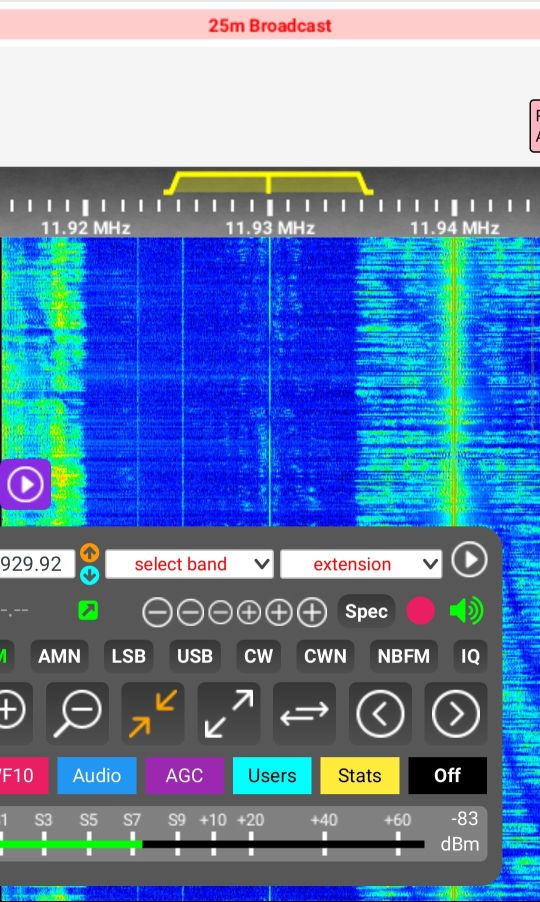
Here’s a video I shot last year, comparing the same LoG with the whip on my Tecsun S-8800 on 25m (Radio Marti 11930 kHz):
At the same time, I recorded the station with the next decent (but more inland) KiwiSDR in my area:
Of course, these directionality vs noise mechanisms are basically the same on any soil. But compensating ground losses and getting flat elevation patterns may require great efforts, like extensive radial systems, buried meshes etc. and it’s pretty hard to cover enough area around the antenna (minimum 1/2 wavelength, ideally more!) to get optimum results on disadvantaged soils, while still never reaching the beach conditions. You may have to invest a lot of labor and/or money to overcome such geological hardships, while the beach gives you all that for free.
But there may be yet another contributing factor: The gain pattern is likely not symmetrical – signals (and QRN) coming from the land side will likely not benefit the same way from the enhancement, which tapers off quickly (10 wavelengths) on the land side of the dike and regular “cross-country” conditions take place in that direction, while salt water stretching far beyond the horizon is enhancing reception to the other side.
So my preliminary answer to that question would be: “Yes, under circumstances the shoreline signal increase and ground properties can improve SNR further, that improvement can be harvested easily with vertically polarized antennas”.
Would it be worthwhile driving 1000 miles to the next ocean beach… for SWLing?
Maybe not every week–? Seriously, it depends.
Sure, an ocean shoreline will generally help turning up the very best your radios and antennas can deliver, I think the only way to top this would be adding a sensible amount of elevation, a.k.a. cliff coasts.
If you’re interested in extreme DX or just in the technical performance aspect, if you want to experience what your stuff is capable of or if you don’t want to put a lot of effort into setting up antennas, you should definitely find a quiet place at the ocean, particularly if your options to get maximum performance are rather limited (space constraints, QRM, HOA restrictions, you name it) at home.
If you’re a BCL/program listener and more interested in the “content” than the way it came to you, if you’re generally happy with reception of your favorite programs or if you simply have some very well working setup at home, there’s likely not much the beach could offer you in terms of radio. But the seaside has much more to offer than fatter shortwaves of course.
From left to right: Starry sky capture with cellphone cam, nocticlucent clouds behind the dike, car with hot coffee inside and a shortwave portable suction-cupped to the side window – nights at the dike are usually cold but sometimes just beautiful. (Click to enlarge.)
However, getting away from the QRM means everything for a better SNR and best reception. In other words, if the next ocean is really a hassle to reach, it may be a better idea to just find a very quiet place nearby and maybe putting up some more substantial antenna than driving 1000 miles. But if you happen to plan on some seaside vacation, make absolutely sure you bring two radios (because it may break your heart if your only radio fails)!
A little update (2023):
Like I said, the +10dB signal boost works both ways and here’s a nice example that I thought should be here. This is W4SWV, literally standing with both feet in the Atlantic ocean at the South Carolina coastline, carrying a 25W backpack radio with a whip and talking to F6ARC in France on 17m – received at my side of the pond using my simple vertical 33’/10m monopole antenna at the dike:
This was recorded on July 4th, 2021 and does not provide a reference to demonstrate how good or bad this is of course, all you have is my word that getting such a solid and loud signal from a 25W station on the US East Coast was just outstanding (compared to a fair number of coastal QRP stations I copied at the dike over the years, or the average 100W inland stations).
Meanwhile I found out that I’m luckily not the only (or the first) person who tried to make some practical experiments to reassess the theories in recent times: Greg Lane (N4KGL) made measurements by transmitting a WSPR signal simultaneously off 2 locations, one near the shoreline and one more inland. Measuring the signals created in distant WSPR receivers, he got similar results. He made a presentation about it in 2020:
In my earlier article, I introduced the Co-Channel Canceller, a unique feature in AirSpy’s SDR# program for the benefit of medium wave DXers.
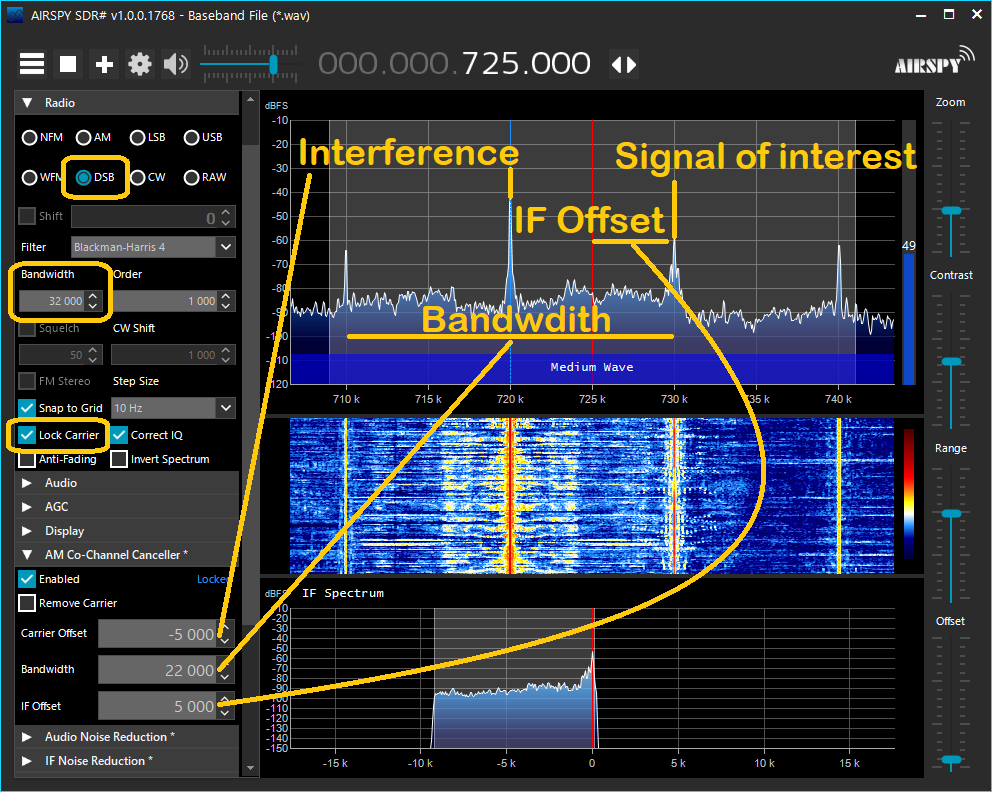
Now only a day later, software author and AirSpy founder Youssef Touil expands the toolset of Co-Channel Canceller with I.F. Offset and Channel Bandwidth controls.
To download this latest release, click here to go to AirSpy’s downloads page.
It’s my hope that AirSpy will publish a tutorial or YouTube video(s) with step-by-step examples to help with using this unique feature. Until then, it’s certainly fun to try!
Guy Atkins is a Sr. Graphic Designer for T-Mobile and lives near Seattle, Washington. He’s a regular contributor to the SWLing Post.
A version of AirSpy’s popular SDR# software, showing the dark mode interface introduced in 2019. SDR# is always evolving, and the latest new tool is the Co-Channel Canceller.
It’s easy to take for granted the magical math that happens in Software Defined Radio. Occasionally though a breakthrough occurs which really grabs our attention, thanks to the hard work and bright minds of the designers behind the receivers and the software.
On the software side, the first series of “wow” moments happened for me in 2007-2008 when Nico Palermo of Perseus SDR fame expanded the program’s alias-free bandwidth incrementally from a modest (but impressive for the time) 100 kHz all the way up to the current 1600 kHz coverage.
The top-end 1600 kHz bandwidth was a game changer which allowed medium wave DXers the opportunity to record IQ-WAV files of the entire band for later review, analysis, and DXing. It’s even more impressive considering this expansion was done without any additional hardware or receiver updates.
What did Nico charge Perseus owners for this incredibly useful expansion of spectrum and waterfall bandwidth? Nothing! The program with its much improved features continued freely available to previous and new Perseus SDR owners.
Now in 2020, Youssef Touil, AirSpy’s hardware and software developer, brings a “killer feature” to his own SDR program named SDR#, for the benefit of medium wave DXers: the Co-Channel Canceller. The cost for this innovative tool? Yep, it’s a free addition to SDR#.
What are the benefits of the Co-Channel Canceller? This question is best answered by listening to three examples published by Youssef on his Twitter feed.
Read the descriptions below and listen to the brief audio files. In each example the Co-Channel Canceller is turned on and off a few times:
For the first example above, I suspect the 594 kHz station is Saudi Arabia’s Radio Riyadh, and the off-channel 596 kHz signal is Al Idaa Al-Watania from Morocco. It’s impressive that the 50 kw 596 station can be uncovered to any degree, as Radio Riyadh is a whopping 2000 kw!
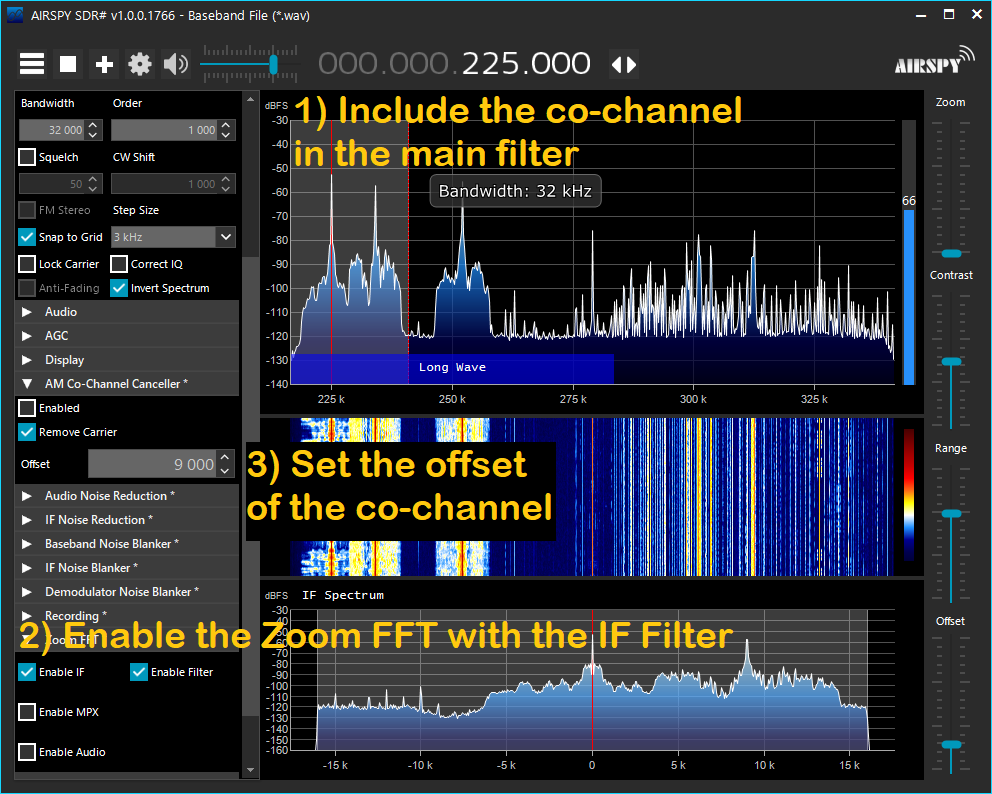
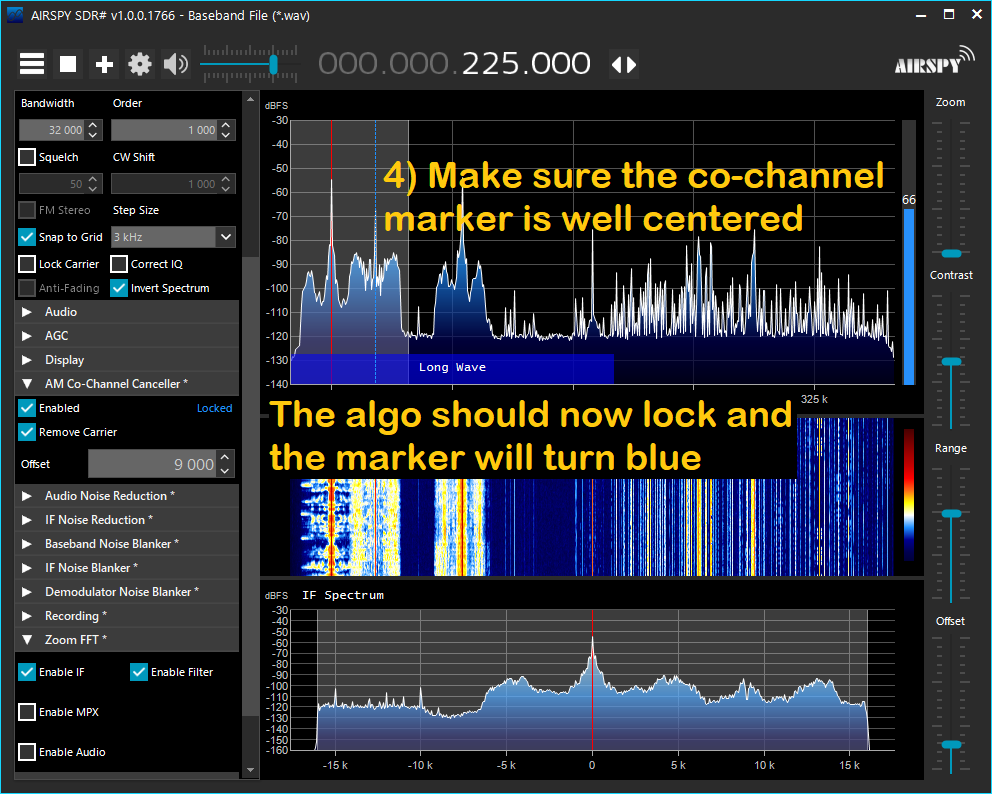
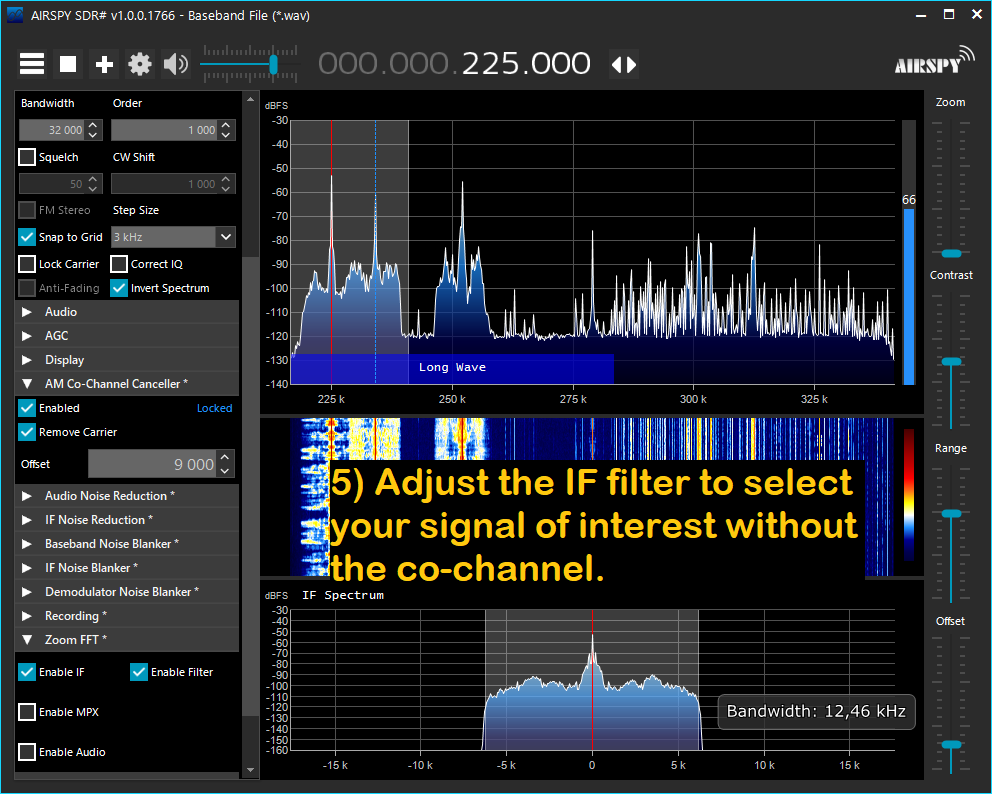
In the AirSpy Groups.io forum, Youssef clearly illustrates the steps needed to initiate the Co-Channel Canceller. I’ve reproduced his screenshots below:
I’ve only just begun to explore the possibilities of the Co-Channel Canceller tool, but it holds promise of helping to reveal and identify hopelessly buried co-channel or adjacent channel stations. Not only does it work “live” in real time reception, it functions well with recorded IQ-WAV files too! Checkout the newest version of SDR# and give this new feature a try. I can imagine situations where this tool could be highly useful at times for the shortwave DXer also.
Thanks, Youssef, for this brilliant tool, which you’ve included free with the newest SDR# !
I encourage radio hobbyists to support AirSpy’s efforts to advance the state-of-the-art. The diminutive AirSpy HF+ Discovery receiver is not only a reasonably priced SDR to use with SDR#, it’s a top performer and a recipient of the World Radio TV Handbook’s Best Value SDR award for 2020.
Guy Atkins is a Sr. Graphic Designer for T-Mobile and lives near Seattle, Washington. He’s a regular contributor to the SWLing Post.
Many thanks to SWLing Post contributor, Giuseppe Morlè (IZ0GZW), who shares the following:
I’m Giuseppe Morlè from Formia, central Italy, on the Tyrrhenian Sea.
I wanted to share with you and friends of the SWLing Post community this antenna project of mine dedicated to those who do not have enough space on the roof or in the garden to install antennas.
These are two separate loops, with two different diameters, one 60 cm, the other 90 cm, each with two variables for tuning … the system is able to receive from 3 to 30 MHz.
I joined these two loops in an opposing way, better to say crossed that can communicate with each other due to the induction effect that is created between the two small coupling loops that are placed one under the other at the top.
In the videos you will be able to see how the antenna system receives. I can use one loop at a time, to detect the direction of the signal or I can use them together for a more robust signal and in an omnidirectional way.
I really like experimenting with the induction effect and you can see that even when closed at home the two loops do a great job.
From my YouTube channel:
I’m not a technician but I really want to experiment to try to listen as well as possible.
Thanks to you and CIAO to all the listeners of the SWLing Post community.
Giuseppe Morlè iz0gzw.
Very cool, Giuseppe! I must say I’ve never tried dual loop experiments like this where one can experiment with the induction interplay. I imagine this could give you some interesting nulling capabilities if you have an unwanted station interfering with a target low-band signal. Thank you again for sharing!
Many thanks to SWLing Post contributor, Gary Debock, who shares a short report he originally posted on Facebook from the Rockwork 2020 Ultralight DXpedition:
Rockwork 2020 started off with a monster session, with S9 signals from the likes of 320-AI (Aitutaki, Cook Islands), 352-RG (Rarotonga, Cook Islands), 558-Radio Fiji One, 603-Radio Waatea, 1017-Tonga, 1107-Magic Talk and the new 1503-Gold.
The session was kind of wild, with three different sets of visitors asking about my gear setup at Rockwork 4 (typically during critical moments of live DXing, of course :-). Despite this both Longwave and Medium Wave featured great propagation to New Zealand, with the long range beacon 238-KT (Kaitaia) opening up the fun around 1225. Switching back and forth between Longwave and MW in a live DXing format wasn’t exactly ideal, and no doubt my long time DXpedition partner Tom R. could have really cleaned up on the South Pacific beacons this morning with his SDR and broadband loop setup. As it was I came away with 238-KT, 320-AI (a monster signal), 352-RG and 366-PNI from across the equator, with 558-Radio Fiji One probably having its best session ever at the awesome ocean side cliff (extended S9+ periods between 1300-1330).
I promised long term “Cliffhanger DX” partner Craig Barnes that I would go all-out to receive some exotic DX in his honor, and the Cliff more than cooperated.
The Longwave and Medium Wave DX this morning [Auguest 5, 2020] was phenomenal, and there are still two more days before Tom gets here. Hopefully these conditions will stick around!
Audio samples
320 AI Aitutaki, Cook Islands Great signal but shaky sounding CW tone at 1239– best signal ever at the Cliff:
352 RG Rarotonga, Cook Islands In an S9 snarl with 353-LLD (Hawaiian mega-beacon) at 1256:
558 Radio Fiji One Suva, Fiji Overwhelming S9 signal and ID’s both before and after an island music song at 1312:
1017 A3Z Nuku’alofa, Tonga Female Tongan in an S9 snarl with DU sports co-channel (2KY?) at 1253:
More New Zealand monster signals from yesterday morning, courtesy of the “Kiwi Cliff.” This place’s preference for New Zealand signals is wacky to the extreme!
603 Radio Waatea Auckland, NZ 5 kW S9 Maori island music // 765 followed by a female Maori chant at 1309:
1107 Magic Talk Tauranga, NZ 10 kW Meltdown level Kiwi conversation between host and lady caller at 1255:
1503 Gold Wellington/ Christchurch, NZ 5/ 2.5 kW The old Radio Sports’ Yankee-accented English (from Fox Sports Network) has now been replaced by rocking oldies, such as Phil Collins with powerful strength at 1307:
73 and Good DX,
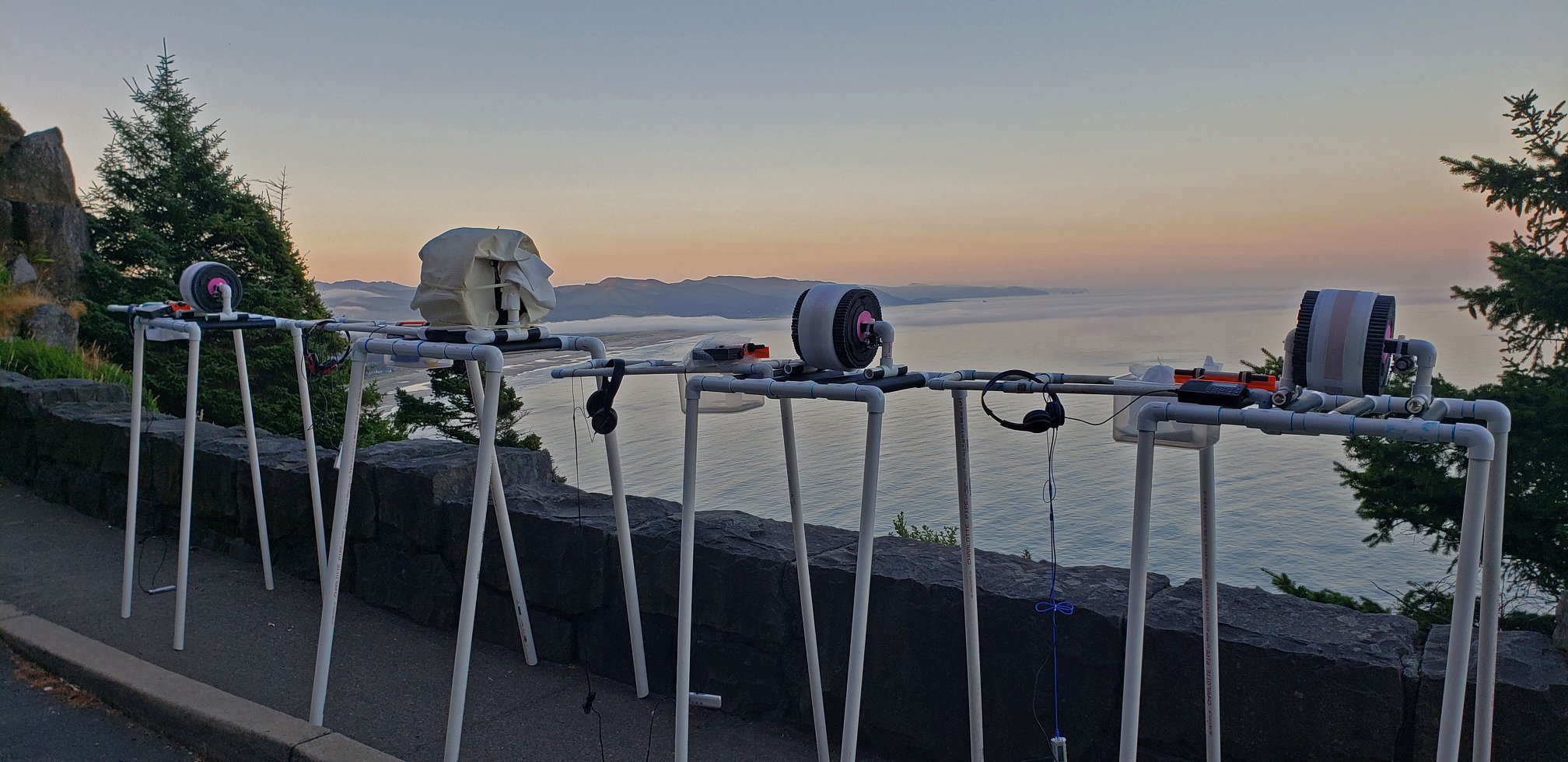
Gary DeBock (DXing at the Rockwork Ocean Cliff near Manzanita, OR, USA)
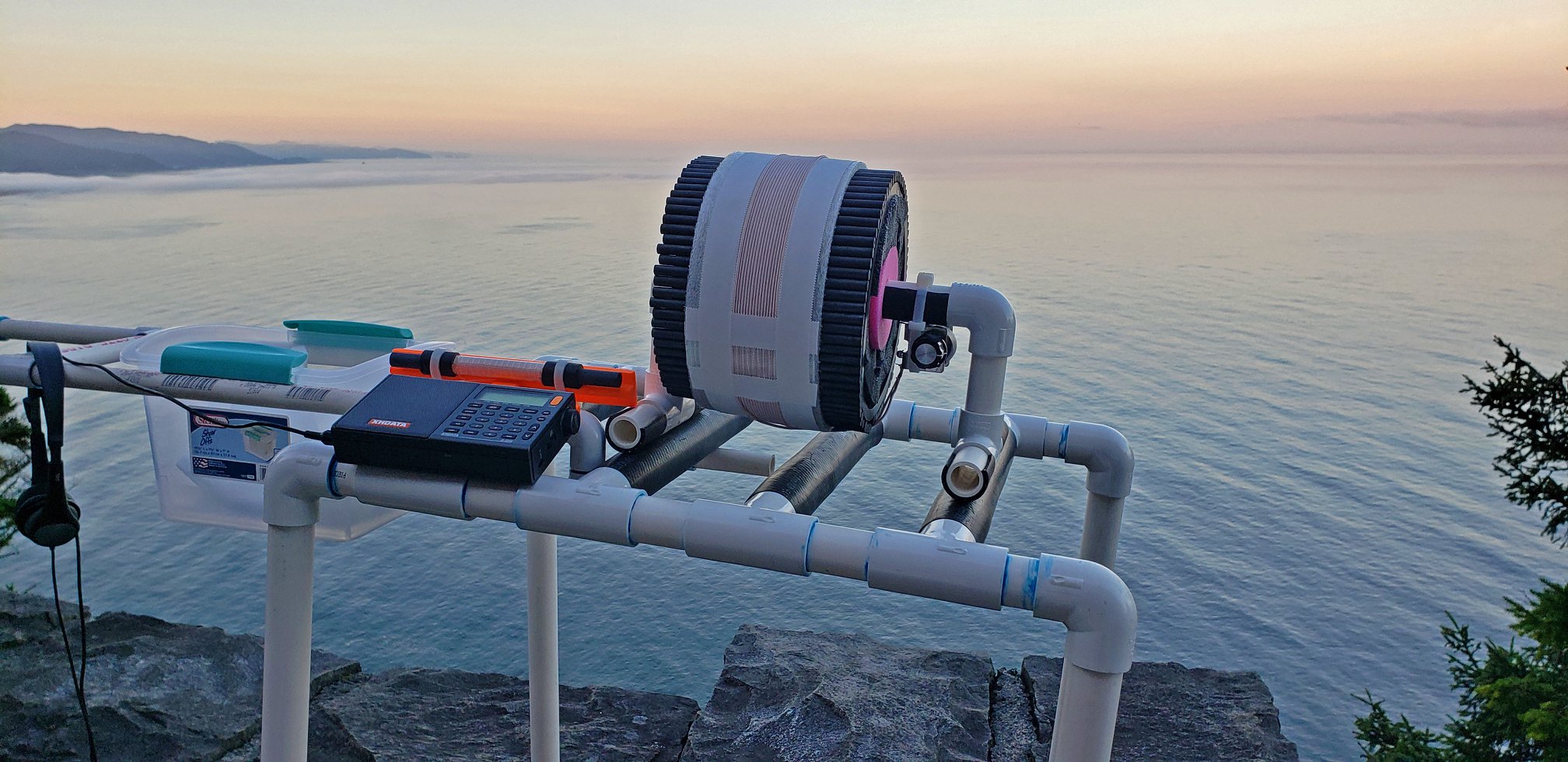
7.5″ loopstick CC Skywaves, PL-380 & XHDATA D-808
12″ Longwave FSL + three new 8″ Medium Wave FSL’s
Thank you so much, Gary, for allowing me to share your reports on the SWLing Post. Many of us would love to experience mediumwave DXing from your Rockwood perch, but we’ll have to live it vicariously through your excellent reports! We wish you excellent DX!
Photo from the Argentine Antarctic Base (LRA36) – Source: RAE
Many thanks to SWLing Post contributor, Giuseppe Morlè (IZ0GZW), who shares the following:
Dear Thomas
Here is the link of to video regarding the transmission of LRA 36 in USB mode Saturday July 25, 2020 from 17.00 UTC on 15.476 MHz.
A good result if I think it was almost impossible to listen to it with the sun still high … the place where I listen, in Formia, Italy, is really excellent.
73. Giuseppe Morlè iz0gzw.
Thank you for sharing this, Giuseppe! I’m always impressed with the DX you catch there at your location in Formia! Grazie e ciao!