Category Archives: International Broadcasting

Medium wave SDR spectrum with over 20 transatlantic signals: a quick tour


Tour of a medium wave spectrum with over 20 transatlantic signals

Hi there, I thought some of the readers of SWLing Post might be interested in a review of a MW spectrum with multiple transatlantic signals – all with audio. This is one of the recordings I took with the 200 metre Beverage antenna and although I haven’t properly counted, I believe it generated about 50 catches that were either personal firsts or best-ever receptions. You will note that this video is nearly 20 minutes long, whilst the recording is only just over 5 minutes, thus to capture the signals listed below and demonstrate audio to you, it was necessary to effectively ‘rewind’ a few times. I haven’t annotated the video, however, the stations I’ve paused on to demonstrate audio are listed below. There are actually more catches in this spectrum, but hopefully the video will give you a good idea of propagation on the morning of 10/10/16 and the effectiveness of the Beverage/Elad FDM DUO combination. Also note, I didn’t have time to fully optimise the demodulation settings, so for example, I haven’t used AM SYNC in this demonstration. Individual videos of all catches, with optimised settings appear on my YouTube channel Oxford Shortwave Log. I hope you enjoy it! Recorded in Oxford UK on 10/10/16 at 02:00 hrs UTC. Thanks for watching and I wish you all great DX!


590 kHz VOCM Saint John’s
600 kHz CBNA Saint Anthony
620 kHz CKCM Grand Falls-Windsor
660 kHz WFAN New York
710 kHz WOR New York
730 kHz CKAK Montreal
750 kHz CBC Radio 1 Bonavista Bay
790 kHz WAXY (presumed)
800 kHz VOWR
970 kHz WBGG
1010 kHz CFRB Toronto
1030 kHz WBZ Boston
1130 kHz WBBR New York
1190 kHz WLIB New York
1280 WADO New York
1390 WEGP Presque Isle
1400 kHz CBC Radio 1 Gander
1440 kHz WRED Westbrook
1510 kHz WMEX Boston
1520 kHz WWKB Buffalo
1570 kHz XERF La Poderosa, Mexico
1580 kHz HJQT Verdad Radio 1580 kHz, Bogotá, Colombia
1610 kHz Caribbean Beacon, Anguilla
1660 kHz WGIT Puerto Rico


Clint Gouveia is the author of this post and a regular contributor to the SWLing Post. Clint actively publishes videos of his shortwave radio excursions on his YouTube channel: Oxford Shortwave Log. Clint is based in Oxfordshire, England.

Washington Post: “A big change to U.S. broadcasting is coming”

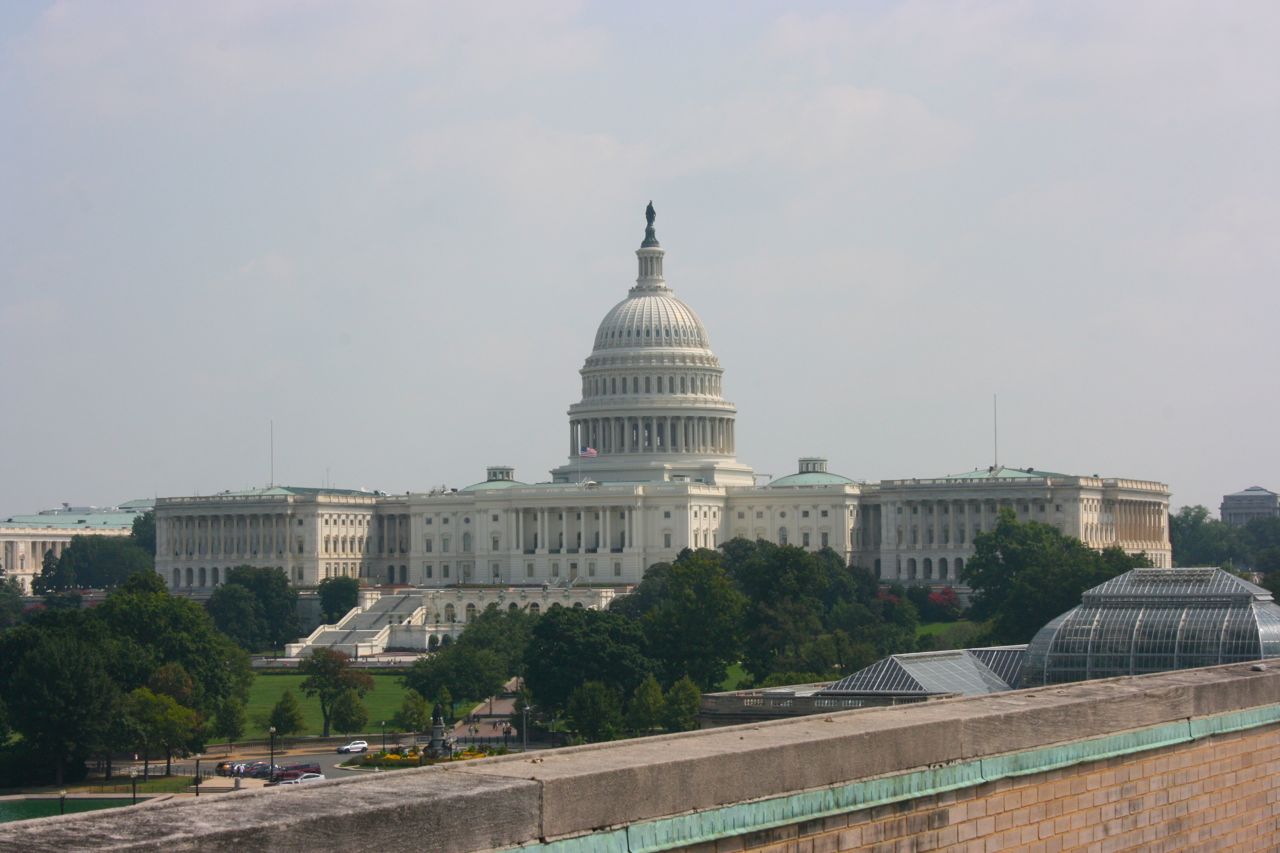
View of the Capitol Building from the roof of the Voice of America on 330 Independence Ave., S.W.

Many thanks to SWLing Post contributor, Richard Langley, who shares this editorial from the The Washington Post:”

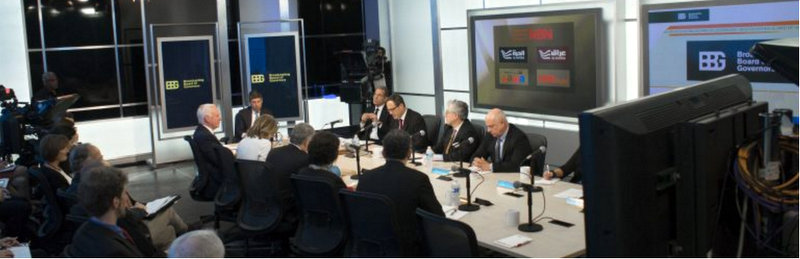
“FOR YEARS, members of Congress have fumed about what they regard as ineffective U.S. public diplomacy, including the failure of broadcasting operations such as the Voice of America and Radio Free Europe/Radio Liberty to match the reach and apparent influence of networks such as Russia’s RT and Qatar’s al Jazeera. A frequent and arguably fair focus of criticism has been the Broadcasting Board of Governors, the body created to supervise government-funded media outlets while serving as a firewall between them and the political administration of the day.

A radical change to that system is now coming — and it looks like one that Vladi­mir Putin and Qatar’s emir might well admire. An amendment quietly inserted into the annual National Defense Authorization Act by Republican House leaders would abolish the broadcasting board and place VOA, RFE/RL and other international news and information operations under the direct control of a chief executive appointed by the president. The new executive would hire and fire senior media personnel and manage their budgets.

[…]The point of board governance was to prevent direct political interference in programming by the White House, State Department or other agencies. It was a guarantee that for decades has helped to attract journalistic talent to the broadcasting organizations, as well as listeners seeking reliable information. The board of governors had serious problems: Its members served part time, and not all took their duties seriously. But the system’s biggest flaw was remedied three years ago with the creation of a chief executive position.

The new reform, driven by House Foreign Affairs Committee Chairman Edward R. Royce (R-Calif.), enhances that executive’s power and makes him answerable to the White House rather than the bipartisan board. A new advisory panel will be created, but it will be toothless: Its members will also be nominated by the president from a pool provided by Congress.[…]”

Click here to read the full editorial at The Washington Post online.

Also, Richard points out this article in BBG Watch which highlights comments from Dan Robinson.

Oxford Shortwave Log: transatlantic MW DX catches with 200 metre Beverage – part 2

verdad-final

Hi there, here is the second set of reception videos for my transatlantic MW DX catches using the 200 metre Beverage antenna. Most of the signals originate from the United States and Canada, however, there is also a catch from Mexico – XERF La Ponderosa – which is a personal first and another from Bogotá, Colombia – Verdad Radio. I hope you enjoy them. Please do not hesitate to contact me if you would like further details regarding the Beverage design and/or construction. in the meantime, thank you for watching/listening and I wish you all great DX!


Clint Gouveia is the author of this post and a regular contributor to the SWLing Post. Clint actively publishes videos of his shortwave radio excursions on his YouTube channel: Oxford Shortwave Log. Clint is based in Oxfordshire, England.

Oxford Shortwave Log: transatlantic MW DX catches with 200 metre Beverage – part 1

worspectrum

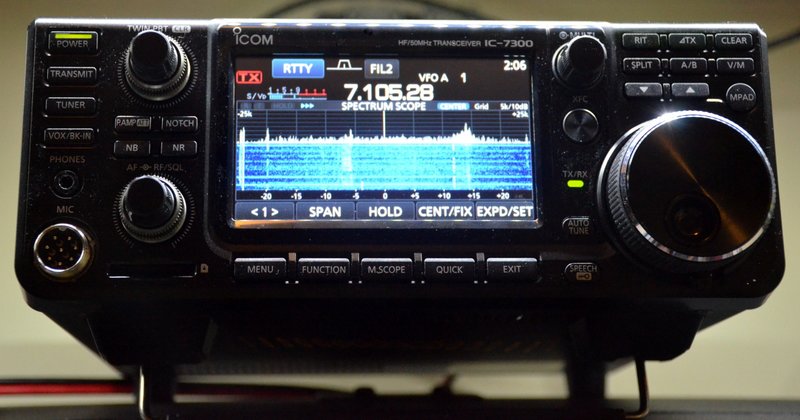
Hi there, a few weeks ago I posted a couple of medium wave DX catches with the Elad FDM DUO and newly constructed 200 metre Beverage antenna. Since then (and following my trip to Brazil) I have uploaded several more catches, some of which I would like to share with you. It has become evident that the Beverage’s low-gain but high SNR properties resulted in a huge increase in the sensitivity of my entire set-up and as a result. I have achieved numerous personal firsts on the medium wave band, coupled with many other signals that I can only describe ‘best-ever reception’. If nothing else, this endevour has underlined the importance of utillising the best antenna possible for your particular circumstances. We’ve all read at some point, how, in many respects, the antenna is more important than the receiver – and these catches demonstrate how absolutely true that statement is. All of the reception videos were captured using the Elad FDM DUO running on a home-brew battery-pack and connected to the Beverage via a 50 Ohm input transformer.

Below is the first set of reception videos, most of which are signals from East Coast of the United States. However, there is also an absolutely booming signal from WGIT Puerto Rico into my QTH in Oxford UK. Part 2 will follow almost immediately, but in the mean time thanks for watching/listening and I wish you all great DX!


elad


Clint Gouveia is the author of this post and a regular contributor to the SWLing Post. Clint actively publishes videos of his shortwave radio excursions on his YouTube channel: Oxford Shortwave Log. Clint is based in Oxfordshire, England.

The brilliant little Tecsun PL-310ET: serious DXing on a budget – part 1

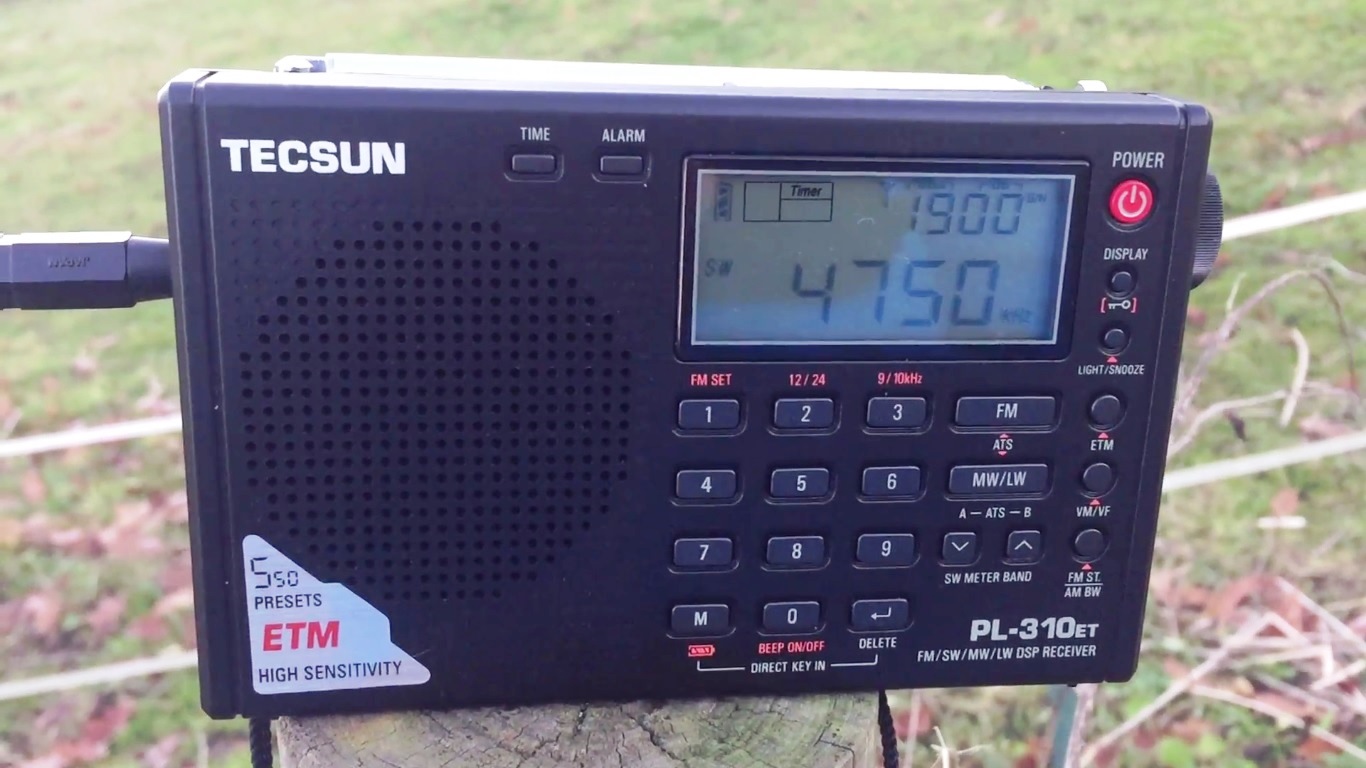
tecsun-pl-310etHi there, a good friend of mine Mr Thomas Brogan mentioned to me recently that his little Tecsun PL-310ET was proving to be an excellent receiver and that it would suit my DXpedition activities. Now, as someone who likes to push the envelope of performance with sophisticated portables, usually coupled to very large antennas, a cheap little Tecsun might not have been an abvious choice for my next purchase. However, Mr Brogan (who has an excellent Youtube channel by the same name – check out his wonderful collection of vintage and modern receivers) previously suggested I buy, for similar reasons, the Sony ICF-SW100. That little masterpiece of electronics turned out to be one of the best receivers I’ve ever owned. I felt compelled to take notice because Tom never gets this stuff wrong! A few days later I found myself in Maplins – again – and there it was on the shelf at just under £40, so I bought one.

I got back into shortwave listening about 18 months ago, after many years of inactivity whilst my poor Sangean ATS-803A rotted away in the garden shed and Sony ICF-7600G long-gone via eBay. To start all over again, I bought a Tecsun PL-360.  What a great little portable that turned out to be – there are over 100 reception videos on my YouTube channel demonstrating how it continually performed above and beyond the very modest price tag. I even managed to hear ABC Northern Territories 4835 kHz on it once –  simply amazing for a receiver under £30. Given my extensive experience with the PL-360 and having learned the PL-310ET shared the same DSP chip, I was expecting the same, or at least very similar performance and the only real benefit to upgrading to the PL-310ET was the direct frequency access.  However, I was wrong about that!

pl-360

The brilliant Tecsun PL-360 got me back into shortwave radio for less than £30

About a week after buying the PL-310ET,  I managed to get out on a DXpedition and with 30 metres of wire attached to it via the external antenna socket, I started tuning around the SW bands. Quite simply, I was amazed at the sensitivity and selectivity of this diminutive little portable. With the proven DSP receiver chip and a number of audio bandwidth filter options  from 1 to 6 kHz, coupled with direct frequency access via the keypad, it was a joy to use and listen to. In just over an hour I had  copied signals from North Korea, including their internal service KCBS Pyongyang, Zanzibar BC, ABC Northern Territories (at the first attempt!), Zambia NBC Radio 1, Radio Oromiya and Radio Amhara from Ethiopia, amongst others. Brilliant stuff and clearly demonstrating that the overall hardware/software package with the PL-310ET is a step up in performance over the PL-360 and capable of proper DX for a very modest outlay. Interestingly, in a conversation with Thomas Witherspoon regarding the PL-310ET, he reminded me that it was one of his go-to radios for travelling and confirmed it’s excellent performance.  I would definitely recommend this radio to novices and experts alike.

Reception videos follow below, with more to come in part 2; I hope you enjoy them. Thanks for watching/listening and I wish you all excellent DX!


Clint Gouveia is the author of this post and a regular contributor to the SWLing Post. Clint actively publishes videos of his shortwave radio excursions on his YouTube channel: Oxford Shortwave Log. Clint is based in Oxfordshire, England.

BBC Director-General’s goal? “A Netflix of the spoken word”

Lord Tony Hall (Source: BBC)

Lord Tony Hall (Source: BBC)

(Source: BBC via Richard Langley)

“With our world-class content, we could use our current output and the richness of our archive to create a Netflix of the spoken word,” said Lord Hall.

“One of the big challenges I have set my teams is just that: to enhance our global audio offer. The BBC makes the best radio in the world. It is one of our crown jewels, and we have an extraordinary wealth of audio riches at our disposal.

“It’s one of the things that will help the BBC carry the full weight of Britain’s culture and values, knowledge and know-how to the world in the years ahead. And say something really important about modern Britain.”