Shortwave listening and everything radio including reviews, broadcasting, ham radio, field operation, DXing, maker kits, travel, emergency gear, events, and more
All India Radio (AIR) Headquarters in Dehli, India. Photo: Wikimedia Commons
Many thanks to SWLing Post reader, Pradip, who shares the following story from Radio and Music Biz online:
AIR has acquired 37 DRM transmitters, in talks to get cheaper radio sets
NEW DELHI: All India Radio (AIR) has introduced digital radio technology in the AIR Network by installing new state of the art Digital Radio Mondiale (DRM) Technology transmitters by replacing old outlived 37 Medium Wave/ Short Wave transmitters.
Minister of State for Information and Broadcasting Rajyavardhan Rathore told Parliament however that the provisions contained in Policy Guidelines on expansion of FM Radio broadcasting services through private agencies (Phase-III) do not provide for private FM broadcasters to adopt digital radio technology.
He said Digital Radio allows significant improvements in service reliability, audio quality, more radio services and higher efficiency.
The new AIR transmitters include 35 new state of art technology Medium Wave (MW)/ DRM transmitters as a replacement of old technology valve based MW transmitters. Additionally, two new state of the art technology Short Wave (SW) DRM transmitters have been approved for installation as a replacement of old SW transmitters.[…]
Many thanks to SWLing Post contributor, Gary DeBock, who shares the following:
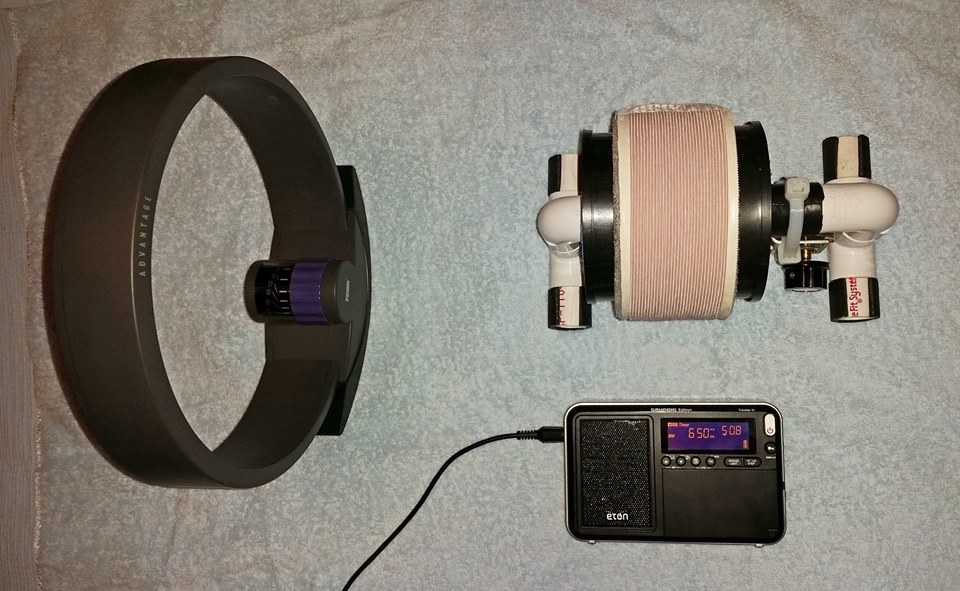
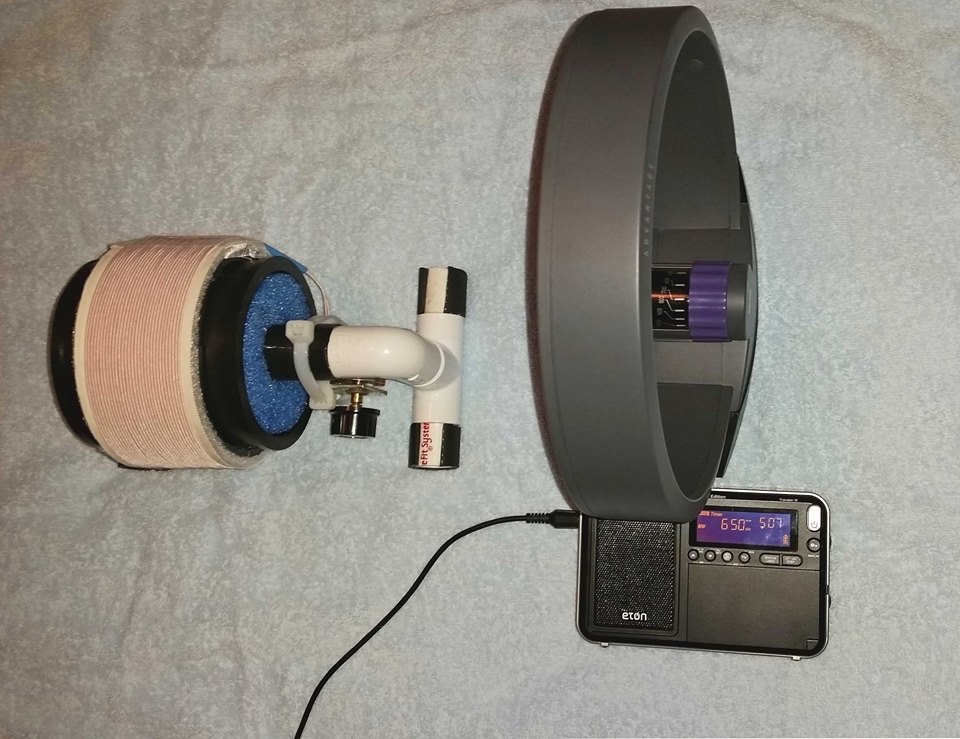
Daytime DX Shootout– a new-design 4.7 inch FSL antenna ($62 construction cost) goes up against the Terk Advantage AM commercial loop ($58 on eBay) in the daytime DX reception of 650-CISL (10 kW at 160 miles, in Vancouver, B.C.).
The first 20 seconds are on the Terk Advantage, and the final 24 seconds are on the new 4.7 inch FSL (using 27 of the commonly available 62mm Russian surplus ferrite bars).
Signal strength is roughly equal, but the FSL’s lower noise advantage gives it the edge.
Thank you for sharing this comparison, Gary. You’re right: the FSL provides lower noise and a more stable signal to boot. Still, I’m impressed the Terk was able to compete! In terms of commercially-produced loops, the Terk Advantage is certainly a good one.
Many thanks to SWling Post contributor, Gary DeBock, who shares the following note about his latest FSL antenna experiment:
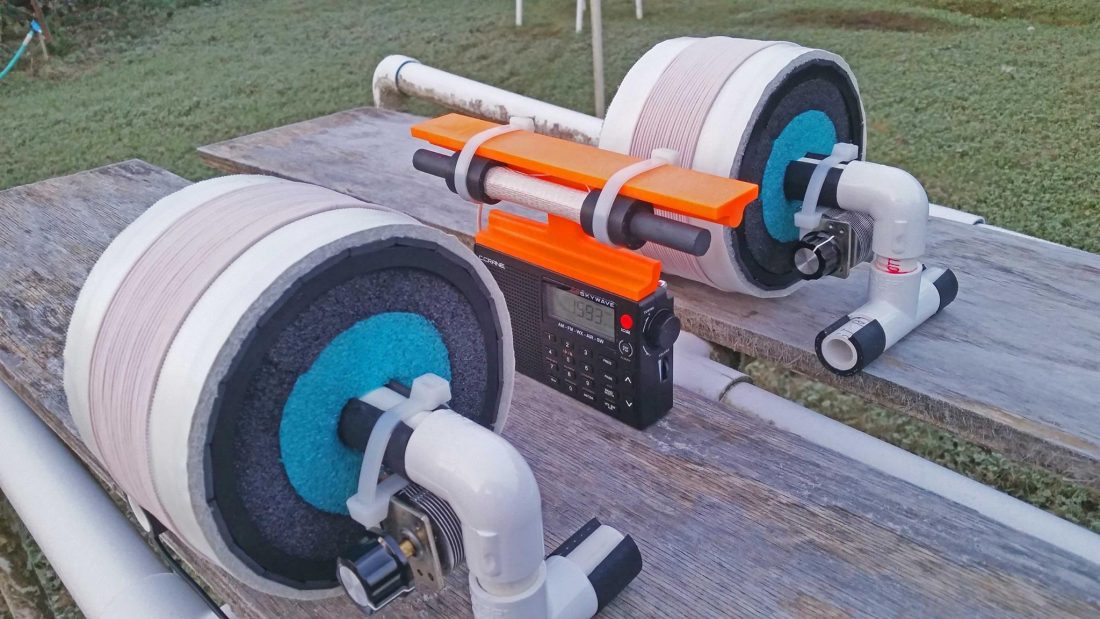
Medium wave DX FSL antenna phasing experiment– 1593-CNR1 (Changzhou, China, in Mandarin) boosted up to strong (S9) peaks by two 5 inch “Frequent Flyer” FSL’s at 1435 UTC on February 25th in my frozen back yard in Puyallup.
Unlike other high gain MW antennas, the FSL’s can provide cumulative gain at very close inductive coupling ranges.
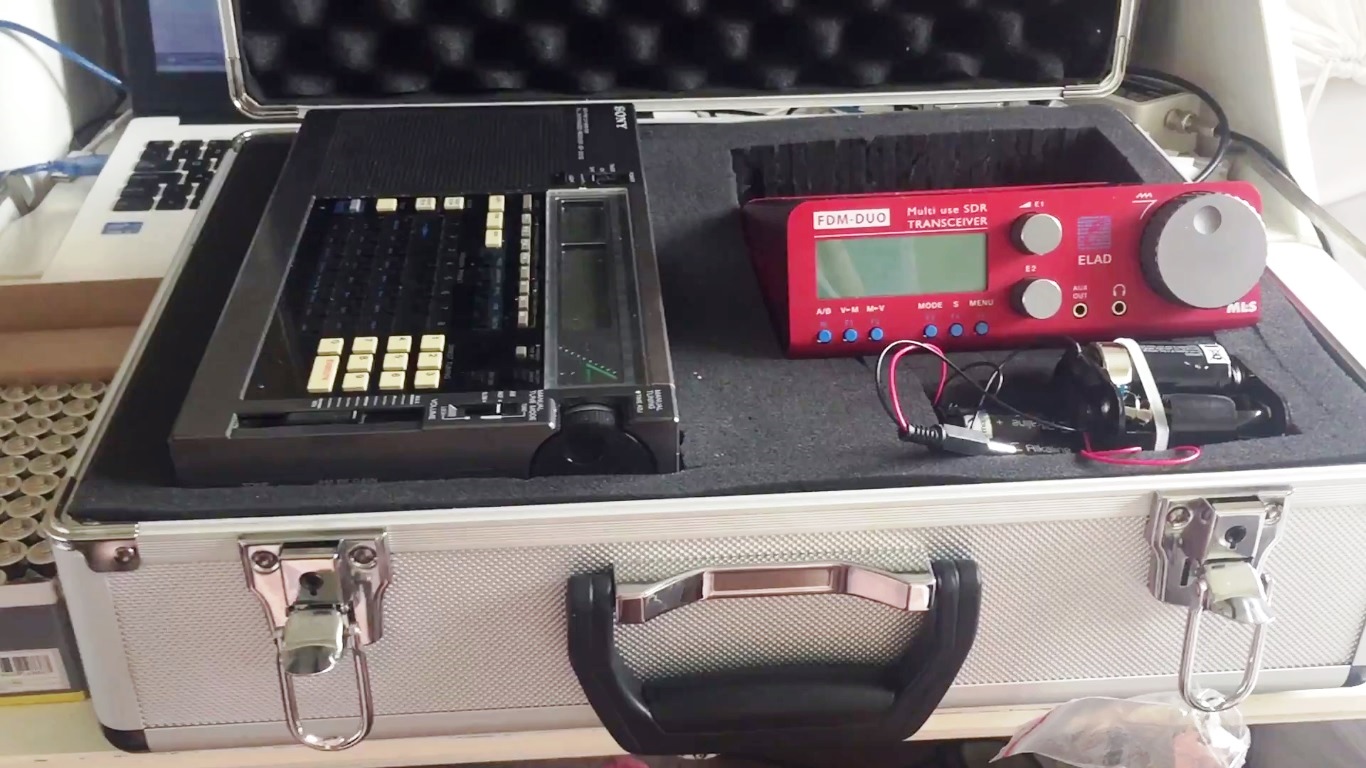
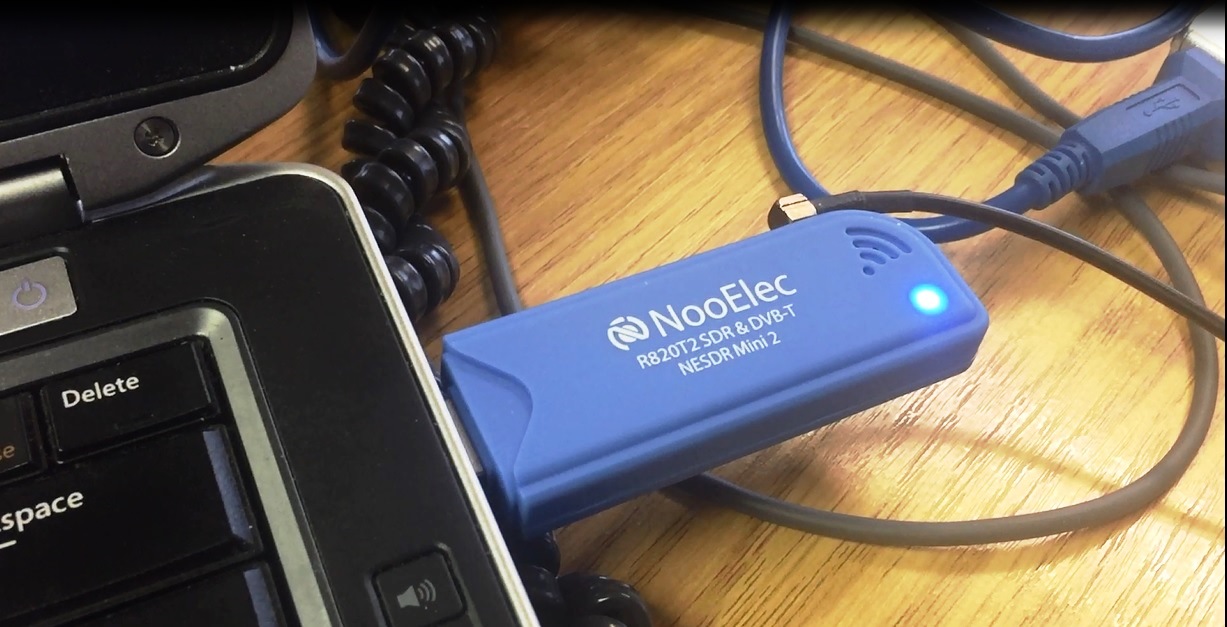
Hi there, I’ve been rather preoccupied of late, initially with the brilliant Tecsun PL-310ET and latterly with the even more brilliant Eton Satellit. However, in the background (as always), I’ve been trying to catch transatlantic medium wave DX. My listening schedule is broadly based on shortwave DXing during daylight hours – when I’m not at work of course, typically a Friday afternoon or at weekends – and always with a portable. Evenings usually start off with a tune around the tropical bands, followed by setting up the Elad FDM DUO to run some medium wave spectrum recordings overnight. In the past few days though, my daylight DXing has been bolstered by my NooElec RTL-SDR and ‘Ham it up’ upconverter. I bought the device over a year ago and after some initial exceitement, it quickly became quite obvious that I needed a reciever with a bit more ‘oomph’! However, it’s actually proving very useful to view signals on a spectrum, even when I’m conducting most or all of my listening on a different (i.e. higher performing) receiver. Ultimately, the RTL-SDR is always going to be a compromise, with relatively limited sensitivity, but because by it’s very nature it has excellent selectivity, overall it’s a reasonable performer. My particular RTL-SDR performs quite well if a decent antenna is employed with it, such as a longwire or the Wellbrook ALA1530 active loop.
Anyway, back to the medium wave DX. In the past month or two, I’ve copied a number of stations from North America, with really nice signals, including WRCR Rampano – New York, WFED Federal News Radio – Washington DC, WENE – Endicott and WUNR – Brookline from Newton, Mass. I’ve also recorded a lovely interval signal from RAI Radio 1, Milano and further European signals from Magyar Radio, Budapest and Radio Slovenija 1, from Ljubljana. During the past 18 months or so of DXing, I have been mostly ignoring signals coming into Oxford from the continent. However, that changed a little after I stumbled across the RAI Radio 1 interval signal, which complete with the rather rousing Italian National Anthem, inspired me to dig out some more European DX. I’m actually finding European DX quite rewarding, particularly because it feels new again – not surprising since I haven’t listened to Europeans on medium wave for any length of time since the 1980s. I hope you enjoy the reception videos – embedded video and text links follow below and I wish you all the very best DX.
Clint Gouveia is the author of this post and a regular contributor to the SWLing Post. Clint actively publishes videos of his shortwave radio excursions on his YouTube channel: Oxford Shortwave Log. Clint is based in Oxfordshire, England.
Many thanks to SWLing Post contributor Kris Partridge (G8AUU) who shares the following comment in reply to our post about Dave’s experience forcing the Shipping Forecast to repeat a broadcast:
Hi Dave, G4OYX, et al
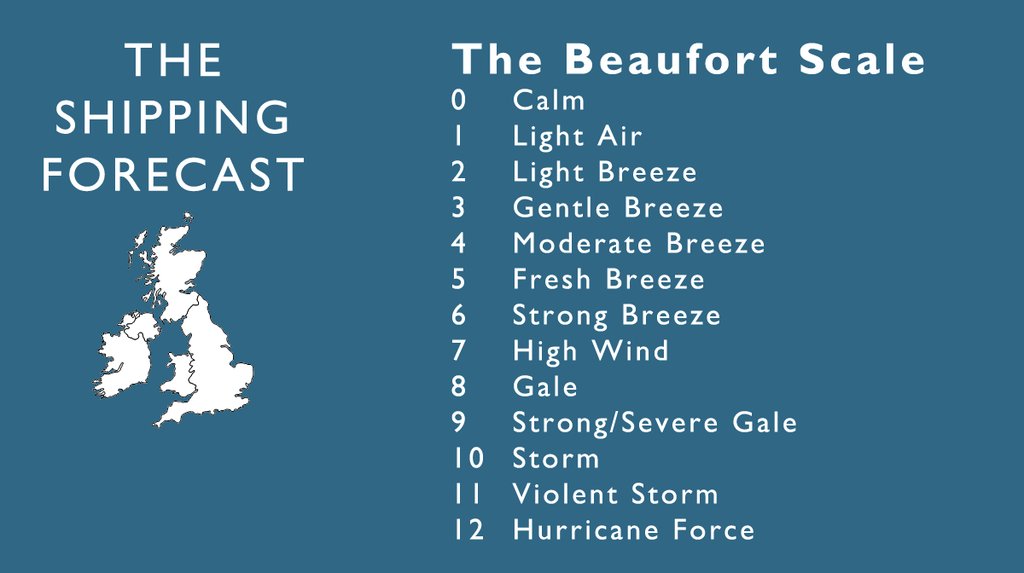
Not the only time the Shipping Forecast has had to be repeated for ‘Operational Error’
I hold my hand up for having had a broadcast repeated.
One morning, whilst still under the duvet, I found myself still listening to the overnight simulcast of BBC World Service on the BBC Radio 4 outlets. The simulcast of World Service is scheduled from 0100 local, just after the 0048 Shipping Forecast, till 0520 when it is followed by the Shipping Forecast. That wasn’t right, it now being around 0540. A quick check on the LF output, I was listening on my VHF-FM alarm radio, again it’s World Service. Something not quite right..!
Having the internal extension number of LCR (London Control Room) at BH (Broadcasting House) I made a quick call. A voice I recognised answered and after a short conversation was assured it would be remedied.
It was a few minutes later the Shipping Forecast was going out on 198 kHz and other R4 frequencies, followed by a short apology ” for technical reasons”.
A later phone call and heard, the overnight software update had managed to have done an update where it shouldn’t have.! I think a few red faces all round in the IT department.
So Dave the transmitters were OK it was the feed this time.
73 de Kris (G8AUU)
Thank you so much for sharing your story, Kris!
I mean, what are the odds that two people in our Post community have forced a re-broadcast of the Shipping Forecast??? Anyone else want to make a confession? 🙂
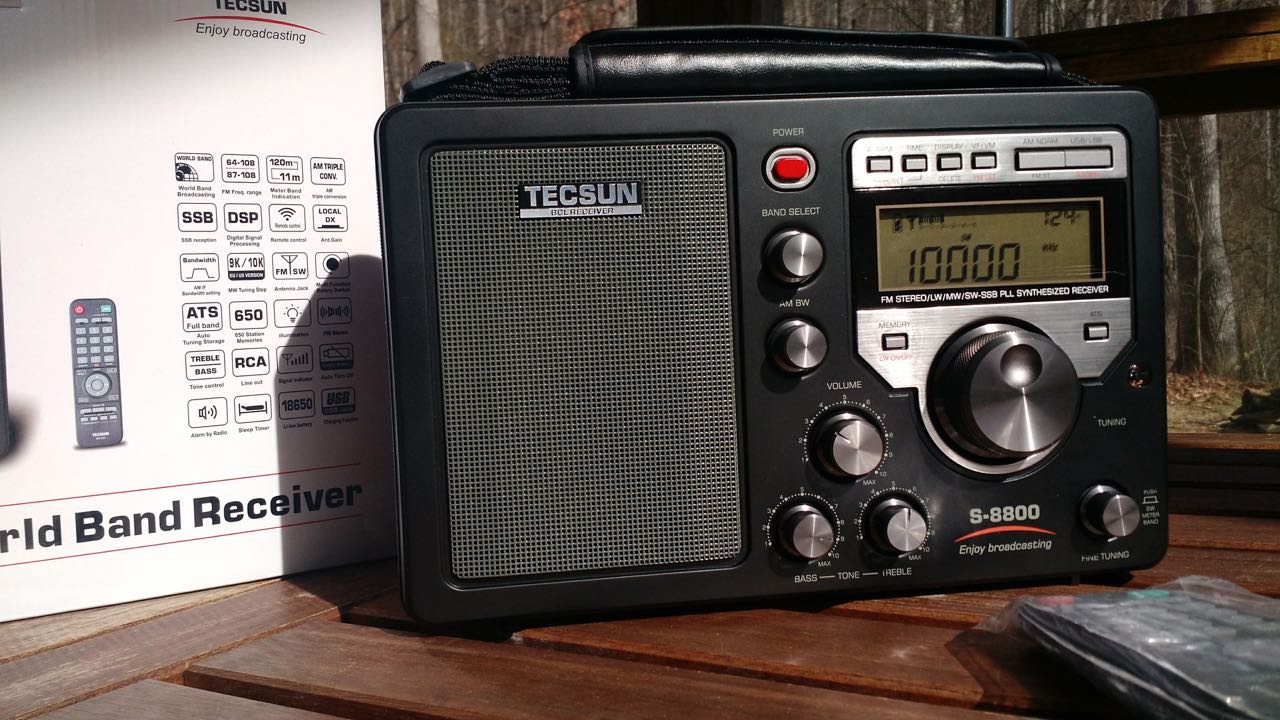
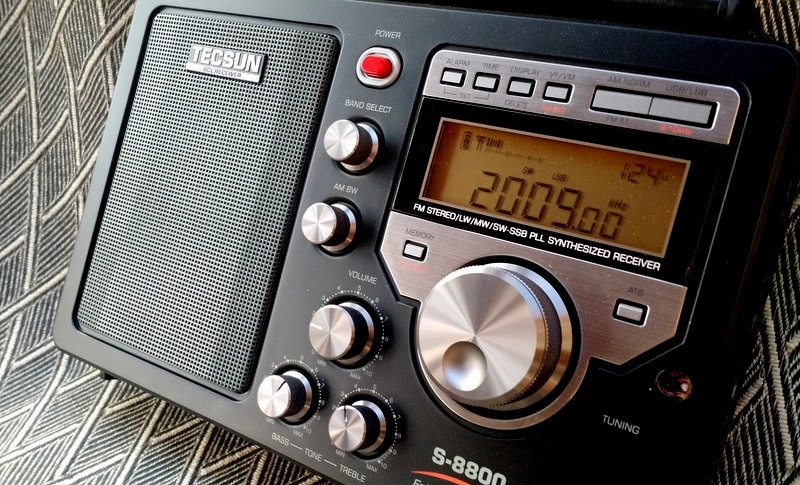
If you’re considering purchasing the Tecsun S-8800, this is an important post.
I’ve had the S-8800 for about two weeks and had planned to have audio clip comparisons prepared and posted by now. My exceptionally busy schedule has made this difficult–and there a few other complicating factors.
First off, the good news: in terms of sensitivity, selectivity and audio fidelity, I’m very happy with the S-8800. I’ve compared it a number of times with the Tecsun PL-880 and the Sony ICF-SW7600GR and it either holds its own or even has a leg-up on both radios in terms of overall performance. I find that the S-8800’s AGC is more stable than my 1st generation PL-880.
Of course, what will be most telling is what you, dear reader, think of the performance when compared in a blind audio test.
As I mentioned, though, there are complicating factors–It’s not just my schedule which has made the S-8800 review come to a halt.
Birdies…
Yes, birdies. Lots of them.
At first, I thought the noises were due to the fact my mobile phone and Zoom H2N digital recorder were too close to the S-8800. I dismissed this interference as it didn’t sound like the typical steady tone/carrier birdies I’ve come to loath over the years.
As my testing continued, though, I quickly realized these variable heterodyne and digital hash noises must be internally-generated.
Quite literally, as I was outdoors testing the S-8800 and making this discovery last week, I received a message from SWLing Post contributor, Bertrand Stehle (F6GYY). You might recall, Bertrand provided us with an initial review of his S-8800e (the European version of the S-8800). He also started noticing the birdies and, like me, initially assumed they were due to an external source of RFI.
Bertrand kindly mapped out the extensive list of birdies he found on his S-8800e–he noted a total of 81 birdie/carrier locations:
14 birdies on longwave
4 birdies on mediumwave
63 birdies between 1859 – 29095 kHz
Comparing notes, there are some differences between Bertrand’s S-8800e and my S-8800:
Only 50-60% of the birdies on my S-8800 are in the same frequency locations as those mapped by Bertrand on his S-8800e
The total number of birdies, however, are likely identical–I find birdies where Bertrand hadn’t noted them
The appearance and intensity of the birdies can vary depending on listening location and the strength of any nearby broadcast signals. I’ve noticed four distinct birdie sounds: a variable carrier, a steady carrier, digital hash, and something I might describe as digital variable noises.
I’ve even noticed some change slightly as you move the radio around.
Obviously, this is a major issue for an enthusiast-grade portable.
I’m sharing all of this information with Anna at Anon-Co. No doubt, she’ll share this information with Tecsun engineering. The last I heard, projected availability of the S-8800 from Anon-Co is late March 2017. Perhaps there will be time for Tecsun to eliminate these birdies by improving internal grounding and/or shielding?
Until the birdie issue is sorted out, I’m not proceeding with audio comparisons or a full review. It goes without saying that, at present, I couldn’t recommend purchasing the S-8800. Sad, because this is otherwise a great radio.
I hope Tecsun can sort this out, though.
I will share any/all updates here on the SWLing Post.