Category Archives: Mediumwave

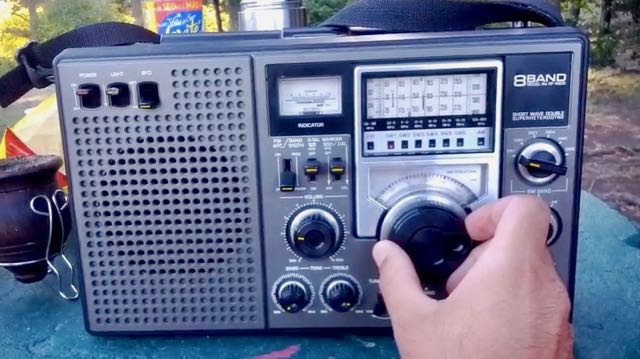
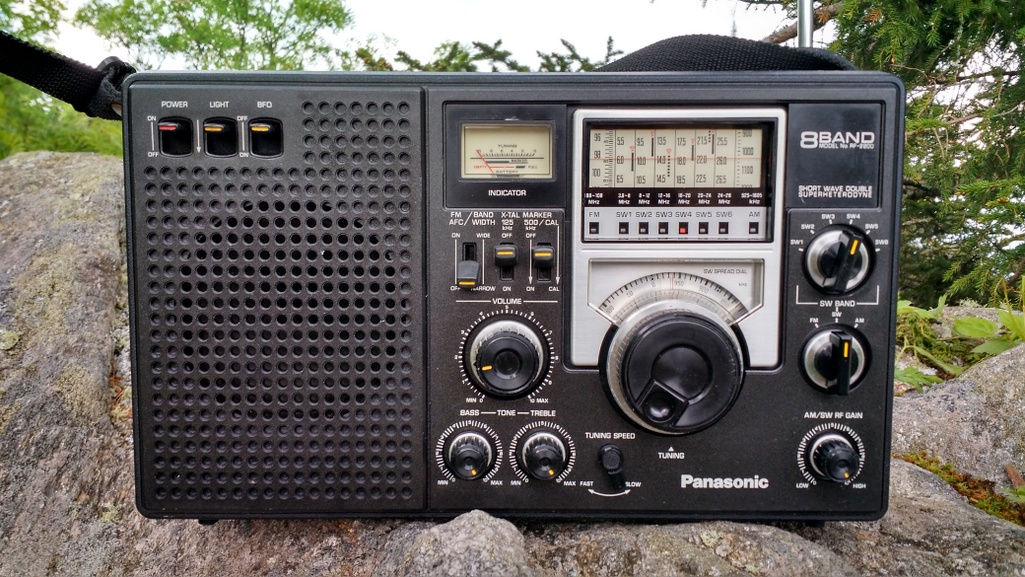
Video: Juan touts Panasonic RF-2200 performance & filter shapes

Many thanks to SWLing Post contributor, Juan Pablo Carlino, who writes:

Hi. I own one RF-2200 after buying it in eBay in March 2008. Since then it became my favourite portable radio and as everybody [has commented], its a pleasure to hear MW with it.

I explain this due to the fact that it has a good rotative ferrite antenna and also because the narrow and wide filters have a suitable shape for MW: at least in my country each MW is spaced from the other by 10 KHz, so you don’t need a very sharp filter. The narrow one is not so narrow, just enough to attenuate maybe 6 db the splatter from the louder station and not loosing audio quality.

When you tune around you have the impression that the filter shape suites perfectly for MW, making the audio quality very pleasant. I would never sell it. If you are interested i’ve captured a short clip while playing with it outdoor on 7 MHz band, hearing ham stations on AM, SSB and CW.

Pay attention to how loud and clear i was hearing stations at 400 Km in AM:

Click here to view on YouTube.

Many thanks for sharing your thoughts, Juan!

I agree with you completely. At least here in countries where MW stations are spaced at 10 kHz, I find the RF-2200 a mediumwave DX boss!

I’m constantly amazed with the RF-2200’s MW sensitivity and selectivity–and low noise floor. That combo, along with the filter shapes Juan mentions and the excellent built-in full-fidelity speaker make for a proper listening experience.

As I’ve said before, the RF-2200 is a radio with fortitude and purpose.

The only place I’ve ever really searched for an RF-2200 is eBay. I like eBay, because if you receive a faulty unit, you can typically return it or have some sort of recourse (as long as the seller accepts returns).

I would only buy an RF-2200 (or any vintage solid-state rigs) from a seller that has near 100% ratings with a number of radio sales in their past.  That is, if you’re seeking a working unit.

Though the RF-2200 is vintage and thus might eventually need repair. It’s ultimately reparable by a skilled technician, though.  My buddy Vlado, for example, has repaired 2200s in the past–indeed, we cracked my RF-2200 open a few months ago to clean contacts.

Panasonic RF-2200s typically cost between $175-300 for one that’s mechanically and cosmetically sound. Of course, NOS units go for much more and units with faults sell for much less.

I expect my RF-2200 will outlast me!

Click here to search for RF-2200s on eBay.

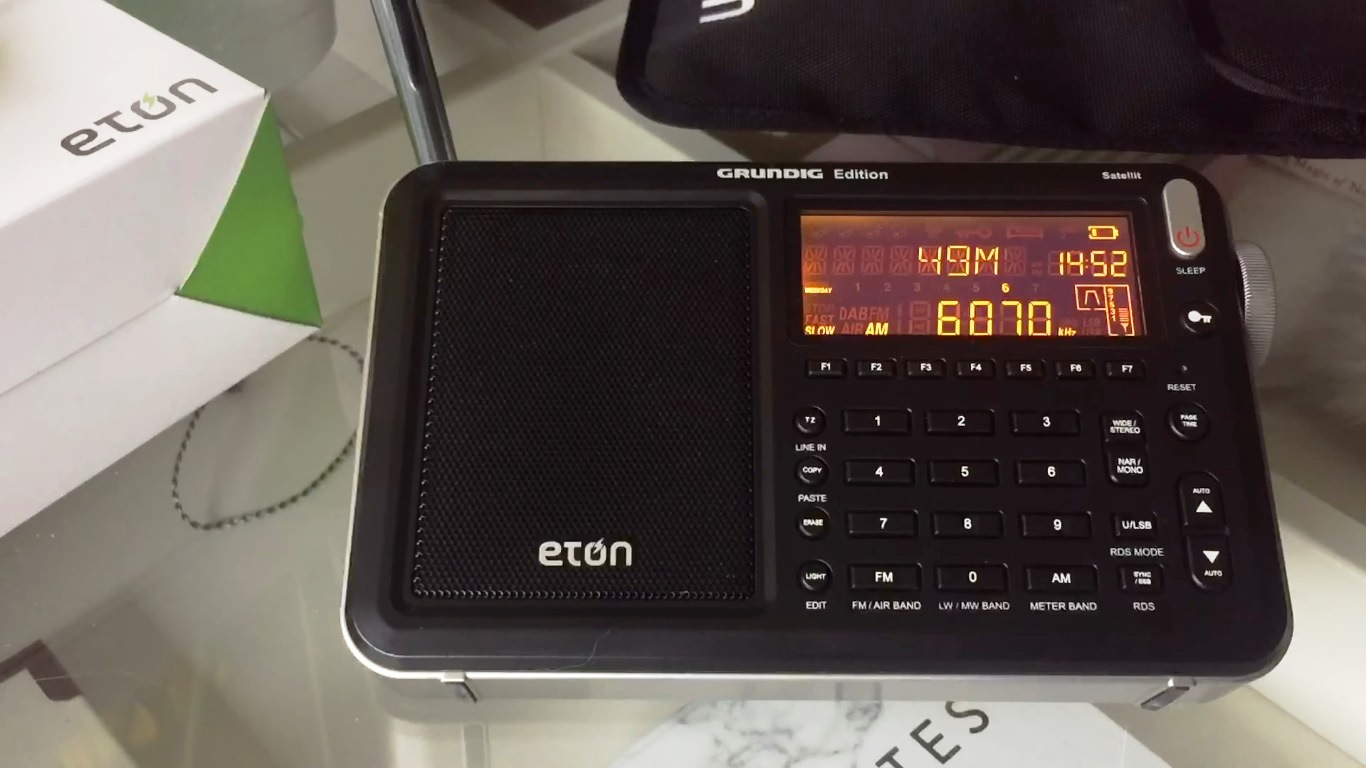
The Eton Satellit: a poignant recording of ABC Northern Territories & further DX…

Hi there, I’ve just returned from a business trip to Genoa, Italy and took the Eton Satellit with me. Now, I’m sure many of you know from your own experiences that DXing from a noisy hotel room can be just about impossible – and so it was in the main. I did however manage to copy a very nice signal from BBC Radio 5 Live on 693 kHz medium wave and Chaîne 3, from Tipaza, Algeria on 252 kHz – the latter is a much more difficult catch back in the UK. Reception videos for these two signals also follow below and I have to say that given the very noisy environment, this was a pleasing result using the Eton’s internal ferrite antenna. Prior to my trip this week, I recorded a really nice signal from Radio Nacional Brasilia on 11780 kHz and the best signal from North Korea (Voice of Korea KCBS) I’ve ever copied on the 41 metre broadcast band. Both are testament to the Eton Satellit’s performance as an excellent portable reciever per se and it’s hard-core DXing capabilities. Finally, what now feels a very poignant recording, I managed to catch – ABC Northern Territories on 2325, 2485 and 4835 kHz during the same session and on one reception video. Embedded videos and text links to these videos on Oxford Shortwave Log follow below, along with a brief video review of the main functions and features of the Satellit.

With regard to the closure of ABC on shortwave, my full support goes out Senator Nick Xeonophon and his quest to introduce new legislation to force the ABC to reinstate their shortwave transmissions. There, I’ve said it and that’s enough politics for now lol. In the meantime, my plans to test the Eton Satellit against more established DXing portables remain in place and work commitments allowing, this should happen soon. Thanks for reading/watching/listening and I wish you all great DX!


Click here to view on YouTube


Click here to view on YouTube


Click here to view on YouTube


Click here to view on YouTube

Click here to view on YouTube

Click here to view on YouTube

Clint Gouveia is the author of this post and a regular contributor to the SWLing Post. Clint actively publishes videos of his shortwave radio excursions on his YouTube channel: Oxford Shortwave Log. Clint is based in Oxfordshire, England.

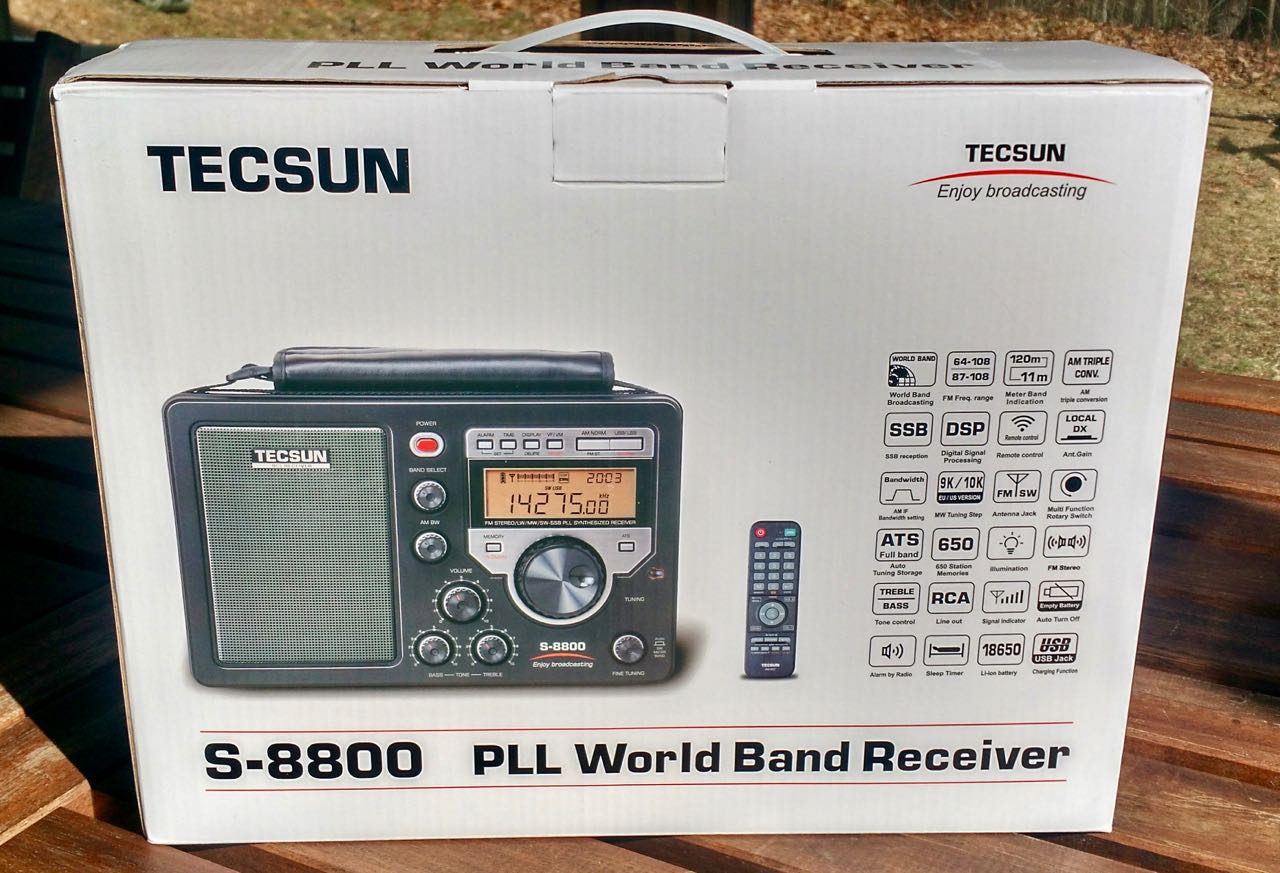
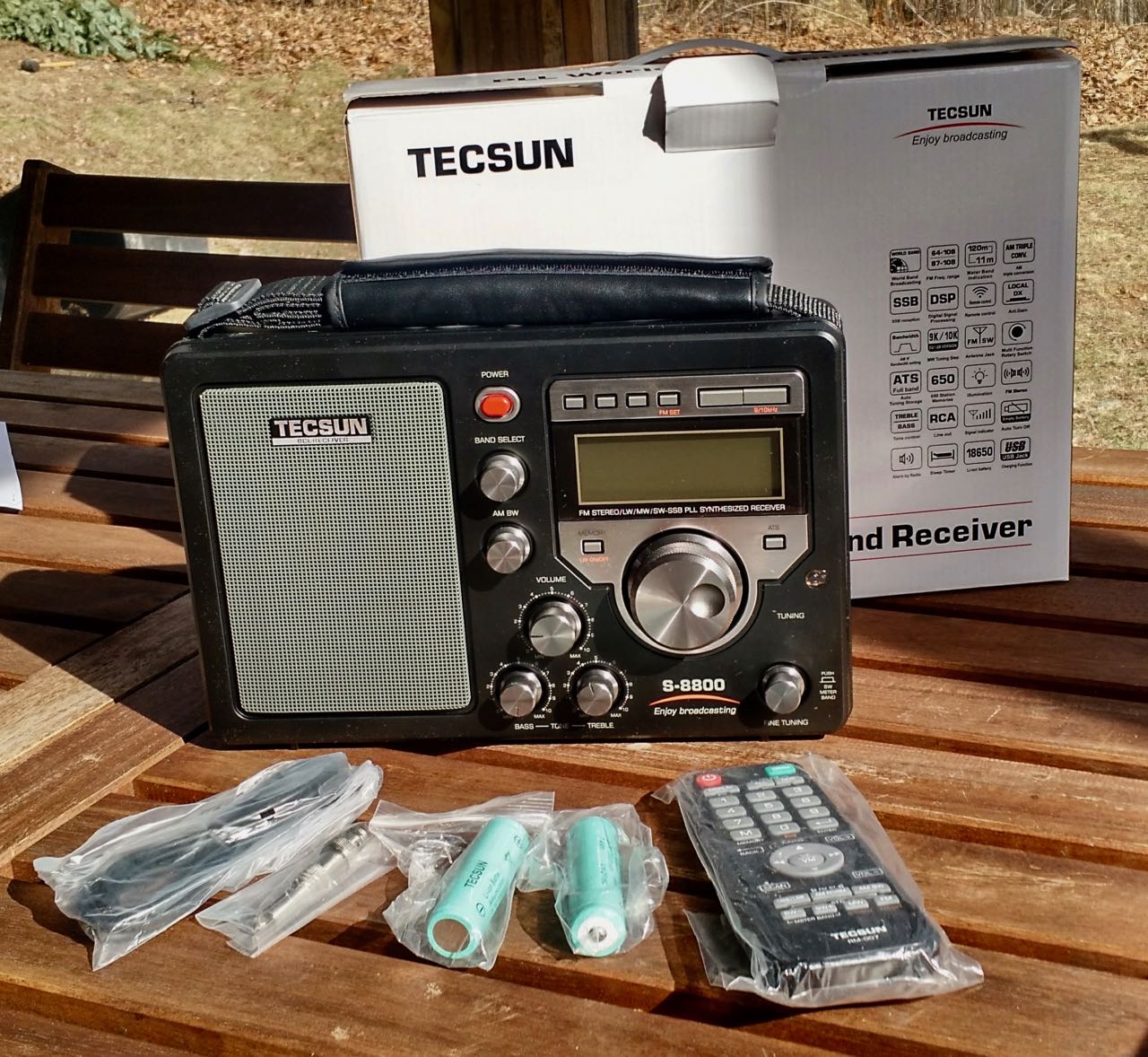
Tecsun S-8800: Unboxing, photos, and initial impressions

UPDATE: Click here to read our full Tecsun S-8800 review.

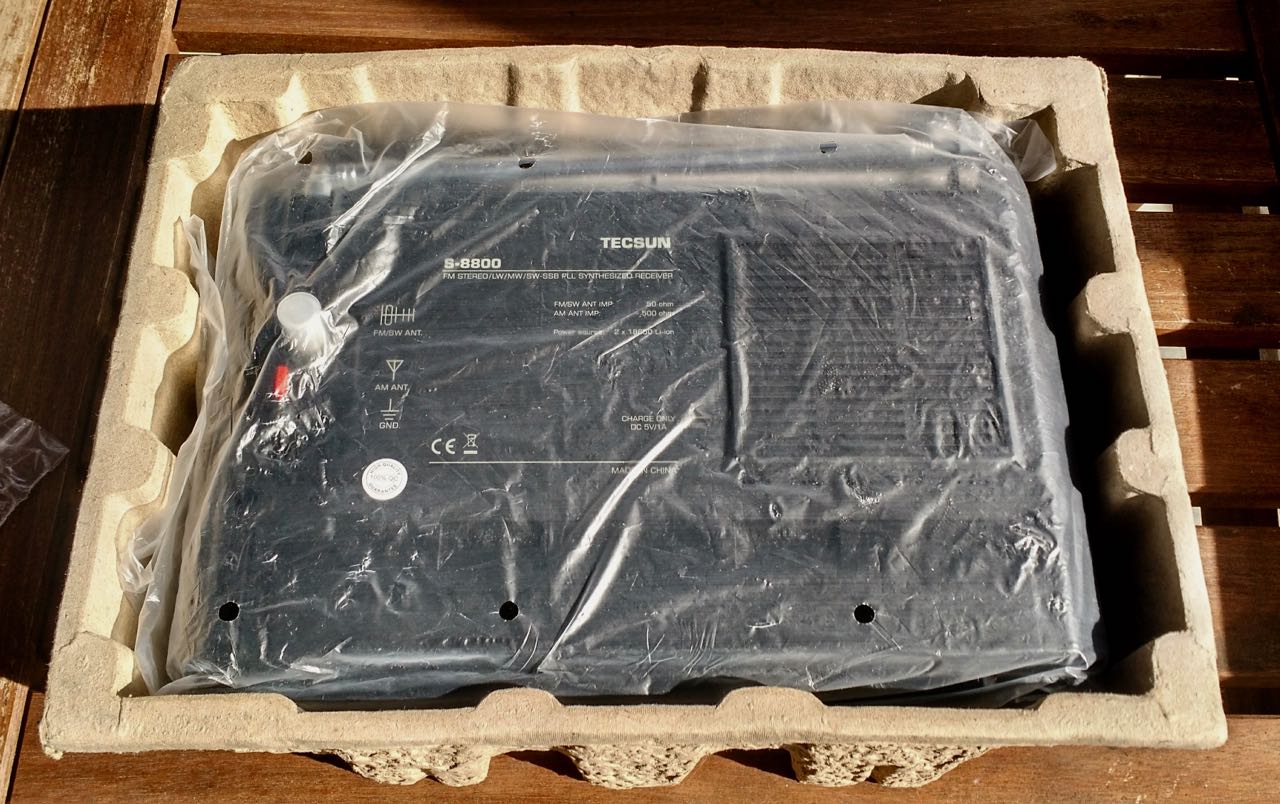
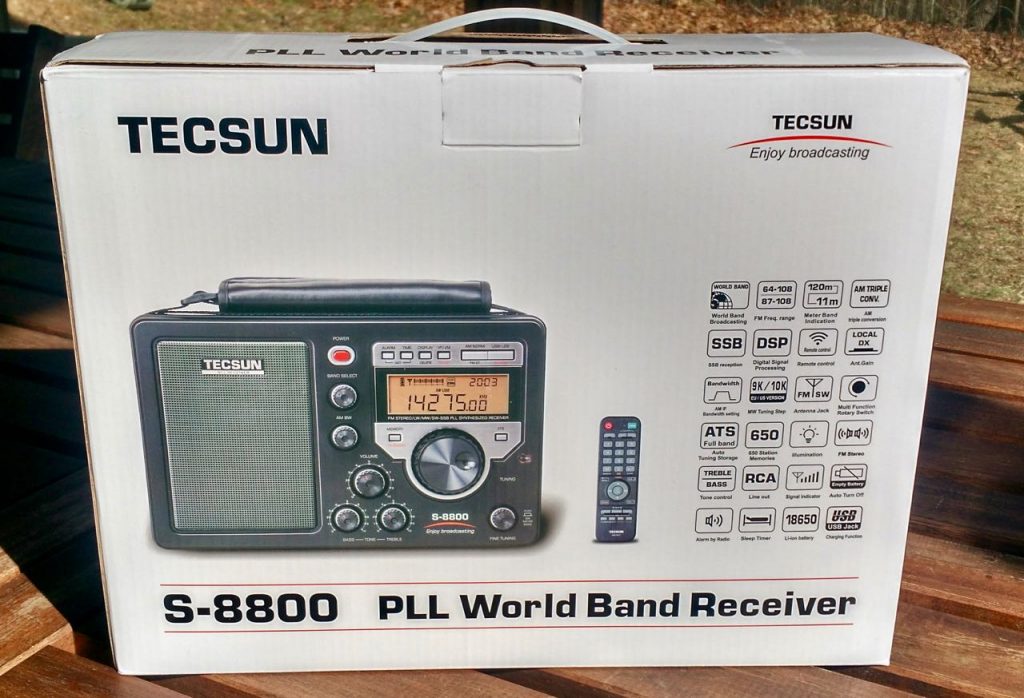
Yesterday, I received a Tecsun S-8800 from Anon-Co in Hong Kong.
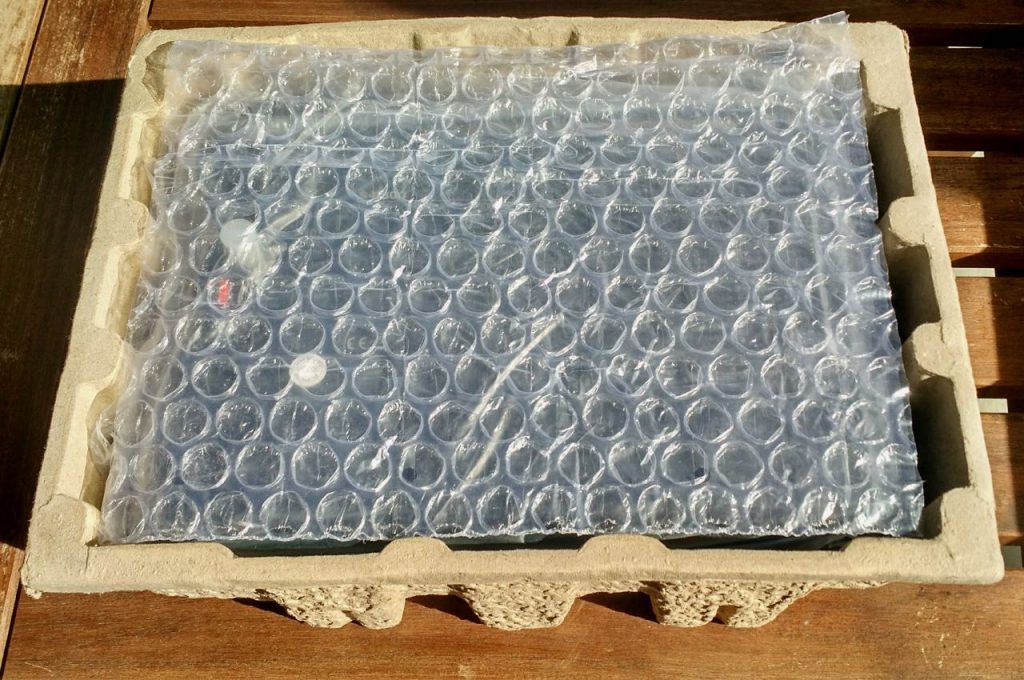
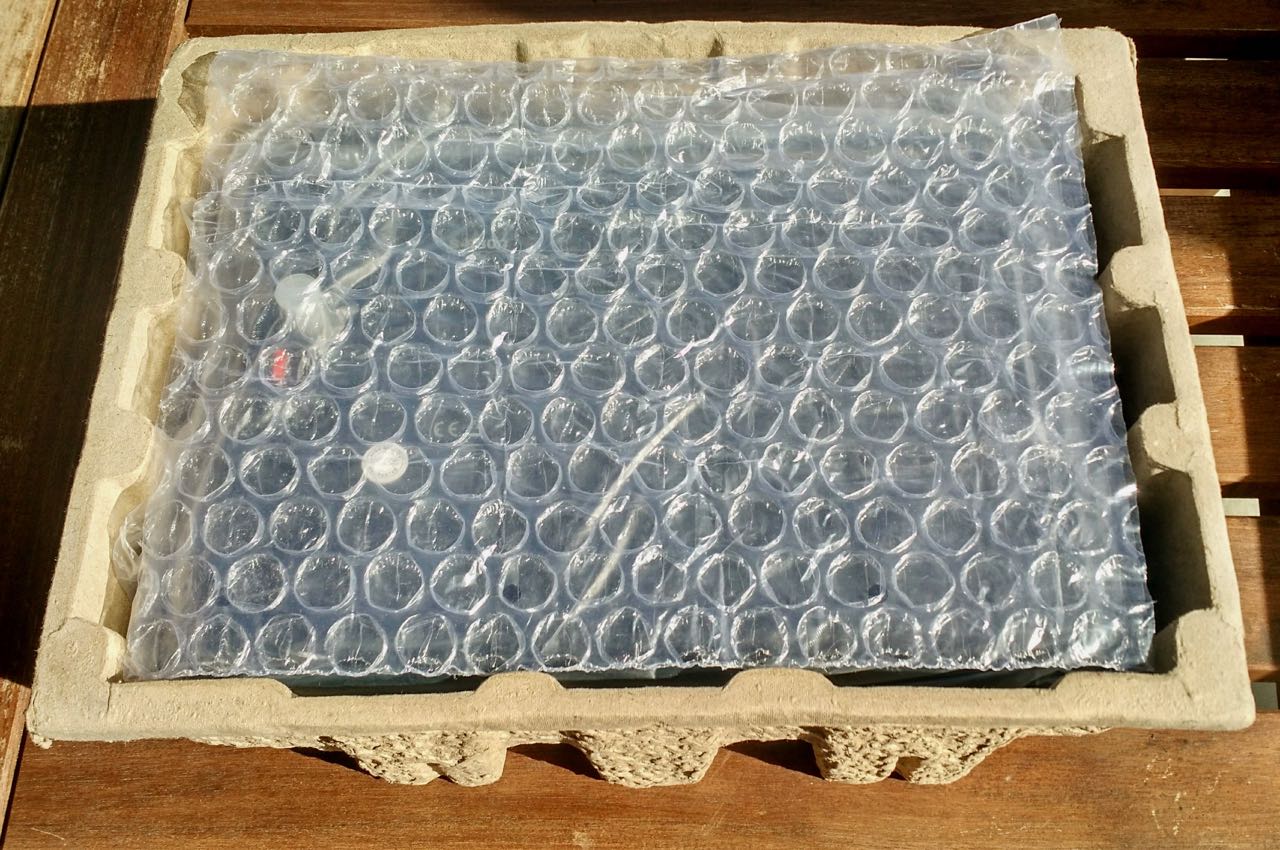
I like opening radio boxes to find a cardboard insert like this one. It protects the radio and has so much less waste and individual cardboard bits inside.

As I always do when a new radio comes on the scene, I requested to purchase an early release of the Tecsun S-8800 radio for review months ago.  But this time, my contact at the Chinese distributor Anon-Co, Anna, insisted on sending us one “as a gift for the Chinese New Year of the Rooster.”

Because I’ve worked with Anna at Anon-Co for at least a decade, having purchased numerous radios for review and as gifts for family and friends, this was difficult to refuse.  I decided there was no need to do so. Each time I do an in-depth review and note shortcomings or deficiencies in the radios I’ve purchased from Anon-Co, Anna immediately passes my feedback and criticisms directly to the manufacturer’s engineers. I believe this feedback loop between customers, reviewers and manufacturers leads to improved product iterations. Of course, sometimes the negatives can be so problematic, manufacturers simply drop the product line and move on (remember the Tecsun R-2010D?  Case in point). So, while there are a number of other eBay retailers in China that distribute Tecsun radios, I prefer Anon-Co for these reasons.

Thank you, Anna!
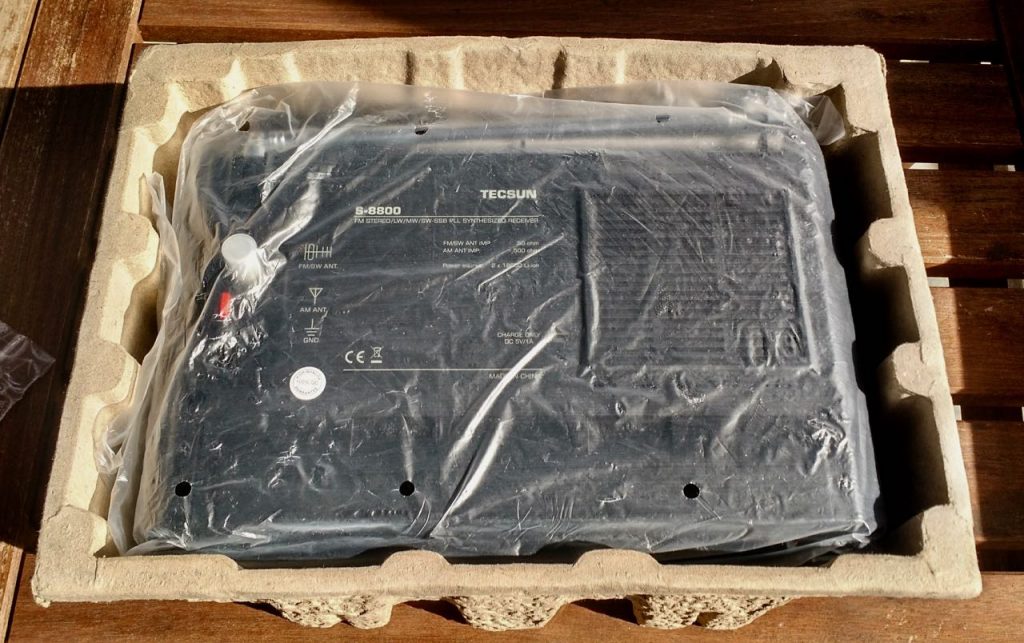
The S-8800 is packed face-down to protect the front panel.

Manufacturers and retailers who send me products for review know that we radio geeks have fairly high expectations of our gear, and will therefore hold them to exacting standards. I’m not the least among these.  While I endeavor to be realistic, understanding producers’ limitations and the need for product growth, I also try to keep my reviews as objective as I can, and accommodate my own and others’ particular requirements and preferences.

So In the spirit of full disclosure, I must note that I’m not as avid a user of large portables like the S-8800 (or the Grundig GS350DL, S450DLX, or the C.Crane CCRadio-SW).

Personally I prefer smaller, full-featured travel-friendly portables, or else larger tabletop models.  Radios with a form factor like the Tecsun S-8800 are an “in-between” product in my world, thus I rarely use them.
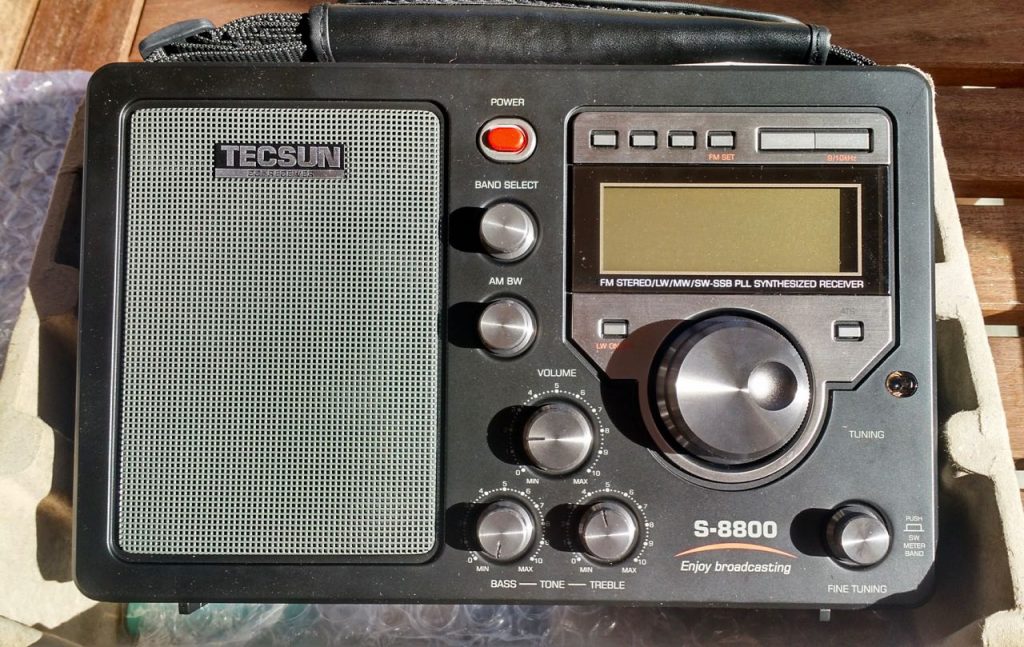
That said, every month I receive questions from readers looking for this very “large portable” form factor. Some hobbyists enjoy a radio that’s easy to operate, featuring simple controls, robust audio, and dedicated external antenna connections.  For these listeners, a large tuning knob and generous display are more important than things like SSB and synchronous detection.In other words, they want a broadcast receiver. Some have literally asked for a modern version of the venerable Panasonic RF-2200 (which I admittedly love, an exception to the rule of my avoidance of large portables). In terms of aesthetics, it’s impossible to live up the legendary solid-state RF-2200, in my opinion…kind of like comparing a modern muscle car with the 1960s original from which it copies its design.
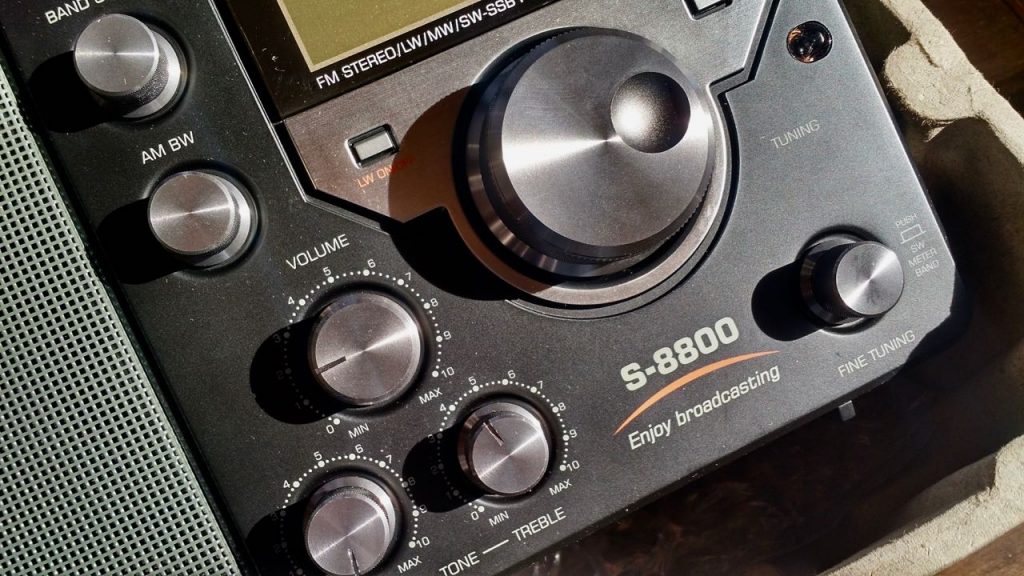
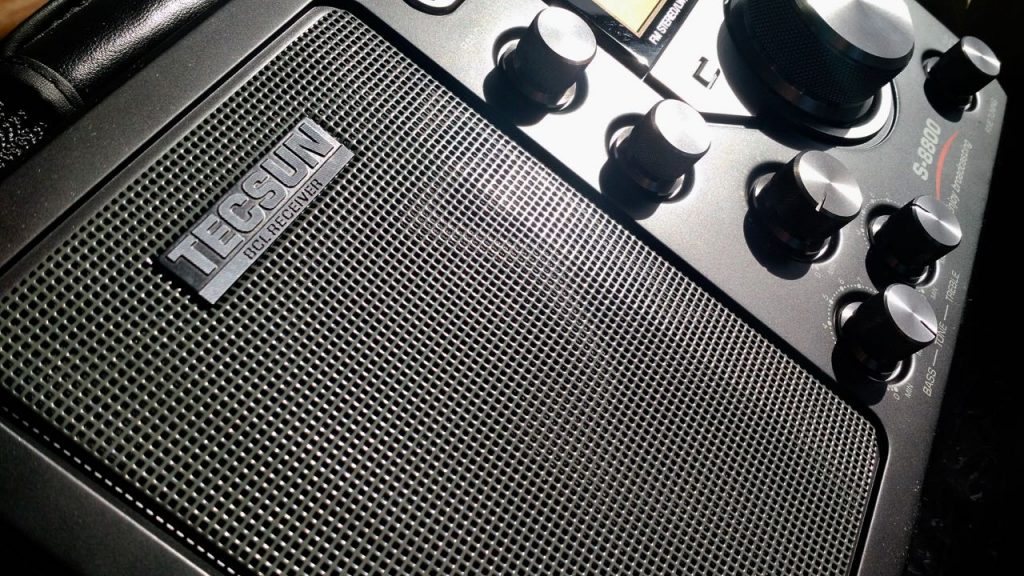
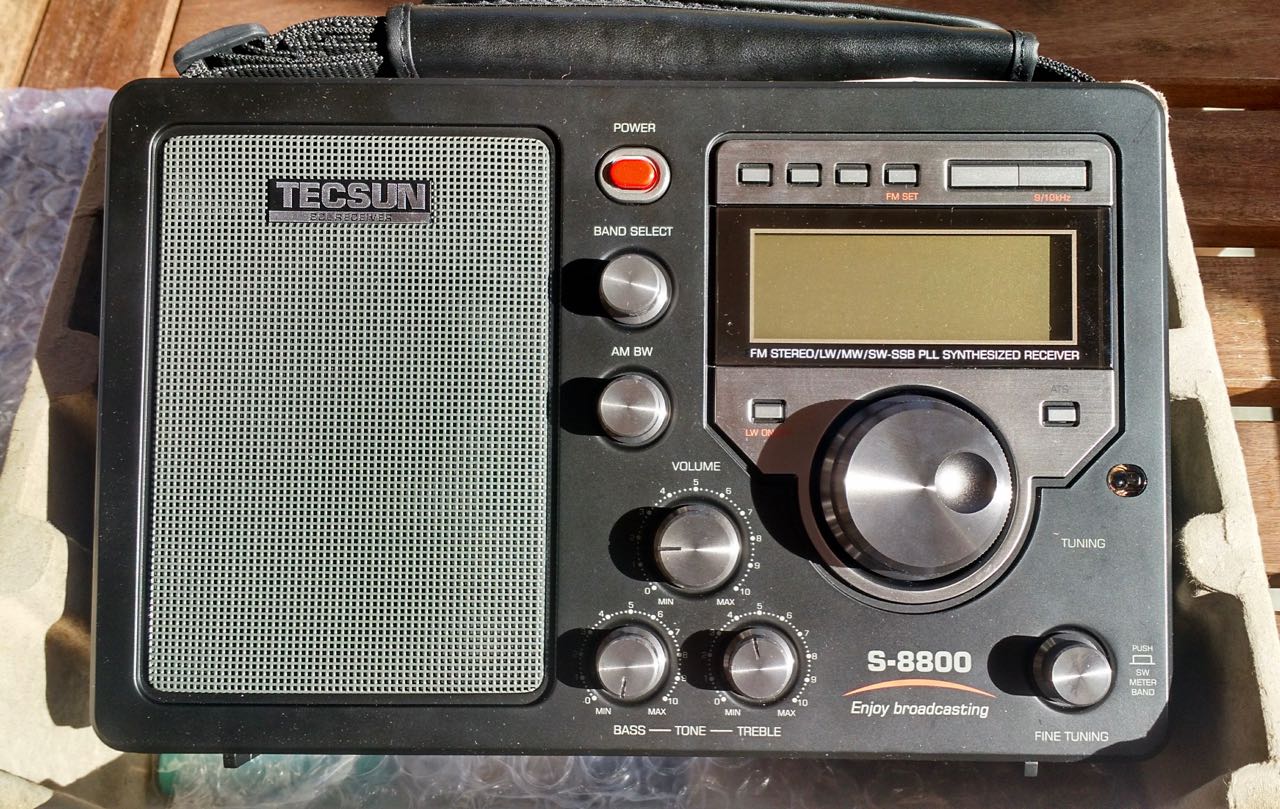
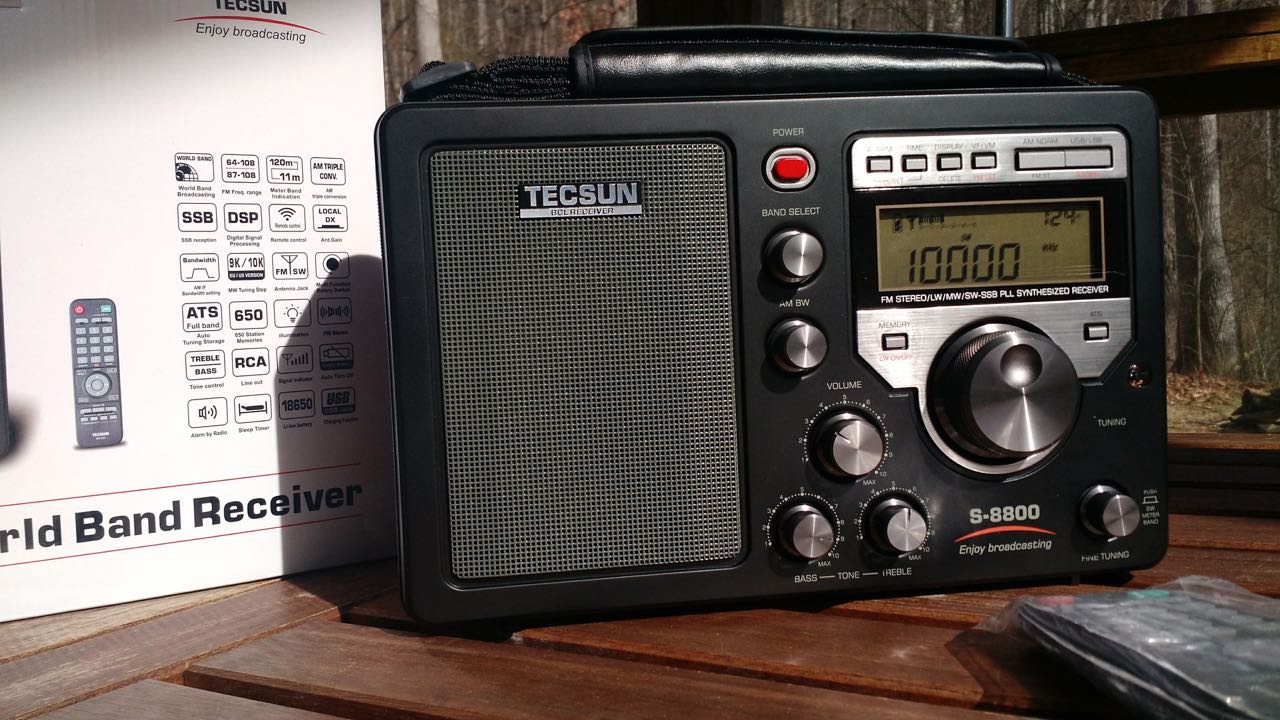
The S-8800, and its many predecessors, were certainly influenced by the RF-2200’s popular design & form factor: large speaker on the left, large tuning knob, wide-spaced knobs, and a generous display. Like the RF-2200, it has a durable, adjustable woven carry strap.  
The S-8800 ships with the accessories in the photo below: an IR remote control, two rechargeable cells, an RF adapter, and a USB charging cable.
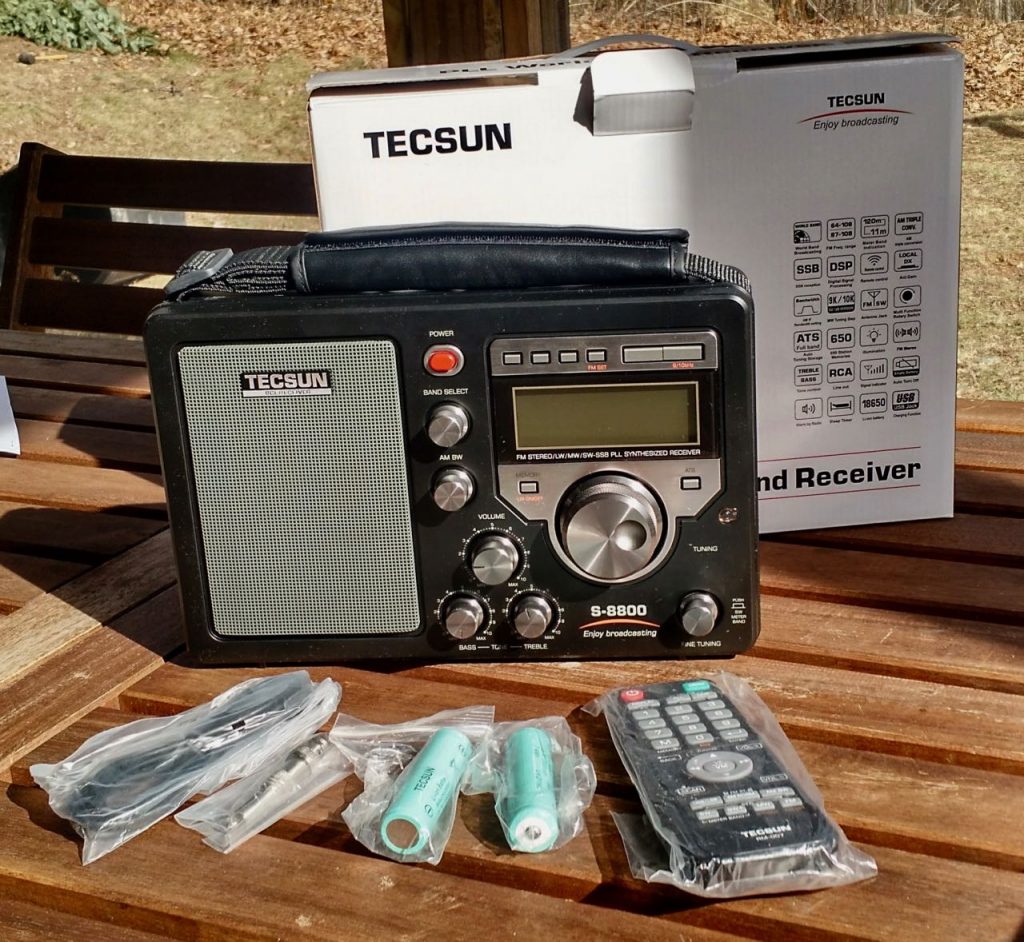
Note the charging cable is only a cable; the S-8800 doesn’t ship with a wall-wart type charger. If you’re like me, you probably have a handful of USB chargers scattered around your home that you could use for the purpose of charging this radio.  And if you don’t, you can also use any free USB port on your PC to charge it.

USB chargers are cheap and well-known to spew RFI. I doubt you’ll enjoy listening to shortwave or mediumwave/AM while charging the S-8800’s internal cells. It doesn’t appear the S-8800 was designed for listening while plugged in; Tecsun clearly wants you to charge it and then listen, off battery power. The latter is my preference for listening anyway, but it may put off some potential S-8800 owners.
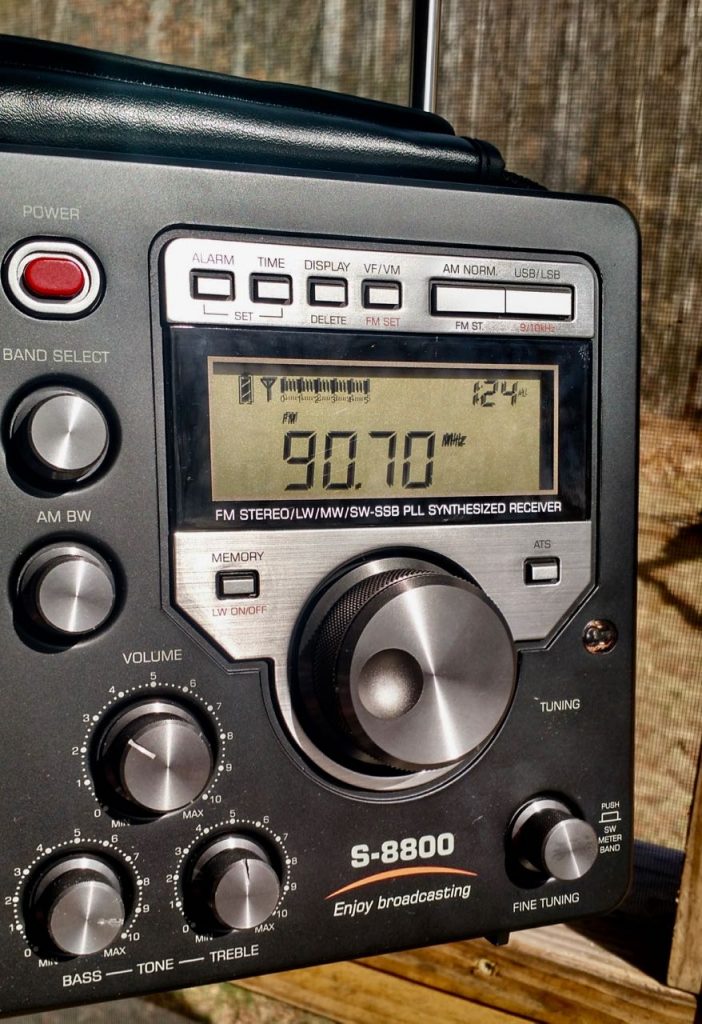
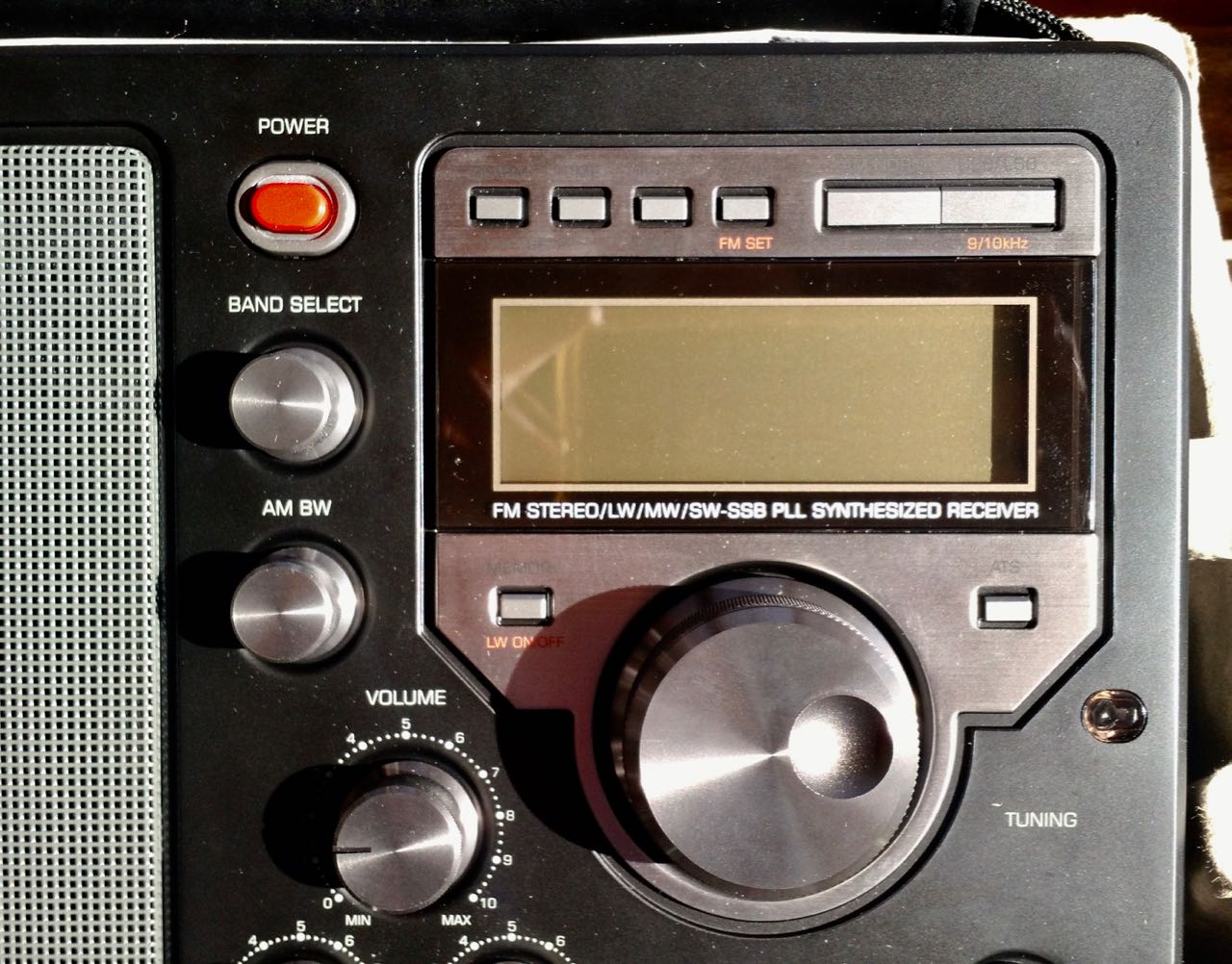
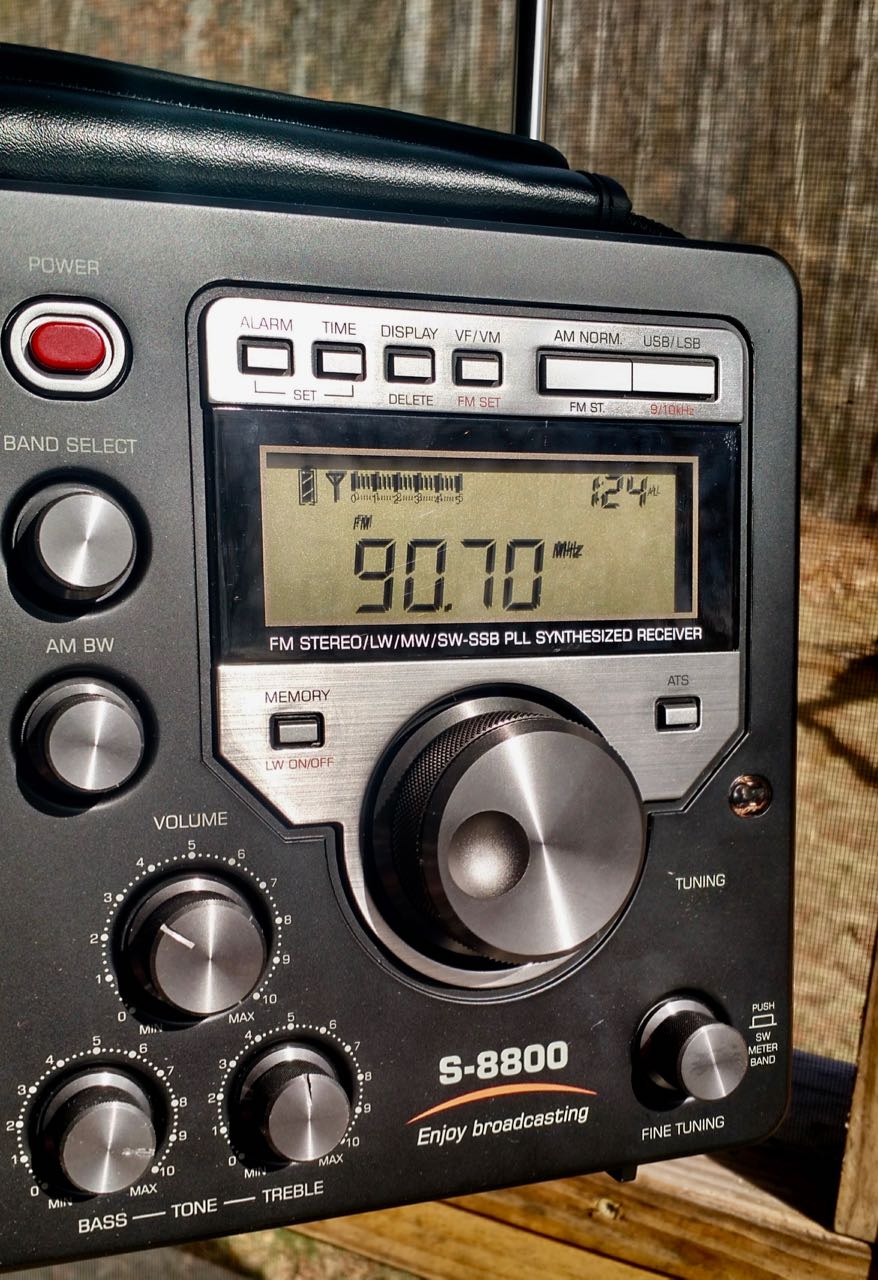
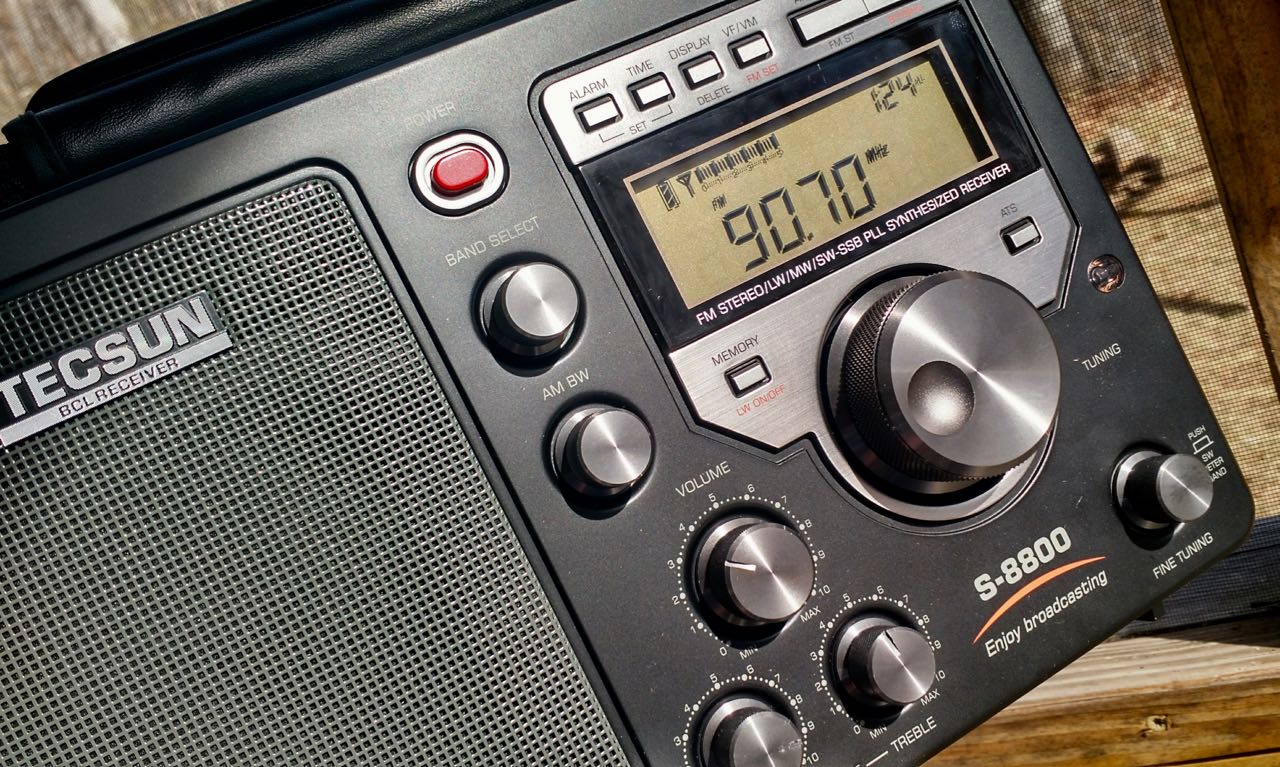
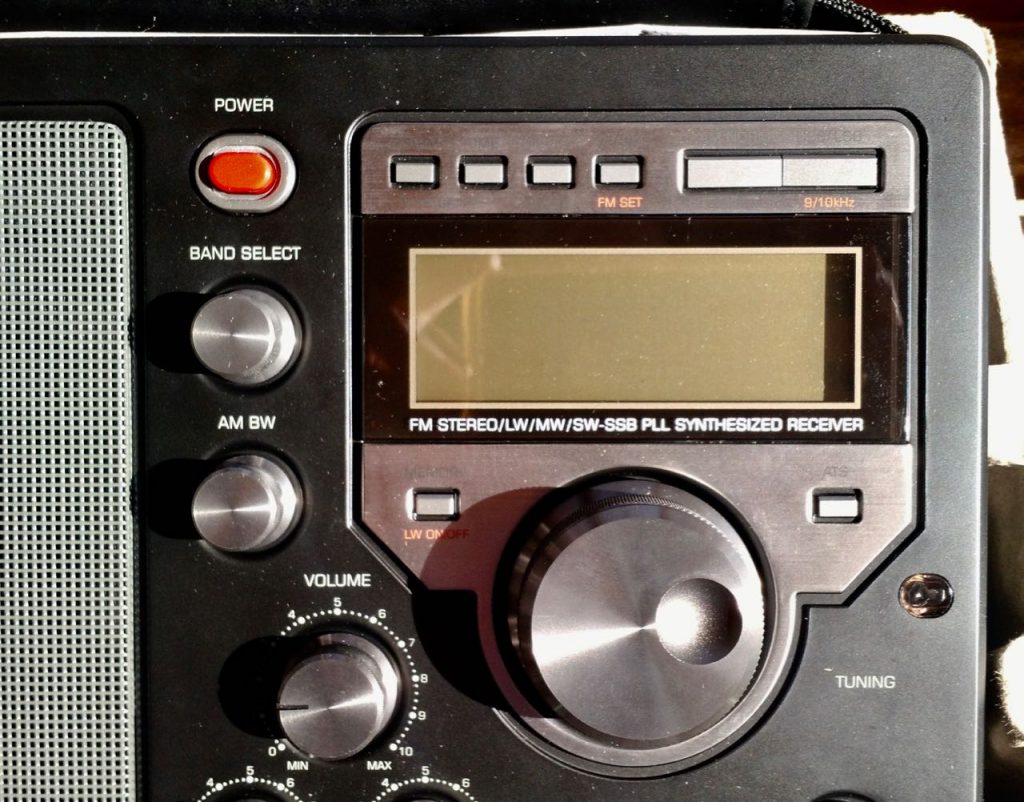
The display is easy to read from any angle, and it’s also easy to view in bright sunlight. In low light, you’ll be pleased with the backlight function.
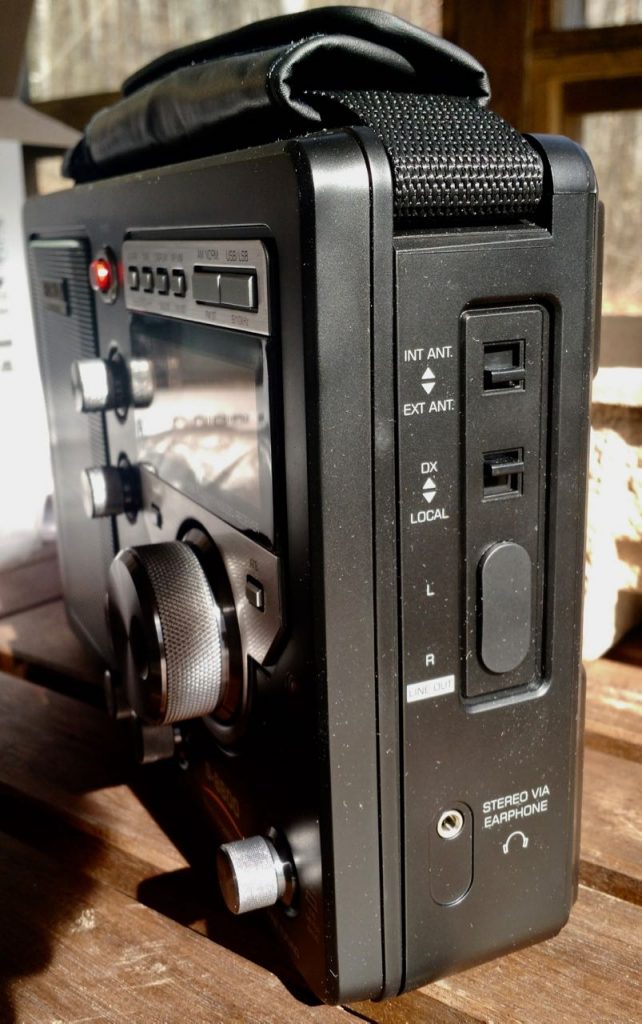
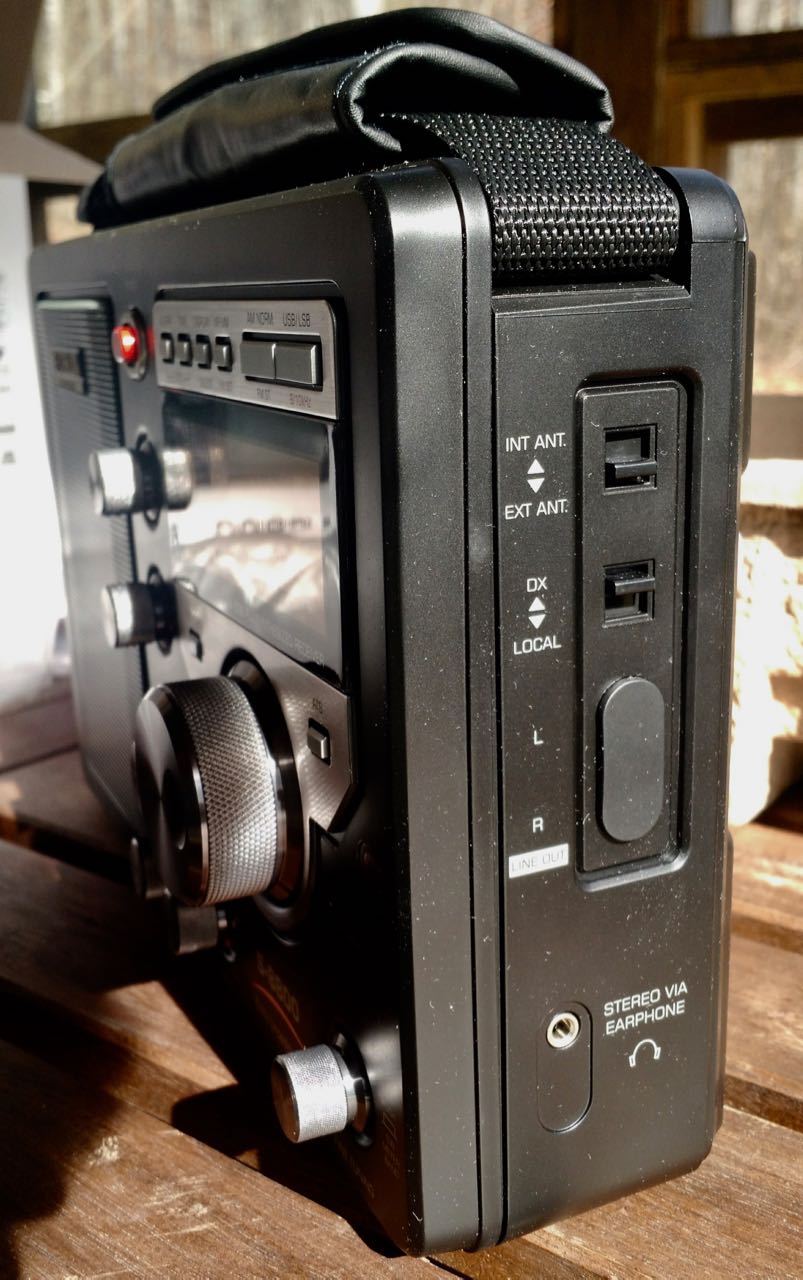
On the right side of the S-8800, you’ll find an internal/external antenna switch, a DX/local switch, RCA type stereo line-out ports (covered in the photo above) and a stereo headphone jack.
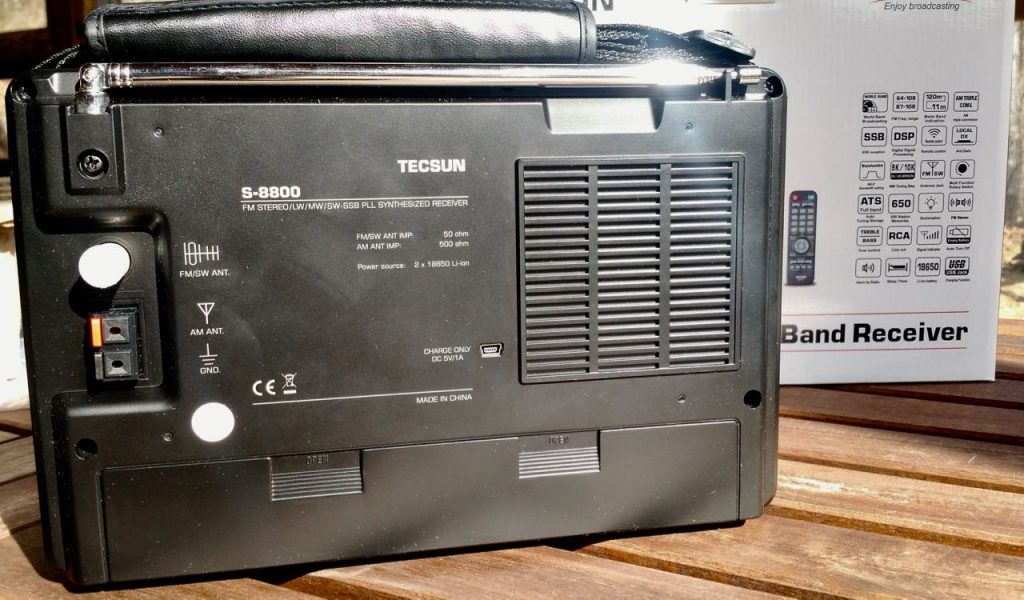
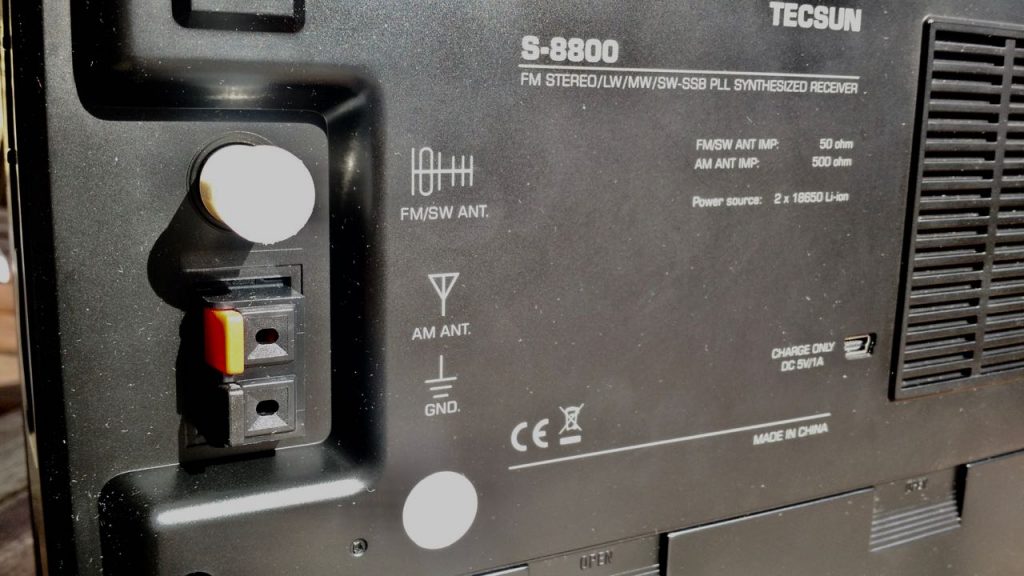
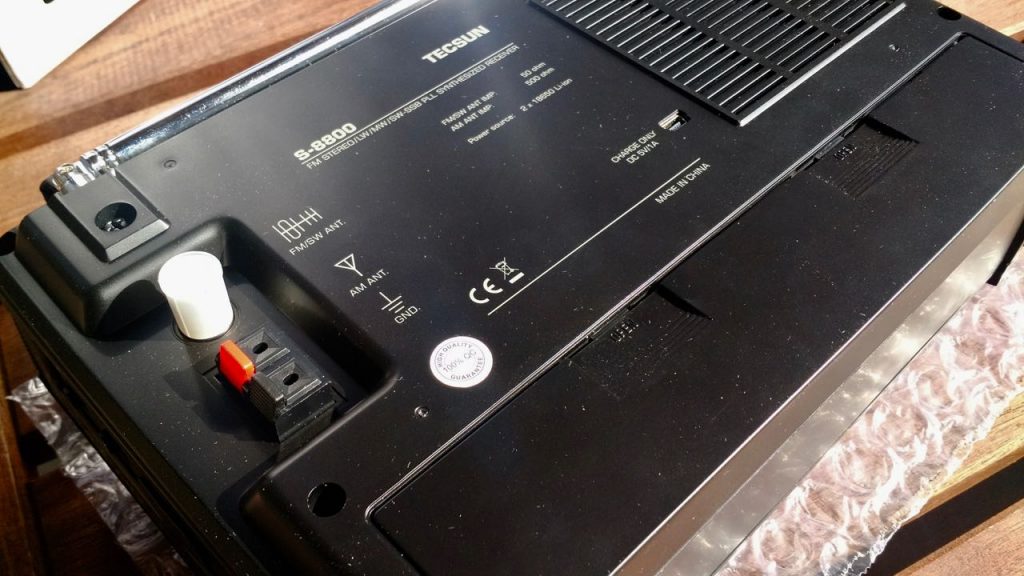
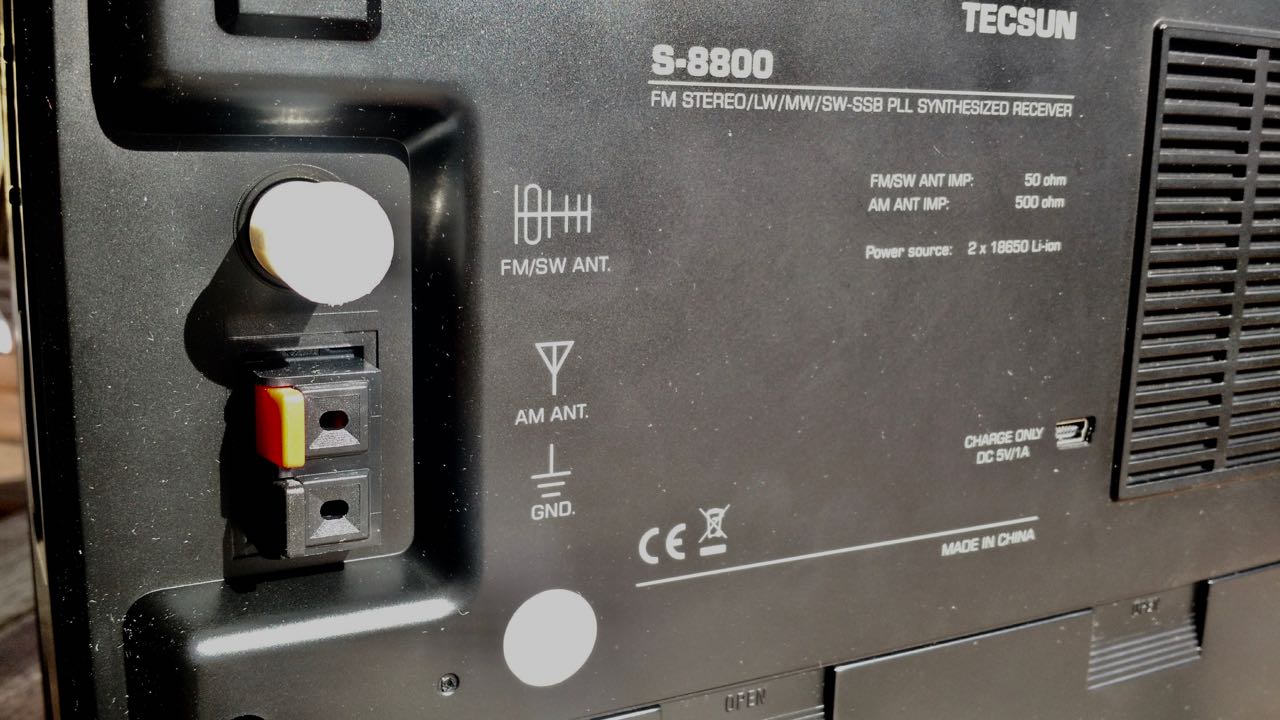
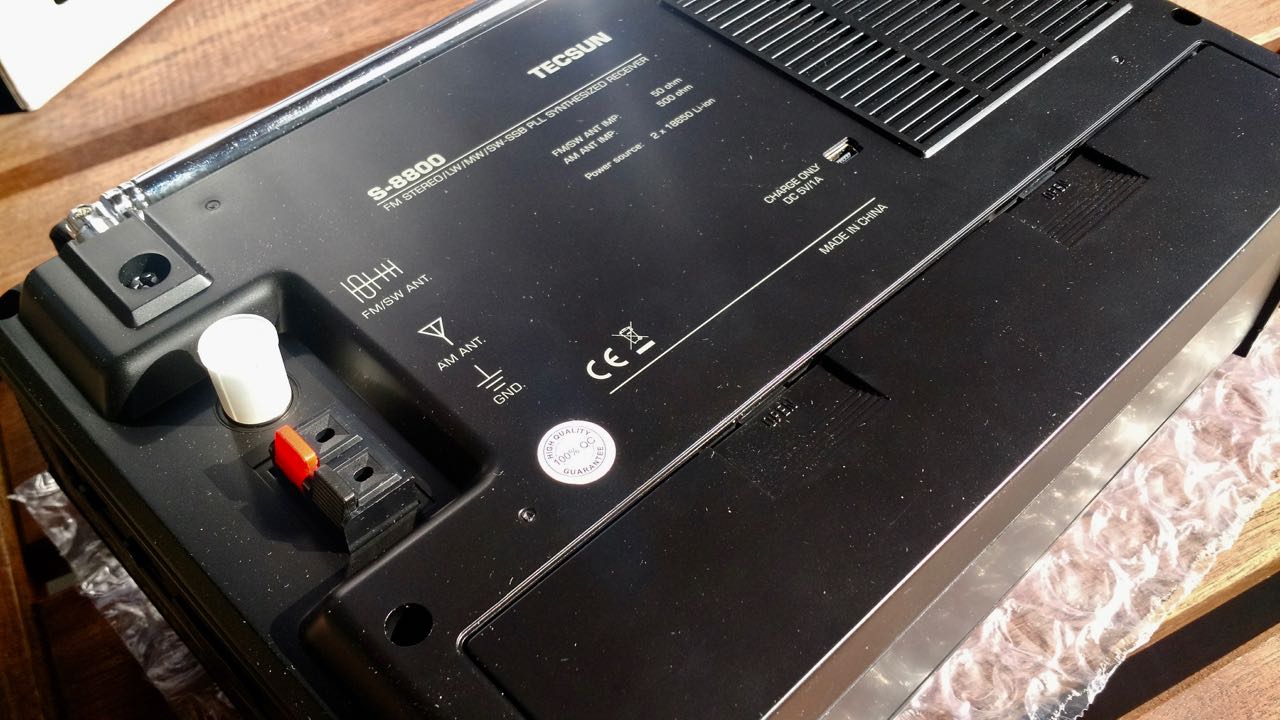
On the back, you’ll find a mini USB port for charging, an antenna port for a radiator and ground wire, as well as an FM antenna port. 
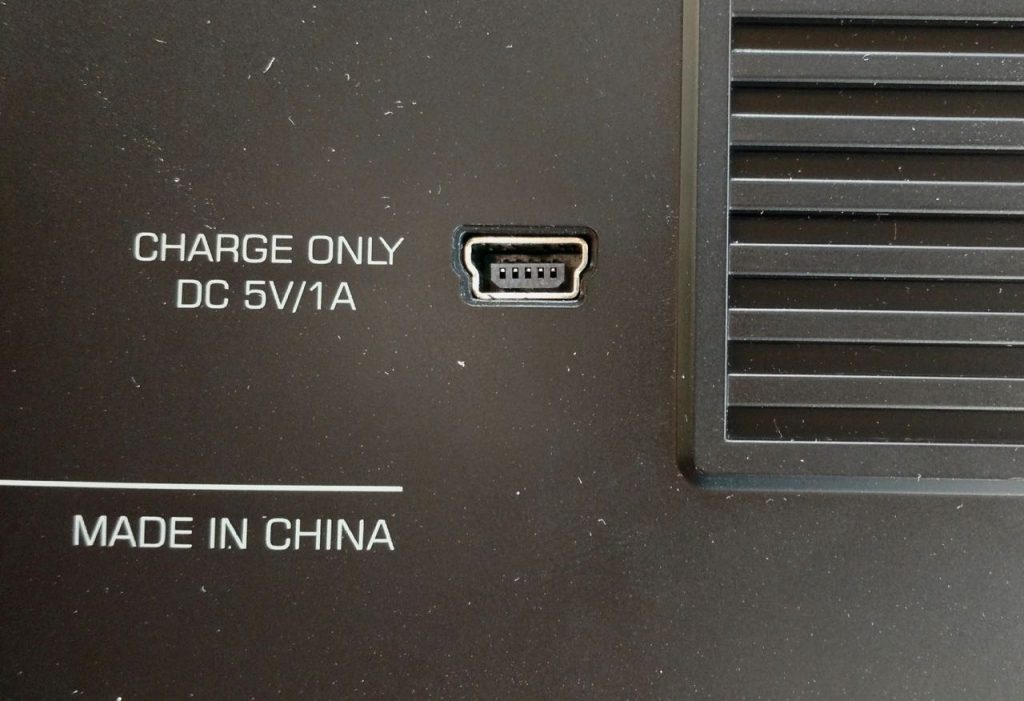
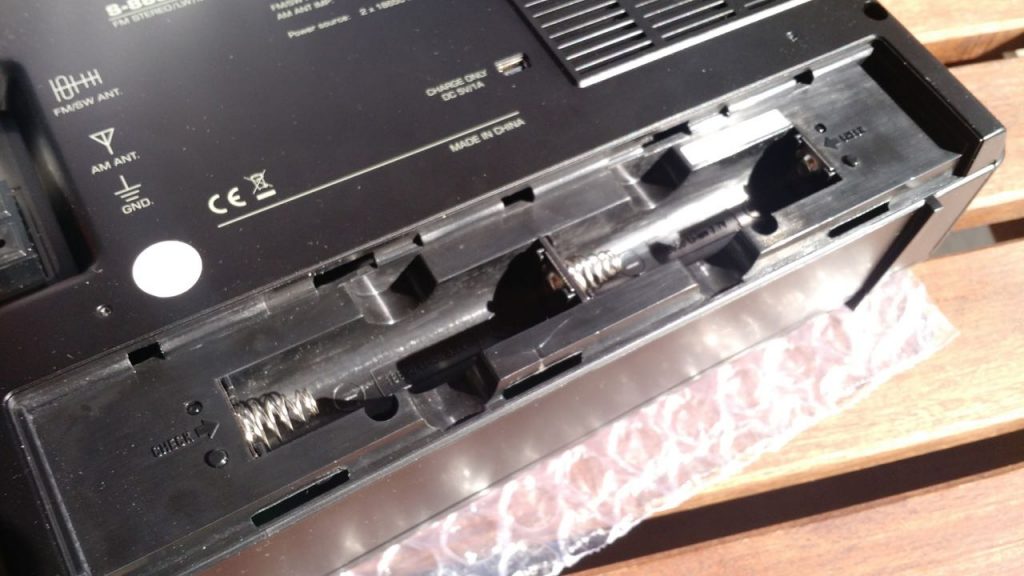
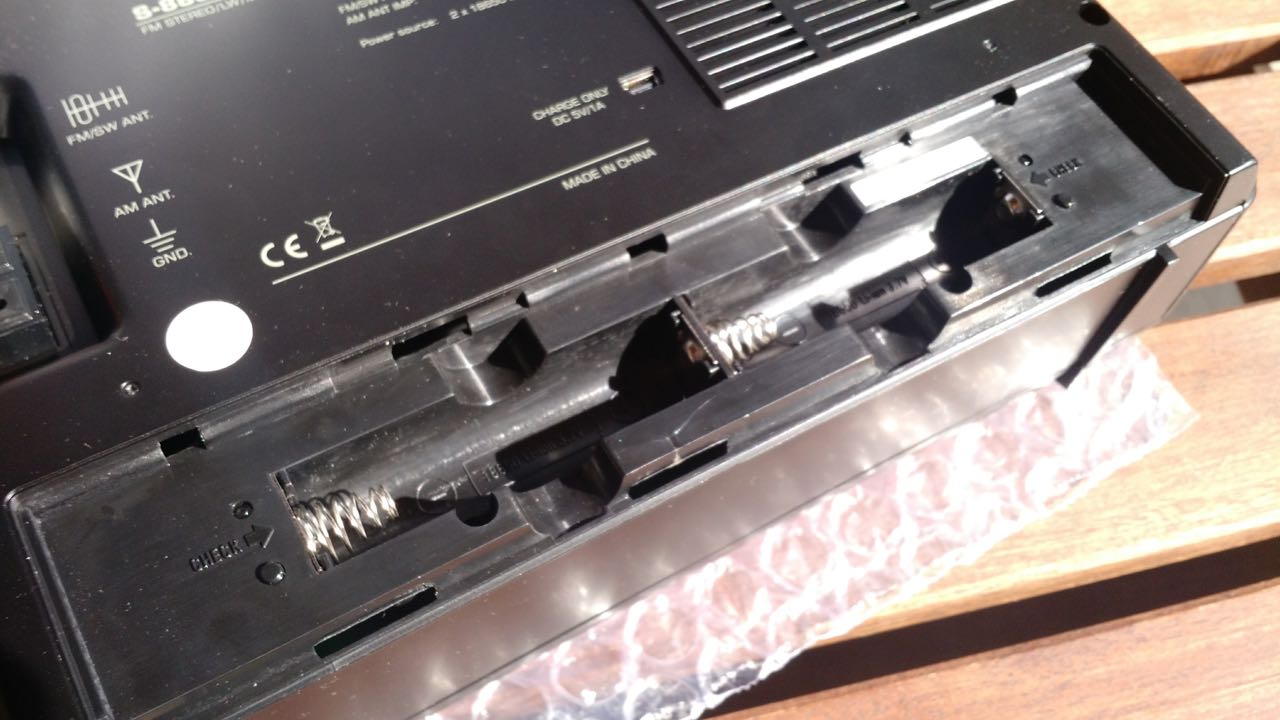
The battery cover is predictably located at the bottom of the back panel and––a first for any shortwave radio I’ve reviewed––accommodates two (supplied) 3.7V Li-Ion (internally) rechargeable cells.
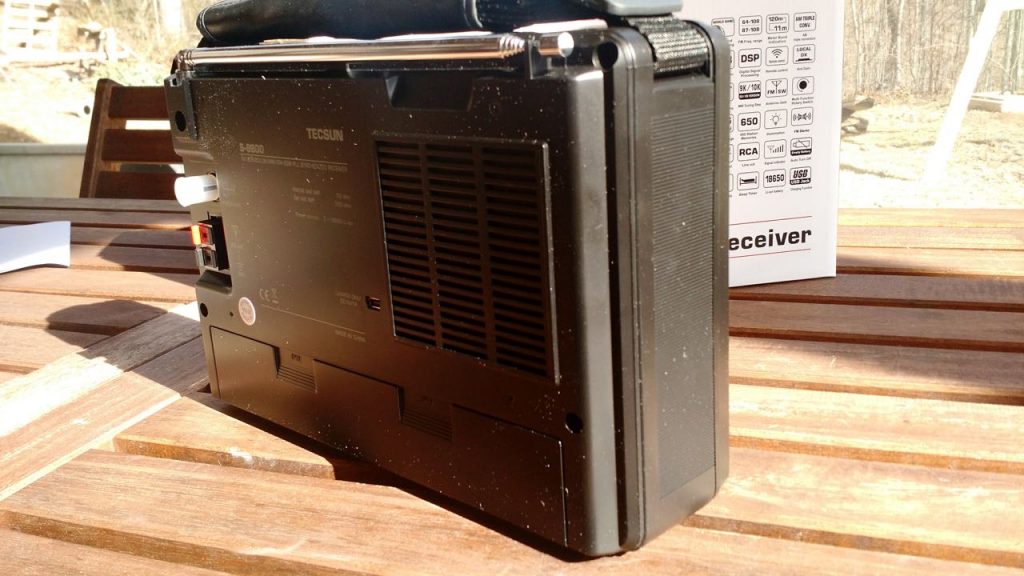
The right side panel has no connections or controls.
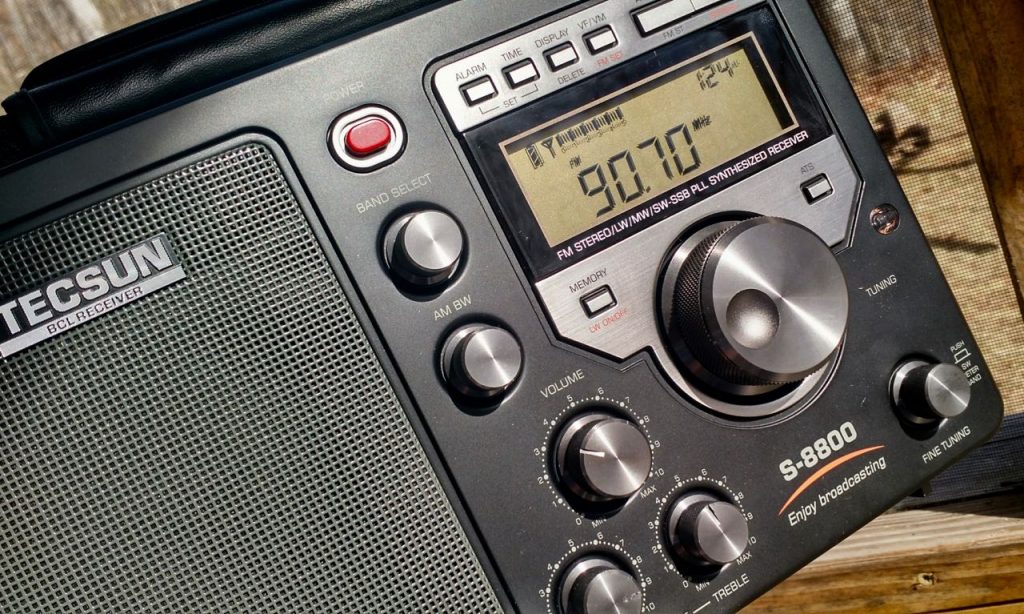
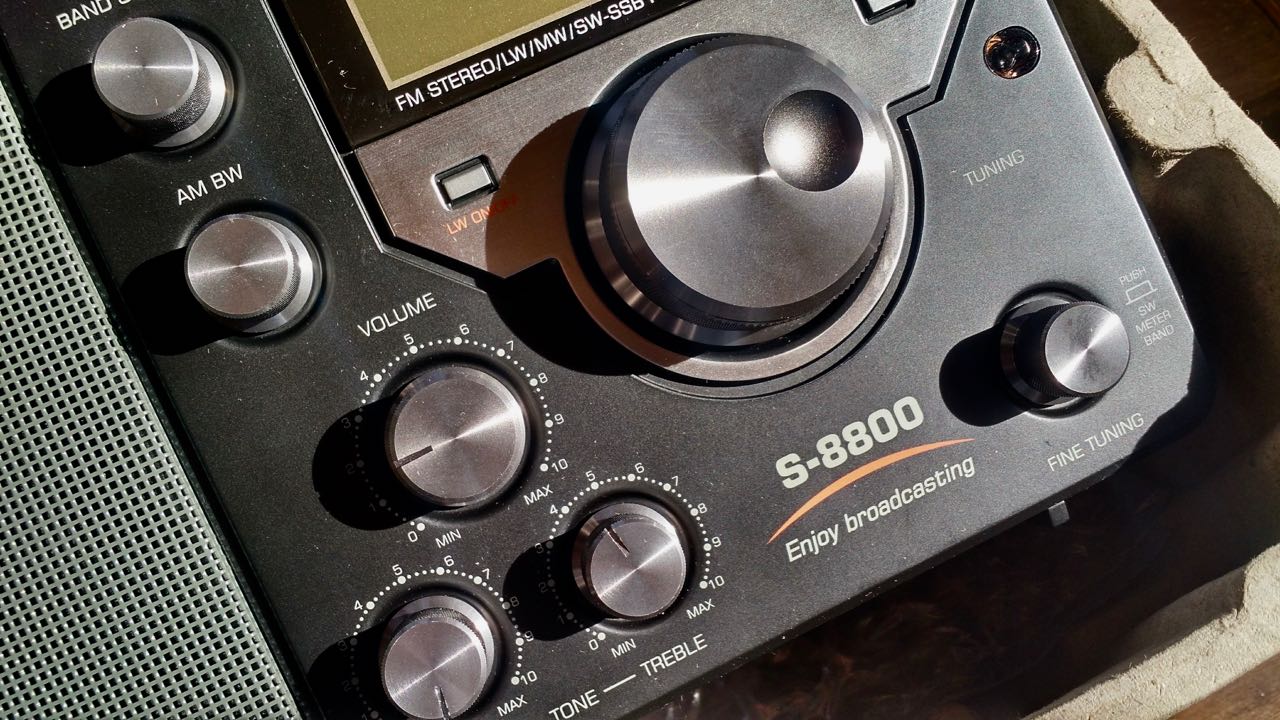
I must admit…the Tecsun S-8800 has some front panel controls I really appreciate. Most notably, it has a dedicated AM bandwidth selector and fine tuning control. I also like the dedicated treble and bass controls which can also be found on its predecessors’ front panels.
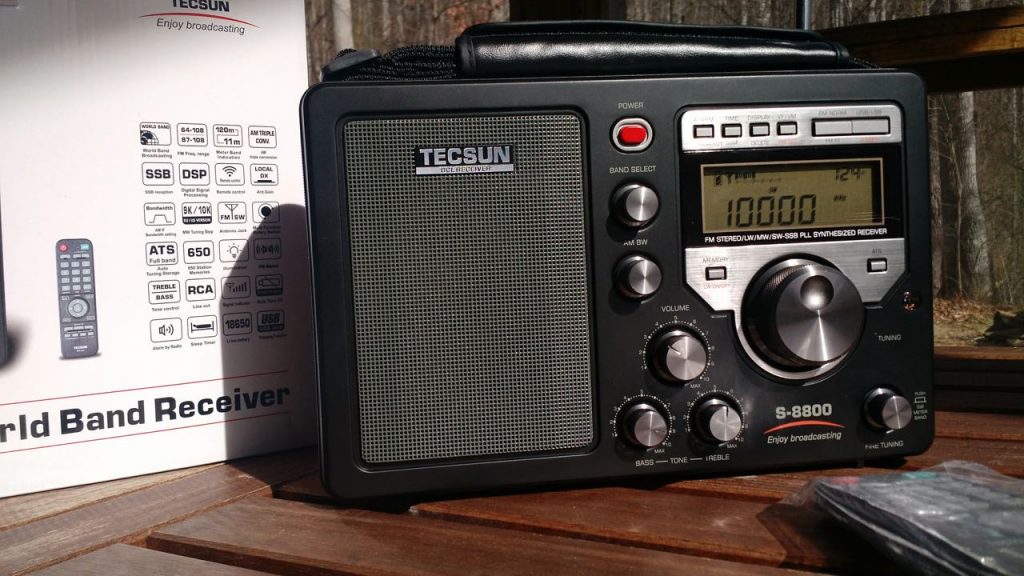
Over the next week, I’ll be evaluating the performance of the S-8800. I plan to post blind audio samples as I’ve done in the past, comparing the S-8800 to other portables: likely the PL-880 and the ICF-7600GR, PL-660 or PL-680.  Please be patient, however, as making these recordings takes time as I like to make sure each radio has a true representative sample and fair shot at showcasing performance.

What about those initial impressions? Yes, I must say I do like the package of the S-8800 better than its predecessors. I like the dedicated IR remote control, the many antenna connections, and, so far, the audio fidelity from the built-in speaker. Makes for a nice package.

But, ultimately, the proof is in the pudding:  let’s put the S-8800 on the air and compare it with some benchmarks!

Follow Tecsun S-8800 posts by bookmarking the tag: S-8800

A New Approach to FSL Antenna Construction

Introduction

I’m very fortunate to live across town from my good radio hobby pal Gary DeBock. He has been responsible for the rapid growth in Ultralight radio DXing and the construction of Ferrite Sleeve Loop (FSL) antennas. Living near each other as we do, I’ve benefited a lot from his expertise and creativity in the hobby. We’ve enjoyed visiting about Ultralight radios and antennas many times over a leisurely lunch. If you’re unfamiliar with Gary’s efforts, just do a YouTube search on his name and see just a few of the many FSL antenna variations he’s built!

Gary uses PVC tubing, “Fun Noodle” foam cylinders, sections of curved foam, and rubber plumbing adapters almost exclusively as the core supporting structures for his FSLs, from small 3-inch models to 17-inch monsters. Gary certainly has perfected his own techniques with these raw materials; he’s an expert in combining them. He even makes PVC table structures to support his FSLs during Oregon coastal DXpeditions, as seen in some of his YouTube videos.

These materials work well, but over time even FSLs as small as 7 to 8 inches in diameter begin to sag and lose their perfectly circular shape. This seems to be caused by the shifting of individual segments of foam which are wrapped around a “Fun Noodle” core and center PVC tubing.

What possibilities are there for other materials in FSL antenna construction? It would be a fun challenge to build a small to medium sized FSL antenna that would have these qualities:

  • Maintain a circular cross-section without sagging
  • An appearance less like a threatening explosive and more like a commercial product
  • Use alternate construction methods for those not skilled with cutting & gluing PVC tubing

I began to keep my eyes open for likely candidates as I visited hardware stores, department stores, and office supply outlets. Eventually some ideas began to gel.

Raw Materials

Here is a visual and descriptive list of what I used in this alternate design of Ferrite Sleeve Loop antenna. I won’t go into great detail about dimensions, quantities, and measurements, as other DIYers should be able to easily follow the general idea presented here. This article is mainly to get you thinking about other ways to construct a ferrite sleeve loop antenna.

The Core of the Matter

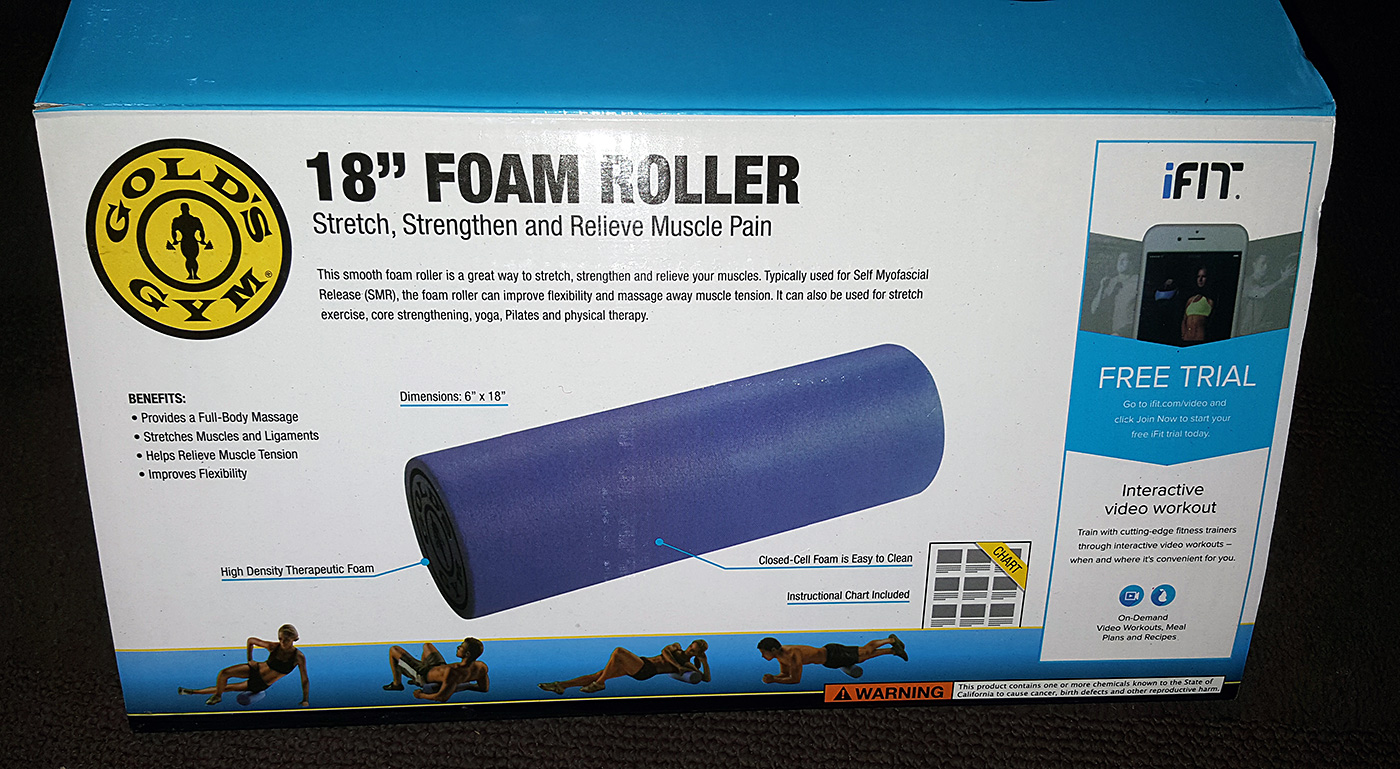
This 18-inch long, semi-rigid foam roller is six inches in diameter. It’s a workout and exercise aid which I found in the sports department of my local Walmart store. The cost was approximately $13. This one-piece foam is a perfect foundation for holding and protecting the fragile ferrite rods and keeping them in a circular arrangement; since the roller is in one piece there is nothing to shift around, or sag. When placed on this core, the final diameter of the FSL antenna is approximately seven inches.

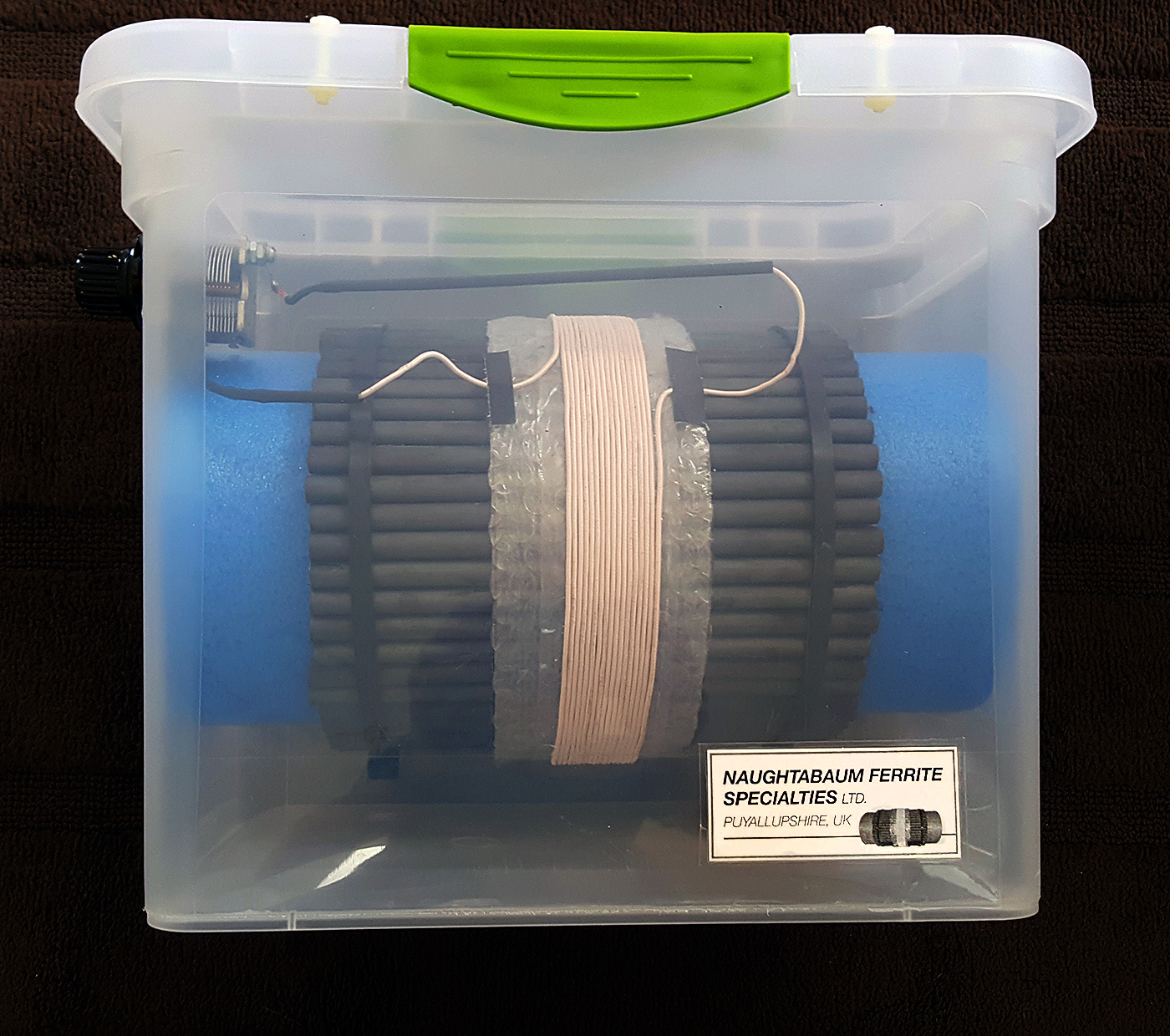
So, what to put the antenna in? Something needs to suspend and protect the antenna as a substitute for the PVC frame previously used. This Sterilite tote box is the perfect size to hold the antenna. As shown in the photo, the dimensions are approximately 14-1/4″ X 9-5/8″ X 12-1/4″; the model number is 1896.

Early on, I decided that the flimsy “locking tabs” on the cover would not suffice for holding the relatively heavy antenna when carrying the tote by the handle. I drilled holes and attached a dozen small Nylon nuts and bolts to secure the cover. (Nylon avoids distorting the medium wave reception pattern of signals, as metal hardware could.)

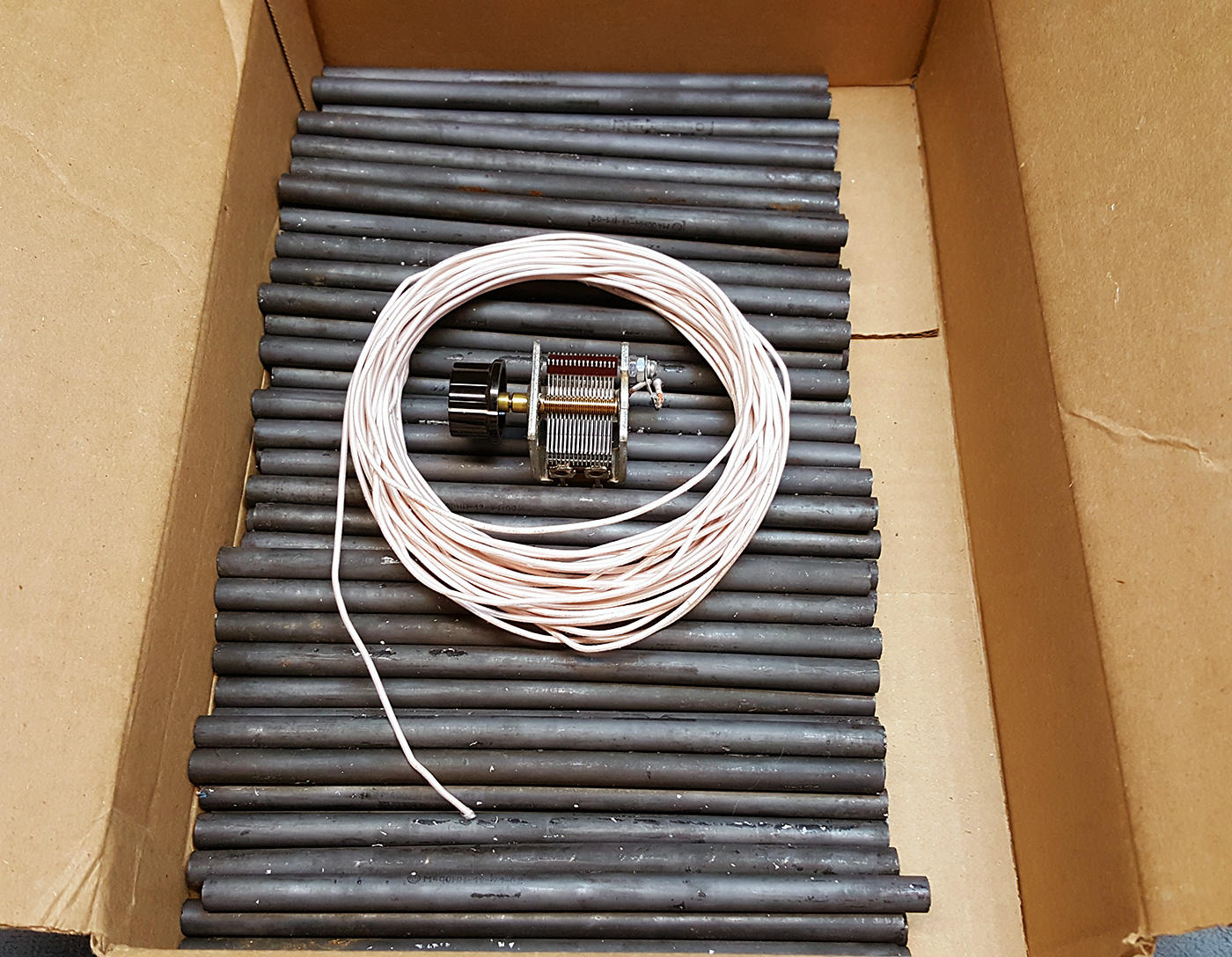
An ample quantity of 200mm ferrite rods are needed, plus a air variable capacitor (preferably with a 8:1 reduction drive shaft), and Litz wire. 1162 strands/46 ga. Litz provides the most sensitivity but the coil will cover a greater width on the rods.

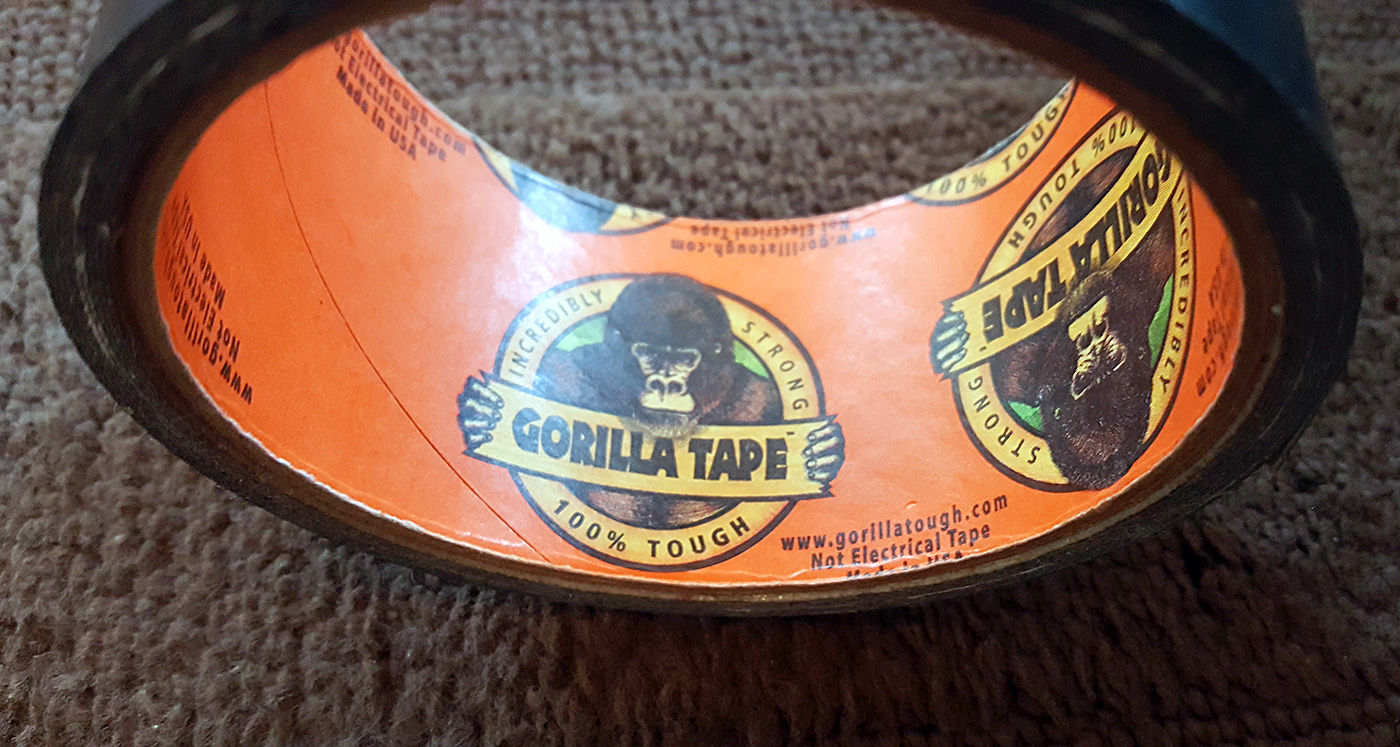
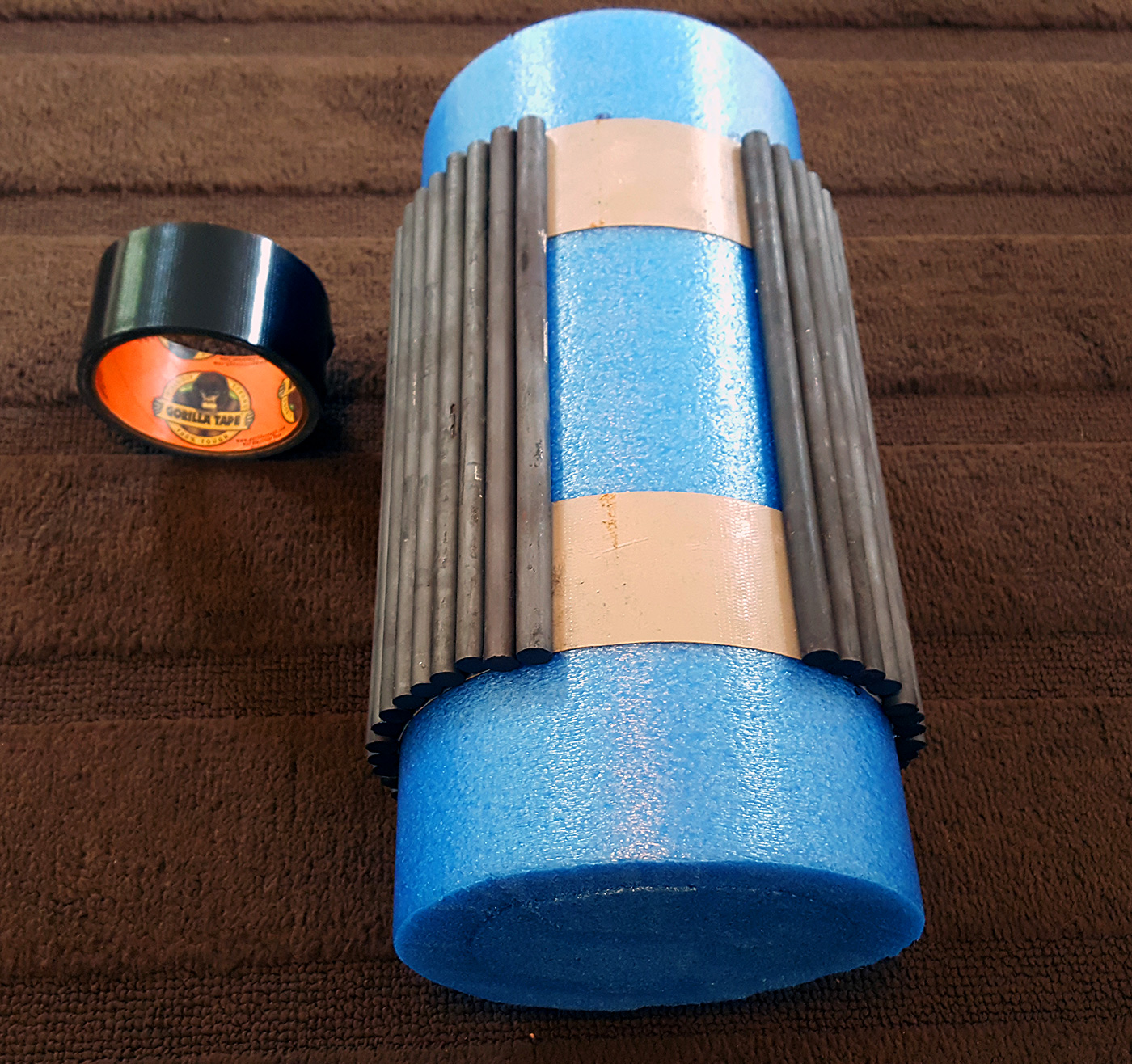
Gary likes to use waterproof medical tape, sticky side out, to hold the rods in place, but I like to use Gorilla brand tape, as it is extremely sticky and holds the rods better. My choice for the rod-to-coil spacing  material is two turns of 1/8″ thick bubble wrap.

This is the foam core, ferrite rods, bubble spacer, and coil assembly prior to fitting in the Sterilite tote container. Before assembly to this point you’ll need to cut the foam roller to length using a serrated knife or electric carving knife. Two sturdy cable ties help hold all of the rods in place. A better alternative might be strips of 1/2″ wide Velcro straps purchased from a fabric shop or home improvement store.

Another key item to this construction method is the use of plastic drywall anchor screws. These are meant to be pushed and screwed into gypsum wallboard for sturdy attachment of bolts or picture hangers on walls. When screwed through drilled holes in the side of the Sterilite tote, they secure and suspend the foam roller/ferrite sleeve loop assembly. The density of the foam roller is sufficient to give a good grip to the drywall anchors. Eight to ten anchors per side are enough to hold the assembly in place. See the photo at the beginning of this article for a good view of this mounting method.

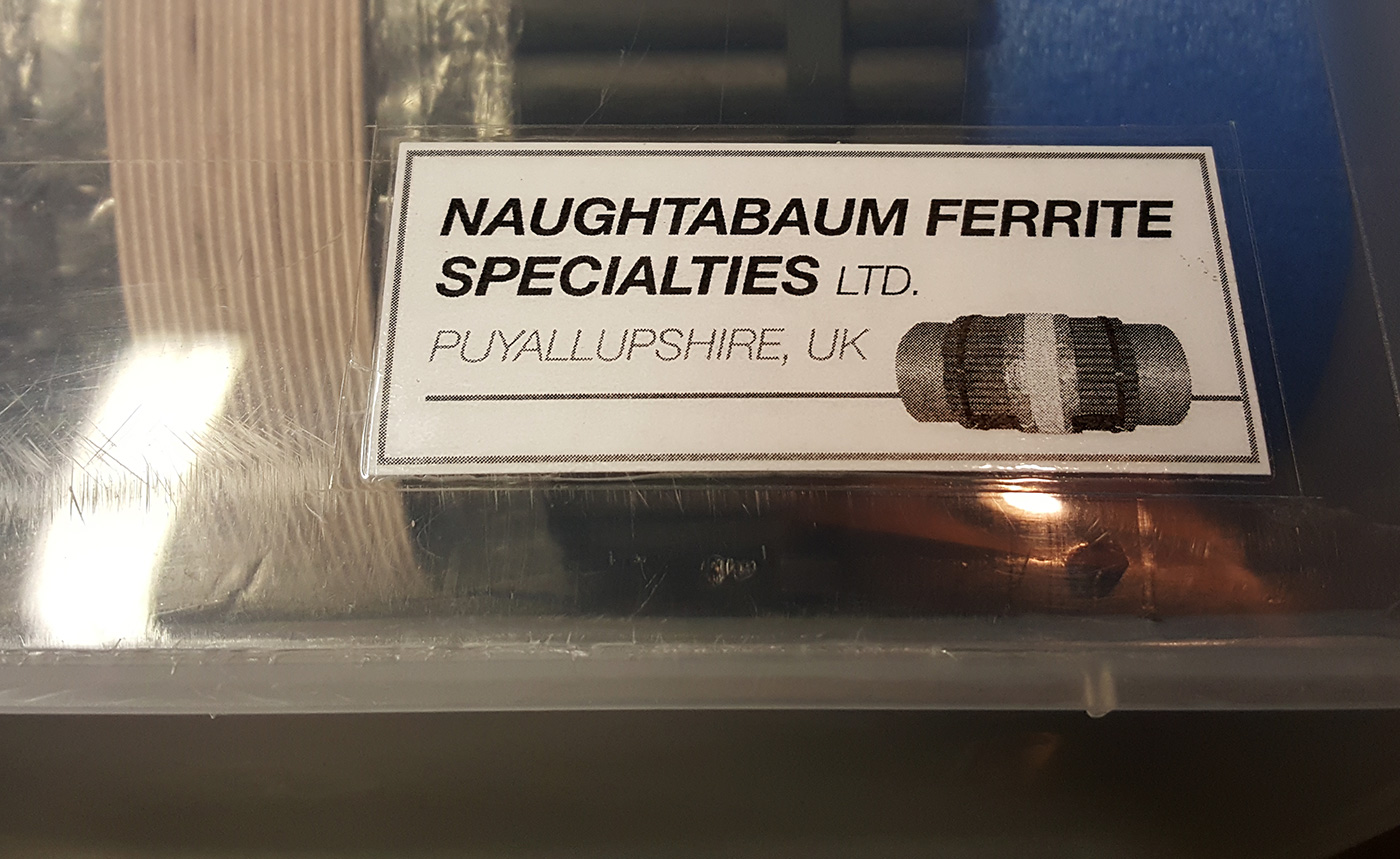
Every good FSL antenna design needs an official sounding manufacturer! With tongue firmly in cheek I’ve appropriated the name shown on this self-produced label. Clearly, a Ferrite Sleeve Loop antenna from Naughtabaum Ferrite Specialties Ltd. stands a better chance than most of passing through TSA checkpoints, right?

I hope this article has given you some new ideas for FSL antenna designs. There’s certainly room for improvement, including making the antenna’s ferrite rods look less intimidating…less like a bundle of dynamite! Perhaps the entire assembly can be wrapped with something that shields the rods from view, or you could use an opaque tote container rather than a clear model.

Be on the lookout for useful materials to repurpose. Trips to your local home improvement stores, office supply, and other outlets will give you further ideas on how to design your own Ferrite Sleeve Loop antenna.

Guy Atkins is a Sr. Graphic Designer for T-Mobile and lives near Seattle, Washington.  He’s a regular contributor to the SWLing Post.

Caroline North on air this weekend

(Source: Mike Terry via Southgate ARC)

Caroline North is back this weekend

Caroline North is back this weekend live from the MV Ross Revenge on the River Blackwater Estuary near Bradwell, Essex.

Relayed on 1368 kHz with a transmitter power of 20kw from the Isle of Man.

According to Manx Radio’s website as well as being heard in the Isle of Man, the AM service is also audible in Southern Scotland, in the North West, in North Wales and in the West of Ireland and Northern Ireland.

Also online worldwide.

Urban DXing: testing the Bonito Boni whip against a 30 metre longwire & the Wellbrook ALA15030

Hi there, if like me, you live in an urban environment, chances are QRM is having a negative impact on the quality of the signals you’re receiving at home. The presence of electrical noise makes antenna choice very important, particuarly if you’re planning to spend more than a few £££s on something more sophisticated than a length of wire. Recently I was considering the the purchase of a second compact antenna, for use at home in my shack and out and about on DXpeditions. I already had the excellent Wellbrook ALA1530 H field antenna, but at more than £250, it’s very costly and thus it seemed rather extravagent to buy a second one, if I could find something with similar performance for less expense. Space is at a premium at home and of course I take much of my equipment out on DXpeditions, so the Bonito Boni whip active antenna appeared to be an ideal choice. A wideband active antenna (from 20 kHz to 300 MHz) operating from 12 to 15V DC, with a very compact form-factor definitely ticked all the boxes. Furthermore, with reasonable second and third order intercept points of +55 and +32.5 dBm respectively, the Boni whip, on paper at least, looked like a pretty good buy at around £100.

 

Now, clearly, an E field antenna such as the Boni whip is not going to match the SNR provided by the H field Wellbrook ALA1530 in a noisy, urban environment. I have uploaded a few reception videos to my YouTube channel to demonstrate this, making a direct comparison of the two. However, what about the performance of the whip versus a simple longwire in an urban environment? Is there a delta in performance? The value proposition of the whip is primarliy in it’s performance, coupled with portability I suppose, but that must be considered a secondary requirement. The whip might be 10 or 15 times more expensive than a reel of cheap equipment wire, but will the reception justify the cost delta?!

Text links follow directly below, with embedded videos thereafter; you will find 3 reception videos comparing the whip and a 30 metre longwire, on shortwave and one each for LW and MW. At the end of each video there’s a section with the Wellbrook loop, just to calibrate where the longwire and whip are in terms of a much more effective H field antenna. The result? Well, there’s not much to separate the longwire and Boni whip, except on LW, where the whip prevails. A friend told me recently, if reception is rubbish at home under a blanket of QRM, don’t blame the antenna, the noise is the real problem. He was right. So, the next tests are to be undertaken out in the field, where the whip has a real chance to shine. I’m rooting for it because to have an antenna that performs as well as, or close to my loop out in the woods, yet can be packed away into a small case would be brilliant. Thanks for reading/watching/listening.


Clint Gouveia is the author of this post and a regular contributor to the SWLing Post. Clint actively publishes videos of his shortwave radio excursions on his YouTube channel: Oxford Shortwave Log. Clint is based in Oxfordshire, England.

“Hello Finland, this is Vancouver calling”

Many thanks to SWLing Post contributor, William Lee, who shares the following story from the CBC:

Hello, Finland, this is Vancouver calling: radio fans listen to CBC from 6,700 km away

When people in other parts of the world tune in to CBC Radio in Vancouver, they usually do it through our app, or online or through Sirius XM.

But some people in Finland recently picked up Vancouver’s CBC broadcast — the broadcast heard locally at 690 AM and 88.1 FM — using an elaborate antenna system roughly 300 kilometres north of the Arctic Circle in Lapland, Finland.

“It’s a few [radio hobbyists] from around Finland who have a very nice place up in the north where there’s not much neighbours which means not much interference,” Patrik Willfor, one of the listeners, told On The Coast host Stephen Quinn. “It’s like a silent band there, so even the weakest signals come through.”

The practice is called DXing, and Willfor says he’s been at it for about 25 years since a friend told him that’s what their fathers used to do when they were young.[…]

Click here to read the full article on CBC British Columbia’s website.

Post readers: Is it just me? Or do you, too, get a kick out of it when the press gets a glimpse into the seemingly-anachronistic, but still-relevant-and-rocking world of radio–?

Note that you can also listen to the audio interview with Patrik via the embedded CBC player below: