Shortwave listening and everything radio including reviews, broadcasting, ham radio, field operation, DXing, maker kits, travel, emergency gear, events, and more
Many thanks to SWLing Post contributor, DanH, who writes:
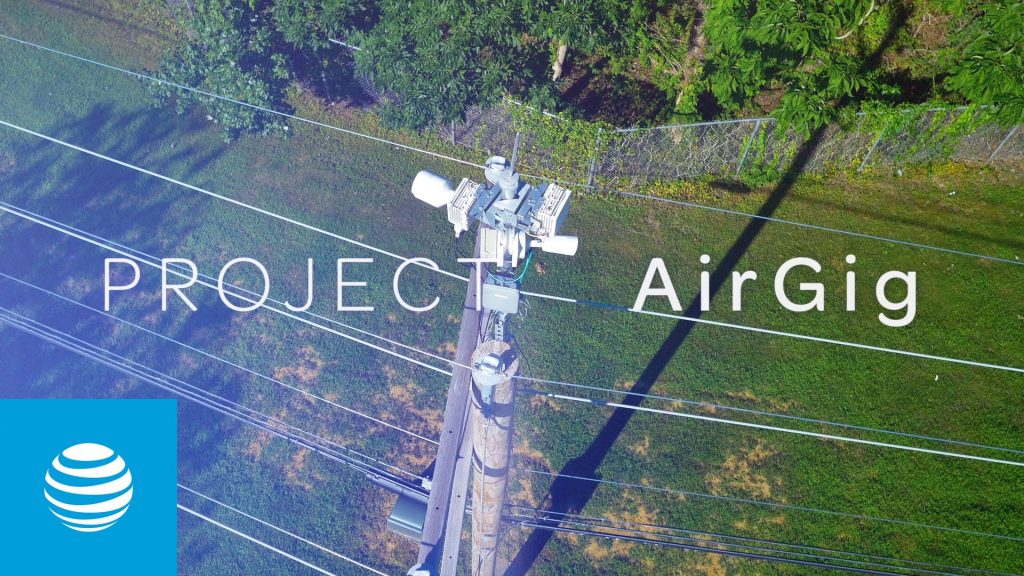
I read this news item today. AT&T has a new approach to broadband over power lines called AirGig. Supposedly, this technology will avoid RFI issues encountered with previous BPL technologies. This shouldn’t be an issue in my neighborhood where power lines are underground. Underground utilities still have RFI issues. My next door neighbor’s AT&T high speed internet swamps out all nearly all shortwave signals below 4.7 MHz within radius of 30 feet from the connection box.
Hi there, I thought I would share some DX catches, all of which are rarely reported in Europe and yet I was fortunate enough to catch in Oxford UK, using a couple of different set-ups. The first is Radio Chaski Red Integridad from Urubamba Cusco, Peru, heard using an Elad FDM DUO and Wellbrook ALA1530 active loop antenna (indoors). The two subsequent receptions originate from Brazil; Radio 9 de Julho, Sao Paulo and Radio Transmundial,Santa-maria Camobi, both of which were caught using the venerable Sony ICF-2001D portable receiver and my 200 metre longwire antenna. In all three cases, persistence was necessary whilst optimum conditions of propagation aligned with my listening schedule at home and my less frequent, but regular DX’peditions.
I am soon to deploy a 200 metre Beverage with adjustable termination resistance for nulling ‘rearward’ signals and matching transformers suitable for 75 and 50 Ohm receiver antenna inputs. I hope this will further improve my reception capability on both the MW and SW bands. Another post specific to that project is in the pipeline, but in the meantime, thanks for reading/ watching and I wish you all very good DX.
Clint Gouveia is the author of this post and a regular contributor to the SWLing Post. Clint actively publishes videos of his shortwave radio excursions on his YouTube channel: Oxford Shortwave Log. Clint is based in Oxfordshire, England.
The post reminded me that I had made a small video demonstrating the DSP unit on my FRG7. The video shows me tuning the DSP on a broadcast of Voice of the People on 3912 khz. While QRM at my place isn’t too bad, it’s still present and the DSP does aid in clearing up a signal.
Voice of the People is usually jammed by the DPRK and the DSP also assists in reducing the roar of the jammer. Of course one can go to far with DSP and the audio can suffer from that underwater sound.
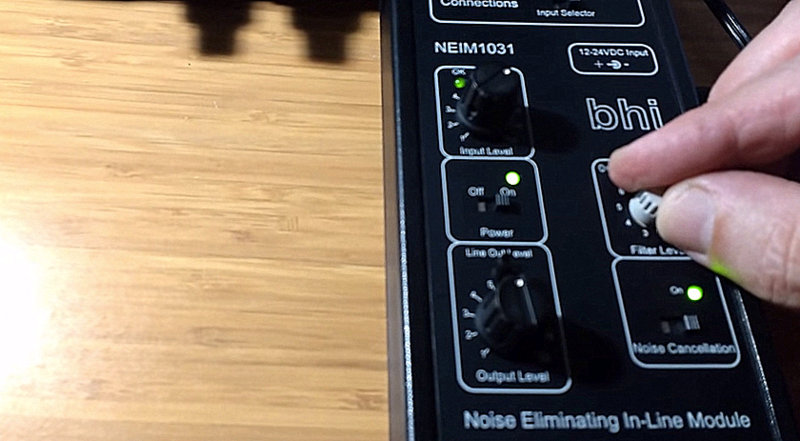
Thank you, Phil! The FRG-7 is an ideal receiver for something like the BHI module since it precedes on-board DSP. The great thing about an in-line module, of course, is that it can be used with a variety of receivers.
Recently I have spent a little more time listening out for Tropical Band stations from my shack in Oxford UK, attempting to emulate some of the very nice signals I have previously recorded out on DX’peditions. The obvious problems with this (and they are numerous) include the relatively weak signal strength of many tropical band stations, the ubiquitous blanket of QRM, resulting in generally poor SNR, lack of space for a large antenna……need I go on?! Fortunately, the Elad FDM DUO has proven to be a very senstive and selective receiver, capable of, at times, incredible SNR, coupled with almost limitless signal conditioning options and SSB, SYNC, ECSS etc. Throw the Wellbrook ALA1530 active loop into the mix (not literally!) and you have a very powerful Tropical Band receive set-up. The Wellbrook is able to null most (although not all) QRM in my shack and that really can make the difference between simply observing a carrier and actually hearing audio. Clearly one cannot expect to hear DX at home under heavy QRM as well as you might outdoors, however, the following stations were logged in the past month or so, with respectable signals, with the ALA1530 indoors:
Clint Gouveia is the author of this post and a regular contributor to the SWLing Post. Clint actively publishes videos of his shortwave radio excursions on his YouTube channel: Oxford Shortwave Log. Clint is based in Oxfordshire, England.
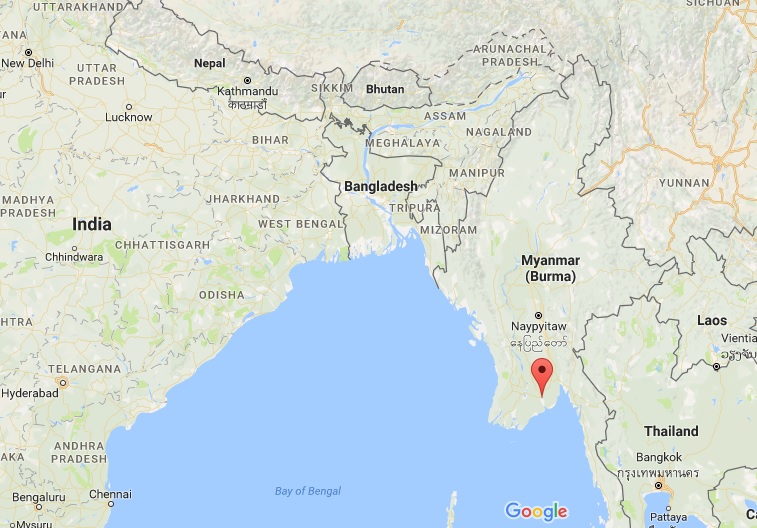
Hi there, I thought some of the readers of SWLing post might be interested in my reception of Mayanmar Radio, Yangon, during a late-night DX’pedition in Oxfordshire, UK. I managed to catch them on 5985 and 7200 kHz; the latter was a personal first and perhaps further confirmation that my 200 metre longwire is contributing in a positive way to my mobile listening post. Subscribers and regular visitors to Oxford Shortwave Log on YouTube will know that I am forever trying to push the performance of my vintage portables to the limit of what’s possible, in the hope that I might hear something very exotic. it’s happened once or twice and thus worth all the effort in the small hours. Thanks for watching/ listening.
Clint Gouveia is the author of this post and a regular contributor to the SWLing Post. Clint actively publishes videos of his shortwave radio excursions on his YouTube channel: Oxford Shortwave Log. Clint is based in Oxfordshire, England.
Hi there, I thought I would share some Brazilian shortwave catches with you, obtained using my Sony ICF-2001D receiver and 200 metre experimental longwire. The first is Radio Bandeirantes, Sao Paolo on 9645.4 kHz. This is a station that I’ve only heard once or twice previously, but was received with excellent signal clarity and strength recently, using my deployable longwire antenna. I would rate this station as moderately difficult to receive with reasonable discernibility. The second is Radio Novo Tempo from Campo Grande, on 4894.9 kHz. This station I would rate as difficult to hear with discernible audio. The key is always signal-to-noise, thus moving yourself out of the ubiquitous blanket of QRM most modern environments endure will usually achieve this and of course coupled with sufficient space outdoors to erect a larger antenna will hopefully also improve signal strength. My final video on this post is Radio Nacional Brazilia on 6180 kHz. I would regard this station as quite easy to hear well; their effective TX power towards Europe is around 2 MW, however, outdoors, this station can literally boom in, with what might be perceived as local-AM signal strength. I hope you enjoy watching the videos and seeing/ hearing what’s possible with a modest set-up. As for the Sony ICF-2001D? Well the design is more than 30 years old, but in my opinion at least, still one of the very best portable shortwave receivers ever manufactured. Thanks and 73.
Clint Gouveia is the author of this post and a regular contributor to the SWLing Post. Clint actively publishes videos of his shortwave radio excursions on his YouTube channel: Oxford Shortwave Log. Clint is based in Oxfordshire, England.
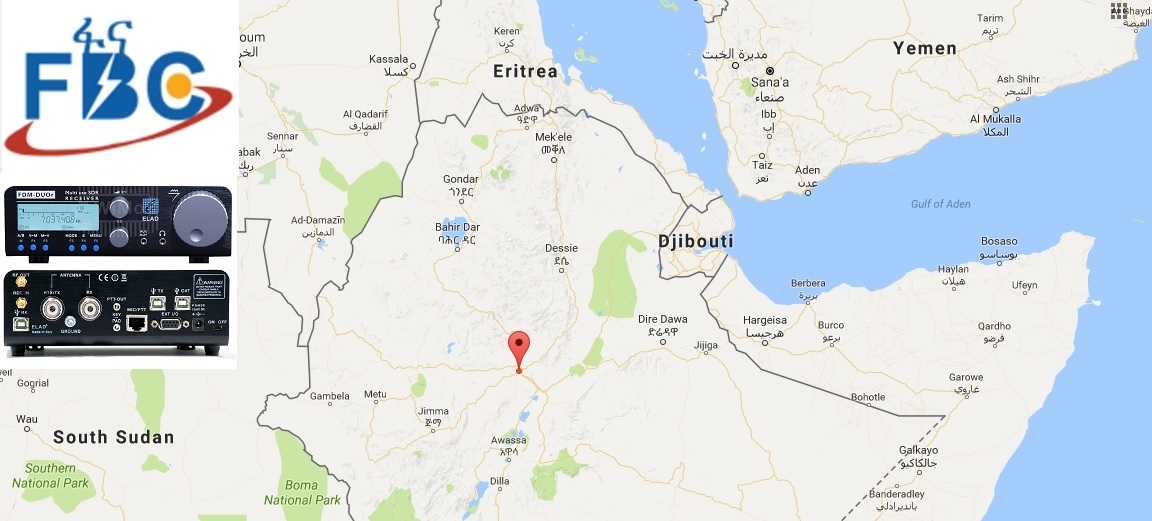
The Elad FDM DUO makes for a fantastic receiver, in both standalone mode and via the FDM-SW2 software. Thus far it has been demonstrating this by outperforming the Sony ICF-2001D in many of my reception tests using an experimental longwire antenna. Bear in mind that whilst this might not be such a surprise, the Elad without the FDM-SW2 software driving it has no SYNC, which is often invaluable for Tropical Band DXing. To make the point further, here is a wonderfully clear signal from Ethiopia, with, in my experience at least, exceptional signal-to-noise.
My 200 metre longwire is still very much a work in progress. I am in the process of building a termination resistance box, receiver-end termination suitable for high and low impedance inputs and earthing straps for metre-long copper pipes that will remain in-situ. When I have completed these tasks, I will record a video because I know some of you are interested in the details. For now though, it just remains an experiment – 200 metres of wire and very late nights/ early mornings! Recorded at the ‘DX woods’ in Oxford UK at 03:23 hrs UTC on 31/07/16. Thanks for watching.
Clint Gouveia is the author of this post and a regular contributor to the SWLing Post. Clint actively publishes videos of his shortwave radio excursions on his YouTube channel: Oxford Shortwave Log. Clint is based in Oxfordshire, England.



 Hi there, I thought I would share some Brazilian shortwave catches with you, obtained using my Sony ICF-2001D receiver and 200 metre experimental longwire. The first is Radio Bandeirantes, Sao Paolo on 9645.4 kHz. This is a station that I’ve only heard once or twice previously, but was received with excellent signal clarity and strength recently, using my deployable longwire antenna. I would rate this station as moderately difficult to receive with reasonable discernibility. The second is Radio Novo Tempo from Campo Grande, on 4894.9 kHz. This station I would rate as difficult to hear with discernible audio. The key is always signal-to-noise, thus moving yourself out of the ubiquitous blanket of QRM most modern environments endure will usually achieve this and of course coupled with sufficient space outdoors to erect a larger antenna will hopefully also improve signal strength. My final video on this post is Radio Nacional Brazilia on 6180 kHz. I would regard this station as quite easy to hear well; their effective TX power towards Europe is around 2 MW, however, outdoors, this station can literally boom in, with what might be perceived as local-AM signal strength. I hope you enjoy watching the videos and seeing/ hearing what’s possible with a modest set-up. As for the Sony ICF-2001D? Well the design is more than 30 years old, but in my opinion at least, still one of the very best portable shortwave receivers ever manufactured. Thanks and 73.