Category Archives: Radios

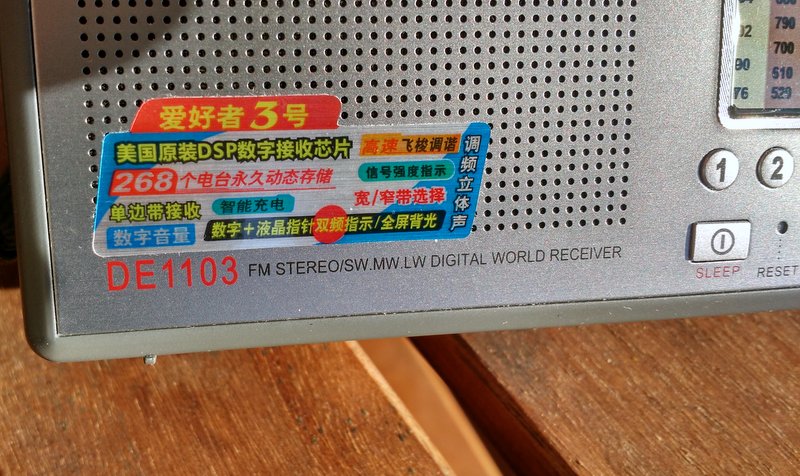
The New Degen DE1103 DSP: First impressions & review

IMG_20151124_085005760_HDR

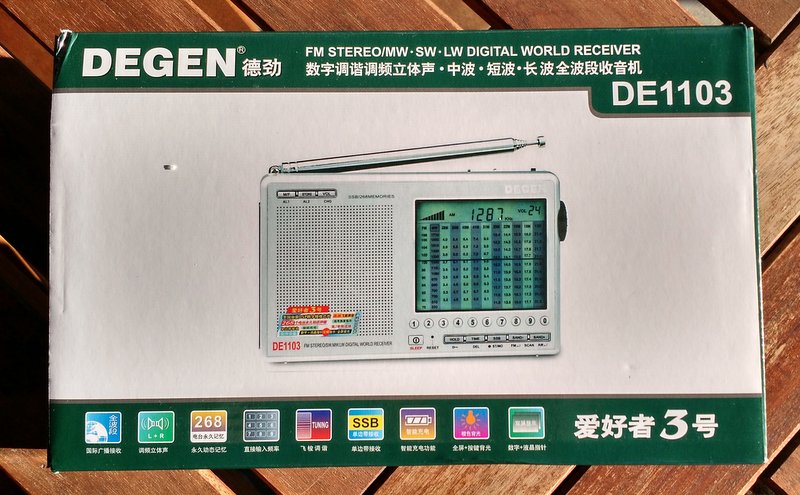
When I discovered that Degen had recently refreshed the receiver design of the DE1103, I was intrigued, to say the least. The original DE1103 sported some serious performance for a sub-$100 receiver.
IMG_20151126_165751594_HDR

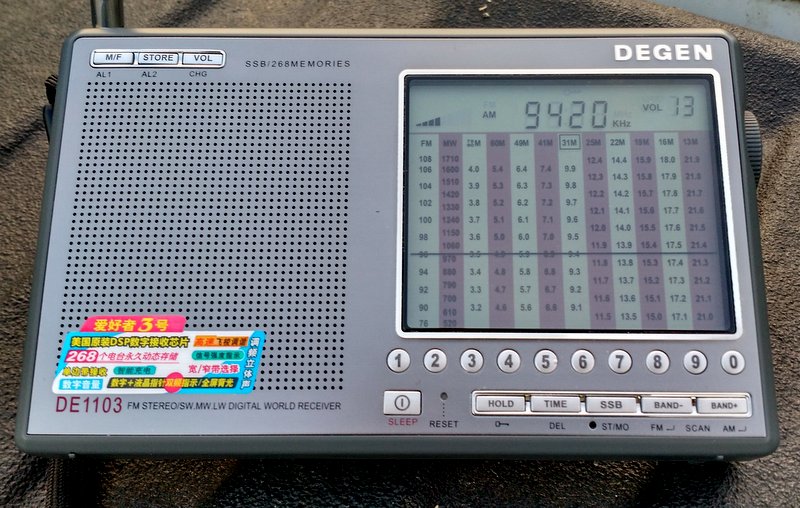
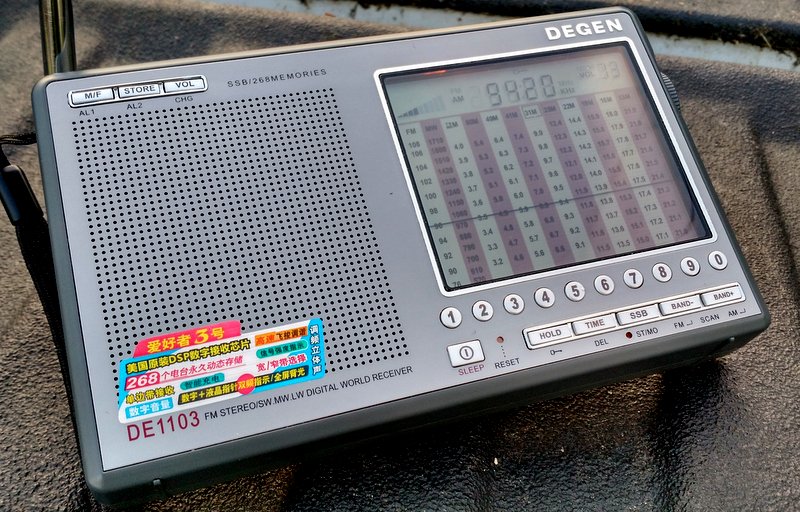
The 2015 model of the Degen DE1103 implements a DSP chip (the Silicon Labs Si4735-D60).

Yet I was on the fence about purchasing the new DE1103. Why? In truth, I never fell in love with the original DE1103. While I appreciated the 1103’s unique analog-style digital display, I never got used to its quirky ergonomics. Degen had quality control issues, too: I had to return two faulty units before getting one that worked as advertised (incidentally, I had a similar problem with the Kaito KA1102).

Then last week, SWLing Post reader, Ron, contacted me. He had purchased the new DE1103 from Hong Kong-based eBay vendor Bigbargainonline.
IMG_20151124_085138034_HDR

Ron kindly provided the SWLing Post with his impressions of the DE1103, as follows:

Performance is roughly on a par with the earlier dual conversion version. This one is just as hot, but no hotter.

If you were thinking a GP5 on a bigger ferrite bar, yes…and no.

There is one major gripe…[this unit] will not remember frequencies set with the BFO on, like the earlier dual-conversion version did. Instead you have to turn the BFO on for each memory frequency [for which you] need it.

One thing [I] noticed right off was the almost complete lack of AGC “pumping” on CW and SSB that all earlier versions had (yay!) but this plus comes at the cost of having the BFO “remembered” in memory.

Zero-beating (or centering) the BFO to null on WWV and local AM stations to check alignment was…strange. At null beat the BFO seems to quit for a second. It is fine
either side of zero beat, however.

This is doubtless due to Tecsun’s adapting the Silicon Labs IC to a full range BFO like this. Recall the same IC in the GP5 features Upper and Lower selection on CW/SSB.

This 1103 DSP version also has the GP5’s slight tuning mute, not a problem.

But for ease of operation in CW/SSB mode, the GP5 is [much] better IMO.

Ron also notes that he wasn’t pleased with the DE1103’s longwave performance and didn’t feel the mediumwave and shortwave reception was an improvement on the original DE1103.

He decided that he would sell this DE1103 and gave me first dibs, so I bit the bullet. I was eager to compare the new DE1103 with some of the other DSP-based portables in my collection. Ron dispatched the DE1103 immediately–it arrived a few days ago, but I didn’t have a chance to test it until yesterday.
IMG_20151126_165748588_HDR

I took the Degen DE1103 outside, sat it on the tailgate of my truck and put it on the air…

I tuned around the mediumwave band and picked up all of the local benchmark stations. Same with FM. So far, this tuning confirmed Ron’s assessment of the DE1103: it didn’t surpass the original.

But the shortwave bands were a different story.

As I tuned around the HF bands, the DE1103 seemed to receive quite a lot signals.  But in most instances, I could hear local AM broadcasters bleeding in, as well. Indeed, imaging was prevalent across the shortwave bands–the receiver was obviously being overwhelmed by a local broadcaster.  Unfortunate.

Could strong interference account for this? While there are local AM broadcasters around, they’re not exactly “blow-torch” stations. Indeed, I’ve never had overloading issues with other shortwave portables I’ve used in the same location–not even with my Kaito WRX911!

Imaging was prevalent on the DE1103 when it was tuned to pretty much any audible shortwave broadcaster.

Here’s a video of the Degen DE1103 tuned to the Voice of Greece on 9,420 kHz:

What you’re hearing in the audio is a local broadcaster bleeding in. Note that when I tune off-frequency, no imaging is heard.

Wondering if something had changed locally–and just to be fair–I pulled out my Sony ICF-SW100 and sat it next to the DE1103. The Sony had no issues.

This time, I tuned to WWV on the 19 meter band and compared the two receivers:

As Dan Robinson expresses it, the ICF-SW100 “wipes the floor” with the DE1103. There’s no hint of overloading in the SW100.

My buddy, Ron, is clearly a keen radio reviewer; obviously he didn’t hear overloading on the shortwave bands where he tested the rig, else he would certainly have mentioned it. The location where I tested the DE1103 does have some local broadcasters in the area, but no clear channel or high-power stations; in short, there’s no likely interference within a ten-mile radius to account for this debilitating performance problem.

Too bad…!

Obviously, the new DSP version of the Degen DE1103 is especially prone to imaging on the shortwave bands. In fact, it’s the only receiver I’ve ever tested that has overloading issues at this testing location (where I tested the original Degen DE1103, by the way).

My assessment? Avoid the new Degen DE1103.

A much better receiver with SSB for roughly the same price would be the venerable Tecsun PL-600 ($89.99 at Amazon and $89.95 at Universal Radio). If SSB reception isn’t necessary, you might also consider the CC Skywave or the very affordable Tecsun PL-310ET.
The best shortwave radio for cross-continent cycling?

image006

SWLing Post reader, Pat, is an avid cyclist and is seeking a radio for his next cross-continent adventure. There are a limited number of products on the market that meet Pat’s requirements, so I thought posting his inquiry might bring a few options out of the woodwork. Check out Pat’s requirements and please comment if you have a suggestion!

Pat writes:

I’m a professional ski coach from Colorado. When I’m not on skis, I like to get on my bicycle and go explore the world. I’ve ridden across the USA a few times, covering all 48 states in the Continental US. A couple of years ago I got my 49th state when I rode from Alaska back home to Colorado.

Next year I plan to ride to Argentina, a journey of 12,000 miles over six months.

One of the things that keeps me sane is to have a radio strapped to the handlebars of my bike. I used to have a cheap AM/FM transistor, but have slowly improved the choice of radios on each trip.

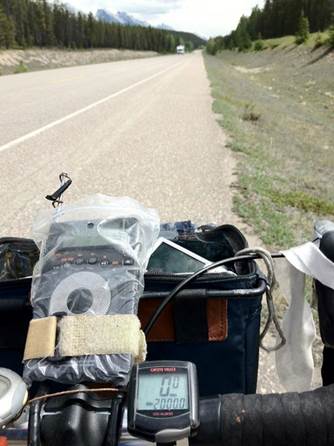
During my Alaska ride I used a Degen DE1123, which was a great item. Not a great radio, but having an mp3 player built in made a world of difference. There were some mighty long distances without radio signal, so having the mp3 was great. But like I said, the 1123 wasn’t the most user-friendly item. Plus, it ate up AA batteries, which were pricey in the Yukon. So I upgraded to the Degen DE1125. Certainly an improvement, but still some things that could be improved. [See photo above.]

For my Argentina trip I want to have something really good; something that works well and will hopefully last six months. Also, I really like the idea of having a radio with a mini SD slot. I’ll have to download a lot of music and podcasts to keep me happy.

Someone suggested the Melson S8. I purchased one and it is a great unit, but way too big to fit on the handlebars.

You obviously have experience with many different portables and I was wondering if you could give me your suggestions. Maybe something from Degen, ShouYu, Tecsun?

Things that are important:

  • Ease of use (I’ll be using the controls while pedaling)
  • Weight (smaller and lighter is better)
  • Durability
  • Mini SD capability
  • Radio reception
  • AM, FM and SW capability
  • Li-ion batteries

Not overly important:

  • Ability to scroll through songs/find songs
  • Sound quality (I’ll have wind in my ears anyway)

Things that are not important:

  • Recording ability (I don’t foresee recording anything along the way)
  • Looks
  • Cost (I don’t want to spend $150 on a CC Crane, as the radio may get broken or stolen, but I’m willing to spend some money on a quality product if available).

[…]I’d love to select the best option for this silly ride I’m taking next summer and will happily take any advice.

A cycling trip to Argentina? Nothing silly about that, Pat! What an adventure!

Shortwave radios with MicroSD slots are somewhat limited in numbers, but more and more models have appeared on the market in the past few years.

Readers: can you help Pat with some suggestions/options?  Please comment!

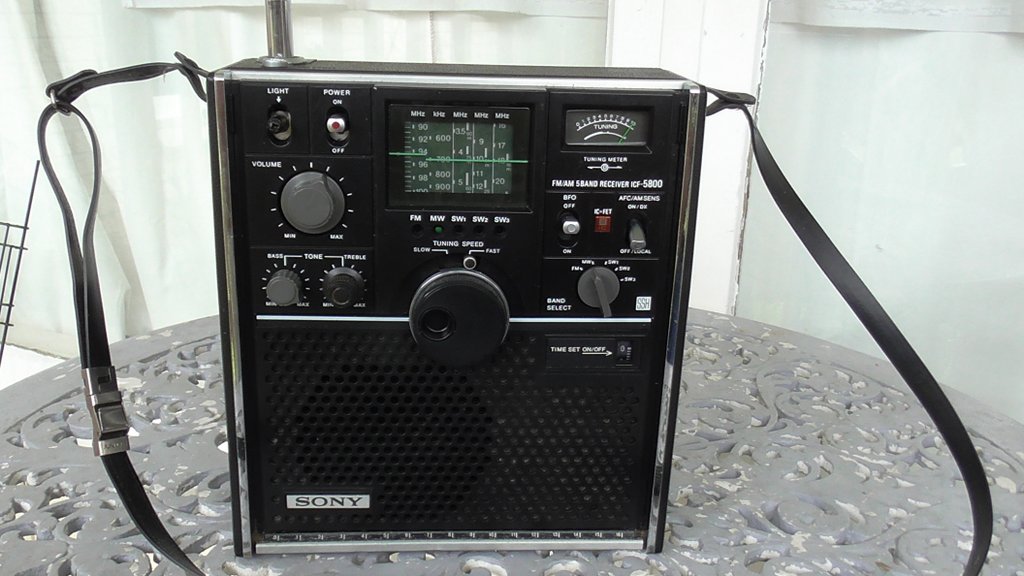
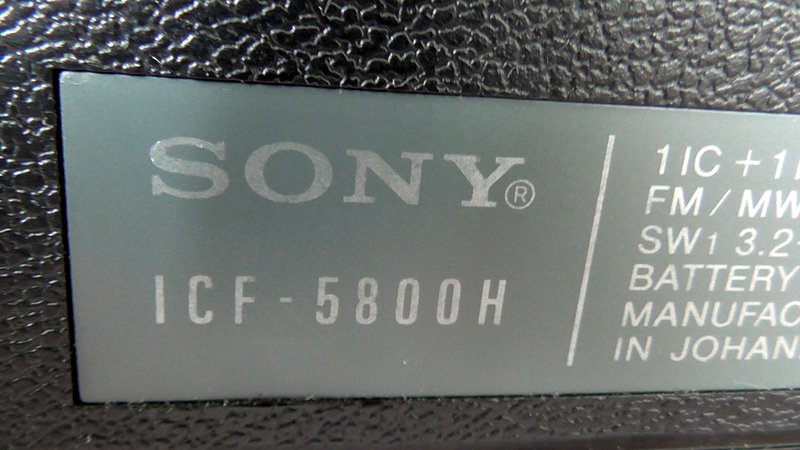
James’ restored Sony ICF-5800H

Sony Vintage radio ICF 5800H 001

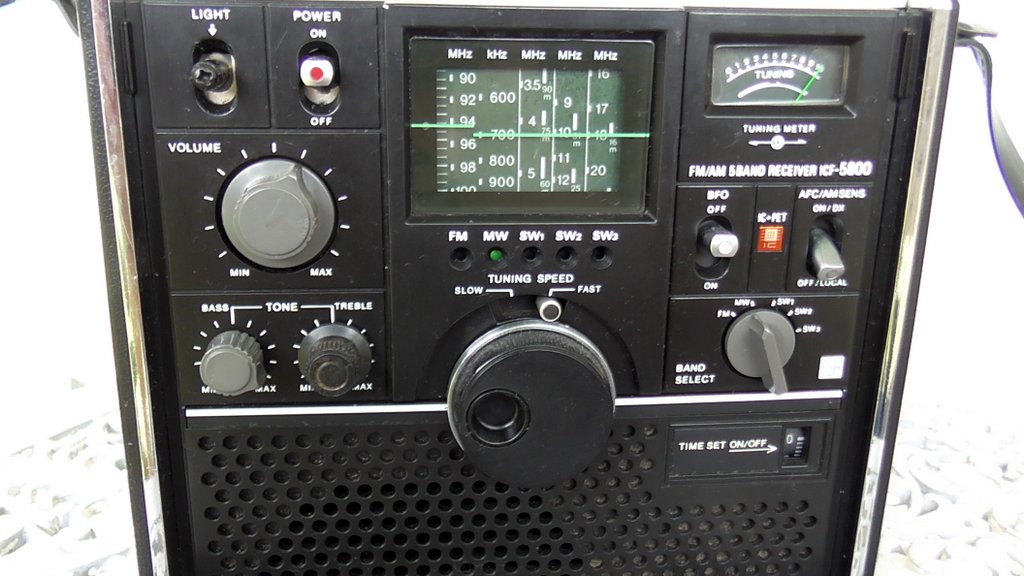
SWLing Post contributor, James Patterson, has recently restored a Sony ICF-5800H. James sent me a few photos and I decided to post them here.

Sony Vintage radio ICF 5800H 003

I absolutely love the design of Japanese analog radios from this era. They have signal meters, large backlit dials, carry straps, and proper large controls–buttons, switches and knobs–that can even be operated when wearing gloves in the winter.

Sony Vintage radio ICF 5800H 002 (1)

Great receiver you have there, James!

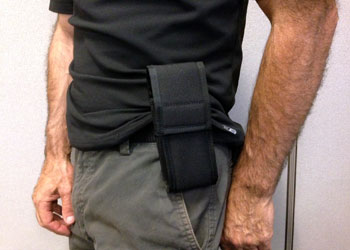
CountyComm promotion includes free custom padded case with GP5/SSB

casegp5dsp5Many thanks to SWLing Post contributor, Ron, who writes:

http://www.countycomm.com/gp5ssb.html

Buy a GP5 from CountyComm this week and get the 17 buck custom carry case for free.

casegp5dsp8

Thanks, for sharing this, Ron. I actually have this GP5 case–it houses the GP5/SSB in my Spec Ops Brand THE pack.  It’s a custom, quality case that’s actually made here in the US.

If you’ve been thinking about buying a CountyComm GP5/SSB, it might be time to pull the trigger!

Click here to read my review of the GP5/SSB.

Guest post: Trip Down Shortwave Memory Lane via Vintage RadioShack Catalogs

RadioShack-CatalogMany thanks to SWLing Post contributor, Mario Filippi (N2HUN), for the following guest post:


Trip Down Shortwave Memory Lane via Vintage RS Catalogs

-Mario Filippi (N2HUN)

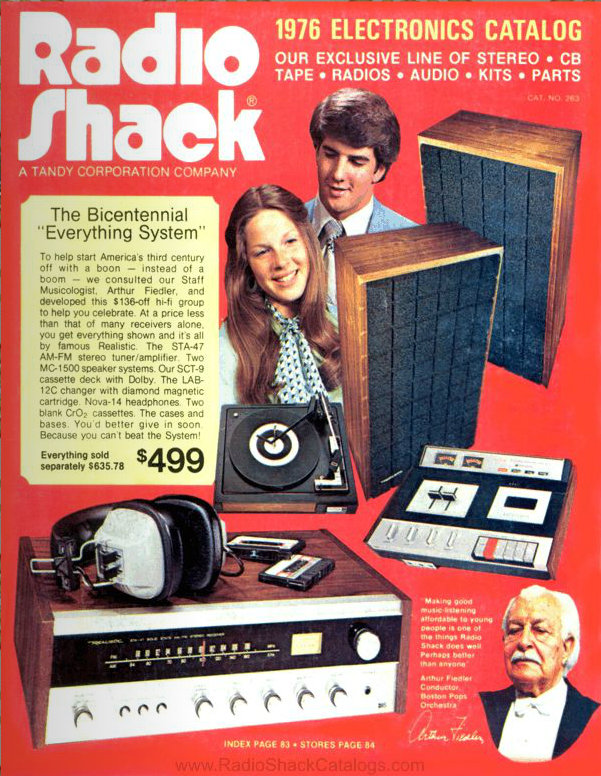
Attached is a wonderful website containing archived Radio Shack catalogs and sales flyers going back to 1939, surely of interest to SWLs, hams, and other electronics hobbyists. Most of us have fond memories growing up and visiting our local Radio Shack when it was the place to go for ham, shortwave, and scanner radios. My hometown Radio Shack was located on North Avenue in New Rochelle, NY and I purchased an electric guitar (could not afford a Fender) from them in the late 60’s which had three pickups and included a case for $29.95!

Radio Shack Catalogs

You see, back then Radio Shack had a much more diversified line of products, including musical instruments, power tools and even scientific stuff like microscopes and slide rules. These archived catalogs are a treasure trove of information not only from a historical perspective, but for anyone who is interested or who is contemplating purchasing vintage equipment such as shortwave radios, because you can look up the original sales info in the RS catalog which contains the original price, photo, description, and accessories available at that time.

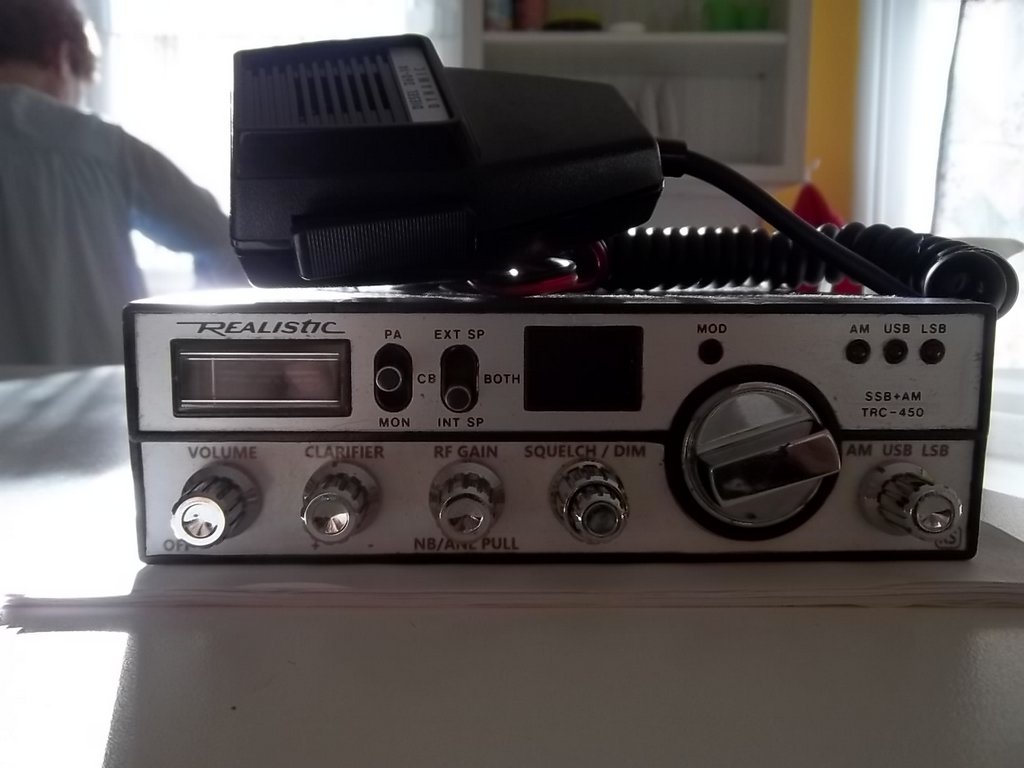
For example, last year I purchased a “tech special” Realistic TRC-450 AM/SSB CB radio on Ebay that needed LED repair, so I looked up the original sales ad and got the price, photo (this helps to see original condition), and product description. Below is a picture of my restored Realistic which originally sold in 1980 for $269.95!

RadioShack-TRC-450

The classic Realistic TRC-450 AM/SSB CB radio. (Photo: Mario Filippi)

Nowadays most people don’t realize how expensive electronics were a few decades ago. A comparable new AM/SSB CB radio sells for about half that price nowadays!

Lastly, as one progresses chronologically through the catalogs, you can see technology (and even fashion) trends – the large 8 track tape decks of the 60’s and 70’s progressed to smaller cassette players of the 80’s and 90’s, then DVD/CD players made their entrance, ultimately giving way to higher tech forms of entertainment such as satellite radio and Internet-based entertainment. Well I hope you enjoy this totally entertaining and informative website and I thank the individual who took the time and effort to preserve for perpetuity these priceless annual time capsules for everyone to enjoy.


Mario, many thanks for this trip down memory lane!

As you state, these catalogs are actually an excellent reference source when trying to determine pricing and features of RS radios found on the used market.

I think they’re also so much fun to flip through as they’re chock-full of nostalgic value. When I was a kid, I could care less about toy store catalogs–the RadioShack catalog was my toy store!

Indeed, when I open the online catalog copies at Radio Shack Catalogs, I can almost smell the ink on the pages! Am I the only one?

Vance explores credit card and earpiece radios

Credit-Card-Crystal-Radio-4

Many thanks to SWLing Post reader, Vance, who writes:

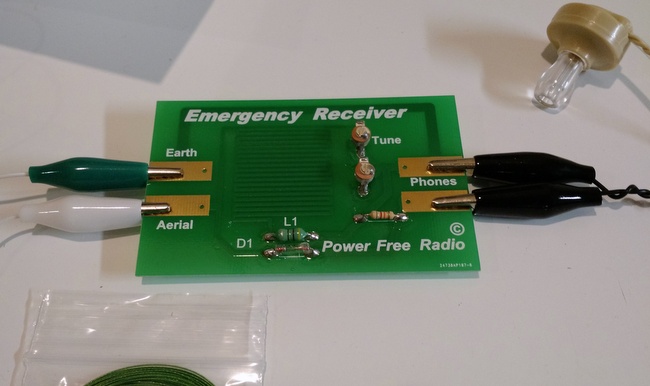
You got me hooked on those little credit card sized radio kits from an eBay seller so much that I have bought a few more of his kits. I’ve found them to be so much fun, that I have started looking elsewhere for other tiny radios.

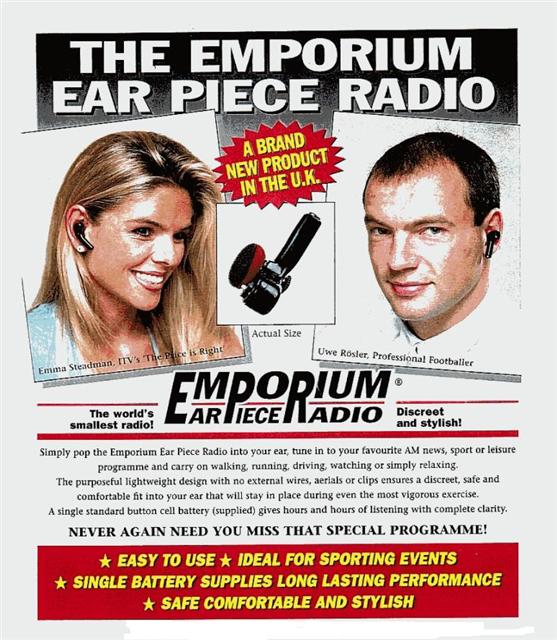
I came across this the other day and while it is not a kit, I was wondering if you or your readers had ever tried them and if so, what your opinions are: http://jdradio.weebly.com/index.html

earpiece-radio

I know it is likely more novelty than performance, but the prices seem ridiculously low for individual buyers.

Also seen here: http://www.centretradegroup.com/Radio.php

I’m not familiar with the earpiece radios in your links. I have read through those sites, though–unfortunately, as I’m sure Vance noted, they lack any in-depth information.

I did a quick Google search and can see that these radios (both the FM and AM versions) have been around for many years–some references go back to 1999.

I imagine the earpiece radio uses the same auto-tuner that became quite popular in the late 90s. Simply press a button and the receiver auto-tunes to the next strong station: no memories and not manual tuning. Indeed, I used to attend trade shows in Europe in the late 90s and several vendors actually gave away branded novelty radios (in a variety of shapes) with a similar tuner.

Readers: Ever use one of these earpiece radios? Please comment!

Video: Shortwave listening and radio astronomy

Sony-ICF-SW100

On Thursday I attended an event at the Pisgah Astronomical Research Institute (PARI)–location of the 2015 SWLing Post DXPedition.

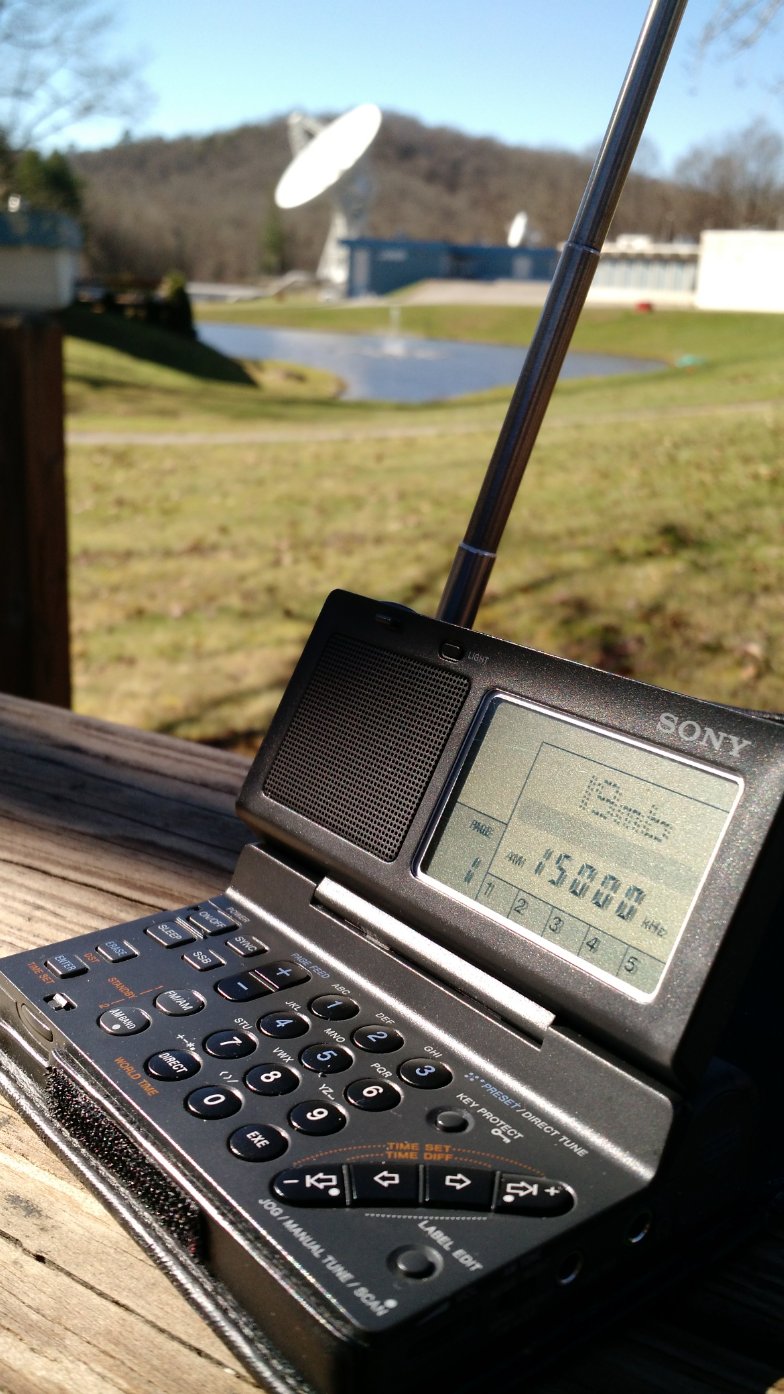
During a break, I had a couple of free hours, so I reached in my messenger bag and pulled out the Sony ICF-SW100: a radio that has quickly surpassed all others as my favorite EDC (everyday carry) radio. It has so many useful features in such a small package!

Radio astronomy observatories are ideal locations for impromptu shortwave radio listening as there is little to no radio interference/noise present.

PARI-26E-and-26W

PARI’s “Building 1” and the 26 West (left) and 26 East (right) radio telescopes.

While the weather on Thursday was gorgeous, HF band conditions were…well…miserable. There was very little to hear other than China Radio International, Radio Havana Cuba and a few other blow torch broadcasters.

Still, time signal station WWV was on my mind since I had just purchased Myke’s new edition of At The Tone and have been reading your excellent comments with early memories of listening to WWV and WWVH.

I tuned to 15 MHz and, of course, there was reliable WWV in Fort Collins, Colorado on frequency. Though WWV’s signal was relatively strong (despite the conditions) I turned on the SW100’s sync detector because fading (QSB) was pronounced at times.

Here’s a short video of the ICF-SW100 on a picnic table in the middle of the PARI campus. That’s PARI’s 26 (meter) West telescope in the background: