Category Archives: Radios

Radio life after death

A guest post by Troy Riedel:


This is a sad story.  Well, it’s sad for me.  But hopefully my sad story will yield “radio life” for somebody else and that life will bring them joy.

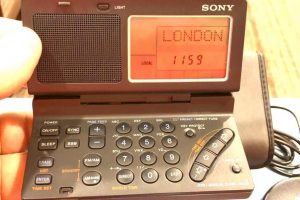
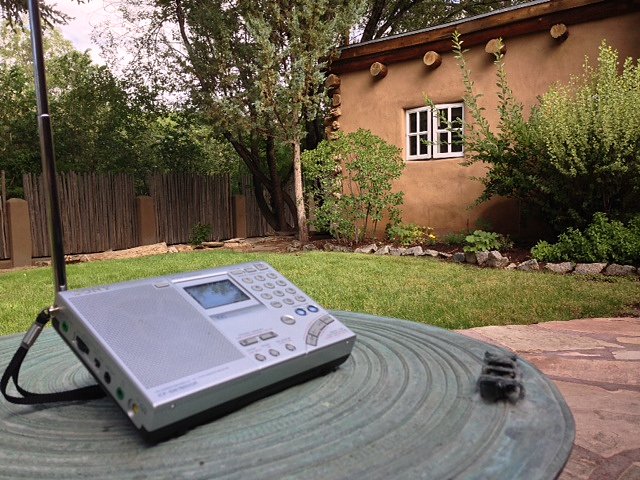
I’ve been an SWL’er since the early-90s.  Due to the decline of international broadcasters, “collecting” has become just as – if not more – important to me than listening.  I’ve always been fond of the Sony ICF-SW100 pocket radio.  I often read here on this blog about Thomas’ affection for it.  To make my dream a reality, on 19 November 2017 I found the perfect SW100 (with the leather case) and I purchased it.  It did not disappoint!  That radio has to be the most sensitive radio for its size out there.  No, correction – that little baby has held its own against any other portable shortwave radio (of any size) that I own (I have 17 or 18, incl. this SW100).  That’s quite amazing for a true pocket radio.

But please allow me go back to the beginning of my story.  Once I acquired the ICF-SW100, I assembled a “kit” … piece-by-piece (remember, I’m a collector).

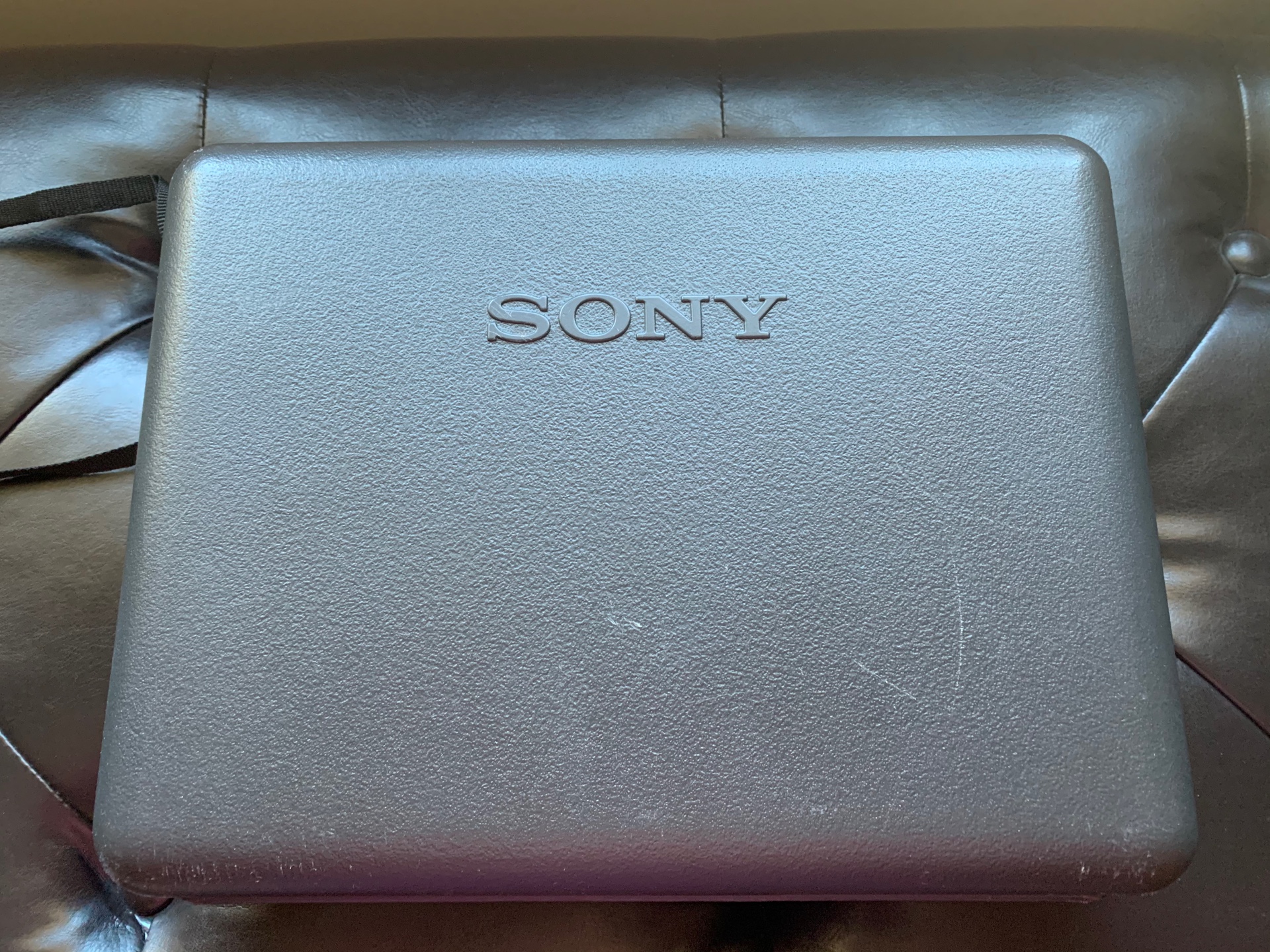
I surmised that the SW100 would fit into the Sony ICF-SW1 case – and I was correct (sans the SW100’s leather case).  The SW1 case was one of my first purchases for my SW100 as I wanted something rugged to protect it.

The Sony AN-1 antenna works great with the SW100, and that was part of my kit.  Of course, I also wanted the OEM Sony Compact Reel Antenna.  “Check” – found one on eBay!  The OEM AC adapter? Yes, “check” that one off the list.  A photocopy of the OEM manual would not do – I found an original on eBay and “check”, that was added to the kit.

I already owned a Sony AN-LP1 (active) antenna.  That would not fit into the case, so I added a TG34 active antenna that I already owned (that’s a Degen 31MS clone).  Why?  I gotta have a ready passive antenna in my kit.

Wait, who wants a 30+ year old OEM set of earbuds?  Exactly, neither do I.  This is the only thing I did not want to be OEM!  I bought a new pair of Sony earbuds (off Amazon) to throw into the kit.  Other than the TG34, everything in the kit had to be Sony.  In the end, this handy little case was my Eutopia – it had everything I needed in its own “shortwave bugout kit”.

Of all of the radios in my shortwave arsenal, this was by far my favorite.  Hobbies should bring us joy.  So even if there weren’t many broadcasters to listen to, this little pocket radio never failed to bring me joy.

The last time I really used this radio was June-August 2020.  My newborn grandson was in the NICU far from my son’s home.  I “deployed” (with my SW100 bugout kit & 5th wheel camper) to my son’s very rural & very remote farm (275-miles from my home).  I was there to tend the farm, solo, for that period of time while my son and his family could be with my grandson at a specialty hospital some 350-miles away.  During this stressful & physically demanding time – tending to more farm animals than I care to mention and rustling bulls that escaped from the pasture – my SW100 was the only friend that I had.  It provided many, many hours of enjoyment.  Literally, other than a neighbor about ¾ of a mile up the road my ICF-SW100 and I were alone (not including the 50+ animals I tended to) from June through August.

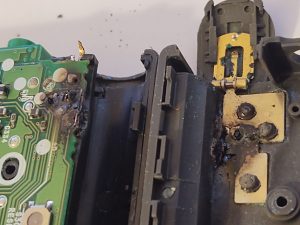
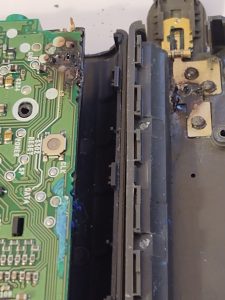
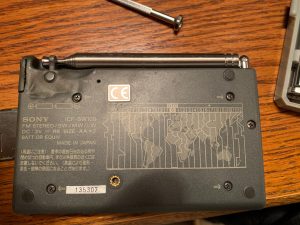
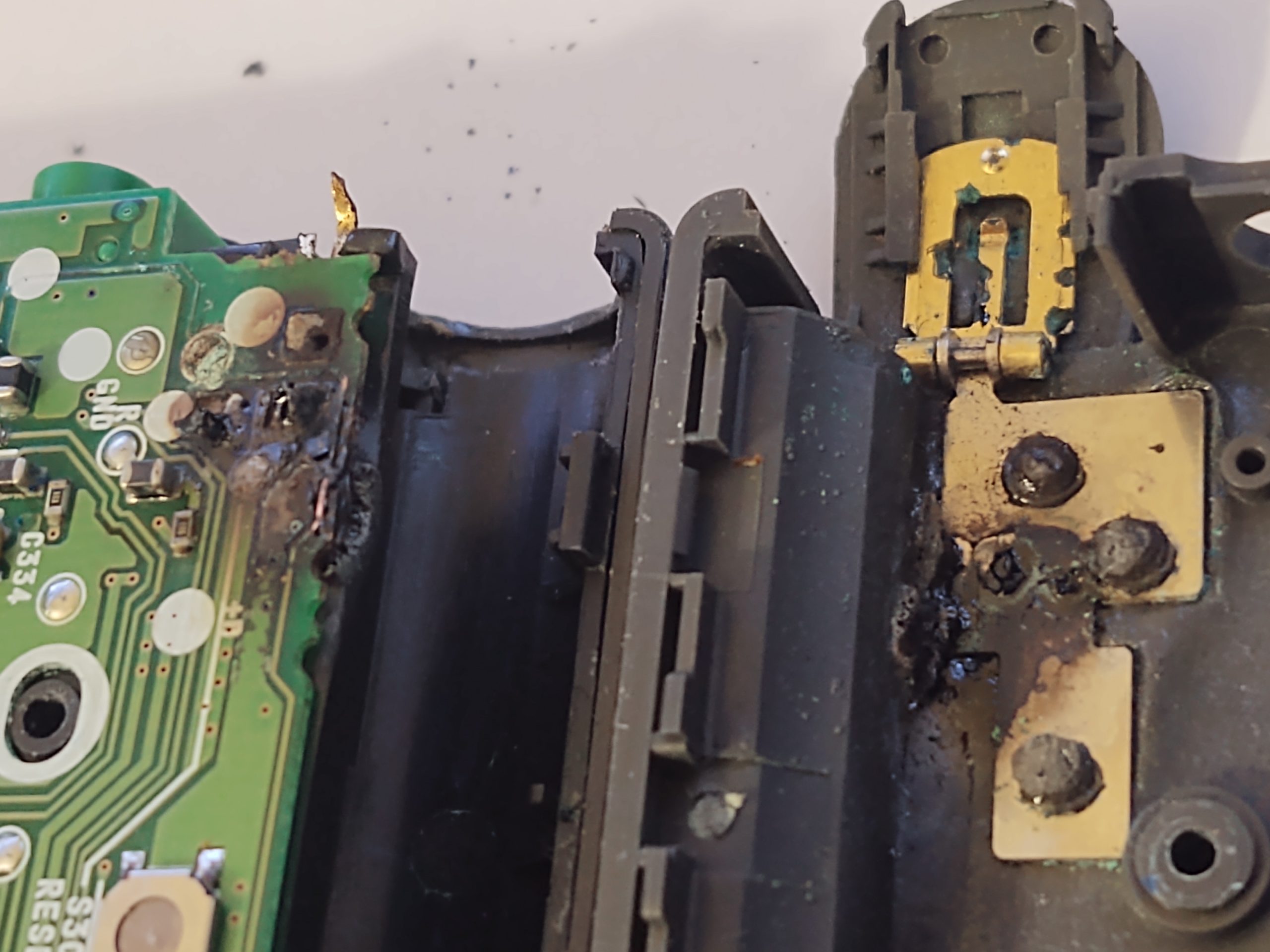
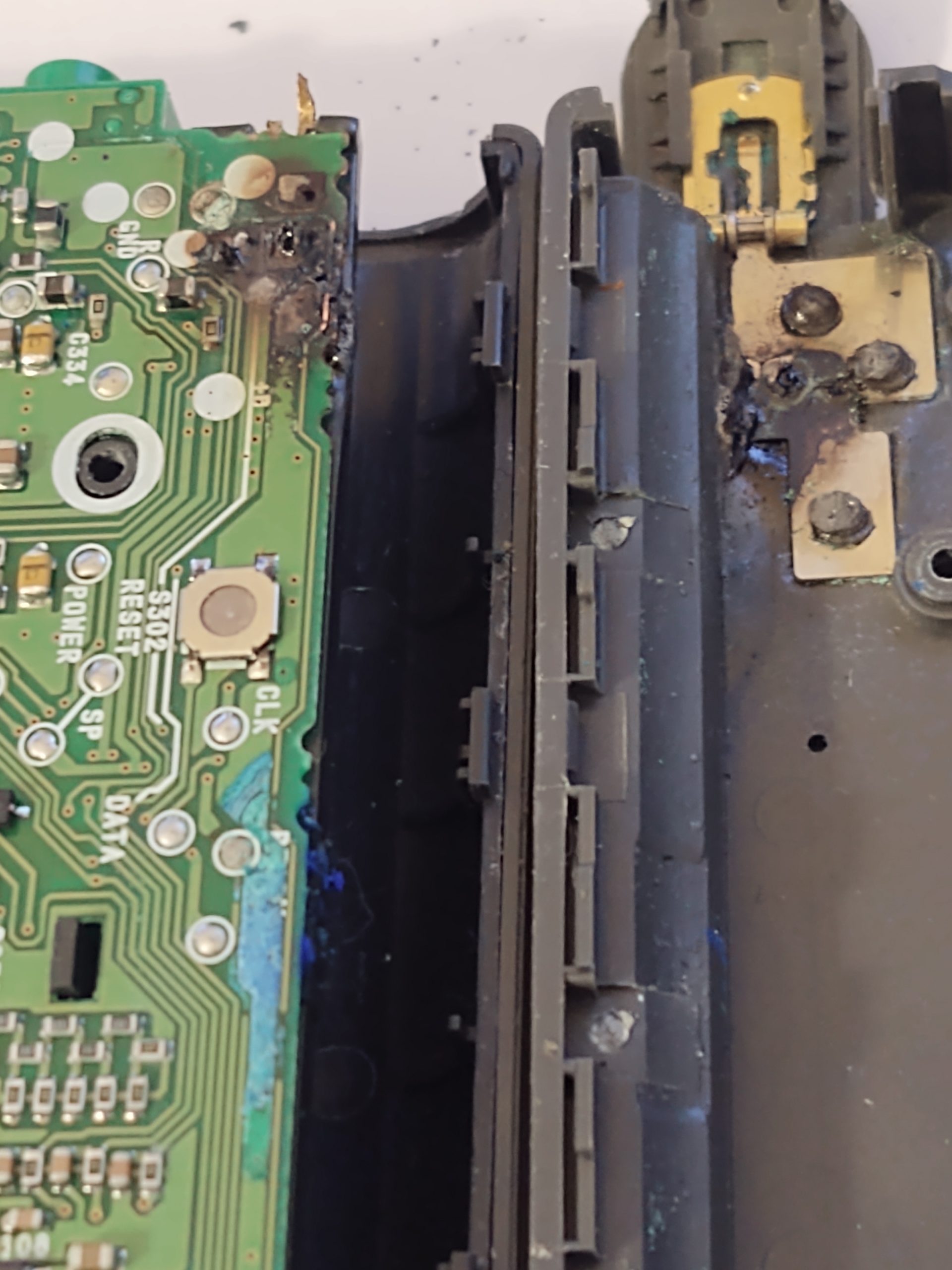
Fast-forward to the present: last weekend I reached for my kit and I removed the my SW100.  I turned it on and there was no power.  Not surprising but actually very unusual as my NiMH Eneloop batteries typically last for a year or more inside my radios in “storage”.  I reached for the battery compartment, I felt an anomaly on the backside of the case and imagine my horror seeing this as I turned it over!

Surprisingly, there is zero damage to the Eneloop batteries (they did not leak).  I can no longer power the radio via ANY batteries, but amazingly the radio seems to operate at full capacity via AC Adapter.  Whatever happened inside the radio, it still seems to operate (though admittedly I haven’t taken it through all of its usual paces).

Unfortunately, a pocket radio that only operates via AC power does not suit me.  There is a better option: my loss may be someone else’s gain?  I am sending the radio and the necessary components to Thomas’s friend Vlado for a full autopsy (Vlado emailed that he has worked on these radios for years and has “never” seen this issue before).  After the autopsy, my radio will become an organ donor.  The remaining healthy components of this radio – and there are many – will be used for repairing other SW100s (singular or plural).

Strangely, I cannot detect any other “trauma” to the radio other than that one melted corner.  The battery compartment *seems* undamaged though I refuse to open the case as I do not want to accidentally damage the radio’s healthy components (I’ll let the professional “coroner” do that).  I am looking forward to the coroner’s report because I need to know what the heck happened to my baby?!

In closing, though we’ve only had a 3-year plus relationship I can honestly say this amazing little pocket radio had become a great friend.  I’m sure it’s grief, but I am considering liquidating the remainder of my radio & antenna collection – my heart just isn’t “in” to SWL at the moment.  And the timing of this is just awful for me: I’m having surgery Tuesday for an injury I incurred eight months ago while tending my son’s farm.  I had big plans that my SW100 and I would pass the time while I convalesce.  But alas, my buddy will be headed to radio heaven as an organ donor.  May others benefit from my loss.

Guest Post by Troy Riedel

Is AM synchronous detection a crucial portable radio feature?

Many thanks to SWLing Post contributor, Mike, who writes with the following question:

How important is AM Sync for a portable radio? Is it essential or a deal breaker?

That’s a great question, Mike, and one I don’t think I’ve directly addressed it here on the SWLing Post oddly enough.

Synchronous detection is actually a fairly deep topic to explore–and everyone has their own opinion–but I get the impression that you’d like a simple answer, so I’ll try to keep this as brief as possible. You might follow the comments section of this post as I’m sure some SWLing Post readers will share their thoughts on synchronous detection and how important it is for them.

So what is Synchronous Detection?

I like this concise Wikipedia answer:

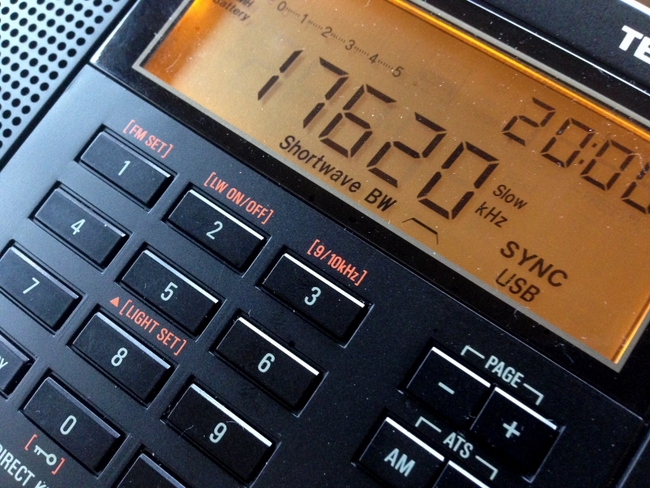
In electronics, a synchronous detector is a device that recovers information from a modulated signal by mixing the signal with a replica of the un-modulated carrier. This can be locally generated at the receiver using a phase-locked loop or other techniques. Synchronous detection preserves any phase information originally present in the modulating signal. Synchronous detection is a necessary component of any analog color television receiver, where it allows recovery of the phase information that conveys hue. Synchronous detectors are also found in some shortwave radio receivers used for audio signals, where they provide better performance on signals that may be affected by fading. To recover baseband signal the synchronous detection technique is used.

How does synchronous detection help shortwave, mediumwave, and longwave listeners?

As the Wikipedia article notes above, sync detection can help “provide better performance on signals that may be affected by fading.”

In short: a solid synchronous detector can help stabilize an AM signal which then can help with overall signal intelligibility.

In some modern portable radios, at least, this could come at the expense of audio fidelity (see caveat below).

I use sync detection when the bands are rough, noisy, and QSB (fading) is affecting signals.

A good sync detector will help clean-up and stabilize the signal so that you can hear voice information with less listener fatigue. Sync detectors are also great tools for grabbing station IDs when propagation is less stable. If you have a receiver with selectable sideband synchronous detection, it can also be used as a tool for eliminating adjacent signal interference.

Caveat? Sync detectors vary in terms of quality.

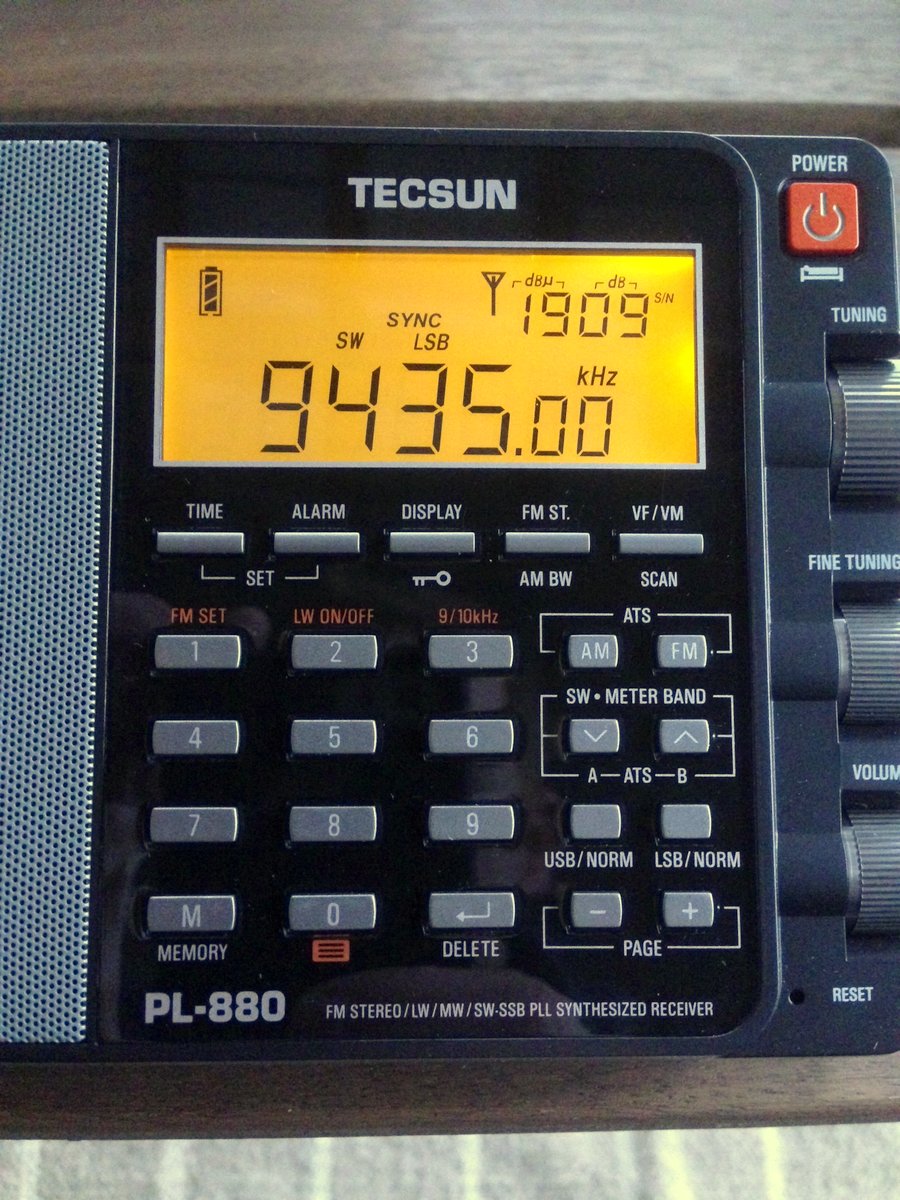
The PL-880 has a synchronous detection “hidden” function. I’m sure it’s hidden because it’s so ineffective. The PL-880 is a fantastic portable, but don’t bother using the sync detector.

Many modern DSP portables sport synchronous detection, but they’re not terribly stable and the audio fidelity can take a big hit as well. Poor sync detectors can make audio sound “tinny” and narrow.

If a sync detector isn’t effective a providing a stable lock on a signal, then it’s pretty much useless. Why? If it can’t maintain a stable lock, it’ll produce very unstable shifting audio, often with the occasional heterodyne sound popping in as well. In those cases, it’s better to turn off synchronous detection.

Benchmark legacy tabletop receivers and modern Software Defined Radios (SDRs) typically have solid, effective sync detectors. Indeed, I rarely have the AM synchronous detector disengaged on my WinRadio Excalibur–that particular SDR and application enhance audio fidelity through sync detection.

I find that I use sync detection less with my Airspy HF+ Discovery and SDRplay RSPdx, for example, because the OEM applications natively does a brilliant job managing unstable signals.

In terms of portables, I’ve always considered the sync detector of the Sony ICF-2010, Sony ICF-SW7600GR, and PL-660/PL-680 to be pretty solid. I’m sure readers can suggest even more models.

Is sync detection an essential feature on a portable radio?

Not for me. But I do admit that I value the radios I own that sport a good sync detector.

For some SWLs and DXers, however? It might very well be a deal-breaker if a radio doesn’t have a sync detector, or if its sync detector doesn’t function well.

What do you think?

Is the lack of sync detection a deal-breaker for you? When do you employ sync? Please comment!

Dan’s thoughts on a Panasonic RF-9000 up for auction

Many thanks to SWLing Post contributor, Dan Robinson, who writes:
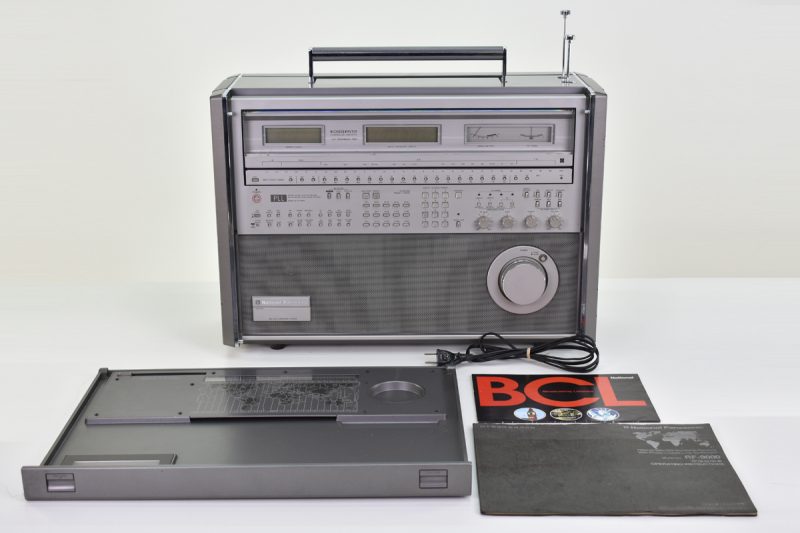
Appearing on the Japanese Buyee website is this RF-9000, which was the “King of Radios” of the heavy multiband “portable” era.

In recent years, RF-9000s in excellent to LNIB condition have sold for $10,000 or more.

A tour d’force of technology in its day, the 9000 featured room-filling main speakers and PLL technology that was advanced for its time.

The shortwave receiver section of the 9000 was plagued by PLL artifacts which prevented the radio from achieving what it could have had this problem not been solved in advance by Panasonic engineers.

A LNIB RF-9000 that I purchased for near $5,000 sold to a Hong Kong collector for $10,000 a few years ago. While I do miss its amazing FM quality and looks, the receiver ultimately lagged behind others, such as the SONY CRF-330K and 320 in performance.

The asking price for this 9000, which appears to have cosmetic issues, is in my view high.

Click here to view the RF-9000 auction.

Thank you for your insights, Dan!

Mario spots a National Panasonic Cougar 2200 (RF-2200) on eBay

Many thanks to SWLing Post contributor, Mario Filippi, who notes a National Panasonic Cougar RF-2200 that’s currently available on eBay. The Cougar is an Asian version of the venerable Panasonic RF-2200.

This model appears to have an original box in great shape. The price is steep, though at roughly US $563.35 as a Buy It Now listing although it does include free economy shipping from Japan. The seller also notes, “The first stage of the antenna is removed, so it is bonded.” Not exactly sure what that means and am guessing it’s a machine translation from Japanese.

Mario notes that most of the Cougar 2200s he spots on eBay are from sellers in Japan and at a recent auction one fetched $400.

Click here to view on eBay.

Thanks for the tip, Mario!

Curious if any Post readers have the Cougar 2200? I’ve never seen one in real life, but I assume the differences between it and the RF-2200 or DR22 is branding and power cord? Please feel free to comment if you own one.

Upgrading my Yaesu FT-817 transceiver with the G7UHN rev2 Buddy board

Last August, SWLing Post contributor, Andy (G7UHN), shared his homebrew project with us: a genius companion control display for the venerable Yaesu FT-817 general coverage QRP transceiver.

Andy’s article caused me (yes, I blame him) to wax nostalgic about the popular FT-817 transceiver. You see, I owned one of the first production models of the FT-817 in 2001 when I lived in the UK.

At the time, there was nothing like it on the market: a very portable and efficient HF, VHF, UHF, multi-mode general coverage QRP transceiver…all for $670 US.

In 2001? Yeah, Yaesu knocked it out of the ballpark!

In fact, they knocked it out of the ballpark so hard, the radio is still in production two decades later and in demand under the model FT-818.

I sold my FT-817 in 2008 to raise funds for the purchase of an Elecraft KX1, if memory serves. My reasoning? The one thing I disliked about my FT-817 was its tiny front-facing display. When combined with the embedded menus and lack of controls, it could get frustrating at home and in the field.

I mentioned in a previous post that I purchased a used FT-817ND from my buddy, Don, in October, 2020. I do blame Andy for this purchase. Indeed, I hereby declare him an FT-817 enabler!

FT-817 Buddy board

When I told Andy about my ‘817ND purchase, he asked if I’d like to help him test the FT-817 Buddy board versions. How could I refuse?

Andy sent me a prototype of his Version 2 Buddy board which arrived in late November. I had to source out a few bits (an Arduino board, Nokia display, and multi-conductor CAT cable). Andy kindly pre-populated all of the SMD components so I only needed to solder the Arduino board and configure/solder the cable. I did take a lot of care preparing and soldering the cable, making sure there was no unintentional short between the voltage and ground conductors.

Overall, I found the construction and programming pretty straight-forward. It helped that Andy did a remote session with me during the programming process (thanks, OM!). Andy is doing an amazing job with the documentation.

I do love how the board makes it easier to read the frequency and have direct access to important functions without digging through embedded menus. While there’s nothing stopping you from changing the program to suit you, Andy’s done a brilliant job with this since he’s an experienced FT-817 user.

The Nokia display is very well backlit, high contrast, and easy very to read.

“Resistance is futile”

I mentioned on Twitter that, with the backlight on, the FT-817 Buddy makes my ‘817ND look like it was recently assimilated by The Borg.

Don’t tell any Star Trek captains, but I’m good with that.

Andy has a rev3 board in the works and it sports something that will be a game-changer for me in the field: K1EL’s keyer chip!

For more information about the FT-817 Buddy, check out Andy’s website. At time of posting, it’s not available yet, but as Andy says, “it’s nearly there!”

Of course, we’ll keep you updated here as well. Many thanks to Andy for taking this project to the next level. No doubt a lot of FT-817 users will benefit from this brilliant project!

Setting time and saving/recalling station memories on the XHDATA D-808?

Many thanks to SWLing Post contributor, Sorin, who writes:

Hello Thomas,
I’ve read with interest your blog and inputs about the XHDATA radio.
Now since yesterday I own such a radio, and I’ve noticed it has aspects that are superbly resolved, but I miss a complete Instruction Manual. The pdf you have there (the same as the printed one that came with my radio) isn’t describing some matters, I will highlight just those I’ve confronted:

How do you set the local time? The manual stops at saying how to switch from Automatic (I guess from the unreliable RDS clock) to Manual. What buttons are to be pressed further to set the time ?

How do you save radio stations beyond the 10 pcs on Page 00? Ho do you go further from Page 00 to some other ? Pressing further the Page button doesn’t change anything.

How do you call saved stations from other pages that Page 00?

best regards,
Sorin

Thank you for your question, Sorin. I’m letting a friend borrow my D-808 so, unfortunately, don’t have it handy to confirm this for you. My hope is that an SWLing Post reader can help.

Please comment if you can help Sorin with these D-808 functions!

Looking back at 2020: What radios were in heavy rotation at your home and in the field–?

This morning, I’m looking at the calendar and I see and end in sight for 2020. I think most of us can agree that 2020 will be one for the history books, in large part due to the Covid-19 global pandemic which has had a pretty dramatic affect on many of our lives. It certainly brough my planned travels to a halt. I think many of us are quite happy to show 2020 the door!

As each year comes to a conclusion, I often look back at my radio activities during that year and see how it played out. I especially note the radios I used most heavily throughout the year.

Since I evaluate and test radios, models that are new to the market obviously get a lot of air time. Still, I’m also known to pull radios from the closet and give them some serous air time.

I’m very curious what radios you gave the most air time in 2020?

Here’s my list based on type/application:

Portable shortwave receivers

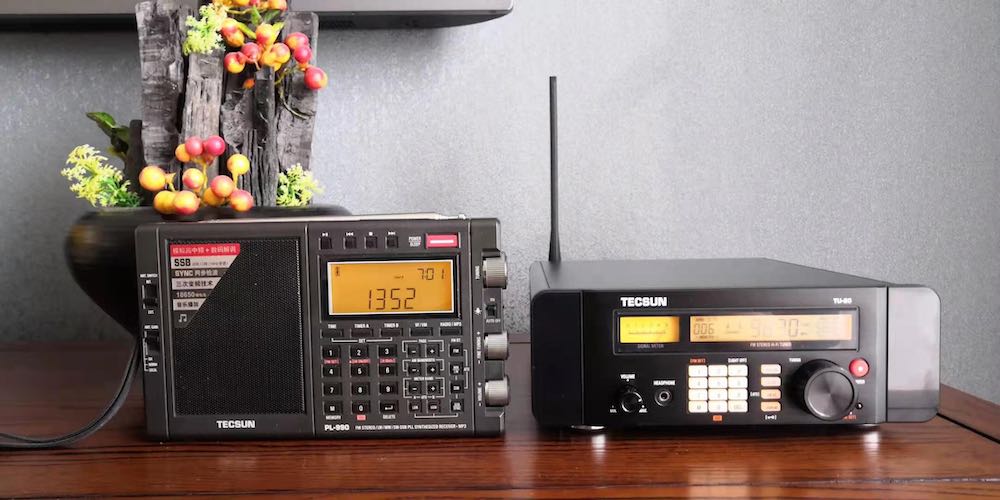
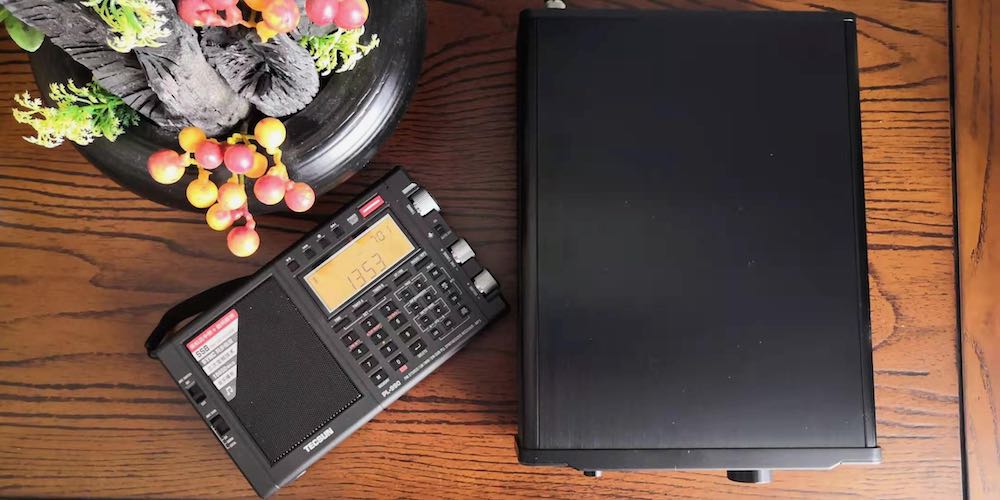
Since they’re new to the market, both the Tecsun PL-990 (above) and Belka DX (below) got a lot of air time.

I do like both radios and even took the pair on vacation recently even though packing space was very limited. I see the Belka DX getting much more air time in the future because 1.) it’s a performer (golly–just check out 13dka’s review of the Belka DSP) and 2.) it’s incredibly compact. The Belka now lives in my EDC bag, so is with me for impromptu listening and DXing sessions.

A classic solid-state portable that also got a lot of air time this year was the Panasonic RF-B65. Not only is it a performer, but it has a “cool” factor that’s hard to describe. I love it.

Tabletop portables

In a sense, the C.Crane CCradio3 got more play time than any of my radios.  It sits in a corner of our living area where we tune to FM, AM and weather radio–90% of the time, though, it’s either in AUX mode playing audio piped from my SiriusXM receiver, or in Bluetooth mode playing from one of our phones, tables, or computers. In October, the prototype CCRadio Solar took over SiriusXM duty brilliantly. I’m guessing the CCRadio3 has easily logged 1,600 hours of play time this year.

Of course, the Panasonic RF-2200 is one of my all-time favorite vintage solid-state portables, so it got a significant amount of field time.

Software Defined Radios

While at home the WinRadio Excalibur still gets a large portion of my SDR time, both the AirSpy HF+ Discovery and SDRplay RSP DX dominated this space in 2020.

The HF+ Discovery was my choice receiver for portable SDR DXing and the RSPdx when I wanted make wide bandwidth recordings and venture above VHF frequencies.

Home transceivers

Without a doubt the new Mission RGO One 50 watt HF transceiver got the most air time at home and a great deal of field time as well. It’s such a pleasure to use and is a proper performer to boot!

My new-to-me Icom IC-756 Pro, however, has become my always-connected, always-ready-to-pounce home 100W HF transceiver. It now lives above my computer monitor, so within easy reach. Although it’s capable of 100+ watts out, I rarely take it above 10 watts. The 756 Pro has helped me log hundreds of POTA parks and with it, I snagged a “Clean Sweep” and both bonus stations during the annual 13 Colonies event.

Field transceivers

The new Icom IC-705 has become one of my favorite portable transceivers. Not only is it the most full-featured transceiver I’ve ever owned, but it’s also a brillant SWLing broadcast receiver. With built-in audio recording, it’s a fabulous field radio.

Still, the Elecraft KX2 remains my choice field radio for its portability, versatility and incredibly compact size. This year, in particular, I’ve had a blast pairing the KX2 with the super-portable Elecraft AX1 antenna for quick field activations. I’ve posted a few field reports on QRPer.com and also a real-time video of an impromptu POTA activation with this combo:

How about you?

What radios did use use the most this year and why? Did you purchase a new radio this year? Have you ventured into the closet, dusted off a vintage radio and put it on the air?

Please comment!