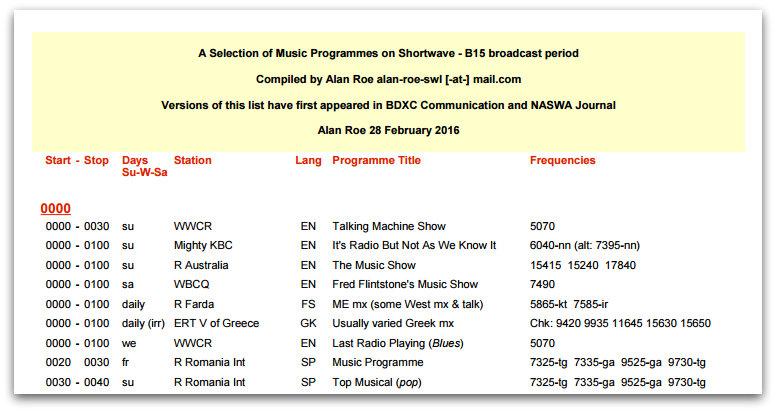
 Many thanks to SWLing Post contributor, Alan Roe, who shares his updated Music on Shortwave list for the B15 period.
If you love listening to music on the shortwaves, you’ll love Alan’s free guide.

Many thanks to SWLing Post contributor, Alan Roe, who shares his updated Music on Shortwave list for the B15 period.
If you love listening to music on the shortwaves, you’ll love Alan’s free guide.
 Many thanks to SWLing Post contributor, Richard Langley, who shares the following:
Latest item, which provides more information, on this previously mentioned news story:
http://www.bbc.com/news/technology-35690688
Here’s an excerpt:
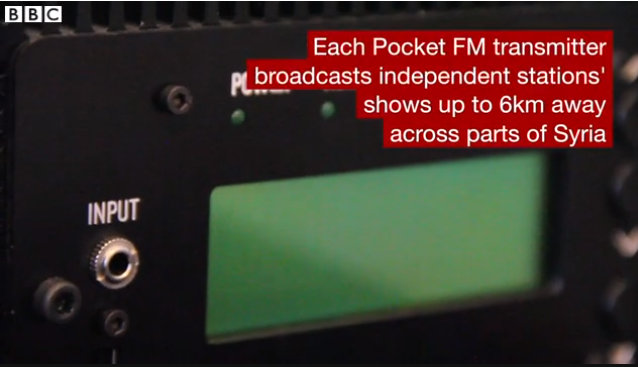
Raspberry Pi computers are being used to power “micro” radio transmitters in Syria.
The Pocket FMs, as they are called, were designed by a German organisation as a way of providing Syrians with independent radio.
The devices have a range of between 4 to 6km (2.5 to 3.75 miles), which is enough to cover an entire town.
At the heart of each is a Raspberry Pi, the credit card-sized single-board computers.
About two dozen have been built, and the designer says they are intended to be as easy to set up as a piece of flat-pack furniture.
“We lost one device in Kobane”, Philipp Hochleichter told BBC Radio 4’s PM programme.
“But due to the bombing – not due to a malfunction.”[…]
Continue reading on the BBC website…
The Raspberry Pi is an amazing little computer; capable of so much at such a low cost. I just purchased a Raspberry Pi 3 yesterday; hoping I can think of a clever way to use it for a little radio fun..
 Many thanks to SWLing Post reader, Edward Ganshirt, who writes:
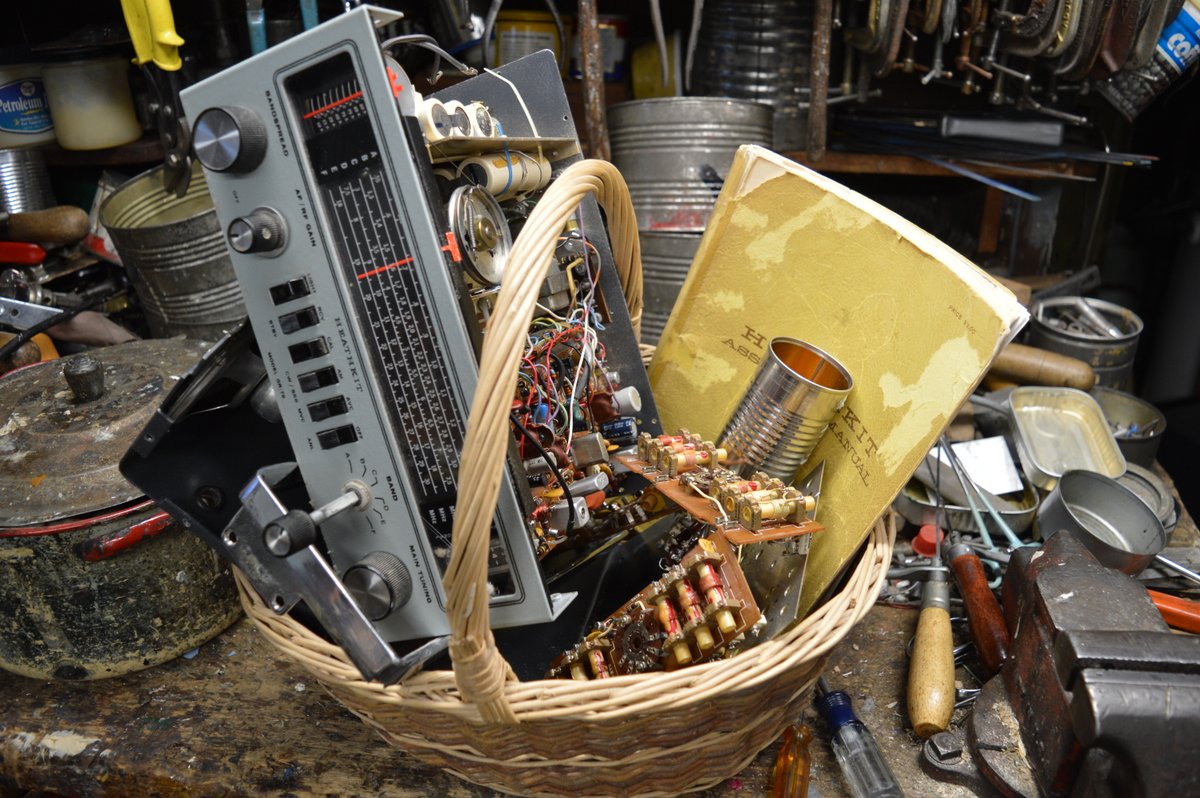
I picked up this Heathkit GR-78 at a estate/moving sale. It was in a pile of “e-waste” (you know, old vcr’s broken TVs, remote controllers, dead cell phones, etc.).
I found a container and sorted through the stuff to retrieve all what looks like Heathkit parts. The radio was disassembled and scattered about. I was able to collect all the critical components and brought the works to the sales table. The person manning the table said that was stuff they were discarding and I could have it for free but the Easter basket was $0.50.
So far I had put little time into it but was able to mechanically assemble it completely. All the fasteners holding the cabinet were missing. The rest appears to be all there but the primary side of the transformer is open and the NiCads are shorted and stone dead. The manual that I found in their recycle bin is complete and appears to gone through 3 owners by 3 sets of handwriting in the notes and comments through out the manual. If anything this looks like a CSI/forensics troubleshooting process getting into the mind of 3 different owners unsuccessful at making it work.
I will keep you posted on the progress.
WA1-LAI
More power to you, Ed! There are few things as difficult as picking up where someone else left off on a kit build. Your project is exponentially more complicated since there were three people involved and parts are scattered. Please update us with your progress.
Readers: If you have any experience with the GR-78, I’m sure Ed would welcome your input!
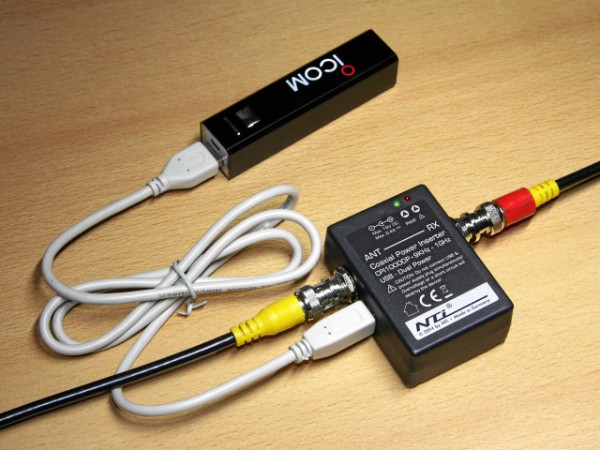
CPI1000 mit Powerbank
Many thanks to Dennis at Bonito for sharing a link to an article he recently published on the Bonito blog:
Autonomous power supply of our active antennas via USB and power bank
It is getting to be more and more difficult to procure reasonably priced analogue external plug-in power supplies because just like old light bulbs they are no longer allowed to be produced due to power consumption restrictions. We are spending a lot of time to find and buy remaining stock so that we can offer our customers noise-free external power supplies. But for years, there has been an alternative.
Our MegaLoop ML200, ML052, the MegActiv MA305 as well as the GigActiv GA3005 can be operated internally with as little as 5V and so can be powered by the supplied CPI1000DP / CPI3000DP bias tee via a USB cable. In light of the annoying switching power supplies, PowerLAN and heightened mobility of listeners, this is a very practical alternative and offers much more flexibility for the customer. Unfortunately, this fact is not well known and that is why I would like to shed some light on this subject.[…]
Continue reading at the Bonito website.
Thanks, Dennis!
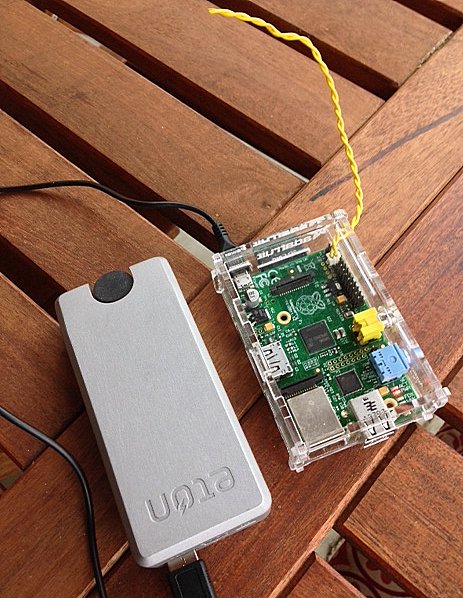 I should note that there are a multitude of 5 VDC powerblocks on the market. I have two made by Eton Corp (see above) that even have hand-crank power generation. I recently used one to power my Raspberry Pi (Raspberry Pirate!) for several hours.
As Dennis states, using a DC source certainly cuts down on interference from noisy power supplies.
Many thanks to Bill Tilford,who updates us on some of his upcoming Isle of Music broadcasts:
Greetings. Update for From the Isle of Music on WBCQ, 7490 KHz, 0100-0200 Tuesdays (Monday nights 8-9pm [EST] in the Americas)
The next few weeks of From the Isle of Music will feature, in addition to an eclectic selection of music from Cuba:
Feb 29: Special Guest is Juan Carlos Marín, on of Cuba’s best Jazz saxophonists
March 7: Special Guest is Ethiel Failde, director of Orquesta Miguel Failde, which preserves the Danzon, one of Cuba’s most important popular musical genres (it helped give birth to the Mambo and influenced North American Jazz)
March 14: Special Guest is Leo Garcia, leader of the group Timbalive, which plays Timba, one of Cuba’s best genres of modern dance music. Timbalive is based in Miami but regularly works with musicians on the island in its recordings.
A graphic for our Feb 29 show is attached…..
Thanks for all you do for radio……
And many thanks to you, Bill, for broadcasting the excellent tunes!
Many thanks to SWLing Post contributor, Paul, who shares this link to a post on Craig’s List and asks:
“Interesting shortwave tuner, designed by Dieter Rams. Anybody know anything about this?”
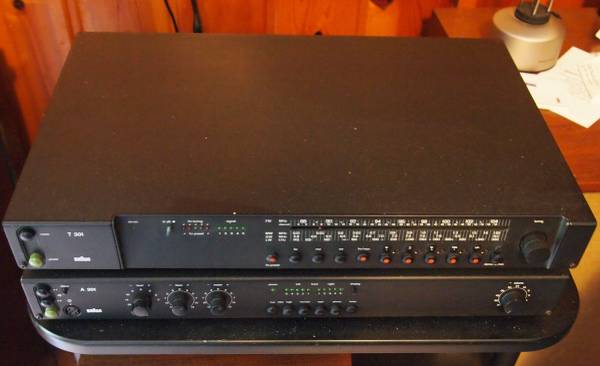
I was not familiar with the Braun A-301 and T-301, but I know there are a few SWLing Post readers who are big fans of Braun gear and Rams’ designs. Perhaps someone can comment? If you’re a Braun collector and live in the DC area, this may be worth checking out.
Here’s the full description from CraigsList:
This is a Braun amp/tuner combo from the 80’s in excellent condition. It includes the A-301 integrated amplifier and the T-301 AM/FM/SW tuner designed by Dieter Rams. Both units have been converted to 110 Volt, but only the amp has an American power plug. The tuner will be supplied with an adaptor. This is the last series manufactured in Germany, called “Slim-line”. The amp was recently serviced by Musical Technology in Springfield, bad capacitors were changed out and crystallized solder connections were redone.
This A-301 amp uses DIN connectors for inputs and one will be supplied with the unit. The tuner has a captive DIN connector, and if you wish to use it with other amps, you will have to get a female DIN to RCA plug adaptor. It works fine with this amp, though. This analog tuner has FM (UKW), AM (MW) and SW bands as well as 5 manual presets.
All metal construction with excellent design and ergonomics. Not a huge amount of power, only 42 watts, but very good sound, excellent extended bass and a very captivating midrange for a solid-state amp. Unusual balance control with a variable loudness contour. Tuner is also unusual, with a shortwave section as well as sensitive FM and AM bands. Overall, very good sound.
I will also supply one set of DIN speaker connectors without wires, although this amp has 2 sets of outputs. I will also supply a set of 2-prong DIN speaker plugs, but they are not capable of accepting large speaker wires. If you wish to use larger gauge wire, you will have to find larger plugs (available on Ebay).
More info on this amp can be found at Radiomuseum here:
http://www.radiomuseum.org/r/braun_a301a_30.html
Tuner info:
http://www.radiomuseum.org/r/braun_t301t_30.html
I can demo these units for any serious purchaser.
Many thanks to SWLing Post reader, Larry Thompson, who shares his review of the CountyComm GP5/SSB:
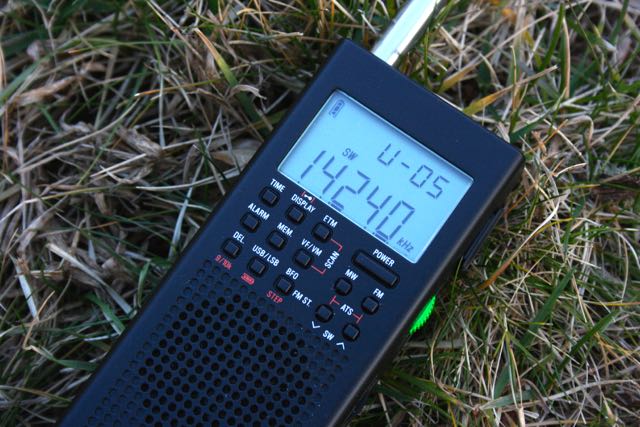
Been having a ton of fun with my new toy, the tiny survivalist radio, the CountyComm GP5/SSB receiver. $74.95 with free heavy duty cordura case with metal belt clip (normally $17.95). Also purchased 2 spare whip antennas @ $6.00 ea. The unit arrived promptly
in just 5 days from CA.
The radio is manufactured by Tecsun and is similar to the Tecsun PL-365, but re-engineer end to military standards for use in embassies and military installations around the world. The case is a heavy plastic that feels like anodized aluminum.
It’s about the size of a small TV remote control, taller than a cell phone, and about 1/2 the width of an iPhone.
Very, east intuitive menus. Incredibly sensitive to dx, relatively good selectivity. A great radio to throw in your travel bag or briefcase. So small that no one, especially customs, TSA, etc would even suspect it is a shortwave receiver with SSB capabilities.
I live in a very highly QRM and RFI interference zone.
I’m in the central city, in an old 1920’s hi-rise, with high power tension lines right next to the building.
Lots of QRM from the elevator motors, etc. Having a good antenna option is a challenge.
I’ve resorted to a stealth longwire antenna, strung out my 5th floor window. It’s 50′ of #16 black insulated copper stranded wire, weighted by a medium size galvanized carriage nut. It seems to work well.
I also use a Magic Wand shortwave antenna, a type of broomstick antenna with 23′ of lead-in, available from Lowbander on eBay.
My main receivers have been a Sony ICF-SW7600GR dual conversion receiver and the SRDPlay. In the past, I have listened to dx with some really outstanding receivers, including a Nordmende Globetrotter, a National NC-183D, a Japan Radio JRC-525′ and a Yaesu FT900AT transceiver. The later two were computer-controlled using TRX-Manager software.
In just 4 days, I can’t get over the sensitivity of the CountyComm GP-5/SSB and it’s ability to pull in stations. So far, it’s far superior to the Sony or SDRPlay.
Digging into the specs, it is a direct conversion receiver, using a DSP si47XX microchip from Silicon Labs to digitize the analog AM/FM broadcasting signal base on modern software technology and radio principles. The direct conversion circuitry can highly improve a radio’s sensitivity, selectivity, S/N ratio and anti-interference capabilities. Direct conversion using software is far superior to a double or triple conversion traditional IF circuitry. This must explain why the unit is so amazingly sensitive!
I can hear things on this unit that I can’t even begin to hear on the Sony or the SDRPlay. The FM reception and sound with earphones is amazing and LW and AM reception is equally sensitive. I can easily get WLW Cincinnati 700 kHz in the daytime here in St. Louis!
There are 550 preset memories: 100 for AM, 100 for FM, 100 for SSB, and 250 for SW. You can scan the memories or scan the bands in various ways. You can also use the Auto Tune Storage function to store memories.
Something I really enjoy is the Easy Tuning Mode function. The ETM function allows you to tune into stations easily and temporarily store them into the ETM storage. 100 stations for FM/MW and 250 for SW. Scanned stations will not be stored in the regular 550 memories, but will remain in the ETM temporary storage until the next time you do an ETM scan.
This is a great feature for travel. When you are in a different city, you can perform the ETS function and this will not delete any of the stations already in the memory.
Thanks for sharing your review, Larry. I use the GP5/SSB all of the time–it stays in one of my vehicles and I often use it for walks, picnics, camping and even a little parking lot DXing.
I suspect if your SDRplay RSP was hooked up to an antenna that could better mitigate your local QRM, you’d find it outperforms the GP5/SSB. The great thing about portables, though, is that you can simply take them to areas with low noise levels. It’s just a matter of finding the right location!
The CountyComm GP5/SSB is a very handy portable. Thanks again!
The CountyComm GP5/SSB can be purchased from:
The Tecsun version, the PL-365, can be purchased on eBay (though be aware that some sellers have BuyItNow prices almost two times the price of CountyComm).