Category Archives: Ham Radio

Radio Waves: Free Magazine from URE, C-19 Effect on Listening, Ampegon Focuses on Transmitters, and EU Directive for Car Digital Radio

(Source: Ampegon)

Radio Waves:  Stories Making Waves in the World of Radio

Because I keep my ear to the waves, as well as receive many tips from others who do the same, I find myself privy to radio-related stories that might interest SWLing Post readers.  To that end: Welcome to the SWLing Post’s Radio Waves, a collection of links to interesting stories making waves in the world of radio. Enjoy!

Many thanks to SWLing Post contributors Mike, Paul Evans,  Josh Shepperd, and Mike Terry for the following tips:


Spain’s URE makes June magazine PDF available (Southgate ARC)

In response to the ongoing Coronvirus situation Spain’s national amateur radio society URE is allowing everyone to download the PDF of the June edition of their magazine Radioaficionados

A translation of the announcement on the URE site says:

One more month, and we have already been three, with the aim of accompanying its readers in the exceptional situation caused by the spread of COVID-19, the URE in its commitment to collaborate and help to cope with the complicated situation we are currently experiencing in our country, has decided to offer free access to the magazine of the month of June and we remind you that magazines prior to December 2019 are also available to you. In this way, citizens who wish to can read these publications for free.

A small gesture so that nobody feels alone at home in the face of this global challenge.

Access is through the website download area, click on “Descargas” under “Junio 2020 – Revista” at:
https://www.ure.es/descargas/

URE in Google English
https://tinyurl.com/SpainURE

Ampegon Puts Focus on Shortwave Transmitters (Radio World)

Ampegon Power Electronics highlights progress on the company’s third-generation solid-state shortwave transmitters, which it says will offer “significant advances in efficiency.”

The company says this work will pave the way toward higher-power broadcast outputs and meet current expectations of a shortwave equivalent to medium-wave and FM transmitters. “Combined, these two developments will bring FM-quality broadcasts with all the benefits of shortwave,” said Simon Keens, Ampegon sales and business development manager.

Ampegon has also developed a retrofit upgrade to current UCS generation control systems for previous generation 100 kW, 250 kW, 300 kW and 500 kW transmitter systems.[]

Listening together, listening alone: A music professor sounds off on his shifting industries (CBC)

Brian Fauteux reflects on the way COVID-19 is affecting his two passions: music and teaching

A lot of great songs effectively reflect the feelings that accompany isolation. The experience of being alone, however, is often constructed in opposition to a longing for togetherness. Heart’s “Alone” (1987) — maybe the greatest power ballad ever recorded — confidently asserts, “‘Til now I always got by on my own.” But this is no longer the case when the song’s protagonist meets and develops undeniable feelings for another: “And now it chills me to the bone.” In another iconic 80s anthem, “Dancing in the Dark,” Springsteen grows tired and bored with himself against the desperate urge to join up with “something happening somewhere.” The act of dancing in the dark can be fun, sure, but it’s much more fun with others. Inspiration in isolation is insubstantial.

I’m an Assistant Professor of Popular Music and Media Studies, and I teach and write about the role of music in society. I’m interested in how our listening practices shape, and are shaped by, issues of sustainability in the music industries — that is, how artists make (or struggle to make) a living in this day and age.[]

EU directive on digital radio in cars (Times of Malta)

Directive (EU) 2018/1972 of the European Parliament and of the Council of December 11, 2018, establishing the European Electronic Communications Code (‘EECC’) entered into force on December 20, 2018. Member states have two years to incorporate it into national law, except where specifically mentioned.

Radio is an important medium through which citizens access a diverse range of information news and entertainment services. The EECC leverages on the ever-increasing connectivity of new generation cars as well as on the digital platforms of radio broadcasters to guarantee a more robust radio experience to all drivers, ensuring good coverage, a wider choice of radio stations and more effective access to information at all times. The EECC ensures that car drivers have access to the benefits of digital terrestrial radio wherever in the EU they have bought their new car.

On April 21, the minister responsible for communications, in consultation with the Malta Communications Authority, published Legal Notice 151 of 2020 amending the Electronic Communications Network and Services (General) Regulations, implementing the provision of the EECC dealing with the interoperability of car radio devices. In line with the regulation, any car radio receiver integrated in a new vehicle of category M which is made available on the market for sale or rent in Malta from December 21, 2020, shall comprise a receiver capable of receiving and reproducing at least radio services provided by digital terrestrial radio broadcasting of type DAB+. Radio programmes in Malta are broadcast terrestrially on DAB+.

The car radio requirement only applies to new cars.[]


Do you enjoy the SWLing Post?

Please consider supporting us via Patreon or our Coffee Fund!

Your support makes articles like this one possible. Thank you!

Elecraft K4 Update (and a few photos)

Elecraft K4

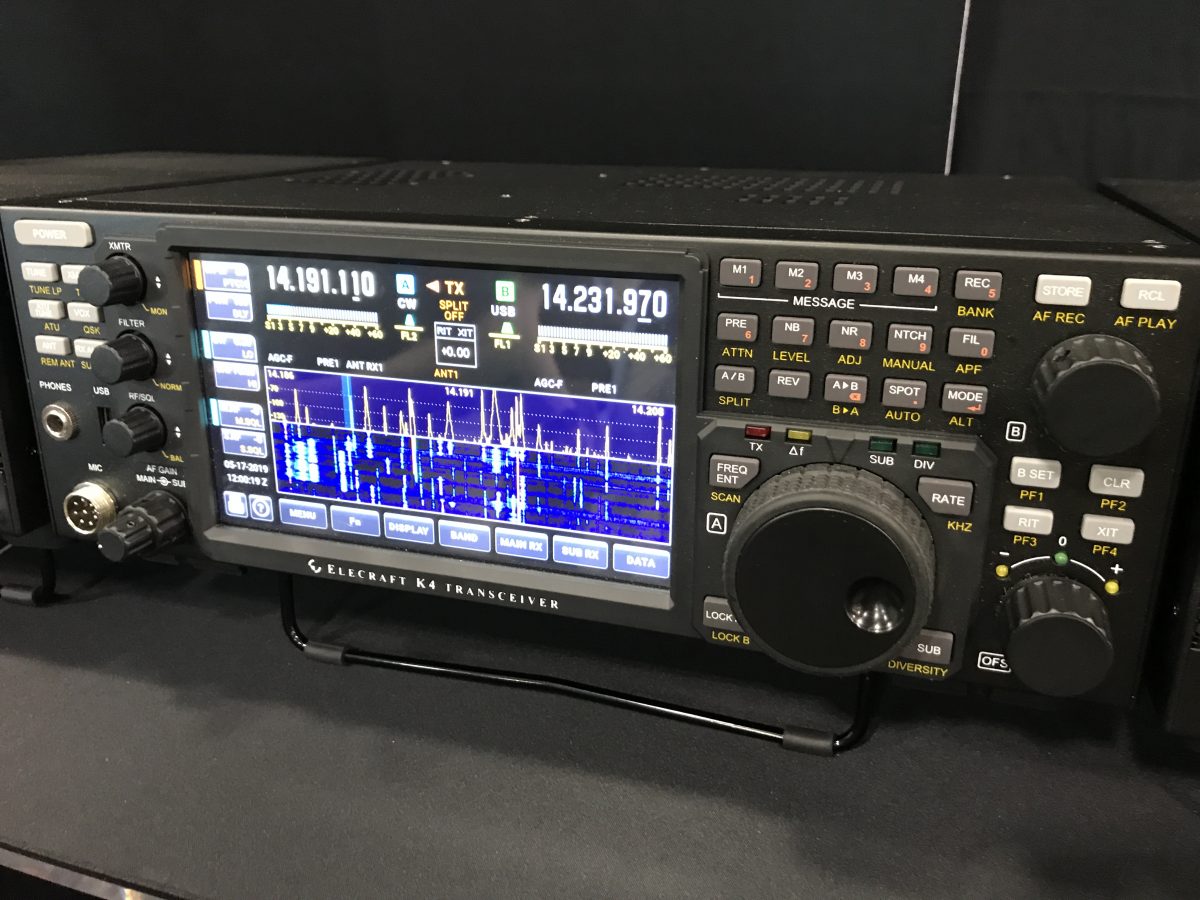
An early Elecraft K4 prototype at Hamvention 2019

Many thanks to SWLing Post contributor, Paul Evans, who passes along this message from Eric Swartz at Elecraft (photos follow message):


K4 UPDATE

by Eric Swartz May 19, 2020

Hi Everyone,

At Elecraft, like many of you, we are in our 9th week of shelter in place. This has been tough on all of us. Back on March 16th, when the initial California state and local orders were issued with an April 11 estimated end date, we suspected that it would last longer than that, but not as long as this. The majority of our production team had to be furloughed immediately, with a few working from home. Most of our sales, support and the K4 engineering team have also been working from home. We allowed a minimal skeleton staff on site. ( Less than you can count on one hand, with each operating alone in large separate areas.). We’ve been able to ship a subset of our existing radios and accessories from finished goods stock, which has kept cash flow coming in. We thank you for the continuing orders!

We’ve also spent this time totally reorganizing our sales, operations, production, and test areas for proper social distancing along with extreme cleaning and health screening procedures as per the new local and national COVID-19 guidelines for manufacturers. (Wearing masks at all times, Daily health screening upon entry to the building, additional spacing and partitions between work stations and ‘you touch it, you clean it’ procedures, etc.) This is a required change as per our local and State health departments.

Many of our local sub-contractors (sheet metal fabrication, circuit board assembly, etc.) have also been impacted by shelter in place orders. Over the coming weeks, as the State and local health authorities slowly allow more activity, we should be able to get better delivery estimates from them as they are able to ramp back up. Like us, they are eager to get back online. National and international parts suppliers have been similarly impacted.

So what does this mean for first K4 shipments? Prior to the Covid-19 pandemic, we were projecting first K4 deliveries beginning sometime in the April – May window this year. Obviously the pandemic has thrown out those estimates. Based on a gradual reopening in California and other areas, our current feedback from suppliers, and taking into account unexpected delays, shortages, last-minute engineering changes, etc., my estimate is that the first K4 shipments will begin somewhere in a window of late July through the end of August 2020. We’ll keep you informed as we get better information.

As a side note, I’d like to thank everyone who has ordered a K4 for your support. We anticipated seeing cancellations during this pandemic delay, but we have received very few. Our K4 order backlog has actually continued to increase over the past 9 weeks. Wow! You, as our supporters and customers, have continued to energize and amaze us as we have created new products for you these past 21 years. Thank you.

Also, as with all of our products, our engineering team keeps designing new features during the product‘s lifetime. They certainly have not been idle on the K4 during the shelter in place order. (Our DSP S/W defined radio architecture allows us to continually give you a ‘new’ radio with each new sw release. 🙂

Keep an ear out for us on the air too. While making a few short test transmissions with my K4 this morning, I ended up in a very nice QSO on 20M SSB! If you hear me, or others on our team, please say “hello.” We may be on a K4!

We hope you, your family and friends stay safe and healthy.

73,
Eric


Thanks for the tip, Paul!

This morning, I found a few photos I took of a prototype K4 at the 2019 Hamvention and 2019 W4DXCC conference. Thought I’d post them here for those who’d like an up-close look at the K4’s front panel:


Radios that may not be benchmark, but are pure fun–!

Many thanks to SWLing Post contributor, John R Palmer, who replied to our previous post about radio regrets with a question.

John asks:

Name a piece of radio gear that for some reason, technical, emotional, design etc. that you’ve gotten more fun using than you would ever have expected based on its price, maybe more so than other much more expensive radios you’ve owned. Just a piece of gear that really hit the spot and you’ve had a blast using.

That’s a tough question indeed, John. I hope readers will chime in with their replies–I’m very curious!

So I gave this quite a bit of thought and came up with two radios–one shortwave portable and one general coverage ham radio transceiver:

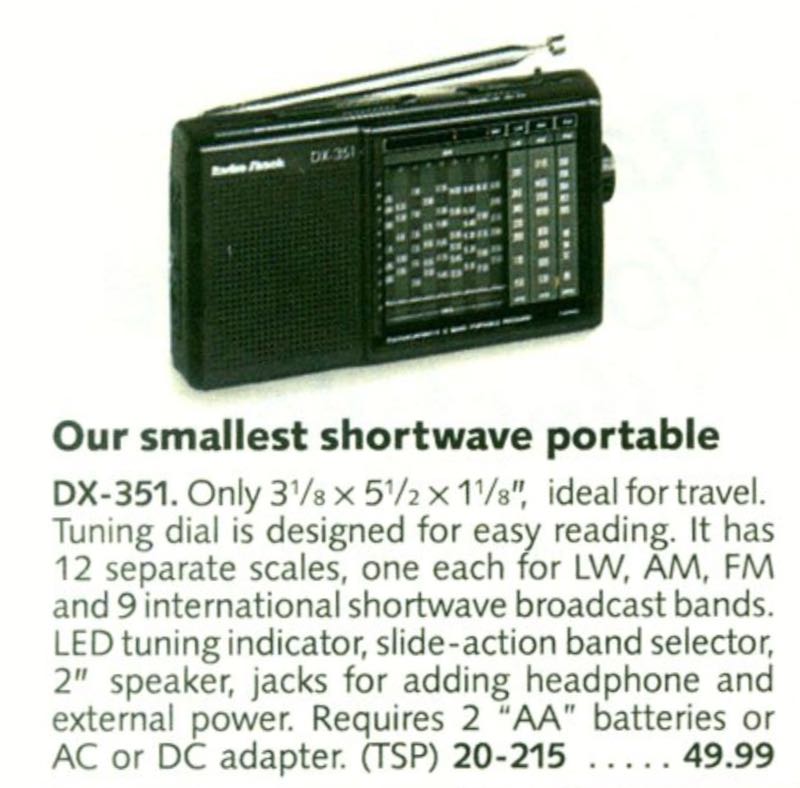
The Radio Shack DX-351

In 1996, I worked for a Radio Shack corporate store in Athens, Ohio. I believe we were getting ready for the Black Friday/Christmas season and the store manager decided to go through a pile of broken items customers has returned using their extended warranty. He had accumulated quite a number of returns in a box next to his desk in the back of the store. I stayed after hours to help him organize the shelves and prepare for incoming shipments.

Most of the items in his box were physically broken, but still covered by the extended warranty (to their credit, many RS store managers were quite flexible with extended warranty returns). He pulled out a Radio Shack DX-351 from the box.

The customer returned this portable because the AM/FM/SW slider switch was broken. My manager knew I was an SWL, so asked if I wanted it. He said, “If you don’t, it goes into the trash can because we can’t re-sell it.

How could I resist?

This DX-351 was “well-loved.” I can’t remember all of the details, but the AM/FM/SW band switch could not be fixed, but I didn’t mind because the receiver was stuck on the shortwave band and the other shortwave band switch worked perfectly.

The DX-351 was a joy to use and amazingly sensitive! It wasn’t particularly selective, but it served me well for many years living, primarily, in the glove compartment of my car. If I took a road trip, a lunch break at the park, or if I was simply waiting in a parking lot to pick up my wife, I’d pull out the DX-351 and tune in the world.

The thing was pure fun to tune.

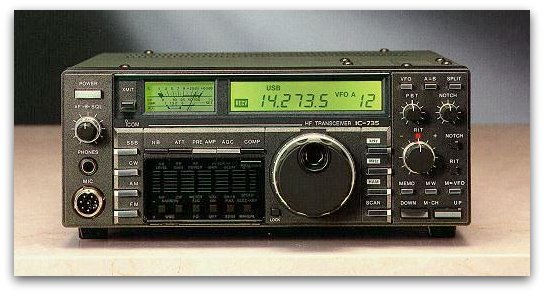
The Icom IC-735

In the world of general coverage ham radio transceivers, the Icom IC-735 would be my choice.

The IC-735 was my first ham radio transceiver. I used my hard-earned savings (from working at Radio Shack!) to buy a used unit via the now closed Burghardt Amateur Radio Center in South Dakota. My friends, Eric (WD8RIF) and Mike (K8RAT), believed a used IC-735 would serve me well. They were right!

What I really loved about the IC-735 was that it had all of the features and modes I needed. It was easy to operate and, while I couldn’t call its receiver “benchmark” by any means, it was amazingly sensitive and selective.

I logged hundreds of hours on this radio in both SSB and CW, working DX across the globe.

But I spent even more time SWLing. Turns out, the IC-735’s general coverage receiver did justice to shortwave broadcasts. The AM filter was wide enough to produce wonderful audio (especially via an external speaker or headphones). For years, the IC-735 was my go-to shortwave radio because it performed so much better than any other radios–mostly portables–I had at the time.

The IC-735 was so much fun to use.

I did eventually sell it, if memory serves, to purchase my first Elecraft K2 transceiver.

What are your choices?

So what are the radios you’ve owned that may not sport the best performance, and may not have been terribly expensive, but were pure fun to put on the air–? Perhaps you still own one? Please comment!

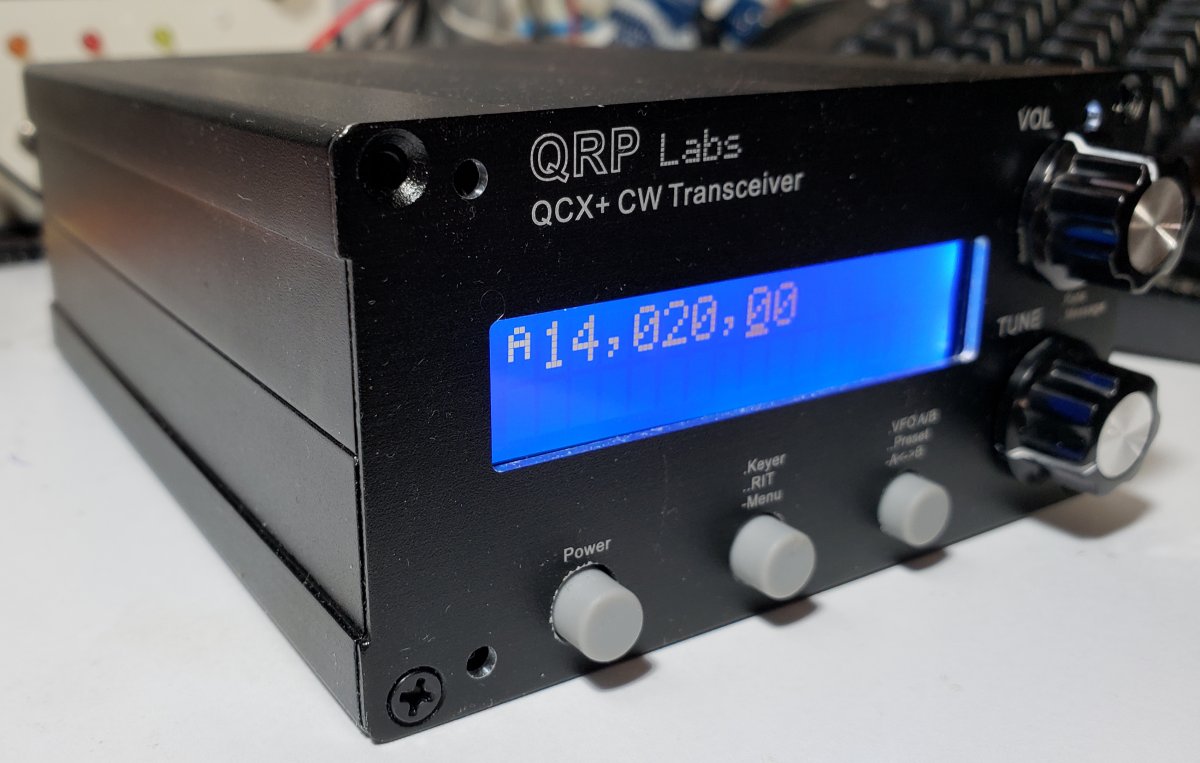
Just pulled the trigger on the new QCX+ CW/WSPR QRP transceiver kit

I’m a real sucker for kits of any stripe.

A few days ago, my buddy, Pete (WB9FLW), sent me a tip about the new QCX+ CW/WSPR transceiver by QRP Labs. I posted an announcement on QRPer.com.

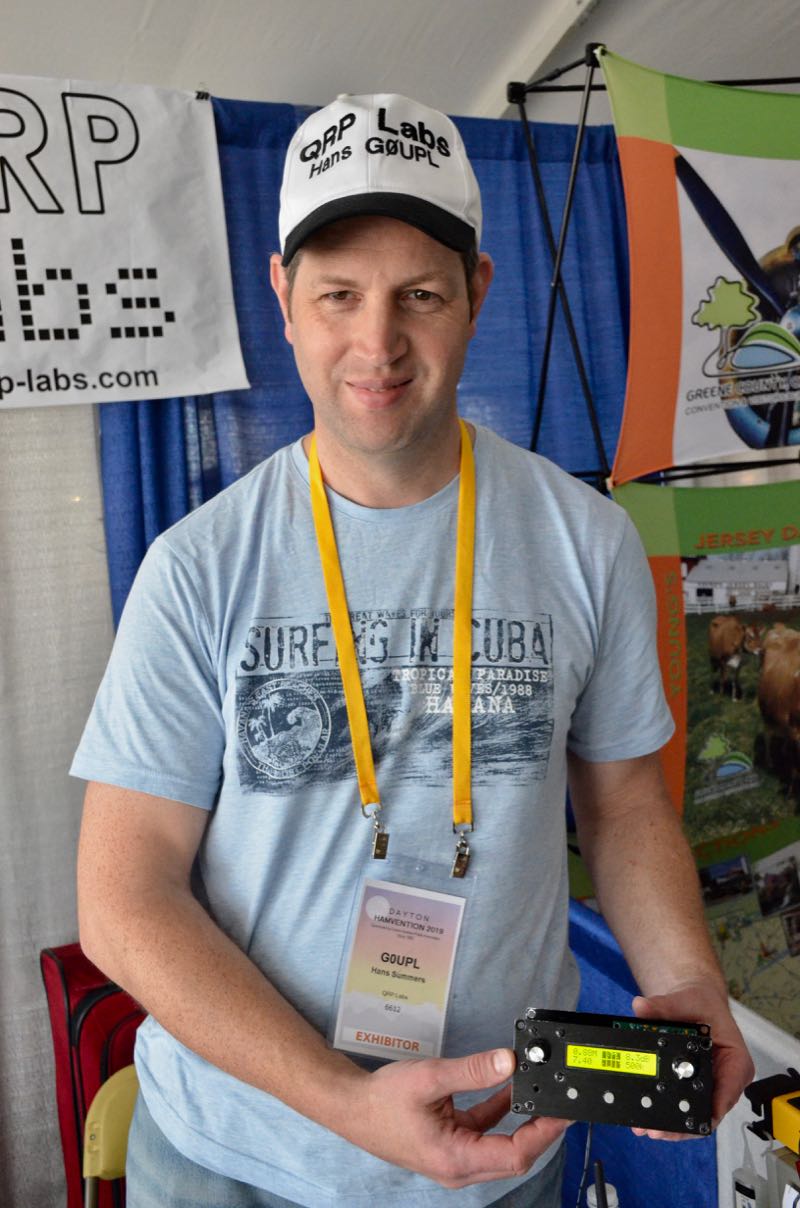
I’ve yet to build a QRP Labs kit, but I’ve only heard positive reviews from readers and friends. QRP Labs’ president, Hans Summers (G0UPL), is an amazing kit designer and, indeed, won the 2019 Homebrew Heroes Award.

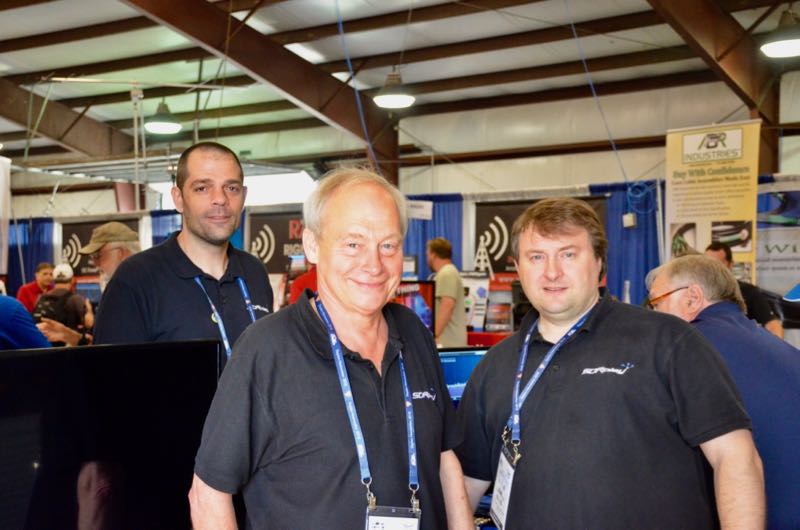
Hans kindly took a break so that I could snap his photo at Hamvention 2019.

Last year, at the 2019 Hamvention, QRP Labs had a table across from ours and, based on the amount of people huddled around his table all day long, I’m certain he was one of the busiest vendors at Hamvention.

His new QCX+ transceiver is an upgraded/updated version of the original QCX transceiver which has sold nearly 10,000 units. In the following video, Hans describes in detail how the QCX+ is designed and the differences between it and its predecessor:

Since I’ve quite a few things on my Social DX bucket list–including the recent addition of QRP EME (I mean, what am I thinking?)–and since I don’t really need yet another CW QRP transceiver, I required a good excuse to buy and build this kit. So I turned to my editor at RadCom who very much wanted review. Fantastic excuse! Thank you!

The amazing thing about the QCX+ is you getting a full-featured single band QRP transceiver for $55 US plus a modest shipping fee. This means pretty much anyone can afford to buy and build one.

I just placed an order for the transceiver ($55) with a 40M band module, the optional custom aluminum enclosure ($25), and the optional GPS receiver ($23). If I had a 3D printer, I might have skipped the enclosure because I’m willing to bet that shortly after the transceiver’s release, someone will share an enclosure design one can print at home. Then again, since I know I’ll take this little rig to the field, an aluminum enclose will provide excellent protection.

I purchased the optional GPS receiver because I plan to eventually put this rig into use as a dedicated WSPR beacon. The GPS module will calibrate the frequency, time, and Maidenhead Locator grid square in WSPR mode. It can also be used to precisely calibrate the transceiver’s synthesizer reference oscillator.

Kit anticipation time!

According to the QRP Labs website, they plan to start shipping the QCX+ in mid-June. I opted for FedEx delivery, so hopefully it’ll arrive sometime around my birthday (Happy Birthday to me!).

More than anything, I simply enjoy building kits and really look forward to building the QCX+, then putting it on the air! I’ll post updates and a few photos here, but look for my full review likely this fall in the pages of RadCom.

Post readers: Please comment if you’ve built a QRP Labs kit or have any other kits in the pipeline this summer!

Massive photo galleries of the Dayton Hamvention

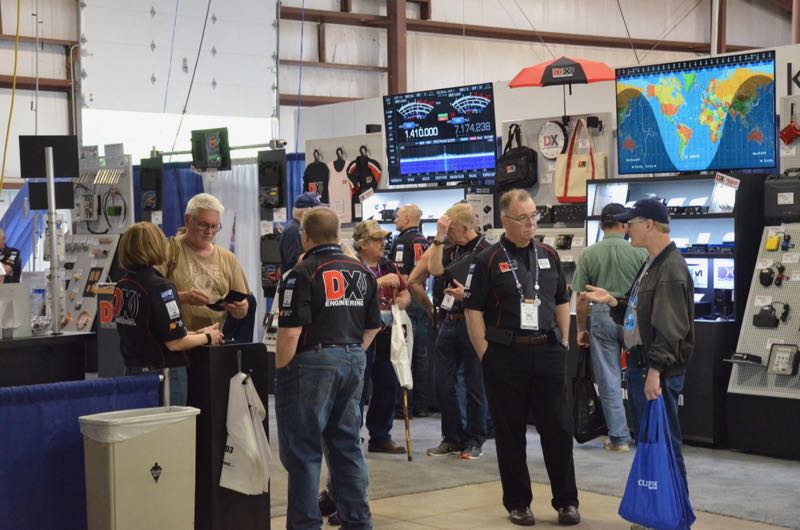
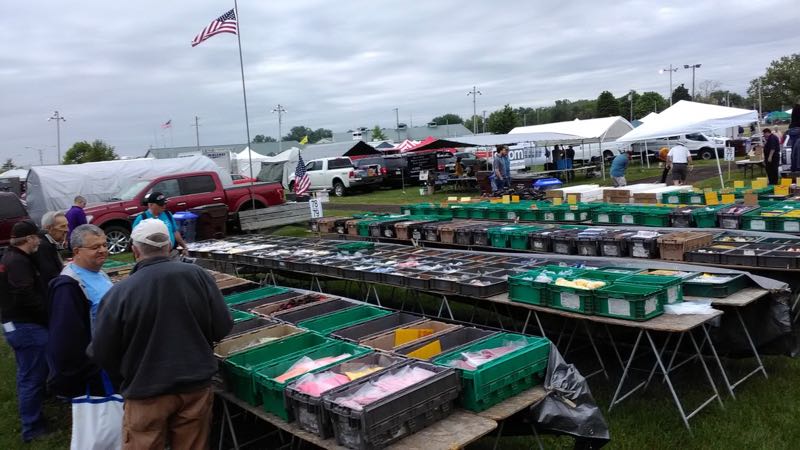
This is the first year I’ve missed the Dayton Hamvention since 2009. As I mentioned in a previous post–besides hanging with my friends–I really enjoy browsing the flea market and inside exhibits looking for deals and cool innovations.

In 2016, I took loads of photos of both the Hamvention Flea Market and Inside Exhibits. I did this partly thinking it would be our last year holding the Hamvention at Hara Arena (turns out, I was absolutely correct).  Post readers asked that in 2017, I take photos of the new venue at the Greene County Fairgrounds in Xenia, OH, so I did.

I enjoy taking and sharing these photos so much, I’ve continued to collect hundreds of photos every year since to help document how the largest ham radio gathering event changes over time.

In the flea market, I try to include price tags when possible to give our international readers an idea of how much vintage gear costs.

If you’d like to take a trip down memory lane with me, check out the linked photo galleries below:

Hamvention Photos

2019

2018

2017

2016

2015 (smaller gallery)

2014 (smaller galleries)


Do you enjoy the SWLing Post?

Please consider supporting us via Patreon or our Coffee Fund!

Your support makes articles like this one possible. Thank you!
Hamvention Special: Begali offers free shipping to US

My Begali Simplex paddles have served me so well and perform flawlessly.

If you planned to pick up a Begali key at Hamvention this year, you’re in luck.

I just found out through SWLing Post contributor, Grayhat, that in honor of Hamvention, Begali is offering free shipping to the US and 50% off shipping to the rest of the world. This promotion ends tomorrow.

Since Begali keys are heavy by design, this is a great deal on shipping!

The Begali family not only makes the best keys, but they are amazing friends to so many in the radio community.

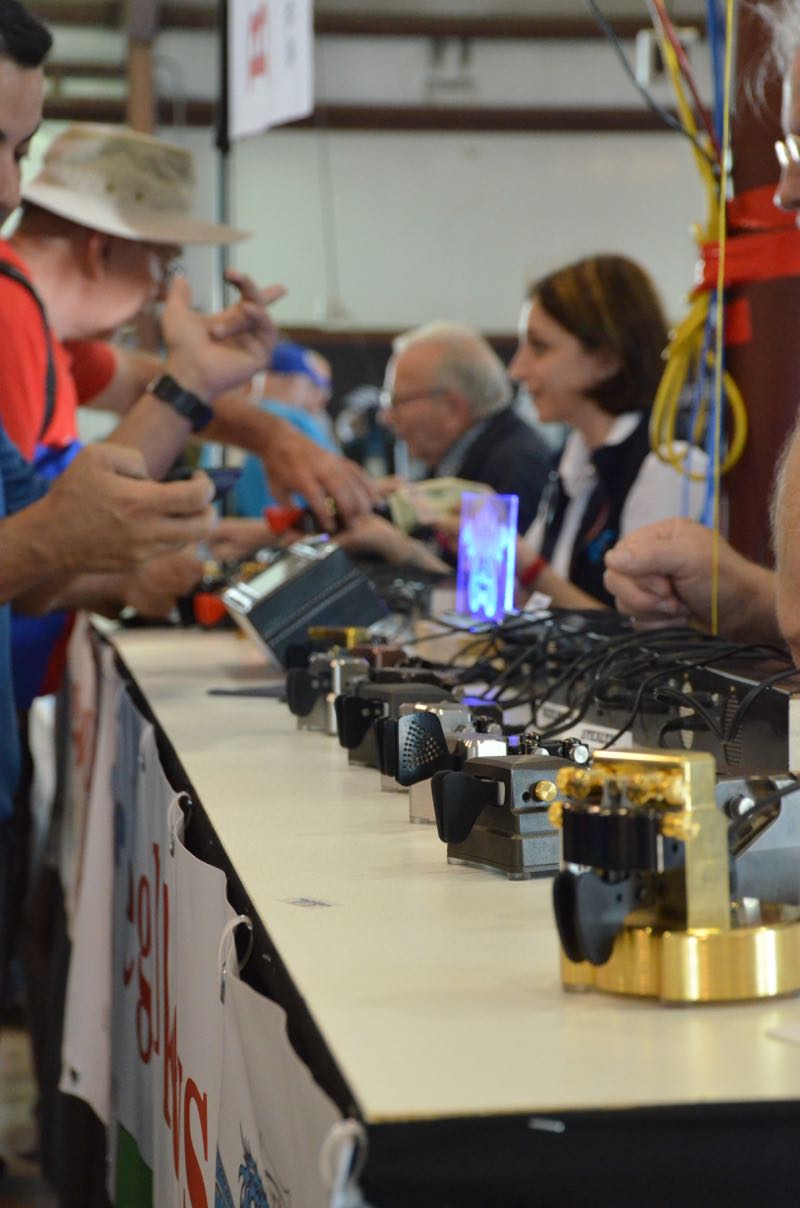
I purchased my Begali Simplex paddles, pictured the top of this post, at the 2008 Hamvention. I absolutely love them. While they’re one of the least expensive hand-crafted precision keys in the Begali line-up, I think you would find they perform better than any other paddles on the market anywhere close to this price point. I never miss a visit to the Begali booth to try out all of Piero’s latest designs. Begali is always one of the busiest vendors at Hamvention.

Click here to check out the full line of Begali keys.

Radio Waves: Canada Radio Stamps, Across the Pacific, Satellite Talk Presentation, and BBC Radio 6 Breaks Records

Radio Waves:  Stories Making Waves in the World of Radio

Because I keep my ear to the waves, as well as receive many tips from others who do the same, I find myself privy to radio-related stories that might interest SWLing Post readers.  To that end: Welcome to the SWLing Post’s Radio Waves, a collection of links to interesting stories making waves in the world of radio. Enjoy!

Many thanks to SWLing Post contributors Richard Langley, Charlie Liberto, and Mike Terry for the following tips:


History of Radio in Canada stamps available May 20 (Linn’s Stamp News)

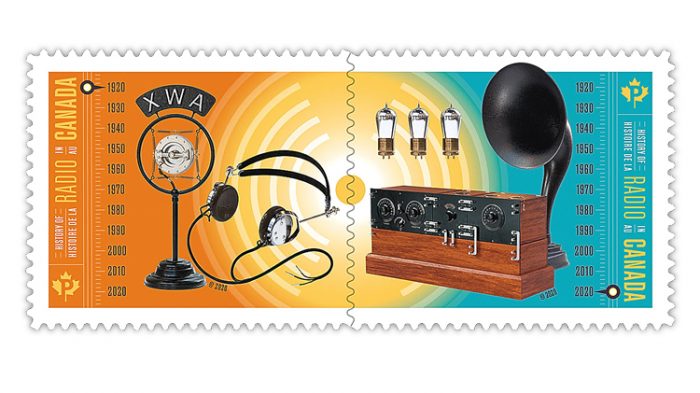
On May 20, Canada Post is issuing a se-tenant (side-by-side) pair of nondenominated permanent-rate (currently 92¢) History of Radio in Canada stamps. The new issue comes in a self-adhesive booklet of 10.

The stamps commemorate Canada’s inaugural radio broadcast, which hit the airwaves a century ago on the evening of May 20, 1920. According to Canada Post’s Details magazine for collectors, the radio program came from Marconi Wireless Telegraph Company’s studios in Montreal, Quebec, and was a closed broadcast for a Royal Society of Canada gathering at the Chateau Laurier hotel in Ottawa, Ontario.

The show featured a live performance by soprano Dorothy Lutton.

“As reported in the Ottawa Journal by one of the journalists invited to listen in, when ‘the latest one-step’ was played, the clarity was so impressive that several of the newspaper writers began to dance,” the May Details magazine said.

The stamp designs list the 10 decades of radio from 1920 to 2020 on the outside edges.[]

A New PBS Documentary Series about Pan American Airways  (Pan Am Historical Foundation)

When the China Clipper took off for the first scheduled flight to Manila on November 22, 1935, it riveted the attention of people around the world. At that moment Pan Am vaulted to a commanding position and the world changed forever as a result. That’s the story brought to life in “Across the Pacific.” Newly unearthed archival motion pictures, photographs, and original sound recordings as well as stunning graphics, help bring this history back to life. The film by Moreno/Lyons Productions tells the epic story of how Pan American Airways became the first to bridge the mighty Pacific – the first airline to cross any ocean. Focusing in particular on the contributions of Pan Am’s visionary leader Juan Trippe, aircraft designer Igor Sikorsky, and radio engineer Hugo Leuteritz, the three-part program will be broadcast on public television, beginning May 18th, 2020.[…]

Charlie notes that this documentary series will feature radio as seen in the following trailer:

Zoom satellite talk now on YouTube (Southgate ARC)

A video of the talk on amateur radio satellites, EME, Meteor scatter and the International Space Station by Robin Moseley G1MHU given via Zoom on Wednesday, May 13 is now available on YouTube

Watch G1MHU talk on satellites
https://www.youtube.com/watch?v=MKjCXepCK_s

The talk was organised by the Denby Dale Amateur Radio Society, their next talk on Zoom will be by the Editor of Practical Wireless, Don Field G3XTT, at 7:30pm BST on Wednesday, May 20, Zoom meeting ID 278 609 9353

http://www.ddars.net/

AMSAT-UK https://amsat-uk.org/

BBC Radio 6 Music breaks its audience record as UK’s biggest digital-only station (BBC Media Centre)

BBC Radio 6 Music reached a record 2.56 million listeners (from 2.49m last quarter and 2.52m last year), with the station’s weekday breakfast show with Lauren Laverne also seeing its biggest audience ever with 1.3 million listeners, according to the latest Rajars.
The figures released today covering the first quarter of 2020 also reveal that BBC Radio 1’s Breakfast show with Greg James gained 343,000 young 10+ listeners on previous quarter, and BBC Asian Network saw a boost in its audiences.

Figures released earlier this week for the same three months show the audience on BBC Sounds is growing, with a record 3.5 million weekly users in March. The total number of plays of live and on-demand content on BBC Sounds between January and March was 275 million, up 25 million on the previous quarter, and there was a record 123 million plays of on-demand radio programmes and podcasts.

James Purnell, Director of BBC Radio and Education, says: “It’s wonderful that listeners have granted BBC Radio 6 Music the top spot as the UK’s biggest digital only station by tuning in in record numbers. It’s no surprise that the station’s brilliant presenters and talented teams are proving a winning formula with their love and passion for music.

“We’ve been holding on to our younger audiences with more than 13 million 15-44 year olds listening to our stations every week whilst competition for their time has continued to intensify. And with more than a quarter of the population now listening to live radio online every week, it shows what an important role BBC Sounds plays for our stations and for our audiences, with record numbers of both live and on-demand plays in the first three months of the year.”

Overall, BBC Radio had 33.54 million listeners and a share of 49.7% (from 33.58m/51% in last quarter and 34.44/51.4% last year).

BBC Radio 1 posted a reach of 9.81 million listeners aged 10+ (from 9.72m last quarter and 10.18m last year). There were 8.92 million 15+ listeners (from 8.79m last quarter and 9.30m last year). The Radio 1 Breakfast Show now attracts 5.47 million listeners 10+ (Mon-Thu), from 5.13m last quarter and 5.44m last year. This quarter saw 4.87 million 15+ listeners (Mon-Thu), compared to 4.81m last quarter and 5.04m last year.

BBC Radio 2’s weekly audience was 14.36 million (from 14.44m last quarter and 15.36m last year). The Zoe Ball Breakfast Show attracted 8.11 million listeners per week, compared to 8.24m last quarter and 9.05m last year.

BBC Radio 3’s audience was 1.98 million (compared with 2.13m last quarter and 2.04m last year).

BBC Radio 4 posted a weekly reach of 10.76 million during the quarter (10.98m last quarter and 11.01m last year). The Today programme (Mon-Sat) has 7.12 million listeners each week, from 7.37m last quarter and 7.32m last year.

BBC Radio 5 Live posted a reach of 5.22 million listeners (5.41m last quarter and 5.40m last year).

Amongst digital-only stations, BBC Radio 1Xtra had a reach of 1.05m weekly listeners 10+ from 1.06m last quarter and 1.13m last year (986,000 weekly listeners 15+ from 987,000 last quarter and 1.05m last year). BBC Radio 4 Extra attracted 1.98 million listeners per week (from 2.27m last quarter and 2.24m last year). BBC Radio 5 Live Sports Extra attracted 601,000 listeners per week (from 914,000m last quarter and 708,000 last year).

BBC Asian Network drew 543,000 listeners, compared to 519,000 listeners last quarter and 536,000 last year.

The BBC World Service posted a weekly UK audience of 1.35 million (from 1.38m last quarter and 1.48m last year). BBC local radio reached 7.8 million listeners per week, from 7.5m last quarter and 7.86m last year.[]


Do you enjoy the SWLing Post?

Please consider supporting us via Patreon or our Coffee Fund!

Your support makes articles like this one possible. Thank you!