Category Archives: Mediumwave

Video: Daytime mediumwave shootout with the Tecsun S-8800

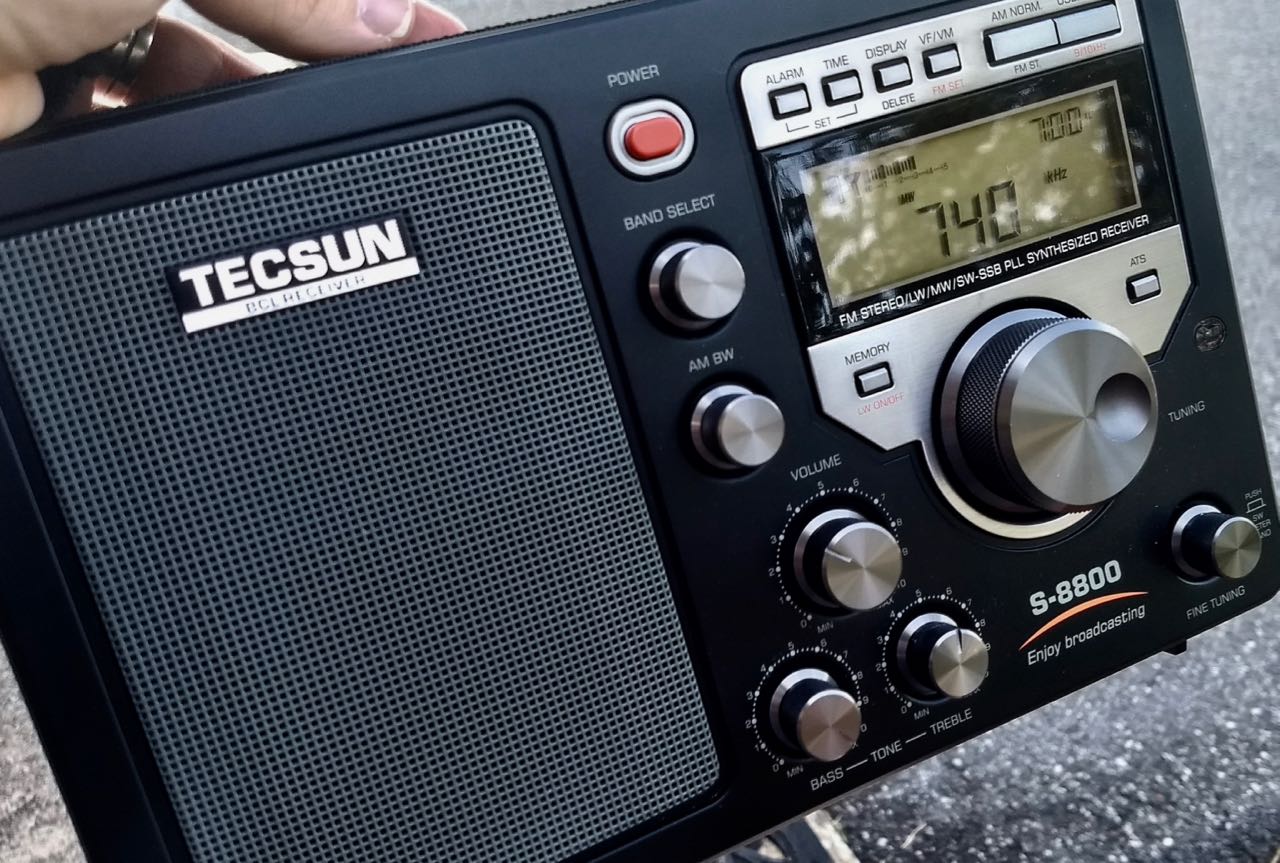
The Tecsun S-8800

About a week ago, I received a re-engineered version of the Tecsun S-8800 from Anna at the excellent online retailer, Anon-Co.

If you recall, I evaluated an early production unit of the S-8800 in February and while putting it through the paces, I discovered loud, warbling DSP birdies throughout the mediumwave and shortwave bands. Tecsun, to their credit, pulled the S-8800 from production to address the issue.

My schedule last week made it impossible to carve out the dedicated time I needed to begin an S-8800 evaluation.

Yesterday, however, I spent the afternoon with my family at Richland Balsam, the highest point on the Blue Ridge Parkway (6,000′ ASL) and a completely RFI-free zone. I brought the Tecsun S-8800 and a few other portables along for the ride–namely the Digitech AR-1780, the C.Crane CC Skywave and the Panasonic RF-2200.

I had just enough available space on my smart phone to record this one short video:

Click here to view on YouTube.

Let’s be clear: comparing any modern radio with the RF-2200 on mediumwave is hardly fair.

For one, the RF-2200 has been out of production for a few decades.

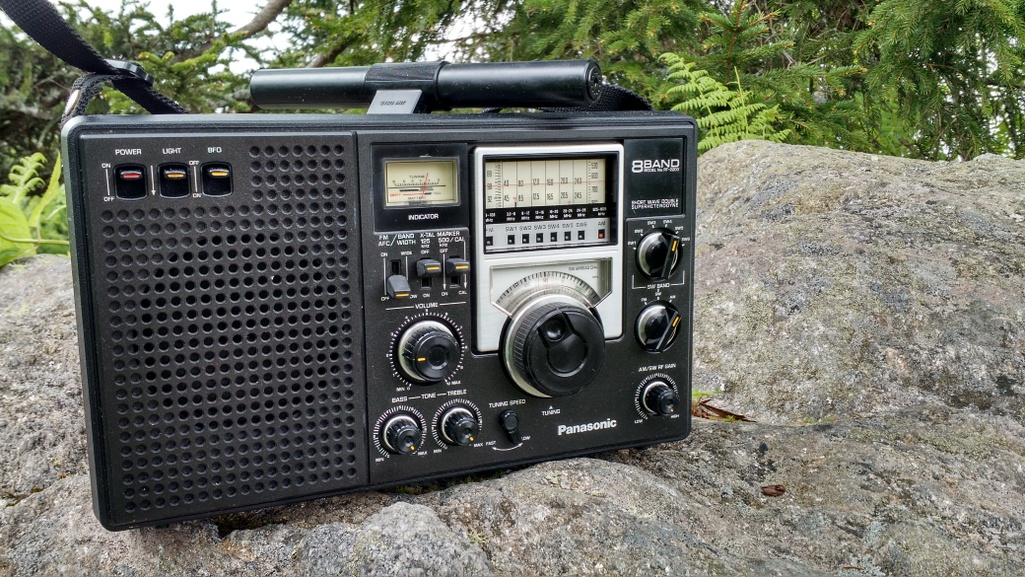
Secondly (what I never finished saying in the video is that) the RF-2200 has a large rotatable ferrite bar antenna that provides excellent gain. The RF-2200 simply wipes the floor with all of my modern portables as their ferrite bar antennas are a fraction of the size.

In other words, the RF-2200 was engineered to rule mediumwave like a boss.

On shortwave, the RF-2200 does a fine job, but isn’t nearly as accurate and stable as modern DSP receivers.

Spoiler alert

Still, as the video indicates, my final review of the Tecsun S-8800 will indicate that it is not a receiver for the serious Mediumwave DXer. It’s been my experience that few shortwave portables are excellent on both HF and MW.
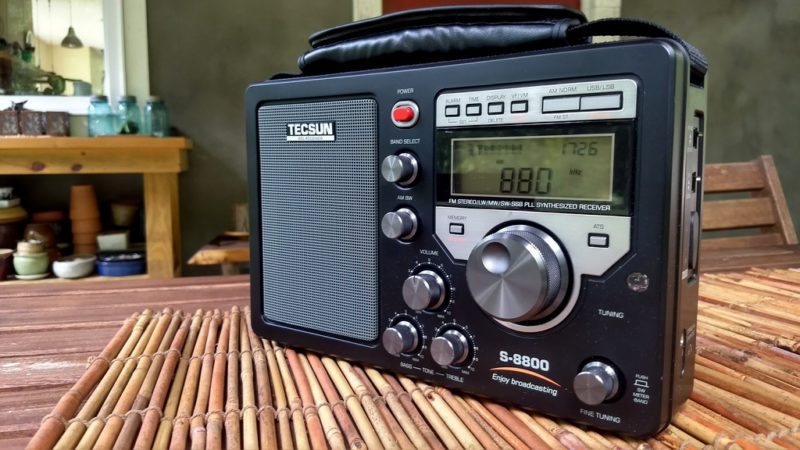
At home, tuned to local station 880 AM.

Of course you can’t tell from the video, but the S-8800 actually sounds brilliant when tuned to a relatively strong/local AM station, but either a lack of sensitivity or internal noise makes MW DXing a challenge.

I spent the better part of two hours yesterday evaluating its daytime MW performance–the video is pretty indicative of my findings. The S-8800 struggles with weak stations, but does a fine job with strong ones. It’s overall audio fidelity almost matches that of the RF-2200 when tuned to a strong broadcast. I’ve yet to test evening MW

The S-8800 still has some birdies on MW, but they’re not the loud warbling kind found on the previous model. Tecsun did properly address this, though in full disclosure, I haven’t fully explored the shortwave bands yet.

Shortwave?

I suspect the S-8800’s performance on shortwave will be much better than mediumwave because the previous S-8800 showed excellent results. As long as sensitivity wasn’t harmed while addressing the DSP birdies, I expect it’ll give the PL-880, PL-680 and Sony ICF-SW7600GR a run for their money.

Still…the lesson learned yesterday?

The Panasonic RF-2200 is the indisputable champion of mediumwave!
UPDATE: Click here to read our full Tecsun S-8800 review.

Tom’s AM broadcast band recordings during eclipse totality

Many thanks to SWLing Post contributor, TomL, for sharing the following guest post:


August 21, 2017: Individual Recordings of MW During Totality

by TomL

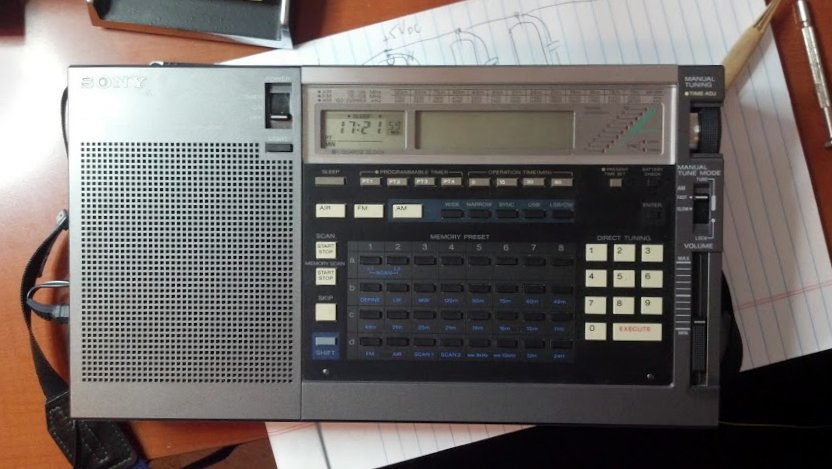
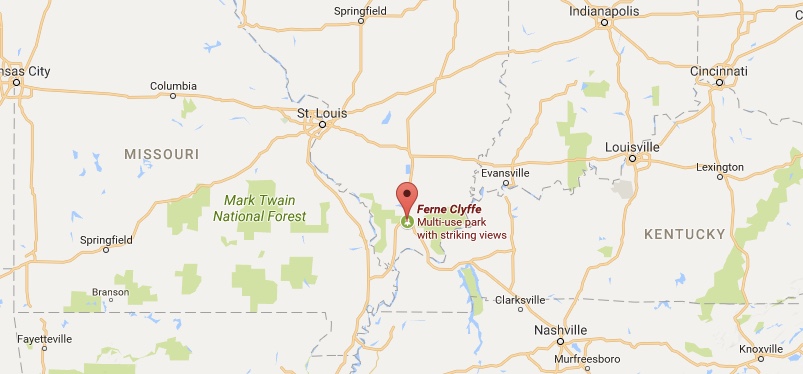
I setup flimsy “Backpack Shack” loop antenna and preselector to my Sony ICF-2010 to listen to any propagation of MW signals as each transmitter experienced Totality. My location was a picnic area facing southwest with only a small hill to the east at Ferne Clyffe State Park near Goreville, IL.

I did not bring a DSP radio and computer which would have been better in hindsight. My observations were generally as follows:

Anything west of my location, except for local St. Louis stations were not identifiable.
Noise levels were somewhat elevated because of thunderstorms that had just moved through the area during the evening.

Anything east of my location experienced dramatic increases in signal along the path of totality.
Since large signal increases were seen with the Umbra moving AWAY from me, it would be more beneficial to use a DSP receiver with good outdoor antenna than a single frequency radio and preselector like my setup. The loop antenna sitting on a picnic table acted great and was usable to get strongest signal for each station.

It is still unknown why I could not identify any stations west of me with the Umbra moving TOWARDS my location and needs further study. I thought I heard KTWO in Casper WY, but upon listening to the recording, it was a male announcer buried in the noise and unintelligible.
A transmitter being IN the path of Totality has a better chance of lasting longer with a strong signal than one that is just outside of Totality. Compare behavior of WSB vs. WBT.

If this happens again, make sure to make multiple hotel reservations and cancel the ones not needed. Traffic was horrible and had to stay in a hotel half way from home and I aggravated an achillies heel problem in the stop and go traffic (YUK).

So, it was quite disappointing to not hear anything special west of my location. As Totality neared my site, I just left the radio tuned to KNOX for the people around me to hear. Its signal did become about 25% stronger and near the end of the recording you can hear other weaker stations trying to break in.

Click here to download 1120 KMOX recording.

As soon as totality was over, and my picture taking was done, I returned to the radio and found 1510 khz WLAC Nashville, TN was moderately strong! And this was seconds after their Totality had already ended. A baseline reading beforehand showed this station coming in very very faintly. Subjective SINPO rating beforehand=15452, just after Totality=34433.

Click here to download 1510 WLAC recording.

The next surprise was tuning to 750 WSB Atlanta GA was BOOMING in! They were very clever and had no announcers. Instead they were playing snippets of songs about sun, moon, dark themes. Very entertaining! Baseline beforehand was just moderate noise, no signals. During recording, SINPO=55444 with propagation getting slightly worse near the end of the recording.

Click here to download 750 WSB recording.

Final surprise was 1110 WBT Charlotte, NC, which was not in the path of Totality but just north of it also booming in but not as strongly. Also, near the end of the recording, the signal dropped off very sharply, unlike the WSB signal which stayed strong throughout the 5+ minute recording. Baseline beforehand was low noise and no signals. During recording, SINPO=43434 at 14:40 ET, then approximately 1½ minutes after their maximum eclipse (14:43 ET), SINPO=33423, then at 14:46 ET a SINPO=22422 with another unidentified station breaking through playing a Johnny Cash song.

Click here to download 1110 WBT recording.


Tom, thank you for taking the time to share your recordings and listening experiences with us! Snagging a daytime MW broadcast from the Atlanta, GA and Charlotte, NC regions is most impressive. I reckon they were about 400-500 miles (as the crow flies) from your Ferne Clyffe, IL location.

Sounds like you had an amazing experience, despite the stop-and-go traffic! 

WNAH’s solar eclipse propagation test

Many thanks to SWLing Post contributor, Ivan Cholakov (NO2CW), who writes:

If you ever loved AM radio you will love this.

Thank you WNAH for recognizing there’s more to radio than plugging into a programming network and walking away!

Click here to view on YouTube.

Very cool! Many thanks, Ivan!

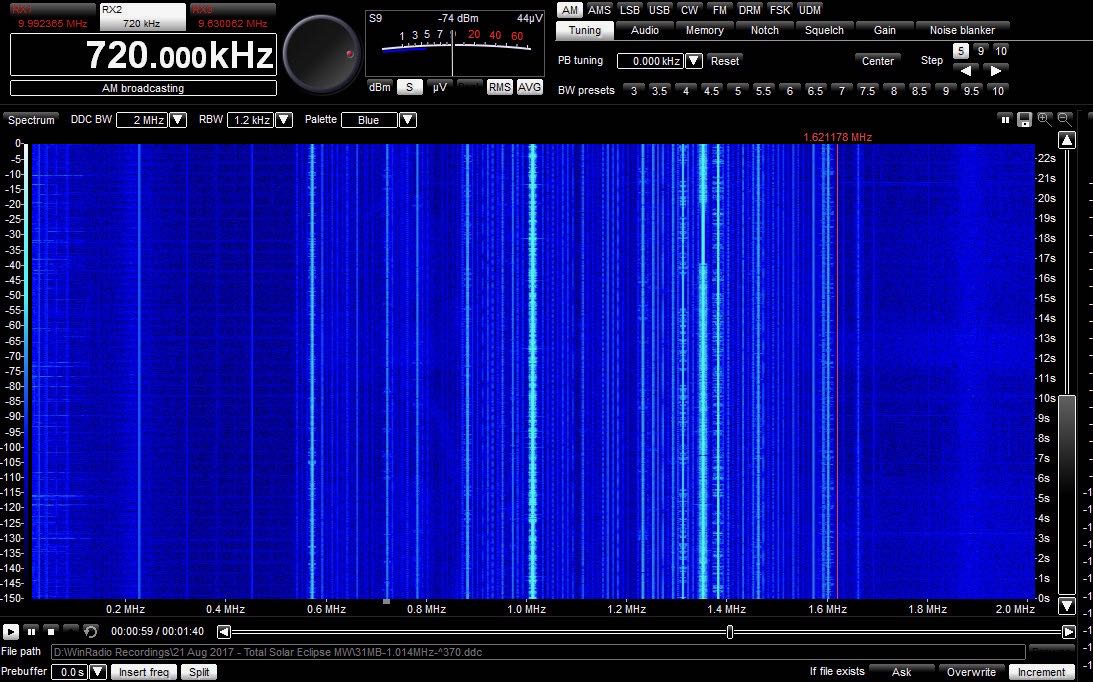
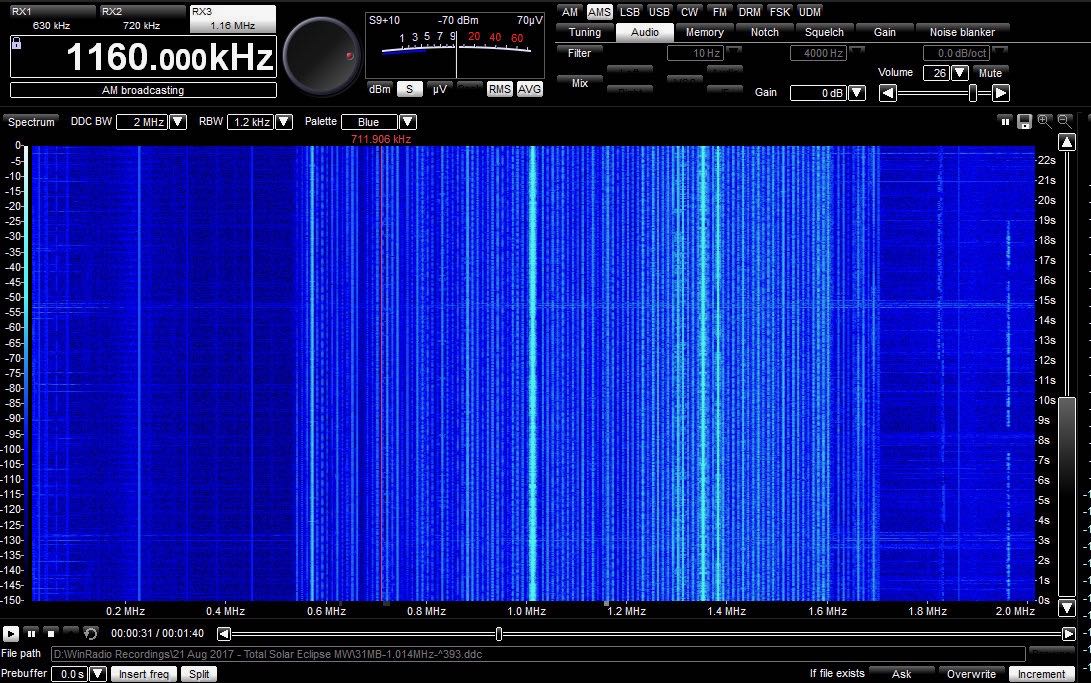
As I mentioned in a previous post, I recorded the entire mediumwave (AM broadcast) band from my North Carolina home with a WinRadio Excalibur on August 21 (day of the eclipse). After receiving Ivan’s message last night, I played back my recording and moved the time forward to around the moment of totality.

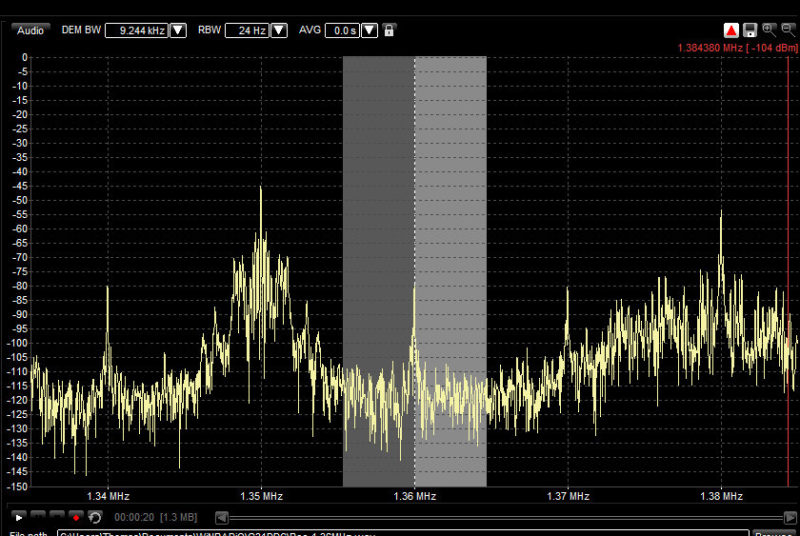
The mediumwave band was hopping! Several stations were competing for 1360 kHz with eclipse-enhanced propagation. There were two large signals flanking 1360 as well.

I thought I would never hear WNAH, but as I listened, their ID in CW (Morse Code) popped out of the signal mix. Here’s a short recording of the first station ID I received around 2:26 PM EDT (1826 UTC):

Click here to download the audio.

True: this is rough audio, but it always amazes me how CW can so effectively punch through noise. Nice touch, WNAH!

WNAH’s signal strength increased with time, but so did the competing signals on 1360 kHz. Within 10 minutes, about the time of totality in western North Carolina, WNAH was 40% stronger.

I did submit my recording and notes to WNAH last night.

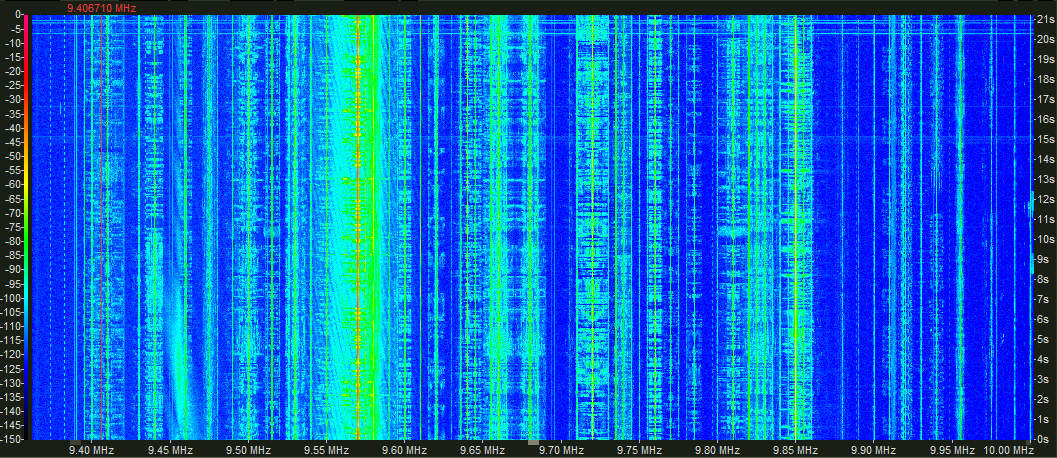
Due to my schedule, I haven’t had any meaningful time to go over my eclipse spectrum recordings. Indeed, I think I’ll need several dedicated days to review them. While searching for WNAH’s signal, I could see a significant difference in propagation on the waterfall display within a 26 minute span of time:

 14:15 EDT

14:41 EDT

Note that local time of totality was 14:36 EDT.

I made spectrum recordings spanning 0-2 MHz, 6-8 MHz and 13.5-15 MHz.

Post readers: Did anyone else log WNAH? Log any other shortwave or mediumwave DX? Please comment!

Solar Eclipse 2017: In the path of totality

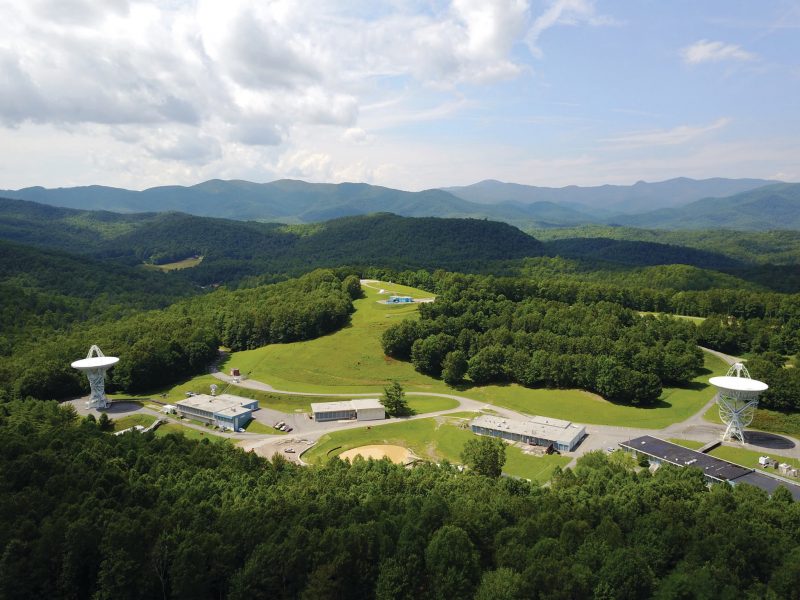
A portion of the PARI campus

Tomorrow, we will be experiencing a total solar eclipse here in the mountains of western North Carolina.

Instead of enjoying the eclipse at home, I will be volunteering as a docent at the Pisgah Astronomical Research Institute in Rosman, North Carolina. Post readers might recall PARI as it was the location of our 2015 PARI DXpedition.

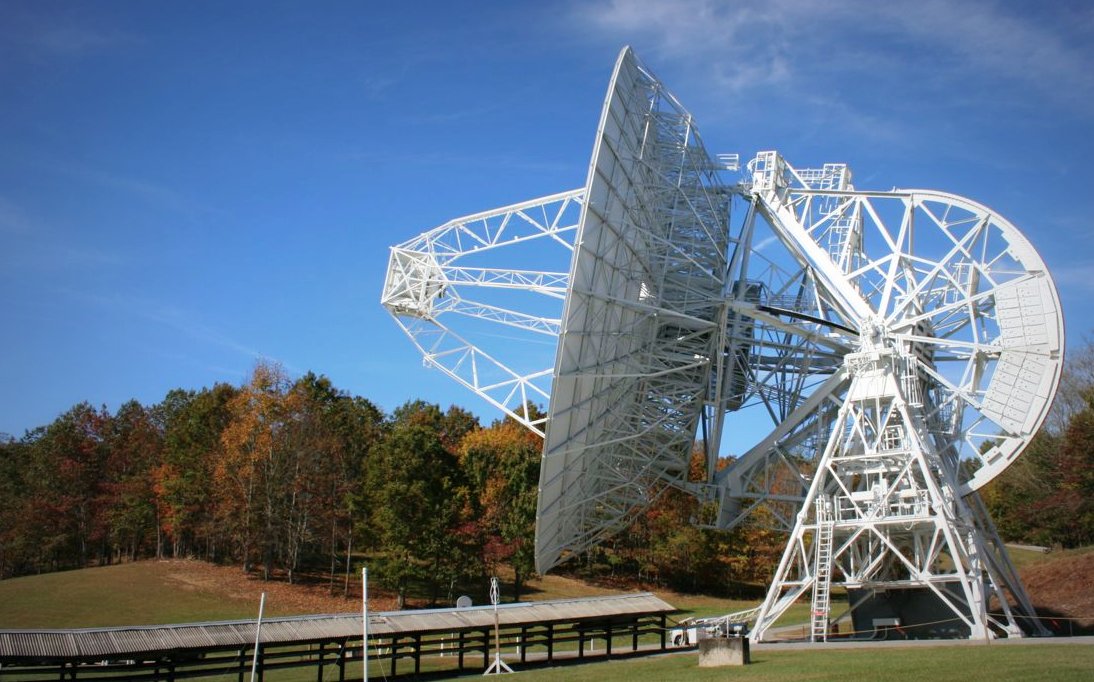
One of PARI’s 26 meter radio telescopes.

PARI is expecting at least 1,000 visitors tomorrow, from a number of countries. Many are scientists, astronomers, and guests who want to be in the path of totality.

On the PARI campus, we will be in totality for about 1 minutes, 47 seconds.

What makes the event truly special for PARI is that this is the first time in history a world-class radio astronomy observatory has been in the path of totality. To say the PARI astronomers are excited is simply an understatement. All four of PARI’s telescopes will be trained on our local star and gathering copious amounts of data.

If you don’t live in the path of the Eclipse, I invite you to check out PARI’s YouTube channel where they will host a live stream:

Click here to watch on YouTube.

Gathering spectrum

I will also be gathering data of my own during the event.

I will remotely record the entire mediumwave (AM broadcast) band several hours before, during and after the eclipse. I will also set up a separate SDR to record either the 31/30 meter bands and my buddy, Vlado (N3CZ) is kindly using his SDRplay RSP1 to record from 6 MHz – 8 MHz.

What do I expect to see/hear in the spectrum recordings? Certainly a drop in noise. If I’m lucky, I also hope to hear some DX anomalies–hopefully a signal or two that I wouldn’t normally here in the middle of a summer day.

I don’t expect any dramatic results (though I would love to be proven otherwise!) since the ionosphere takes time to change states. My buddy Mike (K8RAT) likens it to an oven: it takes time for it to heat up to the desired temperature, and it takes time for it to cool down as well. I’m not so sure the shadow of the moon, which moves at a good clip, will be persistent enough to change the state of the ionosphere in any meaningful way.

If it does, I’ll be there to record it!

There are many other radio related experiments happening during the solar eclipse. A notable one that you can even help with is the 2017 Ham Radio Eclipse Experiment.

SWLing Post contributor, Dan Srebnick also suggests a few stations you might try catching on the AM broadcast band. Dan notes:

Something to do during the solar eclipse on Monday. There are 13 clear channel AM stations along the path of totality. Give a listen for them:
[LIST OF AM CLEAR CHANNEL STATIONS]
kHz CALL Location Eclipse UTC
—— ——- —————- ————–
650 WSM Nashville, TN 18:28
670 KBOI Boise, ID 17:27
750 WSB Atlanta, GA 18:36
840 WHAS Louisville, KY 18:27
880 KRVN Lexington, NE 17:57
1030 KTWO Casper, WY 17:43
1040 WHO DesMoines, IA 18:08
1110 KFAB Omaha, NE 18:04
1110 WBT Charlotte, NC 18:41
1120 KPNW Eugene, OR 17:17
1120 KMOX St. Louis, MO 18:18
1190 KEX Portland, OR 17:19
1510 WLAC Nashville, TN 18:28

Kudos to Bob WB4APR (of APRS fame) for producing this list.

Post readers: Will you be in the path of totality or do you plan to enjoy a partial eclipse? Have you ever experienced a total solar eclipse?  What are your plans if any? Please comment!

eBay: Jeff spots a vintage Panasonic RF-088

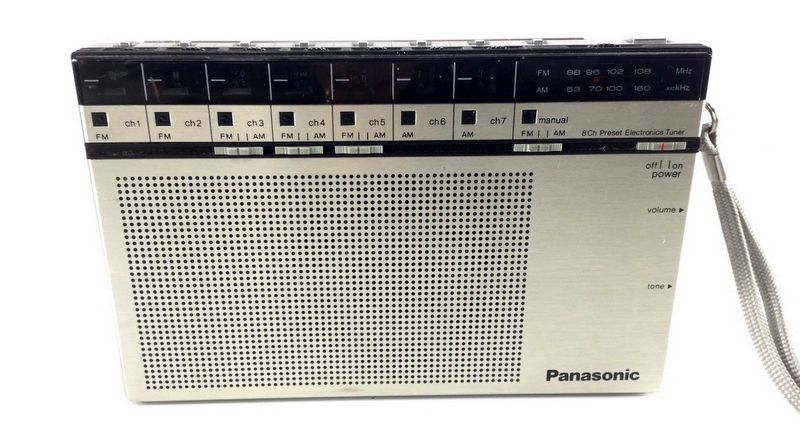
The Panasonic RF-088

Many thanks to SWLing Post contributor Jeff McMahon who writes:

“This vintage Panasonic RF-088 8-Channel Preset radio selling on eBay [see above] seems rather rare. In fact, I’ve never seen one.”

Click here to view on eBay.

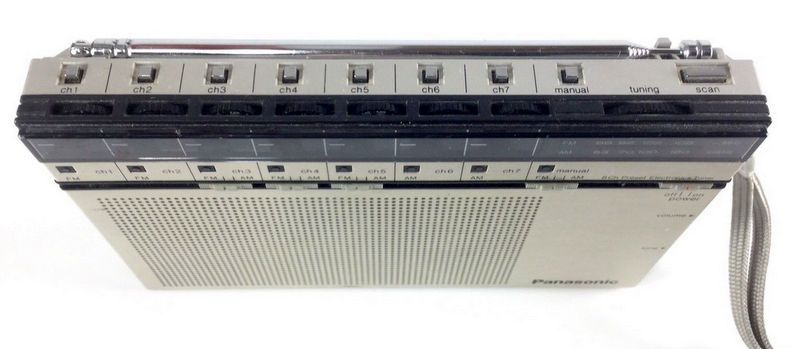
I haven’t seen one either, Jeff. Appears to be pretty compact. At first, I was curious how an analog radio could have so many presets until I took a peek at the top of the radio.

Each preset is individually tuned. Hard to believe such a compact radio has a total of eight tuning mechanisms! Two presets are designated for FM, two for AM and four presets can be either. Pretty clever! Since it’s a Panasonic, I bet it’s a sensitive little portable.

At $59.80 US shipped, I’m sure someone will snag it.

New Mediumwave Facility for Fiji

There’s an interesting YouTube documentary released by the Fiji Broadcasting Corporation on the refurbishment of both transmitters and antennas for the mediumwave outlets of 558 and 990 kHz. This was completed with the financial and technical assistance of the Japanese government. It will be very interesting for MW DXers to see how well the new facility will be heard beyond the Fijian borders.

https://youtu.be/VTLKeW-TmoQ


There is also a somewhat less interesting YouTube video of the Fijian dictator Prime Minister Bainimarama at the official launch of the revitalized service, which can be found at https://youtu.be/kOza_Ov7f48

It was fascinating to hear Prime Minister Bainimarama talking about democratic freedoms in the broadcasting media….This from a man who for many years has done his level best to suppress and control the Fijian media on countless occasions!
(My thanks to Mauno Ritola and Bruce Portzer for alerting me to the above links)

73, Rob Wagner VK3BVW

Rob Wagner, VK3BVW, is the author of this post and a regular contributor to the SWLing Post. He also blogs at the Mount Evelyn DX Report.

BBC to shut down 13 medium wave transmitters

(Source: Radio Today UK)

Ten BBC local radio stations will lose at least one AM transmitter in January 2018 as part of the BBC’s Delivering Quality First plan.

BBC Radio Sussex, Surrey, Humberside, Wiltshire, Nottingham, Kent, and Lincolnshire will no longer be accessible on medium wave, whilst BBC Radio Devon, Radio Lancashire and BBC Essex will reduce their frequencies.

The BBC says it knows the changes will have an impact on some listeners but encourages them to listen on FM, DAB, Freeview or online instead.

Continue reading at Radio Today UK online…