Shortwave listening and everything radio including reviews, broadcasting, ham radio, field operation, DXing, maker kits, travel, emergency gear, events, and more
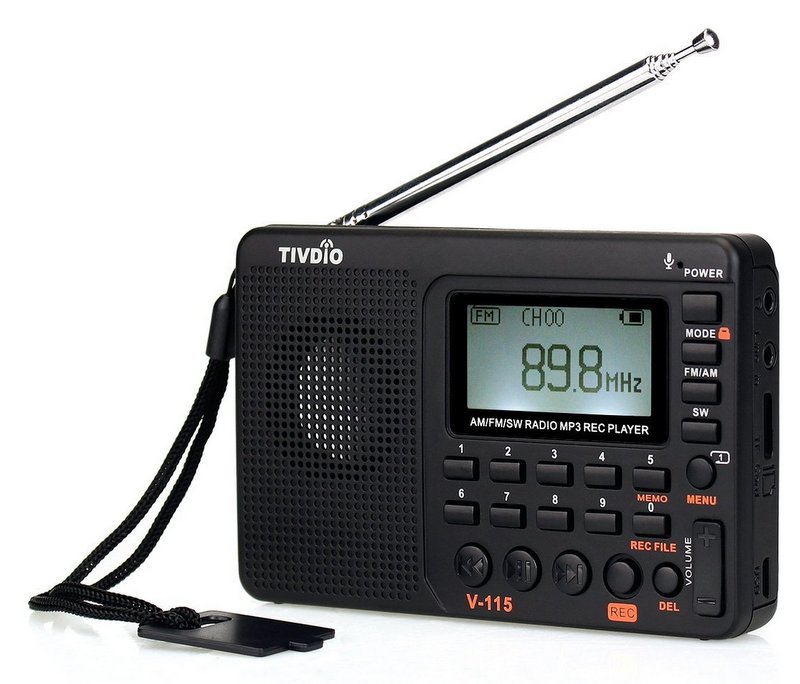
Many thanks to SWLing Post contributor, Tom Stiles, who notes that he’s recently posted a video review of the Tivdio V-115 on his YouTube channel. He added that the V-115 is an, “amazing little shortwave radio with many functions including MP3 recording.”
Check out Tom’s review via the embedded player or YouTube link below.
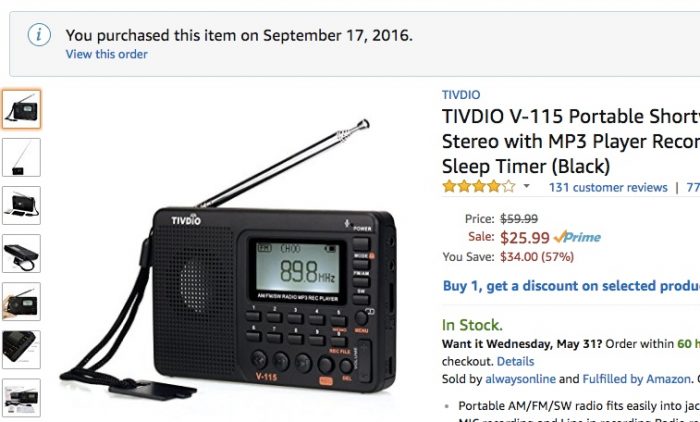
After watching most of Tom’s video this morning while packing for YAT (Yet Another Trip–!) I thought purchasing a V-115 from Amazon might make a lot of sense. Frankly, it would be handy to have a portable that does even a mediocre job of recording shortwave to MP3 files.
I did a quick search on Amazon only to discover, in the search results, that the quickest I could receive the V-115 was next Wednesday. I considered shipping it to my hotel.
I thought, “What?!? I don’t remember this purchase…!”
A bit confused, I opened the large container that holds all of the portables I use for review benchmarks. It was the only place this radio could be hiding. Inside, I discovered an unopened box containing an Audiomax SRW-710S–looking in my Amazon order history, I confirmed that the Tivdio V-115 is also badged as the Audiomax 710-S and Amazon linked the two.
Then, my memory kicked in! I purchased the SRW-710S for review, but pushed it to the backburner. Then in December 2016, SWLing Post contributor, Troy Riedel, submitted a full review of the SRW-710S.
After Troy’s review, I sat the 710S aside and, frankly, forgot I had even purchased it (after all, quite a few radios come into and go out of my shack!).
I’ll pack the 710S and test its recording capabilities on the road this week.
Tom seems to have been favorably impressed with the Tivdio V-115–perhaps the Tivdio version has had some performance tweaks?
Post readers: Anyone else have a version of this radio? What are your impressions? Please comment!
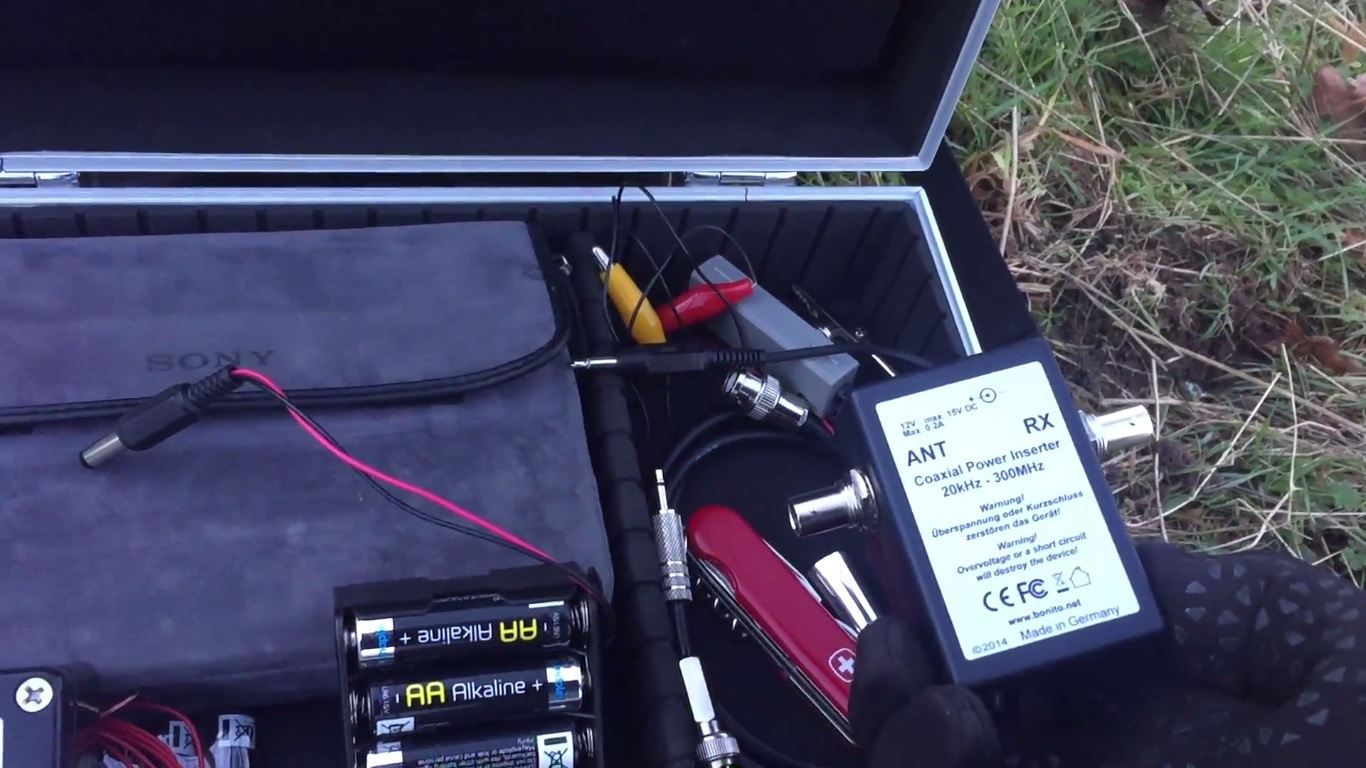
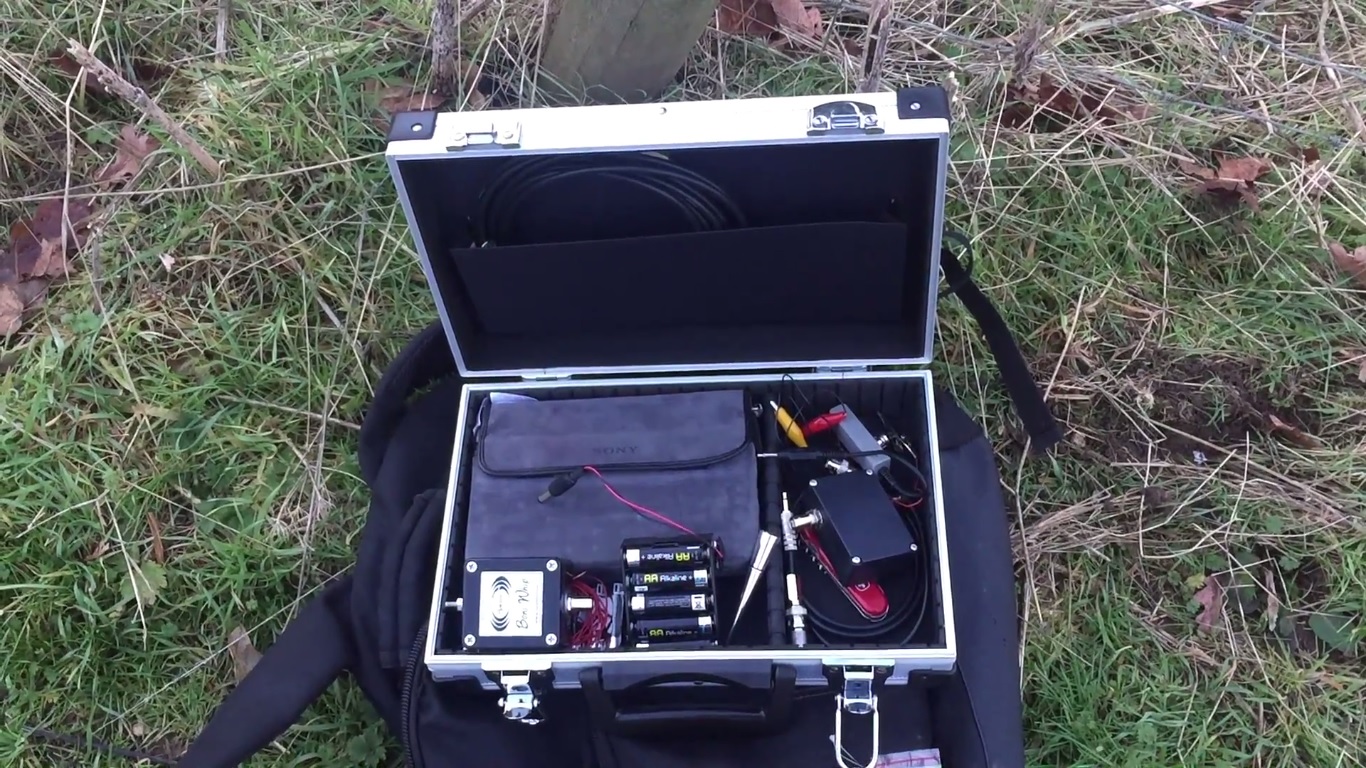
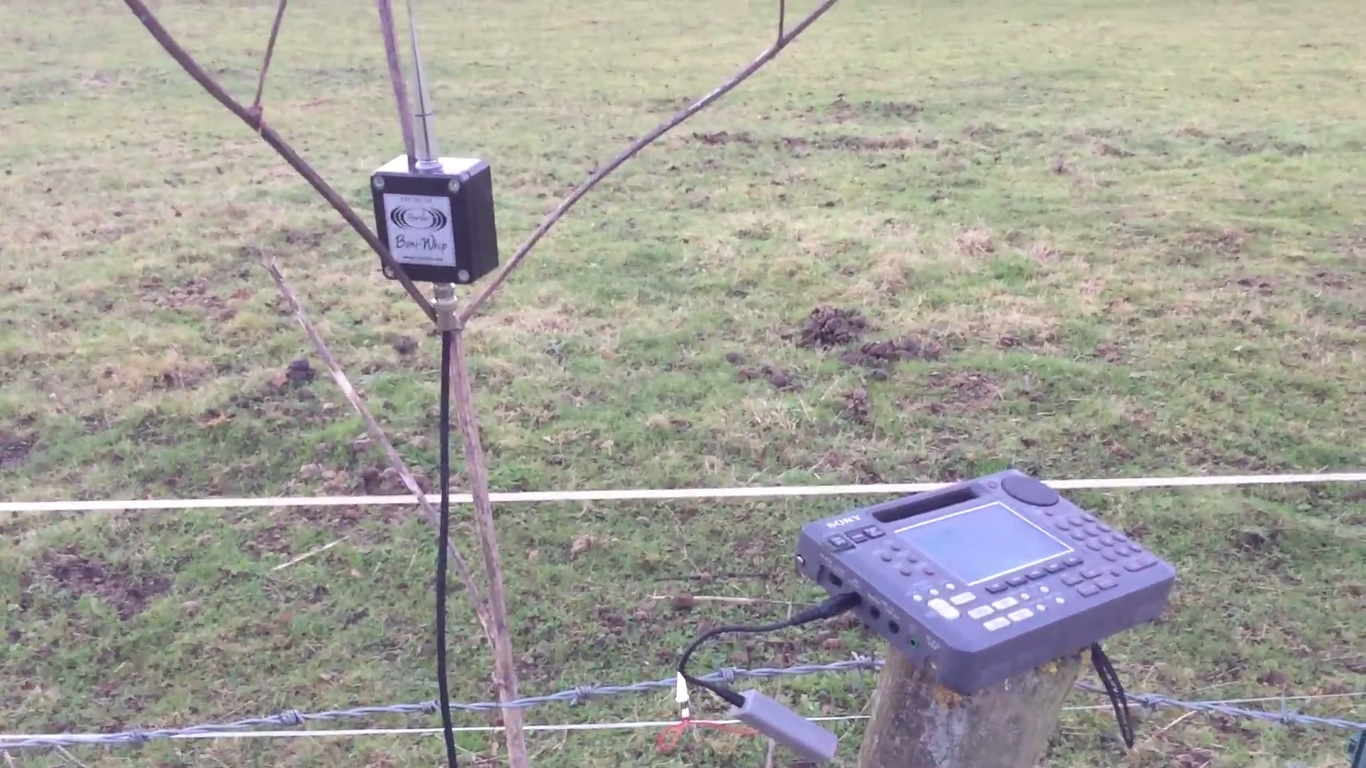
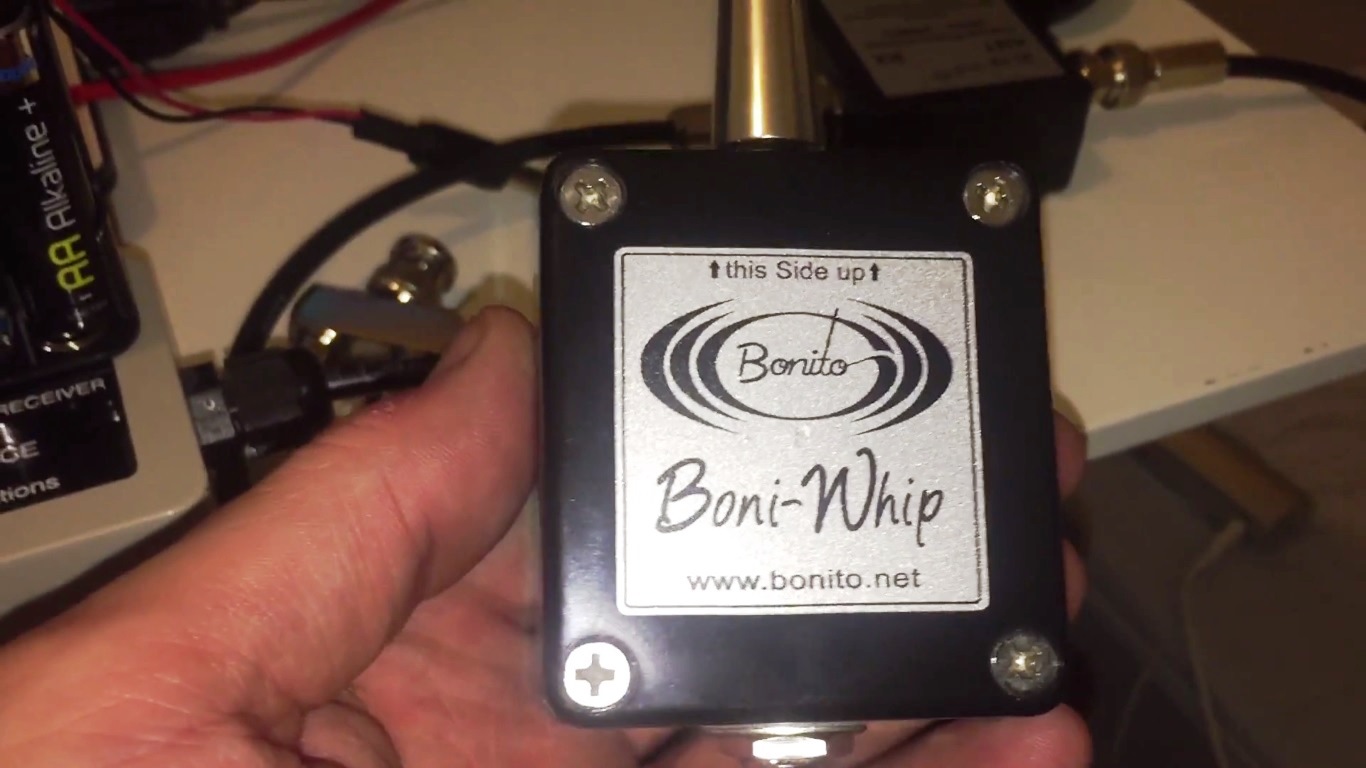
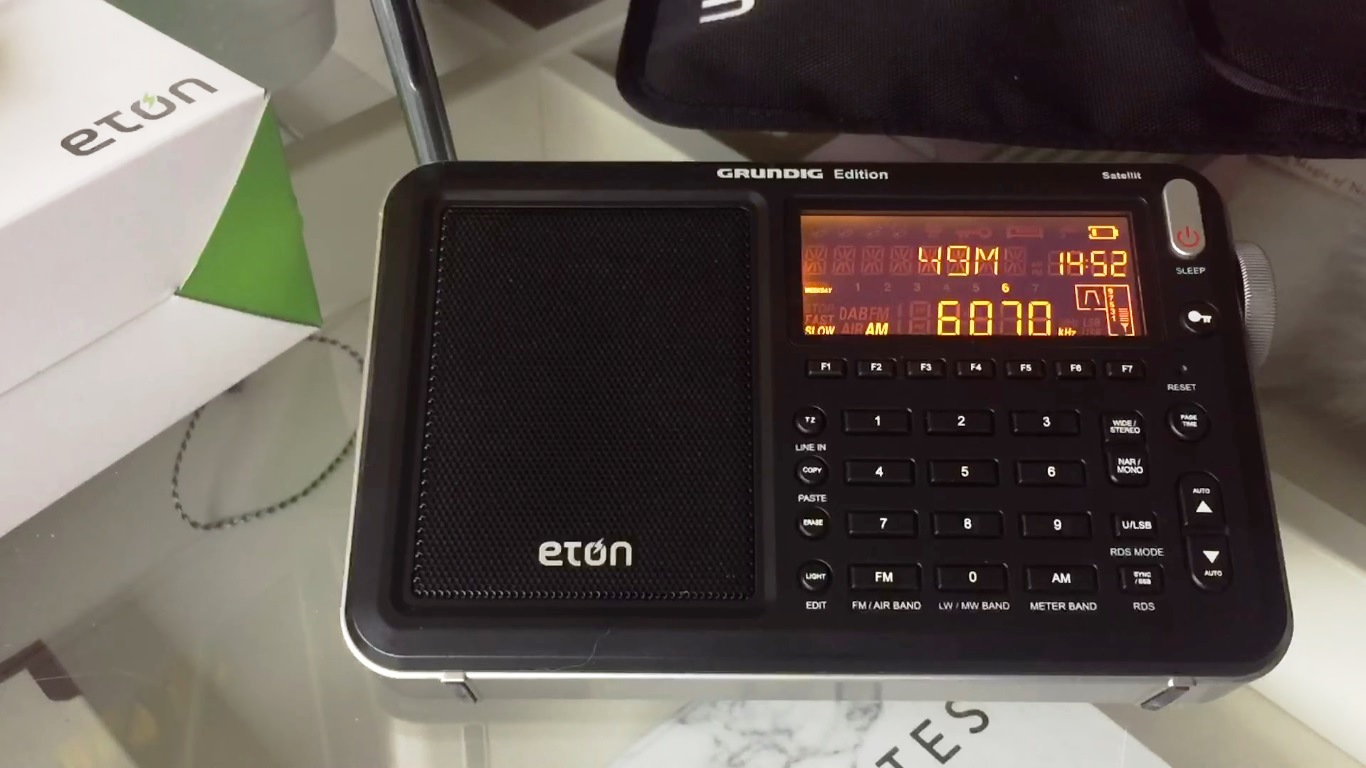
Hi there, subscribers to the Oxford Shortwave Log YouTube channel and regular readers of this excellent website will be aware that I have been using a Bonito Boni whip E-field wideband antenna for a couple of months now. You may have seen my previous post here, detailing some excellent initial DX results achieved with the Boni Whip. What makes this antenna so compelling for a DXer such as myself is simply that it’s so light and compact; I can literally take it anywhere. Currently it lives in a small flight case (see above & below) on the back seat of my car, with either my Sony ICF-SW55 or Eton Satellit, a home-brew battery pack (that literally cost pence) and some peripheral bits and pieces; spare batteries, cables etc. I think it’s probably already clear that if you consider the Boni Whip’s performance as a function of portability and price, it’s out there on its own – I’m not aware of another antenna that can match it. Of course, there are H-field antennas, such as the excellent Wellbrook active loops that will effectively reject QRM, if that’s an issue for the user, but at a significant cost delta.
Since my last posting, I have continued to use the Boni Whip regularly on my DXpeditions and upload the reception videos to my YouTube channel. I have been nothing but totally impressed with this antenna, to the point that I’ve actually been surprised by the signals I’ve caught and recorded with it. Recent catches include a number of low-power stations from Brazil, including Radio Bandeirantes – Sao Paolo, Radio Voz Missionaria – Camboriu (on the 49 and 31 metre broadcast bands) and Radio Aparecida. Some of these signals are incredibly difficult to hear in Europe at all, let alone well and yet the ultra-compact Boni-Whip running off AA batteries, coupled to the (equally brilliant) Eton Satellit managed it with aplomb. Other catches include Zambia NBC Radio 1 – Lusaka and a signal from Bangladesh Betar that sounded as if the transmitter was 5 miles down the road!
All-in-all, I’m extremely satisfied with the performance of the Bonito Boni Whip and highly recommend it to those DXers requiring a high-performance, compact antenna, for use at home in electrically quiet environments or on any DXpedition. You certainly won’t be disappointed.
Please find embedded reception videos below and text links that will take you to the Oxford Shortwave Log YouTube channel. Thanks for reading/watching/listening and I wish you all great DX.
Clint Gouveia is the author of this post and a regular contributor to the SWLing Post. Clint actively publishes videos of his shortwave radio excursions on his YouTube channel: Oxford Shortwave Log. Clint is based in Oxfordshire, England.
Many thanks to SWLing Post contributor, Steven Crawford, who shares the following:
I just wanted to take a moment and thank you for posting my inquiry on the Sony 7600GR. The post comments answered my question.
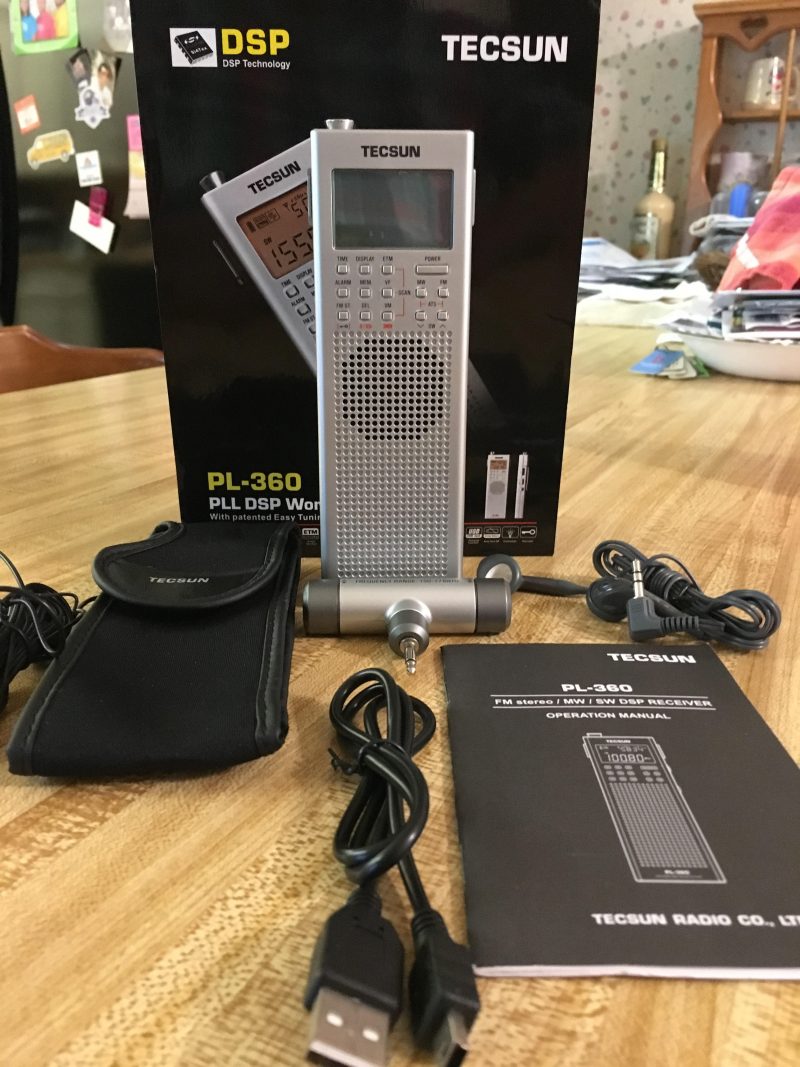
I also wanted to let you know your confidence in Ebay seller Anna and Anon-co continue to be well founded. Remembering your recommendation and wishing to pick up a Tecsun PL-360 as a spare to my CountyComm GP-5 SSB (Tecsun PL-365), I placed the order for it and a couple of other bits of Tecsun kit with Anon-co.
The order arrived in 6 working days to my Gulf coast Texas home, taking longer to travel from Chicago to my home than it took to move from Anon-co in Hong Kong to Chicago and clear customs.
I then had a question about the connecting cable included with the Tecsun badged, Tecsun / Kato / Grundig / Eaton, AN200 Loop Antenna. Posed through Ebay Anna promptly answered the question and added a photo of the cable to Anon-co’s Ebay listing for the AN200. It just doesn’t get better than that. You can continue to recommend Anon-co with full confidence from my perspective.
I picked up the PL-360 as a lower cost AM/FM/SW backup to the GP-5 SSB that would allow me to accept the risk of using the larger and heavier extended ferrite rod loop stick aftermarket antenna that garnered so much interest on your blog a year ago, before CountyComm warned of accelerated wear on the antenna jack. Happily the antenna works just as well on the PL-360 as it did on the GP-5 SSB.
Overall I am pleased with the PL-360.
The performance on AM and SW appears to match that of the GP-5 SSB (Tecsun PL-365) albeit with a slightly higher noise floor. Whether this is due to something akin to sample to sample variation or a direct result of inherent design differences between the PL-360’s Silicon Labs Si4734 DSP chipset versus the GP-5 SSB’s Silicon Labs Si4735 DSP chipset I can’t say. I can say the PL-360 with the included High Gain loop stick external tee antenna received my list of news gathering AM clear channel stations out to 900 miles during the night hours matching the GP-5 SSB. This list includes WGN, WBBM, WLS and KOA at the furtherest extreme. It also includes Mexico City’s XEEP 20kW at night at 800 or so miles. Switching to SW broadcast using the whip antenna and Tecsun’s / CountyCom EZTune system day or night the PL-360 and GP-5 SSB select and load the same stations within the PL-360’s slightly shorter SW tuning range.
Dittio on FM on the whip. Both radios snag my list of FM stations out to 60 miles.
For my purposes both are extremely close in performance to my Sony SW7600GR when using their supplied external loop stick. On AM if you combine one with the larger and heaver aftermarket loopsticks they will slightly outperform the 7600GR combined with a Tecsun / Kato / Grundig / Eaton, AN200 Loop Antenna. The Sony’s speaker gives it the edge in listening pleasure, but on earphones or plugs all three are close.
None of forgoing addresses the SSB performance as the PL-360’s chipset doesn’t offer that option.
I am pleased with the PL-360, Anna and Anon-co and I do thank you for posting my 7600GR inquiry.
I look forward to your blog.
Steve
Thank you, Steve! I’m happy to hear the 7600GR posting helped you–that’s what this community is all about…helping each other. Thanks to everyone who commented on that post.
And, yes, I think what surprises so many SWLs is the fact that Anna at Anon-Co actually knows Tecsun radios as well, if not better, than the manufacturer. I’ve only had good experiences working with Anon-Co and that’s why I recommend them so readily. Anna provides excellent customer service. (Click here to check out Anon-Co on eBay.)
I’m also happy to hear you’re enjoying the PL-360 and that you understand the risk of using the large ferrite bar on this radio series (PL-360, 365 and GP5 DSP and SSB). I use my antenna as well, though like you, very carefully.
I only use the large ferrite bar when I’m stationary and I’m careful not to put a strain on the antenna in any way; keeping it balanced and steady. In other words, you must handle it with kid gloves. If you take these precautions, I think your radio will enjoy expected longevity.
Thanks, again, Steven for sharing your review! I’m very pleased to hear you’re enjoying the SWLing Post!
Many thanks to SWLing Post contributor, Gary DeBock, who shares the following notes and recordings from an Ultralight DXpedition in Kona, Hawaii:
The Kona, Hawaii Ultralight Radio DXpedition was conducted from a sixth floor oceanfront motel room in the Royal Kona Resort Motel from April 9-12 (during an anniversary trip with my wife). A newly designed “airport friendly” 5 inch FSL antenna (designed to fit within hand-carry luggage, inside a plastic tote) and a 7.5 inch loopstick C.Crane Skywave Ultralight were used to track down and record Asian and South Pacific Medium Wave DX from such rare stations as 540-2AP (Apia, Samoa), 621-Tuvalu (Funafuti, Tuvalu) and 1440-Kiribati (Bairiki, Kiribati). Here are three extremely strong recording links for these exotic stations, including the daily sign off routines for 621-Tuvalu and 1440-Kiribati:
540 2AP Apia, Samoa Extremely strong Christian worship music (Samoan style) at 0931 UTC on April 9 (S9+ level)
621 Tuvalu Funafuti, Tuvalu Over 8 minutes of traditional island music at an S9 level, including the sign off routine (with national anthem) at 1000 UTC
1440 Kiribati Bairiki, Kiribati Over 7 minutes of traditional island music, station ID’s in English and the native language, and the national anthem (followed by a blistering 1000 Hz tone) at the 0936 UTC sign off– all at a strong level
A few weeks ago, SWLing Post reader, David Lang, asked for a radio recommendation–one to replace the shortwave receiver that once lived on his bathroom countertop. Since he primarily wanted to listen to a local AM broadcaster, I recommended he go a different route with his next rig to save money and extend the radio’s longevity.
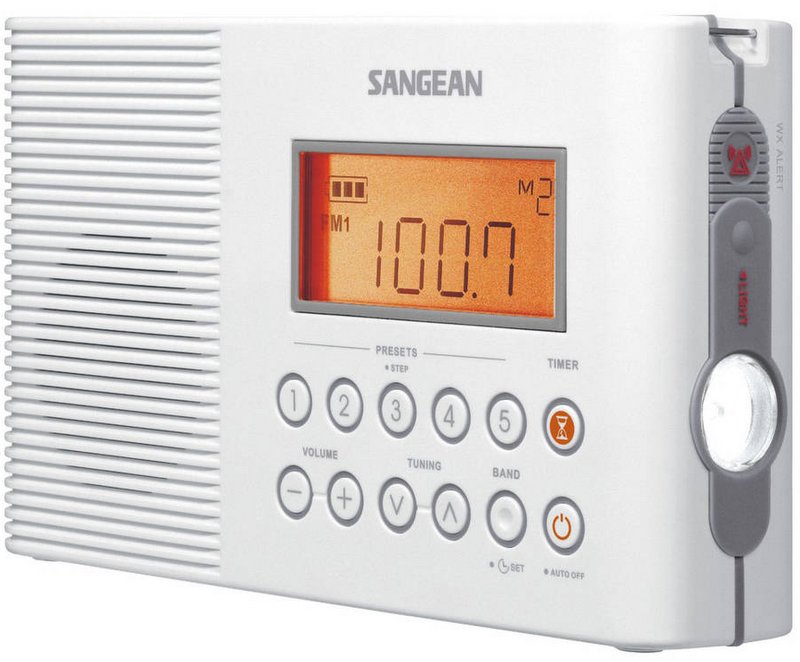
I suggested the ($61 US) Sangean H201 which is specifically designed for humid environments. I had considered this receiver as a gift in the past, but had never actually used one myself. I felt like it was a pretty safe bet, though. David purchased the H201 and recently shared his review:
Well, I’m so glad that I was patient and waited for a reply before I bought a radio to replace the old one that I had in my bathroom. I think the Sangean H201 is going to be the perfect replacement. I don’t know if anyone has provided a review for this radio but here are my thoughts at the moment:
The H201 is compact. Not quite as small as my 909 but just the right size to sit on my bathroom countertop and not take up near as much room as the radio it replaced.
Its appearance is clean, simple and intuitive. It’s also waterproof, a feature that is comforting since it will spend most of its life in the humid environment of a bathroom. The display is large and easily read. The display includes battery strength indicator, band, memory preset, weather alert and frequency in the display. The buttons are just the right size and have a distinct but smooth action.
It might have been better for me if the power button had been on the top instead of the bottom right hand face of the cabinet but that is in no way a deal killer.
The H201’s reception is fine for what I need it to do which is receive the primary AM radio stations for our metroplex area (Dallas/Fort Worth) which brings me to my next section of commentary; sound quality. The sound quality of the H201 is exceptional. It’s crystal clear and leans toward the warm side. I’m talking about timbre. My sangean 909 also has great sound but is brighter in timbre. Think about the difference between a French horn and a trumpet. The 909 is a trumpet, the H201 is a French Horn or perhaps a Euphonium. I like the amber display and the half circle carry handle that turns in or out of the cavity in the back of the radio is really convenient.
At times I have to adjust the position of the radio to eliminate a bit of static on AM but I think that’s pretty typical for AM. My comments here are not near as technical as some reviews I’ve read on other radios, particularly short wave models.
While I use and appreciate many of those types of features on my other radios, for my purposes I’m not sure the ‘technical’ is necessary to promote the positive aspects of this radio.
Bottom line: I like it because it fits perfectly for the purpose I needed. Even in a non-humid room, this little rig is a great, simple portable radio for AM/FM local station listening. Thanks so much for the suggestion!!
Cheers!
David Lang
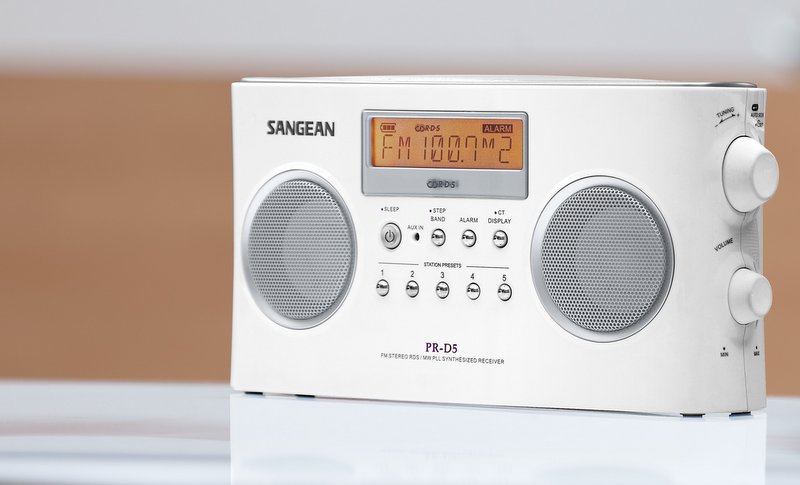
Thank you for taking the time to share your thoughts, David! I’ve been very pleased with Sangean radios that employ this particular chassis style (like the Sangean PR-D5BK, Sangean PR-D9W, Sangean PR-D7, and even the Sangean WFR-28). These models tend to have a durable feel, robust hard plastic body and the audio is pleasant from the built-in speaker(s).
These fine, collectable receivers appear on Ebay regularly, but this one is in pristine shape:
The asking price is a cool $1,800 USD, but for the near mint condition of this T-1000 it is likely appropriate; perhaps the new owner will acquire it for a “Best Offer” price. Other T-1000s on Ebay currently are priced from $370 to $1,299.
Of course, the cost is in-line with a collectable value; functionally, it’s reception abilities are almost certainly surpassed by a modestly priced SDRPlay RSP1 or a vintage Sony ICF-2010 for instance. The radio aficionado interested in the 55 year old T-1000 is not expecting best-in-class reception, but the chance to own a recognized icon of industrial design (the T-1000 is in NYC’s Museum of Modern Art’s permanent collection).
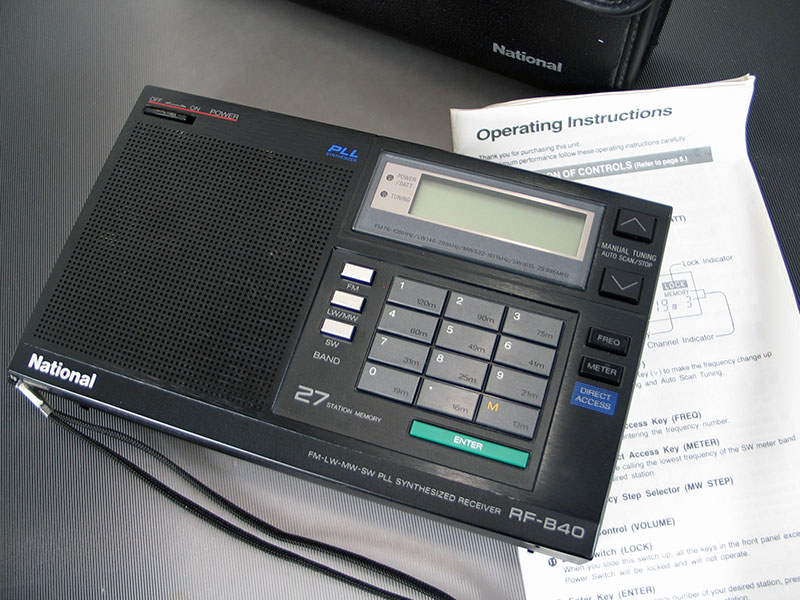
Hi there, back in 1990 I was given a Panasonic RF-B40 for my birthday (I think it was my birthday…1990 was a long time ago!). I found that radio to be very sensitive on shortwave, more so perhaps than my Sangean ATS-803A, but ultimately it didn’t really add much value to any serious DXing because it would only tune on shortwave in 5 kHz steps. This rather course tuning arrangement was very limiting in terms of tuning out adjacent noise and copying tropical band – and other signals that weren’t quite on-frequency etc. Frustrated, I lent my RF-B40 to my brother a few years ago and serves me right; following a house move, he managed to lose it! Quite a shame really because almost three decades later, I would have been very interested to put the RF-B40 through it’s paces on a DXpedition or two. You really don’t see them in action very often at all these days.
Above: the Panasonic RF-B40 (not mine – unfortunately) and the RF-B60, mid-DXpedition!
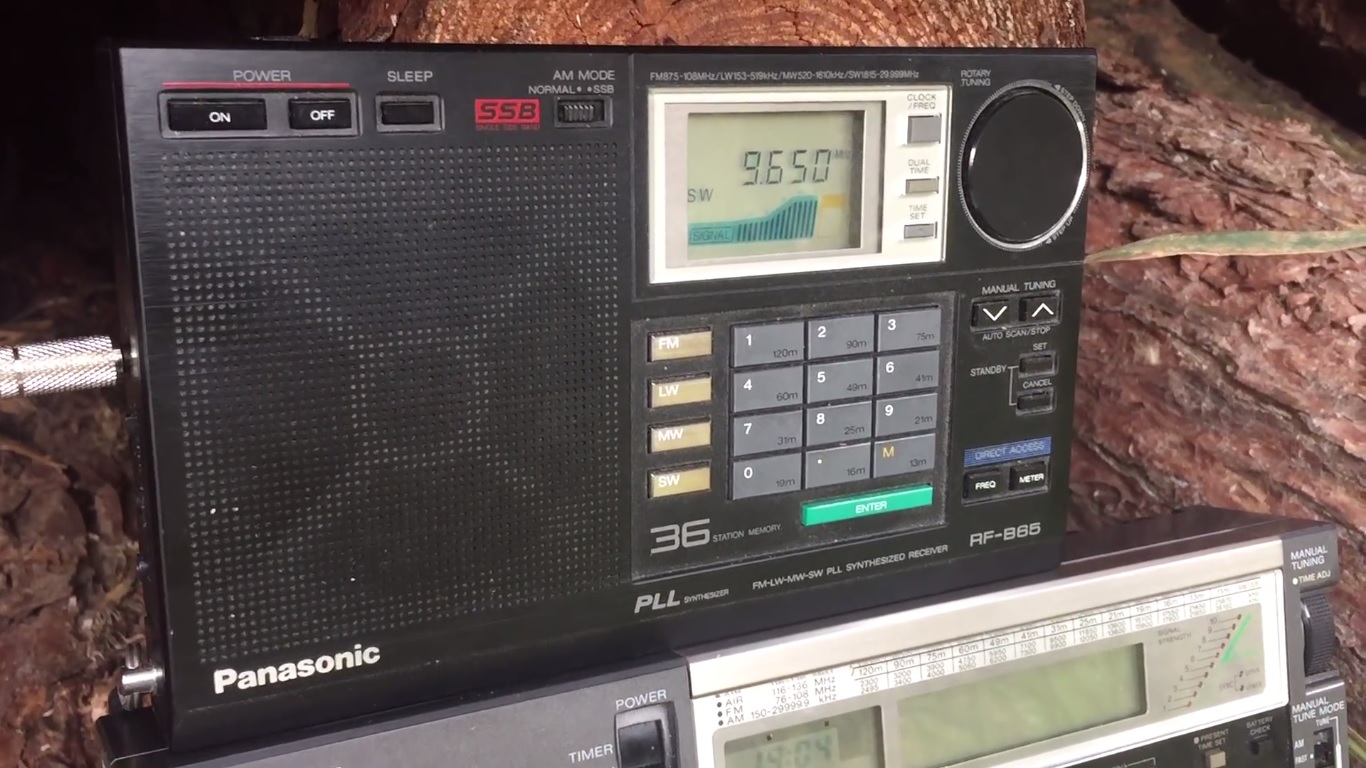
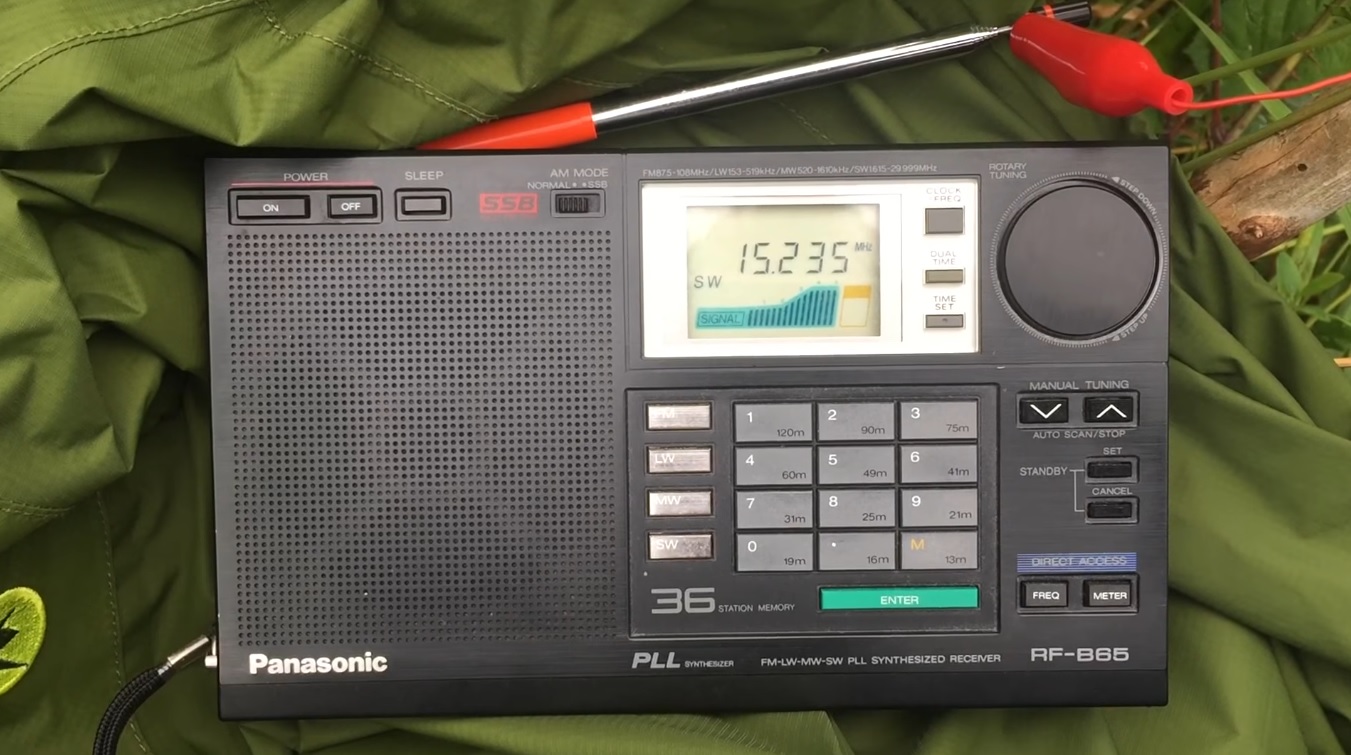
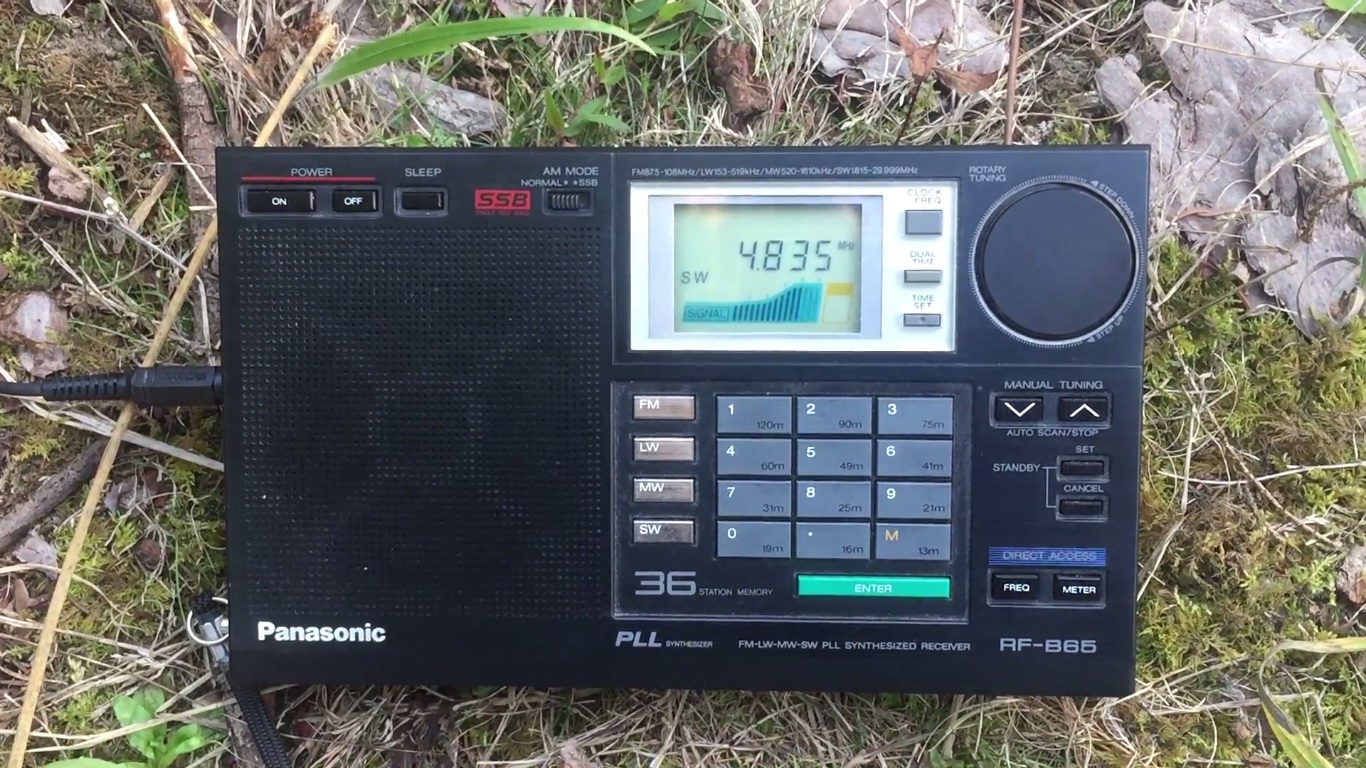
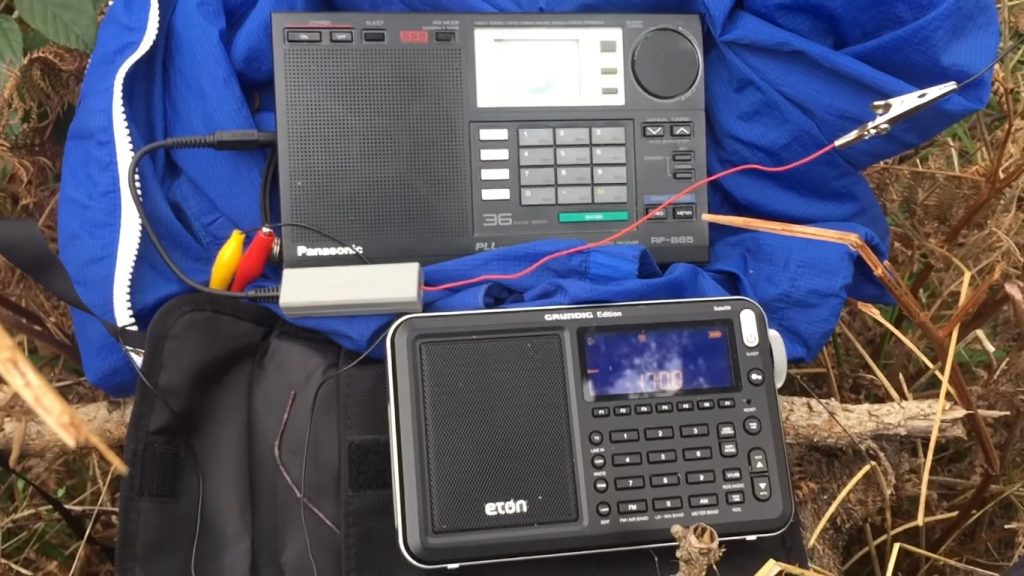
At that time, which was around the beginning of the 1990s, I read a review somewhere and it became clear that the better receiver was quite obviously the RF-B65. Upon it’s introduction into the market, the RF-B65 was immediately recognised as an excellent receiver, however, in the intervening years it’s reputation has continued to grow to the point today where it enjoys legendary status amongst DXers and bit of a cult following. There’s a lot of information on the RF-B65 to be found on the internet, so I won’t go into huge detail, but the obvious question is: what makes thsi receiver so special? Well, it’s a quite compact PPL double conversion receiver, covering 153 kHz to 29,999 kHz AM and 87.5 to 108 MHz, FM. It has a keypad for direct frequency input, although you have to press either the ‘FREQ’ or ‘METER’ buttons prior to punching in the numbers to define whether you wish to access a particular frequency, or band. I actually find that slightly annoying, but you easily learn to live with such trivial matters when using a radio of this quality and performance.
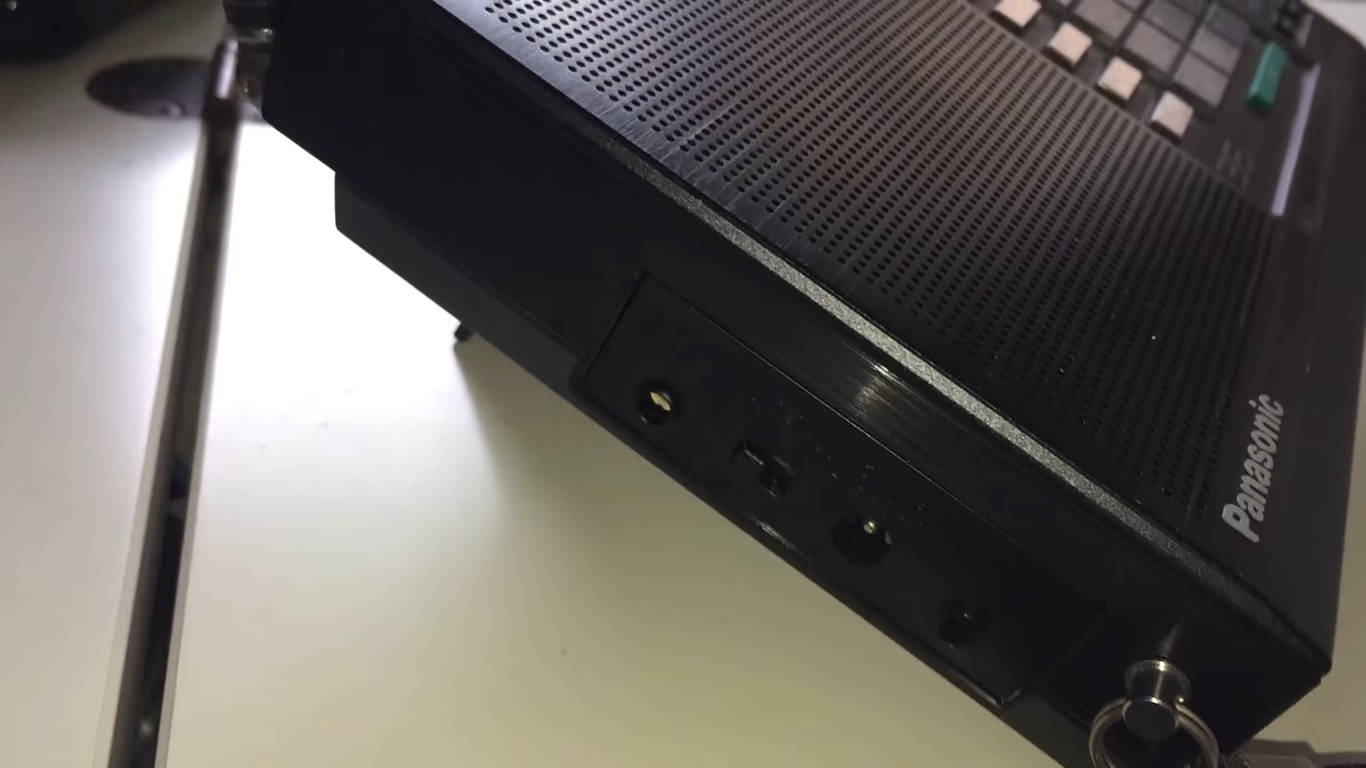
Furthermore, there’s an electronic signal strength meter, a DX/local attenuation switch, external antenna jack, SSB reception mode, 1 kHz tuning steps on shortwave (unlike it’s little brother the RF-B40) and fine tuning. The single bandwidth filter is 6 kHz wide and thus limits selectivity a little, although the SSB option and fine tune helps offset that somewhat. It would have been nice to have a couple more filtering options, particularly narrower for serious DXing in crowded bands, to combat adjacent channel QRM. Build quality is generally excellent as you would have expected from a high-end Panasonic portable and with a very compact form-factor – roughly the size of a paperback book and weighing in at just 1.4 Ibs, it is eminently more portable than a Sony ICF-SW77 or the iconic ICF-2001D/2010.
Ultimately, the RF-B65 continues to enjoy an excellent reputation today, nearly 30 years after it was introduced because it is a wonderfully sensitive receiver and arguably the best-ever performing shortwave portable in the paperback book size category – often touted as ‘travel portables’. I managed to acquire an example in as-new condition from eBay, although mind you, I paid through the nose for it lol – that cult following ensures prices remain very robust! I have tested my example against the equally legendary Sony ICF-2001D, still considered by many to be the benchmark for shortwave portables, and in my experience the Panasonic is right up there with it. There’s virtually no difference whatsoever in sensitivity. Where the Panasonic comes a little unstuck is the lack of bandwidth filtering and SYNC, leading to lower selectivity. However, clever use of SSB and fine tuning does provide quite good compensation for these shortcomings. Overall though, given it’s size, sensitivity, build quality and audio, as a complete package, in my opinion, the RF-B65 is equal to the ICF-2001D, and this is why today, it remains so highly sought after.
Below are embedded reception videos and text links to the Oxford Shortwave Log YouTube channel, with various DX catches on the RF-B65. Some of these are considered quite rare in Europe, for example EXPPM Radio Educación’s 1 kW signal from Mexico City, the now defunct ABC Northern Territories on 120 metres and Radio Bandeirantes from Sao Paolo, Brazil, amongst others. Please note; right at the bottom of this post is a link to some very recent comparisons with the brilliant Eton Satellit – one of the very best portables currently on the market today. The vintage Panasonic holds its own, despite 30 years of supposed technical innovation in electronics. Thanks for reading/watching/listening and I wish you all great DX.
Clint Gouveia is the author of this post and a regular contributor to the SWLing Post. Clint actively publishes videos of his shortwave radio excursions on his YouTube channel: Oxford Shortwave Log. Clint is based in Oxfordshire, England.